Chicks, Dicks and H.B.D.

Britain has recently been entertained by a cat-fight conducted at Twitter, The Observer and other loci of liberalism. Or perhaps “cat-and-castrated-tom-fight” is a better way of putting it. In the cat corner: a pair of self-righteous feminist egomaniacs called Julie Burchill and Suzanne Moore. In the castrato corner: lots of self-righteous transsexual egomaniacs and their supporters. It’s been one of those fights you wish both sides could lose, but it’s also been interesting from a hateful, bestial and demonic point of view. That is, from an HBD POV. HBD stands for human bio-diversity and is about looking at how human biology influences social, cultural and political patterns. Transsexuality is obviously a biological phenomenon, but I think feminism and female writers are too. Read on, if you’re man enough, and I’ll explain how.

The fight started when Suzanne Moore wrote an essay about “female anger” for an anthology published by the booksellers Waterstones. I don’t know or care what the anthology was about, but Moore’s essay included these lines:

The cliché is that female anger is always turned inwards rather than outwards into despair. We are angry with ourselves for not being happier, not being loved properly and not having the ideal body shape – that of a Brazilian transsexual. (Moore article)

Moore was then politely challenged on Twitter by a transphilic woman who detected a hint of transphobia in her remark. Moore refused to retract it and was even sarcastic about the notion of “intersectionality”, i.e., the multiple oppressions suffered by, say, black homosexuals with bad legs, who will suffer not just from racism, homophobia or disabledism, but from all three. Finally, pushed too far, Moore announced that:

People can just fuck off really. Cut their dicks off and be more feminist than me. Good for them. (Transphobic tweeting)

Moore then left Twitter because of the “bullying” she was experiencing. Her friend Julie Burchill came to her defence in The Observer (i.e. The Guardian-on-Sunday) in an article that began like this:

Hey trannies, cut it out

Where do dicks in terrible wigs get off lecturing us natural-born women about not being quite feministic enough? (Burchill article)

Burchill went on to excoriate “dicks in chick’s clothing” and “bed-wetters in bad wigs” who have had their “nuts taken off”. Further uproar ensued, the “transsexual community” complained long and loudly, and The Observer withdrew the article and apologized for the offence it had caused. All this has been entertaining but also, I think, an example of the poisoning of politics described by Britain’s Chief Rabbi, Jonathan Sacks:

Sacks: Multiculturalism threatens democracy

Multiculturalism promotes segregation, stifles free speech and threatens liberal democracy, Britain’s top Jewish official warned in extracts from his book The Home We Build Together: Recreating Society… [Jonathan] Sacks said Britain’s politics had been poisoned by the rise of identity politics, as minorities and aggrieved groups jockeyed first for rights, then for special treatment. The process, he said, began with Jews, before being taken up by blacks, women and gays. He said the effect had been “inexorably divisive. A culture of victimhood sets group against group, each claiming that its pain, injury, oppression, humiliation is greater than that of others.” (Multiculturalism threatens democracy, The Jerusalem Post)

By claiming “pain, injury, oppression” and so on, transsexuals want to make themselves immune from criticism. Saints could be trusted to behave well when immune from criticism, but saints wouldn’t demand to be so. Transsexuals are, I think it’s safe to say, no more saintly than Jews, blacks, women or gays. All the same, I also think Moore and Burchill have shown bigotry – in the proper, rather than politically correct, sense – towards transsexuals. This transphobic twosome obviously don’t like their feminist franchise being challenged by transsexuals, i.e., people who were born in men’s bodies, but think they’re really women and have had surgery to prove it. From my own bigoted, biocentric point of view, I am happy to accept that bodies do not always match brains and that someone with a female mind can be born in a male body. Or vice versa. It’s an interesting phenomenon, scientifically speaking, but it must also sometimes be a distressing phenomenon, psycho-socially speaking. Burchill’s sneers about “phantom limbs” and “bed-wetters in bad wigs” don’t show much female solidarity, let alone imaginative sympathy. But then she doesn’t seem to accept that a real woman can be born in a male body:

Shims, shemales, whatever you’re calling yourselves these days – don’t threaten or bully we [sic] lowly natural-born women, I warn you. We may not have as many lovely big swinging PhDs as you, but we’ve experienced a lifetime of PMT and sexual harassment, and many of us are now staring HRT and the menopause straight in the face – and still not flinching. Trust me, you ain’t seen nothing yet. You really won’t like us when we’re angry.

That is echt essentialism – indeed, physio-fascism. Burchill seems to believe that you can’t be a real woman unless you’re born in a female body. The bit about “lovely big swinging PhDs” is a sneer too, but a funny one: Burchill is an entertaining writer who combines masculine vigour with feminine illogic. Look at her reasoning here, for example:

…their lot [i.e., transsexuals] describe born women as “cis” – sounds like syph, cyst, cistern; all nasty stuff…

If “cis” is nasty because it sounds a bit like “cistern”, presumably “sister” would be even worse. Like Burchill, Suzanne Moore has no time for the nasty male invention of logic; unlike Burchill, she isn’t an entertaining or amusing writer. I’d never read anything by her before this cat-fight and I don’t intend to read anything again. The fight itself seems a good example of narcisso-sisters playing tyranny-trumps and poisoning politics, as the Chief Rabbi warned. Burchill and Moore themselves seem good examples of testotero-sisters: they’re masculinized in both psychology and physiognomy. It’s not just their aggression and coarseness: take a look at their faces:

Suzanne Moore and Julie Burchill

Suzanne Moore and Julie Burchill

I suggest that Moore and Burchill, despite their female bodies, are less psychologically female than some transsexuals who were born in male bodies. Both of them are left-wing and opponents of biological determinism, but they are cruder in their bio-determinism than the supposedly right-wing psychologist Hans Eysenck (1916–97), who was writing about HBD before HBD existed under its present name. In his book Sex, Violence and the Media (1978), Eysenck discussed that idea that “there is a strong biological determinant which predisposes individuals in the direction of greater or lesser ‘maleness’”:

Some of the strongest evidence for this point of view comes from the work of Dr Wilhart Schlegel, a Hamburg physician who made an exhaustive study of the shape of the pelvis in men and women. In men, typically, the pelvis is shaped like a funnel, tapering down to a narrow outlet; in women, the pelvis is shaped more like a tube, with a broad outlet. There is much variety within each sex; thus there are men with tube-shaped pelvis outlet structures, and women with funnel-shaped ones. What made Schlegel interested in the pelvic outlet is that its shape is apparently determined at the foetal stage by precisely the kind of hormonal burst [determining masculinity or femininity] already described; if such androgenic material is supplied, the pelvic shape will be masculine; if not, feminine. This led Schlegel to study in detail the social and sexual behaviour of men and women having typical and atypical pelvic shapes, using over a thousand men and women in his researches. (Op. cit., H.J. Eysenck and D.K.B. Nias, Maurice Temple Smith, London, 1978, pg. 230-1)

Schlegel discovered a strong correlation between pelvic shape and behaviour:

A masculine-type pelvis correlated with leadership, an active sexual role, dominance and a preference for a younger sexual partner, in men and women alike. A feminine-type pelvis correlated with empathy, suggestibility, and compliance. In other words, behaviour in both sexes seemed to be determined by the same hormonal factors which originally produced skeletal features of the pelvis, namely androgen secretion at the foetal stage.

Faces, like pelvises, are shaped by hormonal factors and I suggest that Moore and Burchill have masculinized faces. I also suggest that, as female writers, they are not unique in this. Another example of a masculinized female writer seems to be Hilary Mantel, winner of last year’s Man-Booker Prize for her novel Bring Out the Bodies. Mantel has been placed under scientific analysis by Eysenck’s protegé Chris Brand at his g-Factor blog:

Hilary Mantel

Hilary Mantel

Incomprehensible bug-eyed leftist old bag authoress Hilary Mantel was welcomed by the London Review of Books to put in her two pennorth slagging off the gracious, cheerful and pregnant Duchess of Cornwall… Broad-beamed Mantelpiece was a leftie born and bred – a matter which her publishers had contrived to conceal for several years. Of Irish parentage, she was raised a Catholic by parents who separated (she never saw her father after age eleven). She gave up Christianity at twelve and progressed to full-blown socialism, as was readily compatible with her studies at the London School of Economics and the University of Sheffield. Her own lack of husband and family was perhaps traceable to gynaecological problems so serious that she had been treated by doctors for psychosis during her twenties. (IQ & PC – By Chris Brand, Monday, February 25, 2013)

Mantel’s unusually broad features seem to occur elsewhere among female writers:

L-R: Jane Austen, Harriet Beecher Stowe, Pearl S. Buck, Iris Murdoch

L-R: Jane Austen, Harriet Beecher Stowe, Pearl S. Buck, Iris Murdoch

L-R: Joyce Carol Oates, Maya Angelou, Alice Walker, Arundhati Roy

L-R: Joyce Carol Oates, Maya Angelou, Alice Walker, Arundhati Roy

I suggest that the particular genre in which a writer works would also be reflected in her – or his – biology, but female writers are a small, self-selected group and don’t seem typical of women in general. This also appears to be true of female politicians. I first began to notice their unusual features in the 1990s among women like Hillary Clinton and Madeleine Albright:

Hillary Clinton and Madelaine Albright

Hillary Clinton and Madelaine Albright

Like Moore and Burchill, Clinton and Albright are left-wing and opponents of biological determinism. But the reality may be that a rejection of biological determinism is itself, in part, biologically determined. The subjective self-confidence and aggression of a masculinized woman may lead her to deny any influence of biology on politics, even though there is more and more evidence that such influence exists:

The GOP has a feminine face, UCLA study finds

At least when it comes to female politicians, perhaps you can judge a book by its cover, suggest two UCLA researchers who looked at facial features and political stances in the U.S. House of Representatives. “Female politicians with stereotypically feminine facial features are more likely to be Republican than Democrat, and the correlation increases the more conservative the lawmaker’s voting record,” said lead author Colleen M. Carpinella, a UCLA graduate student in psychology.

The researchers also found the opposite to be true: Female politicians with less stereotypically feminine facial features were more likely to be Democrats, and the more liberal their voting record, the greater the distance the politician’s appearance strayed from stereotypical gender norms. In fact, the relationship is so strong that politically uninformed undergraduates were able to determine the political affiliation of the representatives with an overall accuracy rate that exceeded chance, and the accuracy of those predications increased in direct relation to the lawmaker’s proximity to feminine norms. (“The GOP has a feminine face, UCLA study finds”, Meg Sullivan, September 27, 2012)

Faces and pelvises are indirect guides to brains and it would be very interesting to have more direct data about the brains of female politicians, whether left- or right-wing. It would also be interesting to know how many children they have and the sex-ratio of those children, because that is also influenced by hormonal factors. Like Burchill and Moore, Hilary Mantel and Hillary Clinton would no doubt dismiss HBD as hateful, but all of them are biological entities and none of them can escape HBD. Neither can I or you or any other human being, but the more we know about ourselves the better we may be able to understand politics and culture. And the more we know about human biology, the more we may also understand that some forms of politics are far less caring and compassionate than they claim to be.

Vigor Mortis

Front cover of The Best of Black Sabbath
In the Christian religion, the resurrection follows the virgin birth. In the rock-graves at Heysham, the virgin birth follows the resurrection. Or rather: the virgin-births follow the resurrections. There are many of both. The rock-graves at Heysham* are carved in solid rock near the remains of St Patrick’s chapel, an ancient ruin overlooking Morecambe Bay on the coast of Lancashire in England. You may have seen them before, because they appear on the cover of a compilation album by the heavy-metal band Black Sabbath, where they’re filled with ice and look suitably dark and sinister. But the graves are sometimes full of life and activity. In spring, as the rainwater filling them begins to warm, there are resurrections – dozens of them. Tiny crustaceans (a group of animals that includes crabs, shrimps and woodlice) hatch from eggs that have over-wintered in the sediment on the floors of the graves. Some of the crustaceans are called water-fleas, others are called seed-shrimps. Water-fleas, whose scientific name is Daphnia, hop through the water with jerks of their antennae, sieving it for fresh-water plankton. Seed-shrimps, or ostracods, are enclosed in tiny double-sided shells through which their legs protrude. They trundle over the stone sides of the graves, scraping off algae and catching even smaller and simpler animals like rotifers and protozoa.

The rock graves at Heysham (c. 11th century A.D.)

Rock graves at Heysham, Lancs. (c. 1000s)

Water-fleas are famous for parthenogenesis, or their ability to produce offspring without sex. Those that hatch first in spring are female and give birth without mating with any males. A single water-flea in a jar of stagnant water soon becomes a swarm. It’s only later in the year that males are born and the water-fleas mate to produce winter eggs, which sink to the floor of the graves and lie there through the cold weather. The eggs of water-fleas and ostracods can also survive desiccation, or drying-up, and can be blown on the wind to new sites. That is probably how these crustaceans arrived in the rock-graves, which they must have occupied for centuries, through the coldest winters and the hottest summers, dying and being reborn again and again. When a human being or large animal dies, chemical changes in the body make the muscles rigid and wood-like. The scientific term for this is rigor mortis, or the “stiffness of death”. Rigor mortis wears off in time and the body begins to rot. The rock-graves at Heysham are an example of vigor mortis, or the “vigour of death”. Medieval human beings created the graves to bury their dead, but the bodies that were once there have been lost to history. The water-fleas and the seed-shrimps remain, tiny, overlooked and fascinating.

A seed-shrimp or ostracod

A seed-shrimp

A water-flea, Daphnia pulex

A water-flea


*Heysham is pronounced HEE-shum and is an old coastal village near the city of Lancaster, after which Lancashire is named.

Standing on the Sky

Field Guide to Meteors and Meteorites
Field Guide to Meteors and Meteorites, O. Richard Norton and Lawrence A. Chitwood (2008)

If you want to touch something from outer space, simply form one of your hands into a fist. You will then be touching star-stuff, because every atom in every human was once heavenly. We eat star-cinders, breathe star-fumes and stand on the sky, because all terrestrial matter was once extra-terrestrial. This is because the fusional furnace of a star, unlike an ordinary furnace, creates complexity out of simplicity. Simple atoms like hydrogen and helium go in, complex atoms like oxygen and iron come out. I think that’s one of the important messages to take from this book: Up There is down here and always has been. O. Richard Norton is writing about stones that are special because they fall from the sky, but sometimes those stones are very hard to tell from ordinary stones, as the section called “Meteorwrongs” explains next to a photo of two very similar rocks:

One of these rocks is a meteorite. Note the rounded knobbly shapes in both that look like clusters of grapes. Mundrabilla (right) is an Australian iron meteorite. The knuckle-like knobs are large, randomly orientated iron-nickel crystals of taenite that stand out due to weathering. A pair of Moqui marbles (left) are concretions weathered out of Navajo Sandstone in the southwestern United States. The sand is glued together by the iron oxides, hematite and goethite. They are a terrestrial analogue to the hematite-cemented Martian blueberries seen from the Martian rover Opportunity in 2004. (“A Gallery of Meteorwrongs”, pg. 178)

Unless you’re an expert, distinguishing special sky-stones from ordinary earth-stones can be difficult. But are any stones really ordinary? I don’t think so. They all come ultimately from the belly of a star and they all raise this fascinating question: what is matter? The ultimate answer to that may be: Matter is mathematics. But maths is always present when you study matter and its behaviour, so there is a lot of maths in this book. In fact, the whole book is mathematical, because it’s all about chemistry, geology, petrography and various forms of physics: orbital mechanics, thermodynamics, optics and even acoustics:

The sound of a fireball is an altogether different experience. It is an eerie experience when a fireball begins its rapid journey across the sky. Trees and tall buildings cast long moving shadows… Seconds go by and not a sound is heard. Suddenly, without warning, the fireball explodes, scattering myriads of fragments that briefly maintain their courses among the stars. All of this happens in absolute silence. Seconds and minutes go by. The fireball vanishes. Still, silence. Then, when you least expect it, a tremendous series of explosions rock the silence. The fireball’s shock wave has finally arrived, announcing its presence by a series of ground-shaking sonic booms. These sounds are caused by pressure waves generated in the atmosphere by the hypersonic flight of the fireball. (chapter 3, “Meteoroids to Meteors: Lessons in Survival”, pg. 45)

Fireballs are rare, but meteors fall constantly and many people watch for them and photograph them, so this book is also about sky-stones you can see falling, not just about sky-stones you can pick up or stand on. After all, some never reach the ground. Huge numbers of meteors fall individually and unpredictably, but there are also periodic meteor-showers named after the constellations they seem to fall from, like the Aquarids, Leonids and Taurids, and associated with the debris-trail of comets. These can also be tracked using radar:

In the 1940s military radar operators noticed that meteors caused interruptions in high-frequency broadcasting reception, taking the form of whistles that rapidly dropped in pitch. Most individual meteoroids are too small to reflect radar waves back to the ground. Instead, radar waves sent from the ground were detected as they reflected off much larger targets, in this case, columns of ionized gas left in the wake of a meteor, formed when the particles evaporated passing through the Earth’s upper atmosphere. (ch. 1, “Interplanetary Dust and Meteors”, pg. 19)

In a way, radar was detecting the death-cries of the “Ancient Fragments of the Solar System” described in part one of this book: the asteroidal and cometary grit in the cosmic clockwork of the sun and planets. Bits of that grit have been falling to earth throughout man’s existence, but some sceptics, inspired by Newton’s apparent conquest of the heavens, decided it wasn’t there after all. When two scientists from Connecticut reported a meteorite fall in 1807, Thomas Jefferson famously said: “I would sooner believe that two Yankee professors would lie than that stones would fall from heaven.” He wasn’t just wrong, he was unimaginative too. Two hundred years later, we know better, but some knew better more than two millennia ago:

Diogenites are named for the fifth century B.C. Greek philosopher, Diogenes of Apollonia, considered to be the first person to suggest that meteorites actually came from beyond the Earth. They are called Plutonic since their origin appears to be plutonic rocks deep below the eucrite crust of the asteroid 4 Vesta. (ch. 5, “Primitive and Differentiated Meteorites: Asteroidal Achondrites”, pg. 122)

So fragments of asteroid existed on the earth before astronomers discovered the existence of asteroids. Fragments of Mars and the moon have been found on earth too, as Norton describes: big meteoric impacts there have blasted Mars- and moon-stuff free and some of it has fallen here. But Diogenes’ ancient insight about the origin of sky-stones didn’t influence their name: meteors are so-called because they were thought to be atmospheric phenomena. That is, a shooting star, or meteor, was seen as part of meteorology, not astronomy. When science learnt better, it created two more terms: meteoroid, meaning the physical object in space, and meteorite, meaning the physical object once it’s landed on the earth. You may have meteorites on your windowsills, because some of them are very small: IDPs, or Interplanetary/Interstellar Dust Particles, like the ones that stream from the tail of a comet as it approaches the sun. These drift to earth rather than drop, but they’re hard to tell from terrestrial dust. To study them more easily, scientists had to get away from the surface of the earth and Richard Norton describes how the “University of Washington’s Interplanetary Dust Laboratory” began to use “high flying aircraft” in the 1970s to collect this cometary dandruff (ch. 1, “Interplanetary Dust and Meteors”, pg. 9). Since then, the Stardust probe has actually collected samples from “the periodic Comet Wild 2 (pronounced ‘Vilt’)” and returned them to earth.

This is one part of astronomy that isn’t reliant on the ephemerality of photons, but photons can still tell us a lot about the chemistry of comets and asteroids, because light is influenced by the nature of the matter it bounces off or shines from:

In 1970, T.B. McCord and his coworkers at the Institute of Geophysics and Planetology, University of Hawaii, made astronomical history when they were the first to recognize similar characteristics between the spectra of 4 Vesta and a specific meteorite type. They compared the reflection spectra of the Nuevo Laredo achondrite with the reflection spectra of 4 Vesta. (ch. 2, “Meteorites: Fragments of Asteroids”, pg. 33)

Photons are important in other ways, as you’ll find in chapter 11, “From Hand Lens to Microscope”. Here astronomy meets petrography, or the study of patterns and colours in slices of rock under high magnification. The photographs in this chapter are some of the strangest and most beautiful in the book: “A calcium-rich clinopyroxene glows with bright second order interference colors” (pg. 218). But meteorites can be beautiful to the naked eye too, though sometimes they have to be cut open to become so. There’s gold and silver on page 171, for example, where you’ll see photographs of meteorites like:

Esquel, a main group pallasite. It was found in Argentina 1951 by a farmer while digging for a water tank. The meteorite shows beautiful yellowish green olivine (peridot) crystals… The Glorieta Mountain meteorite. When cut into a thin slab, polished and lighted from behind, this becomes one of the world’s most beautiful pallasites. (ch. 8, “Differentiated Meteorites: Stony-Irons”)

Pallasites aren’t named after the asteroid Pallas, but after the “German naturalist and explorer, Peter Simon Pallas”, who collected samples of a “1,600 lb meteorite found in 1749 near Krasnojarsk, Siberia” (pg. 168). Nearly two hundred years later, the Sikhote-Alin mountains in Siberia experienced a much bigger meteorite, seen as an “enormous fire-ball” on February 12, 1947, then collected as “thousands of beautifully sculpted iron meteorites… Today, Sikhote-Alin meteorites are highly prized in public and private collections throughout the world” (pg. 47). They’re black, not colourful, but the “flow-patterns” and regmaglypts – depressions like thumb-prints – caused by heat make them like attractive modernist sculpture. That Siberian fireball is described in in chapter 3, “Meteoroids to Meteors: Lessons in Survival”, which is about what happens to meteoroids as they plunge through the atmosphere. They heat up and sometimes break up, but they aren’t always sizzling when they hit the ground:

The temperature at 50,000-ft [15-km] altitude is about -50°F [-45°C]. This low temperature aids in rapidly chilling the falling rock. Long before hitting the ground the meteorite’s surface temperature has been reduced to between lukewarm and stone cold. The meteorite may even be coated with a thin layer of ice. In fact, some meteorites have been found minutes after landing, resting on top of a snow bank – without melting the snow. (pg. 45)

But sometimes meteorites are found millennia after landing, so the effects of water and weather are an important topic for meteorite-hunters. So are the effects of magnetism: you can use metal-detectors to hunt for meteorites, as Norton describes in chapter 10, “In the Field”. This is a field-guide, after all, but “field” can mean African desert, Swedish pine-forest and Arctic or Antarctic ice-sheet:

In the continental United States, the best hunting ground is in the southwestern part of the Mojave desert of southern California, where vegetation is relatively sparse and the climate is dry. Look for an old surface, one that has been exposed for a long time. Old dry lakes can be a good place to search. Many meteorites have been found in Rosamond, Muroc, and Lucerne dry lakes. (pg. 183)

The American meteorite-hunter Steve Arnold found his record-breaking “1,400 lb Brenham orientated pallasite” another way: “he dug it up from a depth of seven-and-a-half feet, locating it with the help of a high-tech metal detector” in 2005 (pg. 187). “Brenham orientated” is a reference to the way the meteorite was shaped by “ablation”, or the “removal and loss of… material by heating and vaporization” during its fall to earth (“Glossary”, pg. 267). But meteoroids aren’t just shaped by their encounter with the earth: they can also shape the earth, both geologically and biologically. The earth bears the scars of many past impacts, some of them cataclysmic in scale and epoch-making in their effects. Would man the mammal now rule the earth and watch the sky if it hadn’t been for the asteroid that wiped out the dinosaurs 65 million years ago? Or would an advanced, intelligent species of reptile be collecting and analysing meteorites now?

Questions like that aren’t just of historic interest: stones that fall from the sky are of huge practical importance, because big ones can wipe out not just cities and civilizations, but entire species, including Homo sapiens. The sky gave birth to all life on earth, because without the chemicals created there, life wouldn’t exist here. Life may even have begun there, but the sky has regularly committed infanticide too and man’s name is definitely on the hit-list. Sooner or later another giant sky-stone will hit the earth and cause megadeaths or worse, unless we spot it en route and stop it. That’s another message to take from this book: some meteoroids are beauties and some are beasts. All of them are interesting. This book explains how, what, where, and why, all the way from aphelia and bolides to xenoliths and the Zodiacal light.

Hateful, Bestial, Demonic

Who is the world’s saintliest womun? I would say Hillary Clinton, but she’s white, alas, so I’ll go for Aung San Suu Kyi and/or Winnie Mundela instead. But who is the world’s evillest woman? (sic) I don’t know, but I do know someone who is trying damn hard for the title: the keyly committed hate-blogger called HBD-Chick, who engages issues around an über-misanthropic unter-movement called H.B.D. This stands for Human Bio-Diversity, i.e., the hateful, bestial and demonic notion that biological “differences” between groups of humun being can help explain social, cultural and political patterns. HBD-Chick, for example, tries to explain levels of “corruption” and democracy in “different” countries by looking at how “in-bred” their populations are.

’Cuse me while I throw up. Yes, HBD is not just evil, it’s so pseudo-scientific that it makes tea-leaf reading look like gamma-ray astronomy. As proper scientists like Stephen Jay Gould, Jared Diamond, Steven Rose, Richard Lewontin and Karl Marx have taught us, humun beings floated free of biology during the Pleistocene and are best regarded as disembodied social units that just happen (for the time being) to have a corporeal component. It follows from this proper science that all social, cultural and political dysfunction can be explained by racism, sexism, homophobia and other forms of hate-think invented by white male Europeans of Christian heritage. And, like cornered rats baring their yellowed fangs and squealing their defiance, this despicable demographic has created HBD in an attempt to over-turn the hard-won scientific insights of Gould et al. If you’re a good persun, you won’t be taken in by the HBDers’ lies, deceit and pseudo-science. HBD-Chick is plainly a bad person (sic), because she has been taken in. But, as a womun, she isn’t really to blame – here are some of the real vectors of this diseased and depraved ideology:

Steve Surfer – KKKalifornian krank who invented and popularized the term HBD

West Hunter – run by pseudo-scientists Greg Cochran and Henry Harpending, the former of who/whom is responsible for an unspeakably hateful theory about the origins of homosexuality

JayMan – mendaciously claims to have Community-of-Color heritage and has added more hate-think to Cochran’s hate-theory

Evo and Proud – White, Male and Evil, more like

Dienekes – so pseudo-scientific it makes aromatherapy look like quantum physics

Light at Night

The Sky at Night: Answers to Questions from Across the Universe, Patrick Moore and Chris North (BBC Books, 2012)

Astronomy, one of the most successful and far-reaching of all sciences, has been largely based on almost nothing. Human beings have pushed their knowledge of the physical universe out over huge stretches of space and time without using anything physical, in the everyday sense of the word. This is because astronomy is largely based on the collection and analysis of tiny, weightless particles known as photons, which can’t be touched, tasted, smelt, or heard, only seen. And sometimes not seen either: visible light is only a small part of the electro-magnetic spectrum occupied by photons at different wavelengths and energies. Move a little in one direction and you meet invisible ultra-violet; move a little in the other direction and you meet invisible infra-red. Move further and you’ll meet radio-waves and gamma-rays. To make all those visible, we need technology, but we also need technology to collect the visible light of dim or distant celestial objects.

That technology is called the telescope and without it modern astronomy wouldn’t exist. The telescope opened a door in the attic of the universe just as the microscope opened a door in the cellar. But astronomy was an advanced subject well before the telescope was invented, in part because it is an essentially simple subject. Unlike human beings and animals, planets and stars behave in relatively stereotyped, predictable ways. That’s why their behaviour is so easily expressed and analysed using mathematics. Thousands of years ago, men could create mathematical models of the universe and accurately predict celestial behaviour in detail. But they couldn’t create mathematical models of animal or human behaviour and make accurate predictions. We still can’t do that, but we’ve getting better and better at applying mathematics to the photons we collect from the sky. Patrick Moore (1923-2012) was the eccentric BBC presenter of a series called The Sky at Night and devoted his life to those photons, particularly the ones that bounced off the surface of the moon. He wasn’t a professional astronomer or an advanced mathematician, but he could recognize the importance of mathematics and the devices that run on it:

What single technological advance over the past 53 years has facilitated the greatest increase in our knowledge and understanding of the cosmos?

Tony Davies (Shoreham-by-Sea, West Sussex)

I think we’ve got to say here the development of electronics in astronomy. Old-fashioned photography has gone out, and electronic devices have taken over. They have led to amazing advances, in all branches of science, not just astronomy. Coupled with the advances in electronic computing, they have allowed discoveries astronomers could only dream of even as recently as a decade ago. So I must say the advent of the Electronic Age. (“Patrick Moore and the Sky at Night”, pg. 424)

I can almost hear Patrick Moore’s slightly clipped, almost stuttering tones as I read that answer. He was an odd character, but I think he led a worthwhile life and odd characters are attracted to subjects like astronomy. It’s on the philatelic side of science and this description by George Orwell of his job in a bookshop might also apply to astronomy:

Like most second-hand bookshops we had various sidelines. We sold second-hand typewriters, for instance, and also stamps — used stamps, I mean. Stamp-collectors are a strange, silent, fish-like breed, of all ages, but only of the male sex; women, apparently, fail to see the peculiar charm of gumming bits of coloured paper into albums. (“Bookshop Memories”, 1936)

Women also mostly fail to see the peculiar charm of astronomy. One of the reasons I like it is that it contains a lot of big ideas and tantalizing possibilities, from the lingering birth-bawl in the Cosmic Microwave Background to the prospect of life beneath the ice-cap of Jupiter’s moon Europa, by way of T.L.P., or Transient Lunar Phenomena, the mysterious fleeting changes that occasionally occur on the moon. This book covers all of those and much more. Another reason I like astronomy is that, so far, it hasn’t often involved killing things and cutting them up. Or worse, not killing them and still cutting them up. H.G. Wells couldn’t have written The Island of Dr Moreau (1896) about an astronomer and part of H.P. Lovecraft’s genius was to combine the grandeurs and glories of astronomy with the intimacy and viscerality of biology. Lovecraft would certainly have liked this book. This sounds like a giant cosmic conspiracy right out of a story like “Dreams in the Witch House” (1932):

…our Galaxy is moving relative… to the Universe… at a speed of around 600 km/s… The cause of the motion, enigmatically known as the “Great Attractor”, was a mystery for several decades, partly because whatever is causing it is hidden behind the material in the disc of our Galaxy. The source of the motion is now thought to be a massive cluster of galaxies in the constellation of Norma, which is attracting not just our Galaxy and its immediate neighbours, but also the much larger Virgo cluster. (“Cosmology: The Expansion of the Universe”, pg. 208)

It’s a large and complicated universe out there and it’s amazing that we’ve managed to learn so much about it from our own tiny corner, using mostly nothing but light and working mostly nowhere but the earth itself. But that is the power of mathematics: Archimedes said of levers that, given a place to stand, he could move the world. Using the lever of mathematics, men can move the universe standing only in their own heads. The co-author of this book, Dr Chris North of the School of Physics and Astronomy at Cardiff University, is one of those men. He does the heavy intellectual lifting here, answering the most advanced questions, but I’m sure that he would acknowledge that Patrick Moore was one of the world’s greatest popularizers of astronomy. The questions themselves range from the naïve to the nuanced, the elementary to the exoplanetary. But I was surprised, given that this is a book issued by the Bolshevik Broadcasting Corporation, that almost all of them seemed to be asked by white males, sometimes from hideously unvibrant parts of Britain like County Durham. Was there no edict to invent some astrophile Ayeshas and Iqbals from Bradford and some budding Afro-physicists from Brixton?

Perhaps there was, but Moore ignored it. He was an old-fashioned character with old-fashioned views, after all, and he says here that he was introduced to astronomy by a book, G.F. Chambers’ The Story of the Solar System, that was published in 1898 (pg. 409). So his astronomy touched three centuries. He also met three very important men: Orville Wright, the first man to fly properly; Yuri Gagarin, the first man into space; and Neil Armstrong, the first man on the moon. Those were three steps towards our permanent occupation of space. To understand what attracts men there and the questions they hope to answer, this book is a good place to start.

Cultic Fringe

Grasses, Ferns, Mosses & Lichens by Roger PhillipsGrasses, Ferns, Mosses and Lichens of Great Britain and Ireland, Roger Phillips (1980)

Language doesn’t create the world, but it can manipulate the way we see it or can focus our attention on things we were overlooking. When I read a book on architecture and learnt about the three classic forms of column – Doric, Ionic, and Corinthian – I started to see them everywhere in towns and cities. Something similar happened to me because of this book. After leafing through its colour photos, I suddenly started noticing moss much more. And it’s worth noticing, both scientifically and aesthetically. It’s a humble but fascinating plant and has a surprising beauty and variety: Thuidium tamariscinum, common tamarisk-moss, for example, looks as though it should be with the ferns, because it has a similar branching structure. Lichens aren’t beautiful in their own right like mosses, but they can create beautiful patterns and colours on rock and stonework. And like mosses, they’re something humble that should make us humble: they’ve been around for much longer than we have and may be around long after we’re gone.

The same is true of ferns and grasses, though I have to admit that I still find it hard to see much interest in grasses. I know that interest is there, but they still seem dull. Ferns don’t, despite being a simpler plant. But they have a romance that grasses lack. You could call them the Celts of the vegetable kingdom: pushed to the fringes by later invaders. Where once they ruled the world, now they’re confined to specialized habitats. Damp ones. Meeting ferns at home can be refreshing in all sorts of ways: the air is cool and moist and their green is easy on the eye. I like their fractal structure too and there’s even a fern that refreshes the nose: mountain fern, Oreopteris limbosperma, which has a “strong almost citron scent released by brushing past or rubbing the leaves”. The scientific names are fascinating too and books like this are spiritually refreshing in our increasingly soulless, mechanized and electronic world. Leafing through Grasses, Ferns, Mosses and Lichens is like taking a walk through woods and mountains without leaving your chair. Lots of people like flowers and trees, and lots of places host them. These botanical groups are much more specialized and easy to overlook, confined to the fringes of our world, and have a cult-appeal that reminds me of obscure forms of music or art.

Pre-previously posted (please peruse):

Mushrooms, Roger Phillips

Vapor Tales

Frogs: Inside Their Remarkable World, Ellin Beltz (2005)

Everyone say “eye”. Because I think that is one of the most important reasons that frogs and toads are so endearing. Their large eyes and their large mouths make them seem full of character and full of interest in the world. Their four limbs and plumpness are important too, I think, and I suspect that looking at them activates some of the same regions of the brain as looking at a baby does. All that would certainly help explain why we like them. The Californian herpetologist Ellin Beltz doesn’t spend long examining the roots of the human affection for and interest in the batrachians, as frogs and toads are called. “Is it perhaps that frogs look and act rather like people?” she asks and then gets on with the science. But she herself is obviously a dedicated batrachophile and she’s written an interesting and exhaustive introduction to what is indeed a remarkable world. There are frogs smaller than a human fingernail, like Psyllophryne didactyla, the gold frog of southeastern Brazil, and frogs larger than a human head. Or one species larger than some heads, anyway: Conraua goliath, the goliath frog of Cameroon. There are also frogs, the Malaysian Rhacophorus spp.,* that fly, or glide, at least, on the extended webbing between their toes, and frogs that literally stick around for sex: “males of the genus Breviceps from southern Africa” have very “short front legs” and “use special skin secretions to glue themselves onto the females” (pg. 149). Elsewhere, the Australian desert spadefoot toad, Notaden nichollsi, uses a “smelly skin secretion” to ward off predators (pg. 58).

(*Sp. = species, singular; spp. = species, plural.)

Front cover of Frogs by Ellin Beltz

That species isn’t very dangerous, but the much smaller poison-arrow frogs of South America definitely are: “the golden dart frog, Phyllobates terribilis, is credited with producing ‘the most toxic naturally occurring substance’ ” (pg. 147). In captivity, deprived of the wild food from which they manufacture their toxins, the poison-arrow frogs are harmless, but their remarkable colours remain: they look like harlequins in all shades of the rainbow. Whether these rainbow frogs are also raines beaux, or “beautiful frogs”, as they might be called in French, is a matter of taste, but some frogs definitely are beautiful. So are some toads: the male golden toad, Bufo periglenes, is a vivid golden-orange. Or rather, was: it was once a tourist attraction as it swarmed “out to mate in great congregations” in the Monteverde Cloud Forest Reserve in Costa Rica, but “photographs seem to be all that remains of this exquisite amphibian” (pg. 43). Yes, the ugliness in this book isn’t supplied only by the villainous-looking cane toad, Bufo marinus, which has been munching and poisoning its way through Australia’s native wildlife since it was foolishly introduced there in 1935. There’s also ugliness in the story of what is happening to the world’s amphibians. They’ve been disappearing everywhere and most of chapter four, “Environment & Adaptation”, is given over to the threats they face from pollution, bacteria, viruses, and various fungi, including the chytrid fungus responsible for “chytridiomycosis, a fatal fungus disease that leads to thickening and sloughing of the skin and death by unknown causes” (pg. 118).

African clawed frogs, Xenopus spp., are “asymptomatic carriers” of chytrid fungus. Because they were once used in pregnancy tests, they have been introduced all over the world and may have helped the fungus spread. However, the ever-growing human population is perhaps the greatest threat to the survival of wild amphibia, as it is to fauna and flora in general. More people mean more roads and more cars, for example:

Roadkill numbers are immense. Frogs don’t even have to be hit by a vehicle; the force of its passing can literally suck them inside out. Hundreds of flattened and inverted corpses lie roadways on rainy nights. (pg. 121)

Some species may be disappearing without ever being recorded. Perhaps the strangest and unfroggy-est frog in this book is Nakisakabatrachus sahyadrensis, the Kerala purple frog of southern India, which has tiny eyes and dark, leathery skin. It lives underground most of the year and was only described by scientists in 2003. Its tiny eyes are part of its adaptation to underground life. Eyes are a guide to ecology in other ways: a batrachian’s angle of vision is a clue to its edibility. Frogs, whose eyes are usually positioned so they can see both ahead and behind, are edible and fear predators. Toads, which usually can’t see behind themselves, are inedible and don’t fear predators. I can remember once picking up a tiny toadlet, or juvenile toad, and feeling my fingers sting from the secretions it released. Among Beltz’ personal anecdotes in this book is one about what happened when she and a colleague found a Couch’s spadefoot toad, Scaphiopus couchii, on the U.S.-Mexico border:

It was drizzling, and I brought the toad into the car for a good identification. We were paging through the field guide and put on the defoggers to clear the windows when we were overcome by a wave of noxious vapor emitted by the toad. It was like teargas and we exploded out of the car, put the toad into a ditch and tried to air out the car. Whatever toxin the toad let loose that night, I was down for 24 hours, sleeping with runny eyes and all the symptoms of a major cold. My colleague was similarly affected. Other reports of noxious fumes from southwestern toads have been [made]. (“Frog Miscellany”, pg. 149)

Stories like that are part of what makes this such an enjoyable book and although, at 175 pages with lots of large photos, it’s too brief to explore thoroughly all the biological topics it raises, there are pointers to some interesting aspects of evolution – and mathematics. Try this description of the Eastern spadefoot, Scaphiopus holbrookii, and plains spadefoot, Spea bombifrons, which live in deserts in North America:

When the rains fall, they congregate at temporary pools to breed. It takes the eggs two weeks to hatch into tadpoles. At this point, more rain is needed; otherwise the pools dry up and the plant-eating tadpoles die. Some tadpoles become cannibalistic under these harsh conditions, permitting some individuals to survive long enough to transform into frogs by eating the bodies of their herbivorous relatives. (ch. 2, “Frog Families”, pg. 37)

Consider the evolutionary mathematics of this cannibalism. It’s easy to understand genes instructing an individual to eat. Less easy to understand are genes that might instruct an individual to let itself be eaten. But the tadpoles in a temporary pool can be seen as a kind of super-organism. The super-organism initially has many mouths to turn algae and so on into tadpole-flesh. Then, as the pool shrinks, the super-organism begins to eat itself, having exploited the resources of the pool with maximum efficiency. It’s possible there is even a class of tadpole that exists to put on flesh fast and then be eaten by its siblings. It would never breed, but evolutionarily speaking that behaviour would be no more paradoxical than the sterile workers among ants, bees and wasps. Or the juvenile birds that let themselves starve to death in an over-crowded, underfed nest. The apparently suicidal genes of a cannibalized tadpole or sterile worker or starved nestling do not survive in that non-breeding individual, but they promote behaviour that enables unactivated copies of themselves to survive better in other individuals – as Richard Dawkins explains in The Blind Watchmaker (1986).

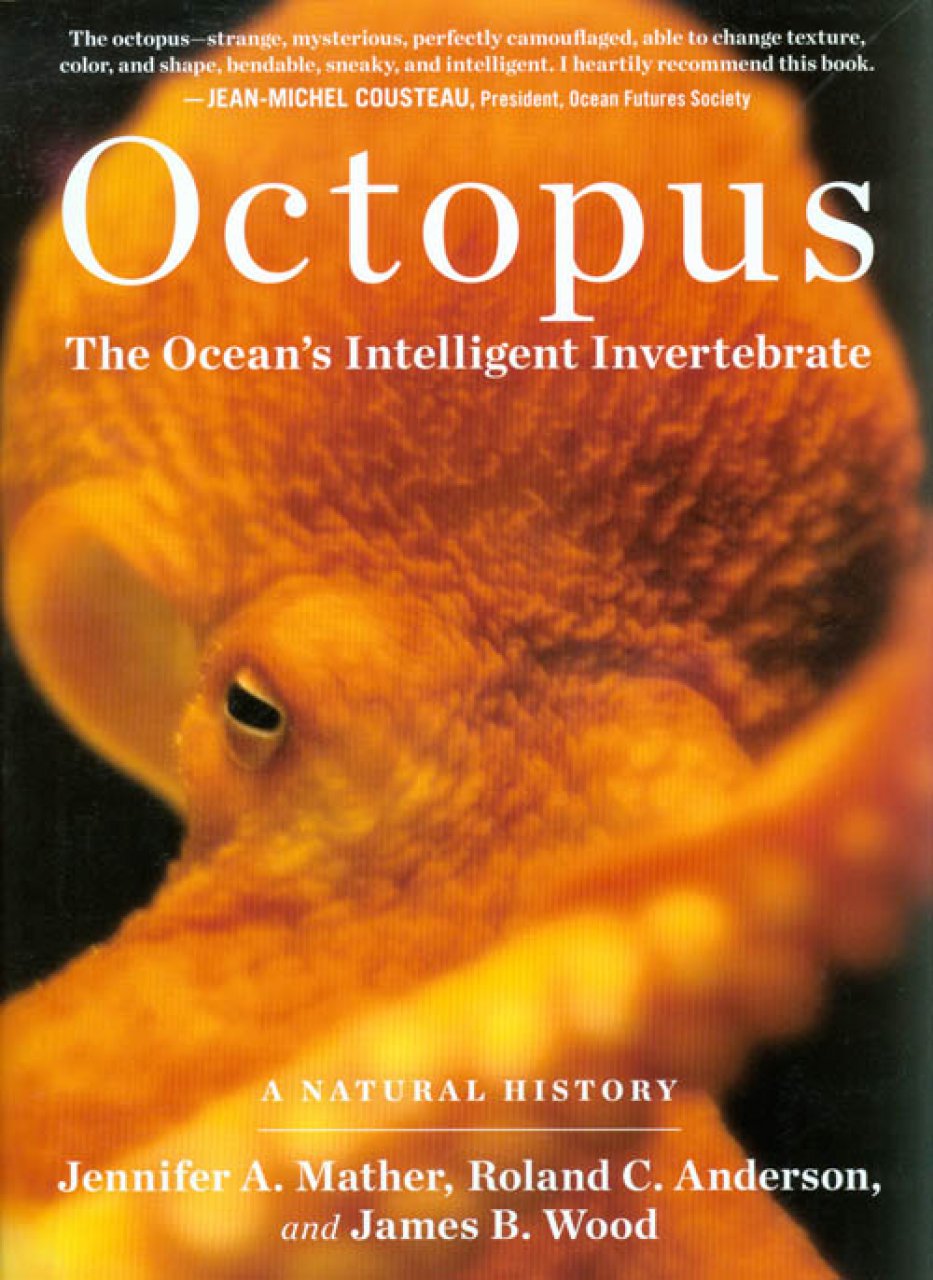
Swimming in another kind of pool is responsible for other evolved features in batrachians: their sometimes vivid colours or cunning camouflage. For millions of years, images of batrachians have been created in the chemical sludge of predators’ brains. And so, like snakes and wasps, batrachians signal their toxicity with colour. Or use colour to disguise their outlines or blend into the background. But batrachians are also like octopuses and other cephalopods: they can change their colour using special structures in their skin called chromatophores. One of the briefest but most interesting sections in this book discusses this shade-shifting and the cells responsible for it: the melanophores (responsible for black and brown colouration), xanthophores (yellow), erythrophores (red and orange), and iridophores (responsible for iridescence in the poison-arrow frogs). But what is briefly mentioned is extensively illustrated: almost every page has one or more colourful photographs of frogs and toads, usually in what appears to be their natural habitat.

There are also diagrams of batrachian anatomy and evolutionary relationships and pictures of art and sculpture in chapter five, “Frogs in Myth and Culture”. You’ll learn in the evolutionary discussions that toads aren’t a distinct group, because they don’t have a single common ancestor distinguishing them from frogs. But they look different to us and chapter five says that they were sacred to Heqet, the Egyptian goddess of childbirth and fertility. She’s depicted with an almost scientifically precise green toad, or Bufo viridis, on an ivory obstetric wand found near Thebes and dating from “around 2000 to 1700 BCE” (pg. 131). That “BCE”, like the “humanmade objects” mentioned on page 47, is a reminder that Ellin Beltz is a modern, and politically correct, American, unlike a Californian born in the Victorian era whose absence can’t, alas, be called a flaw in this book. The Auburn writer Clark Ashton Smith (1893-1961) and his interplanetary toad-god Tsathoggua and man-slaying toad-witch Mère “Mother of Toads” Antoinette aren’t famous and Beltz may never have heard of them. Instead, she discusses Shakespeare and the three toad-toxin-brewing witches of Macbeth (1611), Mark Twain and “The Celebrated Jumping Frog of Calaveras County” (1867), and Kenneth Graham and Toad of Toad Hall from Wind in the Willows (1908).

In short, she covers all the batrachian bases, from biology to books by way of batrachophagous bats and a bee-eating Bufo japonicus. The batrachophage, or frog-eater, is the fringe-lipped bat, Trachops cirrhosus of Central America, which tracks its prey by homing in on their calls. And here’s another acoustic anecdote to end on, demonstrating that Hollywood’s hegemony is partly herpetological:

Chorus frogs, Pseudacris spp., include the Pacific treefrog, Pseudacris regilla, the “ribbet frog” known to every movie fan. At some time in the early days of talkies, someone recorded frogs in a pond, probably near the famous Hollywood sign. The same audio loop is used over and over again in movies, leading to hysteria among amphibian researchers who hear “ribbet” in darkest Africa, South America and Australia… The Pacific treefrog is actually restricted to the western edge of North America. (ch. 2, “Frog Families”, pg. 49)

Double Bubble

The most mysterious thing in the universe is also the most intimate: consciousness. It’s an inti-mystery, something we experience constantly at first hand and yet cannot describe or explain. We are each a double bubble: a bubble of flesh and a bubble of conscious experience. The second bubble bursts regularly, when we sleep. Sooner or later, the first bubble will burst too, when we die. And that will be it for the second bubble, the bubble of consciousness. Or will it? Can consciousness survive death? Can it exist without a material substrate? Or without a particular kind of material substrate: the soggy, sparky substance of the brain? Can the clean, dry metal of a computer be conscious? Who knows? The double bubble attracts lots of double-u’s: what, where, why, when, (w)how. What is consciousness? What is its relation to matter? Is it king or courtier? Where does it exist? Why does it exist? When? And how?

Continue reading Double Bubble

Spin: The Beginning

Spiders, Michael Chinery, with illustrations by Sophie Allington (1996)

Spiders are special: they spin. And they’ve been doing so for millions of years. Their speciality is the root of their name: spider is from Middle English spither, meaning “spinner”. The root is even more obvious in German: Spinne. Not all languages call spiders spinners, but then not all spiders obviously spin. Some don’t make webs, though “all species protect their eggs by packing them in silken cocoons” (pg. 24). Not all spiders use venom either, but all of them are predators, mostly on insects and other arthropods, sometimes on larger prey like lizards, birds, and even fish. That is another part of what is interesting about them: like all predators, they are lurkers on the threshold between life and death. Spiders are dedicated death-dealers and sophisticated slayers. To see that dedication and sophistication in action, just watch a spider spinning its web. It will be using a minute brain to follow complex but flexible rules, because invariable webs would not fit an variable world. This is why spiders, like human beings, need nervous systems: web-making is an instinct, laid down in the genes, but instincts have to be triggered and adjusted according to the messages in sense-data.

Front cover of Spiders by Michael Chinery, illustrated by Sophie Allington

One thing needing adjustment is the kind of silk used: you’ll learn from this book that in most species “individuals possess between three and six different kinds of silk” (pg. 25). It ranges from pyriform and ampullate silk, extruded from the “anterior spinneret” and used for webs and life-lines, to aggregate and flagelliform, extruded from the “posterior spinneret” and used, inter alia, for the sticky threads of orb-spiders’ webs. There’s also cribellate silk, produced by the cribellum, or “little sieve”, a special organ in the cribellate spiders:

The cribellate spider produces perfectly normal silk from its spinnerets and then covers them with the cribellum silk, which is brushed from the cribellum by a compact patch of bristles, called the calamistrum [Latin for “curling-iron”], on each hind leg. Each bristle carries several rows of microscopic teeth and acts like a minute hair brush. The cribellum silk forms ribbons but, because the legs vibrate rapidly when brushing, the individual threads – only 0.000015mm in diameter – are thrown into microscopic loops… Any insect unfortunate to touch the ribbons quickly gets its feet entangled in the loops and is held fast – without any glue. (“Spider Silk”, pg. 28)

Sticky aggregate silk is a chemical solution to the problem of catching prey; entangling cribellate silk is a physical one. Neither has been consciously designed: evolution did the work by selecting and rejecting millions of individuals down millions of generations. It’s important, and awe-inspiring, to remember that spiders and humans have a common ancestor that didn’t use silk. The spider-line, step by unconscious step, perfected the manufacture and manipulation of silk; our line, step by less unconscious step, perfected the manufacture and manipulation of mind. That’s why human beings write books about spiders and not vice versa. But both lines, the arachnid and the human, were undertaking a mathematical journey: we followed complicated trajectories in multi-dimensional information-space, or rather our genes did. Natural selection, and its odder and sometimes antagonistic cousin sexual selection, are editors of a microscopic text called DNA, which lays down recipes for brains, bodies, and behaviour.

Most natural history books describe what is cooked by DNA, not the genetic recipe itself, but then the cooked product is the most obvious thing and what we’ve been familiar with longest. But all biology, whether it’s studying bats or beetles, frogs or fungi (or dragonflies), is about evolutionary variations on an organic theme. DNA is like a giant recipe-book or giant musical score: each species is a particular dish or particular melody. Higher biological divisions are like styles or genres: spiders taste or sound similar, as it were, and they harmonize with scorpions, mites, and ticks, other eight-legged members of the class Arachnida. But the harmonies extend further and terrestrial life can be seen as a giant symphony played by the orchestra of evolution. If we discover life away from the earth, we’ll find it playing a half-familiar tune: mathematics, the Magistra Mundi, or Mistress of the World, will have been waving her baton there too and Richard Dawkins suggests that Darwinian evolution may be a universal principle, as the only means for life to arise from inanimate matter.

Or the only means until we can create life ab novo, that is: human beings are on the verge of being able to synthesize life from chemicals. Intelligent design, a fantasy of the anti-Darwinists, will soon become a reality in human laboratories. It will be further proof of the praeternatural nature of humanity, but this book provides proof of that too. Pages sixty-four to sixty-five, for example, illustrate the arachnid instinct of web-making using the human skill of drawing. One of the attractions of the book is that, apart from a photograph of the yellow-and-black orb-spider, Argiope bruennichi, on the front cover, all the illustrations are hand-drawn, from the anatomical cross-section of a typical spider on page twenty-three to the “balletic courtship dance of a jumping spider” on page eighty-seven. You can admire the sophistication of Sophie Allington’s drawings rather in the way you admire the sophistication of a spider’s web, though the credit of a human’s abilities generally accrue to the individual, rather than to the species. But is drawing a Darwinian activity like web-making? That is, is it a means of enhancing the survival of an individual and the transmission of the individual’s genes? One big difference between drawing and web-spinning, of course, is that not all human beings draw or create other forms of art. And human beings will not have specific genes for drawing in the way that we have specific genes for language. Which is another praeternatural part of human nature: all other forms of life use a symbolic code to survive, because DNA is a symbolic code, but human DNA allows us to use a second symbolic code, language – and sometimes a third, mathematics.

The mathematics in this book is implicit, but Michael Chinery supplies the explicit language. Although his prose is not as obviously and powerfully admirable as the illustrations, it provides the most meat for the mind and the imagination:

Bolas spiders, also called angling or fishing spiders, live in North and South America, Africa and Australasia. Odd-looking creatures whose squat bodies are often studded with horns and “warts”, they are among the very few araneid spiders whose bites are potentially dangerous to people. Typified by Australia’s Dichrostichus magnificus, commonly known as the magnificent spider, they cling motionless to leaves and twigs by day and don’t stir till nightfall. Hanging from a short thread attached to the underside of a twig, each spider pulls out a “fishing line” about 5cm (2 inches) long and carrying one or more blobs of very sticky glue. Whirling the line about with one of its legs, the spider waits for a moth to take the bait. This seems a bit of a hit-and-miss method, and pretty tiring as well, but the spider has a secret weapon in its armoury – a scent just like that released by certain female moths. The male moths can’t resist it and come flocking to the spider’s line… The bolas spider does not usually need to whirl its line around for more than a few minutes each evening. (“Finding Food”, pg. 71-2)

This hunting technique is ingenious, effective, and entirely undesigned: lying isn’t confined to human beings, because this type of spider is lying with a chemical, rather as human fisherman lie with baited hooks. Other spiders fish more literally: the European aquatic spider, Argyroneta aquatica, “inhabits ponds and slow-moving streams all over the temperate regions of Eurasia” (pg. 48-9). It builds a “domed web” underwater, fills it with air from the surface, and uses it as a base for hunting and chamber for feasting: “water would dilute the digestive enzymes poured onto the prey if the spider tried to dine in the water” (pg. 49). But digestive enzymes don’t just help spiders feed: they help spiders overwhelm their food. Like snake venoms, spider venoms are a kind of super-charged saliva, designed to deal death rather than simply help with digestion. Webs are not complete solutions to the problems of predation: large insects can break free, given time, or fight back when cornered. Venom is a force-multiplier, or rather a force-nullifier. And it is a sinister thing to see in operation, as a non-scientific observer of spiders, John Betjeman (1906-84), described in his poem “The Cottage Hospital”:

…Apple and plum espaliers
   basked upon bricks of brown;
The air was swimming with insects
   and children played in the street.
Out of this bright intentness
   into the mulberry shade
Musca domestica (housefly)
   swung from the August light
Slap into slithery rigging
   by the waiting spider made
Which spun the lithe elastic
   till the fly was shrouded tight.
Down came the hairy talons
   and horrible poison blade
And none of the garden noticed
   that fizzing, hopeless fight.

(from A Few Late Chrysanthemums, 1954)

The beauty of a web, and sometimes of the web-mistress too, combine unsettlingly with the deadliness of its purpose: spiders are like tiny vampires. But they aren’t very dangerous to man and it’s puzzling that one of the commonest phobias, arachnophobia, should be inspired by them. There are a lot of arachnophobes in countries that don’t have dangerous spiders and their phobia can seriously affect their lives. Is it an exaggeration of an instinct that was written into our brains long ago, when we were smaller and more vulnerable creatures living in the tropics? Perhaps. I like the idea that human beings have records of spiders not just in our books and idioms, but in our DNA too, transmitted from generation to generation since we left the trees of Africa. For example, I like and am fascinated by spiders, but I am still startled if I see a large spider unexpectedly close at hand, even though I know that no species in Britain is dangerous and that none will bite without being provoked.

But fear is a potent, and piquant, spice at the spider-feast. Spiders are like snakes and sharks: interesting in part because they are associated with pain, injury, and death. This book discusses that aspect of their natural history and much more beside. Its chatty text and attractive illustrations make it an excellent introduction to a strange and wonderful family of animals, and to biology and evolution in general. Spiders have existed long enough and widely enough to have diversified into all manner of ecological niches, from parasitism to mimicry. Some spin silk, some squirt it. Some catch prey, some steal it. Meet them all in this set of symbols and codes.

For the Love of Mycology

Mushrooms, Roger Phillips, assisted by Derek Reid, Ronald Rayner, Geoffrey Kibby, and Alick Henrici, designed by Jill Bryan (MacMillan 2006)

In 1981, Roger Phillips began his career in natural history publishing with a book on mushrooms. In 2006, he was back for another bite at the chanterelle. And it would have been a fitting way to end his career, because this is one of the most important books ever published on fungi. It puts its best photo forward for hundreds of pages and hundreds of species, all the way from the massive, like the Giant Puffball, Calvatia gigantea, which can be bigger than a man’s head, to the minute, like the Conifer Disco, Lachnellula subtilissima, which is smaller than a baby’s fingernail. En route, it takes in the gorgeous, the gaudy, and the grotesque, like the Angel’s Wings, Pleurocybella porrigens, the Vermilion Waxcap, Hygrocybe miniata, and the Goliath Webcap, Cortarius praestans. With the g-crew come the delicious, the deadly, and the delicate: the Oyster Mushroom, Pleurotus ostreatus, the Destroying Angel, Amanita virosa, and the Milky Bonnet, Hemimycena lactea. And let’s not forget the phantasmagoric, the phosphorescent, and the phallic: the Devil’s Fingers, Clathrus archeri, the Jack O’ Lantern, Omphalotus illudens, and the Stinkhorn, Phallus impudicus. Which is Latin for “shameless dick”. Fungi can also look like ears, brains, and birds’-nests: the Jelly Ear, Auricularia auricula-judaei, the Morel, Morchella esculenta, and the Common Bird’s Nest, Crucibulum laeve. Oh, and they can look like cages, clubs, and coral too: the Red Cage, Clathrus ruber, the Giant Club, Clavariadelphus pistillarius, and the Violet Coral, Clavaria zollingeri.

And that covers only their appeal, or offence, to the eye and the taste-buds: they can also appeal to, or offend, the nose and fingertips. On olfactory side there are the Coconut Milkcap, Lactarius glyciosmus, the Pear Fibrecap, Inocybe fraudans, the Geranium Brittlegill, Russula fellea, the Mousepee Pinkgill, Entoloma incanum, the Iodine Bolete and Bonnet, Bolitus impolitus and Mycena filopes, and the “Stinking” set: the Brittlegill, Russula foetens, the Dapperling pair Lepiota cristata and L. felina, and the Earthfan, Thelephora palmata. On the tactile side, there are the various Velvets: the Bolete, Suillus variegatus, the Brittlegill, Russula violeipes, the Shank, Flammulina velvutipes, the Shield, Pluteus umbrosus, the Tooth, Hydnellum spongiosipes, and the Toughshank, Kuehneromyces mutabilis. There are too many shaggies, slimies, and slipperies to list, like the Shaggy Parasol, Macrolepiota rhadoces, the Slimy Waxcap, Hygrocybe irrigata, and the Slippery Jack, Suillus luteus. All in all, mushrooms make me muse on Middle-earth. Tolkien’s world is full of richness and variety. So is the world of fungi. The folk and things of Middle-earth can be beautiful or ugly, delicate or sturdy, colourful or drab, tasty or deadly, lovers of light or dwellers in dark. Mushrooms, toadstools, and their smaller relatives are the same. You could find one or more species in this book to match all of Tolkien’s creations: men, wizards, hobbits, elves, dwarves, orcs, trolls, ents, and more. The Cortinarius genus is hobbit-like, for example: stocky, sturdy, and coloured mostly in earthy ochres, yellows, and reds. More elf- and wizard-like are the genera Lepiota and Macrolepiota: these mushrooms are taller and more attractively proportioned. For pre-Tolkienean elves, look to the small and slender Micromphale, Omphalina and Mycena genera, shaped like little umbrellas, bonnets, and parachutes.

For the dark side of Tolkien’s world, look everywhere: almost every group of fungi can supply poisons and sicken or slay the incautious or ignorant. But the deadliest of all are the Amanitas. There’s something suitably and sardonically Sauronic about the modus operandi of the Deathcap, Amanita phalloides:

Poisoning by the Deathcap is characterized by a delay of 6 to 24 hours between ingestion and the onset of symptoms, during which time the cells of the liver and kidney are attacked… The next stage is one of prolonged and violent vomiting and diarrhoea accompanied by severe abdominal pains, lasting for a day or more. Typically this is followed by an apparent recovery, when the victim may be released from hospital or think their ordeal is over, but death results from kidney and liver failure in a few days. (pg. 144-45)

No antidote has yet been discovered to the amatoxins, as the most dangerous compounds are called, and the mortality rate from Amanita poisoning is “still up to 90%”. The Fly Agaric, Amanita muscaria, with its red, white-spotted cap, is the most famous in the genus, but not responsible for the most fatalities. It’s trippily toxic: “a strong hallucinogen and intoxicant, and used as such by the Sami of northern Scandinavia” (pg. 140). Phillips suggests that the Sami began to use A. muscaria by “observing its effects on reindeer”, which “like it so much that all one has to do to round up a wandering herd is to scatter pieces of Fly Agaric on the ground.” Elsewhere in Europe, it was used against flies: the common English name “comes from the practice of breaking the cap into platefuls of milk… to stupefy flies.” Fungi are not plants and form a separate kingdom in biological classification, but they are like plants in the way they can be either delicious, deadly, or dementing.

But if some weren’t so delicious, some others wouldn’t have dealt death so often: the Amanitas are similar in appearance to the Wood mushrooms in the genus Agaricus and can be found in similar places. Agaricus contains some of the most widely eaten of all mushrooms, including the Cultivated Mushroom, A. bisporus, “believed to be the wild form of the many cultivated crop varieties” (pg. 242). But literally cultivated mushrooms don’t compare to wild-grown: I can still remember the richness and flavour of some Field Mushrooms, A. campestris, I picked near the witches’ haunt of Pendle Hill in Lancashire. My other gastro-mycological excursions have included wild-grown puffball and a large Oyster Mushroom that had sprouted from the wood of a sea-side ice-cream stand. It fell off under its own weight, or I wouldn’t have carried it off: Oyster Mushrooms aren’t just good to eat, they’re also good to look at and I would have left it undisturbed otherwise. But picking a mushroom is rather like picking an apple or pear: the visible part is a fruiting body that sprouts from the thread-like hyphae growing in soil, wood, compost, or dung. So you don’t necessarily kill a fungus by picking the part you can see, though you do obviously interfere with its reproduction. The part you can see is what this book is about: unlike David N. Pegler’s Pocket Guide to Mushrooms and Toadstools, there are no drawings of the microscopic spores, merely descriptions: for example, “9-12×5-7μ, elliptical to almond-shaped. Spore-print dark purplish-brown. Chrysocystidia absent. Cheilocystidia lageniform, thin-walled” is in the entry for the Blueleg Brownie, Psilocybe cyanescens.

The fungus itself is described as “hallucinogenic” and “said to be extremely strong” (pg. 253). This book isn’t just for those seeking succulence: it can guide the searcher for synaesthesia too. The Liberty Cap or Magic Mushroom, Psilocybe semilanceata, doesn’t just open the doors of perception: it can throw down the walls of the senses too and make you hear sights or taste colours. The psycho-active psilocybes are all covered and described, but I’ve preferred to leave psycho-mycology alone and get my mental thrills from the look of, and language about, fungi. The scientific names, as always, are interesting, informative, and occasionally uninspired: with a common name like Angel’s Wings, Pleurocybella porrigens has a disappointing scientific name. But there’s a surprisingly complex descriptive vocabulary to learn if you’re interested in acquiring an expertise in these apparently primitive plant-alikes. You’ll even have to dabble in chemistry: the simplest way to distinguish some species is to dip them. The “chrysocystidia” mentioned above are cells “that turn yellowish” – Greek chrysos, “golden”, is hyperbolic – in “alkali solutions”. That’s from the glossary on page 13, but the weird and wonderful words – chlamydospore, dendrophyses, gloeocystidia, lageniform, merulioid, sphaeropedunculate – aren’t illustrated, only defined. This isn’t a textbook of mycology, but an identification guide. And I wouldn’t say it was a work of art like Pegler’s Pocket Guide. It’s well-designed and aesthetically pleasing, but photographs have a superficiality, even a triviality, that Pegler’s drawings don’t. Yes, you can see exactly how the fungi look from a photograph, but there’s no room for the wit and quirkiness I described in my review of the Pocket Guide: the closest you get to the extra-mycological touches I described there is an occasional pine-cone, as in the photos for the Pine Milkcap, Lactarius musteus, the Pinecone Cap, Strobilurus tenacellus, and the Rosy Spike, Gomphidius roseus.

But David Pegler covered far fewer species in a smaller and more subjective book. His science was stronger because he included images of spores, but Roger Phillips has contributed more to mycology, let alone to other fields of natural history. If I had to choose between the two books, I would choose the Pocket Guide, because it’s richer and earthier, and also more minor, in a way that suits its topic better. Fortunately, I don’t have to choose: both books are available for mycophiles and both help explain what is fascinating about fungi. But there are universal aspects to their appeal, beside the particularity of their fungality: maths, the Magistra Mundi, or Mistress of the World, reigns among mushrooms as She reigns everywhere else. Like beetles, though rather more so, fungi are topological variants on a theme: evolution has shaped, squeezed, slendered, squattened, and swollen them over millions of years to produce the huge variety on display in this book. I think architecture can illuminate how they grow: fungi face some of the same problems as architects in erecting and securing their fruiting bodies, but they’re working with less sturdy material. Fungal flesh doesn’t have the toughness and flexibility of wood or the solidity and sturdiness of stone, but it can do surprising things: the Pavement Mushroom, Agaricus bitorquis, is “sometimes found growing through asphalt” (pg. 241).

“Pavement Mushroom”, like “Orange Peel Fungus”, “Purple Stocking Webcap”, “Rooting Poisonpie”, and “Snaketongue Truffleclub”, is one of the odd common names that may catch your eye in the detailed index, which offers specific and generic names, including the outmoded ones that Phillips wanted to update from his early book. But he’s expanded as well as revised, adding some oversea species that “travellers might find on their visits abroad” (introduction, pg. 6). Or might find unexpectedly at home: the Plantpot Dapperling, Leucocoprinus birnbaumii, is a “tropical species that can be found in heated greenhouses” and is shown growing with a potted cactus on page 135. Not illustrated, but mentioned in the entry for the Deathcap, is the “tropical fungus Galerina sulcipes”, which “has a higher α-amanitin content” and is “occasionally found in hothouses” (pg. 145). That would be a sinister note to end on, so instead I’ll end on the Scarlet Elfcup, Sacroscypha austriaca. This is one of my favourite fungi in the book. It is indeed scarlet, it does indeed look like a cup, in the early stages of its growth at least, and its common name is a reminder of why mushrooms are associated with magic and fungi with the fantastic. They can appear very suddenly in unexpected places and have a special association with the melancholy and mystery of autumn. The more elaborate and evolved plant and animal kingdoms are more obvious and found in more places, but they couldn’t exist without fungi, which “break down leaf litter and dead wood and thus ensure that the surface of the world has a fertile layer of soil rather than being a heap of detritus” (pg. 6). In other words: no fungi, no flowers, firs, or figs. In short: no mushrooms, no man. The fungal kingdom isn’t, and can’t be, conscious of the debt owed to it by the other two kingdoms, but this book can be seen as part payment. To see the inhabitants of that mycological Middle-earth in all their variety and strangeness, look no further, because you’ll find no fungaller.