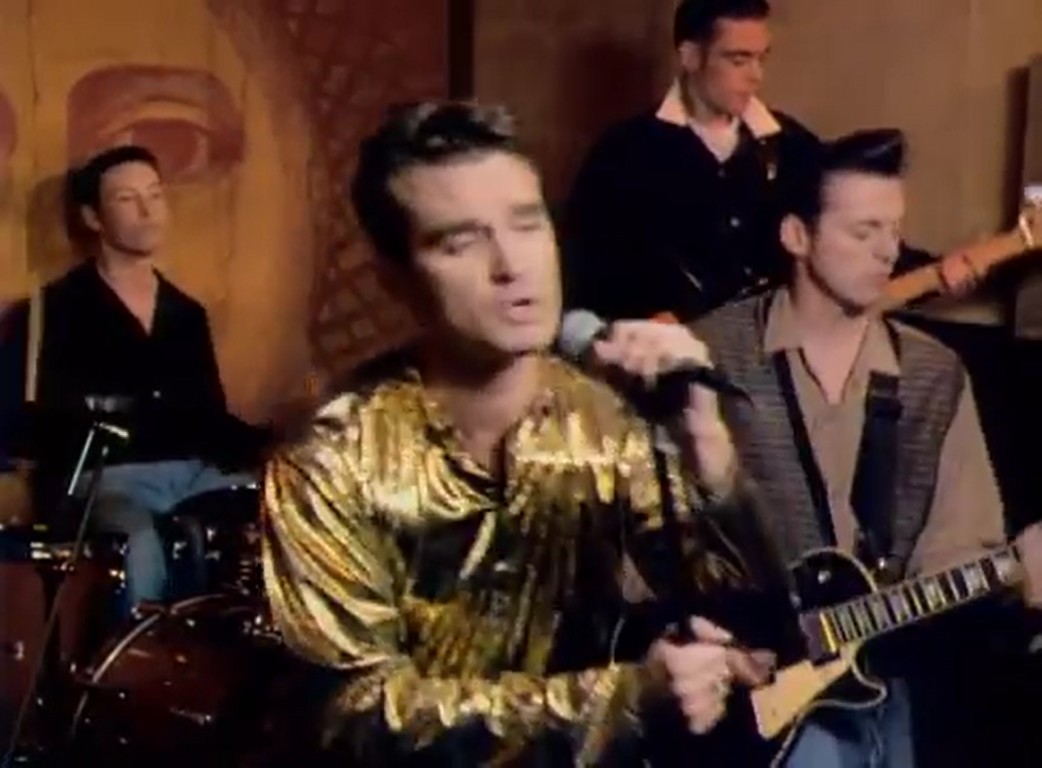
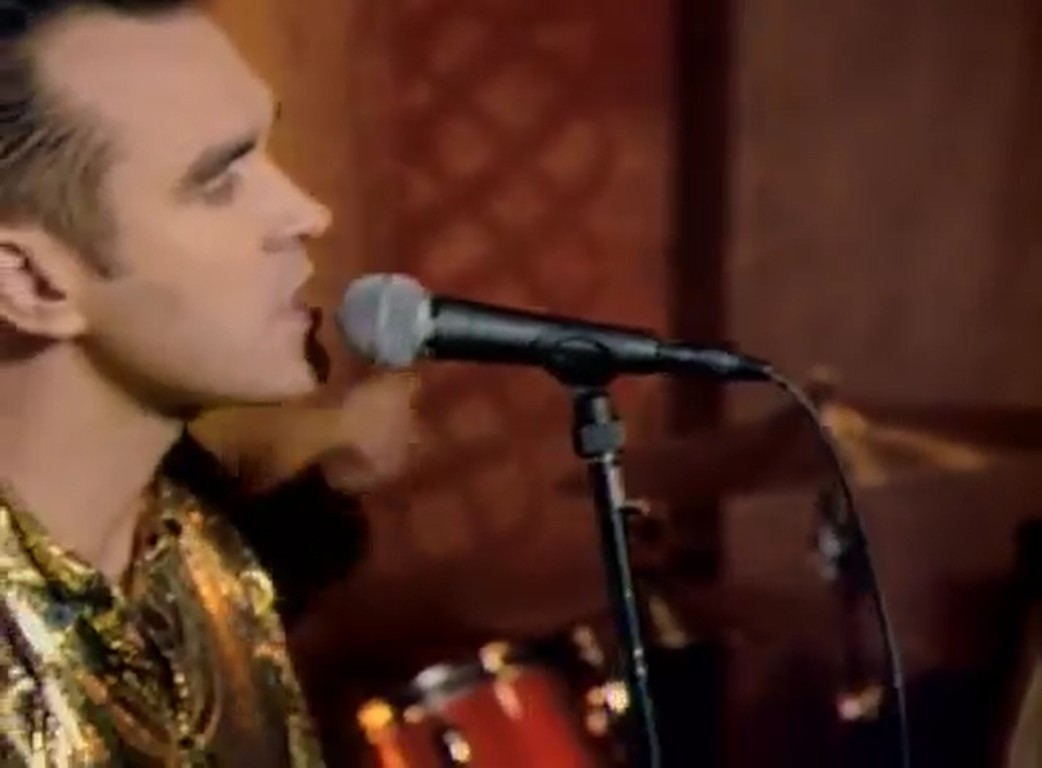

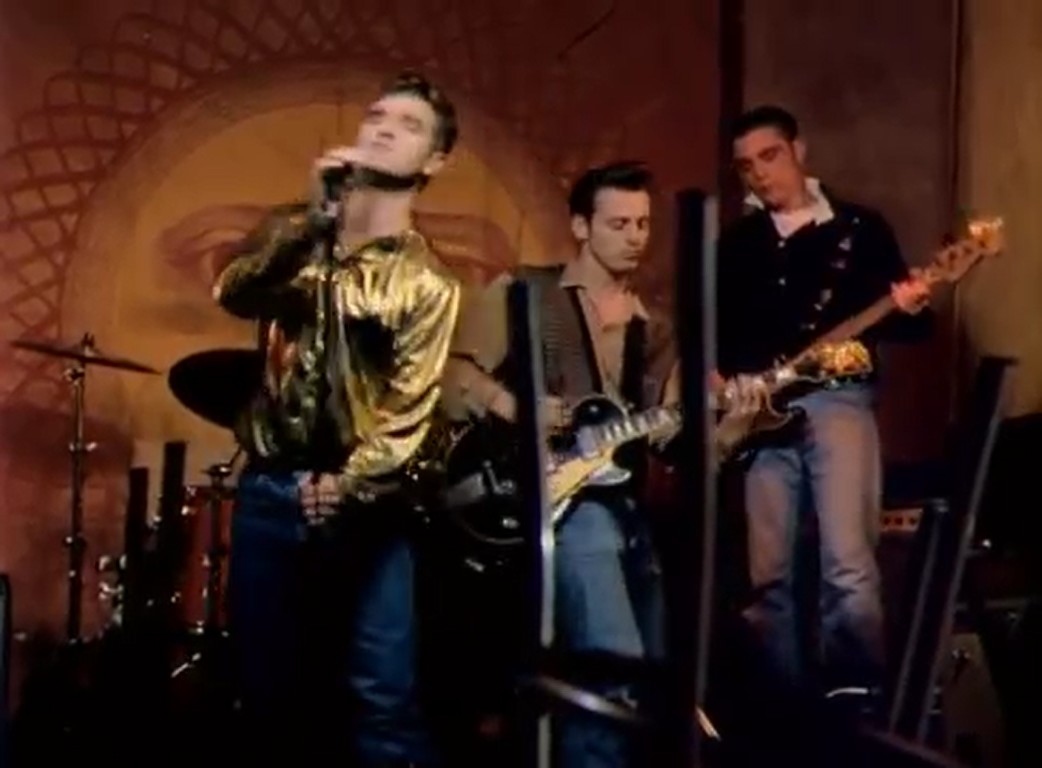
• Stills from the video for Morrissey’s “Glamorous Glue” (1992), directed by George Tiffin.


The Ligne Corolle or New Look by Christian Dior in 1947
Day-Star
A window
Across the water
Shards the light
Where a twinful daughter
Shared a middle-earth
Meal with me.
And I bought
That book on
Botany.
But the gull on the shore
Is a mystical door
No more, no more, no more.
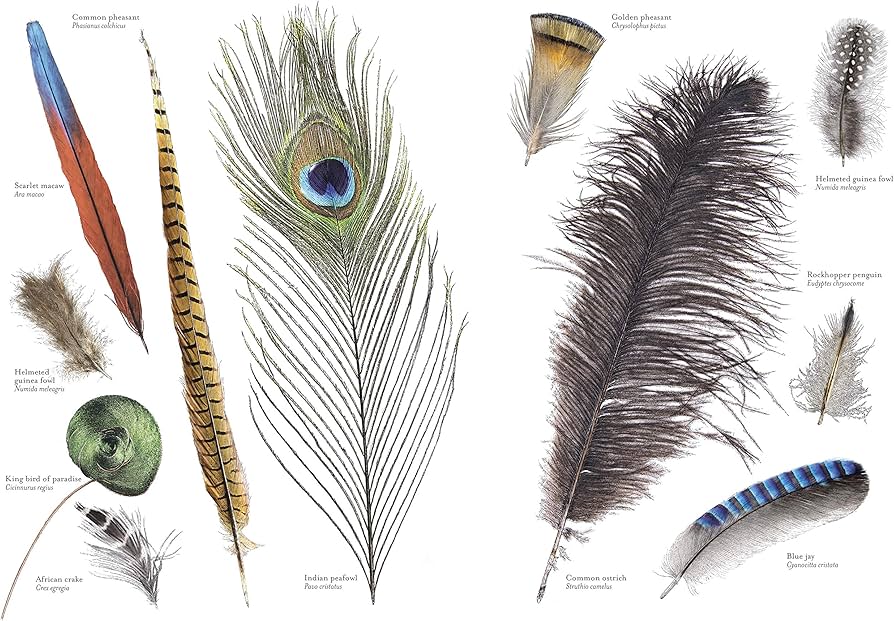
Feathers by Ben Rothery (click for larger)
Post-Performative Post-Scriptum
“Bennae Bellae” is a play on Pennae Bellae, which is Latin for “Beautiful Feathers” (Pennae Pulchrae would be better, but not as assonant).
Y Rhosyn a’r Wylan
There’s a rose at Number Seven,
Tho’ the air is wintered now,
And it glows at Number Seven,
In the brain behind thy brow.
There’s a gull that turns the stillness
Of the air above thy head:
’Tis the gull that spurns the illness
Of the creed where color’s dead.
There’s a rose at Number Seven;
There’s a gull that turns the air:
And what glows at Number Seven
Is the spurner turning there.
The fact is, we none of us enough appreciate the nobleness and sacredness of color. Nothing is more common than to hear it spoken of as a subordinate beauty, — nay, even as the mere source of a sensual pleasure; and we might almost believe that we were daily among men who
“Could strip, for aught the prospect yields
To them, their verdure from the fields;
And take the radiance from the clouds
With which the sun his setting shrouds.”
But it is not so. Such expressions are used for the most part in thoughtlessness; and if the speakers would only take the pains to imagine what the world and their own existence would become, if the blue were taken from the sky, and the gold from the sunshine, and the verdure from the leaves, and the crimson from the blood which is the life of man, the flush from the cheek, the darkness from the eye, the radiance from the hair, — if they could but see for an instant, white human creatures living in a white world, — they would soon feel what they owe to color. The fact is, that, of all God’s gifts to the sight of man, color is the holiest, the most divine, the most solemn. We speak rashly of gay color, and sad color, for color cannot at once be good and gay. All good color is in some degree pensive, the loveliest is melancholy, and the purest and most thoughtful minds are those which love color the most.
• John Ruskin, The Stones of Venice, Vol II, Chapter 5, xxx
AI-generated psychedelic cosmic cat (image from Etsy)
Peri-Performative Post-Scriptum
• cosmocrator ← κοσμοκράτωρ (kosmokrátōr, “cosmocrator”), from κόσμος (kósmos, “universe”) + κράτωρ (krátōr, “ruler”) (etymology at Wiktionary)

Coptic Cross with abbreviation Ⲓⲏ̅ⲥ̅ Ⲡⲭ̅ⲥ̅ Ⲡ̀ϣⲏⲣⲓ ⲙ̀ⲪϮ standing for Ⲓⲏⲥⲟⲩⲥ Ⲡⲓⲭ̀ⲣⲓⲥⲧⲟⲥ Ⲡ̀ϣⲏⲣⲓ ⲙ̀Ⲫ̀ⲛⲟⲩϯ,
Iêsous Piekhristos Epshêri Emefnouti, “Jesus Christ, Son of God” (see Wikipedia)
« Le noir, une non-couleur ? Où avez-vous encore pris cela ? Le noir, mais c’est la reine des couleurs ! » — Renoir (1841-1919)
• “Black, a non-color? Where did you get that idea? Black, why, it’s the queen of colors!”

When you stare at the cross for at least 30 seconds, you see three illusions:
• A gap running around the circle of lilac discs;
• A green disc running around the circle of lilac discs in place of the gap; and
• The green disc running around on the grey background, with the lilac discs having disappeared in sequence. — Lilac Chaser, Wikipedia
Elsewhere Other-Accessible…
• Troxler’s fading at Wikipedia