The Hex Crystals

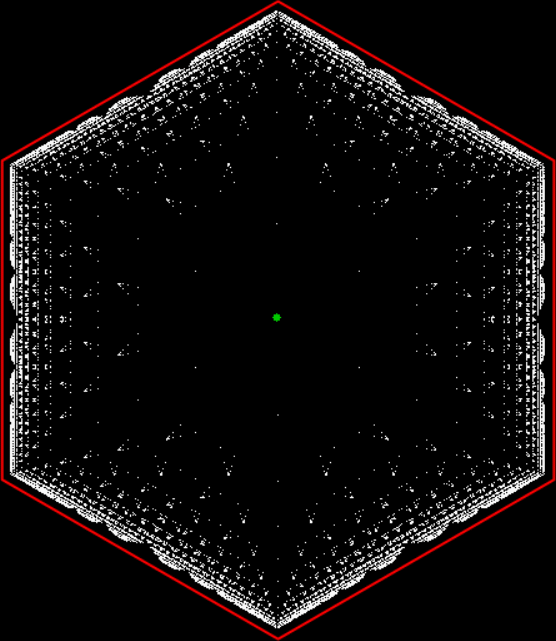
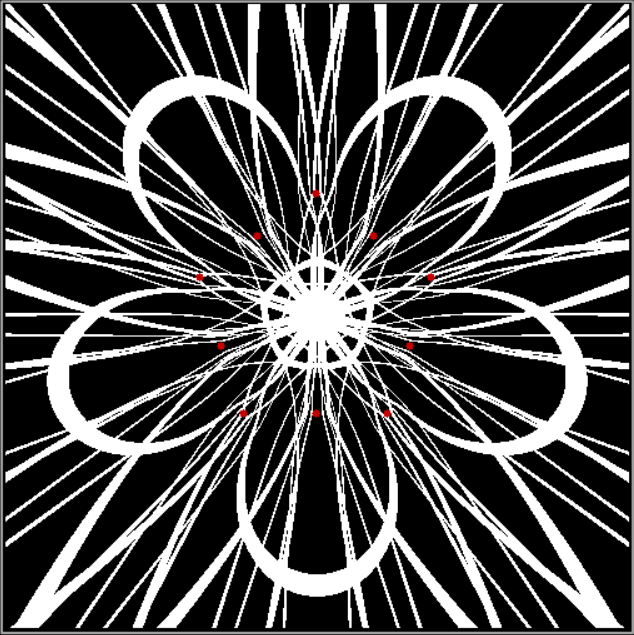
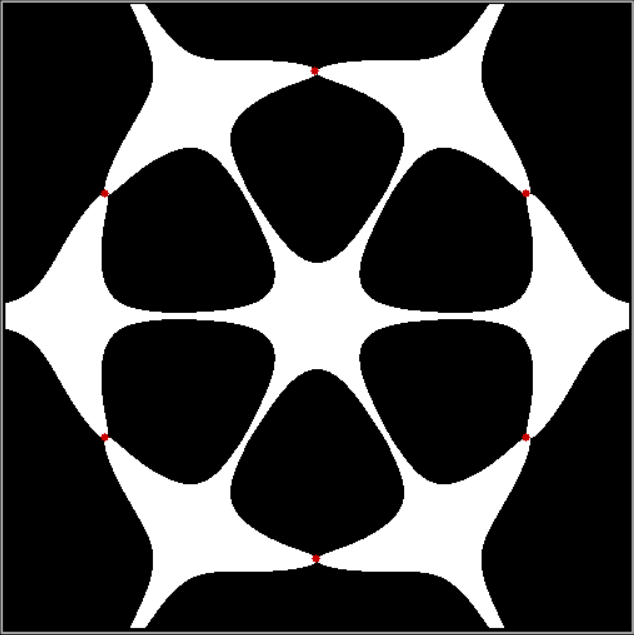
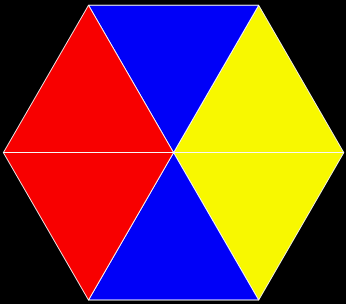
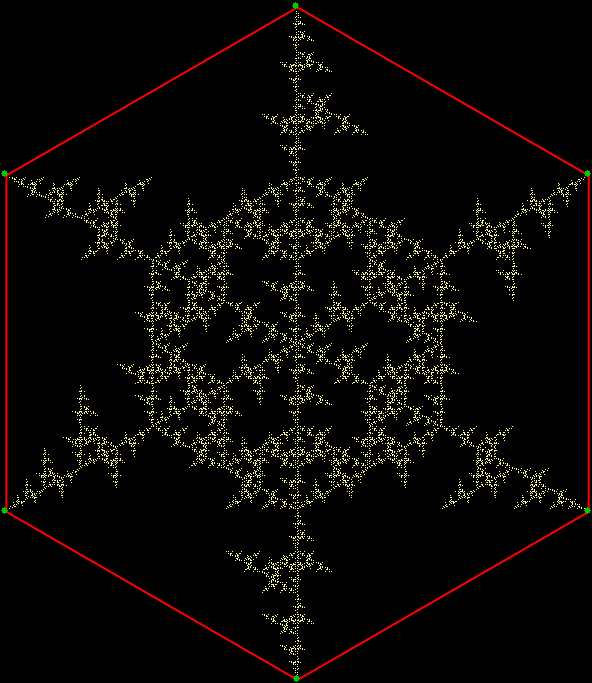
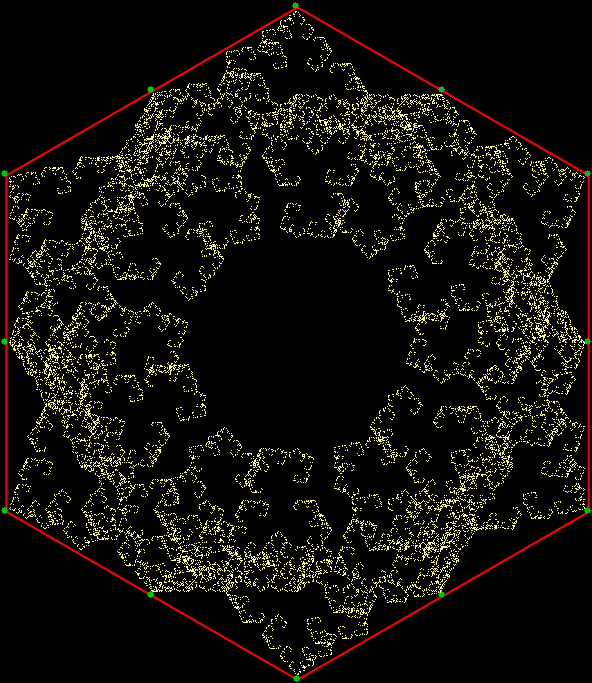
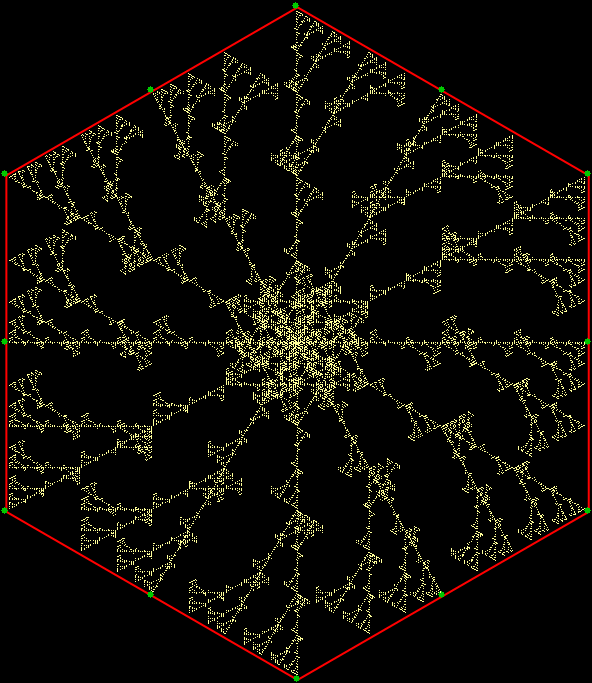
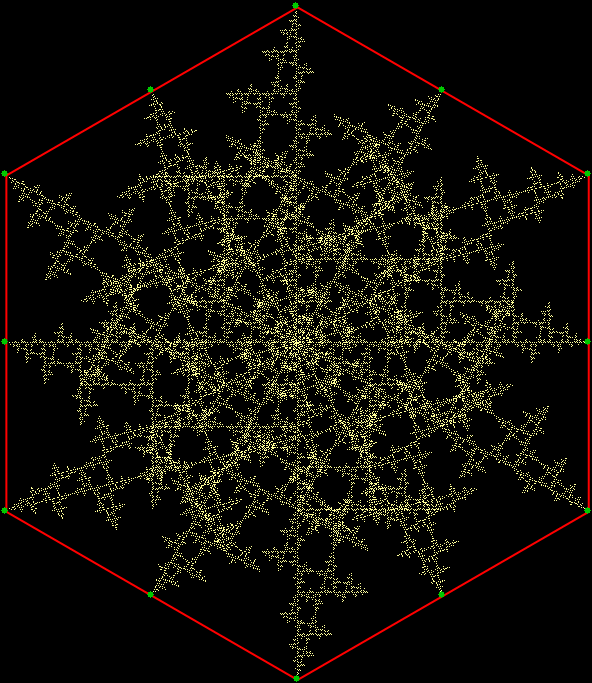
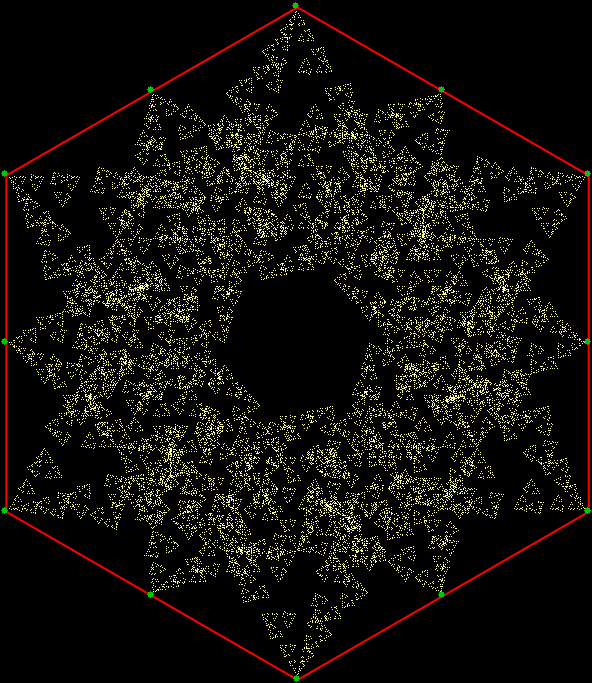
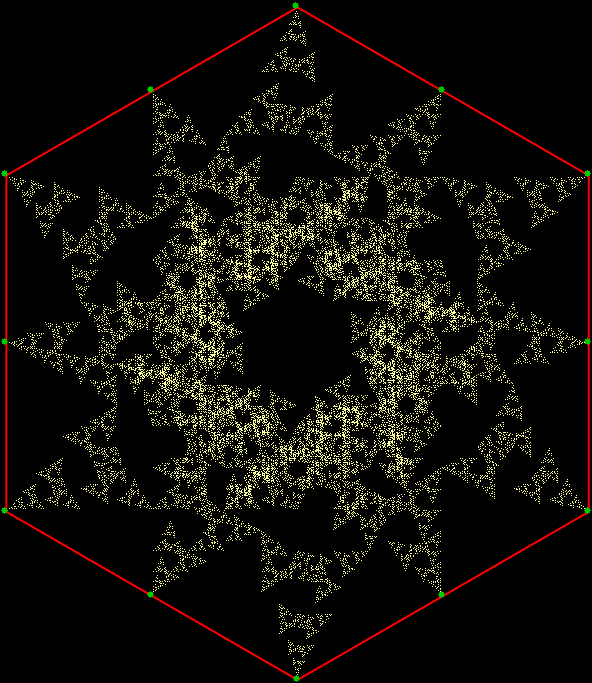
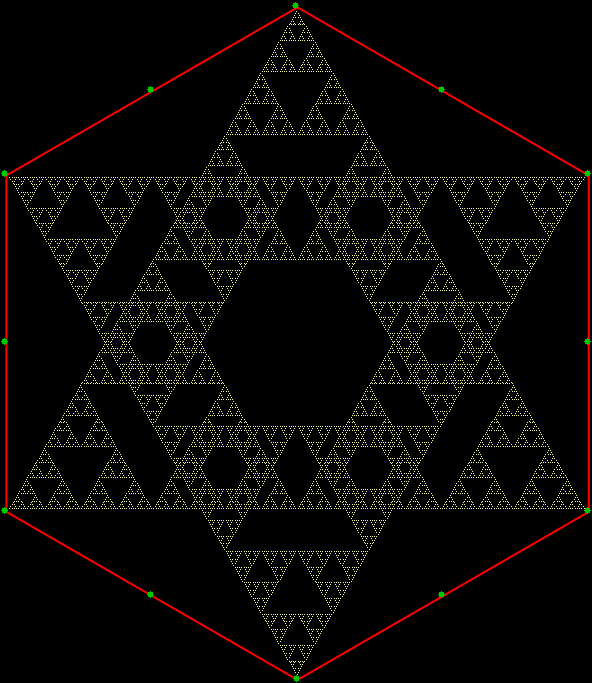
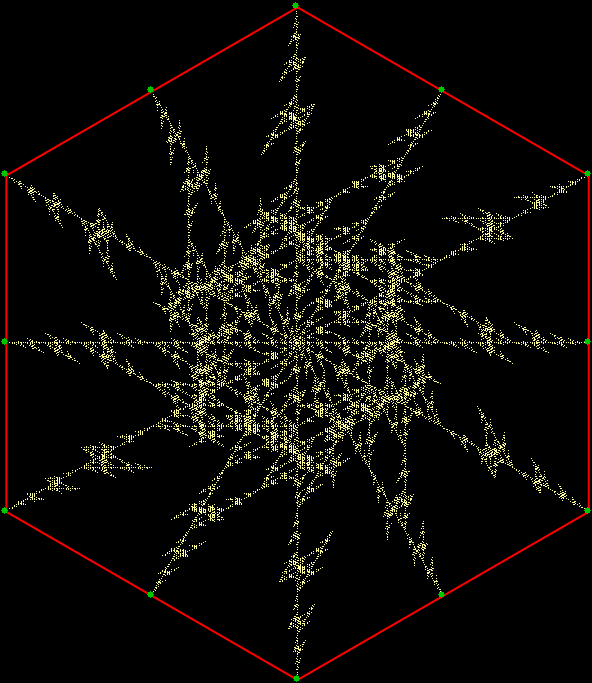
To coin a phrase: Never Mind the Bollocks — Here’s the Hex Crystals! And what is a hex crystal? It’s what I call a shape that’s created algorithmo inside a hexagon and looks like a crystal:
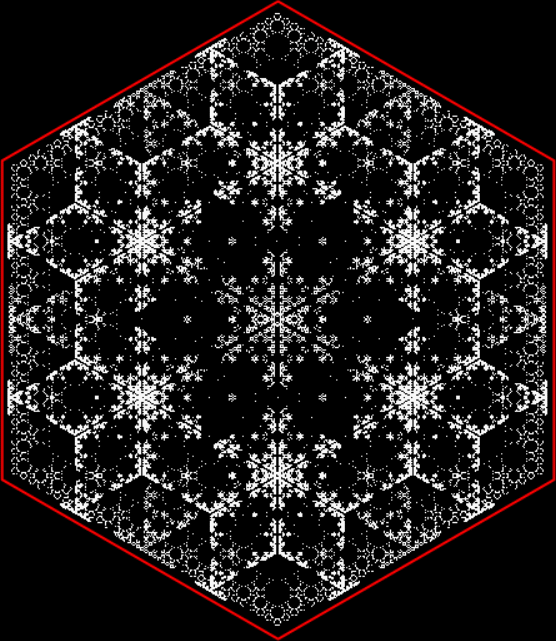
A hex crystal


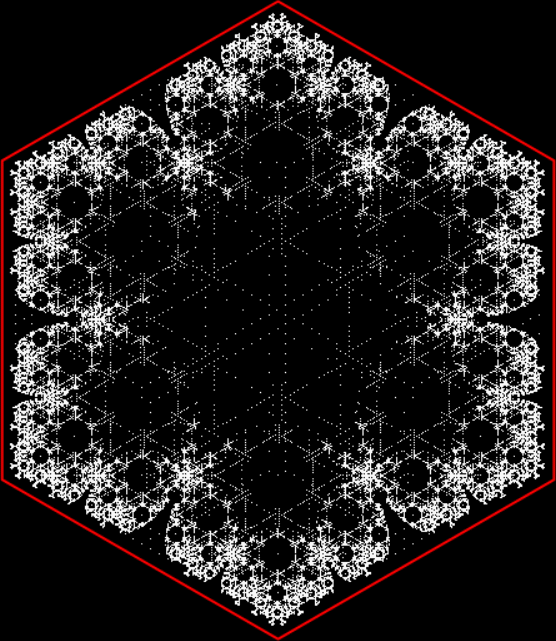
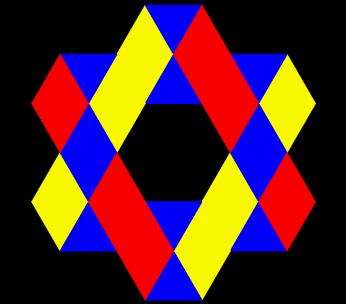
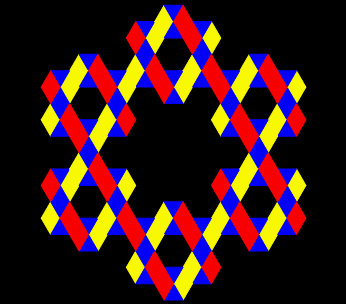
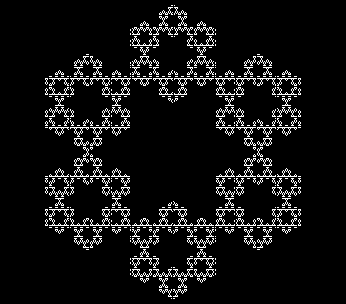
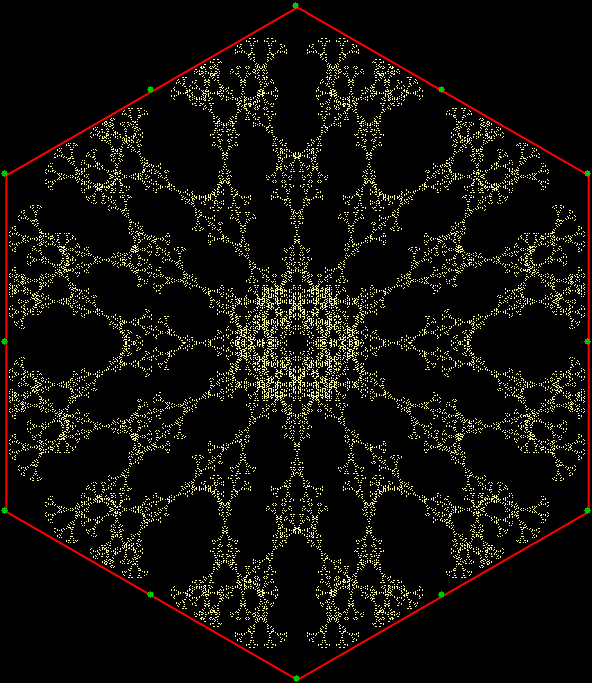
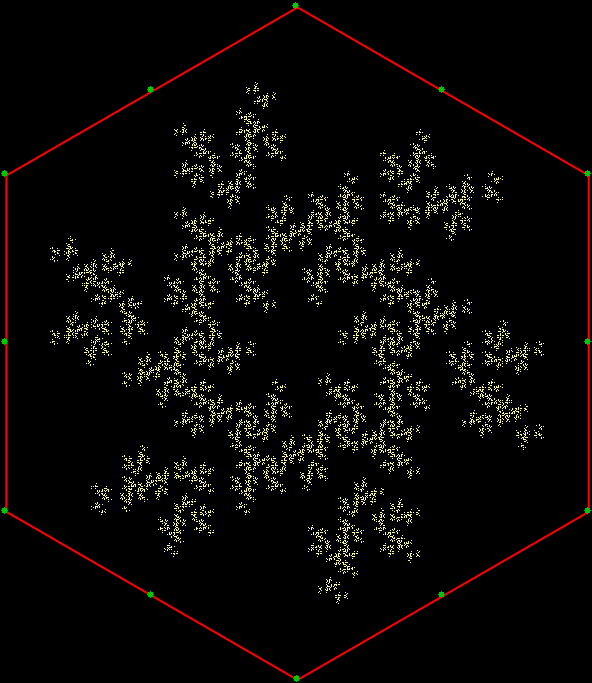
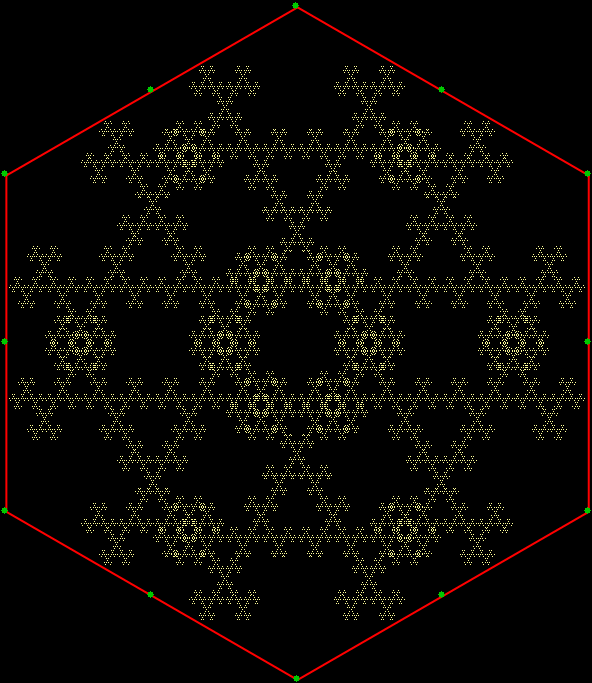
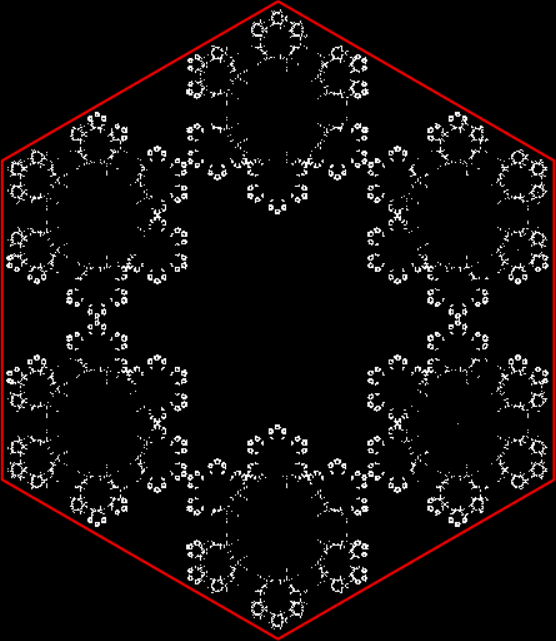
Here are some more hex-crystals:


I came across hex-crystals when I was looking at an interesting little geometrical question. How does sum(vd), the sum of distances to the vertices of a square, vary from different points, (x,y), inside the square? Say the square is created inside a circle of radius = 500 units and centered on (x,y) = (0,0). When the point is at (0,0), the center of the square, sum(vd) is obviously 2000, because the four vertices all fall on the perimeter of the circle at 500 units from the center and 4 * 500 = 2000:
0
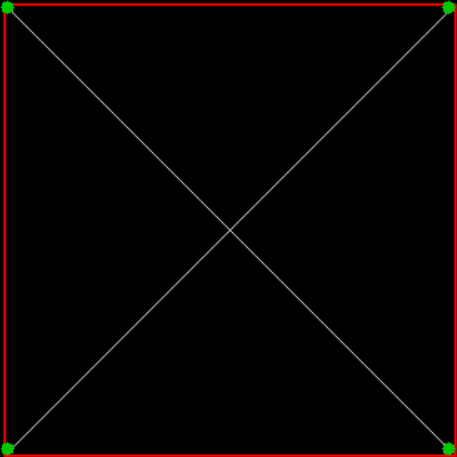
sum(vd) = 2000 = sum of distances to vertices from (0,0)


When is sum(vd) at a maximum? When the point is on one or another of the vertices, which are at (+/-354,+/-354) units in relation to the center at (0,0):
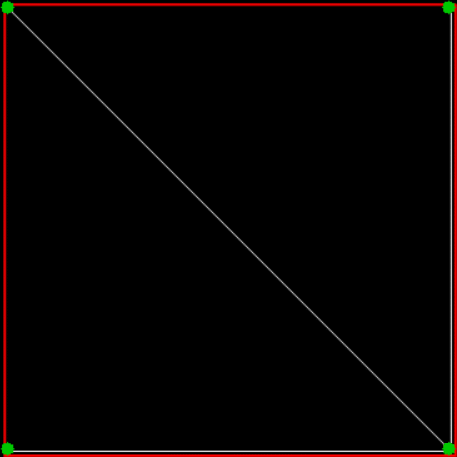
sum(vd) = 2414 = sum of distances to vertices from (354,-354)


More precisely, the sum is 2414.213562373… = 1000 * (√2 + 1) units and the vertices are at (+/-353.55339…, +/-353.55339…) units, as simple geometry dictates for a square inside a circle of radius 500. Accordingly, sum(vd) varies between exactly 2000 and 2414.213562373… as the point moves inside the square:
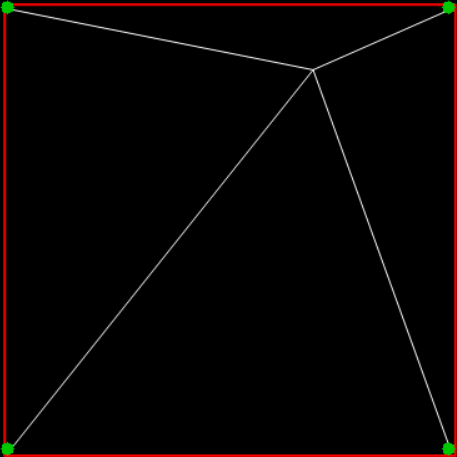
sum(vd) = 2165 from (132,256)
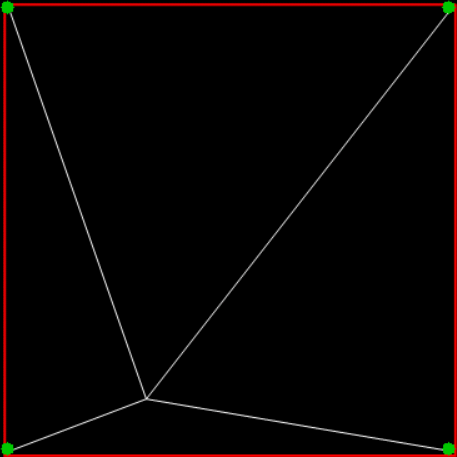

sum(vd) = 2182 from (-135,271)
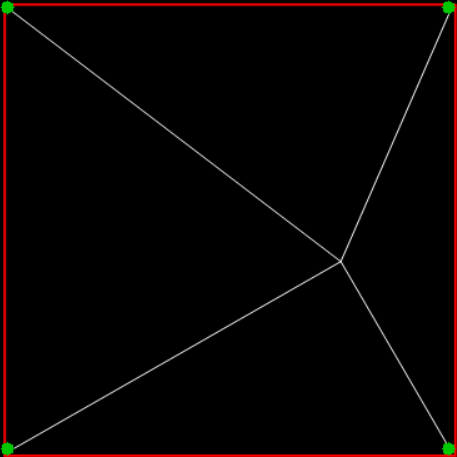

sum(vd) = 2069 from (177,51)


I wondered what shapes appeared as one traced the route of a point jumping, say, 1/2 towards the vertices according to tests on sum(vd). For example, if the point starts at (0,0) at time t0) and sum(vd) at time ti has to be alternately greater and less than sum(vd) at ti-1 for successive jumps, you get this shape:
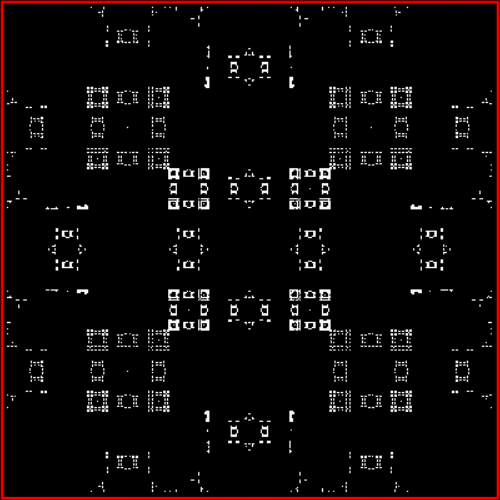
jump = 1/2, test = sum(vd,ti) >,< sum(vd,ti-1)


You can use the binary number 10bin to represent the test on sum(vd) at ti-1 and ti-1, i.e. the test at jump 1 is sum(vd,ti) > sum(vd,ti-1), at step 2 is sum(vd,ti) < sum(vd,ti-1), and so on. Using the same test and a jump of 1/3, you get this shape:
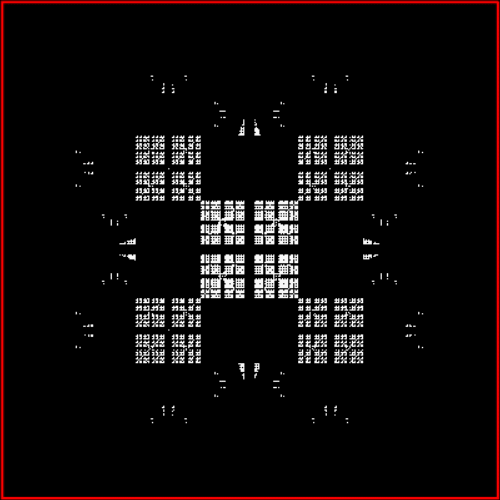
jump = 1/3, test = sum(vd,ti,10bin)


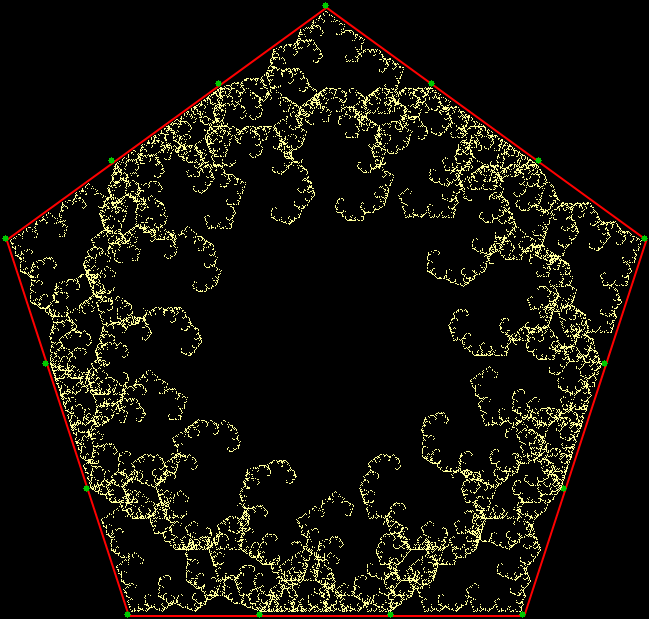
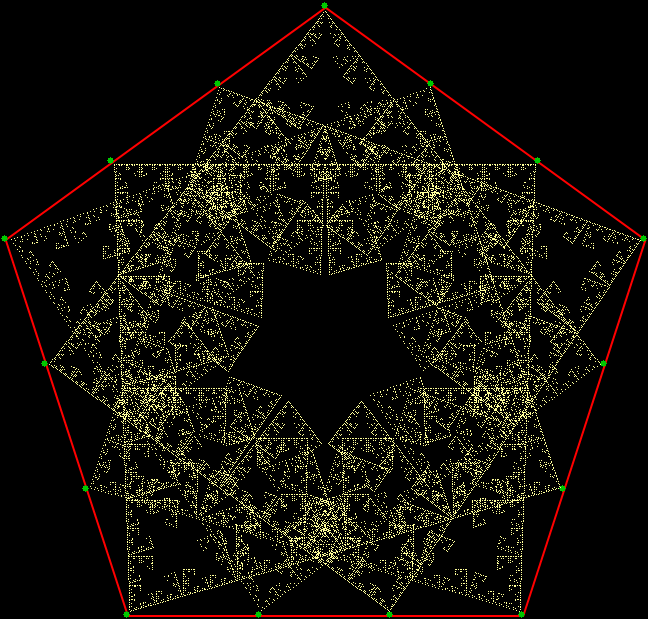
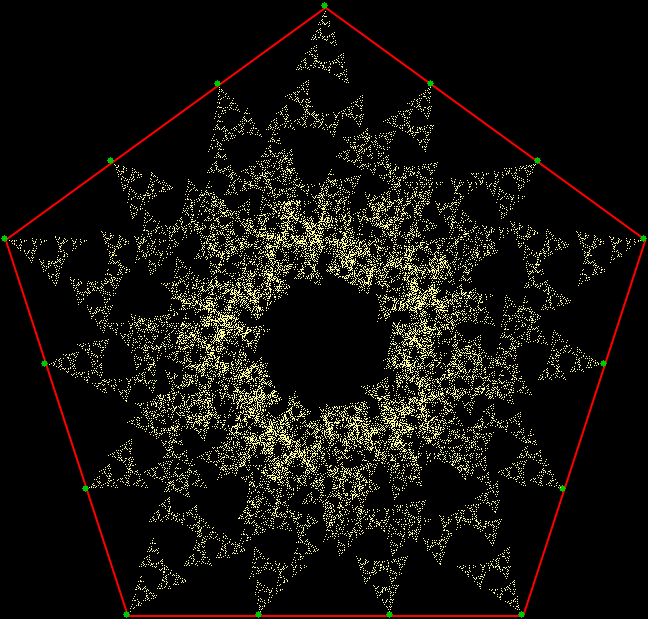
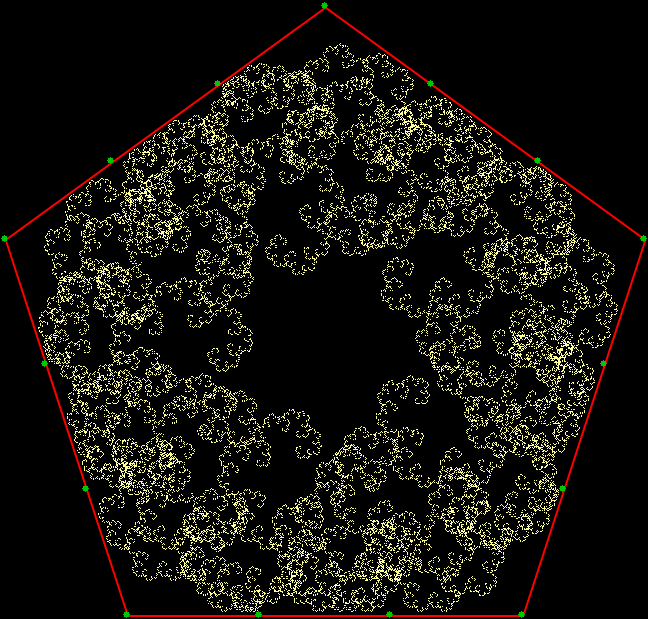
Now the shape is clearly a fractal. So are some of the other shapes I found by applying the same kind of tests to a point jumping inside a pentagon:
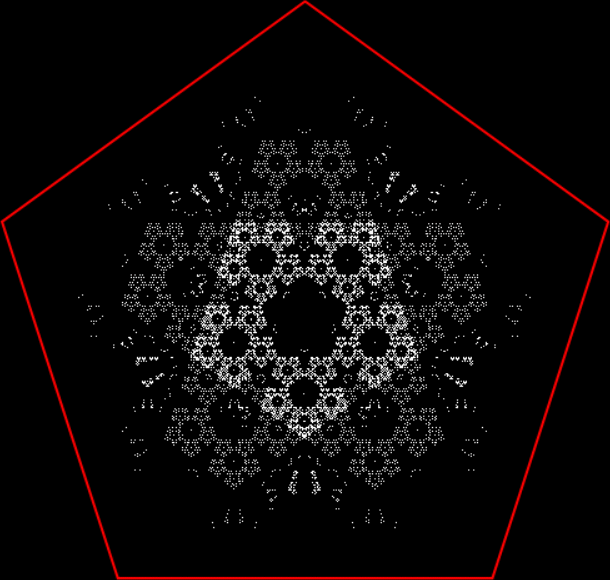
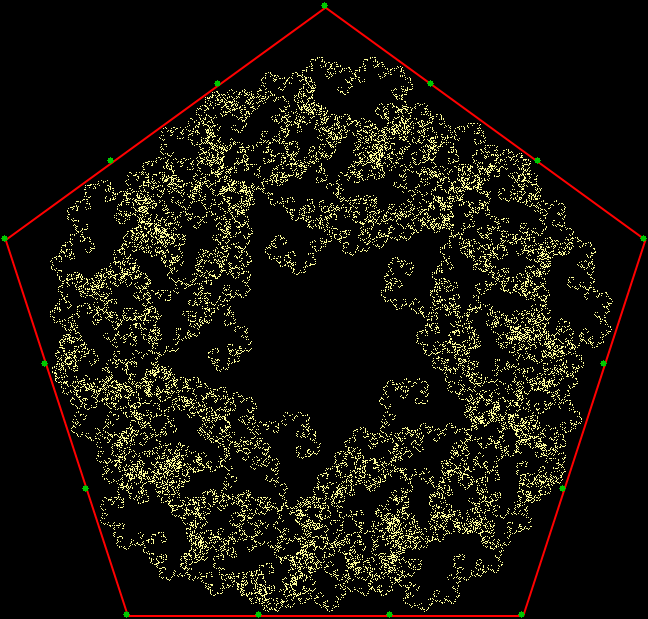
vertex = 5, jump = 55/144 = fib(10) / fib(12), test on sum(vd) = 10bin
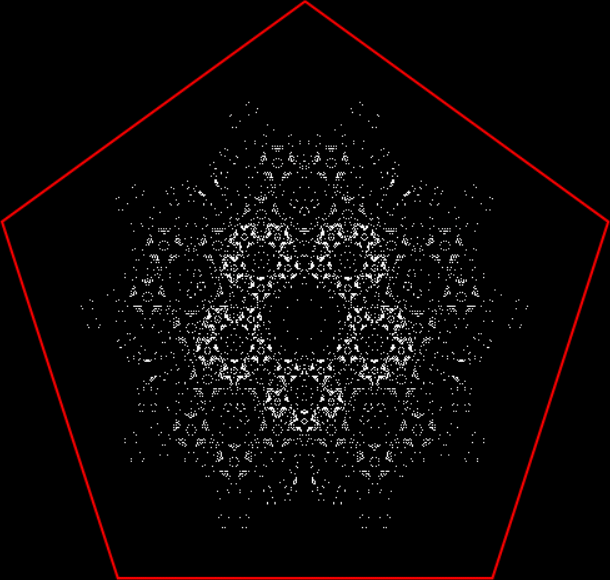

v = 5, j = 55/144, test = 10010bin
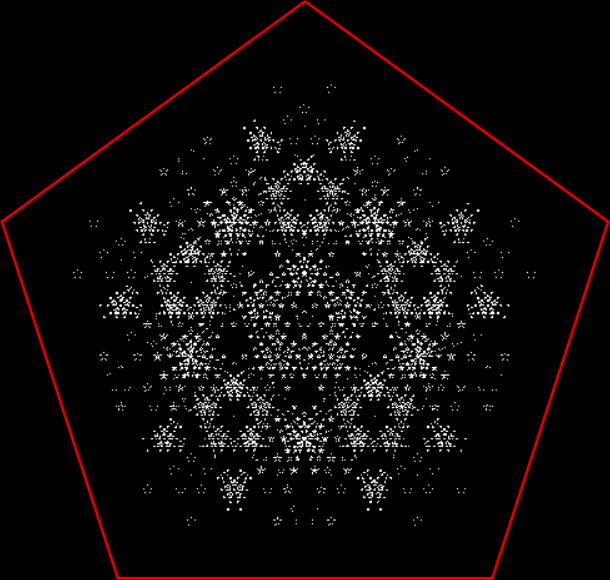

v = 5, j = 55/144, test = 11000bin


When test = 10010bin, you read the binary number left-to-right and check for s1><s0,s2<s1,s3<s2,s4>s3,s5<s4. Then you apply the same tests to subsequent jumps, i.e., you return to the beginning of the binary number and read it left-to-right again. Now let’s apply similar tests to hexagons and create some hex-crystals:
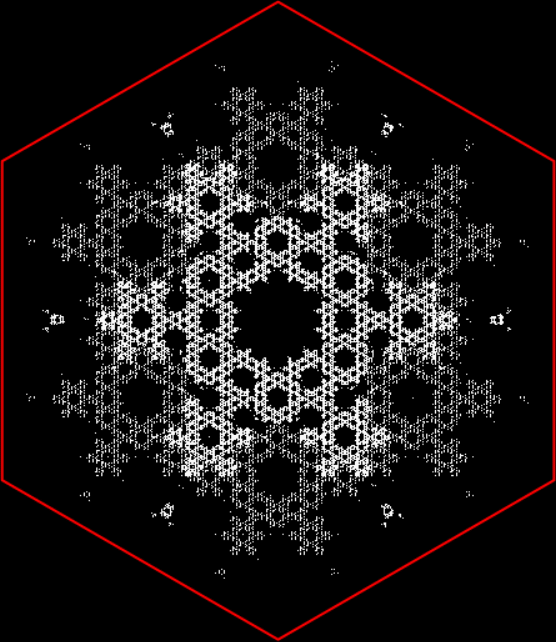
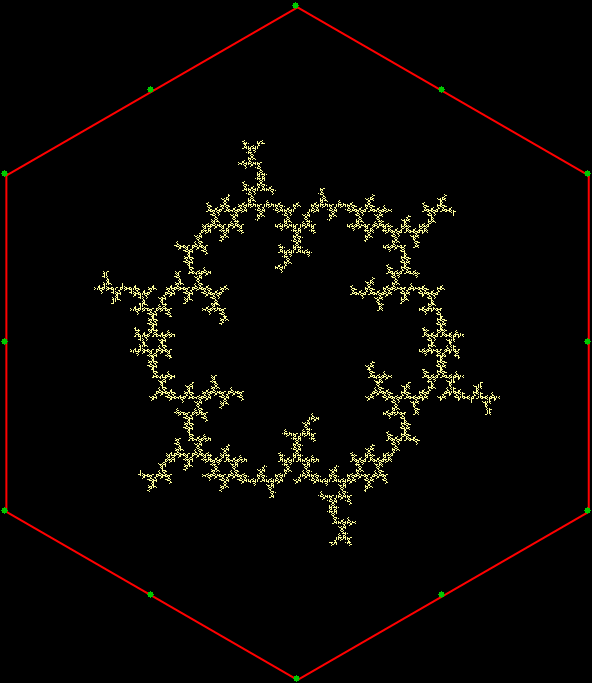
v = 6, j = 1/2, test = 10bin
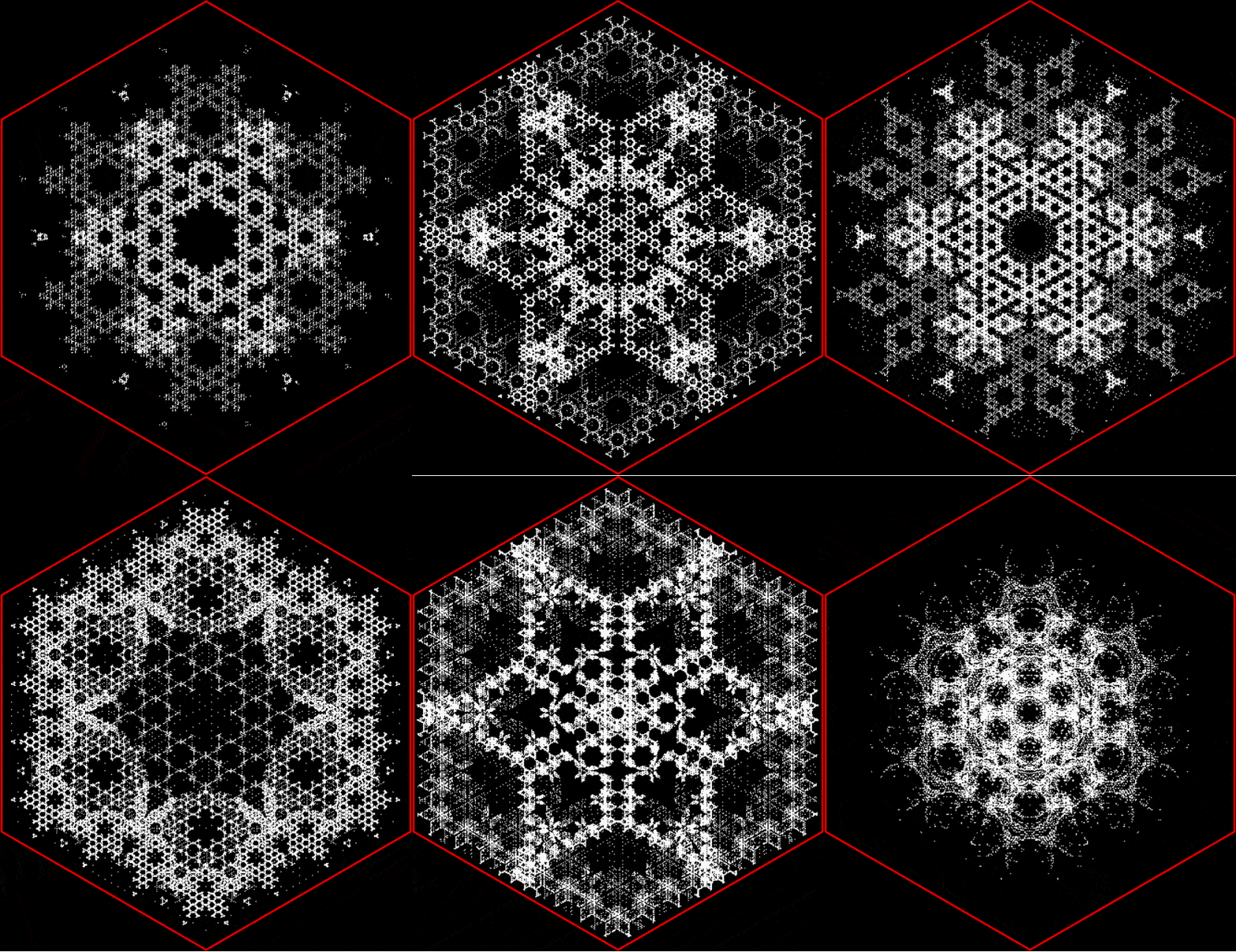

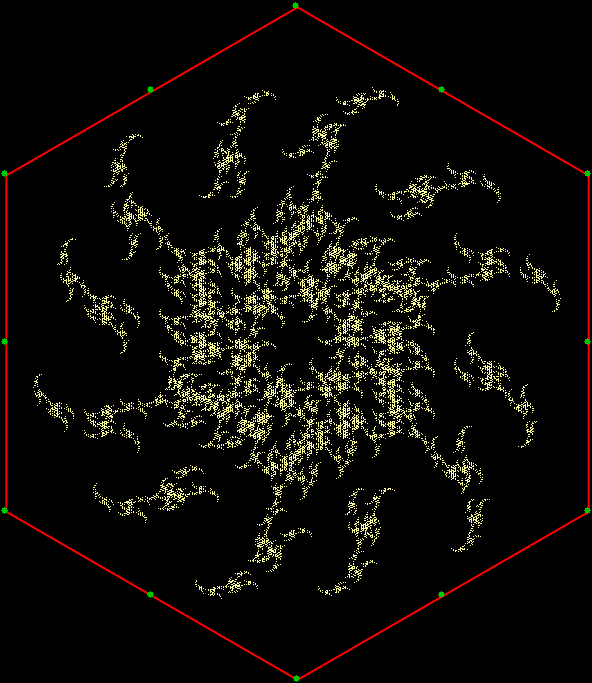
Various hex-crystals (animated gif courtesy EZgif)


I searched an array to calculate the possible routes, so the same test yielded different results depending on dp, the depth of the search. This is because tl, the length of the test, fits more or less well into dp by dp modulo tl, that is, by whether tl is a factor of dp. For example, when the test is 110 and tl = 3, you get this with dp = 9:
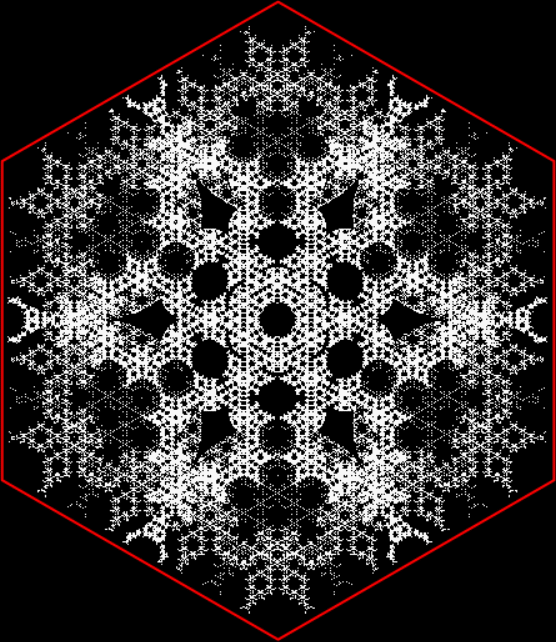
v = 6, j = 1/2, test = 110, dp = 9


And you get this when dp = 10 (i.e., dp = 9+1):
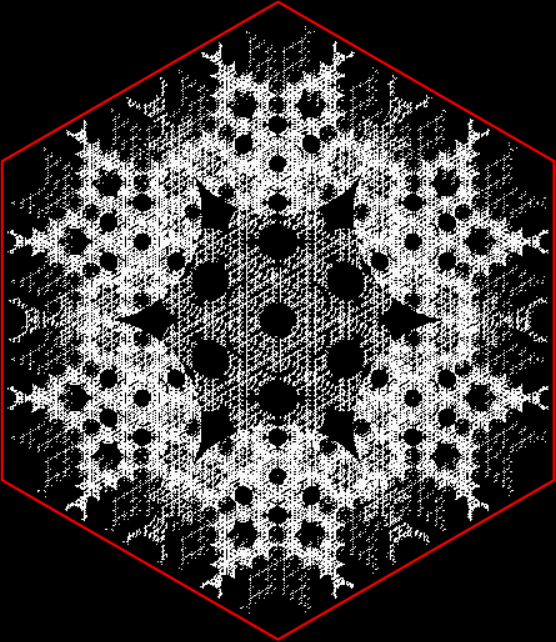
v = 6, j = 1/2, test = 110bin, dp = 10dec


Here are some more hex-crystals:
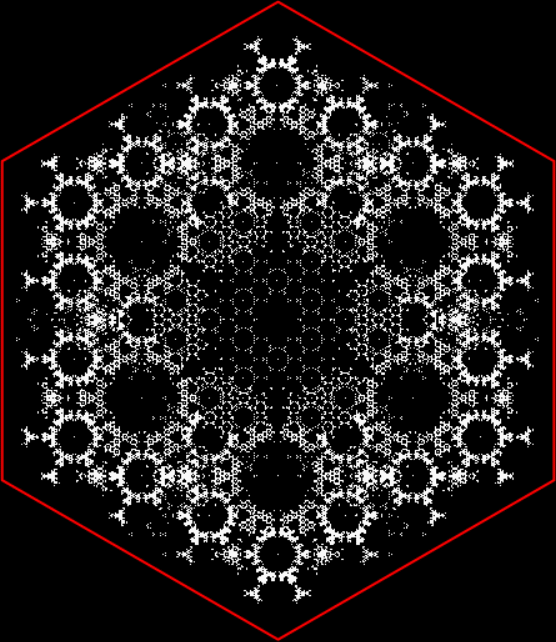
test = 1100bin
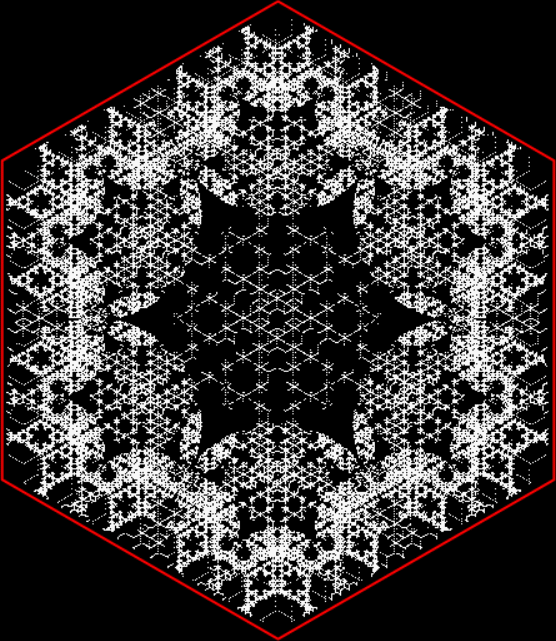

test = 1110bin
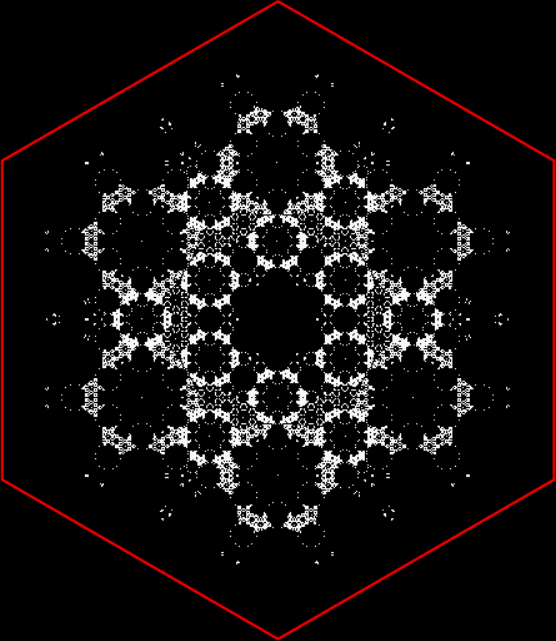

test = 10010bin
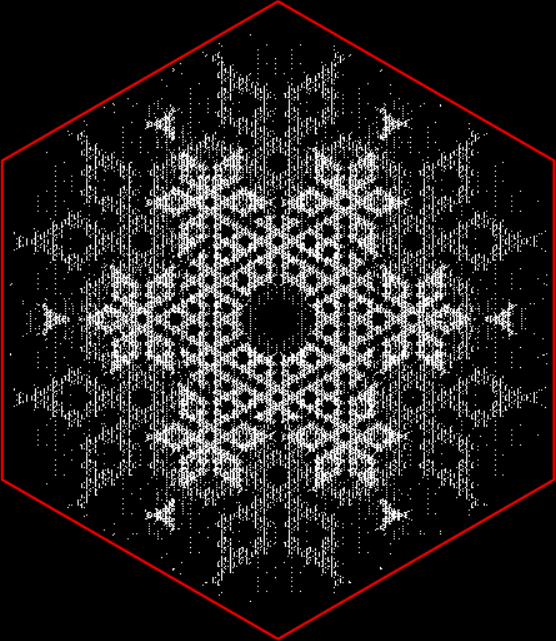

test = 11010bin
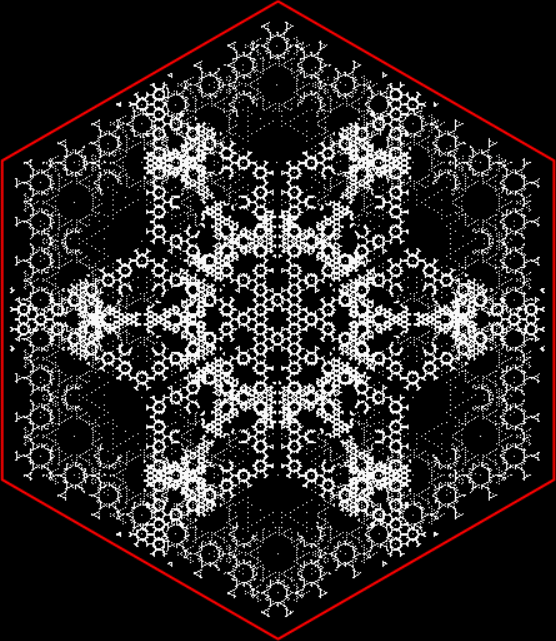

test = 11100bin
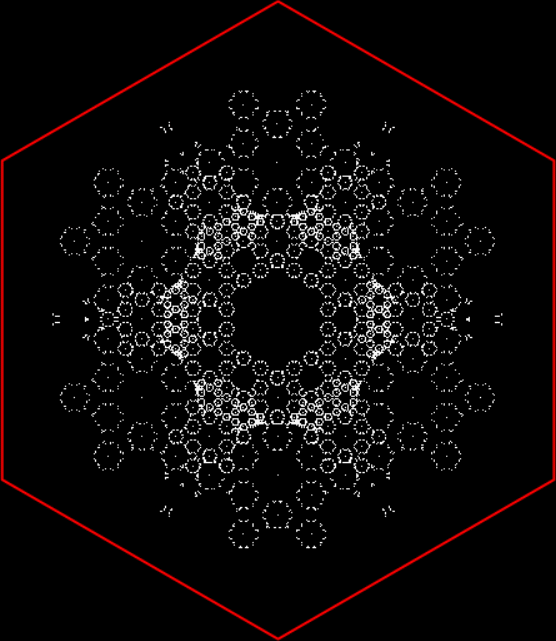

test = 101000, dp = 12
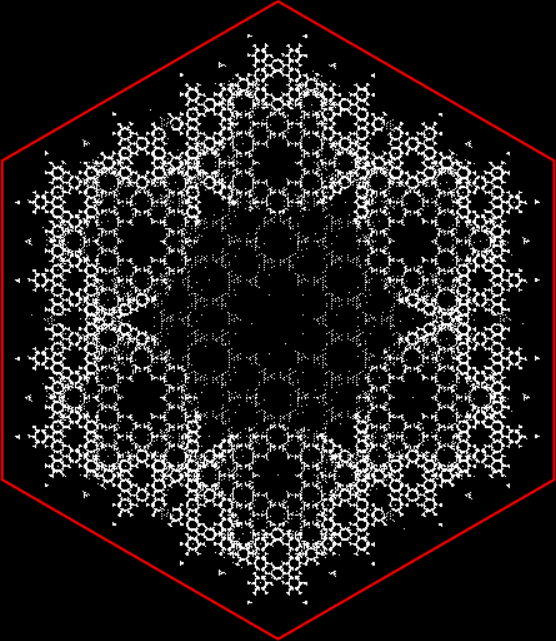

test = 101100bin


test = 111100bin
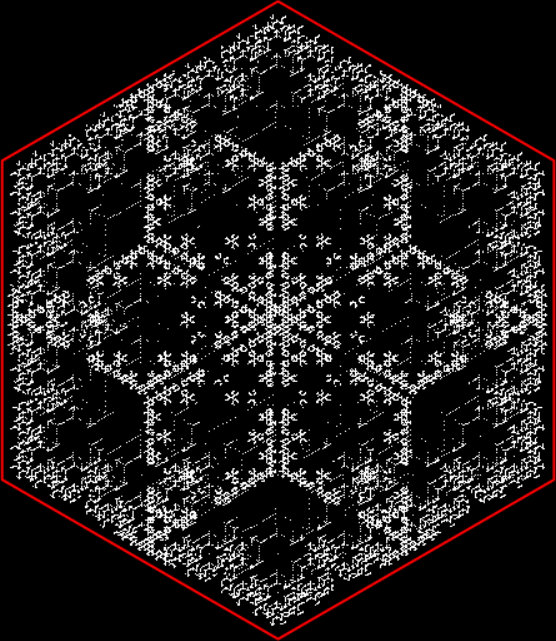

test = 111100, dp = 11
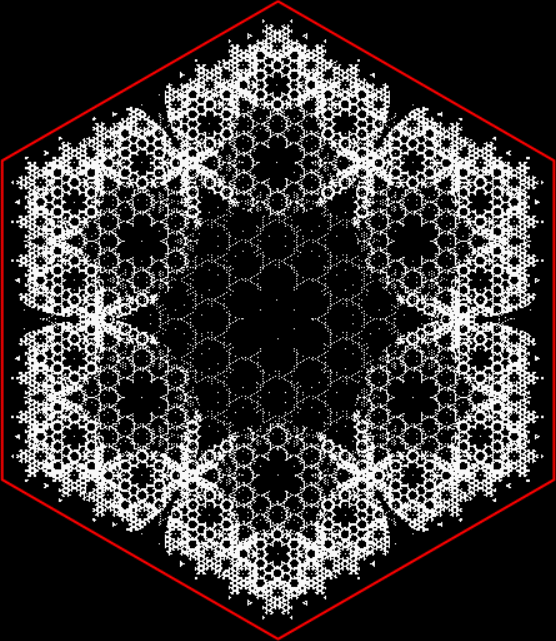

test = 1110010bin
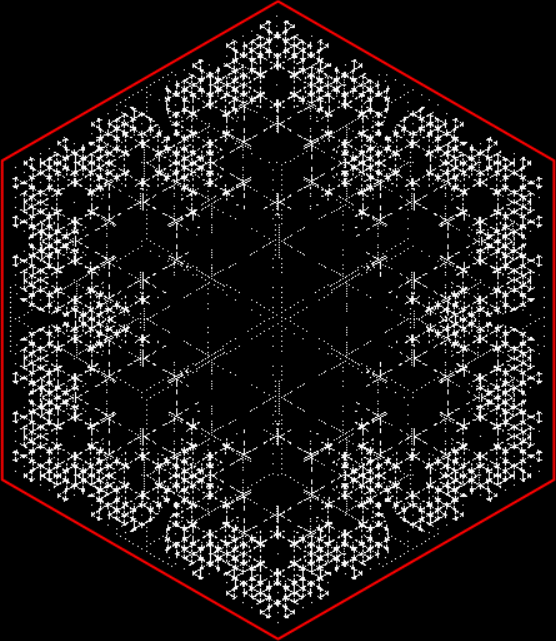

test = 1111100bin
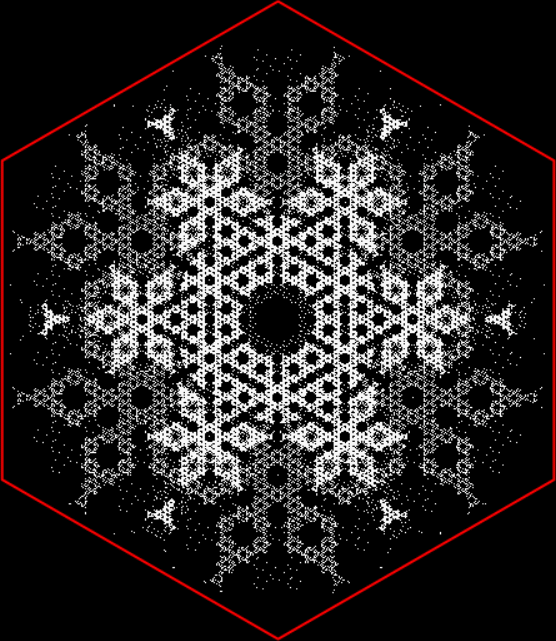

test = 10010110bin
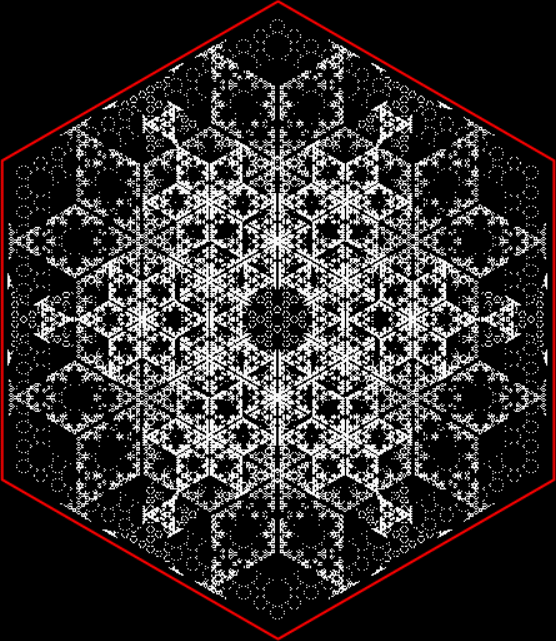

test = 10011110bin
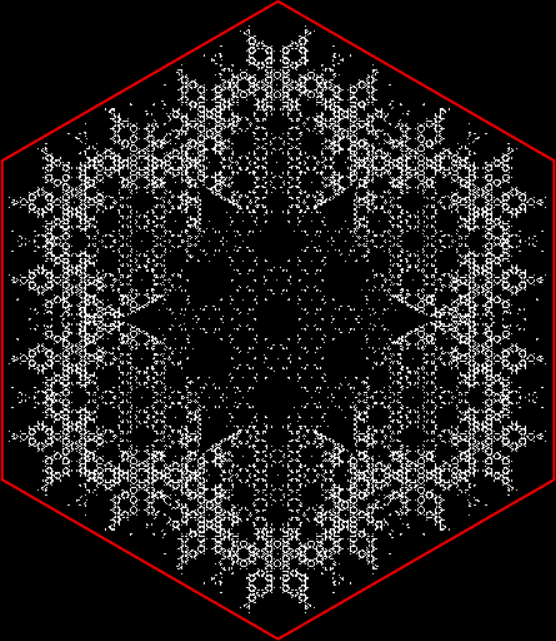

test = 11000110bin
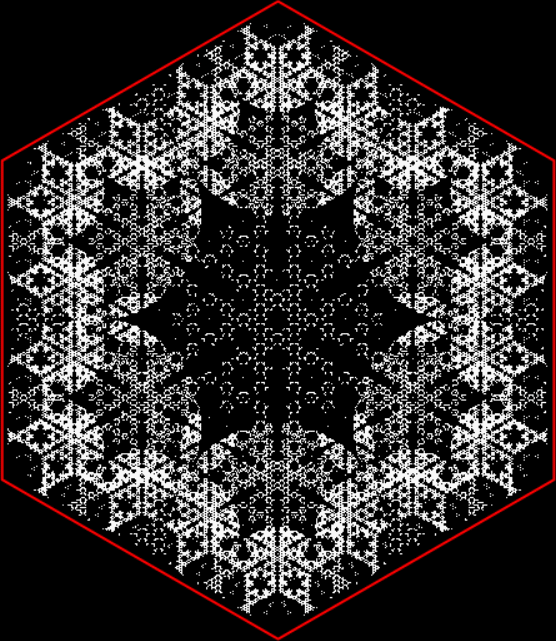

test = 11001110bin
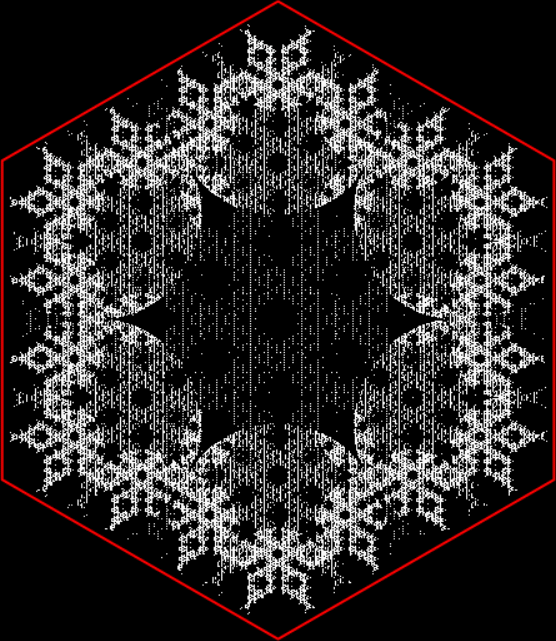

test = 11010110bin
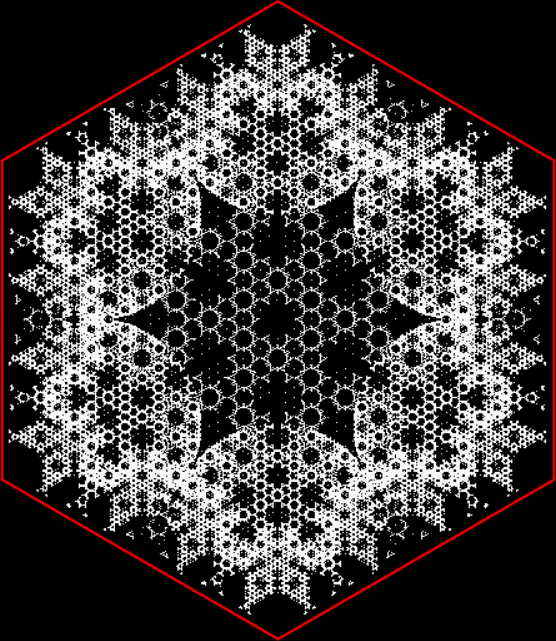

test = 11100110bin
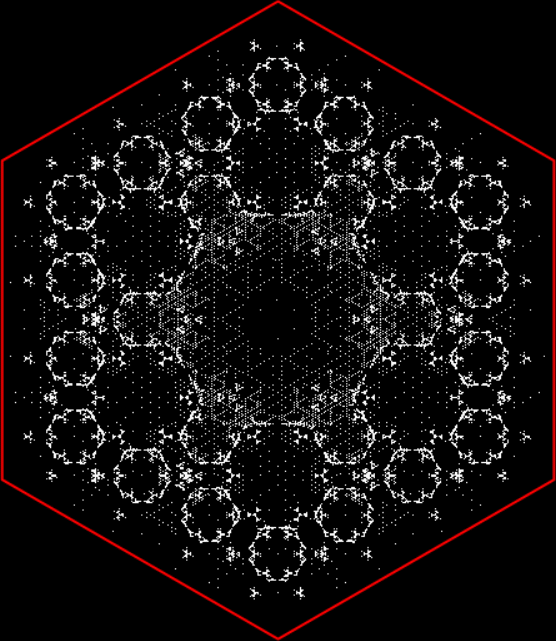

test = 11101000bin
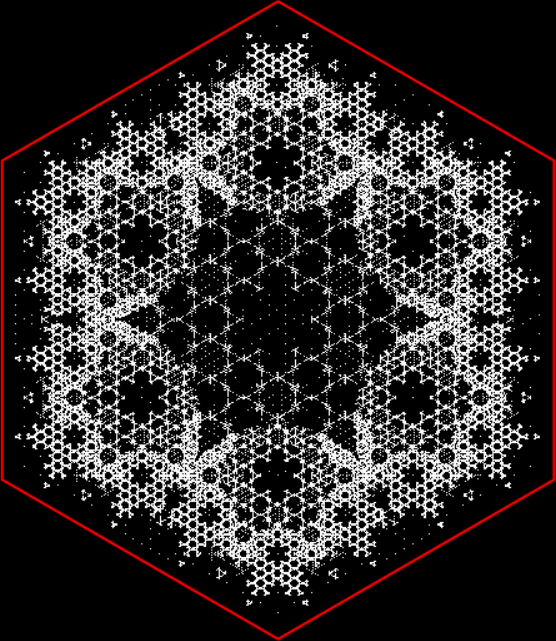

test = 11110010bin
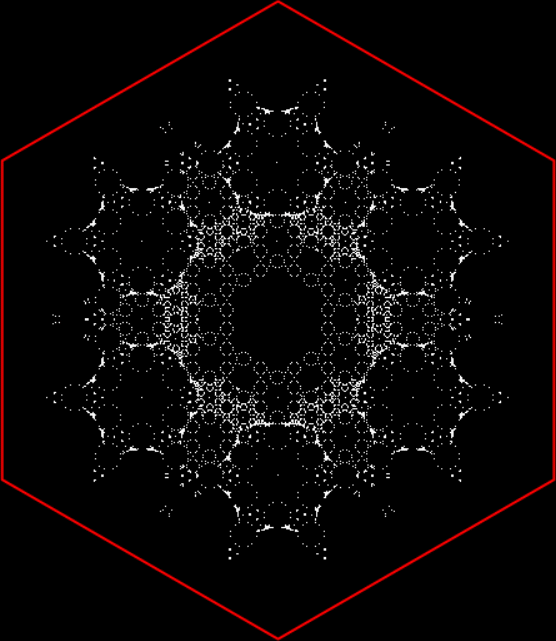

test = 100101000bin


test = 100111110bin
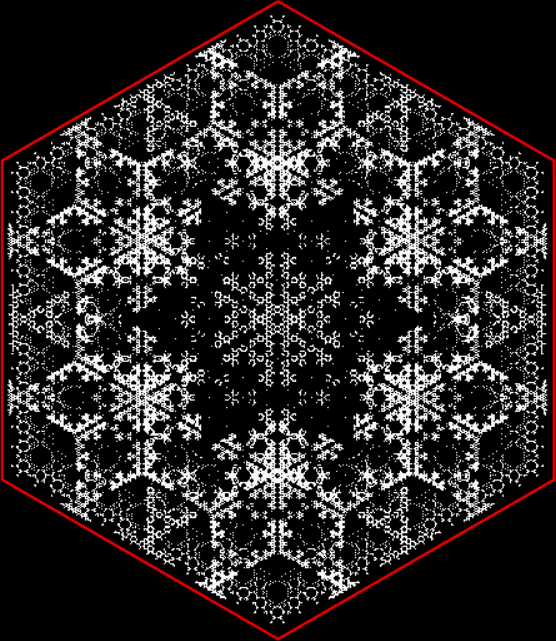

test = 110011110bin
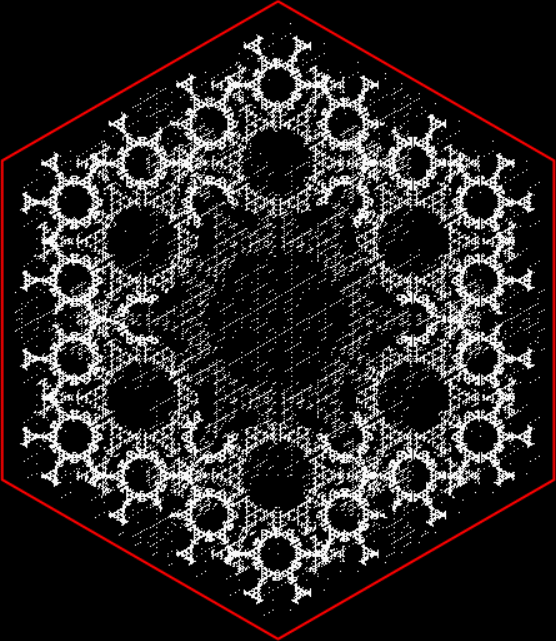

test = 110111000bin
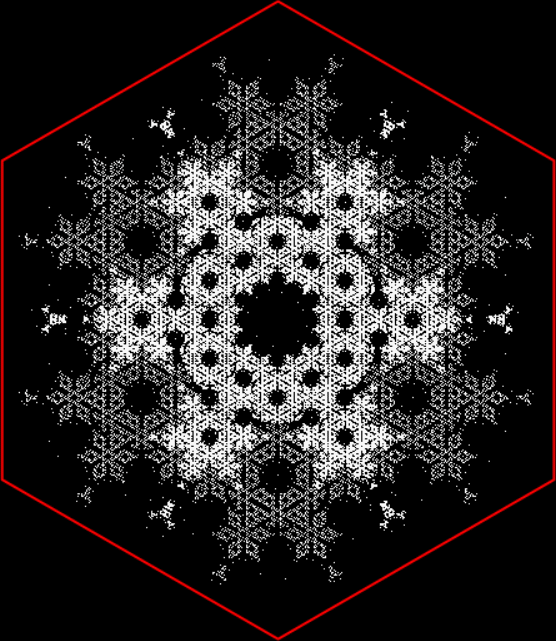

test = 1001101010bin
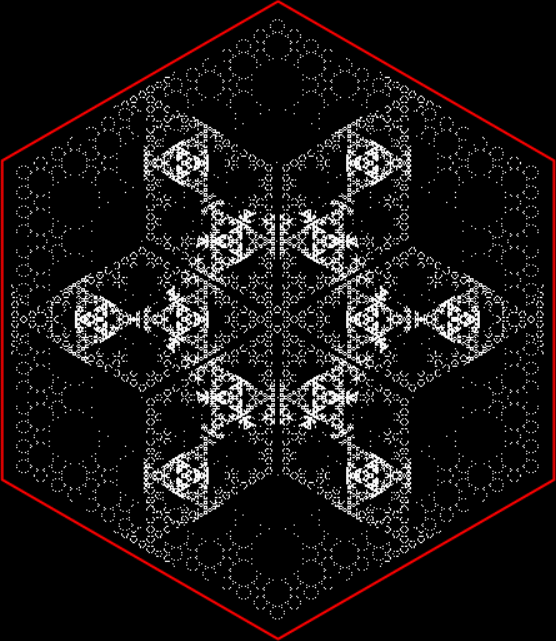

test = 1001111000bin
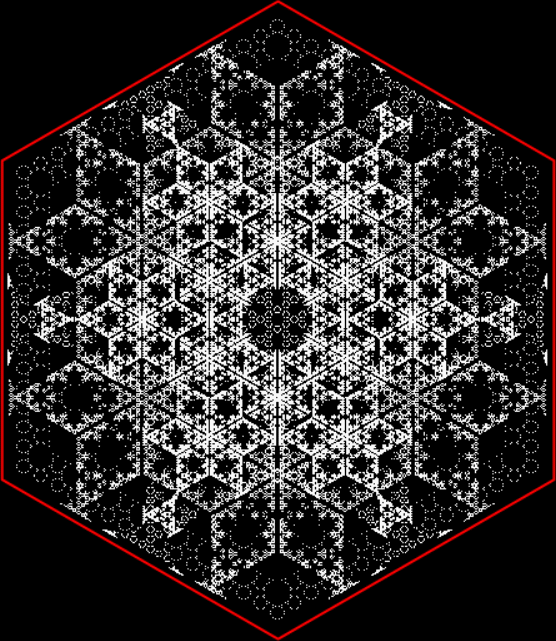

test = 1001111010bin
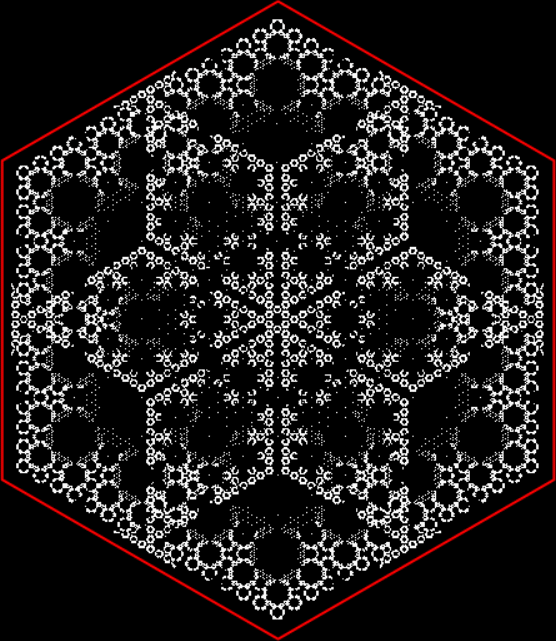

test = 1010011110bin
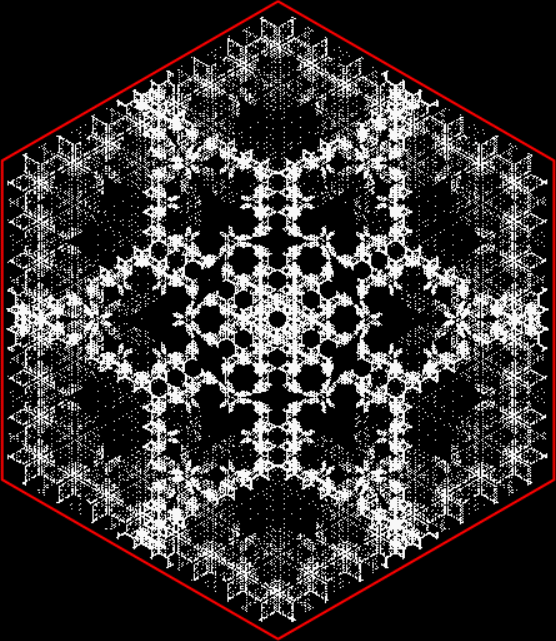

test = 1011101110bin
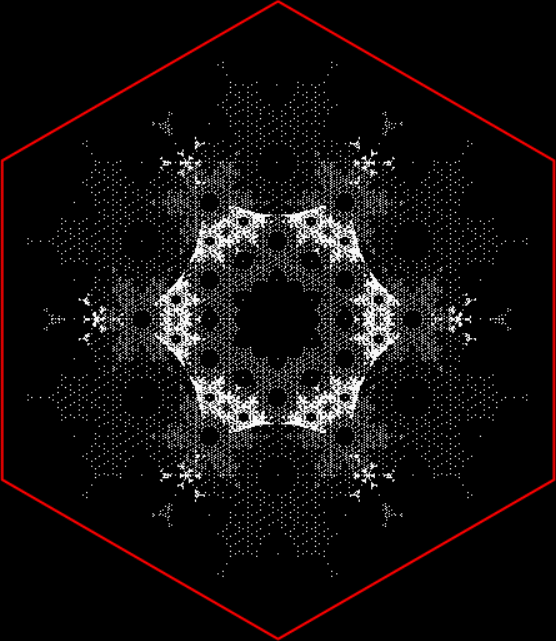

test = 1101010000bin
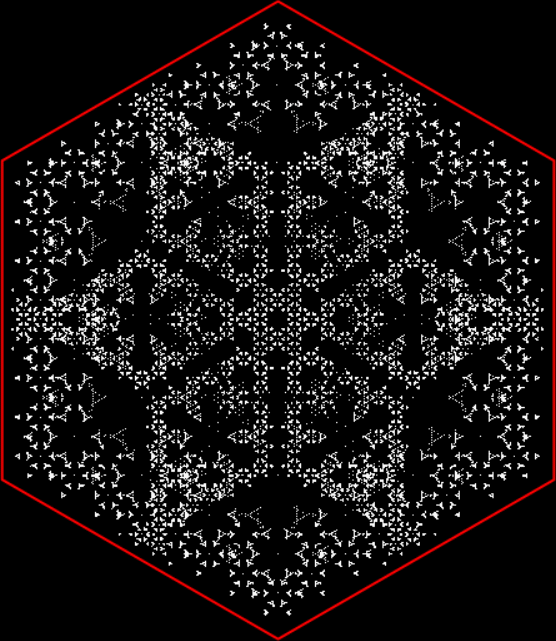

test = 1110001110bin
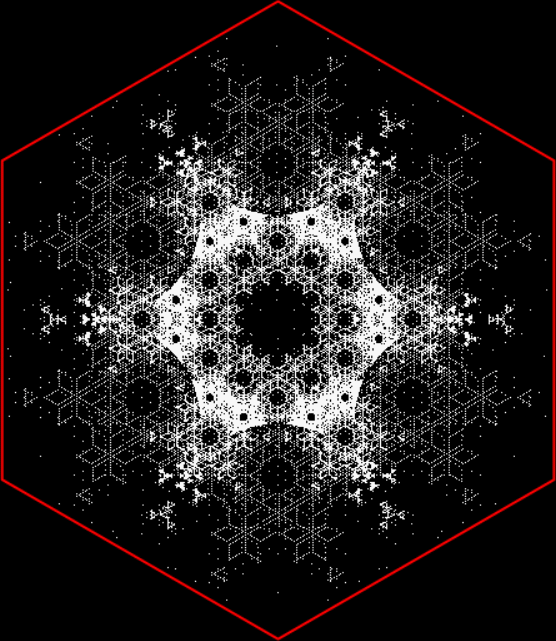

test = 1110101000bin
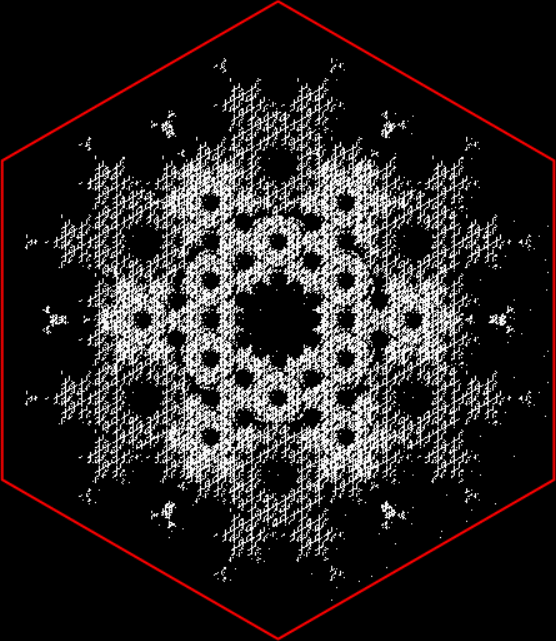

test = 1110101010bin
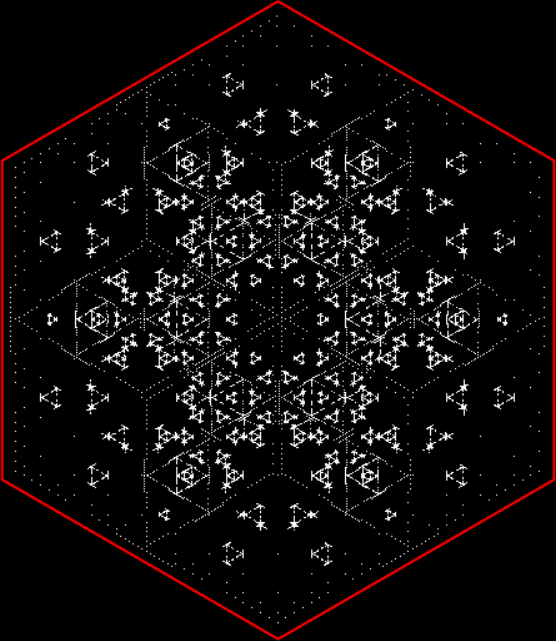

test = 1111100010bin


j = 1/3, test = 1 (i.e., for all jumps sum(vd) at ti > sum(vd) at ti-1, center point


j = 2/3, test = 11100bin
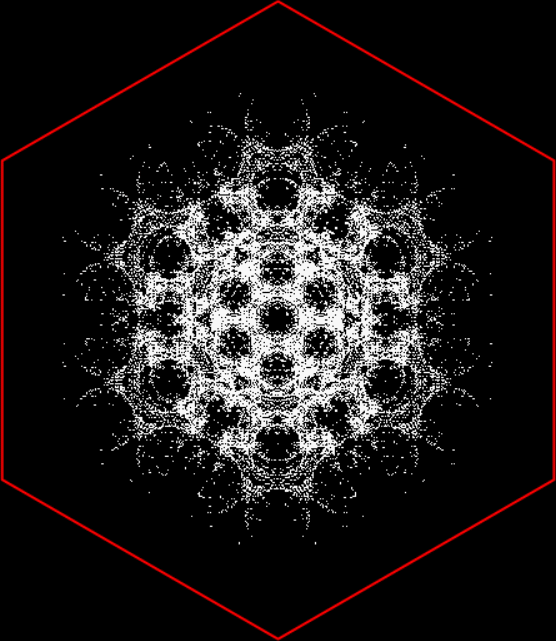

j = 2/5, test = 10010bin


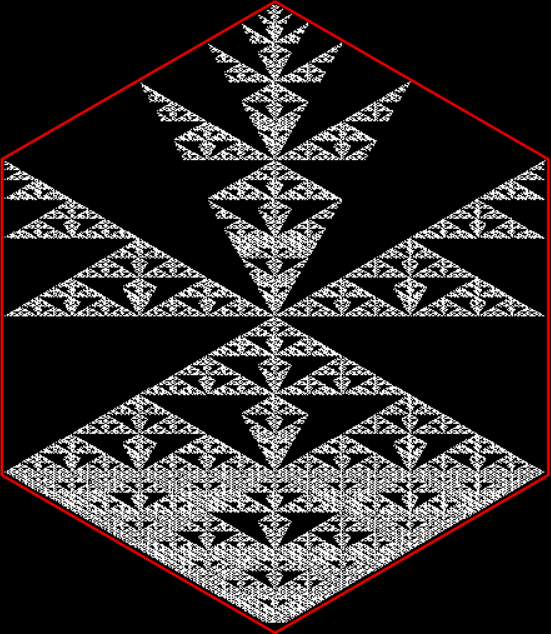
Finally, here are some hex-crystals based on a test of sorted distances from (x,y), i.e. how the vertices rank by distance from (x,y):
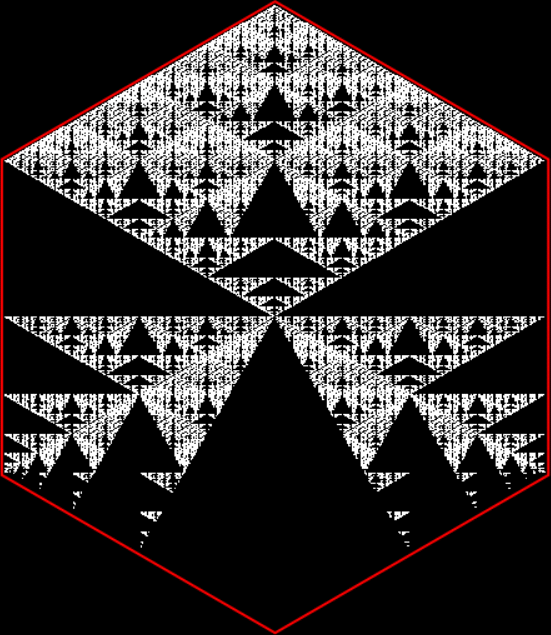
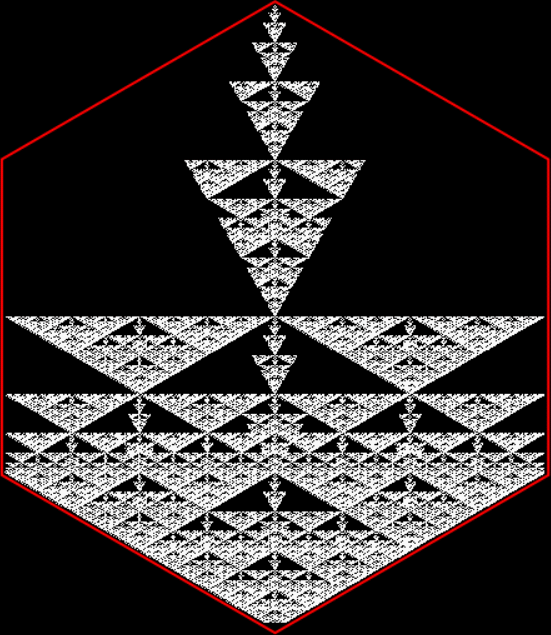

Points Pared

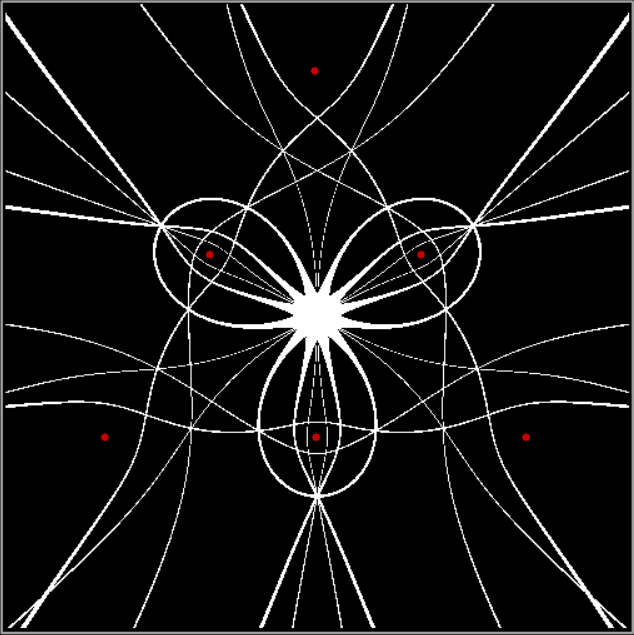
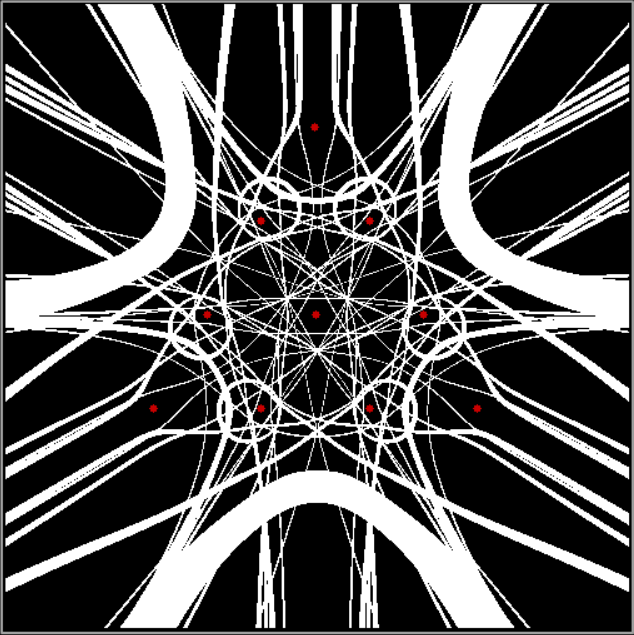
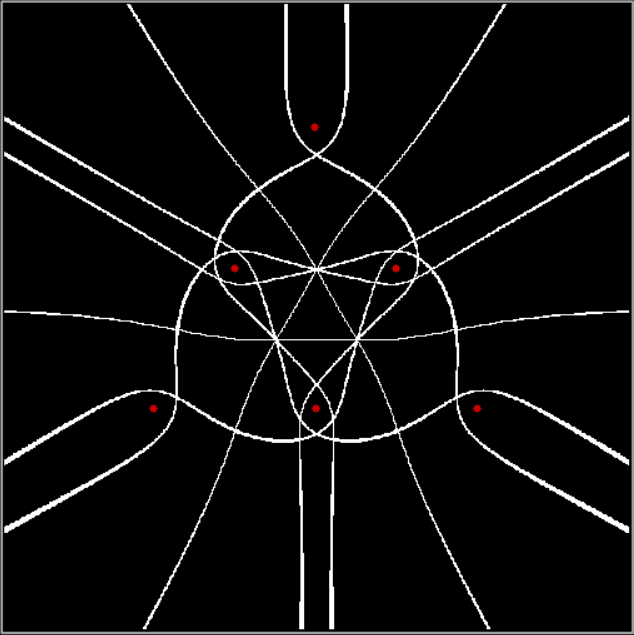
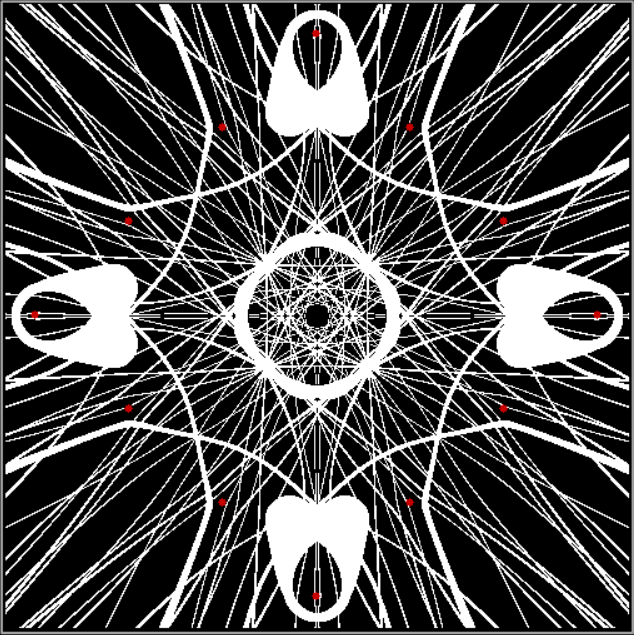
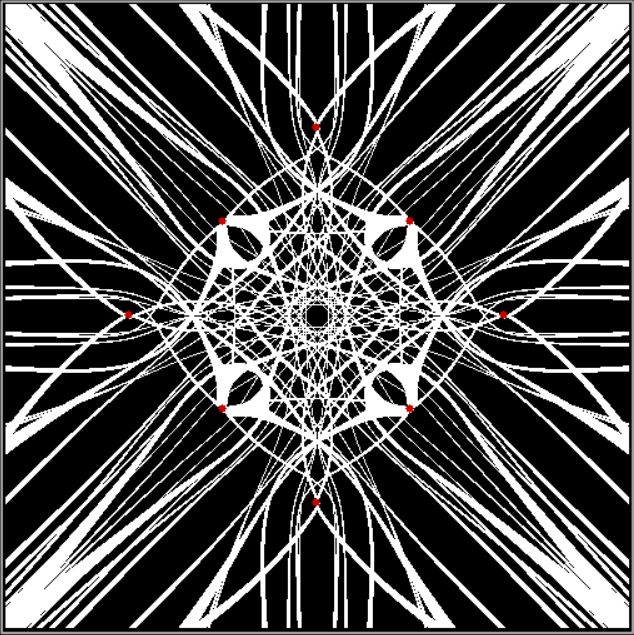
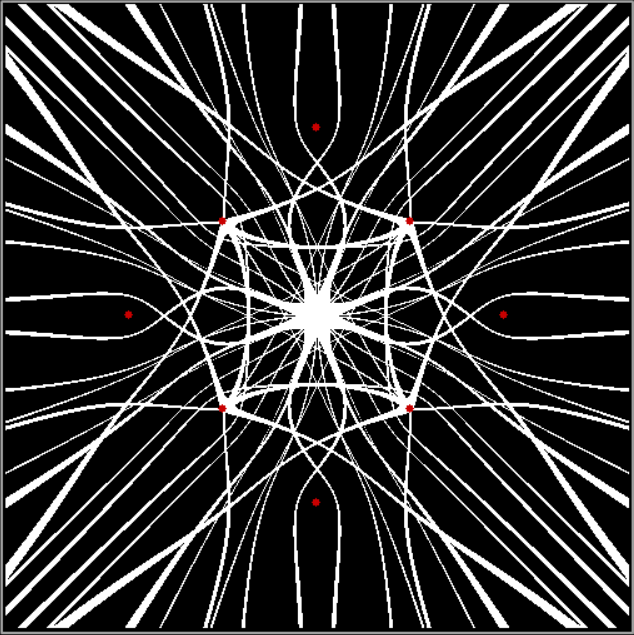
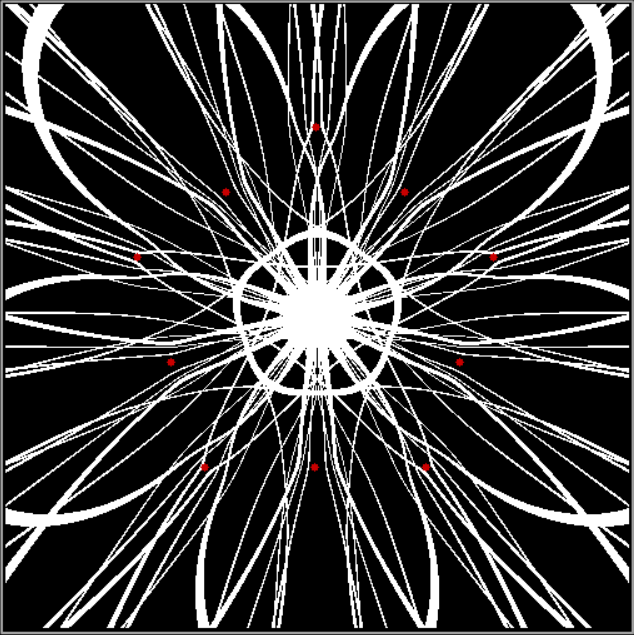
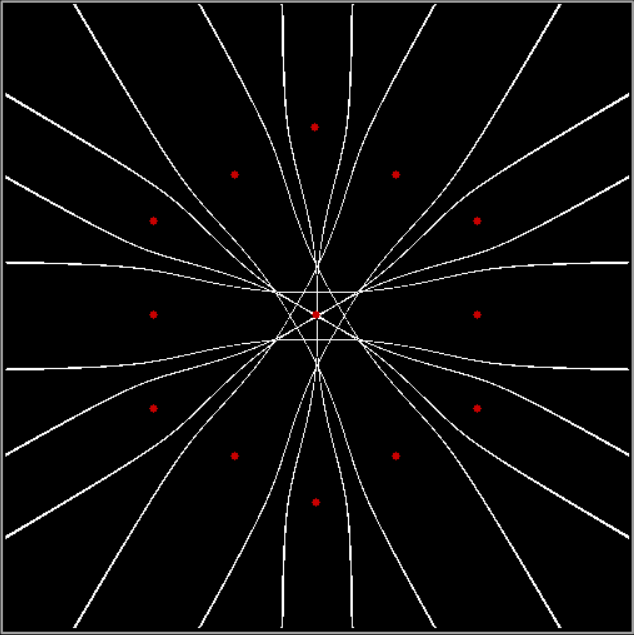
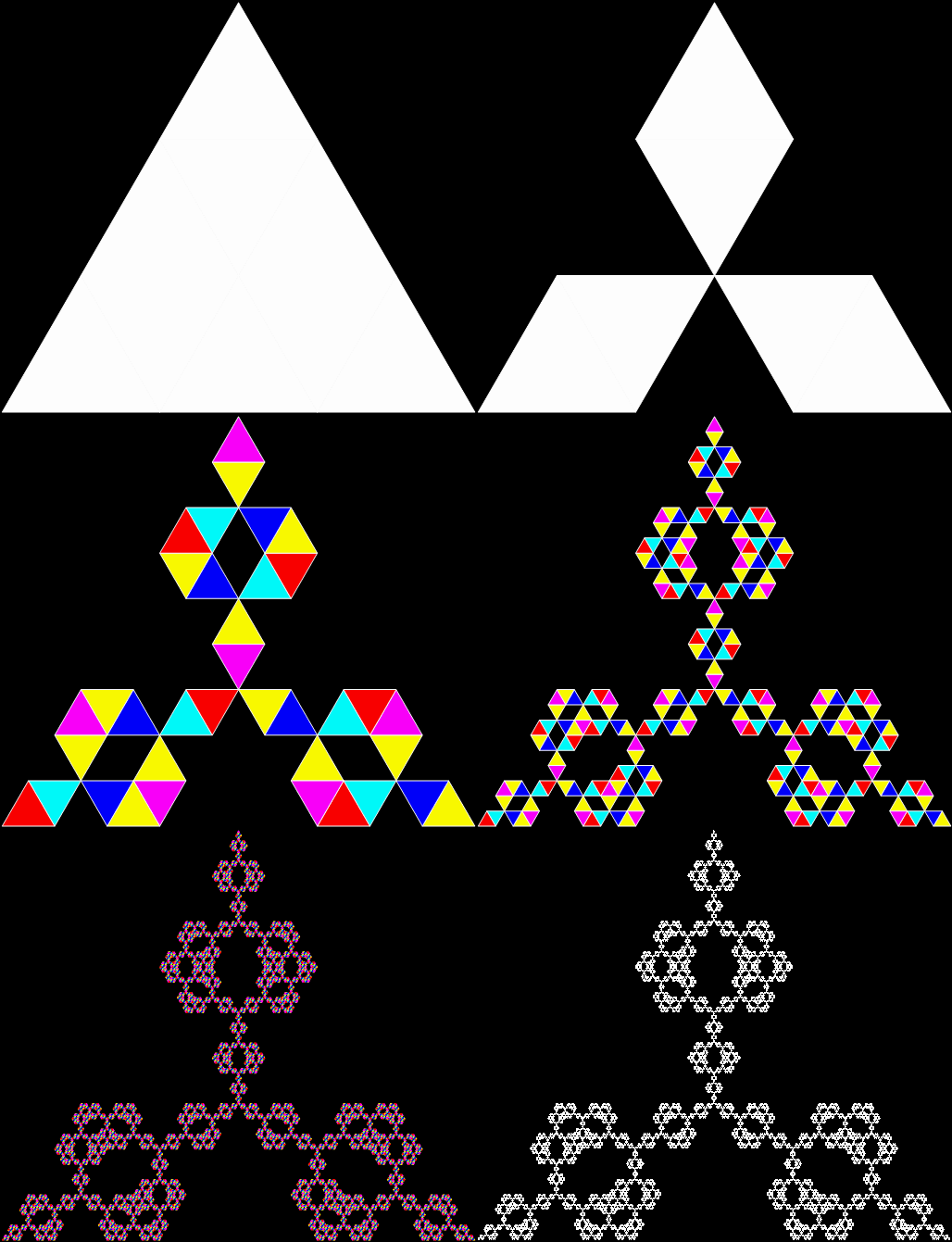
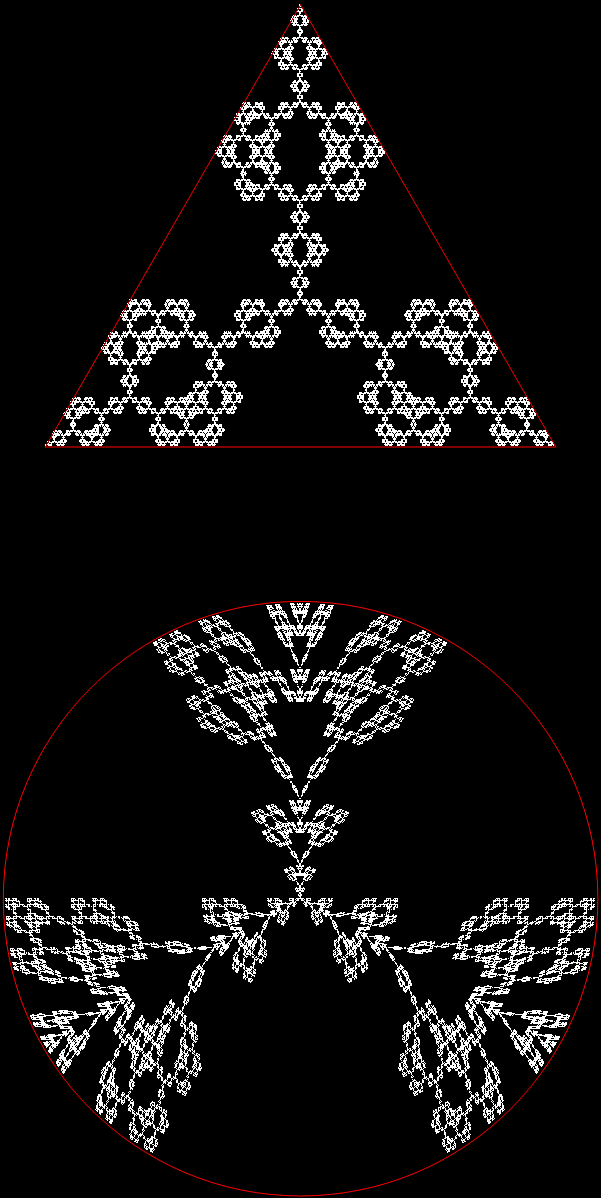
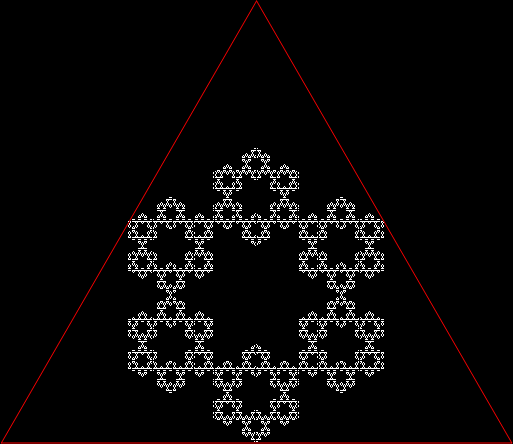
There are an infinite number of points in the plane. And in part of the plane. So you have to pare points to create interesting shapes. And one way of paring them is by comparing them. The six red dots in the image below mark the three vertices of an equilateral triangle and the three mid-points of the sides. Now, test the other points in the surrounding plane and mark them in white if the average distance to (the centers of) any two of the red dots is equal to the average distance to (the centers of) the four other red dots:
Triangle + 1 side-point, sum(d1,d2)/2 = sum(d3,d4,d5,d6)/4

(click for larger)


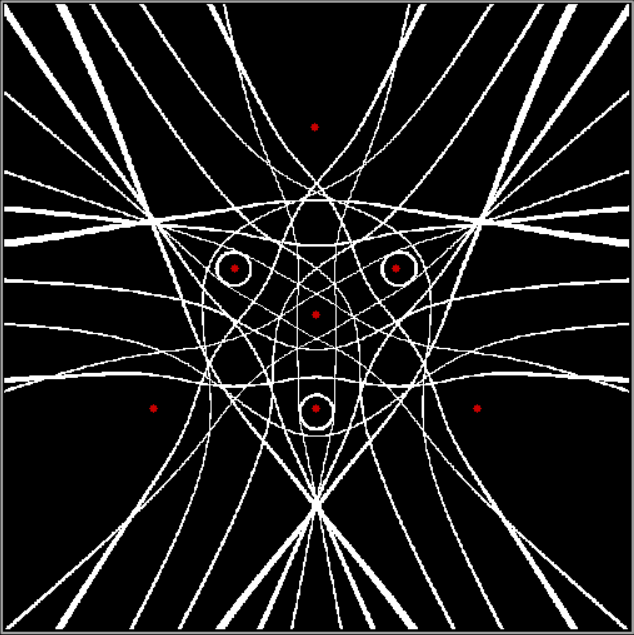
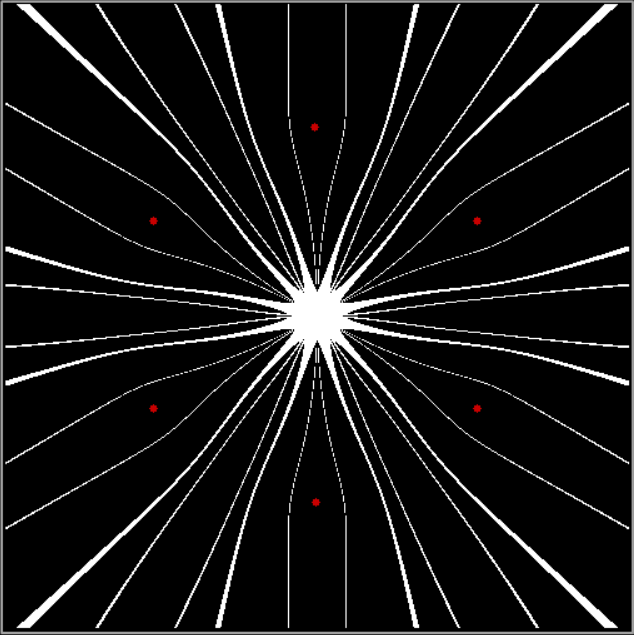
Add a central red dot to the triangle and you get this pattern:
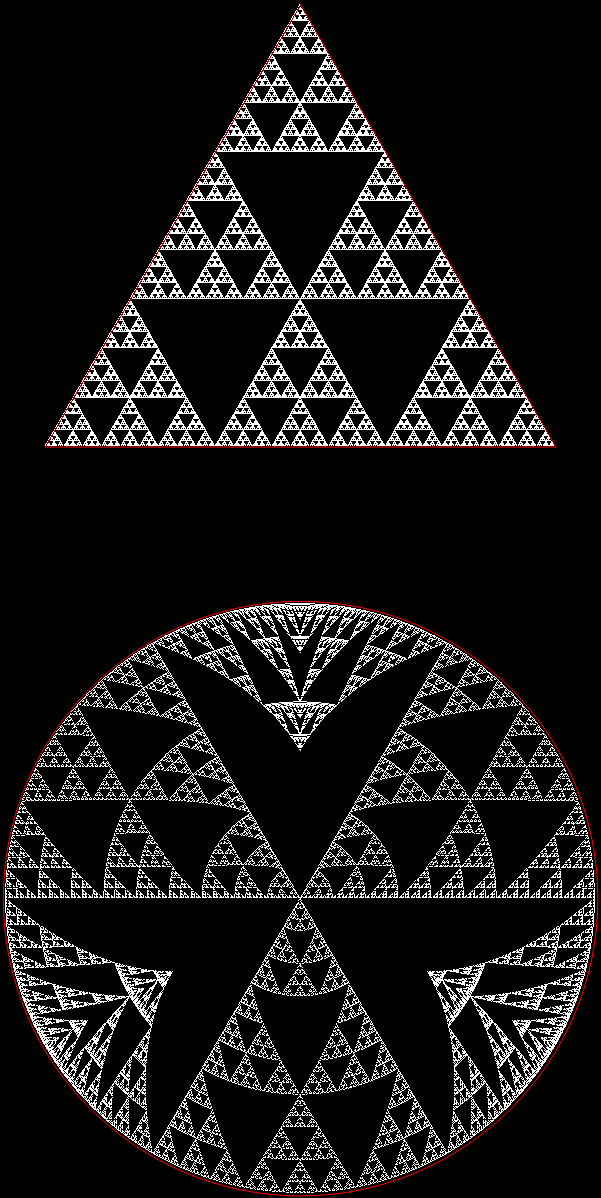
Triangle + 1 side-point + center, distfunc(2) = distfunc(5)


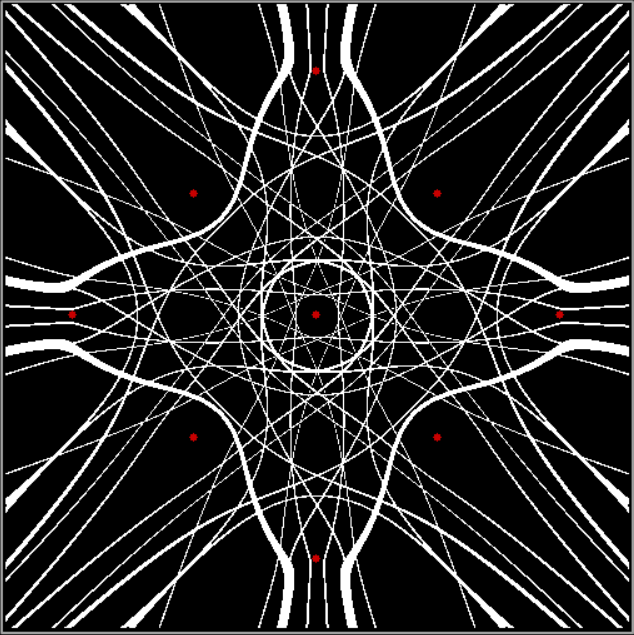
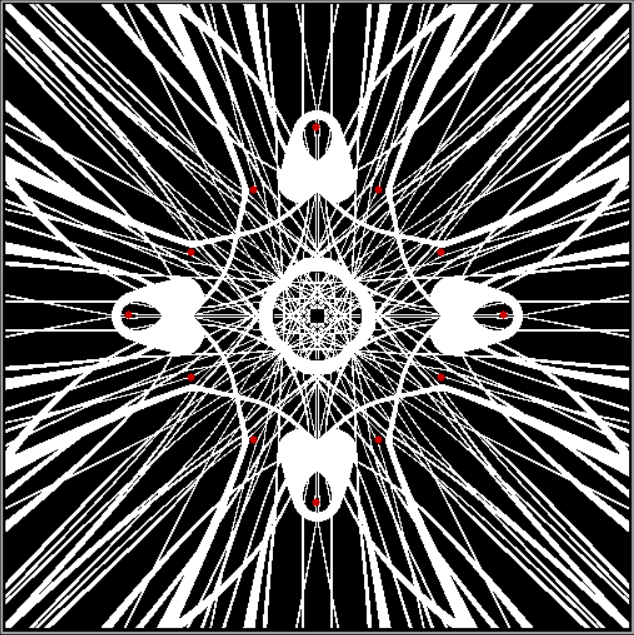
And so on:

v = 3 + sd = 2, distfunc(2) = distfunc(7)


v = 3 + sd = 2 + center, distfunc(2) = distfunc(7)


v = 3 + sd = 1, distfunc(3) = distfunc(3)


v = 3 + sd = 1 + center, distfunc(3) = distfunc(7)


v = 4 + center, distfunc(2) = distfunc(3)


v = 4 + sd = 1, distfunc(2) = distfunc(6)


v = 4 + sd = 1 + center, distfunc(2) = distfunc(7)


v = 4 + sd = 2, distfunc(2) = distfunc(10)


v = 4 + sd = 2, distfunc(2) = distfunc(10) (enlarged)


v = 4 + sd = 1, distfunc(3) = distfunc(5)


v = 4 + sd = 1, distfunc(4) = distfunc(4)


v = 5 + sd = 1, distfunc(2) = distfunc(8)


v = 5 + sd = 1, distfunc(2) = distfunc(8) (smaller scale)


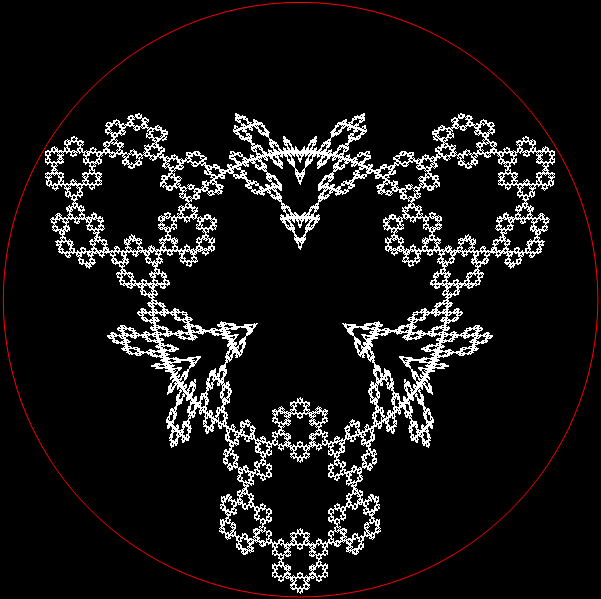
v = 6 + sd = 1, distfunc(1) = distfunc(11)


v = 6 + sd = 1 + center, distfunc(1) = distfunc(12)


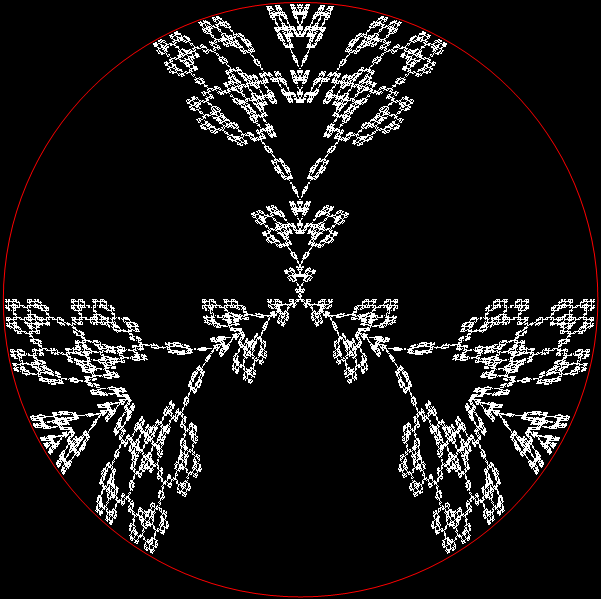
v = 6, distfunc(2) = distfunc(4)


v = 6 + center, distfunc(2) = distfunc(5)


v = 6, distfunc(3) = distfunc(3)


v = 6 + center, distfunc(3) = distfunc(4)

Bent Pent

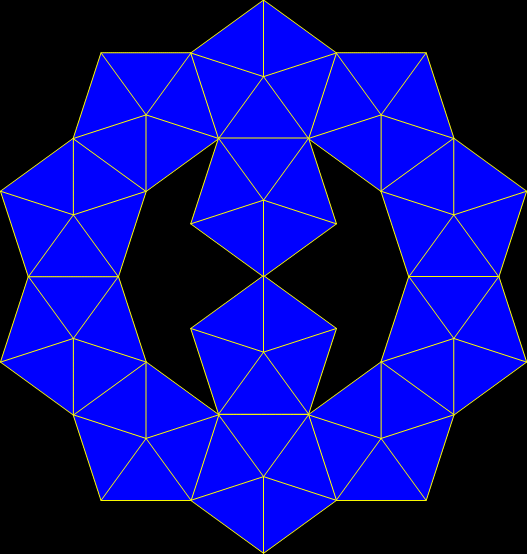
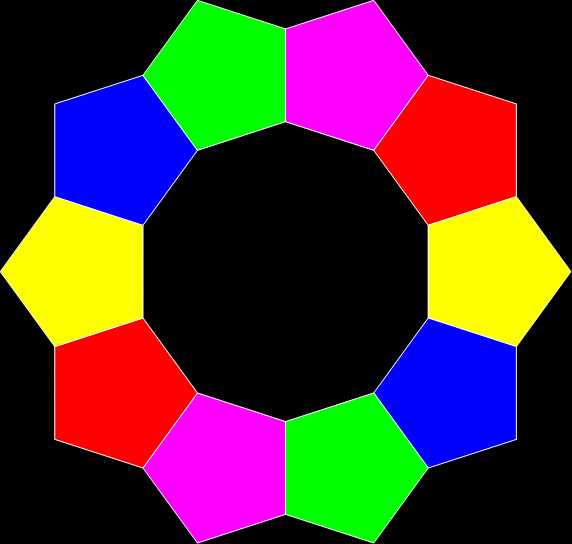
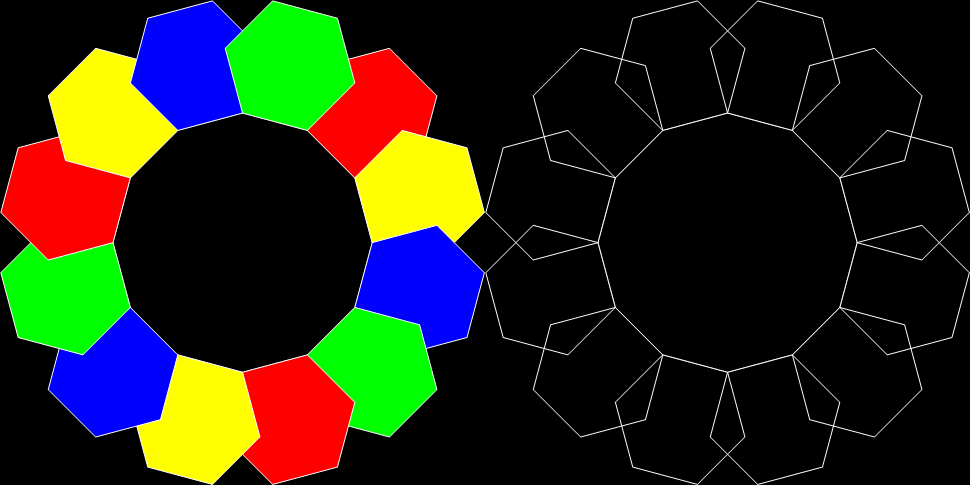
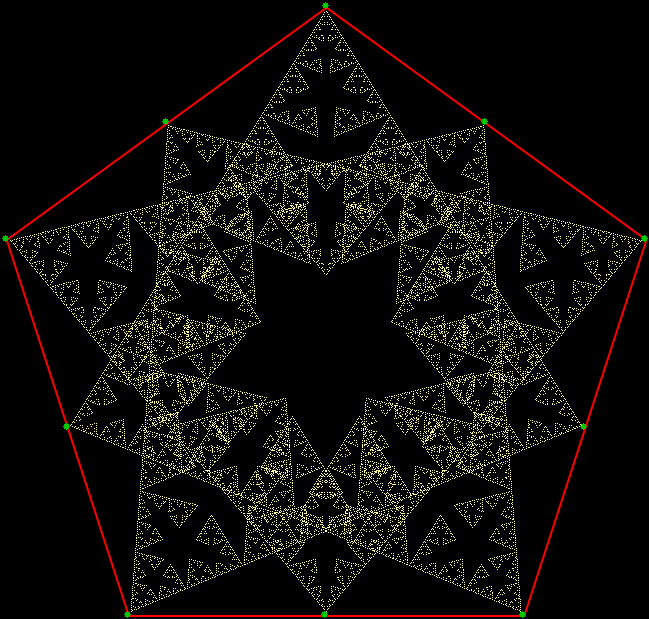
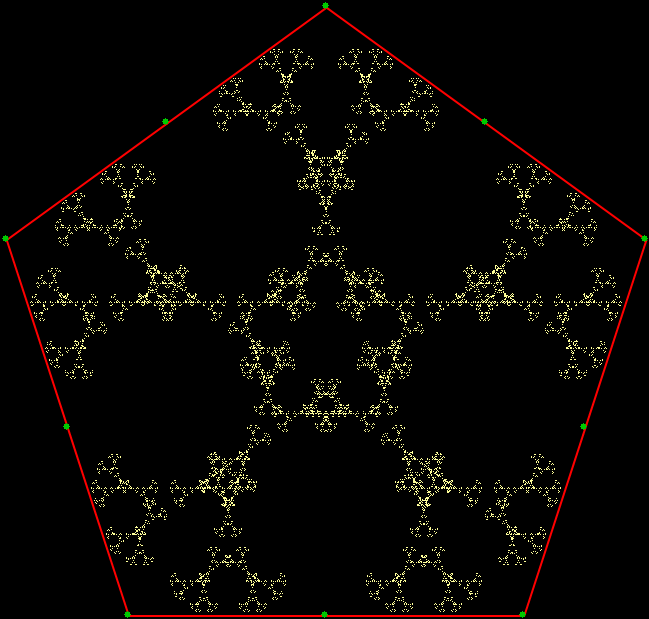
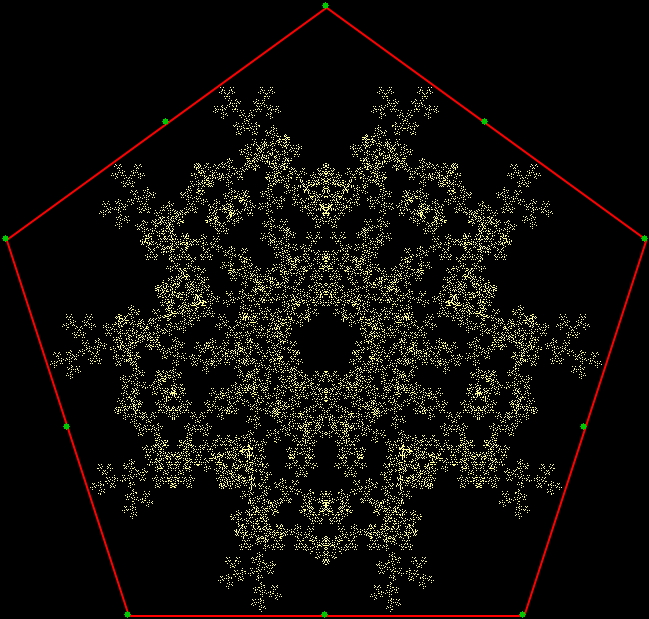
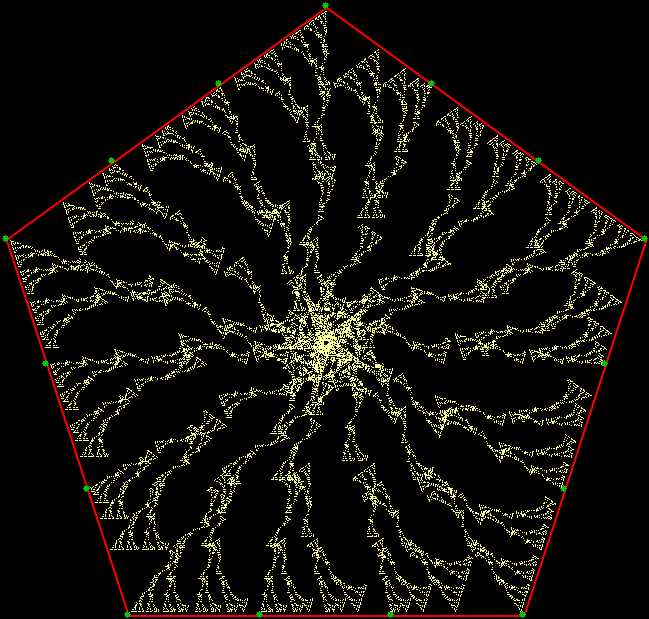
This is a beautiful and interesting shape, reminiscent of a piece of jewellery:

Pentagons in a ring


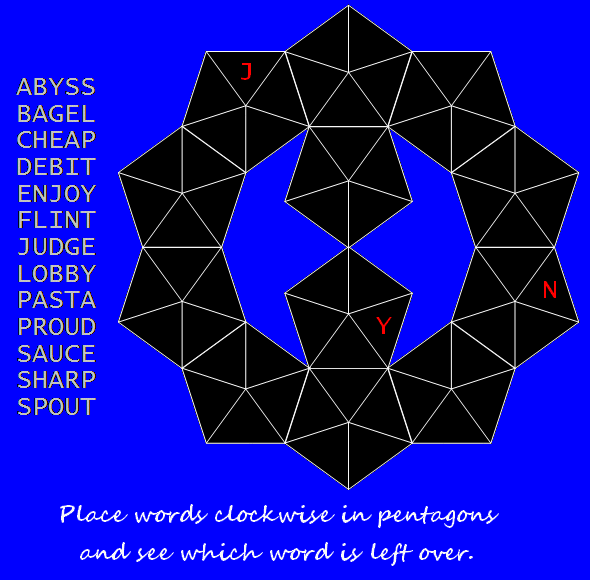
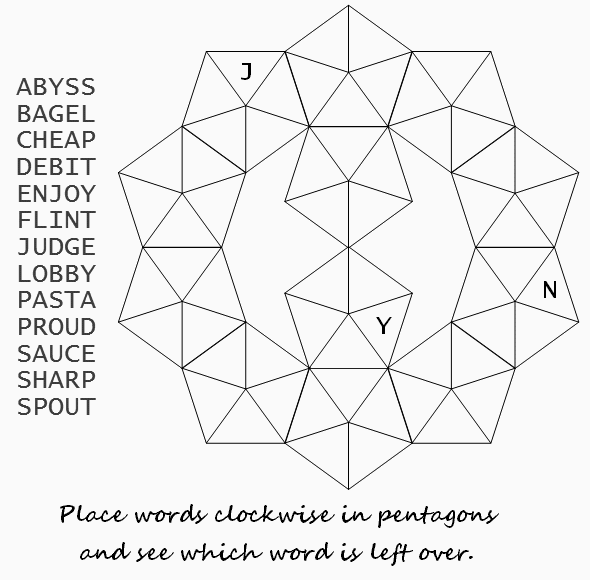
I came across it in this tricky little word-puzzle:

Word puzzle using pentagon-ring


Here’s a printable version of the puzzle:

Printable puzzle


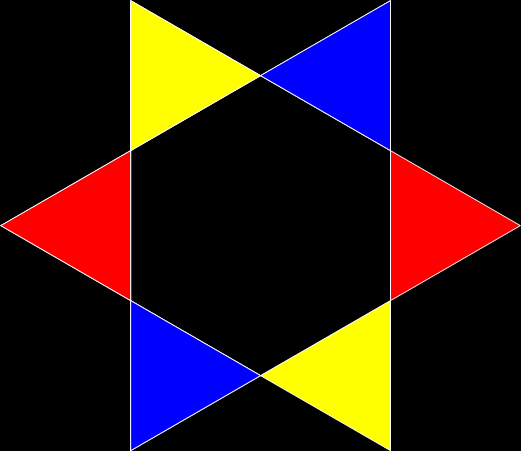
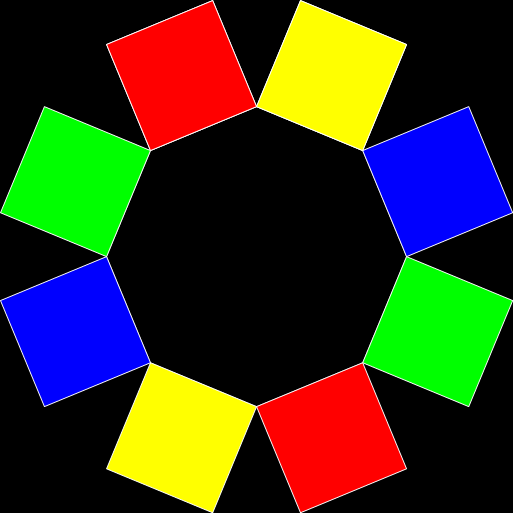
Let’s try placing some other regular polygons with s sides around regular polygons with s*2 sides:

Hexagonal ring of triangles


Octagonal ring of squares


Decagonal ring of pentagons


Dodecagonal ring of hexagons


Only regular pentagons fit perfectly, edge-to-edge, around a regular decagon. But all these polygonal-rings can be used to create interesting and beautiful fractals, as I hope to show in a future post.

Think Inc

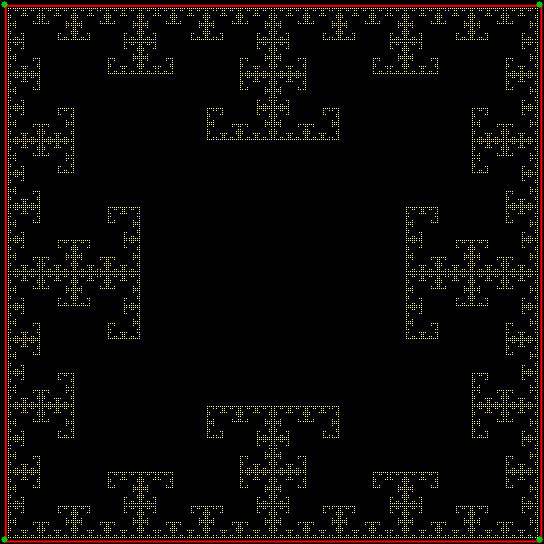
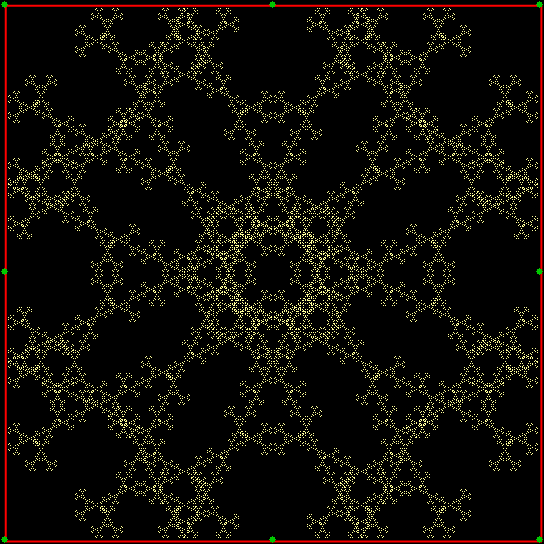
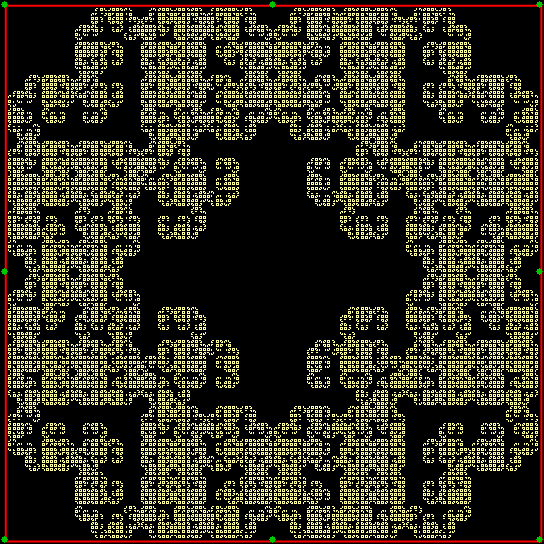
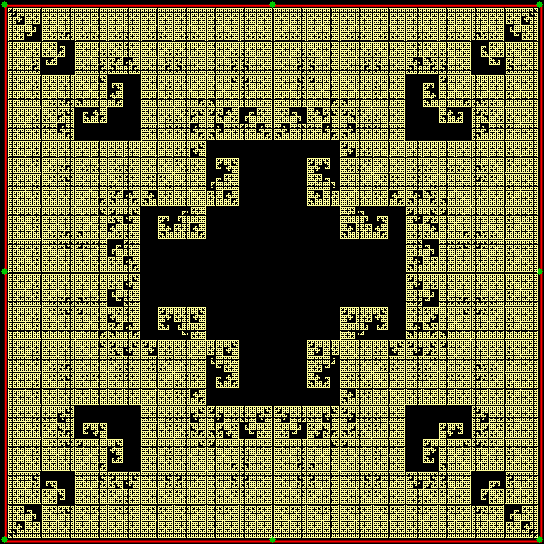
This is a T-square fractal:

T-square fractal


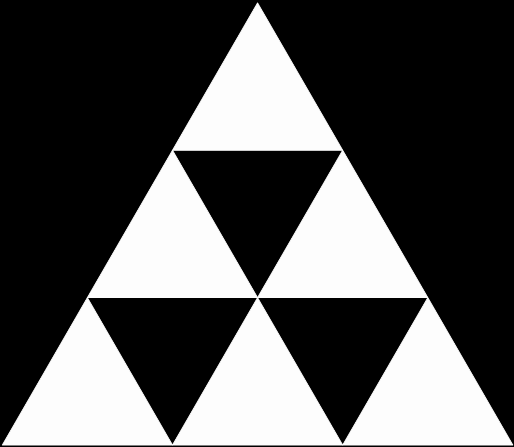
Or you could say it’s a T-square fractal with the scaffolding taken away, because there’s nothing to show how it was made. And how is a T-square fractal made? There are many ways. One of the simplest is to set a point jumping 1/2 of the way towards one or another of the four vertices of a square. If the point is banned from jumping towards the vertex two places clockwise (or counter-clockwise) of the vertex, v[i=1..4], it’s just jumped towards, you get a T-square fractal by recording each spot where the point lands.

You also get a T-square if the point is banned from jumping towards the vertex most distant from the vertex, v[i], it’s just jumped towards. The most distant vertex will always be the diagonally opposite vertex, or the vertex, v[i+2], two places clockwise of v[i]. So those two bans are functionally equivalent.

But what if you don’t talk about bans at all? You can also create a T-square fractal by giving the point three choices of increment, [0,1,3], after it jumps towards v[i]. That is, it can jump towards v[i+0], v[i+1] or v[i+3] (where 3+2 = 5 → 5-4 = 1; 3+3 = 6 → 2; 4+1 = 5 → 1; 4+2 = 6 → 2; 4+3 = 7 → 3). Vertex v[i+0] is the same vertex, v[i+1] is the vertex one place clockwise of v[i], and v[i+3] is the vertex two places clockwise of v[i].

So this method is functionally equivalent to the other two bans. But it’s easier to calculate, because you can take the current vertex, v[i], and immediately calculate-and-use the next vertex, without having to check whether the next vertex is forbidden. In other words, if you want speed, you just have to Think Inc!

Speed becomes important when you add a new jumping-target to each side of the square. Now the point has 8 possible targets to jump towards. If you impose several bans on the next jump, e.g the point can’t jump towards v[i+2], v[i+3], v[i+5], v[i+6] and v[i+7], you will have to check for five forbidden targets. But using the increment-set [0,1,4] you don’t have to check for anything. You just inc-and-go:

inc = 0, 1, 4


Here are more fractals created with the speedy inc-and-go method:

inc = 0, 2, 3


inc = 0, 2, 5


inc = 0, 3, 4


inc = 0, 3, 5


inc = 1, 4, 7


inc = 2, 4, 7


inc = 0, 1, 4, 7


inc = 0, 3, 4, 5


inc = 0, 3, 4, 7


inc = 0, 4, 5, 7


inc = 1, 2, 6, 7


With more incs, there are more possible paths for the jumping point and the fractals become more “solid”:

inc = 0, 1, 2, 4, 5


inc = 0, 1, 2, 6, 7


inc = 0, 1, 3, 5, 7


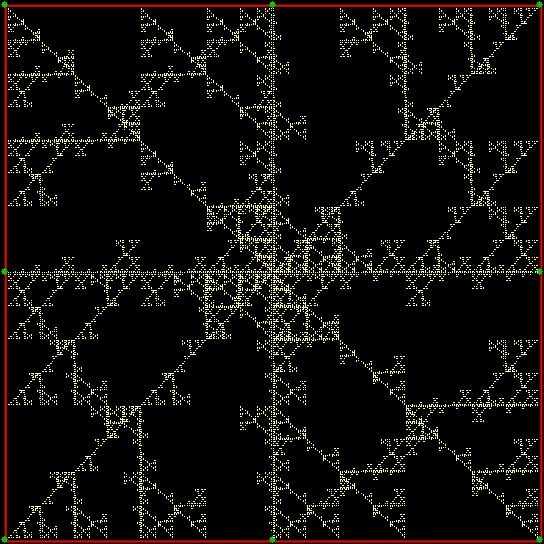
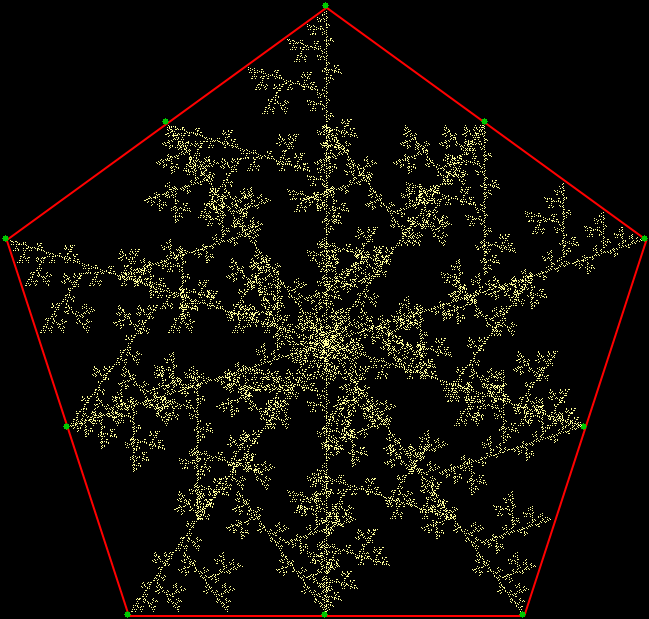
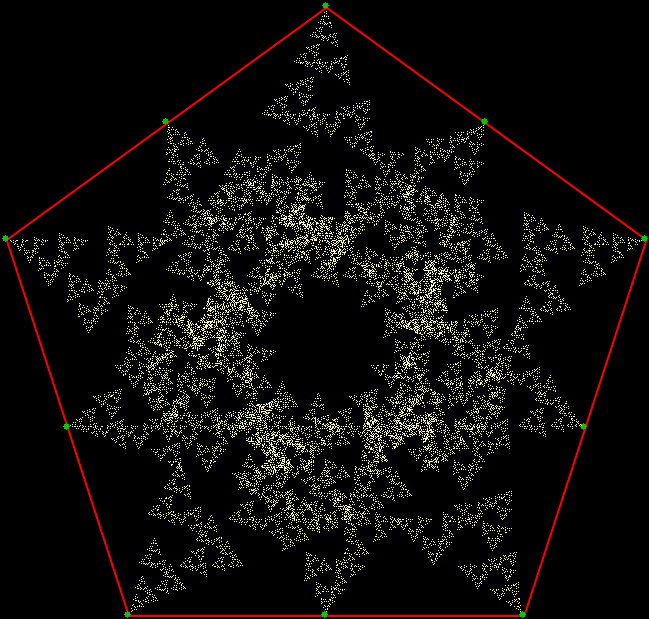
Now try applying inc-and-go to a pentagon:

inc = 0, 1, 2

(open in new window if blurred)


inc = 0, 2, 3


And add a jumping-target to each side of the pentagon:

inc = 0, 2, 5


inc = 0, 3, 6


inc = 0, 3, 7


inc = 1, 5, 9


inc = 2, 5, 8


inc = 5, 6, 9


And add two jumping-targets to each side of the pentagon:

inc = 0, 1, 7


inc = 0, 2, 12


inc = 0, 3, 11


inc = 0, 3, 12


inc = 0, 4, 11


inc = 0, 5, 9


inc = 0, 5, 10


inc = 2, 7, 13


inc = 2, 11, 13


inc = 3, 11, 13


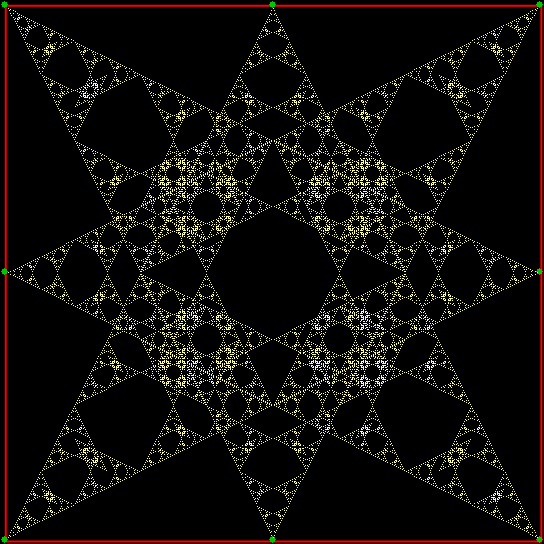
After the pentagon comes the hexagon:

inc = 0, 1, 2


inc = 0, 1, 5


inc = 0, 3, 4


inc = 0, 3, 5


inc = 1, 3, 5


inc = 2, 3, 4


Add a jumping-target to each side of the hexagon:

inc = 0, 2, 5


inc = 0, 2, 9


inc = 0, 6, 11


inc = 0, 3, 6


inc = 0, 3, 8


inc = 0, 3, 9


inc = 0, 4, 7


inc = 0, 4, 8


inc = 0, 5, 6


inc = 0, 5, 8


inc = 1, 5, 9


inc = 1, 6, 10


inc = 1, 6, 11


inc = 2, 6, 8


inc = 2, 6, 10


inc = 3, 5, 7


inc = 3, 6, 9


inc = 6, 7, 11