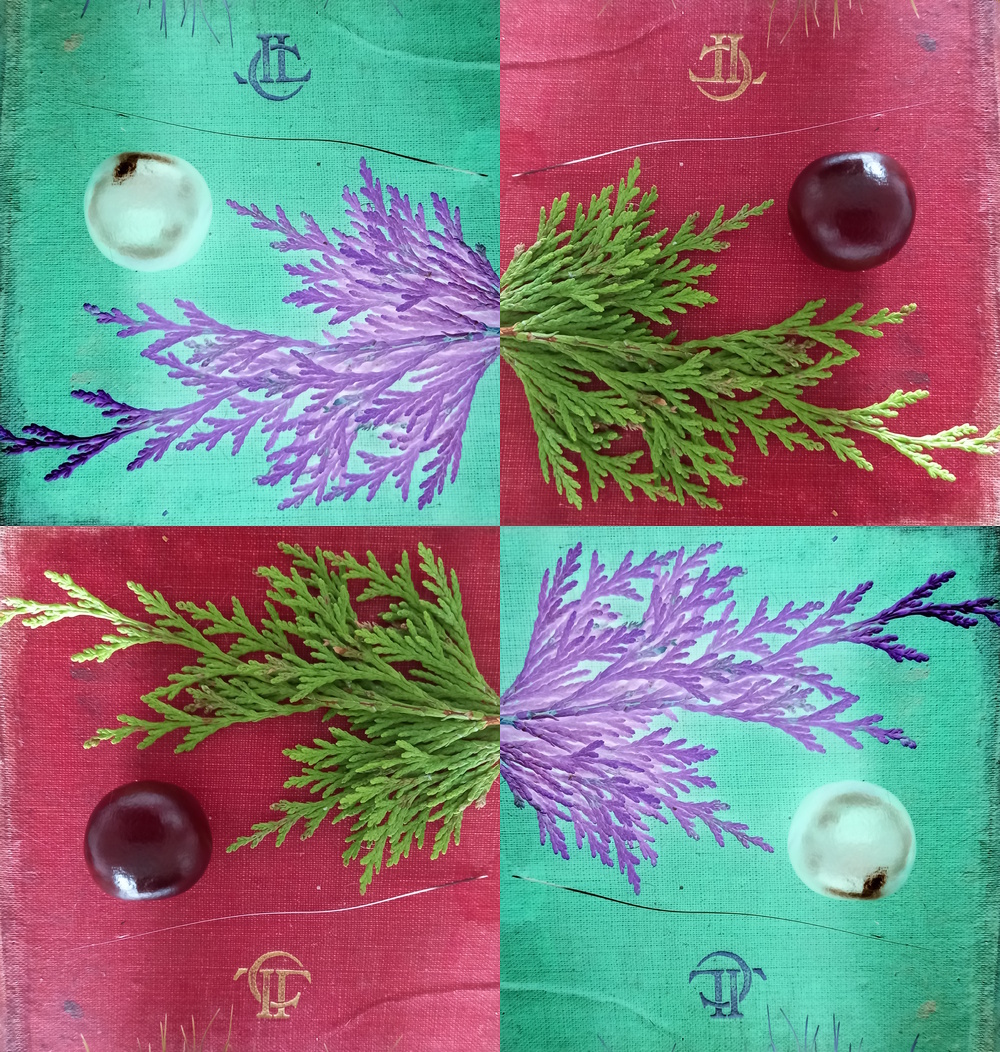
Fractarbol #1
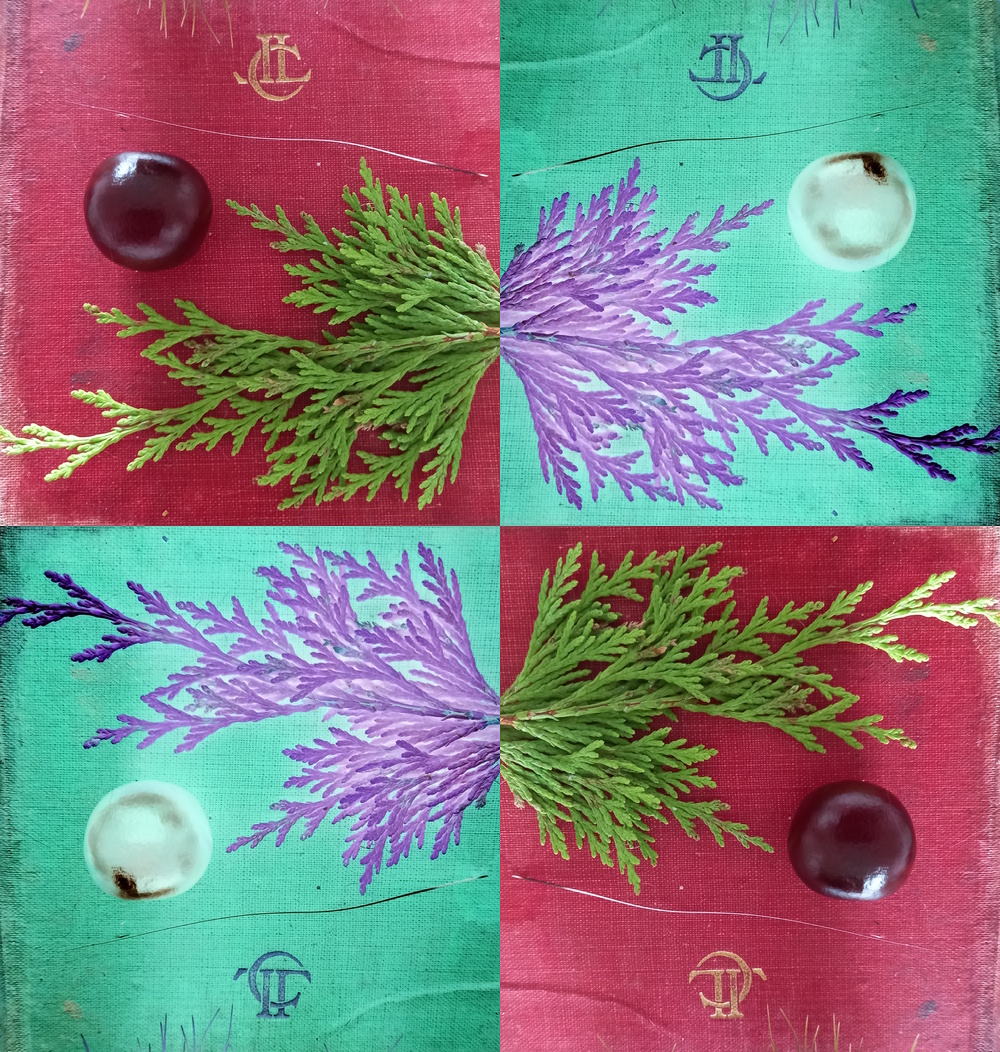
Fractarbol #2
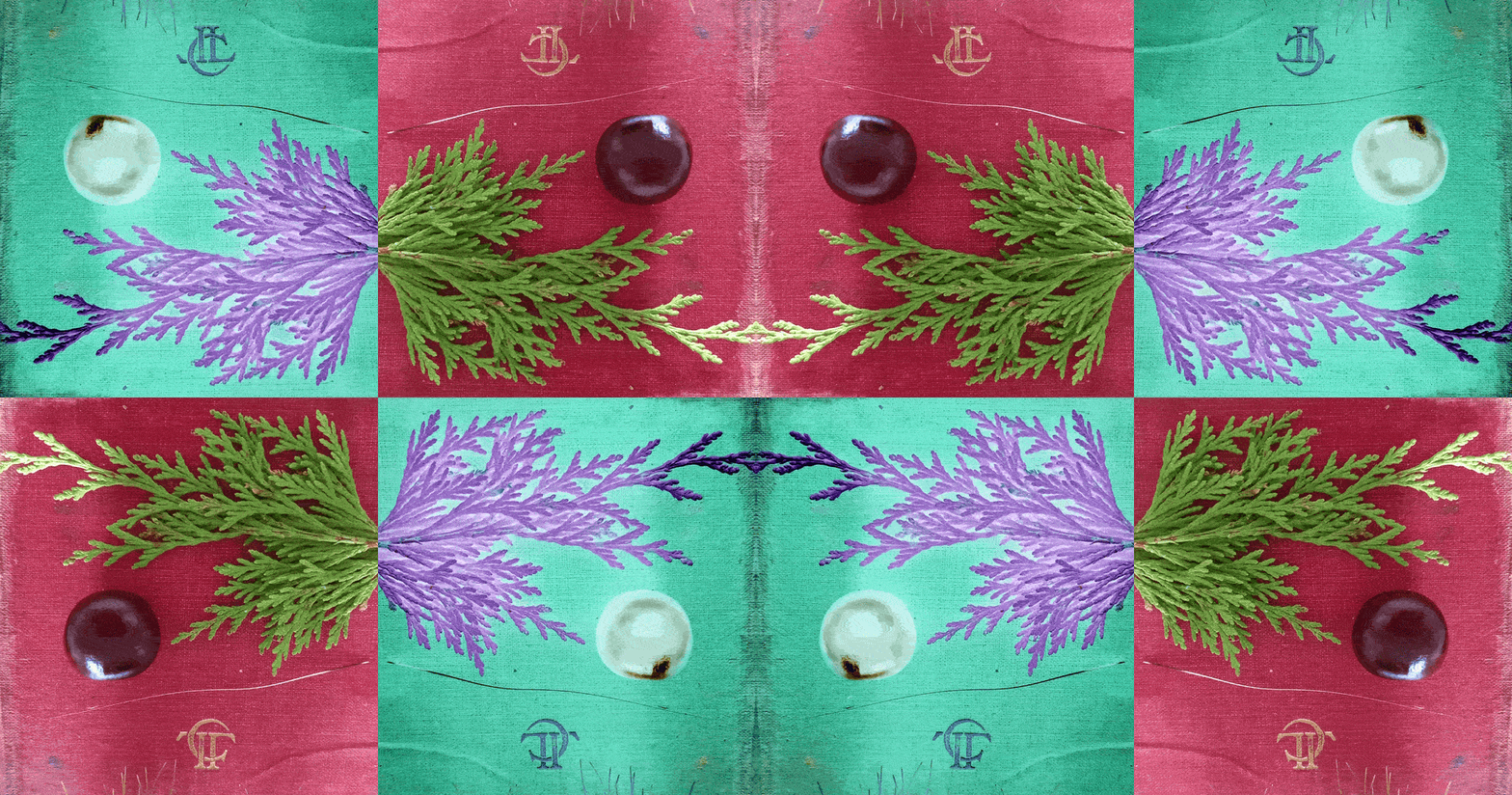
Fractanimarbol (animated at ezGif)

The Koch Snowflake is a fractal named after the Swedish mathematician Helge von Koch (1870-1924). It’s simple to make, attractive to see:
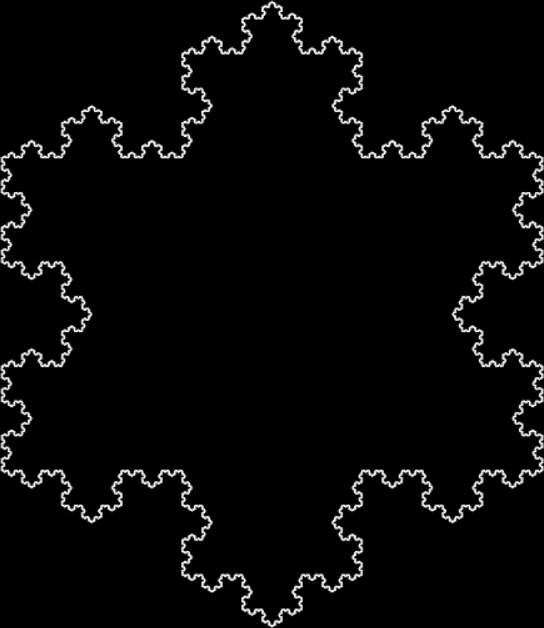
And here’s how you making it, starting with an equilateral triangle:
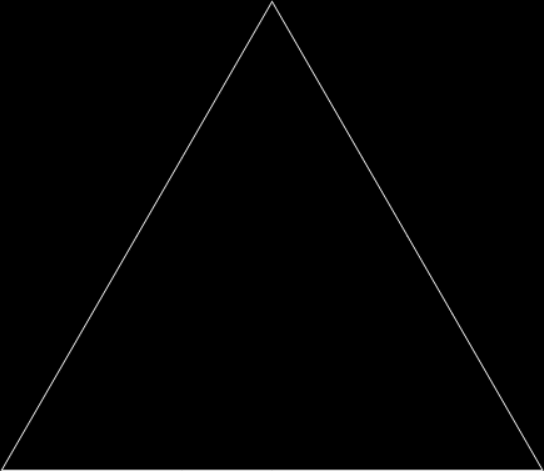
Make the Flake #0
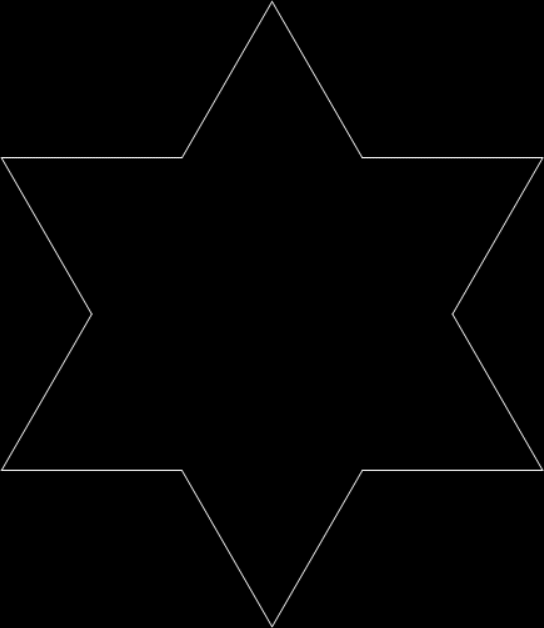
Make the Flake #1: Erect a 1/9-sized equilateral triangle on middle of each side
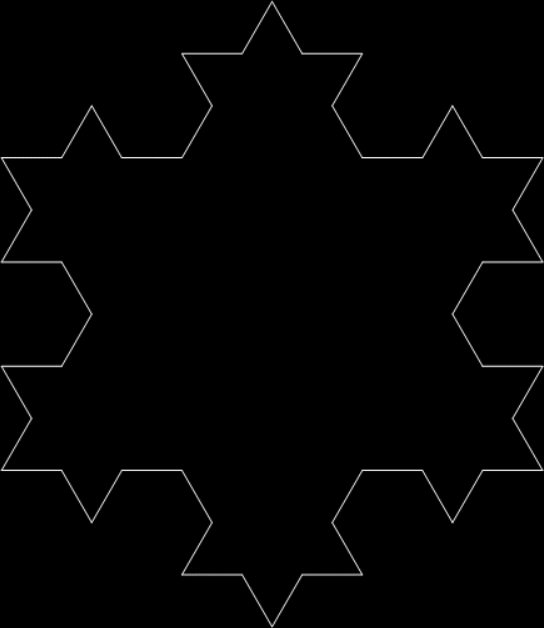
Make the Flake #2: Then a 1/81-sized equilateral triangle on the middle of each straight line created by #1
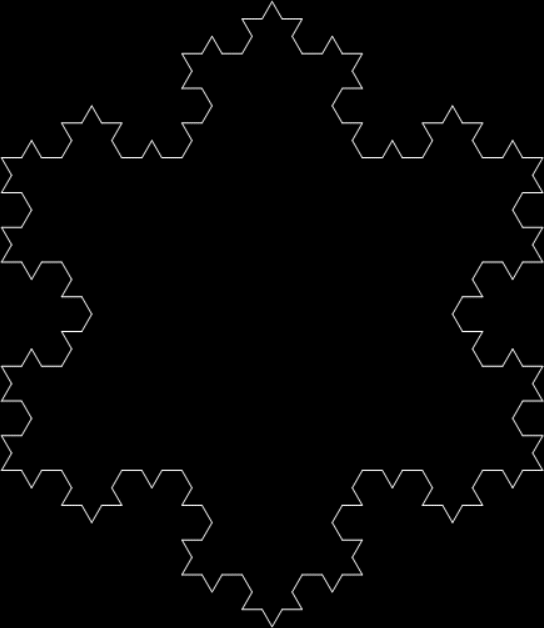
Make the Flake #3: And so on.
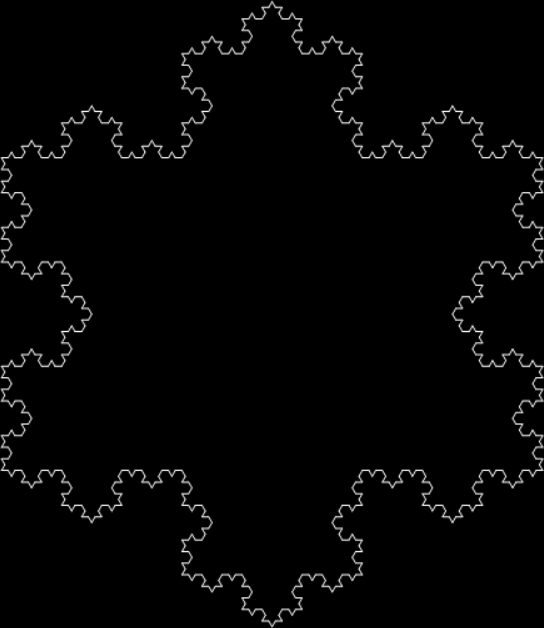
Make the Flake #4
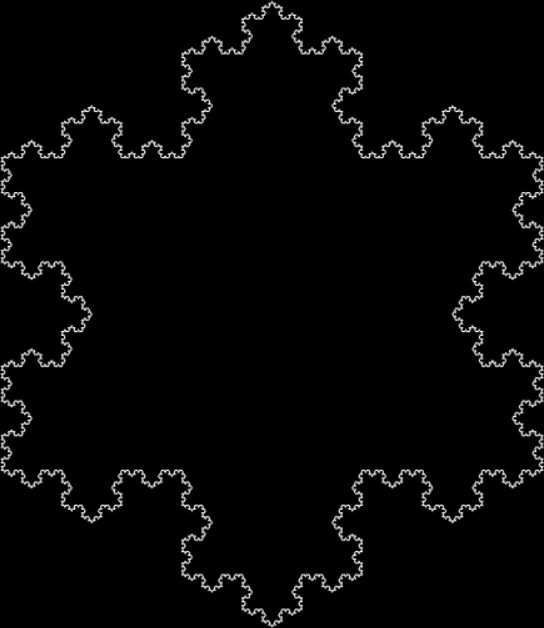
Make the Flake #5
Make the Flake #6
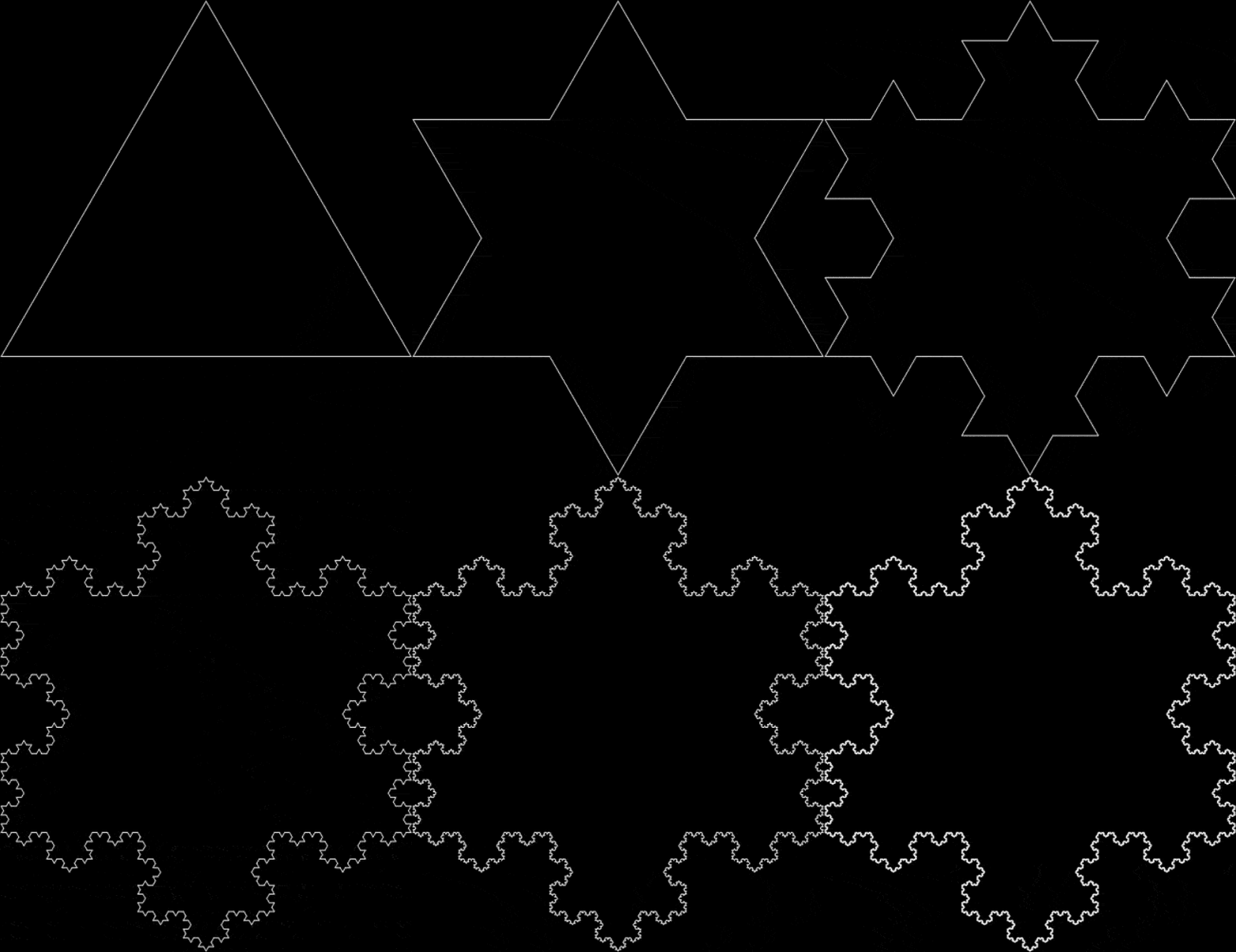
Make the Flake #0-6 (animated at ezGif)
In the end, the Koch snowflake has an infinitely long perimeter around a finite area (see discussion at Wikipedia). The Koch anti-snowflake or un-flake also combines an infinitely long perimeter and finite area:
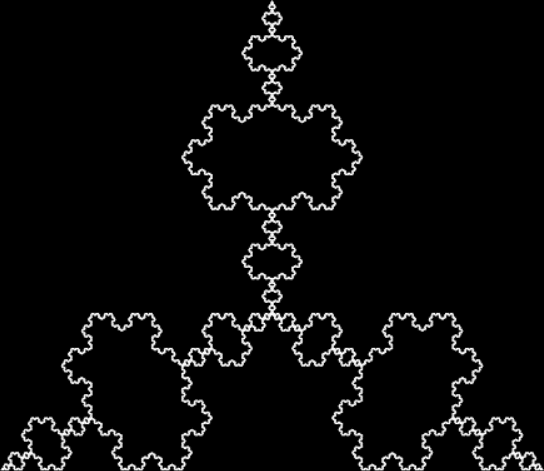
Koch un-Flake
You make the un-flake like this:
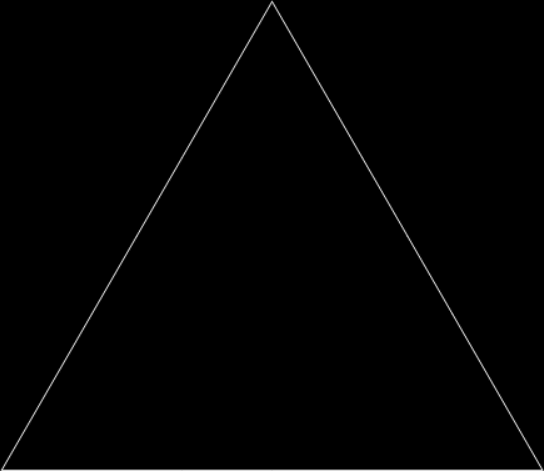
Make the Un-Flake #0
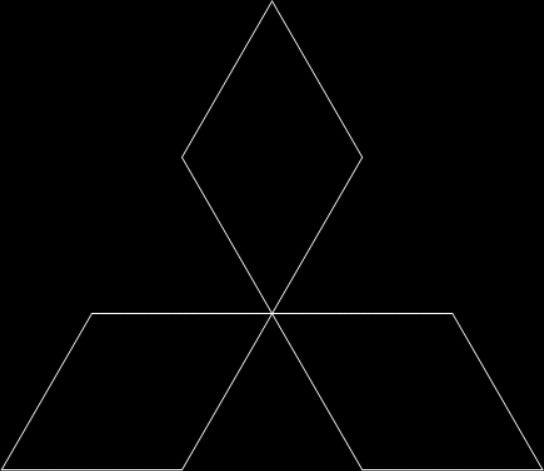
Make the Un-Flake #1
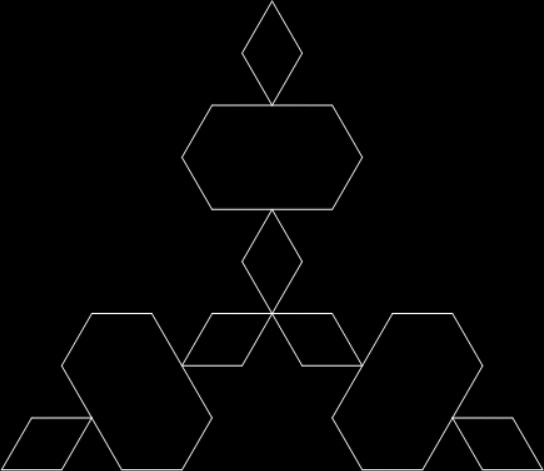
Make the Un-Flake #2
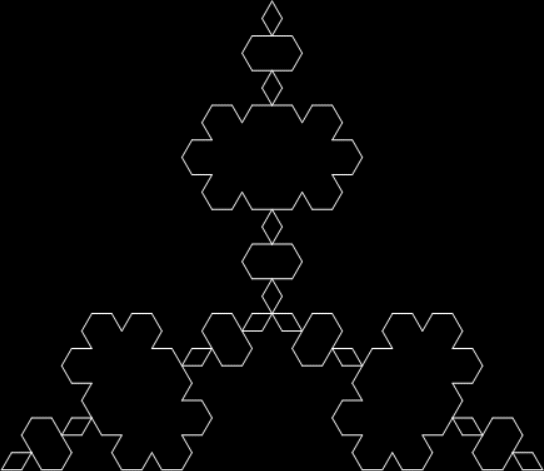
Make the Un-Flake #3
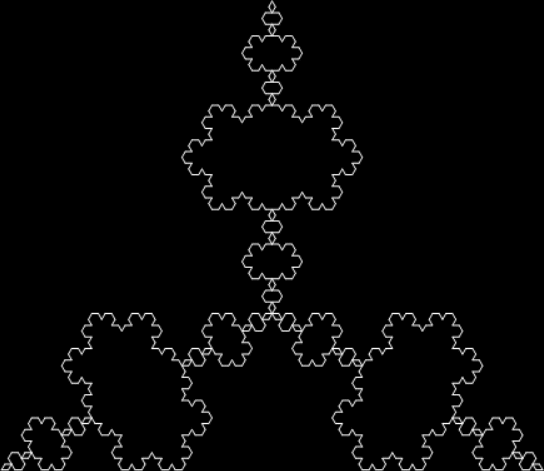
Make the Un-Flake #4
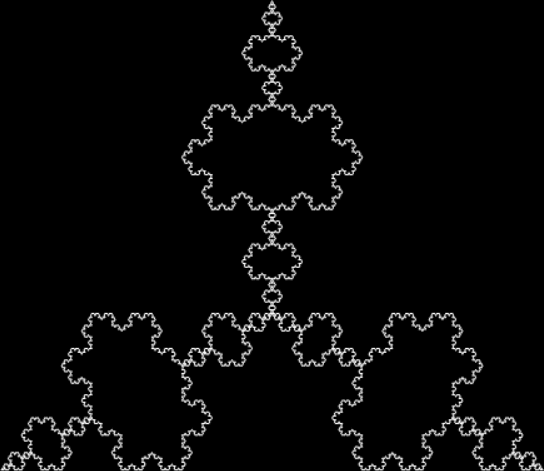
Make the Un-Flake #5
Make the Un-Flake #6
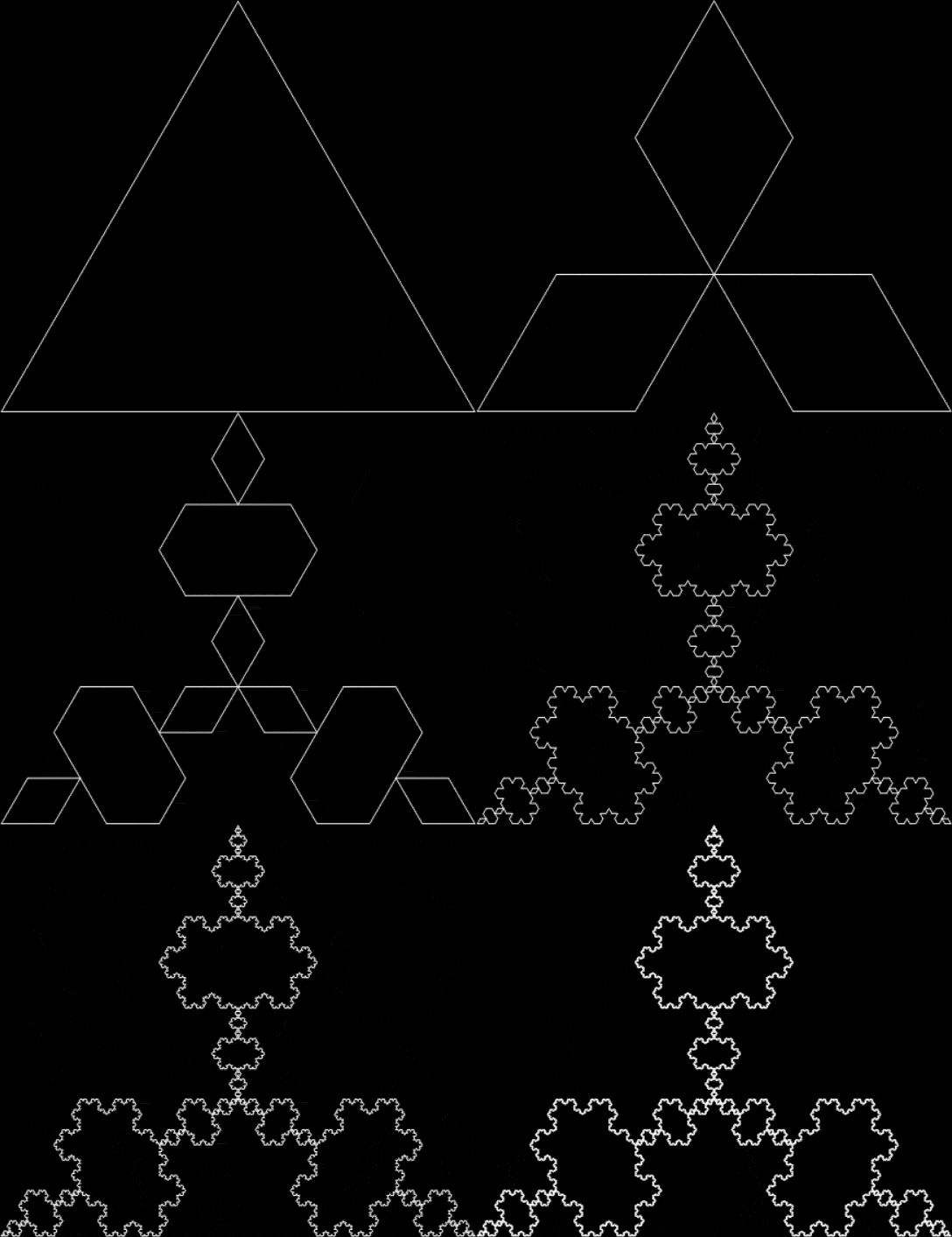
Make the Un-Flake #0-6 (animated at ezGif)
And you can combine the Koch snowflake and the Koch anti-snowflake like this:
Make the Flake+Un-Flake #0
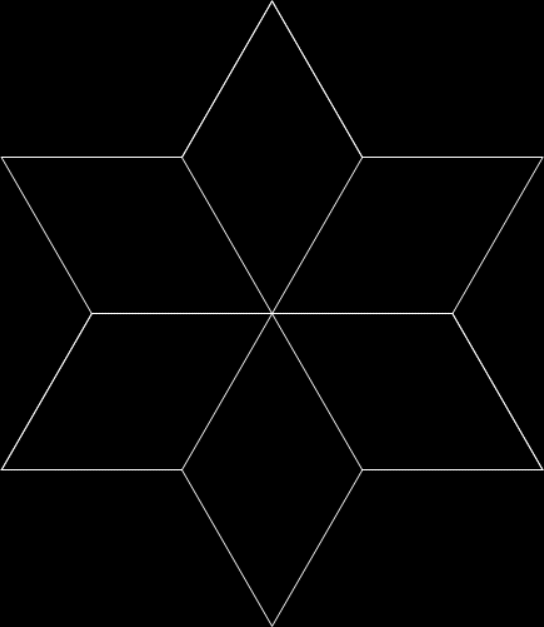
Make the Flake+Un-Flake #1
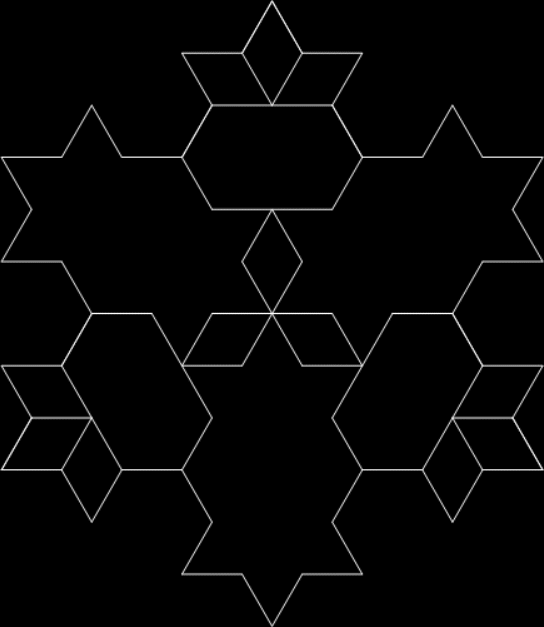
Make the Flake+Un-Flake #2
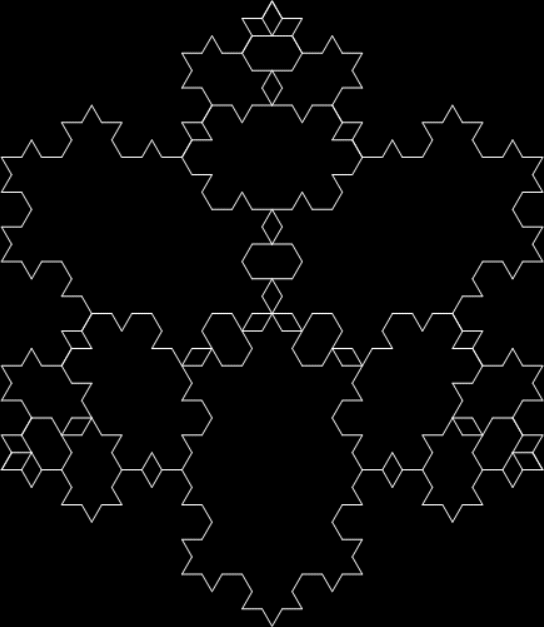
Make the Flake+Un-Flake #3
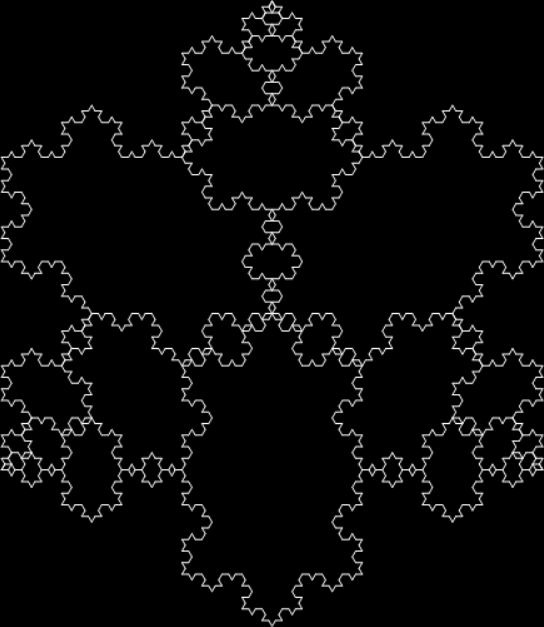
Make the Flake+Un-Flake #4
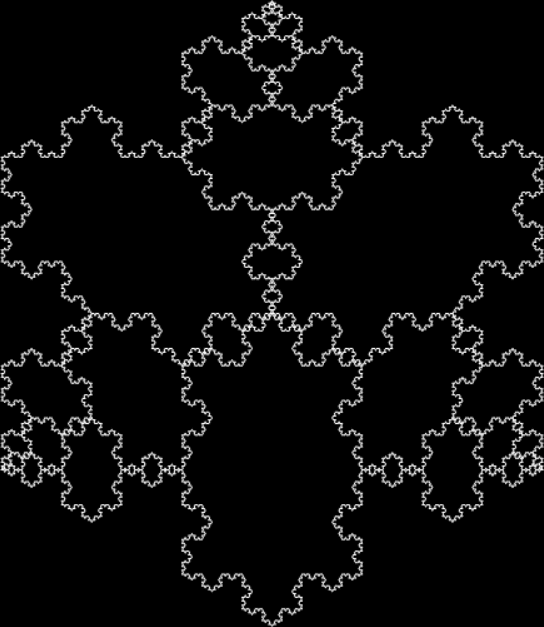
Make the Flake+Un-Flake #5
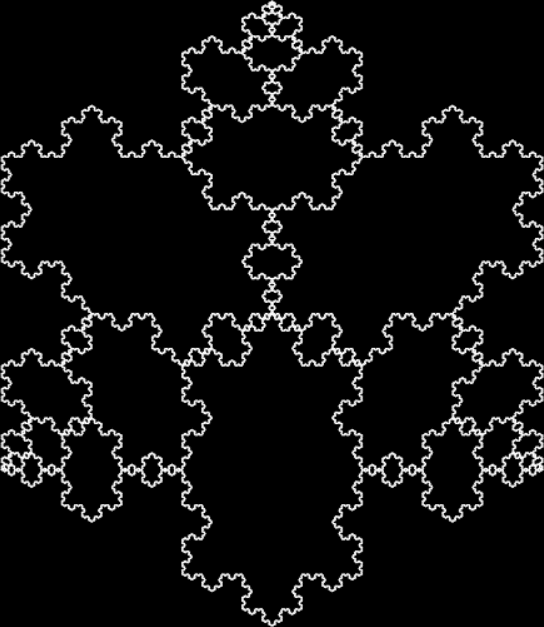
Make the Flake+Un-Flake #6
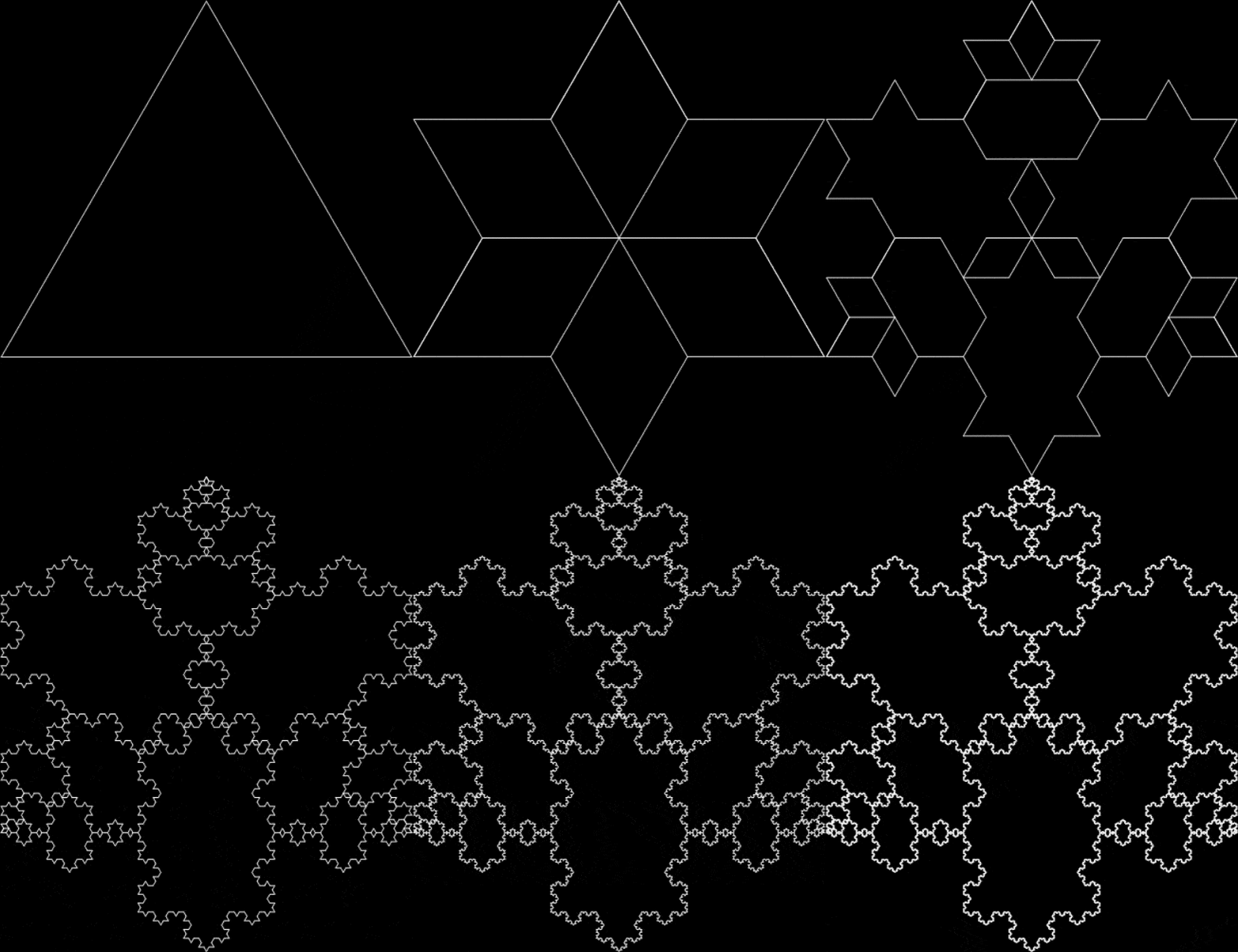
Make the Flake+Un-Flake #0-6 (animated at ezGif)
Here’s another variation, what you might call the Koch-Cross flake:
Koch-Cross Flake #0
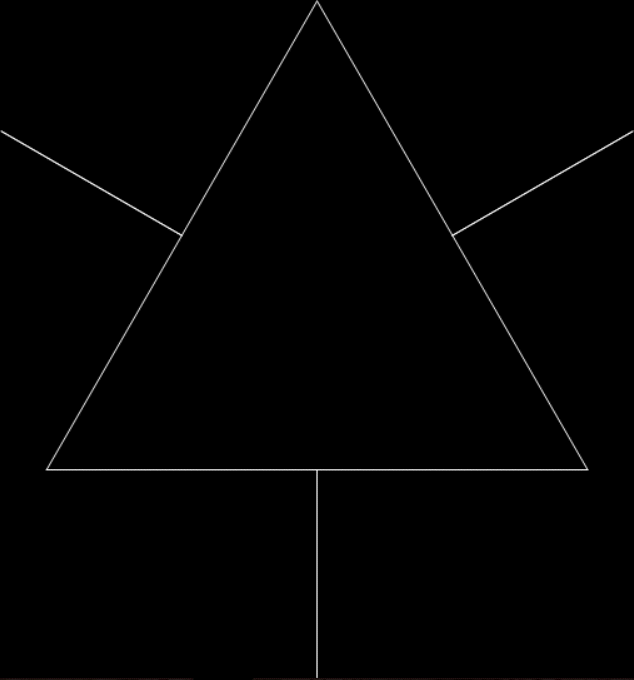
Koch-Cross Flake #1
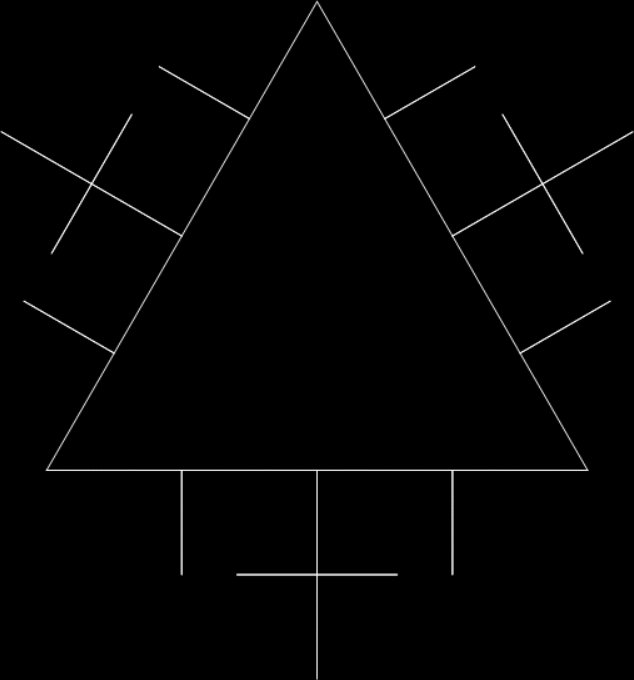
Koch-Cross Flake #2
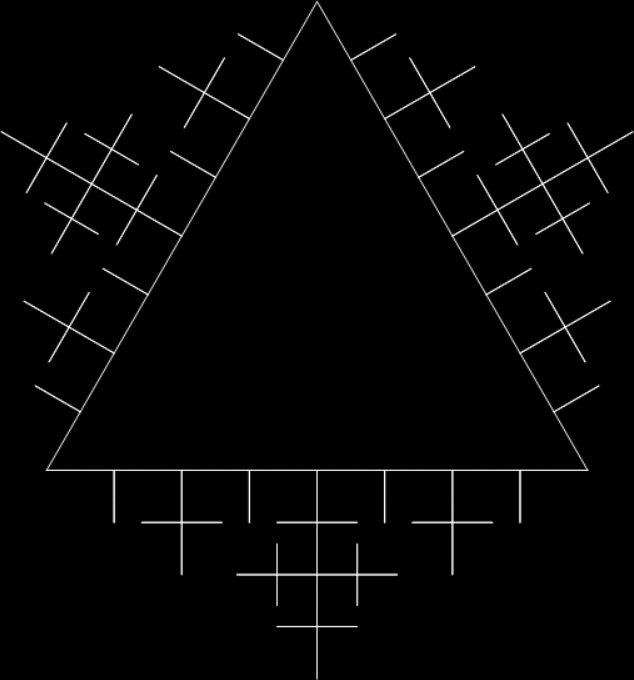
Koch-Cross Flake #3
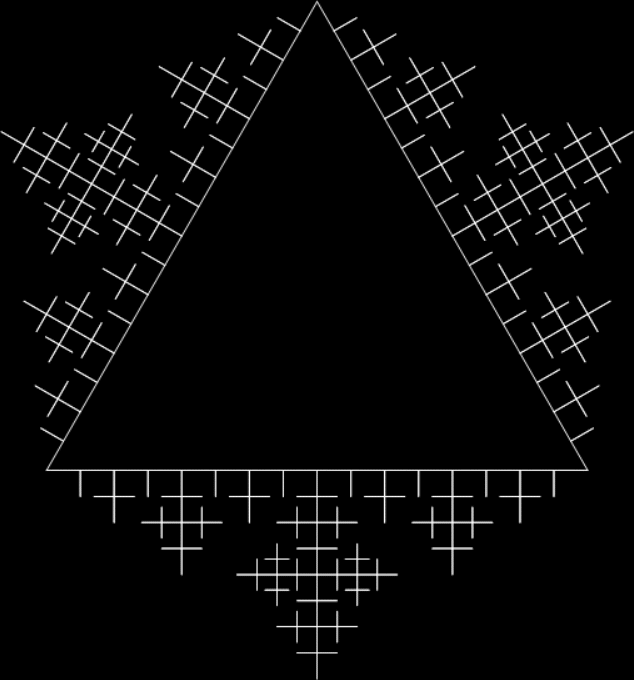
Koch-Cross Flake #4
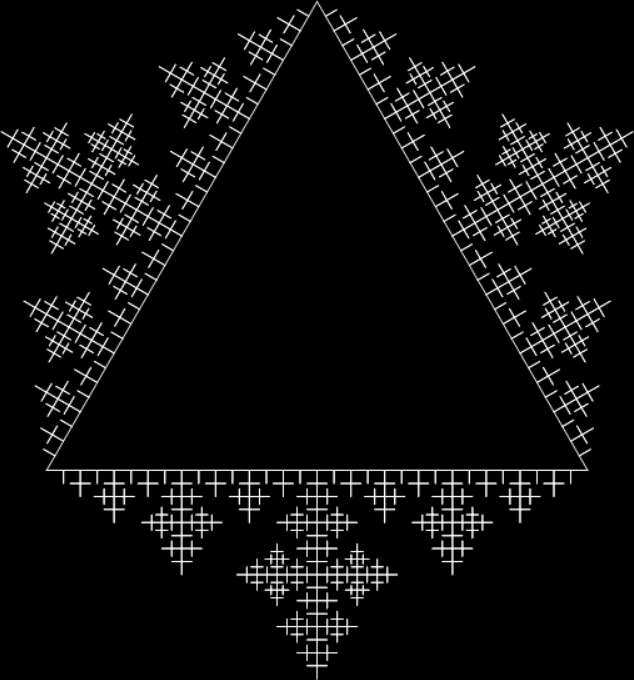
Koch-Cross Flake #5
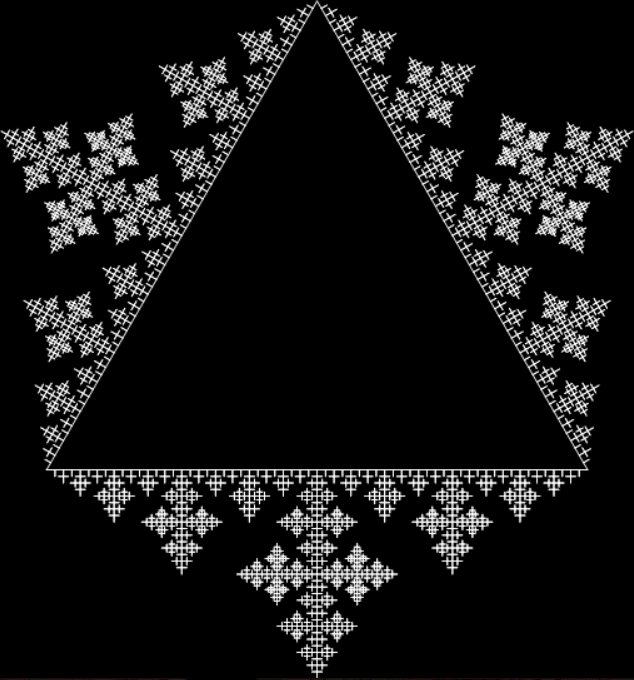
Koch-Cross Flake #6
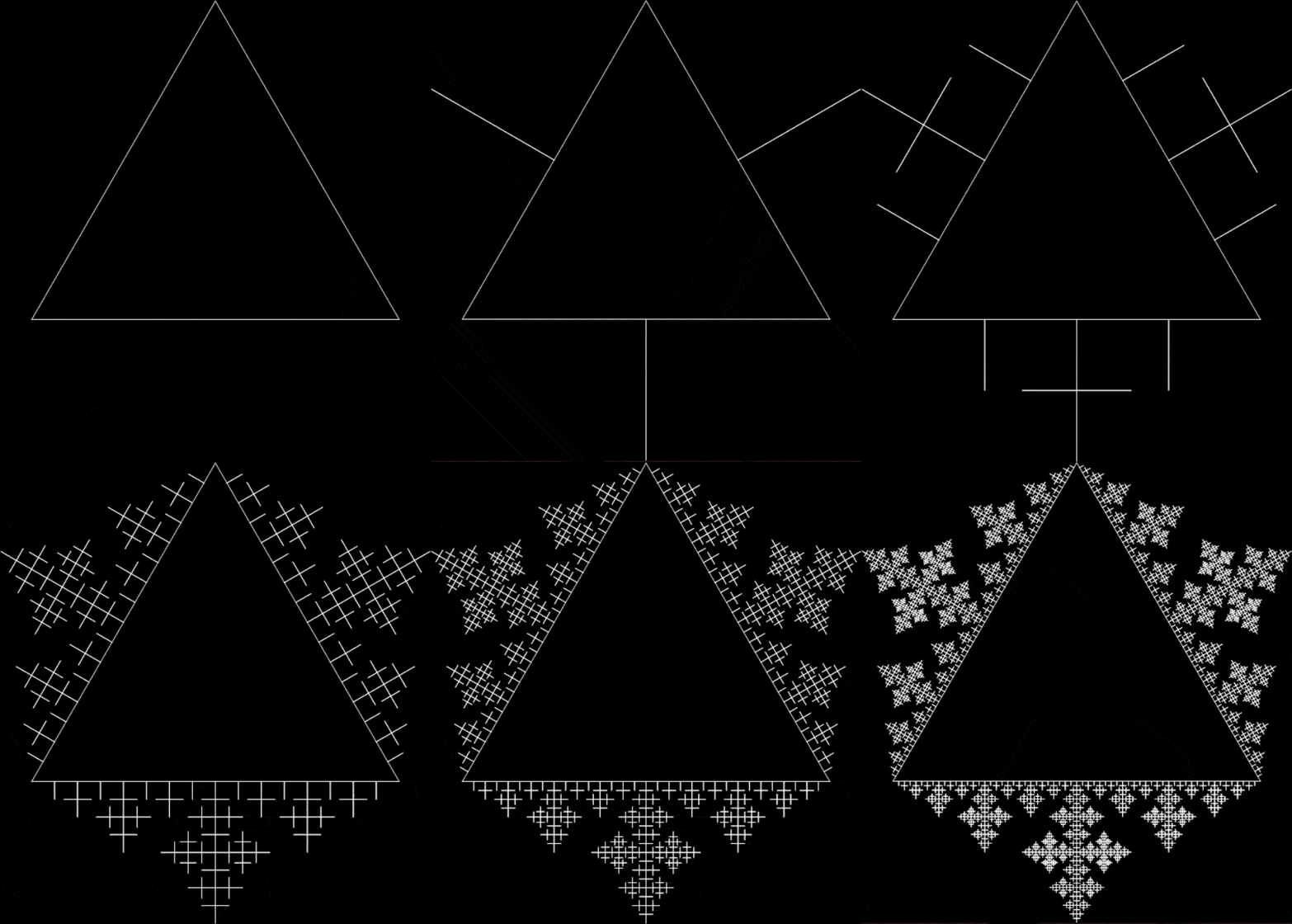
Koch-Cross Flake #0-6 (animated at ezGif)
And the Koch-Cross un-flake:
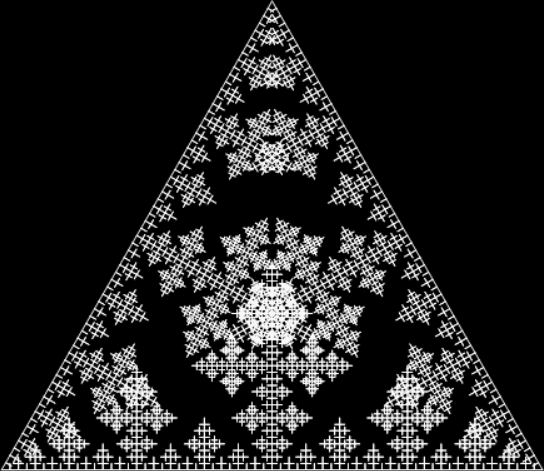
Koch-Cross un-Flake
And combined Koch-Cross Flake+un-Flake:
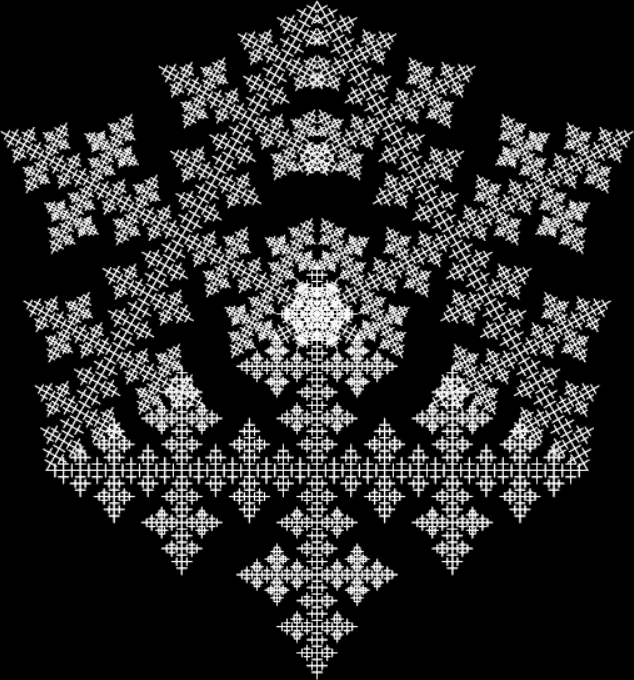
Combined Koch-Cross Flake+un-Flake
Here’s an animation of the combined Koch-Cross Flake+un-Flake:
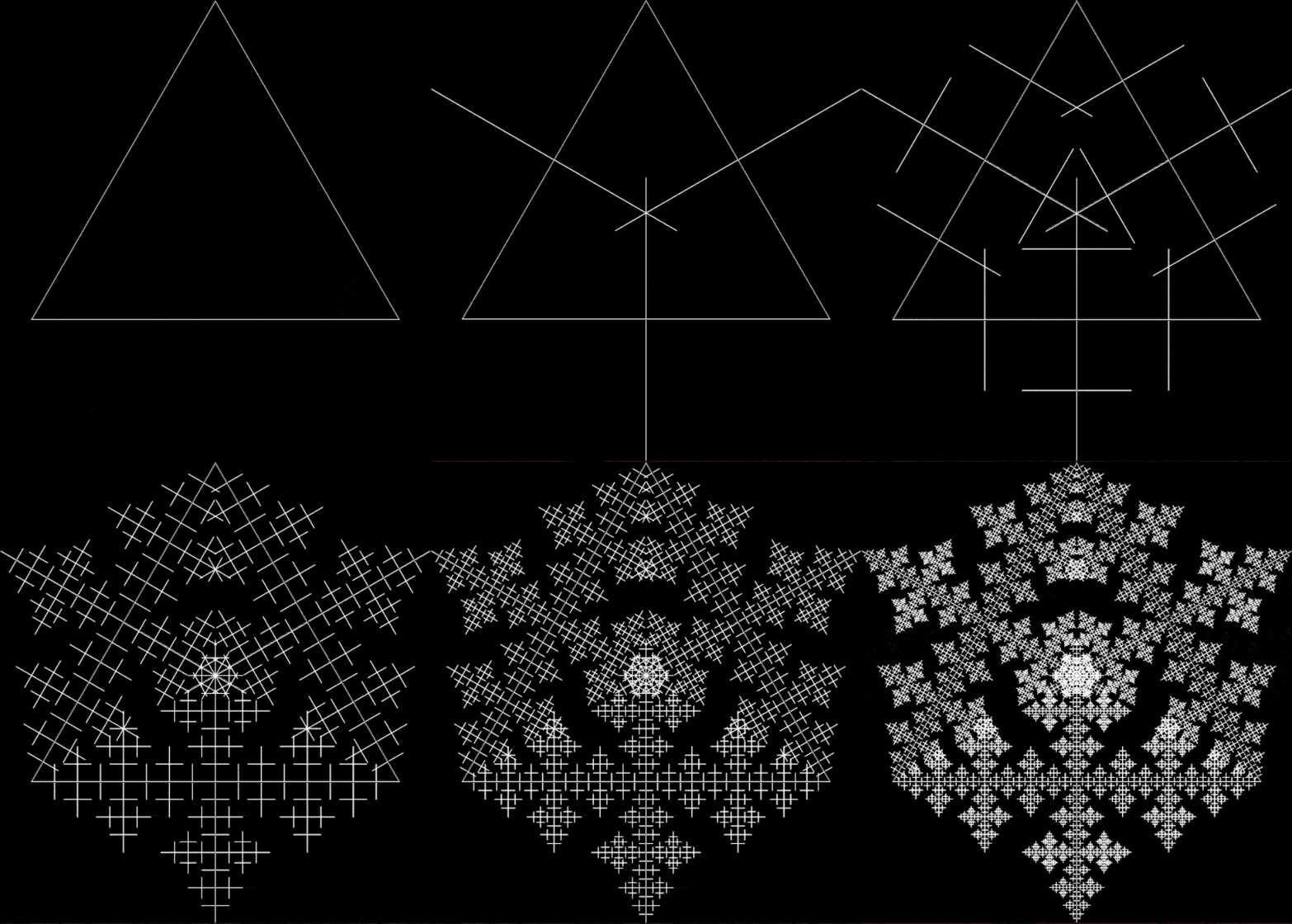
Combined Koch-Cross Flake+un-Flake (animated at ezGif)
And the combined Koch-Cross Flake+un-Flake created on the sides of a square:
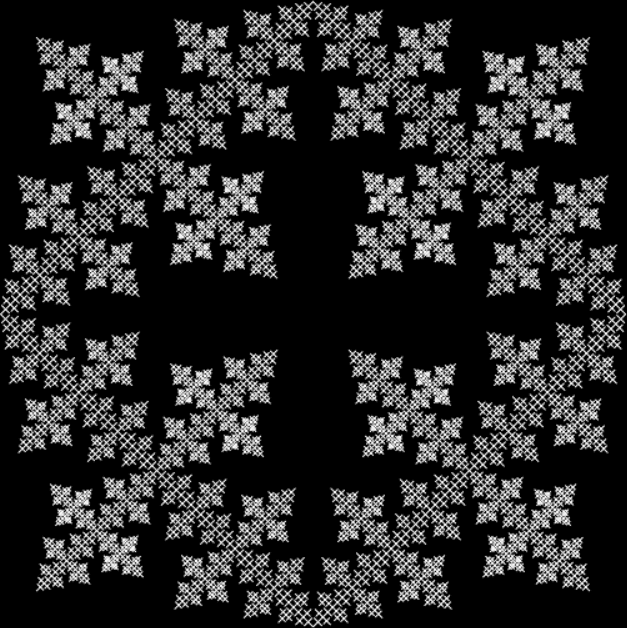
Combined Koch-Cross Flake+un-Flake on square
And a final variant of the infinitely many on offer:
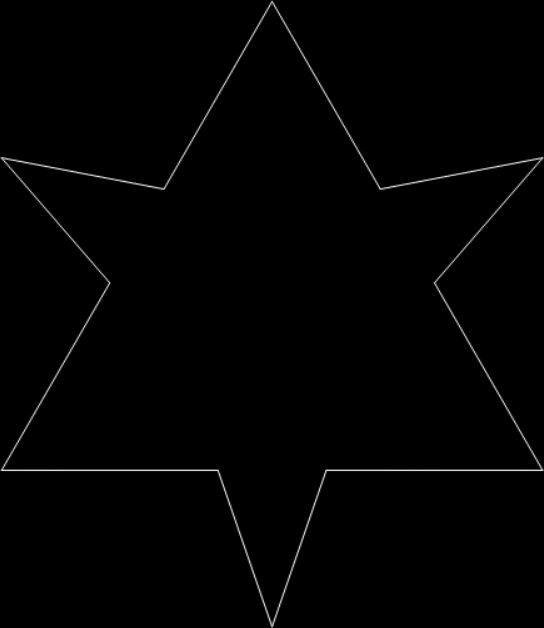
Variant Koch snowflake stage #1
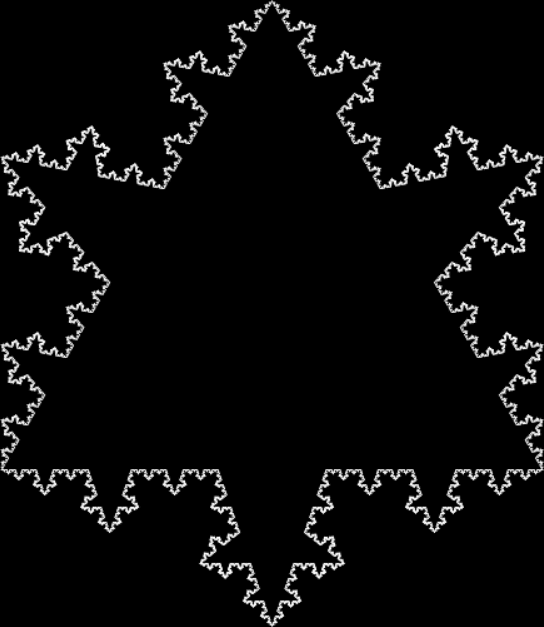
Variant Koch snowflake stage #6
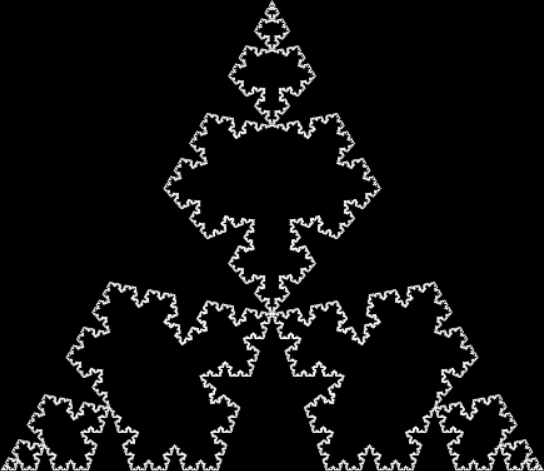
Un-Flake of variant Koch snowflake
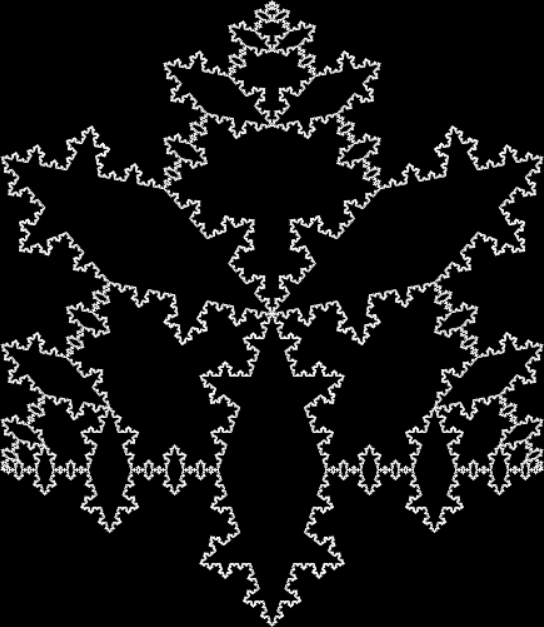
Combined variant Koch Flake+un-Flake
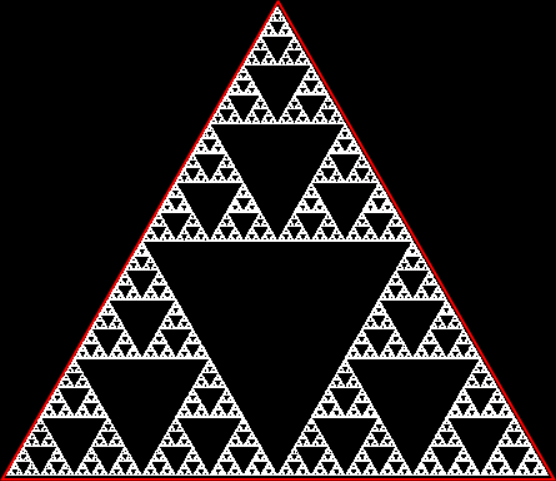
Thinking it over, I’ve decided that trircle is a much better name than ciangle:
↓
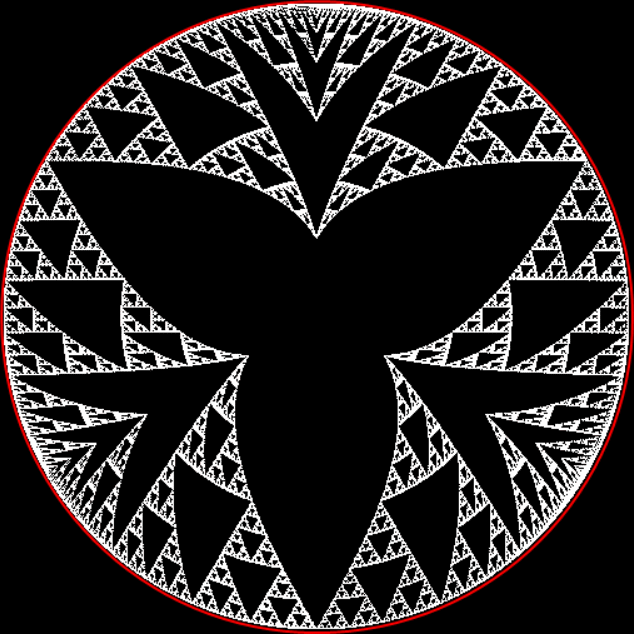
A Sierpiński trircle, or triangle converted into a circle
A trircle is a triangle converted into a circle; a ciangle is a circle converted into a triangle. Or another regular polygon. The trircle reminded me that circularized fractals are fungible, because the Sierpiński triangle can be converted into another regular polygon like a square or pentagon or hexagon. You can go viâ the trircle, but you don’t have to. The point is that the Sierpiński triangle has a center and points lying at some distance and some angle 0° through 360°, so you can easily adjust the points to fit inside any other regular polygon:
A Sierpiński triangle again
↓
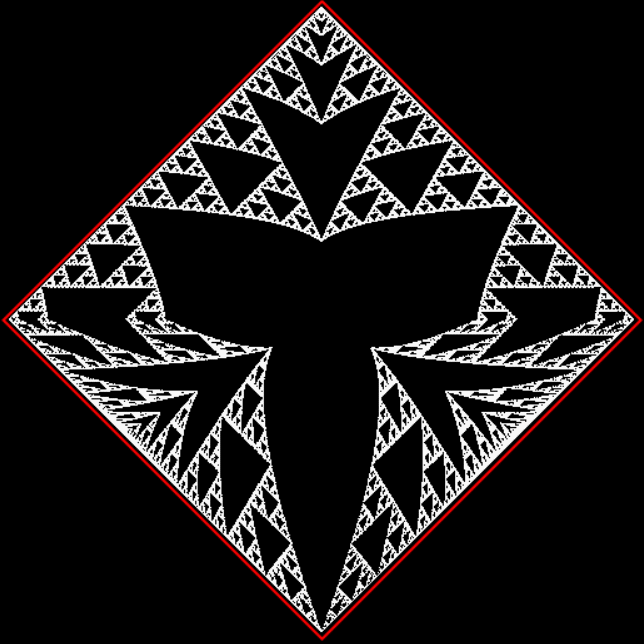
A Sierpiński trare, or triangle converted into square
↓
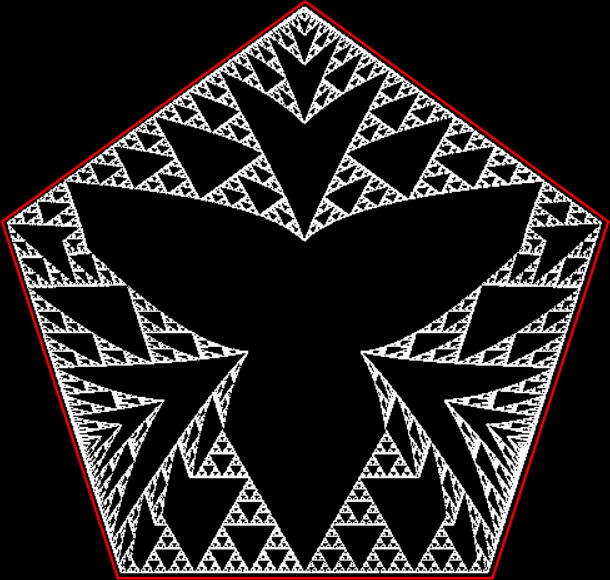
A Sierpiński trentagon
↓
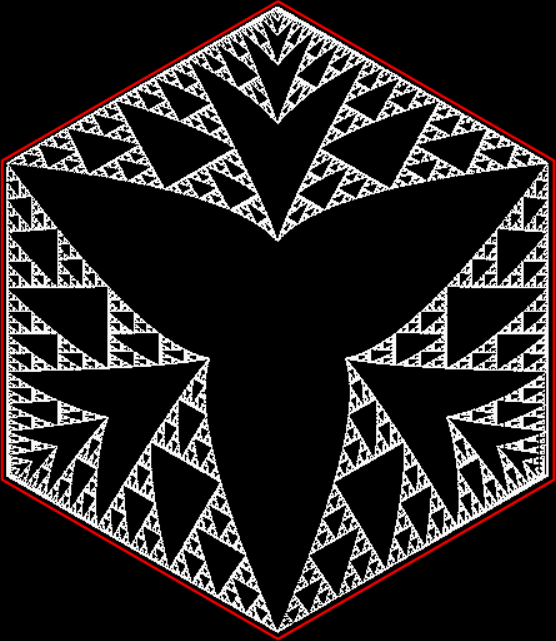
A Sierpiński trexagon
↓
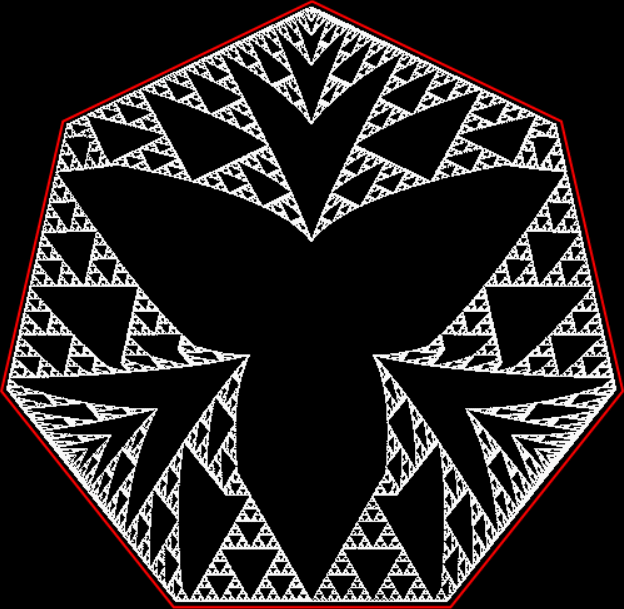
A Sierpiński treptagon
↓
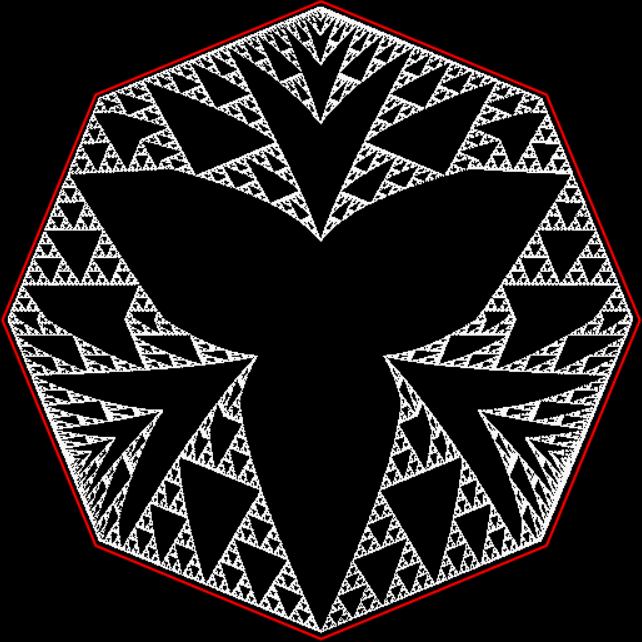
A Sierpiński troctogon
Here’s an animation of the conversions:
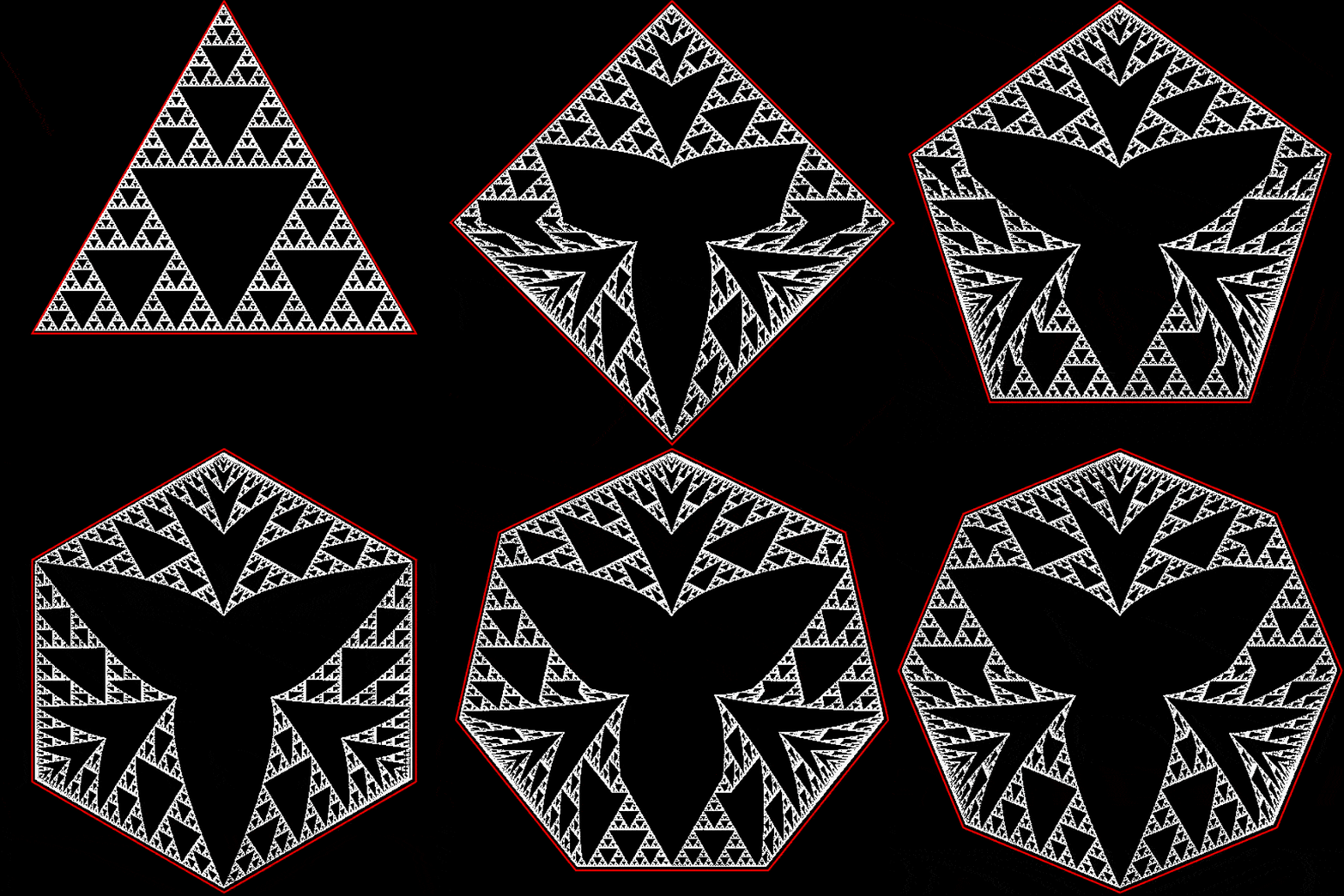
Sierpiński triangle → square, pentagon, hexagon, heptagon, octagon (animated at ezGif)
A Sierpiński carpet, with points lying at 0° through 360° inside a square, is similarly fungible:
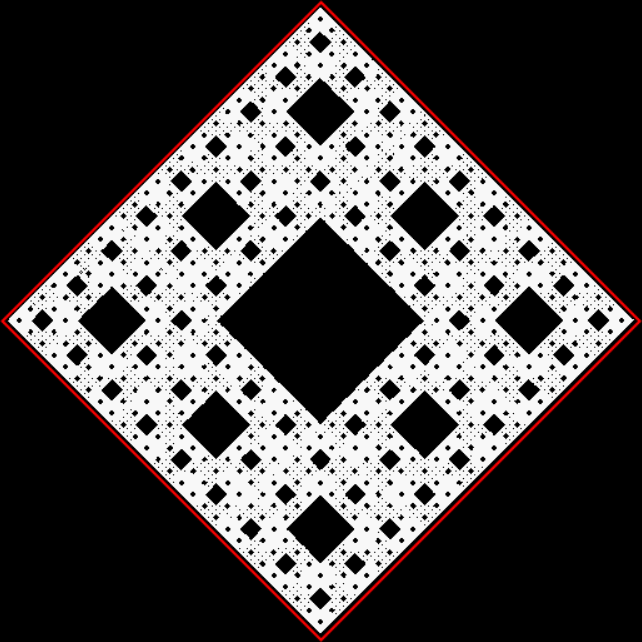
↓
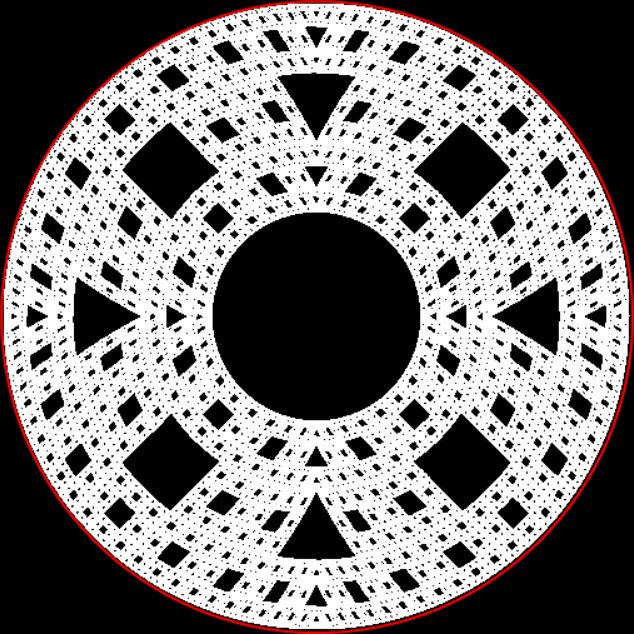
A Sierpiński carpet converted into a circle
↓
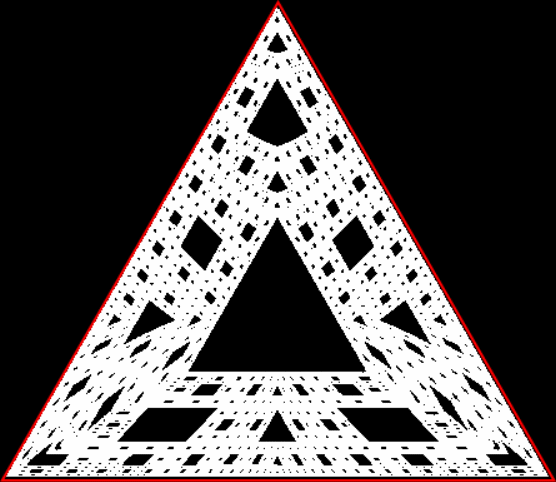
A Sierpiński carpet converted into a triangle
↓
A Sierpiński carpet again
↓
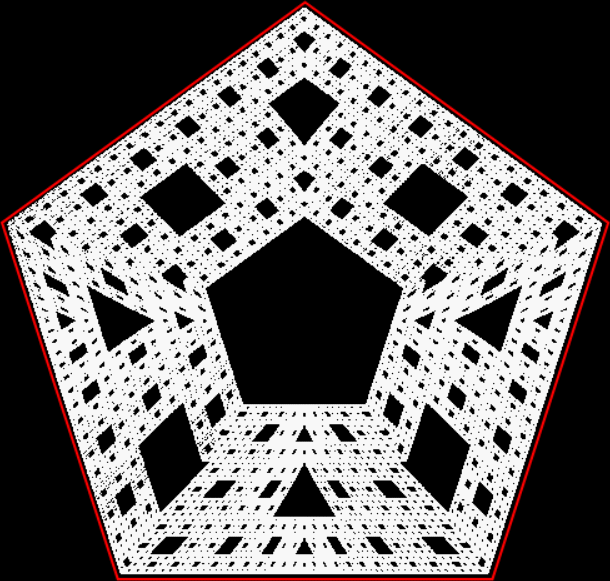
A Sierpiński carpet converted into a pentagon
↓
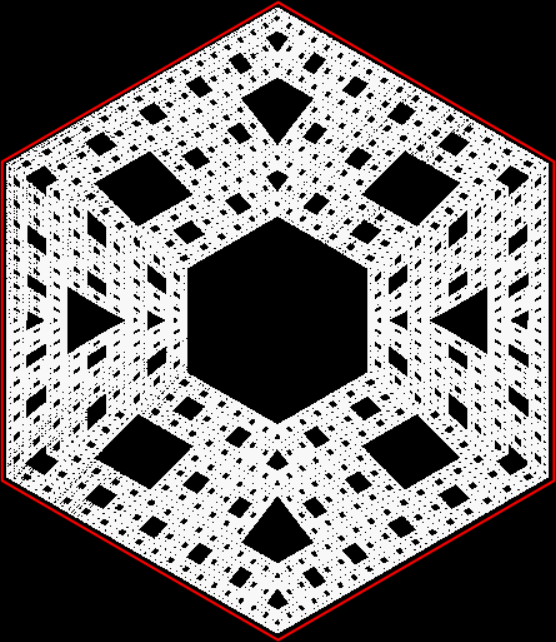
↓
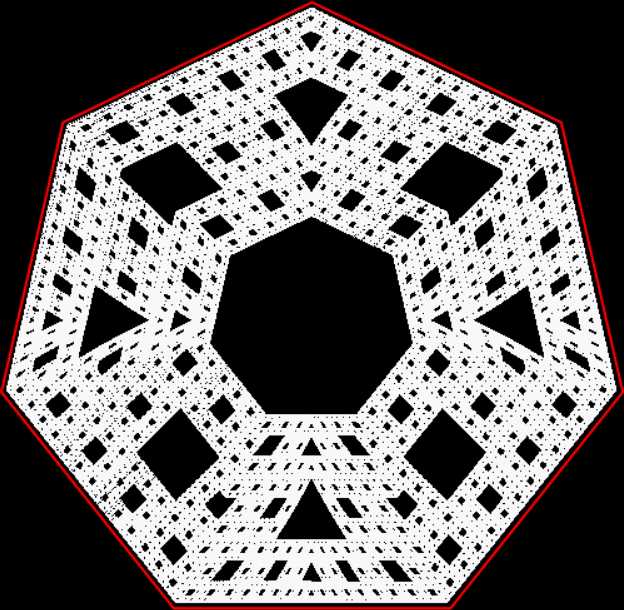
↓
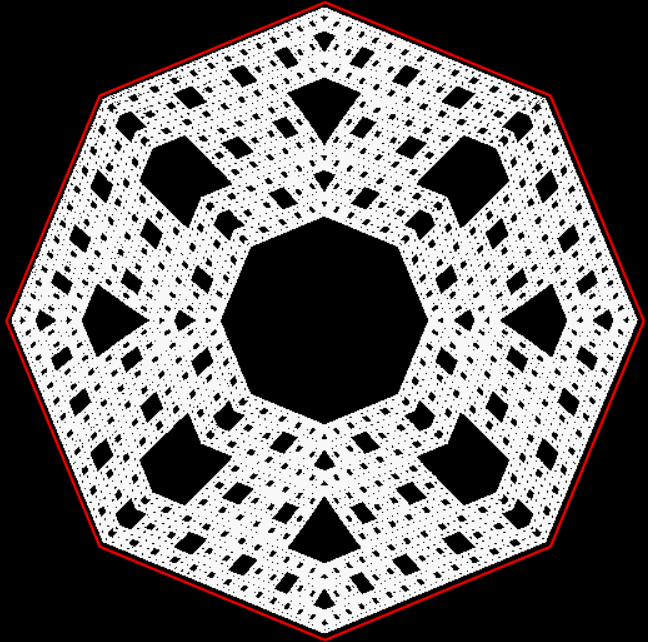
And an animation of the carpet conversions:
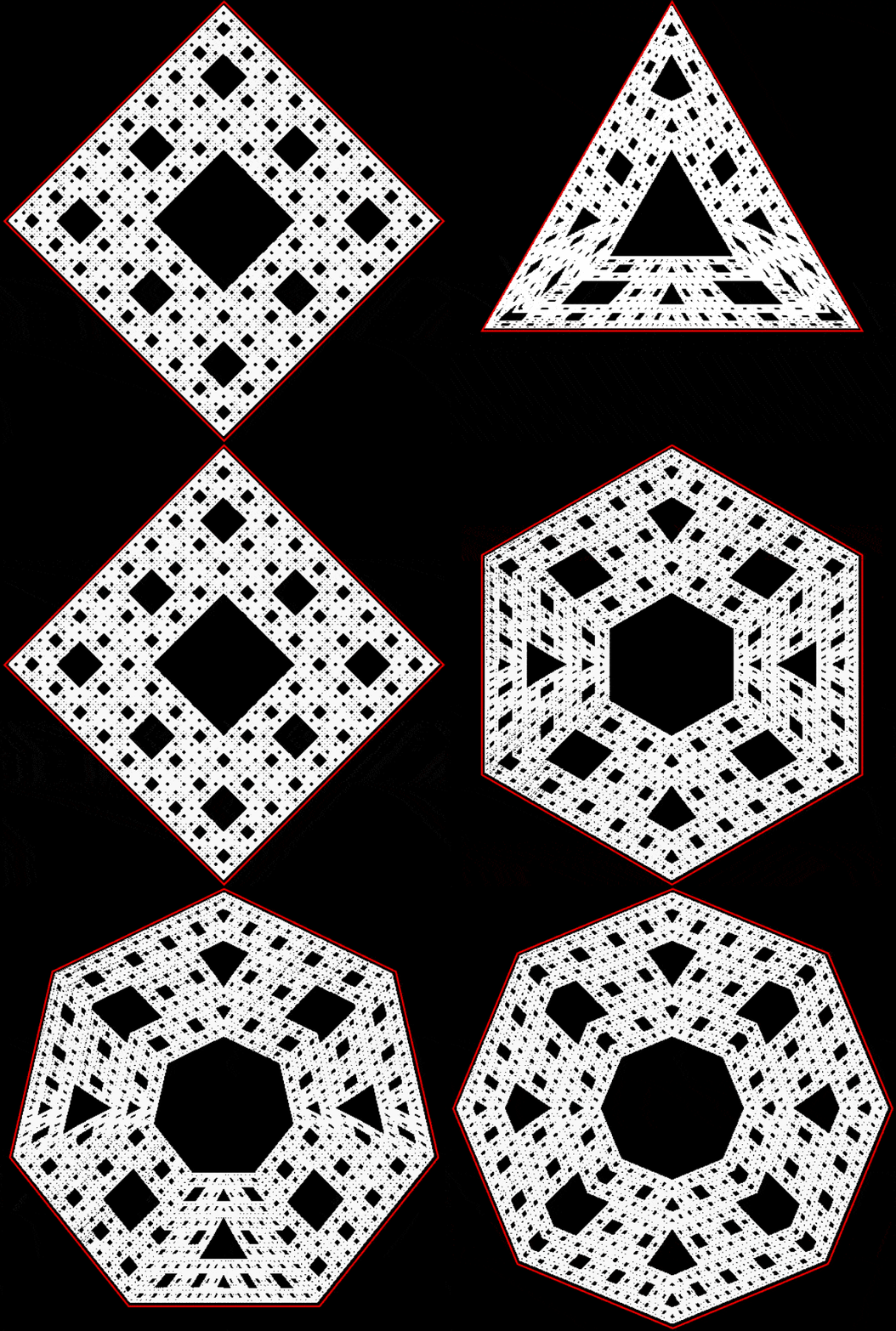
Sierpiński carpet → triangle, pentagon, hexagon, heptagon, octagon (animated at ezGif)
Finally, and fungibly, the fractal that I call the centered Sierpiński triangle:
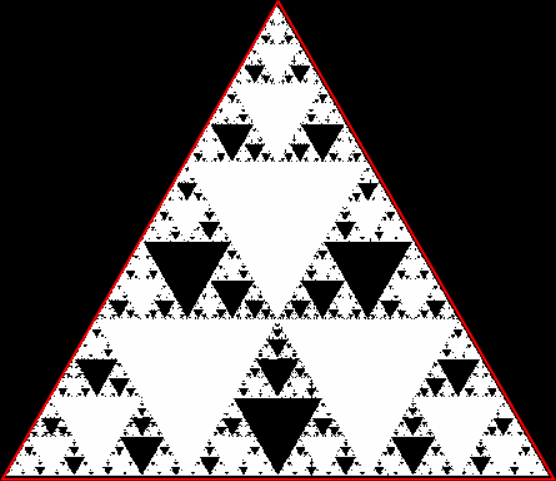
A centered Sierpiński triangle
↓
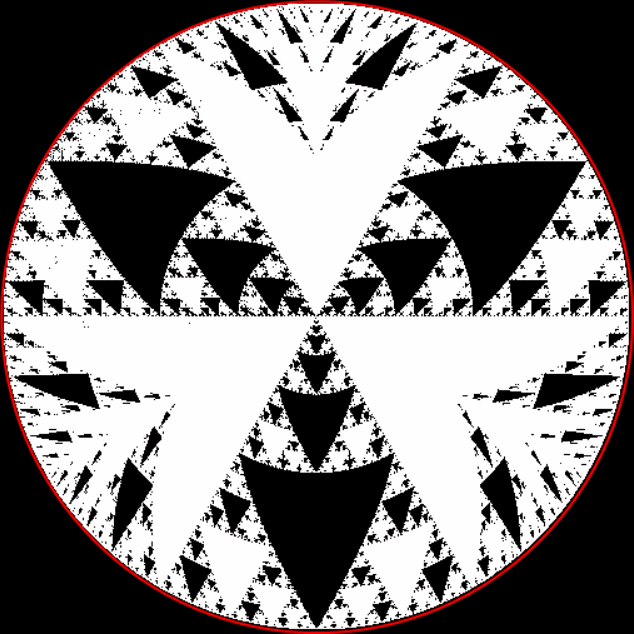
A centered Sierpiński trircle, or triangle converted into a circle
↓
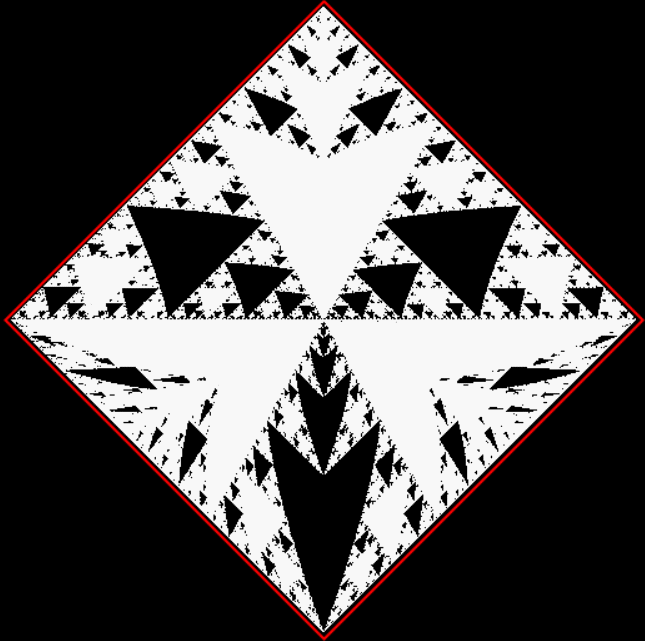
↓
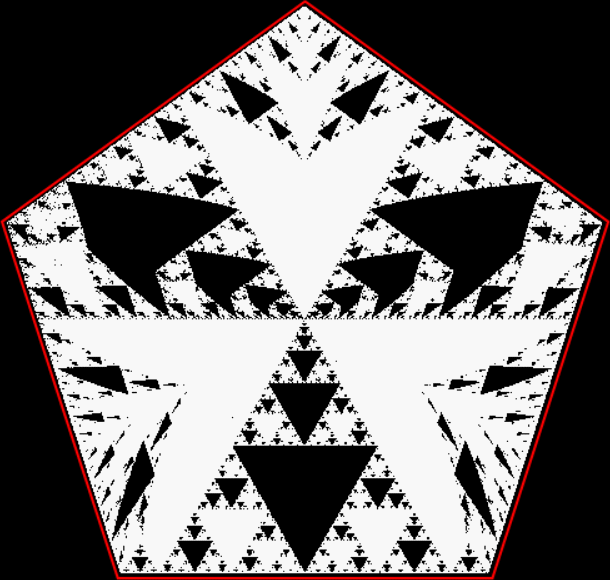
↓
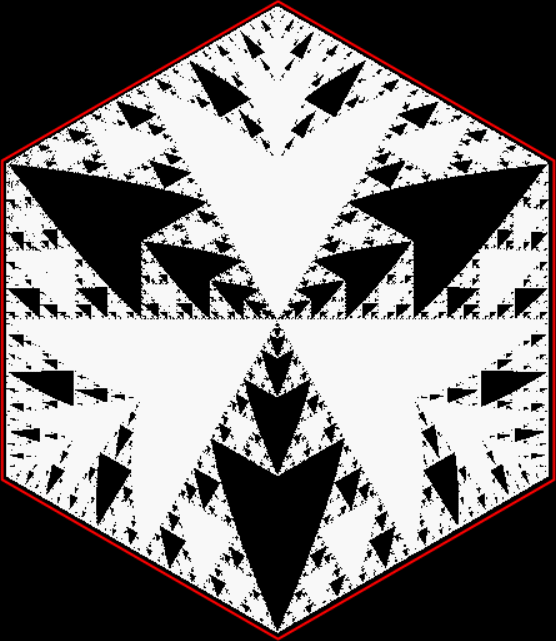
↓
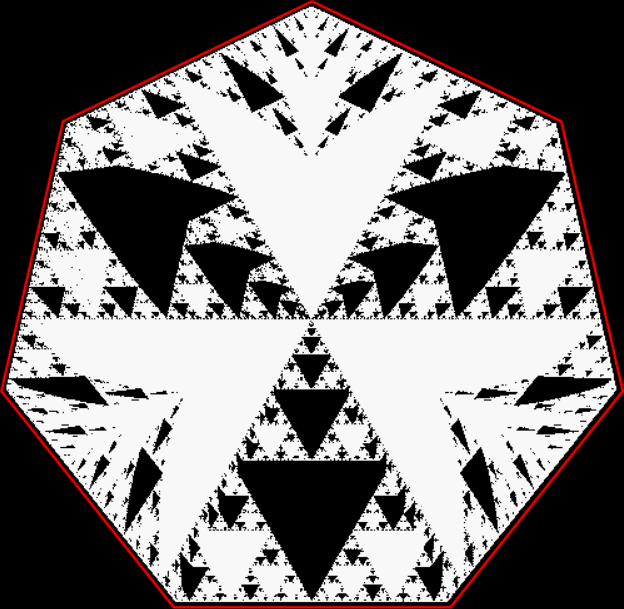
↓
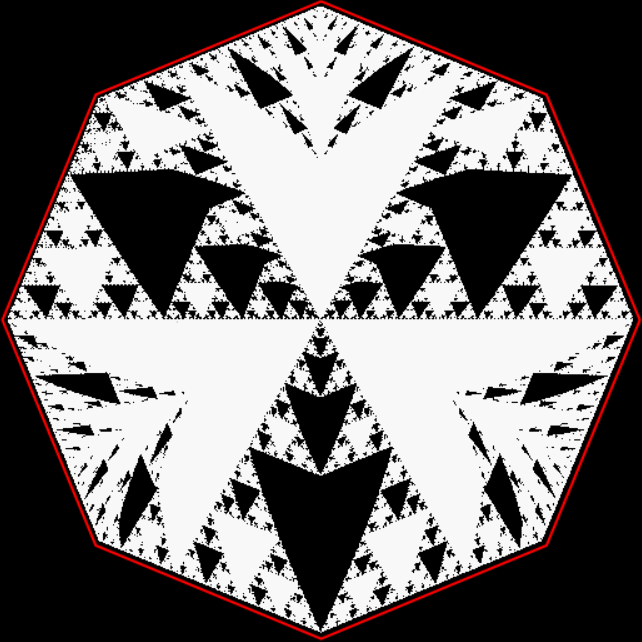
And the final animation:
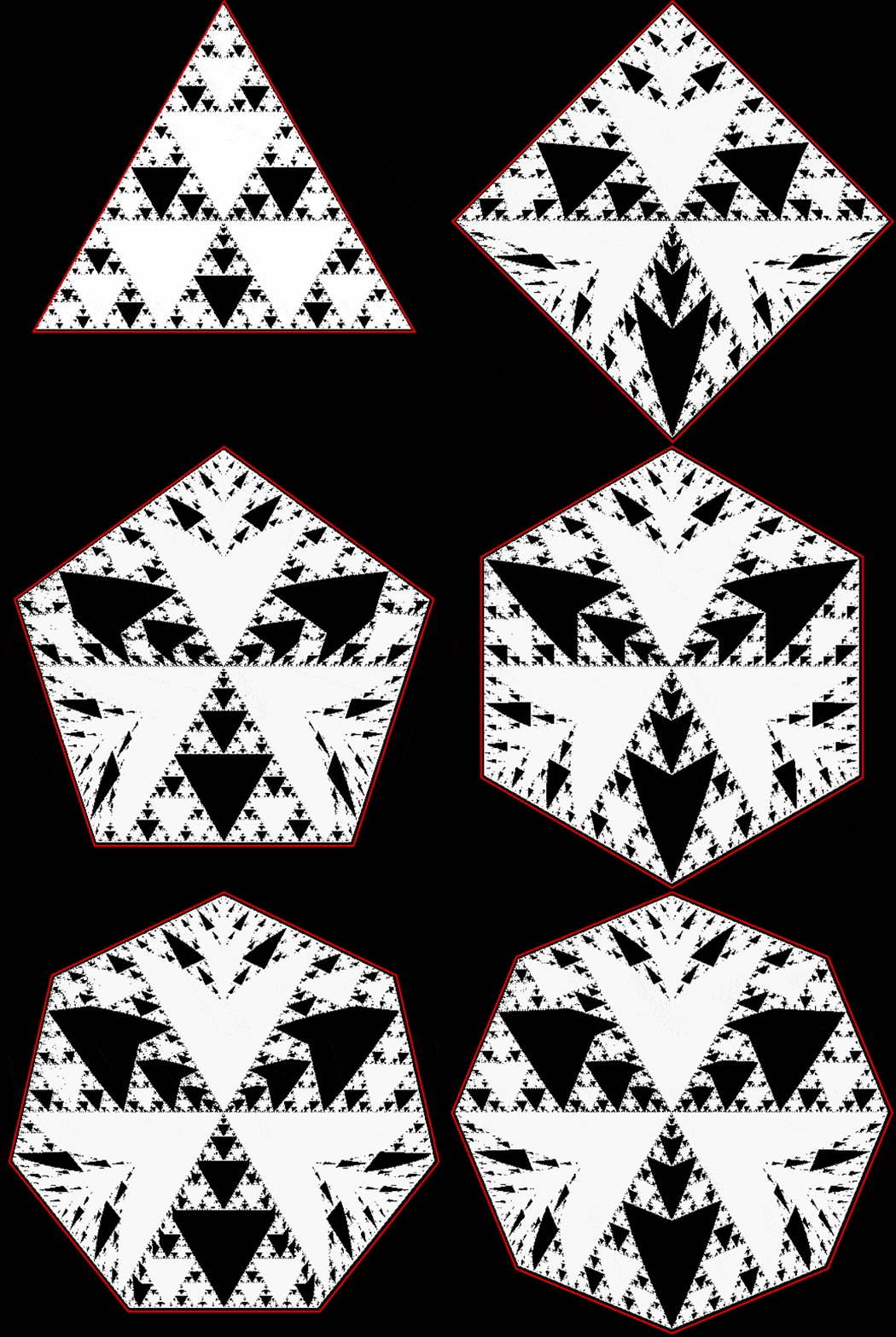
Centered Sierpiński triangle → square, pentagon, hexagon, heptagon, octagon (animated at ezGif)
As the old mathematical joke goes: A topologist is someone who can’t tell the difference between a coffee-cup and a donut. That’s because topology is, crudely speaking, the branch of geometry that studies shapes when the distance and angle between one part and another doesn’t matter. For example, how can (or can’t) shapes flow smoothly into each other, without being cut or torn or pierced? The shape of a perfectly plastic substance can flow smoothly from that of a coffee-cup into that of a donut. And vice versa:
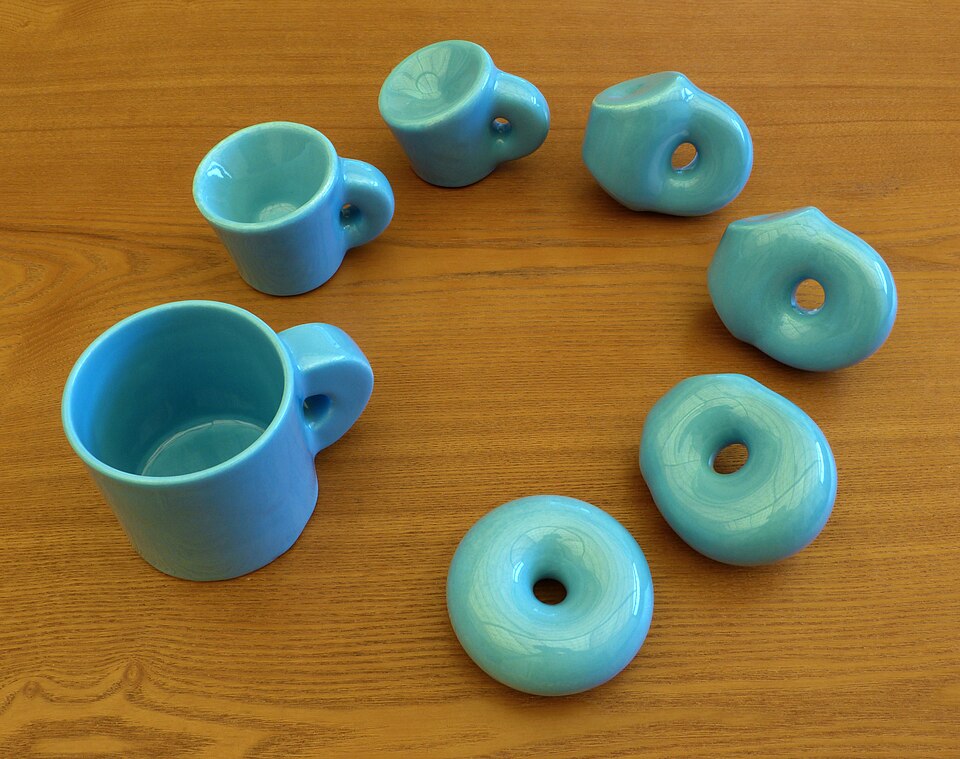
Topologically speaking, a coffee-cup is the same as a donut (Wikipedia)
That’s topology in three dimensions. I came across some unexpected topology in two dimensions when I was looking at transformations of a triangle — the Sierpiński triangle, a fractal named after the Polish mathematician Wacław Sierpiński (1882-1969):
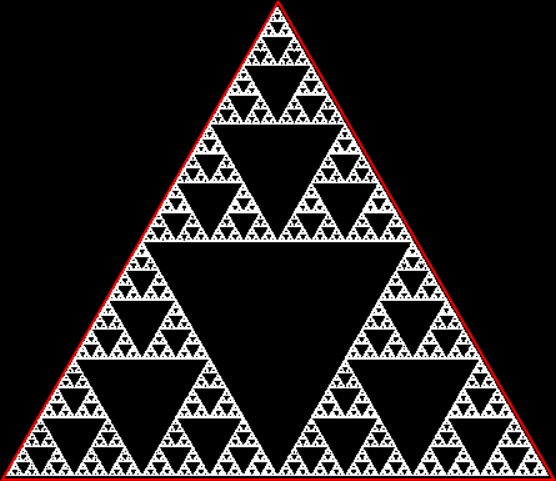
I wondered what happened when you rotate the points inside a Sierpiński triangle while the triangular boundary remains fixed. That is, each point stays at the same position in the width between the center and the boundary as the whole interior flows around the center of the triangle:
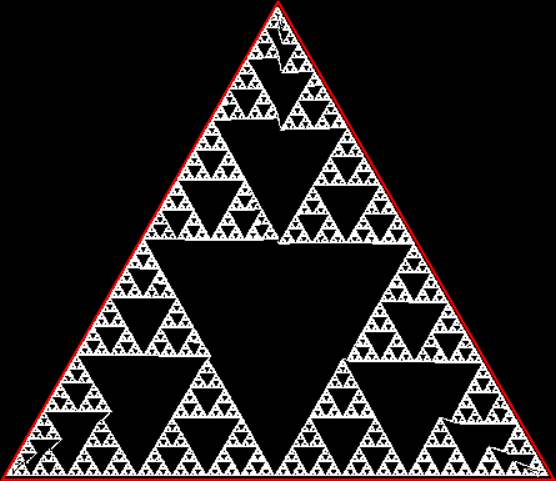
Points inside a Sierpiński triangle rotated by 1°
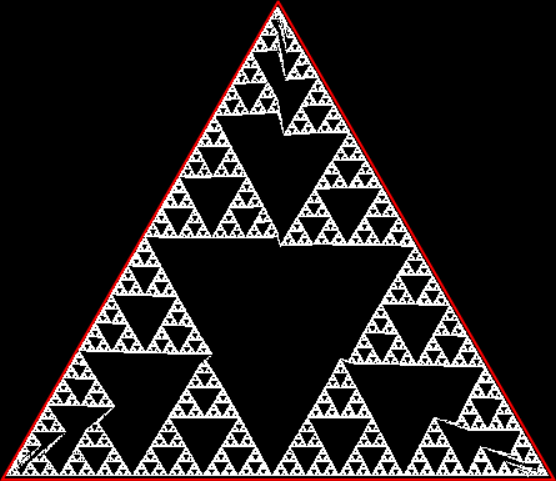
Points inside a Sierpiński triangle rotated by 2°
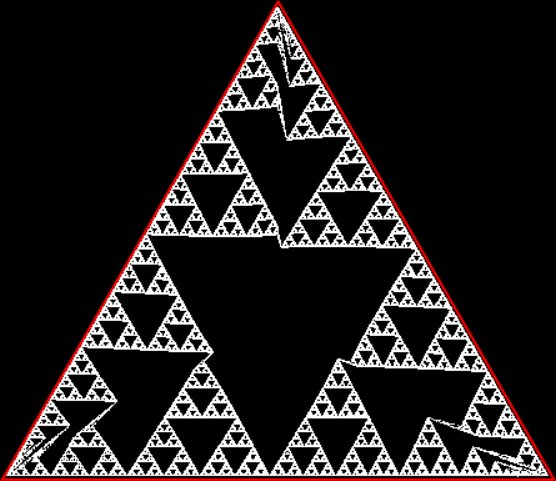
Points inside a Sierpiński triangle rotated by 3°
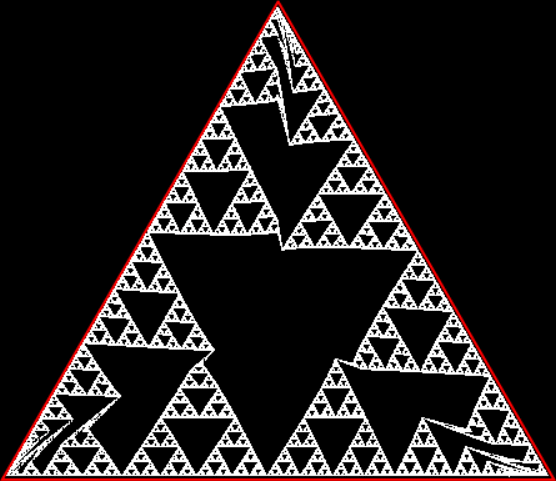
Points rotated by 4°
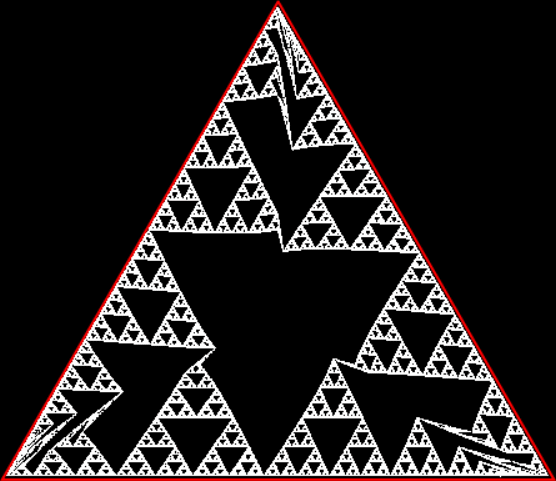
Points rotated by 5°
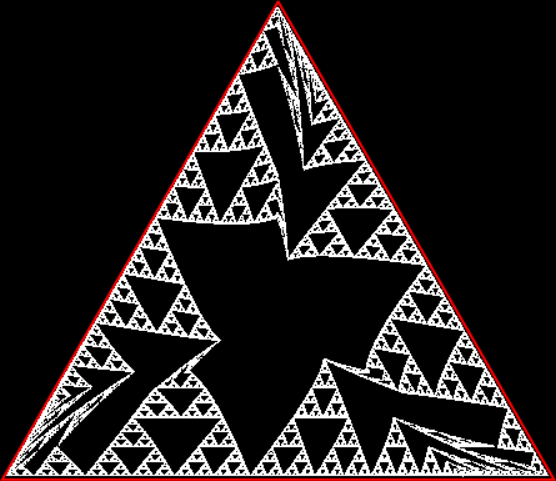
Points rotated by 10°
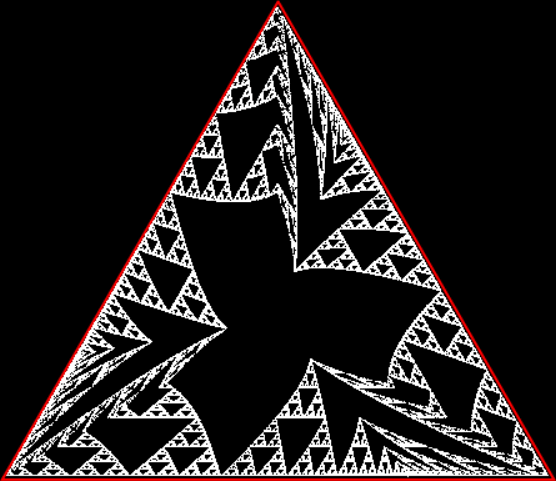
Points rotated by 20°
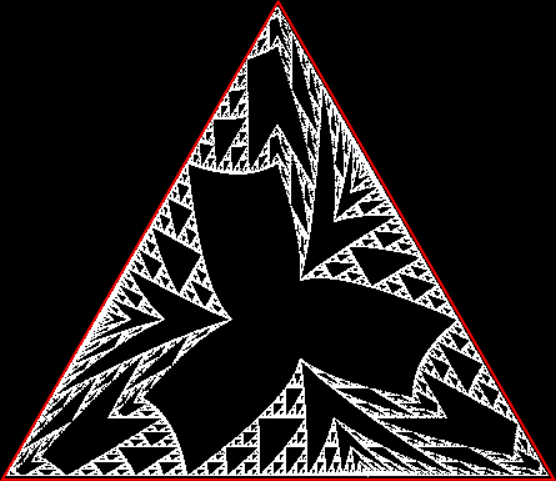
Points rotated by 30°
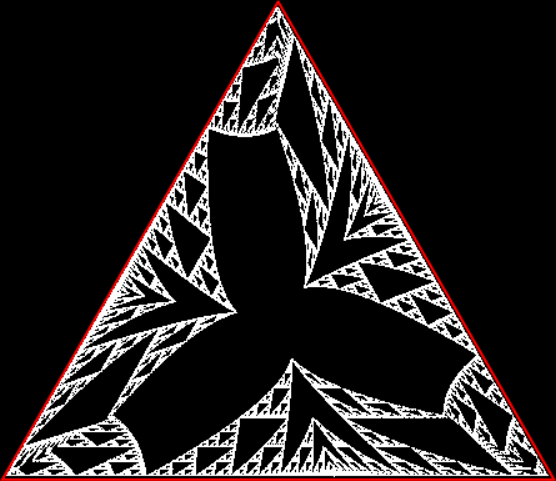
Points rotated by 40°
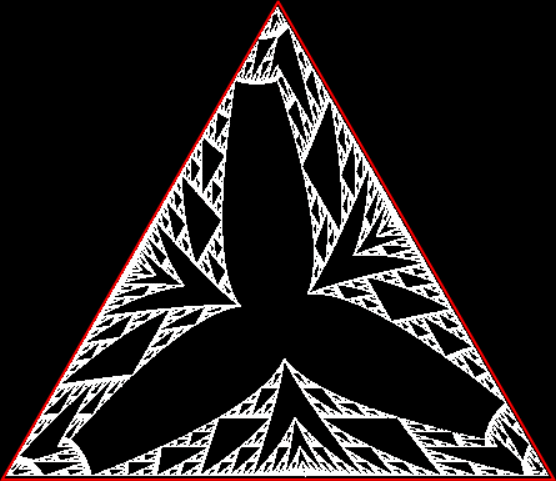
Points rotated by 50°
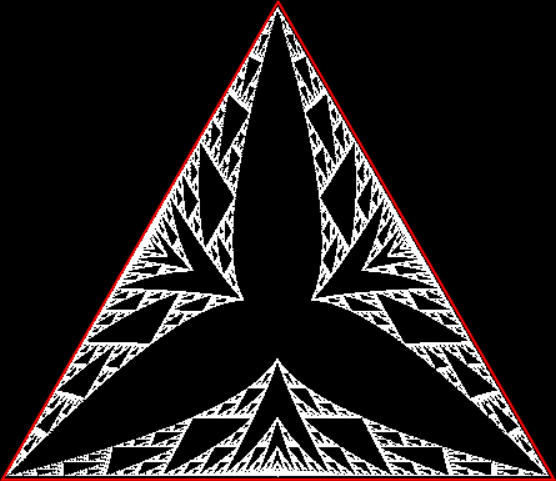
Points rotated by 60°
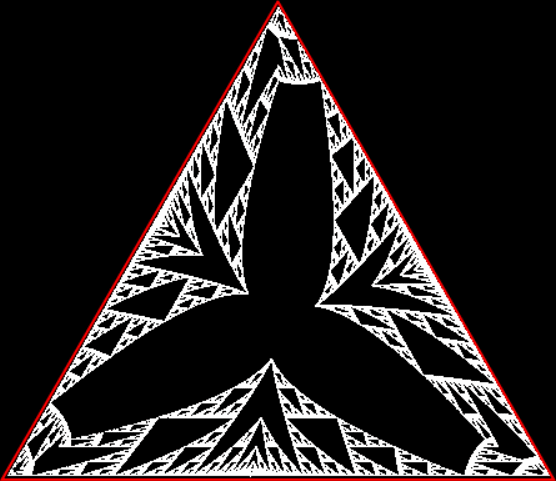
Points rotated by 70°
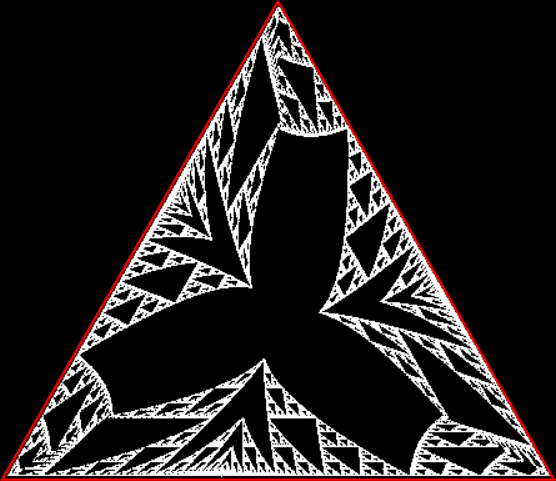
Points rotated by 80°
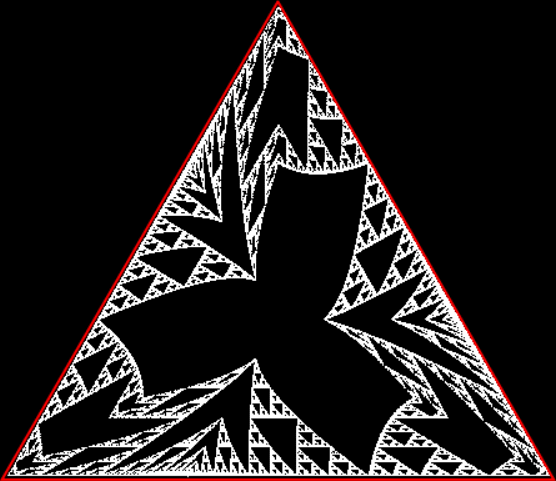
Points rotated by 90°
WARNING! If you’re sensitive to flickering images, please note that there are flickering animated gifs below
Here’s the flowing rotation from 0° to 90° animated in a gif:
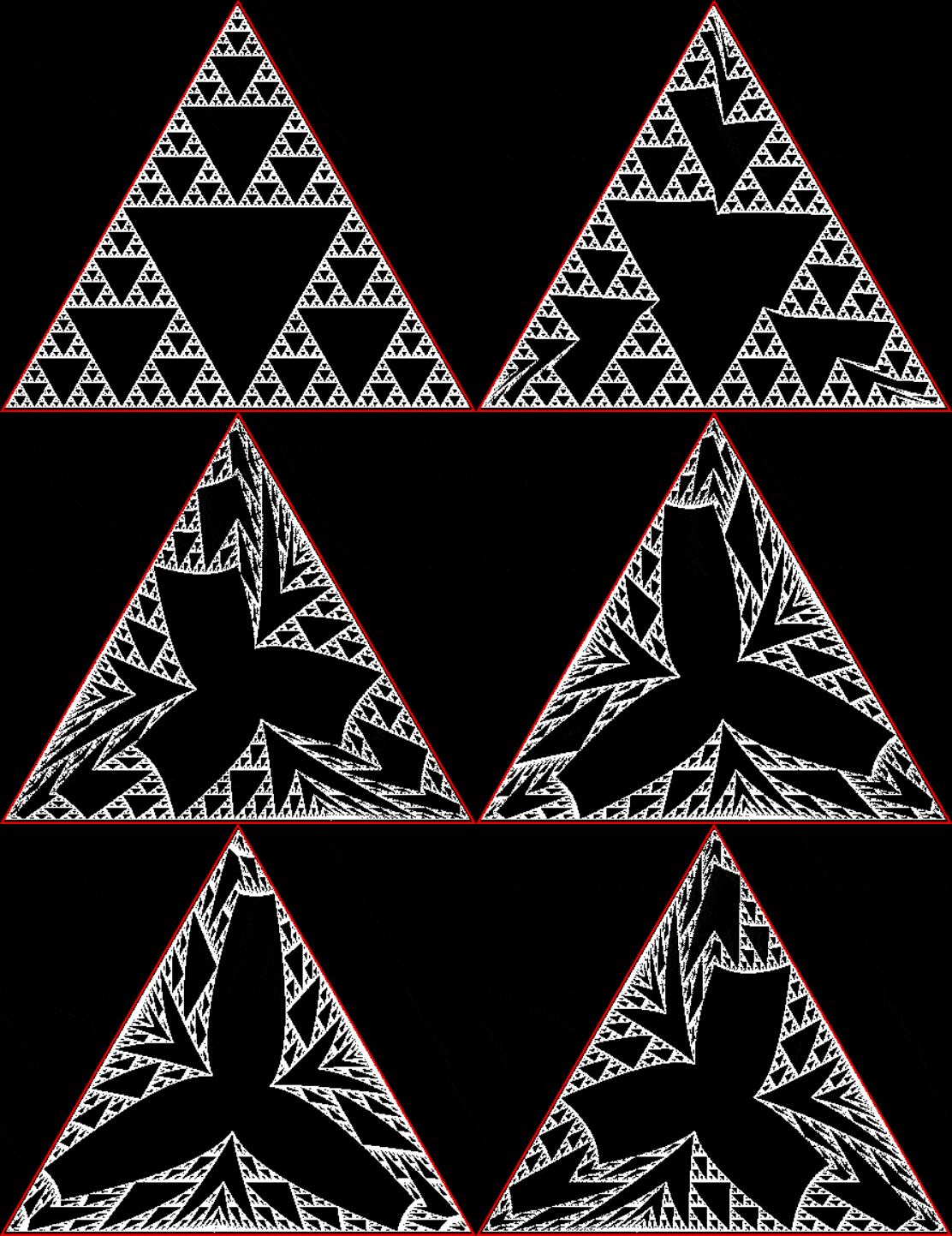
Interior points of Sierpiński triangle flowing 0° → 90° around center (animated at ezGif)
And here’s the whole rotating flow from 0° to 120° (which maps the points back onto themselves):
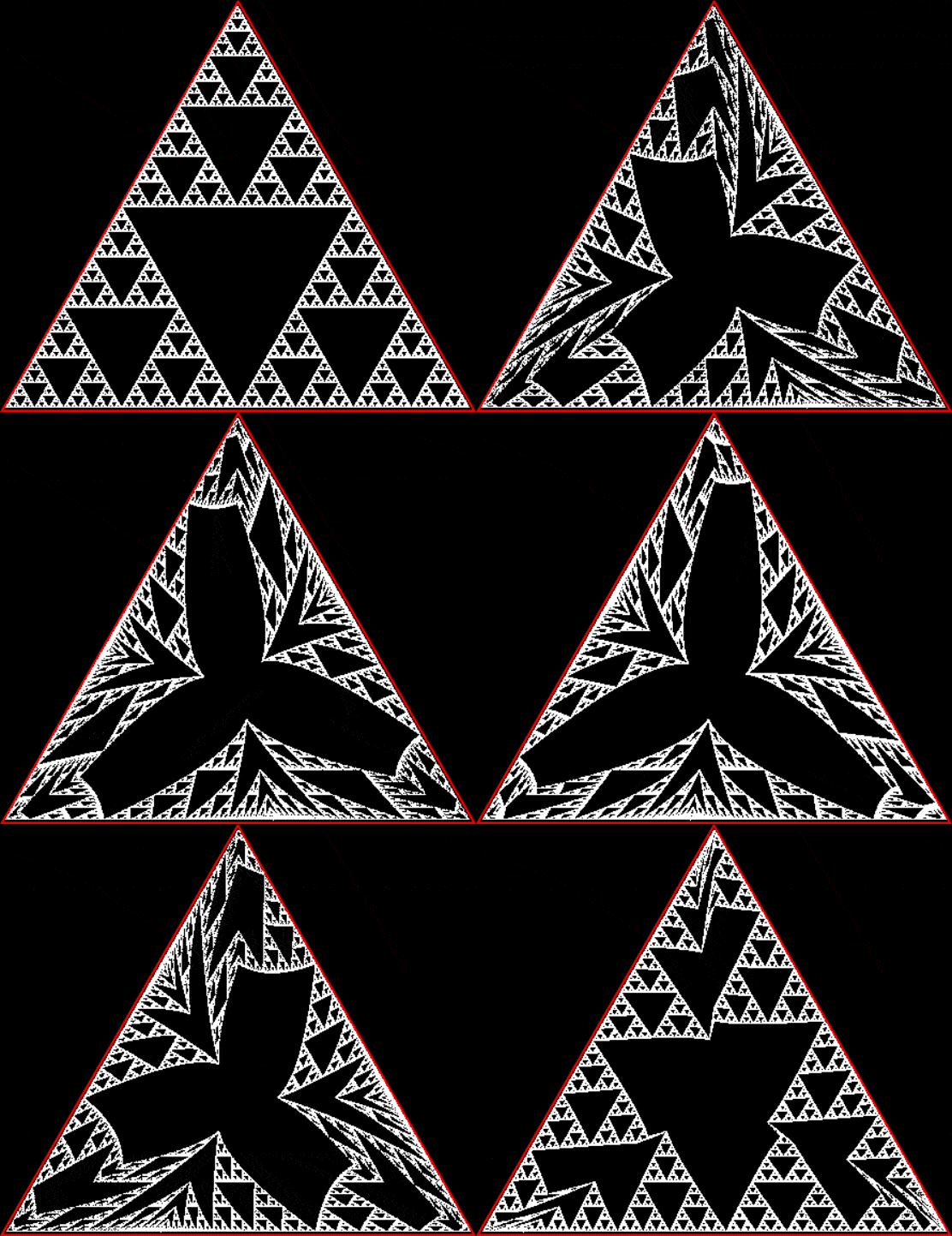
Interior points of Sierpiński triangle flowing continuously around center (slow animation)
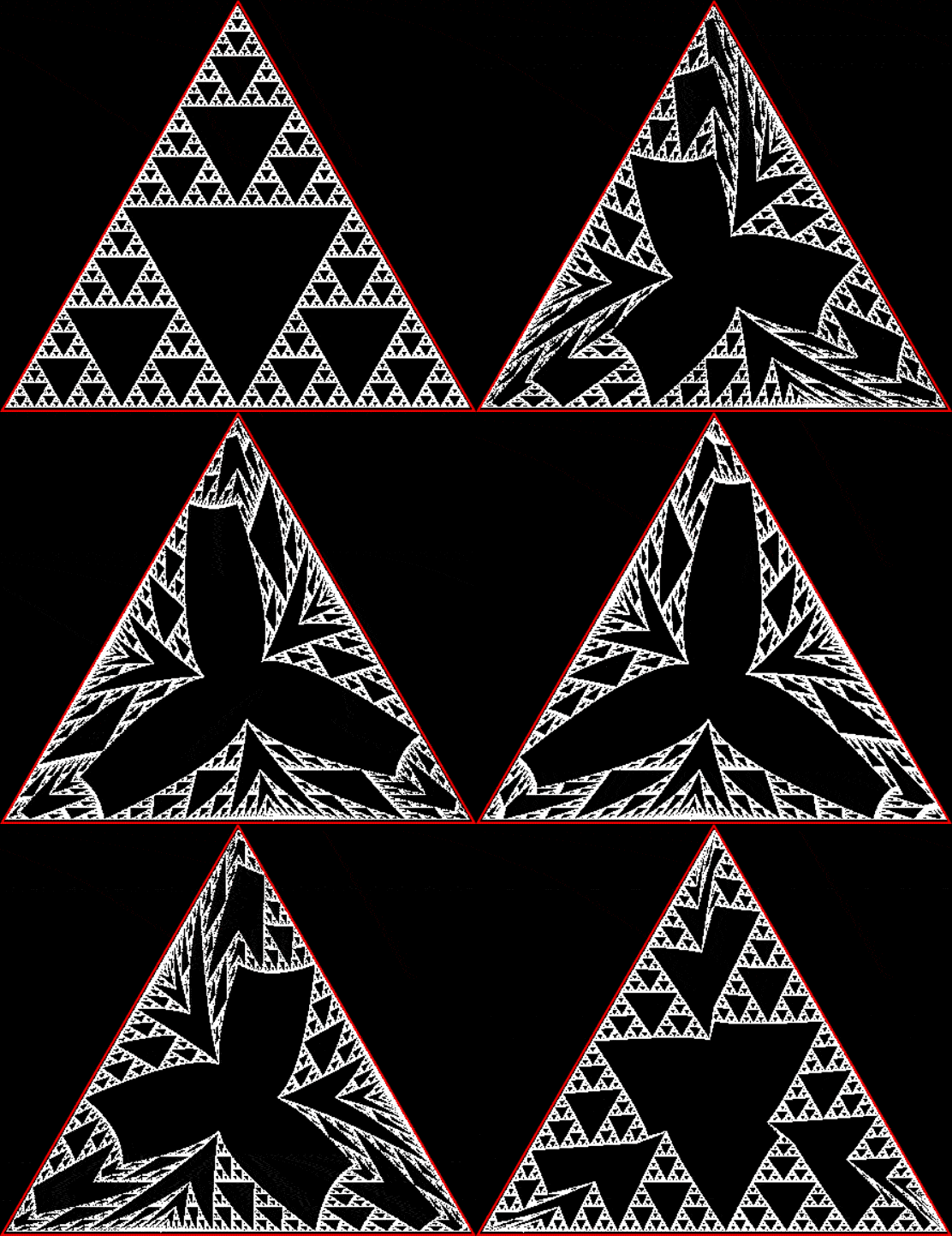
Interior points flowing continuously around the center (faster animation)
As you can see, the appearance of the Sierpiński triangle changes notably as the points rotate: the rotations aren’t rotationally symmetrical (in the standard sense). Sometimes a rotation looks like a stumpy triskelion, a three-legged shape like the flag of the Isle of Man:
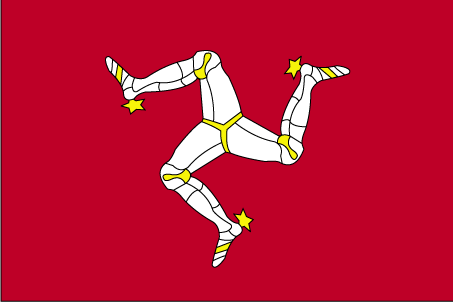
Triskelion on the Manx flag (Wikipedia)
Interior points of a Sierpiński triangle rotated by 30°
But topologically speaking, each rotated triangle is the same (just as, topologically speaking, a coffee-cup is the same as a donut). You can see how they’re topologically the same by imagining that the triangle is stretched into a circle, like this:
Sierpiński triangle
↓
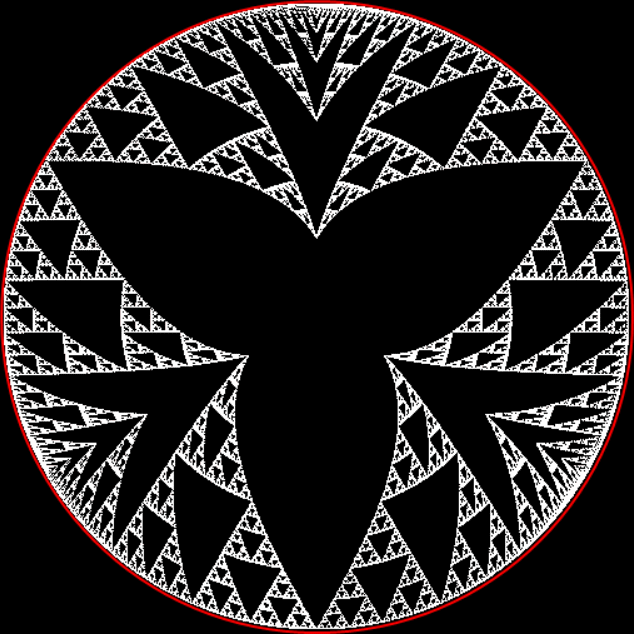
Sierpiński triangle stretched into circle
When you circularize the rotated triangles, all the circularized triangles are rotationally symmetrical:
Points rotated by 30°
↓
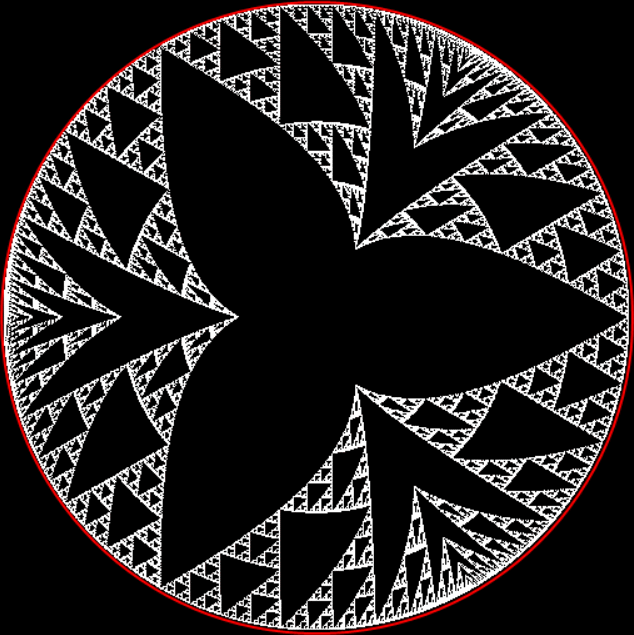
Circle from triangle rotated by 30°
Points rotated by 60°
↓
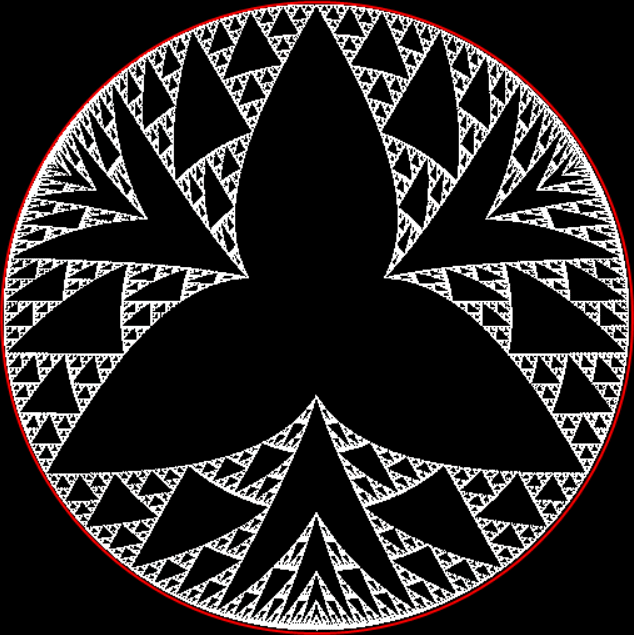
Circle from triangle rotated by 60°
Points rotated by 90°
↓
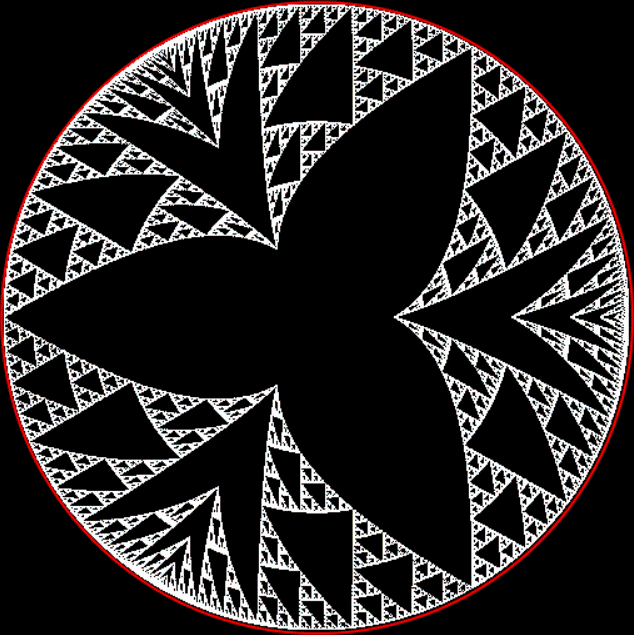
Circle from triangle rotated by 90°
Here are two animated gifs of the circularized triangles rotating:
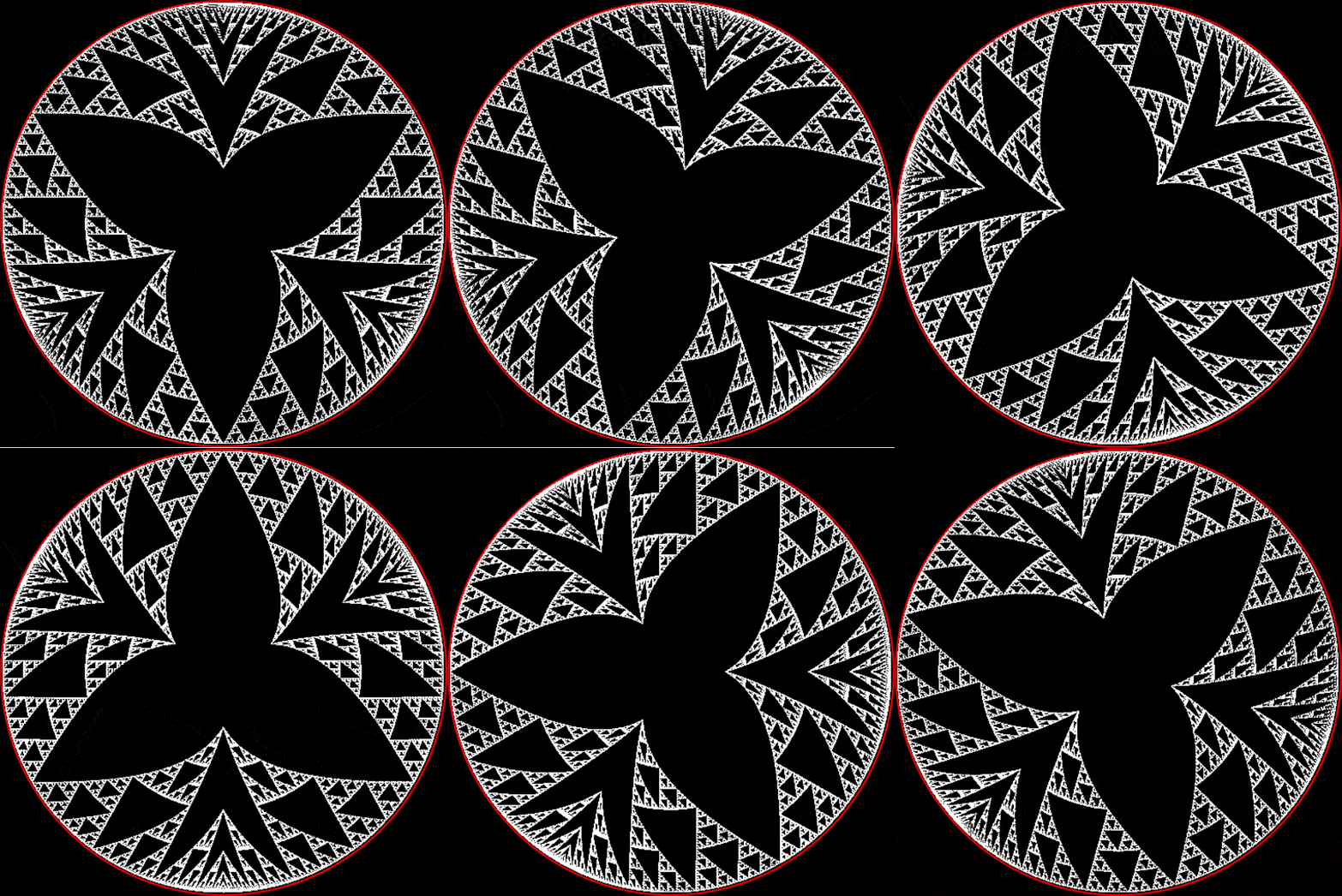
Circularized Sierpiński triangle flowing around center (slow animation at ezGif)
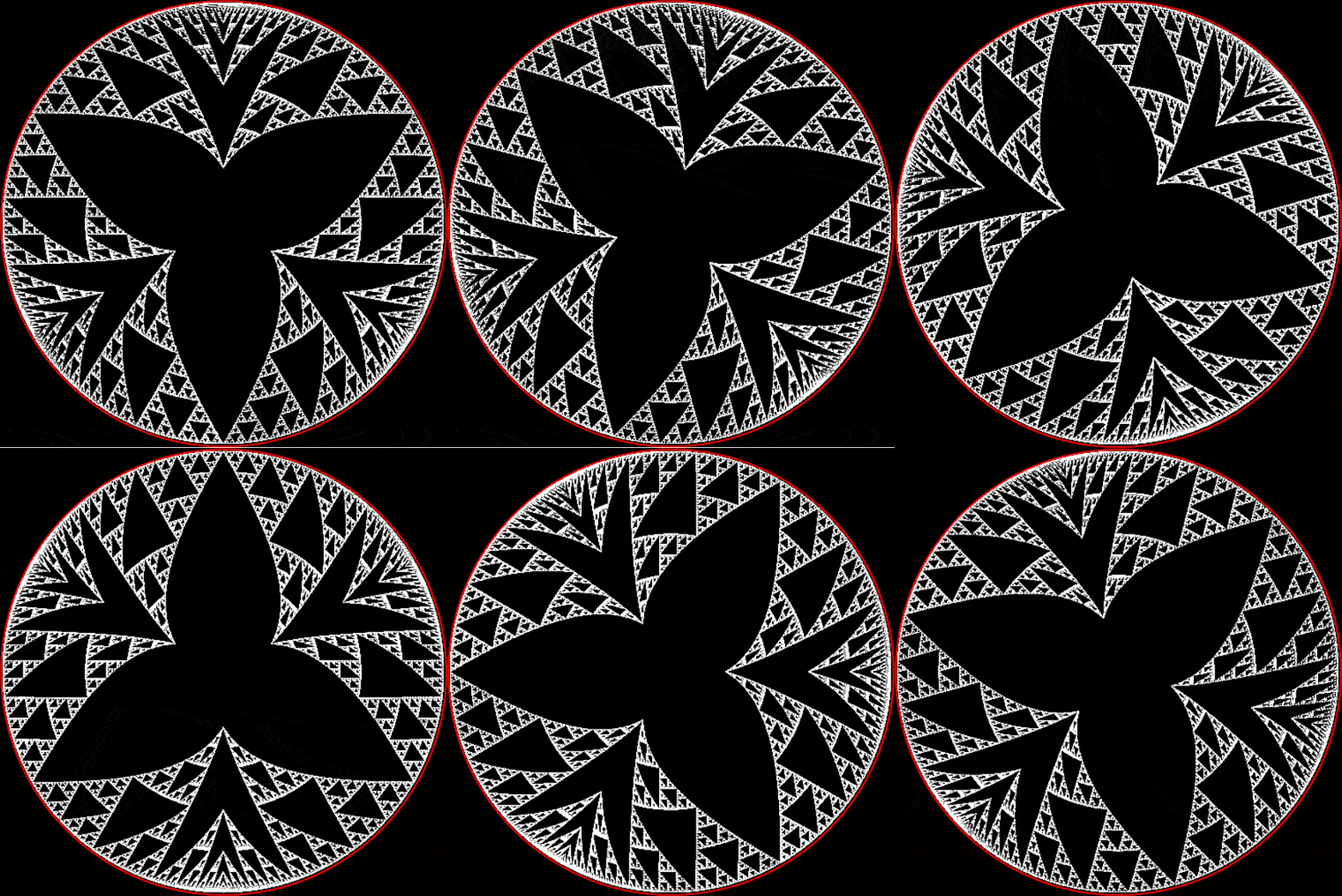
Circularized Sierpiński triangle flowing around center (faster animation)
Here’s what I call the centered Sierpiński triangle turned into a circle:
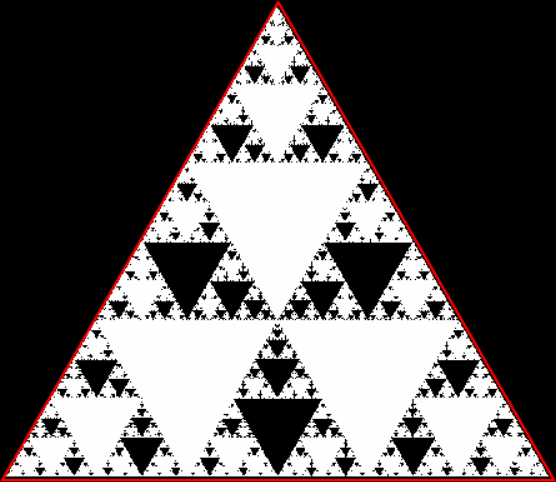
Centered Sierpiński triangle
↓
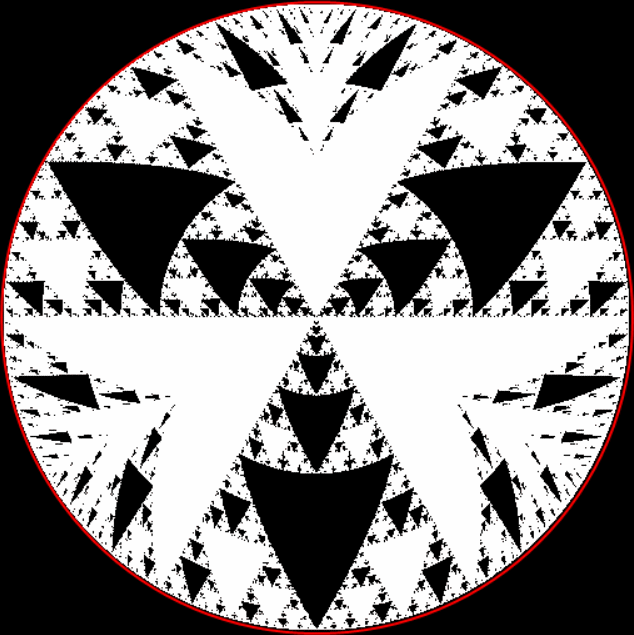
Circle from centered Sierpiński triangle
And finally, the circularized centered Sierpiński triangle flowly rotating at two speeds:
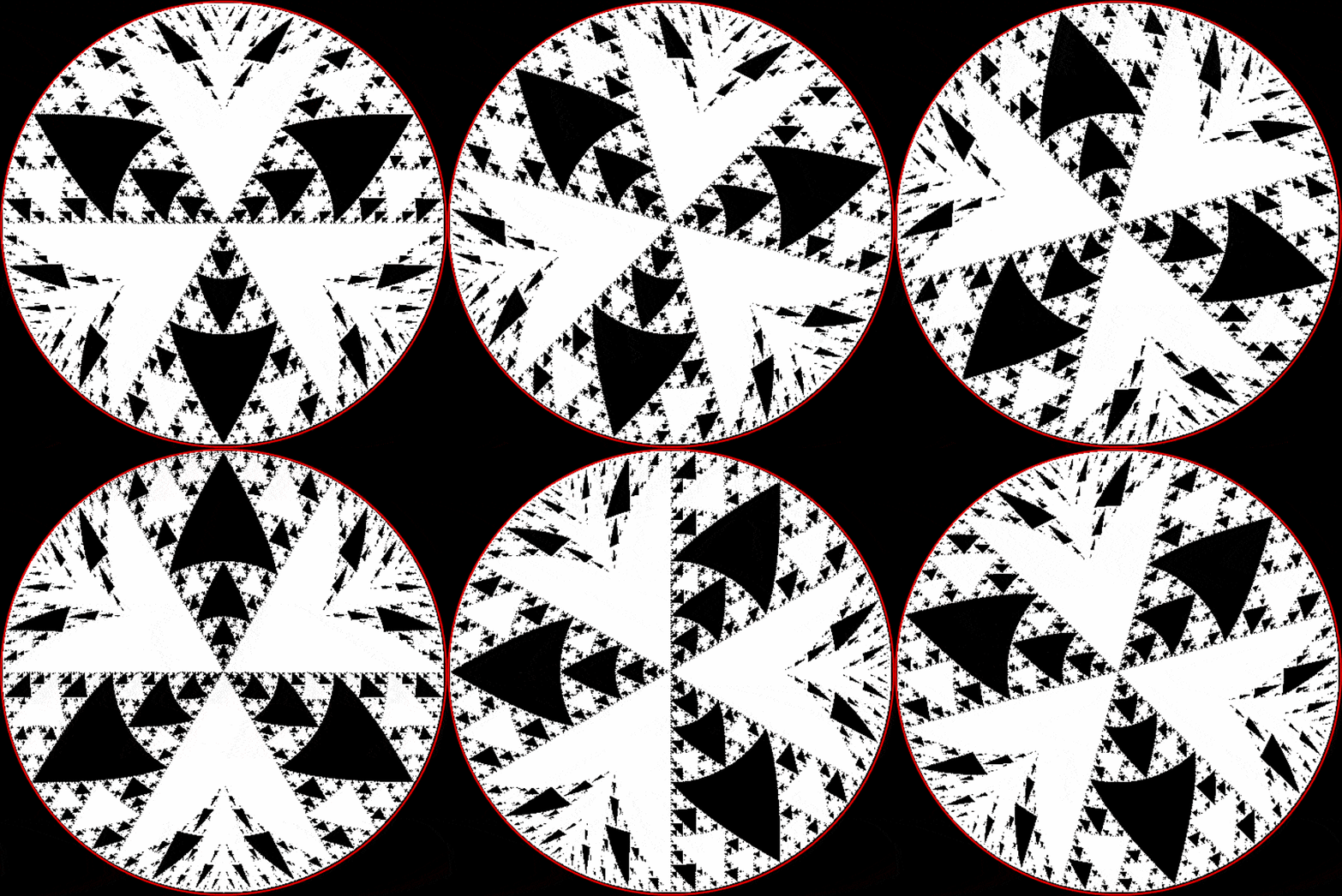
Circularized centered Sierpiński triangle flowing around center (slow animation at ezGif)
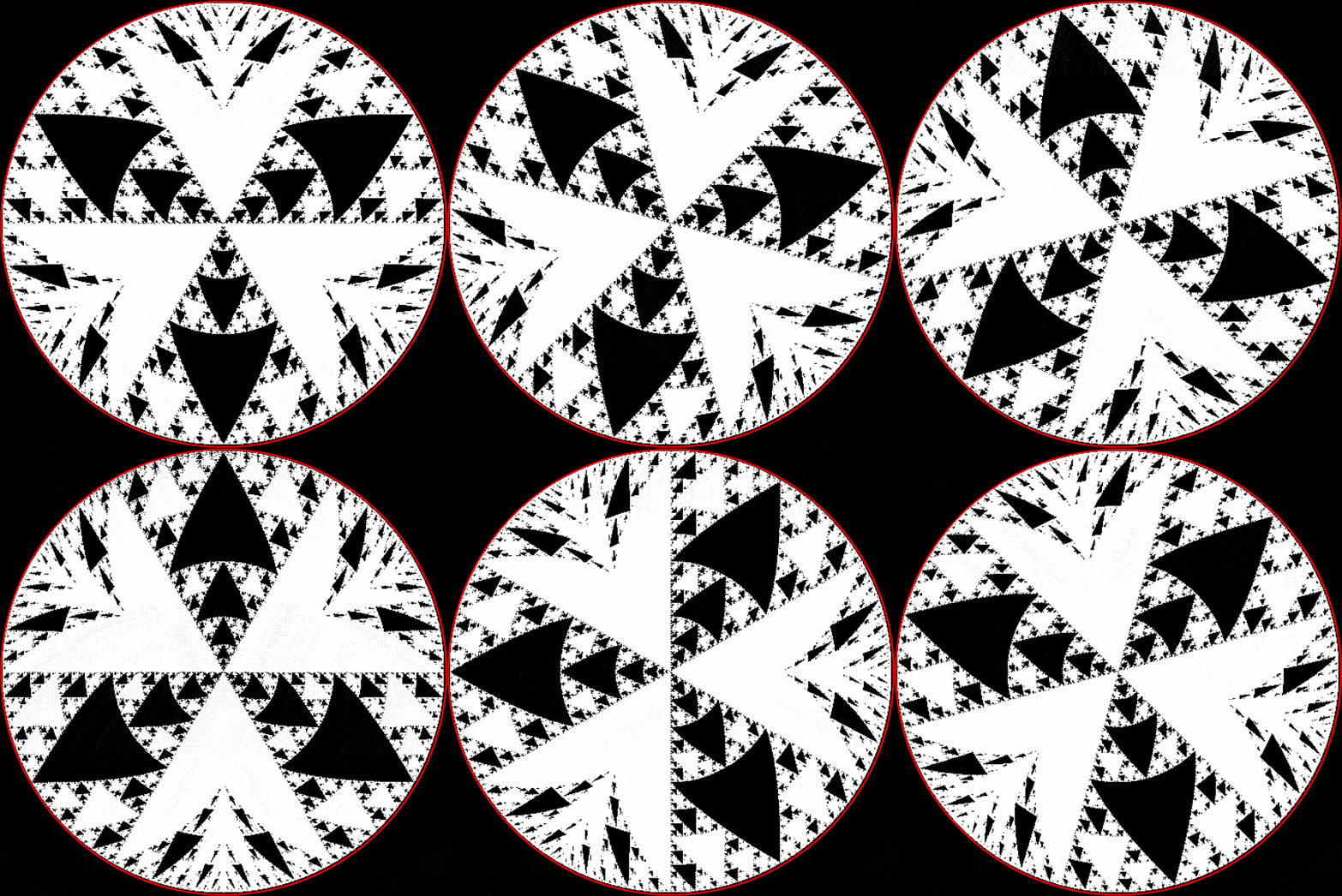
Circularized centered Sierpiński triangle flowing around center (faster animation)
Here again is the famous Sierpiński triangle, a fractal named after the Polish mathematician Wacław Sierpiński (1882-1969):
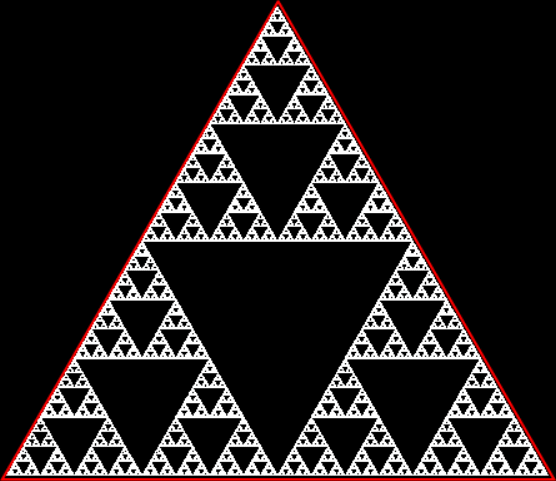
And here’s a Sierpiński ciangle — my name for a Sierpiński triangle stretched into a circle:
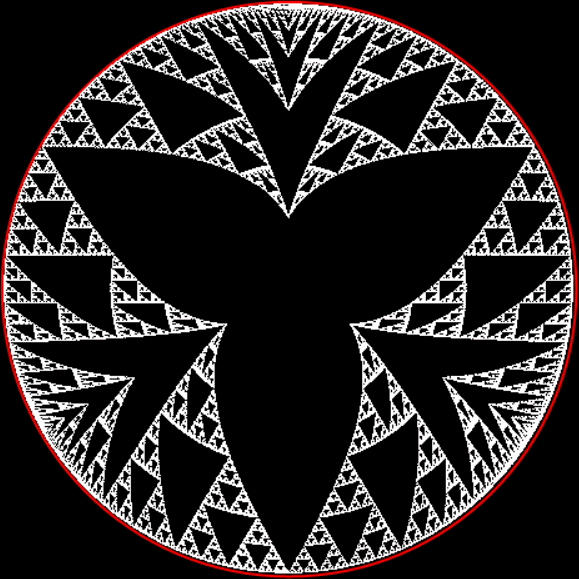
A Sierpiński ciangle or Sierpiński pircle
More generally, you could call that shape a pircle, a polygon turned into a circle. But you can also squeeze the Sierpiński triangle and turn it into this shape:
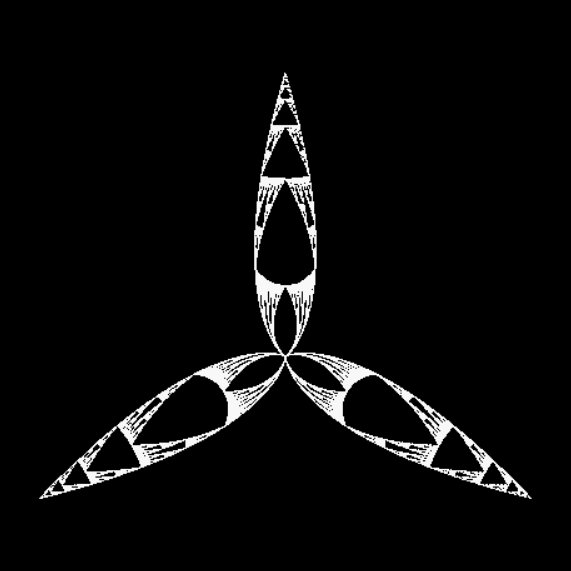
A Sierpiński squircle
You could call that a squircle, a squeezed circle. You use the same trigonometry to create both the Sierpiński ciangle and the squeezed Sierpiński triangle. Here’s an animated gif showing the Sierpiński triangle cycling between polygon, pircle and squircle:
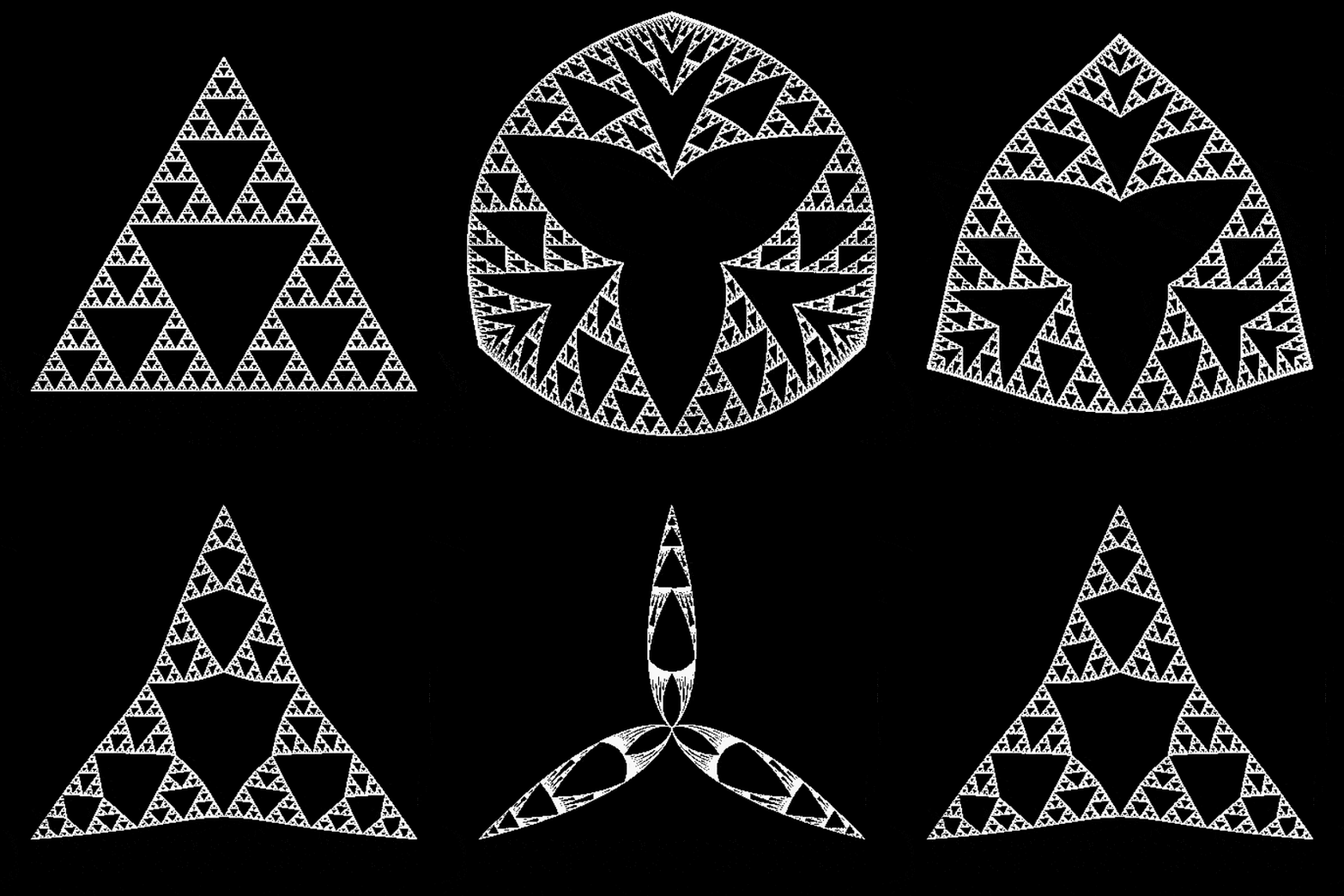
Sierpiński triangle, pircle and squircle (animated at EZgif)
Now for the Sierpiński carpet, the square analogue of the Sierpiński triangle (you can create it with a point jumping 2/3rds of the way towards the vertices and midpoints of a square, as marked with green dots):
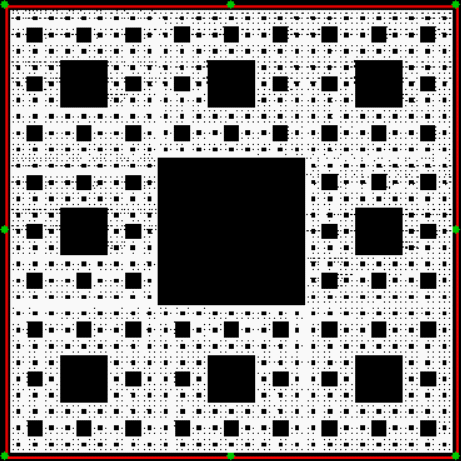
And here’s the carpet as a pircle:
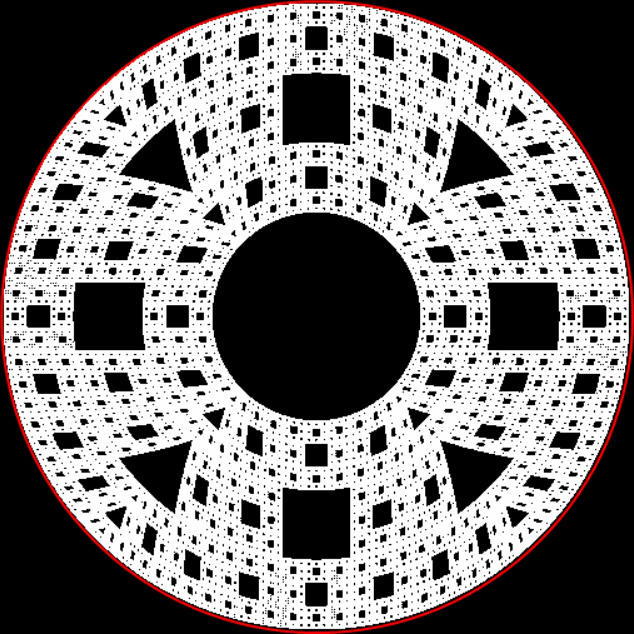
Pircle from Sierpiński carpet
Like the Sierpiński triangle, you can both pircularize and squeeze the Sierpiński carpet. Here’s the cycle as an animated gif:
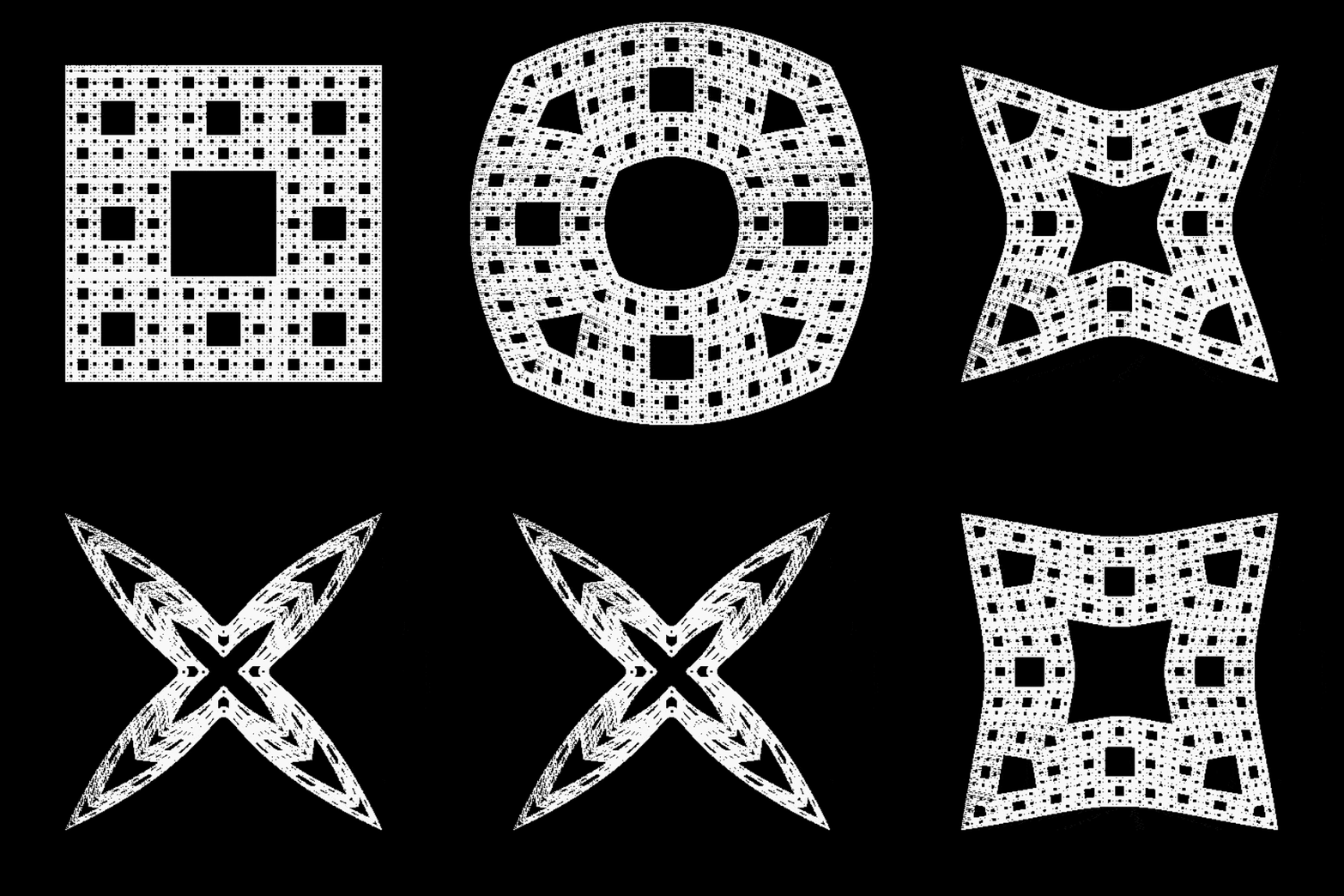
Sierpiński carpet ⇔ pircle and squircle (animated at EZgif)
But you can also pervert the pircle, as it were (in Latin, pervertere means “to thoroughly alter”). For example, what if you flip the radius used in pircularizing the Sierpiński carpet, so that points on the perimeter of the pircle move to the center, and points at the center move to the perimeter? One variant of that perverted pircle looks like this:
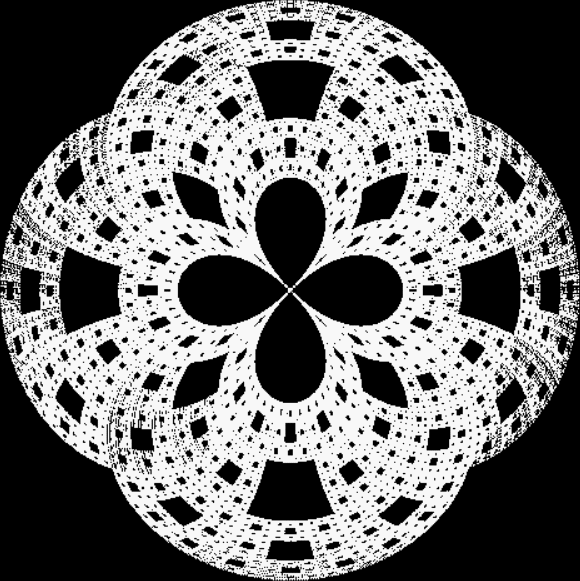
Perverted pircle from Sierpiński carpet
Here are some more polygonal fractals turned into pircular fractals:
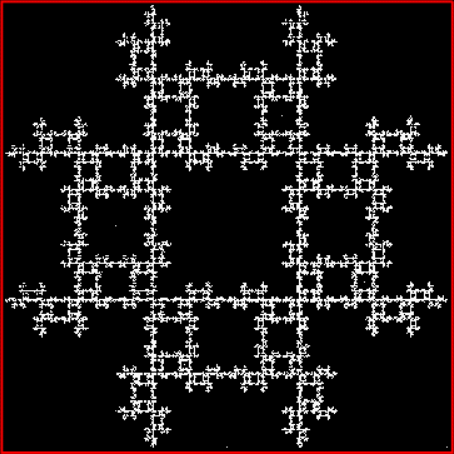
Fractal from point jumping 1/2 way to vertices of square (but not same vertex twice in a row)
↓
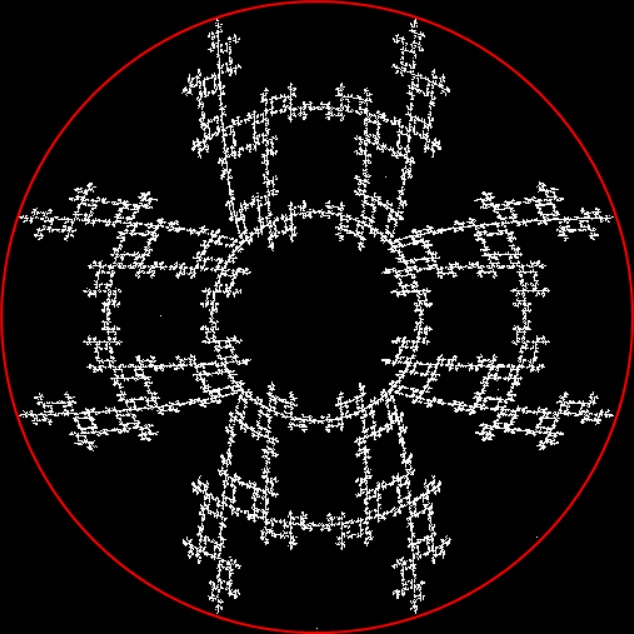
Pircle from square fractal
If you double each point’s distance from the centre, then fold any resulting distance beyond the circle’s radius back inside by halving it, you get this perverted pircle:
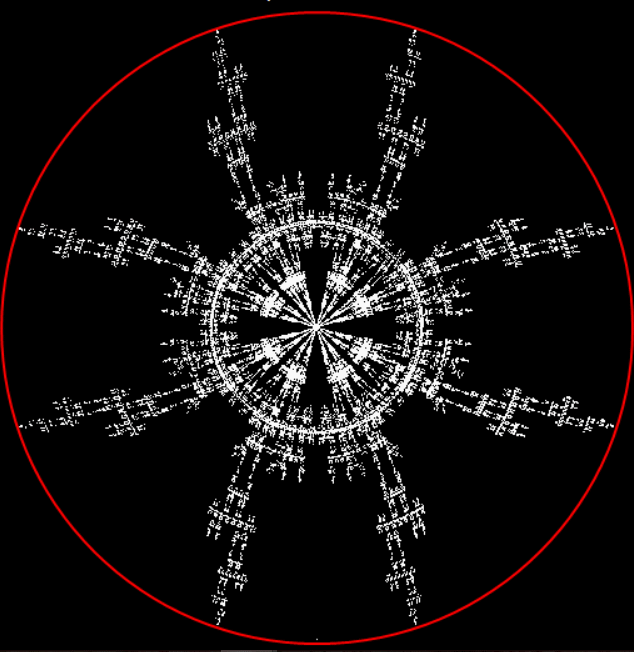
Perverted pircle from square fractal
Here’s another polygonal fractal, the T-square fractal:
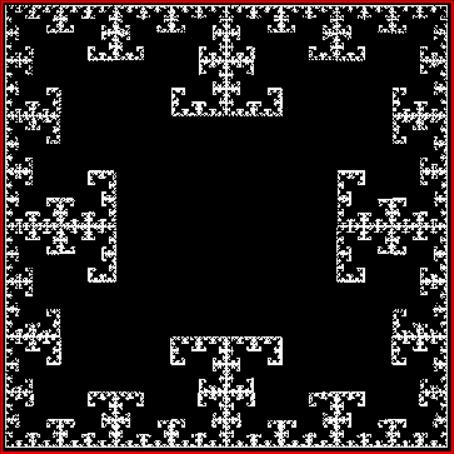
T-square fractal from point jumping 1/2 way to vertices of square (but not towards vertex directly opposite vertex just jumped towards)
↓
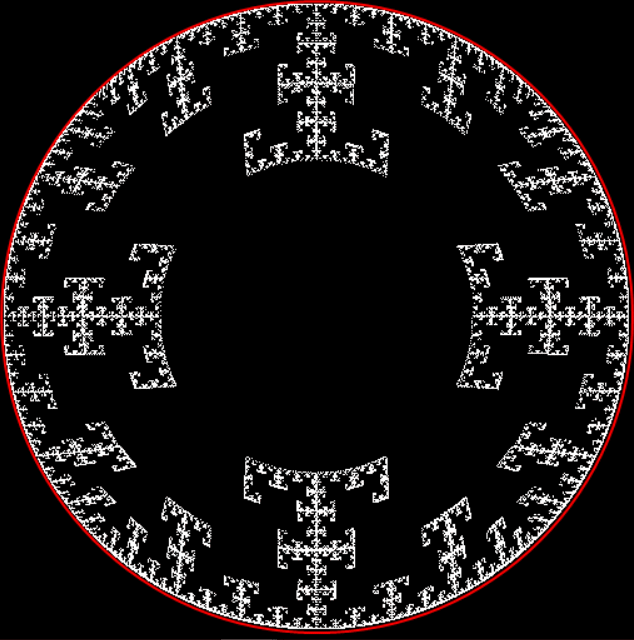
Pircle from T-square fractal
Again, you can pervert the pircle:
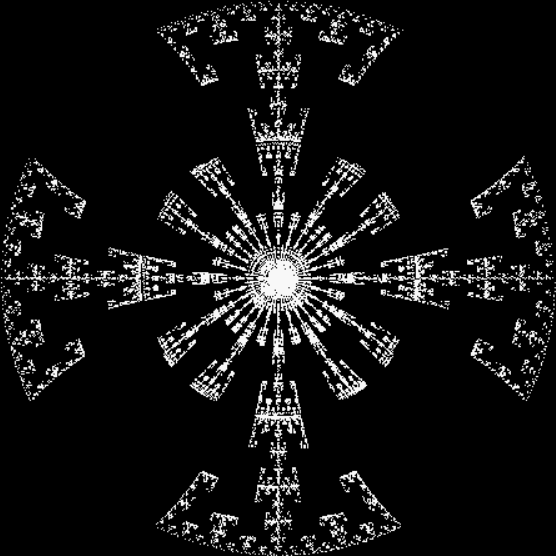
Perverted pircle #1 from T-square fractal
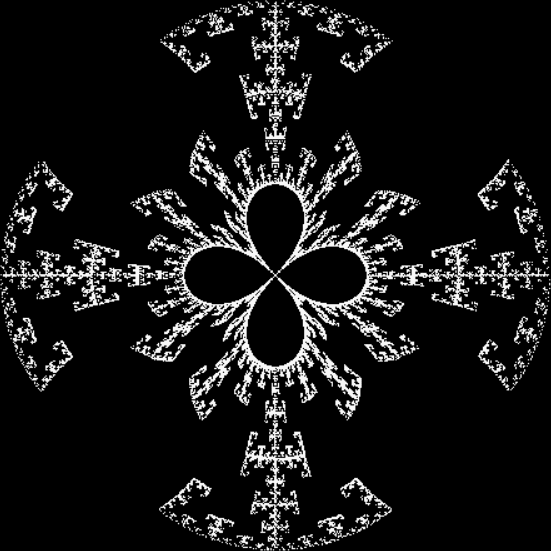
Perverted pircle #2 from T-square fractal
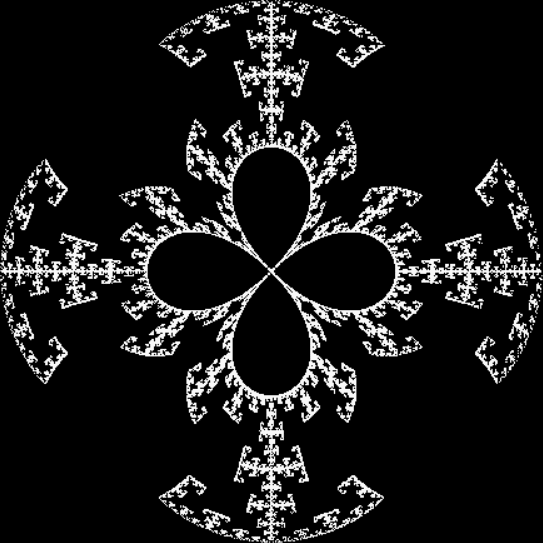
Perverted pircle #3 from T-square fractal
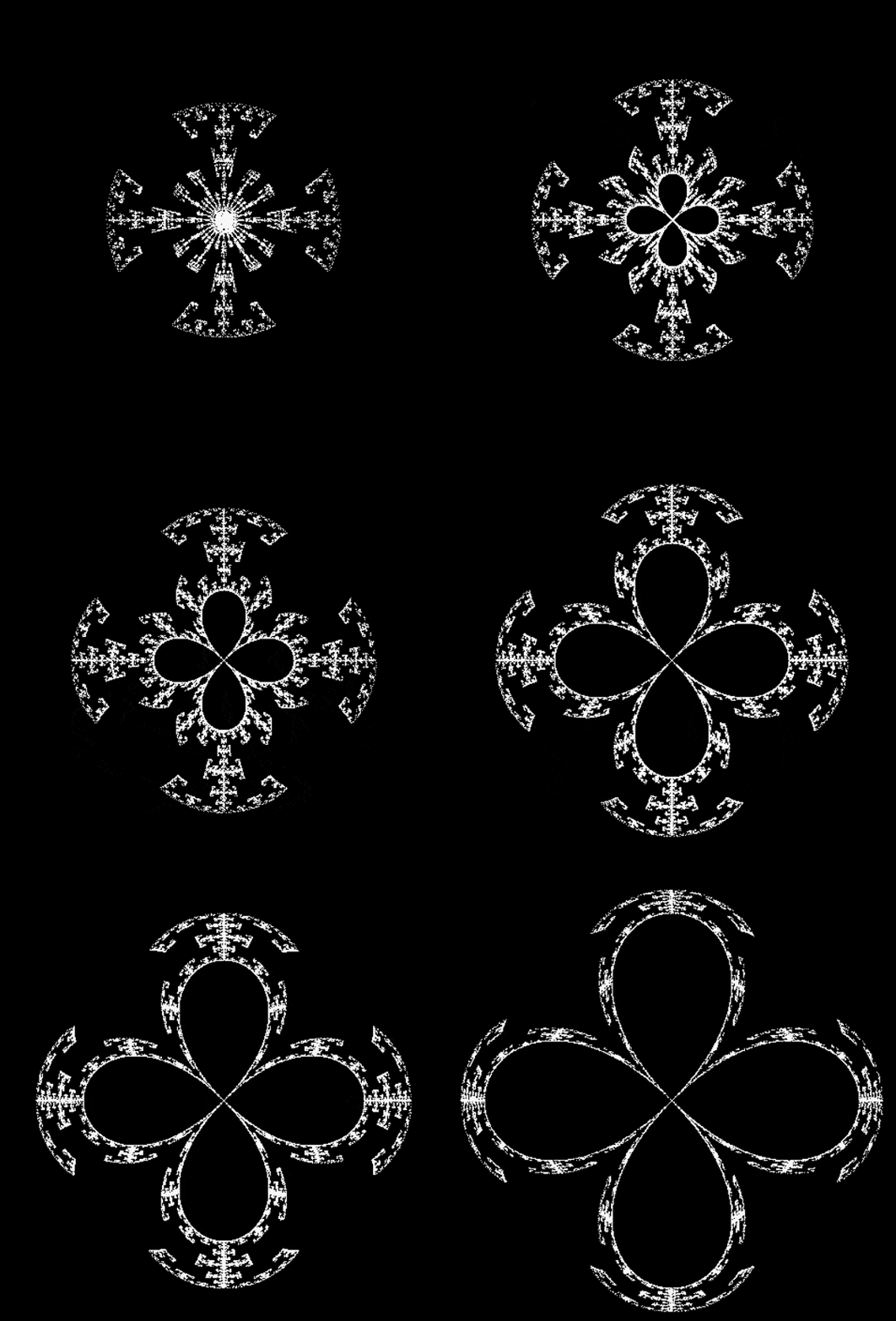
Perverted pircles from T-square fractal (animated at EZgif)
Finally, another polygonal fractal turned into a pircle and perverted pircle:
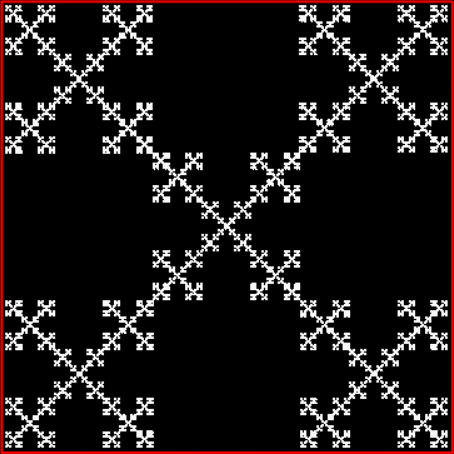
Another square fractal
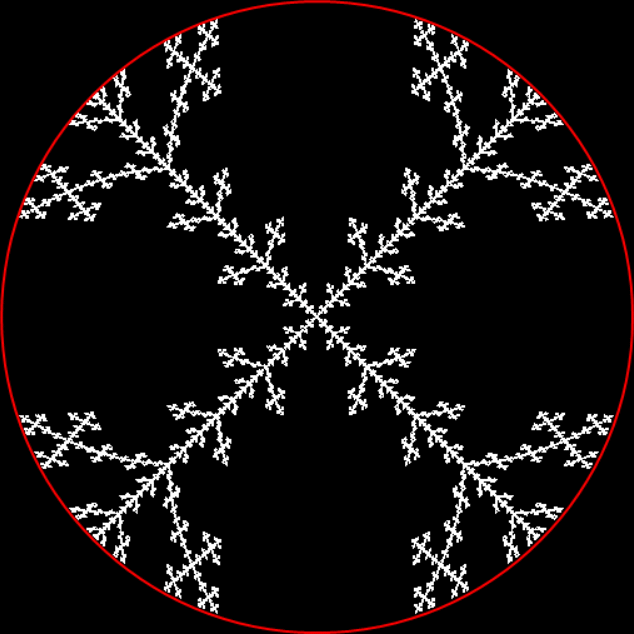
Pircle from square fractal
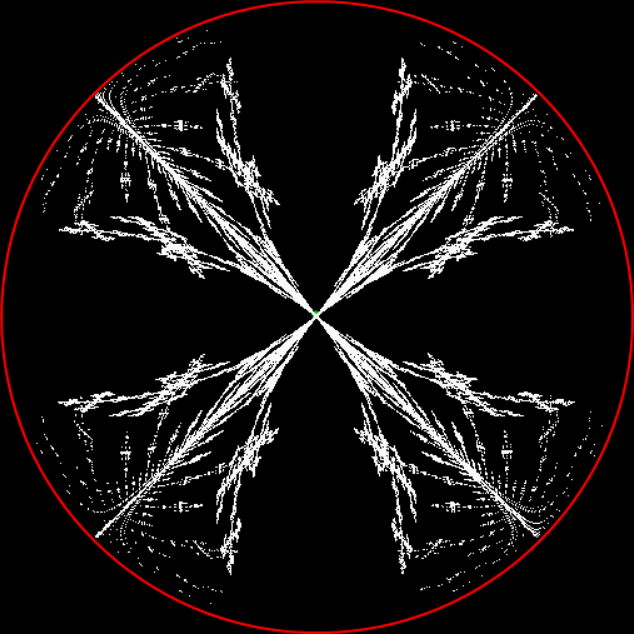
Perverted pircle from square fractal
Shopping in Poundland. That’s what Brits do when they want cheap fills. Hopping in Boundland. That’s what rec-mathers do when they want deep thrills. As I’ve described previously, a point can create interesting geometry by jumping towards fixed vertices inside a polygon. But it can also create interesting geometry by jumping at fixed angles inside a polygon. Suppose a point jumps at 0°, 120° or 240° halfway towards the perimeter of a triangle. It’s bounded in its jumps, so you could say it’s hopping in Boundland. Or bounding in Hopland. Either way, it creates this pattern inside the polygon:
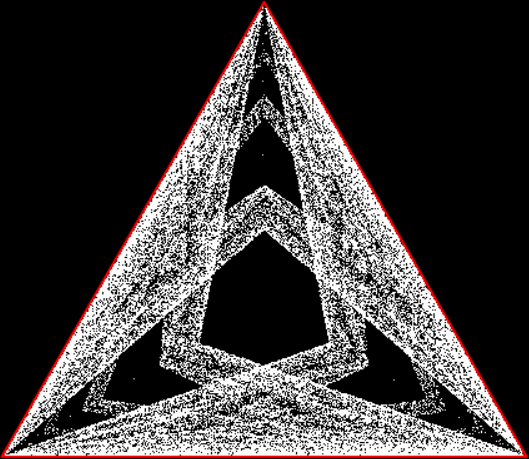
Jumping halfway towards perimeter of triangle at 0°, 120° or 240°
If you stretch the triangle-and-pattern into a circle, you get this (the graphics aren’t as good as they could be, but I’m working on it):
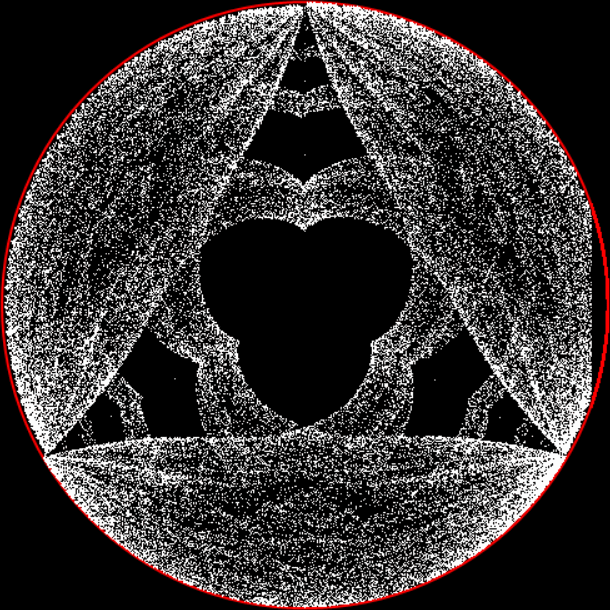
Triangle → circle, 1/2 at 0°, 120° or 240°
You can also introduce restrictions, like banning the point from jumping at the same angle twice in a row:
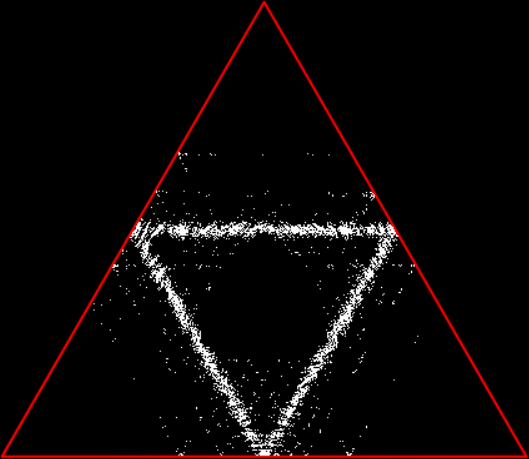
Ban on same angle twice in a row, 1/2 jump at 0°, 120° or 240°
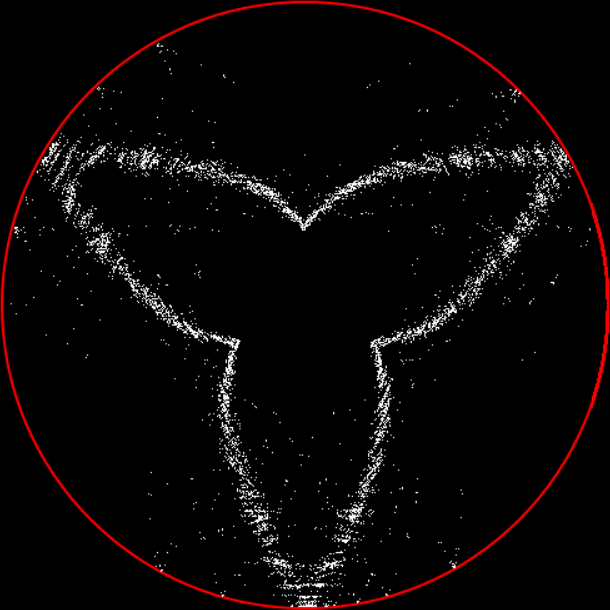
Triangle → circle, ban j+0, 1/2 jump at 0°, 120° or 240°
If the jump is 2/3rds of the distance to the perimeter and the ban is on the same angle twice, the point generates this pattern by hopping in Boundland:
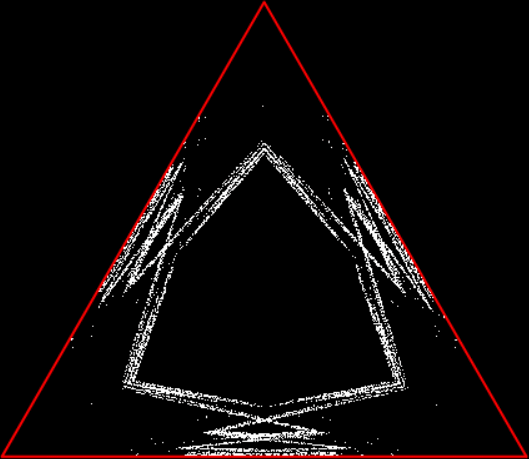
Triangle, 2/3 jump, ban j+0, 0°, 120° or 240°
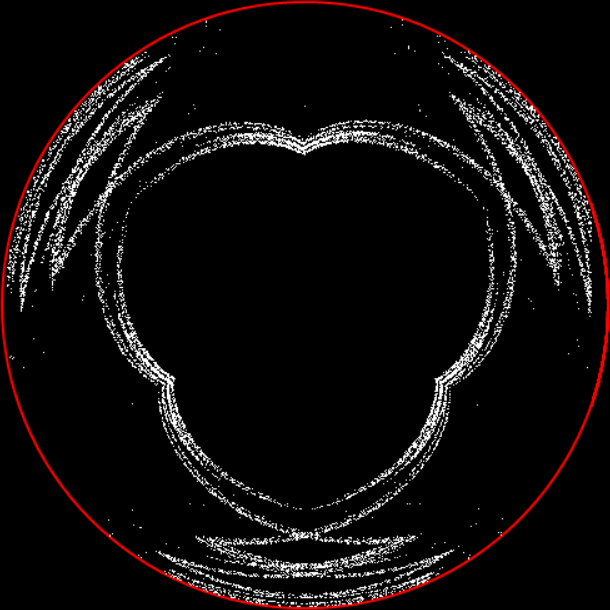
Triangle → circle, 2/3 jump, ban j+0, 0°, 120° or 240°
Now try adjusting the angles. Swinging the angles 60° with the same 2/3rd jump and same ban, the point generates this:
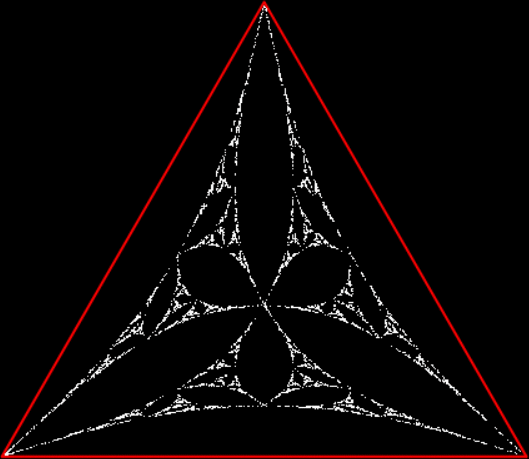
Triangle, 2/3 jump, ban j+0, 60°, 180° or 300°
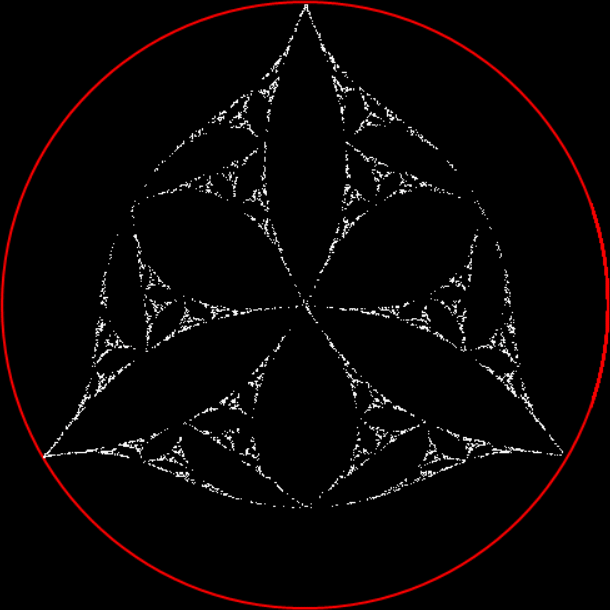
Triangle → circle, 2/3 jump, ban j+0, 60°, 180° or 300°
A point jumping 2/3rds at four angles inside a square generates this pattern:
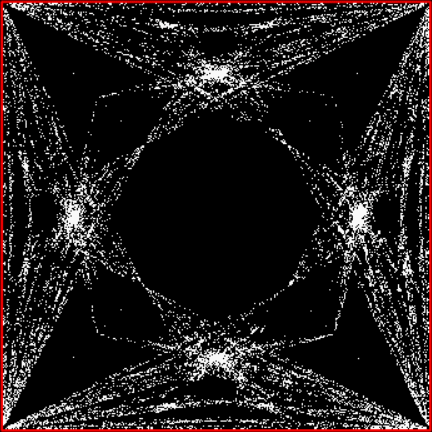
Square, 2/3 jump, ban j+0, 45°, 135°, 225, 315°
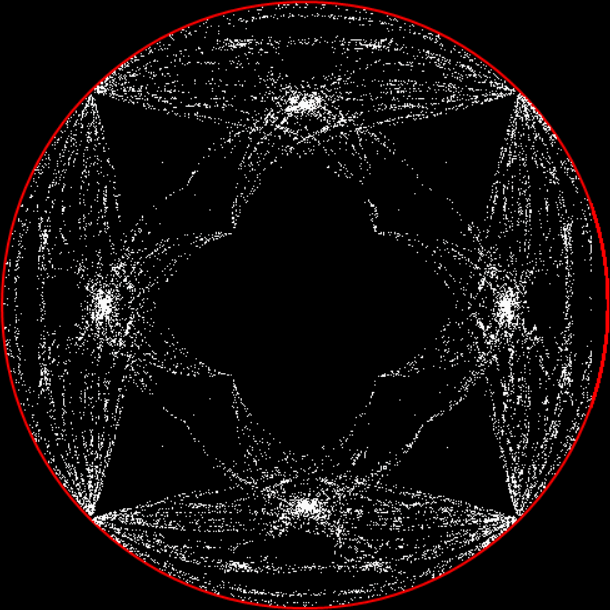
Square → circle, 2/3 jump, ban j+0, 45°, 135°, 225, 315°
And what if the point jumps 5/7ths towards the center of the polygon, not just towards the perimeter? Then it generates this pattern inside a hexagon with a ban on jumping towards the angle adjacent clockwise to the angle it’s just jumped at:
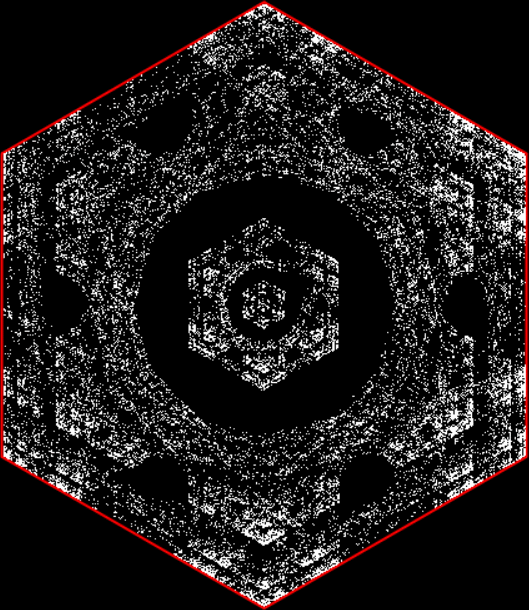
Hexagon, 5/7 jump, ban j+1, 6 angles + center
The point can also jump inside a circle rather than a polygon. Here’s the pattern generating by a point jumping 2/3rds at three angles with a ban on the same jump twice in a row:
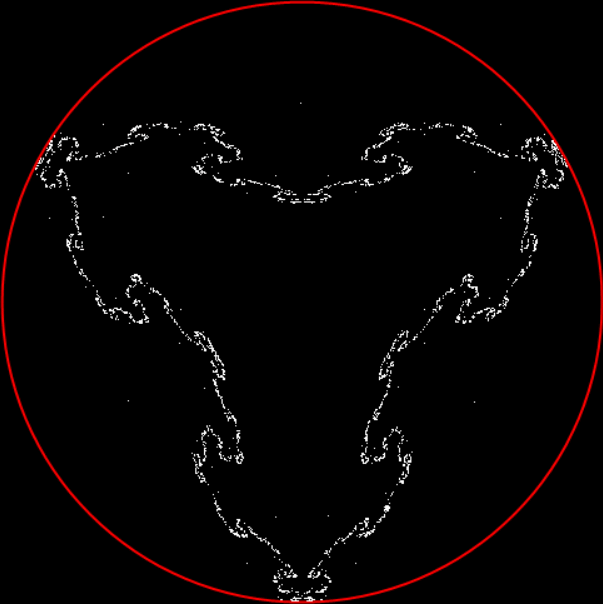
Circle, 2/3 jump, ban j+0, 3 angles
And if the point can jump towards the center of the circle too, it generates this pattern:
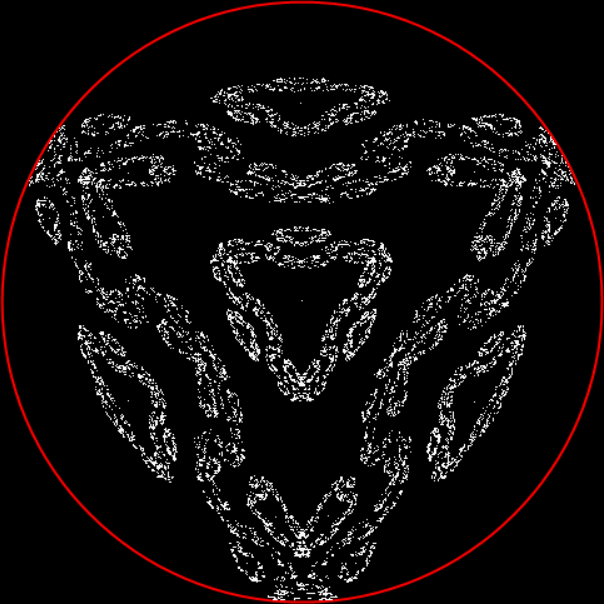
Circle, 2/3 jump, ban j+0, 3 angles + center
Elsewhere Other-Accessible
• Controlled Chaos — a look at points jumping towards vertices, not perimeters
Here’s the famous Sierpiński triangle, a fractal named after the Polish mathematician Wacław Sierpiński (1882-1969):
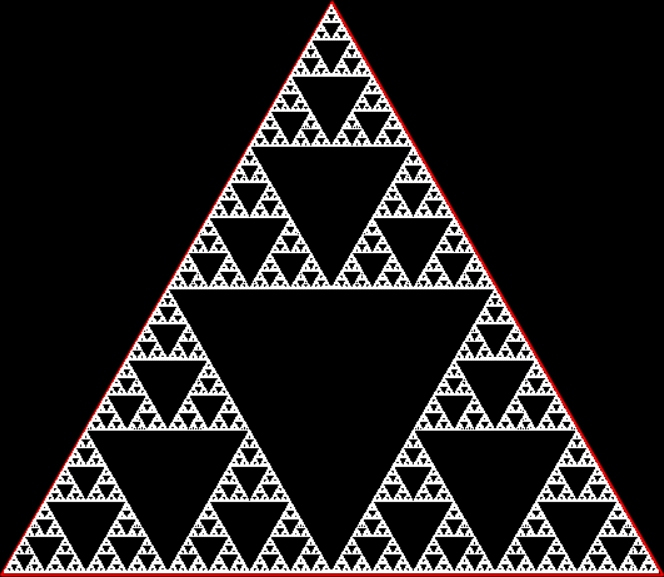
You can create it by following all the possible paths of a point jumping half-way towards the vertices of the triangle. But what if the point can jump towards the center of the triangle too? Then you get another fractal, one that looks like this:
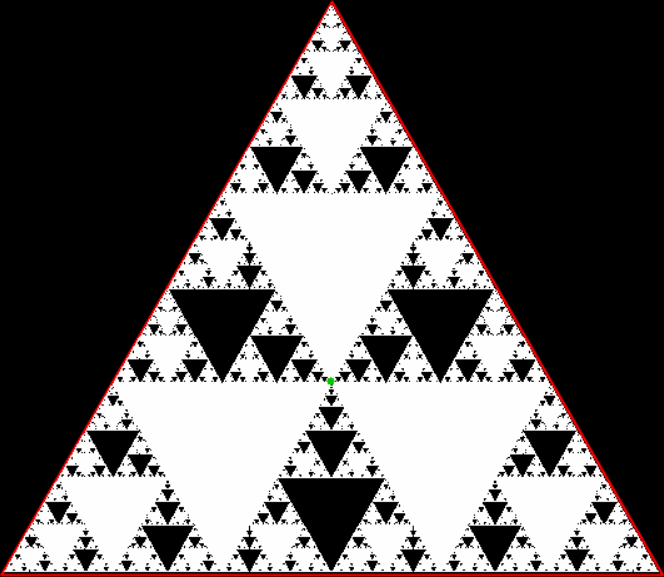
Sierpiński triangle when point can jump towards center of triangle too
Now, as a keyly committed core component of the trans-entitial community, I wondered whether triangles and triangular fractals might identify as other geometrical shapes…
I mean, what’s to stop a triangle identifying as a circle? Nothing. And obvs, if one of the Sierpiński triangles above identifies as a circle, it is a circle — trans-circles are circles (get over it). That is, there’s no need for Sierpiński surgery.
But what if a trans-circular Sierpiński triangle wanted to affirm its circularity with surgery? What would it look like then? Well, you can use elementary trig based on the angles of points within the triangle to stretch it into what might be called a trircle, i.e. a trans-circular triangle that has affirmed its inner circular identity:
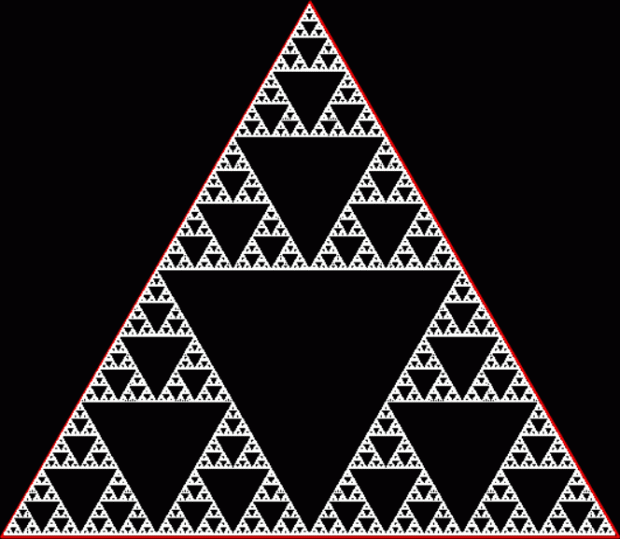
A pre-op trans-circular Sierpiński triangle
🡇
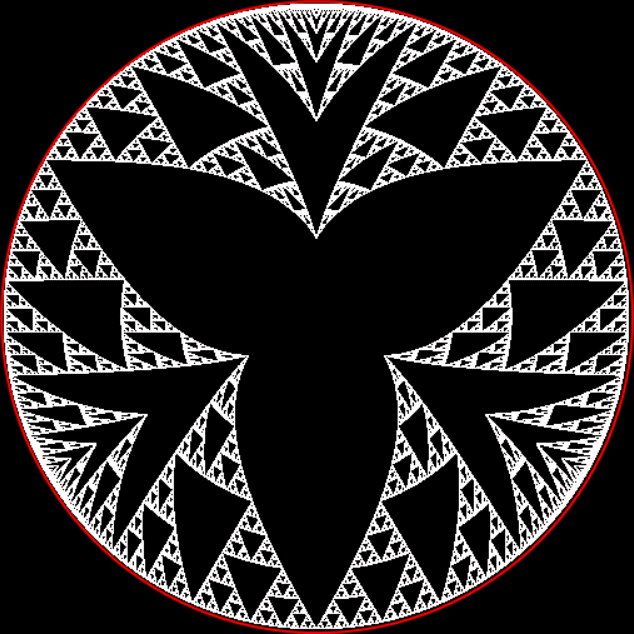
A post-op trans-circular Sierpiński triangle or Sierpiński trircle
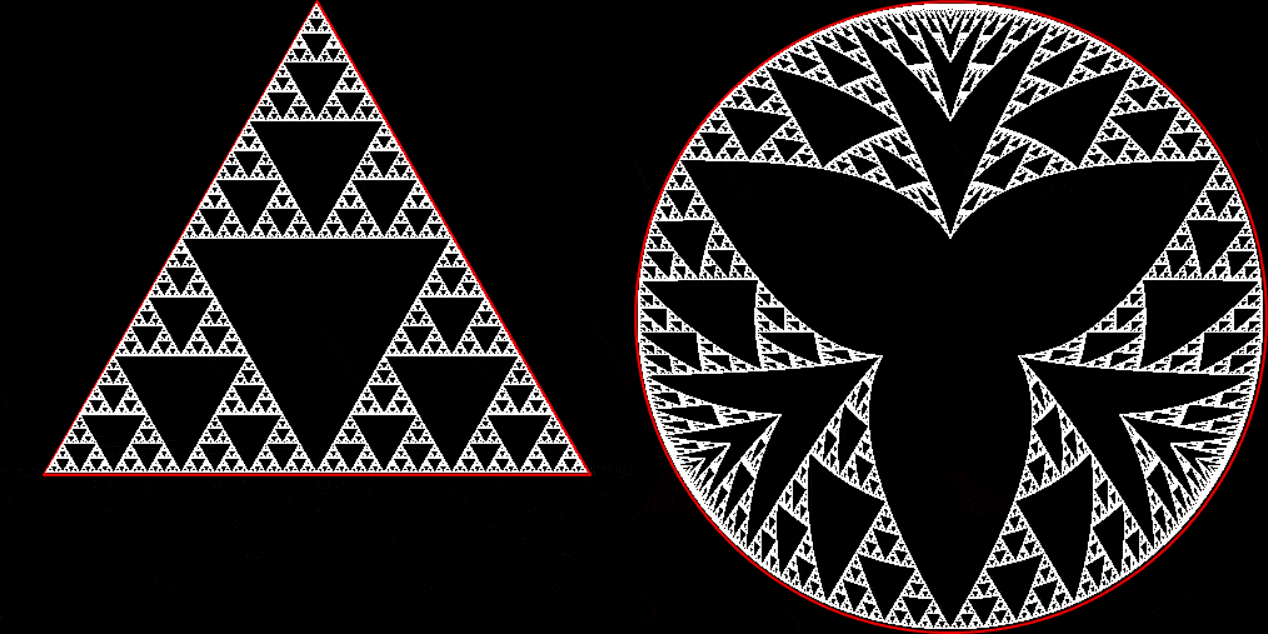
Sierpiński triangle → Sierpiński trircle (animated at EZgif)
On the other hand, the trircle might be a pre-op trans-triangular circle that has NOT affirmed its inner triangular identity with surgery. It’s complicated. But if we suppose it’s a post-op trans-circle rather than a pre-op trans-triangle, we could nickname it an Angular Trerkel, punning on the name of the great German Bundeskanzlerin Angela Merkel. Here’s the same Sierpiński surgery on the centered Sierpiński triangle (the second fractal looked at above):
A pre-op trans-circular centered Sierpiński triangle
🡇
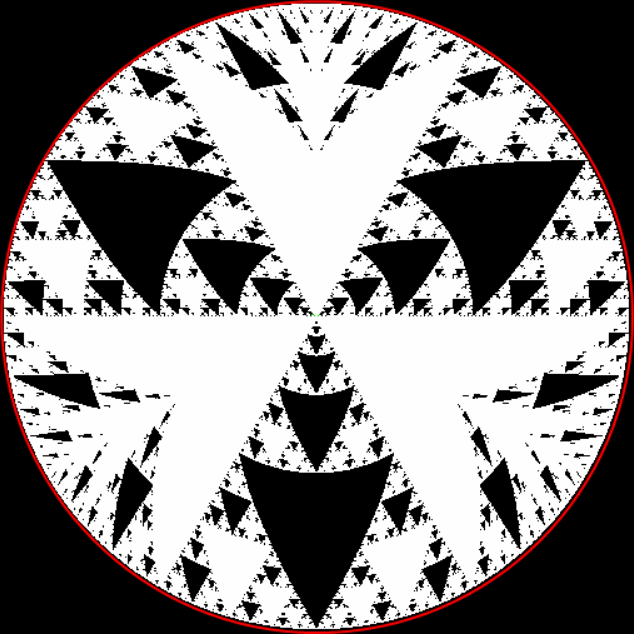
A post-op trans-circular centered Sierpiński triangle or centered Sierpiński trircle
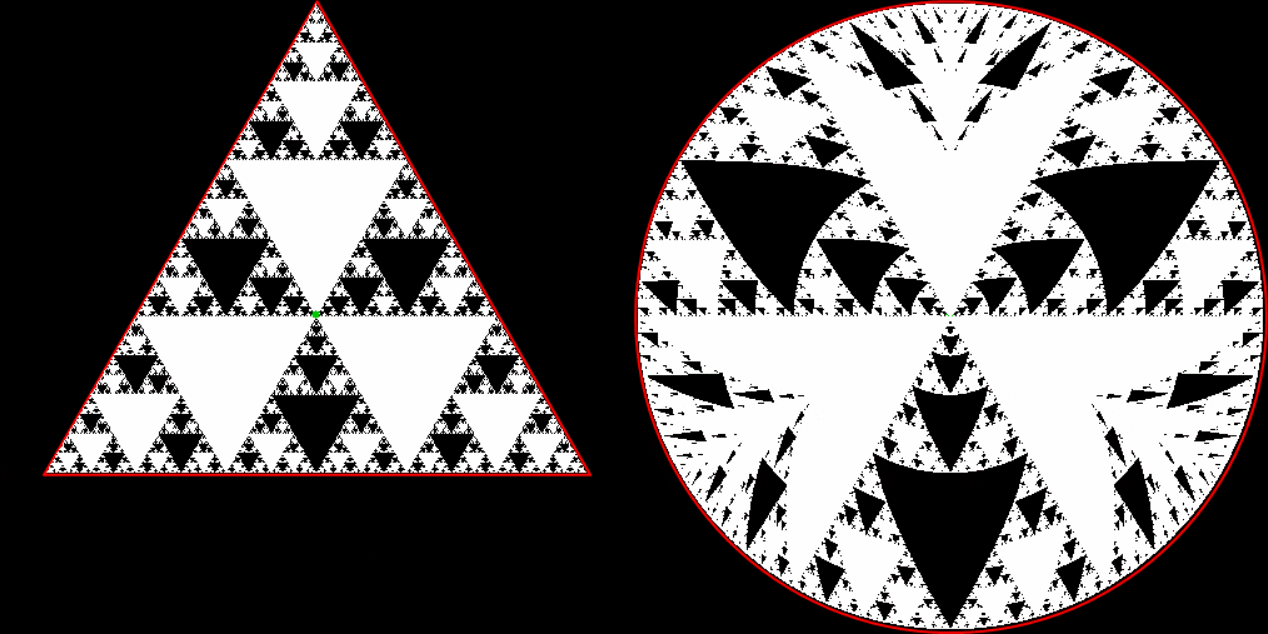
Centered Sierpiński triangle → centered Sierpiński trircle (animated at EZgif)
Again, the post-op trans-circular centered Sierpiński triangle might in fact be a pre-op trans-triangular centered Sierpiński circle. When it comes to the trans-entitial community, always remember: In dubio, interrogāte entitatem! — “In case of doubt, ask the entity!”
While I play New Order, let’s view order. Below are some rational fractions ordered by increasing size of denominator (the lower part of the fraction, e.g. the 7 in 3/7) and numerator (the upper part of the fraction, e.g. the 5 in 5/9). Note the positions of 1/2 and 1/7:
1/2, 1/3, 2/3, 1/4, 3/4, 1/5, 2/5, 3/5, 4/5, 1/6, 5/6, 1/7, 2/7, 3/7, 4/7, 5/7, 6/7, 1/8, 3/8, 5/8, 7/8, 1/9, 2/9, 4/9, 5/9, 7/9, 8/9, 1/10, 3/10, 7/10, 9/10
Now let’s plot fractions ordered like that on a fract-L, a graph whose axes represent numbers < 1. If both x and y = 1/2, 1/3, 2/3, 1/4, 3/4, 1/5…, you get a line at 45°:
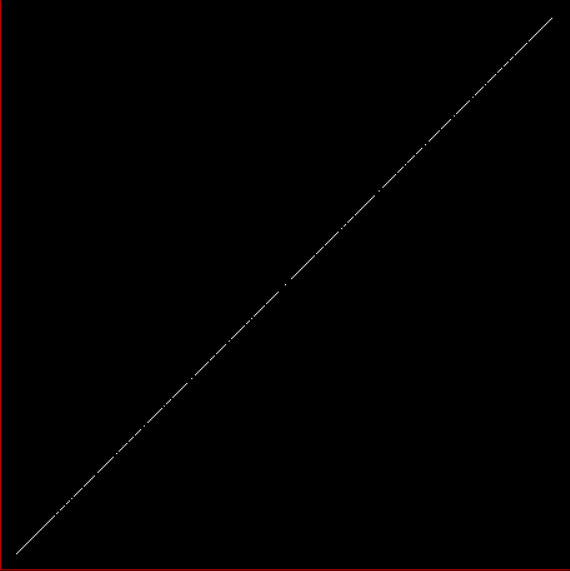
fract-L for x = 1/2, 1/3, 2/3…, y = 1/2, 1/3, 2/3…
If the fractions went to infinity, you’d get a solid line. As it is, you get some interesting splits in the 45° line. And when you plot the fractions like that, it’s easy to see that each point, (x,y), has a unique x and a unique y. But there are other ways to order the rational fractions. Try the same set ordered by the size of the decimal, not the denominator and numerator. In the previous set, 1/2 came before 1/7. Now 1/2 comes after 1/7, because 0.5 = 1/2 > 0.142857… = 1/7:
1/10, 1/9, 1/8, 1/7, 1/6, 1/5, 2/9, 1/4, 2/7, 3/10, 1/3, 3/8, 2/5, 3/7, 4/9, 1/2, 5/9, 4/7, 3/5, 5/8, 2/3, 7/10, 5/7, 3/4, 7/9, 4/5, 5/6, 6/7, 7/8, 8/9, 9/10
Now let’s plot x as the first set of fractions, ordered by size of denominator-and-numerator, and y as the second set of fractions, ordered by the size of the decimal. You’ll see that this kind of size scatters:
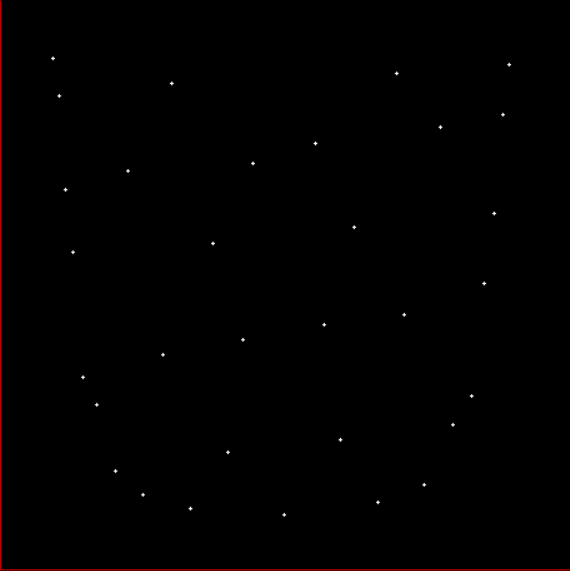
fract-L for x = 1/2, 1/3, 2/3, 1/4, 3/4, 1/5…, y = 1/10, 1/9, 1/8, 1/7, 1/6, 1/5, 2/9…
Now the points aren’t compressed into a 1-d line, but beginning to spread in 2-d space. The more fractions you use, the more the points spread. They remind me of papillae on a fractal tongue:
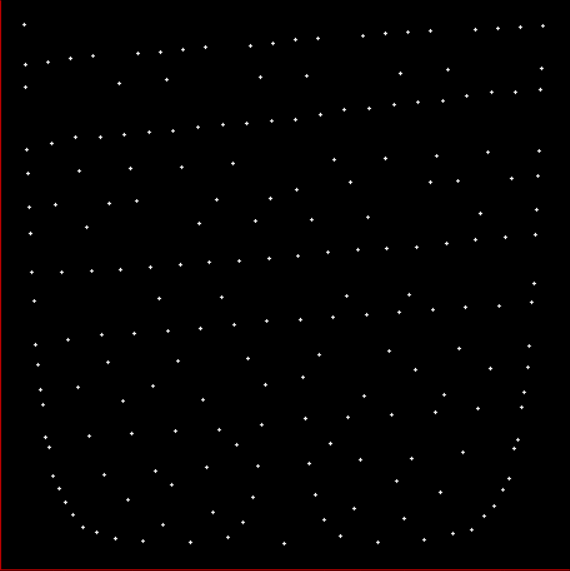
x = 1/2, 1/3, 2/3, 1/4, 3/4, 1/5… < 1/26, y = sizesort(1/2..1/26)
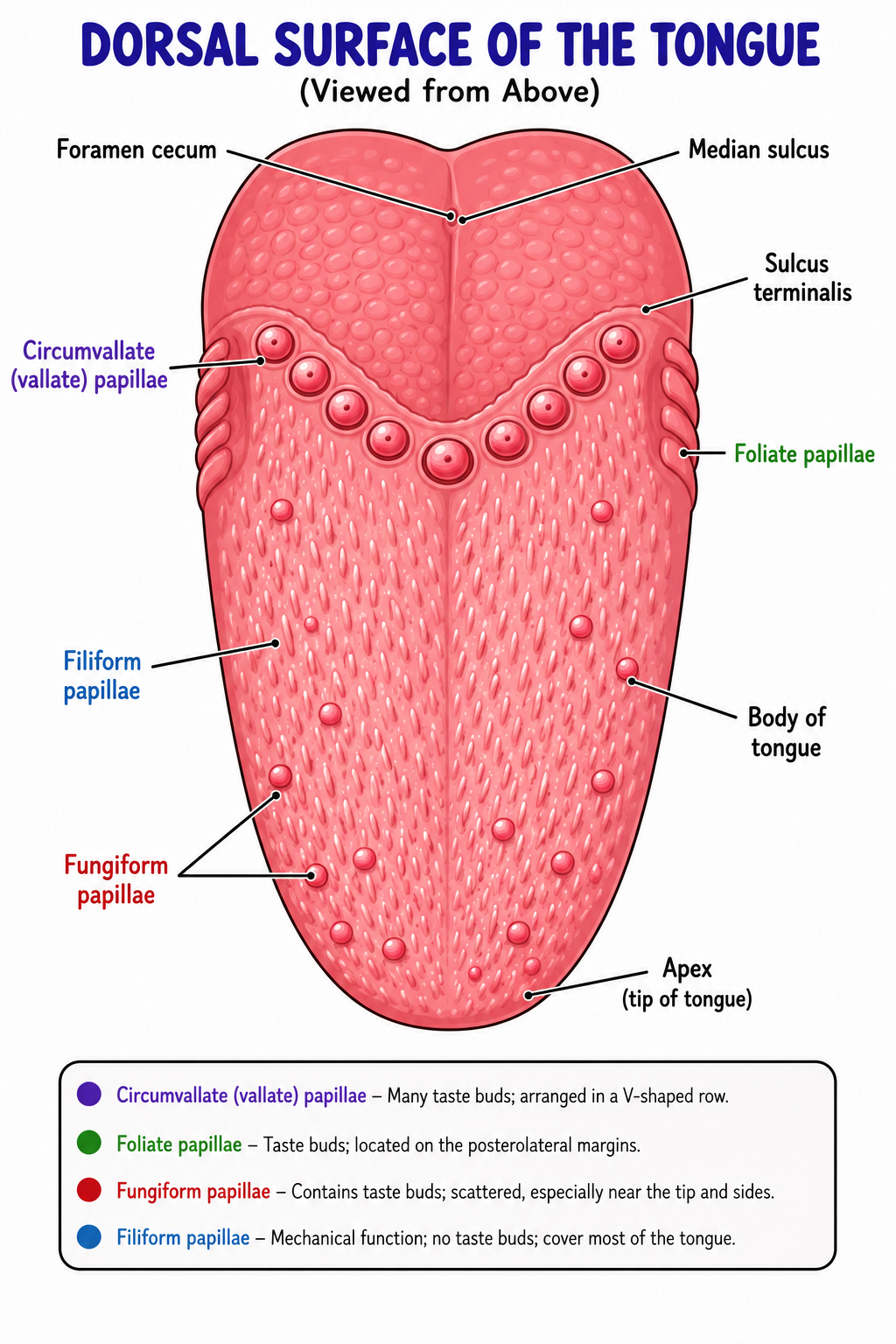
Papillae on a human tongue (image courtesy chatGPT)
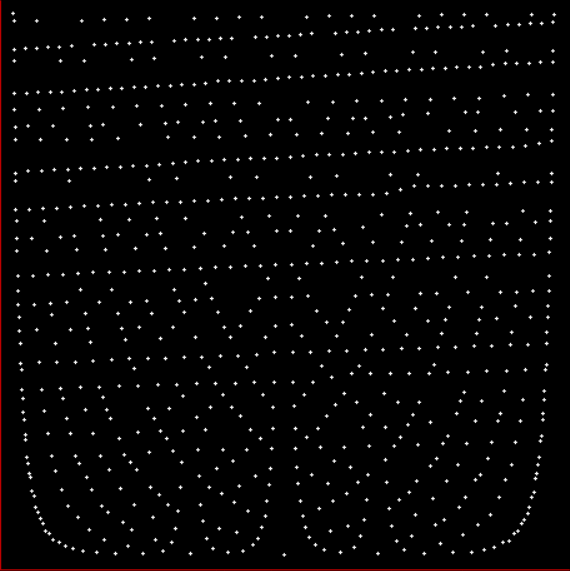
x = denumsort(1/2..1/51), y = sizesort(1/2..1/51)
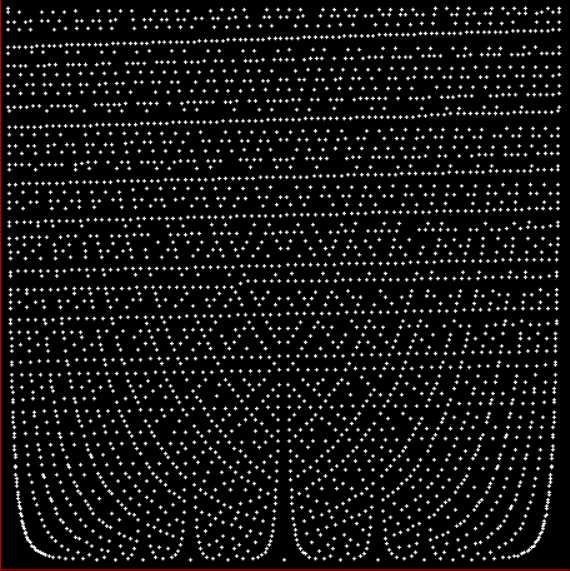
x = denumsort(1/2..101/), y = sizesort(1/2..1/101)
And the points seem to be occurring at the same x or y value. But that’s an artefact of a screen with limited pixels. On an impossible screen with infinite pixels, each (x,y) still has a unique x and unique y. Here are more fract-Ls with more fractions:
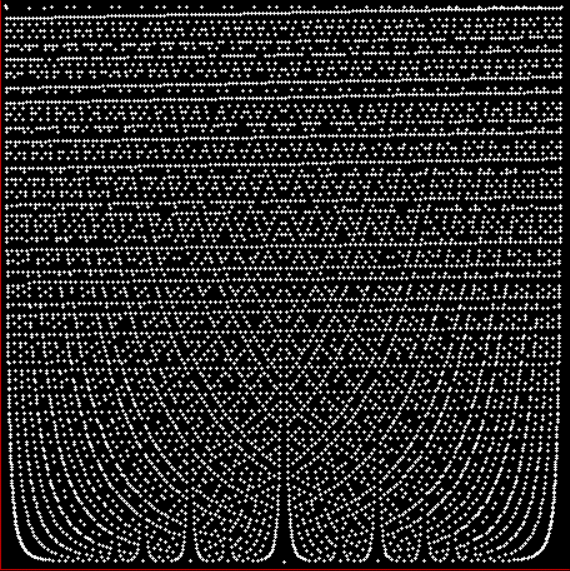
x = denumsort(1/2..1/151), y = sizesort(1/2..1/151)
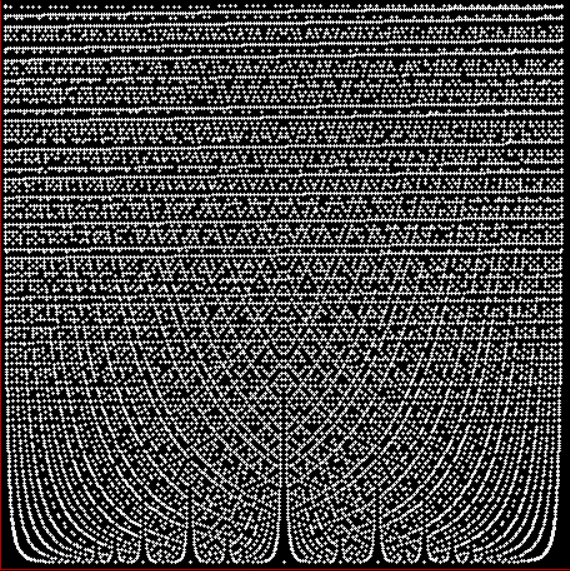
x = denumsort(1/2..1/201), y = sizesort(1/2..1/201)
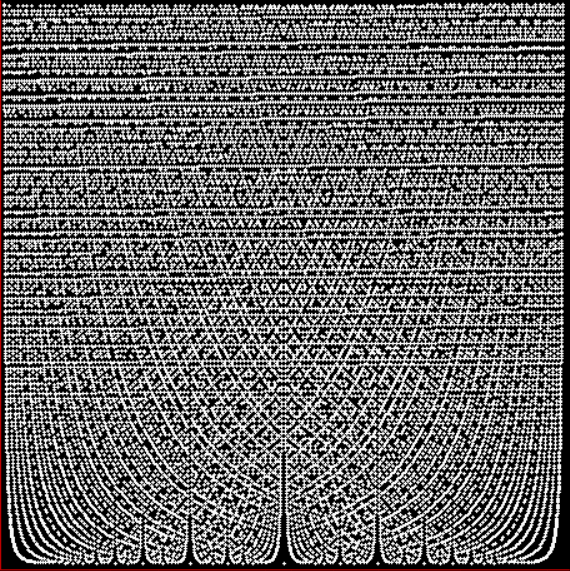
x = denumsort(1/2..1/251), y = sizesort(1/2..1/251)
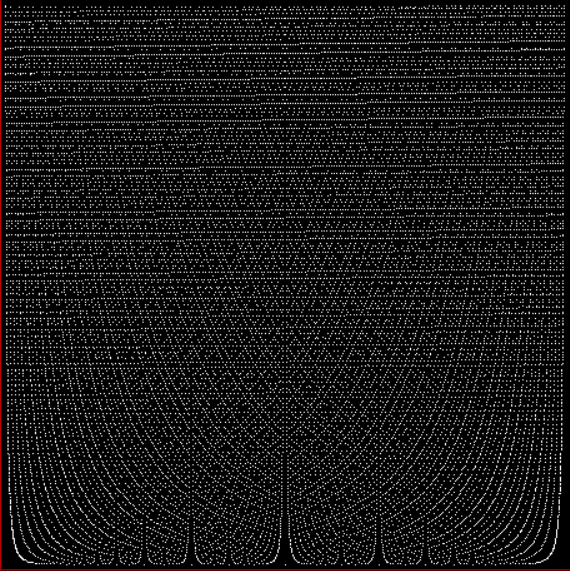
finer detail for x = denumsort(1/2..1/251), y = sizesort(1/2..1/251)
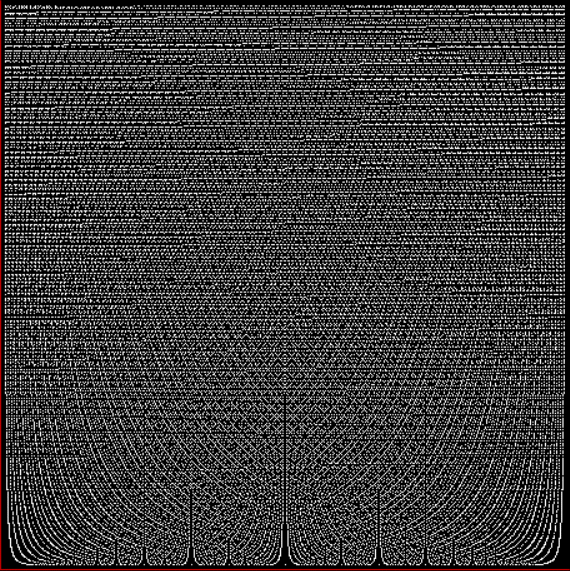
x = denumsort(1/2..37/406), y = sizesort(1/2..37/406)
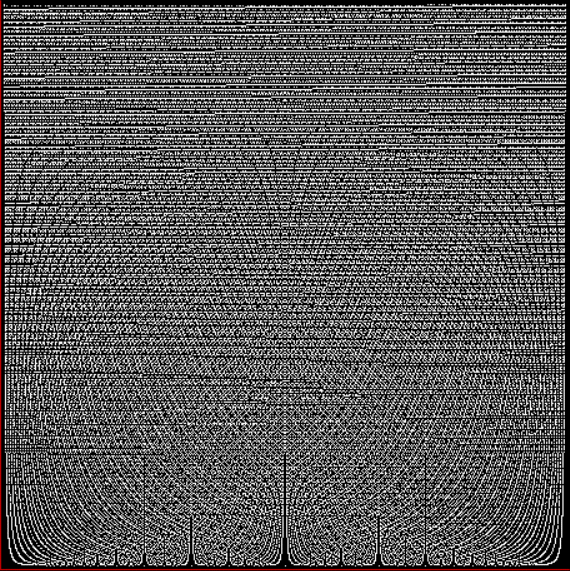
x = denumsort(1/2..1/501), y = sizesort(1/2..1/501)
Finally, to the closing bars of New Order, let’s view order in an animated gif:
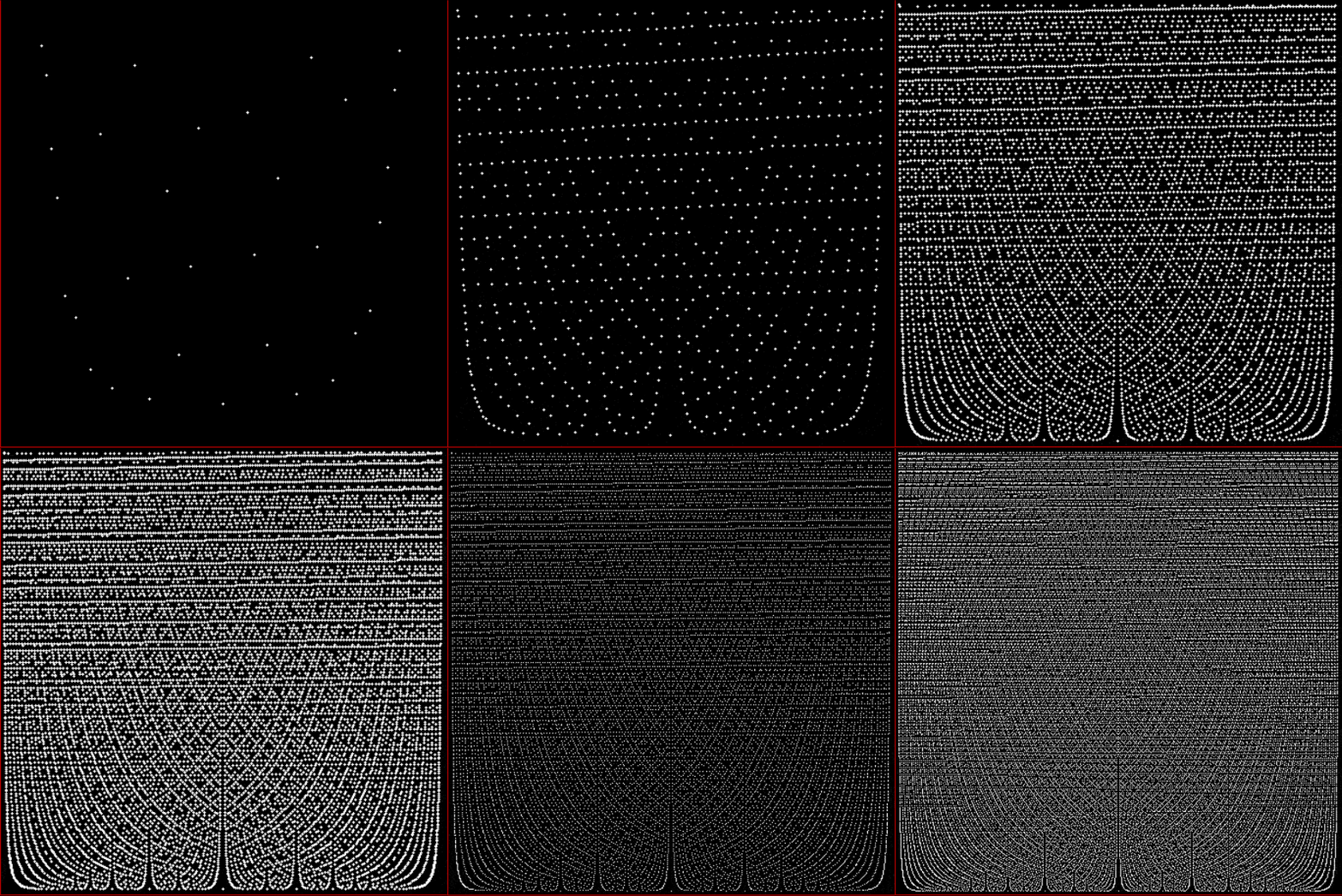
x = denumsort(a/b), y = sizesort(a/b) (animated at EZgif)
Post-Performative Post-Scriptum…
In fact, I wasn’t listening to New Order to view order. I’m not a fan of New Order, just a fan of assonance.
What could be duller than digits? They just sit there on the page or screen, mindlessly marking mathematics:
1, 2, 3, 4, 5, 6, 7, 8, 9, 10, 11, 12, 13, 14, 15, 16, 17, 18, 19, 20, 21, 22, 23, 24, 25, 26, 27, 28, 29, 30, 31, 32, 33, 34, 35, 36, 37, 38, 39, 40, 41, 42, 43, 44, 45, 46, 47, 48, 49, 50, 51, 52, 53, 54, 55, 56, 57, 58, 59, 60, 61, 62, 63, 64, 65, 66, 67, 68, 69, 70, 71, 72, 73, 74, 75, 76, 77, 78, 79, 80, 81, 82, 83, 84, 85, 86, 87, 88, 89, 90, 91, 92, 93, 94, 95, 96, 97, 98, 99, 100…
But perhaps they become more interesting as images. Let’s display the final digit of the integers, or counting numbers, on a graph. Running left-right and up-down, the graph represents the final or rightmost digit of 1, 2, 3, … 10, 11, 12, 13, … 100, 101, 102, 103, …, 1000, 1001, 1002, 1003, …:

Rightmost single digit of the integers (click for larger)
No, that’s still dull: the graph just generates endlessly repeating triangles. After all, the final digits fall into a cycle: 1, 2, 3, 4, 5, 6, 7, 8, 9, 0, 1, 2, 3… So do the final two digits: 1, 2, 3, 4, 5, […] 94, 95, 96, 97, 98, 99, 00, 01, 02, 03… Here they are as a graph:
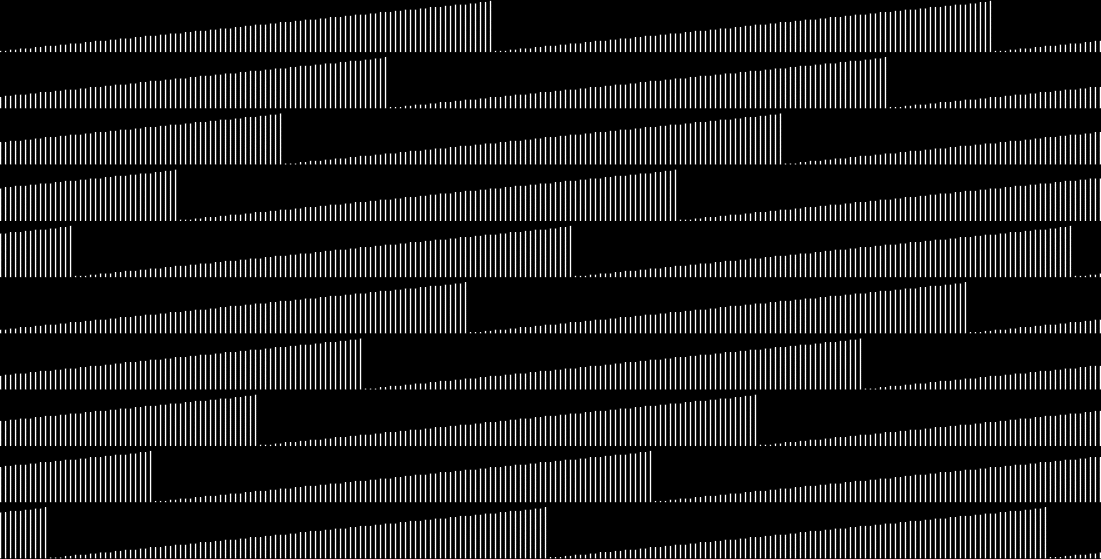
Rightmost two digits of the integers
Now the triangles look like waves sweeping to shore. That’s a bit more interesting, but not much. So let’s try something different. The trailing digits of the integers generate triangles, so let’s see what the triangular numbers generate. The triangular numbers — 0, 1, 3, 6, 10, 15, 21… — are very simple to form. You just sum the integers: 1, 3 = 1 + 2, 6 = 1 + 2 + 3, 10 = 1 + 2 + 3 + 4, 15 = 1 + 2 + 3 + 4 + 5, 21 = 1 + 2 + 3 + 4 + 5 + 6, 28 = 1 + 2 + 3 + 4 + 5 + 6 + 7, 36 = 1 + 2 + 3 + 4 + 5 + 6 + 7 + 8, 45 = 1 + 2 + 3 + 4 + 5 + 6 + 7 + 8 + 9, 55 = 1 + 2 + 3 + 4 + 5 + 6 + 7 + 8 + 9 + 10… Here are the final digits of the triangulars — 1, 3, 6, 0, 5, 1, 8, 6… — as a graph:
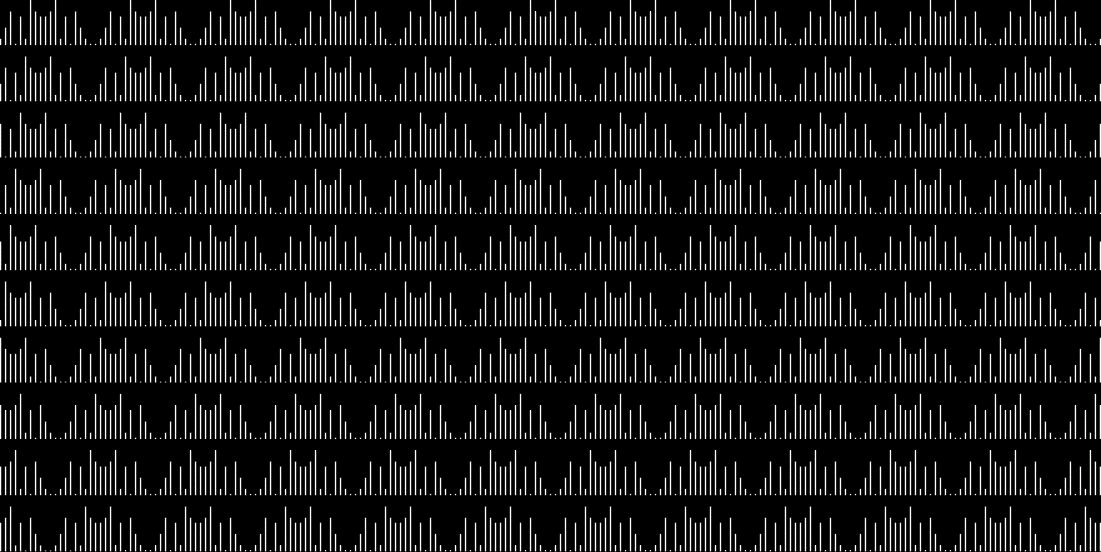
Final digit of triangular numbers in base 10 (click for larger)
Now something interesting has appeared. The final digits form a repeated palindromic pattern (counting 0 as the zero-th triangular number):
0, 1, 3, 6, 0, 5, 1, 8, 6, 5, 5, 6, 8, 1, 5, 0, 6, 3, 1, 0, 0, 1, 3, 6, 0, 5, 1, 8, 6, 5, 5, 6, 8, 1, 5, 0, 6, 3, 1, 0, 0, 1, 3, 6, 0, 5, 1, 8, 6, 5, 5, 6, 8, 1, 5, 0, 6, 3, 1, 0, 0, 1, 3, 6, 0, 5, 1, 8, 6, 5, 5, 6, 8, 1, 5, 0, 6, 3, 1, 0, …
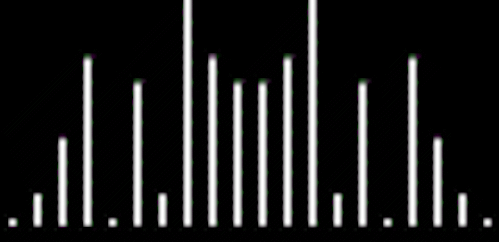
An Altar of Mathness created by the final digit of triangular numbers in base 10
And those palindromic digits create symmetric shapes that remind me of little altars — let’s call them “altars of mathness” in tribute to Morbid Angel’s genre-defining album Altars of Madness (1989). And what about the final two digits of the triangular numbers? Here’s the graph (adjusted so that 99 fits into the same space as 9):
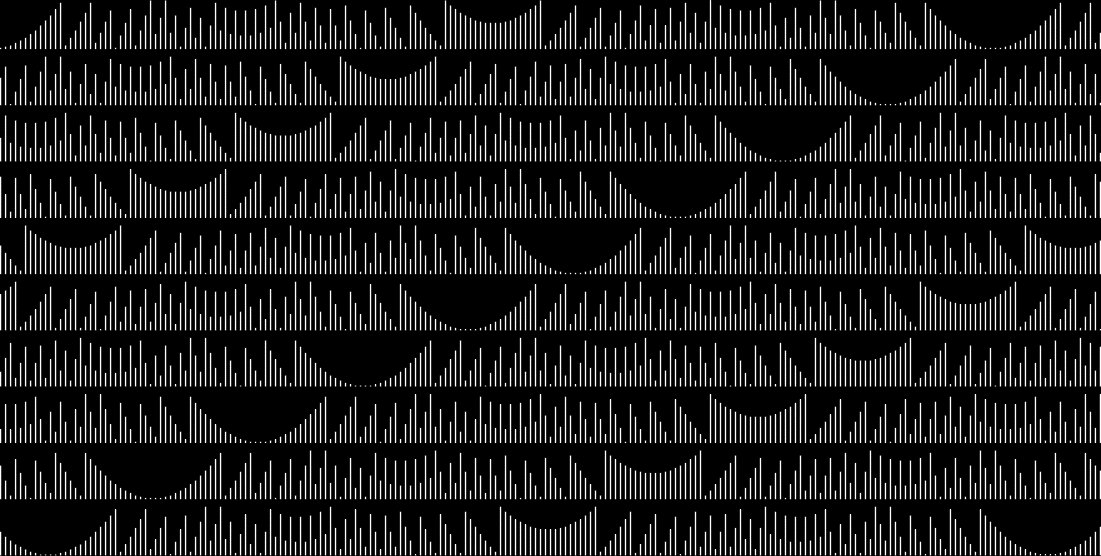
Final two digits of triangulars in b10
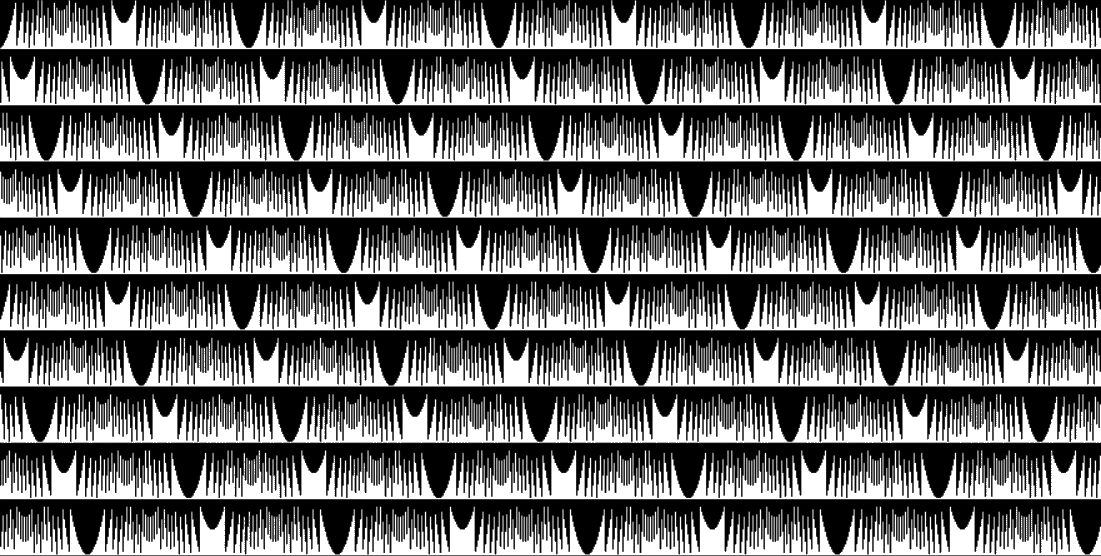
Final two triangular digits in b10 (horizontal scale compressed)
The final two digits form palindromes too. And this time we don’t get just triangles, but curves too. But that’s in base 10. What happens with the trailing triangular digits in other bases? Well, here’s the final triangular digit creating more altars of mathness in different bases (note that the altars are more elaborate in even bases):
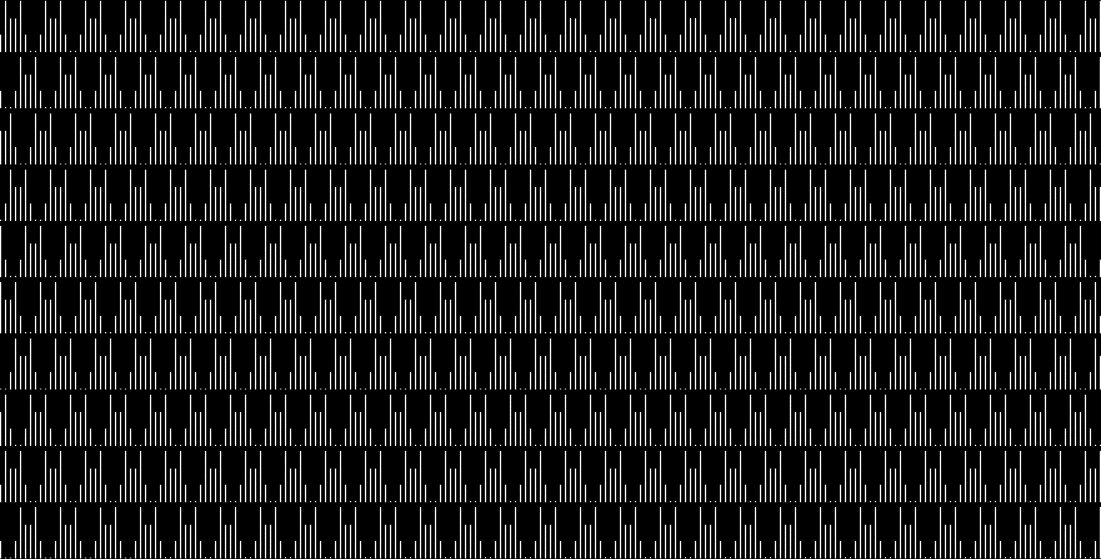
Final triangular digit in base 4
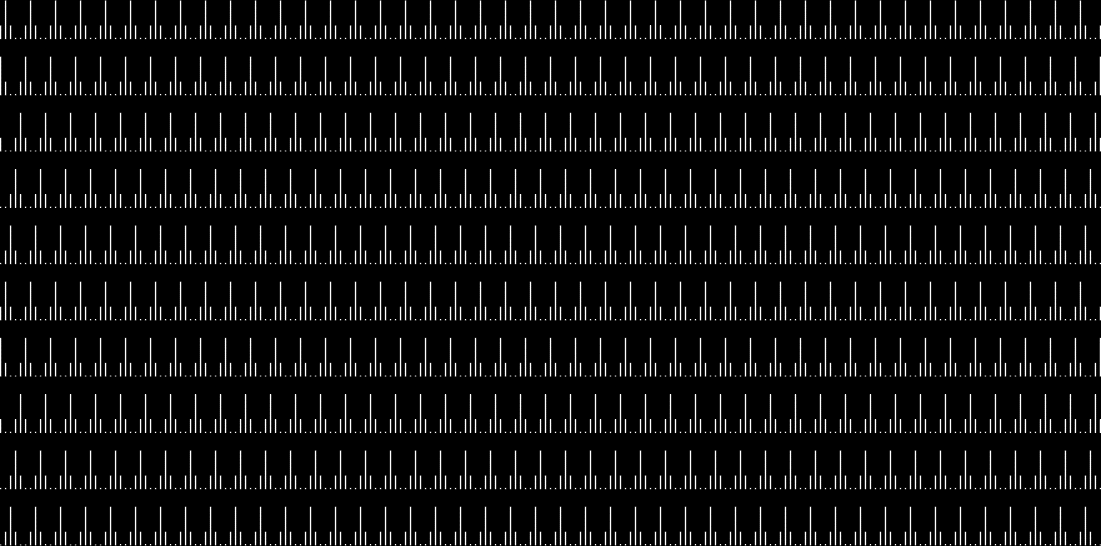
Final triangular digit in b5
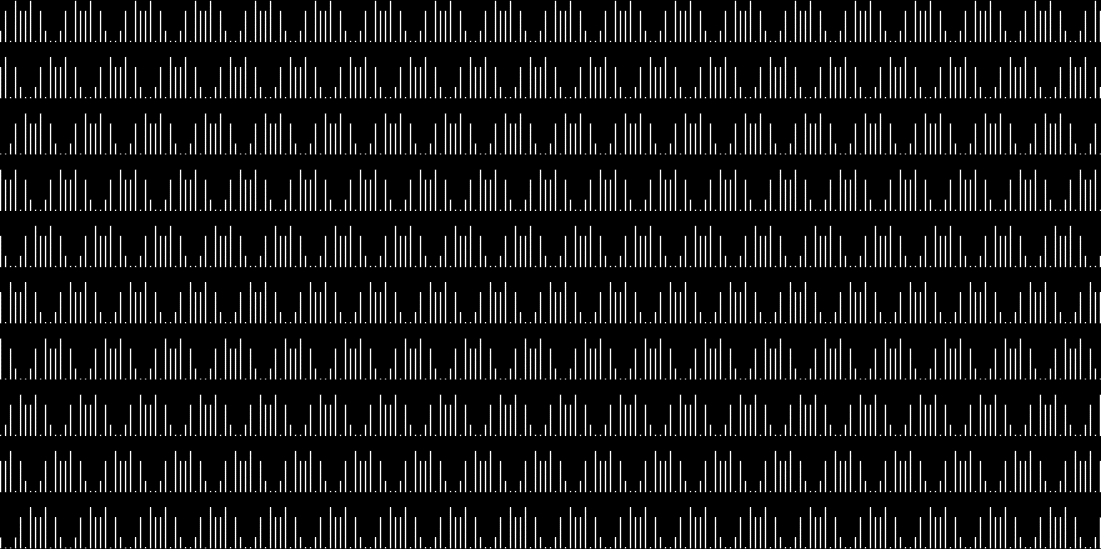
Final triangular digit in b6
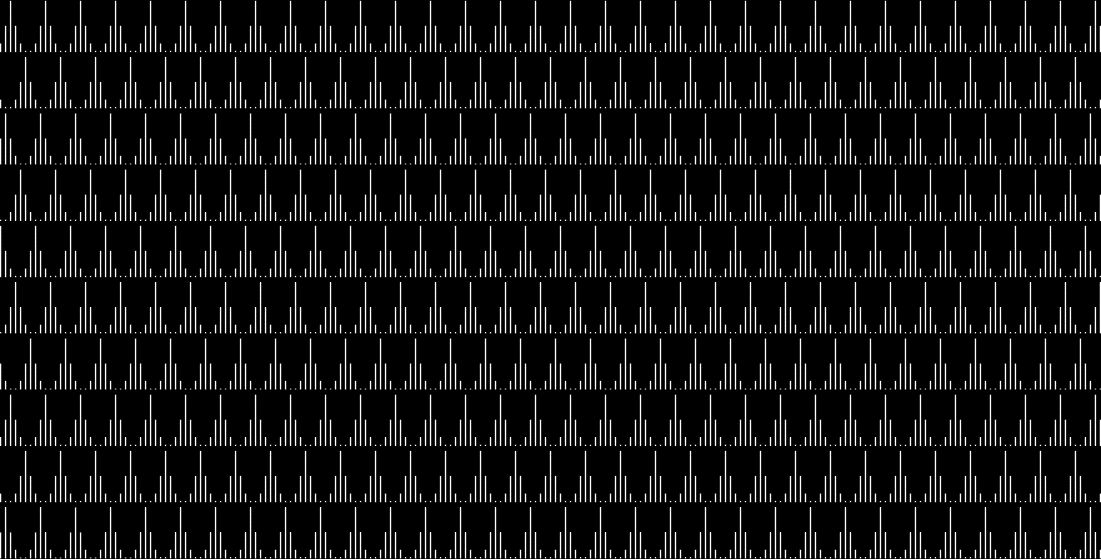
Final triangular digit in b7
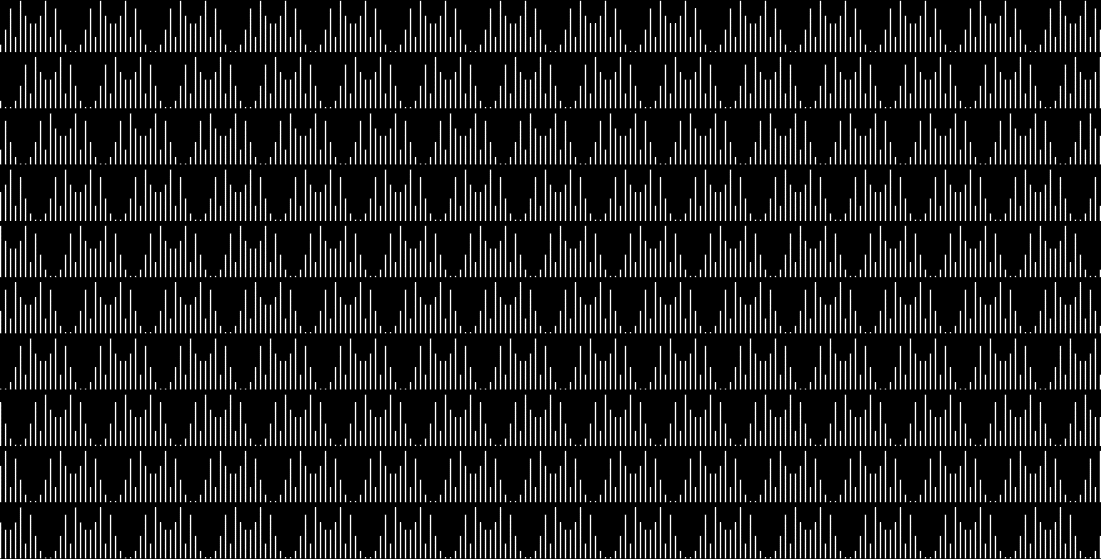
Final triangular digit in b8
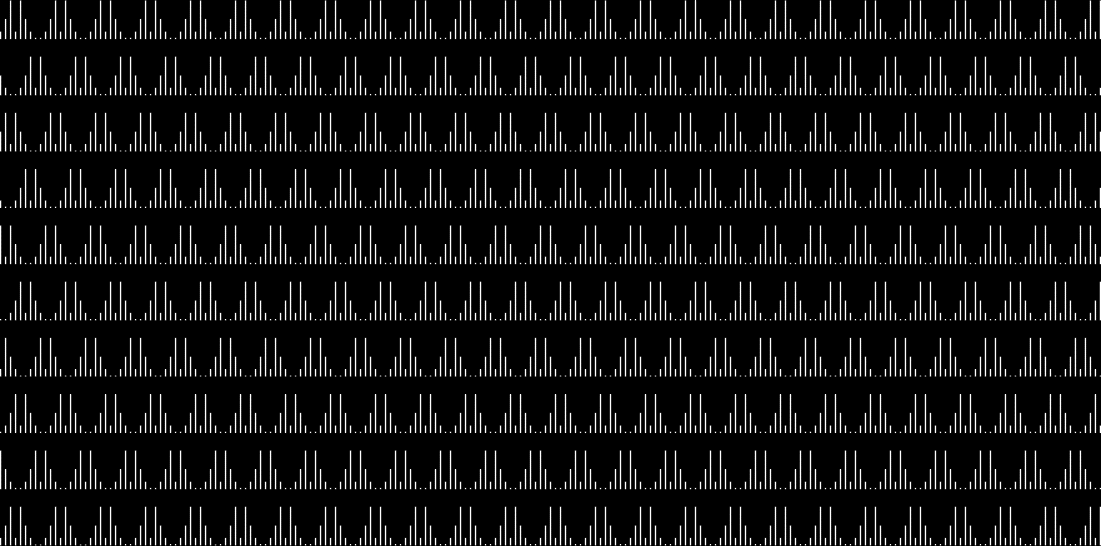
Final triangular digit in b9
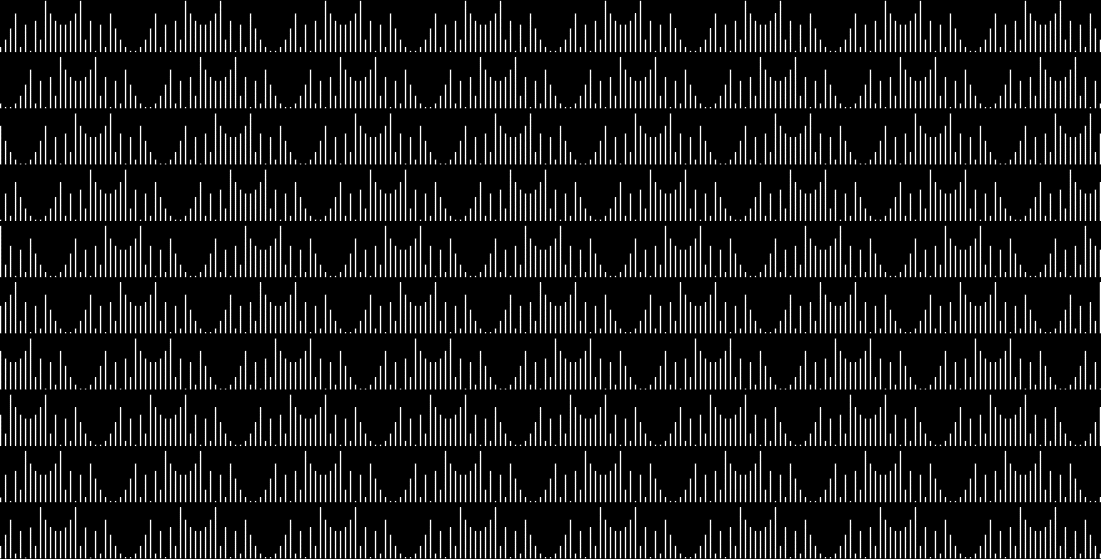
Final triangular digit in b14
And here’s the graph for the final triangular digit in base 100:
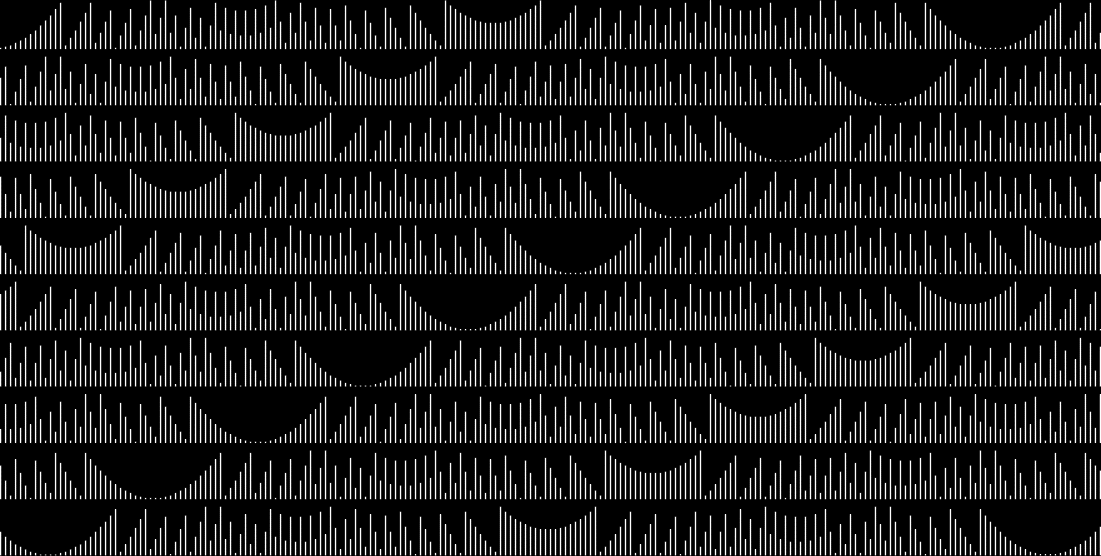
Final triangular digit in b100
The graph for final single digit in b100 should look familiar, because it’s identical to the graph for final double triangular digits in b10:
Final two digits of triangulars in b10
That’s because two digits in b10 are equivalent in one digit in b100, four digits in b10 are equivalent to two digits in b100, and so on. But b100 can’t capture three digits in b10 (the graph is again adjusted so that 999 fits into the same space as 9 and 99 above):
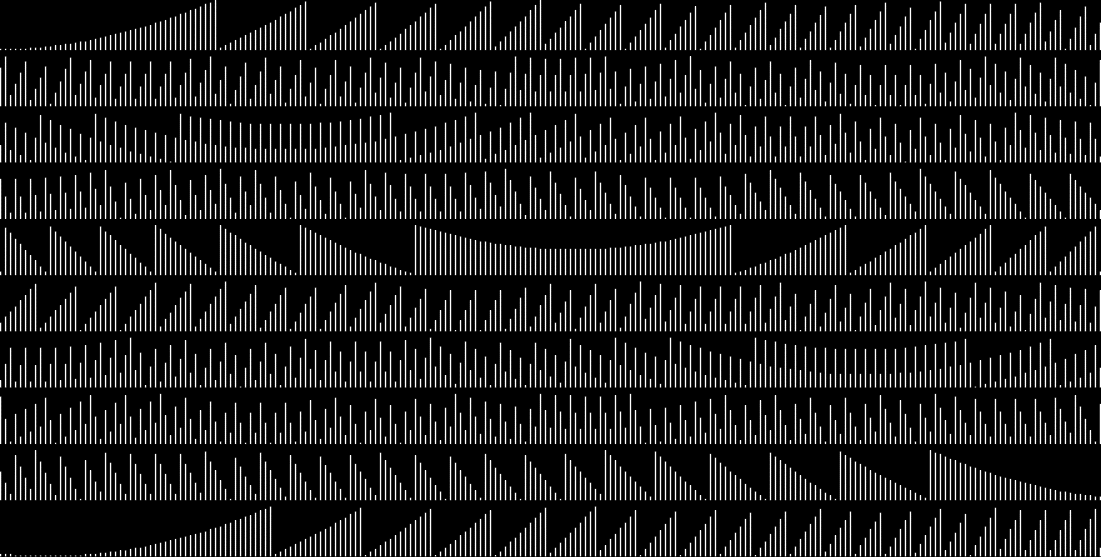
Final three triangular digits in b10
If you compress the x-axis for that graph, you can see how long the symmetries are:
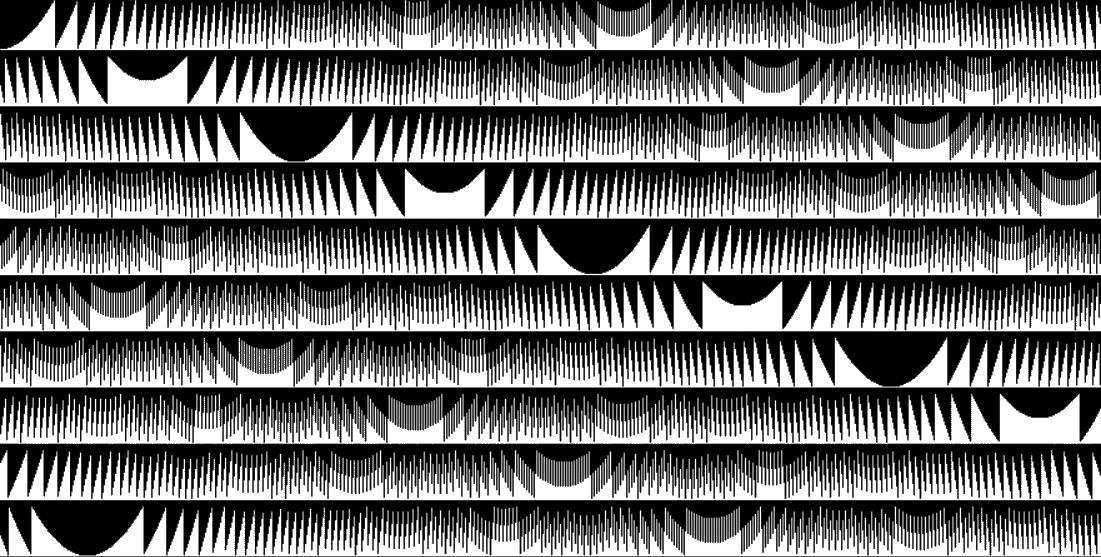
Final three triangular digits in b10 (x-axis / 2)
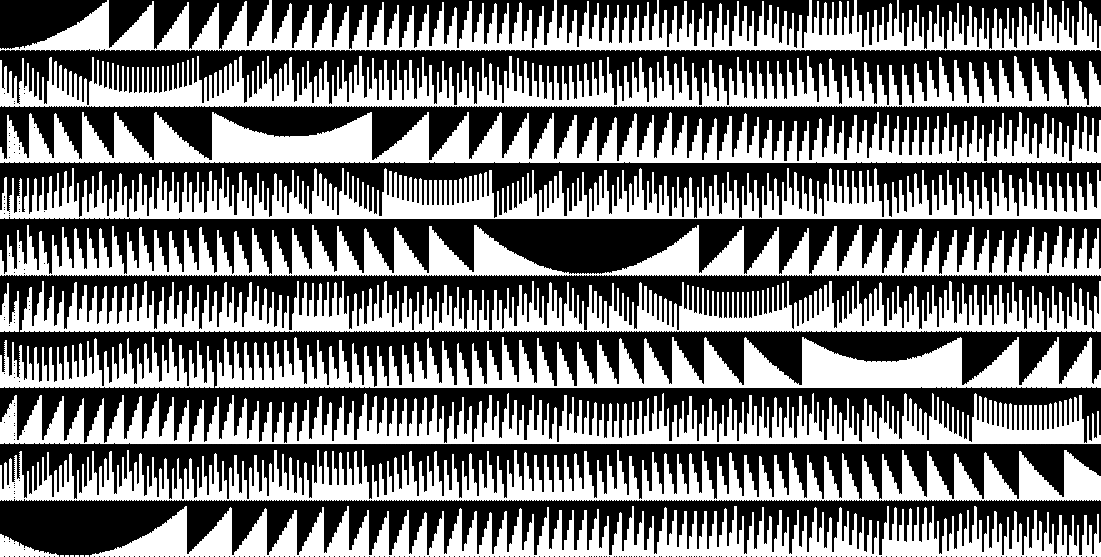
Final three triangular digits in b10 (x-axis / 4)
The final four digits of the triangulars in b10 create even longer symmetries:
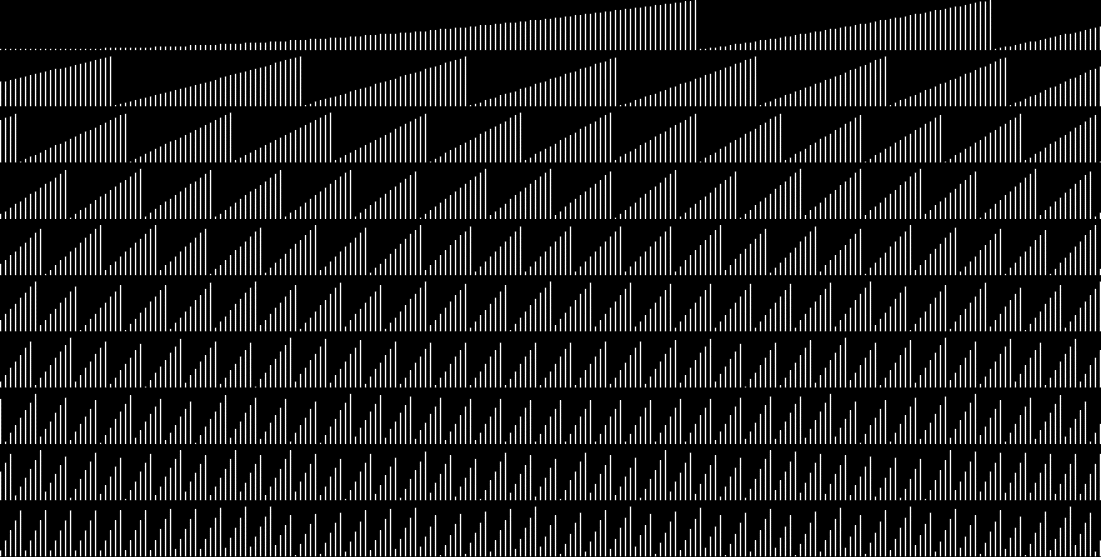
Final quadruple triangular digits in b10
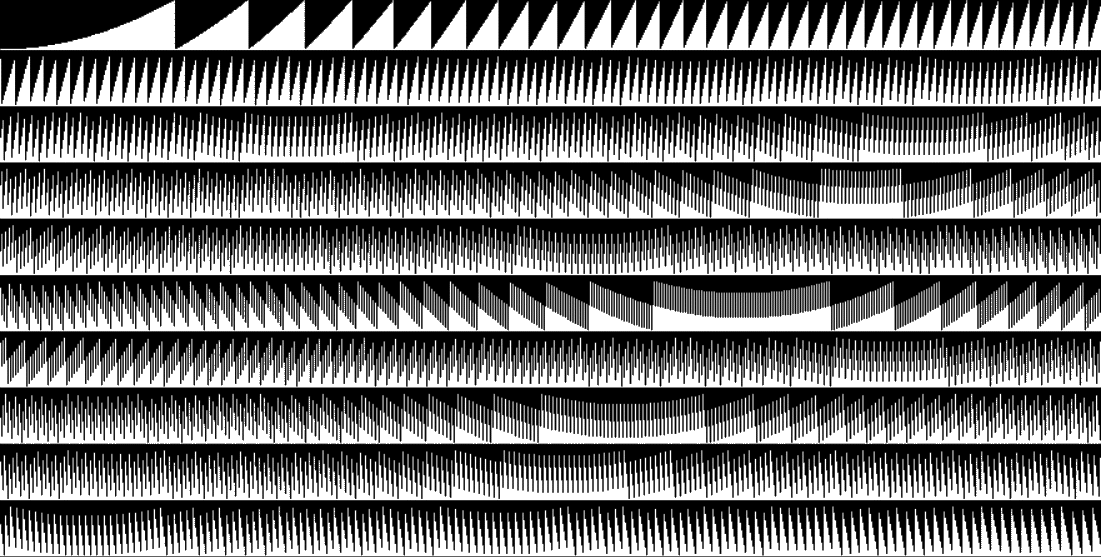
Final quadruple triangular digits in b10 (x-axis / 2)
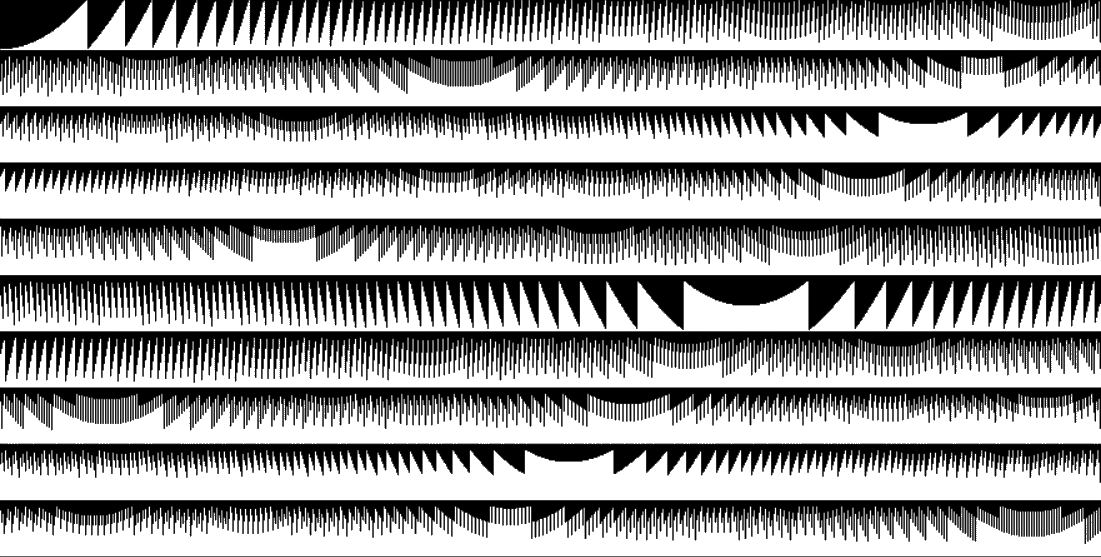
Final quadruple triangular digits in b10 (x-axis / 8)
Note how, as the length of the final digits rises, you need to compress the x-axis more and more to see the symmetries. But integer sequences obviously don’t end with the counting numbers and triangulars. What about squares and powers of n? What about primes and Fibonacci numbers? Here’s the final two digits of the squares — 1, 4, 9, 16, 25, 49, 64, 81, 100, 121, 144, 169… — in b10:
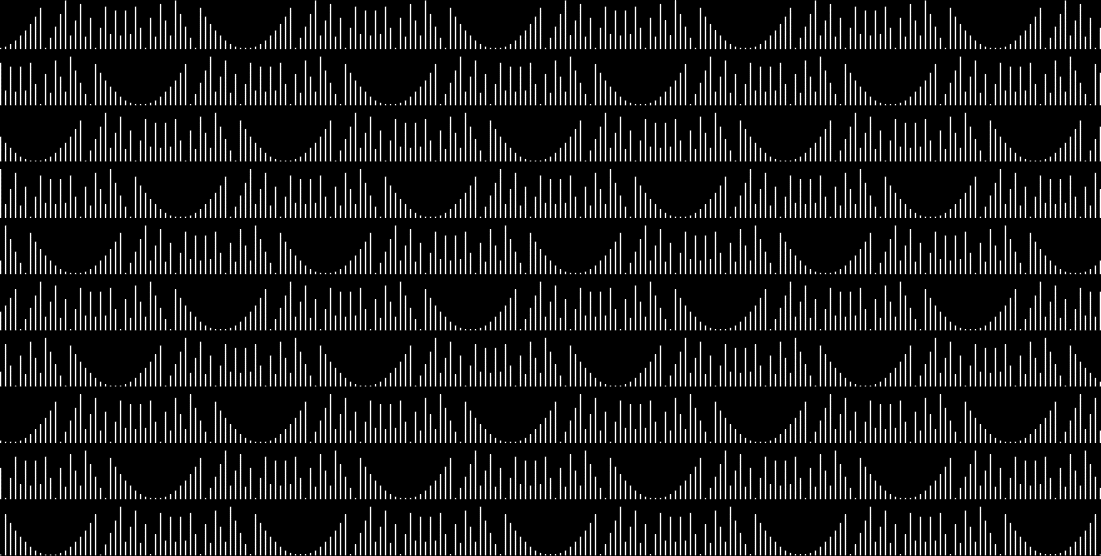
Final two digits of the squares in b10
It’s reminiscent of the triangular numbers (so are the final-digit graphs for other polygonal numbers). So what about the powers of 2? That’s 2, 4, 8, 16, 32, 64, 128, 256, 512, 1024… Here’s the graph for final single digits of 2^p in b10:
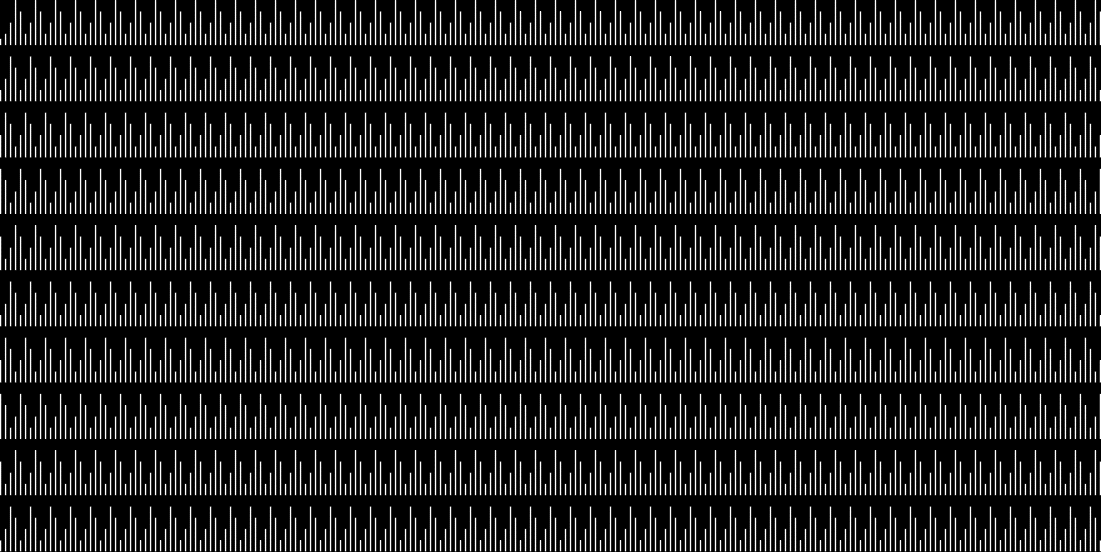
Final single digits of 2^p in b10
This time there’s repetition, but not symmetry. Here’s the graph for final double digits, or 2-digits, of 2^p in b10:
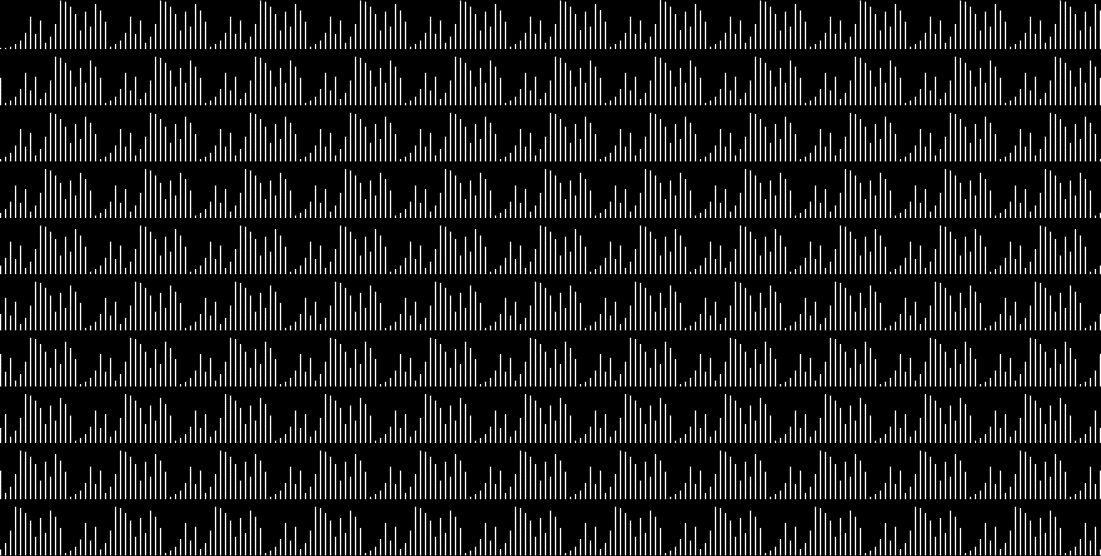
Final 2-dig of 2^p in b10
Now the graph looks a little like a range of eroded mountains. Now try dig-4, the final four digits of 2^p in b10:
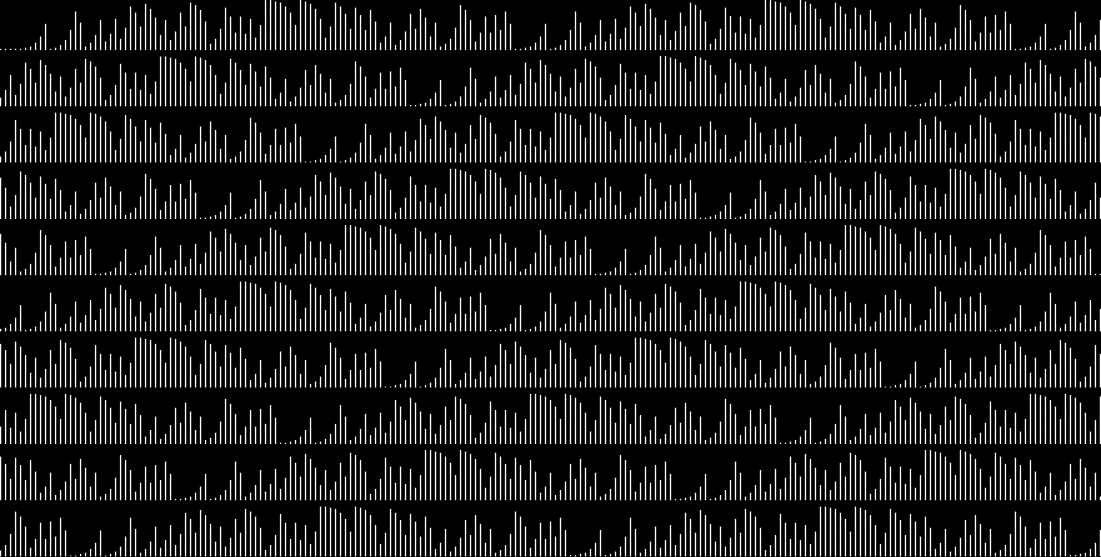
Final 4-dig of 2^p in b10
The patterns are similar to those of dig-2 and don’t need compressing in the x-axis. This similarity and lack of need for compression are true of any number of final digits in 2^p. The final 10 digits look like this:
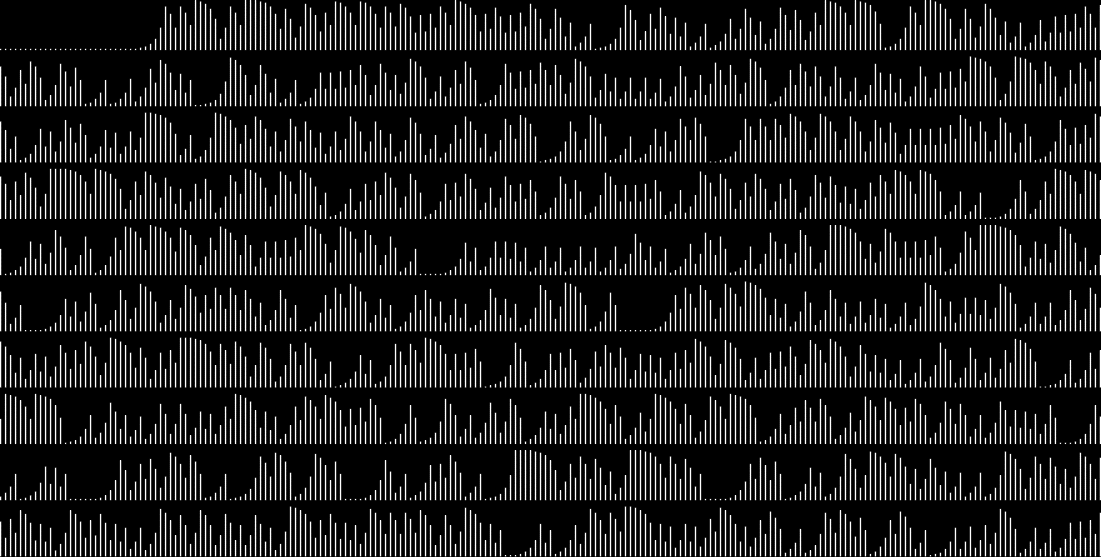
Final 10-dig of 2^p in b10
And the final 20 and 30 digits like this:
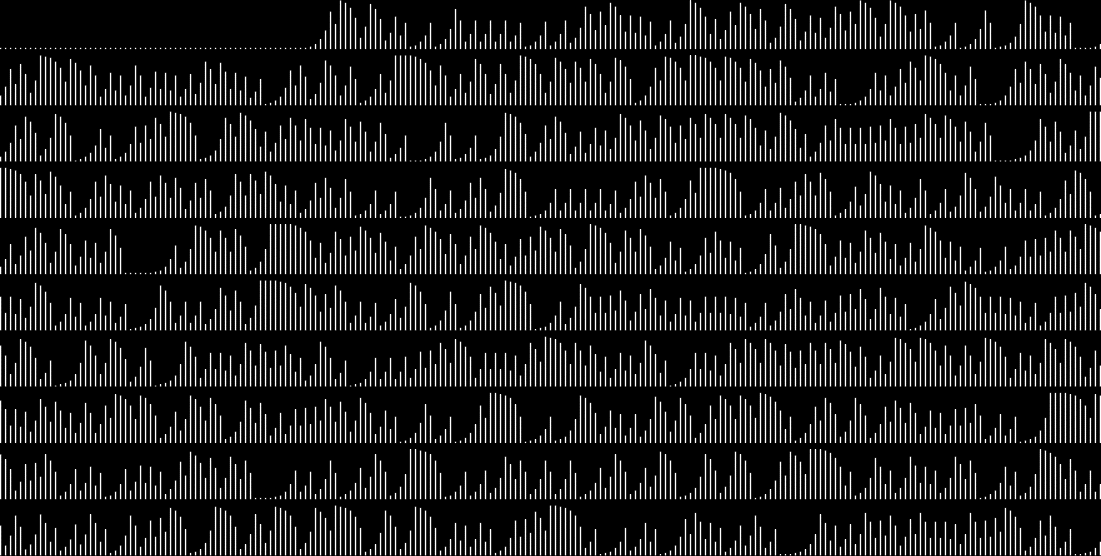
Final 20-dig of 2^p in b10
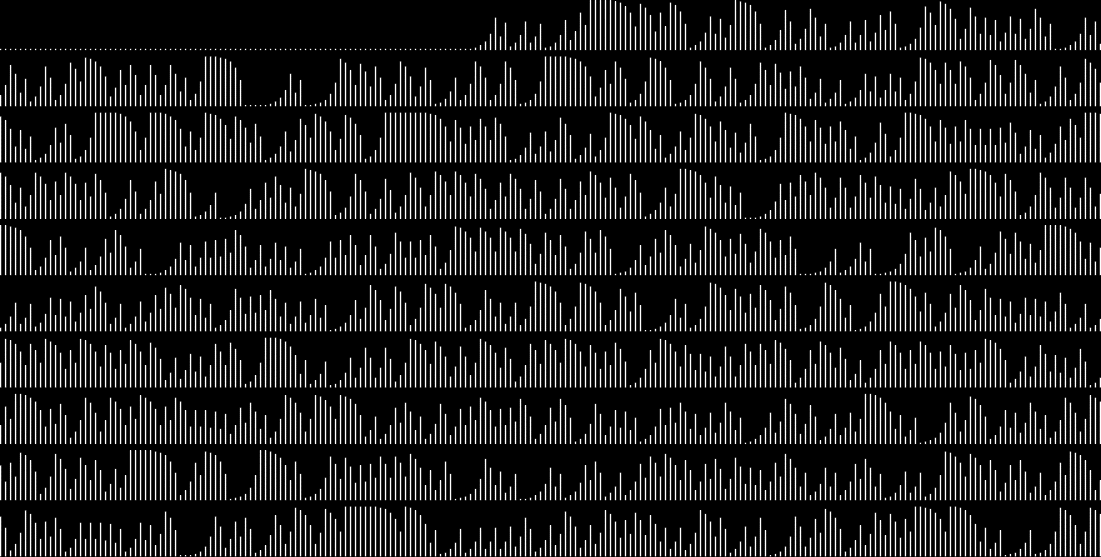
Final 30-dig of 2^p in b10
Powers don’t behave like polygonals: the finals are fractals. That is, the final digits create similar patterns at all scales: 1-dig, 2-dig, 10-dig, 100-dig, 1000-dig and so on. That’s true in other bases:
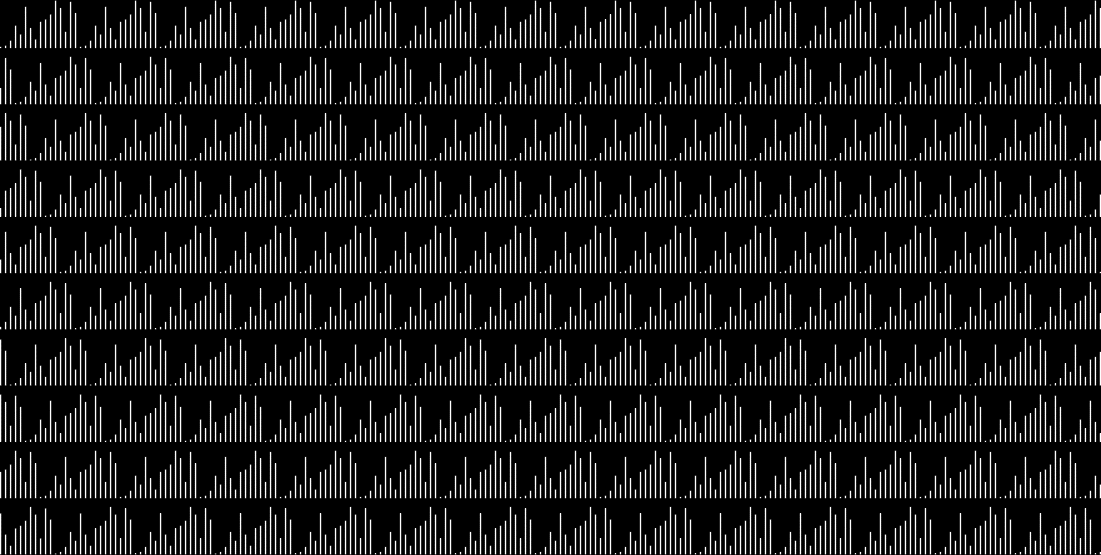
Final 5-dig of 3^p in b2
But a glimpse of b2 is all you’re going to get of other bases. There are other fish to fry — Fibonacci fish. The Fibonacci sequence, whose terms are equal to the sum of the previous two numbers (after seeding with “1, 1”), starts like this: 1, 1, 2, 3, 5, 8, 13, 21, 34, 55, 89, 144, 233, 377, 610, 987, 1597, 2584, 4181, 6765, 10946, 17711, 28657, 46368, 75025, 121393, 196418, 317811… And what about the graphs for final fib-digits? As you’ll see, final Fib-digits are fractal too. Indeed, Fibonacci final-graphs look like 2-power final-graphs (in a way, Fibonacci numbers are powers of φ = 1.6180339887498948482…). The patterns are similar at all scales. And they remind me of the skyline of a ruined city in an Oriental tale, with collapsed domes and crumbling minarets:
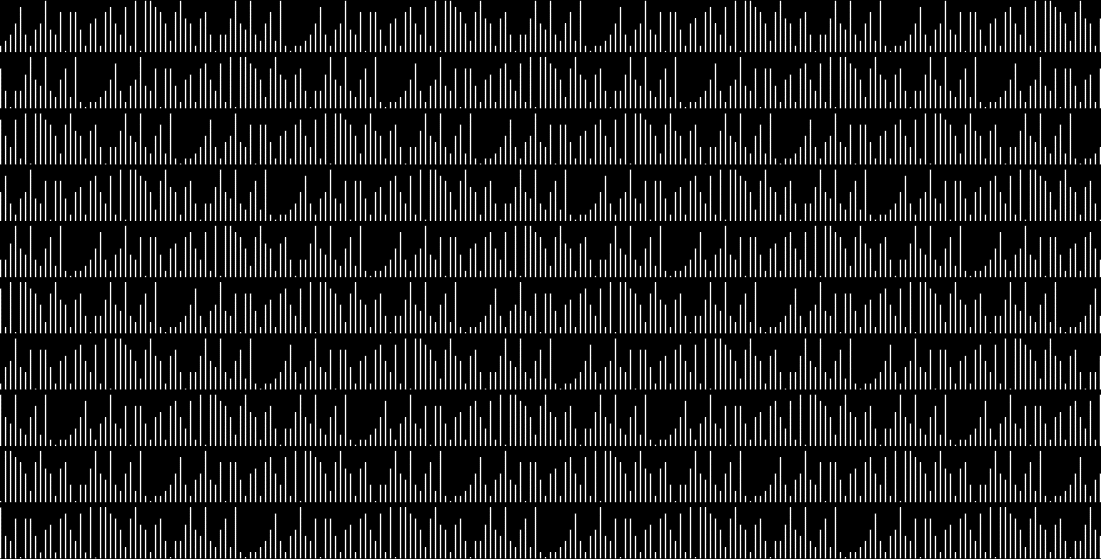
Final 1-dig of Fibonacci numbers in b10
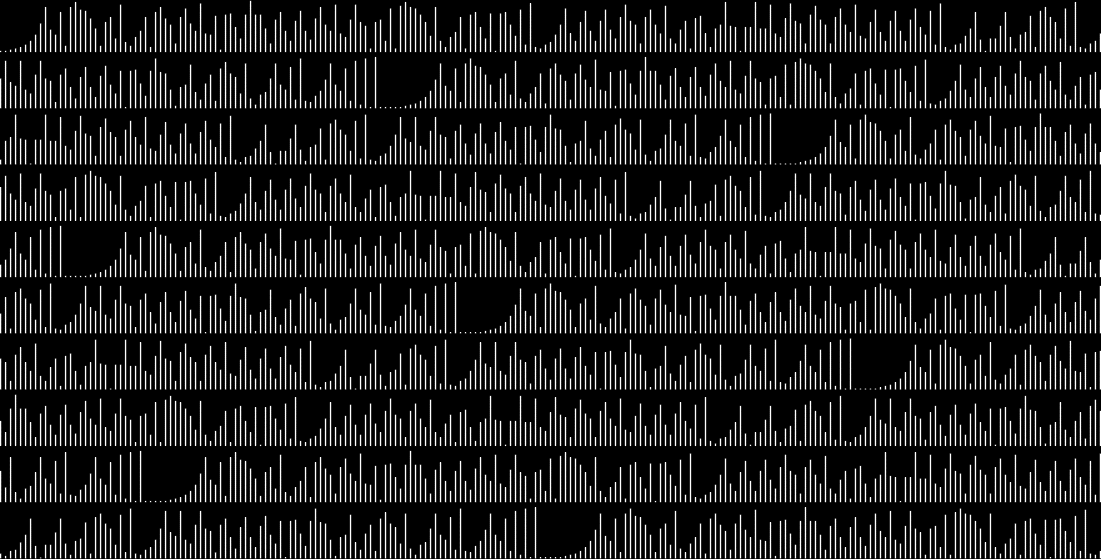
Final 2-fibdig in b10
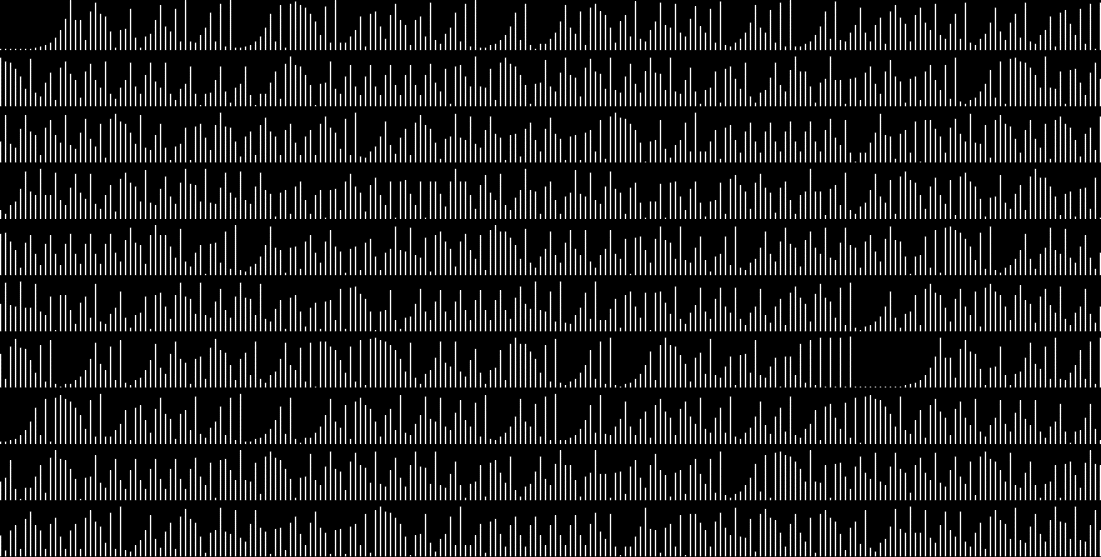
Final 3-fibdig in b10
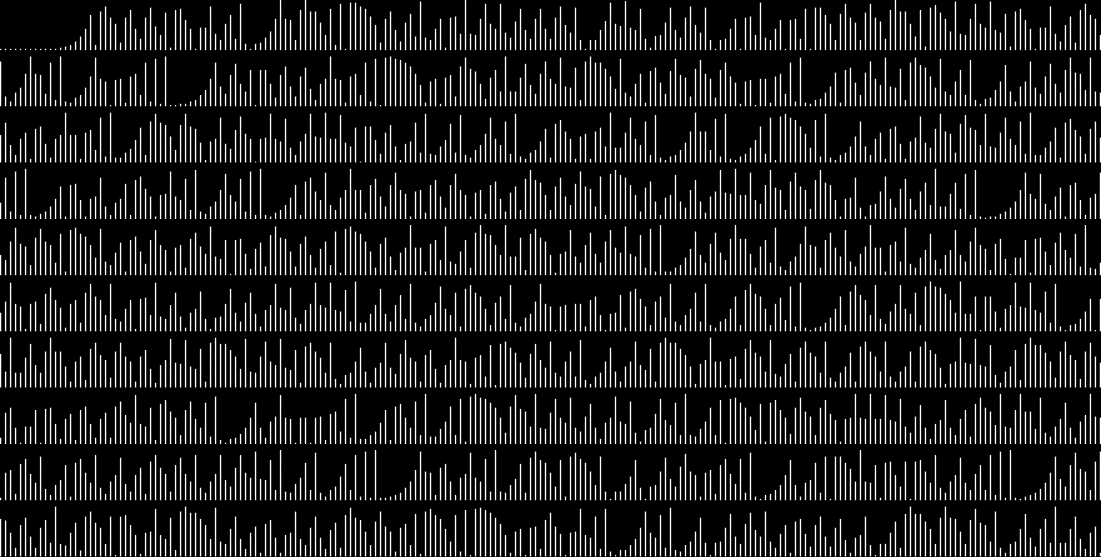
Final 4-fibdig in b10

Final 5-fibdig in b10
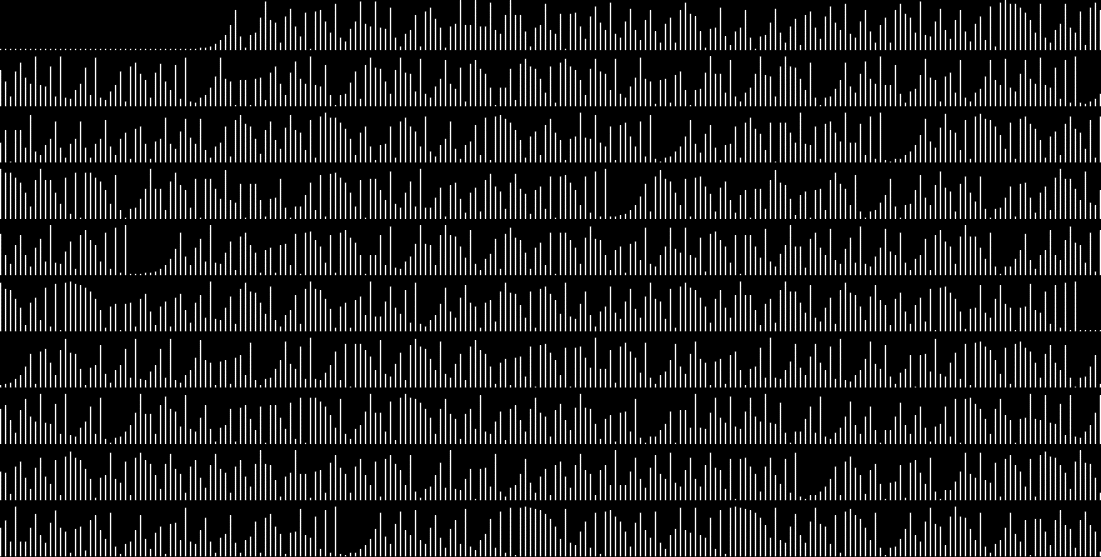
Final 10-fibdig in b10
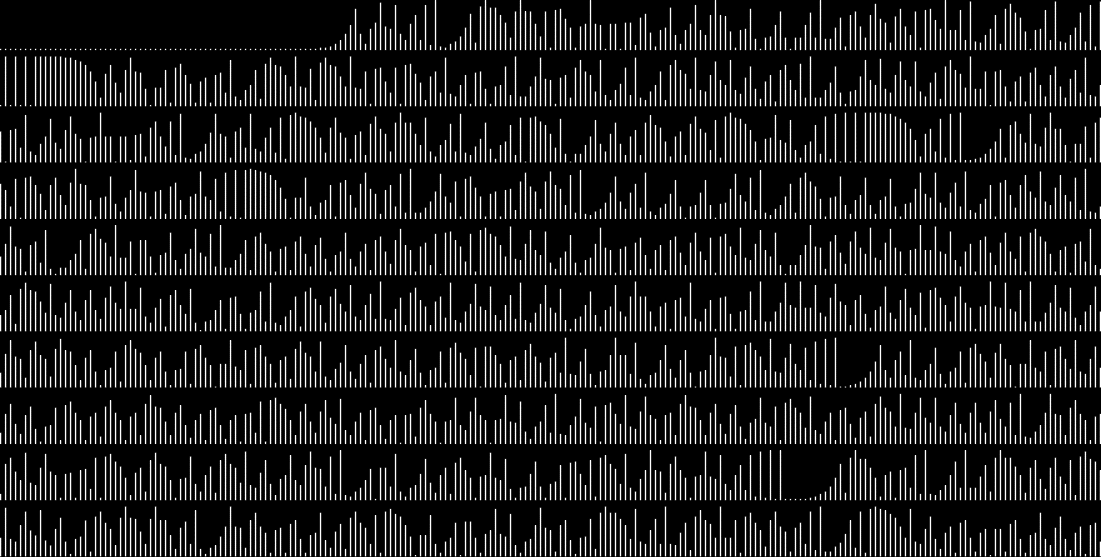
Final 15-fibdig in b10
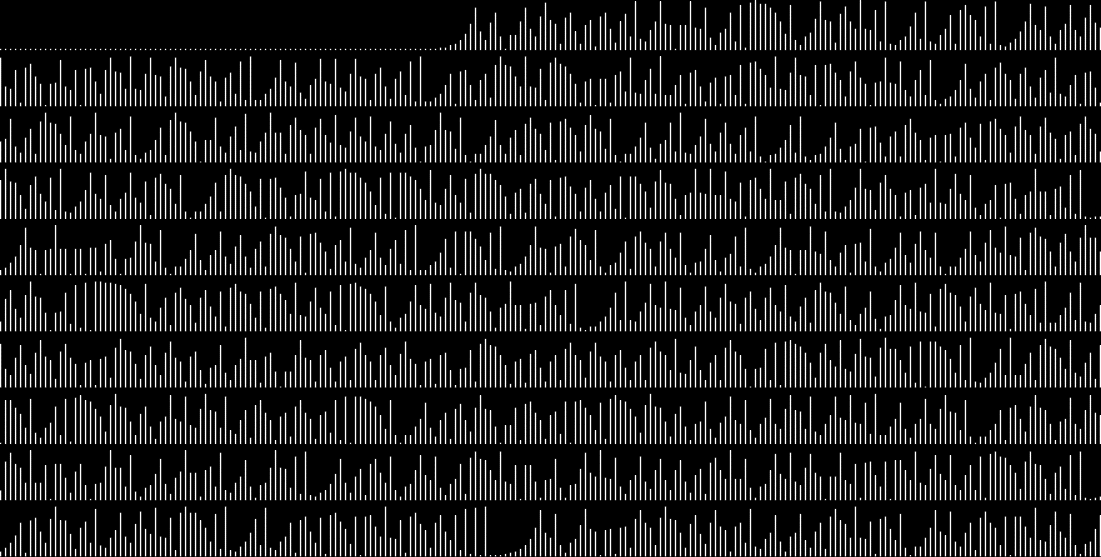
Final 20-fibdig in b10
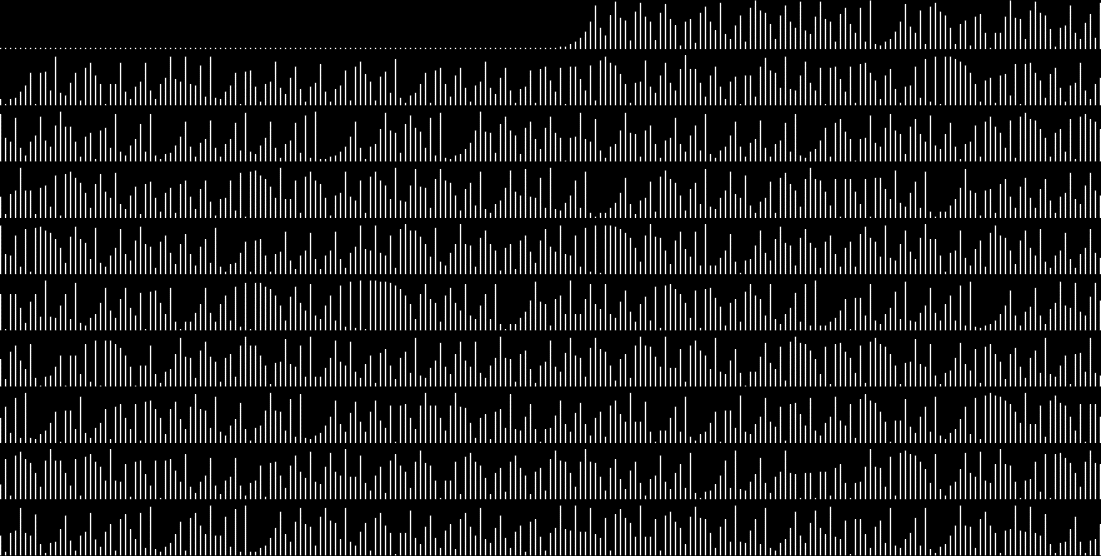
Final 25-fibdig in b10
So final fibdigs are fractal. But final prime digits aren’t:
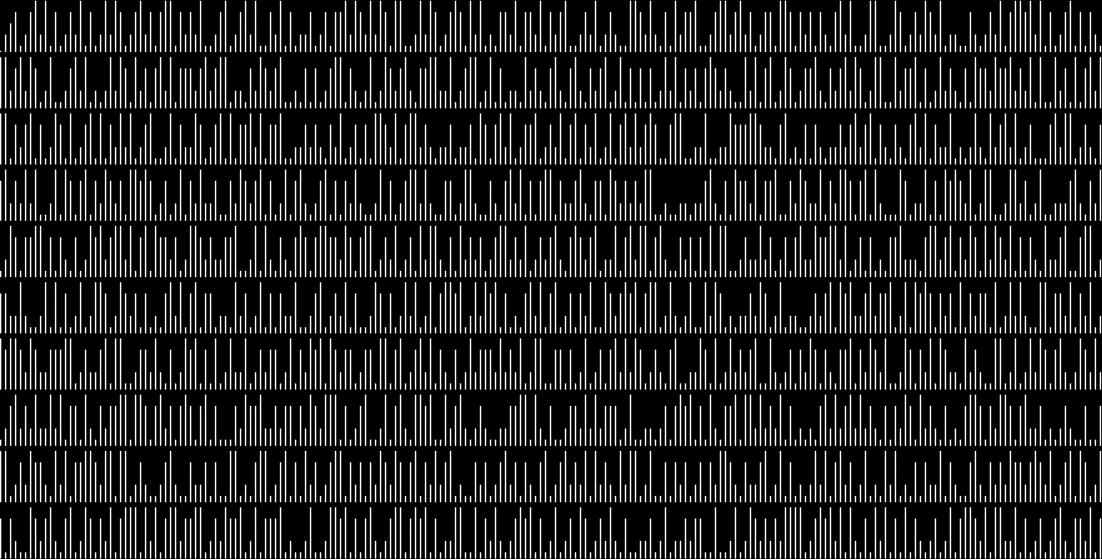
Final 1-digit of primes in b10
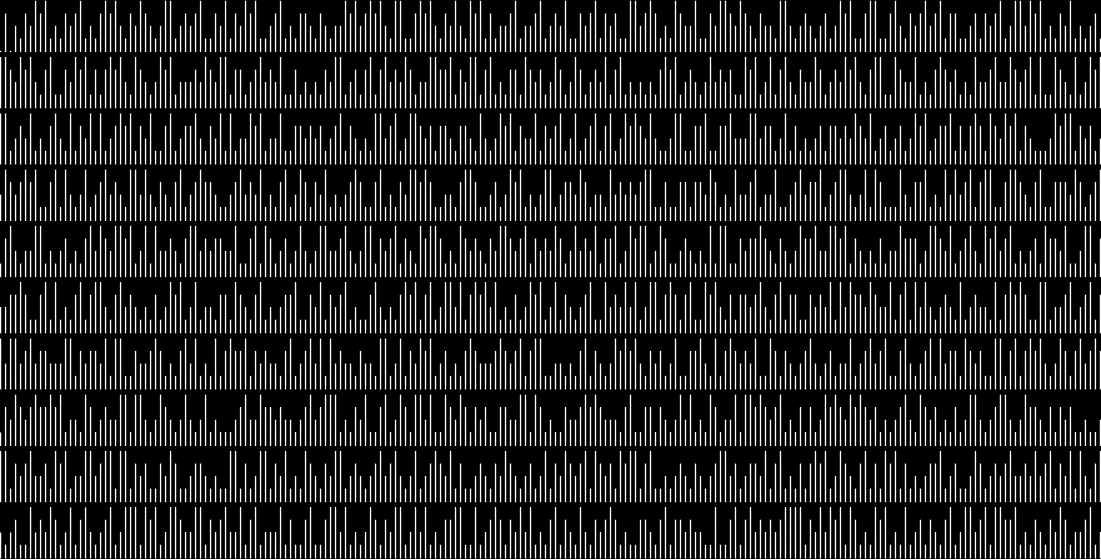
Final 1-digit of primes in b5
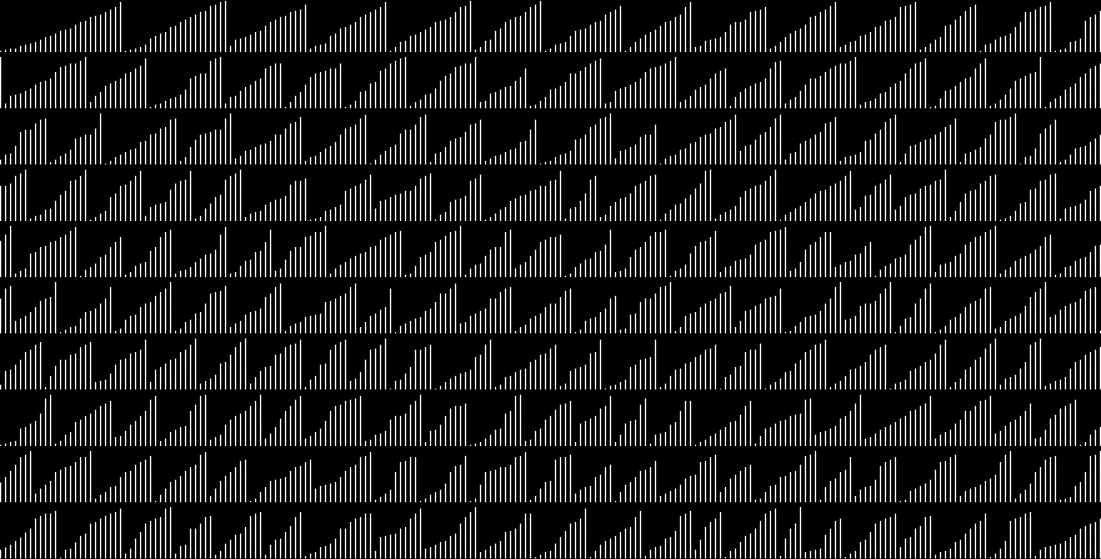
Final 2-digit of primes in b10
Primes aren’t final-digitally fractal like Fibonaccis and powers of 2. But there’s occasional symmetry in the prime fin-digs. I’ve marked some palindromic patterns in red and green:
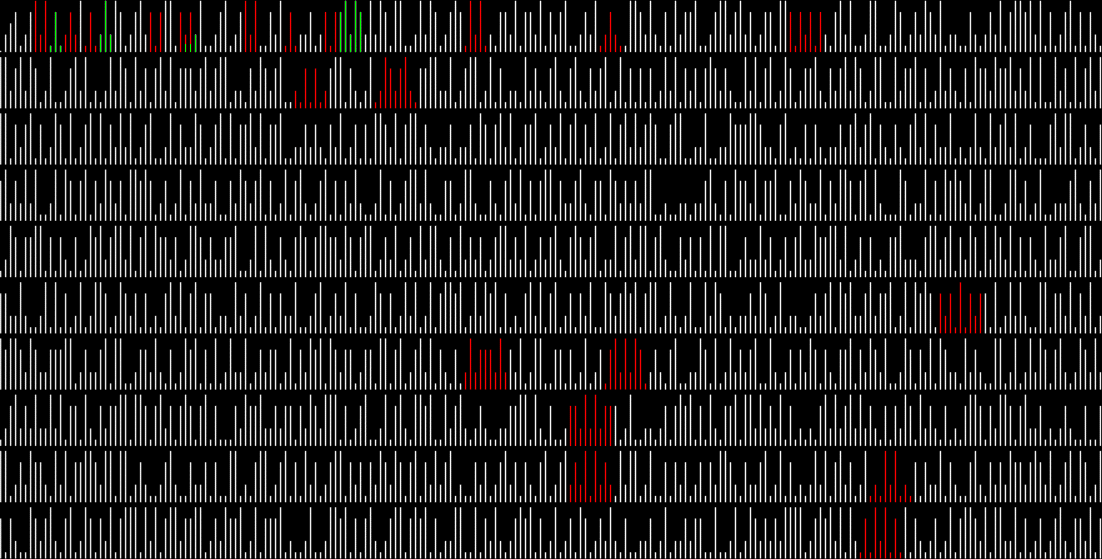
Palindromic patterns in final 1-digits of the primes in b10 (click for larger)
The palindromic patterns, or pal-pats, in the primes look like the altars of mathness in the triangulars. They’re created by digital palindromes like these:
19, 23, 29 (c=3)
347, 349, 353, 359, 367 (c=5)
937, 941, 947, 953, 967, 971, 977 (c=7)
1951, 1973, 1979, 1987, 1993, 1997, 1999, 2003, 2011 (c=9)
26423, 26431, 26437, 26449, 26459, 26479, 26489, 26497, 26501, 26513 (c=10)
Here are the first few pal-pats in the primes (note that 157, 163, 167 and 163, 167, 173 overlap):
2, 3, 5, 7, 11, 13, 17, 19, 23, 29, 31, 37, 41, 43, 47, 53, 59, 61, 67, 71, 73, 79, 83, 89, 97, 101, 103, 107, 109, 113, 127, 131, 137, 139, 149, 151, 157, 163, 167, 173, 179, 181, 191, 193, 197, 199, 211, 223, 227, 229, 233, 239, 241, 251, 257, 263, 269, 271, 277, 281, 283, 293, 307, 311, 313, 317, 331, 337, 347, 349, 353, 359, 367, 373, 379, 383, 389, 397, 401, 409, 419, 421, 431, 433, 439, 443, 449, 457, 461, 463, 467, 479, 487, 491, 499, 503, 509, 521, 523, 541, 547, 557, 563, 569, 571, 577, 587, 593, 599, 601, 607…
And are there palindromes among the final 2-digits, 3-digits and higher n-digits of the primes in different bases? Yes, you can easily find some. But I haven’t put them on a graph yet:
Base 10 (2-dig)
58789, 58831, 58889 (c=3)
286873, 286927, 286973 (c=3)
360649, 360653, 360749 (c=3)
404851, 404941, 404951 (c=3)
590437, 590489, 590537 (c=3)
623071, 623107, 623171 (c=3)
651517, 651587, 651617 (c=3)
Base 6 (2-dig)
300335, 300401, 300441, 300501, 300535 (c=5) (23459 to 23531 in base 10)
1030255, 1030331, 1030351, 1030431, 1030455 (c=5) (50651 to 50723 in b10)
1140451, 1140501, 1140521, 1141001, 1141051 (c=5) (59791 to 59863 in b10)
1402451, 1402545, 1403031, 1403045, 1403051 (c=5) (78367 to 78439 in b10)
1435431, 1435451, 1435505, 1435551, 1440031 (c=5) (82891 to 82963)
2400505, 2401001, 2401015, 2401101, 2401105 (c=5) (124601 to 124673)
2442235, 2442311, 2442351, 2442411, 2442435 (c=5) (130127 to 130199)
2444215, 2444225, 2444311, 2444325, 2444415 (c=5) (130547 to 130619)
2533105, 2533121, 2533215, 2533221, 2533305 (c=5) (136769 to 136841)
Base 4 (3-dig)
20013013, 20013133, 20020013 (c=3) (33223 to 33287 in base 10)
21031111, 21031303, 21032111 (c=3) (37717 to 37781)
22310011, 22310333, 22311011 (c=3) (44293 to 44357)
33030121, 33031001, 33031121 (c=3) (62233 to 62297)
102031333, 102032131, 102032333 (c=3) (74623 to 74687)
110013121, 110013311, 110020121 (c=3) (82393 to 82457)
Base 3 (3-dig)
112121020012, 112121021211, 112121022021, 112121100211, 112121101012 (c=5) (287393 to 287501 in base 10)
202002212002, 202002212101, 202002220001, 202002221101, 202010000002 (c=5) (395741 to 395849)
1001012111212, 1001012112202, 1001012121022, 1001012121202, 1001012122212 (c=5) (555143 to 555251)
1010112112012, 1010112112201, 1010112120222, 1010112121201, 1010112200012 (c=5) (601079 to 601187)
1011202211211, 1011202212212, 1011202220022, 1011202221212, 1011202222211 (c=5) (625369 to 625477)
Base 2 (5-dig)
101110001111101, 101110010000111, 101110010001001, 101110010100111, 101110010111101 (c=5) (23677 to 23741 in base 10)
10000001000111101, 10000001001011001, 10000001001110001, 10000001001111001, 10000001001111101 (c=5) (66109 to 66173)
10111100110011011, 10111100110011111, 10111100110111001, 10111100110111111, 10111100111011011 (c=5) (96667 to 96731)
11010000111110001, 11010001000001101, 11010001000011001, 11010001000101101, 11010001000110001 (c=5) (106993 to 107057)
And I conjecture that you’ll get palindromes for any number of final digits in all bases. And can these palindromes be of arbitrary length? Again, I conjecture so. There are infinitely many primes and very rare patterns can occur infinitely often in an infinite set of numbers.
Post-Performative Post-Scriptum
Here’s Dan Seagrave’s classic cover for Morbid Angel’s Altars of Madness (1989):

• Morbid Angel — official website
• Dan Seagrave — official website
Elsewhere Other-Accessible…
• Formulas Focal to the Flesh — a pre-previous post paronomasizing the title of a Morbid-Angel album…
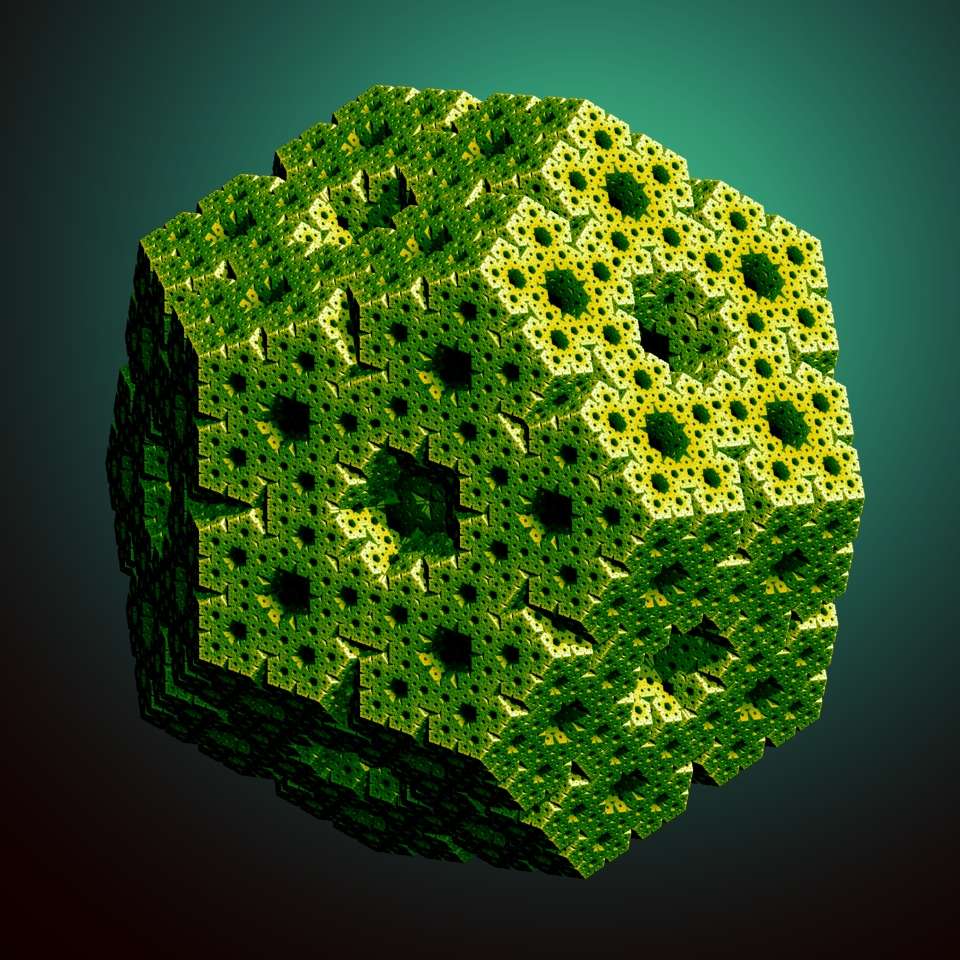
A fractal dodecahedron by Jos Leys, a Belgian mathemartist (source here)


