Worms in Terms of Perms

If you go back far enough, we’re all worms. All us animals, that is. But in a subtler sense, all life is vermiform — animals, plants, fungi, bacteria. DNA is a kind of worm, a string of chemicals encoding the recipe for an animal, plant, fungus or bacterium. And the worms of DNA can be turned into numbers, just as some numbers can be turned into worms:

3/7 = 0·0.428571428571428571428571…
154/183 = 0.841530054644808743169398907…
√2 = 1.414213562373095048801688…
π = 3.1415926535897932384626433…

Those are decimals, but there’s another kind of worm for such numbers. It’s called a continued fraction:

contfrac(3/7) = [0,2,3]
contfrac(154/183) = [0,1,5,3,4,2]
contfrac(√2) = [1,2,2,2,2,2…]
contfrac(π) = [3, 7, 15, 1, 292, 1, 1, 1, 2, 1, 3, 1, 14, 2, 1, 1, 2, 2, 2, 2, 1, 84, 2, 1, 1, 15…]

Extracting and enacting continued fractions is very simple. Here’s the extracting:

3/7 → 1/(3/7) = 7/3 = 2+1/3 – 2 = 1/3 → 1(1/3) = 3, ∴ contfrac(3/7) = [0,2,3]
154/183 → 1/(154/183) = 183/154 = 1 + 29/154 – 1 = 29/154 → 1/(29/154) = 154/29 = 5 + 9/29 – 5 = 9/29 → 1/(9/29) = 29/9 = 3 + 2/9 – 3 = 2/9 → 1/(2/9) = 9/2 = 4 + 1/2 – 4 = 1/2 → 1/(1/2) = 2 – 2 = 0, ∴ contfrac(154/183) = [0,1,5,3,4,2]

And here’s the enacting:

[0,2,3] → 3 → 1/3 → 1/3 + 2 = 7/3 → 1/(7/3) = 3/7
[0,1,5,3,4,2] → 2 → 1/2 → 1/2 + 4 = 9/2 → 2/9 + 3 = 29/9 → 9/29 + 5 = 154/29 → 29/154 + 1 = 183/154 → 1/(183/154) = 154/183

Once you’ve got the worm of a continued fraction, you can perm the worm, as it were, generating different fractions like this (I’m dropping the initial [0,…] of the contfracs):

[2,3,4] = contfrac(13/30)
[2,4,3] → 13/29
[3,2,4] → 09/31
[3,4,2] → 09/29
[4,2,3] → 07/31
[4,3,2] → 07/30

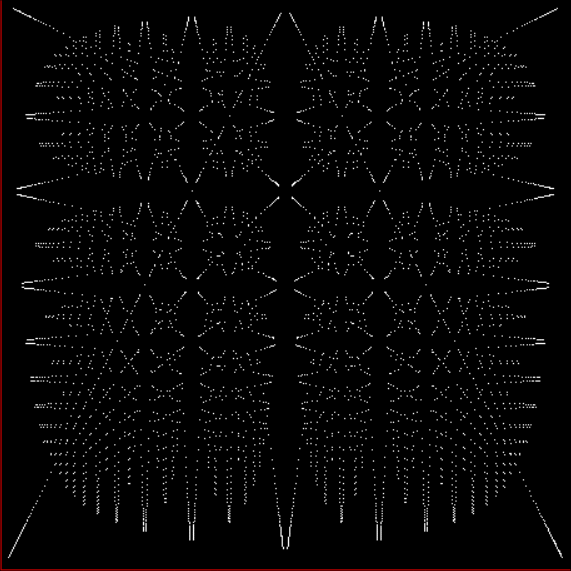
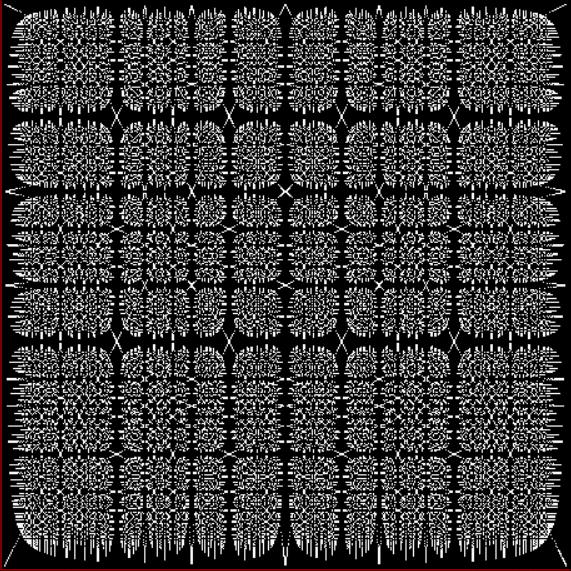
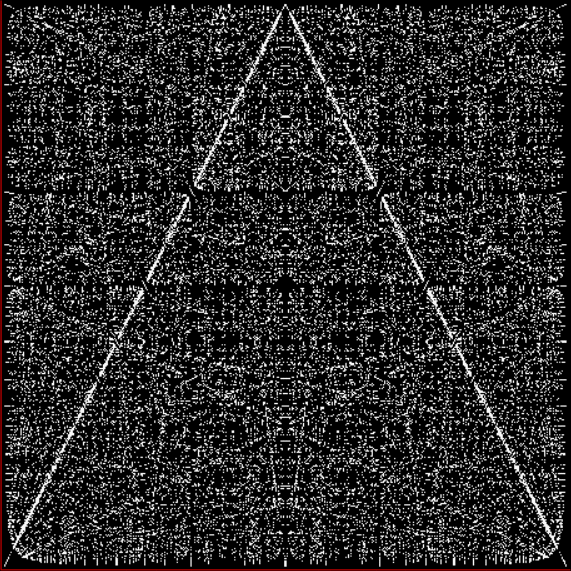
Reversing a continued fraction is a kind of permutation, so the fractal below represents one kind of worms in terms of perms:
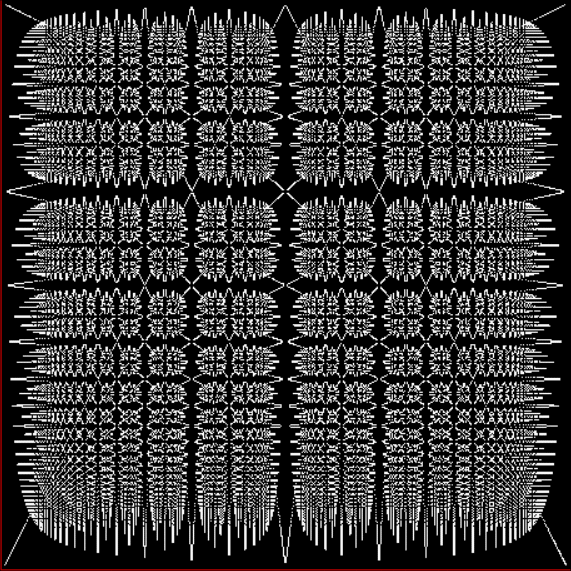
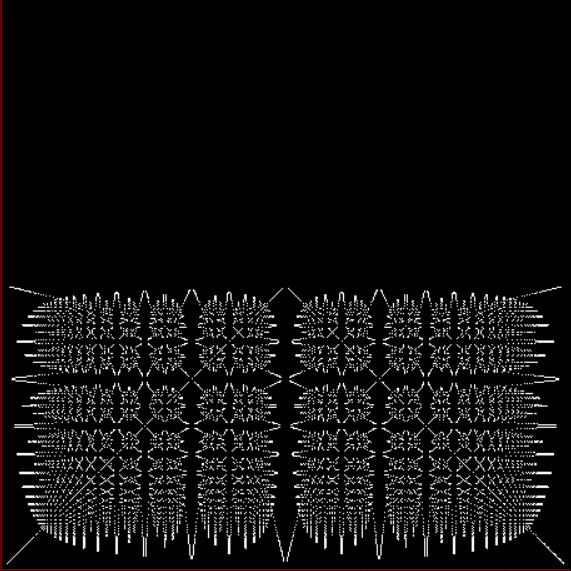
Variant of a limestone fractal or gryke fractal


I call that graph a fract-L, because it’s shaped like an L and the x axis represents the simplified fractions 1/2, 1/3, 2/3, 1/4, 3/4, 1/5, 2/5, 3/5…, while the y axis represents the fractions you get by reversing the continued fractions of 1/2, 1/3, 2/3…:

contfrac(1/2) = [2] → 1/2
contfrac(1/3) = [3] → 1/3
contfrac(2/3) = [1,2] → 1/3
contfrac(1/4) = [4] → 1/4
contfrac(3/4) = [1,3] → 1/4
contfrac(1/5) = [5] → 1/5
contfrac(2/5) = [2,2] → 2/5
contfrac(3/5) = [1,1,2] → 2/5
contfrac(4/5) = [1,4] → 1/5
contfrac(1/6) = [6] → 1/6
contfrac(5/6) = [1,5] → 1/6
contfrac(1/7) = [7] → 1/7
contfrac(2/7) = [3,2] → 3/7
contfrac(3/7) = [2,3] → 2/7
contfrac(4/7) = [1,1,3] → 2/7
contfrac(5/7) = [1,2,2] → 3/7
contfrac(6/7) = [1,6] → 1/7
contfrac(1/8) = [8] → 1/8
contfrac(3/8) = [2,1,2] → 3/8
contfrac(5/8) = [1,1,1,2] → 3/8
contfrac(7/8) = [1,7] → 1/8
contfrac(1/9) = [9] → 1/9
contfrac(2/9) = [4,2] → 4/9
contfrac(4/9) = [2,4] → 2/9
contfrac(5/9) = [1,1,4] → 2/9
contfrac(7/9) = [1,3,2] → 4/9
contfrac(8/9) = [1,8] → 1/9
[…]

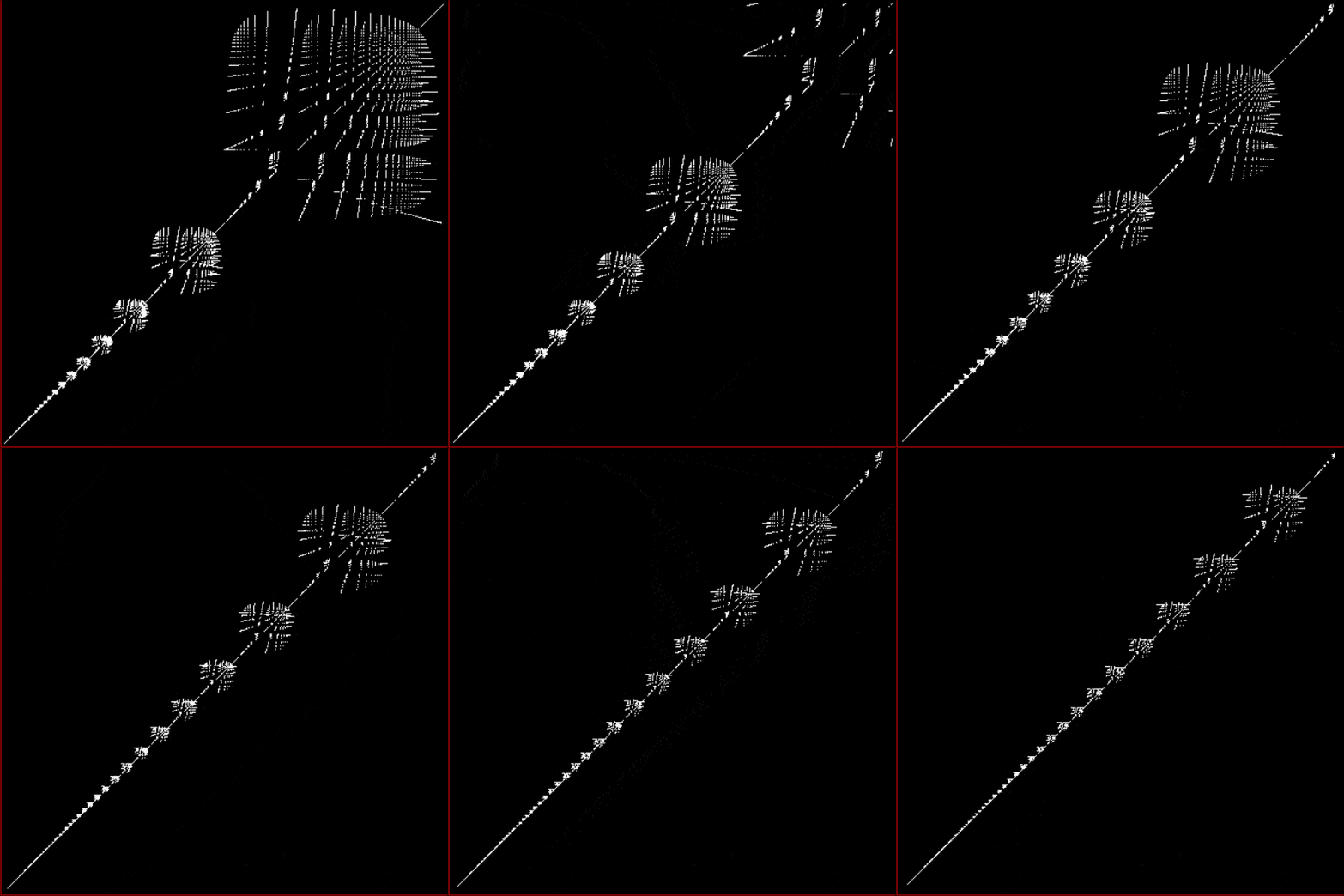
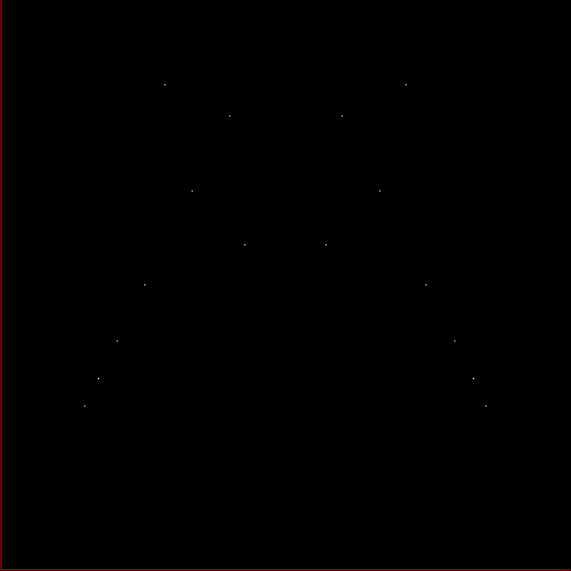
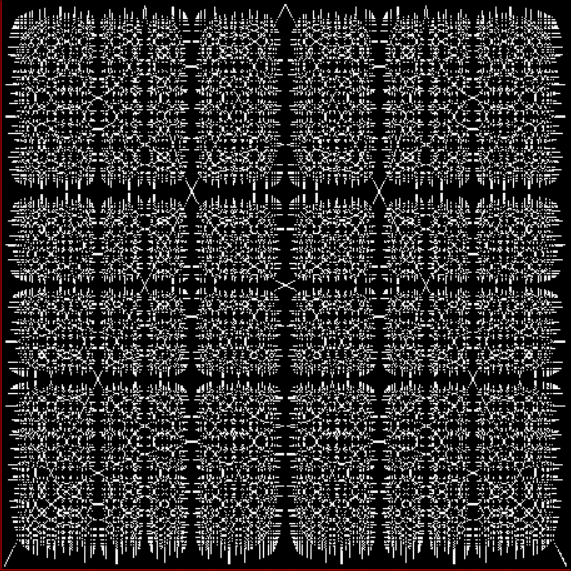
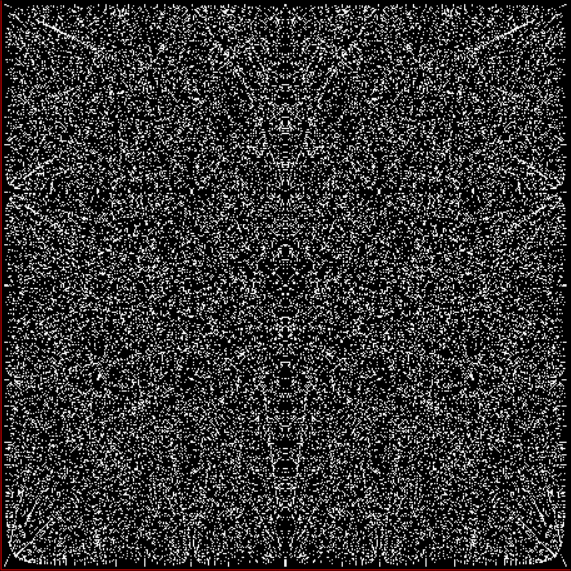
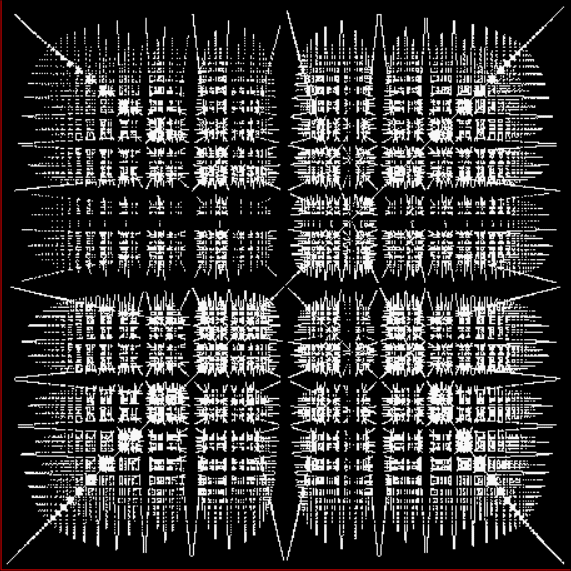
If you perm the worm in other ways, you get other shapes on the fract-L. I looked at continued fractions of fixed length, 4, 5 and 6, and permed them using one of the permutations of [1,2,3,4], [1,2,3,4,5] and [1,2,3,4,5,6]. Here’s a graph for fractions, a/b, and permed fractions, perm(a/b), where length(contfrac(a/b)) = 4:
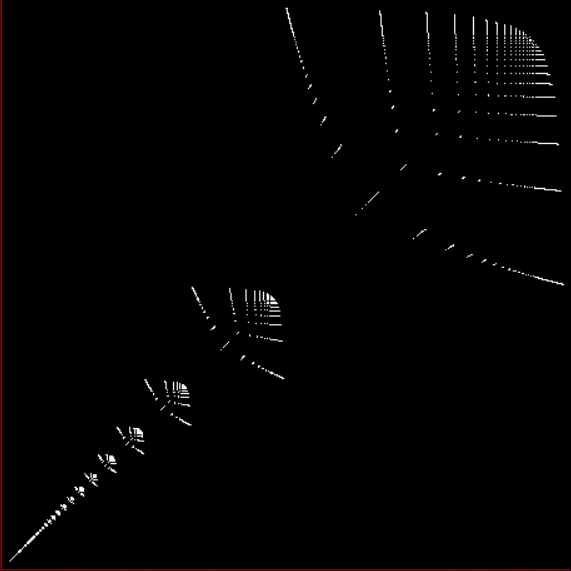
x = a/b when length(contfrac(a/b)) = 4, y = fraction from contfrac(a/b) permed with [1,3,2,4]


The x axis represents simplified fractions, a/b, when len(cf(a/b)) = 4. The y axis represents the fractions found by applying the perm [1,3,2,4] to contfrac(a/b). That is, the first number of the contfrac stays where it is, the third number moves to position 2, the second number moves to position 3 and the fourth number stays where it is. In short, you simply swap the middle two numbers of contfrac(a/b). Here’s an example:

contfrac(9/43) = [4,1,3,2] → [4,3,1,2] → 11/47, because contfrac(11/47) = [4,3,1,2]

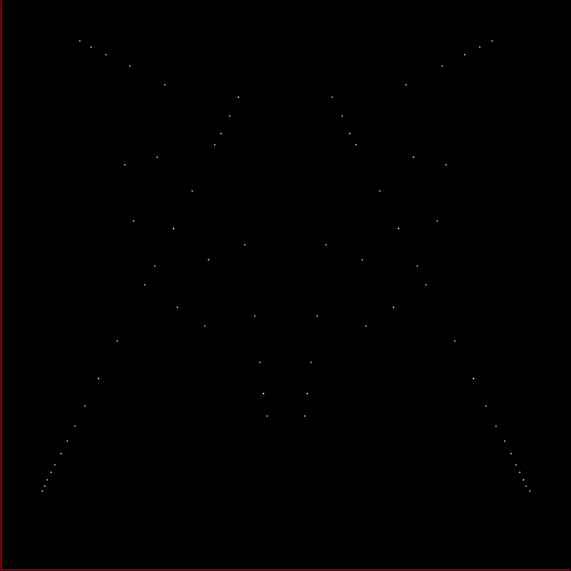
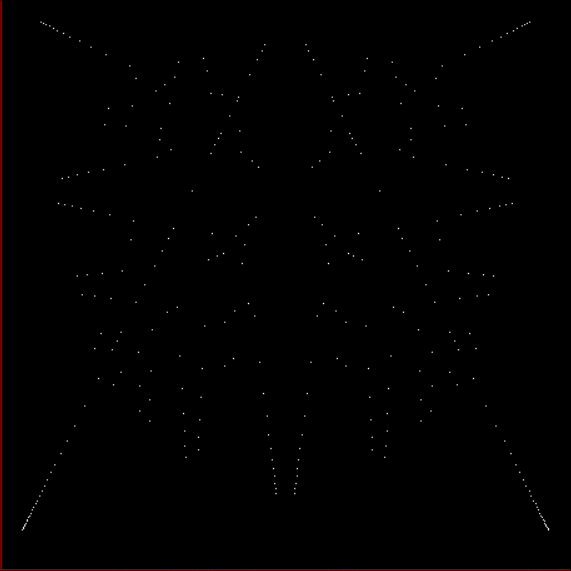
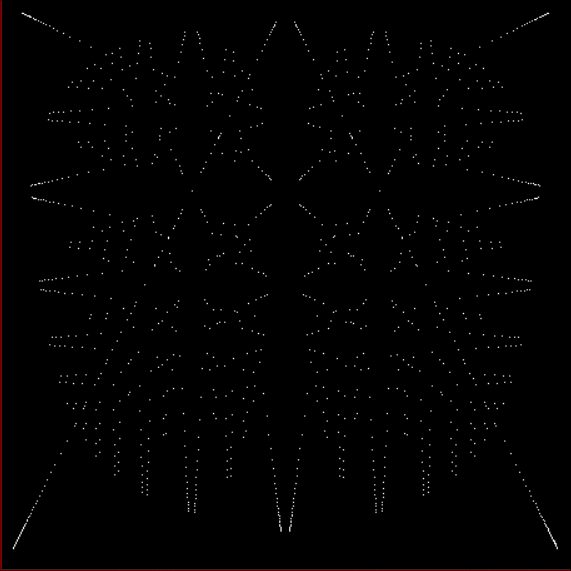
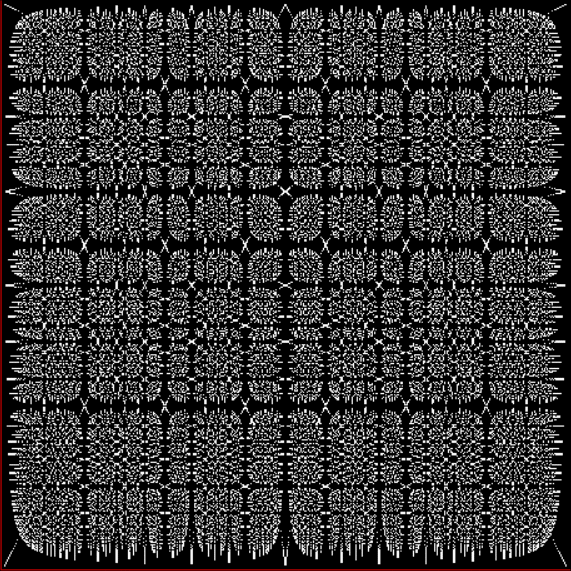
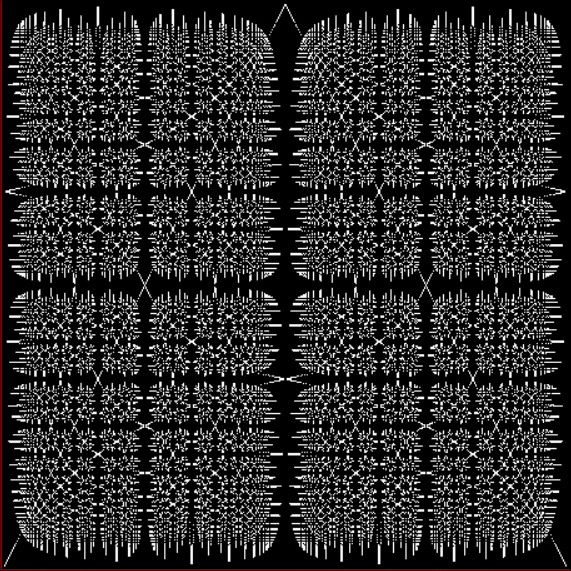
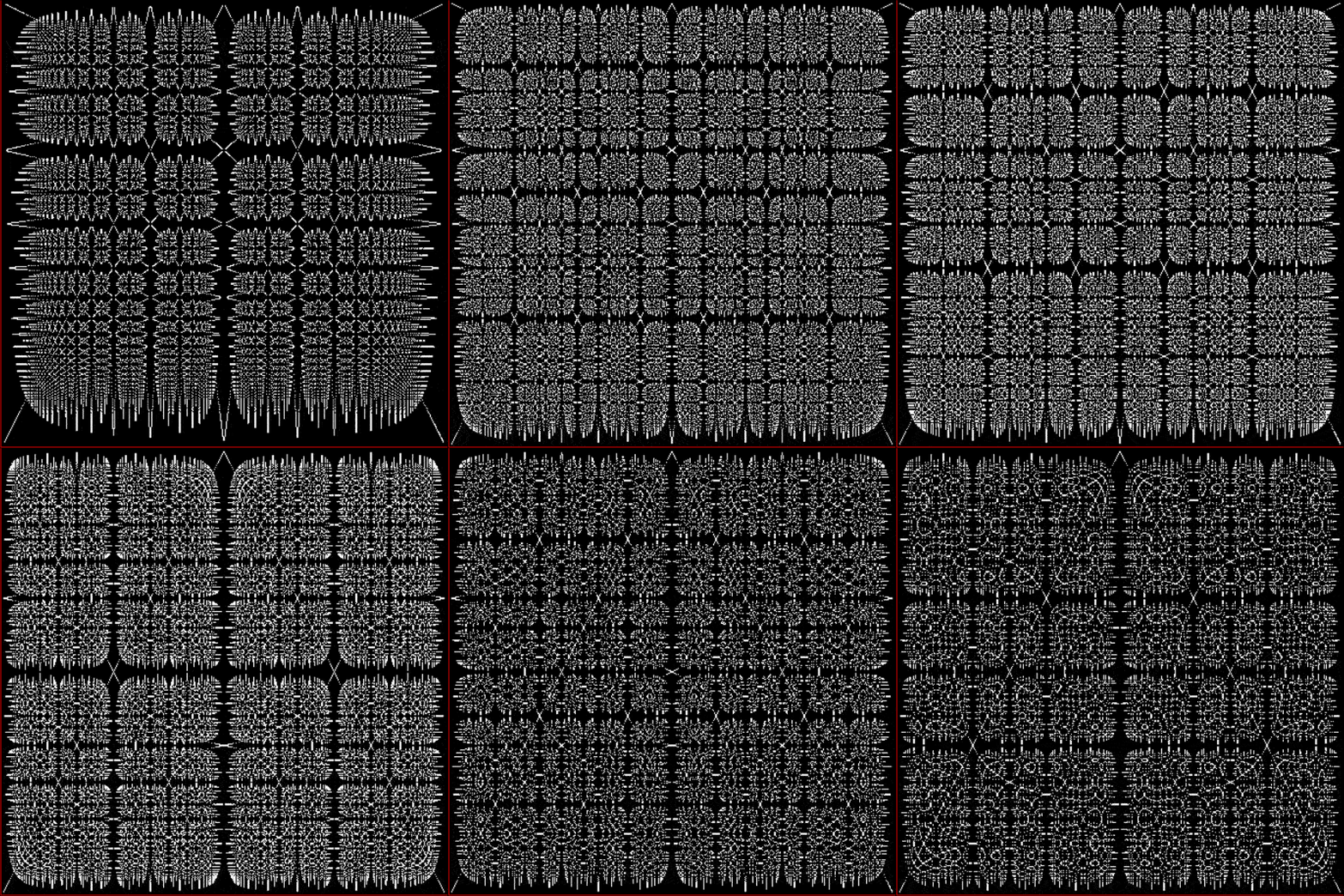
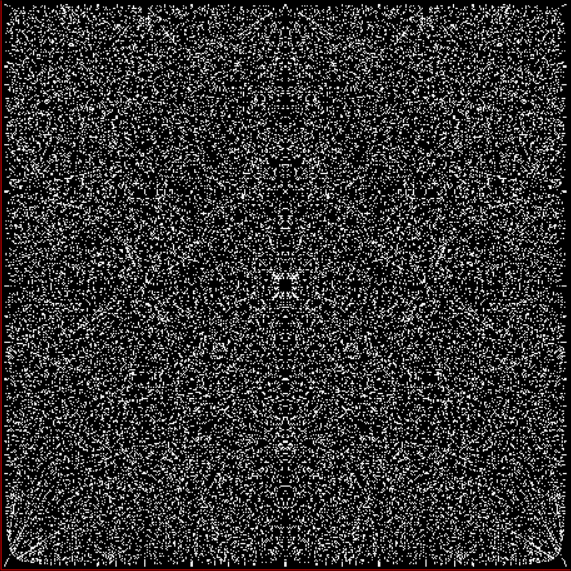
Here are more fract-Ls representing worms in terms of perms:
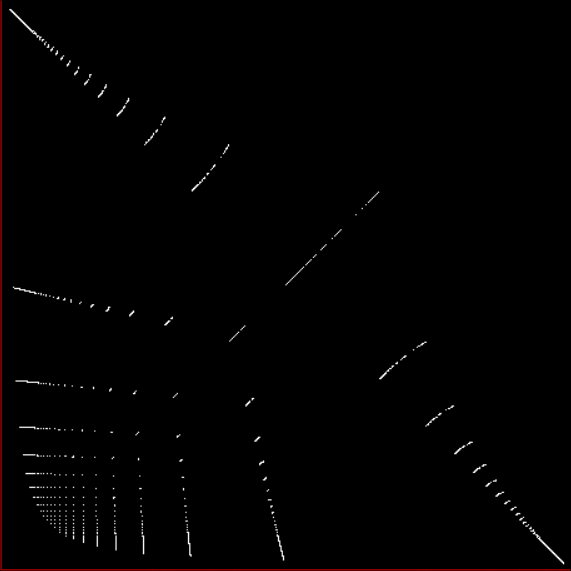
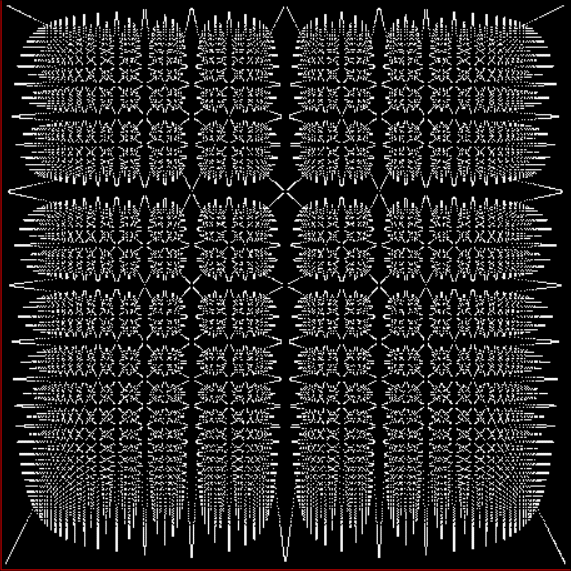
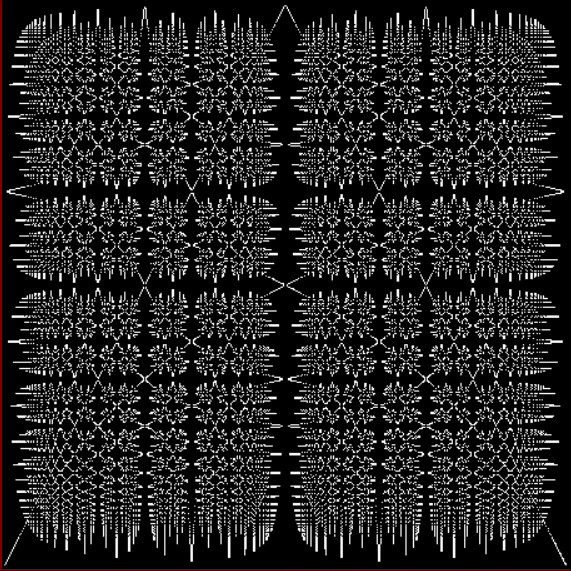
fract-L for contfrac(a/b) permed by [2,1,3,4]
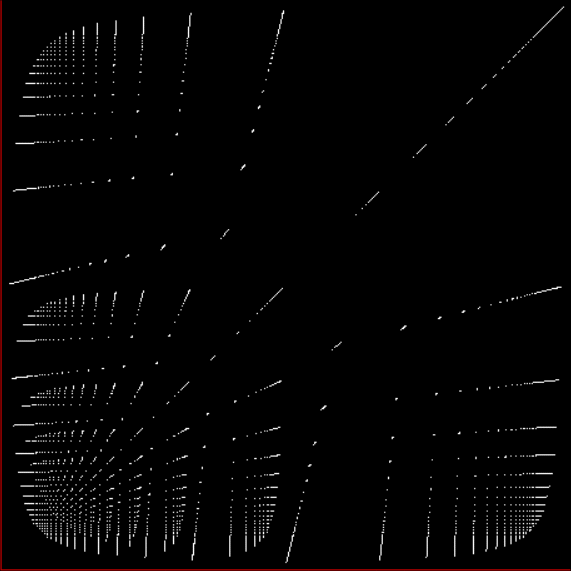

fract-L for contfrac(a/b) permed by [3,2,1,4]
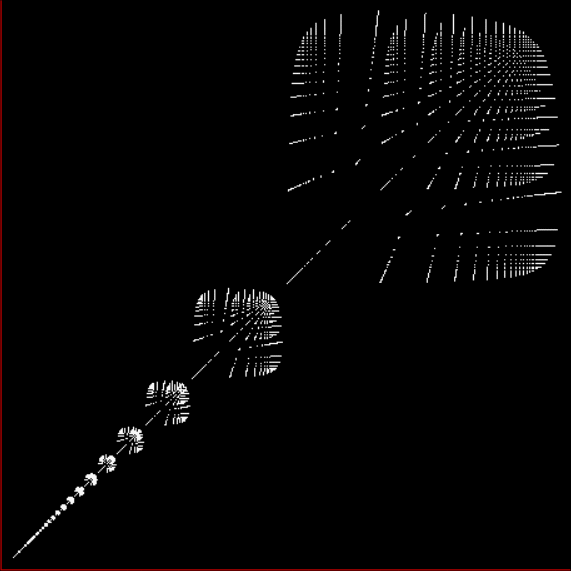

fract-L for contfrac(a/b) permed by [1,4,2,3,5] (i.e. a/b where len(contfrac(a/b)) = 5)
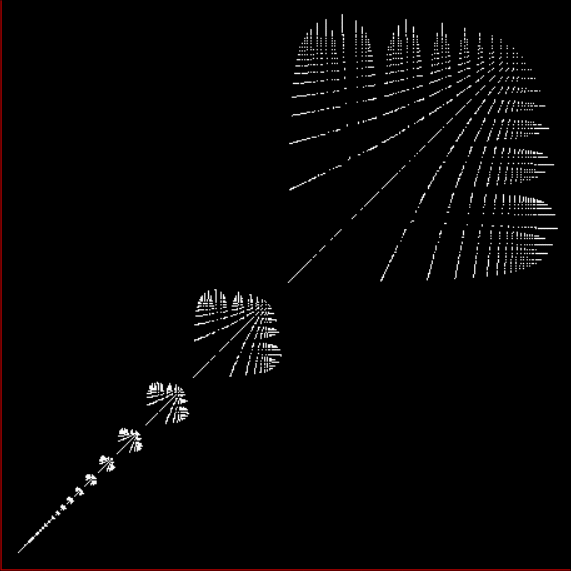

fract-L for contfrac(a/b) permed by [1,5,3,4,2]
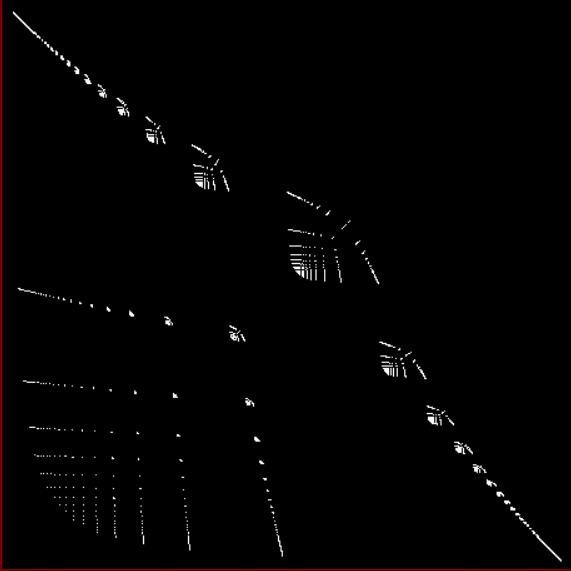

fract-L for contfrac(a/b) permed by [2,1,4,3,5]
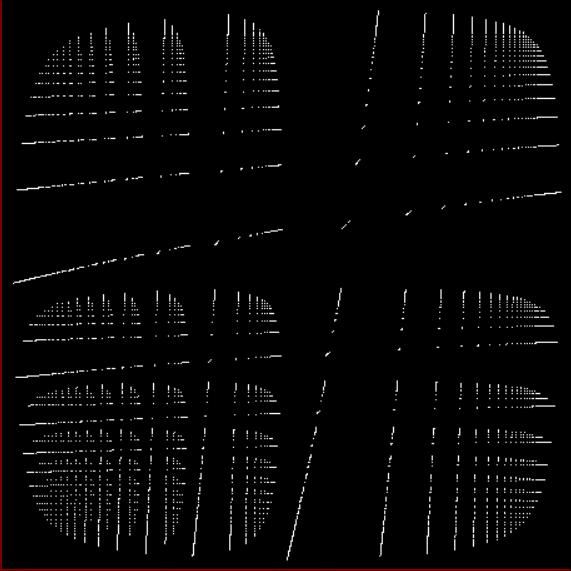

fract-L for contfrac(a/b) permed by [3,4,1,2,5]
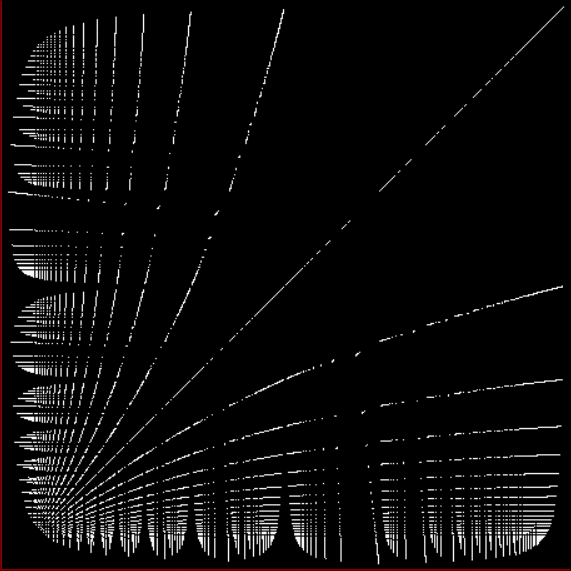

fract-L for contfrac(a/b) permed by [4,2,3,1,5]
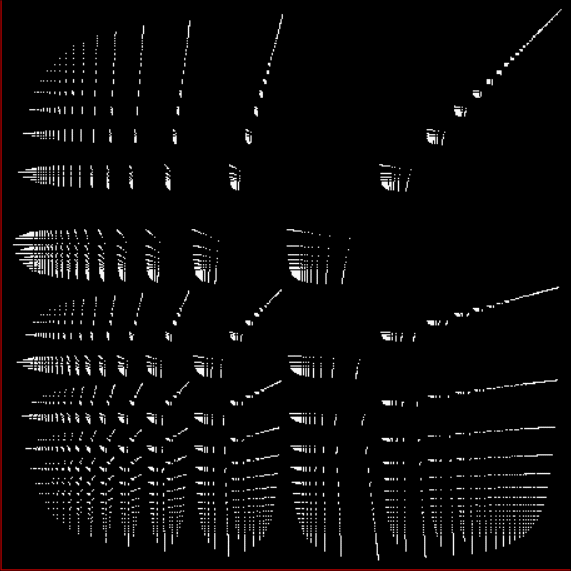

fract-L for contfrac(a/b) permed by [4,2,5,3,1]
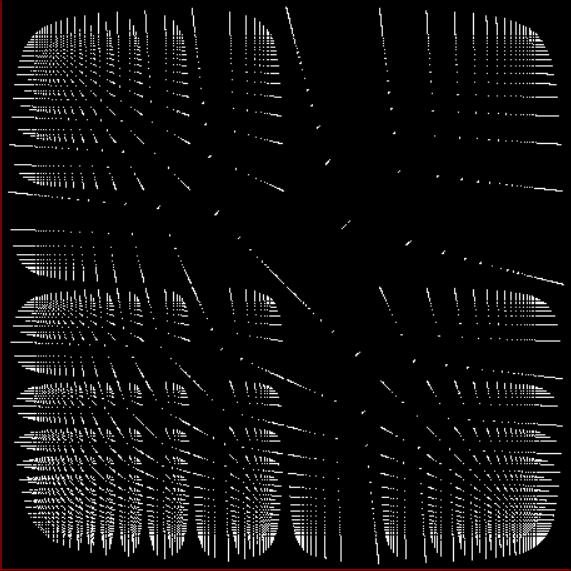

fract-L for contfrac(a/b) permed by [4,3,2,1,5]
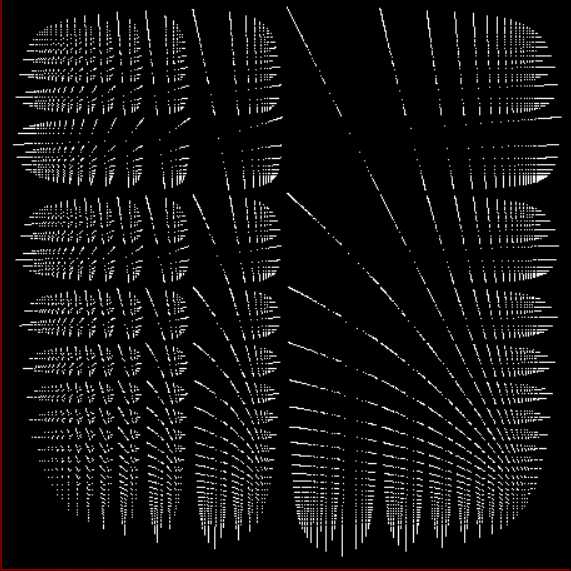

fract-L for contfrac(a/b) permed by [5,3,4,2,1]
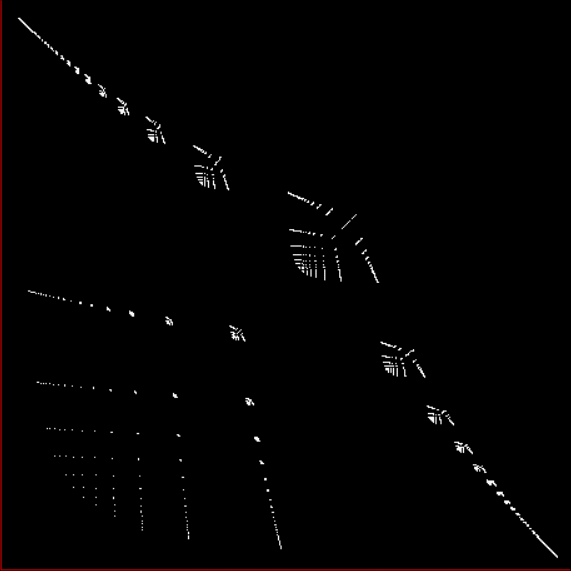

fract-L for contfrac(a/b) permed by [2,1,4,3,5,6] (i.e. a/b where len(contfrac(a/b)) = 6)
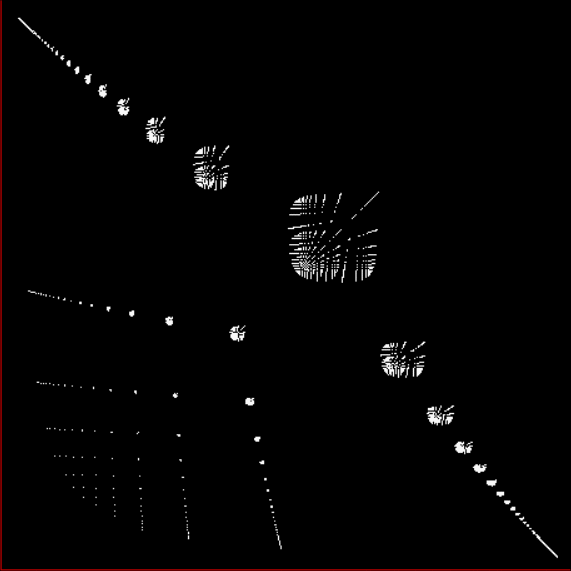

fract-L for contfrac(a/b) permed by [2,1,5,4,3,6]
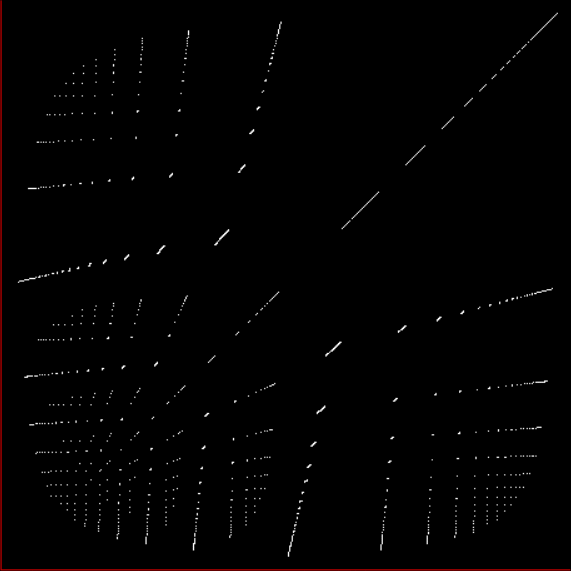

fract-L for contfrac(a/b) permed by [3,2,1,4,5,6]
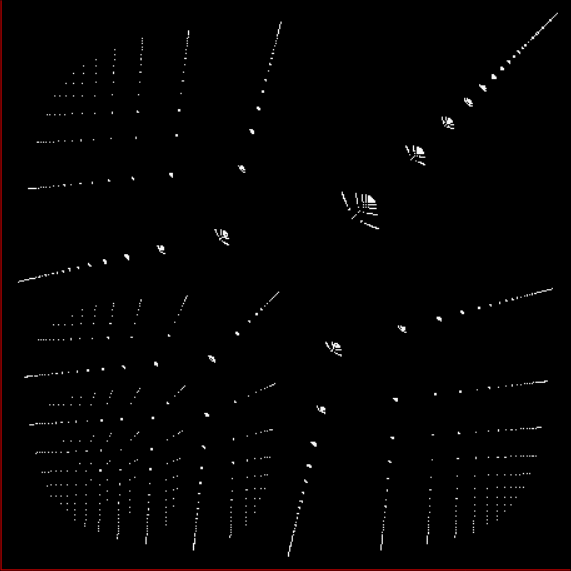

fract-L for contfrac(a/b) permed by [3,2,1,5,4,6]
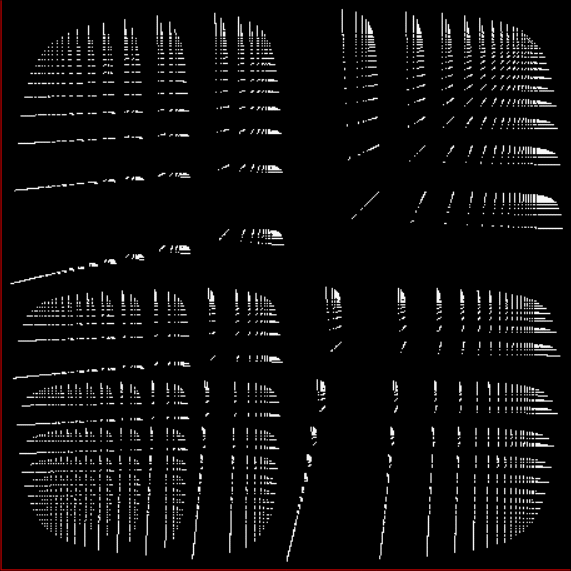

fract-L for contfrac(a/b) permed by [3,5,1,4,2,6]
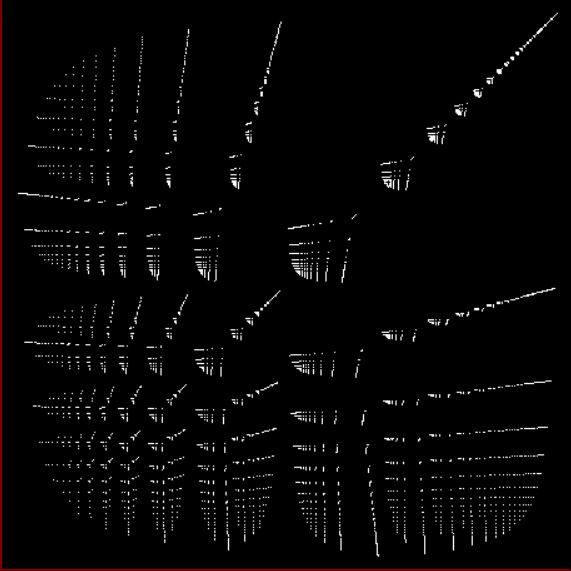

fract-L for contfrac(a/b) permed by [4,2,5,1,3,6]
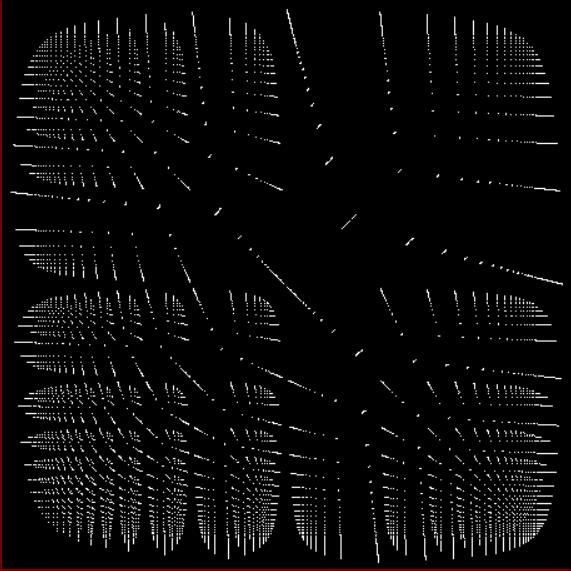

fract-L for contfrac(a/b) permed by [4,3,2,1,5,6]
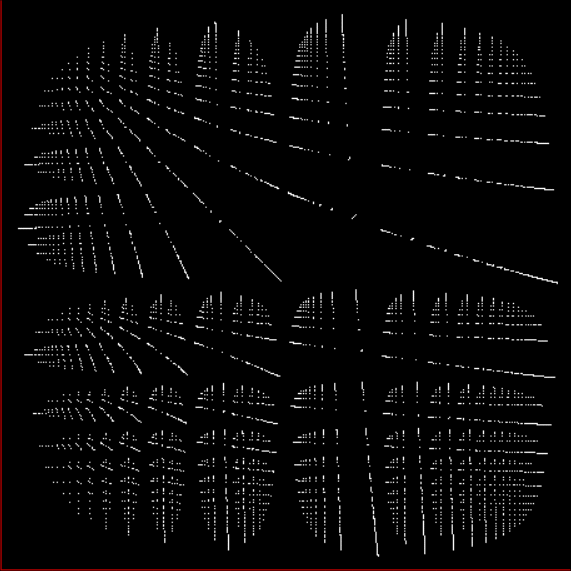

fract-L for contfrac(a/b) permed by [4,5,2,3,1,6]
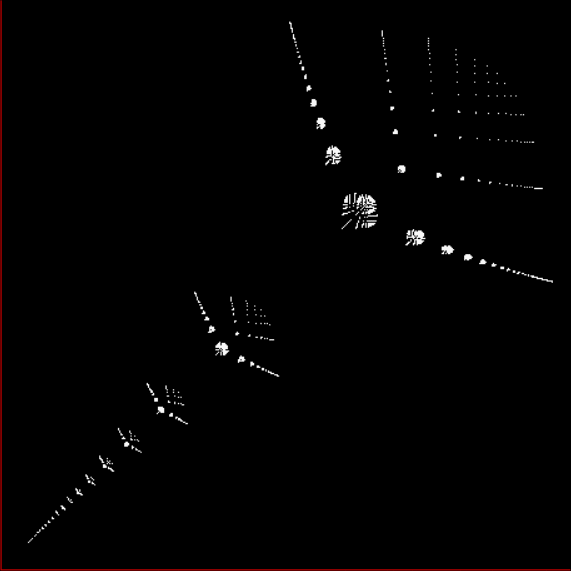

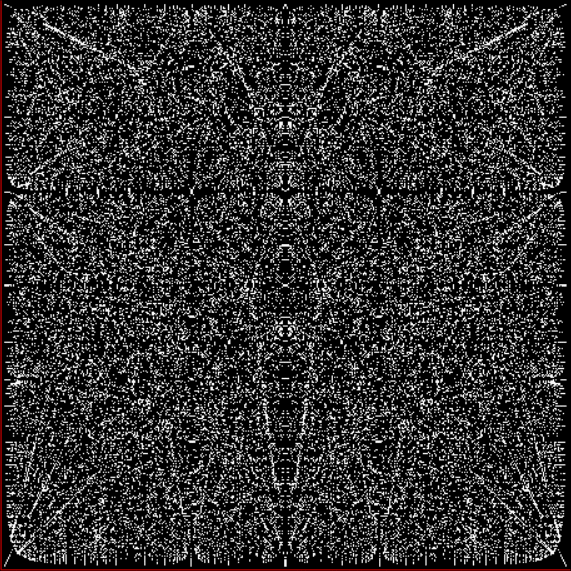
fract-L for contfrac(a/b) permed by [1,3,2,6,5,4,7] (i.e. a/b where len(contfrac(a/b)) = 7)
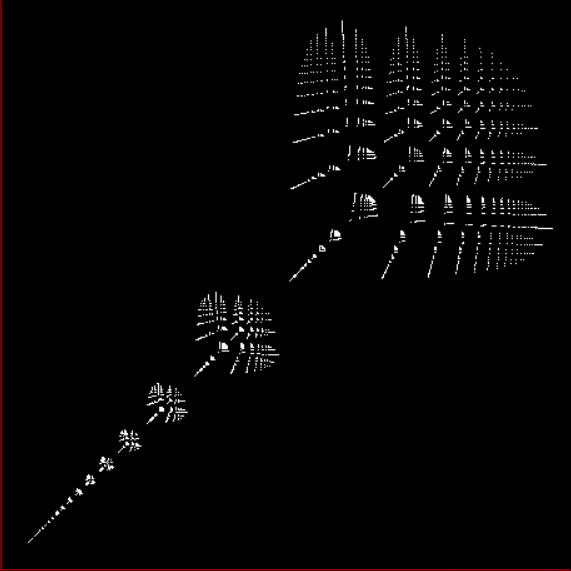

fract-L for contfrac(a/b) permed by [1,5,2,6,3,4,7]
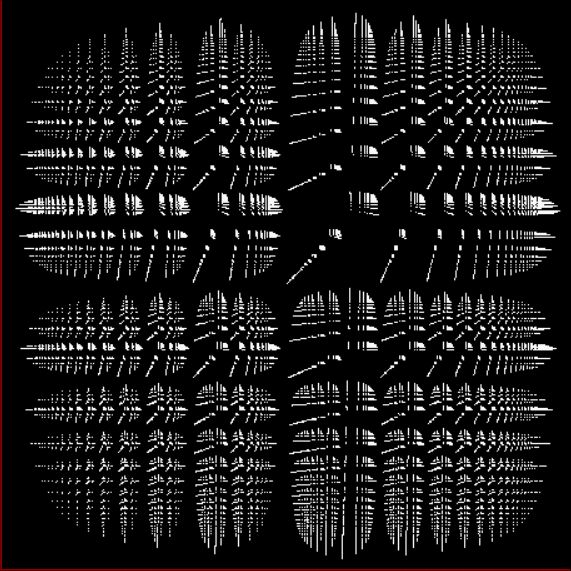

fract-L for contfrac(a/b) permed by [5,6,3,7,4,1,2]
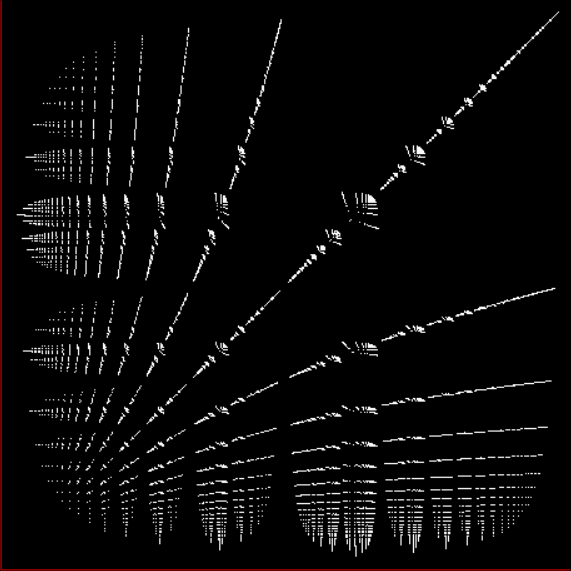

fract-L for contfrac(a/b) permed by [6,2,3,5,4,1,7]
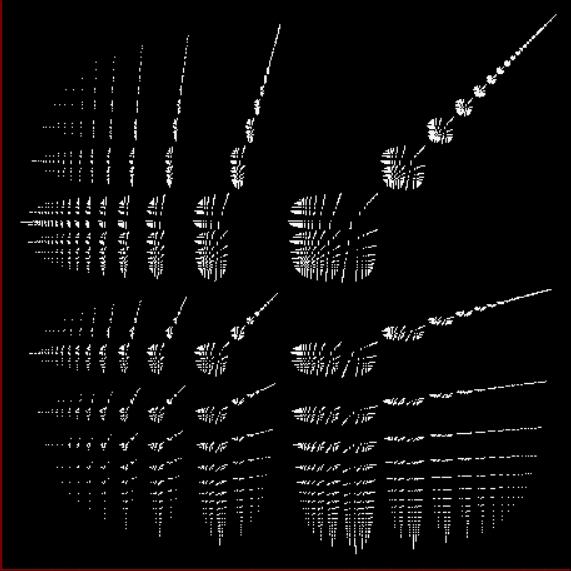

fract-L for contfrac(a/b) permed by [6,2,5,4,7,3,1]


Post-Performative Post-Scriptum

Much as I hate the phrase “in terms of”, I was happy to use it in the title of this post. After all, it isn’t ugly but assonant there. And it began life in mathematics, where it still has its proper meaning rather than being pretentious and prolix:

How did this complex preposition come into being? The OED [Oxford English Dictionary] reveals that it has been in use since the mid-18c. as a mathematical expression “said of a series…stated in terms involving some particular (my emphasis) quantity”, and illustrates this technical usage by citing examples from the work of Herbert Spencer (1862), J. F. W. Herschel (1866), and other writers. From this technical use came at first a trickle and, after the 1940s, a flood of imitative uses by non-mathematicians. — “Terminal Trinity


Elsewhere Other-Engageable

A Fracteasel on a Fract-L — an earlier look at continued fractions and fractal fract-Ls
A FracTeasel on a Fract-L

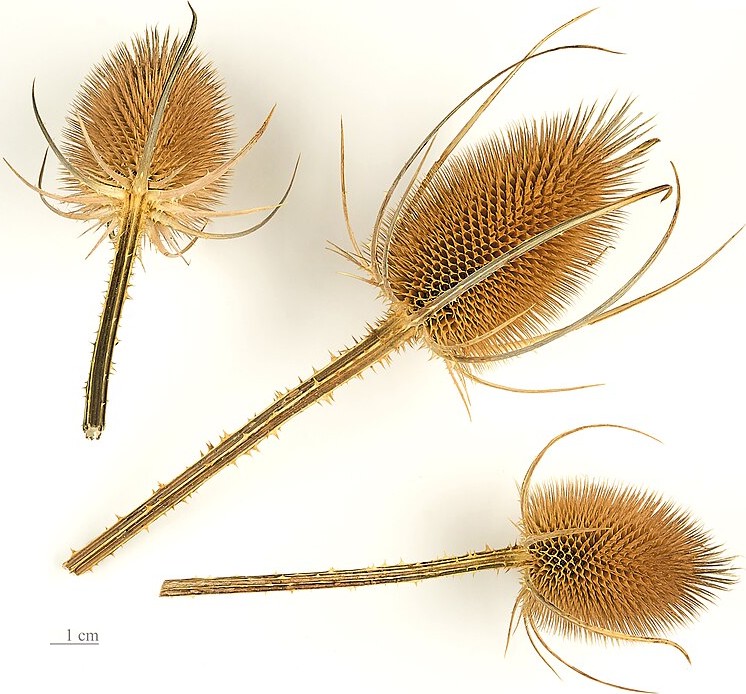
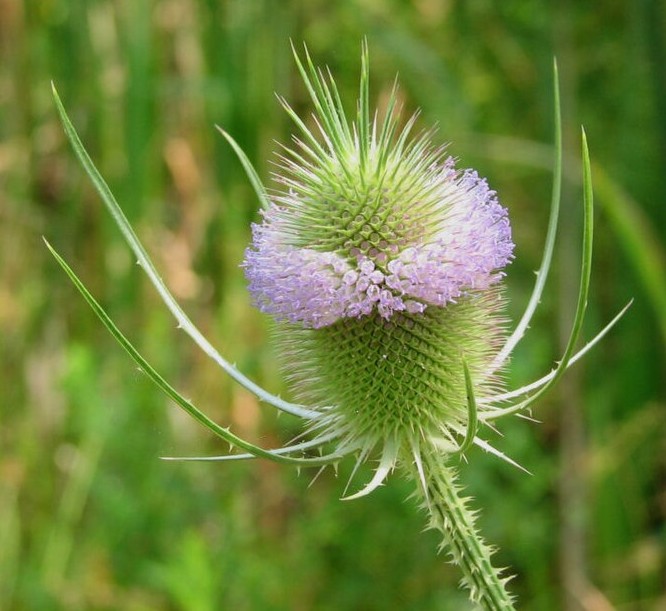
Here are two new fractals, both of which remind me of the seedheads of the wildflower known as a teasel, Dipsacus fullonum:

A FracTeasel fractal


Dried seedheads of teasel, Dipsacus fullonum (Wikipedia)


Another FracTeasel fractal (embedded in the first)


Flowering seedhead of teasel, Dipsacus fullonum (Wikipedia)


How do you create the two FracTeasels? Let’s look first at the fractal they’re inspired by. In “Back to Frac’” I talked about this fractional fractal, a variant of what I call the limestone fractal:

Variant of a limestone fractal or gryke fractal


It’s a fractal on a fract-L, that is, the x and y co-ordinates of the red L represent pairs of fractions generating decimals between 0 and 1. The x represents the fractions a1/b1 = 1/n to (n-1)/n in simplest form: 1/2, 1/3, 2/3, 1/4, 3/4, 1/5, 2/5, 3/5, 4/5, 1/6, 5/6, 1/7, 2/7, 3/7, 4/7, 5/7, 6/7, 1/8, 3/8, 5/8, 7/8,…

And what about the y? It represents the fraction found by taking the continued fraction of a1/b1, reversing it, and generating a new fraction, a2/b2, from the reversal. For example, here’s the continued fraction of a1/b1 = 3/23 = 0.1304347826…:

contfrac(3/23) = 7,1,2

The continued fraction of a1/b1 = 3/23 is used like this to reconstruct a1/b1:

7,1,2

0 → 1 / (0 + 2) = 1/2 → 1 / (1/2 + 1) = 2/3 → 1 / (7 + 2/3) = 3/23

Now reverse the continued fraction, 7,1,2 → 2,1,7, and generate a2/b2:

2,1,7

0 → 1 / (0 + 7) = 1/7 → 1 / (1/7 + 1) = 7/8 → 1 / (2 + 7/8) = 8/23 = 0.3478260869565…

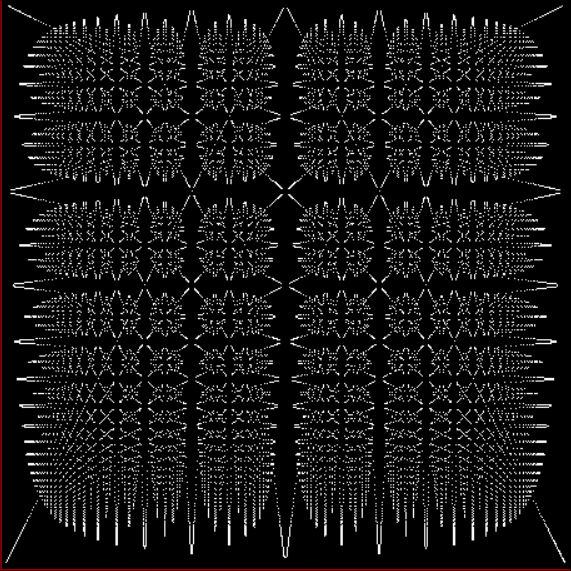
The limestone fractal above appears when a1/b1 → a2/b2 for a1/b1 = 1/2, 1/3, 2/3, 1/4, 3/4, 1/5, 2/5, 3/5, 4/5, 1/6, 5/6, 1/7, 2/7, 3/7, 4/7, 5/7, 6/7, 1/8, 3/8, 5/8, 7/8,… But you can do other things to contfrac(a1/b1) beside just reversing it. What about the permutations of contfrac(a1/b1), for example? If length(contfrac(a1/b1)) = n, the permutations can generate up to n! (factorial n) new a2/b2 for the y co-ordinate (if all the numbers of contfrac(a1/b1) are different, you’ll get n! permutations). The resultant fractal is the first of the FracTeasels above (note that a2/b2 isn’t multiplied by two):

FracTeasel #1 from fract-L for y = perm(contfrac(a1/b1))


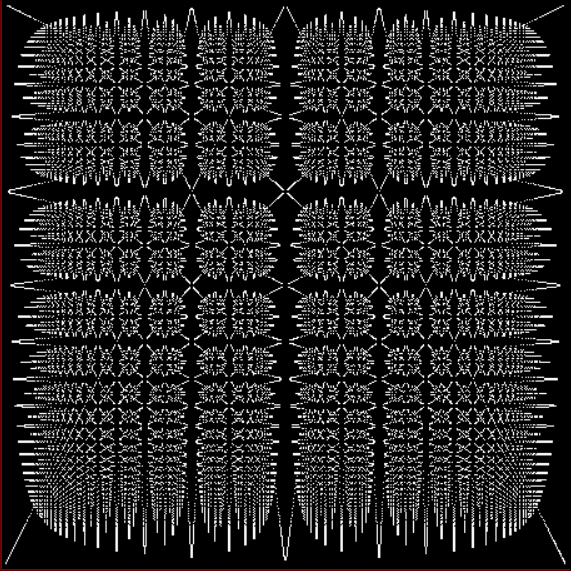
If you think about it, you’ll see that the fractal from permed contfrac(a1/b1) contains the fractal from reversed contfrac(a1/b1). It also contains the second FracTeasel:

FracTeasel #2


How so? Because the second FracTeasel — let’s call it the stemmed FracTeasel — is created by shifting some numbers in contfrac(a1/b1) and leaving others alone. For example:

contfrac(940/1089) = 1, 6, 3, 4, 5, 2 → 1, 4, 3, 2, 5, 6 = contfrac(1008/1243)

So the function is finding one particular permutation of contfrac(a1/b1) to generate a2/b2, not all permutations. And so the function creates the stemmed FracTeasel, which carries an infinite number of seedheads on the same stem. To show that, here’s an animated gif zooming in on the bend of the fract-L for the stemmed FracTeasel:

Zooming the FracTeasel (animated at ezGif)


Elsewhere Other-Accessible…

I Like Gryke — a first look at the limestone fractal
Lime Time — more on the limestone fractal

Back to Frac’

Here’s a second serendipitous fractal:

A serendipitous fractal on a fract-L


It looks like (and is related to) the limestone fractal and I found it similarly serendipitously. This time I was looking at continued fractions, a simple yet subtle and seductive way of representing non-integer numbers like 2/3 and 7/9 (or √2 and π). To generate a continued fraction from a/b < 1, you divide a/b into 1 and take away the integer part. Then you repeat with the remainder until nothing is left (or, as with irrationals like 1/√2 and 1/π, you've calculated long enough for your needs). The integers at each stage are the numbers of the continued fraction. Here is the working for contfrac(2/3), the continued fraction of 2/3:

int(1/(2/3)) = int(3/2) = int(1.5) = 1
3/2 – 1 = 1/2
int(1/(1/2)) = int(2) = 2
2 – 2 = 0

contfrac(2/3) = 1, 2

By working backwards with (1, 2), you can use the continued fraction to reconstruct the original number a/b. Start with a/b = 0/1:

1 / (0/1 + 2) = 1 / ((0+2*1)/2) = 1 / (2/1) = 1/2
1 / (1/2 + 1) = 1 / ((1+2*1)/2) = 1 / (3/2) = 2/3

And here’s the working for contfrac(7/9), the continued fraction of 7/9:

int(1/(7/9)) = int(9/7) = int(1.285714…) = 1
9/7 – 1 = 2/7
int(1/(2/7)) = int(7/2) = int(3.5) = 3
7/2 – 3 = 1/2
int(1/(1/2)) = int(2) = 2
2 – 2 = 0

contfrac(7/9) = 1, 3, 2

And here’s the reconstruction of 7/9 from its continued fraction, starting again with a/b = 0/1:

1 / (0/1 + 2) = 1 / ((0+2*1)/2) = 1 / (2/1) = 1/2
1 / (1/2 + 3) = 1 / ((1+2*3)/2) = 1 / (7/2) = 2/7
1 / (2/7 + 1) = 1 / ((2+7*1)/7) = 1 / (9/7) = 7/9

From that simple algorithm arise subtle and seductive things. Look at some continued fractions, cf(a/b), for a/b in simplest form (giving only the first few reciprocals, 1/b, because cf(1/b) = b). Interesting patterns appear, e.g. when a/b uses adjacent or nearly adjacent Fibonacci numbers:

cf(1/3) = 3 = cf(0.333333333…)
cf(2/3) = 1,2 = cf(0.666666666…)
cf(1/4) = 4 = cf(0.25)
cf(3/4) = 1,3 = cf(0.75)
cf(1/5) = 5 = cf(0.2)
cf(2/5) = 2,2 = cf(0.4)
cf(3/5) = 1,1,2 = cf(0.6)
cf(4/5) = 1,4 = cf(0.8)
cf(5/6) = 1,5 = cf(0.833333333…)
cf(2/7) = 3,2 = cf(0.285714285…)
cf(3/7) = 2,3 = cf(0.428571428…)
cf(4/7) = 1,1,3 = cf(0.571428571…)
cf(5/7) = 1,2,2 = cf(0.714285714…)
cf(6/7) = 1,6 = cf(0.857142857…)
cf(3/8) = 2,1,2 = cf(0.375)
cf(5/8) = 1,1,1,2 = cf(0.625)
cf(7/8) = 1,7 = cf(0.875)
cf(2/9) = 4,2 = cf(0.222222222…)
cf(4/9) = 2,4 = cf(0.444444444…)
cf(5/9) = 1,1,4 = cf(0.555555555…)
cf(7/9) = 1,3,2 = cf(0.777777777…)
cf(8/9) = 1,8 = cf(0.888888888…)
cf(3/10) = 3,3 = cf(0.3)
cf(7/10) = 1,2,3 = cf(0.7)
cf(9/10) = 1,9 = cf(0.9)
cf(2/11) = 5,2 = cf(0.181818181…)
cf(3/11) = 3,1,2 = cf(0.272727272…)
cf(4/11) = 2,1,3 = cf(0.363636363…)
cf(5/11) = 2,5 = cf(0.454545454…)
cf(6/11) = 1,1,5 = cf(0.545454545…)
cf(7/11) = 1,1,1,3 = cf(0.636363636…)
cf(8/11) = 1,2,1,2 = cf(0.727272727…)
cf(9/11) = 1,4,2 = cf(0.818181818…)
cf(10/11) = 1,10 = cf(0.909090909…)
cf(5/12) = 2,2,2 = cf(0.416666666…)
cf(7/12) = 1,1,2,2 = cf(0.583333333…)
cf(11/12) = 1,11 = cf(0.916666666…)
cf(2/13) = 6,2 = cf(0.153846153…)
cf(3/13) = 4,3 = cf(0.230769230…)
cf(4/13) = 3,4 = cf(0.307692307…)
cf(5/13) = 2,1,1,2 = cf(0.384615384…)
cf(6/13) = 2,6 = cf(0.461538461…)
cf(7/13) = 1,1,6 = cf(0.538461538…)
cf(8/13) = 1,1,1,1,2 = cf(0.615384615…)
cf(9/13) = 1,2,4 = cf(0.692307692…)
cf(10/13) = 1,3,3 = cf(0.769230769…)
cf(11/13) = 1,5,2 = cf(0.846153846…)
cf(12/13) = 1,12 = cf(0.923076923…)
cf(3/14) = 4,1,2 = cf(0.214285714…)
cf(5/14) = 2,1,4 = cf(0.357142857…)
cf(9/14) = 1,1,1,4 = cf(0.642857142…)
cf(11/14) = 1,3,1,2 = cf(0.785714285…)
cf(13/14) = 1,13 = cf(0.928571428…)
cf(2/15) = 7,2 = cf(0.133333333…)
cf(4/15) = 3,1,3 = cf(0.266666666…)
cf(7/15) = 2,7 = cf(0.466666666…)
cf(8/15) = 1,1,7 = cf(0.533333333…)
cf(11/15) = 1,2,1,3 = cf(0.733333333…)
cf(13/15) = 1,6,2 = cf(0.866666666…)
cf(14/15) = 1,14 = cf(0.933333333…)
cf(3/16) = 5,3 = cf(0.1875)
cf(5/16) = 3,5 = cf(0.3125)
cf(7/16) = 2,3,2 = cf(0.4375)

After investigating some of those patterns, I wondered what happened when you reversed the continued fraction cf(a/b) and used those reversed numbers backward (that is, used the numbers of cf(a/b) forward) to generate another and different a/b. And a/b will always be different unless cf(a/b) is a palindrome, like cf(5/12) = 2,2,2 or cf(5/13) = 2,1,1,2 or cf(4/15) = 3,1,3. Note that a continued fraction never ends in 1, so that when reversing, say, cf(5/8) = (1, 1, 1, 2), you need an adjustment from (2, 1, 1, 1) to (2, 1, 1+1) = (2, 1, 2). Here’s a little of what happens when you reverse cf(a1/b1) to generate a2/b2:

cf(1/2) = 2 → 2 = cf(1/2)
1/2 = 0.5 : 0.5 = 1/2
cf(1/3) = 3 → 3 = cf(1/3)
1/3 = 0.333333333 : 0.333333333 = 1/3
cf(2/3) = 1, 2 → 2, 1 → 3 = cf(1/3)
2/3 = 0.666666666 : 0.333333333 = 1/3
cf(3/4) = 1, 3 → 3, 1 → 4 = cf(1/4)
3/4 = 0.75 : 0.25 = 1/4
cf(2/5) = 2, 2 → 2, 2 = cf(2/5)
2/5 = 0.4 : 0.4 = 2/5
cf(3/5) = 1, 1, 2 → 2, 1, 1 → 2, 2 = cf(2/5)
3/5 = 0.6 : 0.4 = 2/5
cf(4/5) = 1, 4 → 4, 1 → 5 = cf(1/5)
4/5 = 0.8 : 0.2 = 1/5
cf(5/6) = 1, 5 → 5, 1 → 6 = cf(1/6)
5/6 = 0.833333333 : 0.166666666 = 1/6
cf(2/7) = 3, 2 → 2, 3 = cf(3/7)
2/7 = 0.285714286 : 0.428571428 = 3/7
cf(3/7) = 2, 3 → 3, 2 = cf(2/7)
3/7 = 0.428571429 : 0.285714286 = 2/7
cf(4/7) = 1, 1, 3 → 3, 1, 1 → 3, 2 = cf(2/7)
4/7 = 0.571428571 : 0.285714286 = 2/7
cf(5/7) = 1, 2, 2 → 2, 2, 1 → 2, 3 = cf(3/7)
5/7 = 0.714285714 : 0.428571429 = 3/7
cf(6/7) = 1, 6 → 6, 1 → 7 = cf(1/7)
6/7 = 0.857142857 : 0.142857143 = 1/7
cf(3/8) = 2, 1, 2 → 2, 1, 2 = cf(3/8)
0.375 : 0.375
cf(5/8) = 1, 1, 1, 2 → 2, 1, 1, 1 → 2, 1, 2 = cf(3/8)
0.625 : 0.375
cf(7/8) = 1, 7 → 7, 1 → 8 = cf(1/8)
0.875 : 0.125
cf(2/9) = 4, 2 → 2, 4 = cf(4/9)
0.222222222 : 0.444444444
cf(4/9) = 2, 4 → 4, 2 = cf(2/9)
0.444444444 : 0.222222222

And if you plot x = a1/b1 and y = (a2/b2 * 2) on a fract-L, that is, a graph whose horizontal and vertical arms represent 0 to 1, you get the fractal right at the beginning:

Fract-L for x = a1/b1 and y = (a2/b2 * 2), where a2/b2 is generated from reversed(cf(a1/b1))


You need to use (a2/b2 * 2) because a2/b2 from reversed(cf(a1/b1)) is always <= 0.5, so using raw a2/b2 generates this graph:

Fract-L for x = a1/b1 and y = a2/b2 (i.e. a2/b2 is unadjusted)


Why is it always true that a2/b2 <= 0.5? For two reasons. First, a/b > 0.5 always generate continued fractions that start with 1, like cf(2/3) = 1, 2 or cf(3/4) = 1, 3 or cf(3/5) = 1, 1, 2. Second, as previously mentioned, no continued fraction ends with 1. Therefore a reversed cf(a1/b1), where the final number, n > 1, moves to the beginning, will never begin with 1 and the a2/b2 generated from reversed(cf(a1/b1)) will always be less than 0.5 (or equal to it in the solitary case of cf(1/2) = 2).

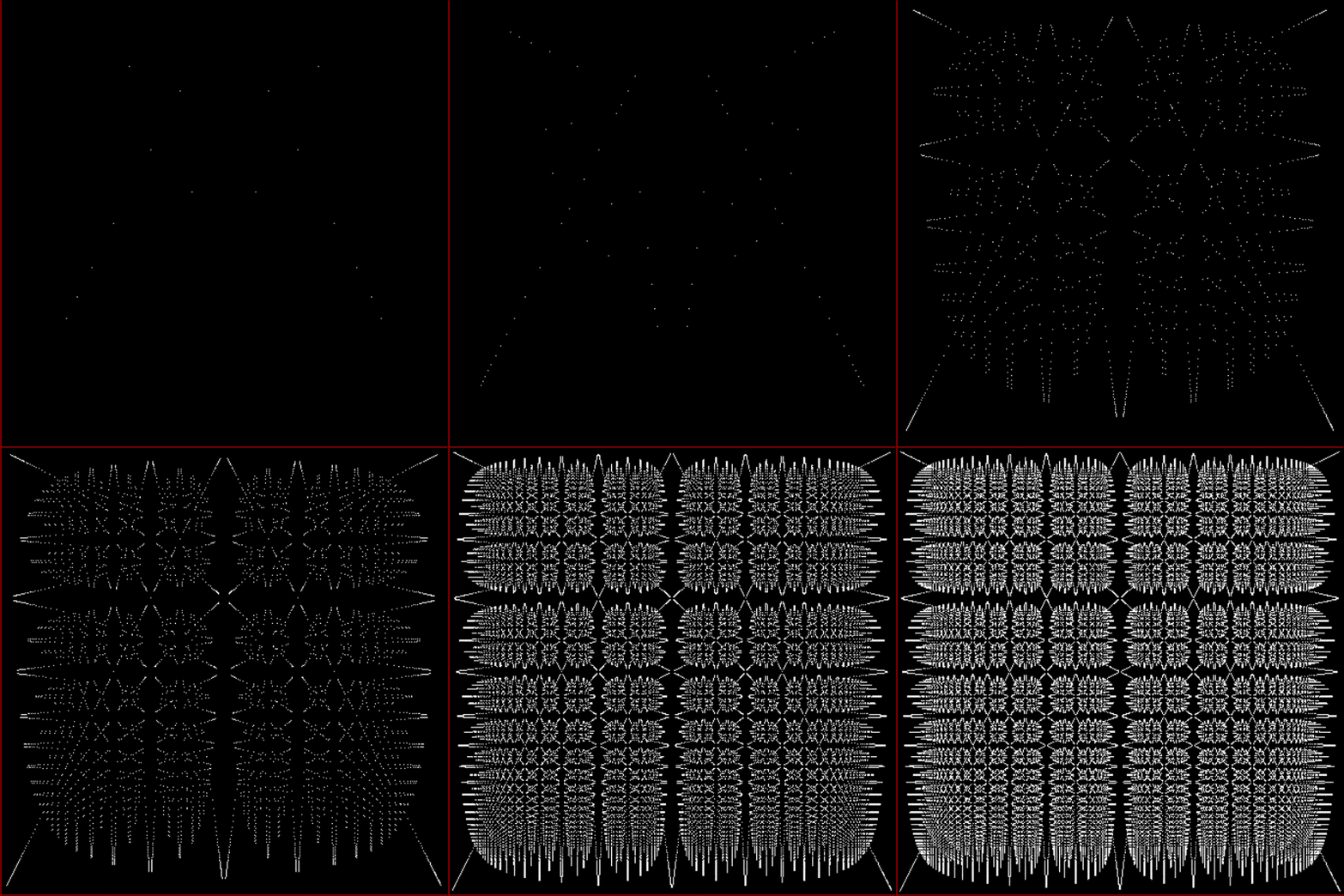
Now let's look at the development of the fractal as a1/b1 uses larger and larger denominators:

Fract-L for x = a1/b1 and y = (a2/b2 * 2) for a1/b1 <= 6/7


Fract-L for for a1/b1 <= 14/15


Fract-L for a1/b1 <= 30/31


Fract-L for a1/b1 <= 62/63


Fract-L for a1/b1 <= 126/127


Fract-L for a1/b1 <= 254/255


Fract-L for a1/b1 <= 357/358


Fract-L for a1/b1 <= 467/468


Animated fract-L for x = a1/b1 and y = (a2/b2 * 2) (animated at ezGif)


The fractal changes subtly when you restrict the b1 of a1/b1 in some way, say using multiples of 2, 3, 4, 5…:

Fract-L for x = a1/b1 and y = (a2/b2 * 2) for b1 = n = 2, 3, 4, 5, 6, 7, 8…


Fract-L for b1 = 2n = 2, 4, 6, 8, 10…


Fract-L for b1 = 3n = 3, 6, 9, 12, 15…


Fract-L for b1 = 4n


Fract-L for b1 = 5n


Fract-L for b1 = 6n


Animated fract-L for b1 = 1n..12n (animated at ezGif)


Finally, here are fract-Ls when b1 is a triangular, square, hexagonal or octagonal number:

Fract-L for x = a1/b1 and y = (a2/b2 * 2) for triangular(b1) = 3, 6, 10, 15, 21, 28,…


Fract-L for square(b1) = 4, 9, 16, 25, 36, 49,…


Fract-L for hexagonal(b1) = 6, 15, 28, 45, 66, 91,…


Fract-L for octagonal(b1) = 8, 21, 40, 65, 96, 133,…


Elsewhere Other-Accessible…

Back to Drac’ — a parallel pun for a pre-previous fractal
I Like Gryke — a first look at the limestone fractal
Lime Time — more on the limestone fractal