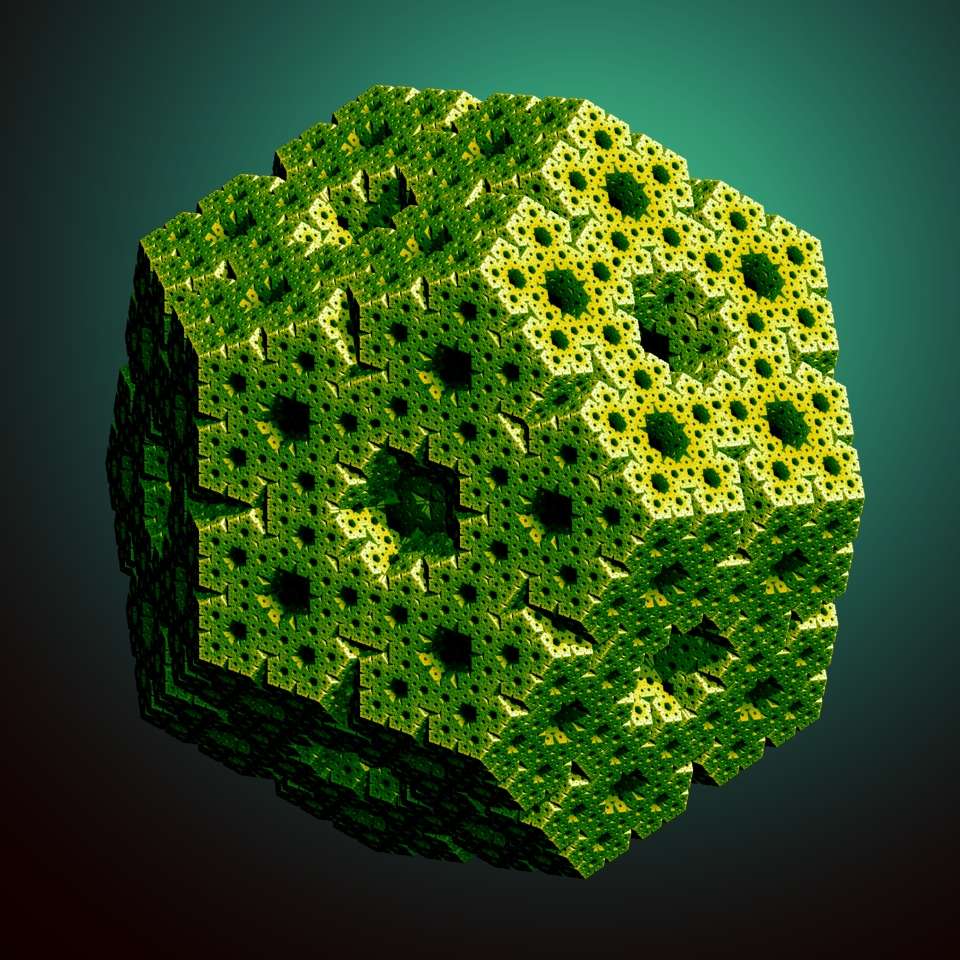
A fractal dodecahedron by Jos Leys, a Belgian mathemartist (source here)

A fractal dodecahedron by Jos Leys, a Belgian mathemartist (source here)
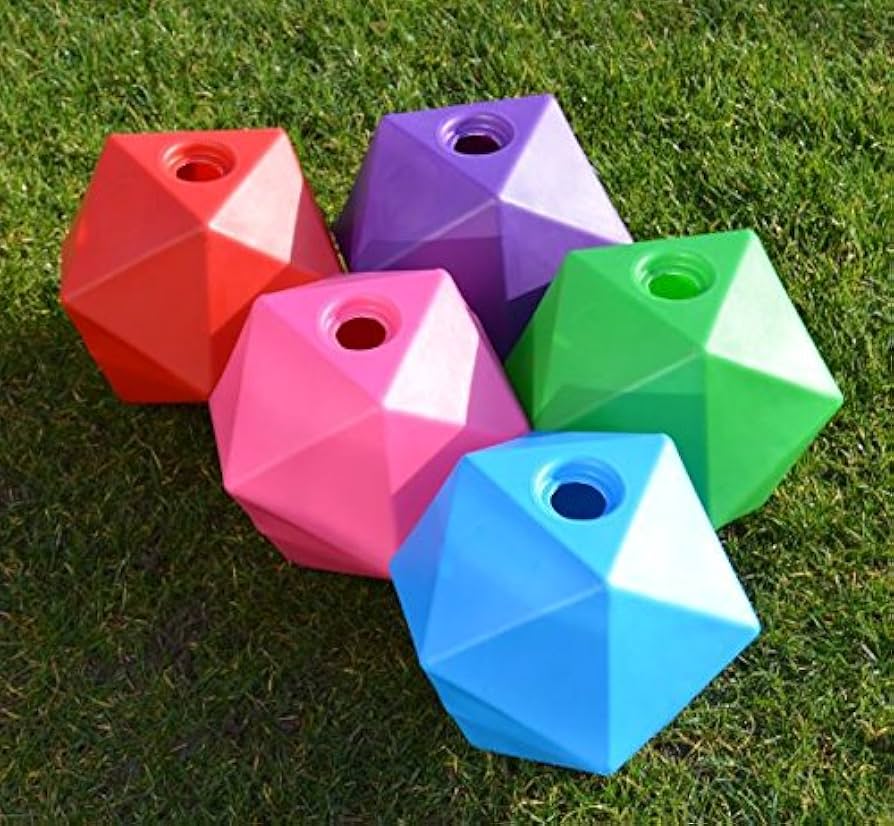
What are these plastic polyhedra for and why exactly do they take that shape?
I didn’t have a clue when I first came across one. The answer is here.
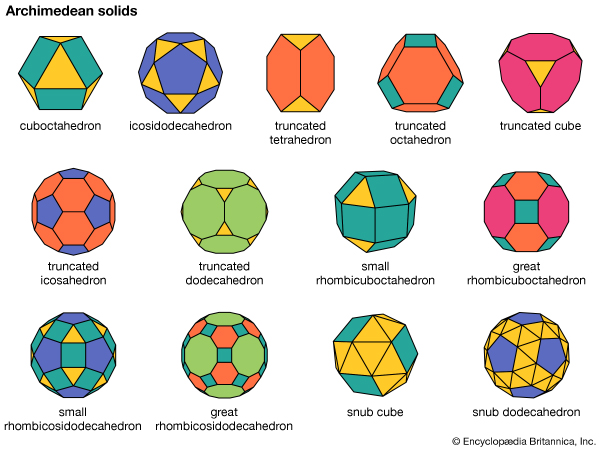
The 13 Archimedean solids (also known as Archimedean polyhedra)
Τα Στοιχεία του Ευκλείδου, ια΄
κεʹ. Κύβος ἐστὶ σχῆμα στερεὸν ὑπὸ ἓξ τετραγώνων ἴσων περιεχόμενον.
κϛʹ. ᾿Οκτάεδρόν ἐστὶ σχῆμα στερεὸν ὑπὸ ὀκτὼ τριγώνων ἴσων καὶ ἰσοπλεύρων περιεχόμενον.
κζʹ. Εἰκοσάεδρόν ἐστι σχῆμα στερεὸν ὑπὸ εἴκοσι τριγώνων ἴσων καὶ ἰσοπλεύρων περιεχόμενον.
κηʹ. Δωδεκάεδρόν ἐστι σχῆμα στερεὸν ὑπὸ δώδεκα πενταγώνων ἴσων καὶ ἰσοπλεύρων καὶ ἰσογωνίων περιεχόμενον.
Euclid’s Elements, Book 11
25. A cube is a solid figure contained by six equal squares.
26. An octahedron is a solid figure contained by eight equal and equilateral triangles.
27. An icosahedron is a solid figure contained by twenty equal and equilateral triangles.
28. A dodecahedron is a solid figure contained by twelve equal, equilateral, and equiangular pentagons.
 An Adventure in Multidimensional Space: The Art and Geometry of Polygons, Polyhedra, and Polytopes, Koji Miyazaki (Wiley-Interscience 1987)
Two, three, four – or rather, two, three, ∞. Polygons are closed shapes in two dimensions (e.g., the square), polyhedra closed shapes in three dimensions (the cube), and polytopes closed shapes in four or more (the hypercube). You could spend a lifetime exploring any one of these geometries, but unless you take psychedelic drugs or brain-modification becomes much more advanced, you’ll be able to see only two of them: the geometries of polygons and polyhedra. Polytopes are beyond imagining but you can glimpse their shadows here – literally, because we can represent polytopes by the shadows they cast in 3-space or by the shadows of their shadows in 2-space.
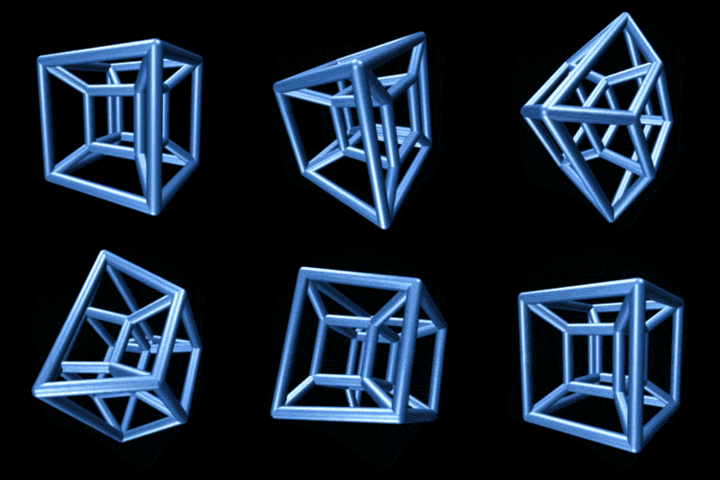
A four-dimensional shape in two dimensions (see Tesseract)
Elsewhere Miyazaki doesn’t have to convey wonder and beauty by shadows: not only is this book full of beautiful shapes, it’s beautifully designed too and the way it alternates black-and-white pages with colour actually increases the power of both. It isn’t restricted to pure mathematics either: Miyazaki also looks at the modern and ancient art and architecture inspired by geometry, and at geometry in nature: the dodecahedral pollen of Gypsophilum elegans (Showy Baby’s-Breath), for example, and the tetrahedral seeds of the Water Chestnut (Trapa spp.), which the Japanese spies and assassins called the ninja used as natural caltrops. A regular tetrahedron always lies on a flat surface with a vertex facing directly upward, and when a pursued ninja scattered the sharply pointed tetrahedral seeds of the Water Chestnut, they were regular enough to injure “the soles of feet of his pursuers”.
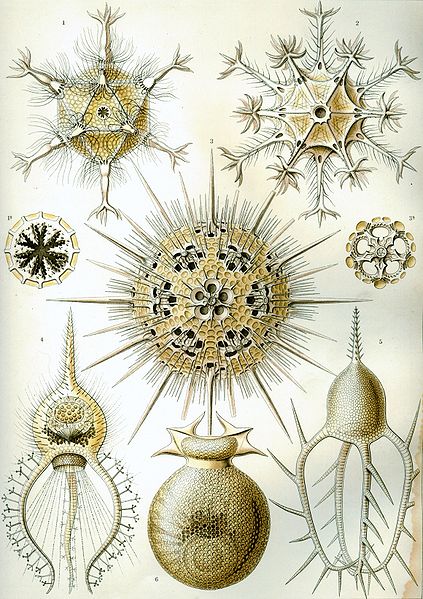
Polyhedral plankton by Ernst Haeckel
The slightly odd English there is another example of what I like about this book, because it proves the parochialism of language and the universality of mathematics. Miyazaki’s mathematics, as far as I can tell, is flawless, like that of many other Japanese mathematicians, but his self-translated English occasionally isn’t. Japanese mathematics was highly developed before Japan fell under strong Western influence. It would continue to develop if the West disappeared tomorrow. Language is something we have to absorb intuitively from the particular culture we’re born into, but mathematics is learnt and isn’t tied to any particular culture. That’s why it’s accessible in the same way to minds everywhere in the world. Miyazaki’s pictures and prose are an extended proof of all that, and the book is actually more valuable because it was written by a Japanese speaker. I think it’s probably more attractively designed for the same reason: the skill with which the pictures have been selected and laid out reflects something characteristically Japanese. Elegance and simplicity perhaps sum it up, and elegance and simplicity are central to mathematics and some of the greatest art.
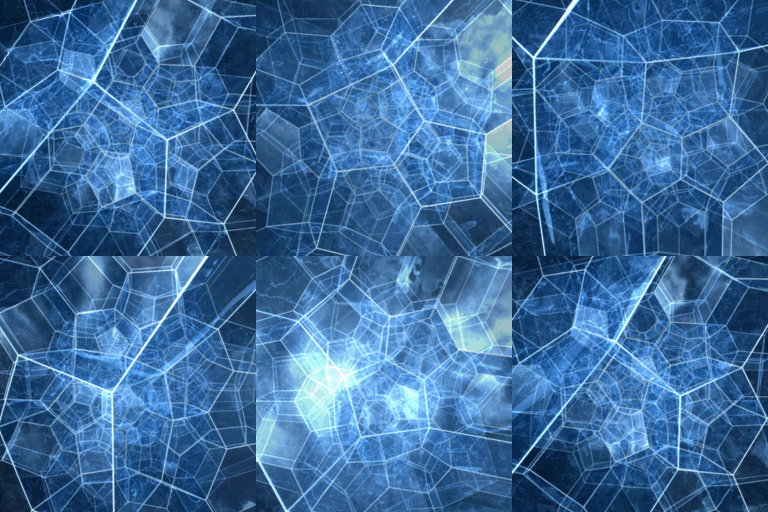
Another four-dimensional shape in two dimensions (see 120-cell)
How many ways are there to die? The answer is actually five, if by “die” you mean “roll a die” and by “rolled die” you mean “Platonic polyhedron”. The Platonic polyhedra are the solid shapes in which each polygonal face and each vertex (meeting-point of the edges) are the same. There are surprisingly few. Search as long and as far as you like: you’ll find only five of them in this or any other universe. The standard cubic die is the most familiar: each of its six faces is square and each of its eight vertices is the meeting-point of three edges. The other four Platonic polyhedra are the tetrahedron, with four triangular faces and four vertices; the octahedron, with eight triangular faces and six vertices; the dodecahedron, with twelve pentagonal faces and twenty vertices; and the icosahedron, with twenty triangular faces and twelve vertices. Note the symmetries of face- and vertex-number: the dodecahedron can be created inside the icosahedron, and vice versa. Similarly, the cube, or hexahedron, can be created inside the octahedron, and vice versa. The tetrahedron is self-spawning and pairs itself. Plato wrote about these shapes in his Timaeus (c. 360 B.C.) and based a mathemystical cosmology on them, which is why they are called the Platonic polyhedra.

Tetrahedron

Hexahedron
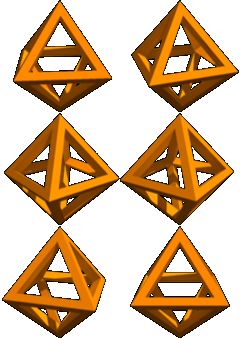
Octahedron

Dodecahedron
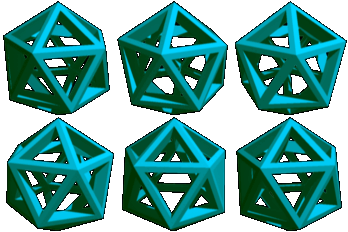
Icosahedron
They make good dice because they have no preferred way to fall: each face has the same relationship with the other faces and the centre of gravity, so no face is likelier to land uppermost. Or downmost, in the case of the tetrahedron, which is why it is the basis of the caltrop. This is a spiked weapon, used for many centuries, that always lands with a sharp point pointing upwards, ready to wound the feet of men and horses or damage tyres and tracks. The other four Platonic polyhedra don’t have a particular role in warfare, as far as I know, but all five might have a role in jurisprudence and might raise an interesting question about probability. Suppose, in some strange Tycholatric, or fortune-worshipping, nation, that one face of each Platonic die represents death. A criminal convicted of a serious offence has to choose one of the five dice. The die is then rolled f times, or as many times as it has faces. If the death-face is rolled, the criminal is executed; if not, he is imprisoned for life.
The question is: Which die should he choose to minimize, or maximize, his chance of getting the death-face? Or doesn’t it matter? After all, for each die, the odds of rolling the death-face are 1/f and the die is rolled f times. Each face of the tetrahedron has a 1/4 chance of being chosen, but the tetrahedron is rolled only four times. For the icosahedron, it’s a much smaller 1/20 chance, but the die is rolled twenty times. Well, it does matter which die is chosen. To see which offers the best odds, you have to raise the odds of not getting the death-face to the power of f, like this:
3/4 x 3/4 x 3/4 x 3/4 = 3/4 ^4 = 27/256 = 0·316…
5/6 ^6 = 15,625 / 46,656 = 0·335…
7/8 ^8 = 5,764,801 / 16,777,216 = 0·344…
11/12 ^12 = 3,138,428,376,721 / 8,916,100,448,256 = 0·352…
19/20 ^20 = 37,589,973,457,545,958,193,355,601 / 104,857,600,000,000,000,000,000,000 = 0·358…
Those represent the odds of avoiding the death-face. Criminals who want to avoid execution should choose the icosahedron. For the odds of rolling the death-face, simply subtract the avoidance-odds from 1, like this:
1 – 3/4 ^4 = 0·684…
1 – 5/6 ^6 = 0·665…
1 – 7/8 ^8 = 0·656…
1 – 11/12 ^12 = 0·648…
1 – 19/20 ^20 = 0·642…
So criminals who prefer execution to life-imprisonment should choose the tetrahedron. If the Tycholatric nation offers freedom to every criminal who rolls the same face of the die f times, then the tetrahedron is also clearly best. The odds of rolling a single specified face f times are 1/f ^f:
1/4 x 1/4 x 1/4 x 1/4 = 1/4^4 = 1 / 256
1/6^6 = 1 / 46,656
1/8^8 = 1 / 16,777,216
1/12^12 = 1 / 8,916,100,448,256
1/20^20 = 1 / 104,857,600,000,000,000,000,000,000
But there are f faces on each polyhedron, so the odds of rolling any face f times are 1/f ^(f-1). On average, of every sixty-four (256/4) criminals who choose to roll the tetrahedron, one will roll the same face four times and be reprieved. If a hundred criminals face the death-penalty each year and all choose to roll the tetrahedron, one criminal will be reprieved roughly every eight months. But if all criminals choose to roll the icosahedron and they have been rolling since the Big Bang, just under fourteen billion years ago, it is very, very, very unlikely that any have yet been reprieved.
 Overlord In Terms of Core Issues Around Maximal Engagement with Key Notions of the Über-Feral
