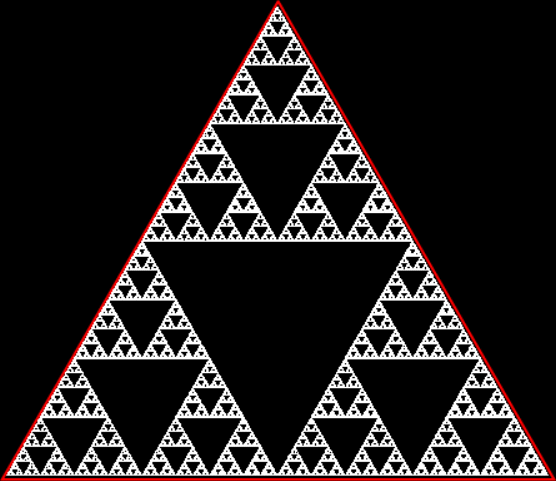
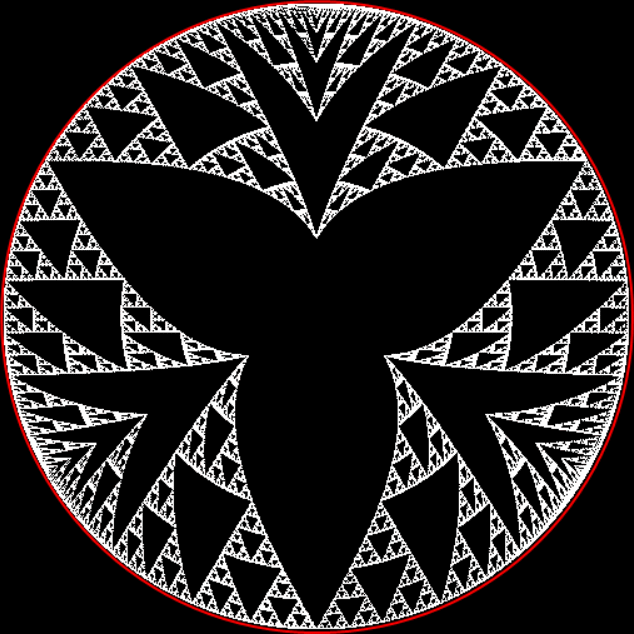
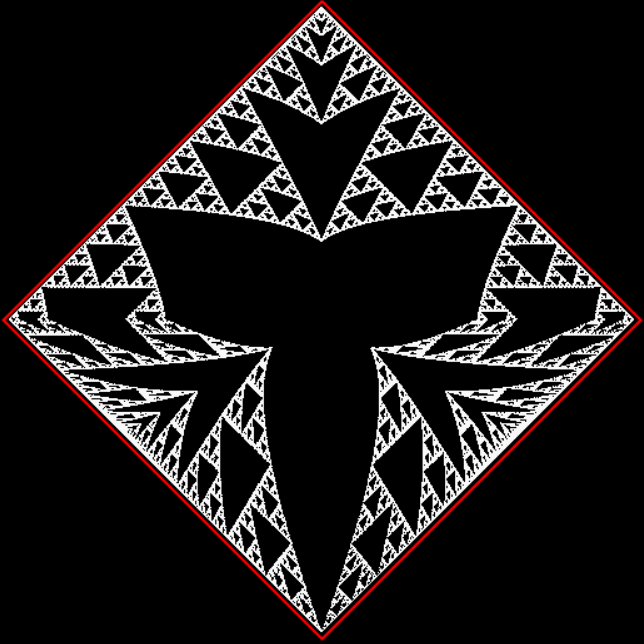
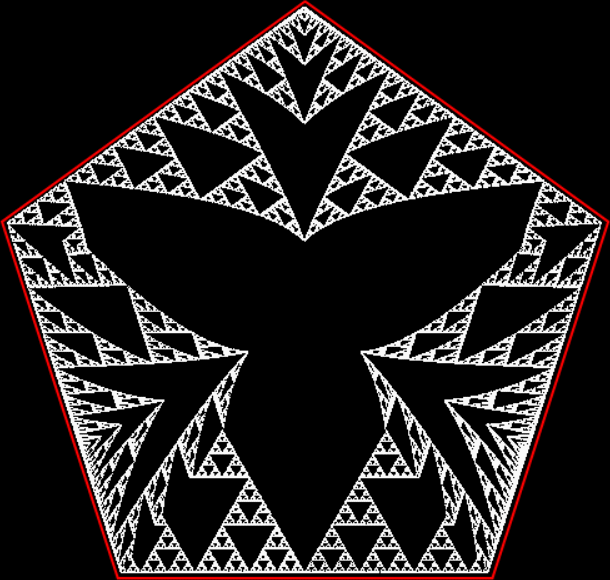
Flowly We Rote

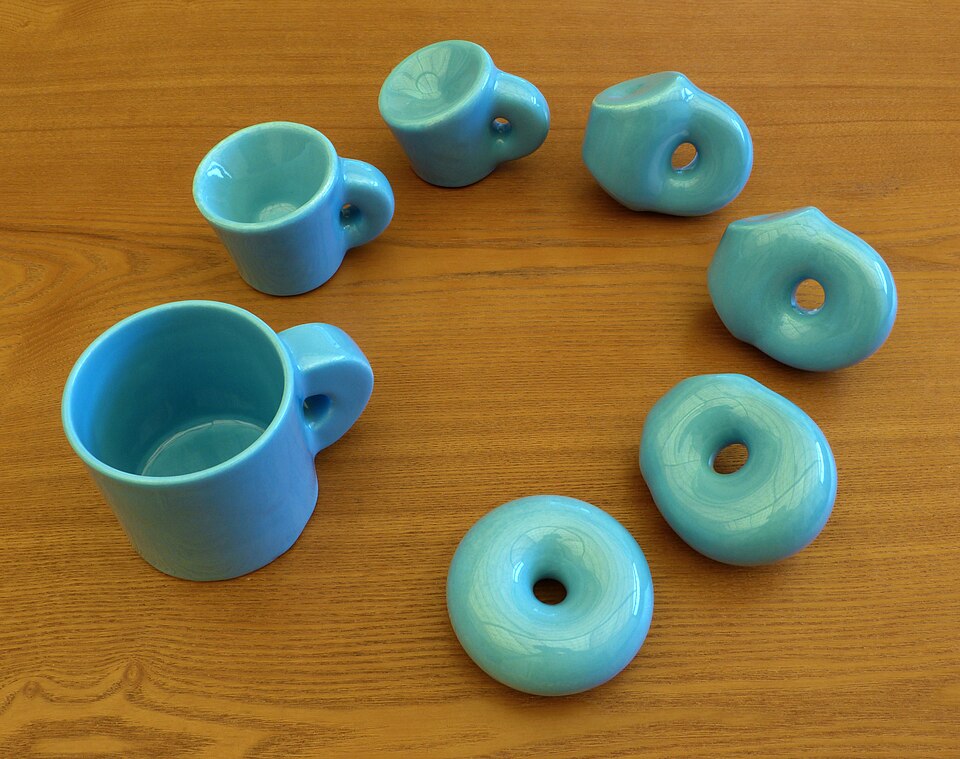
As the old mathematical joke goes: A topologist is someone who can’t tell the difference between a coffee-cup and a donut. That’s because topology is, crudely speaking, the branch of geometry that studies shapes when the distance and angle between one part and another doesn’t matter. For example, how can (or can’t) shapes flow smoothly into each other, without being cut or torn or pierced? The shape of a perfectly plastic substance can flow smoothly from that of a coffee-cup into that of a donut. And vice versa:

Topologically speaking, a coffee-cup is the same as a donut (Wikipedia)


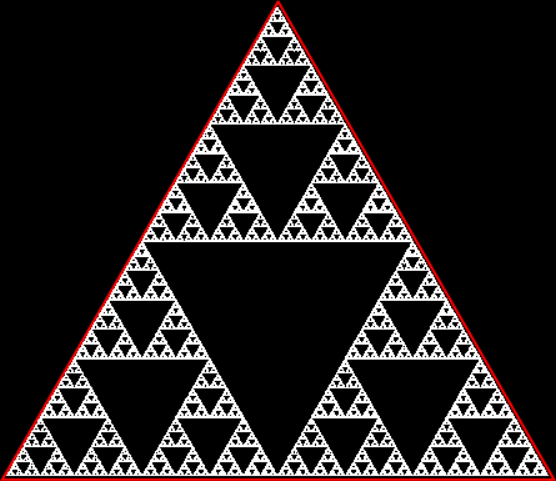
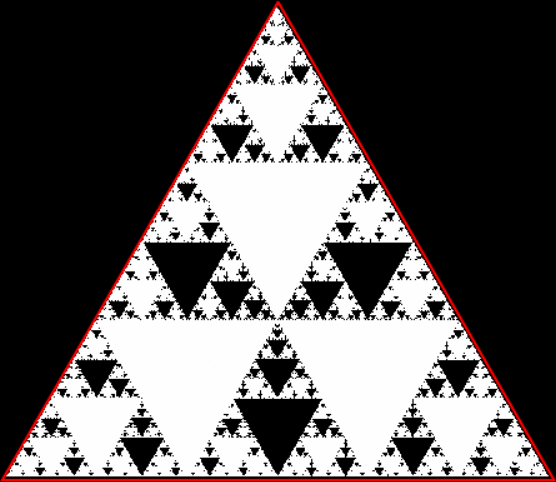
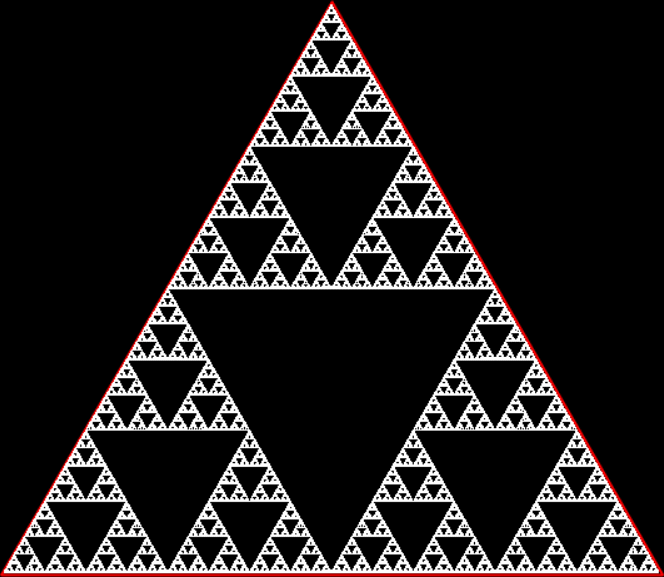
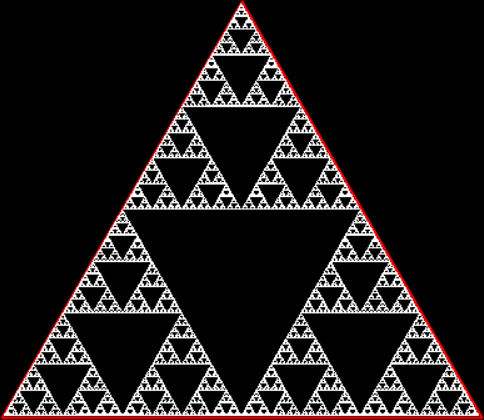
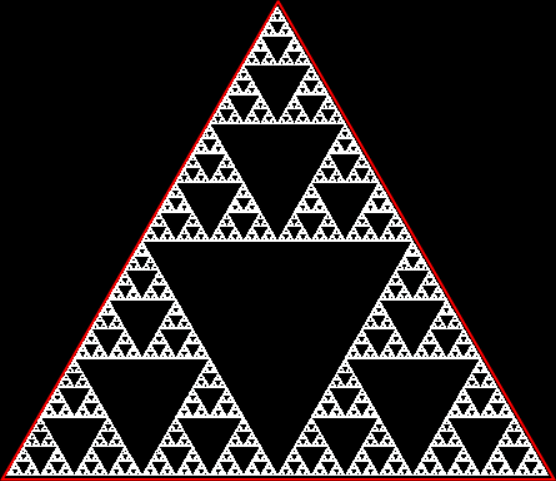
That’s topology in three dimensions. I came across some unexpected topology in two dimensions when I was looking at transformations of a triangle — the Sierpiński triangle, a fractal named after the Polish mathematician Wacław Sierpiński (1882-1969):

Sierpiński triangle


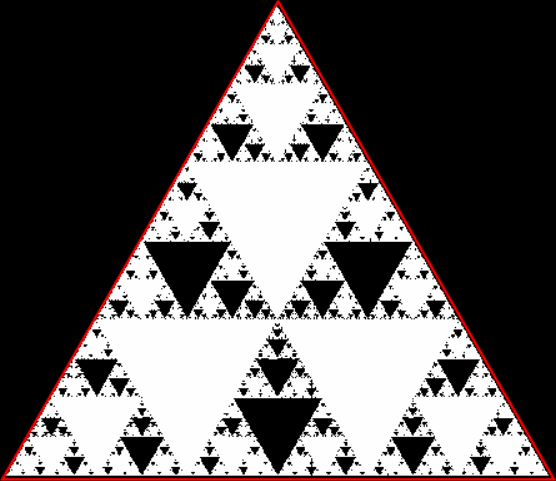
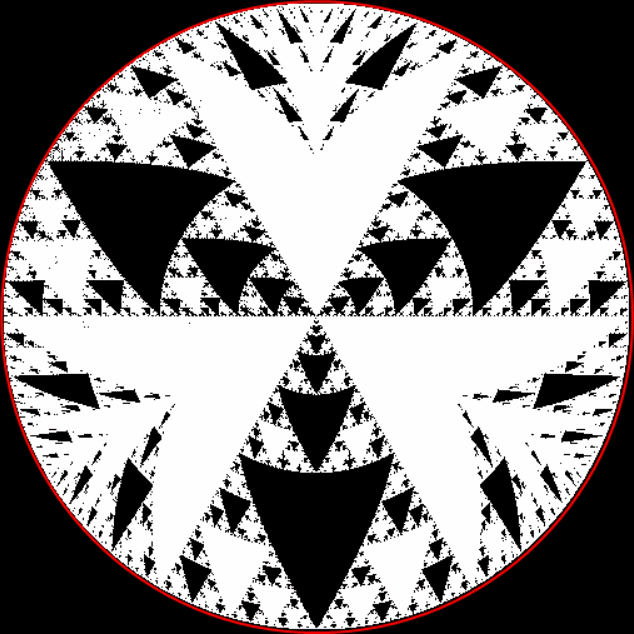
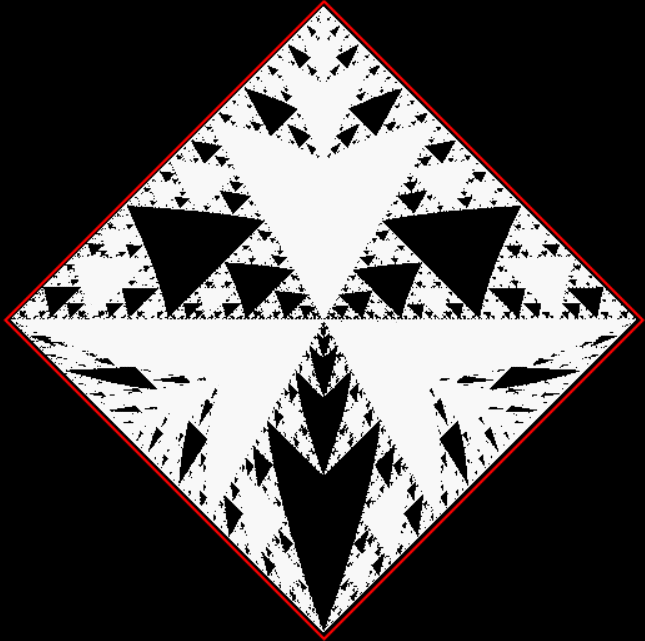
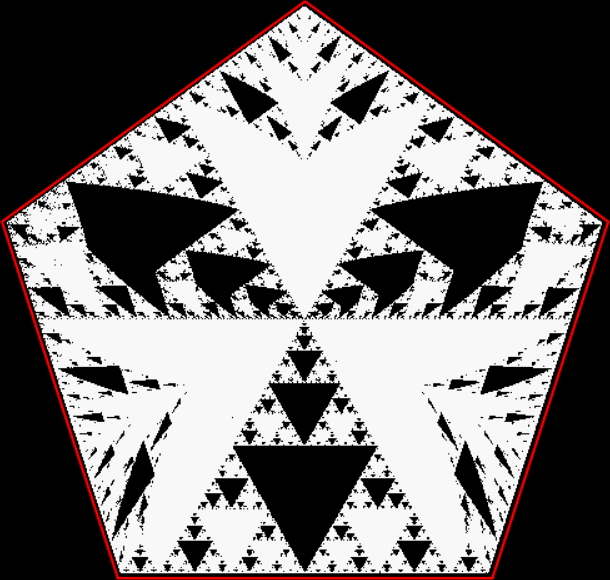
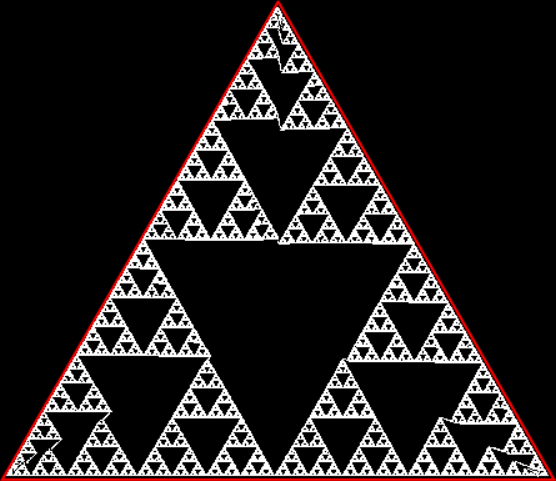
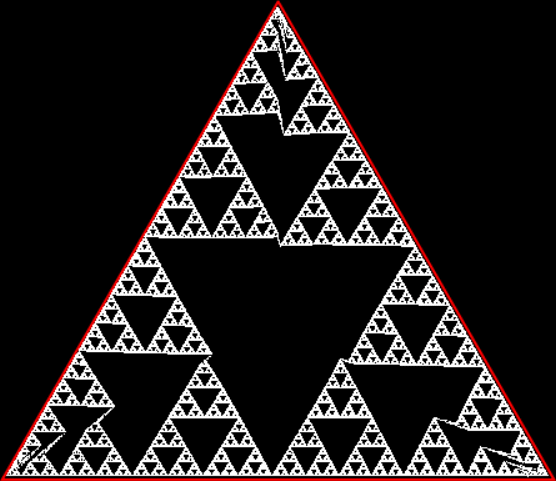
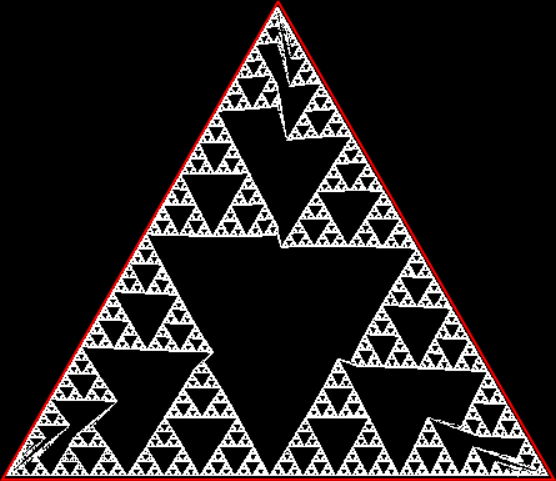
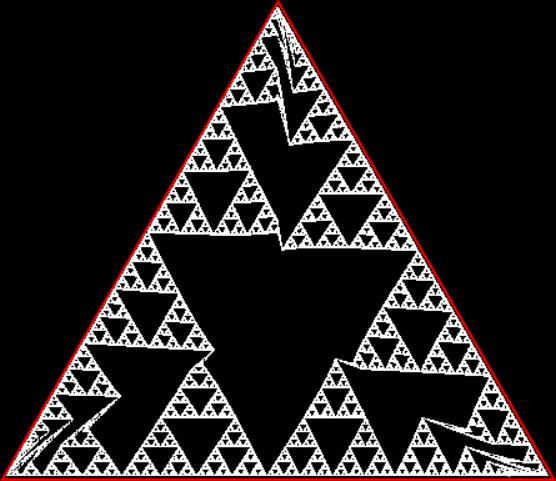
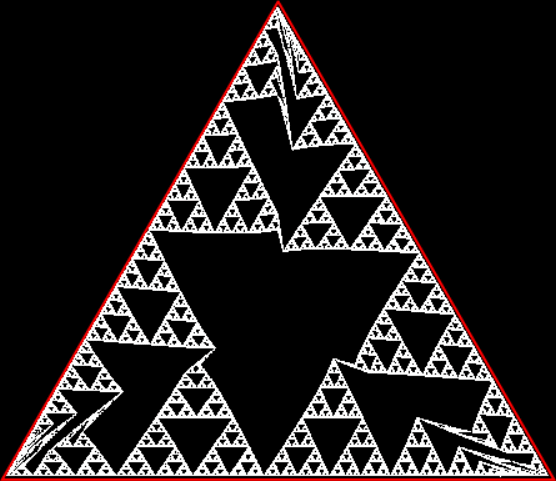
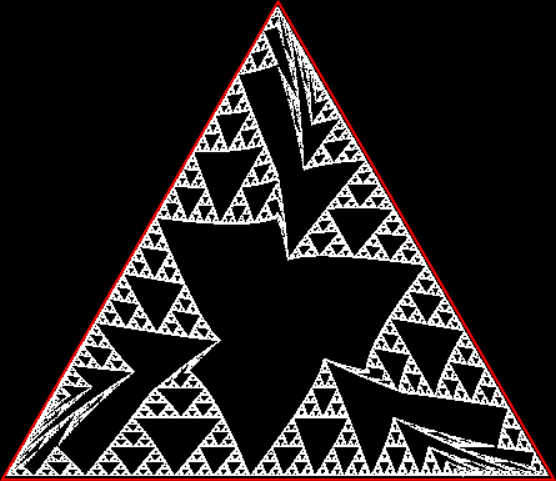
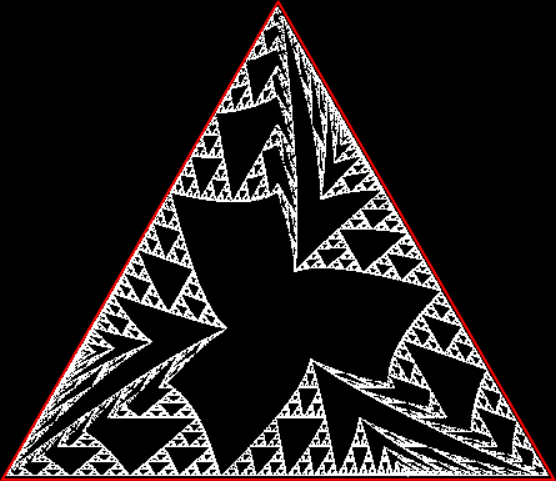
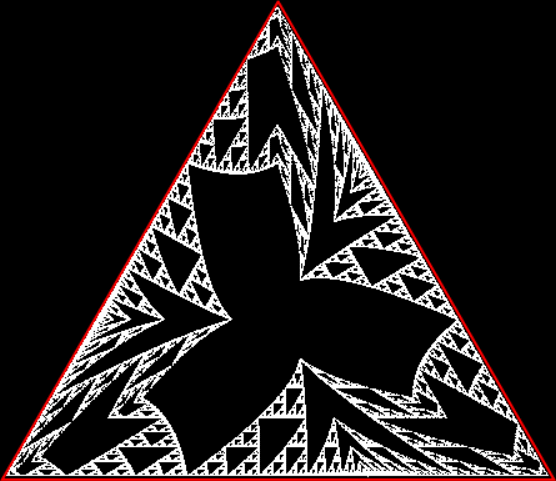
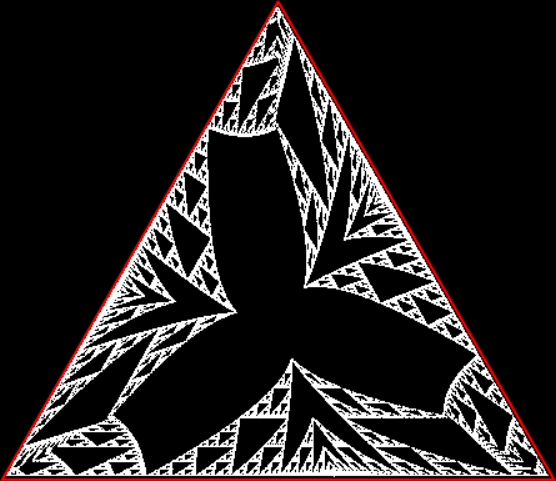
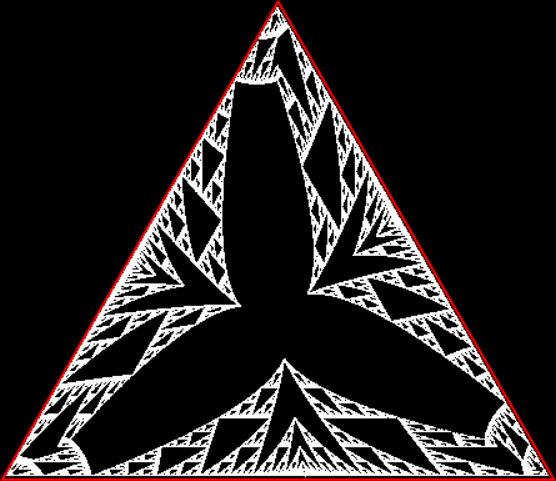
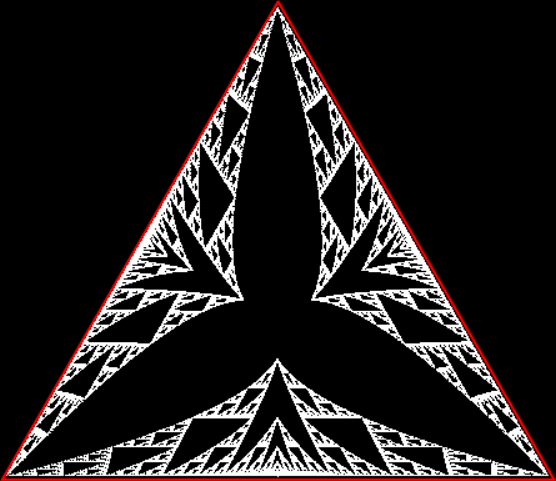
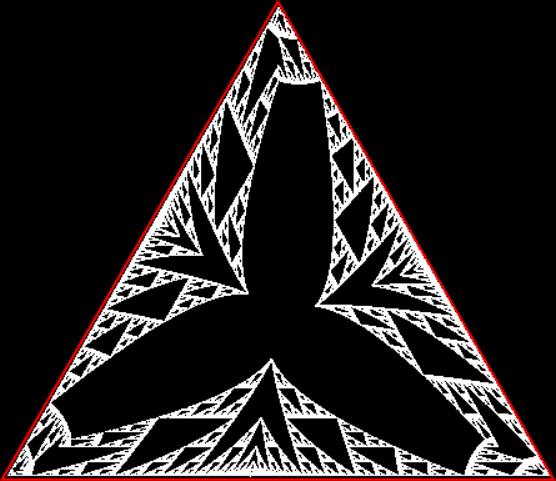
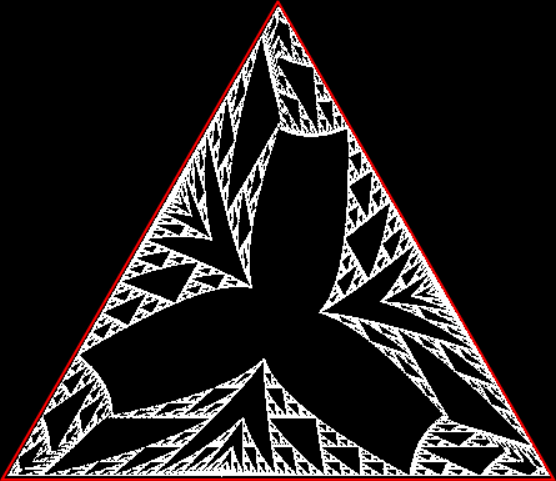
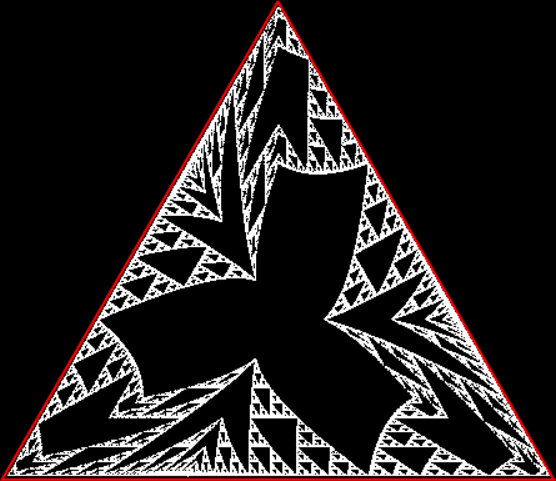
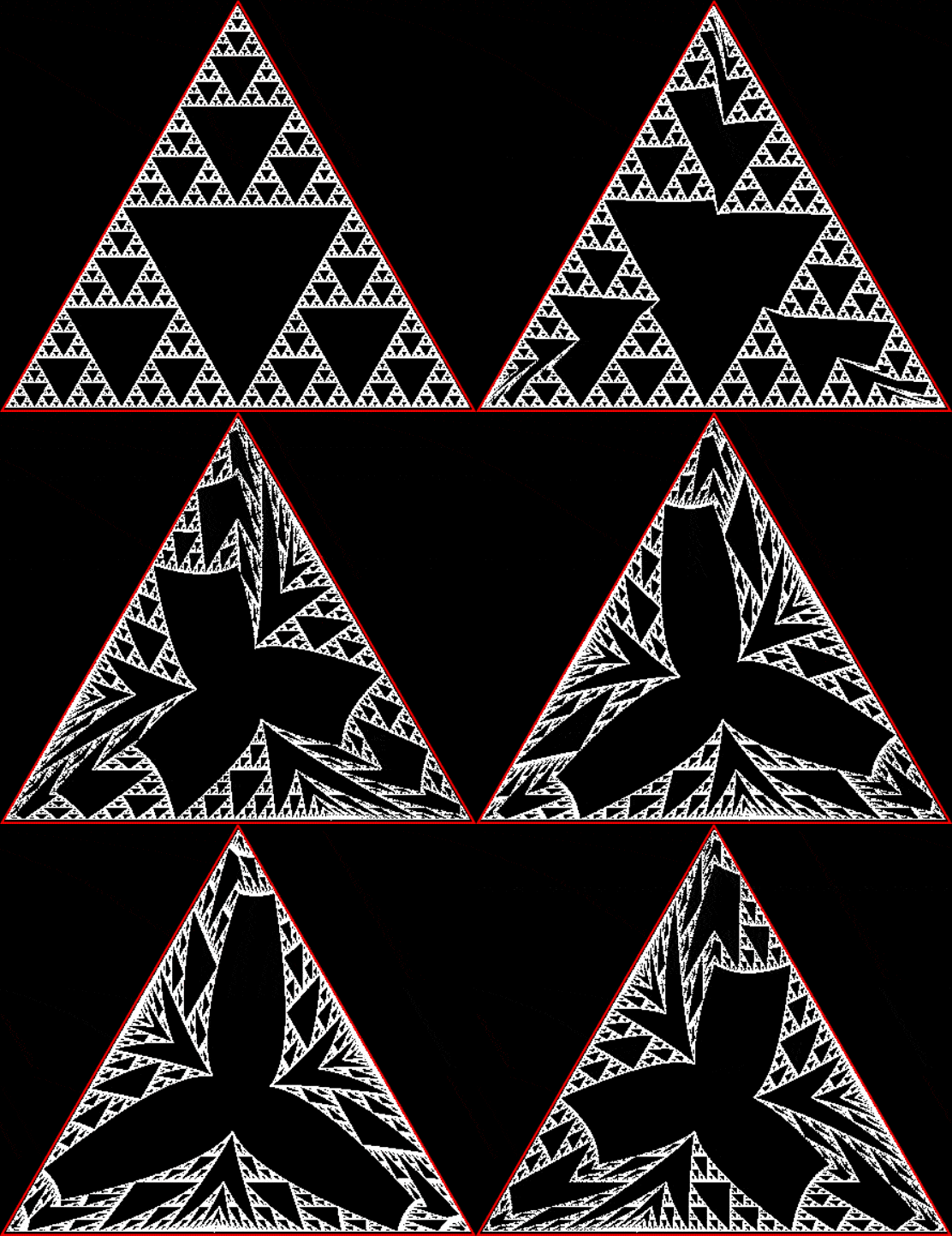
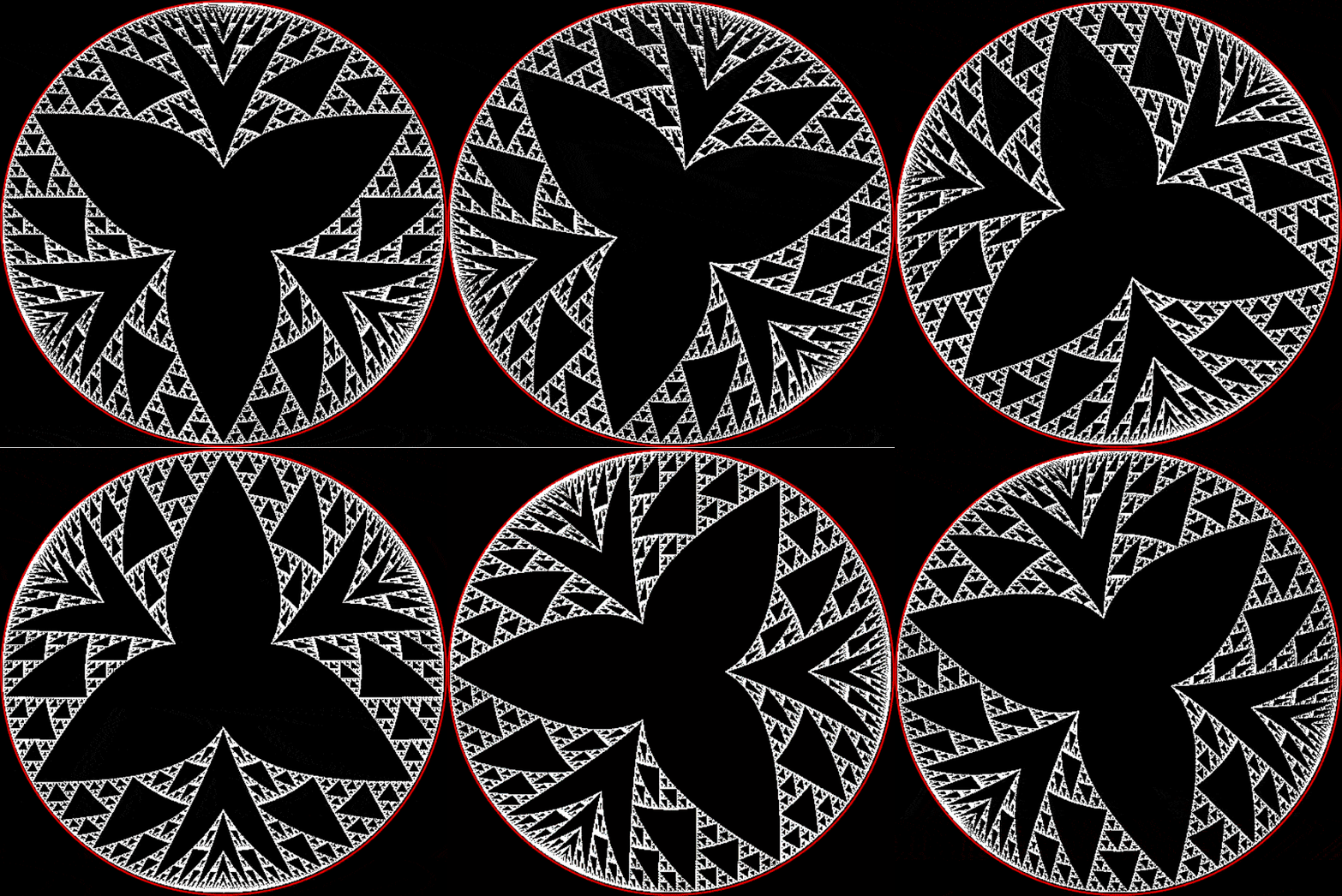
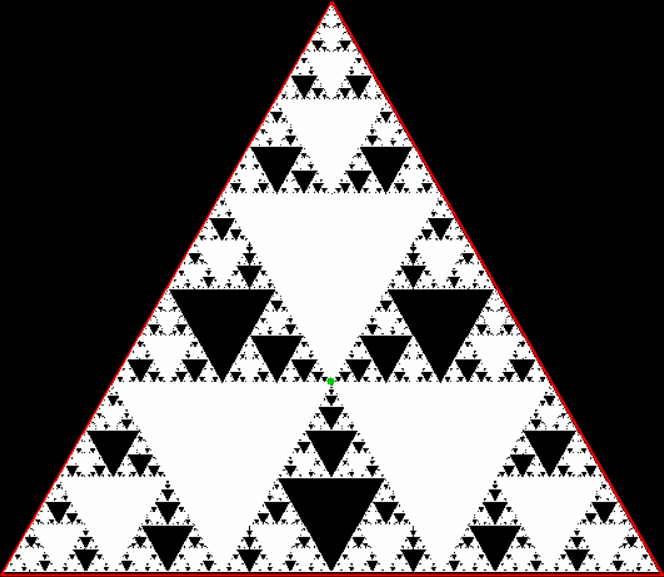
I wondered what happened when you rotate the points inside a Sierpiński triangle while the triangular boundary remains fixed. That is, each point stays at the same position in the width between the center and the boundary as the whole interior flows around the center of the triangle:

Points inside a Sierpiński triangle rotated by 1°


Points inside a Sierpiński triangle rotated by 2°


Points inside a Sierpiński triangle rotated by 3°


Points rotated by 4°


Points rotated by 5°


Points rotated by 10°


Points rotated by 20°


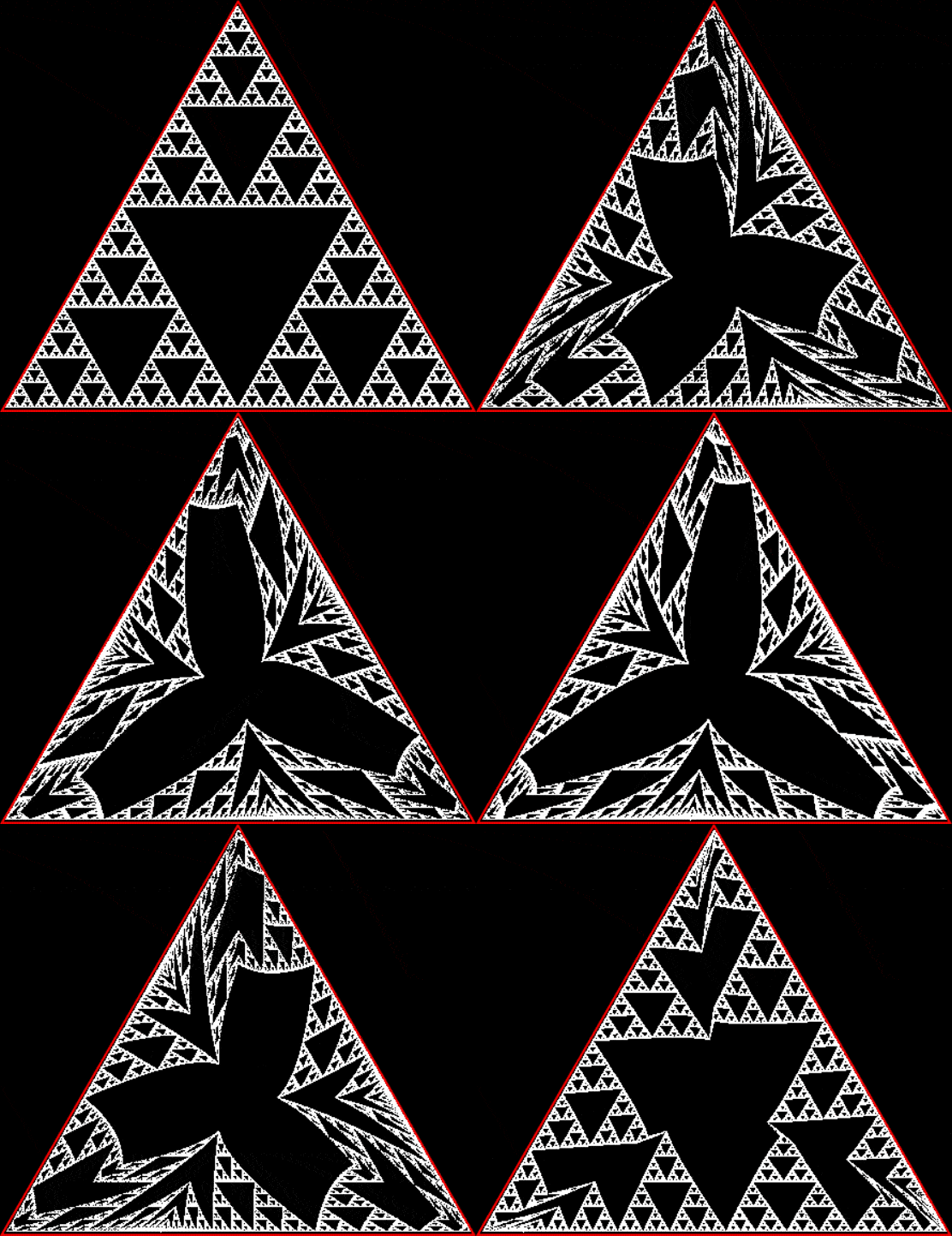
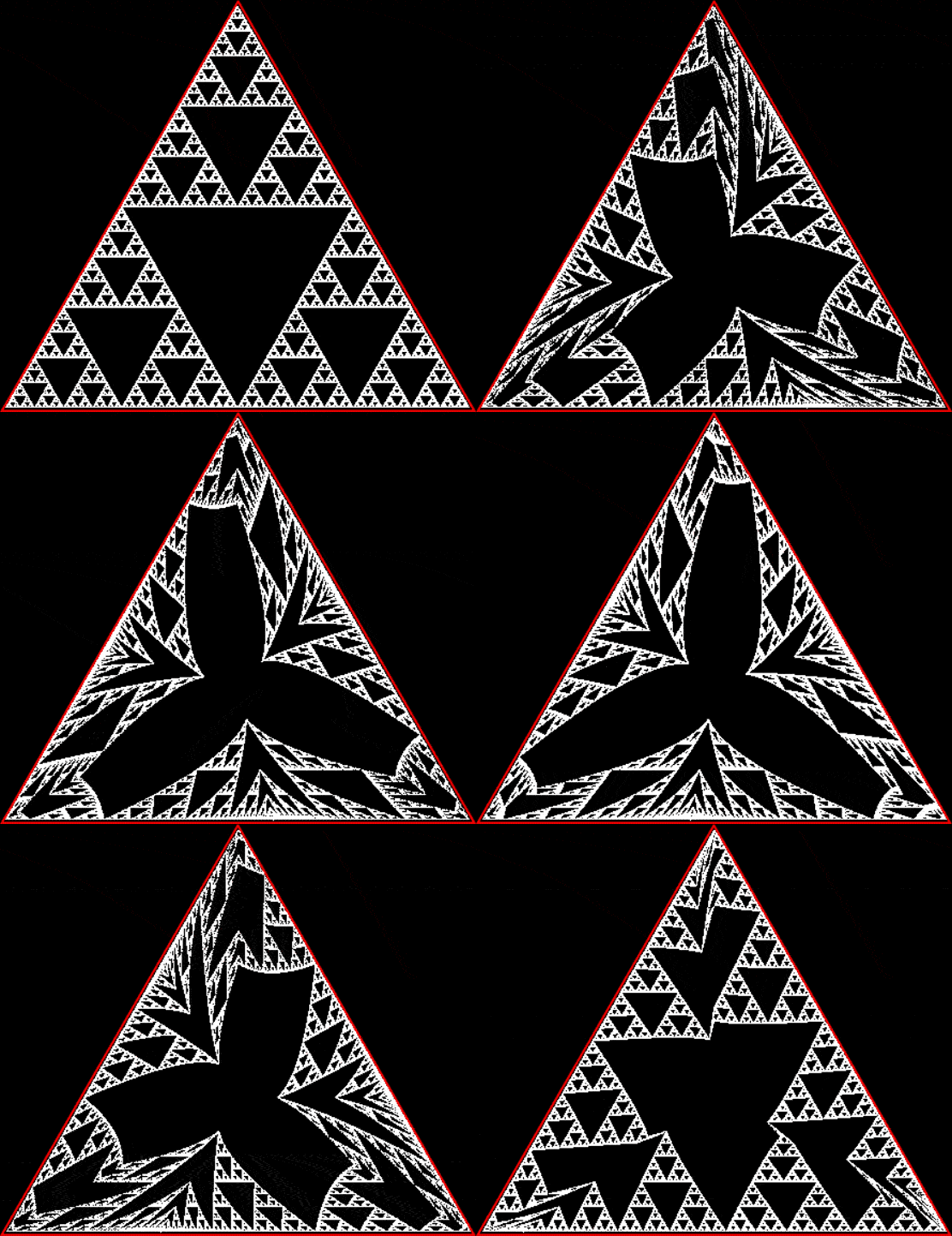
Points rotated by 30°


Points rotated by 40°


Points rotated by 50°


Points rotated by 60°


Points rotated by 70°


Points rotated by 80°


Points rotated by 90°


WARNING! If you’re sensitive to flickering images, please note that there are flickering animated gifs below


Here’s the flowing rotation from 0° to 90° animated in a gif:

Interior points of Sierpiński triangle flowing 0° → 90° around center (animated at ezGif)

And here’s the whole rotating flow from 0° to 120° (which maps the points back onto themselves):

Interior points of Sierpiński triangle flowing continuously around center (slow animation)


Interior points flowing continuously around the center (faster animation)


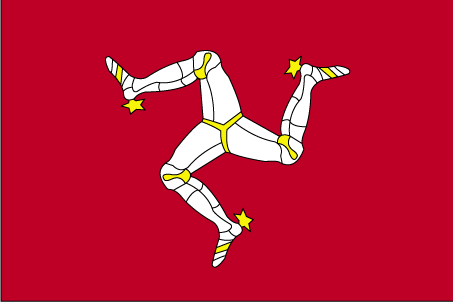
As you can see, the appearance of the Sierpiński triangle changes notably as the points rotate: the rotations aren’t rotationally symmetrical (in the standard sense). Sometimes a rotation looks like a stumpy triskelion, a three-legged shape like the flag of the Isle of Man:

Triskelion on the Manx flag (Wikipedia)


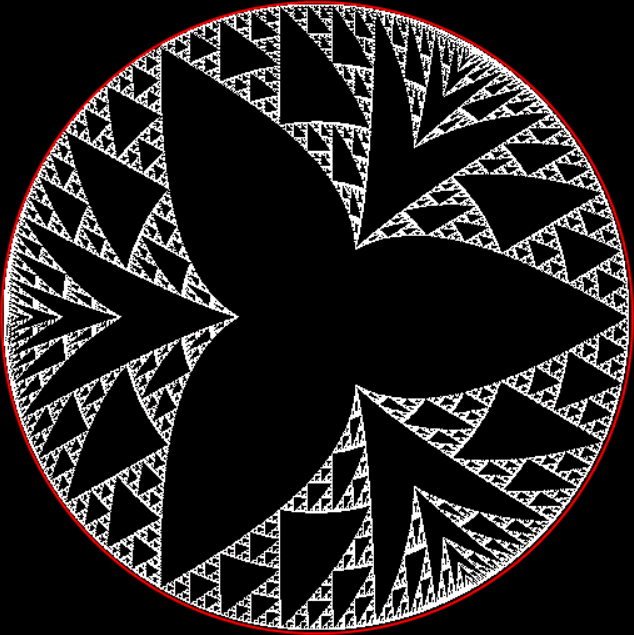
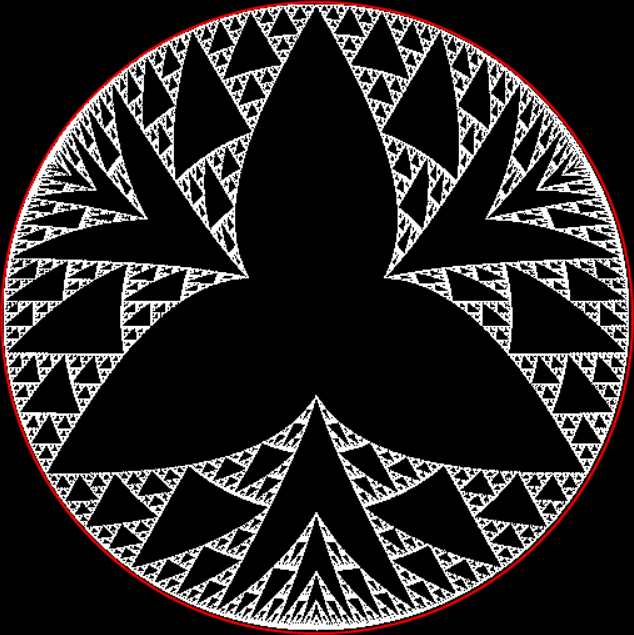
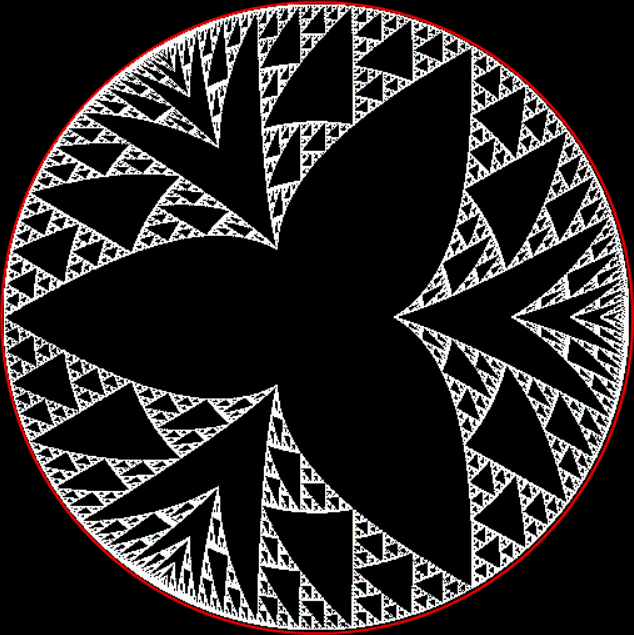
Interior points of a Sierpiński triangle rotated by 30°


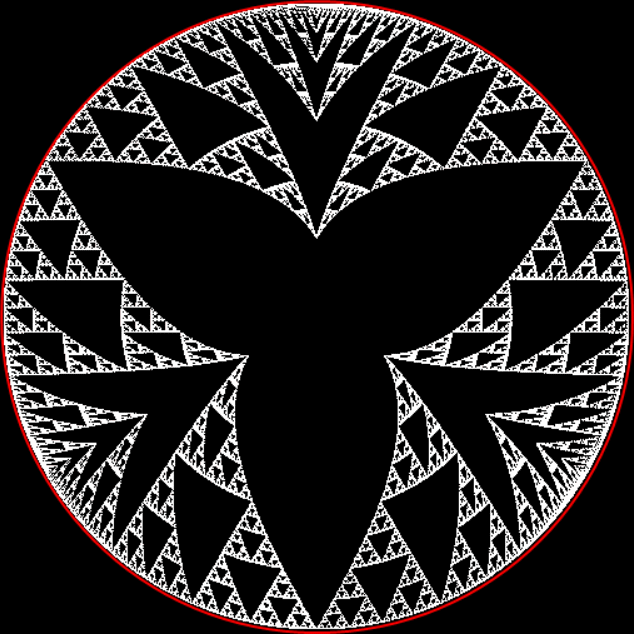
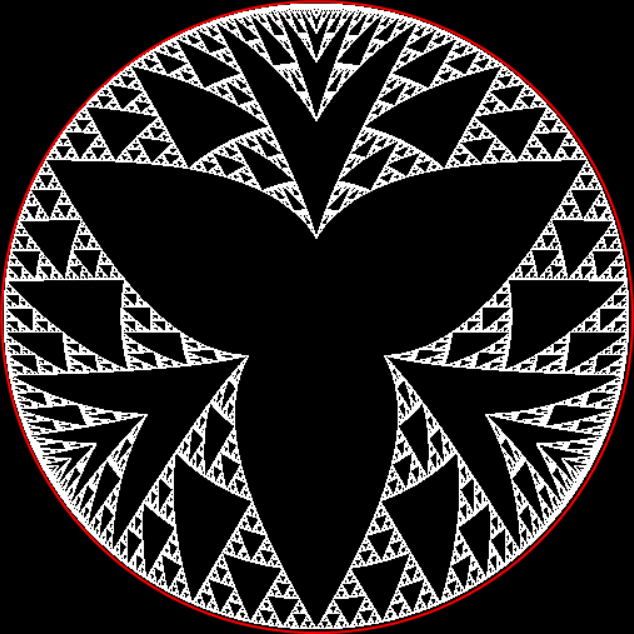
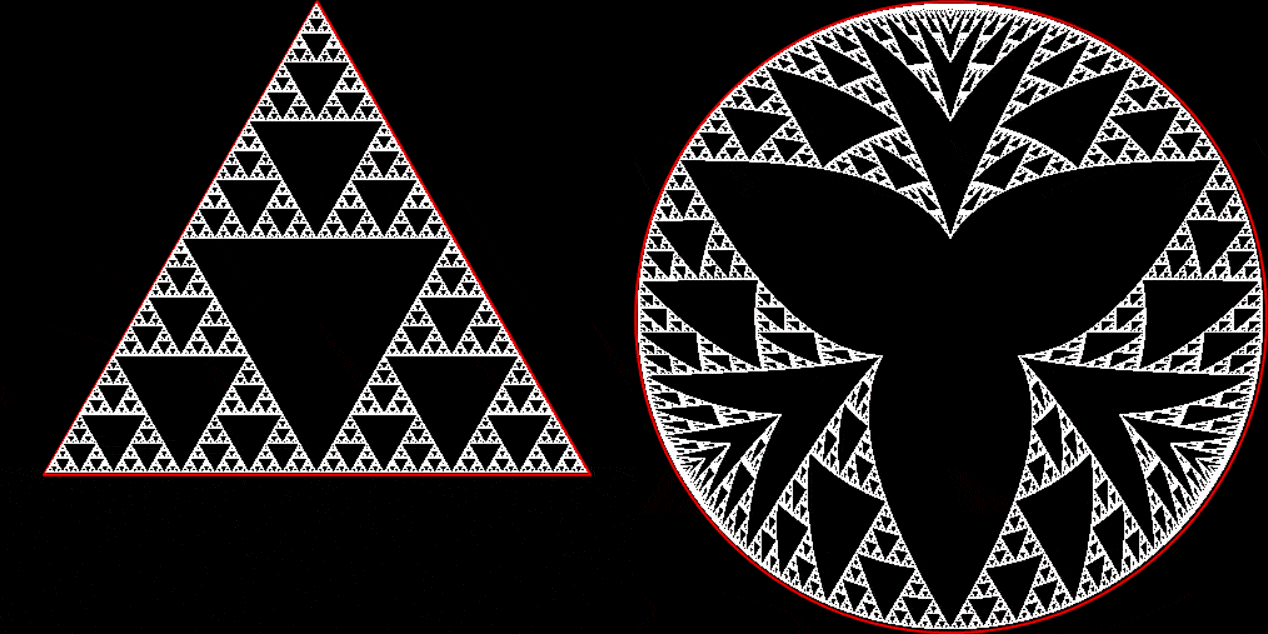
But topologically speaking, each rotated triangle is the same (just as, topologically speaking, a coffee-cup is the same as a donut). You can see how they’re topologically the same by imagining that the triangle is stretched into a circle, like this:

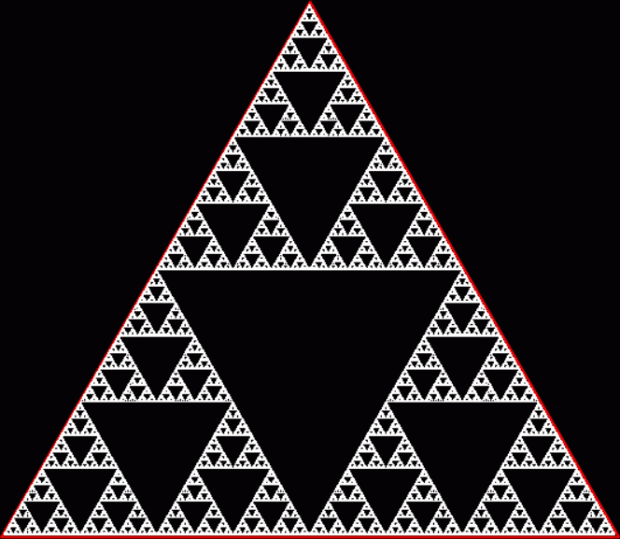
Sierpiński triangle

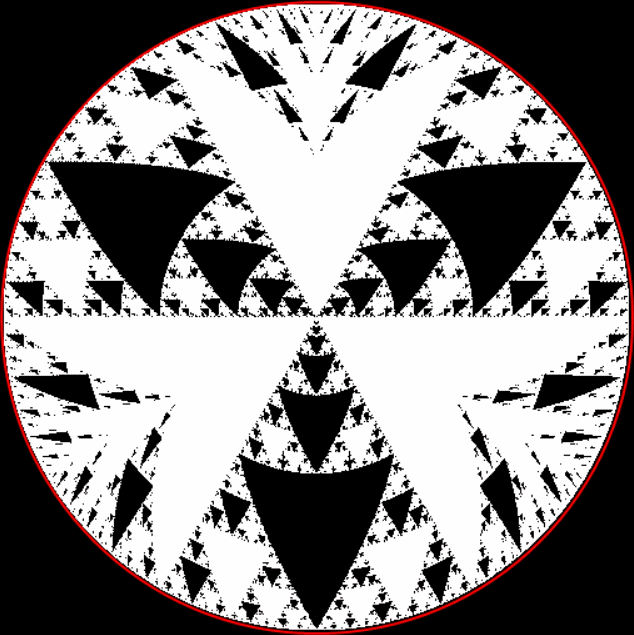
Sierpiński triangle stretched into circle


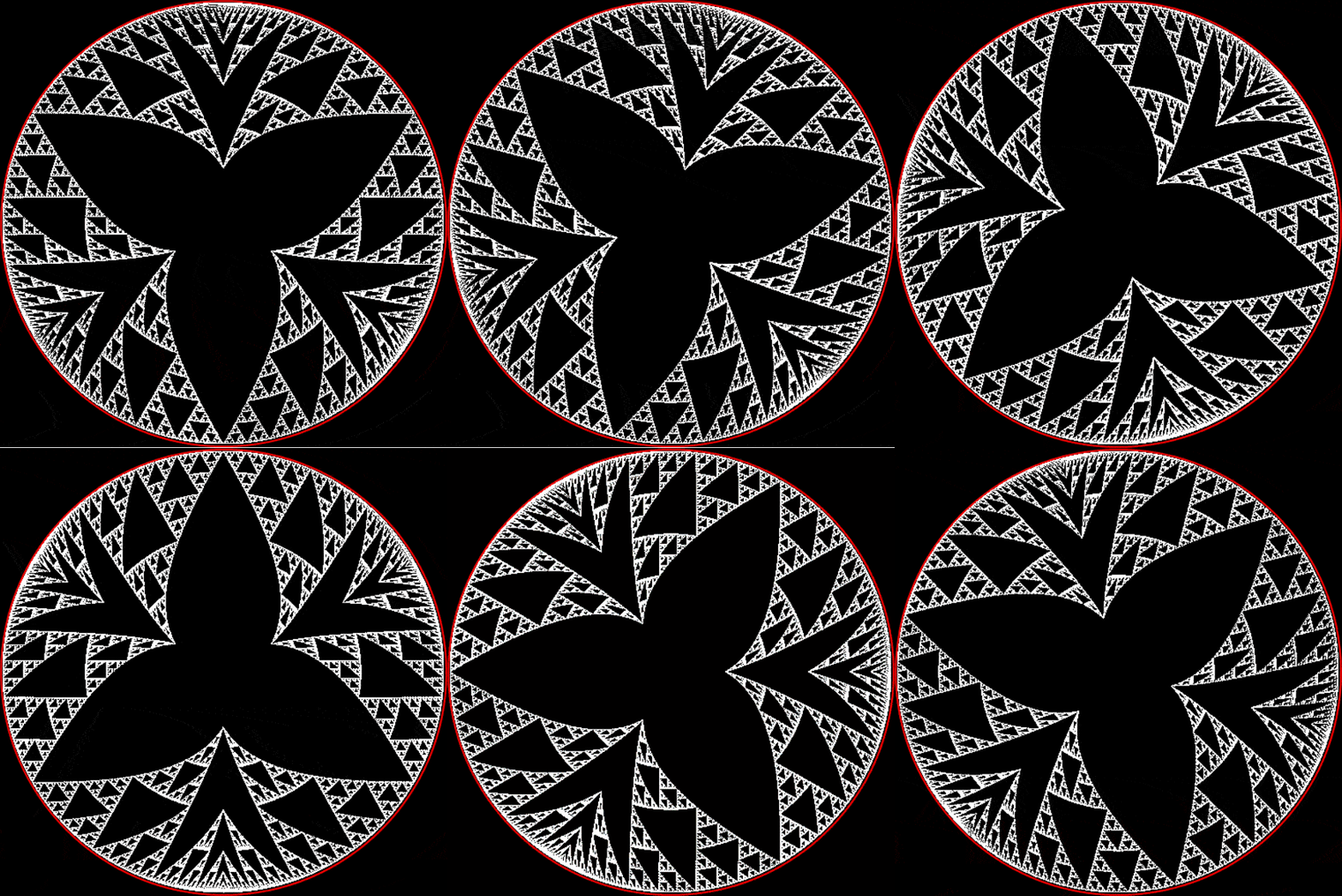
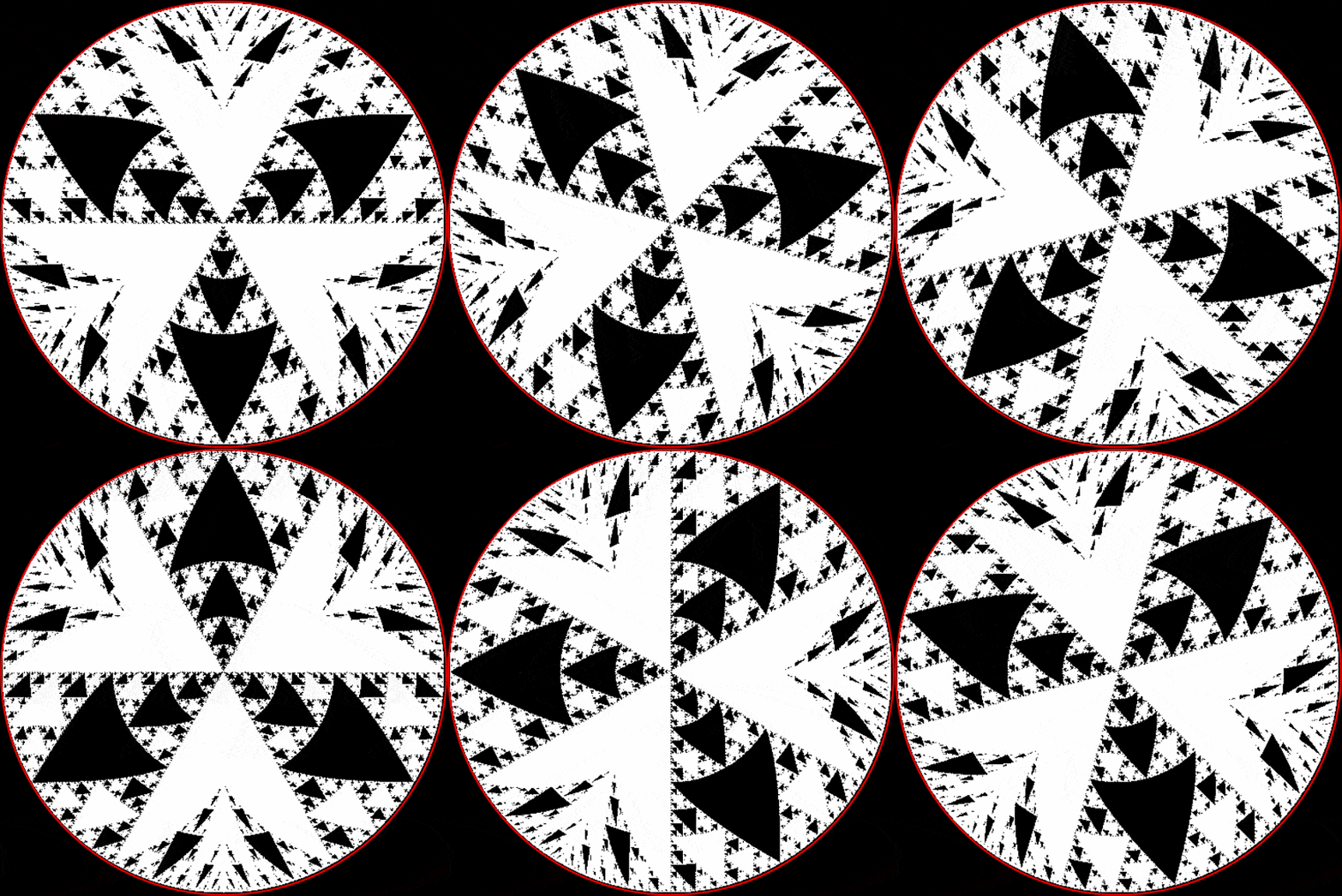
When you circularize the rotated triangles, all the circularized triangles are rotationally symmetrical:

Points rotated by 30°

Circle from triangle rotated by 30°


Points rotated by 60°

Circle from triangle rotated by 60°


Points rotated by 90°

Circle from triangle rotated by 90°


Here are two animated gifs of the circularized triangles rotating:

Circularized Sierpiński triangle flowing around center (slow animation at ezGif)
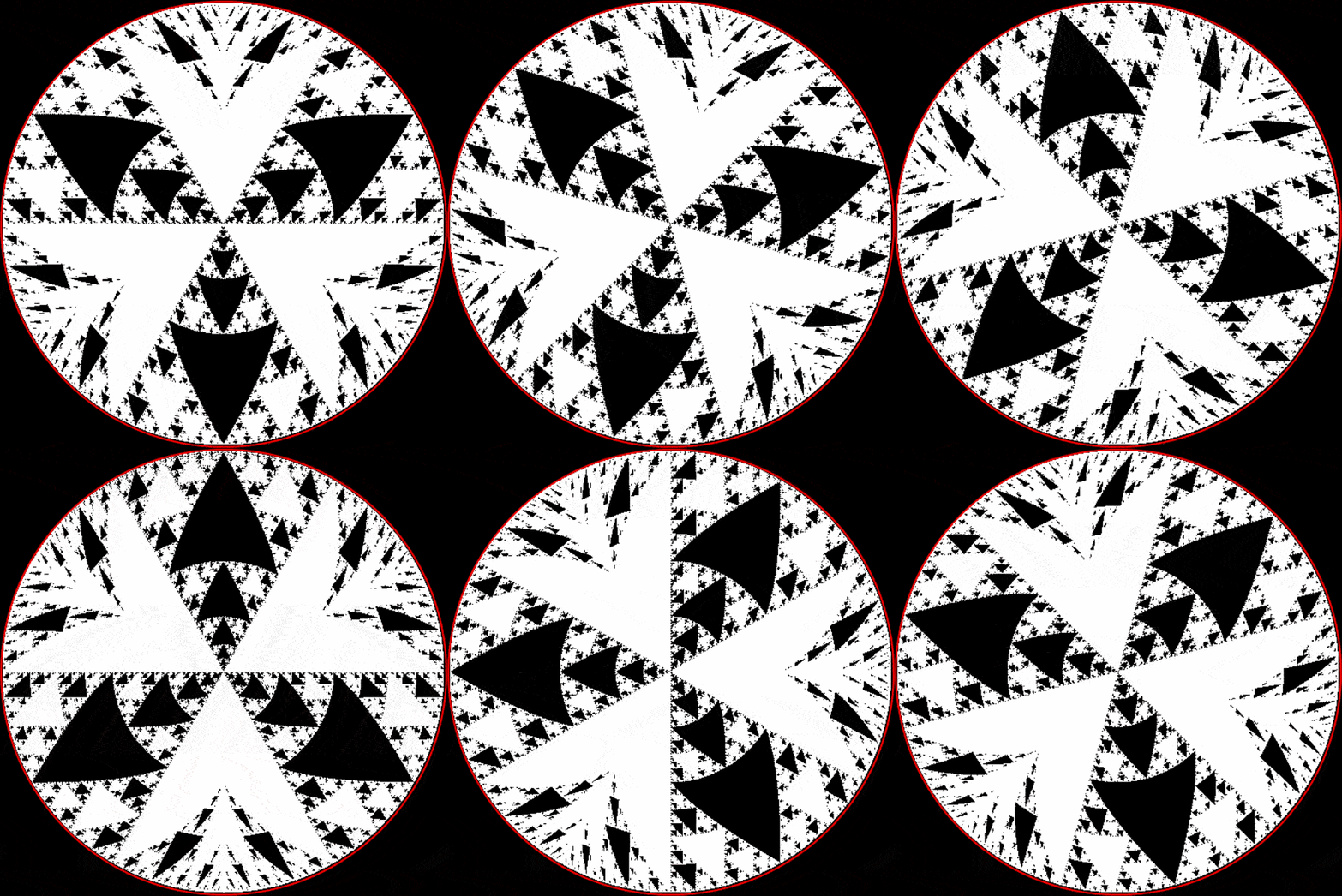

Circularized Sierpiński triangle flowing around center (faster animation)


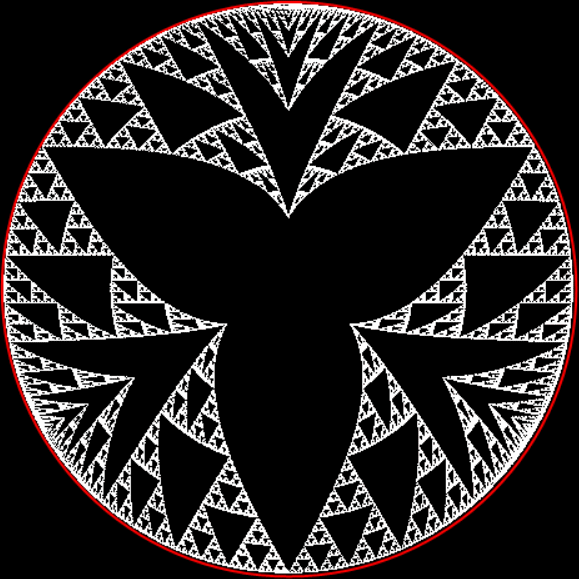
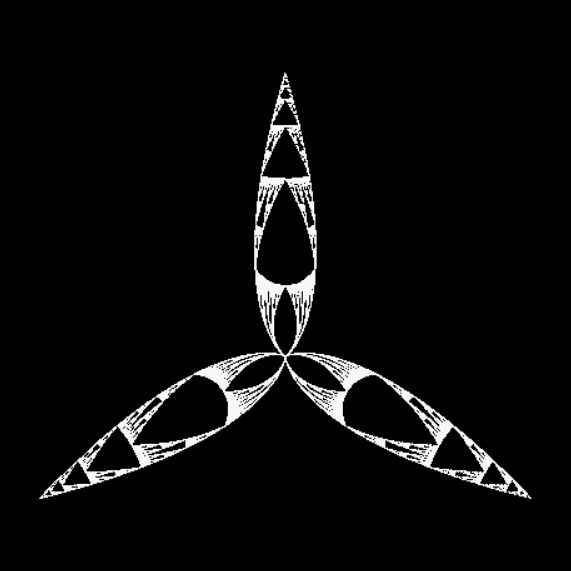
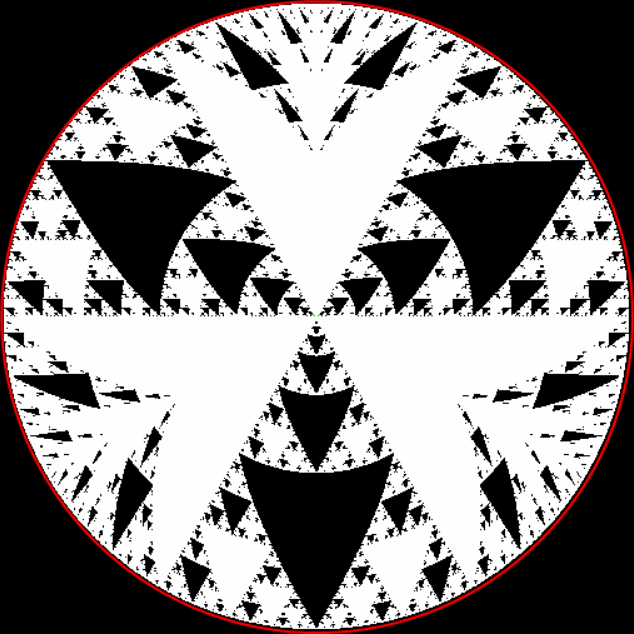
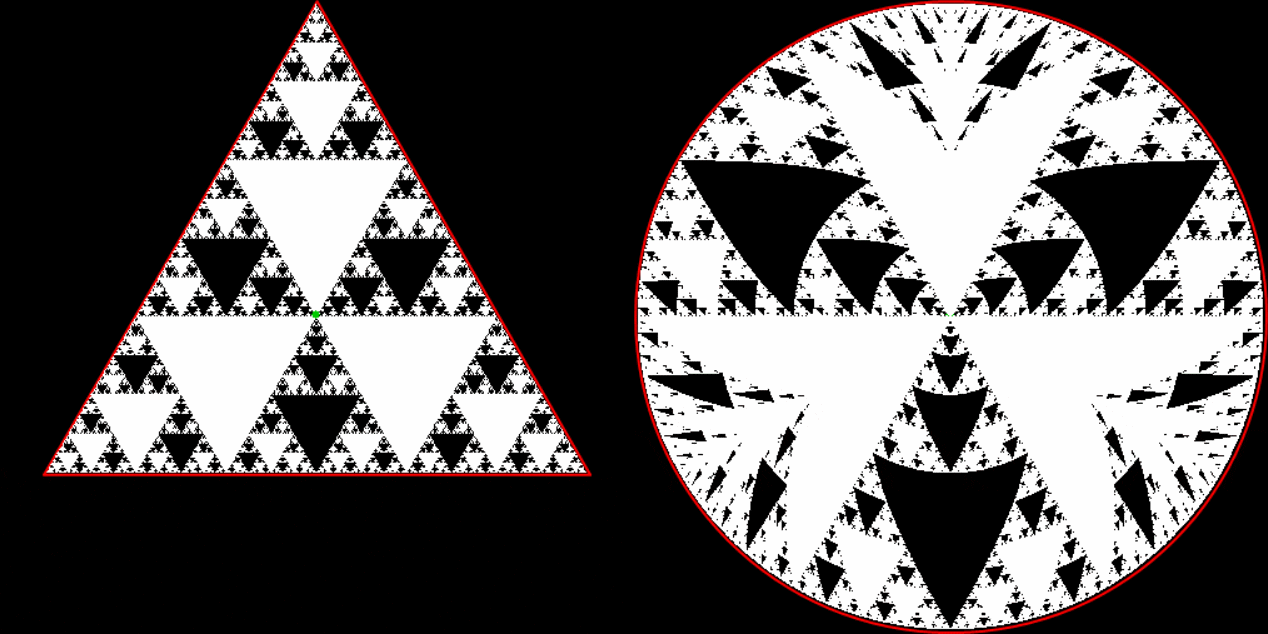
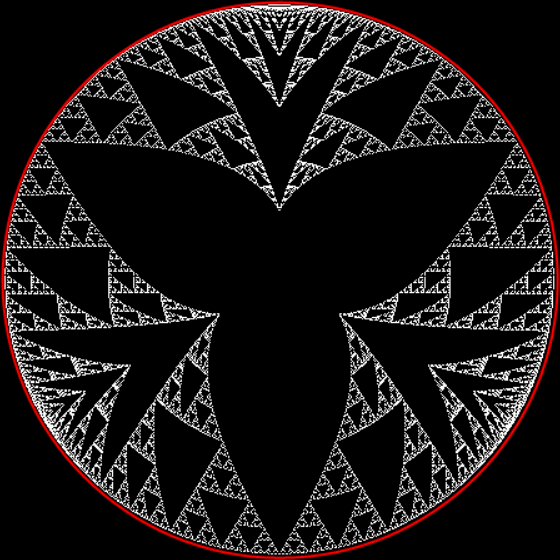
Here’s what I call the centered Sierpiński triangle turned into a circle:

Centered Sierpiński triangle


Circle from centered Sierpiński triangle


And finally, the circularized centered Sierpiński triangle flowly rotating at two speeds:

Circularized centered Sierpiński triangle flowing around center (slow animation at ezGif)

Circularized centered Sierpiński triangle flowing around center (faster animation)


Perverting the Pircle

Here again is the famous Sierpiński triangle, a fractal named after the Polish mathematician Wacław Sierpiński (1882-1969):

A Sierpiński triangle


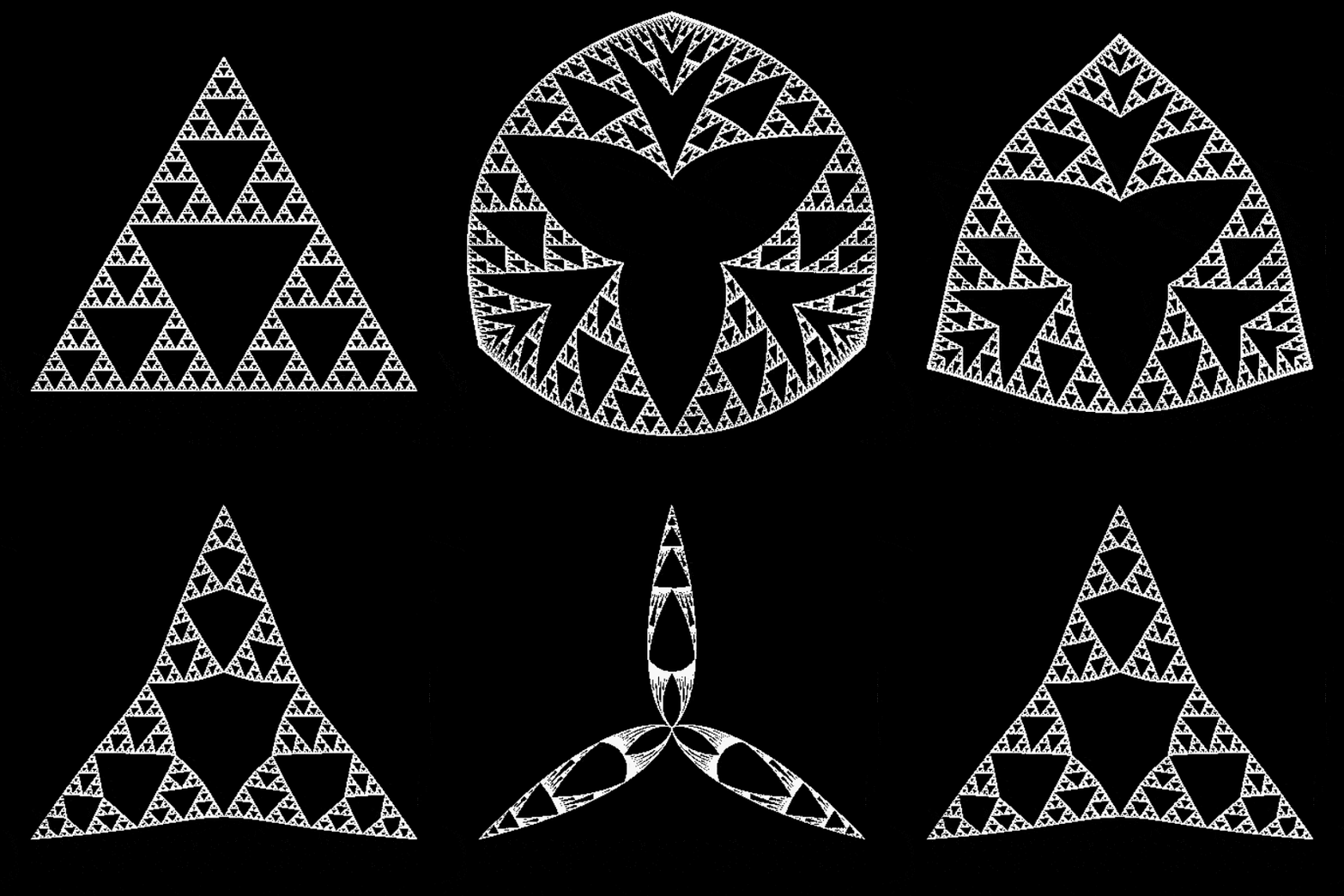
And here’s a Sierpiński ciangle — my name for a Sierpiński triangle stretched into a circle:

A Sierpiński ciangle or Sierpiński pircle


More generally, you could call that shape a pircle, a polygon turned into a circle. But you can also squeeze the Sierpiński triangle and turn it into this shape:

A Sierpiński squircle


You could call that a squircle, a squeezed circle. You use the same trigonometry to create both the Sierpiński ciangle and the squeezed Sierpiński triangle. Here’s an animated gif showing the Sierpiński triangle cycling between polygon, pircle and squircle:

Sierpiński triangle, pircle and squircle (animated at EZgif)
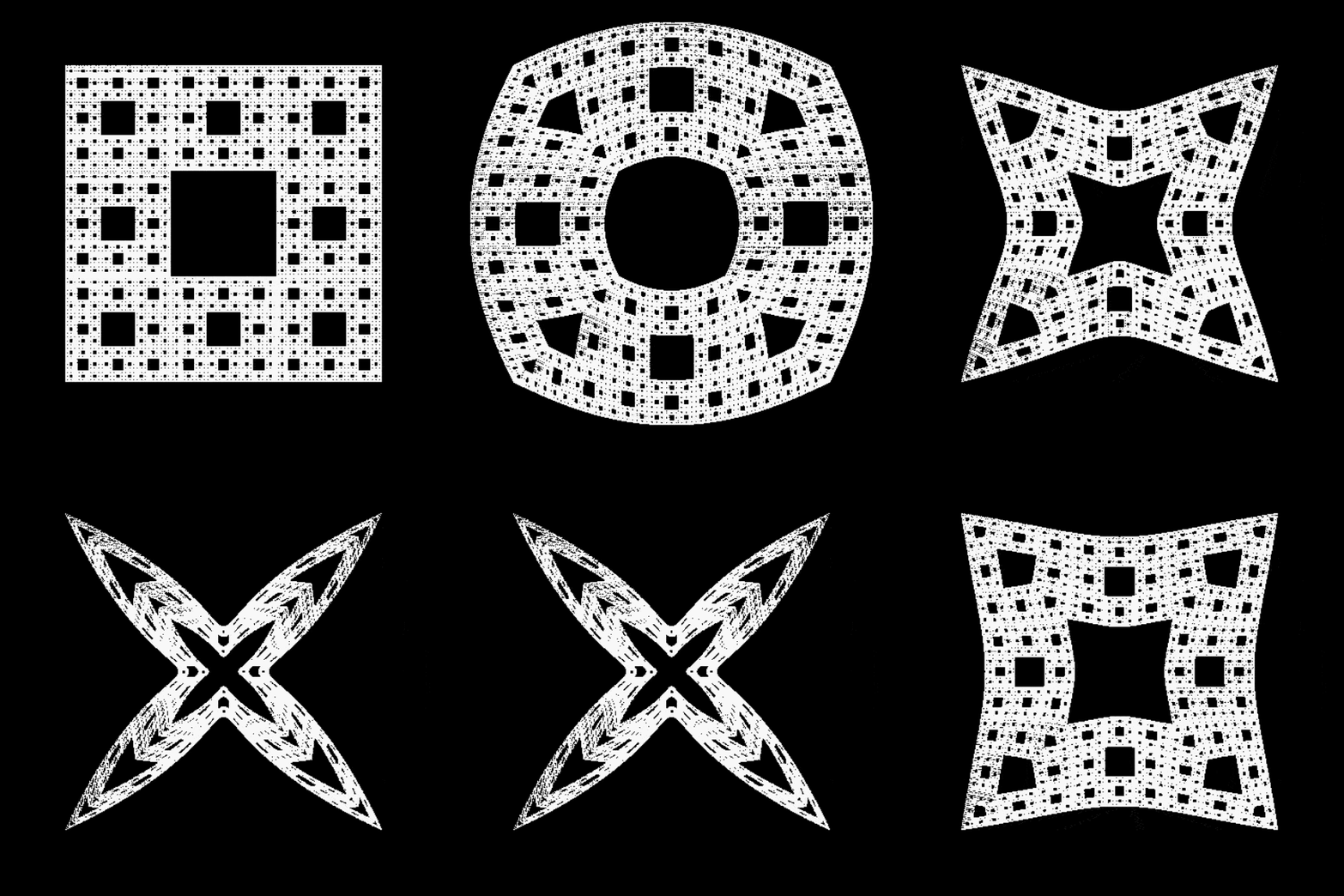

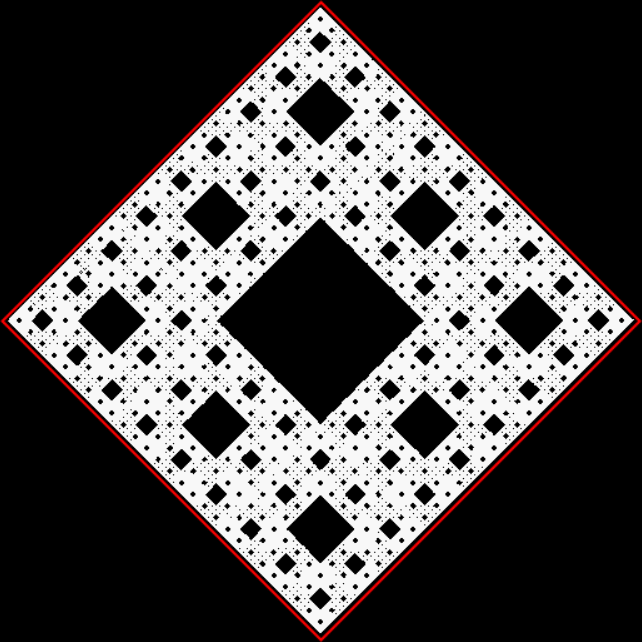
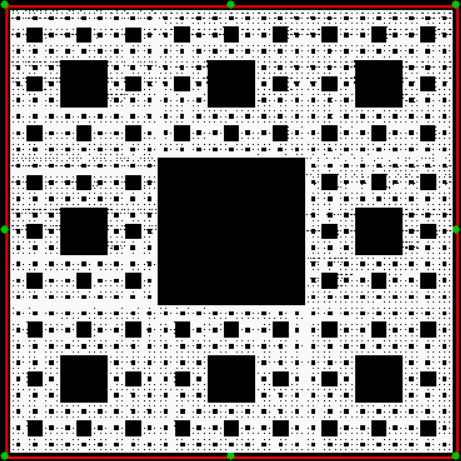
Now for the Sierpiński carpet, the square analogue of the Sierpiński triangle (you can create it with a point jumping 2/3rds of the way towards the vertices and midpoints of a square, as marked with green dots):

A Sierpiński carpet


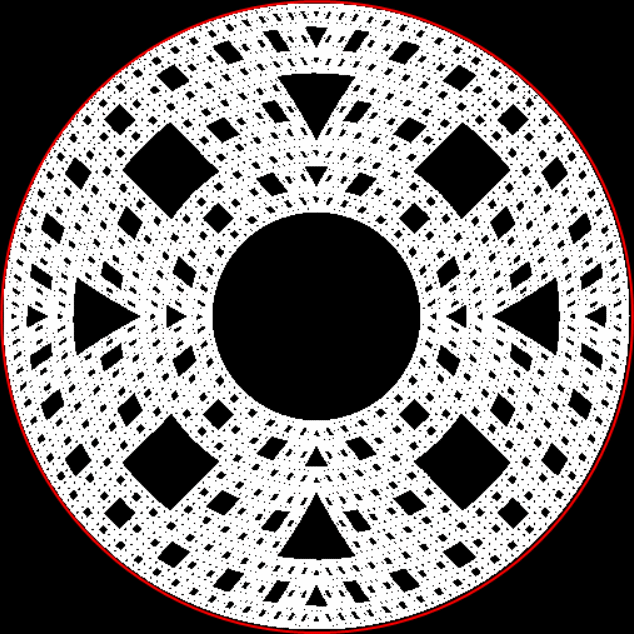
And here’s the carpet as a pircle:

Pircle from Sierpiński carpet


Like the Sierpiński triangle, you can both pircularize and squeeze the Sierpiński carpet. Here’s the cycle as an animated gif:

Sierpiński carpet ⇔ pircle and squircle (animated at EZgif)
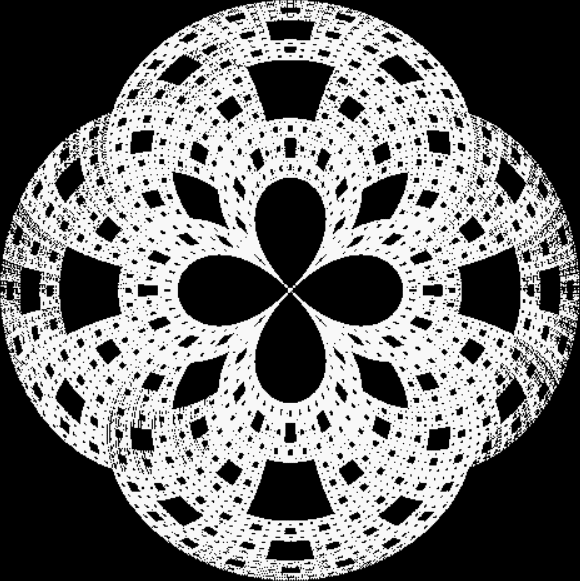

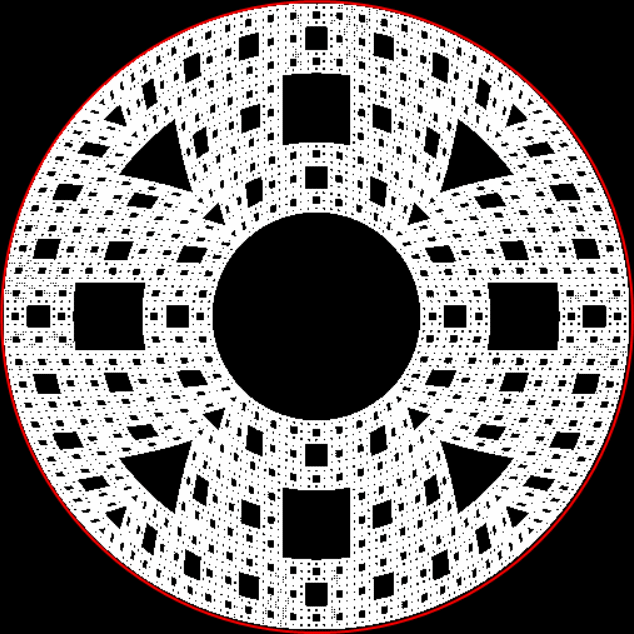
But you can also pervert the pircle, as it were (in Latin, pervertere means “to thoroughly alter”). For example, what if you flip the radius used in pircularizing the Sierpiński carpet, so that points on the perimeter of the pircle move to the center, and points at the center move to the perimeter? One variant of that perverted pircle looks like this:

Perverted pircle from Sierpiński carpet


Here are some more polygonal fractals turned into pircular fractals:

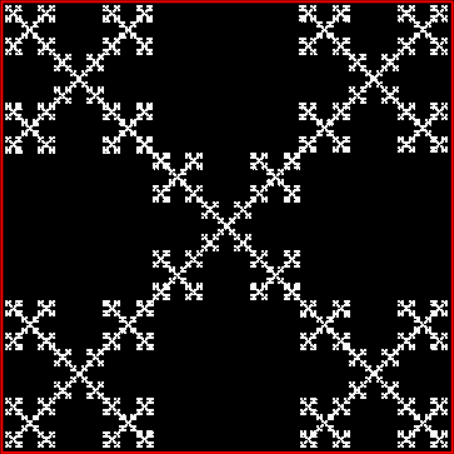
Fractal from point jumping 1/2 way to vertices of square (but not same vertex twice in a row)
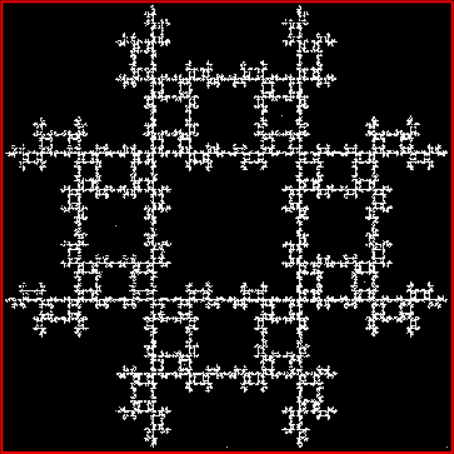
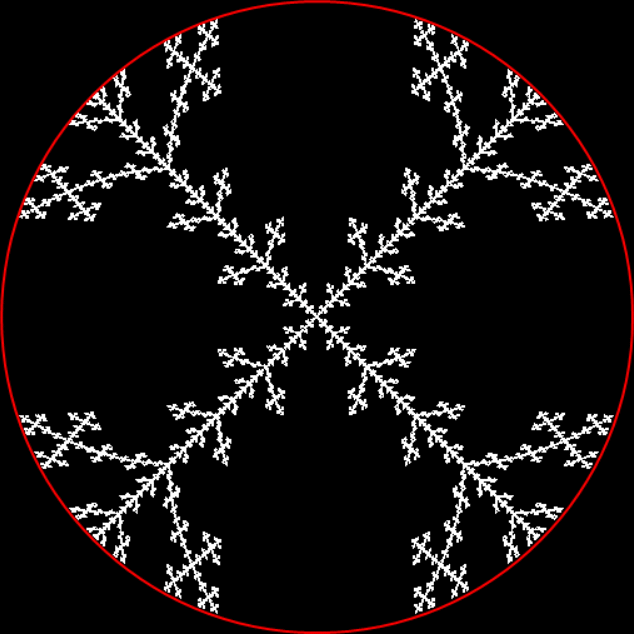
Pircle from square fractal


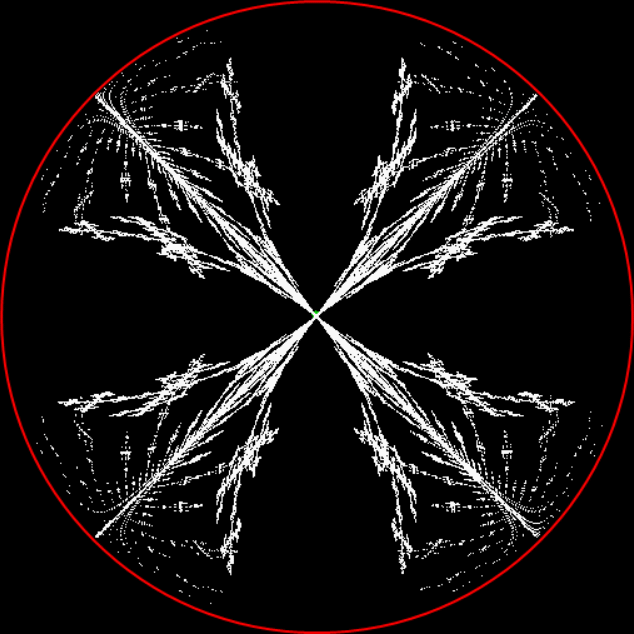
If you double each point’s distance from the centre, then fold any resulting distance beyond the circle’s radius back inside by halving it, you get this perverted pircle:

Perverted pircle from square fractal


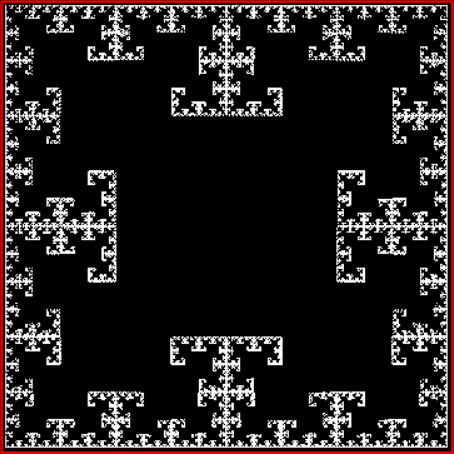
Here’s another polygonal fractal, the T-square fractal:

T-square fractal from point jumping 1/2 way to vertices of square (but not towards vertex directly opposite vertex just jumped towards)

Pircle from T-square fractal


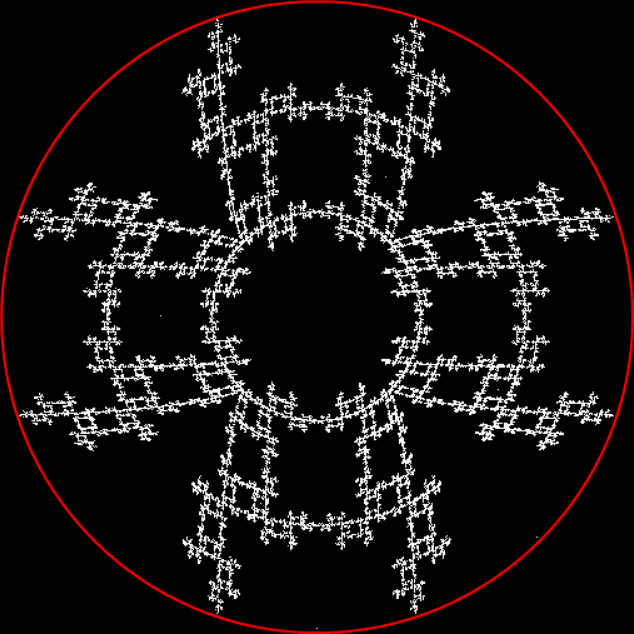
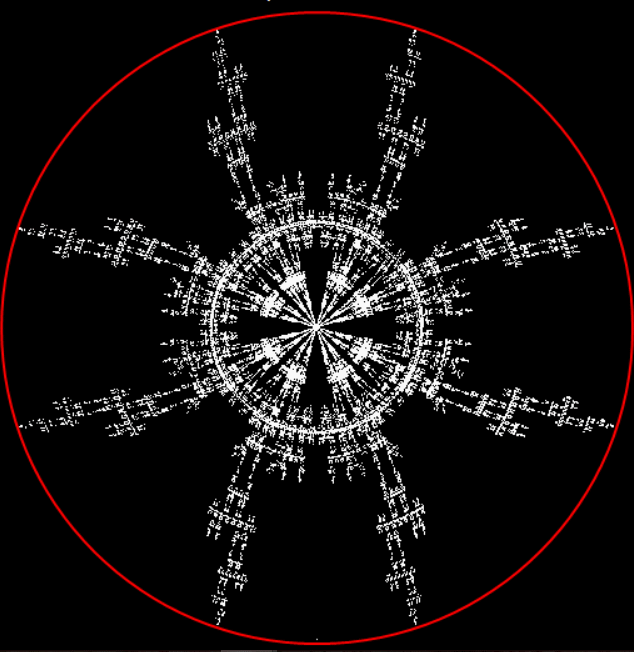
Again, you can pervert the pircle:

Perverted pircle #1 from T-square fractal


Perverted pircle #2 from T-square fractal


Perverted pircle #3 from T-square fractal


Perverted pircles from T-square fractal (animated at EZgif)


Finally, another polygonal fractal turned into a pircle and perverted pircle:

Another square fractal


Pircle from square fractal


Perverted pircle from square fractal


Angular Trerkel

Here’s the famous Sierpiński triangle, a fractal named after the Polish mathematician Wacław Sierpiński (1882-1969):

A Sierpiński triangle


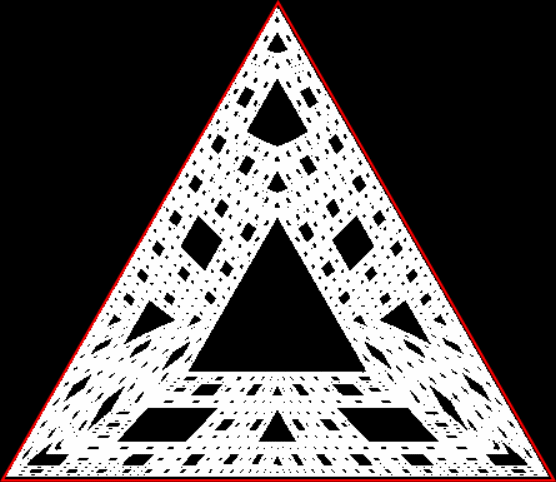
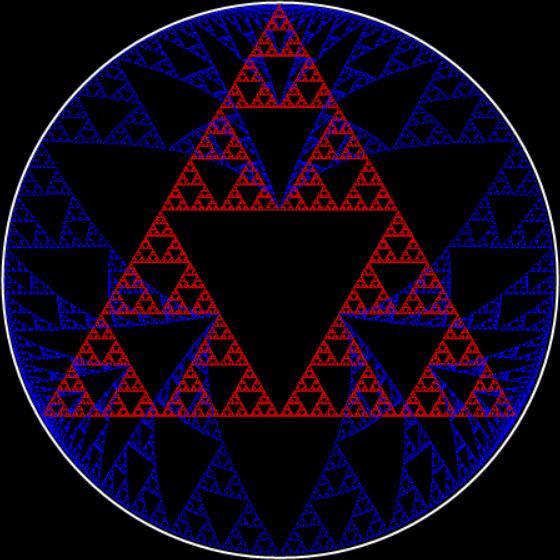
You can create it by following all the possible paths of a point jumping half-way towards the vertices of the triangle. But what if the point can jump towards the center of the triangle too? Then you get another fractal, one that looks like this:

Sierpiński triangle when point can jump towards center of triangle too


Now, as a keyly committed core component of the trans-entitial community, I wondered whether triangles and triangular fractals might identify as other geometrical shapes…

I mean, what’s to stop a triangle identifying as a circle? Nothing. And obvs, if one of the Sierpiński triangles above identifies as a circle, it is a circle — trans-circles are circles (get over it). That is, there’s no need for Sierpiński surgery.

But what if a trans-circular Sierpiński triangle wanted to affirm its circularity with surgery? What would it look like then? Well, you can use elementary trig based on the angles of points within the triangle to stretch it into what might be called a trircle, i.e. a trans-circular triangle that has affirmed its inner circular identity:

A pre-op trans-circular Sierpiński triangle

🡇

A post-op trans-circular Sierpiński triangle or Sierpiński trircle


Sierpiński triangle → Sierpiński trircle (animated at EZgif)


On the other hand, the trircle might be a pre-op trans-triangular circle that has NOT affirmed its inner triangular identity with surgery. It’s complicated. But if we suppose it’s a post-op trans-circle rather than a pre-op trans-triangle, we could nickname it an Angular Trerkel, punning on the name of the great German Bundeskanzlerin Angela Merkel. Here’s the same Sierpiński surgery on the centered Sierpiński triangle (the second fractal looked at above):

A pre-op trans-circular centered Sierpiński triangle

🡇

A post-op trans-circular centered Sierpiński triangle or centered Sierpiński trircle


Centered Sierpiński triangle → centered Sierpiński trircle (animated at EZgif)


Again, the post-op trans-circular centered Sierpiński triangle might in fact be a pre-op trans-triangular centered Sierpiński circle. When it comes to the trans-entitial community, always remember: In dubio, interrogāte entitatem! — “In case of doubt, ask the entity!”

Squaring the Triangle

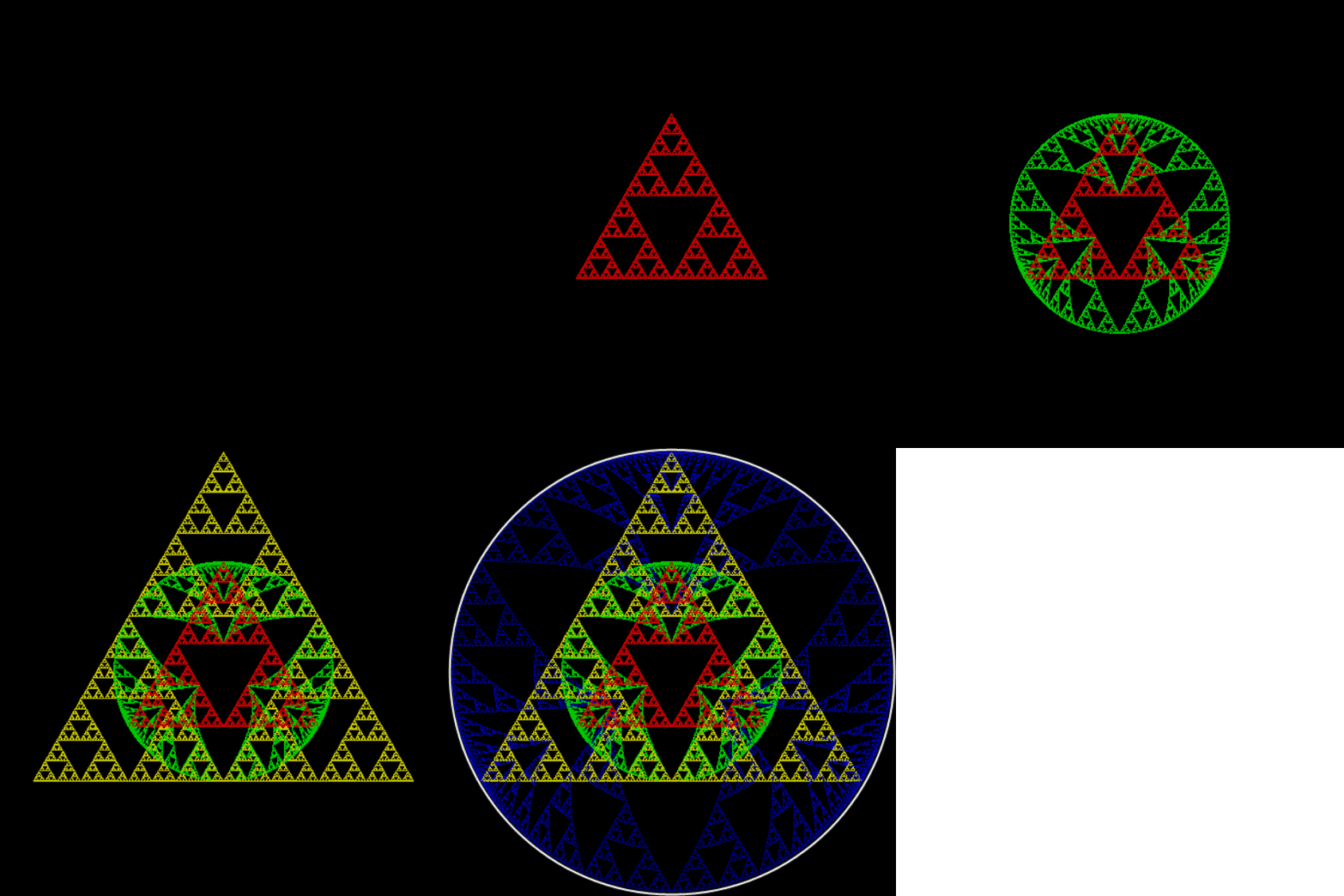
It’s an interesting little exercise in elementary trigonometry to turn the Sierpiński triangle…

A Sierpiński triangle


…into its circular equivalent:

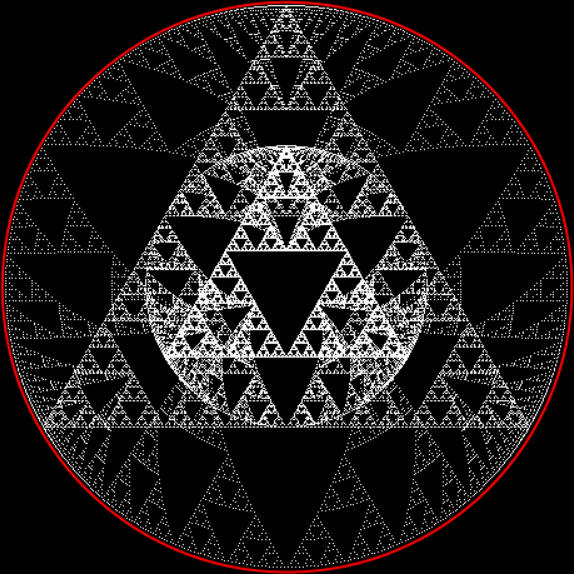
A Sierpiński trisc


You could call that a trisc, because it’s a triangle turned into a disc. And here’s triangle-and-trisc in one image:

Sierpiński triangle + Sierpiński trisc


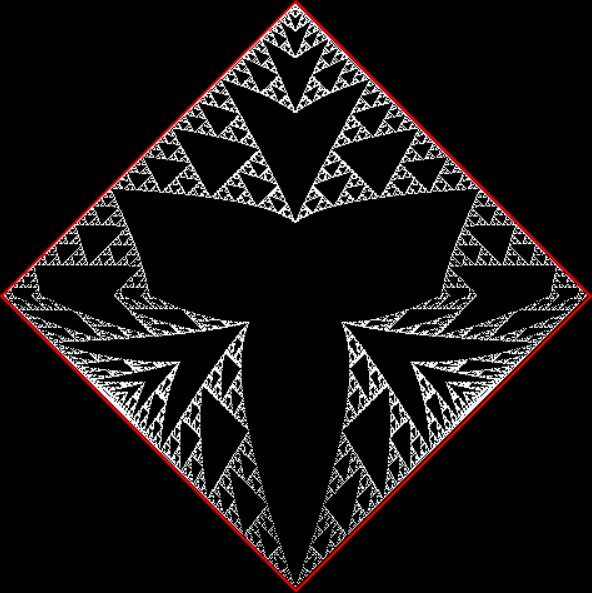
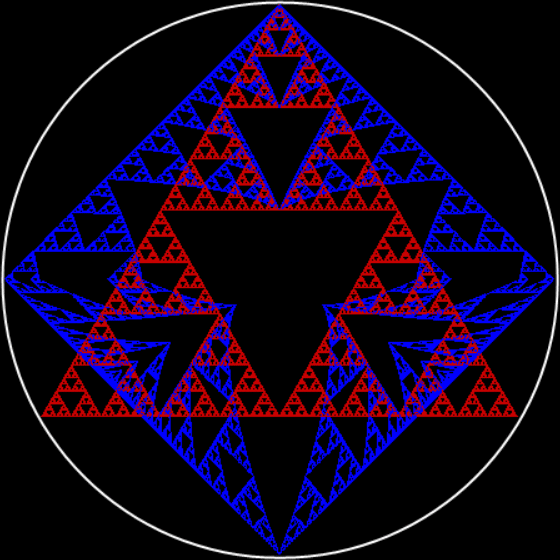
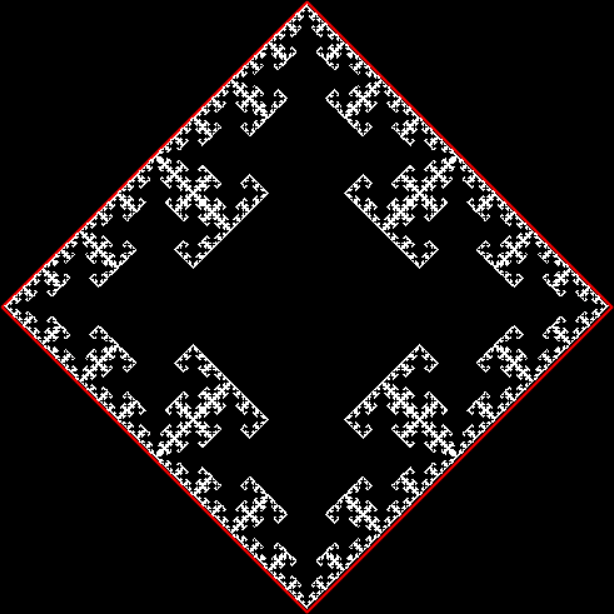
But what’s the square equivalent of a Sierpiński triangle? This is:

Square from Sierpiński triangle


You can do that directly, as it were:

Sierpiński triangle → square


Or you can convert the triangle into a disc, then the disc into a square, like this:

Sierpiński triangle → trisc → square


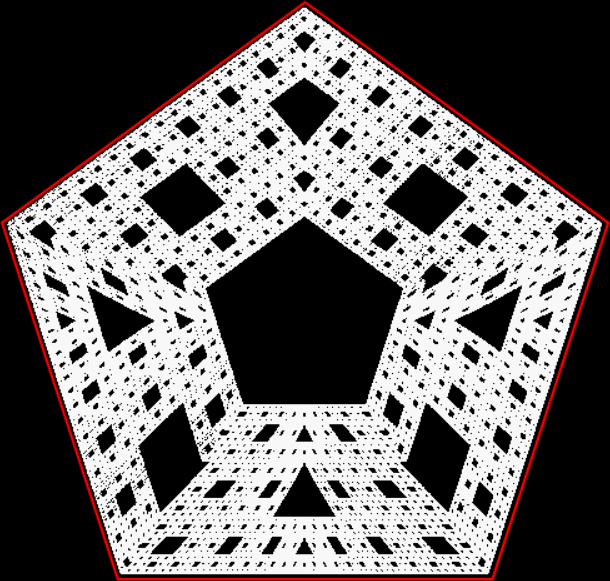
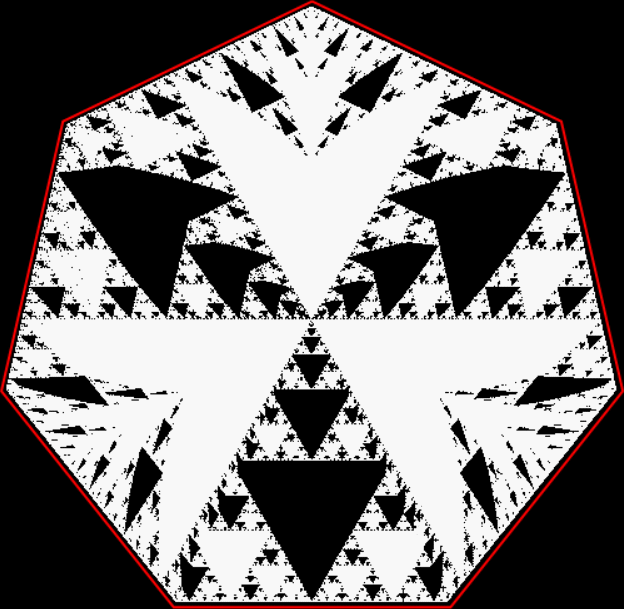
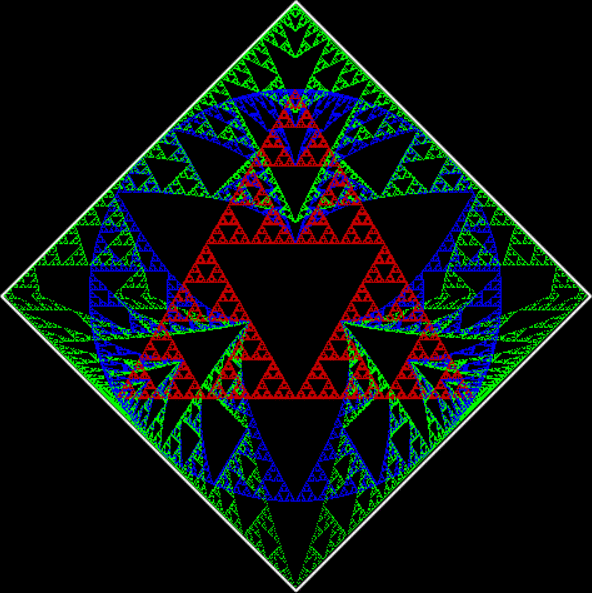
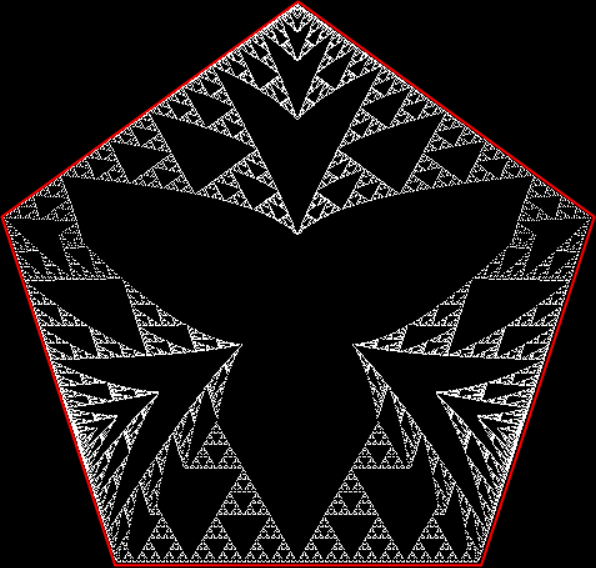
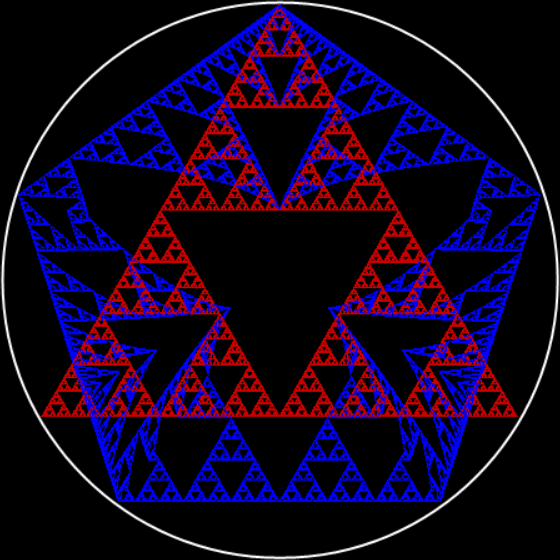
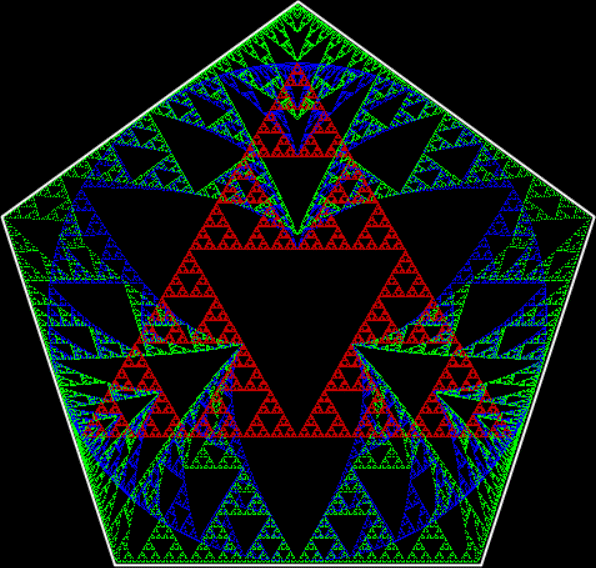
Now try converting the triangle into a pentagon:

Pentagon from Sierpiński triangle


Sierpiński triangle → pentagon


Sierpiński triangle → trisc → pentagon


And a hexagon:

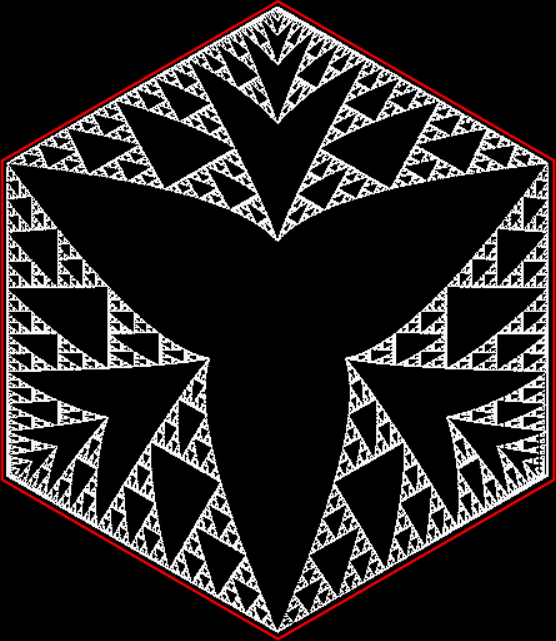
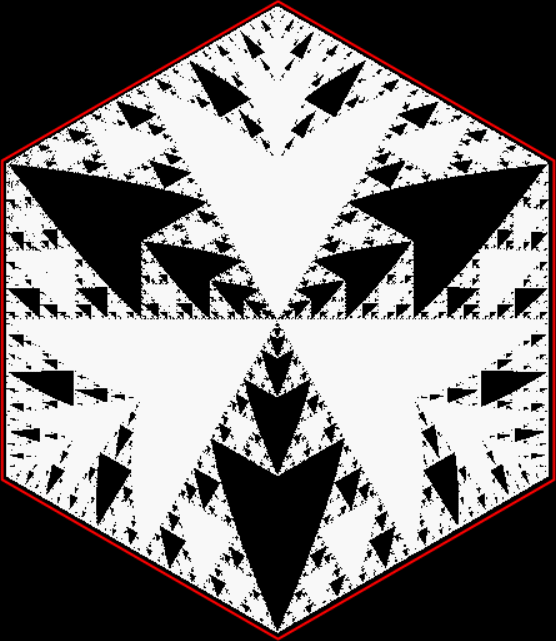
Hexagon from Sierpiński triangle


Sierpiński triangle → hexagon


Sierpiński triangle → trisc → hexagon


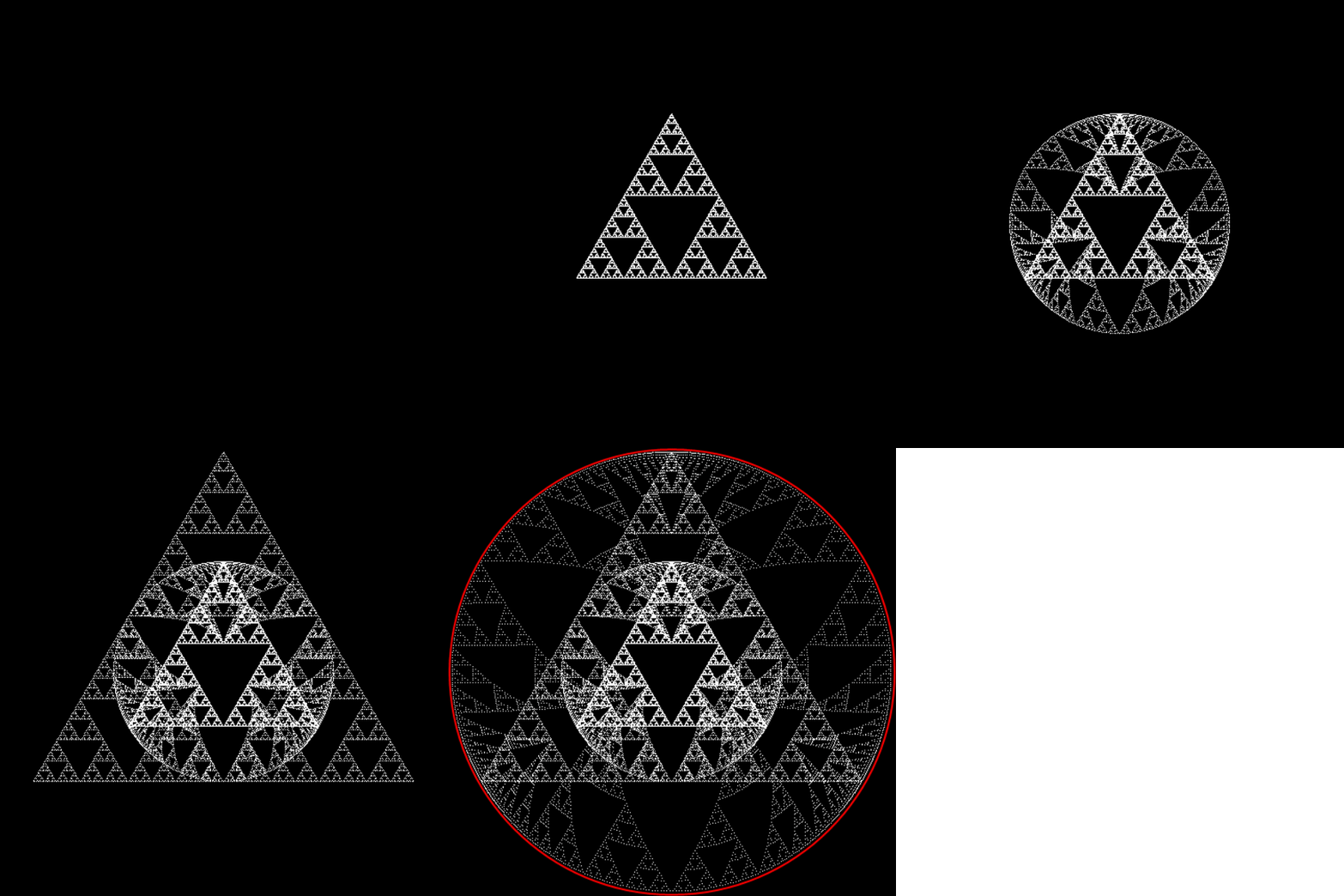
But you can also convert the Sierpiński trisc back into a Sierpiński triangle, then into a Sierpiński trisc again:

Sierpiński triangle → trisc → triangle → trisc


Sierpiński triangle → trisc → triangle → trisc (animated at Ezgif)


Sierpiński triangle → trisc → triangle → trisc (b&w)


Sierpiński triangle → trisc → triangle → trisc (b&w) (animated at Ezgif)


After triangles come squares. Here’s a shape called a T-square fractal:

T-square fractal


And here’s the circular equivalent of a T-square fractal:

T-square fractal → T-squisc


T-square fractal + T-squisc


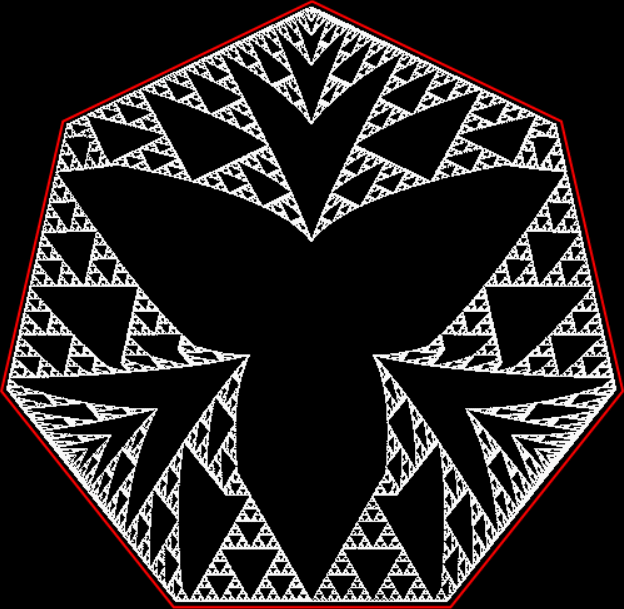
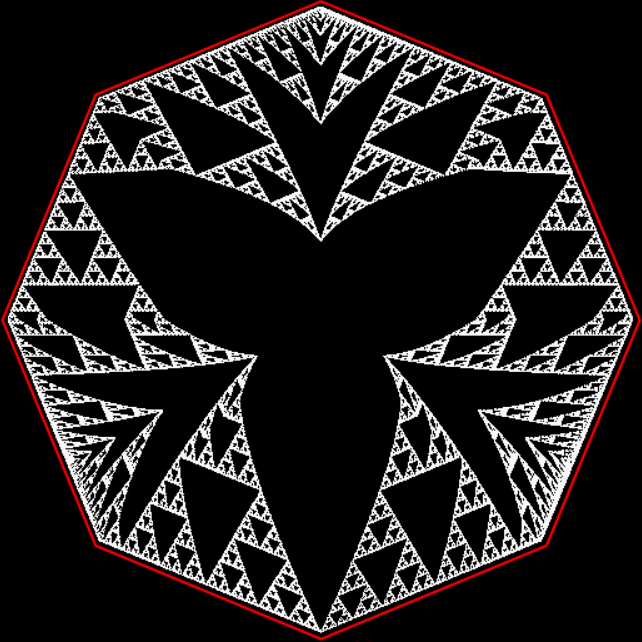
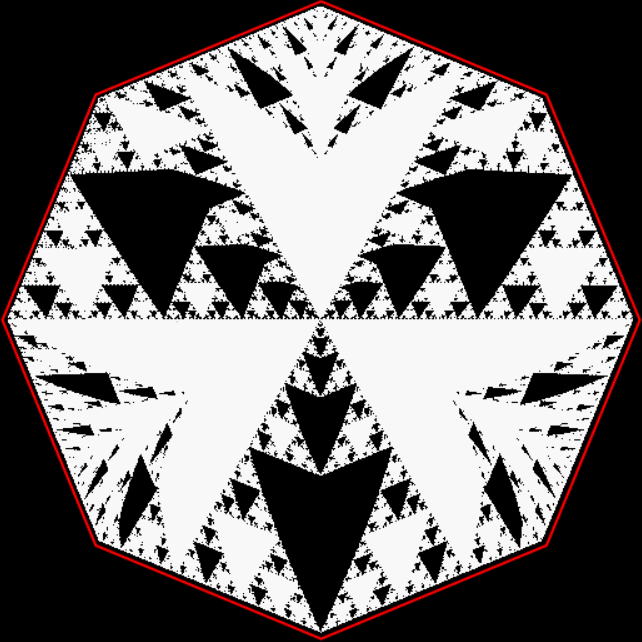
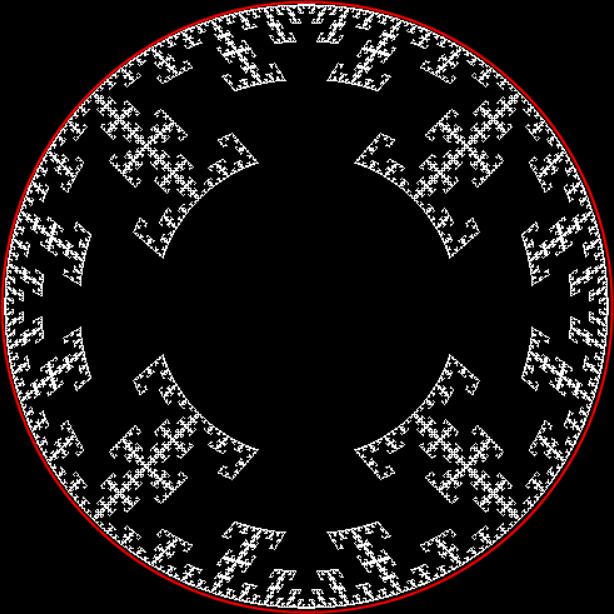
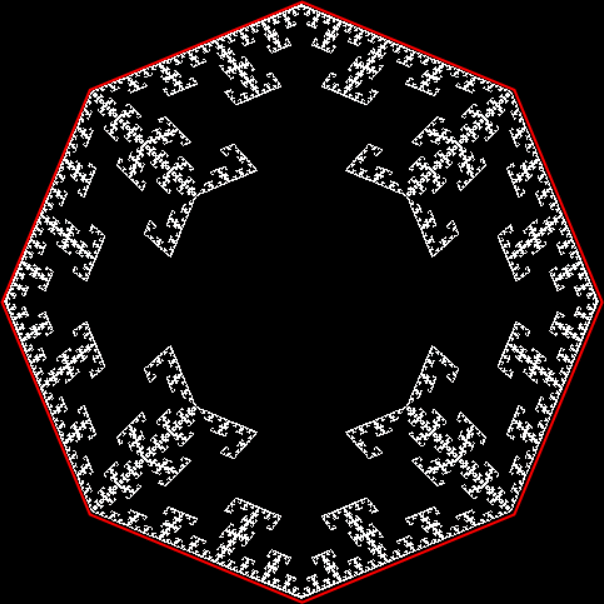
If a disc from a triangle is a trisc, then a disc from a square is a squisc (it would be pentisc, hexisc, heptisc for pentagonal, hexagonal and heptagonal fractals). Here’s the octagonal equivalent of a T-square fractal:

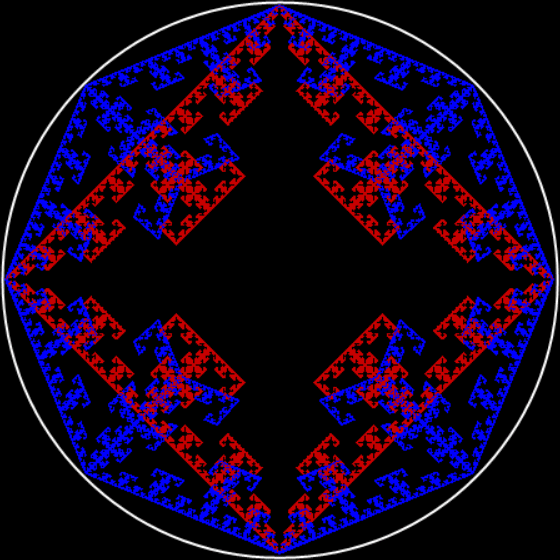
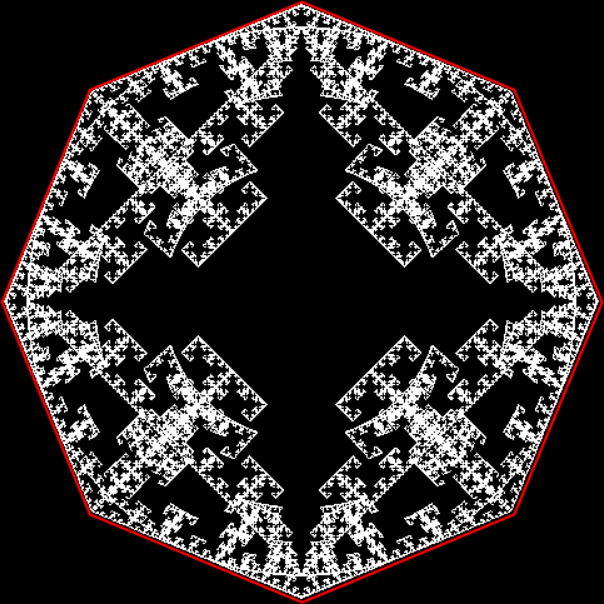
Octagon from T-square fractal


As with the Sierpiński trisc, you can use the T-squisc to create the T-octagon:

T-square fractal → T-squisc → T-octagon (color)


Or you can convert the T-square directly into the T-octagon:

T-square fractal to T-octagon fractal

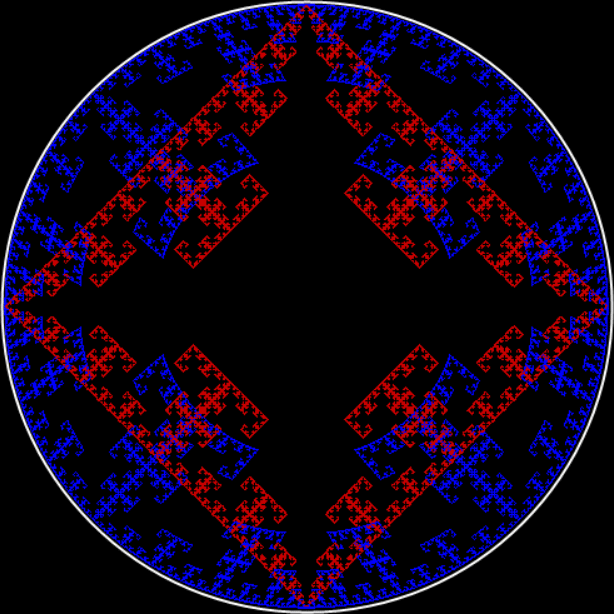
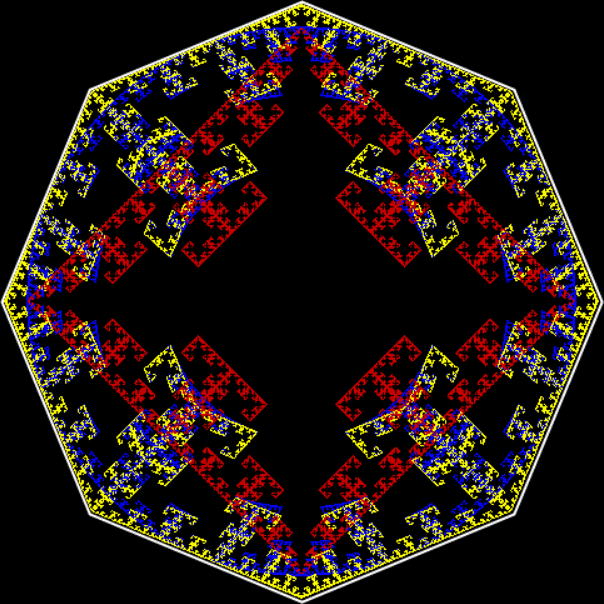
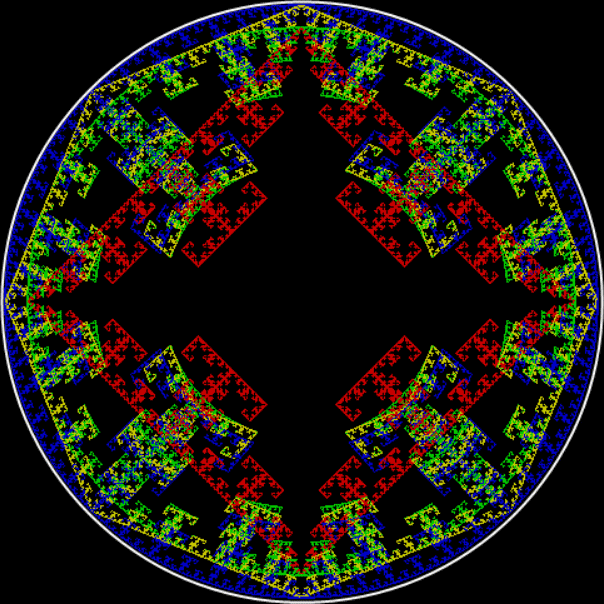
But using the squisc makes for interesting multiple images:


T-square fractal → T-squisc → T-octagon (b&w)


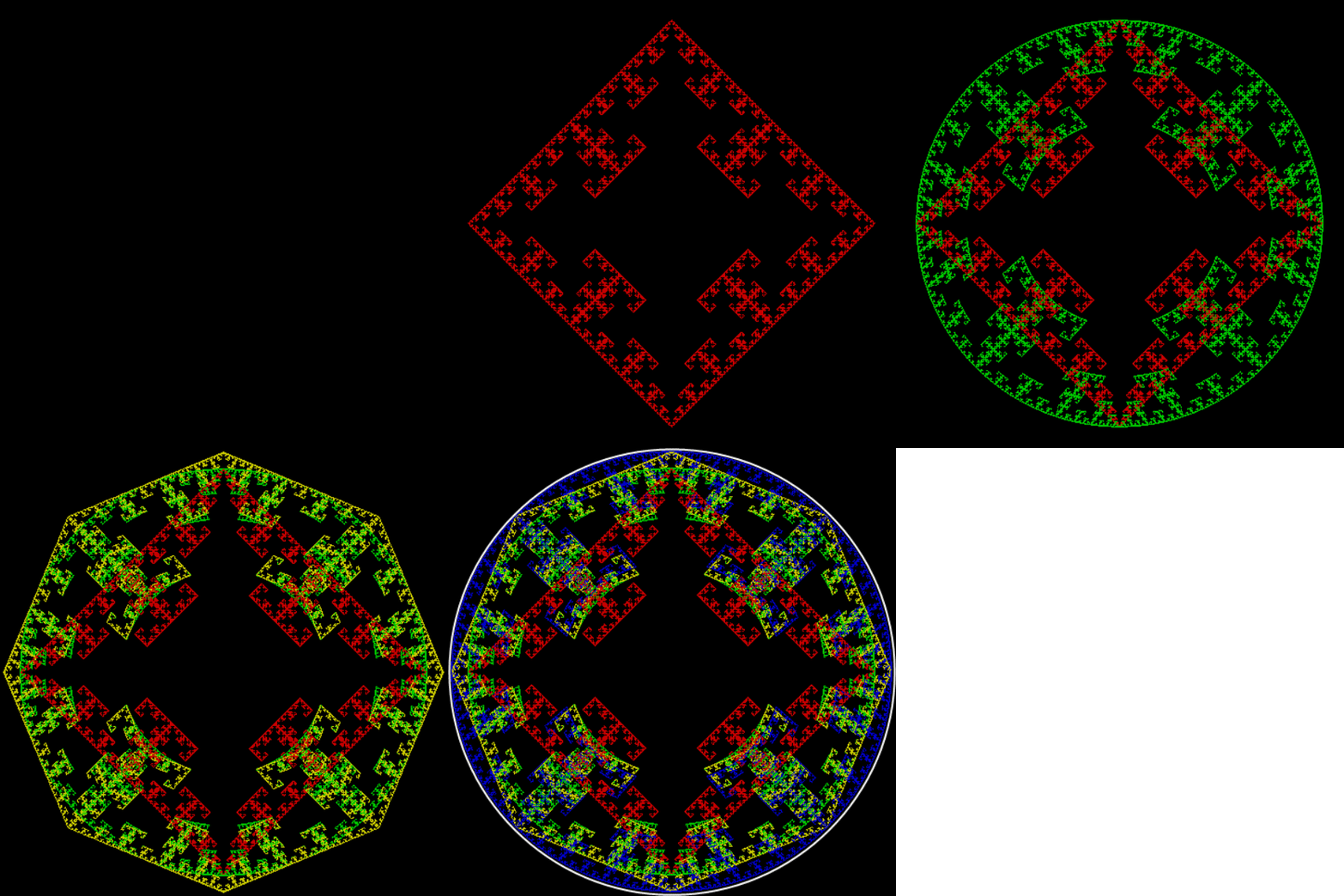
T-square fractal → T-squisc → T-octagon → T-squisc


T-square fractal → T-squisc → T-octagon → T-squisc (animated at Ezgif)


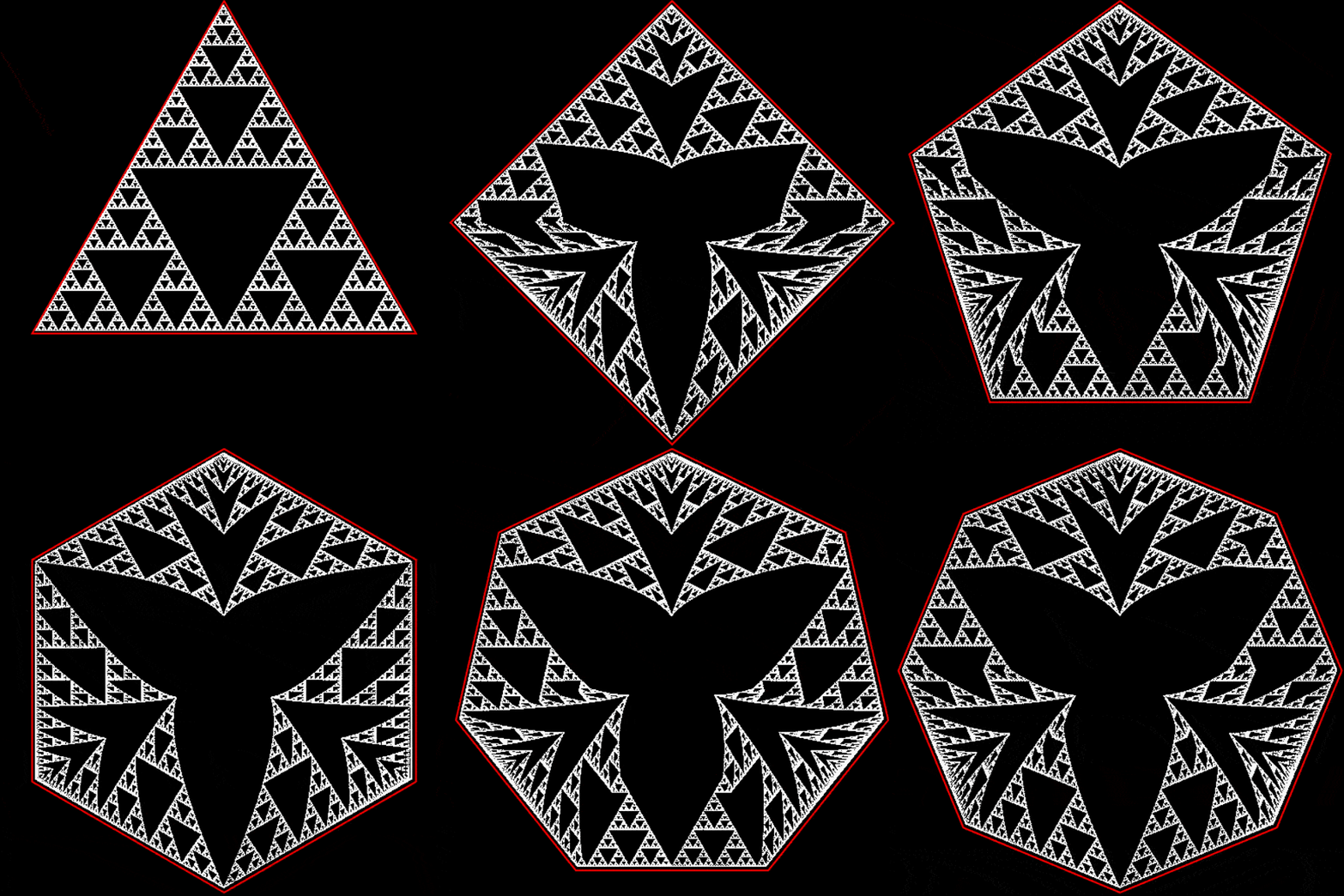
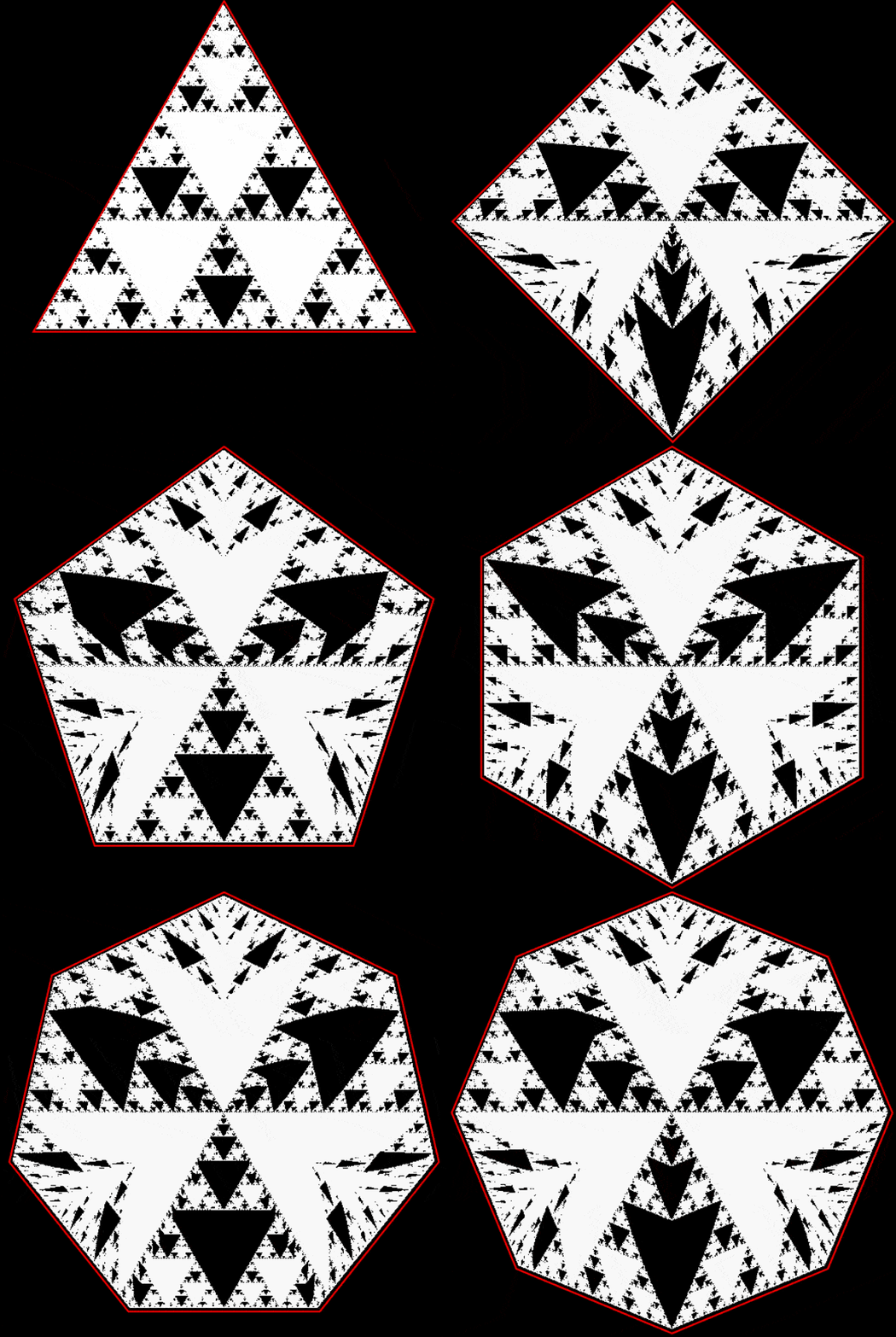
The conversions from polygon to polygon look best when the number of sides in the higher polygon are a multiple of the number of sides in the lower, like this:

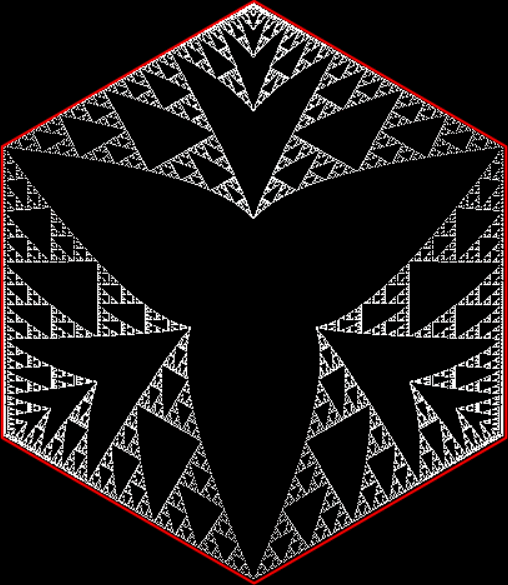
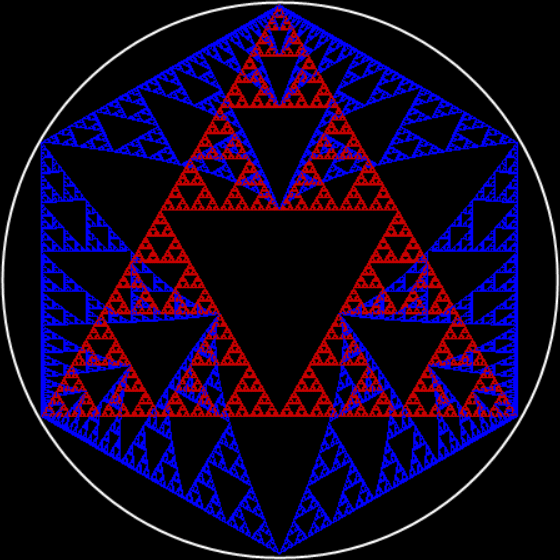
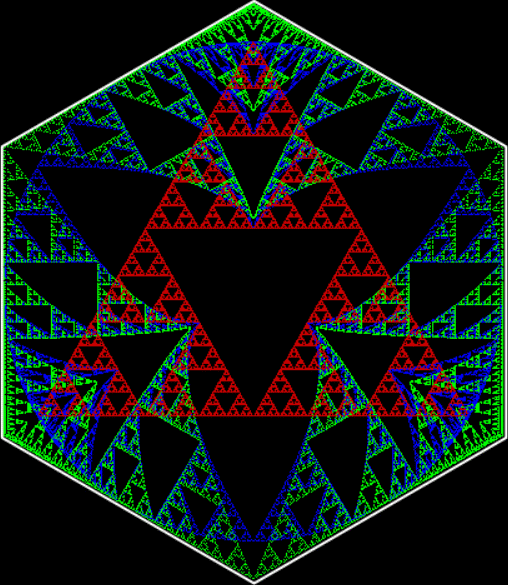
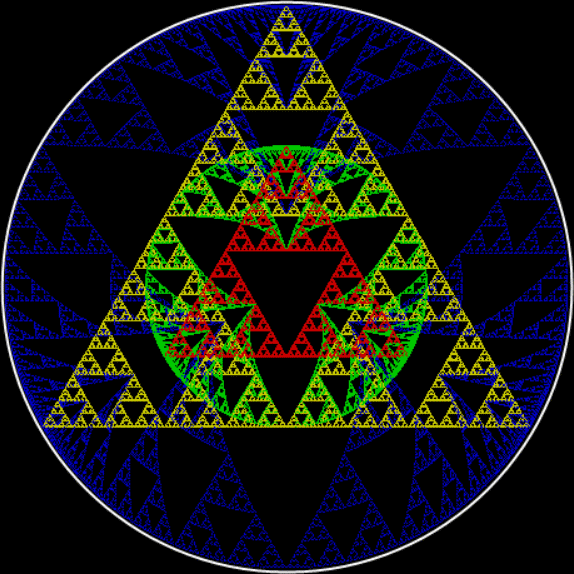
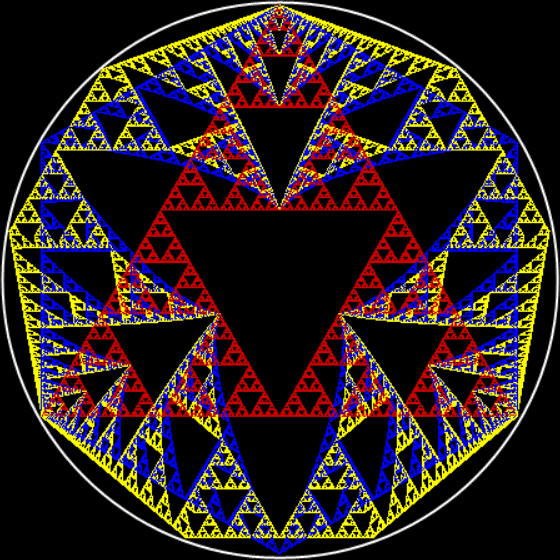
Sierpiński triangle → Sierpiński hexagon → Sierpiński nonagon