
What happens when you sum the Farey sequence, that is the “sequence of completely reduced fractions that have denominators less than or equal to n“?
1/2 + 1/3 + 1/4 + 3/4 + 1/5 + 2/5 + 3/5 + 4/5 + 1/6 + 5/6 + 1/7 + 2/7 + 3/7 + 4/7 + 5/7 + 6/7 + 1/8 + 3/8 + 5/8 + 7/8… → ?
Lots of things happen. But one simple thing is that the sum exceeds one integer after another, like this:
fr = 0
0 + 1/2 = 1/2 (count=1)
1/2 + 1/3 = 5/6 (count=2)
5/6 + 2/3 = 1_1/2 > 1 (c=3)
1_1/2 + 1/4 = 1_3/4 (c=4)
1_3/4 + 3/4 = 2_1/2 > 2 (c=5)
2_1/2 + 1/5 = 2_7/10 (c=6)
2_7/10 + 2/5 = 3_1/10 > 3 (c=7)
3_1/10 + 3/5 = 3_7/10 (c=8)
3_7/10 + 4/5 = 4_1/2 > 4 (c=9)
4_1/2 + 1/6 = 4_2/3 (c=10)
4_2/3 + 5/6 = 5_1/2 > 5 (c=11)
5_1/2 + 1/7 = 5_9/14 (c=12)
5_9/14 + 2/7 = 5_13/14 (c=13)
5_13/14 + 3/7 = 6_5/14 > 6 (c=14)
If you mark the steps at which the sum exceeds n on a square spiral, you get this pattern:
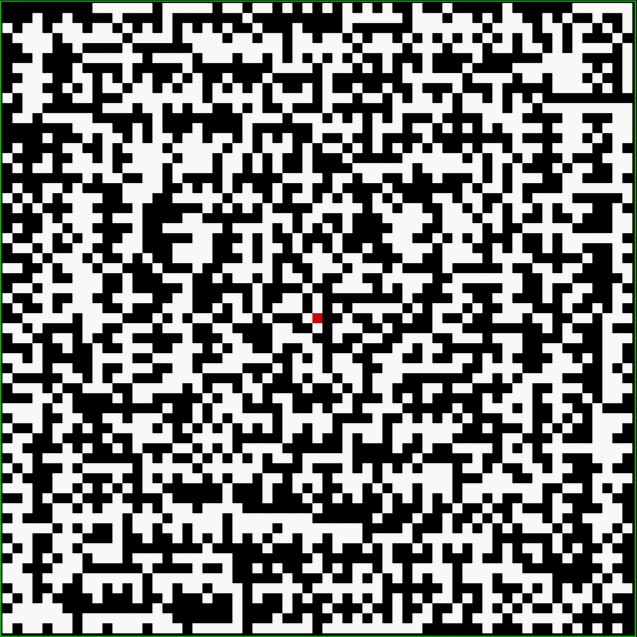
Square spiral for sum(1/2, 1/3, 2/3, 1/4, 3/4, 1/5, …) > 1, 2, 3, 4, 5,…
At a higher resolution, it looks like this:
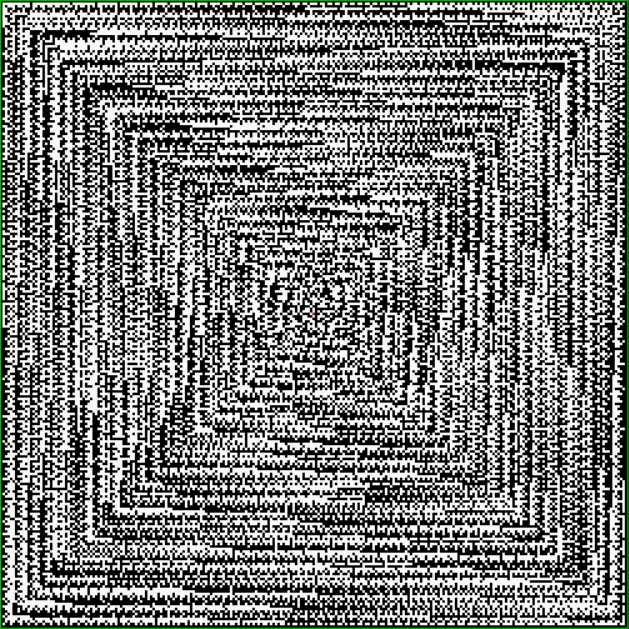
Square spiral for sum(reduced(a/b)) > 1, 2, 3, 4, 5,… x 4
But it’s not obviously interesting. So try summing all fractions a/b, reduced and unreduced:
1/2 + 1/3 + 1/4 + 2/4 + 3/4 + 1/5 + 2/5 + 3/5 + 4/5 + 1/6 + 2/6 + 3/6 + 4/6 + 5/6, …
fr = 0
0 + 1/2 = 1/2 (count=1)
1/2 + 1/3 = 5/6 (count=2)
5/6 + 2/3 = 1_1/2 > 1 (c=3)
1_1/2 + 1/4 = 1_3/4 (c=4)
1_3/4 + 2/4 = 2_1/4 > 2 (c=5)
2_1/4 + 3/4 = 3 (c=6)
3 + 1/5 = 3_1/5 > 3 (c=7)
3_1/5 + 2/5 = 3_3/5 (c=8)
3_3/5 + 3/5 = 4_1/5 > 4 (c=9)
4_1/5 + 4/5 = 5 (c=10)
5 + 1/6 = 5_1/6 > 5 (c=11)
5_1/6 + 2/6 = 5_1/2 (c=12)
5_1/2 + 3/6 = 6 (c=13)
6 + 4/6 = 6_2/3 > 6 (c=14)
6_2/3 + 5/6 = 7_1/2 > 7 (c=15)
7_1/2 + 1/7 = 7_9/14 (c=16)
7_9/14 + 2/7 = 7_13/14 (c=17)
7_13/14 + 3/7 = 8_5/14 > 8 (c=18)
8_5/14 + 4/7 = 8_13/14 (c=19)
8_13/14 + 5/7 = 9_9/14 > 9 (c=20)
9_9/14 + 6/7 = 10_1/2 > 10 (c=21)
10_1/2 + 1/8 = 10_5/8 (c=22)
Now the square spiral looks like this:
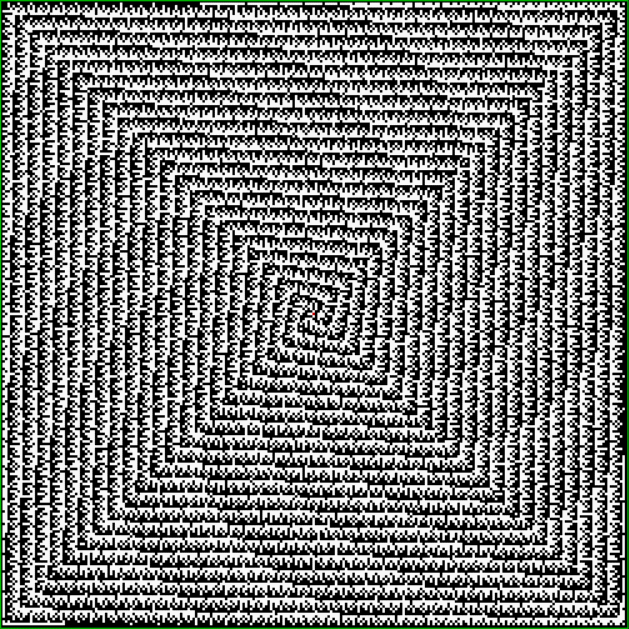
Square spiral for sum(unreduced(a/b)) > 1, 2, 3, 4, 5,…
After that, I tried experimenting with different denominators (the b of a/b). If the denominators are the multiples of 2, the reduced fractions a/2b create this spiral:
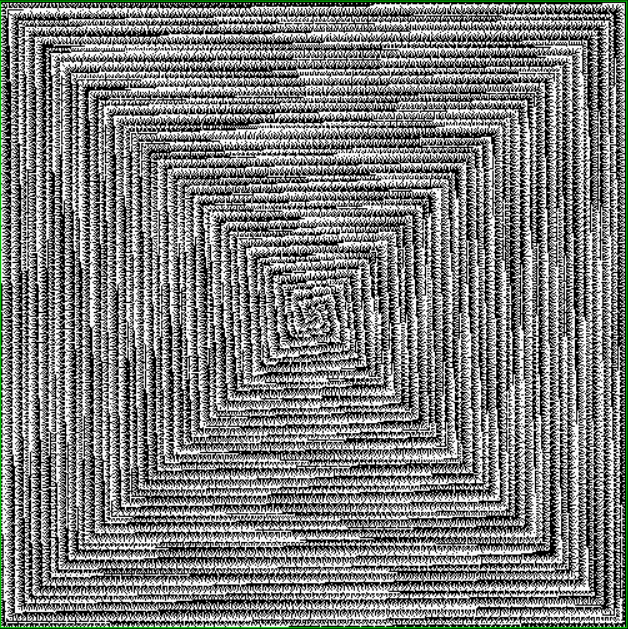
Square spiral for sum(reduced(a/2b))
But the unreduced fractions a/2b create something very different:

Square spiral for sum(unreduced(a/2b))
If the denominators are the odd numbers > 1 for reduced(a/b) and unreduced(a/b), you get two very different spirals that look like the two produced by a/2b:
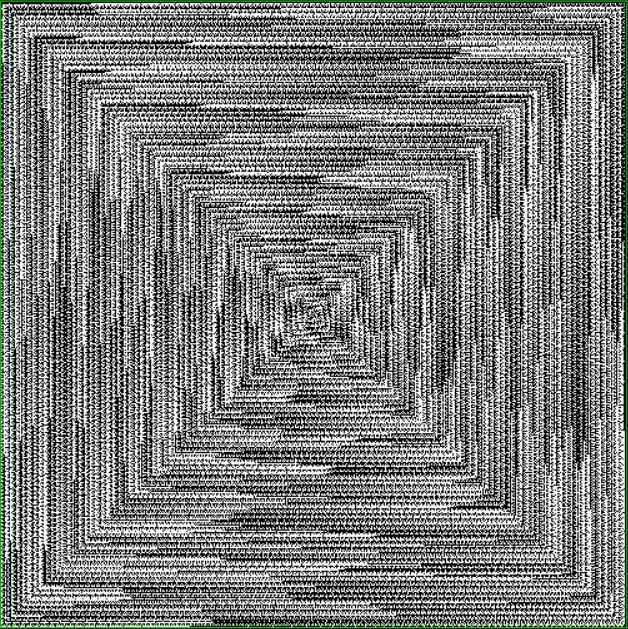
Square spiral for sum(reduced(a/(2b+1)))

Square spiral for sum(unreduced(a/(2b+1)))
If the denominators are the Fibonacci numbers, you get this:
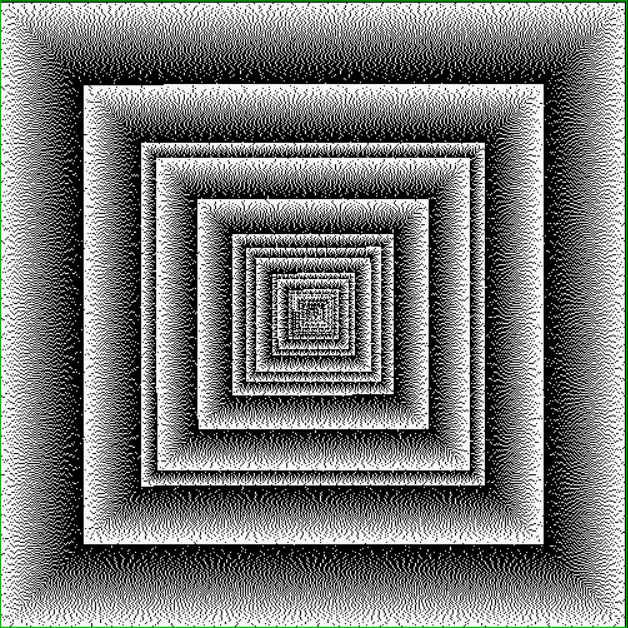
Square spiral for sum(reduced(a/b=fib_num))
And this:
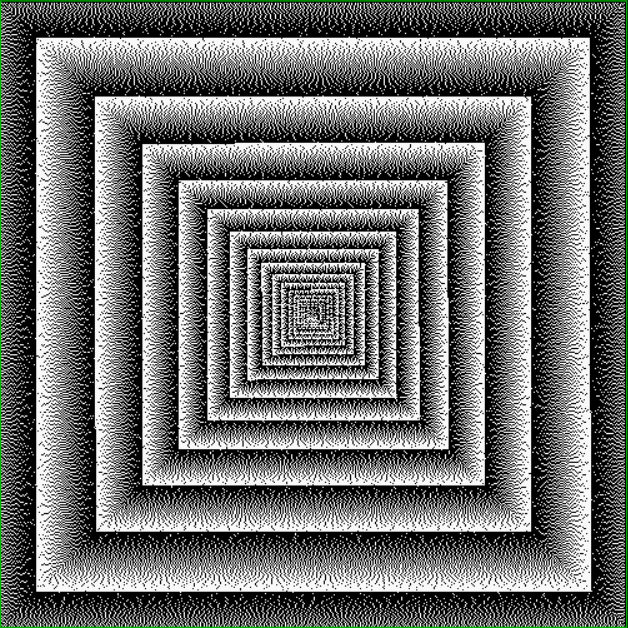
Square spiral for sum(unreduced(a/fib_num=b))
The ratio of the areas of successive nested squares is tending towards φ = 1.618033988749894848…
But denominators as Fibonacci numbers aren’t obviously interesting, let’s return to multiples. When I tried denominators of 7b and 8b, the spirals turned chiral. That is, they were either right-handed or left-handed (chiral/ity roughly means “handed/ness”). There was a right-handed spiral:
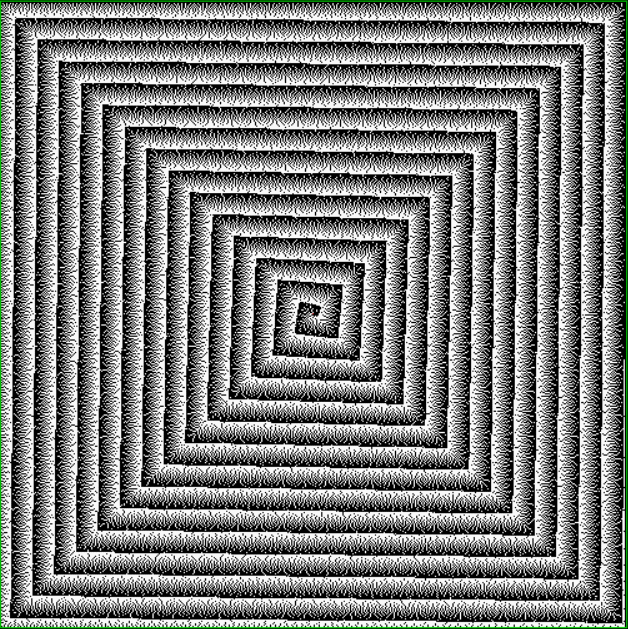
Square spiral for sum(unreduced(a/9b))
And a left-handed spiral:
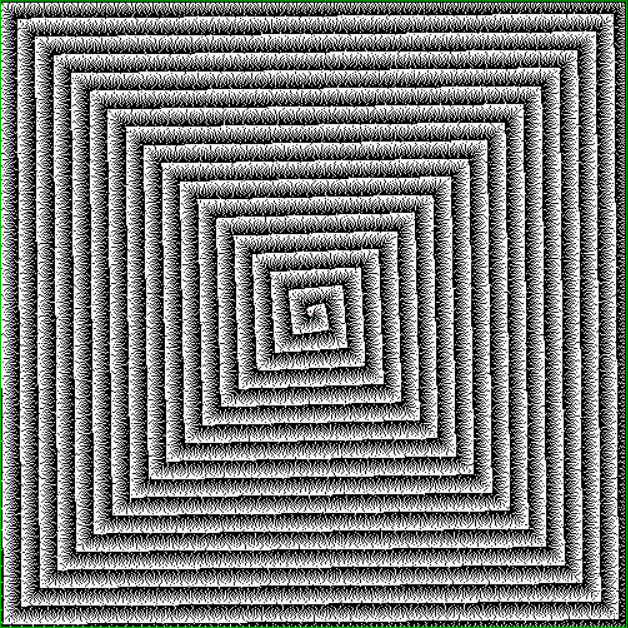
Square spiral for sum(unreduced(a/7b))
After that, I tried applying tests to a/b < 1. If you sum only those unreduced fractions a/b < 6/7, you get a three-armed left-handed spiral:
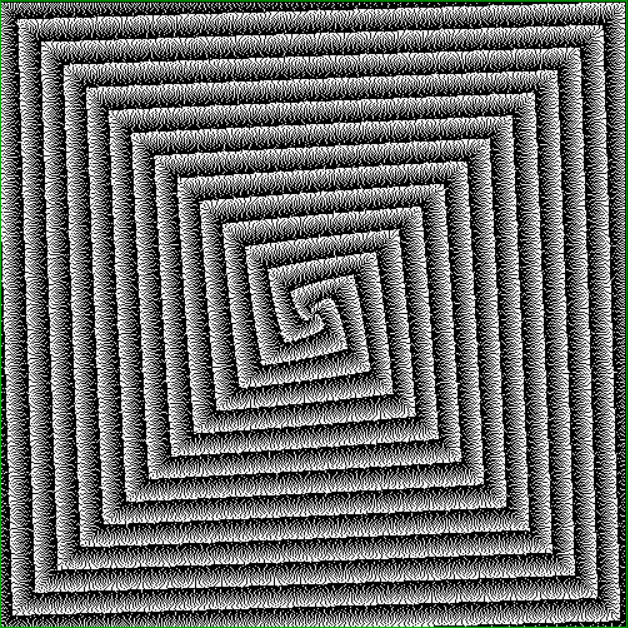
Square spiral for sum(unreduced(a/b) < 6/7)
And so on:
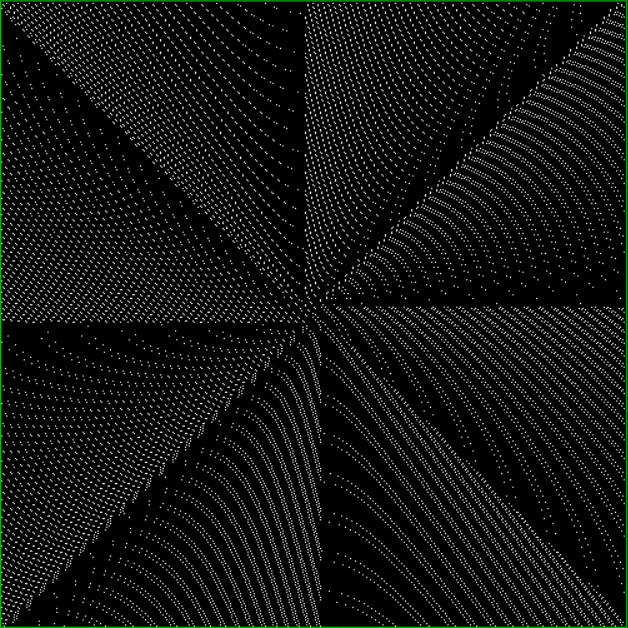
Square spiral for sum(unreduced(a/b) < 1/8)
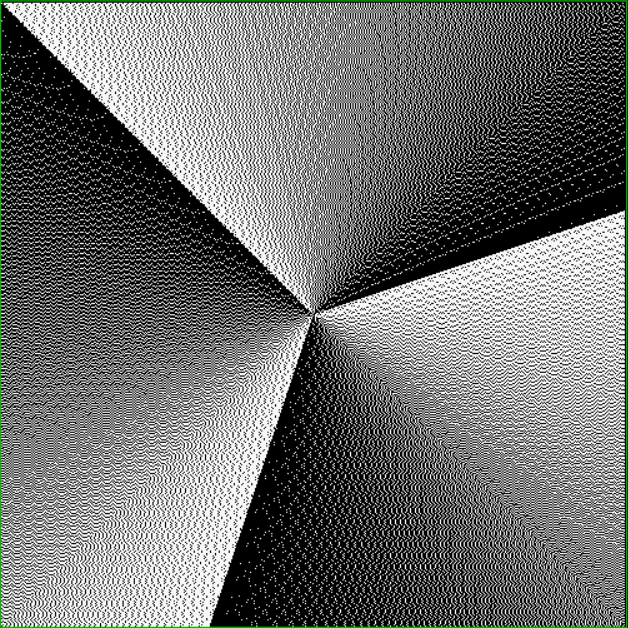
Square spiral for sum(unreduced(a/b) < 8/9)
If sum(unreduced(a/b) < 6/7) produced a three-armed left-handed spiral, sum(unreduced(a/b) < 10/11) produced a three-armed right-handed spiral:
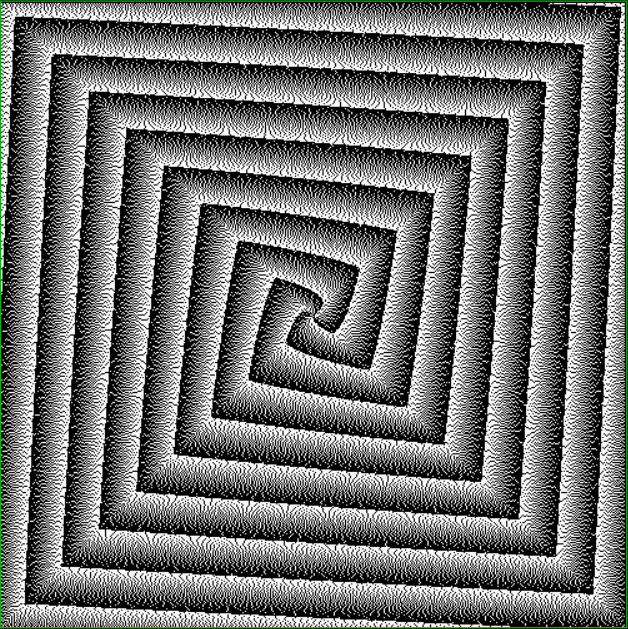
Square spiral for sum(unreduced(a/b) < 10/11)
And tests for a/b < 11/13 and a/b < 12/13 produced spirals of opposite chirality:
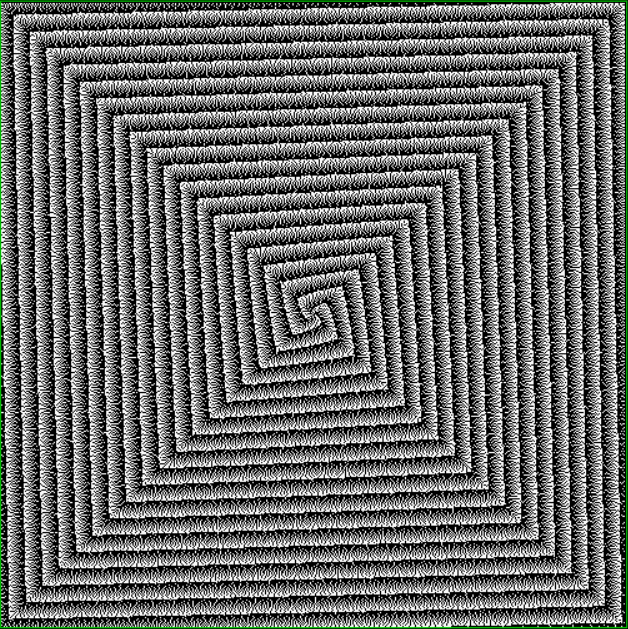
Square spiral for sum(unreduced(a/b) < 11/13)
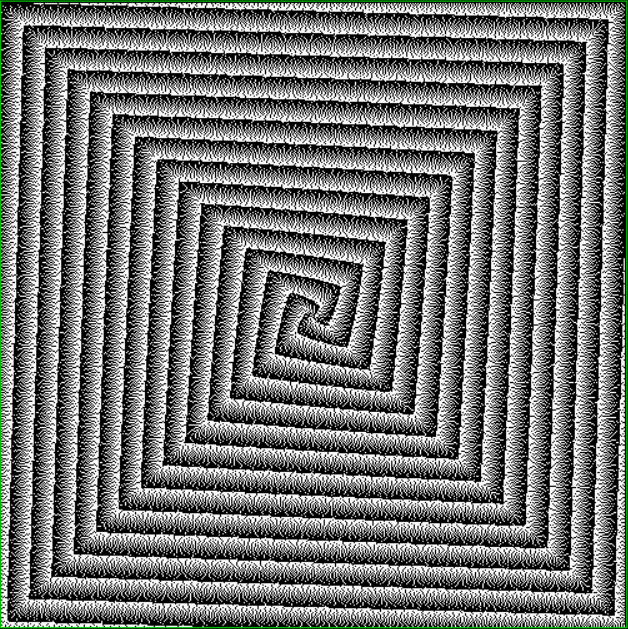
Square spiral for sum(unreduced(a/b) < 12/13)
And what about irrational numbers? I tried summing the fractional part of various roots and got spirals like these:
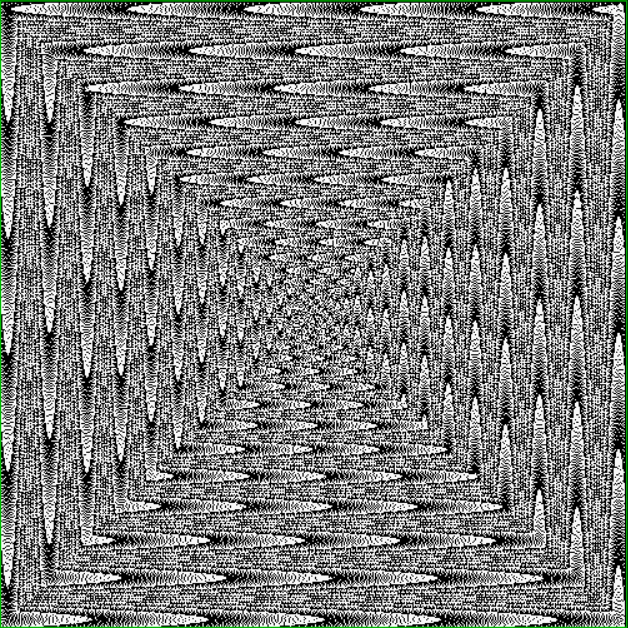
Square spiral for sum(frac(n^2/3)))
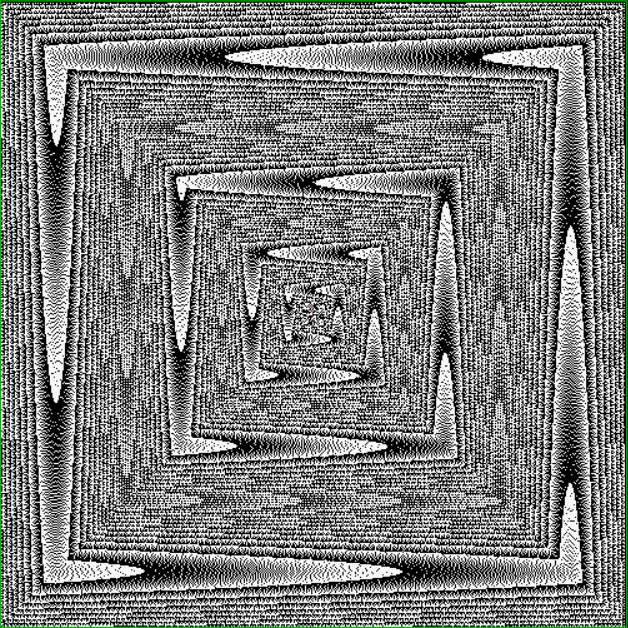
Square spiral for sum(frac(n^3/5)))
And finally (for now), I tried adding roots of fr to fr itself. If fr1 = 1 and fri+1 = fri + sqrt(fri), you get this:
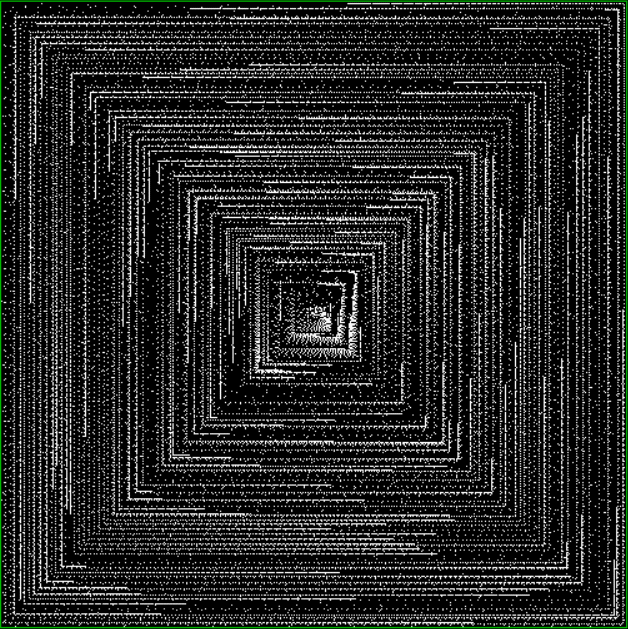
Square spiral for fr = fr + fr^1/2
When it’s the fifth root of fr added to fr, you get this:
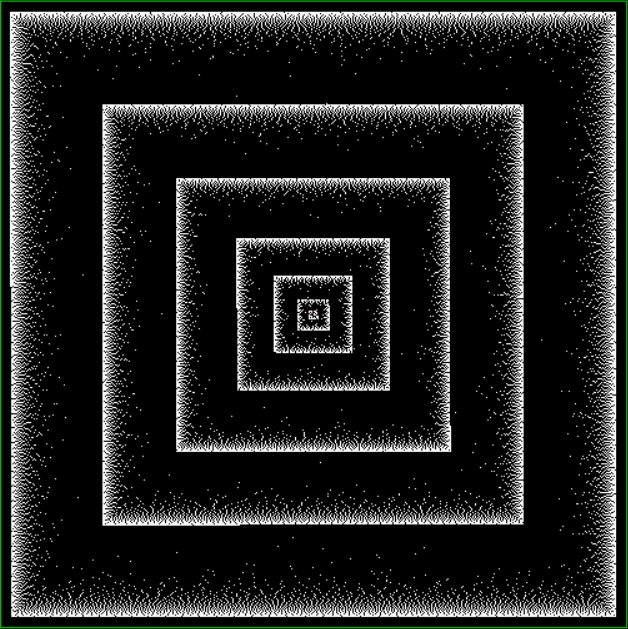
Square spiral for fr += fr^1/5

