The hover-hum
Of woodland flies,
Then buttercups
That gild the eyes.
A storied tree
Engorging light
And pimpernels
That blood the sight.
Light-winging nymphs
On nectar’d flower:
Magistra ’tis
In Maythic power.

The hover-hum
Of woodland flies,
Then buttercups
That gild the eyes.
A storied tree
Engorging light
And pimpernels
That blood the sight.
Light-winging nymphs
On nectar’d flower:
Magistra ’tis
In Maythic power.
Simple but seductive. That’s how I’d describe partitions. Except that they’re not so simple. There are hidden depths in the task of finding how many ways an integer can be expressed as the sum of smaller integers (and as the sum of itself). Here are the partitions of 4, for example:
4 = 1+3 = 2+2 = 1+1+2 = 1+1+1+1
4 (1) = 1+3 (2) = 2+2 (3) = 1+1+2 (4) = 1+1+1+1 (5), ∴ partcount(4) = 5
There are five partitions of 4, because an integer is counted as its own partition. Accordingly, partcount(4) = 5. But partcount(n) doesn’t return values in a predictable way:
partcount(1) = 1 ← 1
partcount(2) = 2 ← 2 = 1+1
partcount(3) = 3 ← 3 = 1+2 = 1+1+1
partcount(4) = 5 ← 4 = 1+3 = 2+2 = 1+1+2 = 1+1+1+1
partcount(5) = 7 ← 5 = 1+4 = 2+3 = 1+1+3 = 1+2+2 = 1+1+1+2 = 1+1+1+1+1
partcount(6) = 11 ← 6 = 1+5 = 2+4 = 3+3 = 1+1+4 = 1+2+3 = 2+2+2 = 1+1+1+3 = 1+1+2+2 = 1+1+1+1+2 = 1+1+1+1+1+1
partcount(7) = 15 ← 7 = 1+6 = 2+5 = 3+4 = 1+1+5 = 1+2+4 = 1+3+3 = 2+2+3 = 1+1+1+4 = 1+1+2+3 = 1+2+2+2 = 1+1+1+1+3 = 1+1+1+2+2 = 1+1+1+1+1+2 = 1+1+1+1+1+1+1
partcount(8) = 22 ← 8 = 1+7 = 2+6 = 3+5 = 4+4 = 1+1+6 = 1+2+5 = 1+3+4 = 2+2+4 = 2+3+3 = 1+1+1+5 = 1+1+2+4 = 1+1+3+3 = 1+2+2+3 = 2+2+2+2 = 1+1+1+1+4 = 1+1+1+2+3 = 1+1+2+2+2 = 1+1+1+1+1+3 = 1+1+1+1+2+2 = 1+1+1+1+1+1+2 = 1+1+1+1+1+1+1+1
1, 2, 3, 5, 7, 11, 15, 22, 30, 42, 56, 77, 101, 135, 176, 231, 297, 385, 490, 627, 792, 1002, 1255, 1575, 1958, 2436, 3010, 3718, 4565, 5604, 6842, 8349, 10143, 12310, 14883, 17977, 21637, 26015, 31185, 37338, 44583, 53174, 63261, 75175, 89134, 105558, 124754, 147273, 173525 — the number of partitions of n, A000041 at the Online Encyclopedia of Integer Sequences
And there are fractals — self-similarities at smaller and smaller scales — hidden in that simple arithmetic. Take the partitions of 8:
8 = 1+7 = 2+6 = 3+5 = 4+4 = 1+1+6 = 1+2+5 = 1+3+4 = 2+2+4 = 2+3+3 = 1+1+1+5 = 1+1+2+4 = 1+1+3+3 = 1+2+2+3 = 2+2+2+2 = 1+1+1+1+4 = 1+1+1+2+3 = 1+1+2+2+2 = 1+1+1+1+1+3 = 1+1+1+1+2+2 = 1+1+1+1+1+1+2 = 1+1+1+1+1+1+1+1 (c=22)
By definition, the sum of each partition of 8 is the same: 8. But the products — the result of multiplying the numbers of a partition — rise and fall wildly, hitting a maximum of 18 and a minimum of 1:
1.7 = 7
2.6 = 12
3.5 = 15
4.4 = 16
1.1.6 = 6
1.2.5 = 10
1.3.4 = 12
2.2.4 = 16
2.3.3 = 18
1.1.1.5 = 5
1.1.2.4 = 8
1.1.3.3 = 9
1.2.2.3 = 12
2.2.2.2 = 16
1.1.1.1.4 = 4
1.1.1.2.3 = 6
1.1.2.2.2 = 8
1.1.1.1.1.3 = 3
1.1.1.1.2.2 = 4
1.1.1.1.1.1.2 = 2
1.1.1.1.1.1.1.1 = 1
It’s interesting to ask when partitions(n) yield the biggest product (the answer is here). It’s also interesting to create graphs of prod(part(n)), the products of the partitions of n. You’ll see something I call partition fission. The graphs start to fissure into what look like fins or sails, and then each fin or sail starts to fissure too:

Graph for multiples of partitions(8) (partcount(8) = 22)

Graph for prod(part(9)) (partcount = 30)

prod(part(10)) (partcount = 42)
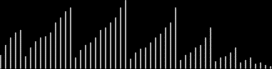
prod(part(11)) (partcount = 56)
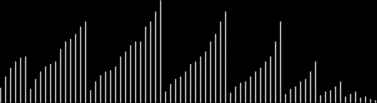
prod(part(12)) (partcount = 77)
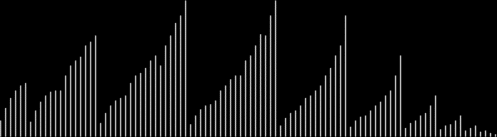
prod(part(13)) (partcount = 101)
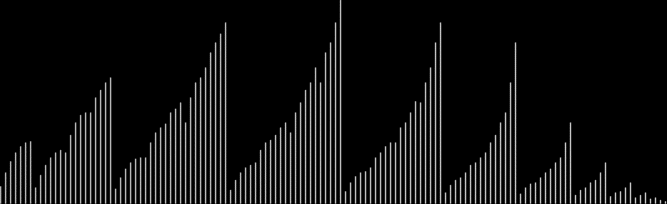
prod(part(14)) (partcount = 135)
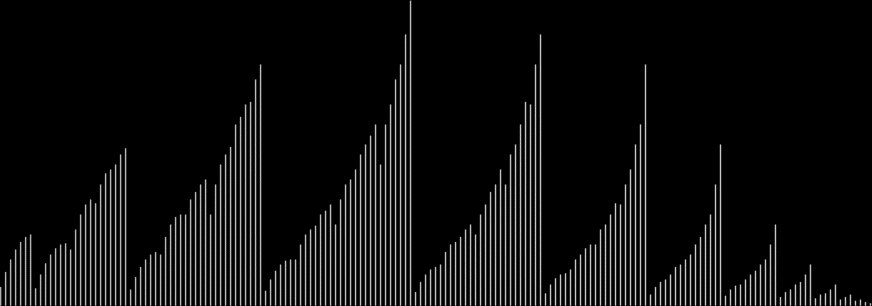
prod(part(15)) (partcount = 176)
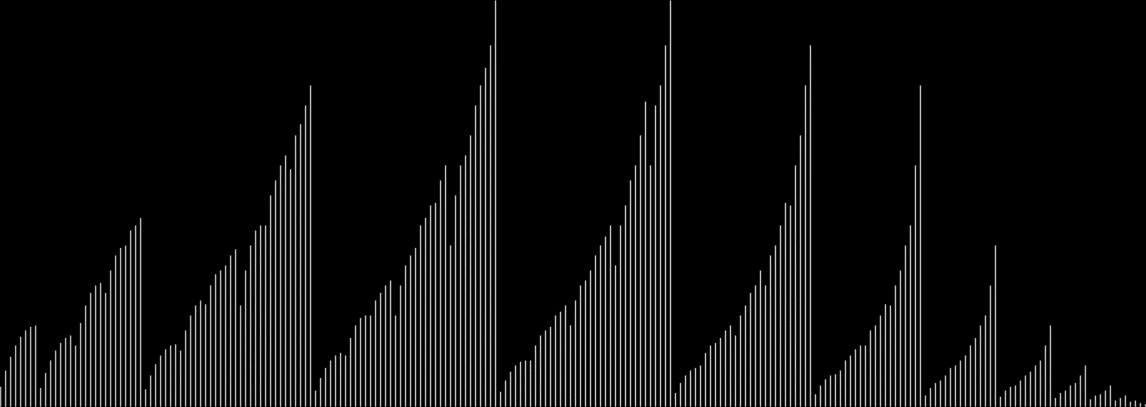
prod(part(16)) (partcount = 231)
Those graphs are all on the same scale. The two graphs below have been adjusted to capture many more partitions and show the fractality coming into full flower:

prod(part(20)) (partcount = 627)
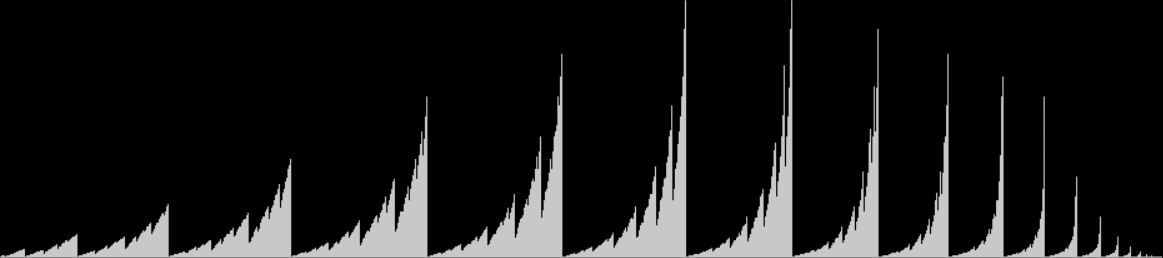
prod(part(28)) (partcount = 3718)
Finally, here’s an animated gif of the graphs for the partition-products of 8 to 16:
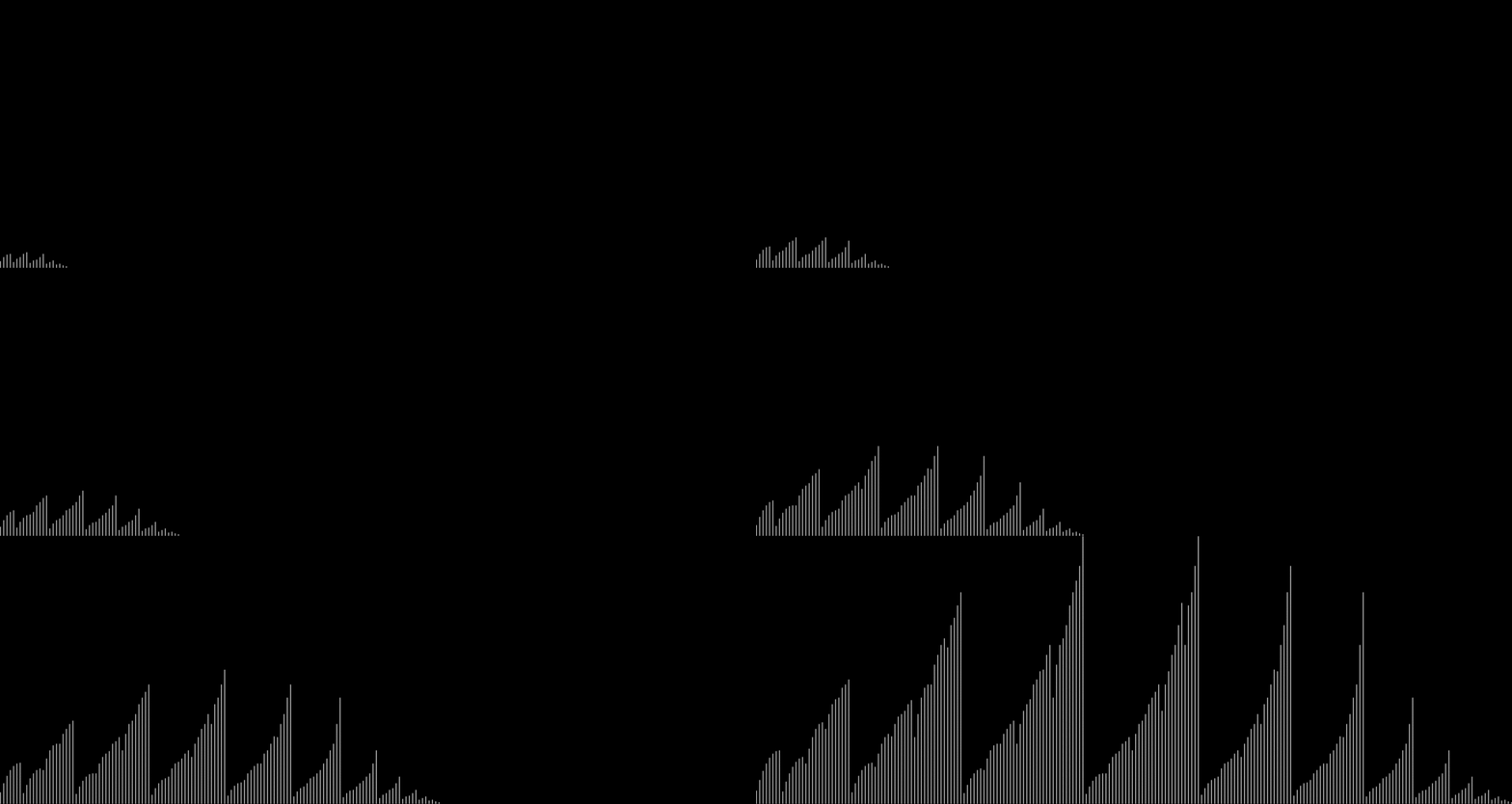
Animated gif for prod(part(8..16)) (animation at EZgif) (click for larger image)
• ὁ Ἡράκλειτός φησι τοῖς ἐγρηγορόσιν ἕνα καὶ κοινὸν κόσμον εἶναι τῶν δὲ κοιμωμένων ἕκαστον εἰς ἴδιον ἀποστρέφεσθαι. — Σέξτος Ἐμπειρικός, Πρὸς μαθηματικούς
• • Heraclitus said that for the waking is one common world, but the sleeping turn aside each into a world of his own. — Sextus Empiricus, fl. 150 A.D., Adversus Mathematicos / Against the Mathematicians (or: Against the Professors), VII. 129
Post-Performative Post-Scriptum
Κοινόκοσμος, Koinokosmos, “common-world”, “shared cosmos” ← κοινός, koinós, “common”, “shared” + κόσμος, kosmos, “world”, “order”, “universe”; καὶ, kai, “and”; Κωματόκοσμοι, Kōmatokosmoi, “sleep-worlds” ← Greek κῶμα, kôma, “deep sleep” + κόσμος, kosmos
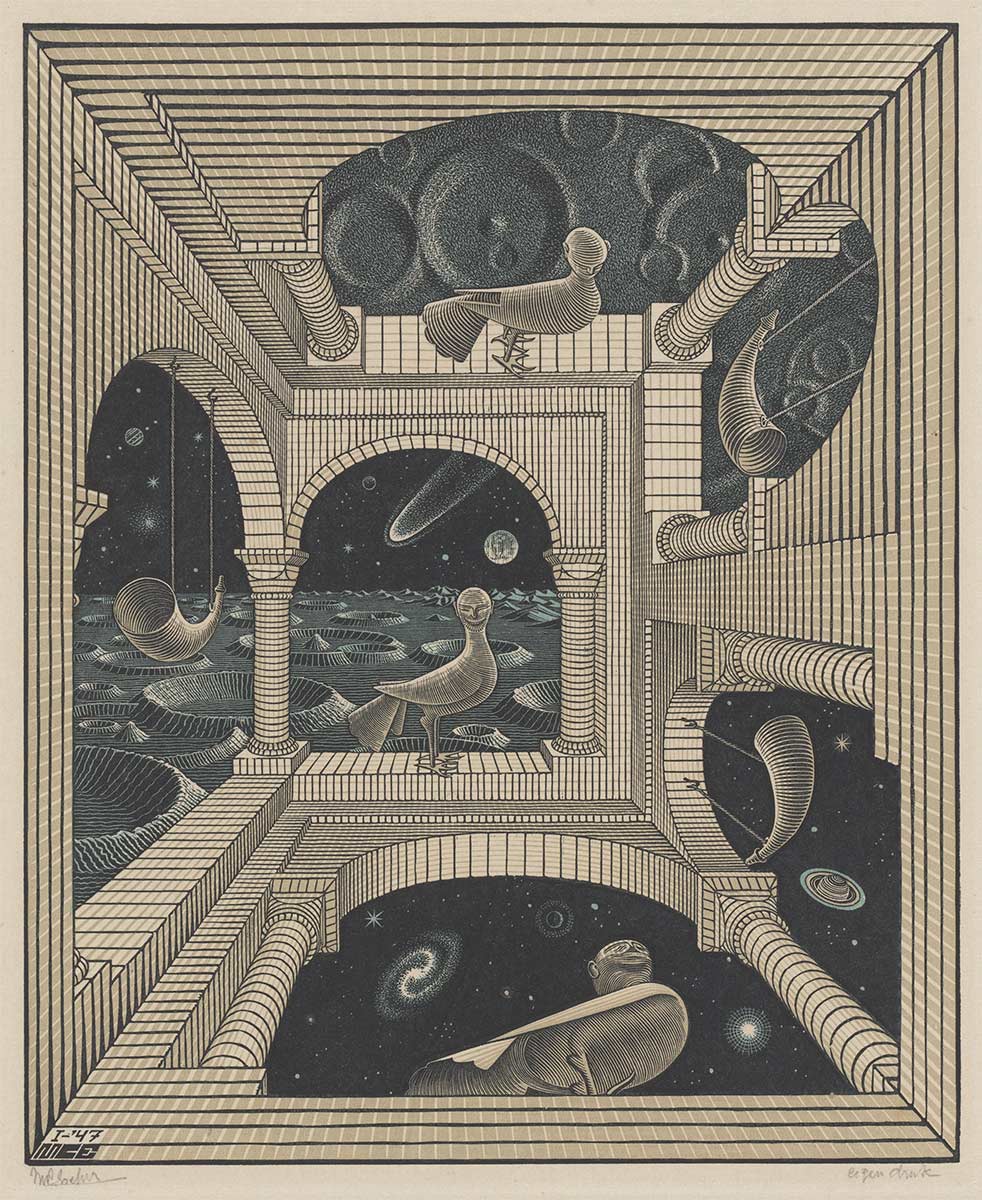
M.C. Escher, Another World / Andere Wereld (1947)
This is almost my favorite image by Escher. But I’d like a frEscher perspective in it: I think the bird should be looking in the other direction, out into the impossibly overlapping universes, not into the cupola and at the viewer.
• Μεστὰ δὲ πάντα σημείων καὶ σοφός τις ὁ μαθὼν ἐξ ἄλλου ἄλλο. — Πλωτῖνος, Ἐννεάδες Βʹ.γʹ.ζʹ
• • “All teems with symbol; the wise man is he who in any one thing can learn of another.” — Plotinus, Ennead II. 3. 7
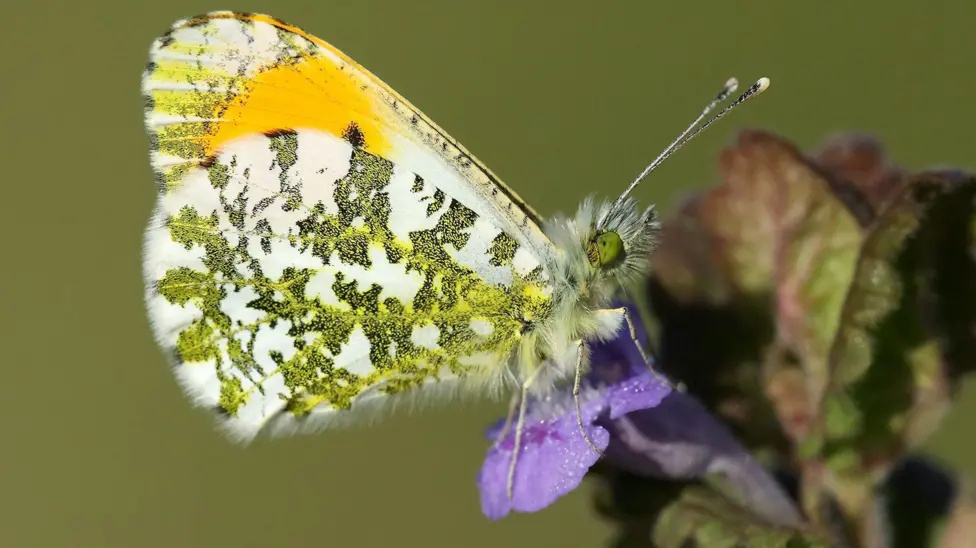
Orange-tip butterfly ♂, Anthocharis cardamines
lepidoptera, n. a large order of insects comprising the butterflies and moths. ← Greek λεπιδο-, “scale” + πτερόν, “wing” — Oxford English Dictionary
1, 1, 1, 2, 3, 4, 6, 9, 13, 19, 28, 41, 60, 88, 129, 189, 277, 406, 595, 872, 1278, 1873, 2745, 4023, 5896, 8641, 12664, 18560, 27201, 39865, 58425, 85626, 125491, 183916, 269542, 395033, 578949, 848491, 1243524, 1822473, 2670964, 3914488, 5736961, 8407925, …
• Narayana’s cows sequence: a(0) = a(1) = a(2) = 1; thereafter a(n) = a(n-1) + a(n-3). […] Number of digits in A061582. — A000930 at the Online Encyclopedia of Integer Sequences
1, 3, 9, 27, 621, 1863, 324189, 961232427, 2718369612621, 6213249182718361863, 1863961227324621324918324189, 32418927183662196121863961227324961232427, 961232427621324918186327183632418927183662196122718369612621, …
• a(1) = 1, a(n) = number obtained by replacing each digit of a(n-1) with three times its value. — A061582 at the OEIS
THE RUSSO-TURKISH WAR
WAR harms all ranks, all arts, all crafts appal;
At Mars’ harsh blast arch, rampart, altar fall!
Ah! hard as adamant a braggart Czar
Arms vassal-swarms, and fans a fatal war!
Rampant at that bad call, a Vandal band
Harass, and harm, and ransack Wallach-land.
A Tartar phalanx Balkan’s scarp hath past,
And Allah’s standard falls, alas! at last.
THE FALL OF EVE
EVE, Eden’s empress, needs defended be;
The Serpent greets her when she seeks the tree.
Serene she sees the speckled tempter creep;
Gentle he seems — perverted schemer deep —
Yet endless pretexts, ever fresh, prefers,
Vervetts her senses, revers when she errs.
Sneers when she weeps, regrets, repents she fell,
Then, deep-revenged, reseeks the nether Hell!
THE APPROACH OF EVENING
IDLING I sit in this mild twilight dim.
Whilst birds, in wild swift vigils, circling skim.
Light wings in sighing sink, till, rising bright.
Night’s Virgin Pilgrim swims in vivid light.
INCONTROVERTIBLE FACTS
NO monk too good to rob, or cog, or plot.
No fool so gross to bolt Scotch collops hot.
From Donjon tops no Oronooko rolls.
Logwood, not lotos, floods Oporto’s bowls.
Troops of old tosspots oft to sot consort.
Box tops our schoolboys, too, do flog for sport.
No cool monsoons blow oft on Oxford dons,
Orthodox, jog-trot, book-worm Solomons!
Bold Ostrogoths of ghosts no horror show.
On London shop-fronts no hop-blossoms grow.
To crocks of gold no Dodo looks for food.
On soft cloth footstools no old fox doth brood.
Long storm-tost sloops forlorn do work to port.
Rooks do not roost on spoons, nor woodcocks snort.
Nor dog on snowdrop or on coltsfoot rolls.
Nor common frog concocts long protocols.
PHILOSOPHY
DULL humdrum murmurs lull, but hubbub stuns.
Lucullus snuffs up musk, mundungus shuns.
Puss purrs, buds burst, bucks butt, luck turns up trumps;
But full cups, hurtful, spur up unjust thumps.
• from Literary Frivolities, Fancies, Follies and Frolics compiled by by William T. Dobson (1880)
Here’s a regular hexagon inside a regular triangle, that is, an equilateral triangle:
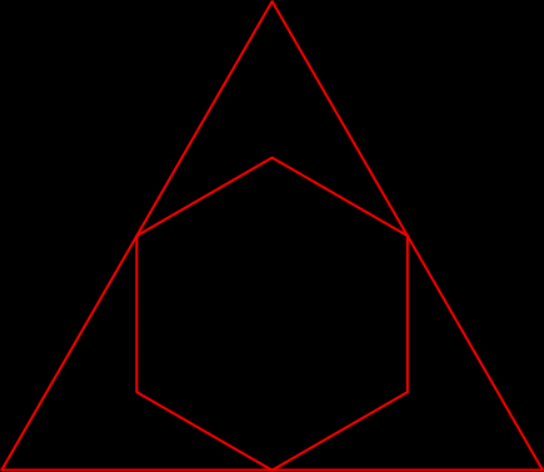
Regular hexagon inside regular triangle
Imagine that two points are moving around the perimeter of each polygon, with the hex-point moving half as fast as the tri-point (after adjustment for the incommensurate relative lengths of the perimeters). If you trace the midpoint of the twin spinning points, you get this shape:
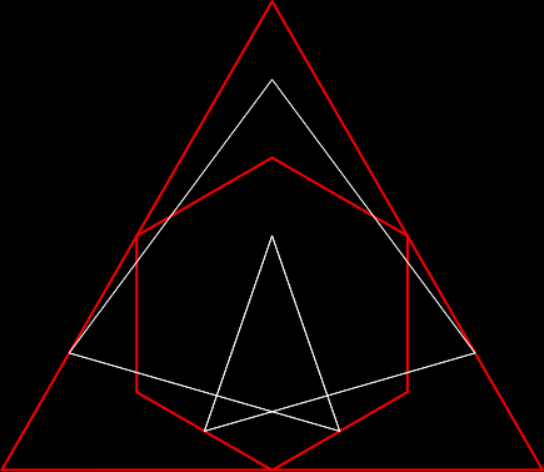
v3v6, 1 : 1/2, pol
And if you adjust the midpoint path as though the triangle had been stretched into a circle, you get this shape:
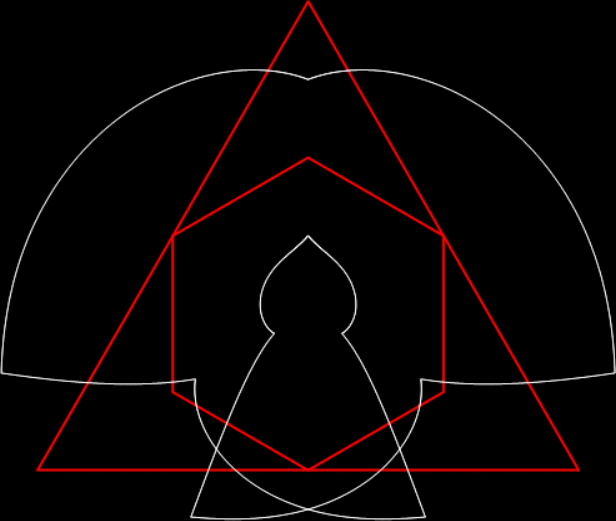
v3v6, 1 : 1/2, circ, pol
Here’s the same when the ratio of speeds is 1/2 to 1/3, that is, 1 to 2/3:
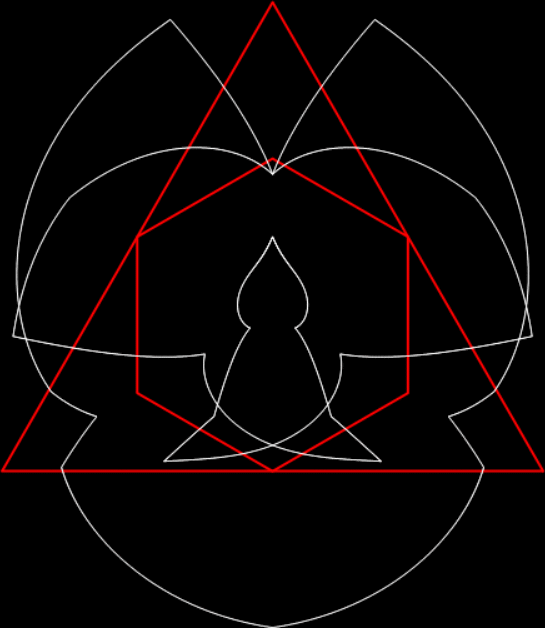
v3v6, 1/2 : 1/3, circ, pol
Without the polygons, it looks like this:
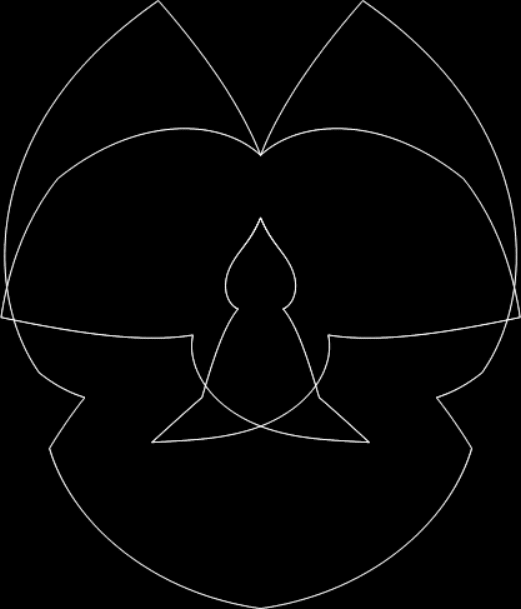
v3v6, 1/2 : 1/3, circ
When the ratio of speeds if -1/3 to 2/3, that is, the tri-point is moving counter-clockwise around the triangle, you get this shape:
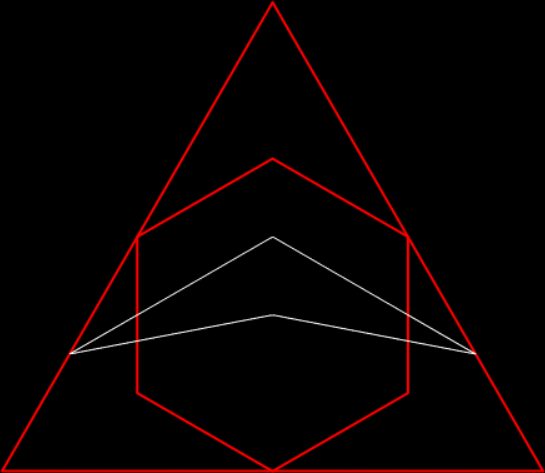
v3v6, -1/3 : 2/3, pol
When it’s stretched into a circle, you get this:
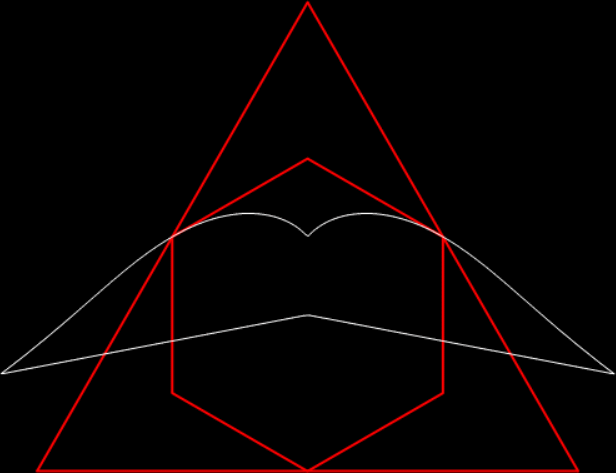
v3v6, -1/3 : 2/3, circ, pol
It looks like a moustache:
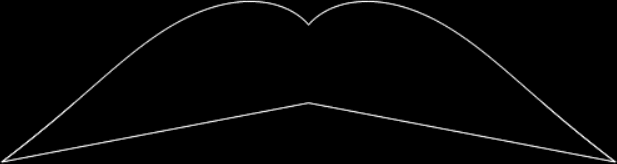
v3v6, -1/3 : 2/3, circ
Here are more midpoint shapes created with a hexagon inside a triangle:
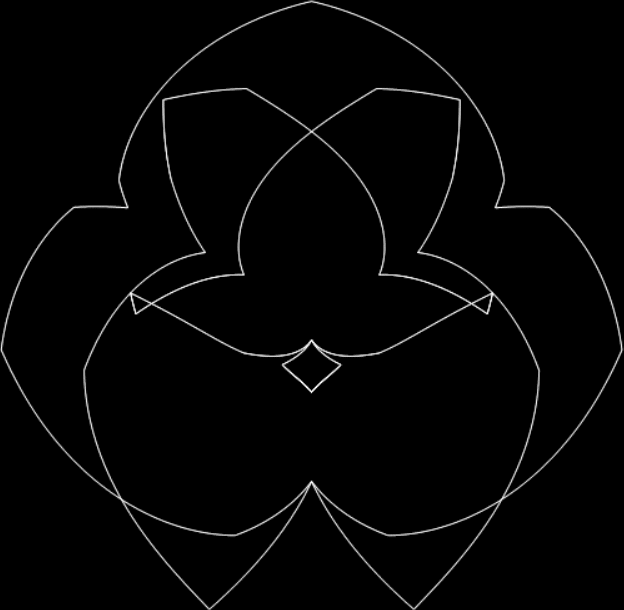
v3v6, 2/2 : 3/3, circ
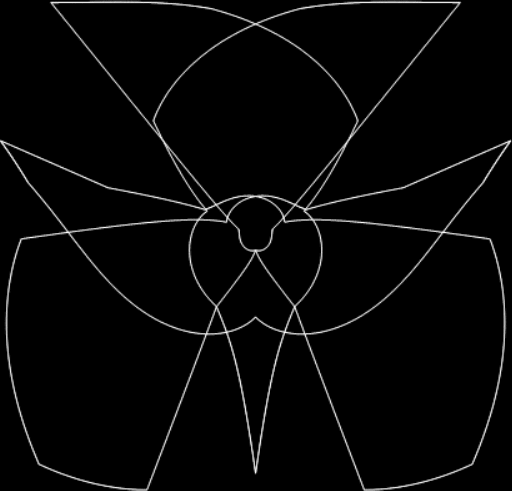
v3v6, -1/2 : 3/4, circ
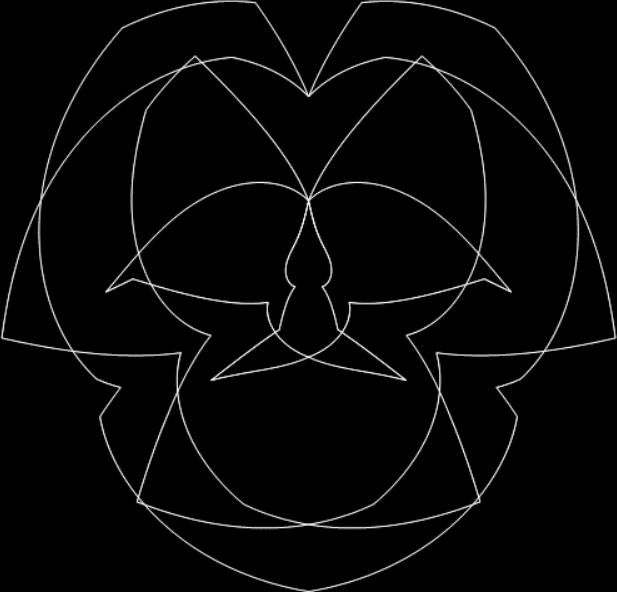
v3v6, 1/4 : 1/5, circ
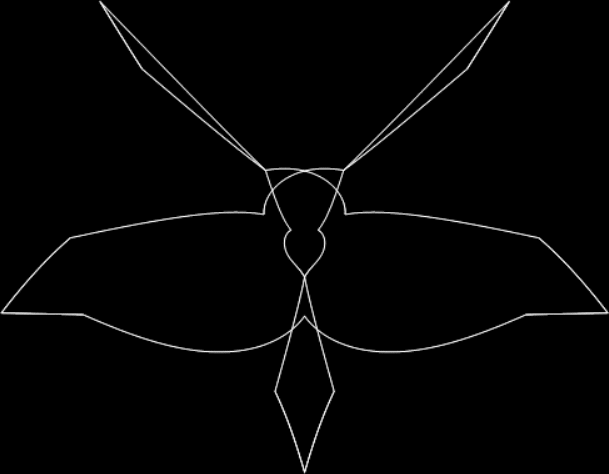
v3v6, -1/4 : 3/4, circ
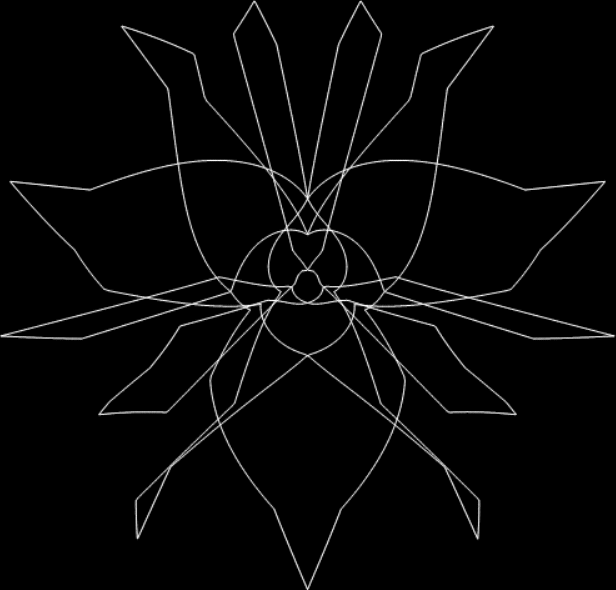
v3v6, -1/4 : 4/5, circ
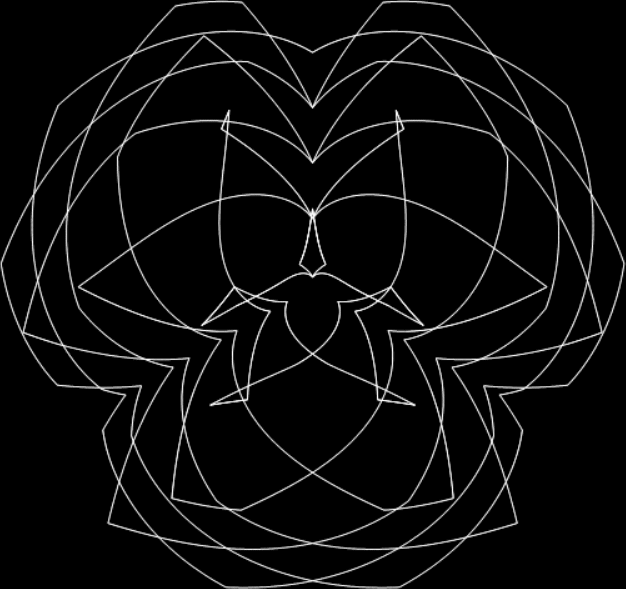
v3v6, 2/3 : 3/4, circ
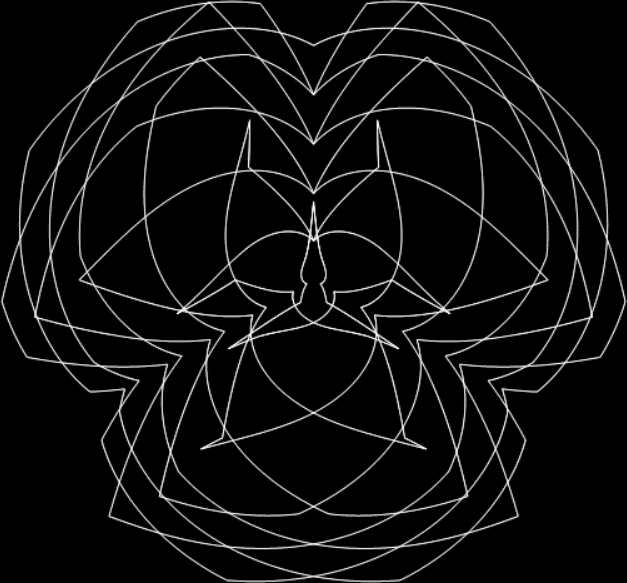
v3v6, 2/3 : 3/5, circ
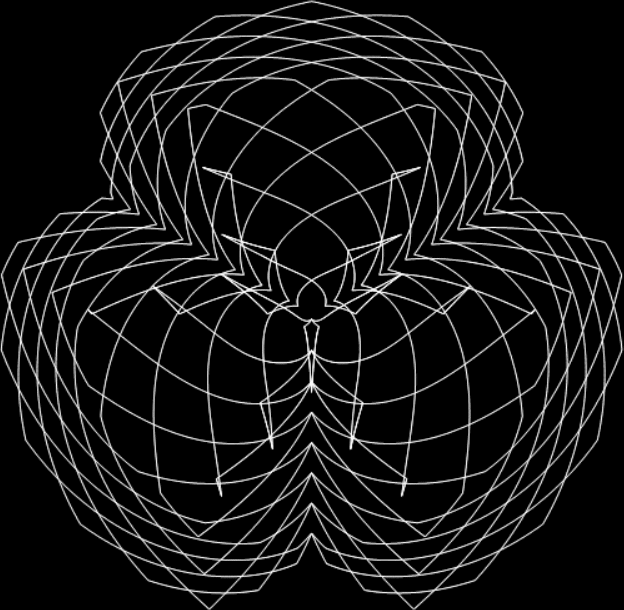
v3v6, 3/4 : 4/5, circ
v3v6, 3/4 : 4/5, circ
Now try aligning the nested hexagon like this, so that the sides of the hexagon coincide with the middle third of the sides of the triangle:
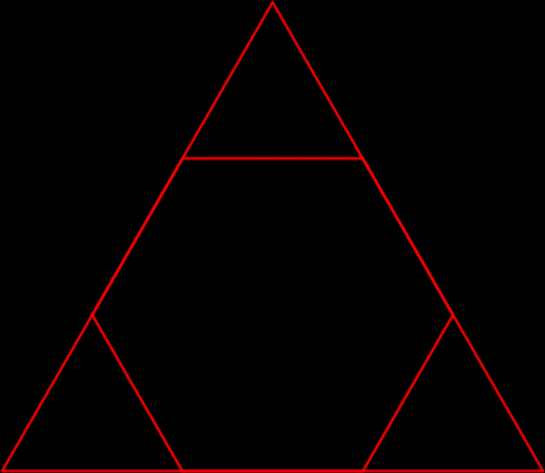
v3v6, side alignment
With two points moving in a ratio of 1/3 to 1/4, you get this midpoint shape:
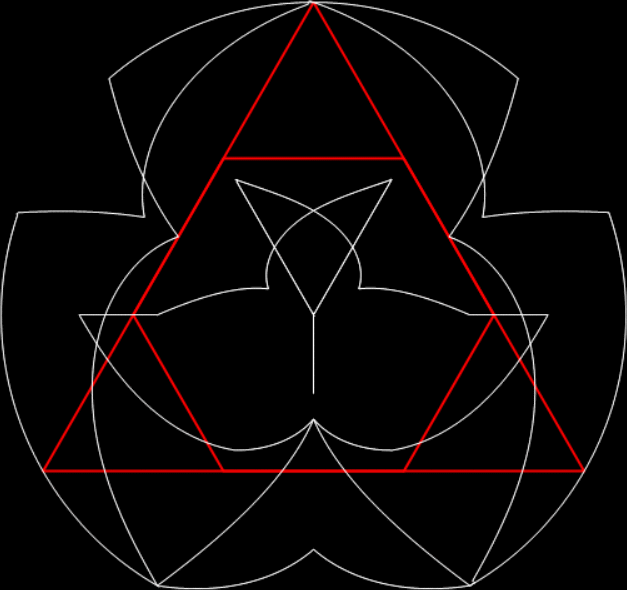
v3v6, sided, 1/3 : 1/4, pol
Here it is without the polygons:
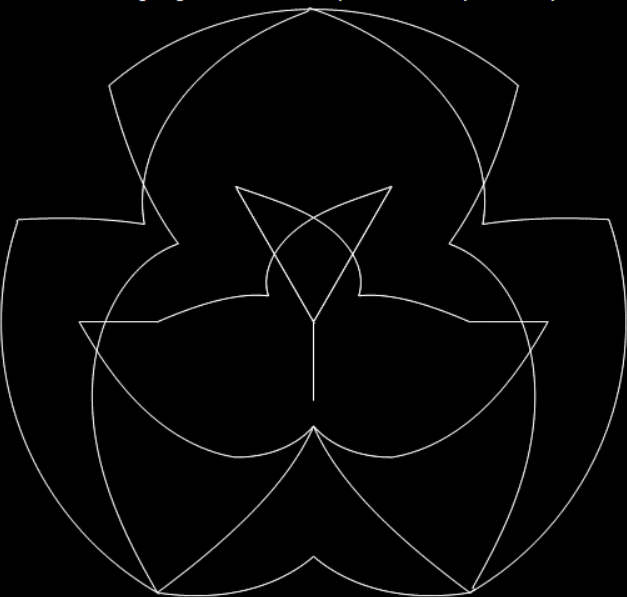
v3v6, sided, 1/3 : 1/4
Now try a regular octagon inside a square:
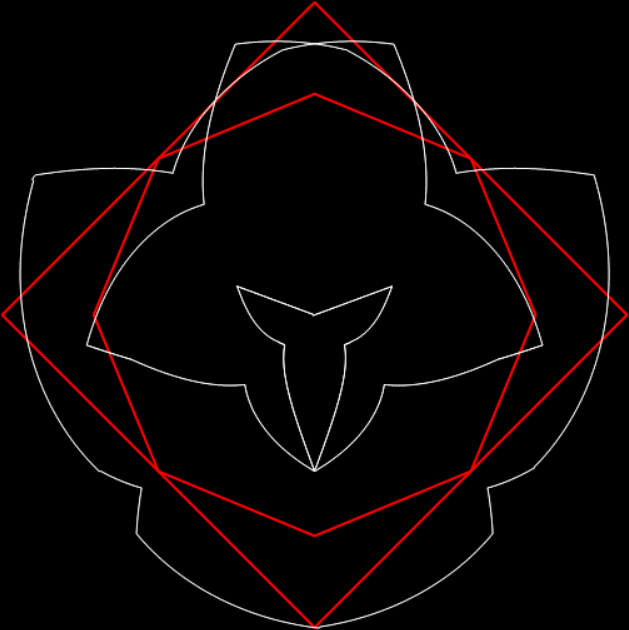
v4v8, 1/2 : 1/3, circ, pol
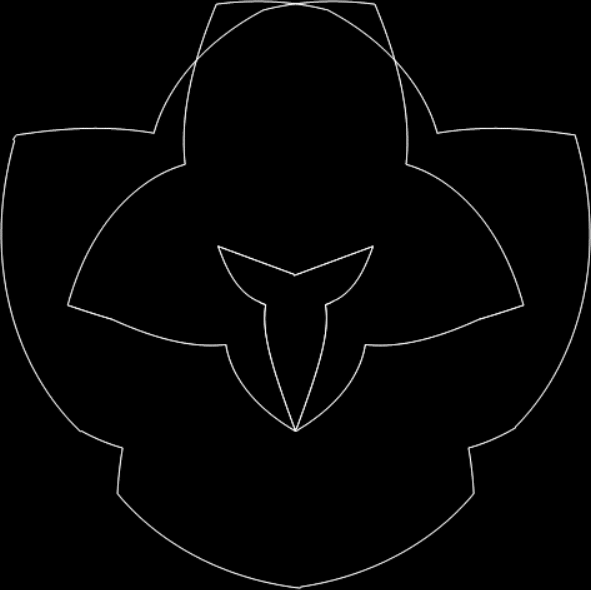
v4v8, 1/2 : 1/3, circ
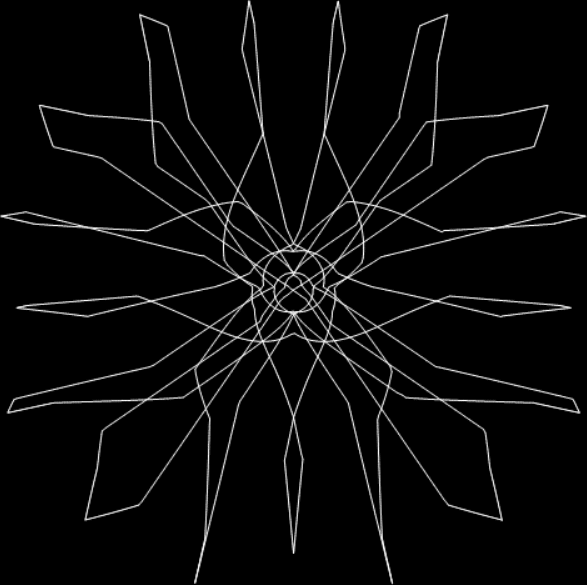
v4v8, -1/3 : 3/4, circ
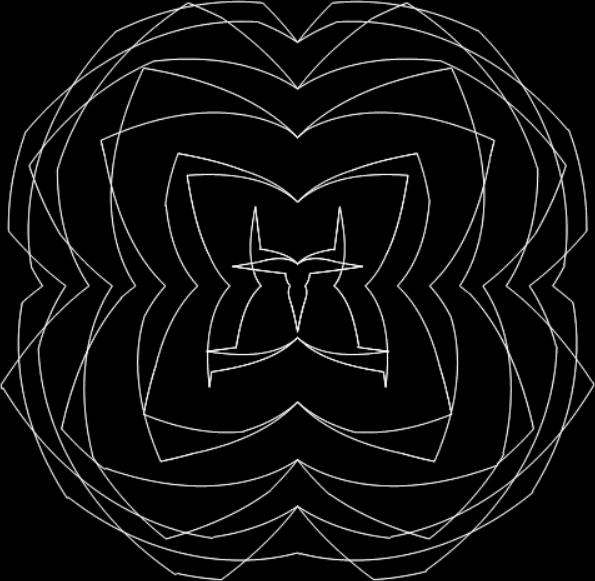
v4v8, 2/3 : 3/5, circ
Now place a triangle inside a hexagon:
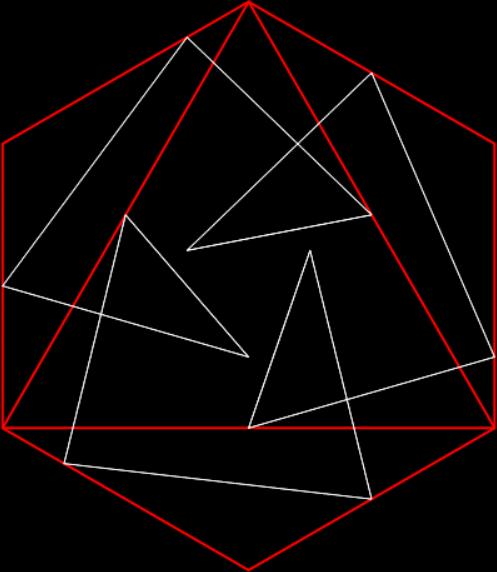
v6v3, 1 : 1/4, pol
If you stretch the midpoint path according to perimeter of the triangle, you get this:
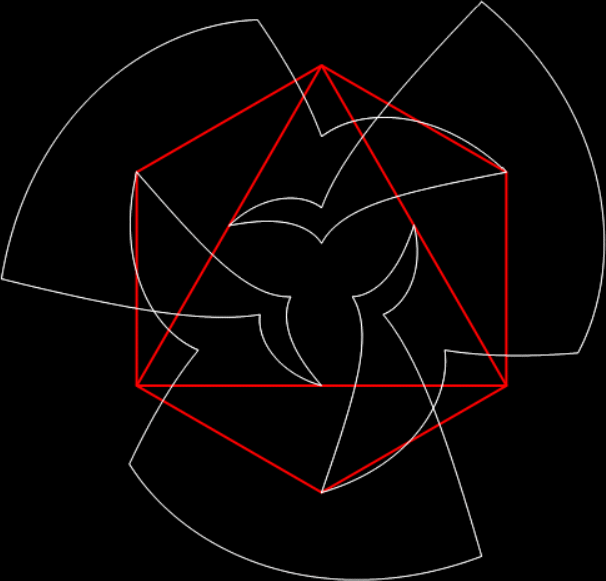
v6v3, 1 : 1/4, circ, pol
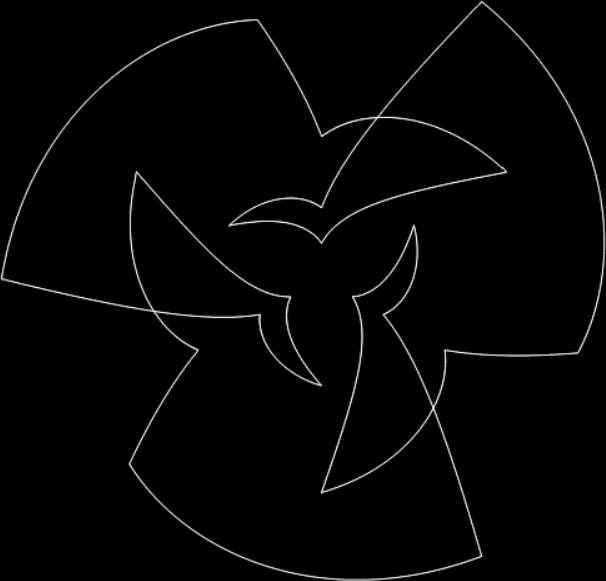
v6v3, 1 : 1/4, circ
The three stretching shapes remind me of hands in Egyptian art, like this image of King Tutankhamun and Queen Ankhesenamun:
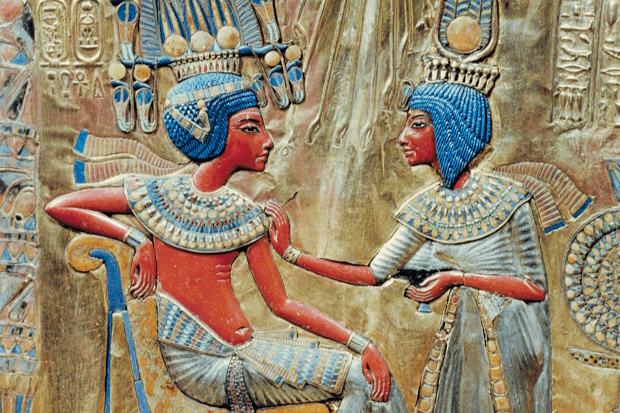
Detail from the Golden Throne of Tutankhamnun
Here are more midpoint paths:
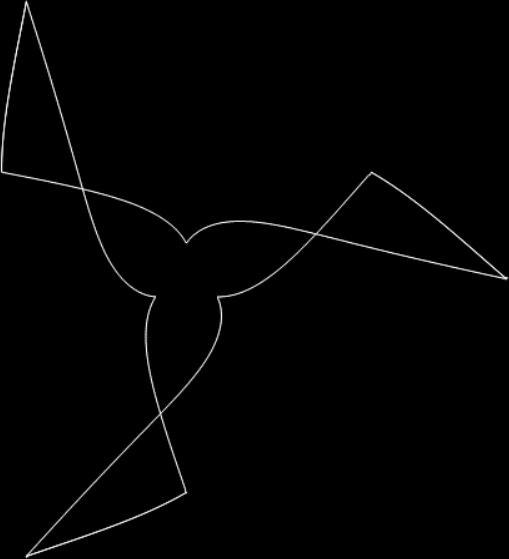
v6v3, 1 : -1/4, circ
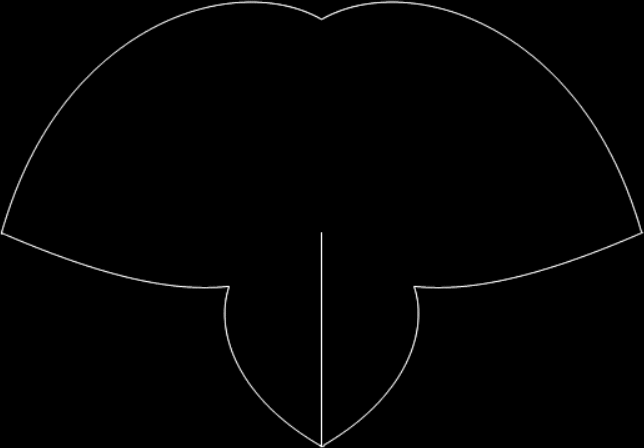
v6v3, 1 : 1/2, circ
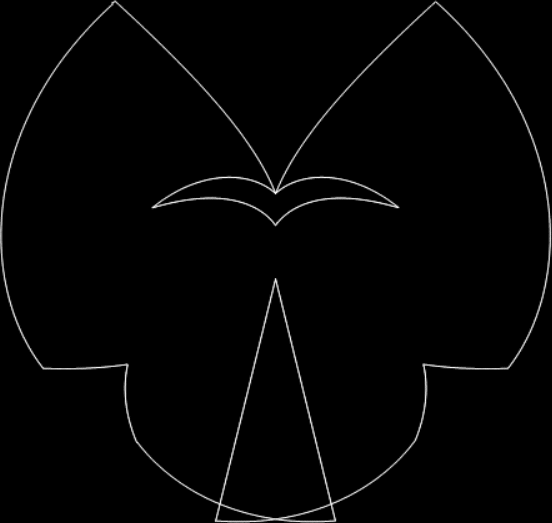
v6v3, 1 : 1/3, circ
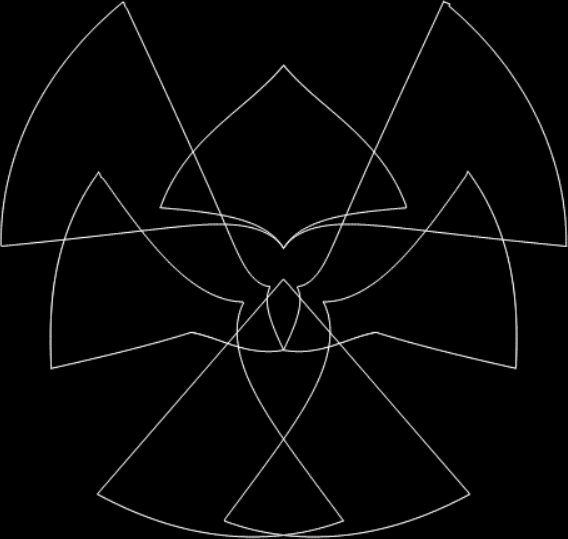
v6v3, -1 : 1/3, circ
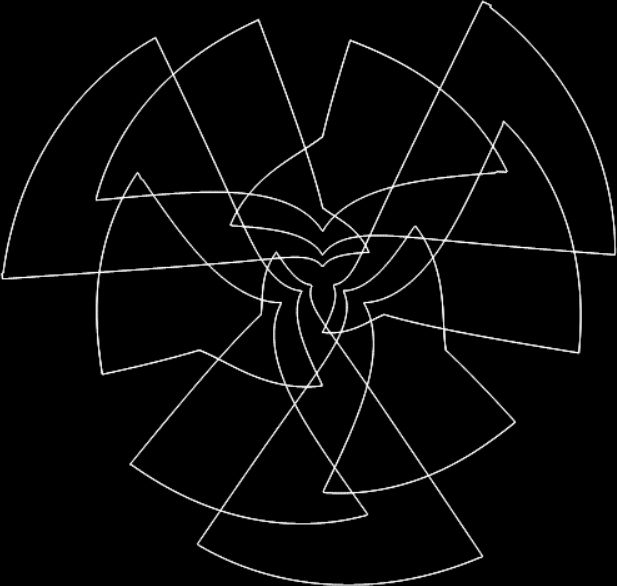
v6v3, -1 : 1/4, circ
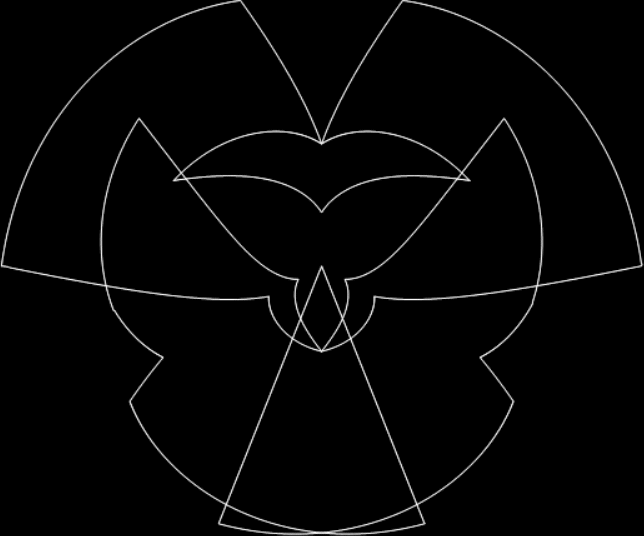
v6v3, 1 : 1/5, circ
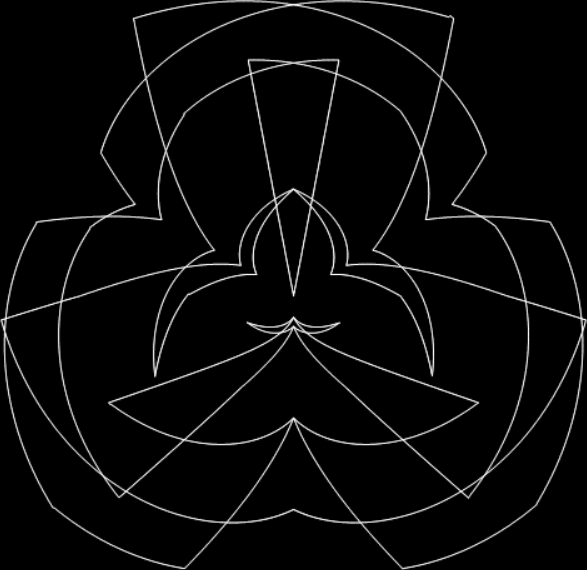
v6v3, 2/3 : 1/4, circ
Now try a square inside an octagon:
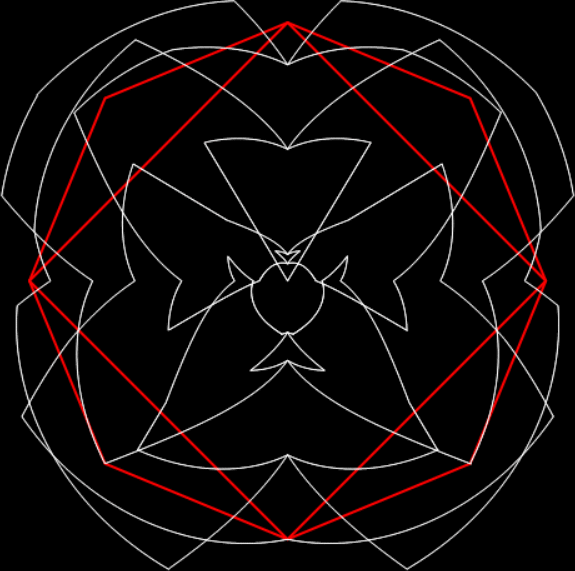
v8v4, 2/3 : 1/4, circ, pol
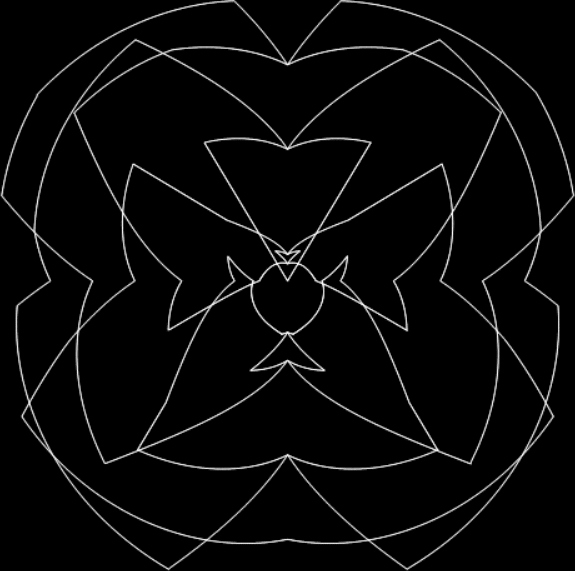
v8v4, 2/3 : 1/4, circ
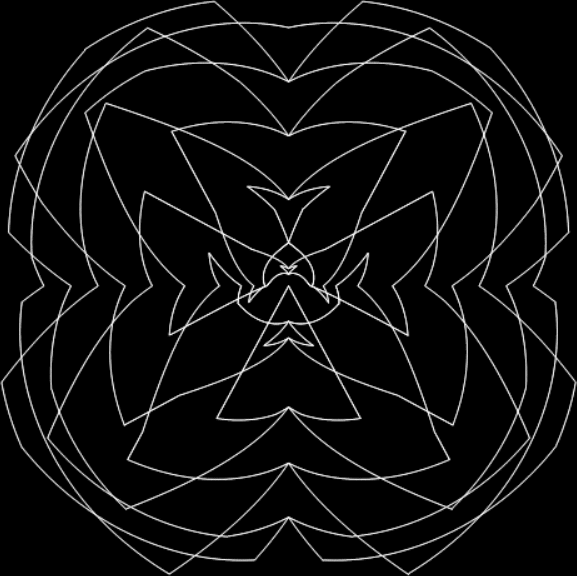
v8v4, 2/5 : 1/6, circ
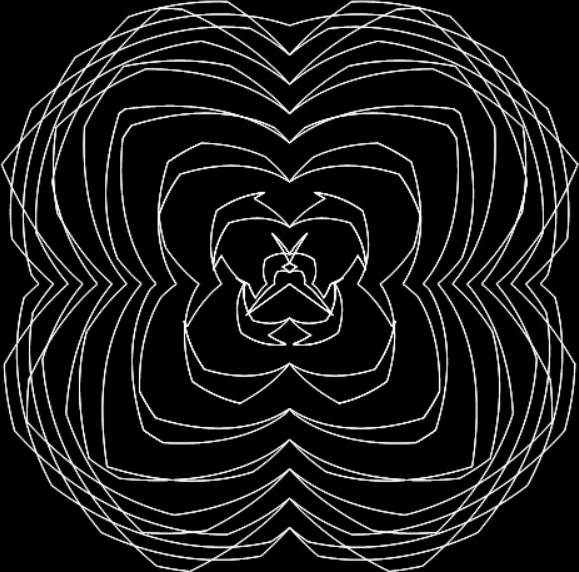
v8v4, 2/5 : 3/7, circ
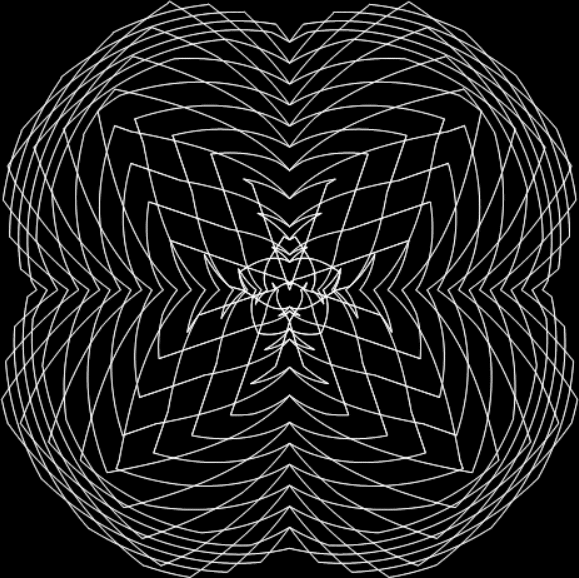
v8v4, 4/5 : 3/7, circ
Elsewhere Other-Accessible…
• First Whirled Warp — an earlier look at this kind of geometry
• Second Whirled Warp — and another earlier look
Crossing the bridge,
The old bridge,
I caught my idle eye
On a small sign,
A white sign,
Sheened and set ahigh.
And rainbow flared
As I slantwise stared,
Idle passer-by.

