
The bell curve is a shape that appears when you make a graph by counting all possible sums of a range of integers like 1, 2, 3, 4, 5, 6, 7, 8, 9, 10. The smallest sum you can get is 1; the largest is 55 = 1 + 2 + 3 + 4 + 5 + 6 + 7 + 8 + 9 + 10. But there’s only one sum of 1 and only one sum of 55. Other sums are more common:
• 10 = 1 + 2 + 3 + 4
• 10 = 1 + 2 + 7
• 10 = 1 + 3 + 6
• 10 = 1 + 4 + 5
• 10 = 2 + 3 + 5
• 10 = 2 + 8
• 10 = 3 + 7
• 10 = 4 + 6
• 10 = 10
So there are nine sums of 10. If you graph count-sums with a bigger set of consecutive integers from 1, 2, 3…, you get this shape:
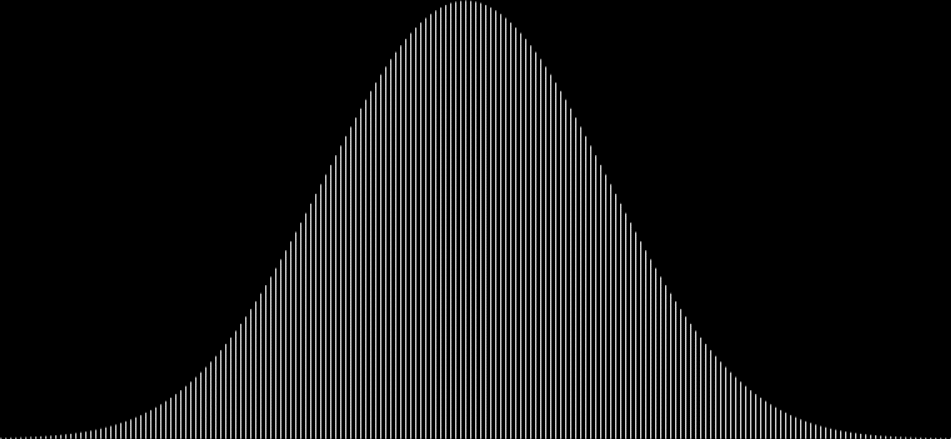
Bell curve from sum-counts with 1, 2, 3, 4, 5, 6, 7, 8, 9, 10…
(open in separate window for full-sized image)
It’s a bell curve. Et c’est une belle curve, a “beautiful curve” in French. But I’ve found what I call bellissime curve — Italian for “most beautiful curves” — by sampling different sets of integers. With the set (1, 3, 5, 7, 9, 11, 13, 15, 17, 19…), you get what you could call a slightly wrinkled bell curve:
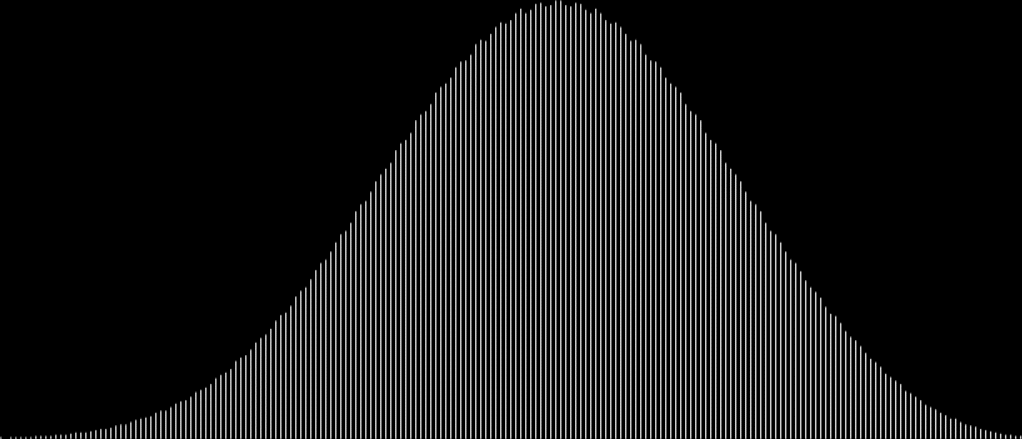
Wrinkled bell-curve from sum-counts with 1, 3, 5, 7, 9, 11, 13, 15, 17, 19…
(open in separate window for full-sized image)
After that, as you leave bigger gaps in the sampled sets, the curves start to overlap and add extra beauty:
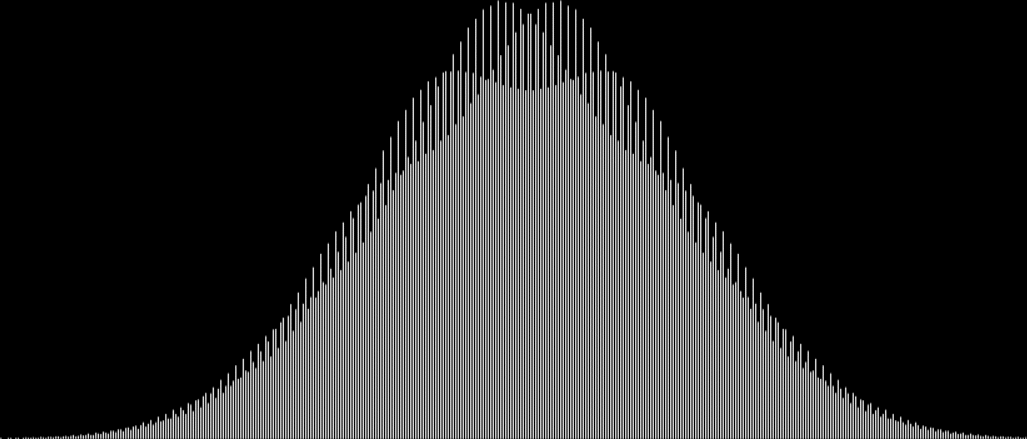
Overlapping bell curves from sum-counts with 1, 4, 7, 10, 13, 16, 19, 22, 25, 28…
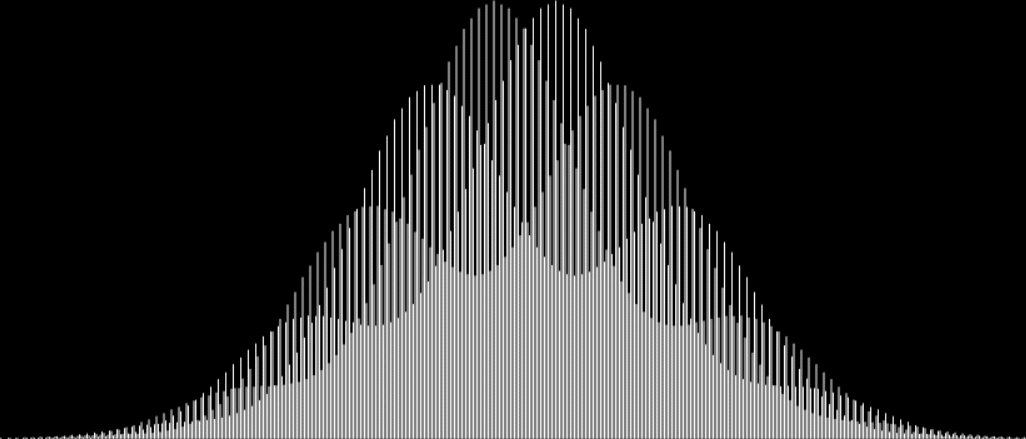
Bellissima curves from sum-counts with 1, 5, 9, 13, 17, 21, 25, 29, 33, 37…
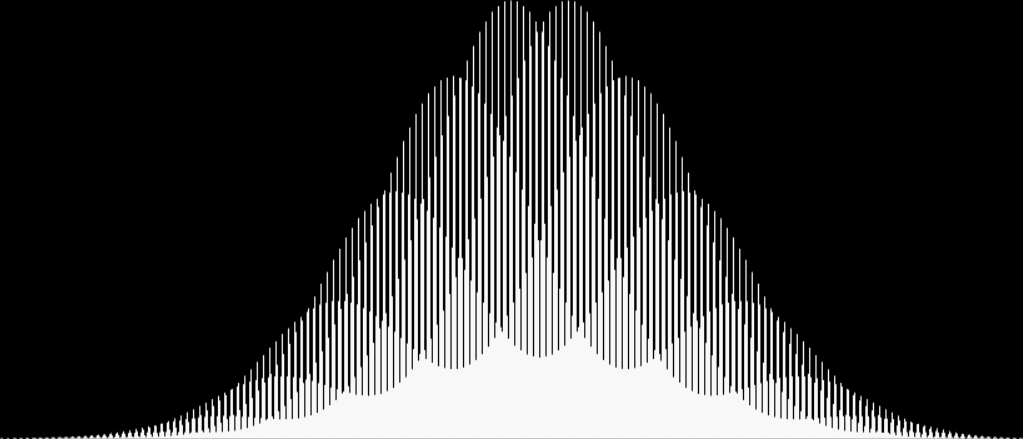
Bellissima curves from sum-counts with 1, 6, 11, 16, 21, 26, 31, 36, 41, 46…
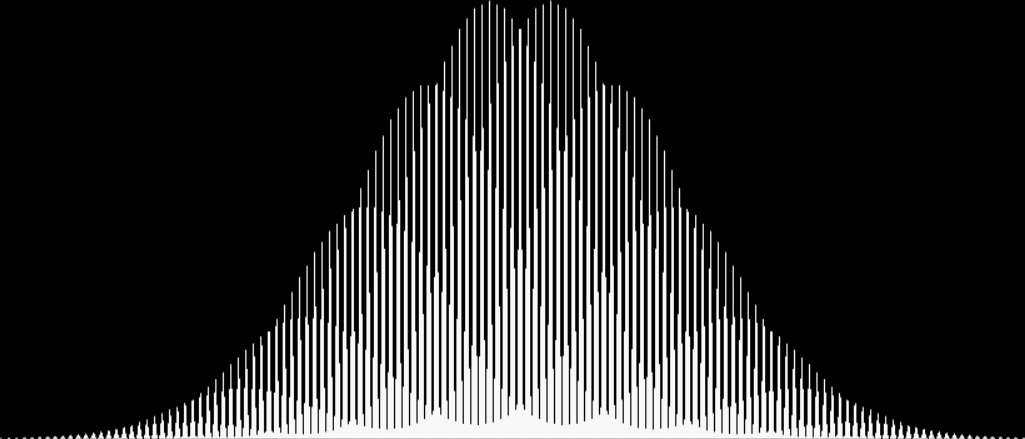
Bellissima curves from sum-counts with 1, 7, 13, 19, 25, 31, 37, 43, 49, 55…
With the set (3, 6, 9, 15, 18, 21…), the bell is back:
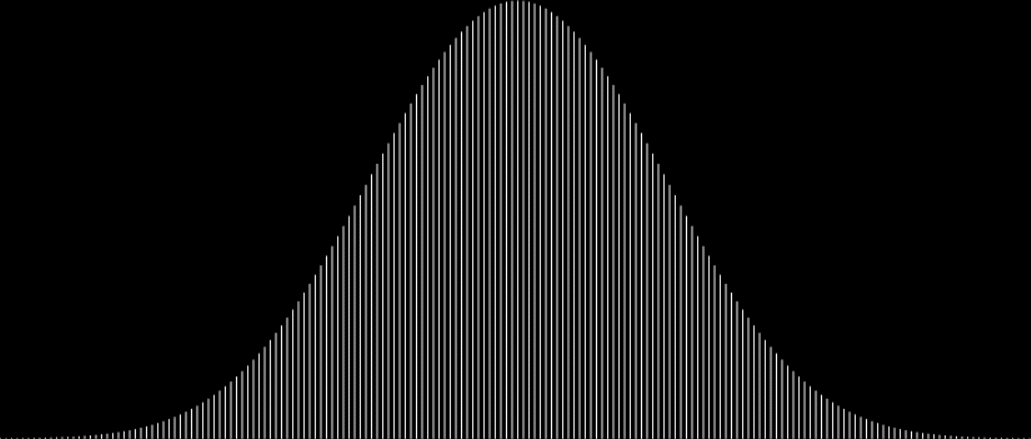
Bell curve from sum-counts with 3, 6, 9, 15, 18, 21…
But with (4, 7, 10, 13, 6, 19…), separated by the same distance, you get this:
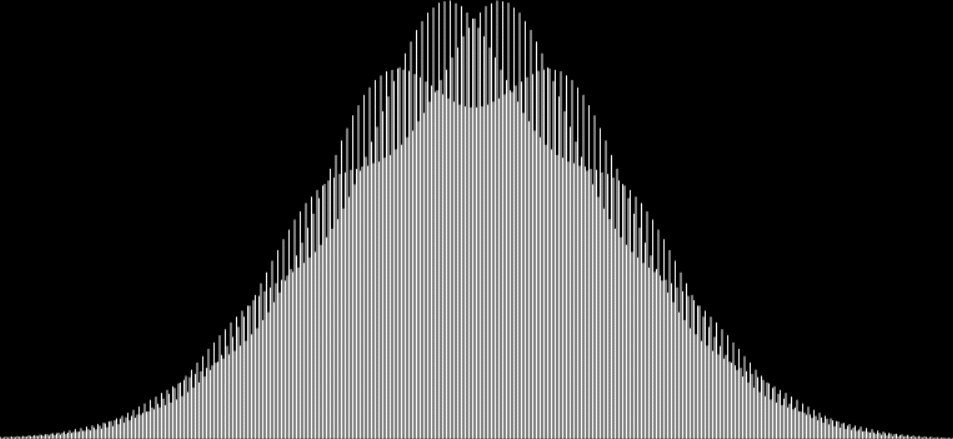
Bell curve from sum-counts with 4, 7, 10, 13, 6, 19…
When you sample the Fibonacci numbers, (1, 2, 3, 5, 8…), you get this graph:
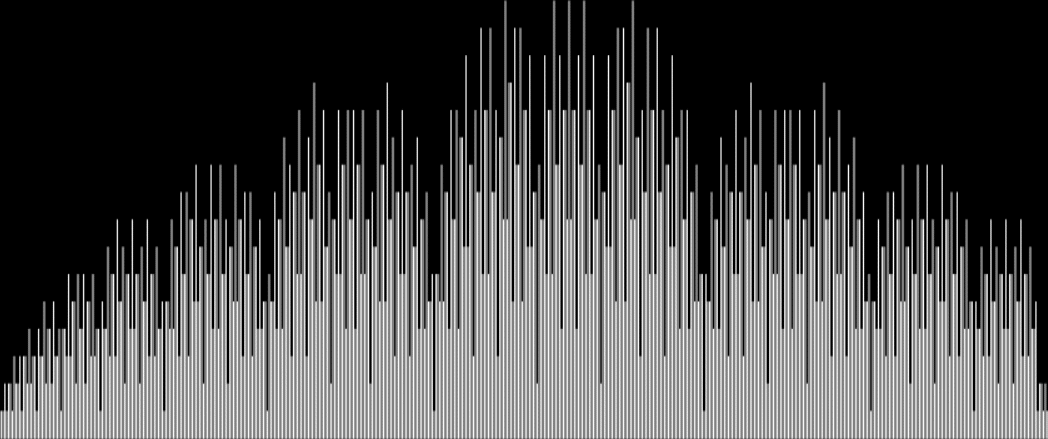
Caterpillar curve from sum-counts of Fibonacci numbers 1, 2, 3, 5, 8, 13, 21, 34, 55, 89…
When you sample a restricted set of Fibonaccis, (1, 3, 8, 21, 55…), you get this, where each vertical line represents a count of one:
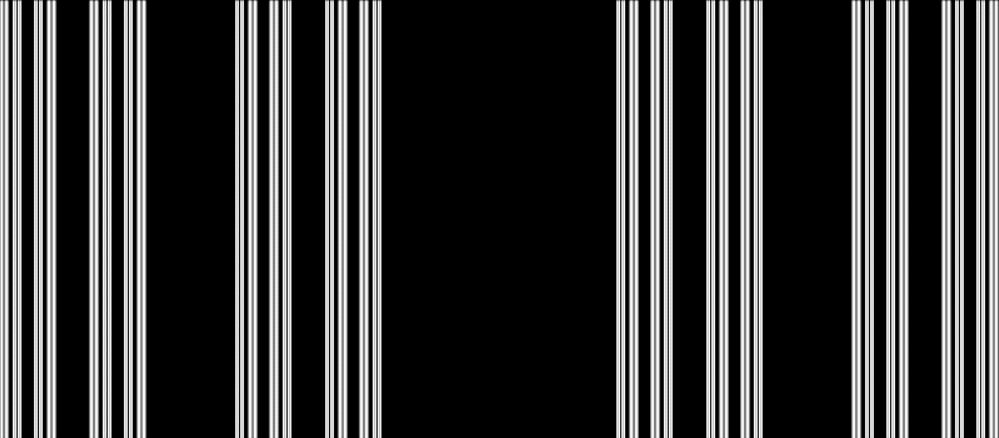
Golden gaps from sum-counts of restricted Fibonacci numbers 1, 3, 8, 21, 55, 144…
That restricted Fibonacci graph is strangely attractive, because it has golden gaps (verb sap!).
 Overlord In Terms of Core Issues Around Maximal Engagement with Key Notions of the Über-Feral