The Sound of Silex

Some of the most beautiful patterns in nature arise from the interaction of three very simple things: sand and water, sand and air. Sculptrix Sabulorum, a side-project of the Exeter band Slow Exploding Gulls, are an attempt to do with sound what nature does with sand: turn simple ingredients into beautiful patterns. Here are extracts from an interview and review in the Plymouth fanzine EarHax:

Hector Anderton: OK. The obvious first. Sculptrix Sabulorum. What does it mean and why did you choose it?

Joe Corvin: It’s Latin and literally means “Sculptress of the Sands”. We chose it, well, because we thought it looked and sounded good. Good but mysterious.

Hector Anderton: And who is the sculptress? The sea?

Joe Corvin: Well, the sculptress is Mother Nature, in the fullest sense, but she uses the sea. The wind. Gravity. Simple things, but put them together with sand and interesting things happen.

Cath Orne: Which we wanted to explore, but we didn’t think S.E.G. [Slow Exploding Gulls] was the way to explore them.
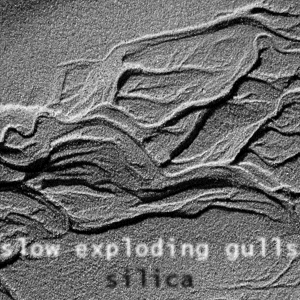
Cover of Silica by Slow Exploding Gulls

Hector Anderton: But hadn’t you done that in Silica?

Joe Corvin: We’d started to, but Silica hadn’t exhausted the theme. Of sand, I mean. It’s something I’d always been interested in, but with S.E.G. we tend to go with the organic side of the sea, with sea life.

Hector Anderton: Whereas sand is inorganic?

Joe Corvin: Exactly. Silica was a bit of a departure for us, in that respect. It was as though we were walking down a corridor and we opened a door in passing and thought, yeah, that room looks interesting.
Sand Band: Sculptrix Sabulorum

Sand Band: Sculptrix Sabulorum

Cath Orne: So we’ll come back and have a proper look later.

Joe Corvin: Yeah. Under a new name. Which we’ve done. Hence, Sculptrix Sabulorum.

Extract © EarHax (1992)


Skulsonik, Sculptrix Sabulorum (Umbra Mundi 1995)

Macca to Madonna: “Listen to the music playing in your head.” In fact, we never do anything else. We don’t experience the world: we experience a sensory simulacrum of the world. Light or sound-waves or chemicals floating in the air stimulate the nerves in our eyes or ears or nose and the brain turns the resultant stream of electrical pulses into sight or sound or smell.
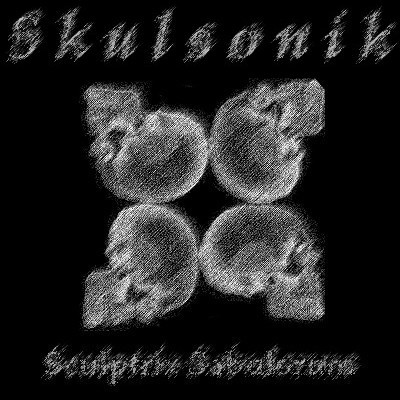
Skulsonik (1995)

Sculptrix Sabulorum: Skulsonik (1995)

But it does more than that: it covers up the cracks. Raw nerve-stuff is not smooth and polished sensation. We have blind-spots, but the brain edits them out. Only a small part of our visual field is actually in clear focus, but we think otherwise. If we could see raw nerve-stuff, it would be a blurry, fuzzy mess.

The same is true of hearing. And Skulsonik is an attempt to record raw nerve-stuff: to capture not sound out there, but sound in here – the music playing in your head. Sculptrix Sabulorum have set out to answer a simple question: “What does music really sound like?” Or rather: what does music cerebrally sound like? What does it sound like in your head?

Extract © EarHax (1995)


Previously pre-posted (please peruse):

Mental Marine Music – Slow Exploding Gulls

Bri’ on the Sky

Front cover of Wonders of the Solar System by Brian Cox and Andrew Cohen

Bri’ Eyes the Sky

Wonders of the Solar System, Professor Brian Cox and Andrew Cohen (Collins 2010)

One of the most powerful images in this book is also one of the most understated. It’s an artist’s impression of a dim star seen over the curve of a dwarf-planet called Sedna. The star is a G-type called Sol. We on Earth know it better as the sun. Sedna is a satellite of the sun too, but it’s much, much further out than we are. It takes 12,000 years to complete a single orbit and its surface is a biophobic -240°C. It’s so distant that sunrise is star-rise and it wasn’t discovered until 2003. But the sun’s gravity still keeps it in place: one of the weakest forces in nature is one of the most influential. That’s one important message in an understated, crypto-Lovecraftian image.

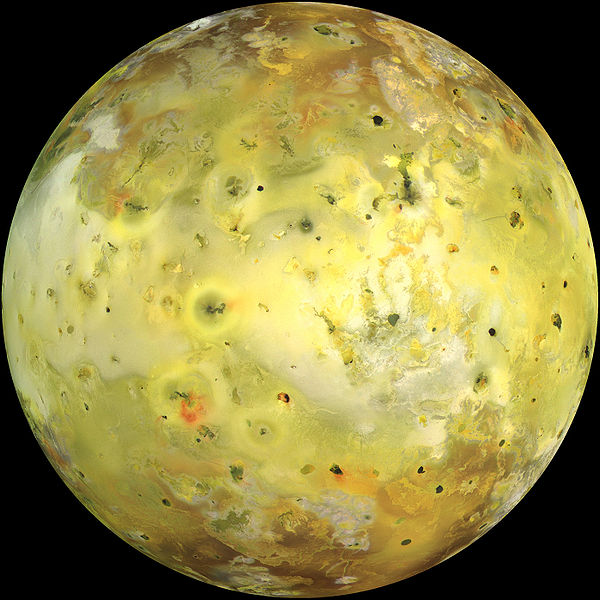
Sedna has been there, creeping around its dim mother-star, since long before man evolved. It will still be there long after man disappears, voluntarily or otherwise. This frozen dwarf is a good symbol of the vastness of the universe and its apparent indifference to life. We don’t seem to interest the universe at all, but the universe certainly interests us. Wonders of the Solar System is a good introduction to our tiny corner of it, describing some fundamentals of astronomy with the help of spectacular photographs and well-designed illustrations. You can learn how fusion powers the sun, how Mars lost its atmosphere and how there might be life beneath the frozen surface of Jupiter’s satellite Europa. The text is simple, but not simplistic, though I think the big name on the cover did little of the writing: this book is probably much more Cohen than Cox. Either way, I enjoyed reading the words and not just looking at the pictures, all the way from star-dim Sedna (pp. 26-7) to “Scars on Mars” (pp. 220-1) by way of “The most violent place in the solar system” (pp. 198-9), a.k.a. Jupiter’s gravity-flexed, volcano-pocked satellite Io.

Pockmarked moon -- the Galilean satellite Io

Pockmarked moon — the Galilean satellite Io

Everything described out there is linked to something down here, because that’s how it was done in the television series. Linking the sky with the earth allowed the BBC to film the genial and photogenic physicist Brian Cox in various exotic settings: Hawaii, India, East Africa, Iceland and so on. I’ve not seen any of Cox’s TV-work, but he seems an effective popularizer of science. And the pretty-boy shots here add anthropology to the astronomy. What is the scientific point of Cox striding away in an artistic blur over the Sahara desert (pg. 103), staring soulfully into the distance near the Iguaçu Falls on the Brazilian-Argentine border (pg. 37) or gazing down into the Grand Canyon, hips slung, hands in pockets (pg. 163)? There isn’t a scientific point: the photos are there for his fans, particularly his female ones. He’s a sci-celeb, a geek with chic, and we’re supposed to see the sky through Bri’s eyes.

But he’s also a liberal working for the Bolshevik Broadcasting Corporation, so he’ll be happy with the prominent photo early on: Brian holding protective glasses over the eyes of a dusky-skinned child during a solar eclipse in India. The same simul-scribes’ Wonders of Life (Collins 2013), another book-of-the-BBC-series, opens with a similarly allophilic allophoto: a dusky-skinned Mexican crowned in monarch butterflies. This is narcissistic and patronizing, but the readiness of whites to “Embrace the Other” helps explain science, because science involves looking away from the self, the tribe and the quotidian quest for status and survival. Of course, Cox and Cohen would gasp with horror at the idea of racial differences explaining big things like science and politics. Cox would be sincere in his horror. I’m not so sure about Cohen.

But there are wonders within us as well as without us and though you won’t hear about them on the BBC, the tsunami of HBD, or research into human bio-diversity, is now rolling ashore. It will sweep away almost all of Cox’s and Cohen’s politics, but leave most of their science intact. It isn’t a coincidence that the rings of Saturn were discovered by the Italian Galileo and explained by the Dutchman Huygens and the Italian Cassini, or that the photos of Saturn here were taken by a space-probe launched by white Americans. But the United States has much less money now for space exploration. That’s explained by race too: as the US looks less like its founders, it looks less like a First World nation too. It’s fun to see the world through Bri’s eyes, but he’s careful not to look at everything that’s out there.