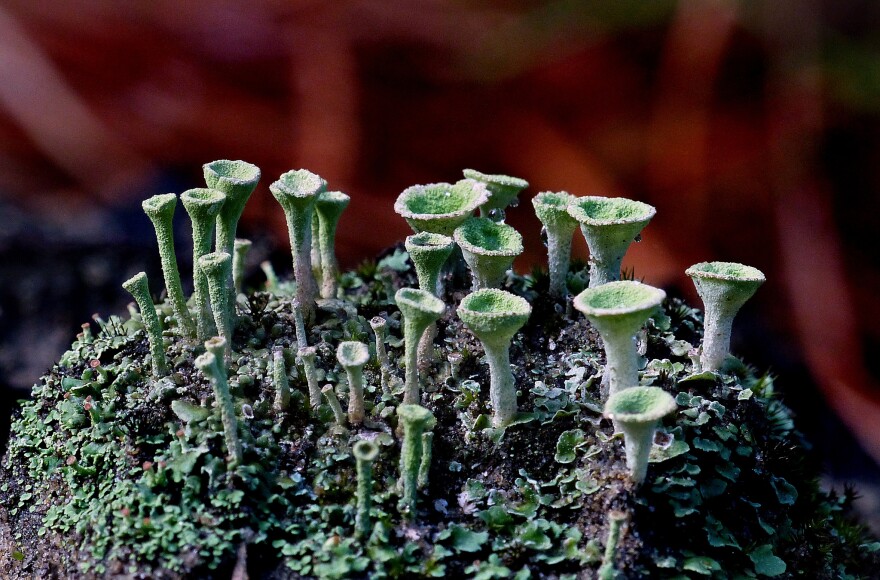
Pixie-cup lichen, Cladonia pyxidata (possibly)

Pixie-cup lichen, Cladonia pyxidata (possibly)
Elsewhere other-accessible:
• Songs from the Center of the Sun — an interview with Faster Than Lichen
Faster Than Lichen are minimal men making minimal music. They may even be a minimal man: one story is that F.T.L. is an American or Russian (or possibly Argentinian) scientist living in a research-base on Antarctica. This would fit the name, because lichens are an important part of polar ecology. But perhaps it fits too well. Here is a short interview with F.T.L. conducted by email in November 2012.
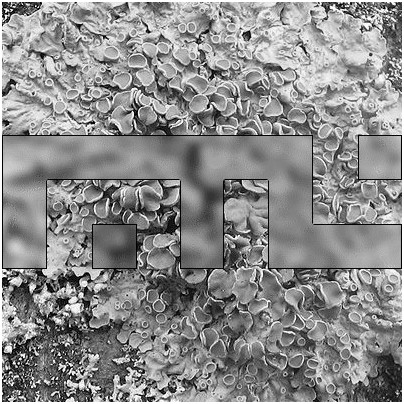
Faster Than Lichen #1
Q. How would you describe the music of Faster Than Lichen?
A. Songs from the center of the sun.

Faster Than Lichen #1 (back cover)
Q. Why the sun?
A. Why not?
Q. How long have you been making music?
A. Long enough.
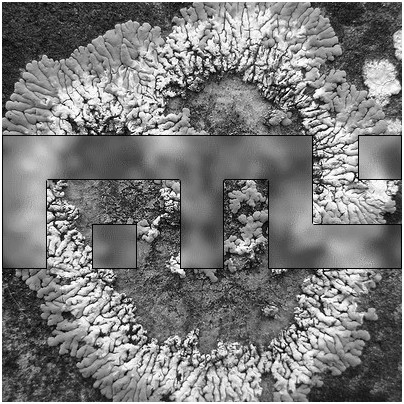
Faster Than Lichen #2
Q. What emotions do you aim to evoke?
A. Acceptance.

Faster Than Lichen #2 (back cover)
Q. Is that all?
A. Usually.
Q. F.T.L. albums have no titles, only numbers. Why?
A. Numbers say more.
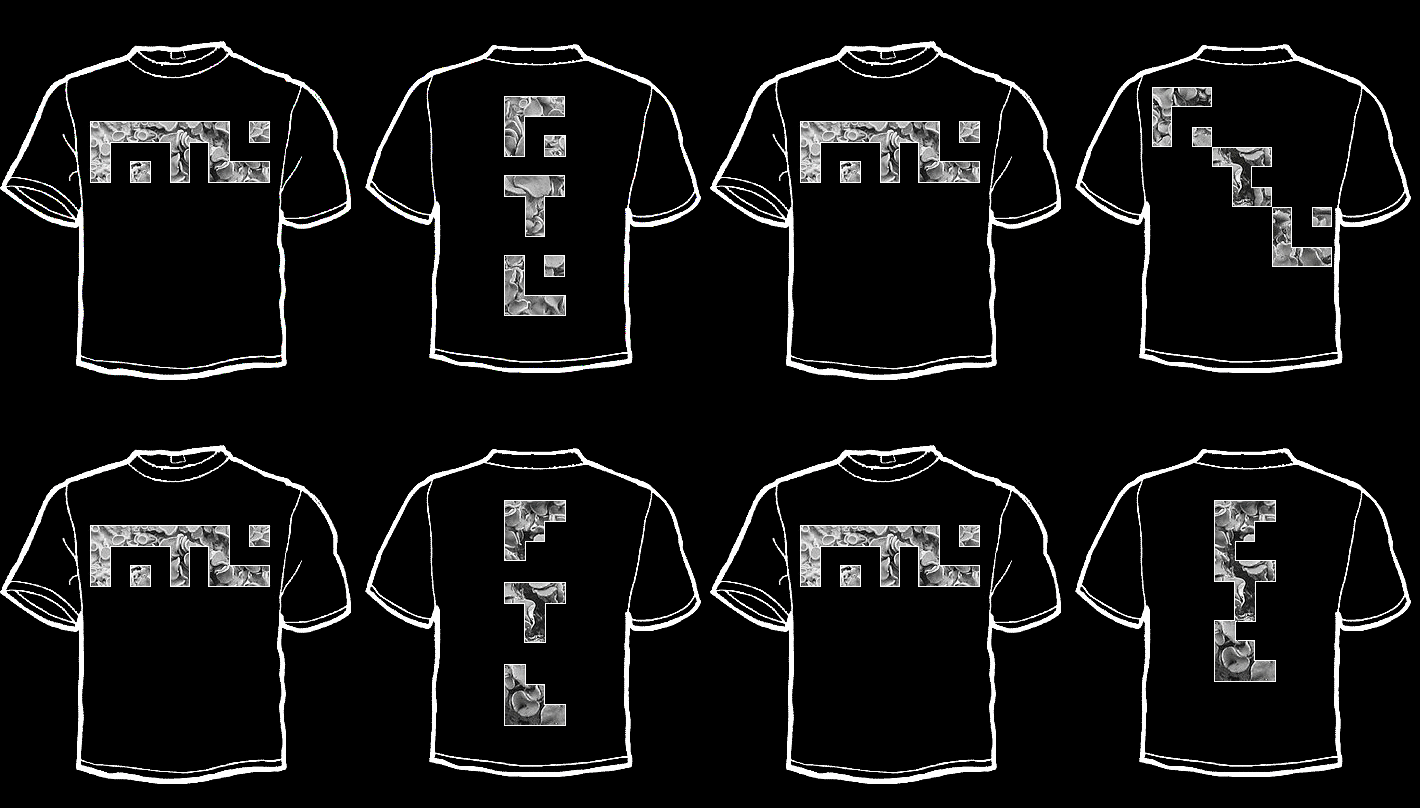
Faster Than Lichen logos (please open in new window to animate)
Q. Who created the F.T.L. logo?
A. It evolved.
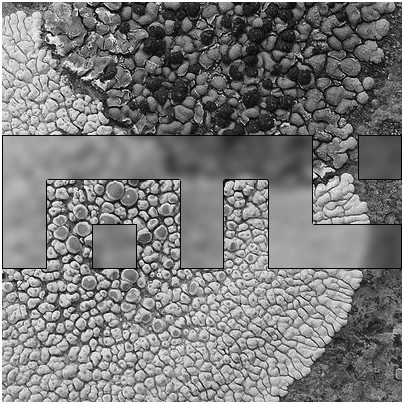
Faster Than Lichen #6
Q. It’s been two years since #6. Can we hope to hear #7 soon?
A. Yes. We’re working on it now.
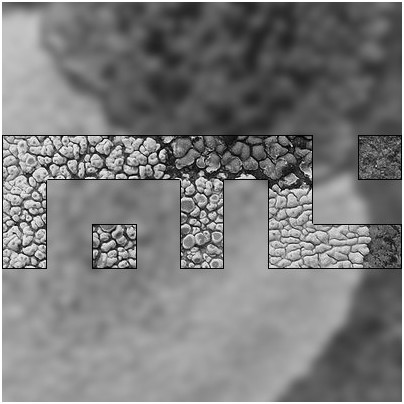
Faster Than Lichen #6 (back cover)
Q. So there is more than one of you?
A. Sometimes.
Q. What happened to F.T.L. #5?
A. It was withdrawn before issue.
Q. Will it ever be issued?
A. Maybe.
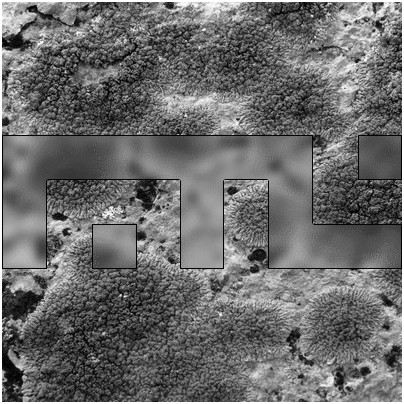
Faster Than Lichen #3
Q. There is only one track on F.T.L. #3. It’s 59 seconds long and is called “One-Oh-One-One-One-One-One”. But 1011111 is binary for 95. Is this a joke?
A. Sometimes.
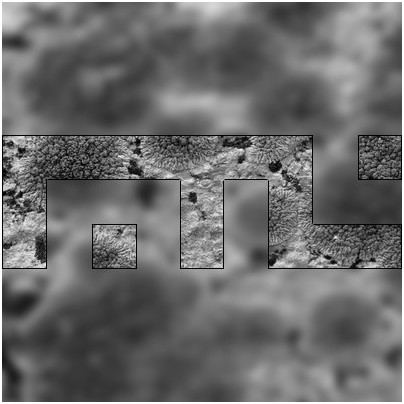
Faster Than Lichen #3 (back cover)
Q. Are you aware of the group Old Church Slavonick?
A. Yes. But that is as far as it goes.
Q. So no members of F.T.L. were ever members of O.C.S.?
A. Yes. None.
Q. What are your influences?
A. Lichen, of course. The sun. Starlight.
Q. Other groups?
A. That is for the listener.
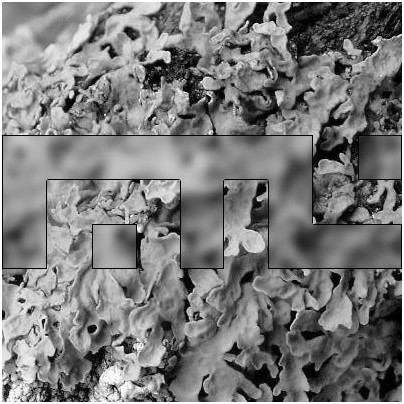
Faster Than Lichen #4
Q. Do you have any plans to play live?
A. It’s possible. Maybe next year.

Faster Than Lichen #4 (back cover)
Q. Where would you most like to play live?
A. An active volcano on Iceland.
Q. During a solar eclipse?
A. That would be a bonus. Not essential.
Q. What else would be a bonus?
A. A dragonfly.
Q. Thanks for the interview. Anything to add?
A. Thanks. Always accept all.
Previously Pre-Posted (please peruse):
• Angst, Anguish, Abjection
• Mental Marine Music
• Stoch’! (In the Name of Dove)
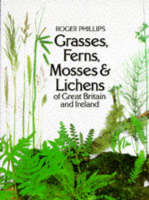 Grasses, Ferns, Mosses and Lichens of Great Britain and Ireland, Roger Phillips (1980)
Language doesn’t create the world, but it can manipulate the way we see it or can focus our attention on things we were overlooking. When I read a book on architecture and learnt about the three classic forms of column – Doric, Ionic, and Corinthian – I started to see them everywhere in towns and cities. Something similar happened to me because of this book. After leafing through its colour photos, I suddenly started noticing moss much more. And it’s worth noticing, both scientifically and aesthetically. It’s a humble but fascinating plant and has a surprising beauty and variety: Thuidium tamariscinum, common tamarisk-moss, for example, looks as though it should be with the ferns, because it has a similar branching structure. Lichens aren’t beautiful in their own right like mosses, but they can create beautiful patterns and colours on rock and stonework. And like mosses, they’re something humble that should make us humble: they’ve been around for much longer than we have and may be around long after we’re gone.
The same is true of ferns and grasses, though I have to admit that I still find it hard to see much interest in grasses. I know that interest is there, but they still seem dull. Ferns don’t, despite being a simpler plant. But they have a romance that grasses lack. You could call them the Celts of the vegetable kingdom: pushed to the fringes by later invaders. Where once they ruled the world, now they’re confined to specialized habitats. Damp ones. Meeting ferns at home can be refreshing in all sorts of ways: the air is cool and moist and their green is easy on the eye. I like their fractal structure too and there’s even a fern that refreshes the nose: mountain fern, Oreopteris limbosperma, which has a “strong almost citron scent released by brushing past or rubbing the leaves”. The scientific names are fascinating too and books like this are spiritually refreshing in our increasingly soulless, mechanized and electronic world. Leafing through Grasses, Ferns, Mosses and Lichens is like taking a walk through woods and mountains without leaving your chair. Lots of people like flowers and trees, and lots of places host them. These botanical groups are much more specialized and easy to overlook, confined to the fringes of our world, and have a cult-appeal that reminds me of obscure forms of music or art.
Pre-previously posted (please peruse):
Mushrooms, Roger Phillips
 Overlord In Terms of Core Issues Around Maximal Engagement with Key Notions of the Über-Feral