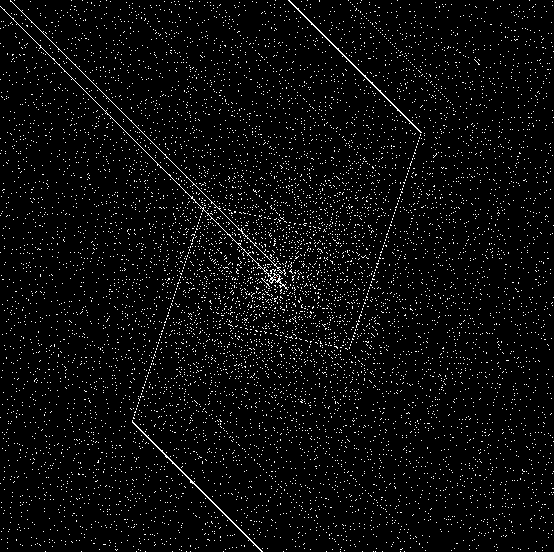
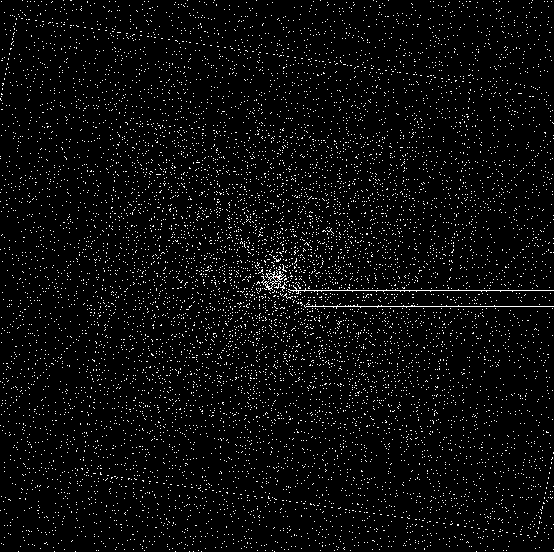
Primal Pellicles

Numbers have thin skins. And they’re easily replaced. Take 71624133. Here it is permuting its pellicles:

71624133 in base 10 = 100010001001110010111000101 in base 2 = 11222202212211200 in b3 = 10101032113011 in b4 = 121313433013 in b5 = 11035053113 in b6 = 1526536500 in b7 = 421162705 in b8 = 158685750 in b9 = 374802A9 in b11 = 1BBA1199 in b12 = 11AB9B59 in b13 = 9726137 in b14 = 644BE73 in b15 = F3855B7 in b16

But if digits are the skin of 71624133, what are its bones? Well, you could say the skeleton of a number, something that doesn’t change from base to base, is its prime factorization:

71624133 = 32 × 72 × 162413

But the primes themselves are numbers, so they’re wearing pellicles too. And it turns out that, in base 10, the pellicles of the prime factors of 71624133 match the pellicle of 71624133 itself:

71624133 = 32.72.162413

Here’s a list of primal pellicles in base 10:

735 = 3.5.72
3792 = 24.3.79
1341275 = 52.13.4127
13115375 = 53.7.13.1153
22940075 = 52.229.4007
29373375 = 3.53.29.37.73
71624133 = 32.72.162413
311997175 = 52.7.172.31.199
319953792 = 27.3.53.79.199
1019127375 = 32.53.7.127.1019
1147983375 = 3.53.7.11.83.479
1734009275 = 52.173.400927
5581625072 = 24.5581.62507
7350032375 = 53.7.23.73.5003
17370159615 = 34.5.17.59.61.701
33061224492 = 22.33.306122449
103375535837 = 72.37.103.553583
171167303912 = 23.11.172.6730391
319383665913 = 3.133.19.383.6659
533671737975 = 34.52.17.53.367.797
2118067737975 = 32.52.7.79.211.80677
3111368374257 = 3.112.132.683.74257
3216177757191 = 3.73.191.757.21617
3740437158475 = 52.37.4043715847
3977292332775 = 3.52.292.233.277.977
4417149692375 = 53.7.23.4969.44171
7459655393232 = 24.32.72.23.45965539
7699132721175 = 3.52.72.27211.76991
7973529228735 = 3.5.7.972.2287.3529
10771673522535 = 34.5.67.71.107.52253

You can find them at the Online Encyclopedia of Integer Sequences under A121342, “Composite numbers that are a concatenation of their distinct prime divisors in some order.” But what about pairs of primal pellicles, that is, pairs of numbers where the prime factors of each form the pellicle of the other?

35 = 5.775 = 3.52
1275 = 3.52.173175 = 52.127
131715 = 32.5.2927329275 = 52.13171
3199767 = 3.359.297135932971 = 3.19.67.972
14931092 = 22.11.61.5563116155632 = 24.3.109.1492

And here are a few primal pellicles I’ve found in other bases:

Primal Pellicles in Base 2

1111011011110 = 10.1110.110110111 in b2 = 7902 = 2.32.439 in b10
1110001100110111 = 1110.10111.100011001 in b2 = 58167 = 32.23.281 in b10
1111011011011110 = 10.1110.110110110111 in b2 = 63198 = 2.32.3511 in b10
11101001100001101 = 1110.101.101001100001 in b2 = 119565 = 32.5.2657 in b10
1111011011011011110 = 10.1110.110110110110111 in b2 = 505566 = 2.32.28087 in b10
1111011111101111011 = 1110.1011.10111.11011111 in b2 = 507771 = 32.11.23.223 in b10


Primal Pellicles in Base 3

121022 = 210.12.102 in b3 = 440 = 23.5.11 in b10
212212 = 22.21.212 in b3 = 644 = 22.7.23 in b10
20110112 = 210.201.1011 in b3 = 4712 = 23.19.31 in b10
21110110 = 10.212.1101 in b3 = 5439 = 3.72.37 in b10
121111101 = 122.111.1101 in b3 = 12025 = 52.13.37 in b10
222112121 = 22.21.221121 in b3 = 19348 = 22.7.691 in b10
2202122021 = 22.2021.22021 in b3 = 54412 = 22.61.223 in b10
120212201221 = 2.122.21.201.1202 in b3 = 312550 = 2.52.7.19.47 in b10


Primal Pellicles in Base 7

2525 = 2.52.25 in b7 = 950 = 2.52.19 in b10
3210 = 2.34.10 in b7 = 1134 = 2.34.7 in b10
5252 = 2.52.52 in b7 = 1850 = 2.52.37 in b10
332616 = 33.16.326 in b7 = 58617 = 33.13.167 in b10
336045 = 32.5.3604 in b7 = 59715 = 32.5.1327 in b10
2251635 = 22.3.5.16.252 in b7 = 281580 = 22.3.5.13.192 in b10


Primal Pellicles in Base 11

253 = 22.3.52 in b11 = 300 = 22.3.52 in b10
732 = 2.32.72 in b11 = 882 = 2.32.72 in b10
2123 = 23.33.12 in b11 = 2808 = 23.33.13 in b10
3432 = 25.3.43 in b11 = 4512 = 25.3.47 in b10
3710 = 32.72.10 in b11 = 4851 = 32.72.11 in b10
72252 = 23.72.225 in b11 = 105448 = 23.72.269 in b10


Primal Pellicles in Base 15

275 = 24.5.7 in b15 = 560 = 24.5.7 in b10
2D5 = 2.52.D in b15 = 650 = 2.52.13 in b10
2CD5 = 2.52.CD in b15 = 9650 = 2.52.193 in b10
7BE3 = 3.72.BE in b15 = 26313 = 3.72.179 in b10
21285 = 24.52.128 in b15 = 105200 = 24.52.263 in b10

Summult-Time Hues

sum(3,6) = 3 * 6 = 18
3 * 2.3 = 2.3^2
sum(15,35) = 15 * 35 = 525
3.5 * 5.7 = 3.5^2.7
sum(85,204) = 85 * 204 = 17340
5.17 * 2^2.3.17 = 2^2.3.5.17^2
sum(493,1189) = 493 * 1189 = 586177
17.29 * 29.41 = 17.29^2.41
sum(2871,6930) = 2871 * 6930 = 19896030
3^2.11.29 * 2.3^2.5.7.11 = 2.3^4.5.7.11^2.29
sum(16731,40391) = 16731 * 40391 = 675781821
3^2.11.13^2 * 13^2.239 = 3^2.11.13^4.239
[…]


Elsewhere Other-Accessible

1, 18, 525, 17340, 586177, 19896030, 675781821, 22956120408, 779829016225, 26491211221770, 899921240562957, 30570830315362260, 1038508305678375841, 35278711540581704598, 1198437683944896688125, 40711602541832856049200, 1382996048733983114022337 — A011906 at the Online Encyclopedia of Integer Sequences

Factory Façades

Practically speaking, I’d never heard of them. Practical numbers, that is. They’re defined like this at the Online Encyclopedia of Integer Sequences:

A005153 Practical numbers: positive integers m such that every k <= sigma(m) is a sum of distinct divisors of m. Also called panarithmic numbers. […] Equivalently, positive integers m such that every number k <= m is a sum of distinct divisors of m. — A005153 at OEIS

In other words, if you take, say, divisors(12) = 1, 2, 3, 4, 6, you can find partial sums of those divisors that equal every number from 1 to 16, where 16 = 1+2+3+4+6. Here are all those sums, with c as the count of divisor-sums equalling a particular k (to simplify things, I’m excluding 12 as a divisor of 12):

1, 2, 3, 4, 6 = divisors(12)

01 = 1 (c=1)
02 = 2 (c=1)
03 = 1 + 2 = 3 (c=2)
04 = 1 + 3 = 4 (c=2)
05 = 2 + 3 = 1 + 4 (c=2)
06 = 1 + 2 + 3 = 2 + 4 = 6 (c=3)
07 = 1 + 2 + 4 = 3 + 4 = 1 + 6 (c=3)
08 = 1 + 3 + 4 = 2 + 6 (c=2)
09 = 2 + 3 + 4 = 1 + 2 + 6 = 3 + 6 (c=3)
10 = 1 + 2 + 3 + 4 = 1 + 3 + 6 = 4 + 6 (c=3)
11 = 2 + 3 + 6 = 1 + 4 + 6 (c=2)
12 = 1 + 2 + 3 + 6 = 2 + 4 + 6 (c=2)
13 = 1 + 2 + 4 + 6 = 3 + 4 + 6 (c=2)
14 = 1 + 3 + 4 + 6 (c=1)
15 = 2 + 3 + 4 + 6 (c=1)
16 = 1 + 2 + 3 + 4 + 6 (c=1)

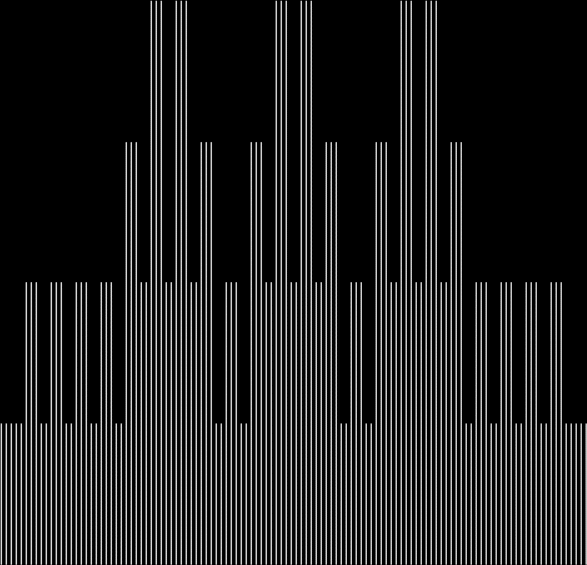
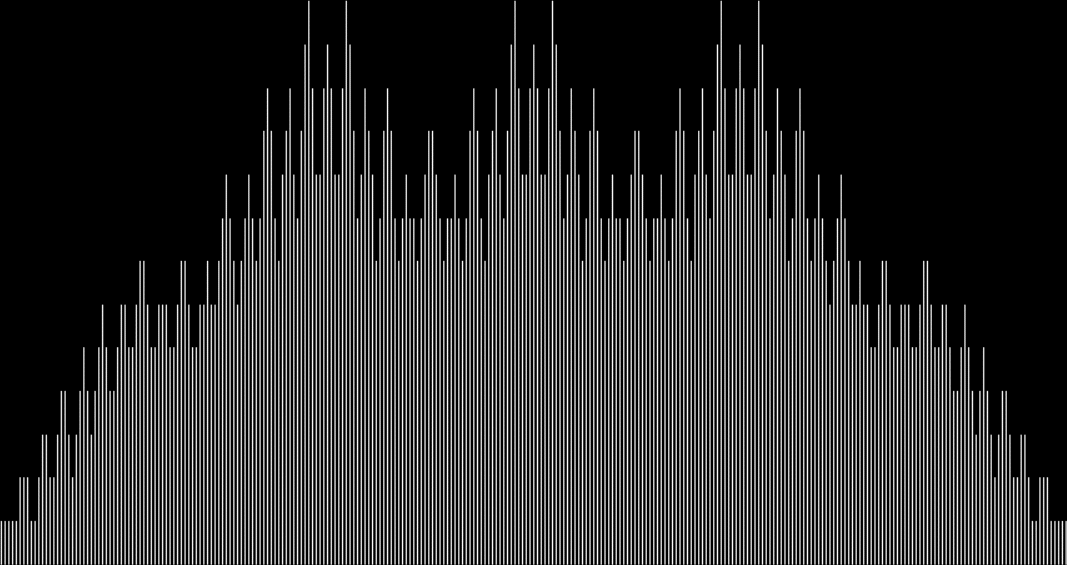
Learning about practical numbers inspired me to look at the graphs of the count of the divisor-sums for 12. If you include count(0) = 1 (there is one way of choosing divisors of 12 to equal 0, namely, by choosing none of the divisors), the graph looks like this:

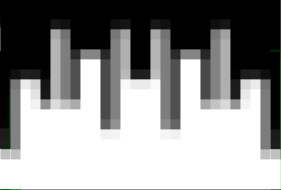
counts of divisorsum(12) = k, where 12 = 2^2 * 3 → 1, 2, 3, 4, 6


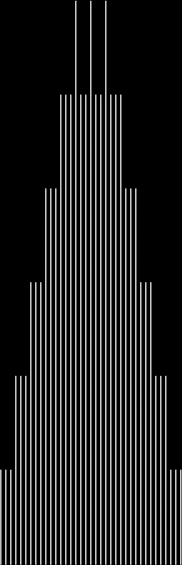
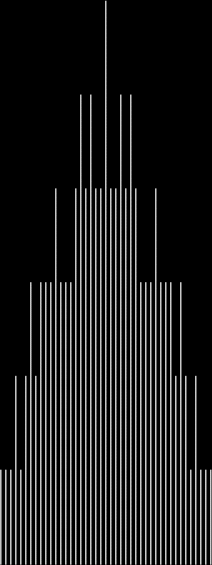
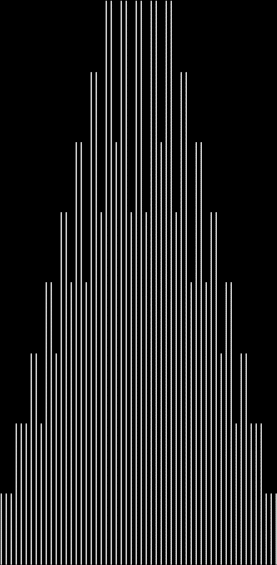
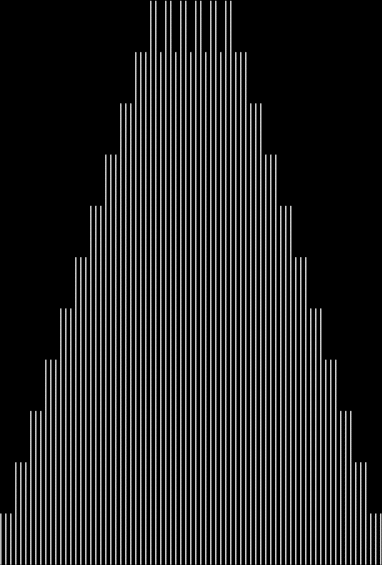
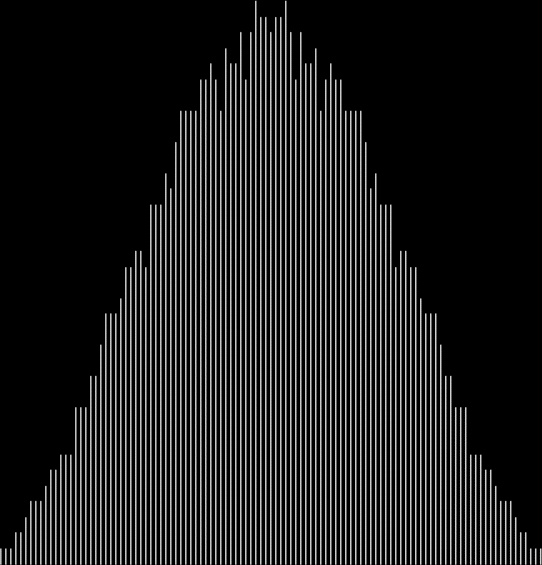
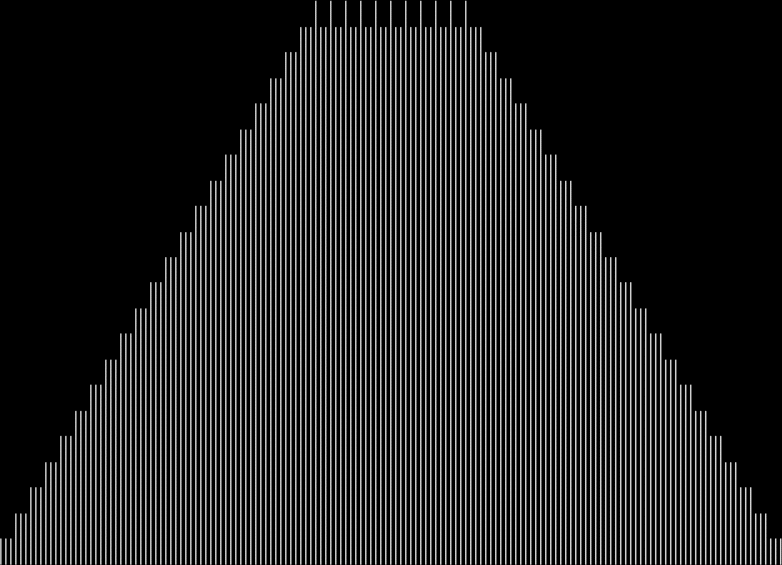
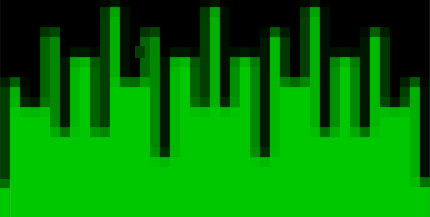
Here are some more graphs for partialsumcount(n), adjusted for a standardized y-max. They remind me variously of skyscrapers, pyramids, stupas, factories and factory façades, forts bristling with radar antennae, and the Houses of Parliament. All in an art-deco style:

18 = 2 * 3^2 → 1, 2, 3, 6, 9


24 = 2^3 * 3 → 1, 2, 3, 4, 6, 8, 12


30 = 2 * 3 * 5 → 1, 2, 3, 5, 6, 10, 15


36 = 2^2 * 3^2 → 1, 2, 3, 4, 6, 9, 12, 18


48 = 2^4 * 3 → 1, 2, 3, 4, 6, 8, 12, 16, 24


54 = 2 * 3^3 → 1, 2, 3, 6, 9, 18, 27


60 = 2^2 * 3 * 5 → 1, 2, 3, 4, 5, 6, 10, 12, 15, 20, 30


72 = 2^3 * 3^2 → 1, 2, 3, 4, 6, 8, 9, 12, 18, 24, 36


88 = 2^3 * 11 → 1, 2, 4, 8, 11, 22, 44, 88


96 = 2^5 * 3 → 1, 2, 3, 4, 6, 8, 12, 16, 24, 32, 48


100 = 2^2 * 5^2 → 1, 2, 4, 5, 10, 20, 25, 50


108 = 2^2 * 3^3 → 1, 2, 3, 4, 6, 9, 12, 18, 27, 36, 54


120 = 2^3 * 3 * 5 → 1, 2, 3, 4, 5, 6, 8, 10, 12, 15, 20, 24, 30, 40, 60


126 = 2 * 3^2 * 7 → 1, 2, 3, 6, 7, 9, 14, 18, 21, 42, 63


162 = 2 * 3^4 → 1, 2, 3, 6, 9, 18, 27, 54, 81


220 = 2^2 * 5 * 11 → 1, 2, 4, 5, 10, 11, 20, 22, 44, 55, 110


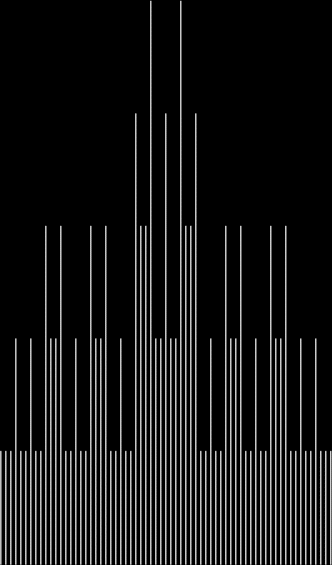
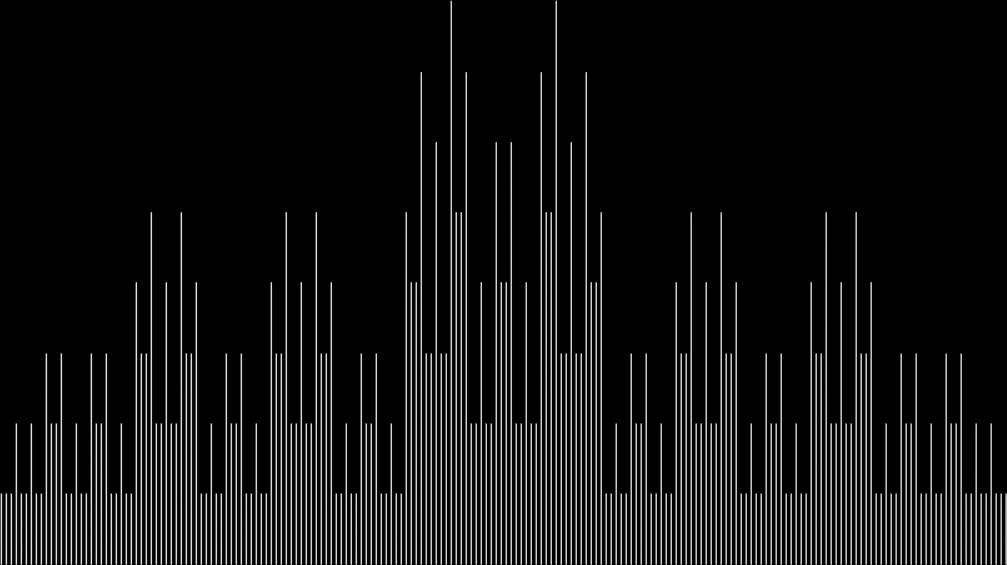
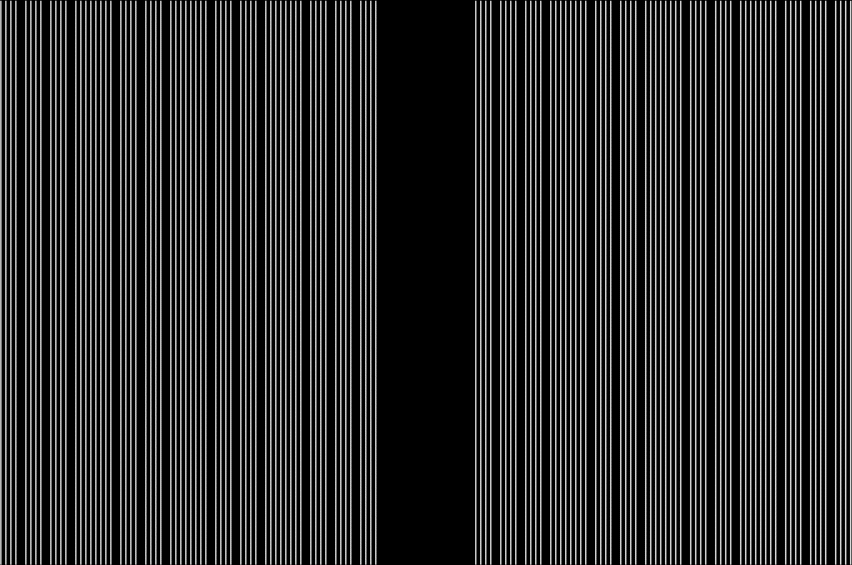
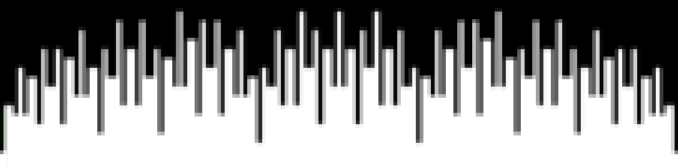
And what about im-practical numbers, where the partial sums of divisors(m) don’t equal every number 1..sigma(m)? There are interesting fractal patterns to be uncovered there, as you can see from the graph for 190 (because all divsumcount(k) = 1, the graph looks like a bar-code):

190 = 2 * 5 * 19 → 1, 2, 5, 10, 19, 38, 95


ResidUlam

Seq’ and ye shall find. So what’s the next number in this sequence?

1, 1, 3, 1, 5, 3, 7, 1, 9, 5, 11, 3, 13, 7, 15, 1, 17, 9, 19, ?


It’s simple once you’ve spotted the rule. List the counting numbers. If a number is a multiple of 2, divide it by 2 until it’s no longer a multiple of 2 and it becomes what I call a 2-residue. Like this:

reduce(2,n) = 1, 2 → 1, 3, 4 → 2 → 1, 5, 6 → 3, 7, 8 → 4 → 2 → 1, 9, 10 → 5, 11, 12 → 6 → 3, 13, 14 → 7, 15, 16 → 8 → 4 → 2 → 1, 17, 18 → 9, 19, 20 → 10 → 5... — A000265 at the Online Encyclopedia of Integer Sequences (OEIS)


So the next number was 5. Now, what’s the next number in this sequence?

1, 2, 1, 4, 5, 2, 7, 8, 1, 10, 11, 4, 13, 14, 5, 16, 17, 2, 19, 20, ?


The rule now is: divide multiples of 3 by 3 until they’re no longer multiples of 3.

reduce(3,n) = 1, 2, 1, 4, 5, 2, 7, 8, 1, 10, 11, 4, 13, 14, 5, 16, 17, 2, 19, 20, 7, 22, 23, 8, 25, 26, 1, 28, 29, 10, 31, 32, 11, 34, 35, 4, 37, 38, 13, 40, 41, 14, 43, 44, 5, 46, 47, 16, 49, 50, 17, 52, 53, 2, 55, 56, 19, 58, 59, 20, 61, 62, 7, 64, 65, 22, 67, 68, 23, 70, 71, 8, 73, 74, 25, 76, ... — A038502 at OEIS


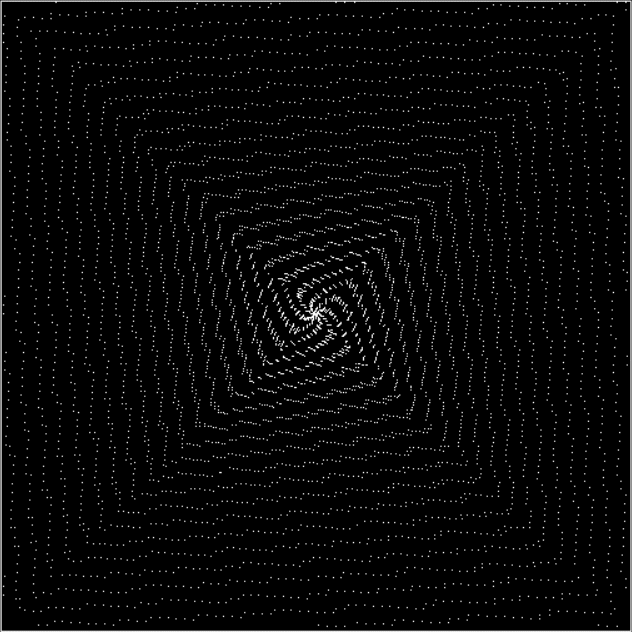
So the next number is 7, the 3-residue of 21. After looking at these sequences, I did what I usually did and tried them on an Ulam spiral. The sum of reduce(2,n) is this:

1, 2, 5, 6, 11, 14, 21, 22, 31, 36, 47, 50, 63, 70, 85, 86, 103, 112, 131, 136, 157, 168, 191, 194, 219, 232, 259, 266, 295, 310, 341, 342, 375, 392, 427, 436, 473, 492, 531, 536, 577, 598, 641, 652, 697, 720, 767, 770, 819, 844, 895, 908, 961, 988, 1043, 1050, 1107, 1136, 1195, 1210, 1271, 1302, 1365, 1366, 1431, 1464, 1531, 1548, 1617, 1652, 1723, 1732, 1805, 1842, 1917, 1936, 2013, 2052, 2131, 2136, 2217, 2258, 2341, 2362, 2447, 2490, 2577, 2588, 2677, 2722, 2813, 2836, 2929, 2976... — A135013 at OEIS


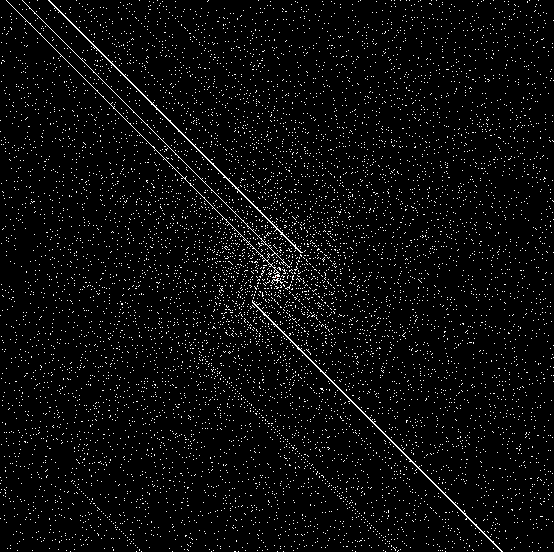
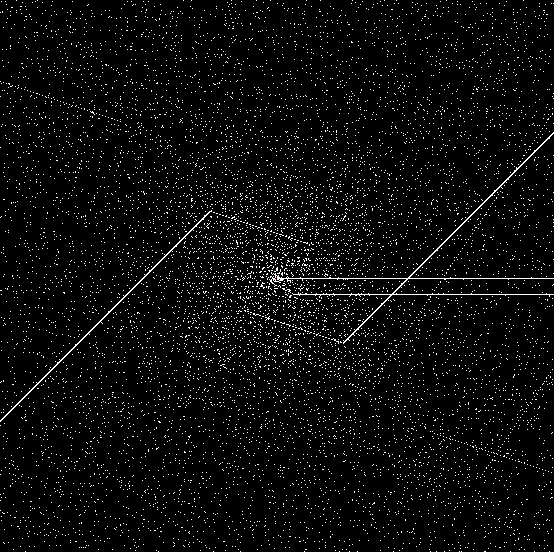
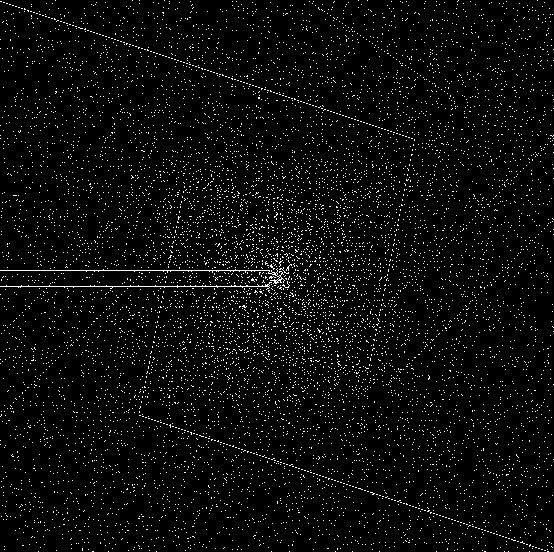
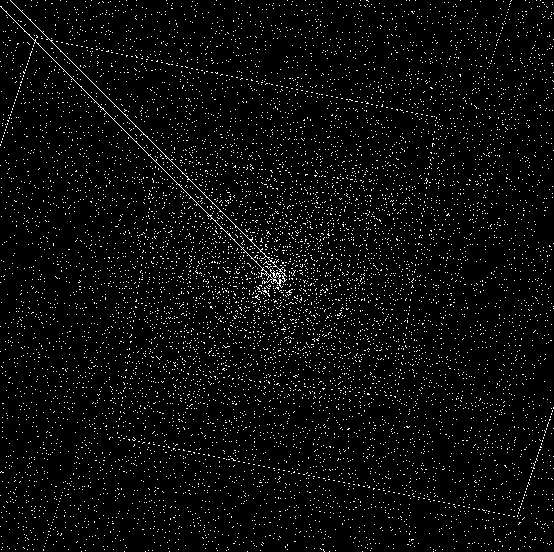
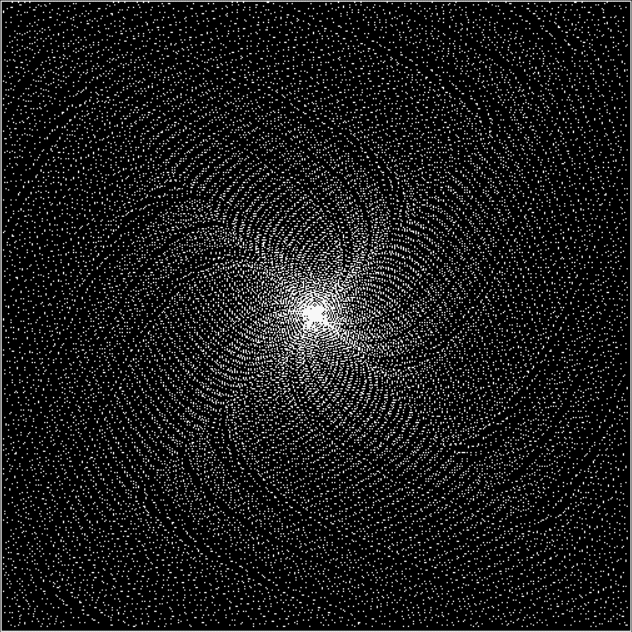
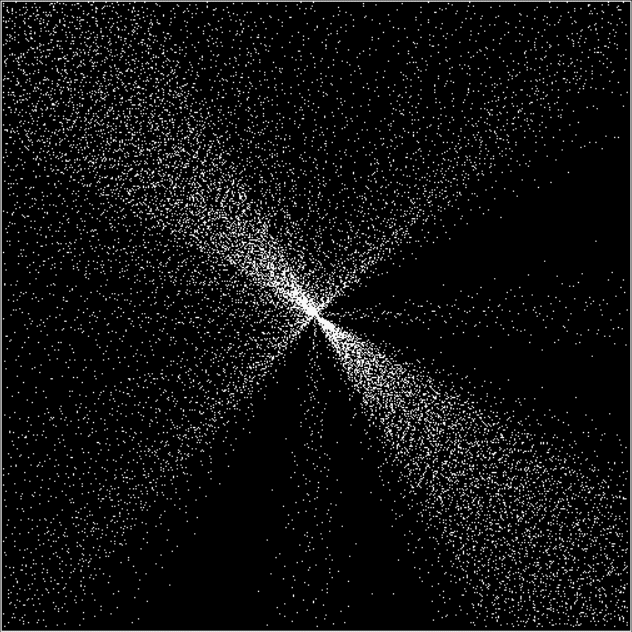
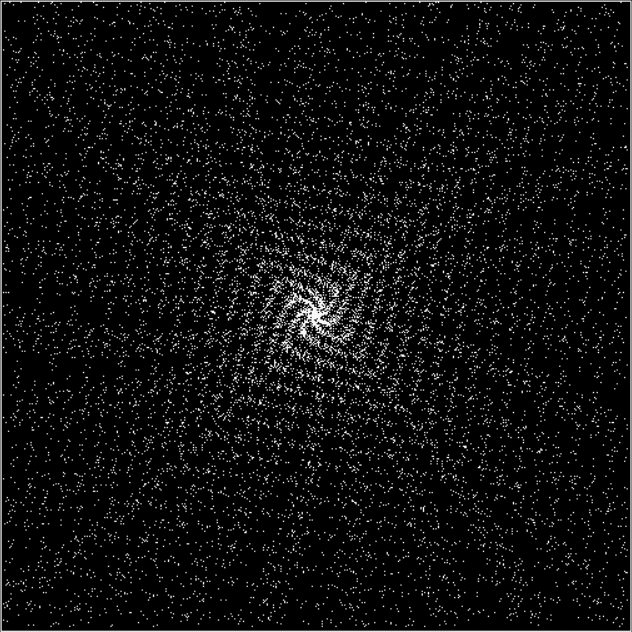
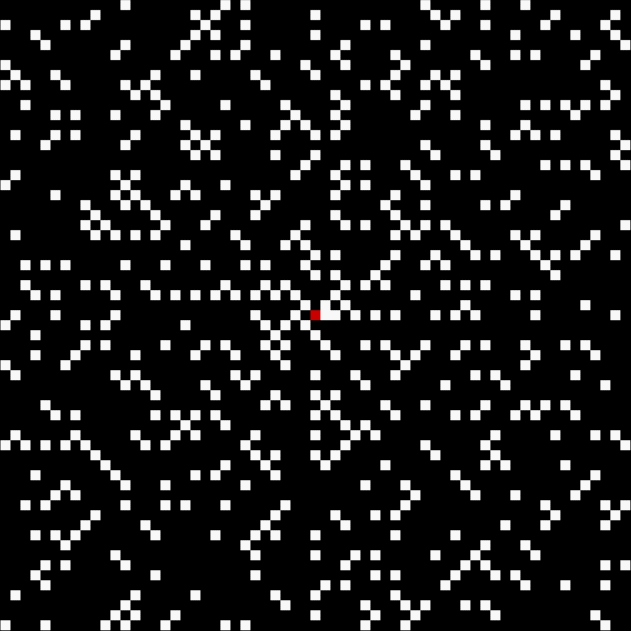
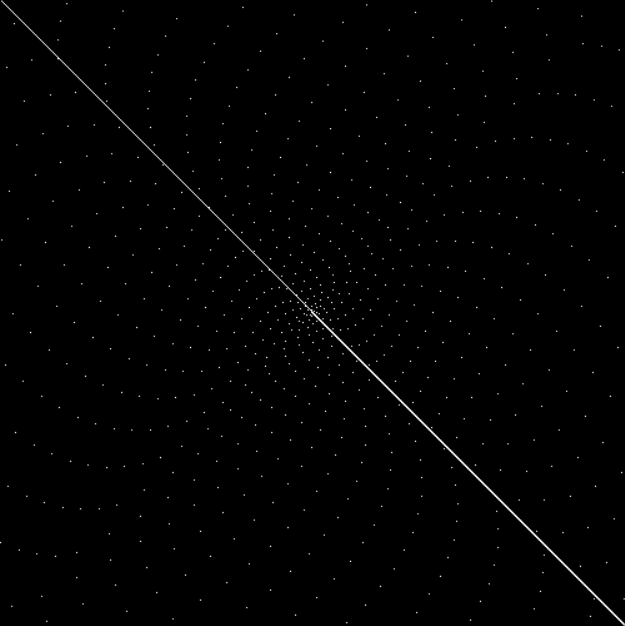
And on an Ulam spiral, the sequence looks like this:

Ulam-like spiral for sum(reduce(2,n)) = 1, 2, 5, 6, 11, 14, 21, 22, 31, 36, 47…


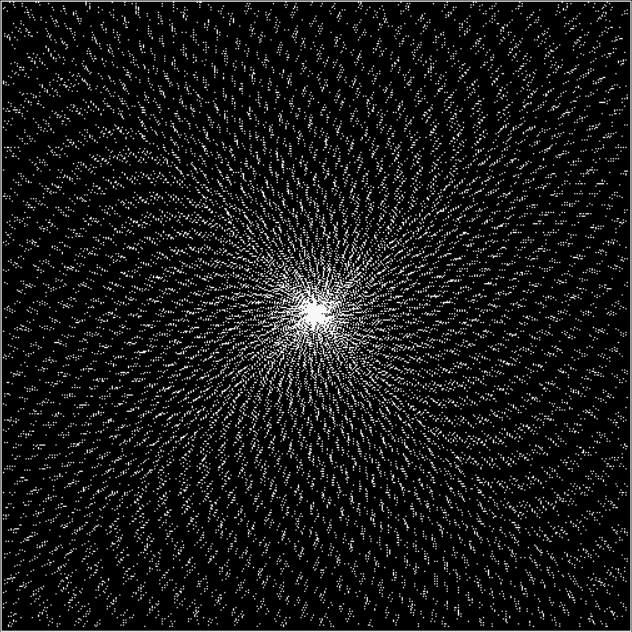
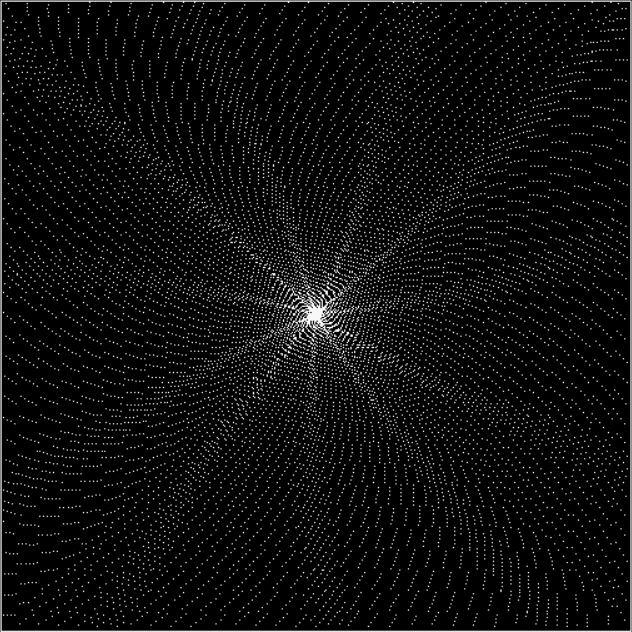
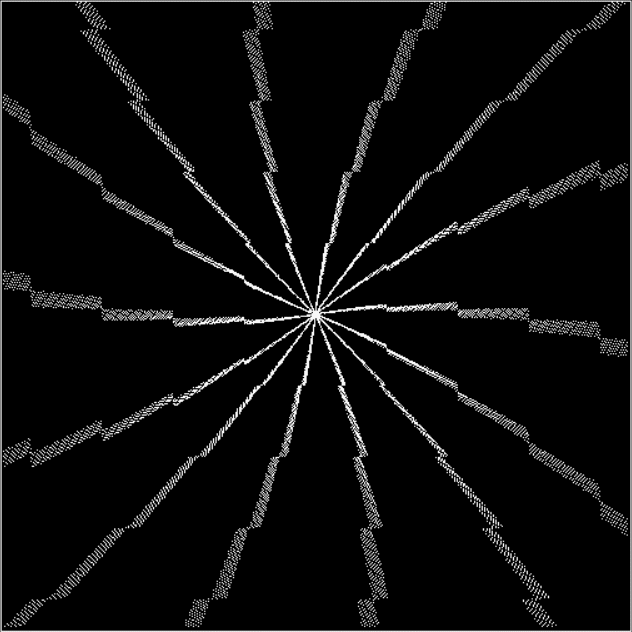
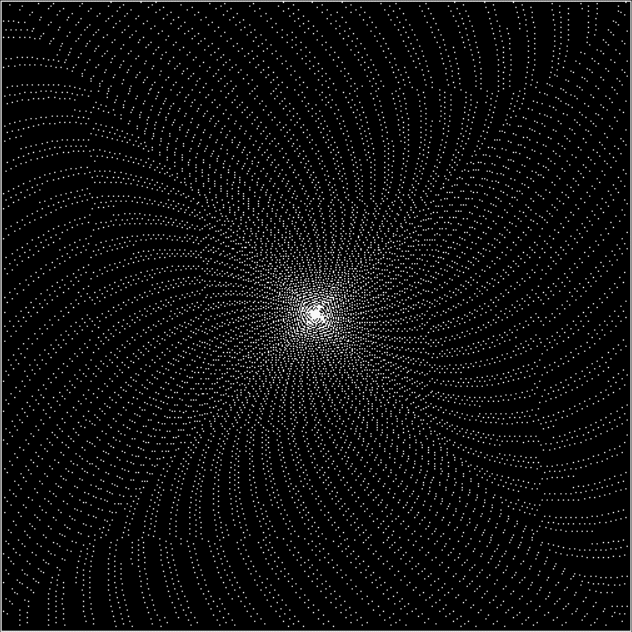
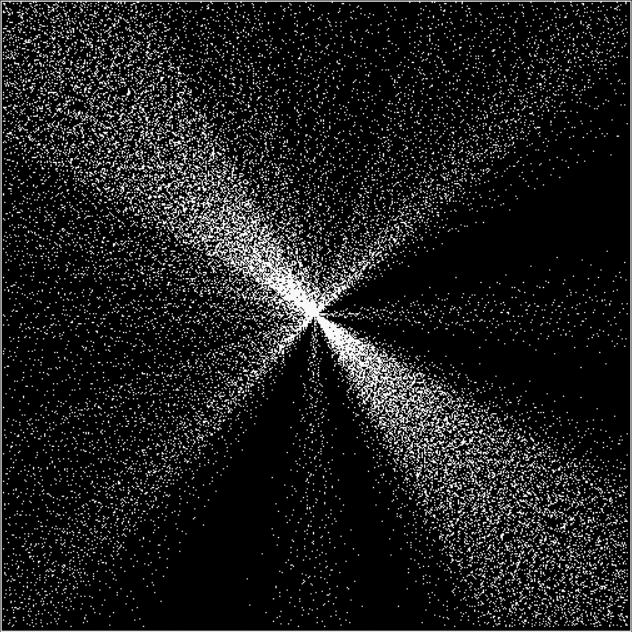
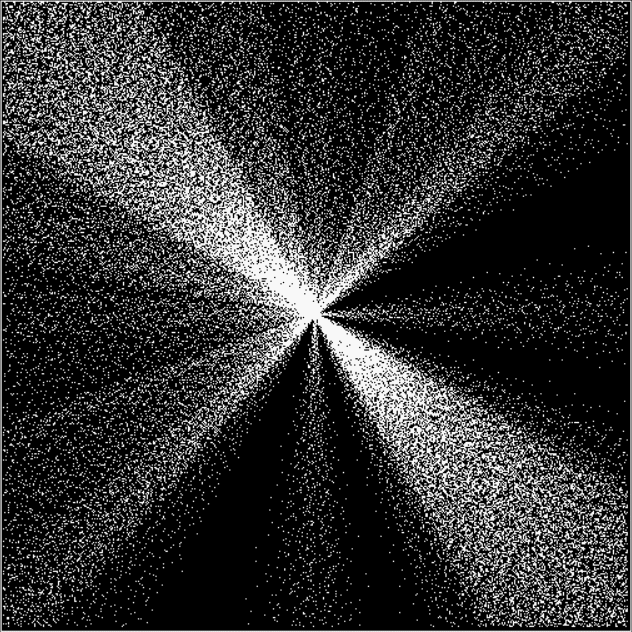
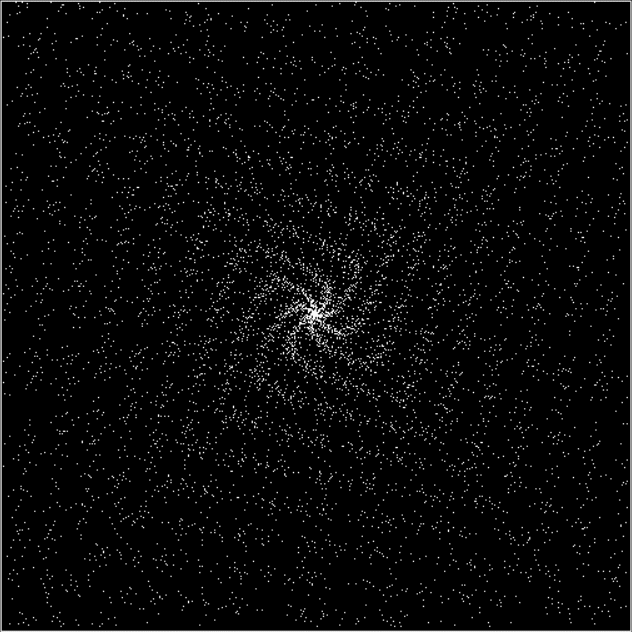
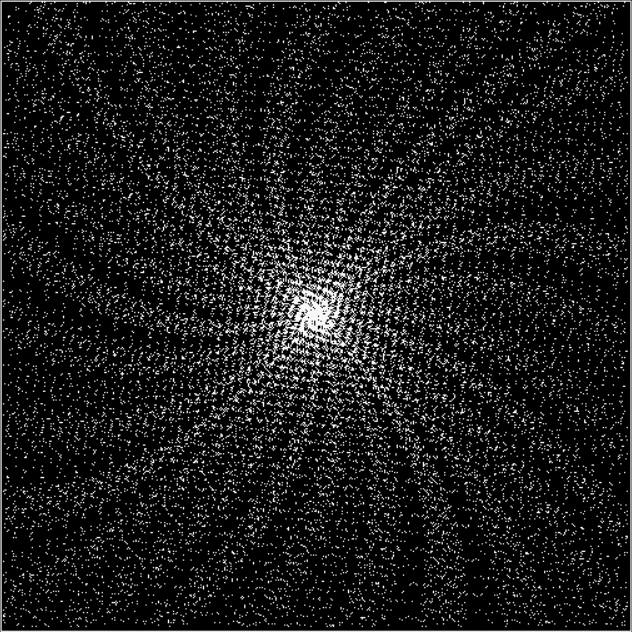
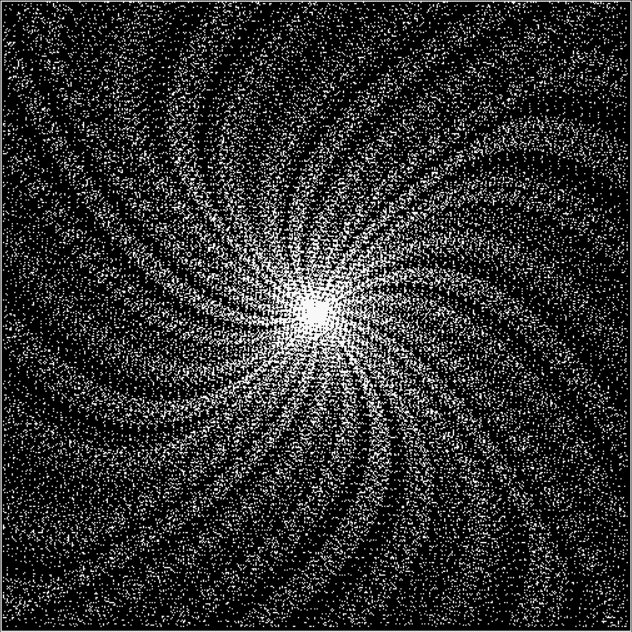
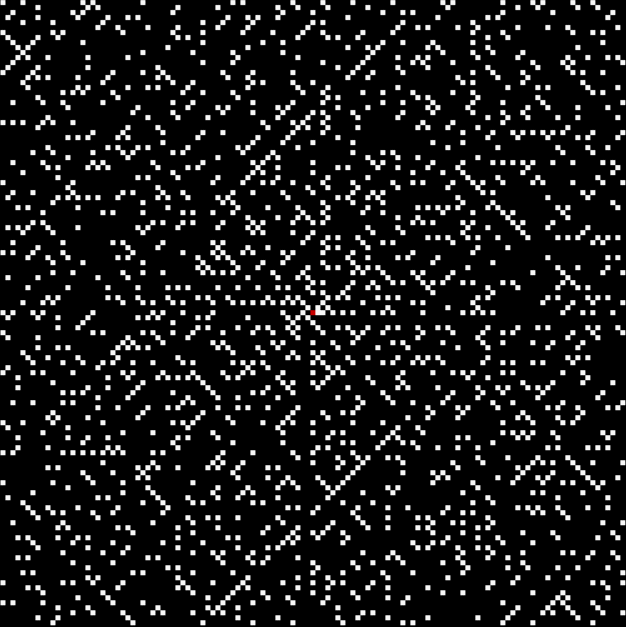
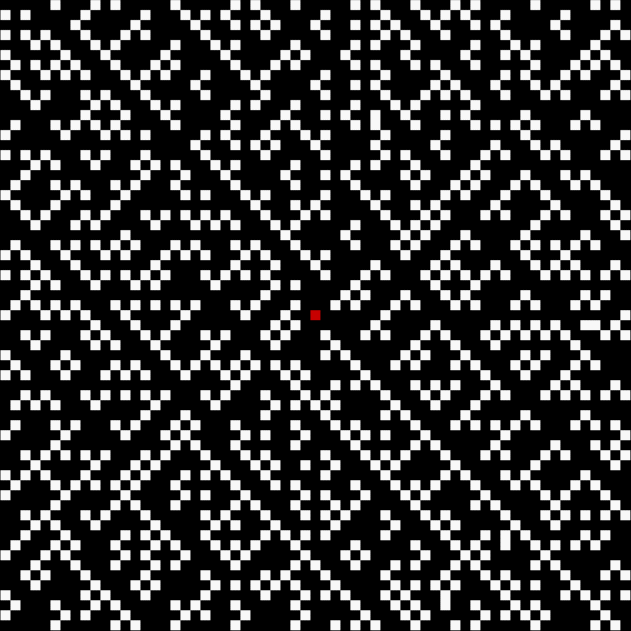
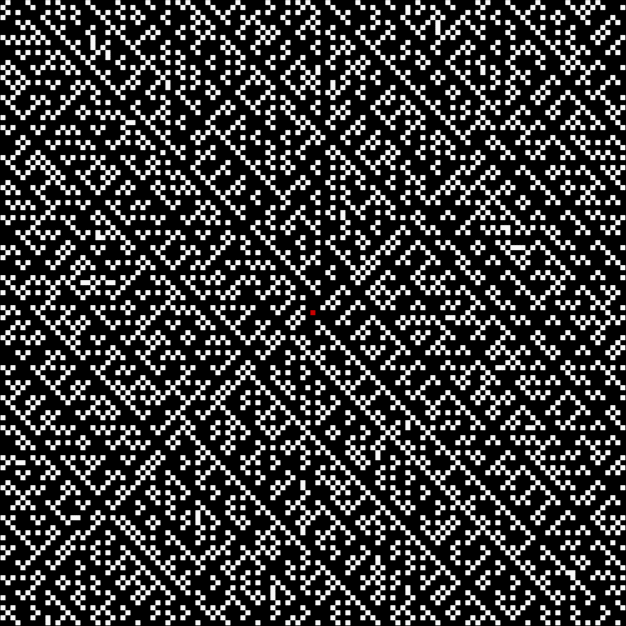
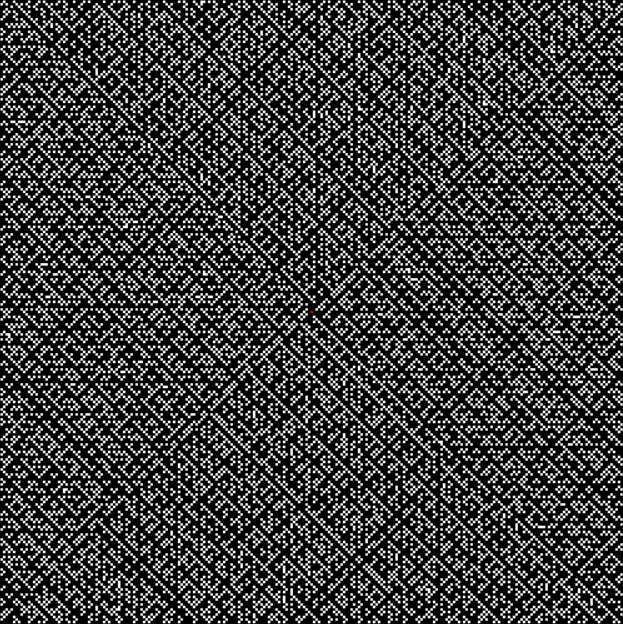
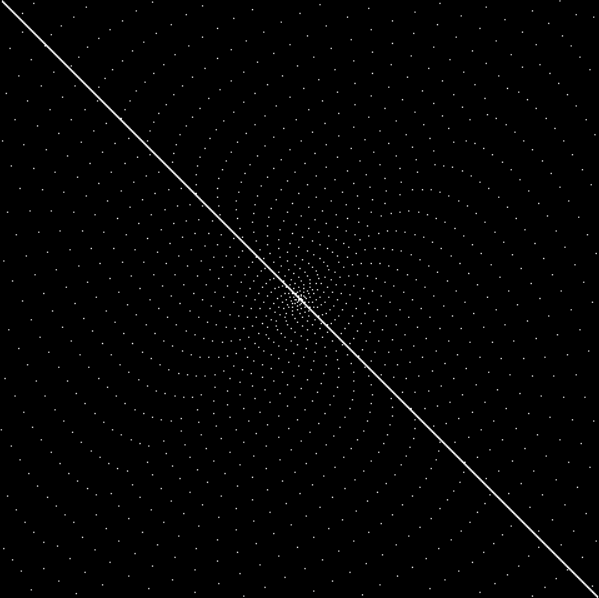
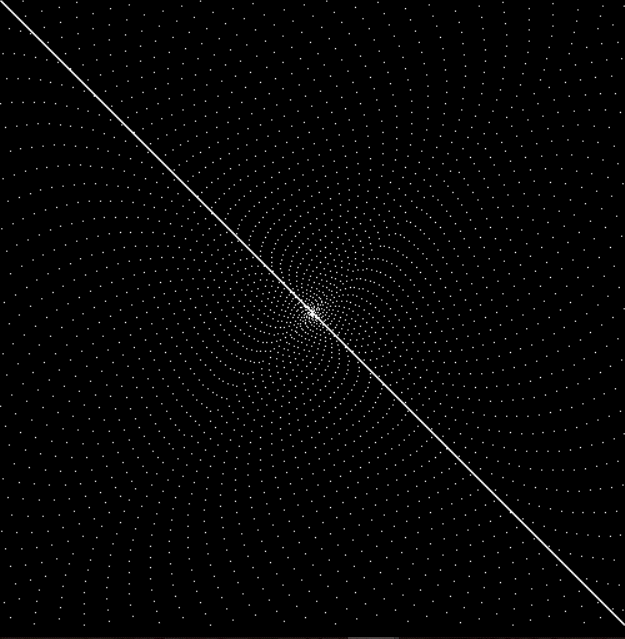
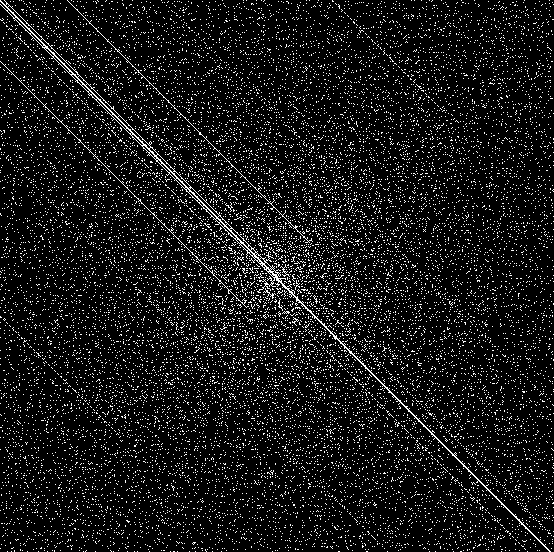
Here are more ResidUlam spirals (not all at the same resolution):

Spiral for sum(reduce(3,n))


Spiral for sum(reduce(4,n))


Spiral for sum(reduce(10,n))


Spiral for sum(reduce(11,n))


Spiral for sum(reduce(18,n))


Spiral for sum(reduce(28,n))


Spiral for sum(reduce(51,n))


N.B. THe 51-ResidUlam doesn’t look like that because the numbers are thinning, but because sum(reduce(51,n)) concentrates them in certain parts of the spiral. Compare sum(reduce(64,n)):

Spiral for sum(reduce(64,n))


Next, you can try reducing numbers with more than one multiple. For example, if you reduce the counting numbers by 2 and 3, you get this sequence:

reduce(2,3,n) = 1, 1, 1, 1, 5, 1, 7, 1, 1, 5, 11, 1, 13, 7, 5, 1, 17, 1, 19, 5, 7, 11, 23, 1, 25, 13, 1, 7, 29, 5, 31, 1, 11, 17, 35, 1, 37, 19, 13, 5, 41, 7, 43, 11, 5, 23, 47, 1, 49, 25, 17, 13, 53, 1, 55, 7, 19, 29, 59, 5, 61, 31, 7, 1, 65, 11, 67, 17, 23, 35, 71, 1, 73, 37, 25, 19, 77, 13, 79, 5, 1, ... — A065330 at OEIS


sum(reduce(2,3,n)) = 1, 2, 3, 4, 9, 10, 17, 18, 19, 24, 35, 36, 49, 56, 61, 62, 79, 80, 99, 104, 111, 122, 145, 146, 171, 184, 185, 192, 221, 226, 257, ...


On an ResiduUlam spiral, sum(reduce(2,3,n)) looks like this at higher and higher resolution:

Spiral for sum(reduce(2,3,n)) #1


Spiral for sum(reduce(2,3,n)) #2


Spiral for sum(reduce(2,3,n)) #3


Spiral for sum(reduce(2,3,n)) #4


Now try another double-reducer:

reduce(6,3,n) = 1, 2, 1, 4, 5, 1, 7, 8, 1, 10, 11, 2, 13, 14, 5, 16, 17, 1, 19, 20, 7, 22, 23, 4, 25, 26, 1, 28, 29, 5, 31, 32, 11, 34, 35, 1, 37, 38, 13, 40, 41, 7, 43, 44, 5, 46, 47, 8, 49, 50, 17, 52, 53, 1, 55, 56, 19, 58, 59, 10, 61, 62, 7, 64, 65, 11, 67, 68, 23, ...


sum(reduce(6,3,n)) = 1, 3, 4, 8, 13, 20, 28, 29, 39, 50, 52, 65, 79, ...


Note that it’s important to reduce by 6 before reducing by 3 (reducing by 3 first would mean no numbers to reduce by 6). Here’s the ResidUlam spiral:

Spiral for sum(reduce(6,3,n)) #1


Spiral for sum(reduce(6,3,n)) #2


Spiral for sum(reduce(6,3,n)) #3


Spiral for sum(reduce(6,3,n)) #4


And two more double-multiple ResidUlams:

Spiral for sum(reduce(7,3,n))


Spiral for sum(reduce(10,8,n))


Fabulous Furry Fibonacci Fractal

At least, I think it’s a fractal. I came across it when I was counting the ways in which the integers can be the sum of distinct Fibonacci numbers. Here for reference is the Fibonacci sequence, the beautiful and endlessly fertile sequence that’s seeded with “1, 1” and continued by summing the two previous numbers:

1, 1, 2, 3, 5, 8, 13, 21, 34, 55, 89, 144, 233, 377, 610, 987, 1597, 2584, 4181, 6765, 10946, 17711, 28657, 46368, 75025, 121393, 196418, 317811, 514229, 832040…

I noticed some interesting patterns in the distinct-fib-num-sum count for the integers:

1 = 1 (count=1)
2 = 2 (count=1)
3 = 1+2 = 3 (count=2)
4 = 1+3 (c=1)
5 = 2+3 = 5 (c=2)
6 = 1+2+3 = 1+5 (c=2)
7 = 2+5 (c=1)
8 = 1+2+5 = 3+5 = 8 (c=3)
9 = 1+3+5 = 1+8 (c=2)
10 = 2+3+5 = 2+8 (c=2)
11 = 1+2+3+5 = 1+2+8 = 3+8 (c=3)
12 = 1+3+8 (c=1)
13 = 2+3+8 = 5+8 = 13 (c=3)
14 = 1+2+3+8 = 1+5+8 = 1+13 (c=3)
15 = 2+5+8 = 2+13 (c=2)
16 = 1+2+5+8 = 3+5+8 = 1+2+13 = 3+13 (c=4)
17 = 1+3+5+8 = 1+3+13 (c=2)
18 = 2+3+5+8 = 2+3+13 = 5+13 (c=3)
19 = 1+2+3+5+8 = 1+2+3+13 = 1+5+13 (c=3)
20 = 2+5+13 (c=1)
21 = 1+2+5+13 = 3+5+13 = 8+13 = 21 (c=4)
22 = 1+3+5+13 = 1+8+13 = 1+21 (c=3)
23 = 2+3+5+13 = 2+8+13 = 2+21 (c=3)
24 = 1+2+3+5+13 = 1+2+8+13 = 3+8+13 = 1+2+21 = 3+21 (c=5)
25 = 1+3+8+13 = 1+3+21 (c=2)
26 = 2+3+8+13 = 5+8+13 = 2+3+21 = 5+21 (c=4)
27 = 1+2+3+8+13 = 1+5+8+13 = 1+2+3+21 = 1+5+21 (c=4)
28 = 2+5+8+13 = 2+5+21 (c=2)
29 = 1+2+5+8+13 = 3+5+8+13 = 1+2+5+21 = 3+5+21 = 8+21 (c=5)
30 = 1+3+5+8+13 = 1+3+5+21 = 1+8+21 (c=3)
31 = 2+3+5+8+13 = 2+3+5+21 = 2+8+21 (c=3)
32 = 1+2+3+5+8+13 = 1+2+3+5+21 = 1+2+8+21 = 3+8+21 (c=4)
33 = 1+3+8+21 (c=1)
34 = 2+3+8+21 = 5+8+21 = 13+21 = 34 (c=4)
35 = 1+2+3+8+21 = 1+5+8+21 = 1+13+21 = 1+34 (c=4)
36 = 2+5+8+21 = 2+13+21 = 2+34 (c=3)
37 = 1+2+5+8+21 = 3+5+8+21 = 1+2+13+21 = 3+13+21 = 1+2+34 = 3+34
(c=6)
38 = 1+3+5+8+21 = 1+3+13+21 = 1+3+34 (c=3)
39 = 2+3+5+8+21 = 2+3+13+21 = 5+13+21 = 2+3+34 = 5+34 (c=5)
40 = 1+2+3+5+8+21 = 1+2+3+13+21 = 1+5+13+21 = 1+2+3+34 = 1+5+34
(c=5)
41 = 2+5+13+21 = 2+5+34 (c=2)
42 = 1+2+5+13+21 = 3+5+13+21 = 8+13+21 = 1+2+5+34 = 3+5+34 = 8+3
4 (c=6)
43 = 1+3+5+13+21 = 1+8+13+21 = 1+3+5+34 = 1+8+34 (c=4)
44 = 2+3+5+13+21 = 2+8+13+21 = 2+3+5+34 = 2+8+34 (c=4)
45 = 1+2+3+5+13+21 = 1+2+8+13+21 = 3+8+13+21 = 1+2+3+5+34 = 1+2+
8+34 = 3+8+34 (c=6)
46 = 1+3+8+13+21 = 1+3+8+34 (c=2)
47 = 2+3+8+13+21 = 5+8+13+21 = 2+3+8+34 = 5+8+34 = 13+34 (c=5)
48 = 1+2+3+8+13+21 = 1+5+8+13+21 = 1+2+3+8+34 = 1+5+8+34 = 1+13+
34 (c=5)
49 = 2+5+8+13+21 = 2+5+8+34 = 2+13+34 (c=3)
50 = 1+2+5+8+13+21 = 3+5+8+13+21 = 1+2+5+8+34 = 3+5+8+34 = 1+2+1
3+34 = 3+13+34 (c=6)
51 = 1+3+5+8+13+21 = 1+3+5+8+34 = 1+3+13+34 (c=3)
52 = 2+3+5+8+13+21 = 2+3+5+8+34 = 2+3+13+34 = 5+13+34 (c=4)
53 = 1+2+3+5+8+13+21 = 1+2+3+5+8+34 = 1+2+3+13+34 = 1+5+13+34 (c=4)
54 = 2+5+13+34 (c=1)
55 = 1+2+5+13+34 = 3+5+13+34 = 8+13+34 = 21+34 = 55 (c=5)
56 = 1+3+5+13+34 = 1+8+13+34 = 1+21+34 = 1+55 (c=4)

The patterns are easier to see when the counts are set out like this:

1, 1, 2, 1, 2, 2, 1, 3, 2, 2, 3, 1, 3, 3, 2, 4, 2, 3, 3, 1, 4, 3, 3, 5, 2, 4, 4, 2, 5, 3, 3, 4, 1, 4, 4, 3, 6, 3, 5, 5, 2, 6, 4, 4, 6, 2, 5, 5, 3, 6, 3, 4, 4, 1, 5, 4, 4, 7, 3, 6, 6, 3, 8, 5, 5, 7, 2, 6, 6, 4, 8, 4, 6, 6, 2, 7, 5, 5, 8, 3, 6, 6, 3, 7, 4, 4, 5, 1, 5, 5, 4, 8, 4, 7, 7, 3, 9, 6, 6, 9, 3, 8, 8, 5, 10, 5, 7, 7, 2, 8, 6, 6, 10, 4, 8, 8, 4, 10, 6, 6, 8, 2, 7, 7, 5, 10, 5, 8, 8, 3, 9, 6, 6, 9, 3, 7, 7, 4, 8, 4, 5, 5, 1, 6, 5, 5, 9, 4, 8, 8… 1… — See A000119, Number of representations of n as a sum of distinct Fibonacci numbers, at the Online Encyclopedia of Integer Sequences (OEIS)

The numbers between each pair of 1s are symmetrical:

1, 2, 1,
1, 2, 2, 1,
1, 3, 2, 2, 3, 1,
1, 3, 3, 2, 4, 2, 3, 3, 1
1, 4, 3, 3, 5, 2, 4, 4, 2, 5, 3, 3, 4, 1

And when fibsumcount(n) = 1, then n = fib(i)-1, i.e. n is one less than a Fibonacci number:

1 = 1 (c=1)
2 = 2 (c=1)
4 = 1+3 (c=1)
7 = 2+5 (c=1)
12 = 1+3+8 (c=1)
20 = 2+5+13 (c=1)
33 = 1+3+8+21 (c=1)
54 = 2+5+13+34 (c=1)
88 = 1+3+8+21+55 (c=1)
143 = 2+5+13+34+89 (c=1)
232 = 1+3+8+21+55+144 (c=1)
376 = 2+5+13+34+89+233 (c=1)
609 = 1+3+8+21+55+144+377 (c=1)
986 = 2+5+13+34+89+233+610 (c=1)
1596 = 1+3+8+21+55+144+377+987 (c=1)
2583 = 2+5+13+34+89+233+610+1597 (c=1)
4180 = 1+3+8+21+55+144+377+987+2584 (c=1)
6764 = 2+5+13+34+89+233+610+1597+4181 (c=1)
10945 = 1+3+8+21+55+144+377+987+2584+6765 (c=1)
17710 = 2+5+13+34+89+233+610+1597+4181+10946 (c=1)
[…]

I also noticed a pattern relating to the maximum count reached in the numbers between the 1s. Suppose the function max(fib(i)-1..fib(i+1)-1) returns the highest count of ways to represent the numbers from fib(i)-1 to fib(i+1)-1. Notice how max() increases:

max(2..4) = 2
max(4..7) = 2
max(7..12) = 3
max(12..20) = 4
max(20..33) = 5
max(33..54) = 6
max(54..88) = 8
max(88..143) = 10
max(143..232) = 13
max(232..376) = 16
max(376..609) = 21
max(609..986) = 26
max(986..1596) = 34
max(1596..2583) = 42
max(2583..4180) = 55
max(4180..6764) = 68
[…]

The pattern is described like this at the Online Encyclopedia of Integer Sequences:

a(n) = 1 if and only if n+1 is a Fibonacci number. The length of such a quasi-period (from Fib(i)-1 to Fib(i+1)-1, inclusive) is a Fibonacci number + 1. The maximum value of a(n) within each subsequent quasi-period increases by a Fibonacci number. For example, from n = 143 to n = 232, the maximum is 13. From 232 to 376, the maximum is 16, an increase of 3. From 376 to 609, 21, an increase of 5. From 609 to 986, 26, increasing by 5 again. Each two subsequent maxima seem to increase by the same increment, the next Fibonacci number. – Kerry Mitchell, Nov 14 2009

The maxima of the quasi-periods are in A096748. – Max Barrentine, Sep 13 2015 — See commentary for A000119 at OEIS

Here is A096748:

1, 2, 2, 2, 3, 4, 5, 6, 8, 10, 13, 16, 21, 26, 34, 42, 55, 68, 89, 110, 144, 178, 233, 288, 377, 466, 610, 754, 987, 1220, 1597, 1974, 2584, 3194, 4181, 5168, 6765, 8362, 10946, 13530, 17711, 21892, 28657, 35422, 46368, 57314, 75025, 92736, 121393, 150050 — A096748, Expansion of (1+x)^2/(1-x^2-x^4), at OEIS

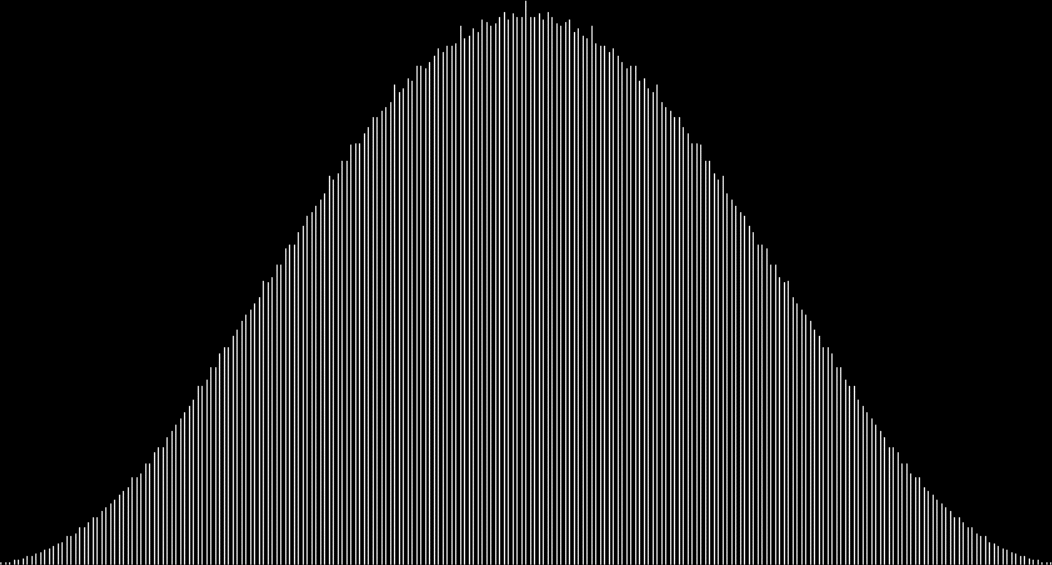
These maxima are the succesive highest points in a graph of A000119, Number of representations of n as a sum of distinct Fibonacci numbers:

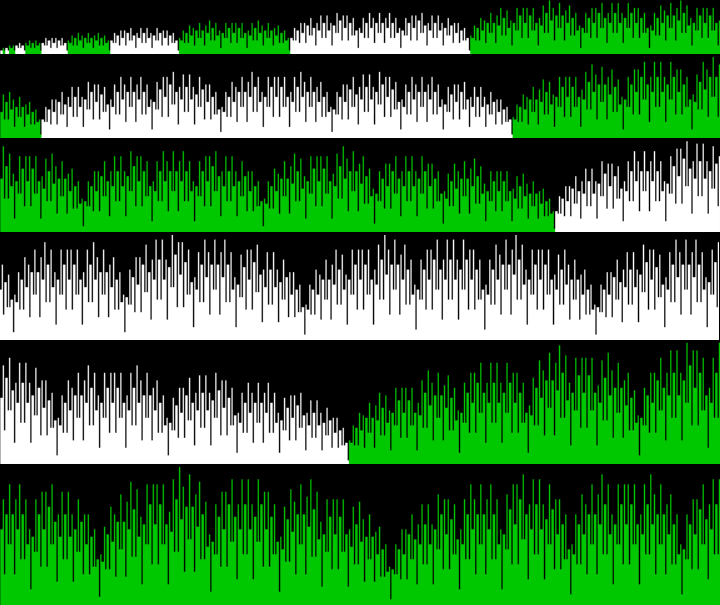
Graph of count of ways in which 1,2,3… can be sum of distinct Fibonacci numbers


The graph looks like a furry caterpillar or similar and the symmetry of counts between the 1s is more obvious there:

fibsumcounts for 33..54


fibsumcounts for 54..88


fibsumcounts for 88..143


fibsumcounts for 143..232


fibsumcounts for 232..376


fibsumcounts for 376..609


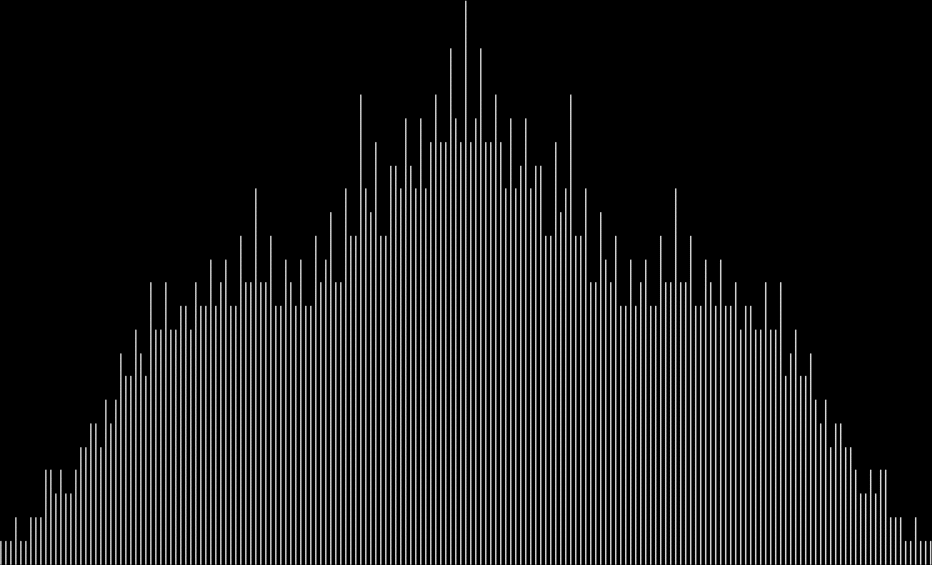
And the fractal nature of the counts is more obvious when the graph is rotated by 90° and then mirrored:

Rotated and mirrored graph of count of ways in which 1,2,3… can be sum of distinct Fibonacci numbers

Piles of Prime Pairs

A087641 Start of the first sequence of exactly n consecutive pairs of twin primes

29, 101, 5, 9419, 909287, 325267931, 678771479, 1107819732821, 170669145704411, 3324648277099157, 789795449254776509

Example: a(6)=325267931 is the starting point of the first occurrence of 6 consecutive pairs of twin primes: (325267931 325267933) (325267937 325267939) (325267949 325267951) (325267961 325267963) (325267979 325267981) (325267991 325267993).

A087641 at the Encyclopedia of Integer Sequences

Abounding in Abundants

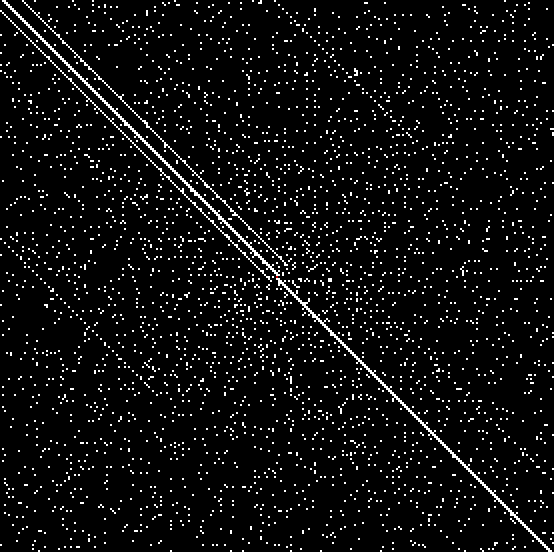
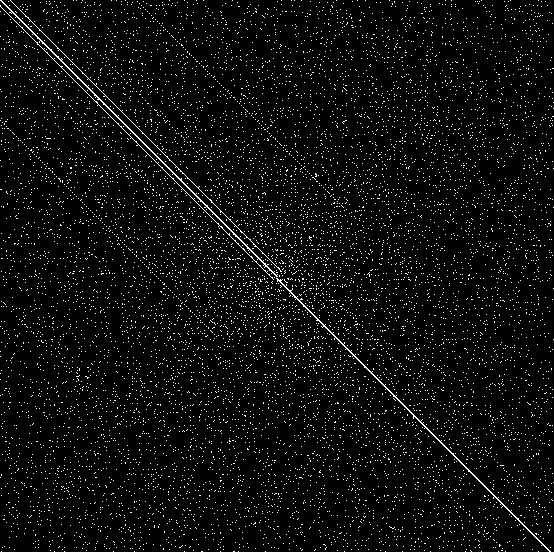
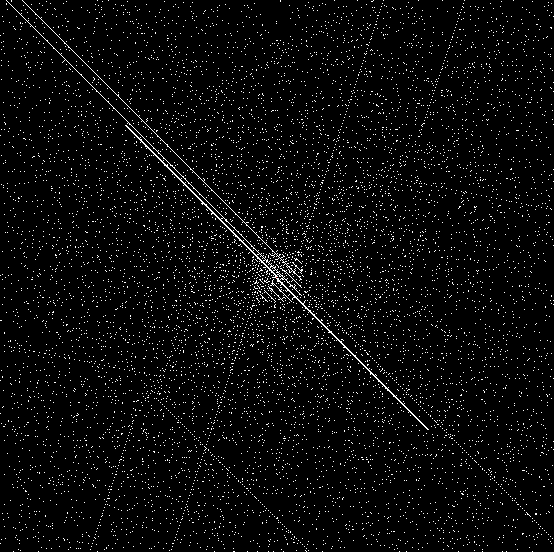
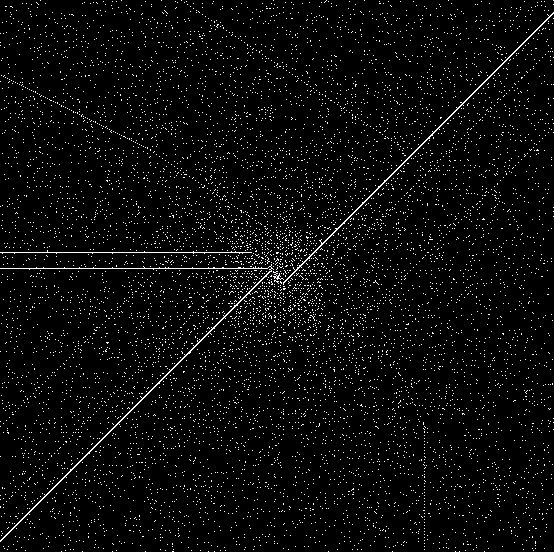
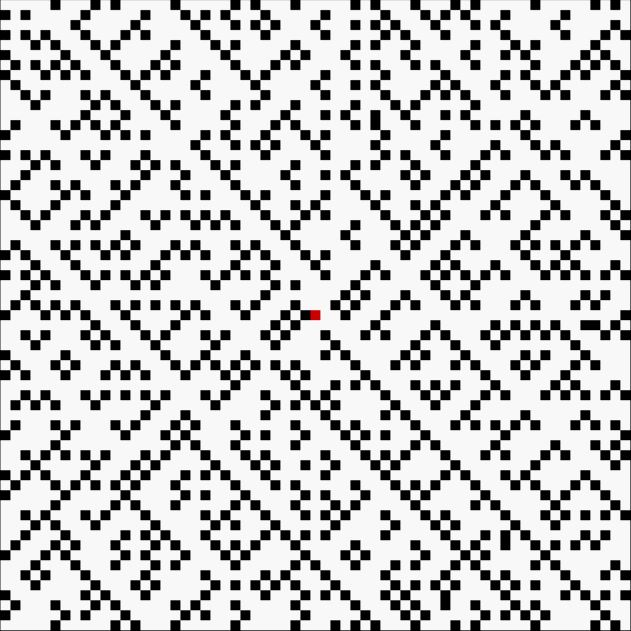
This is the famous Ulam spiral, invented by the Jewish mathematician Stanisław Ulam (pronounced OO-lam) to represent prime numbers on a square grid:

The Ulam spiral of prime numbers


The red square represents 1, with 2 as the white block immediately to its right and 3 immediately above 2. Then 5 is the white block one space to the left of 3 and 7 the white block one space below 5. Then 11 is the white block right beside 2 and 13 the white block one space above 11. And so on. The primes aren’t regularly spaced on the spiral but patterns are nevertheless appearing. Here’s the Ulam spiral at higher resolutions:

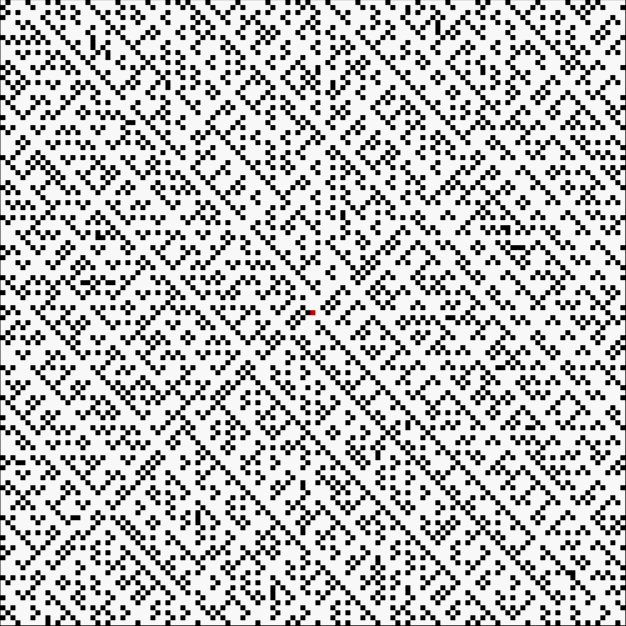
The Ulam spiral x2


The Ulam spiral x4


The primes are neither regular nor random in their distribution on the spiral. They stand tantalizingly betwixt and between. So the numbers represented on this Ulam-like spiral, which looks like an aerial view of a city designed by architects who occasionally get drunk:

Ulam-like spiral of abundant numbers


The distribution of abundant numbers is much more regular than the primes, but is far from wholly predictable. And what are abundant numbers? They’re numbers n such that sum(divisors(n)-n) > n. In other words, when you add the divisors of n less than n, the sum is greater than n. The first abundant number is 12:

12 is divisible by 1, 2, 3, 4, 6 → 1 + 2 + 3 + 4 + 6 = 16 > 12

The abundant numbers go like this:

12, 18, 20, 24, 30, 36, 40, 42, 48, 54, 56, 60, 66, 70, 72, 78, 80, 84, 88, 90, 96, 100, 102, 104, 108, 112, 114, 120, 126, 132, 138, 140, 144, 150, 156, 160, 162, 168, 174, 176, 180, 186, 192, 196, 198, 200, 204, 208, 210, 216, 220, 222, 224, 228, 234, 240, 246, 252, 258, 260, 264, 270… — A005101 at the Online Encyclopedia of Integer Sequences

Are all abundant numbers even? No, but the first odd abundant number takes a long time to arrive: it’s 45045. The abundance of 45045 was first discovered by the French mathematician Charles de Bovelles or Carolus Bovillus (c. 1475-1566), according to David Wells in his wonderful Penguin Dictionary of Curious and Interesting Numbers (1986):

45045 = 3^2 * 5 * 7 * 11 * 13 → 1 + 3 + 5 + 7 + 9 + 11 + 13 + 15 + 21 + 33 + 35 + 39 + 45 + 55 + 63 + 65 + 77 + 91 + 99 + 105 + 117 + 143 + 165 + 195 + 231 + 273 + 315 + 385 + 429 + 455 + 495 + 585 + 693 + 715 + 819 + 1001 + 1155 + 1287 + 1365 + 2145 + 3003 + 3465 + 4095 + 5005 + 6435 + 9009 + 15015 = 59787 > 45045

Here’s the spiral of abundant numbers at higher resolutions:

Abundant numbers x2


Abundant numbers x4


Negating the spiral of the abundant numbers — almost — is the spiral of the deficient numbers, where sum(divisors(n)-n) < n. Like most odd numbers, 15 is deficient:

15 = 3 * 5 → 1 + 3 + 5 = 9 < 15

Here’s the spiral of deficient numbers at various resolutions:

Deficient numbers on Ulam-like spiral


Deficient numbers x2


Deficient numbers x4


The spiral of deficient numbers doesn’t quite negate (reverse the colors of) the spiral of abundant numbers because of the very rare perfect numbers, where sum(divisors(n)-n) = n. That is, their factor-sums are exactly equal to themselves:

• 6 = 2 * 3 → 1 + 2 + 3 = 6
• 28 = 2^2 * 7 → 1 + 2 + 4 + 7 + 14 = 28
• 496 = 2^4 * 31 → 1 + 2 + 4 + 8 + 16 + 31 + 62 + 124 + 248 = 496

Now let’s try numbers n such than sum(divisors(n)) mod 2 = 1 (“n mod 2″ gives the remainder when n is divided by 2, i.e. n mod 2 is either 0 or 1). For example:

• 4 = 2^2 → 1 + 2 + 4 = 7 → 7 mod 2 = 1
• 18 = 2 * 3^2 → 1 + 2 + 3 + 6 + 9 + 18 = 39 → 39 mod 2 = 1
• 72 = 2^3 * 3^2 → 1 + 2 + 3 + 4 + 6 + 8 + 9 + 12 + 18 + 24 + 36 + 72 = 195 → 195 mod 2 = 1

Here are spirals for these numbers:

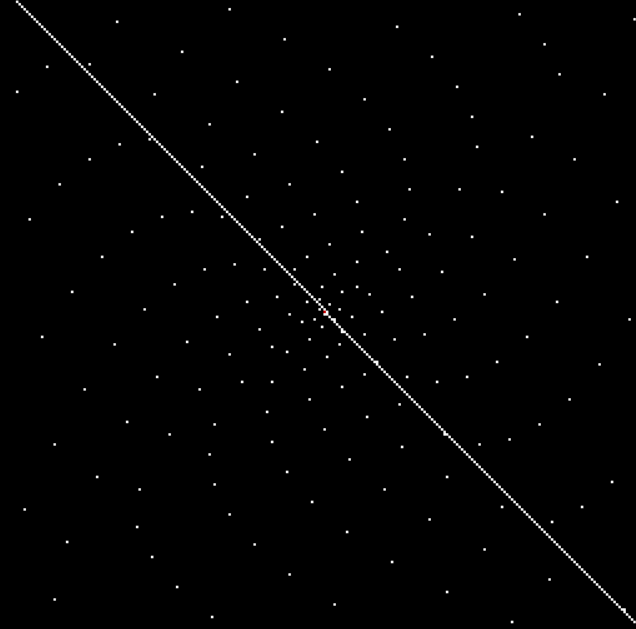
Ulam-like spiral for n such than sum(divisors(n)) mod 2 = 1


sum(divisors(n)) mod 2 = 1 x2


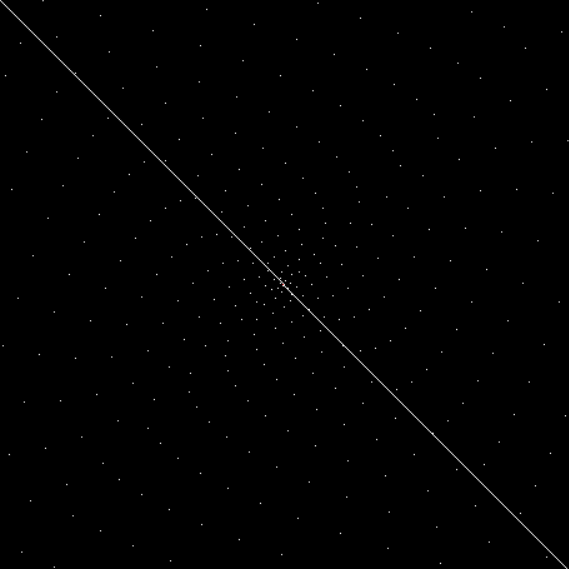
sum(divisors(n)) mod 2 = 1 x4


sum(divisors(n)) mod 2 = 1 x8


sum(divisors(n)) mod 2 = 1 x16


Power Flip

12 is an interesting number in a lot of ways. Here’s one way I haven’t seen mentioned before:

12 = 3^1 * 2^2


The digits of 12 represent the powers of the primes in its factorization, if primes are represented from right-to-left, like this: …7, 5, 3, 2. But I couldn’t find any more numbers like that in base 10, so I tried a power flip, from right-left to left-right. If the digits from left-to-right represent the primes in the order 2, 3, 5, 7…, then this number is has prime-power digits too:

81312000 = 2^8 * 3^1 * 5^3 * 7^1 * 11^2 * 13^0 * 17^0 * 19^0


Or, more simply, given that n^0 = 1:

81312000 = 2^8 * 3^1 * 5^3 * 7^1 * 11^2


I haven’t found any more left-to-right prime-power digital numbers in base 10, but there are more in other bases. Base 5 yields at least three (I’ve ignored numbers with just two digits in a particular base):

110 in b2 = 2^1 * 3^1 (n=6)
130 in b6 = 2^1 * 3^3 (n=54)
1010 in b2 = 2^1 * 3^0 * 5^1 (n=10)
101 in b3 = 2^1 * 3^0 * 5^1 (n=10)
202 in b7 = 2^2 * 3^0 * 5^2 (n=100)
3020 in b4 = 2^3 * 3^0 * 5^2 (n=200)
330 in b8 = 2^3 * 3^3 (n=216)
13310 in b14 = 2^1 * 3^3 * 5^3 * 7^1 (n=47250)
3032000 in b5 = 2^3 * 3^0 * 5^3 * 7^2 (n=49000)
21302000 in b5 = 2^2 * 3^1 * 5^3 * 7^0 * 11^2 (n=181500)
7810000 in b9 = 2^7 * 3^8 * 5^1 (n=4199040)
81312000 in b10 = 2^8 * 3^1 * 5^3 * 7^1 * 11^2


Post-Performative Post-Scriptum

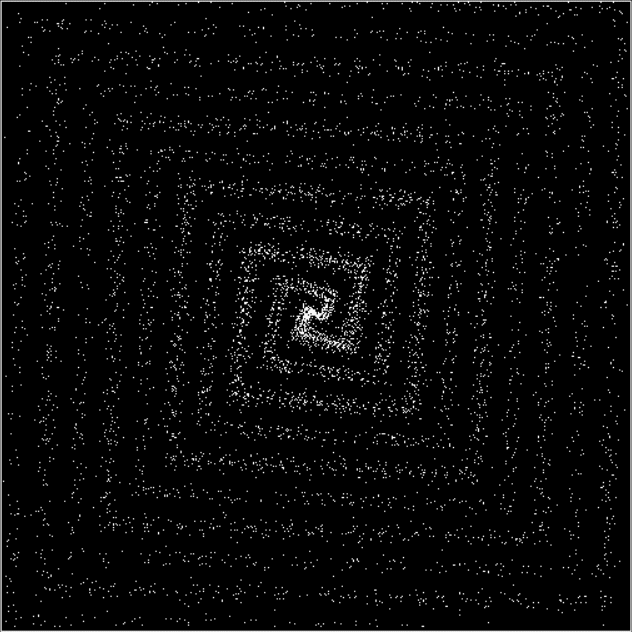
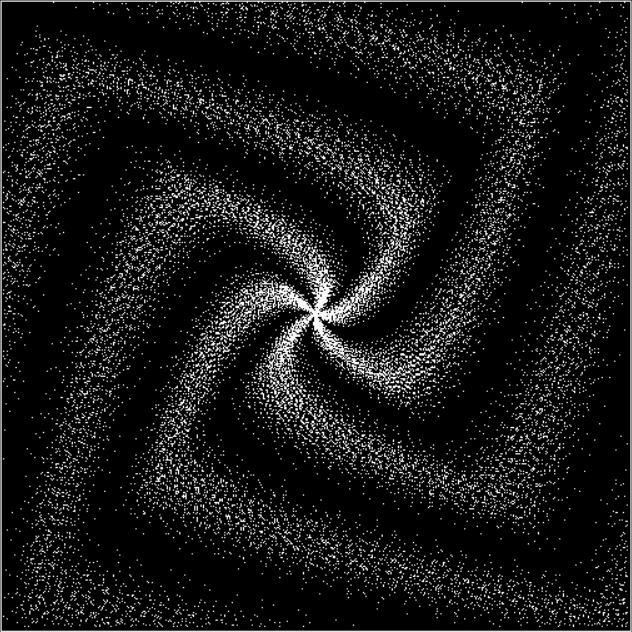
When I searched for 81312000 at the Online Encyclopedia of Integer Sequences, I discovered that these are Meertens numbers, defined at A246532 as the “base n Godel encoding of x [namely,] 2^d(1) * 3^d(2) * … * prime(k)^d(k), where d(1)d(2)…d(k) is the base n representation of x.”
Nexcelsior

In “The Trivial Troot”, I looked at what happens when tri(k), the k-th triangular number, is one digit longer than the previous triangular number, tri(k-1):


6 = tri(3)
10 = tri(4)


91 = tri(13)
105 = tri(14)


990 = tri(44)
1035 = tri(45)
[...]

10 ← 4
105 ← 14
1035 ← 45
10011 ← 141
100128 ← 447
1000405 ← 1414
10001628 ← 4472
100005153 ← 14142
1000006281 ← 44721
10000020331 ← 141421
100000404505 ← 447214
1000001326005 ← 1414214
10000002437316 ← 4472136
100000012392316 ← 14142136
[...]

What’s going on with k? In a sense, it’s calculating the square roots of 2 and 20:

√2 = 1·414213562373095048801688724209698078569671875376948073176679738...
√20 = 4·472135954999579392818347337462552470881236719223051448541794491...

Now let’s say “Excelsior!” and go higher with a related sequence. A006003 is defined at the Online Encyclopedia of Integer Sequences as the “sum of the next n natural numbers”. Here it is:


1 = 1
5 = 2 + 3
15 = 4 + 5 + 6
34 = 7 + 8 + 9 + 10
65 = 11 + 12 + 13 + 14 + 15
111 = 16 + 17 + 18 + 19 + 20 + 21
175 = 22 + 23 + 24 + 25 + 26 + 27 + 28
260 = 29 + 30 + 31 + 32 + 33 + 34 + 35 + 36
369 = 37 + 38 + 39 + 40 + 41 + 42 + 43 + 44 + 45
505 = 46 + 47 + 48 + 49 + 50 + 51 + 52 + 53 + 54 + 55
671 = 56 + 57 + 58 + 59 + 60 + 61 + 62 + 63 + 64 + 65 + 66
870 = 67 + 68 + 69 + 70 + 71 + 72 + 73 + 74 + 75 + 76 + 77 + 78
1105 = 79 + 80 + 81 + 82 + 83 + 84 + 85 + 86 + 87 + 88 + 89 + 90 + 91
1379 = 92 + 93 + 94 + 95 + 96 + 97 + 98 + 99 + 100 + 101 + 102 + 103 + 104 + 105
1695 = 106 + 107 + 108 + 109 + 110 + 111 + 112 + 113 + 114 + 115 + 116 + 117 + 118 + 119 + 120
2056 = 121 + 122 + 123 + 124 + 125 + 126 + 127 + 128 + 129 + 130 + 131 + 132 + 133 + 134 + 135 + 136
2465 = 137 + 138 + 139 + 140 + 141 + 142 + 143 + 144 + 145 + 146 + 147 + 148 + 149 + 150 + 151 + 152 + 153
2925 = 154 + 155 + 156 + 157 + 158 + 159 + 160 + 161 + 162 + 163 + 164 + 165 + 166 + 167 + 168 + 169 + 170 + 171
3439 = 172 + 173 + 174 + 175 + 176 + 177 + 178 + 179 + 180 + 181 + 182 + 183 + 184 + 185 + 186 + 187 + 188 + 189 + 190
4010 = 191 + 192 + 193 + 194 + 195 + 196 + 197 + 198 + 199 + 200 + 201 + 202 + 203 + 204 + 205 + 206 + 207 + 208 + 209 + 210
[...]

If you’re familiar with triangular numbers, you’ll see that sumnext(k) is always higher than tri(k), except for sumnext(1) = 1 = tri(k). Now, this is what happens when sumnext(k) is one digit longer than sumnext(k-1):


5 = sumnext(2)
15 = sumnext(3)


65 = sumnext(5)
111 = sumnext(6)


870 ← 12
1105 ← 13


9855 ← 27
10990 ← 28


97585 ← 58
102719 ← 59


976625 ← 125
1000251 ← 126


9951391 ← 271
10061960 ← 272


99588644 ← 584
100101105 ← 585


997809119 ← 1259
1000188630 ← 1260


9995386529 ← 2714
10006439295 ← 2715
[...]

15 ← 3
111 ← 6
1105 ← 13
10990 ← 28
102719 ← 59
1000251 ← 126
10061960 ← 272
100101105 ← 585
1000188630 ← 1260
10006439295 ← 2715
100049490449 ← 5849
1000188006300 ← 12600
10000910550385 ← 27145
100003310078561 ← 58481
1000021311323825 ← 125993
10000026341777165 ← 271442
100000232056567634 ← 584804
1000002262299152685 ← 1259922
10000004237431278525 ← 2714418
100000026858987459346 ← 5848036
1000000119305407615071 ← 12599211
10000000921801015908705 ← 27144177
100000001209342964609615 ← 58480355
1000000000250317736274865 ← 125992105
10000000037633414521952245 ← 271441762
100000000183357362892853070 ← 584803548
1000000000250317673908773025 ← 1259921050
[...]


What’s going on now? In a sense, the digits of k are approximating the cube roots of 20, 200 and 2000:


2.714417616594906571518089469679489204805107769489096957284365443... = cuberoot(20)
5.848035476425732131013574720275845557060997270202060082845147020... = cuberoot(200)
12.59921049894873164767210607278228350570251464701507980081975112... = cuberoot(2000)


cuberoot(20) = 2.714417616594906571518089469679489204805107769489096957284365443...
cuberoot(200) = 5.848035476425732131013574720275845557060997270202060082845147020...
cuberoot(2000) = 12.59921049894873164767210607278228350570251464701507980081975112...


So you could say that this sequence has gone nexcelsior: sumnext(k) > tri(k); cubes are higher than squares; and (20, 200, 2000) is bigger than (2, 20).


Previously Pre-Posted…

• “The Trivial Troot” — explaining the earlier pattern in triangular numbers