
Imagine a ballerina pirouetting on the perimeter of an equilateral triangle. Suppose that her armlength is half the radius of the circumscribed circle. If her right arm is represented in green and her right hand in yellow, this is one path that her right hand might trace, depending on the relative speeds of her feet and her pirouettes:
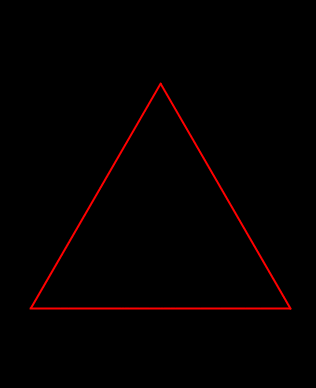
The perimeter of an equilateral triangle

A ballerina pirouetting on the perimeter stage #1
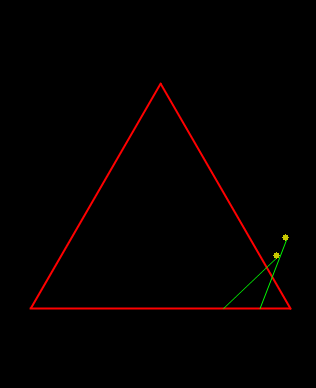
Perimeter pirouette #2
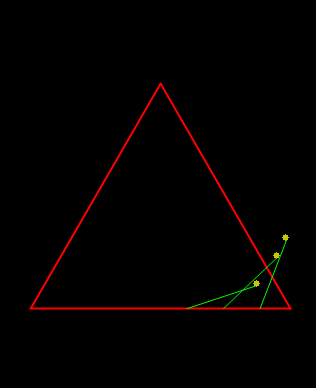
Perimeter pirouette #3

Perimeter pirouette #4
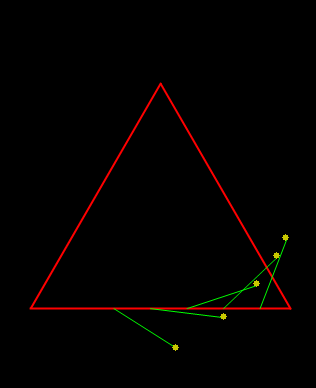
Perimeter pirouette #5
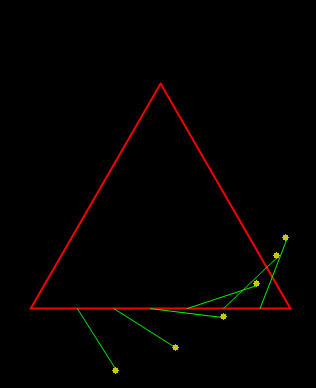
Perimeter pirouette #6
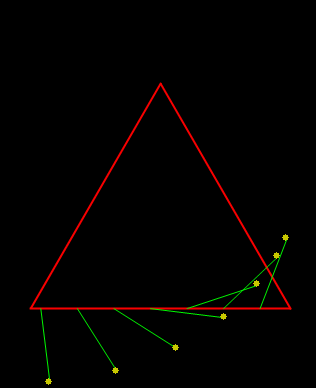
Perimeter pirouette #7
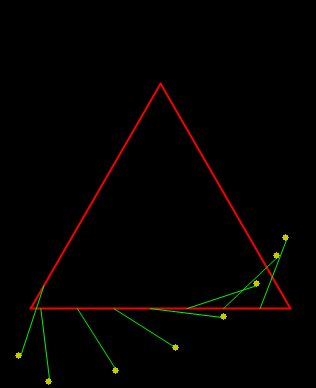
Perimeter pirouette #8

Perimeter pirouette #9
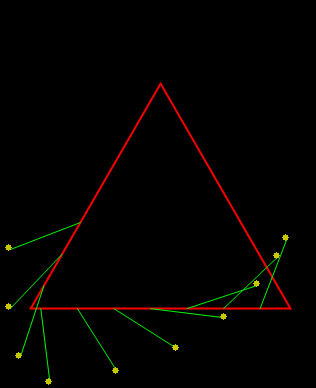
Perimeter pirouette #10
[…]
↓
[…]
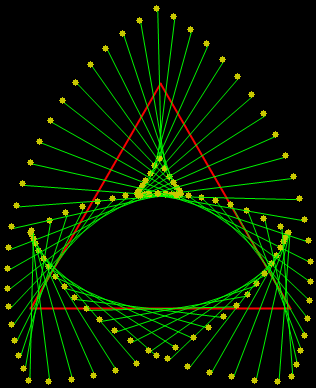
Perimeter pirouette #128

Perimeter pirouettes (animated)
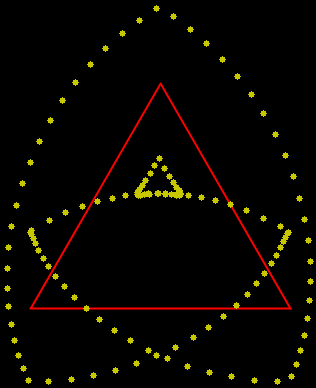
The right hand of the ballerina during the pirouettes

The full path traced by the ballerina’s right hand
The paths change as you adjust speed and direction (clockwise or anticlockwise) of the pirouettes, the armlength of the ballerina, and so on:
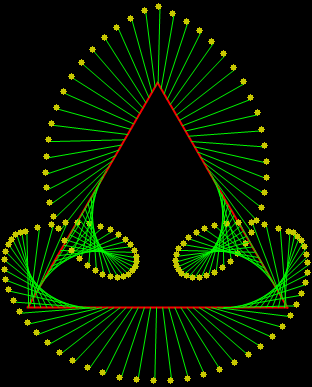
speed = 0.5 (pirouettes)

speed = 0.5 (path)
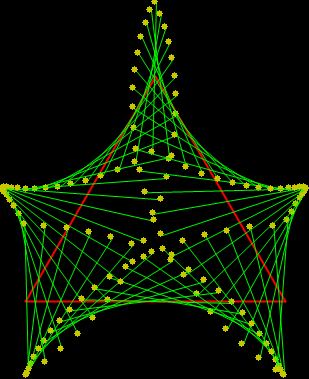
speed = -1 (anticlockwise pirouettes)
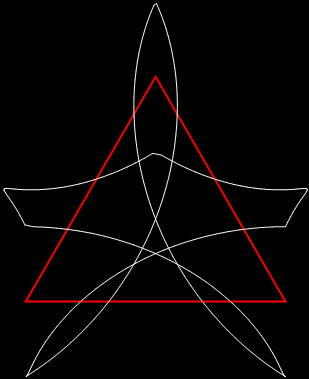
speed = -1 (path)

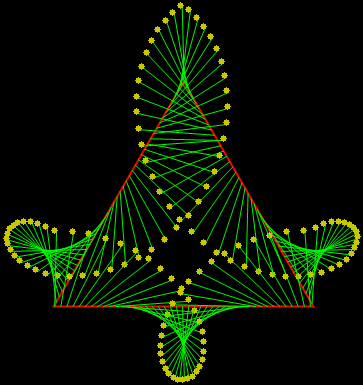
speed = 1, armlength = 1/3 (pirouettes)

speed = 1, armlength = 1/3 (path)
speed = -0.5 (pirouettes)
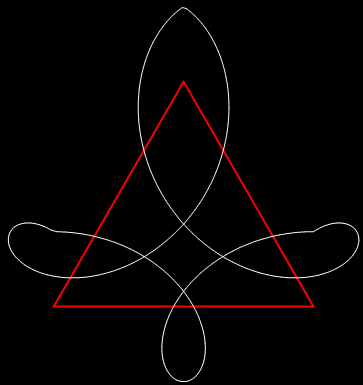
speed = -0.5 (path)
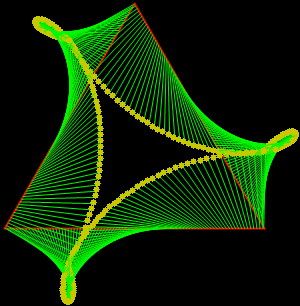
speed = -0.75 (pirouettes)
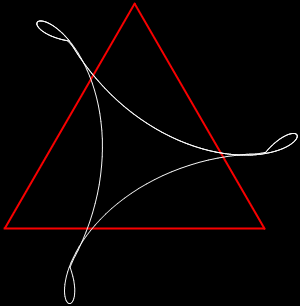
speed = -0.75 (path)
And what about the paths produced by pirouettes on the perimeters of other polygons? Watch this space.
 Overlord In Terms of Core Issues Around Maximal Engagement with Key Notions of the Über-Feral