Mulch is Less

An interesting bio-paradox from the world’s premier papyrocentric purveyor of progressive performativity:

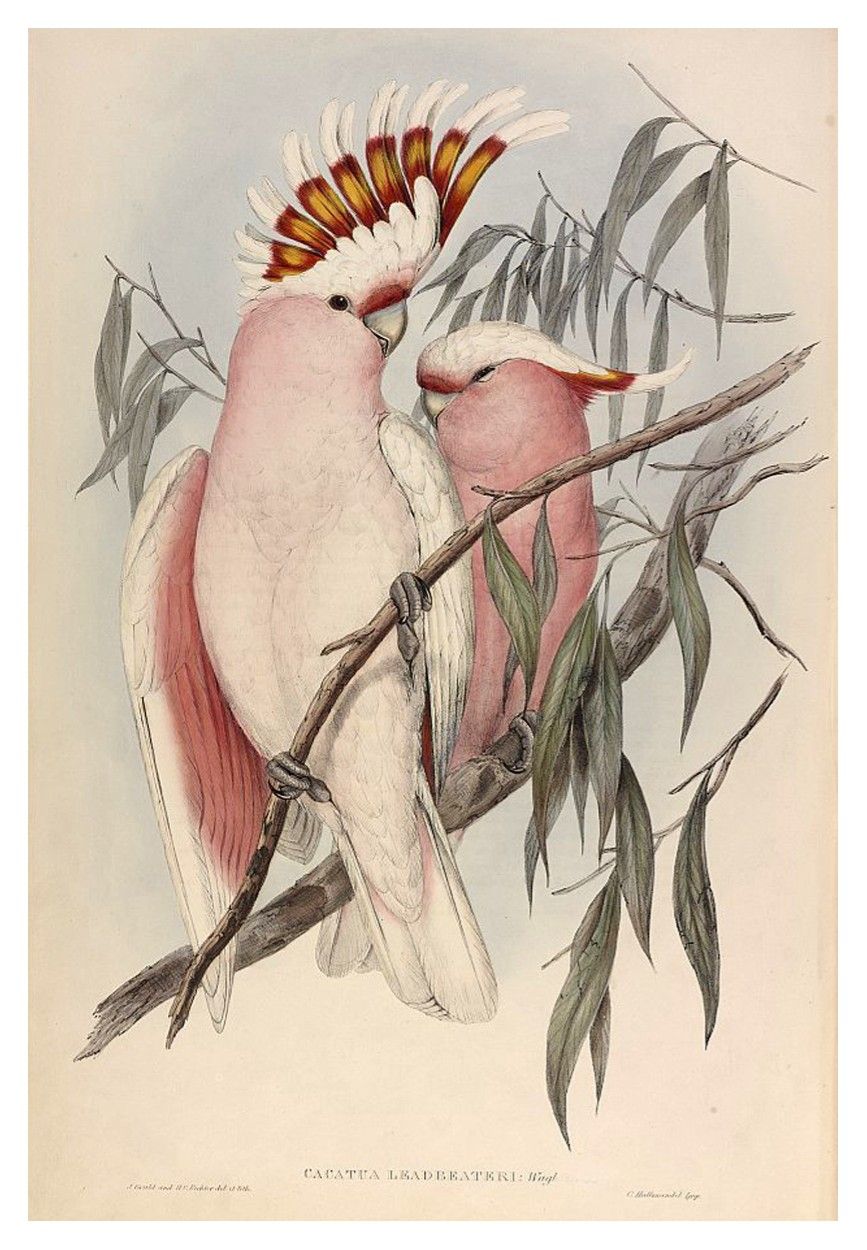
Vast stretches of roadside have been transformed. Where there were thick clumps of grass, there are low-growing wildflowers such as black medic, birds-foot trefoil and red clover. The verges are cut two or three times a year, not 12, saving the council tens of thousands of pounds. Butterflies and other invertebrates have returned in their droves. […]

The process is simple: cut infrequently, ideally, just twice a year in spring and then late summer once plants have bloomed and seeded; remove the clippings to gradually reduce the fertility of the soil and prevent a buildup of mulch; repeat, wait, and enjoy the resurgent wildlife and flowers. […]

“As fertility declines in a soil, biodiversity increases. At first that seems a little counterintuitive because you imagine the more you pour into a soil, the more plants that can grow. That’s not how it works in the natural system. In more fertile systems, a few species dominate and they swamp and smother everything else.”

Grass cuttings are almost always left where they fall along the thousands of miles of road verges that are maintained by law in the UK. Over time, the resulting mulch increases the fertility of the soil, meaning the grass grows with increasing vigour and needs to be cut more frequently. The cut and collect method breaks the cycle. — On the verge: a quiet roadside revolution is boosting wildflowers, The Guardian, 14iii2020
Hicks Nix on Pix

“Watching television is like taking black spray-paint to your third eye.” — Bill Hicks


Post-Performative Post-Scriptum

The title of this incendiary intervention is a tribute to the famous Variety headline “Sticks Nix Hick Pix”. However, I mean “pixels” by “pix”, not “pictures”.

Who Made Heu?

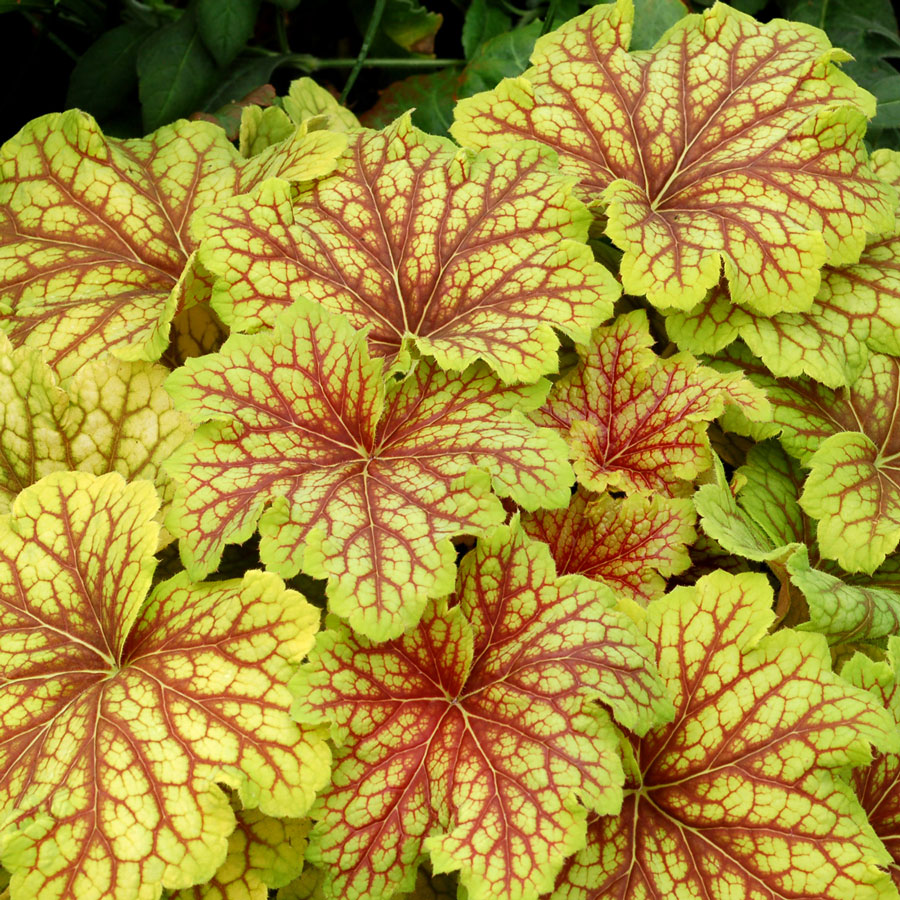
Fractal leaves of Heuchera “Red Lightning


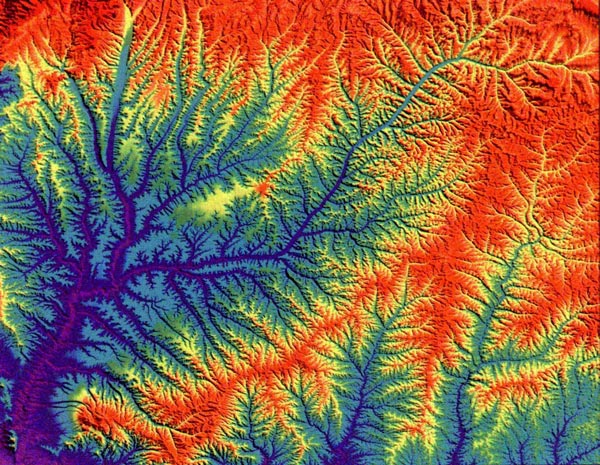
Fractal river network in Shaanxi province, China


Post-Performative Post-Scriptum

Because “Heuchera” comes from the name of the German botanist J.H. Heucher (1677–1747), it should strictly speaking be pronounced something like “HOI-keh-ruh”. But people often say “HYOO-keh-ruh” or variations thereon.

Slanted and Enchanted

Green-Gold Moss with Ivy-Leaved Toadflax
(click for larger)


Post-Performative Post-Scriptum

I assume I got the name “Slanted and Enchanted” from a subconscious memory of an album of the same name by the American band Pavement, though I might just have come up with it independently.

Joule for Thought

No matter how efficient any physical device is (e.g. a computer or a brain) it can acquire one bit of information only if it expends 0.693kT joules of energy. — Information Theory: A Tutorial Introduction, James V. Stone, Sebtel Press 2015

Leech Unleashed

The Great Beast writes:

I witnessed a remarkable sight on the road to Chabanjong, which was here a paka rasta (that is, a road made by engineers as opposed to kacha rasta, a track made by habit or at most by very primitive methods) wide enough for carts to pass. I had squatted near the middle of the road as being the least damp and leech-infested spot available and got a pipe going by keeping the bowl under my waterproof. I lazily watched a leech wriggling up a blade of tall grass about fifteen inches high and smiled superiorily at its fatuity — though when I come to think of it, my own expedition was morally parallel; but the leech was not such a fool as I thought. Arrived at the top, it began to set the stalk swinging to and fro; after a few seconds it suddenly let go and flew clean across the road. The intelligence of and ingenuity of the creature struck me as astonishing. — The Confessions of Aleister Crowley: An Autohagiography (1929), ch. 52

Math Matters

“Physics is mathematical not because we know so much about the physical world, but because we know so little; it is only its mathematical properties that we can discover.” — Bertrand Russell, An Outline of Philosophy (1927), ch. 15, “The Nature of our Knowledge of Physics”

Toxic Textuality for Tenebrose Times…

If you thought the keyly committed core componency of Covid-19 was bad, please park your peepers on the Satan Bug dot dot dot:

In its final form, the Satan Bug is an extremely refined powder. I take a salt-spoon of this powder, go outside in the grounds of Mordon and turn the salt-spoon upside down. What happens? Every person in Mordon would be dead within an hour, the whole of Wiltshire would be an open tomb by dawn. In a week, ten days, all life would have ceased to exist in Britain. I mean all life. The Plague, the Black Death – was nothing compared with this. Long before the last man died in agony ships or planes or birds or just the waters of the North Sea would have carried the Satan Bug to Europe. We can conceive of no obstacle that can stop its eventual world-wide spread… The Lapp trapping in the far north of Sweden. The Chinese peasant tilling his rice-fields in the Yangtse valley. The cattle rancher on his station in the Australian outback, the shopper in Fifth Avenue, the primitive in Tierra del Fuego. Dead. All dead. Because I turned a salt-spoon upside down. Nothing, nothing, nothing can stop the Satan Bug.


Previously pre-posted (on Papyrocentric Performativity):

God-Finger — a radical review of Alistair MacLean’s The Satan Bug (1962)…

He Say, He Sigh, He Sow #49

• «Планета есть колыбель разума, но нельзя вечно жить в колыбели.» — Константин Эдуардович Циолковский (1911)

• “Planet is the cradle of mind, but one cannot live in the cradle forever.” — Konstantin Tsiolkovsky