The Bellissima Curve

The bell curve is a shape that appears when you make a graph by counting all possible sums of a range of integers like 1, 2, 3, 4, 5, 6, 7, 8, 9, 10. The smallest sum you can get is 1; the largest is 55 = 1 + 2 + 3 + 4 + 5 + 6 + 7 + 8 + 9 + 10. But there’s only one sum of 1 and only one sum of 55. Other sums are more common:

• 10 = 1 + 2 + 3 + 4
• 10 = 1 + 2 + 7
• 10 = 1 + 3 + 6
• 10 = 1 + 4 + 5
• 10 = 2 + 3 + 5
• 10 = 2 + 8
• 10 = 3 + 7
• 10 = 4 + 6
• 10 = 10

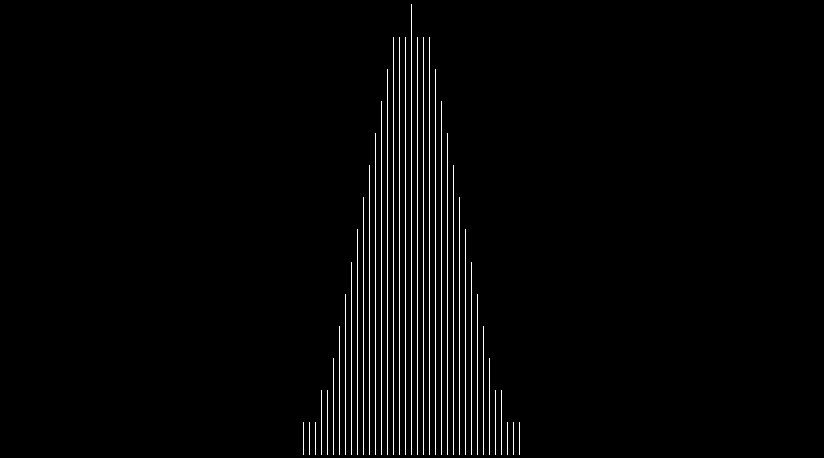
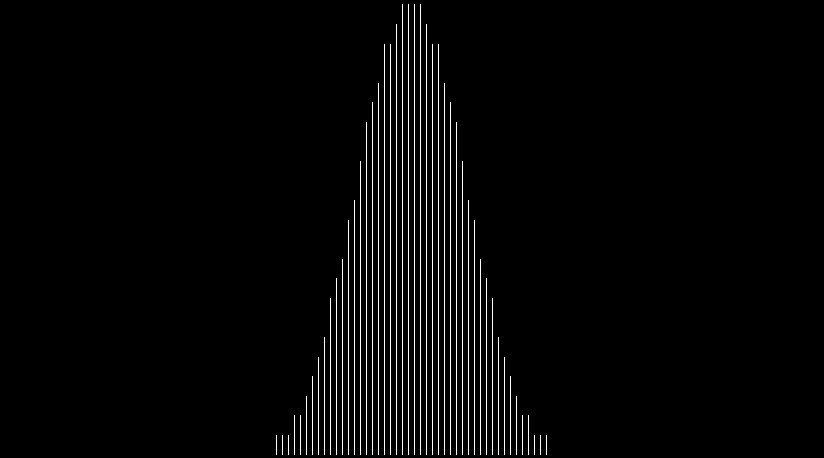
So there are nine sums of 10. If you graph count-sums with a bigger set of consecutive integers from 1, 2, 3…, you get this shape:
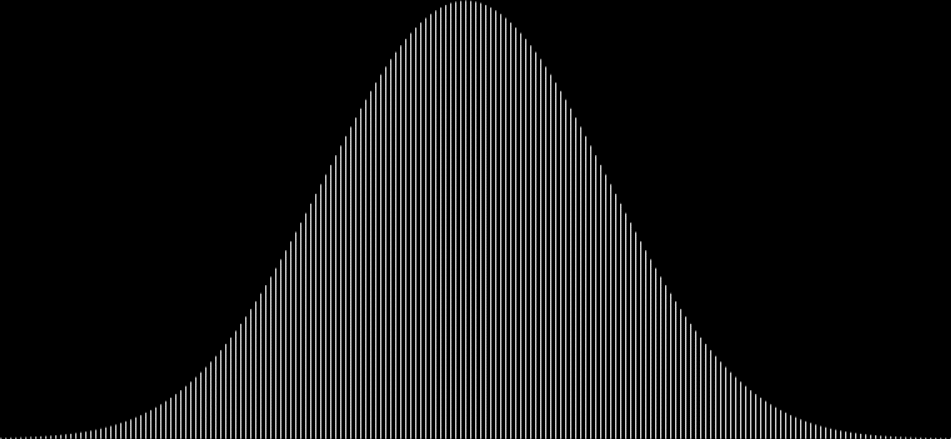
Bell curve from sum-counts with 1, 2, 3, 4, 5, 6, 7, 8, 9, 10…
(open in separate window for full-sized image)


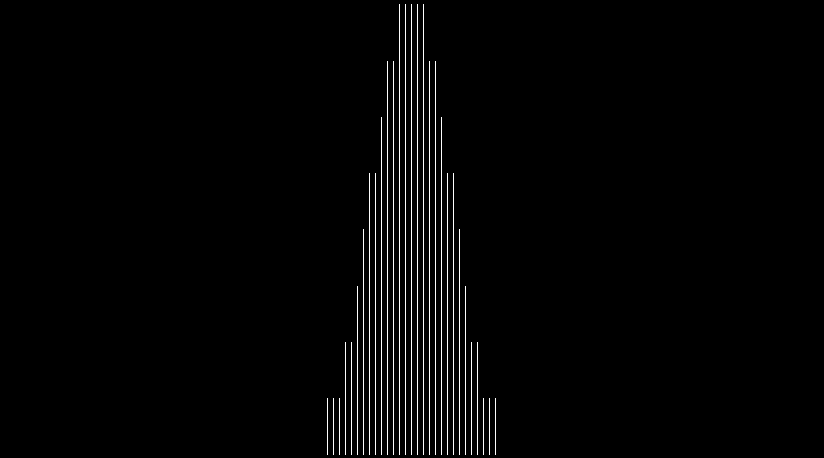
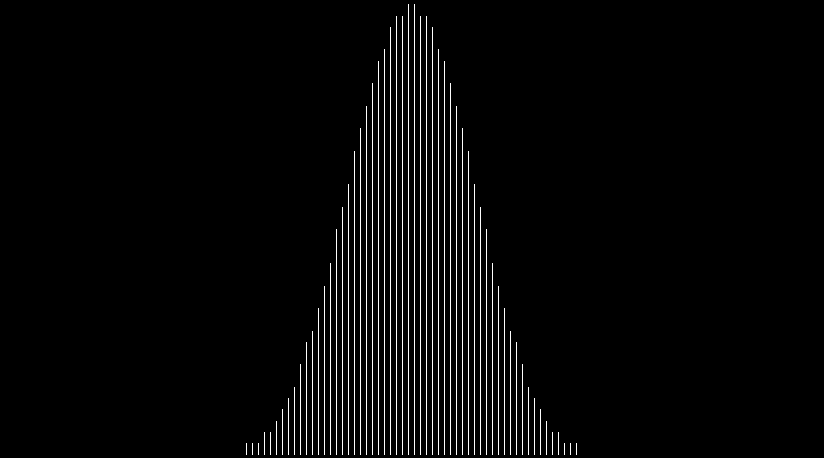
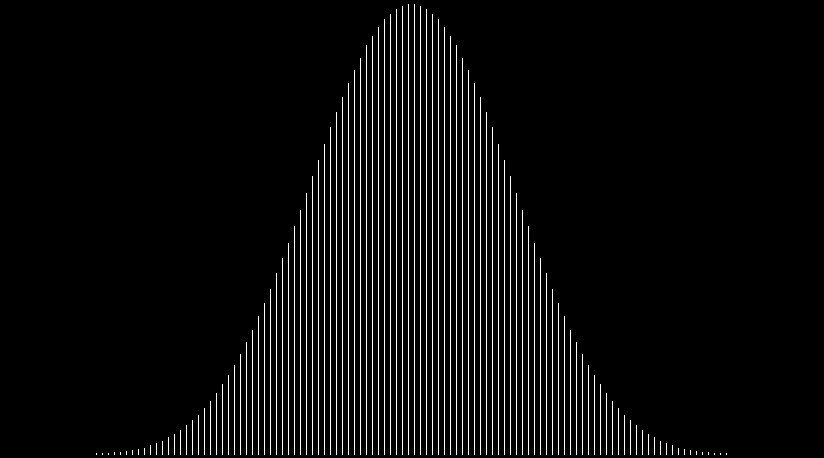
It’s a bell curve. Et c’est une belle curve, a “beautiful curve” in French. But I’ve found what I call bellissime curve — Italian for “most beautiful curves” — by sampling different sets of integers. With the set (1, 3, 5, 7, 9, 11, 13, 15, 17, 19…), you get what you could call a slightly wrinkled bell curve:
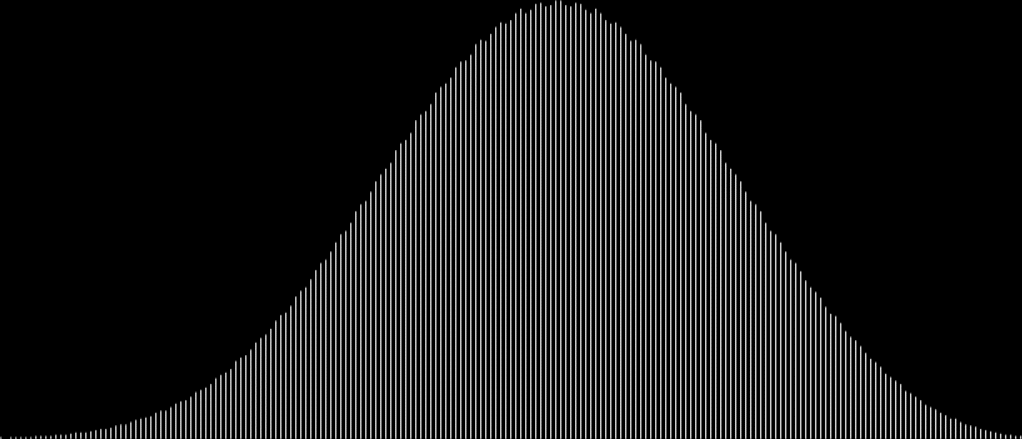
Wrinkled bell-curve from sum-counts with 1, 3, 5, 7, 9, 11, 13, 15, 17, 19…
(open in separate window for full-sized image)


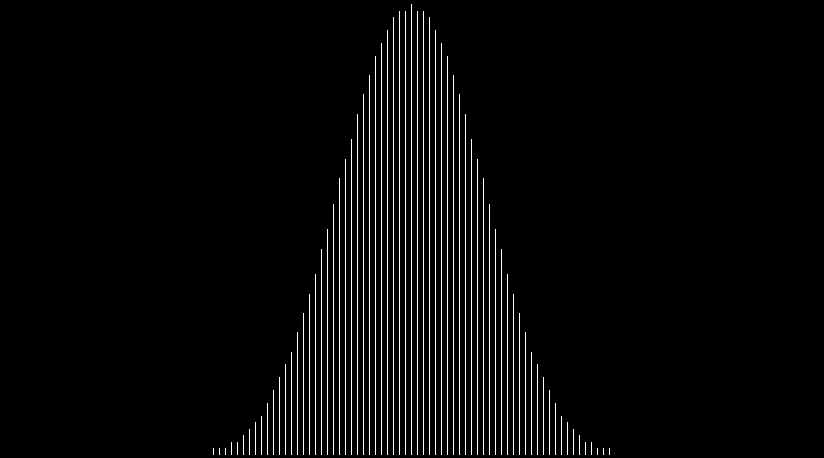
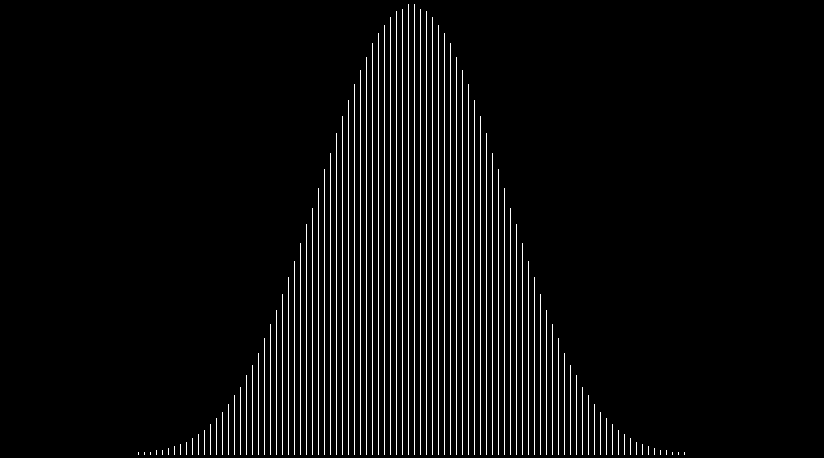
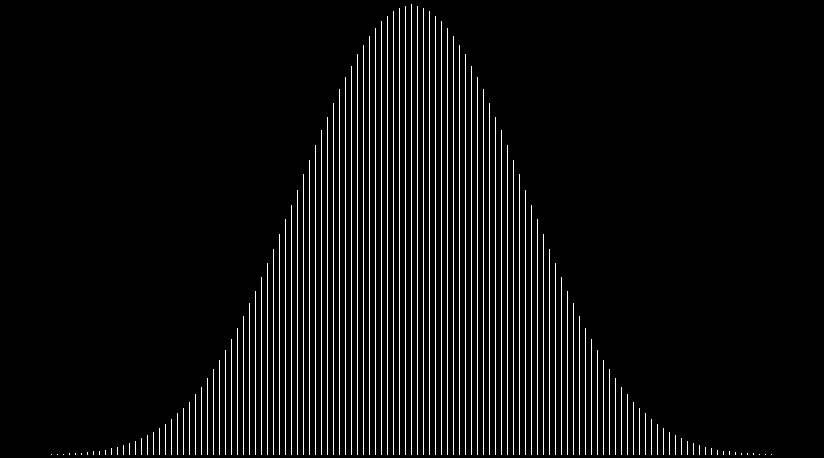
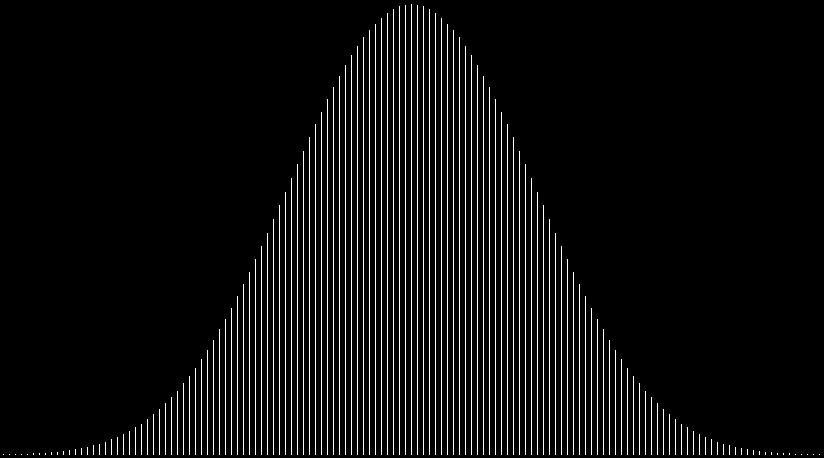
After that, as you leave bigger gaps in the sampled sets, the curves start to overlap and add extra beauty:
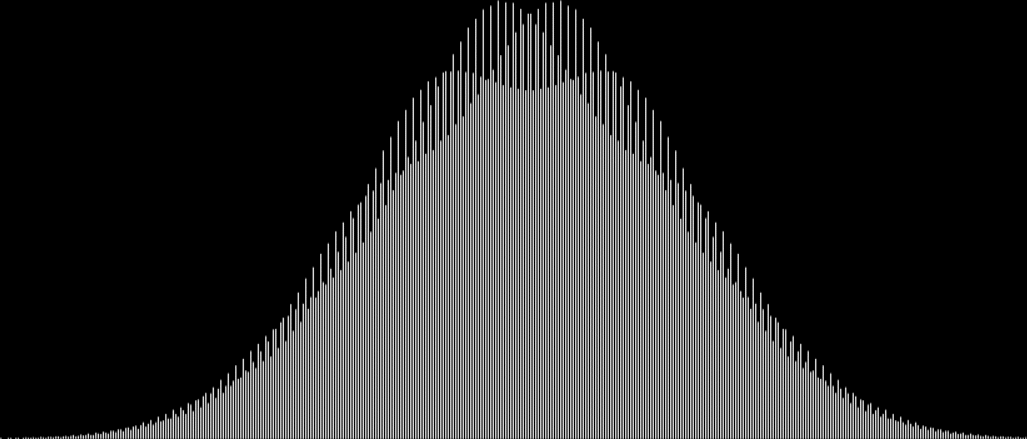
Overlapping bell curves from sum-counts with 1, 4, 7, 10, 13, 16, 19, 22, 25, 28…
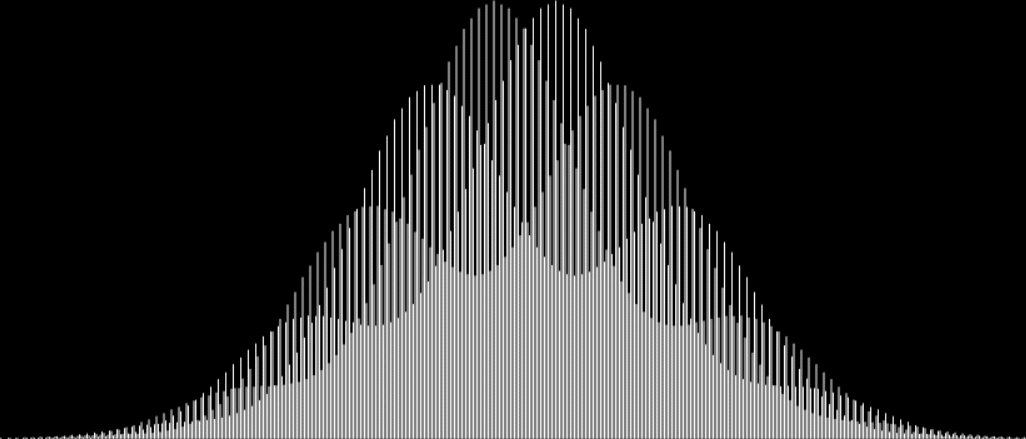

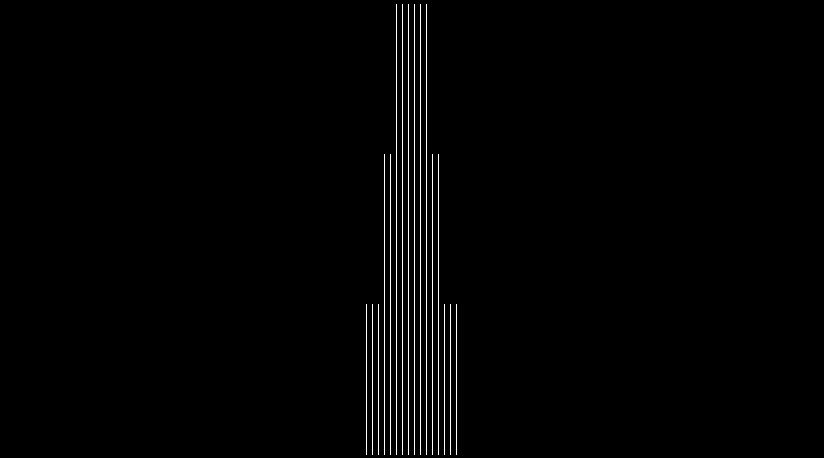
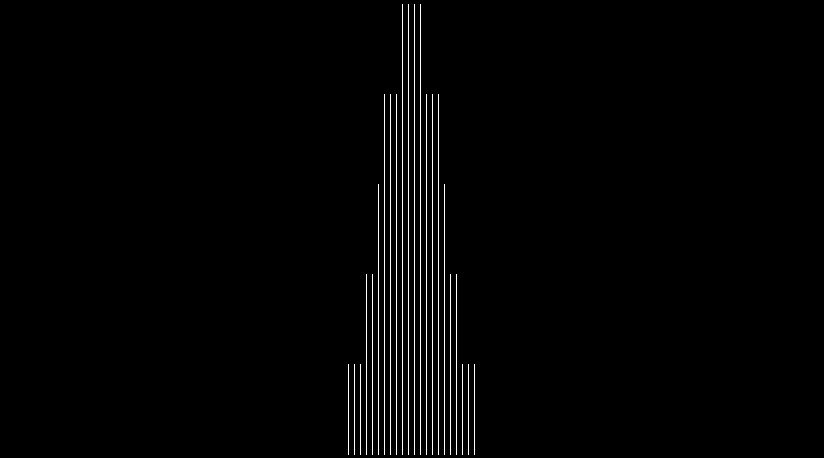
Bellissima curves from sum-counts with 1, 5, 9, 13, 17, 21, 25, 29, 33, 37…
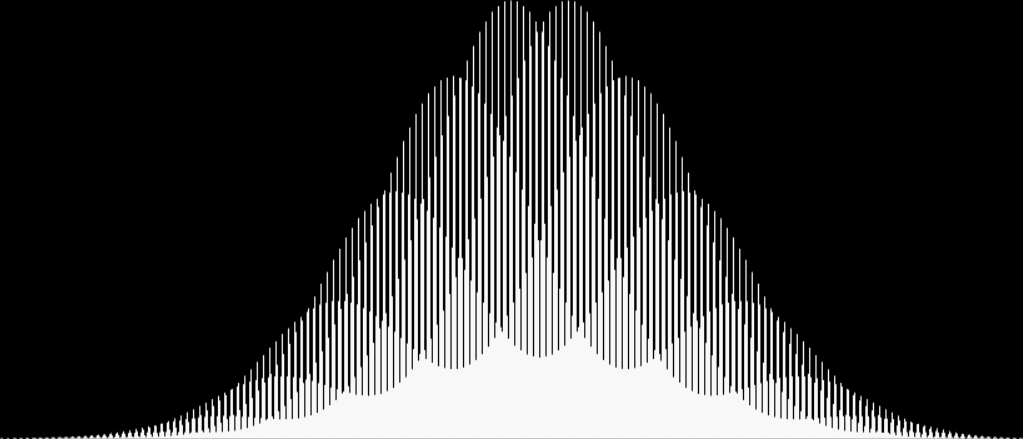

Bellissima curves from sum-counts with 1, 6, 11, 16, 21, 26, 31, 36, 41, 46…
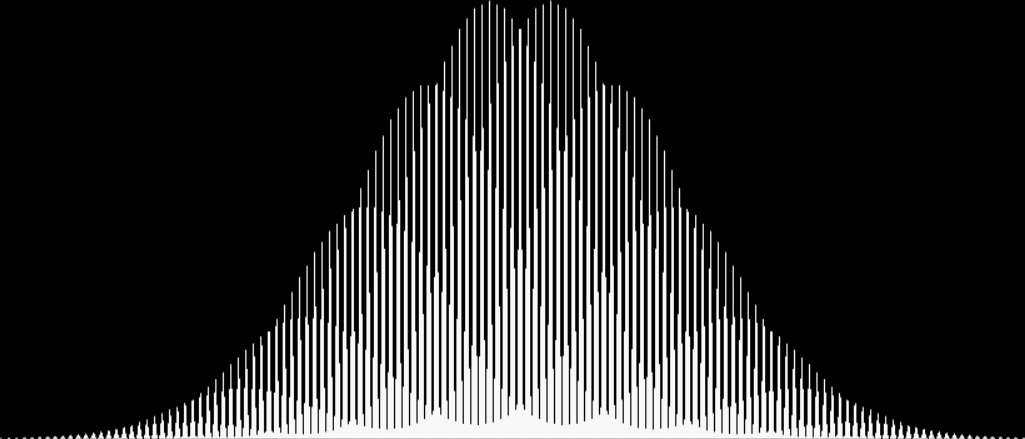

Bellissima curves from sum-counts with 1, 7, 13, 19, 25, 31, 37, 43, 49, 55…


With the set (3, 6, 9, 15, 18, 21…), the bell is back:
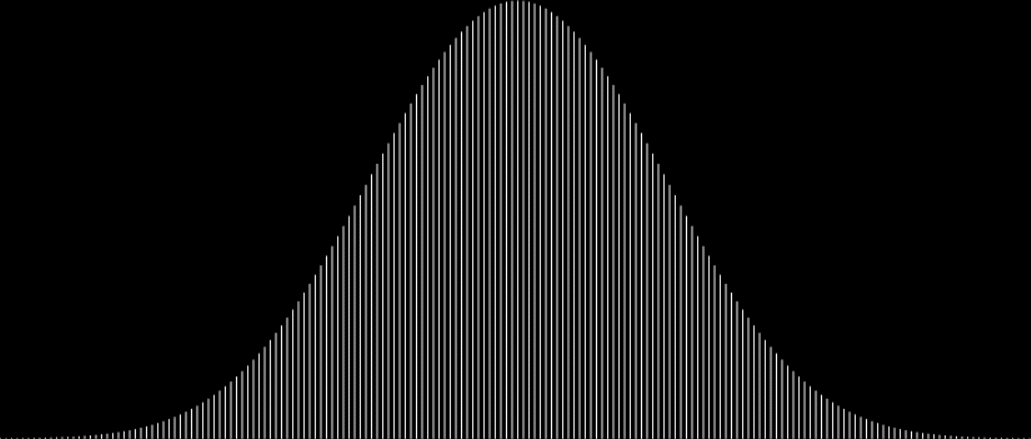
Bell curve from sum-counts with 3, 6, 9, 15, 18, 21…


But with (4, 7, 10, 13, 6, 19…), separated by the same distance, you get this:
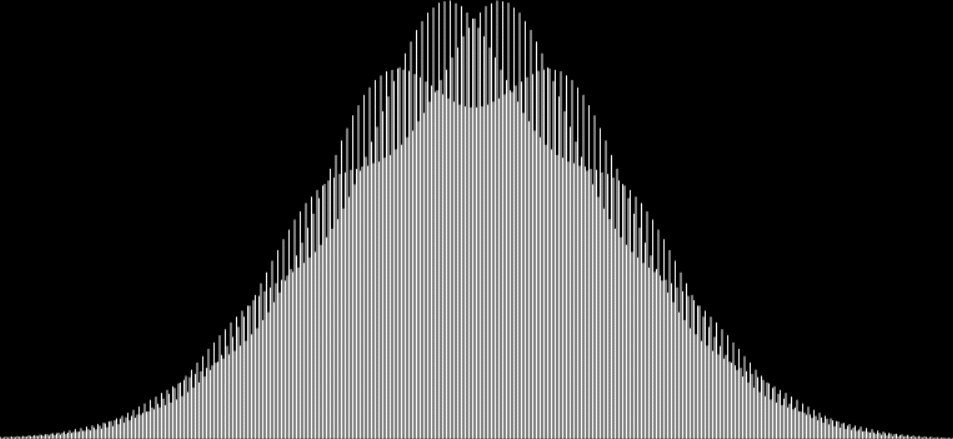
Bell curve from sum-counts with 4, 7, 10, 13, 6, 19…


When you sample the Fibonacci numbers, (1, 2, 3, 5, 8…), you get this graph:
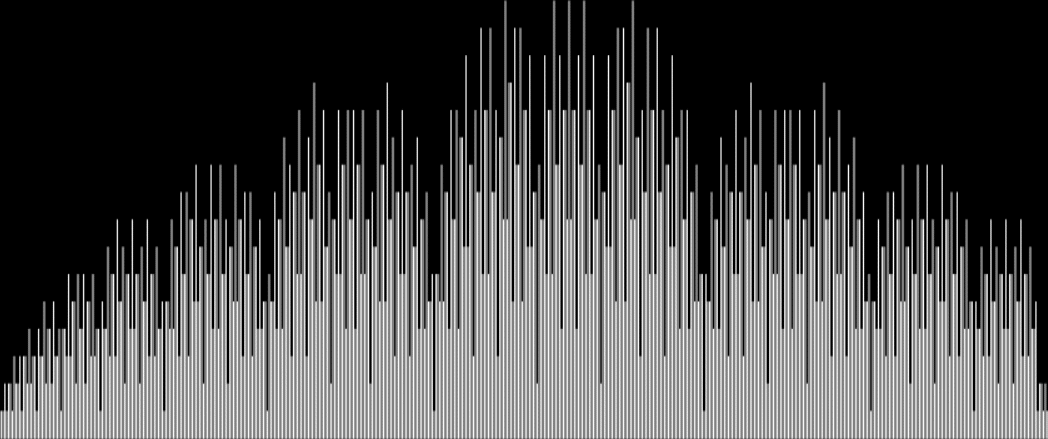
Caterpillar curve from sum-counts of Fibonacci numbers 1, 2, 3, 5, 8, 13, 21, 34, 55, 89…


When you sample a restricted set of Fibonaccis, (1, 3, 8, 21, 55…), you get this, where each vertical line represents a count of one:
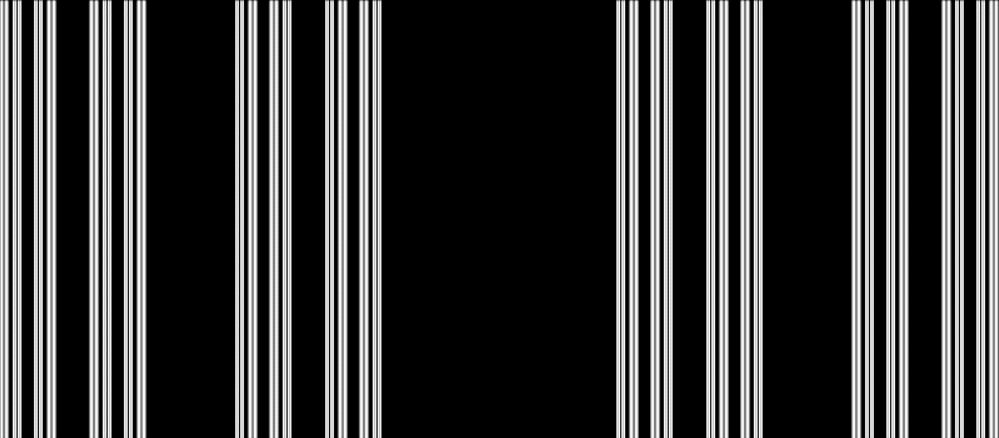
Golden gaps from sum-counts of restricted Fibonacci numbers 1, 3, 8, 21, 55, 144…


That restricted Fibonacci graph is strangely attractive, because it has golden gaps (verb sap!).

Pi in the Bi

Binary is beautiful — both simple and subtle. What could be simpler than using only two digits to count with?


0, 1, 10, 11, 100, 101, 110, 111, 1000, 1001, 1010, 1011, 1100, 1101, 1110, 1111, 10000, 10001, 10010, 10011, 10100, 10101, 10110, 10111, 11000, 11001, 11010, 11011, 11100, 11101, 11110, 11111, 100000, 100001, 100010, 100011, 100100, 100101, 100110, 100111, 101000, 101001, 101010, 101011, 101100, 101101, 101110, 101111, 110000, 110001, 110010, 110011, 110100, 110101, 110110, 110111, 111000, 111001, 111010, 111011, 111100, 111101, 111110, 111111, 1000000...

But the simple patterns in the two digits of binary involve two of the most important numbers in mathematics: π and e (aka Euler’s number):


π = 3.141592653589793238462643383...
e = 2.718281828459045235360287471...

It’s easy to write π and e in binary:


π = 11.00100 10000 11111 10110 10101 00010...
e = 10.10110 11111 10000 10101 00010 11000...

But how do π and e appear in the patterns of binary 1 and 0? Well, suppose you use the digits of binary to generate the sums of distinct integers. For example, here are the sums of distinct integers you can generate with four digits of binary, if you count the digits from right to left (so the rightmost digit is 1, the the next-to-rightmost digit is 2, the next-to-leftmost digit is 3, and the leftmost digit is 4):


0000 → 0*4 + 0*3 + 0*2 + 0*1 = 0
0001 → 0*4 + 0*3 + 0*2 + 1*1 = 1*1 = 1
0010 → 0*4 + 0*3 + 1*2 + 0*1 = 1*2 = 2
0011 → 0*4 + 0*3 + 1*2 + 1*1 = 1*2 + 1*1 = 3
0100 → 1*3 = 3
0101 → 1*3 + 1*1 = 4
0110 → 3 + 2 = 5
0111 → 3 + 2 + 1 = 6
1000 → 4
1001 → 4 + 1 = 5
1010 → 4 + 2 = 6
1011 → 4 + 2 + 1 = 7
1100 → 4 + 3 = 7
1101 → 4 + 3 + 1 = 8
1110 → 4 + 3 + 2 = 9
1111 → 4 + 3 + 2 + 1 = 10

There are 16 sums (16 = 2^4) generating 11 integers, 0 to 10. But some integers involve more than one sum:


3 = 2 + 1 ← 0011
3 = 3 ← 0100

4 = 3 + 1 ← 0101
4 = 4 ← 1000

5 = 3 + 2 ← 0110
5 = 4 + 1 ← 1001

6 = 3 + 2 + 1 ← 0111
6 = 4 + 2 ← 1010

7 = 4 + 2 + 1 ← 1011
7 = 4 + 3 ← 1100

Note the symmetry of the sums: the binary number 0011, yielding 3, is the mirror of 1100, yielding 7; the binary number 0100, yielding 3 again, is the mirror of 1011, yielding 7 again. In each pair of mirror-sums, the two numbers, 3 and 7, are related by the formula 10-3 = 7 and 10-7 = 3. This also applies to 4 and 6, where 10-4 = 6 and 10-6 = 4, and to 5, which is its own mirror (because 10-5 = 5). Now, try mapping the number of distinct sums for 0 to 10 as a graph:

Graph for distinct sums of the integers 0 to 4


The graph show how 0, 1 and 2 have one sum each, 3, 4, 5, 6 and 7 have two sums each, and 8, 9 and 10 have one sum each. Now look at the graph for sums derived from three digits of binary:

Graph for distinct sums of the integers 0 to 3


The single taller line of the seven lines represents the two sums of 3, because three digits of binary yield only one sum for 0, 1, 2, 4, 5 and 6:


000 → 0
001 → 1
010 → 2
011 → 2 + 1 = 3
100 → 3
101 → 3 + 1 = 4
110 → 3 + 2 = 5
111 → 3 + 2 + 1 = 6

Next, look at graphs for sums derived from one to sixteen binary digits and note how the symmetry of the lines begins to create a beautiful curve (the y axis is normalized, so that the highest number of sums reaches the same height in each graph):

Graph for sums from 1 binary digit


Graph for sums from 2 binary digits


Graph for sums from 3 binary digits


Graph for sums from 4 binary digits


Graph for sums from 5 binary digits


Graph for sums from 6 binary digits


Graph for sums from 7 binary digits


Graph for sums from 8 binary digits


Graph for sums from 9 binary digits


Graph for sums from 10 binary digits


Graph for sums from 11 binary digits


Graph for sums from 12 binary digits


Graph for sums from 13 binary digits


Graph for sums from 14 binary digits


Graph for sums from 15 binary digits


Graph for sums from 16 binary digits


Graphs for 1 to 16 binary digits (animated)


You may recognize the shape emerging above as the bell curve, whose formula is this:

Formula for the normal distribution or bell curve (image from ThoughtCo)


And that’s how you can find pi in the bi, or π in the binary digits of 0, 1, 10, 11, 100, 101, 110, 111, 1000, 1001, 1010, 1011, 1100, 1101…

(And how you find e too, as promised above.)


Post-Performative Post-Scriptum

I asked this question above: What could be simpler than using only two digits? Well, using only one digit is simpler still:


1, 11, 111, 1111, 11111, 111111, 1111111, 11111111, 111111111, 1111111111...

But I don’t see an easy way to find π and e in numbers like that.