Court in the Act

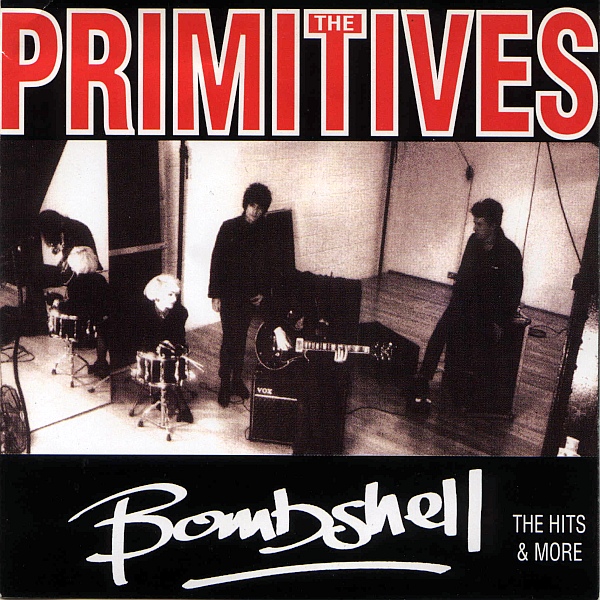
Cover of Bombshell by The PrimitivesBombshell: The Hits and More, The Primitives (1994)

In all walks of life, from pop music to drug-dealing, some people achieve far more success than their talents deserve and some people achieve far less. Paul Court, the song-writer for the late-’eighties-and-a-bit-of-the-’nineties indie group The Primitives, is one of the second group. And perhaps drug-dealing describes his largely unrewarded talents too. Like a drug, music is designed to alter your consciousness and some of the songs on this compilation album are perfect little pills of pop, filling your brain with a two- or three-minute rush of jingly-jangly melodic pleasure. And maybe jungly pleasure too: The Primitives were a primitive band in the garage-and-bubblegum-pop tradition, particularly when they played live. Female vox, occasional male backing vocals, guitar, bass and drums, and that was it. There was no pretension about them, but they achieved the kind of a-lot-in-a-little simplicity that only an intelligent and skilful songwriter can give a band.

“Crash”, their most famous song, both opens and closes the album (apart from the doubly unexpected hidden track). It appears first as the album track, then as a demo, and some of the other songs come in a second version, whether demo or acoustic. I enjoy the chance to hear the different interpretations, but this padding does reflect the brevity of their career, which stretched from about 1987 to about 1992. Unfortunately, a twice-misspelt “Way Behing Me” and the appearance of “Secrets (Demo)” as the already-heard album track rather than the demo also reflect the sloppiness of the German company that put the compilation out. Court deserved better. There’s further proof of that in the single cover version, “As Tears Go By” by the Rolling Stones. It’s given the light treatment of the early Primitives and isn’t anywhere near as good as Court’s own compositions, I’d say.

Bombshell by The Primitives (CD)

Perhaps that’s why he chose it, and perhaps the darker songs on their final album, “Glamour”, reflect his frustration at not achieving the success that seemed to await him in the beginning. But there was a big obstacle ahead of him: although bands with attractive female singers can get attention more easily, they find it harder to get taken seriously. The Primitives never did drop any bombshells in the end and I suspect that the title of this compilation is a self-ironizing acknowledgment of that, as well as a reference to Tracy’s gleaming blonde locks.
Vigor Mortis

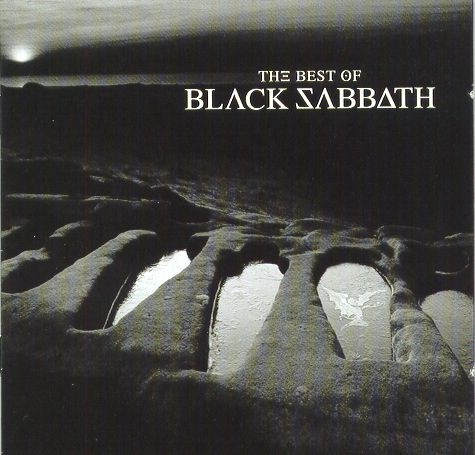
Front cover of The Best of Black Sabbath
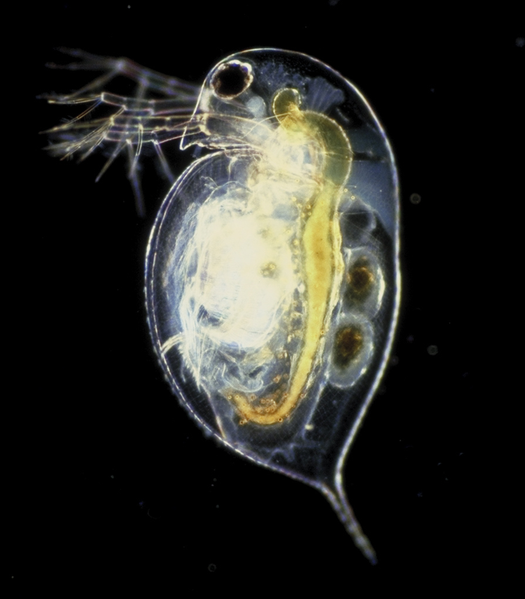
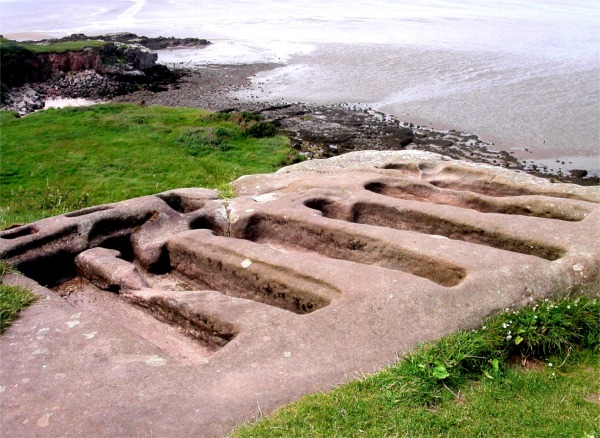
In the Christian religion, the resurrection follows the virgin birth. In the rock-graves at Heysham, the virgin birth follows the resurrection. Or rather: the virgin-births follow the resurrections. There are many of both. The rock-graves at Heysham* are carved in solid rock near the remains of St Patrick’s chapel, an ancient ruin overlooking Morecambe Bay on the coast of Lancashire in England. You may have seen them before, because they appear on the cover of a compilation album by the heavy-metal band Black Sabbath, where they’re filled with ice and look suitably dark and sinister. But the graves are sometimes full of life and activity. In spring, as the rainwater filling them begins to warm, there are resurrections – dozens of them. Tiny crustaceans (a group of animals that includes crabs, shrimps and woodlice) hatch from eggs that have over-wintered in the sediment on the floors of the graves. Some of the crustaceans are called water-fleas, others are called seed-shrimps. Water-fleas, whose scientific name is Daphnia, hop through the water with jerks of their antennae, sieving it for fresh-water plankton. Seed-shrimps, or ostracods, are enclosed in tiny double-sided shells through which their legs protrude. They trundle over the stone sides of the graves, scraping off algae and catching even smaller and simpler animals like rotifers and protozoa.

The rock graves at Heysham (c. 11th century A.D.)

Rock graves at Heysham, Lancs. (c. 1000s)

Water-fleas are famous for parthenogenesis, or their ability to produce offspring without sex. Those that hatch first in spring are female and give birth without mating with any males. A single water-flea in a jar of stagnant water soon becomes a swarm. It’s only later in the year that males are born and the water-fleas mate to produce winter eggs, which sink to the floor of the graves and lie there through the cold weather. The eggs of water-fleas and ostracods can also survive desiccation, or drying-up, and can be blown on the wind to new sites. That is probably how these crustaceans arrived in the rock-graves, which they must have occupied for centuries, through the coldest winters and the hottest summers, dying and being reborn again and again. When a human being or large animal dies, chemical changes in the body make the muscles rigid and wood-like. The scientific term for this is rigor mortis, or the “stiffness of death”. Rigor mortis wears off in time and the body begins to rot. The rock-graves at Heysham are an example of vigor mortis, or the “vigour of death”. Medieval human beings created the graves to bury their dead, but the bodies that were once there have been lost to history. The water-fleas and the seed-shrimps remain, tiny, overlooked and fascinating.

A seed-shrimp or ostracod

A seed-shrimp

A water-flea, Daphnia pulex

A water-flea


*Heysham is pronounced HEE-shum and is an old coastal village near the city of Lancaster, after which Lancashire is named.