Pyramidic Palindromes

As I’ve said before on Overlord of the Über-Feral: squares are boring. As I’ve shown before on Overlord of the Über-Feral: squares are not so boring after all.

Take A000330 at the Online Encyclopedia of Integer Sequences:

1, 5, 14, 30, 55, 91, 140, 204, 285, 385, 506, 650, 819, 1015, 1240, 1496, 1785, 2109, 2470, 2870, 3311, 3795, 4324, 4900, 5525, 6201, 6930, 7714, 8555, 9455, 10416, 11440, 12529, 13685, 14910, 16206, 17575, 19019, 20540, 22140, 23821, 25585, 27434, 29370… — A000330 at OEIS


The sequence shows the square pyramidal numbers, formed by summing the squares of integers:

• 1 = 1^2
• 5 = 1^2 + 2^2 = 1 + 4
• 14 = 1^2 + 2^2 + 3^2 = 1 + 4 + 9
• 30 = 1^2 + 2^2 + 3^2 + 4^2 = 1 + 4 + 9 + 16

[…]


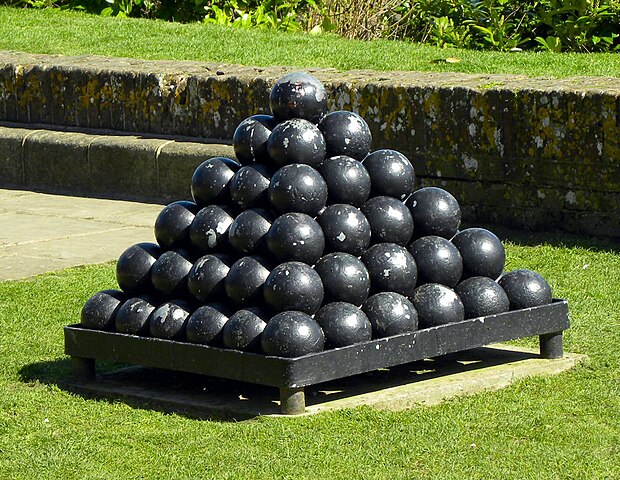
You can see the pyramidality of the square pyramidals when you pile up oranges or cannonballs:

Square pyramid of 91 cannonballs at Rye Castle, East Sussex (Wikipedia)


I looked for palindromes in the square pyramidals. These are the only ones I could find:

1 (k=1)
5 (k=2)
55 (k=5)
1992991 (k=181)


The only ones in base 10, that is. When I looked in base 9 = 3^2, I got a burst of pyramidic palindromes like this:

1 (k=1)
5 (k=2)
33 (k=4) = 30 in base 10 (k=4)
111 (k=6) = 91 in b10 (k=6)
122221 (k=66) = 73810 in b10 (k=60)
123333321 (k=666) = 54406261 in b10 (k=546)
123444444321 (k=6,666) = 39710600020 in b10 (k=4920)
123455555554321 (k=66,666) = 28952950120831 in b10 (k=44286)
123456666666654321 (k=666,666) = 21107018371978630 in b10 (k=398580)
123456777777777654321 (k=6,666,666) = 15387042129569911801 in b10 (k=3587226)
123456788888888887654321 (k=66,666,666) = 11217155797104231969640 in b10 (k=32285040)


The palindromic pattern from 6[…]6 ends with 66,666,666, because 8 is the highest digit in base 9. When you look at the 666,666,666th square pyramidal in base 9, you’ll find it’s not a perfect palindrome:

123456801111111111087654321 (k=666,666,666) = 8177306744945450299267171 in b10 (k=290565366)

But the pattern of pyramidic palindromes is good while it lasts. I can’t find any other base yielding a pattern like that. And base 9 yields another burst of pyramidic palindromes in a related sequence, A000537 at the OEIS:

1, 9, 36, 100, 225, 441, 784, 1296, 2025, 3025, 4356, 6084, 8281, 11025, 14400, 18496, 23409, 29241, 36100, 44100, 53361, 64009, 76176, 90000, 105625, 123201, 142884, 164836, 189225, 216225, 246016, 278784, 314721, 354025, 396900, 443556, 494209, 549081… — A000537 at OEIS


The sequence is what you might call the cubic pyramidal numbers, that is, the sum of the cubes of integers:

• 1 = 1^2
• 9 = 1^2 + 2^3 = 1 + 8
• 36 = 1^3 + 2^3 + 3^3 = 1 + 8 + 27
• 100 = 1^3 + 2^3 + 3^3 + 4^3 = 1 + 8 + 27 + 64

[…]


I looked for palindromes there in base 9:

1 (k=1) = 1 (k=1)
121 (k=4) = 100 in base 10 (k=4)
12321 (k=14) = 8281 (k=13)
1234321 (k=44) = 672400 (k=40)
123454321 (k=144) = 54479161 (k=121)
12345654321 (k=444) = 4412944900 (k=364)
1234567654321 (k=1444) = 357449732641 (k=1093)
123456787654321 (k=4444) = 28953439105600 (k=3280)
102012022050220210201 (k=137227) = 12460125198224404009 (k=84022)


But while palindromes are fun, they’re not usually mathematically significant. However, this result using the square pyrmidals is certainly significant:


Previously Pre-Posted…

More posts about how squares aren’t so boring after all:

Curvous Energy
Back to Drac #1
Back to Drac #2
Square’s Flair

Nuts for Numbers

I was looking at palindromes created by sums of consecutive integers. And I came across this beautiful result:

2772 = sum(22..77)


2772 = 22 + 23 + 24 + 25 + 26 + 27 + 28 + 29 + 30 + 31 + 32 + 33 + 34 + 35 + 36 + 37 + 38 + 39 + 40 + 41 + 42 + 43 + 44 + 45 + 46 + 47 + 48 + 49 + 50 + 51 + 52 + 53 + 54 + 55 + 56 + 57 + 58 + 59 + 60 + 61 + 62 + 63 + 64 + 65 + 66 + 67 + 68 + 69 + 70 + 71 + 72 + 73 + 74 + 75 + 76 + 77

You could call 2772 a nutty sum, because 77 is held inside 22 like a kernel inside a nutshell. Here some more nutty sums, sum(n1..n2), where n2 is a kernel in the shell of n1:

1599 = sum(19..59)
2772 = sum(22..77)
22113 = sum(23..211)
159999 = sum(199..599)
277103 = sum(203..771)
277722 = sum(222..777)
267786 = sum(266..778)
279777 = sum(277..797)
1152217 = sum(117..1522)
1152549 = sum(149..1525)
1152767 = sum(167..1527)
4296336 = sum(436..2963)
5330303 = sum(503..3303)
6235866 = sum(626..3586)
8418316 = sum(816..4183)
10470075 = sum(1075..4700)
11492217 = sum(1117..4922)
13052736 = sum(1306..5273)
13538277 = sum(1377..5382)
14557920 = sum(1420..5579)
15999999 = sum(1999..5999)
25175286 = sum(2516..7528)
26777425 = sum(2625..7774)
27777222 = sum(2222..7777)
37949065 = sum(3765..9490)
53103195 = sum(535..10319)
111497301 = sum(1101..14973)

Of course, you can go the other way and find nutty sums where sum(n1..n2) produces n1 as a kernel inside the shell of n2:

147 = sum(4..17)
210 = sum(1..20)
12056 = sum(20..156)
13467 = sum(34..167)
22797 = sum(79..227)
22849 = sum(84..229)
26136 = sum(61..236)
1145520 = sum(145..1520)
1208568 = sum(208..1568)
1334667 = sum(334..1667)
1540836 = sum(540..1836)
1931590 = sum(315..1990)
2041462 = sum(414..2062)
2041863 = sum(418..2063)
2158083 = sum(158..2083)
2244132 = sum(244..2132)
2135549 = sum(554..2139)
2349027 = sum(902..2347)
2883558 = sum(883..2558)
2989637 = sum(989..2637)

When you look at nutty sums in other bases, you’ll find that the number “210” is always triangular and always a nutty sum in bases > 2:

210 = sum(1..20) in b3 → 21 = sum(1..6) in b10
210 = sum(1..20) in b4 → 36 = sum(1..8) in b10
210 = sum(1..20) in b5 → 55 = sum(1..10) in b10
210 = sum(1..20) in b6 → 78 = sum(1..12) in b10
210 = sum(1..20) in b7 → 105 = sum(1..14) in b10
210 = sum(1..20) in b8 → 136 = sum(1..16) in b10
210 = sum(1..20) in b9 → 171 = sum(1..18) in b10
210 = sum(1..20) in b10
210 = sum(1..20) in b11 → 253 = sum(1..22) in b10
210 = sum(1..20) in b12 → 300 = sum(1..24) in b10
210 = sum(1..20) in b13 → 351 = sum(1..26) in b10
210 = sum(1..20) in b14 → 406 = sum(1..28) in b10
210 = sum(1..20) in b15 → 465 = sum(1..30) in b10
210 = sum(1..20) in b16 → 528 = sum(1..32) in b10
210 = sum(1..20) in b17 → 595 = sum(1..34) in b10
210 = sum(1..20) in b18 → 666 = sum(1..36) in b10
210 = sum(1..20) in b19 → 741 = sum(1..38) in b10
210 = sum(1..20) in b20 → 820 = sum(1..40) in b10
[…]

Why is 210 always a nutty sum like that? Because the formula for sum(n1..n2) is (n1*n2) * (n2-n1+1) / 2. In all bases > 2, the sum of 1 to 20 (where 20 = 2 * b) is therefore:

(1+20) * (20-1+1) / 2 = 21 * 20 / 2 = 21 * 10 = 210

And here are nutty sums of both kinds (n1 inside n2 and n2 inside n1) for base 8:

210 = sum(1..20) in b8 → 136 = sum(1..16) in b10
12653 = sum(26..153) → 5547 = sum(22..107)
23711 = sum(71..231) → 10185 = sum(57..153)
2022323 = sum(223..2023) → 533715 = sum(147..1043)
2032472 = sum(247..2032) → 537914 = sum(167..1050)
2271564 = sum(715..2264) → 619380 = sum(461..1204)
2307422 = sum(742..2302) → 626450 = sum(482..1218)
125265253 = sum(2526..15253) → 22375083 = sum(1366..6827)


3246710 = sum(310..2467) in b8 → 871880 = sum(200..1335)
in b10
5326512 = sum(512..3265) → 1420618 = sum(330..1717)
15540671 = sum(1571..5406) → 3588537 = sum(889..2822)
21625720 = sum(2120..6257) → 4664272 = sum(1104..3247)

And for base 9:

125 = sum(2..15) in b9 → 104 = sum(2..14) in b10
210 = sum(1..20) → 171 = sum(1..18)
12858 = sum(28..158) → 8720 = sum(26..134)
1128462 = sum(128..1462) → 609824 = sum(107..1109)
1288588 = sum(288..1588) → 708344 = sum(242..1214)
1475745 = sum(475..1745) → 817817 = sum(392..1337)
2010707 = sum(107..2007) → 1070017 = sum(88..1465)
2034446 = sum(344..2046) → 1085847 = sum(283..1500)
2040258 = sum(402..2058) → 1089341 = sum(326..1511)
2063410 = sum(341..2060) → 1104768 = sum(280..1512)
2215115 = sum(215..2115) → 1191281 = sum(176..1553)
2255505 = sum(555..2205) → 1217840 = sum(455..1625)
2475275 = sum(475..2275) → 1348880 = sum(392..1688)
2735455 = sum(735..2455) → 1499927 = sum(599..1832)


1555 = sum(15..55) in b9 → 1184 = sum(14..50) in b10
155858 = sum(158..558) → 96200 = sum(134..458)
1148181 = sum(181..1481) → 622720 = sum(154..1126)
2211313 = sum(213..2113) → 1188525 = sum(174..1551)
2211747 = sum(247..2117) → 1188880 = sum(205..1555)
6358585 = sum(685..3585) → 3404912 = sum(563..2669)
7037453 = sum(703..3745) → 3745245 = sum(570..2795)
7385484 = sum(784..3854) → 3953767 = sum(643..2884)
13518167 = sum(1367..5181) → 6685072 = sum(1033..3799)
15588588 = sum(1588..5588) → 7794224 = sum(1214..4130)
17603404 = sum(1704..6034) → 8859865 = sum(1300..4405)
26750767 = sum(2667..7507) → 13201360 = sum(2005..5515)


Post-Performative Post-Scriptum…

Viz ’s Mr Logic would be a fan of nutty sums. And unlike real nuts, they wouldn’t prove fatal:

Mr Logic Goes Nuts (strip from Viz comic)

(click for full-size)

You Sixy Beast

666 is the Number of the Beast. But it’s much more than that. After all, it’s a number, so it has mathematical properties (everything has mathematical properties, but it’s a sine-qua-non of numbers). For example, 666 is a palindromic number, reading the same forwards and backwards. And it’s a repdigit, consisting of a single repeated digit. Now try answering this question: how many pebbles are there in this triangle?


••
•••
••••
•••••
••••••
•••••••
••••••••
•••••••••
••••••••••
•••••••••••
••••••••••••
•••••••••••••
••••••••••••••
•••••••••••••••
••••••••••••••••
•••••••••••••••••
••••••••••••••••••
•••••••••••••••••••
••••••••••••••••••••
•••••••••••••••••••••
••••••••••••••••••••••
•••••••••••••••••••••••
••••••••••••••••••••••••
•••••••••••••••••••••••••
••••••••••••••••••••••••••
•••••••••••••••••••••••••••
••••••••••••••••••••••••••••
•••••••••••••••••••••••••••••
••••••••••••••••••••••••••••••
•••••••••••••••••••••••••••••••
••••••••••••••••••••••••••••••••
•••••••••••••••••••••••••••••••••
••••••••••••••••••••••••••••••••••
•••••••••••••••••••••••••••••••••••
••••••••••••••••••••••••••••••••••••


Counting the pebbles one by one would take a long time, but there’s a short-cut. Each line of the triangle after the first is one pebble longer than the previous line. There are 36 lines and therefore 36 pebbles in the final line. So the full number of pebbles = 1 + 2 + 3 + 4 + 5 + 6 + 7 + 8 + 9 + 10 + 11 + 12 + 13 + 14 + 15 + 16 + 17 + 18 + 19 + 20 + 21 + 22 + 23 + 24 + 25 + 26 + 27 + 28 + 29 + 30 + 31 + 32 + 33 + 34 + 35 + 36. And there’s an easy formula for that sum: (36^2 + 36) / 2 = (1296 + 36) / 2 = 1332 / 2 = 666.

So 666 is the 36th triangular number:


1 = 1
1+2 = 3
1+2+3 = 6
1+2+3+4 = 10
1+2+3+4+5 = 15
1+2+3+4+5+6 = 21
1+2+3+4+5+6+7 = 28
1+2+3+4+5+6+7+8 = 36
1+2+3+4+5+6+7+8+9 = 45
1+2+3+4+5+6+7+8+9+10 = 55
[...]
1+2+3+4+5+6+7+8+9+10+11+12+13+14+15+16+17+18+19+20+21+22+23+24+25+26+27+28+29+30+31+32+33+34+35+36 = 666

But what’s tri(666), the 666th triangular number? By the formula above, it equals (666^2 + 666) / 2 = (443556 + 666) / 2 = 444222 / 2 = 222111. But recall something else from above: tri(6) = 1+2+3+4+5+6 = 21. Is it a coincidence that tri(6) = 21 and tri(666) = 222111? No, it isn’t:


tri(6) = 21 = (6^2 + 6) / 2 = (36 + 6) / 2 = 42 / 2
tri(66) = 2211 = (66^2 + 66) / 2 = (4356 + 66) / 2 = 4422 / 2
tri(666) = 222111 = (666^2 + 666) / 2 = (443556 + 666) / 2 = 444222 / 2
tri(6666) = 22221111
tri(66666) = 2222211111
tri(666666) = 222222111111
tri(6666666) = 22222221111111
tri(66666666) = 2222222211111111
tri(666666666) = 222222222111111111
tri(6666666666) = 22222222221111111111
tri(66666666666) = 2222222222211111111111
tri(666666666666) = 222222222222111111111111
tri(6666666666666) = 22222222222221111111111111
tri(66666666666666) = 2222222222222211111111111111
tri(666666666666666) = 222222222222222111111111111111

So we’ve looked at tri(36) = 666 and tri(666) = 222111. Let’s go a step further: tri(222111) = 24666759216. So 666 appears again. And the sixiness carries on here:


tri(36) = 666
tri(3366) = 5666661
tri(333666) = 55666666611
tri(33336666) = 555666666666111
tri(3333366666) = 5555666666666661111
tri(333333666666) = 55555666666666666611111
tri(33333336666666) = 555555666666666666666111111
tri(3333333366666666) = 5555555666666666666666661111111
tri(333333333666666666) = 55555555666666666666666666611111111
tri(33333333336666666666) = 555555555666666666666666666666111111111
tri(3333333333366666666666) = 5555555555666666666666666666666661111111111
tri(333333333333666666666666) = 55555555555666666666666666666666666611111111111
tri(33333333333336666666666666) = 555555555555666666666666666666666666666111111111111
tri(3333333333333366666666666666) = 5555555555555666666666666666666666666666661111111111111
tri(333333333333333666666666666666) = 55555555555555666666666666666666666666666666611111111111111

The Viscount of Bi-Count

Today is 22/2/22 and, as I hoped on 2/2/22, I can say more about an interesting little palindromic-pattern problem. For each set of integers <= 1[0]1 in base 10, I looked at the count of palindromes exactly divisible by 1, 2, 3, 4, 5, 6, 7, 8 and 9. For example, 2, 4, 6 and 8 are the 4 palindromes divisible by 2 that are less than 11, so countdiv(2) = 4 for pal <= 11; 3, 6 and 9 are the 3 palindromes divisible by 3, so countdiv(3) = 3; and so on. Here are the counts — and some interesting patterns — for palindromes <= (powers-of-10 + 1) up to 1,000,000,000,001:

count for palindromes <= 101 (prime)

countdiv(1) = 19
countdiv(2) = 8
countdiv(3) = 6
countdiv(4) = 4
countdiv(5) = 2
countdiv(6) = 2
countdiv(7) = 2
countdiv(8) = 2
countdiv(9) = 2


count for palindromes <= 1001 = 7 * 11 * 13

countdiv(1) = 109
countdiv(2) = 48
countdiv(3) = 36
countdiv(4) = 24
countdiv(5) = 12
countdiv(6) = 15
countdiv(7) = 15
countdiv(8) = 12
countdiv(9) = 12


count for palindromes <= 10001 = 73 * 137

countdiv(1) = 199
countdiv(2) = 88
countdiv(3) = 66
countdiv(4) = 44
countdiv(5) = 22
countdiv(6) = 28
countdiv(7) = 32
countdiv(8) = 22
countdiv(9) = 22


count for palindromes <= 100001 = 11 * 9091

countdiv(1) = 1099
countdiv(2) = 488
countdiv(3) = 366
countdiv(4) = 244
countdiv(5) = 122
countdiv(6) = 161
countdiv(7) = 163
countdiv(8) = 122
countdiv(9) = 122


count for palindromes <= 1000001 = 101 * 9901

countdiv(1) = 1999
countdiv(2) = 888
countdiv(3) = 666
countdiv(4) = 444
countdiv(5) = 222
countdiv(6) = 294
countdiv(7) = 303
countdiv(8) = 222
countdiv(9) = 222


count for palindromes <= 10000001 = 11 * 909091

countdiv(1) = 10999
countdiv(2) = 4888
countdiv(3) = 3666
countdiv(4) = 2444
countdiv(5) = 1222
countdiv(6) = 1627
countdiv(7) = 1588
countdiv(8) = 1222
countdiv(9) = 1222


count for palindromes <= 100000001 = 17 * 5882353

countdiv(1) = 19999
countdiv(2) = 8888
countdiv(3) = 6666
countdiv(4) = 4444
countdiv(5) = 2222
countdiv(6) = 2960
countdiv(7) = 2878
countdiv(8) = 2222
countdiv(9) = 2222


count for palindromes <= 1000000001 = 7 * 11 * 13 * 19 * 52579

countdiv(1) = 109999
countdiv(2) = 48888
countdiv(3) = 36666
countdiv(4) = 24444
countdiv(5) = 12222
countdiv(6) = 16293
countdiv(7) = 15734
countdiv(8) = 12222
countdiv(9) = 12222


count for palindromes <= 10000000001 = 101 * 3541 * 27961

countdiv(1) = 199999
countdiv(2) = 88888
countdiv(3) = 66666
countdiv(4) = 44444
countdiv(5) = 22222
countdiv(6) = 29626
countdiv(7) = 28783
countdiv(8) = 22222
countdiv(9) = 22222


count for palindromes <= 100000000001 = 11^2 * 23 * 4093 * 8779

countdiv(1) = 1099999
countdiv(2) = 488888
countdiv(3) = 366666
countdiv(4) = 244444
countdiv(5) = 122222
countdiv(6) = 162959
countdiv(7) = 157361
countdiv(8) = 122222
countdiv(9) = 122222


count for palindromes <= 1000000000001 = 73 * 137 * 99990001

countdiv(1) = 1999999
countdiv(2) = 888888
countdiv(3) = 666666
countdiv(4) = 444444
countdiv(5) = 222222
countdiv(6) = 296292
countdiv(7) = 286461
countdiv(8) = 222222
countdiv(9) = 222222


As you can see, the counts for some numbers alternate between rep-digits (all digits the same) and nearly rep-digits. For example, the counts for palindromes exactly divisible by 5, 8 and 9 are alternately all 2s or 1 followed by all 2s. And you get counts of 2, 12, 22, 122, 222, 1222, 2222 in other even bases greater than base 2 when the counts are represented in that base. Here’s base 8:

count for palindromes <= 101 in b8 = 65 in b10 = 5 * 13

countdiv(1) = 17 in b8 (15 in b10)
countdiv(2) = 6
countdiv(3) = 11 in b8 (9)
countdiv(4) = 2
countdiv(5) = 3
countdiv(6) = 4
countdiv(7) = 2


count for palindromes <= 1001 in b8 = 513 in b10 = 3^3 * 19

countdiv(1) = 107 in b8 (71 in b10)
countdiv(2) = 36 in b8 (30)
countdiv(3) = 34 in b8 (28)
countdiv(4) = 12 in b8 (10)
countdiv(5) = 20 in b8 (16)
countdiv(6) = 14 in b8 (12)
countdiv(7) = 12 in b8 (10)


count for palindromes <= 10001 in b8 = 4097 in b10 = 17 * 241

countdiv(1) = 177 in b8 (127 in b10)
countdiv(2) = 66 in b8 (54)
countdiv(3) = 123 in b8 (83)
countdiv(4) = 22 in b8 (18)
countdiv(5) = 34 in b8 (28)
countdiv(6) = 44 in b8 (36)
countdiv(7) = 22 in b8 (18)


count for palindromes <= 100001 in b8 = 32769 in b10 = 3^2 * 11 * 331

countdiv(1) = 1077 in b8 (575 in b10)
countdiv(2) = 366 in b8 (246)
countdiv(3) = 352 in b8 (234)
countdiv(4) = 122 in b8 (82)
countdiv(5) = 164 in b8 (116)
countdiv(6) = 144 in b8 (100)
countdiv(7) = 122 in b8 (82)


count for palindromes <= 1000001 in b8 = 262145 in b10 = 5 * 13 * 37 * 109

countdiv(1) = 1777 in b8 (1023 in b10)
countdiv(2) = 666 in b8 (438)
countdiv(3) = 1251 in b8 (681)
countdiv(4) = 222 in b8 (146)
countdiv(5) = 316 in b8 (206)
countdiv(6) = 444 in b8 (292)
countdiv(7) = 222 in b8 (146)


count for palindromes <= 10000001 in b8 = 2097153 in b10 = 3^2 * 43 * 5419

countdiv(1) = 10777 in b8 (4607 in b10)
countdiv(2) = 3666 in b8 (1974)
countdiv(3) = 3524 in b8 (1876)
countdiv(4) = 1222 in b8 (658)
countdiv(5) = 1645 in b8 (933)
countdiv(6) = 1444 in b8 (804)
countdiv(7) = 1222 in b8 (658)


count for palindromes <= 100000001 in b8 = 16777217 in b10 = 97 * 257 * 673

countdiv(1) = 17777 in b8 (8191 in b10)
countdiv(2) = 6666 in b8 (3510)
countdiv(3) = 12523 in b8 (5459)
countdiv(4) = 2222 in b8 (1170)
countdiv(5) = 3164 in b8 (1652)
countdiv(6) = 4444 in b8 (2340)
countdiv(7) = 2222 in b8 (1170)


The counts for 4-palindromes and 7-palindromes in base 8 run: 1, 12, 22, 122, 222, 1222, 2222…, just like the counts for 5-palindromes, 8-palindromes and 9-palindromes in base 10. Here’s base 14:

count for palindromes <= 101 in b14 = 197 in b10 (prime)

countdiv(1) = 1D in b14 (27 in b10)
countdiv(2) = C in b14 (12)
countdiv(3) = 13 in b14 (17)
countdiv(4) = 6
countdiv(5) = 11 in b14 (15)
countdiv(6) = 8
countdiv(7) = 2
countdiv(8) = 2
countdiv(9) = 5
countdiv(A) = 7
countdiv(B) = 2
countdiv(C) = 4
countdiv(D) = 2


count for palindromes <= 1001 in b14 = 2745 in b10 = 3^2 * 5 * 61

countdiv(1) = 10D in b14 (209 in b10)
countdiv(2) = 6C in b14 (96)
countdiv(3) = 58 in b14 (78)
countdiv(4) = 36 in b14 (48)
countdiv(5) = 3A in b14 (52)
countdiv(6) = 28 in b14 (36)
countdiv(7) = 12 in b14 (16)
countdiv(8) = 19 in b14 (23)
countdiv(9) = 1C in b14 (26)
countdiv(A) = 19 in b14 (23)
countdiv(B) = 14 in b14 (18)
countdiv(C) = 14 in b14 (18)
countdiv(D) = 12 in b14 (16)


count for palindromes <= 10001 in b14 = 38417 in b10 = 41 * 937

countdiv(1) = 1DD in b14 (391 in b10)
countdiv(2) = CC in b14 (180)
countdiv(3) = 147 in b14 (259)
countdiv(4) = 66 in b14 (90)
countdiv(5) = 129 in b14 (233)
countdiv(6) = 88 in b14 (120)
countdiv(7) = 22 in b14 (30)
countdiv(8) = 31 in b14 (43)
countdiv(9) = 66 in b14 (90)
countdiv(A) = 79 in b14 (107)
countdiv(B) = 26 in b14 (34)
countdiv(C) = 44 in b14 (60)
countdiv(D) = 22 in b14 (30)


count for palindromes <= 100001 in b14 = 537825 in b10 = 3 * 5^2 * 71 * 101

countdiv(1) = 10DD in b14 (2939 in b10)
countdiv(2) = 6CC in b14 (1356)
countdiv(3) = 594 in b14 (1110)
countdiv(4) = 366 in b14 (678)
countdiv(5) = 3B2 in b14 (744)
countdiv(6) = 288 in b14 (512)
countdiv(7) = 122 in b14 (226)
countdiv(8) = 1A1 in b14 (337)
countdiv(9) = 1CA in b14 (374)
countdiv(A) = 1A7 in b14 (343)
countdiv(B) = 150 in b14 (266)
countdiv(C) = 144 in b14 (256)
countdiv(D) = 122 in b14 (226)


count for palindromes <= 1000001 in b14 = 7529537 in b10 = 37 * 197 * 1033

countdiv(1) = 1DDD in b14 (5487 in b10)
countdiv(2) = CCC in b14 (2532)
countdiv(3) = 1493 in b14 (3657)
countdiv(4) = 666 in b14 (1266)
countdiv(5) = 12B1 in b14 (3291)
countdiv(6) = 888 in b14 (1688)
countdiv(7) = 222 in b14 (422)
countdiv(8) = 331 in b14 (631)
countdiv(9) = 63A in b14 (1228)
countdiv(A) = 7A7 in b14 (1519)
countdiv(B) = 278 in b14 (498)
countdiv(C) = 444 in b14 (844)
countdiv(D) = 222 in b14 (422)


count for palindromes <= 10000001 in b14 = 105413505 in b10 = 3 * 5 * 7027567

countdiv(1) = 10DDD in b14 (41159 in b10)
countdiv(2) = 6CCC in b14 (18996)
countdiv(3) = 5948 in b14 (15548)
countdiv(4) = 3666 in b14 (9498)
countdiv(5) = 3B2A in b14 (10426)
countdiv(6) = 2888 in b14 (7176)
countdiv(7) = 1222 in b14 (3166)
countdiv(8) = 1A31 in b14 (4747)
countdiv(9) = 1C6D in b14 (5193)
countdiv(A) = 1A79 in b14 (4811)
countdiv(B) = 1513 in b14 (3741)
countdiv(C) = 1444 in b14 (3588)
countdiv(D) = 1222 in b14 (3166)


count for palindromes <= 100000001 in b14 = 1475789057 in b10 = 17 * 5393 * 16097

countdiv(1) = 1DDDD in b14 (76831 in b10)
countdiv(2) = CCCC in b14 (35460)
countdiv(3) = 14947 in b14 (51219)
countdiv(4) = 6666 in b14 (17730)
countdiv(5) = 12B29 in b14 (46097)
countdiv(6) = 8888 in b14 (23640)
countdiv(7) = 2222 in b14 (5910)
countdiv(8) = 3331 in b14 (8863)
countdiv(9) = 631D in b14 (17079)
countdiv(A) = 7A79 in b14 (21275)
countdiv(B) = 278B in b14 (6983)
countdiv(C) = 4444 in b14 (11820)
countdiv(D) = 2222 in b14 (5910)


Now 7-palindromes and D-palindromes (D = 13 in base 10) are following the [1]2222… pattern. What explains it? If you’re good at math, you won’t need telling. But I’m not good at maths, so I’m going to tell myself and other members of the not-good-at-math community what’s going on. Let’s go back to base 10 and the counts for 5-palindromes, that is, palindromes exactly divisible by 5. In base 10, the only integers exactly divisible by 5 have to end in either 5 or 0. But a palindrome can’t end in 0, because then the leading digit would have to be 0 too. Therefore only palindromes ending in 5 are exactly divisible by 5 in base 10. And if the palindromes end in 5, they have to start with 5 too.

Once we know that, we can easily calculate, for a given number of digits, how many 5-palindromes there are. Take 5-palindromes with three digits. If the three-digit 5-palindromes end and start with 5, we have to consider only the middle digit, which can obviously range from 0 to 9: 505, 515, 525, 535, 545, 555, 565, 575, 585 and 595. So there are 10 3-digit 5-palindromes. We add that count to the count for the single one-digit 5-palindrome, 5, and the single two-digit 5-palindrome, 55. So the cumulative count for 5-palindromes < 1001 is: 10 + 1 + 1 = 12.

Now look at four-digit 5-palindromes. They start and end with 5, therefore we have to consider only the middle two digits. And those middle digits have to be identical: 5005, 5115, 5225, 5335, 5445, 5555, 5665, 5775, 5885, 5995. So there are also 10 four-digit 5-palindromes and count of 5-palindromes < 10001 is: 10 + 10 + 1 + 1 = 22.

Now look at five-digit 5-palindromes. Again we have consider only the middle digits, because the first and fifth digits have to be 5. The second digit of a five-digit 5-palindrome has to be the same as the fourth digit: 50005, 51715, 52425, 53135, and so on. And the second and fourth digits can obviously range from 0 to 9. And so can the third and middle digit of the 5-palindromes. But the third digit doesn’t have to be the same as the second and fourth digits: 50005, 50105, 50205, and so on. Therefore the number of five-digit 5-palindromes is 10 * 10 = 100. And the count of 5-palindromes < 100001 is: 100 + 10 + 10 + 1 + 1 = 122.

Now look at six-digit 5-palindromes. The second digit of a six-digit 5-palindrome has to be same as the fifth digit and the third digit has to be the same as the fourth digit. So once you have the second and third digits, you automatically have the fourth and fifth digits: 500005, 523325, 587785, and so on. Clearly, the second and third digits range from 00 to 99 (i.e., 00, 01, 02 … 97, 98, 99), so there must be 100 six-digit 6-palindromes. And the count of 5-palindromes < 1000001 is: 100 + 100 + 10 + 10 + 1 + 1 = 222.

It should be clear, then, that the count of 5-palindromes for an odd number of digits, d, will be always the same as the count of 5-palindromes for the even number of digits d+1. There is 1 one-digit 5-palindrome, namely 5, and 1 two-digit 5-palindrome, namely 55. There are 10 three-digit 5-palindromes, 505 to 595, and 10 four-digit 5-palindromes, 5005 to 5995. Now, the count of 5-palindromes with an odd number of digits, d, will be equal to 10^(d\2), where d\2 = (d-1)/2. And the count for 5-palindromes with the even number of digits d+1 will be the same, 10^(d\2). Therefore the count for both sets of 5-palindromes, d-digit palindromes and (d+1)-digit palindromes, will be 2 * 10^(d\2). And that’s why the cumulative count of 5-palindromes looks the way it does in base 10: 1, 2, 12, 22, 122, 222, 1222, 2222, 12222, 22222…

The same reasoning applies in other even bases greater than base 2. When a palindrome divisible by a particular number has to start and end with the same digit, s, in base b, the middle digits will dictate a count of b^(d\2) for both d-digit s-palindromes and (d+1)-digit s-palindromes. And you’ll get the same cumulative count for s-palindromes in that base: 1, 2, 12, 22, 122, 222, 1222, 2222, 12222, 22222…

Some other patterns in the palindrome-counts can be explained by extending the reasoning given above. For example, if an s-palindrome can begin and end with two possible numbers, you’ll get cumulative counts of 2, 4, 24, 44, 244, 444, 2444, 4444, 24444, 44444 and so on. If the s-palindrome can end with three possible numbers, you’ll get cumulative counts of 3, 6, 36, 66, 366, 666, 3666, 6666, 36666, 66666 and so on.


Post-Performative Post-Scriptum

The discussion above is of very simple mathematics, but that’s the only kind I can cope with. All the same, I’m pleased that I managed to work out why the count of 5-palindromes behaves like that in base 10. So I’ve decided to award myself a title. Remember that the count for 5-palindromes of length d and d+1 is 2 * 10^(d\2), where d is an odd number. And you could say that 2 * 10^(d\2) is a bi-count of 10^(d\2). So I’m calling myself the Viscount of Bi-Count.

To Wit: 2/2

Today is 2/2/22, so here’s a little problem about palindromes. For each set of integers <= 1[0…]1 in base 10, find the cumulative count of palindromes exactly divisible by 1, 2, 3, 4, 5, 6, 7, 8 and 9. For example, 2, 4, 6 and 8 are the 4 palindromes exactly divisible by 2 that are less than 11, so countdiv(2) = 4 for pal <= 11; 3, 6 and 9 are the 3 palindromes exactly divisible by 3, so countdiv(3) = 3; and so on:

count for palindromes <= 11 (prime)

countdiv(1) = 10
countdiv(2) = 4
countdiv(3) = 3
countdiv(4) = 2
countdiv(5) = 1
countdiv(6) = 1
countdiv(7) = 1
countdiv(8) = 1
countdiv(9) = 1


count for palindromes <= 101 (prime)

countdiv(1) = 19
countdiv(2) = 8
countdiv(3) = 6
countdiv(4) = 4
countdiv(5) = 2
countdiv(6) = 2
countdiv(7) = 2
countdiv(8) = 2
countdiv(9) = 2


count for palindromes <= 1001 = 7 * 11 * 13

countdiv(1) = 109
countdiv(2) = 48
countdiv(3) = 36
countdiv(4) = 24
countdiv(5) = 12
countdiv(6) = 15
countdiv(7) = 15
countdiv(8) = 12
countdiv(9) = 12


Some interesting patterns appear as the ceiling-palindromes reach 10001, 100001, 1000001… And one particular pattern doesn’t always disappear when you try the same problem in other bases. I hope to say more on 22/2/22.

Fib and Let Tri

It’s a simple sequence with hidden depths:

1, 1, 2, 3, 5, 8, 13, 21, 34, 55, 89, 144, 233, 377, 610, 987, 1597, 2584, 4181, 6765, 10946, 17711, 28657, 46368, 75025, 121393, 196418, 317811, 514229, 832040, 1346269, 2178309, 3524578, 5702887, 9227465, 14930352, 24157817, 39088169, 63245986, 102334155... — A000045 at OEIS

That’s the Fibonacci sequence, probably the most famous of all integer sequences after the integers themselves (1, 2, 3, 4, 5…) and the primes (2, 3, 5, 7, 11…). It has a very simple definition: if fib(fi) is the fi-th number in the Fibonacci sequence, then fib(fi) = fib(fi-1) + fib(fi-2). By definition, fib(1) = fib(2) = 1. After that, it’s easy to generate new numbers:

2 = fib(3) = fib(1) + fib(2) = 1 + 1
3 = fib(4) = fib(2) + fib(3) = 1 + 2
5 = fib(5) = fib(3) + fib(4) = 2 + 3
8 = fib(6) = fib(4) + fib(5) = 3 + 5
13 = fib(7) = fib(5) + fib(6) = 5 + 8
21 = fib(8) = fib(6) + fib(7) = 8 + 13
34 = fib(9) = fib(7) + fib(8) = 13 + 21
55 = fib(10) = fib(8) + fib(9) = 21 + 34
89 = fib(11) = fib(9) + fib(10) = 34 + 55
144 = fib(12) = fib(10) + fib(11) = 55 + 89
233 = fib(13) = fib(11) + fib(12) = 89 + 144
377 = fib(14) = fib(12) + fib(13) = 144 + 233
610 = fib(15) = fib(13) + fib(14) = 233 + 377
987 = fib(16) = fib(14) + fib(15) = 377 + 610
[...]

How to create the Fibonacci sequence is obvious. But it’s not obvious that fib(fi) / fib(fi-1) gives you ever-better approximations to a fascinating constant called φ, the golden ratio, which is 1.618033988749894…:

1/1 = 1
2/1 = 2
3/2 = 1.5
5/3 = 1.66666...
8/5 = 1.6
13/8 = 1.625
21/13 = 1.615384...
34/21 = 1.619047...
55/34 = 1.6176470588235294117647058823...
89/55 = 1.618181818...
144/89 = 1.617977528089887640...
233/144 = 1.6180555555...
377/233 = 1.618025751072961...
610/377 = 1.618037135278514...
987/610 = 1.618032786885245...
[...]

And that’s just the start of the hidden depths in the Fibonacci sequence. I stumbled across another interesting pattern for myself a few days ago. I was looking at the sequence and one of the numbers caught my eye:

1, 1, 2, 3, 5, 8, 13, 21, 34, 55, 89, 144, 233, 377, 610, 987, 1597...

55 is a palindrome, reading the same forward and backwards. I wondered whether there were any other palindromes in the sequence (apart from the trivial single-digit palindromes 1, 1, 2, 3…). I couldn’t find any more. Nor can anyone else, apparently. But that’s in base 10. Other bases are more productive. For example, in bases 2, 3 and 4, you get this:

11 in b2 = 3
101 in b2 = 5
10101 in b2 = 21


22 in b3 = 8
111 in b3 = 13
22122 in b3 = 233


11 in b4 = 5
111 in b4 = 21
202 in b4 = 34
313 in b4 = 55


I decided to concentrate on tripals, or palindromes with three digits. I started looking at bases that set records for the greatest number of tripals. And there are some interesting patterns in the digits of the tripals in these bases (when a digit > 9, the digit is represented inside square brackets — see base-29 and higher). See how quickly you can spot the patterns:

Palindromic Fibonacci numbers in base-4

111 in b4 (fib=21, fi=8)
202 in b4 (fib=34, fi=9)
313 in b4 (fib=55, fi=10)

4 = 2^2 (pal=3)


Palindromic Fibonacci numbers in base-11

121 in b11 (fib=144, fi=12)
313 in b11 (fib=377, fi=14)
505 in b11 (fib=610, fi=15)
818 in b11 (fib=987, fi=16)

11 is prime (pal=4)


Palindromic Fibonacci numbers in base-29

151 in b29 (fib=987, fi=16)
323 in b29 (fib=2584, fi=18)
818 in b29 (fib=6765, fi=20)
[13]0[13] in b29 (fib=10946, fi=21)
[21]1[21] in b29 (fib=17711, fi=22)

29 is prime (pal=5)


Palindromic Fibonacci numbers in base-76

1[13]1 in b76 (fib=6765, fi=20)
353 in b76 (fib=17711, fi=22)
828 in b76 (fib=46368, fi=24)
[21]1[21] in b76 (fib=121393, fi=26)
[34]0[34] in b76 (fib=196418, fi=27)
[55]1[55] in b76 (fib=317811, fi=28)

76 = 2^2 * 19 (pal=6)


Palindromic Fibonacci numbers in base-199

1[34]1 in b199 (fib=46368, fi=24)
3[13]3 in b199 (fib=121393, fi=26)
858 in b199 (fib=317811, fi=28)
[21]2[21] in b199 (fib=832040, fi=30)
[55]1[55] in b199 (fib=2178309, fi=32)
[89]0[89] in b199 (fib=3524578, fi=33)
[144]1[144] in b199 (fib=5702887, fi=34)

199 is prime (pal=7)


Palindromic Fibonacci numbers in base-521

1[89]1 in b521 (fib=317811, fi=28)
3[34]3 in b521 (fib=832040, fi=30)
8[13]8 in b521 (fib=2178309, fi=32)
[21]5[21] in b521 (fib=5702887, fi=34)
[55]2[55] in b521 (fib=14930352, fi=36)
[144]1[144] in b521 (fib=39088169, fi=38)
[233]0[233] in b521 (fib=63245986, fi=39)
[377]1[377] in b521 (fib=102334155, fi=40)

521 is prime (pal=8)


Palindromic Fibonacci numbers in base-1364

1[233]1 in b1364 (fib=2178309, fi=32)
3[89]3 in b1364 (fib=5702887, fi=34)
8[34]8 in b1364 (fib=14930352, fi=36)
[21][13][21] in b1364 (fib=39088169, fi=38)
[55]5[55] in b1364 (fib=102334155, fi=40)
[144]2[144] in b1364 (fib=267914296, fi=42)
[377]1[377] in b1364 (fib=701408733, fi=44)
[610]0[610] in b1364 (fib=1134903170, fi=45)
[987]1[987] in b1364 (fib=1836311903, fi=46)

1364 = 2^2 * 11 * 31 (pal=9)


Two patterns are quickly obvious. Every digit in the tripals is a Fibonacci number. And the middle digit of one Fibonacci tripal, fib(fi), becomes fib(fi-2) in the next tripal, while fib(fi), the first and last digits (which are identical), becomes fib(fi+2) in the next tripal.

But what about the bases? If you’re an expert in the Fibonacci sequence, you’ll spot the pattern at work straight away. I’m not an expert, but I spotted it in the end. Here are the first few bases setting records for the numbers of Fibonacci tripals:

4, 11, 29, 76, 199, 521, 1364, 3571, 9349, 24476, 64079, 167761, 439204, 1149851, 3010349, 7881196...

These numbers come from the Lucas sequence, which is closely related to the Fibonacci sequence. But where fib(1) = fib(2) = 1, luc(1) = 1 and luc(2) = 3. After that, luc(li) = luc(li-2) + luc(li-1):

1, 3, 4, 7, 11, 18, 29, 47, 76, 123, 199, 322, 521, 843, 1364, 2207, 3571, 5778, 9349, 15127, 24476, 39603, 64079, 103682, 167761, 271443, 439204, 710647, 1149851, 1860498, 3010349, 4870847, 7881196... — A000204 at OEIS

It seems that every second number from 4 in the Lucas sequence supplies a base in which 1) the number of Fibonacci tripals sets a new record; 2) every digit of the Fibonacci tripals is itself a Fibonacci number.

But can I prove that this is always true? No. And do I understand why these patterns exist? No. My simple search for palindromes in the Fibonacci sequence soon took me far out of my mathematical depth. But it’s been fun to find huge bases like this in which every digit of every Fibonacci tripal is itself a Fibonacci number:

Palindromic Fibonacci numbers in base-817138163596

1[139583862445]1 in b817138163596 (fib=781774079430987230203437, fi=116)
3[53316291173]3 in b817138163596 (fib=2046711111473984623691759, fi=118)
8[20365011074]8 in b817138163596 (fib=5358359254990966640871840, fi=120)
[21][7778742049][21] in b817138163596 (fib=14028366653498915298923761, fi=122)
[55][2971215073][55] in b817138163596 (fib=36726740705505779255899443, fi=124)
[144][1134903170][144] in b817138163596 (fib=96151855463018422468774568, fi=126)
[377][433494437][377] in b817138163596 (fib=251728825683549488150424261, fi=128)
[987][165580141][987] in b817138163596 (fib=659034621587630041982498215, fi=130)
[2584][63245986][2584] in b817138163596 (fib=1725375039079340637797070384, fi=132)
[6765][24157817][6765] in b817138163596 (fib=4517090495650391871408712937, fi=134)
[17711][9227465][17711] in b817138163596 (fib=11825896447871834976429068427, fi=136)
[46368][3524578][46368] in b817138163596 (fib=30960598847965113057878492344, fi=138)
[121393][1346269][121393] in b817138163596 (fib=81055900096023504197206408605, fi=140)
[317811][514229][317811] in b817138163596 (fib=212207101440105399533740733471, fi=142)
[832040][196418][832040] in b817138163596 (fib=555565404224292694404015791808, fi=144)
[2178309][75025][2178309] in b817138163596 (fib=1454489111232772683678306641953, fi=146)
[5702887][28657][5702887] in b817138163596 (fib=3807901929474025356630904134051, fi=148)
[14930352][10946][14930352] in b817138163596 (fib=9969216677189303386214405760200, fi=150)
[39088169][4181][39088169] in b817138163596 (fib=26099748102093884802012313146549, fi=152)
[102334155][1597][102334155] in b817138163596 (fib=68330027629092351019822533679447, fi=154)
[267914296][610][267914296] in b817138163596 (fib=178890334785183168257455287891792, fi=156)
[701408733][233][701408733] in b817138163596 (fib=468340976726457153752543329995929, fi=158)
[1836311903][89][1836311903] in b817138163596 (fib=1226132595394188293000174702095995, fi=160)
[4807526976][34][4807526976] in b817138163596 (fib=3210056809456107725247980776292056, fi=162)
[12586269025][13][12586269025] in b817138163596 (fib=8404037832974134882743767626780173, fi=164)
[32951280099]5[32951280099] in b817138163596 (fib=22002056689466296922983322104048463, fi=166)
[86267571272]2[86267571272] in b817138163596 (fib=57602132235424755886206198685365216, fi=168)
[225851433717]1[225851433717] in b817138163596 (fib=150804340016807970735635273952047185, fi=170)
[365435296162]0[365435296162] in b817138163596 (fib=244006547798191185585064349218729154, fi=171)
[591286729879]1[591286729879] in b817138163596 (fib=394810887814999156320699623170776339, fi=172)

817138163596 = 2^2 * 229 * 9349 * 95419 (pal=30)

Palindrought

The alchemists dreamed of turning dross into gold. In mathematics, you can actually do that, metaphorically speaking. If palindromes are gold and non-palindromes are dross, here is dross turning into gold:


22 = 10 + 12
222 = 10 + 12 + 13 + 14 + 15 + 16 + 17 + 18 + 19 + 20 + 23 + 24
484 = 10 + 12 + 13 + 14 + 15 + 16 + 17 + 18 + 19 + 20 + 21 + 23 + 24 + 25 + 26 + 27 + 28 + 29 + 30 + 31 + 32 + 34
555 = 10 + 12 + 13 + 14 + 15 + 16 + 17 + 18 + 19 + 20 + 21 + 23 + 24 + 25 + 26 + 27 + 28 + 29 + 30 + 31 + 32 + 34 + 35 + 36
2002 = nonpalsum(10,67)
36863 = nonpalsum(10,286)
45954 = nonpalsum(10,319)
80908 = nonpalsum(10,423)
113311 = nonpalsum(10,501)
161161 = nonpalsum(10,598)
949949 = nonpalsum(10,1417)
8422248 = nonpalsum(10,4136)
13022031 = nonpalsum(10,5138)
14166141 = nonpalsum(10,5358)
16644661 = nonpalsum(10,5806)
49900994 = nonpalsum(10,10045)
464939464 = nonpalsum(10,30649)
523434325 = nonpalsum(10,32519)
576656675 = nonpalsum(10,34132)
602959206 = nonpalsum(10,34902)
[...]

The palindromes don’t seem to stop arriving. But something unexpected happens when you try to turn gold into gold. If you sum palindromes to get palindromes, you’re soon hit by what you might call a palindrought, where no palindromes appear:


1 = 1
3 = 1 + 2
6 = 1 + 2 + 3
111 = 1 + 2 + 3 + 4 + 5 + 6 + 7 + 8 + 9 + 11 + 22 + 33
353 = 1 + 2 + 3 + 4 + 5 + 6 + 7 + 8 + 9 + 11 + 22 + 33 + 44 + 55 + 66 + 77
7557 = 1 + 2 + 3 + 4 + 5 + 6 + 7 + 8 + 9 + 11 + 22 + 33 + 44 + 55 + 66 + 77 + 88 + 99 + 101 + 111 + 121 + 131 + 141 + 151 + 161 + 171 + 181 + 191 + 202 + 212 + 222 + 232 + 242 + 252 + 262 + 272 + 282 + 292 + 303 + 313 + 323 + 333 + 343 + 353 + 363 + 373 + 383
2376732 = palsum(1,21512)

That’s sequence A046488 at the OEIS. And I suspect that the sequence is complete and that the palindrought never ends. For some evidence of that, here’s an interesting pattern that emerges if you look at palsums of 1 to repdigits 9[…]9:


50045040 = palsum(1,99999)
50045045040 = palsum(1,9999999)
50045045045040 = palsum(1,999999999)
50045045045045040 = palsum(1,99999999999)
50045045045045045040 = palsum(1,9999999999999)
50045045045045045045040 = palsum(1,999999999999999)
50045045045045045045045040 = palsum(1,99999999999999999)
50045045045045045045045045040 = palsum(1,9999999999999999999)
50045045045045045045045045045040 = palsum(1,999999999999999999999)

As the sums get bigger, the carries will stop sweeping long enough and the sums may fall into semi-regular patterns of non-palindromic numbers like 50045040. If you try higher bases like base 909, you get more palindromes by summing palindromes, but a palindrought arrives in the end there too:


1 = palsum(1)
3 = palsum(1,2)
6 = palsum(1,3)
A = palsum(1,4)
[...]
66 = palsum(1,[104]) (palindromes = 43)
LL = palsum(1,[195]) (44)
[37][37] = palsum(1,[259]) (45)
[73][73] = palsum(1,[364]) (46)
[114][114] = palsum(1,[455]) (47)
[172][172] = palsum(1,[559]) (48)
[369][369] = palsum(1,[819]) (49)
6[466]6 = palsum(1,[104][104]) (50)
L[496]L = palsum(1,[195][195]) (51)
[37][528][37] = palsum(1,[259][259]) (52)
[73][600][73] = palsum(1,[364][364]) (53)
[114][682][114] = palsum(1,[455][455]) (54)
[172][798][172] = palsum(1,[559][559]) (55)
[291][126][291] = palsum(1,[726][726]) (56)
[334][212][334] = palsum(1,[778][778]) (57)
[201][774][830][774][201] = palsum(1,[605][707][605]) (58)
[206][708][568][708][206] = palsum(1,[613][115][613]) (59)
[456][456][569][569][456][456] = palsum(1,11[455]11) (60)
22[456][454][456]22 = palsum(1,21012) (61)

Note the palindrome for palsum(1,21012). All odd bases higher than 3 seem to produce a palindrome for 1 to 21012 in that base (21012 in base 5 = 1382 in base 10, 2012 in base 7 = 5154 in base 10, and so on):


2242422 = palsum(1,21012) (base=5)
2253522 = palsum(1,21012) (b=7)
2275722 = palsum(1,21012) (b=11)
2286822 = palsum(1,21012) (b=13)
2297922 = palsum(1,21012) (b=15)
22A8A22 = palsum(1,21012) (b=17)
22B9B22 = palsum(1,21012) (b=19)
22CAC22 = palsum(1,21012) (b=21)
22DBD22 = palsum(1,21012) (b=23)

And here’s another interesting pattern created by summing squares in base 9 (where 17 = 16 in base 10, 40 = 36 in base 10, and so on):


1 = squaresum(1)
5 = squaresum(1,4)
33 = squaresum(1,17)
111 = squaresum(1,40)
122221 = squaresum(1,4840)
123333321 = squaresum(1,503840)
123444444321 = squaresum(1,50483840)
123455555554321 = squaresum(1,5050383840)
123456666666654321 = squaresum(1,505048383840)
123456777777777654321 = squaresum(1,50505038383840)
123456788888888887654321 = squaresum(1,5050504838383840)

Then a palindrought strikes again. But you don’t get a palindrought in the triangular numbers, or numbers created by summing the integers, palindromic and non-palindromic alike:


1 = 1
3 = 1 + 2
6 = 1 + 2 + 3
55 = 1 + 2 + 3 + 4 + 5 + 6 + 7 + 8 + 9 + 10
66 = 1 + 2 + 3 + 4 + 5 + 6 + 7 + 8 + 9 + 10 + 11
171 = 1 + 2 + 3 + 4 + 5 + 6 + 7 + 8 + 9 + 10 + 11 + 12 + 13 + 14 + 15 + 16 + 17 + 18
595 = 1 + 2 + 3 + 4 + 5 + 6 + 7 + 8 + 9 + 10 + 11 + 12 + 13 + 14 + 15 + 16 + 17 + 18 + 19 + 20 + 21 + 22 + 23 + 24 + 25 + 26 + 27 + 28 + 29 + 30 + 31 + 32 + 33 + 34
666 = 1 + 2 + 3 + 4 + 5 + 6 + 7 + 8 + 9 + 10 + 11 + 12 + 13 + 14 + 15 + 16 + 17 + 18 + 19 + 20 + 21 + 22 + 23 + 24 + 25 + 26 + 27 + 28 + 29 + 30 + 31 + 32 + 33 + 34 + 35 + 36
3003 = palsum(1,77)
5995 = palsum(1,109)
8778 = palsum(1,132)
15051 = palsum(1,173)
66066 = palsum(1,363)
617716 = palsum(1,1111)
828828 = palsum(1,1287)
1269621 = palsum(1,1593)
1680861 = palsum(1,1833)
3544453 = palsum(1,2662)
5073705 = palsum(1,3185)
5676765 = palsum(1,3369)
6295926 = palsum(1,3548)
35133153 = palsum(1,8382)
61477416 = palsum(1,11088)
178727871 = palsum(1,18906)
1264114621 = palsum(1,50281)
1634004361 = palsum(1,57166)
5289009825 = palsum(1,102849)
6172882716 = palsum(1,111111)
13953435931 = palsum(1,167053)
16048884061 = palsum(1,179158)
30416261403 = palsum(1,246642)
57003930075 = palsum(1,337650)
58574547585 = palsum(1,342270)
66771917766 = palsum(1,365436)
87350505378 = palsum(1,417972)
[...]

If 617716 = palsum(1,1111) and 6172882716 = palsum(1,111111), what is palsum(1,11111111)? Try it for yourself — there’s an easy formula for the triangular numbers.

Sprime Time

All fans of recreational math love palindromic numbers. It’s mandatory, man. 101, 727, 532235, 8810188, 1367755971795577631 — I love ’em! But where can you go after palindromes? Well, you can go to palindromes in a higher dimension. Numbers like 101, 727, 532235 and 8810188 are 1-d palindromes. That is, they’re palindromic in one dimension: backwards and forwards. But numbers like 181818189 and 646464640 aren’t palindromic in one dimension. They’re palindromic in two dimensions:


1 8 1
8 9 8
1 8 1

n=181818189


6 4 6
4 0 4
6 4 6

n=646464640


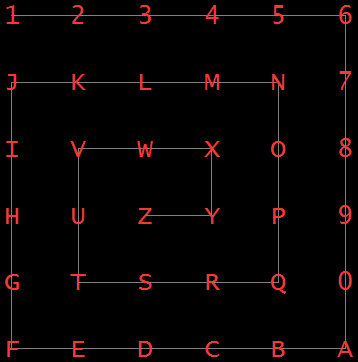
They’re 2-d palindromes or spiral numbers, that is, numbers that are symmetrical when written as a spiral. You start with the first digit on the top left, then spiral inwards to the center, like this for a 9-digit spiral (9 = 3×3):


And this for a 36-digit spiral (36 = 6×6):


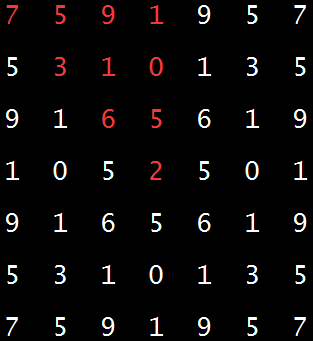
Spiral numbers are easy to construct, because you can reflect and rotate the numbers in one triangular slice of the spiral to find all the others:


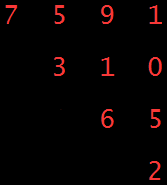
You could say that the seed for the spiral number above is 7591310652, because you can write that number in descending lines, left-to-right, as a triangle.

Here are some palindromic numbers with nine digits in base 3 — as you can see, some are both palindromic numbers and spiral numbers. That is, some are palindromic in both one and two dimensions:

1  0  1

0  1  0

1  0  1

n=101010101


1  0  1

0  2  0

1  0  1

n=101010102


1  1  1

1  0  1

1  1  1

n=111111110


1  1  1

1  1  1

1  1  1

n=111111111


2  0  2

0  1  0

2  0  2

n=202020201


2  0  2

0  2  0

2  0  2

n=202020202


2  2  2

2  1  2

2  2  2

n=222222221


2  2  2

2  2  2

2  2  2

n=222222222


But palindromic primes are even better than ordinary palindromes. Here are a few 1-d palindromic primes in base 10:

101
151
73037
7935397
97356765379
1091544334334451901
1367755971795577631
70707270707
39859395893
9212129
7436347
166000661
313
929


And after 1-d palindromic primes, you can go to 2-d palindromic primes. That is, to spiral primes or sprimes — primes that are symmetrical when written as a spiral:

3 6 3
6 7 6
3 6 3

n=363636367 (prime)
seed=367 (see definition above)


9 1 9
1 3 1
9 1 9

n=919191913 (prime)
seed=913


3 7 8 6 3 6 8 7 3
7 9 1 8 9 8 1 9 7
8 1 9 0 9 0 9 1 8
6 8 0 5 5 5 0 8 6
3 9 9 5 7 5 9 9 3
6 8 0 5 5 5 0 8 6
8 1 9 0 9 0 9 1 8
7 9 1 8 9 8 1 9 7
3 7 8 6 3 6 8 7 3

n=378636873786368737863687378636879189819189819189819189819090909090909090555555557 (prime)
seed=378639189909557 (l=15)


And why stop with spiral numbers — and sprimes — in two dimensions? 363636367 is a 2-sprime, being palindromic in two dimensions. But the digits of a number could be written to form a symmetrical cube in three, four, five and more dimensions. So I assume that there are 3-sprimes, 4-sprimes, 5-sprimes and more out there. Watch this space.

B a Pal

As a keyly committed core component of the counter-cultural community (I wish!), I like to post especially edgy and esoteric material to Overlord In Terms of Core Issues Around Maximal Engagement with Key Notions of the Über-Feral on the 23rd of each month. And today I may be posting the especially edgiest and esoterickest material ever dot dot dot

After all, this entry at the Online Encyclopedia of Integer Sequences is about numbers that are palindromes in two particularly pertinent bases:

A060792 Numbers that are palindromic in bases 2 and 3.

0, 1, 6643, 1422773, 5415589, 90396755477, 381920985378904469, 1922624336133018996235, 2004595370006815987563563, 8022581057533823761829436662099, 392629621582222667733213907054116073, 32456836304775204439912231201966254787, 428027336071597254024922793107218595973 (A060792 at OEIS, with more entries)


And here are the underlying palindromes:

0: 0 ↔ 0
1: 1 ↔ 1
6643: 1100111110011 ↔ 100010001
1422773: 101011011010110110101 ↔ 2200021200022
5415589: 10100101010001010100101 ↔ 101012010210101
90396755477: 1010100001100000100010000011000010101 ↔ 22122022220102222022122
381920985378904469: 10101001100110110110001110011011001110001101101100110010101 ↔ 2112200222001222121212221002220022112
1922624336133018996235: 11010000011100111000101110001110011011001110001110100011100111000001011 ↔
122120102102011212112010211212110201201021221
2004595370006815987563563: 110101000011111010101010100101111011110111011110111101001010101010111110000101011 ↔ 221010112100202002120002212200021200202001211010122
8022581057533823761829436662099: 1100101010000100101101110000011011011111111011000011100001101111111101101100000111011010010000101010011 ↔ 21000020210011222122220212010000100001021202222122211001202000012
392629621582222667733213907054116073: 10010111001111000100010100010100000011011011000101011011100000111011010100011011011000000101000101000100011110011101001 ↔ 122102120011102000101101000002010021111120010200000101101000201110021201221
32456836304775204439912231201966254787: 11000011010101111010110010100010010011011010101001101000001000100010000010110010101011011001001000101001101011110101011000011 ↔ 1222100201002211120110022121002012121101011212102001212200110211122001020012221
428027336071597254024922793107218595973: 101000010000000110001000011111100101011110011100001110100011100010001110001011100001110011110101001111110000100011000000010000101 ↔ 222001200110022102121001000200200202022111220202002002000100121201220011002100222

Summus

I’m interested in digit-sums and in palindromic numbers. Looking at one, I found the other. It started like this: 9^2 = 81 and 9 = 8 + 1, so digitsum(9^1) = digitsum(9^2). I wondered how long such a sequence of powers could be (excluding powers of 10). I quickly found that the digit-sum of 468 is equal to the digit-sum of its square and cube:

digsum(468) = digsum(219024) = digsum(102503232)

But I couldn’t find any longer sequence, although plenty of other numbers are similar to 468:

digsum(585) = digsum(342225) = digsum(200201625)
digsum(4680) = digsum(21902400) = digsum(102503232000)
digsum(5850) = digsum(34222500) = digsum(200201625000)
digsum(5851) = digsum(34234201) = digsum(200304310051)
digsum(5868) = digsum(34433424) = digsum(202055332032)
digsum(28845) = digsum(832034025) = digsum(24000021451125) […]
digsum(589680) = digsum(347722502400) = digsum(205045005215232000)

What about other bases? First came this sequence:

digsum(2) = digsum(11) (base = 3) (highest power = 2)

Then these:

digsum(4) = digsum(22) = digsum(121) (b=7) (highest power = 3)
digsum(8) = digsum(44) = digsum(242) = digsum(1331) (b=15) (hp=4)
digsum([16]) = digsum(88) = digsum(484) = digsum(2662) = digsum(14641) (b=31) (hp=5)

The pattern continues (a number between square brackets represents a single digit in the base):

digsum([32]) = digsum([16][16]) = digsum(8[16]8) = digsum(4[12][12]4) = digsum(28[12]82) = digsum(15[10][10]51) (b=63) (hp=6)
digsum([64]) = digsum([32][32]) = digsum([16][32][16]) = digsum(8[24][24]8) = digsum(4[16][24][16]4) = digsum(2[10][20][20][10]2) = digsum(16[15][20][15]61) (b=127) (hp=7)
digsum([128]) = digsum([64][64]) = digsum([32][64][32]) = digsum([16][48][48][16]) = digsum(8[32][48][32]8) = digsum(4[20][40][40][20]4) = digsum(2[12][30][40][30][12]2) = digsum(17[21][35][35][21]71) (b=255) (hp=8)
digsum([256]) = digsum([128][128]) = digsum([64][128][64]) = digsum([32][96][96][32]) = digsum([16][64][96][64][16]) = digsum(8[40][80][80][40]8) = digsum(4[24][60][80][60][24]4) = digsum(2[14][42][70][70][42][14]2) = digsum(18[28][56][70][56][28]81) (b=511) (hp=9)

After this, I looked at sequences in which n(i) = n(i-1) + digitsum(n(i-1)). How long could digitsum(n(i)) be greater than or equal to digitsum(n(i-1))? In base 10, I found these sequences:

1 (digitsum=1) → 2 → 4 → 8 → 16 (sum=7) (count=4) (base=10)
9 → 18 (sum=9) → 27 (s=9) → 36 (s=9) → 45 (s=9) → 54 (s=9) → 63 (s=9) → 72 (s=9) → 81 (s=9) → 90 (s=9) → 99 (s=18) → 117 (s=9) (c=11) (b=10)
801 (s=9) → 810 (s=9) → 819 (s=18) → 837 (s=18) → 855 (s=18) → 873 (s=18) → 891 (s=18) → 909 (s=18) → 927 (s=18) → 945 (s=18) → 963 (s=18) → 981 (s=18) → 999 (s=27) → 1026 (s=9) (c=13)

Base 2 does better:

1 → 10 (s=1) → 11 (s=2) → 101 (s=2) → 111 (s=3) → 1010 (s=2) (c=5) (b=2)
16 = 10000 (s=1) → 10001 (s=2) → 10011 (s=3) → 10110 (s=3) → 11001 (s=3) → 11100 (s=3) → 11111 (s=5) → 100100 (s=2) (c=7) (b=2)
962 = 1111000010 (s=5) → 1111000111 (s=7) → 1111001110 (s=7) → 1111010101 (s=7) → 1111011100 (s=7) → 1111100011 (s=7) → 1111101010 (s=7) → 1111110001 (s=7) → 1111111000 (s=7) → 1111111111 (s=10) → 10000001001 (s=3) (c=10) (b=2)
524047 = 1111111111100001111 (s=15) → 1111111111100011110 (s=15) → 1111111111100101101 (s=15) → 1111111111100111100 (s=15) → 1111111111101001011 (s=15) → 1111111111101011010 (s=15) → 1111111111101101001(s=15) → 1111111111101111000 (s=15) → 1111111111110000111 (s=15) → 1111111111110010110 (s=15) → 1111111111110100101 (s=15) → 1111111111110110100 (s=15) → 1111111111111000011 (s=15) → 1111111111111010010 (s=15) → 1111111111111100001 (s=15) → 1111111111111110000 (s=15) → 1111111111111111111 (s=19) → 10000000000000010010 (s=3) (c=17) (b=2)

The best sequence I found in base 3 is shorter than in base 10, but there are more sequences:

1 → 2 → 11 (s=2) → 20 (s=2) → 22 (s=4) → 110 (s=2) (c=5) (b=3)
31 = 1011 (s=3) → 1021 (s=4) → 1102 (s=4) → 1120 (s=4) → 1201 (s=4) → 1212 (s=6) → 2002 (s=4) (c=6) (b=3)
54 = 2000 (s=2) → 2002 (s=4) → 2020 (s=4) → 2101 (s=4) → 2112 (s=6) → 2202 (s=6) → 2222 (s=8) → 10021(s=4) (c=7) (b=3)
432 = 121000 (s=4) → 121011 (s=6) → 121101 (s=6) → 121121 (s=8) → 121220 (s=8) → 122012 (s=8) → 122111 (s=8) → 122210 (s=8) → 200002 (s=4) (c=8) (b=3)
648 = 220000 (s=4) → 220011 (s=6) → 220101 (s=6) → 220121 (s=8) → 220220 (s=8) → 221012 (s=8) → 221111 (s=8) → 221210 (s=8) → 222002 (s=8) → 222101 (s=8) → 222200 (s=8) → 222222 (s=12) → 1000102 (s=4) (c=12) (b=3)

And what about sequences in which digitsum(n(i)) is always greater than digitsum(n(i-1))? Base 10 is disappointing:

1 → 2 → 4 → 8 → 16 (sum=7) (count=4) (base=10)
50 (s=5) → 55 (s=10) → 65 (s=11) → 76 (s=13) → 89 (s=17) → 106 (s=7) (c=5) (b=10)

Some other bases do better:

2 = 10 (s=1) → 11 (s=2) → 101 (s=2) (c=2) (b=2)
4 = 100 (s=1) → 101 (s=2) → 111 (s=3) → 1010 (s=2) (c=3) (b=2)
240 = 11110000 (s=4) → 11110100 (s=5) → 11111001 (s=6) → 11111111 (s=8) → 100000111 (s=4) (c=4) (b=2)

1 → 2 → 11 (s=2) (c=2) (b=3)
19 = 201 (s=3) → 211 (s=4) → 222 (s=6) → 1012 (s=4) (c=3) (b=3)
58999 = 2222221011 (s=15) → 2222221201 (s=16) → 2222222022 (s=18) → 2222222222 (s=20) → 10000000201 (s=4) (c=4) (b=3)

1 → 2 → 10 (s=1) (c=2) (b=4)
4 = 10 (s=1) → 11 (s=2) → 13 (s=4) → 23 (s=5) → 100 (s=1) (c=4) (b=4)
977 = 33101 (s=8) → 33121 (s=10) → 33203 (s=11) → 33232 (s=13) → 33323 (s=14) → 100021 (s=4) (c=5) (b=4)

1 → 2 → 4 → 13 (s=4) (c=3) (b=5)
105 = 410 (s=5) → 420 (s=6) → 431 (s=8) → 444 (s=12) → 1021 (s=4) (c=4) (b=5)

1 → 2 → 4 → 12 (s=3) (c=3) (b=6)
13 = 21 (s=3) → 24 (s=6) → 34 (s=7) → 45 (s=9) → 102 (s=3) (c=4) (b=6)
396 = 1500 (s=6) → 1510 (s=7) → 1521 (s=9) → 1534 (s=13) → 1555 (s=16) → 2023 (s=7) (c=5) (b=6)

1 → 2 → 4 → 11 (s=2) (c=3) (b=7)
121 = 232 (s=7) → 242 (s=8) → 253 (s=10) → 266 (s=14) → 316 (s=10) (c=4) (b=7)
205 = 412 (s=7) → 422 (s=8) → 433 (s=10) → 446 (s=14) → 466 (s=16) → 521 (s=8) (c=5) (b=7)

1 → 2 → 4 → 10 (s=1) (c=3) (b=8)
8 = 10 (s=1) → 11 (s=2) → 13 (s=4) → 17 (s=8) → 27 (s=9) → 40 (s=4) (c=5) (b=8)
323 = 503 (s=8) → 513 (s=9) → 524 (s=11) → 537 (s=15) → 556 (s=16) → 576 (s=18) → 620 (s=8) (c=6) (b=8)

1 → 2 → 4 → 8 → 17 (s=8) (c=4) (b=9)
6481 = 8801 (s=17) → 8820 (s=18) → 8840 (s=20) → 8862 (s=24) → 8888 (s=32) → 10034 (s=8) (c=5) (b=9)

1 → 2 → 4 → 8 → 16 (s=7) (c=4) (b=10)
50 (s=5) → 55 (s=10) → 65 (s=11) → 76 (s=13) → 89 (s=17) → 106 (s=7) (c=5) (b=10)

1 → 2 → 4 → 8 → 15 (s=6) (c=4) (b=11)
1013 = 841 (s=13) → 853 (s=16) → 868 (s=22) → 888 (s=24) → 8[10][10] (s=28) → 925 (s=16) (c=5) (b=11)

1 → 2 → 4 → 8 → 14 (s=5) (c=4) (b=12)
25 = 21 (s=3) → 24 (s=6) → 2[10] (s=12) → 3[10] (s=13) → 4[11] (s=15) → 62 (s=8) (c=5) (b=12)
1191 = 833 (s=14) → 845 (s=17) → 85[10] (s=23) → 879 (s=24) → 899 (s=26) → 8[11][11] (s=30) → 925 (s=16) (c=6) (b=12)

1 → 2 → 4 → 8 → 13 (s=4) (c=4) (b=13)
781 = 481 (s=13) → 491 (s=14) → 4[10]2 (s=16) → 4[11]5 (s=20) → 4[12][12] (s=28) → 521 (s=8) (c=5) (b=13)
19621 = 8[12]14 (s=25) → 8[12]33 (s=26) → 8[12]53 (s=28) → 8[12]75 (s=32) → 8[12]9[11] (s=40) → 8[12][12][12] (s=44) → 9034 (s=16) (c=6) (b=13)

1 → 2 → 4 → 8 → 12 (s=3) (c=4) (b=14)
72 = 52 (s=7) → 59 (s=14) → 69 (s=15) → 7[10] (s=17) → 8[13] (s=21) → [10]6 (s=16) (c=5) (b=14)
1275 = 671 (s=14) → 681 (s=15) → 692 (s=17) → 6[10]5 (s=21) → 6[11][12] (s=29) → 6[13][13] (s=32) → 723 (s=12) (c=6) (b=14)
19026 = 6[13]10 (s=20) → 6[13]26 (s=27) → 6[13]45 (s=28) → 6[13]65 (s=30) → 6[13]87 (s=34) → 6[13][10][13] (s=42) → 6[13][13][13] (s=45) → 7032 (s=12) (c=7) (b=14)

1 → 2 → 4 → 8 → 11 (s=2) (c=4) (b=15)
603 = 2[10]3 (s=15) → 2[11]3 (s=16) → 2[12]4 (s=18) → 2[13]7 (s=22) → 2[14][14] (s=30) → 31[14] (s=18) (c=5) (b=15)
1023 = 483 (s=15) → 493 (s=16) → 4[10]4 (s=18) → 4[11]7 (s=22) → 4[12][14] (s=30) → 4[14][14] (s=32) → 521 (s=8) (c=6) (b=15)
1891 = 861 (s=15) → 871 (s=16) → 882 (s=18) → 895 (s=22) → 8[10][12] (s=30) → 8[12][12] (s=32) → 8[14][14] (s=36) → 925 (s=16) (c=7) (b=15)

1 → 2 → 4 → 8 → 10 (s=1) (c=4) (b=16)
16 = 10 (s=1) → 11 (s=2) → 13 (s=4) → 17 (s=8) → 1[15] (s=16) → 2[15] (s=17) → 40 (s=4) (c=6) (b=16)
1396 = 574 (s=16) → 584 (s=17) → 595 (s=19) → 5[10]8 (s=23) → 5[11][15] (s=31) → 5[13][14] (s=32) → 5[15][14] (s=34) → 620 (s=8) (c=7) (b=16)
2131 = 853 (s=16) → 863 (s=17) → 874 (s=19) → 887 (s=23) → 89[14] (s=31) → 8[11][13] (s=32) → 8[13][13] (s=34) → 8[15][15] (s=38) → 925 (s=16) (c=8) (b=16)

1 → 2 → 4 → 8 → [16] (s=16) → 1[15] (s=16) (c=5) (b=17)

1 → 2 → 4 → 8 → [16] (s=16) → 1[14] (s=15) (c=5) (b=18)
5330 = [16]82 (s=26) → [16]9[10] (s=35) → [16][11]9 (s=36) → [16][13]9 (s=38) → [16][15][11] (s=42) → [16][17][17] (s=50) → [17]2[13] (s=32) (c=6) (b=18)

1 → 2 → 4 → 8 → [16] (s=16) → 1[13] (s=14) (c=5) (b=19)
116339 = [16][18]52 (s=41) → [16][18]75 (s=46) → [16][18]9[13] (s=56) → [16][18][12][12] (s=58) → [16][18][15][13] (s=62) → [16][18][18][18] (s=70) → [17]03[12] (s=32) (c=6) (b=19)

1 → 2 → 4 → 8 → [16] (s=16) → 1[12] (s=13) (c=5) (b=20)
100 = 50 (s=5) → 55 (s=10) → 5[15] (s=20) → 6[15] (s=21) → 7[16] (s=23) → 8[19] (s=27) → [10]6 (s=16) (c=6) (b=20)
135665 = [16][19]35 (s=43) → [16][19]58 (s=48) → [16][19]7[16] (s=58) → [16][19][10][14] (s=59) → [16][19][13][13] (s=61) → [16][19][16][14] (s=65) → [16][19][19][19] (s=73) → [17]03[12] (s=32) (c=7) (b=20)