
Diatoms with siliceous shells arranged in a filled circle using a microscope
• Photograph of diatoms collected in Russia and arranged on a microscope slide in 1952 by A.L. Brigger

Diatoms with siliceous shells arranged in a filled circle using a microscope
• Photograph of diatoms collected in Russia and arranged on a microscope slide in 1952 by A.L. Brigger
Some of the most beautiful patterns in nature arise from the interaction of three very simple things: sand and water, sand and air. Sculptrix Sabulorum, a side-project of the Exeter band Slow Exploding Gulls, are an attempt to do with sound what nature does with sand: turn simple ingredients into beautiful patterns. Here are extracts from an interview and review in the Plymouth fanzine EarHax:
Hector Anderton: OK. The obvious first. Sculptrix Sabulorum. What does it mean and why did you choose it?
Joe Corvin: It’s Latin and literally means “Sculptress of the Sands”. We chose it, well, because we thought it looked and sounded good. Good but mysterious.
Hector Anderton: And who is the sculptress? The sea?
Joe Corvin: Well, the sculptress is Mother Nature, in the fullest sense, but she uses the sea. The wind. Gravity. Simple things, but put them together with sand and interesting things happen.
Cath Orne: Which we wanted to explore, but we didn’t think S.E.G. [Slow Exploding Gulls] was the way to explore them.
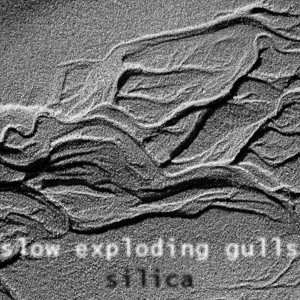
Hector Anderton: But hadn’t you done that in Silica?
Joe Corvin: We’d started to, but Silica hadn’t exhausted the theme. Of sand, I mean. It’s something I’d always been interested in, but with S.E.G. we tend to go with the organic side of the sea, with sea life.
Hector Anderton: Whereas sand is inorganic?
Joe Corvin: Exactly. Silica was a bit of a departure for us, in that respect. It was as though we were walking down a corridor and we opened a door in passing and thought, yeah, that room looks interesting.

Sand Band: Sculptrix Sabulorum
Cath Orne: So we’ll come back and have a proper look later.
Joe Corvin: Yeah. Under a new name. Which we’ve done. Hence, Sculptrix Sabulorum.
Extract © EarHax (1992)
Skulsonik, Sculptrix Sabulorum (Umbra Mundi 1995)
Macca to Madonna: “Listen to the music playing in your head.” In fact, we never do anything else. We don’t experience the world: we experience a sensory simulacrum of the world. Light or sound-waves or chemicals floating in the air stimulate the nerves in our eyes or ears or nose and the brain turns the resultant stream of electrical pulses into sight or sound or smell.
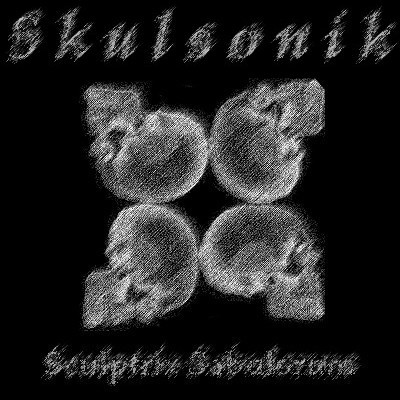
Sculptrix Sabulorum: Skulsonik (1995)
But it does more than that: it covers up the cracks. Raw nerve-stuff is not smooth and polished sensation. We have blind-spots, but the brain edits them out. Only a small part of our visual field is actually in clear focus, but we think otherwise. If we could see raw nerve-stuff, it would be a blurry, fuzzy mess.
The same is true of hearing. And Skulsonik is an attempt to record raw nerve-stuff: to capture not sound out there, but sound in here – the music playing in your head. Sculptrix Sabulorum have set out to answer a simple question: “What does music really sound like?” Or rather: what does music cerebrally sound like? What does it sound like in your head?
Extract © EarHax (1995)
Previously pre-posted (please peruse):
• Mental Marine Music – Slow Exploding Gulls
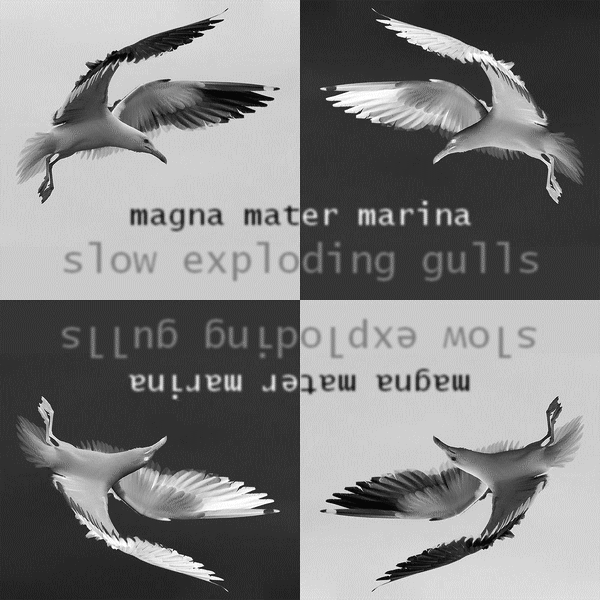
“Thalassa! Thalassa!” The chant that began the first song on the first side of the first S.E.G. album is still inspiring the group twenty-six years and eighteen albums later. Few fans will need reminding that it is ancient Greek for “The Sea! The Sea!”, as shouted in ecstasy by a mercenary army after a long and dangerous retreat across Asia Minor in 401 BC. Ecstasy is not so much an inspiration to the group as an aspiration. They try to use melody, rhythm and “drowned sound” to take their listeners out of the everyday and into the otherwhere, to sink them “full fathom five” in music as rich and mysterious as the sea. The S.E.G. story begins in 1987, when Joseph Corvin, the ever-present Kapitän und Kappellmeister, as he jokingly calls himself, was living in an old house in the ancient Celto-Roman town of Exeter on the southern English coast. When the sea-wind blew, his living quarters became lowing quarters: “an eerie wailing used to sound from the roof and there were all sorts of weird sound effects in the bathroom, because of air moving in the overflow pipe and the walls. I liked what I heard and I thought I could do something with it, musically speaking.”
Corvin recorded some of the wind-sounds, mixed them with gull-cries and underwater engine-noise, added vocals and electronically treated flute and drums, and put out the results on a cassette-only album called Magna Mater Marina (Latin for Great Marine Mother), under the odd but memorable moniker of Slow Exploding Gulls. The name was inspired by Corvin’s love of the surrealists Salvador Dalí and Max Ernst, but it would dog him and his cohorts for years to come, partly because it pigeon-holed the group as “Kraut-rock” and partly because it suggested cruelty to animals, which was not appreciated by some of his potential audience. Both assumptions were completely wrong: Corvin says, first, that, as a fan, he was then much more into The Cure, The Smiths and Siouxsie and the Banshees than anything electronic or experimental, and, second, that far from advocating cruelty to gulls, he was celebrating them:
Not for one moment was I suggesting any harm to anything with wings or feathers. Gulls are my favourite birds, highly potent symbols of freedom, grace and the life-force. The title was meant to be metaphorical, not literal, and it was partly a reference to the explosion of joy that sudden sight of a flying gull can waken in your heart. There’s something very Nietzschean about them and yeah, I will admit to a Friedrich-fixation in the 1980s, though the Kraut-rock label was an albatross around our necks, no pun intended, for most of the ’90s. It came mainly from a review in the N.M.E. [New Musical Express, one of Britain’s big “pop-papers”] claiming to detect similarities between us and Einstürzende Neubaten, which means “Collapsing New Buildings”. Well, I can’t say there wasn’t a subliminal influence, name-wise, but I’d heard very little by any of the German groups at the time and when I did hear more, I didn’t detect many similarities between their music and ours. We were and always will be inspired by sea-sounds, everything you can hear under and over the water of the British coast. The next label they tried to stick on us was “goth”, on the ground that we made gloomy music and always dressed in black. We didn’t: it was dark blue, it wasn’t all the time and there’s nothing gloomy about our music, if it’s listened to right. (Interview on the fan-site GullSegg, November, 2003)
Corvin’s protests were to no avail: S.E.G.’s next album, A Grey Mist (1989), was reviewed under titles like “Submarine Electro-Goths” and “Solipsistic Entrail-Gazing”. Again he says the press had got hold of the wrong end of the stick: “The title of the album comes from ‘Sea-Fever’, a very beautiful poem by John Masefield, and far from attempting to be gloomy or depressing, it was all about the joy of the sea, the cold in the early morning and the bite of the wind, ‘the white clouds flying’ and mist as a symbol of mystery and possibility, not as anything glum and gothic.” Happily, S.E.G. would outlive that early hostility and journalists’ insistence on labelling, rather than listening to, the music they created, but a lasting effect of both has been the playful name-switching they’ve indulged in since their early days. They’ve released albums under at least eight different names and performed gigs under all those and more, but every name has been based on the acronym S.E.G. and had a maritime theme. 1994’s Mew Upsilon Sigma, for example, came out under the name Swim with Elegant Gods, and 2003’s re-mixed Yr Wylan Ddu (Welsh for The Black Gull) under the name Seaside Excursion Guide. They’ve also recorded songs with titles like “Sunken Etruscan Gold”, “Sailing to Ecstatic Gnosis”, “Submersed in the Eternal Gulf” and “She’s an Exeter Girl” (a reference to Cathleen Orne, Joseph’s then girlfriend, now wife, who is indeed an Exeter girl).
This S.E.G. motif means that hardcore fans, of whom they’ve garnered and retained a flighty fair few down the decades, are generally referred to as SEGheads, while their biggest – and best – fan-site is GullSegg, where you can find the earliest and most accurate news on the group’s activities, plus detailed and reasonably objective reviews of every piece of music they’ve ever recorded. So can S.E.G. be described as Shadowy Exeter Goths? No, Soaring Elemental Gods is much closer the mark and I join many mental-marine-music fans in wishing them well in their ambition of recording music in every major sea-side town of the British Isles. Wexford on the eastern coast of Ireland is next, according to GullSegg, and Wassernyxe, album #19 (and German/Greek for “Mermaid-Night”), should be released before the end of the year. It’s unlikely it will sail new seas, or sound new depths, but after twenty-six years of mer-music-making who could expect it to? Yes, never mind the rowlocks! S.E.G.’s Saline Esoterica Gangs on – and gongs on – every time someone plays a classic album like Mew or Thalas/Socratic, their 1996 split-EP with their own whale-song side-project Schatten über Exeter Gruppe (German for “Shadow over Exeter Group”).
Elsewhere other-posted:
• More Musings on Music
Previously pre-posted (please peruse):
• Stoch’! (In the Name of Dove)
Proviously post-posted (please peruse):
 Overlord In Terms of Core Issues Around Maximal Engagement with Key Notions of the Über-Feral