Hydrology, geology, acoustics and more combine in one magnificently muddled mixed metaphor:
When [Emily] Pankhurst ordered her followers to stop bombing the British state and start helping to arm it for the war effort [after 1914], it left some of the most radicalized to fall into “a feminist-fascist estuary formed in the crater generated by Mrs Pankhurst’s pivot from law-breaking insurgency to conformist cheerleading”. — ‘It’s a scary time’: Sophie Lewis on the ‘enemy feminisms’ that enable the far right, The Guardian, 21ii25
Among the baffling questions raised by the metaphor is this: Why “estuary”? It would make sense to say “[fall into] a stagnant and stinking feminist-fascist pool formed in the crater…” But estuaries aren’t stagnant and craters don’t create estuaries anyway. Rivers do when they flow into a sea or lake. What would the river and sea represent?
I’ve no idea. And I would find it very difficult to match that mixed metaphor without making it seemed contrived or confected. Mixed metaphors are a zen thing: for best effect, they’ve got to flow from the fingertips or float off the tongue without effort, welling up from a bottomless crater of bollocks like a meth-smoking bull in a china-shop riding a feral tsunami of unhinged imagery and clashing comparativization.
It’s a very simple function that raises a very difficult question. An unanswered question, in fact. Take any whole number. If it’s odd, multiply it by 3 and add 1. If it’s even, divide it by 2. Repeat until you reach 1. That’s the hailstone function, because the numbers rise and fall like hailstones being formed in a cloud. Here are some examples:
But is this function truly a hailstone function? That is, does every number fall finally to earth and reach 1? So far, for every number tested, the answer has been yes. But do all numbers reach 1? The Collatz conjecture says they do. But no-one can prove it. Or disprove it. All it would take is one number failing to fall to earth. Mathematicians don’t think there is one, but numbers can take a surprising length of time to get to the ground. Here’s 27:
27 takes 111 steps to reach 1. And the 111 made me think of another question. If the function hail(n) returns the number of steps required for n to reach 1, then hail(27) = 111. But what about hail(n) = 666? That is, what is the first number that requires 666 steps to reach 1? I say “first number”, because one very big number is guaranteed to take 666 steps:
Put another way, 666 = hail(2^666), because for any power of 2, hail(2^p) = p. But is there a smaller number, which I’ll call satan, for which hail(satan) = 666? Here’s a tantalizing taster of the task:
Here’s a question I haven’t answered: if satanic numbers are those n satisfying hail(n) = 666, how many satanic numbers are there? We’ve already seen two of them: 666 = hail(2^666) = hail(26597116). But how many more are there? Not infinitely many, because for n > 2^666, hail(n) > 666. In fact, after satan = 26597116, the next three satanic numbers arrive very quickly:
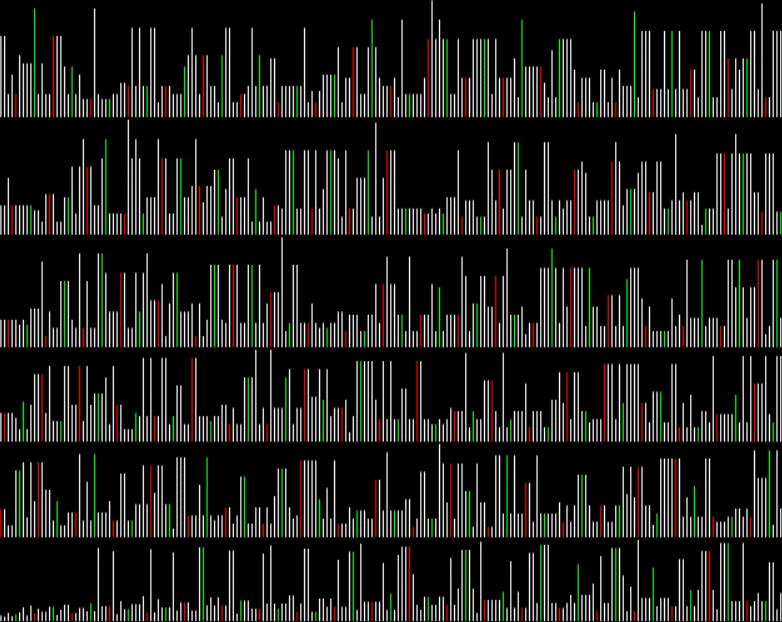
So there are four consecutive satanic numbers. But it isn’t unusual for a run of consecutive numbers to have the same hail(). Here’s a graph of the values of hail(n) for n = 1,2,3… (running left-to-right, down-up, with 1,2,3… in the lower lefthand corner). When n is divisible by 10, hail(n) is represented in red; when n is odd and divisible by 5, hail(n) is green. Note how many runs of identical hail(n) there are:
Graph for hail(n)
Here are successive records for runs of identical hail(n):
Eh bien, avant-hier 17 mars 1838, cet homme est mort. Des médecins sont venus, et ont embaumé le cadavre. Pour cela, à la manière des Égyptiens, ils ont retiré les entrailles du ventre et le cerveau du crâne. La chose faite, après avoir transformé le prince de Talleyrand en momie et cloué cette momie dans une bière tapissée de satin blanc, ils se sont retirés, laissant sur une table la cervelle, cette cervelle qui avait pensé tant de choses, inspiré tant d’hommes, construit tant d’édifices, conduit deux révolutions, trompé vingt rois, contenu le monde.
Les médecins partis, un valet est entré, il a vu ce qu’ils avaient laissé : Tiens ! ils ont oublié cela. Qu’en faire ? Il s’est souvenu qu’il y avait un égout dans la rue, il y est allé, et a jeté ce cerveau dans cet égout. — Victor Hugo, Choses vues: Talleyrand, 1838
And so, the day before yesterday, March 17, 1838, this man died. Doctors came and embalmed the corpse. They did this like the Egyptians, removing the entrails from the stomach and the brain from the skull. When they were done, having transformed Prince Talleyrand into a mummy and nailing this mummy in a bier lined with white satin, they withdrew, leaving the brain on a table, this brain that had thought so many things, inspired so many men, built so many buildings, led two revolutions, deceived twenty kings, had contained the world.
With the doctors gone, a valet came in and saw what they had left: Hey! they forgot that. What shall I do with it? He remembered that there was a sewer in the street, so he went out and threw the brain into the sewer. — Victor Hugo, Things Seen, 1838
To understand clock-arithmetic, simply picture a clock-face with one hand and a big fat 0 in place of the 12. Now you can do some clock-arithmetic. For example, set the hour-hand to 5, then move on 4 hours. You’ve done this sum:
5 + 4 → 9
Now try 9 + 7. The hour-hand is already on 9, so move forward 7 hours:
9 + 7 → 4
Now try 3 + 8 + 1:
3 + 8 + 1 → 0
And 3 * 4:
4 * 3 = 4 + 4 + 4 → 0
That’s clock-arithmetic. But you’re not confined to 12-hour clocks. Here’s a 7-hour clock, where the 7 is replaced with a 0:
Another name for clock-arithmetic is modular arithmetic, because the clocks model the process of dividing a number by 12 or 7 and finding the remainder or residue — 12 or 7 is known as the modulus (and modulo is Latin for “by the modulus”).
5 + 4 = 9 → 9 / 12 = 0*12 + 9
(5 + 4) modulo 12 = 9
3 + 8 + 1 = 12 → 12 / 12 = 1*12 + 0
(3 + 8 + 1) modulo 12 = 0
19 / 12 = 1*12 + 7
19 mod 12 = 7
3 + 1 = 4 → 4 / 7 = 0*7 + 4
(3 + 1) mod 7 = 4
2 + 4 + 1 = 7 → 7 / 7 = 1*7 + 0
(2 + 4 + 1) mod 7 = 0
19 / 7 = 2*7 + 5
19 mod 7 = 5
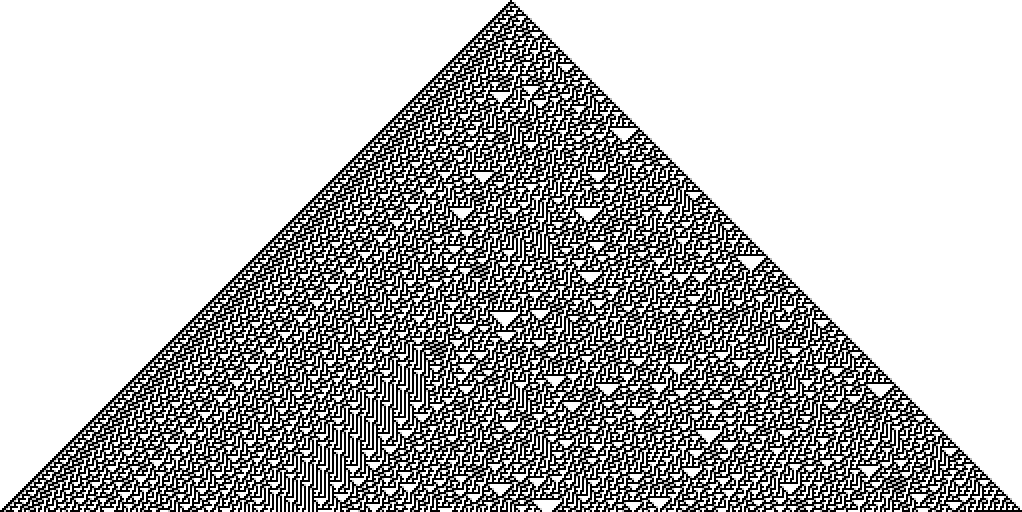
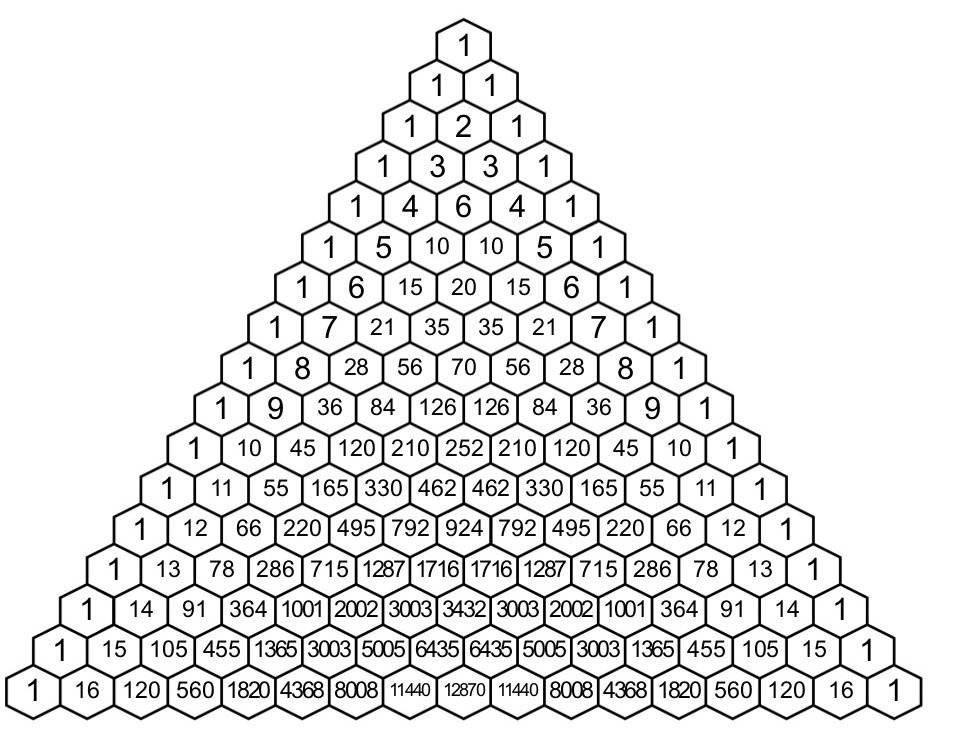
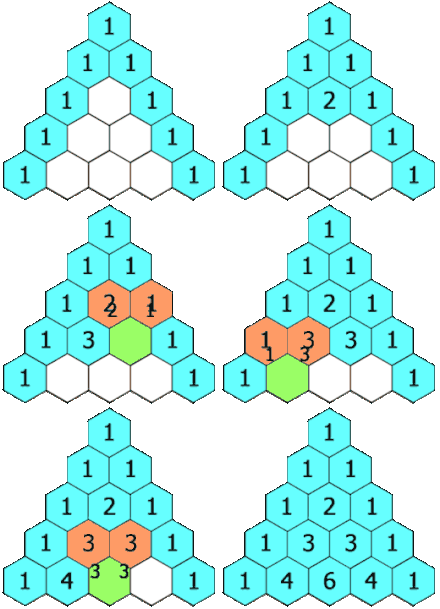
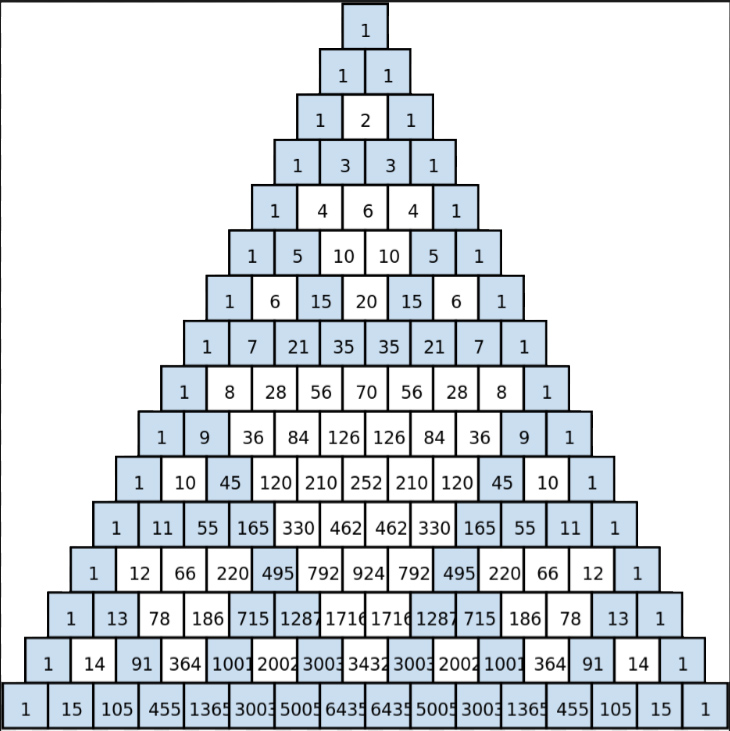
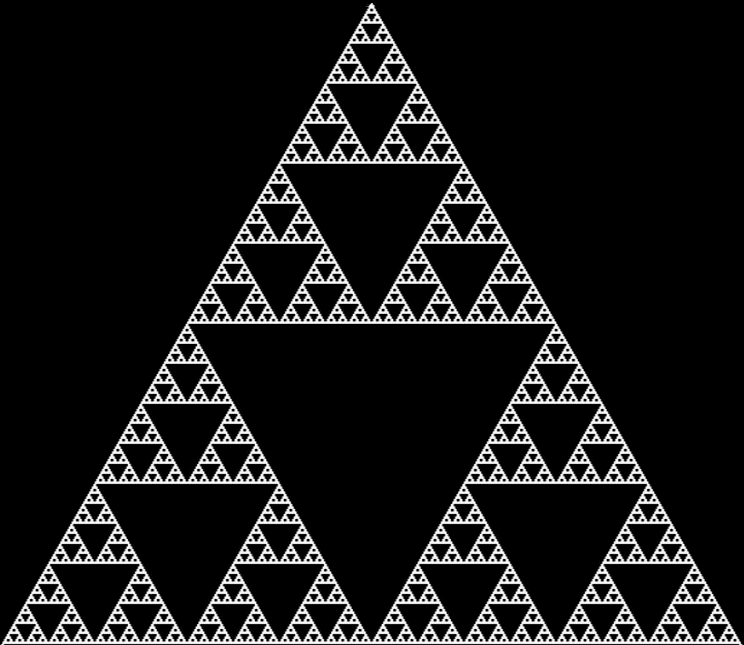
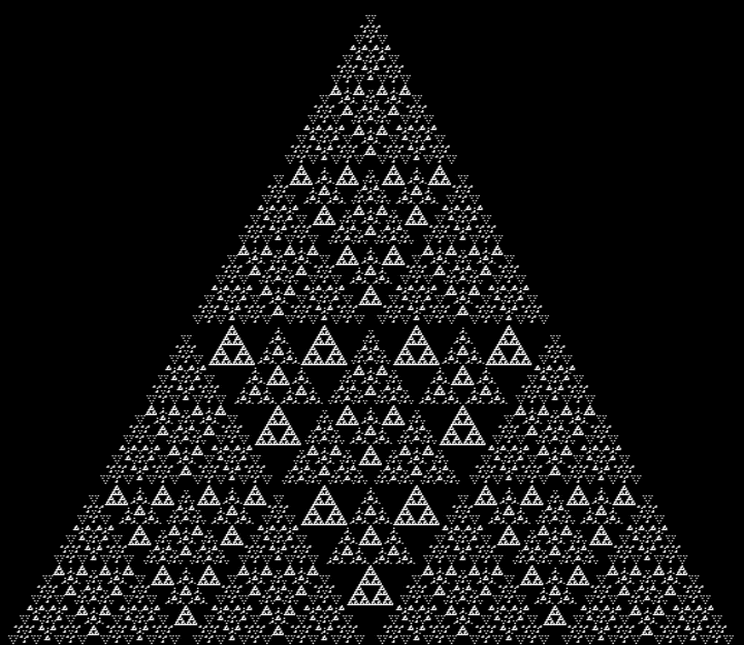
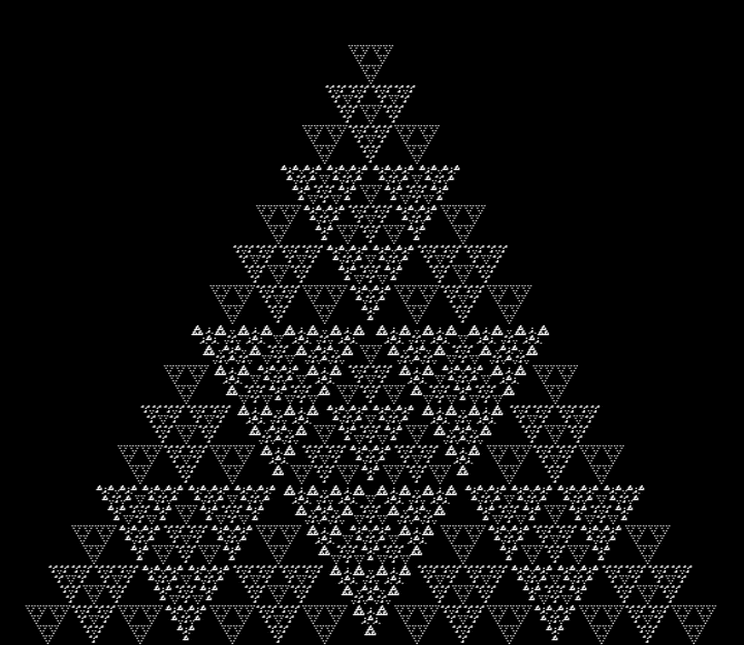
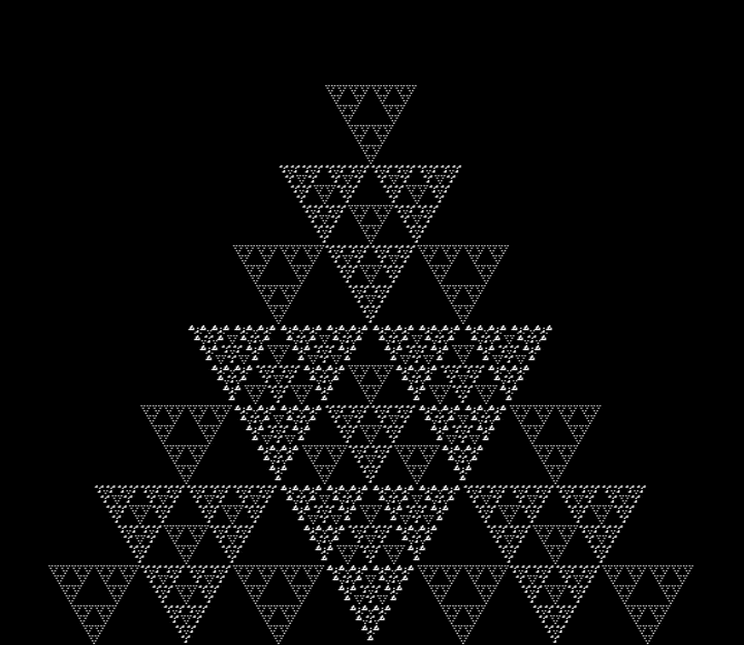
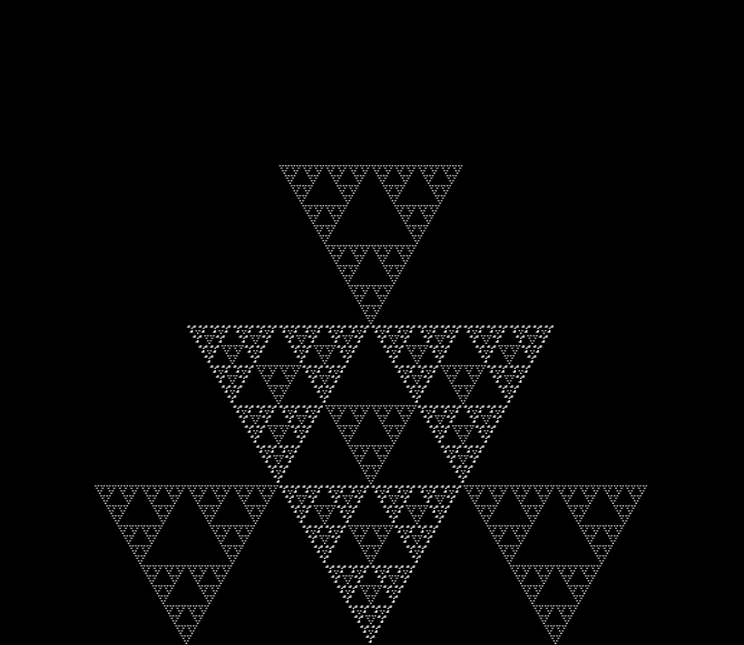
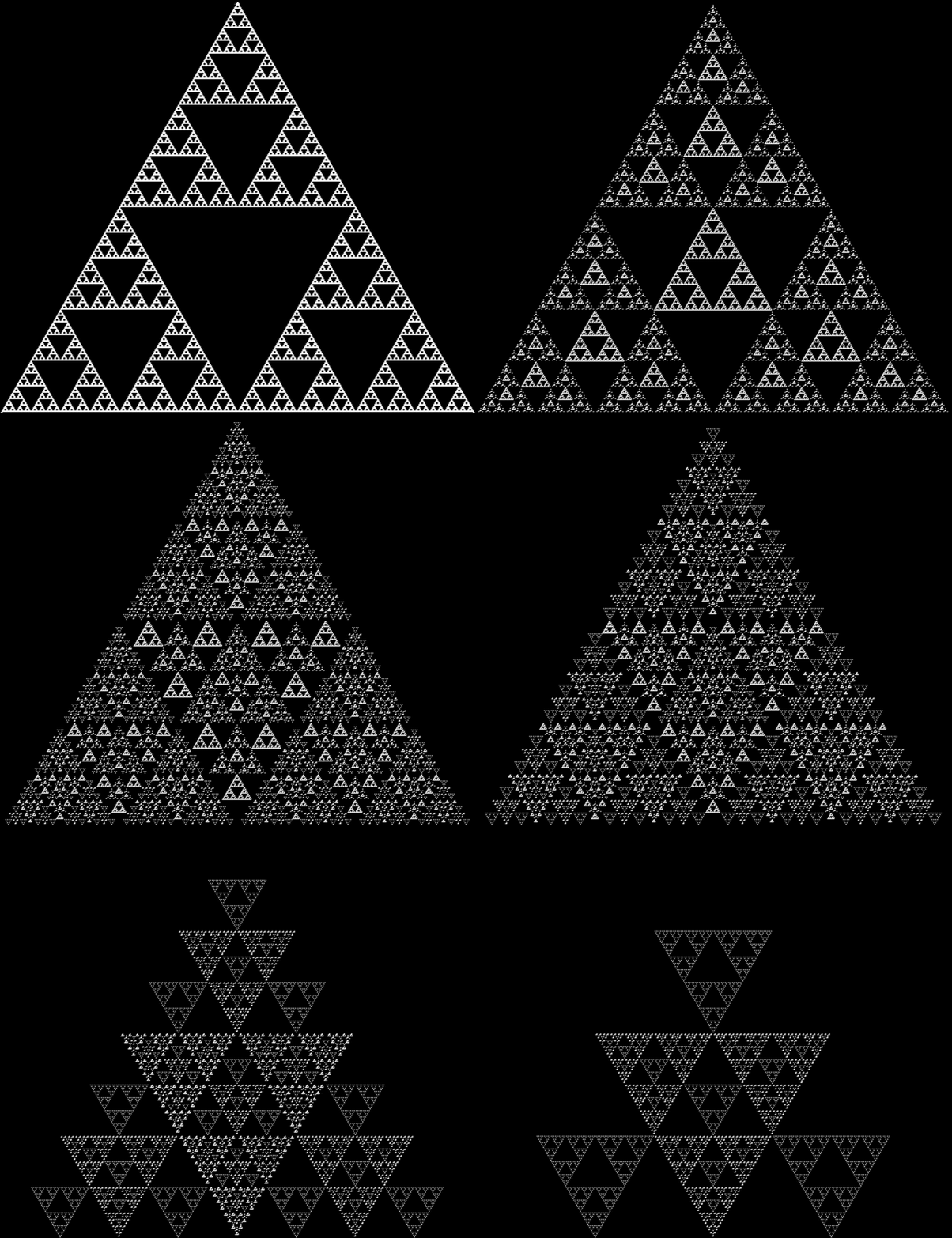
Modular arithmetic can do wonderful things. One small but beautiful example is the way it can uncover hidden fractals in Pascal’s triangle:
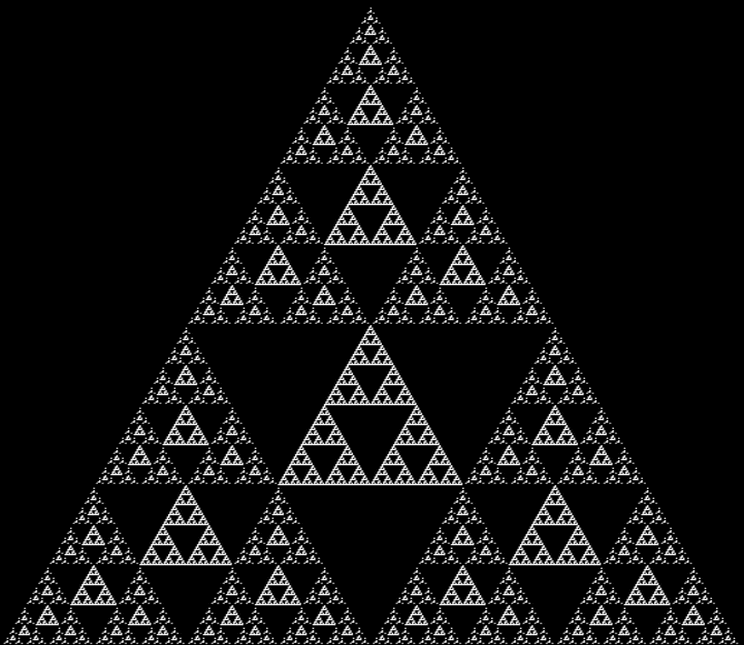
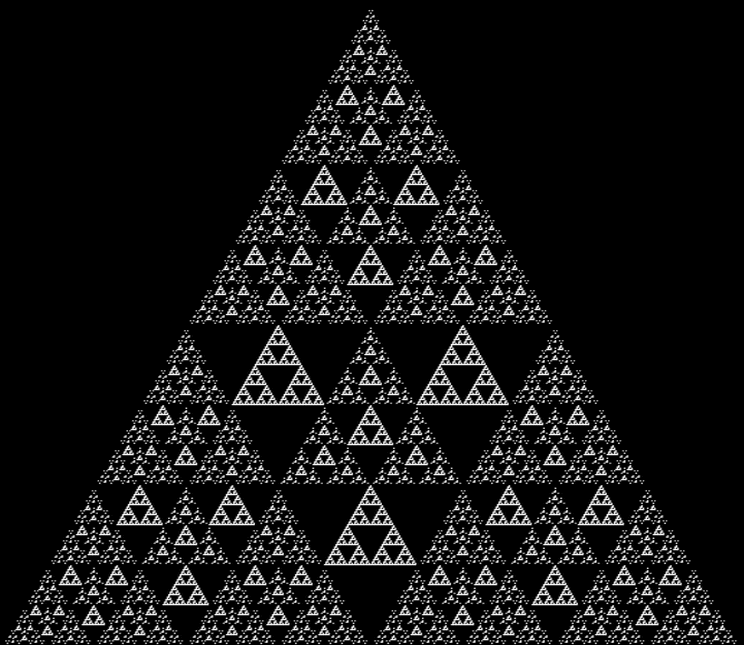
But you don’t need to consider those ever-growing numbers in the triangle when you’re finding fractals with modular arithmetic. When the modulus is 2, you just work with 0 and 1, that is, you add the previous numbers in the triangle and find the sum modulo 2. When the modulus is 4, you just work with 0, 1, 2 and 3, adding the numbers and finding the sum modulo 4. When it’s 8, you just work with 0, 1, 2, 3, 4, 5, 6 and 7, finding the sum modulo 8. And so on.

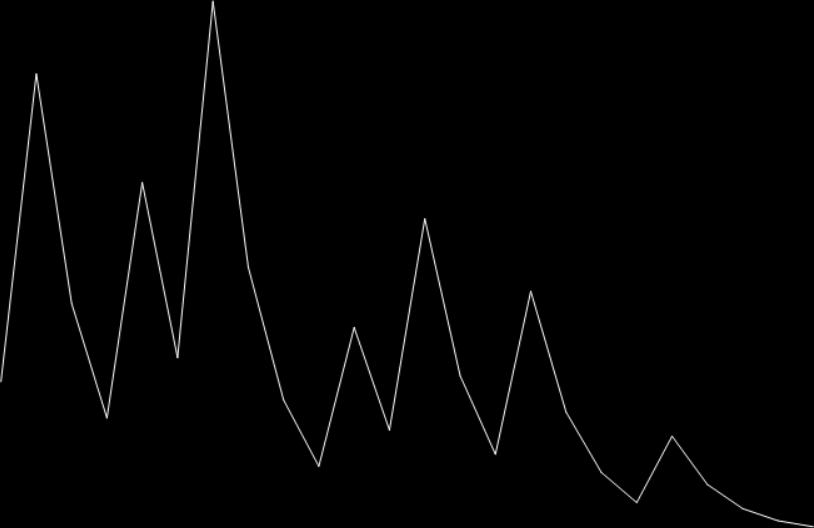
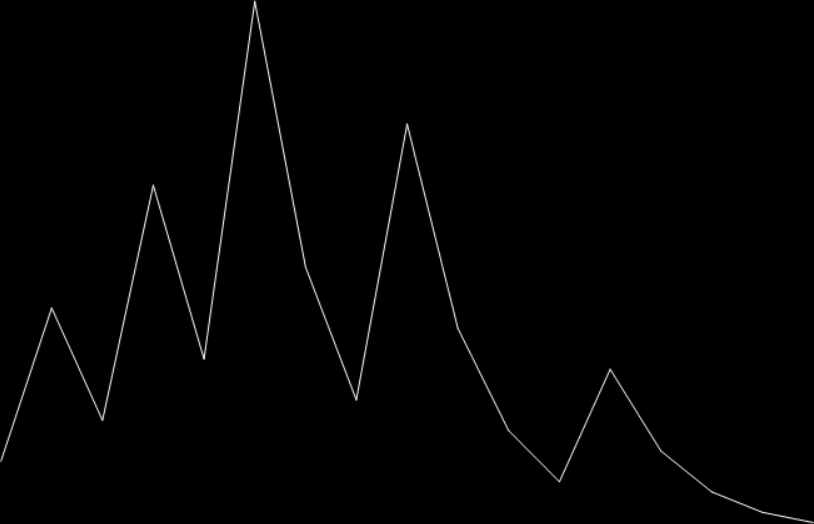
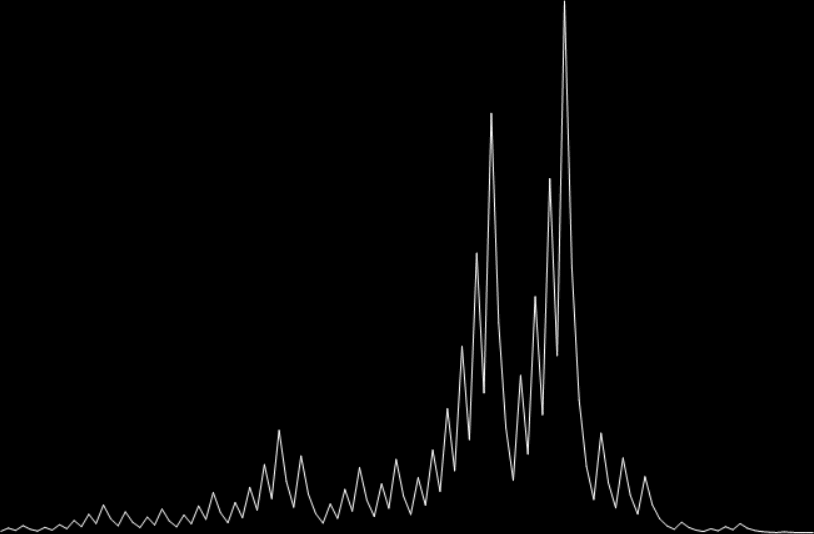
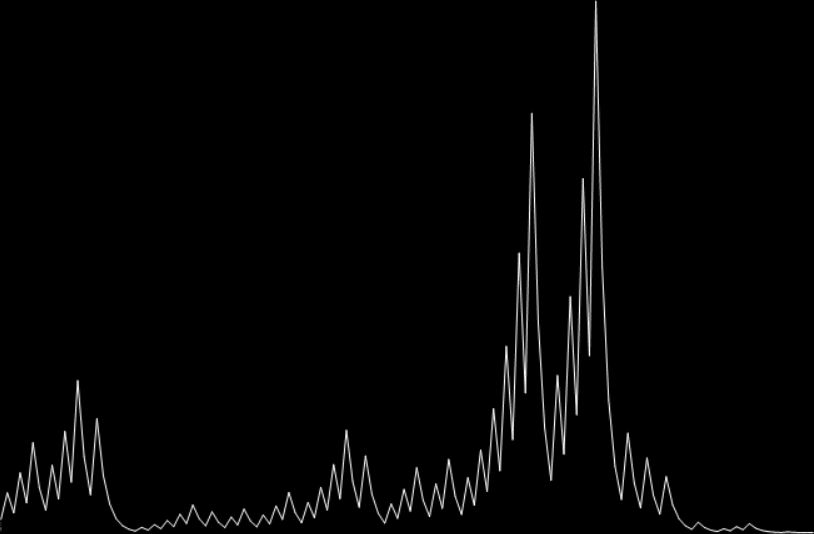



 Overlord In Terms of Core Issues Around Maximal Engagement with Key Notions of the Über-Feral