Strartifacts

Here’s a sequence of decreasing numbers. Which number comes next?

612 → 600 → 594 → 414 → 398 → 182 → ?

It’s 166, because the numbers decrease by the product of their digits higher than 0:

612 – 6*2 = 612 – 12 = 600 → 600 – 6 = 594 → 594 – 5*9*4 = 594 – 180 = 414 → 414 – 4*4 = 414 – 16 = 398 → 398 – 3*9*8 = 398 – 216 = 166

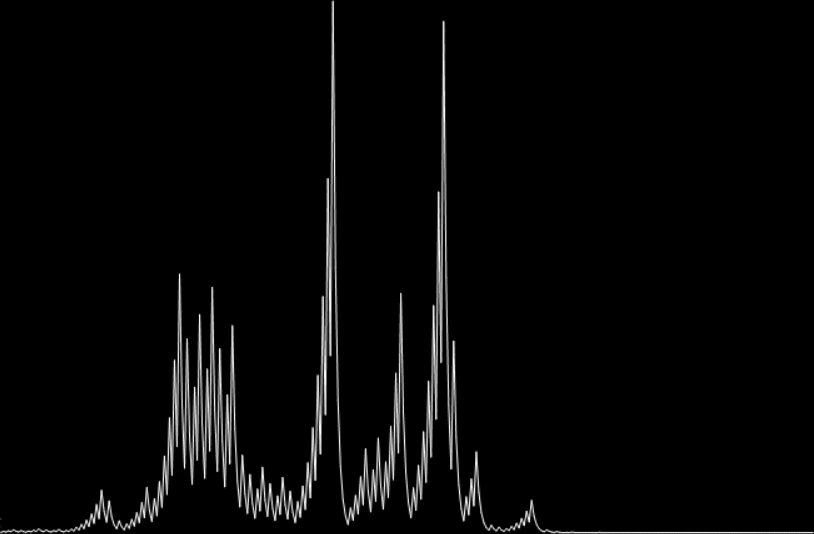
Eventually the sequence will reached 0 and stop. If you want to see how this function looks on a graph, here it is:
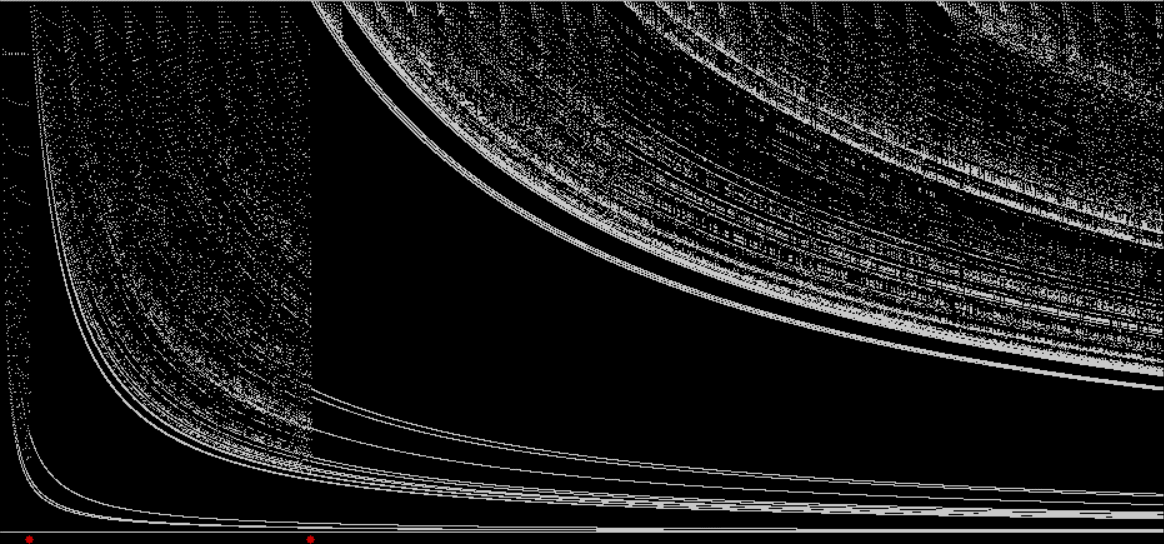
x = n <= 3722, f(i) -= digmul(f(i)) → 0 (click for larger)


The graph represents n on the x-axis, with the red circles marking n = 100 and n = 1000. The sequence of falling digit-products is on the y-axis, but the graph has a special feature there. The y-axis is compressed according to the size of n, so that n = 1000 falls to 0 with n -= digmul(n) in the same height as n = 100. Here’s a graph for the same function in base 7:
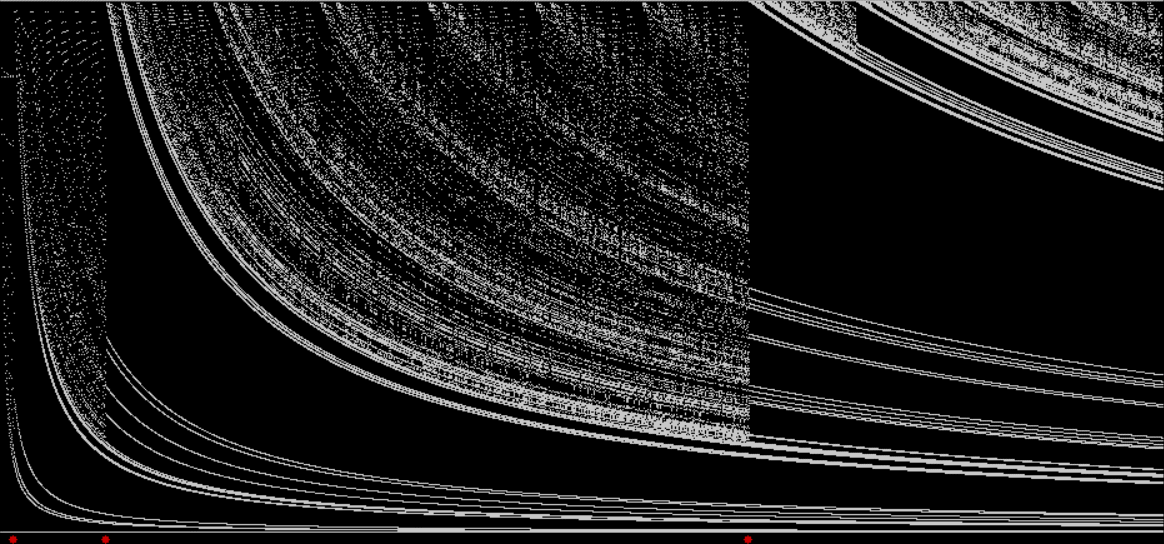
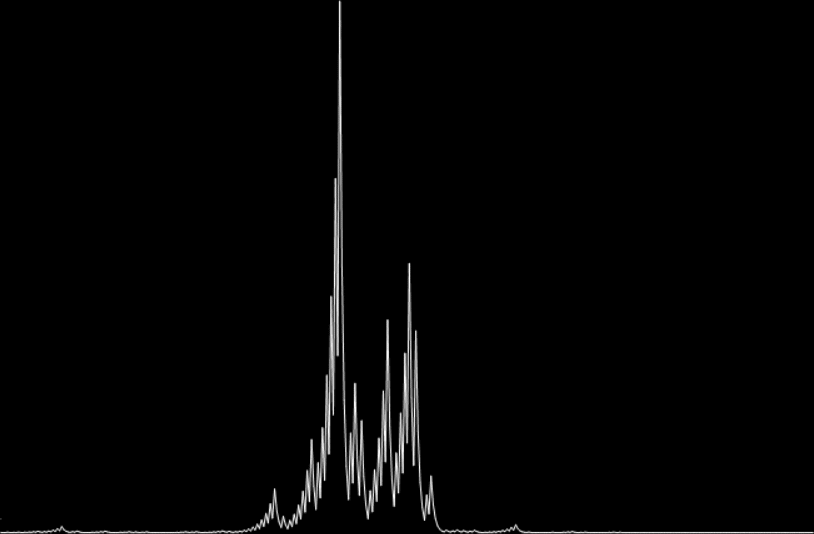
x = n <= 3722 in base 7, f(i) -= digmul(f(i)) → 0


Now the red circles represent 7^2 = 49, 7^3 = 343, 7^4 = 2401, i.e. 100b7, 1000b7, 10000b7. And you can try other functions for n = n – func(n) = n -= func(n). Here’s a graph for n -= hailstep(n), where hailstep(n) returns the number of steps in the Collatz sequence for n:
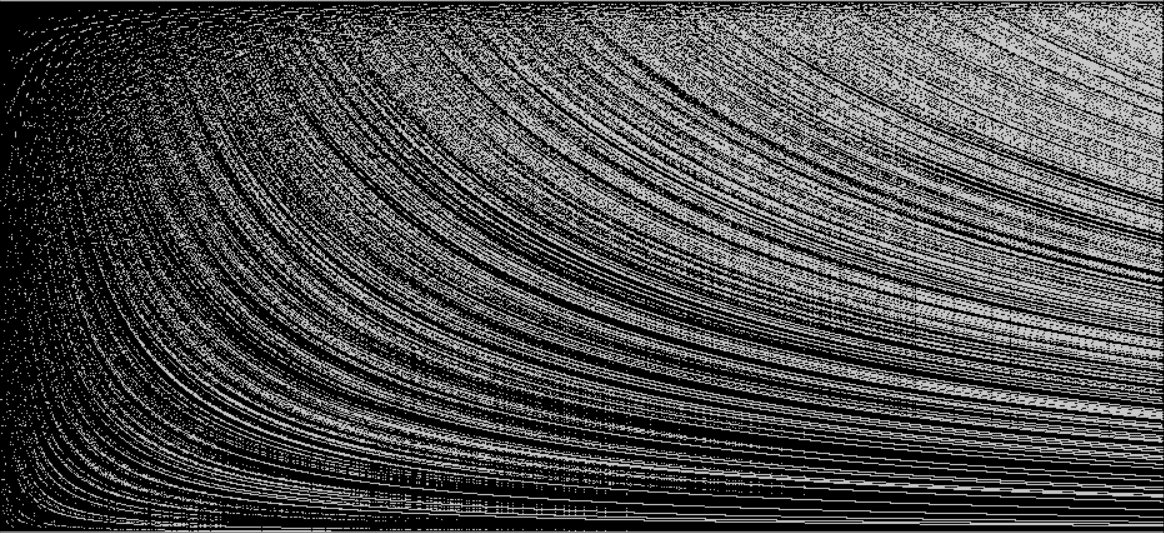
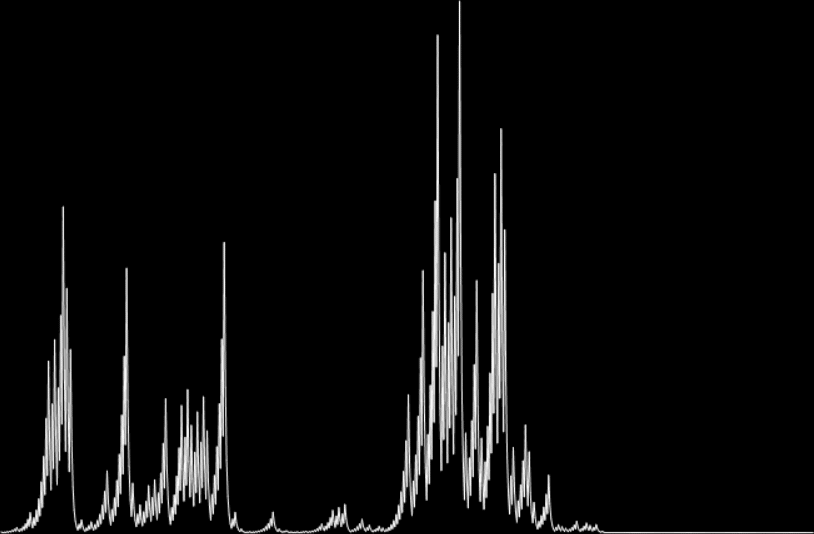
x = n <= 3722 in base 7, f(i) -= hailstep(f(i)) → f(i) < 2


You form a Collatz sequence by starting with a whole number and finding the next number according to two rules:

1. If n(i) is divisible by 2, n(i+1) = n(i) / 2
2. If n(i) is not divisible by 2, n(i+1) = n(i) * 3 + 1

So the Collatz sequence for n = 10 looks like this:

10 → 10 / 2 = 5 → 5 * 3 + 1 = 16 → 16 / 2 = 8 → 8 / 2 = 4 → 4 / 2 = 2 → 2 / 2 = 1.

When you reach 1, you stop. So that’s six steps for n = 10. But does every n reach 1 in the end? It’s a very simple question about a very simple function. But nobody knows and nobody can prove that either all numbers do or at least one number doesn’t. The German mathematician Lothar Collatz (1910-90) conjectured that all numbers do reach 1. But it can take a surprisingly long time, even with small n. This is the Collatz sequence for n = 27:

27, 82, 41, 124, 62, 31, 94, 47, 142, 71, 214, 107, 322, 161, 484, 242, 121, 364, 182, 91, 274, 137, 412, 206, 103, 310, 155, 466, 233, 700, 350, 175, 526, 263, 790, 395, 1186, 593, 1780, 890, 445, 1336, 668, 334, 167, 502, 251, 754, 377, 1132, 566, 283, 850, 425, 1276, 638, 319, 958, 479, 1438, 719, 2158, 1079, 3238, 1619, 4858, 2429, 7288, 3644, 1822, 911, 2734, 1367, 4102, 2051, 6154, 3077, 9232, 4616, 2308, 1154, 577, 1732, 866, 433, 1300, 650, 325, 976, 488, 244, 122, 61, 184, 92, 46, 23, 70, 35, 106, 53, 160, 80, 40, 20, 10, 5, 16, 8, 4, 2, 1

Now some more functions for the y-compressed fall-bands, as I call them. If you use the sum of the factors * powers, you get this:
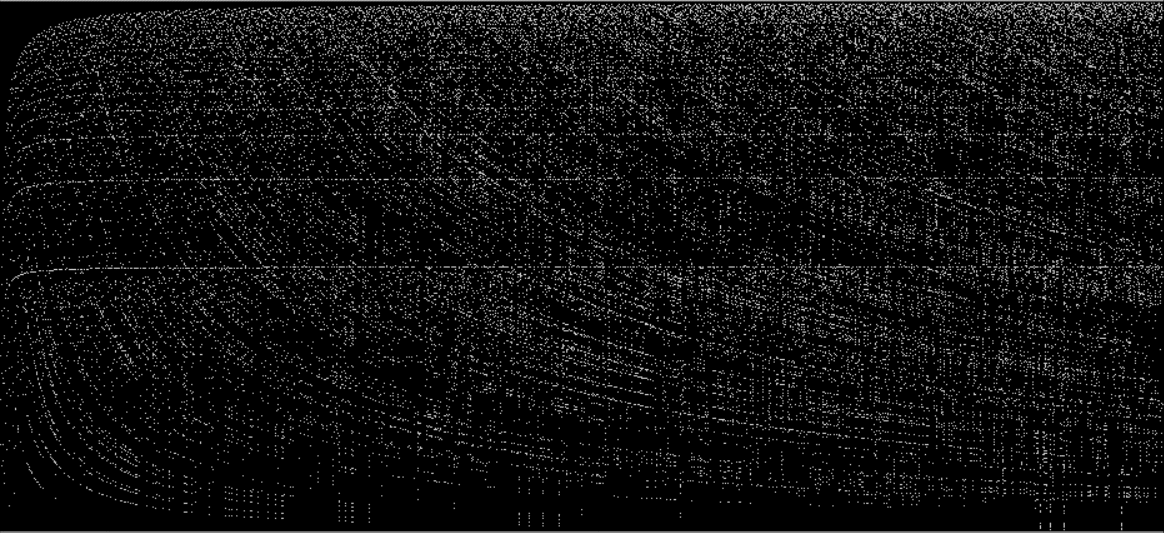
x = n <= 7422, f(i) -= factpowsum(f(i)) → f(i) < 2


The factpowsum(n) is the sum of the factors multiplied by their powers. For example, 37692 = 2^2 * 3^3 * 349, so factpowsum(4188) = 2*2 + 3*3 + 349*1 = 362. Here’s factpowsum for more n:
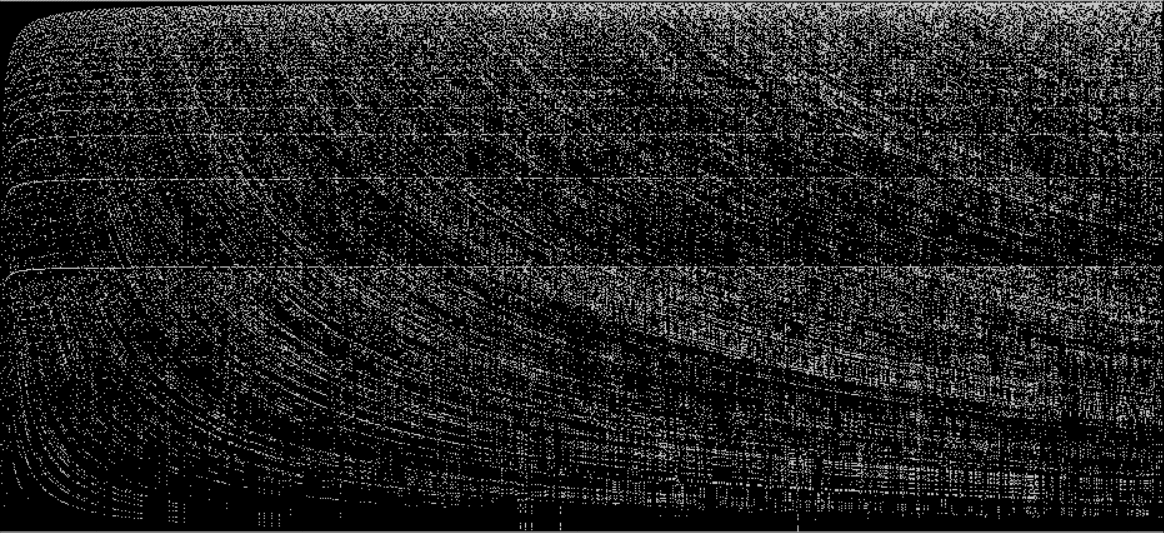
x = n <= 14822, f(i) -= factpowsum(f(i)) → f(i) < 2


You can also use the very simple function f(i) -= 1, that is, compress the numbers from n to 1 into the y-gap. But if you do that, you’ll get a completely filled screen:

x = n <= 3722, f(i) -= 1 → f(i) = 0


So you can adjust the color of a pixel according to how many times it’s written to:
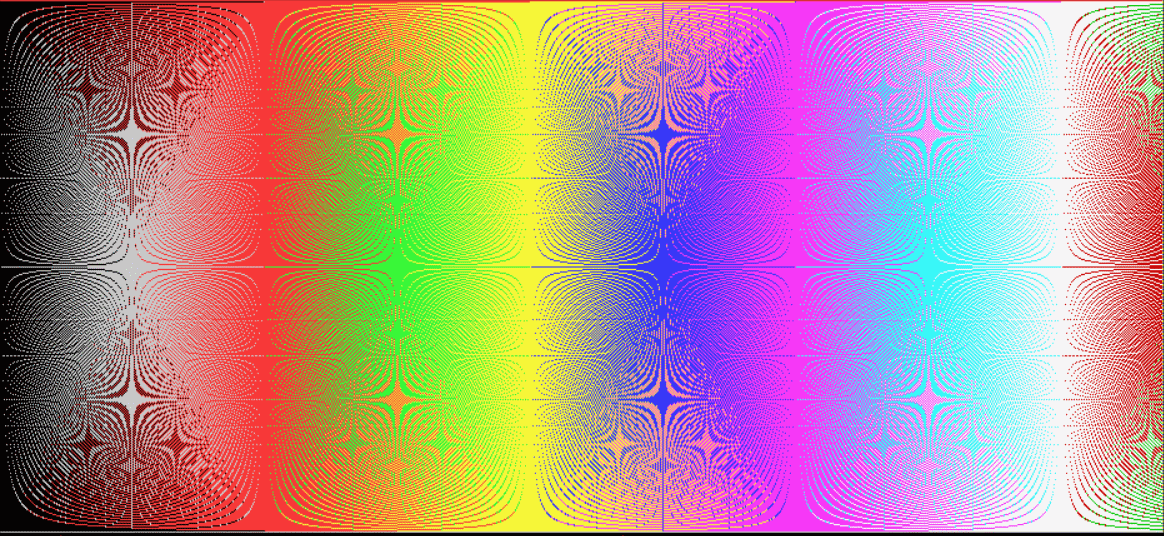
x = n <= 1862, f(i) -= 1 → f(i) = 0 (color-adjust)


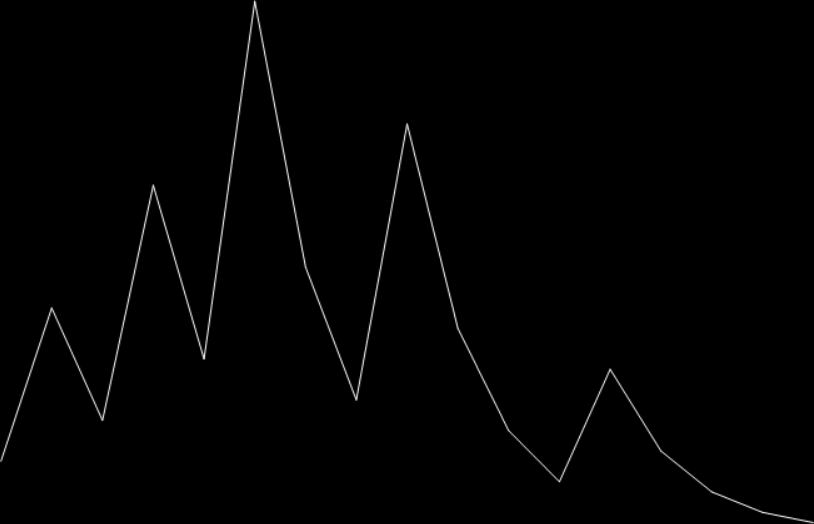
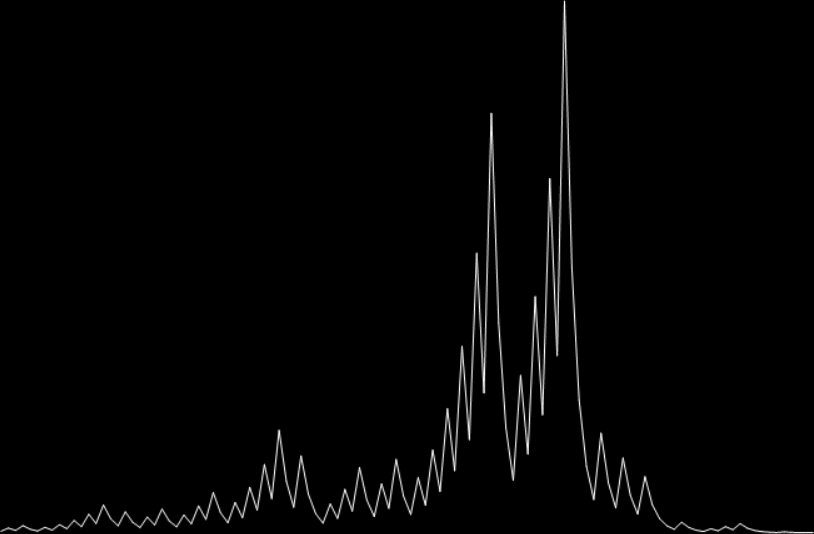
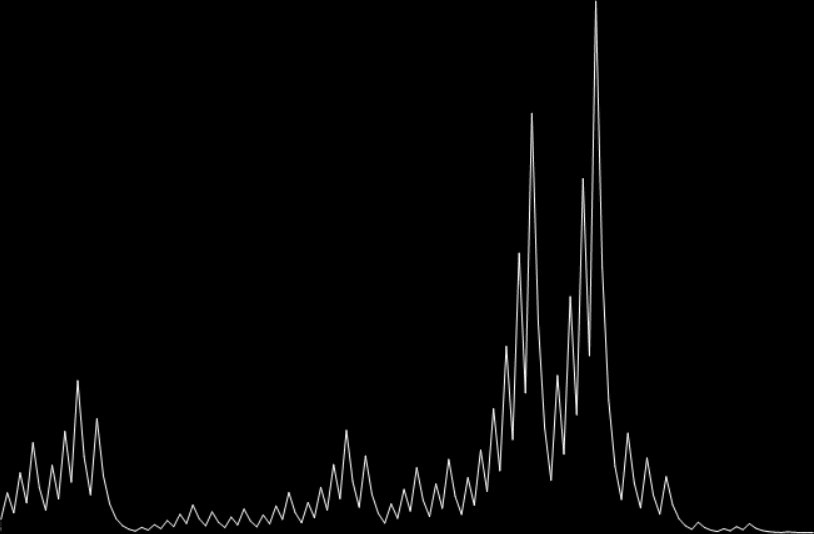
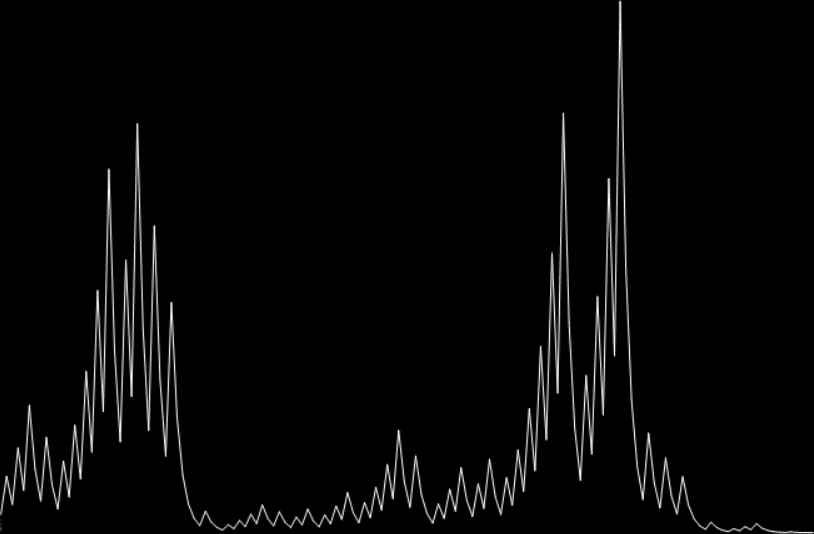
The patterns in the colors are artifacts of the limited resolution of the screen, so I call these patterns strartifacts = strata + artifacts. Here’s another example:
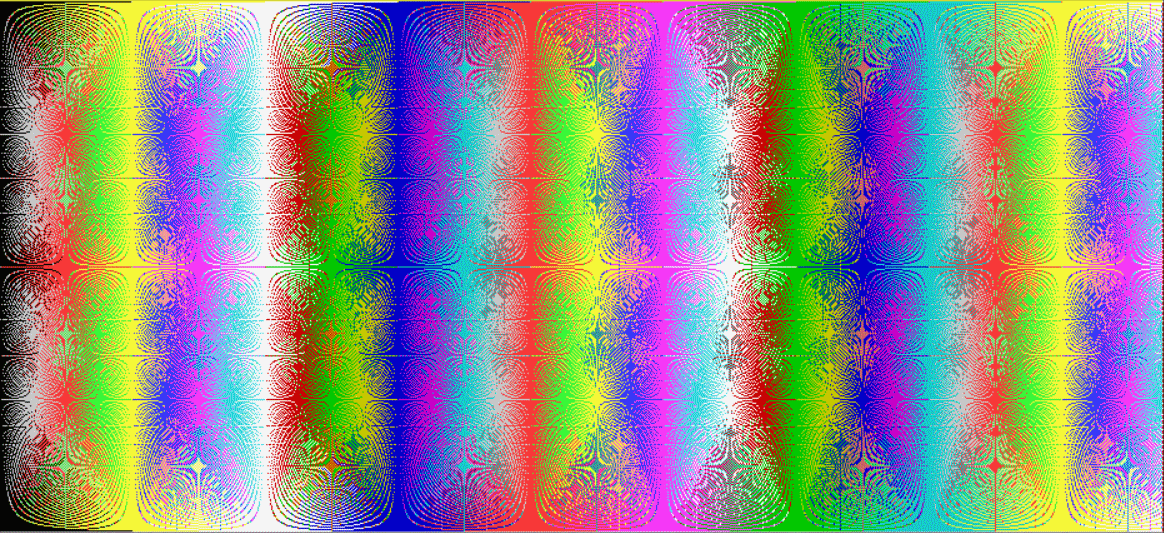
x = n <= 3722, f(i) -= 1 → f(i) = 0 (color-adjust)


Or adjust the greytone of the pixel:
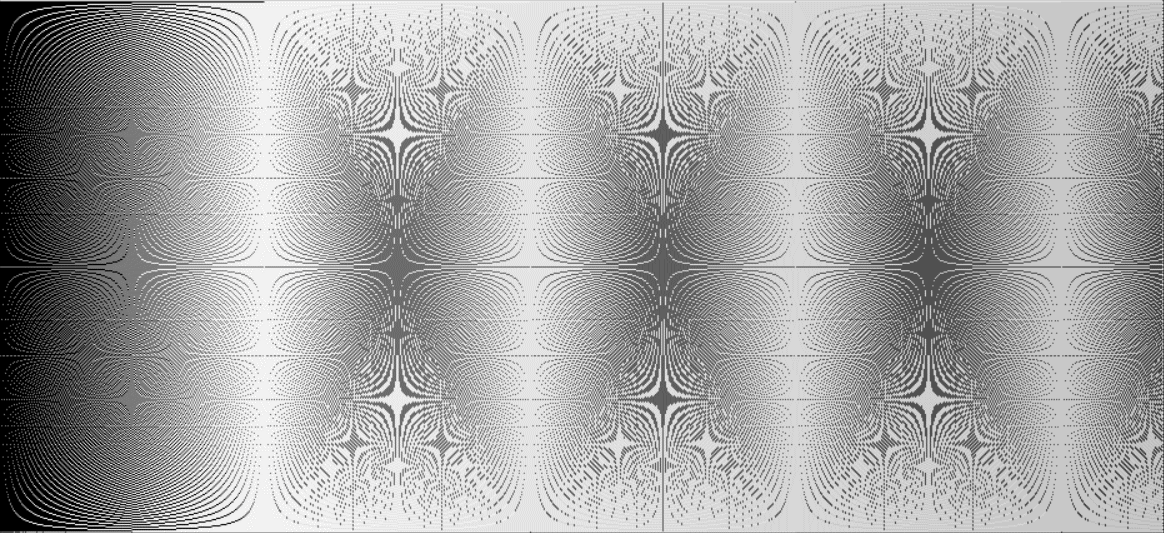
x = n <= 3722, f(i) -= 1 → f(i) = 0 (greytone-adjust)


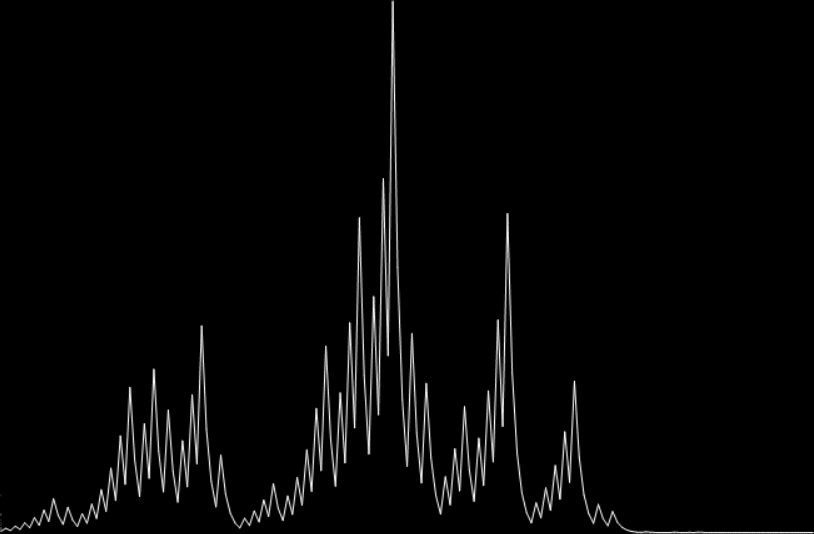
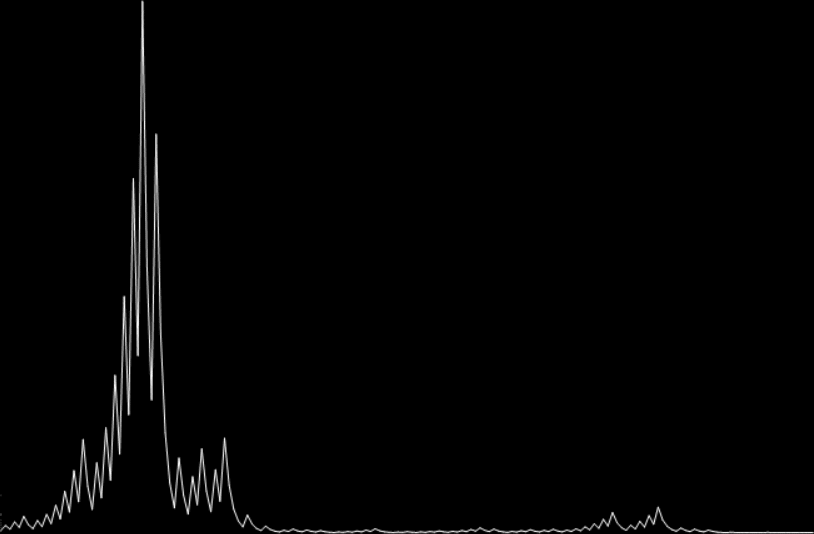
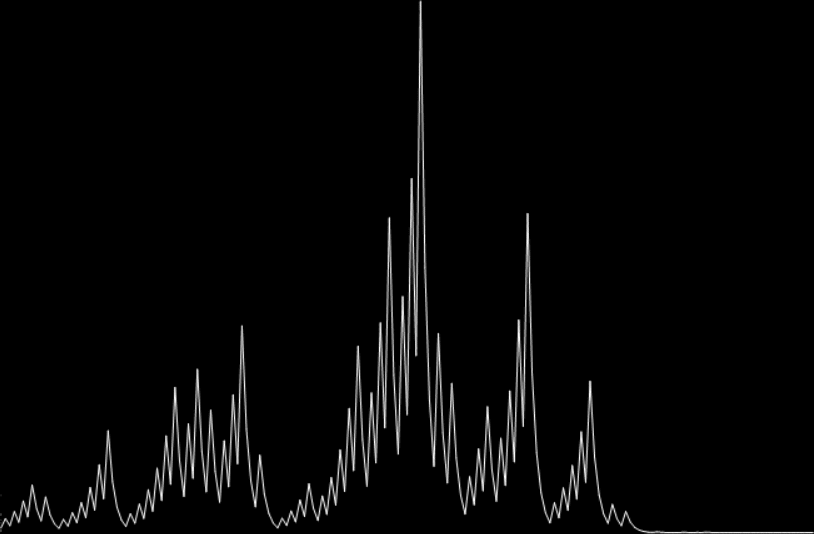
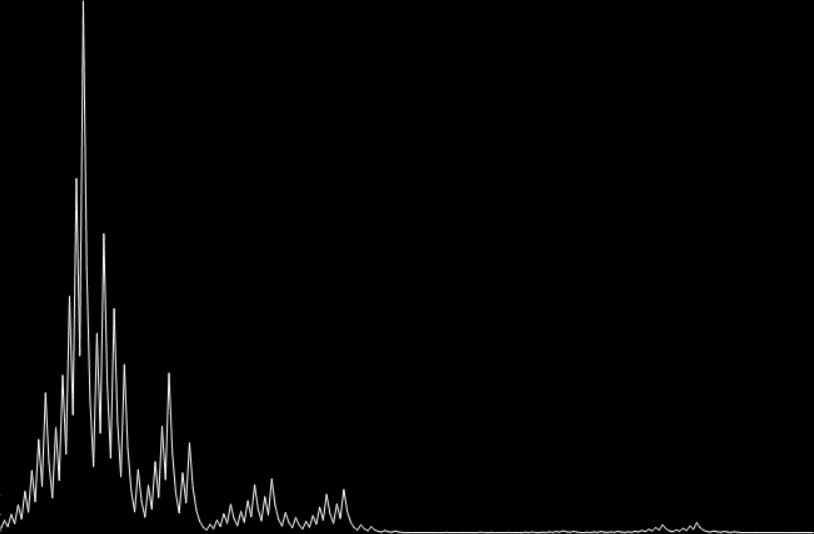
And so on (in all cases, you can click for a larger image):
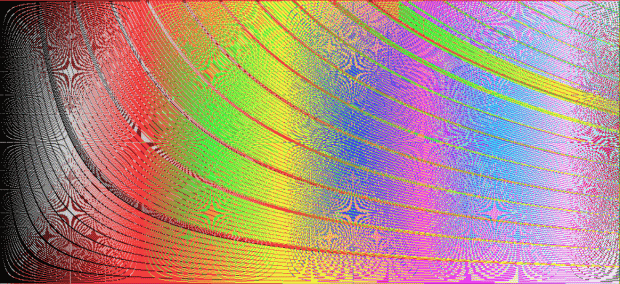
x = n <= 1862, f(i) -= blockmul(f(i)) (multiply run-lengths of same digits) → f(i) < 2
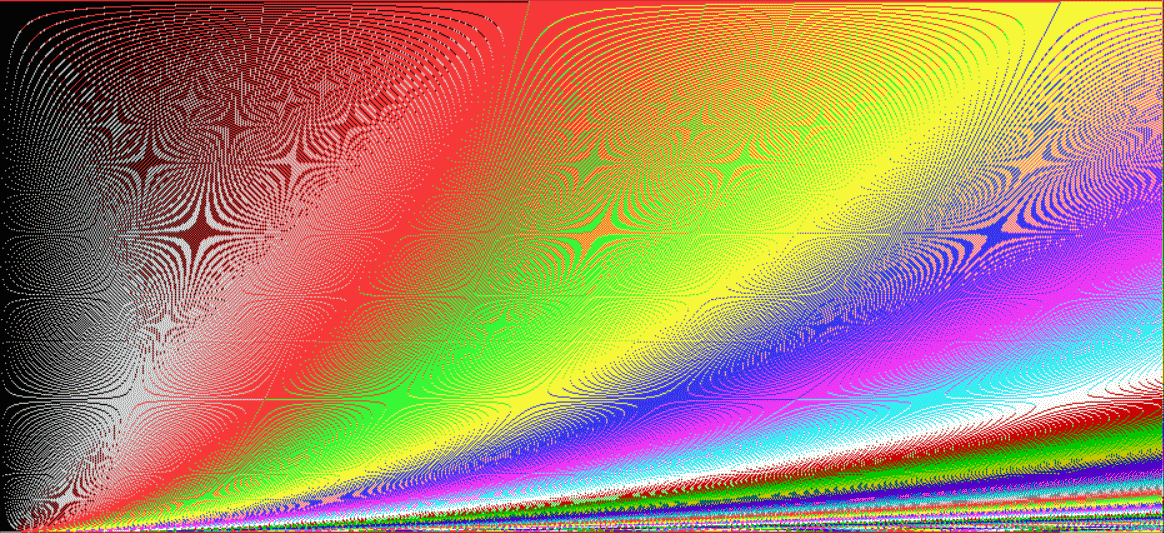

x is triangular(n) = 3 to 1734453, y is 1 < triangular numbers <= n
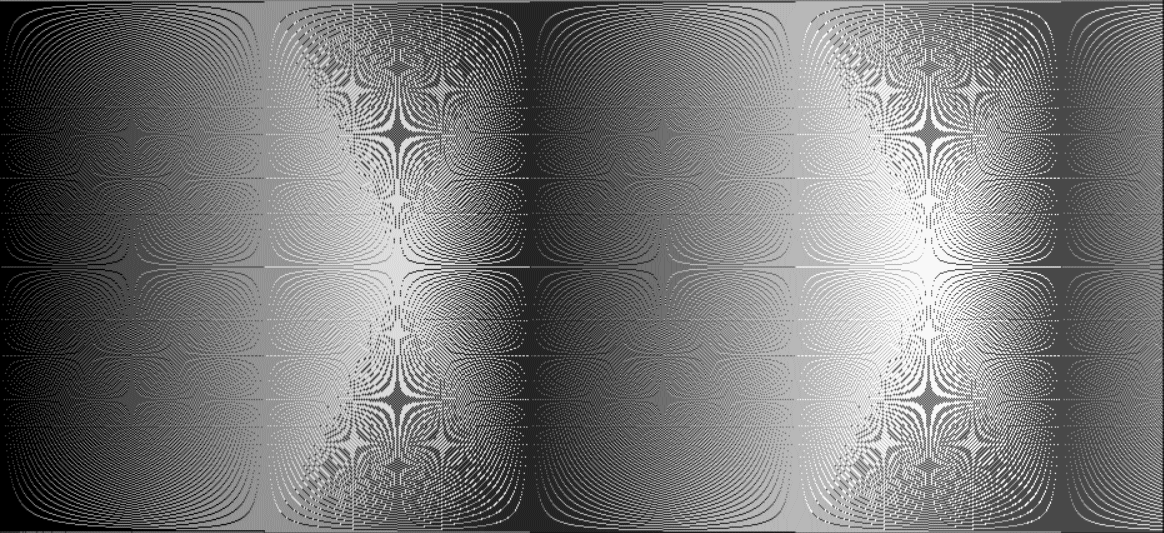

x = n <= , f(i) -= 1 → f(i) < 2
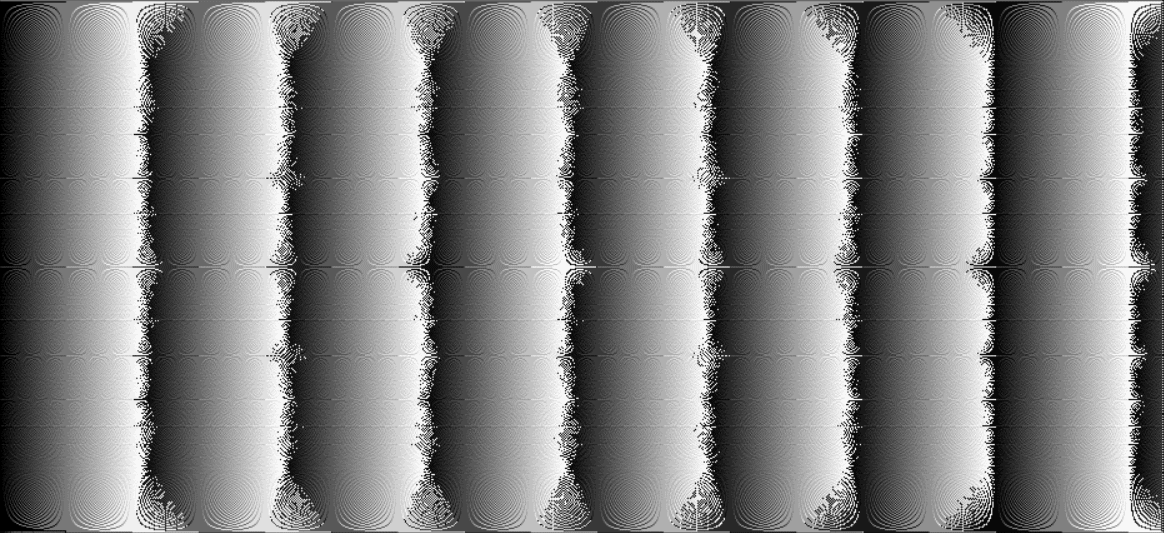

x = n <= 7442, f(i) -= 1 → f(i) < 2
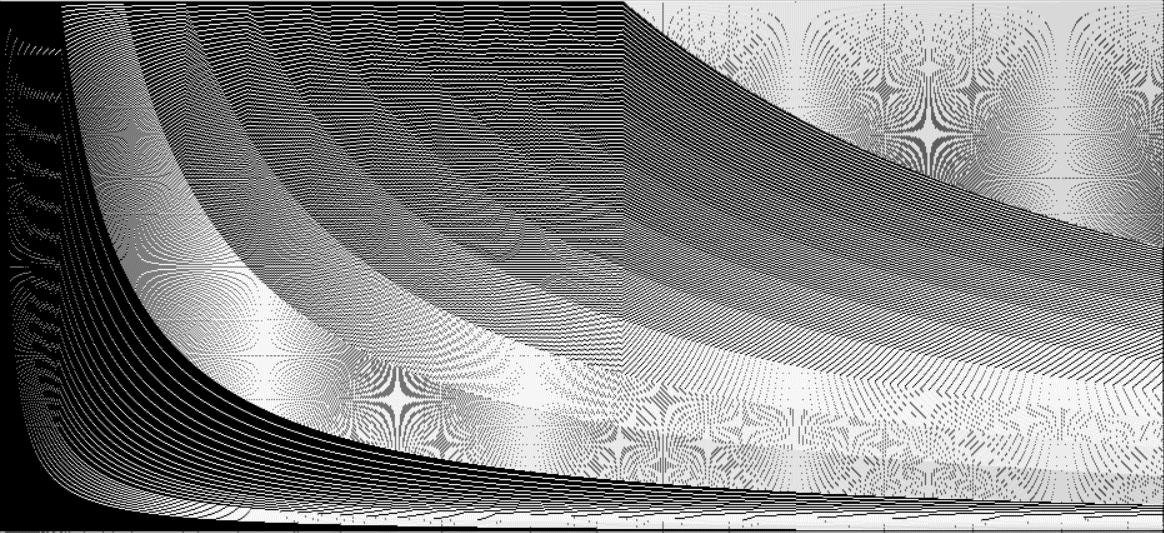

x = n <= 1862, f(i) -= leaddig(f(i)) → f(i) < 2 # 1
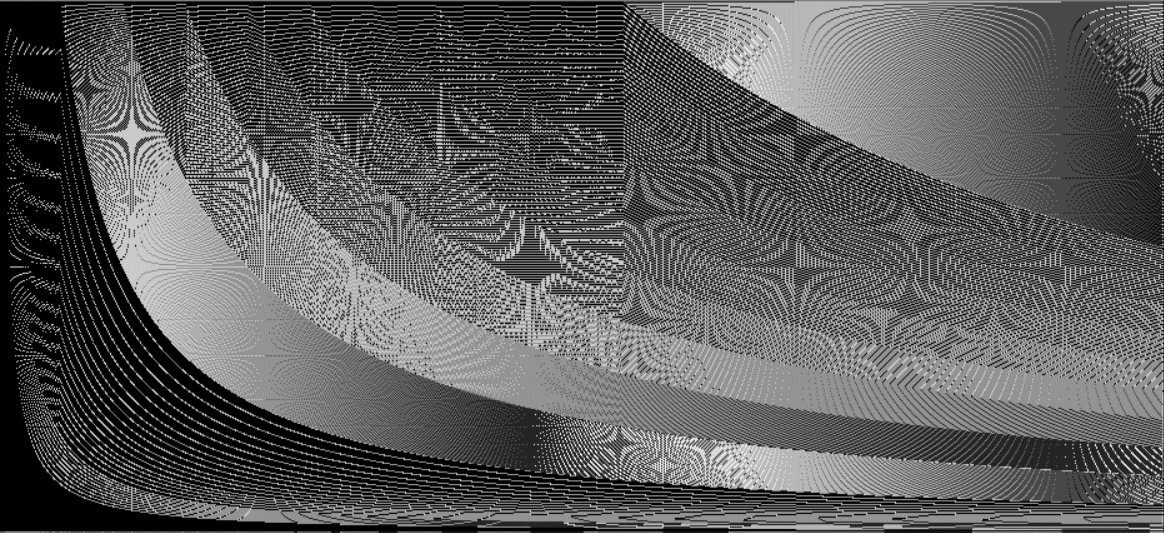

x = n <= , f(i) -= leaddig(f(i)) → f(i) < 2 # 2
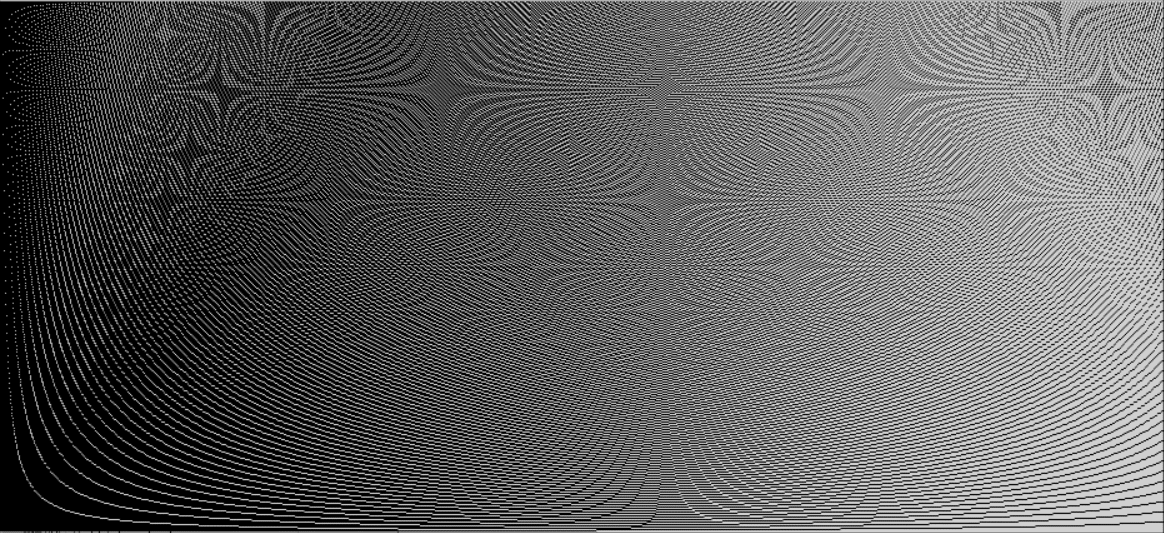

x = n <= , f(i) -= trailingdigit(f(i)) + 1 → f(i) < 2
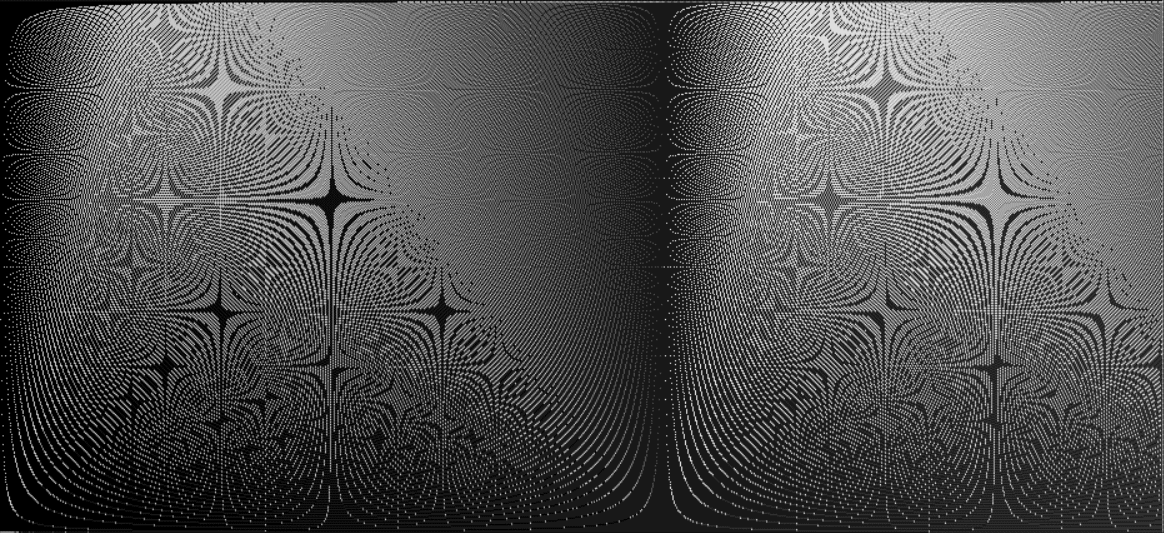

x = n <= , f(i) -= trailingdigit(f(i) in base 5) + 3 → f(i) < 2
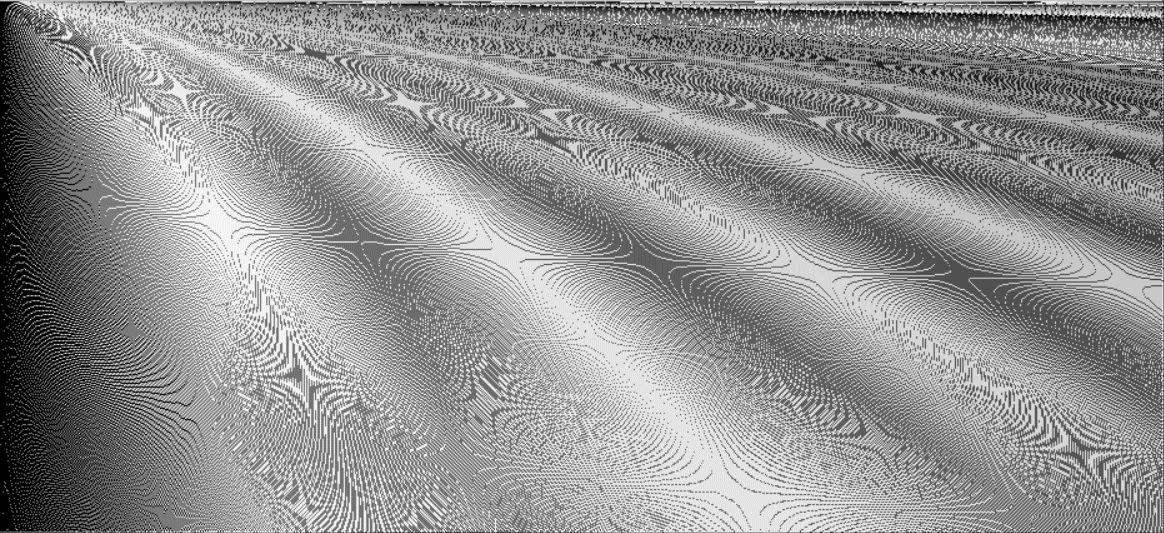

for triangular(n) = 3 to 6928503, f(i) -= primes → f(i) < 2
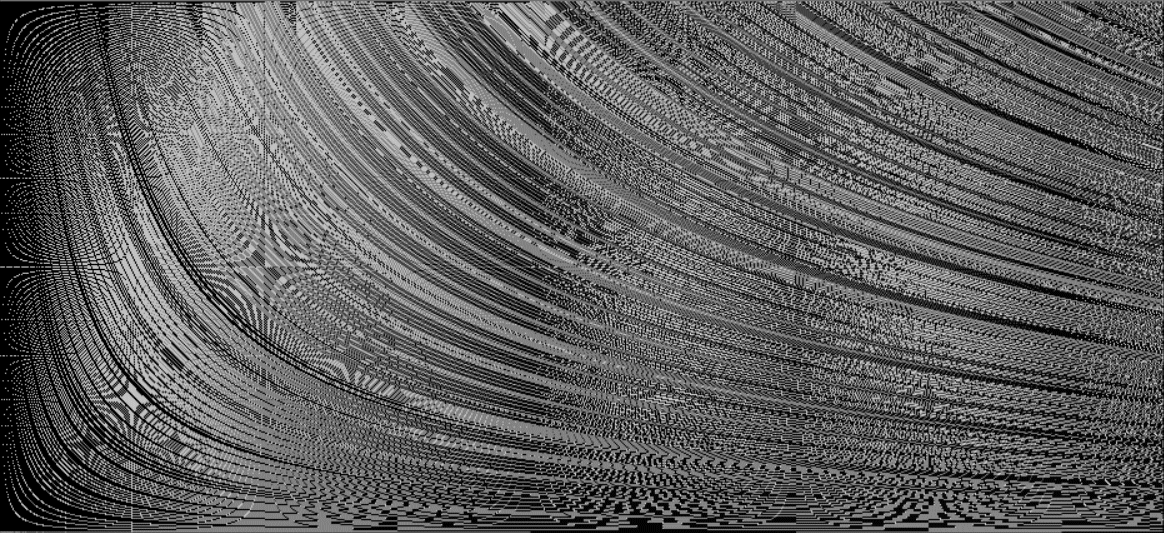


x = n <= 1862, f(i) -= blockmul(f(i) in base 5) (multiply run-lengths of same digits) → f(i) < 2
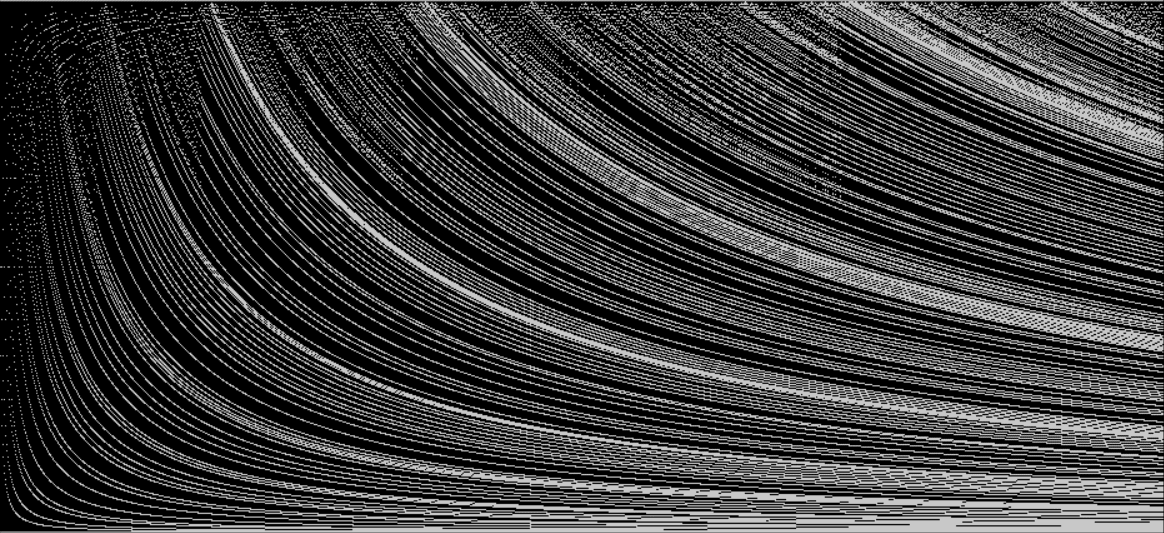

x = n <= 1862, f(i) -= blockmul(f(i) in base 2) → f(i) < 2
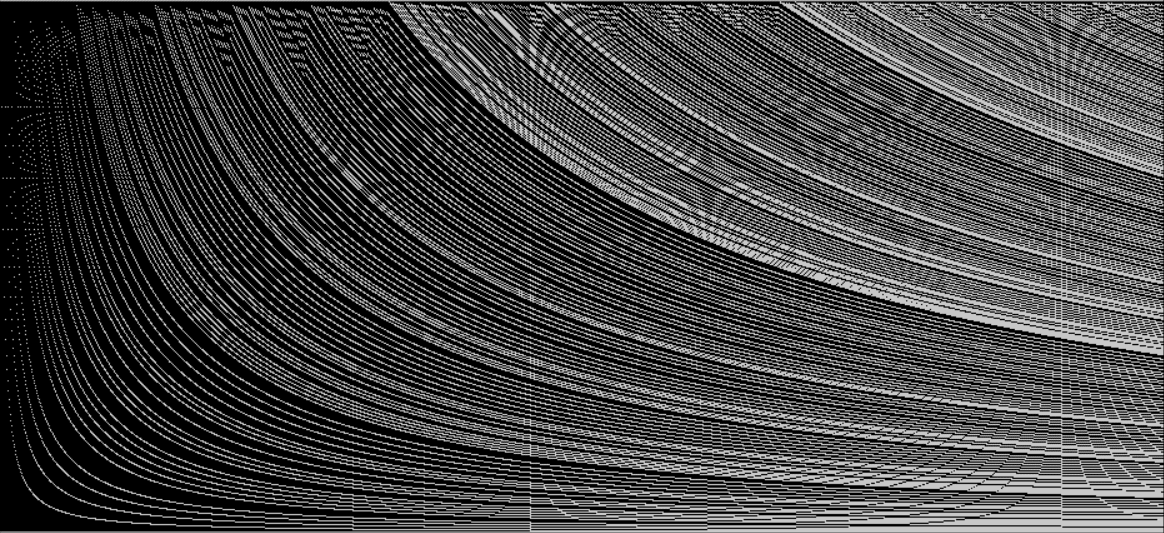

x = n <= 1862, f(i) -= digsum(f(i)) → f(i) < 2
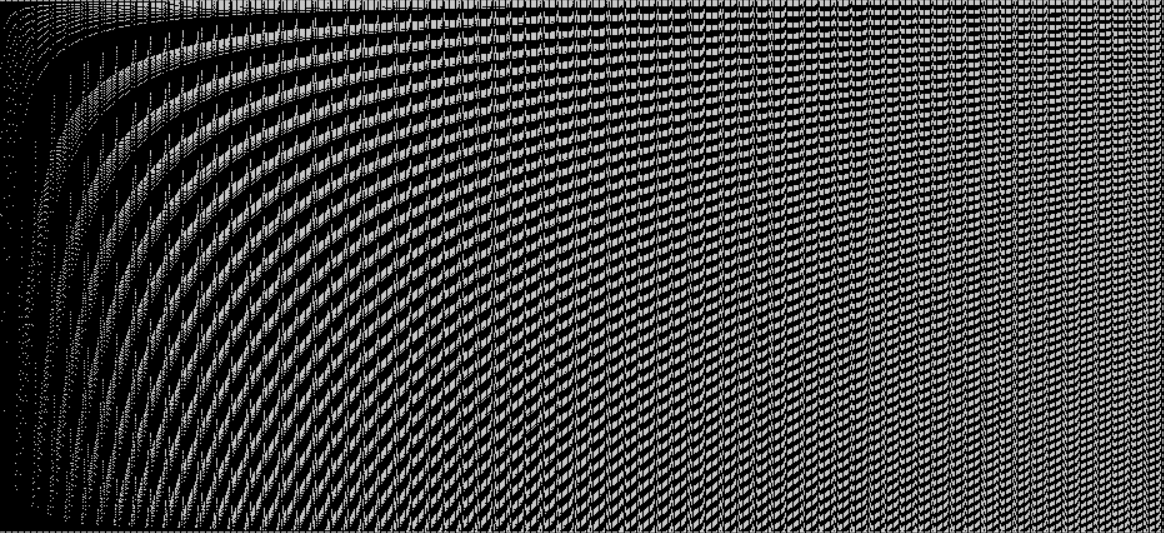

x = n <= 3722, f(i) -= func(x = 1/4 → x < 0, x(1) = 4) → f(i) < 2
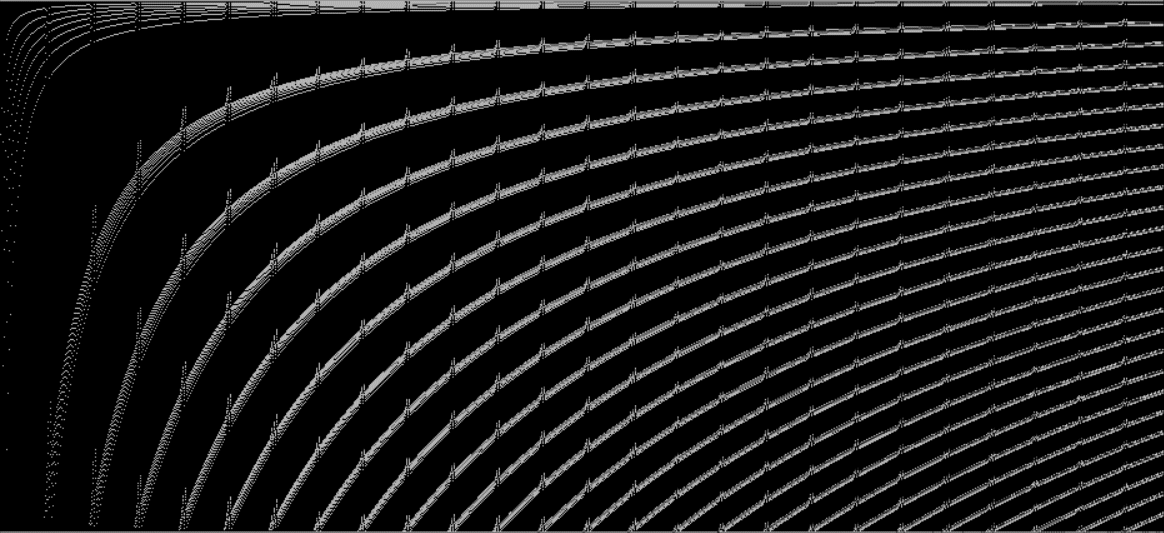

x = n <= 932, f(i) -= func(x -= 3/x → x < 0, x(1) = 6) → f(i) < 2
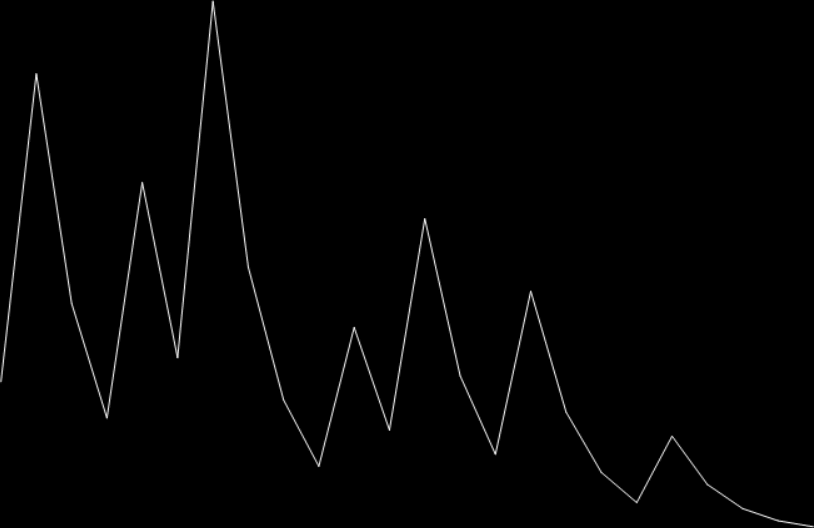

hail(Satan)!

It’s a very simple function that raises a very difficult question. An unanswered question, in fact. Take any whole number. If it’s odd, multiply it by 3 and add 1. If it’s even, divide it by 2. Repeat until you reach 1. That’s the hailstone function, because the numbers rise and fall like hailstones being formed in a cloud. Here are some examples:

5 → 16 → 8 → 4 → 2 → 1 (steps=5)


3 → 10 → 5 → 16 → 8 → 4 → 2 → 1 (st=7)


7 → 22 → 11 → 34 → 17 → 52 → 26 → 13 → 40 → 20 → 10 → 5 → 16 → 8 → 4 → 2 → 1 (st=16)

Graph for hail(7) = 16 (mx=52)


25 → 76 → 38 → 19 → 58 → 29 → 88 → 44 → 22 → 11 → 34 → 17 → 52 → 26 → 13 → 40 →
20 → 10 → 5 → 16 → 8 → 4 → 2 → 1 (st=23)

Graph for hail(25) = 23 (mx=88)


But is this function truly a hailstone function? That is, does every number fall finally to earth and reach 1? So far, for every number tested, the answer has been yes. But do all numbers reach 1? The Collatz conjecture says they do. But no-one can prove it. Or disprove it. All it would take is one number failing to fall to earth. Mathematicians don’t think there is one, but numbers can take a surprising length of time to get to the ground. Here’s 27:

27 → 82 → 41 → 124 → 62 → 31 → 94 → 47 → 142 → 71 → 214 → 107 → 322 → 161 → 484 → 242 → 121 → 364 → 182 → 91 → 274 → 137 → 412 → 206 → 103 → 310 → 155 → 466 → 233 → 700 → 350 → 175 → 526 → 263 → 790 → 395 → 1186 → 593 → 1780 → 890 → 445 → 1336 → 668 → 334 → 167 → 502 → 251 → 754 → 377 → 1132 → 566 → 283 → 850 → 425 → 1276 → 638 → 319 → 958 → 479 → 1438 → 719 → 2158 → 1079 → 3238 → 1619 → 4858 → 2429 → 7288 → 3644 → 1822 → 911 → 2734 → 1367 → 4102 → 2051 → 6154 → 3077 → 9232 → 4616 → 2308 → 1154 → 577 → 1732 → 866 → 433 → 1300 → 650 → 325 → 976 → 488 → 244 → 122 → 61 → 184 → 92 → 46 → 23 → 70 → 35 → 106 → 53 → 160 → 80 → 40 → 20 → 10 → 5 → 16 → 8 → 4 → 2 → 1 (st=111)

Graph for hail(27) = 111 (mx=9232)


27 takes 111 steps to reach 1. And the 111 made me think of another question. If the function hail(n) returns the number of steps required for n to reach 1, then hail(27) = 111. But what about hail(n) = 666? That is, what is the first number that requires 666 steps to reach 1? I say “first number”, because one very big number is guaranteed to take 666 steps:

666 = hail(306,180,206,916,083,902,309,240,650,087,602,475,282,639,486,413,866,622,
577,088,471,913,520,022,894,784,390,350,900,738,050,555,138,105,234,536,857,820,245,
071,373,614,031,482,942,161,565,170,086,143,298,589,738,273,508,330,367,307,539,078,
392,896,587,187,265,470,464)

Put another way, 666 = hail(2^666), because for any power of 2, hail(2^p) = p. But is there a smaller number, which I’ll call satan, for which hail(satan) = 666? Here’s a tantalizing taster of the task:

hail(27) = 111 (mx=9232)
hail(30262) = 222 (mx=2484916)
hail(164521) = 333 (mx=21933016)
hail(886953) = 444 (mx=52483285312)
hail(5143151) = 555 (mx=125218704148)
hail(satan) = 666 (mx=?)


But what is satan? Before I answer, here are some more graphs for interesting hail(n):

hail(231) = 127 (mx=9232)


hail(327) = 143 (mx=9232)


hail(703) = 170 (mx=250504)


hail(871) = 178 (mx=190996)


hail(2223) = 182 (mx=250504)


hail(3711) = 237 (mx=481624)


hail(35655) = 323 (mx=41163712)


hail(142587) = 374 (mx=593279152)


Now I’ll answer the question. If satan = 26597116, then hail(satan) = 666:

hail(26597116) = 666 (mx=15208728208)


Therefore:

hail(satan)! =
1,010,632,056,840,781,493,390,822,708,129,876,451,757,582,398,324,145,411,
340,420,807,357,413,802,103,697,022,989,202,806,801,491,012,040,989,802,
203,557,527,039,339,704,057,130,729,302,834,542,423,840,165,856,428,740,
661,530,297,972,410,682,828,699,397,176,884,342,513,509,493,787,480,774,
903,493,389,255,262,878,341,761,883,261,899,426,484,944,657,161,693,131,
380,311,117,619,573,051,526,423,320,389,641,805,410,816,067,607,893,067,
483,259,816,815,364,609,828,668,662,748,110,385,603,657,973,284,604,842,
078,094,141,556,427,708,745,345,100,598,829,488,472,505,949,071,967,727,
270,911,965,060,885,209,294,340,665,506,480,226,426,083,357,901,503,097,
781,140,832,497,013,738,079,112,777,615,719,116,203,317,542,199,999,489,
227,144,752,667,085,796,752,482,688,850,461,263,732,284,539,176,142,365,
823,973,696,764,537,603,278,769,322,286,708,855,475,069,835,681,643,710,
846,140,569,769,330,065,775,414,413,083,501,043,659,572,299,454,446,517,
242,824,002,140,555,140,464,296,291,001,901,438,414,675,730,552,964,914,
569,269,734,038,500,764,140,551,143,642,836,128,613,304,734,147,348,086,
095,123,859,660,926,788,460,671,181,469,216,252,213,374,650,499,557,831,
741,950,594,827,147,225,699,896,414,088,694,251,261,045,196,672,567,495,
532,228,826,719,381,606,116,974,003,112,642,111,561,332,573,503,212,960,
729,711,781,993,903,877,416,394,381,718,464,765,527,575,014,252,129,040,
283,236,963,922,624,344,456,975,024,058,167,368,431,809,068,544,577,258,
472,983,979,437,818,072,648,213,608,650,098,749,369,761,056,961,203,791,
265,363,665,664,696,802,245,199,962,040,041,544,438,210,327,210,476,982,
203,348,458,596,093,079,296,569,561,267,409,473,914,124,132,102,055,811,
493,736,199,668,788,534,872,321,705,360,511,305,248,710,796,441,479,213,
354,542,583,576,076,596,250,213,454,667,968,837,996,023,273,163,069,094,
700,429,467,106,663,925,419,581,193,136,339,860,545,658,673,623,955,231,
932,399,404,809,404,108,767,232,000,000,000,000,000,000,000,000,000,000,
000,000,000,000,000,000,000,000,000,000,000,000,000,000,000,000,000,000,
000,000,000,000,000,000,000,000,000,000,000,000,000,000,000,000,000,000,
000,000,000,000,000,000,000,000,000 = 666!


Here’s a question I haven’t answered: if satanic numbers are those n satisfying hail(n) = 666, how many satanic numbers are there? We’ve already seen two of them: 666 = hail(2^666) = hail(26597116). But how many more are there? Not infinitely many, because for n > 2^666, hail(n) > 666. In fact, after satan = 26597116, the next three satanic numbers arrive very quickly:

hail(satan+0) = 666 = hail(26597116)
hail(satan+1) = 666 = hail(26597117)
hail(satan+2) = 666 = hail(26597118)
hail(satan+3) = 666 = hail(26597119)

hail(satan-1) = 180 = hail(26597115)
hail(satan+4) = 180 = hail(26597120)


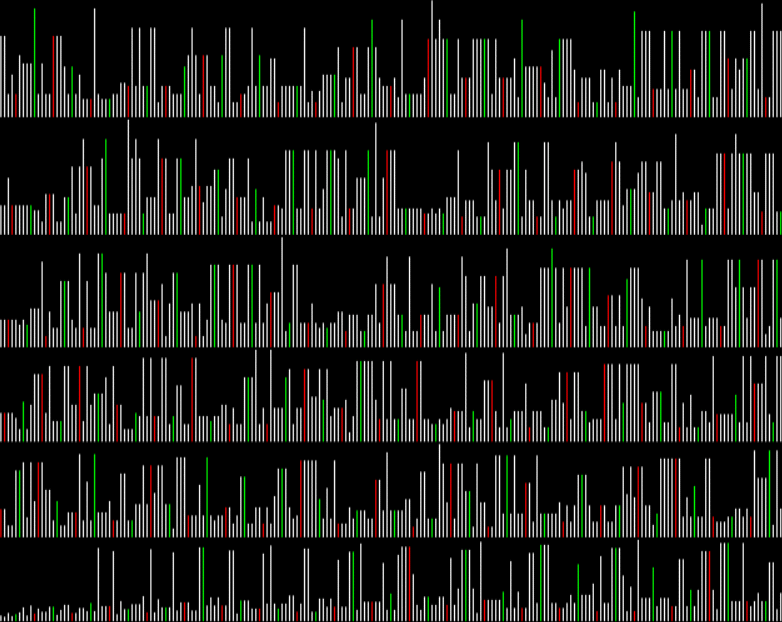
So there are four consecutive satanic numbers. But it isn’t unusual for a run of consecutive numbers to have the same hail(). Here’s a graph of the values of hail(n) for n = 1,2,3… (running left-to-right, down-up, with 1,2,3… in the lower lefthand corner). When n is divisible by 10, hail(n) is represented in red; when n is odd and divisible by 5, hail(n) is green. Note how many runs of identical hail(n) there are:

Graph for hail(n)


Here are successive records for runs of identical hail(n):

hail(12..13) = 9 (run=2)
hail(28..30) = 18 (run=3)
hail(98..102) = 25 (r=5)
hail(386..391) = 120 (r=6)
hail(943..949) = 36 (r=7)
hail(1494..1501) = 47 (r=8)
hail(1680..1688) = 42 (r=9)
hail(2987..3000) = 48 (r=14)
hail(7083..7099) = 57 (r=17)
hail(57346..57370) = 78 (r=25)
hail(252548..252574) = 181 (r=27)
hail(331778..331806) = 91 (r=29)
hail(524289..524318) = 102 (r=30)
hail(596310..596349) = 97 (r=40)


Finally, here’s Poland’s finest putting the function of 26597116 to music:

“Hail Satan!” by Dopelord


Elsewhere Other-Accessible…

Dopelord at Bandcamp