Future Floral Font

Odoric (also known as Odoryc, Odorous, Dendric, Dryadic, Floric, and Floral) will be a language of odors used by many races of intelligent tree and a few races of intelligent flower for an indefinite period between 15,000,000 and 20,000,000 years in the future. In its standard form among trees it will be based on odors released from special odorifera (scent-organs) on leaves or branches and wafted from tree to tree by the wind or air-diffusion. Because of the chemical nature of Odoric, a simple exchange of greetings will take several hours in favorable weather, a brief conversation several days, and the recitation of an average tree-saga a year or more.

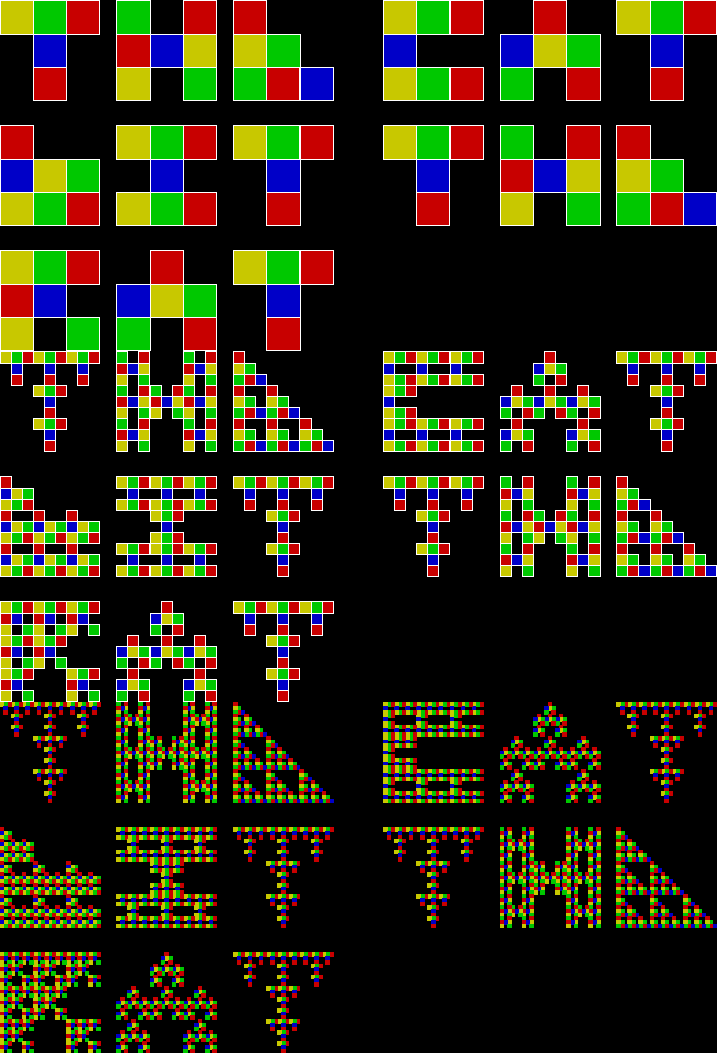
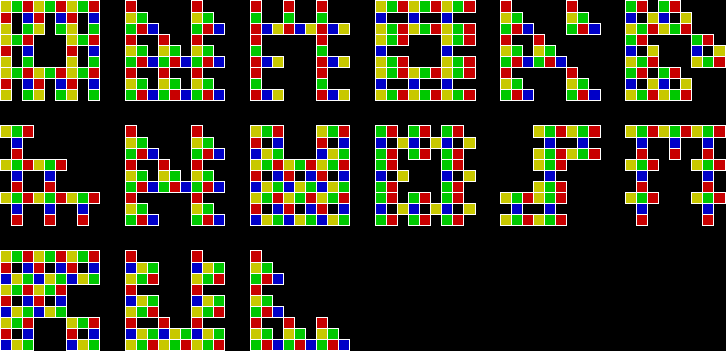
Odoric will have innumerable and often mutually unintelligible dialects falling into three main families: Coniferous Odoric, as used by conifers; Deciduous Odoric, as used by non-coniferous deciduous trees; and Floral Odoric, as used by flowers. Its native written form will evolve late and be based on chemical markers laid down within leaves and roots as a mnemonic for individual trees. In this form, it cannot be represented directly by a script suitable for human eyes, but Odoric will also be written by a non-plant species: an advanced race of intelligent squirrel that will discover and transcribe the language about 28,000,000 years in the future. This Sciurine (Squirrel) Odoric is presented here in one of its several forms.
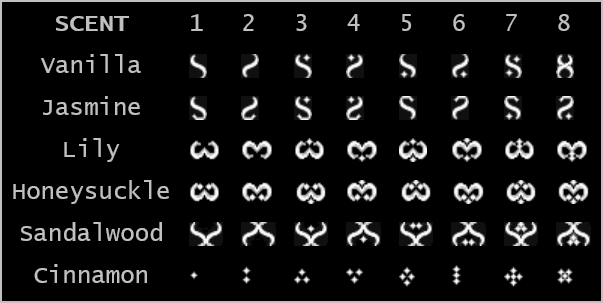
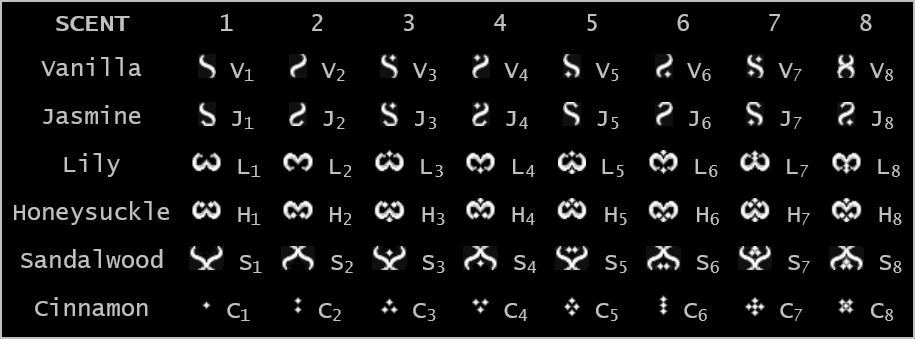
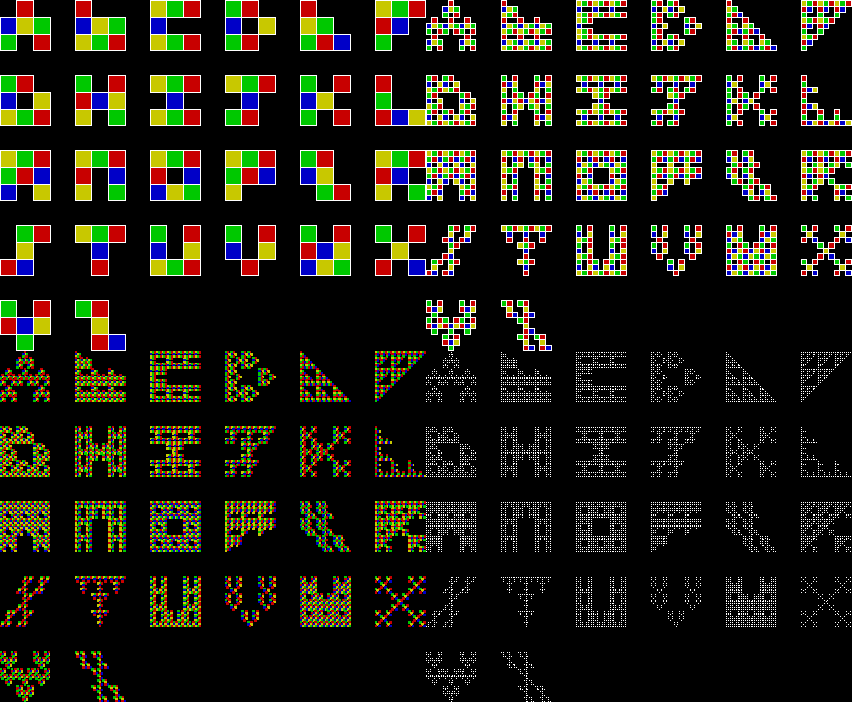
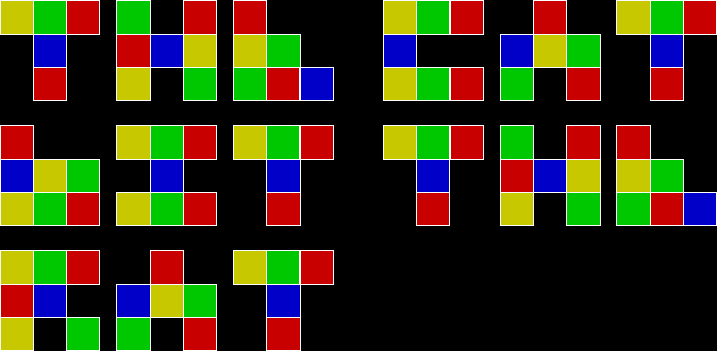
As can be seen, the letters, or osmemes, of the script fall into six eight-letter scent-series named after the closest equivalent scent in the present-day plant kingdom. The letters of each series will be distinguished in their wafted (that is, “spoken”) form by subtle chemical variations, although some may be created artificially to complete an incomplete series – eight will apparently have mystical significance for squirrels, perhaps under the influence of a mathematic mysticism among trees. For example, seems to be a homosme of , or to become so in some dialects of Odoric. Each letter is transcribed into Roman using the initial of the scent in the series to which it will belong, plus a subscripted digit indicating its place in the series: the second letter of the Jasmine series, , is therefore J2 and the fifth letter of the Honeysuckle series, , is H5.

There will be only two punctuation marks in this form of Sciurine Odoric: <  >, used like a comma, semi-colon, or colon, and <  >, used like a full stop. It is believed that these marks will have no wafted form and will be used purely for the convenience of the squirrels transcribing a passage of Odoric.

Sample text
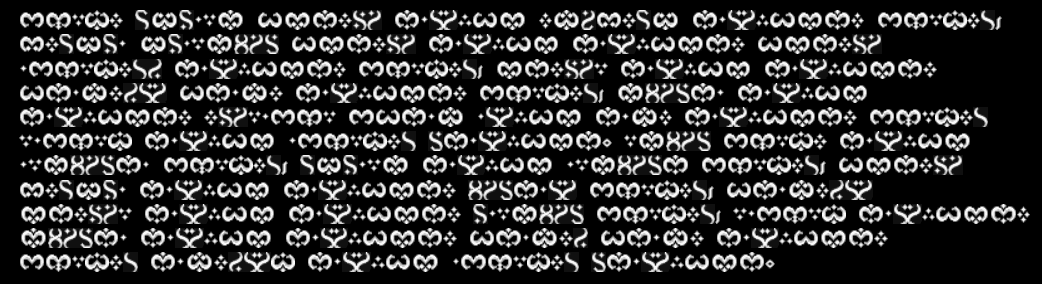
Transliteration
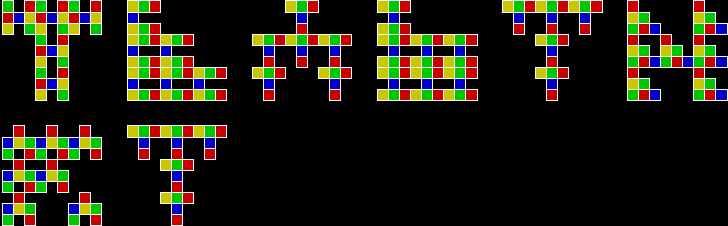
L3H1C5L6C6 J6H4J8C2C5S1 L2H7L7C6V8V5 L7C2S6C4L2H7 C6H8J5H3C6J6H4 L7C2S6C4L2H7L7C6 L3H1C5L6C6V2, H3C6J6H4J8C2 H4J8C2C5S1J1V5J4 L2H7L7C6V8V5 L7C2S6C4L2H7 L7C2S6C4L2H7L7C6 L2H7L7C6V8V5 C2L3H1C5L6C6V2V7 L7C2S6C4L2H7L7C6 L3H1C5L6C6V2, H7L7C6V8V5C5 L7C2S6C4L2H7 L7C2S6C4L2H7L7C6 L2L7C2H8C6V7S6 L2L7C2H8C6 L7C2S6C4L2H7L7C6 L3H1C5L6C6V2, S1J1V5J4L7C2 L7C2S6C4L2H7 L7C2S6C4L2H7L7C6 C6V8V5C5C2L3H1C5 L3L2L7C2H8 C2S6C4L2H7 L7C2H8C6 L7C2S6C4L2H7L7C6 L3H1C5L6C6V2 C5C2L3H1C5L6 L7C2S6C4L2H7 C2L3H1C5L6C6V2 J4L7C2S6C4L2H7L7. C5S1J1V5J4 L3H1C5L6C6 L7C2S6C4L2H7 C2C5S1J1V5J4L7C2 L3H1C5L6C6V2, J6H4J8C2C5S1 L7C2S6C4L2H7 C2C5S1J1V5J4L7 L3H1C5L6C6V2, L2H7L7C6V8V5 H3C6J6H4J8C2 L7C2S6C4L2H7 L7C2S6C4L2H7L7C6 J1V5J4L7C2S6 L3H1C5L6C6V2, L2L7C2H8C6V7S6 H7L7C6V8V5C5 L7C2S6C4L2H7 L7C2S6C4L2H7L7C6 J8C2C5S1J1V5J4 L3H1C5L6C6V2, C5C2L3H1C5L6 L7C2S6C4L2H7L7C6 S1J1V5J4L7C2 L7C2S6C4L2H7 L7C2S6C4L2H7L7C6 L2L7C2H8C6V7 L2L7C2H8C6 L7C2S6C4L2H7L7C6 L3H1C5L6C6V2 L7C2H8C6V7S6L6 L7C2S6C4L2H7 C2L3H1C5L6C6V2 J4L7C2S6C4L2H7L7.

Literal translation
sun rain with thou bless plural subj, leaf branch with thou plural wind stifle plural subj, root thou plural earth eat plural subj, seed thou plural number adj not be plural subj true thou stand future. but sun thou scorch subj, rain thou drown subj, wind leaf thou plural tear subj, earth root thou plural crush subj, worm plural seed thou plural each eat plural subj false thou stand future.

Idiomatic translation

“May the sun and rain bless thee, thy leaves and branches stifle the wind, thy roots swallow the (whole) earth, thy seeds be innumerable if thou art true. But may the sun scorch thee, the rain drown thee, the wind tear thy leaves, the earth crush thy roots, worms eat all thy seeds if thou art false.” – Traditional Odoric formula used to seal vows and treaties.

© 2005 Simon Whitechapel
FractAlphic Frolix

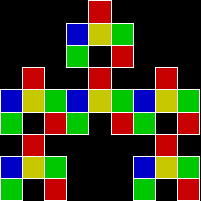
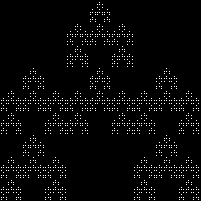
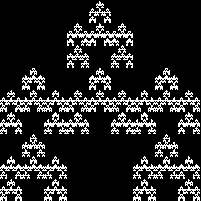
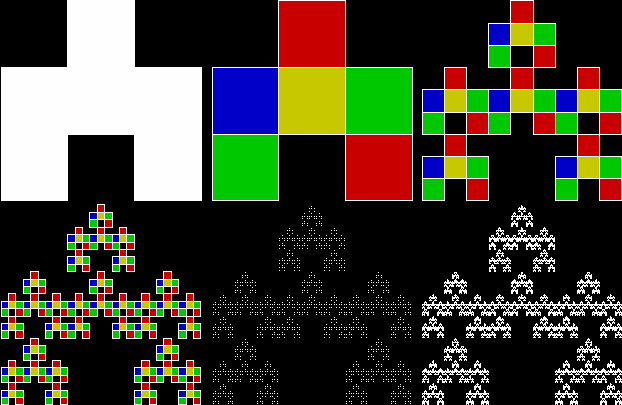
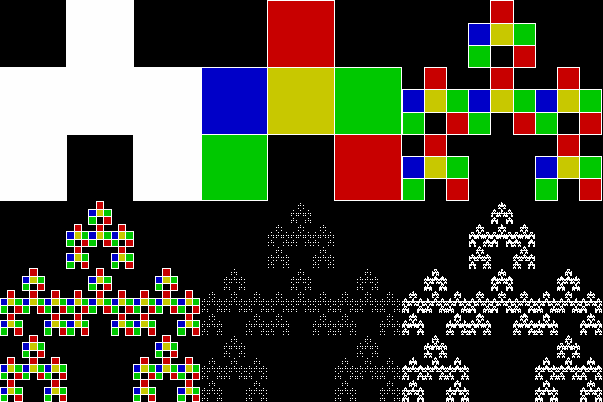
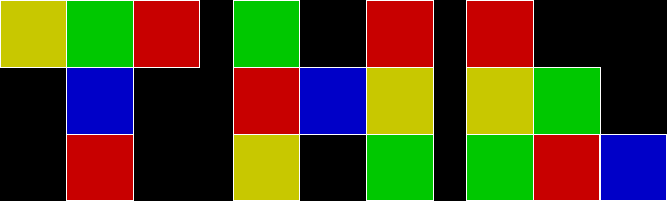
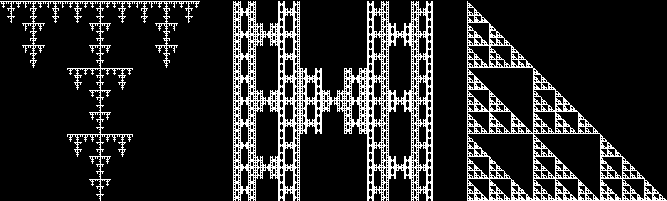
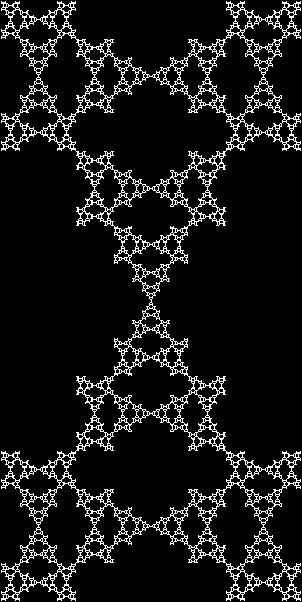
A fractal is a shape that contains smaller (and smaller) versions of itself, like this:

The hourglass fractal


Fractals also occur in nature. For example, part of a tree looks like the tree as whole. Part of a cloud or a lung looks like the cloud or lung as a whole. So trees, clouds and lungs are fractals. The letters of an alphabet don’t usually look like that, but I decided to create a fractal alphabet — or fractalphabet — that does.

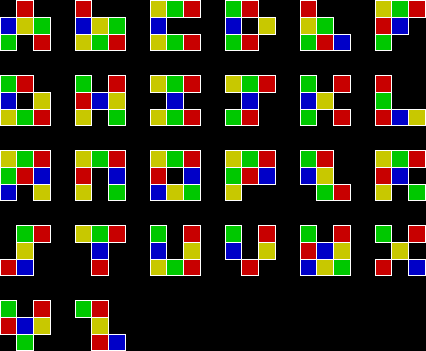
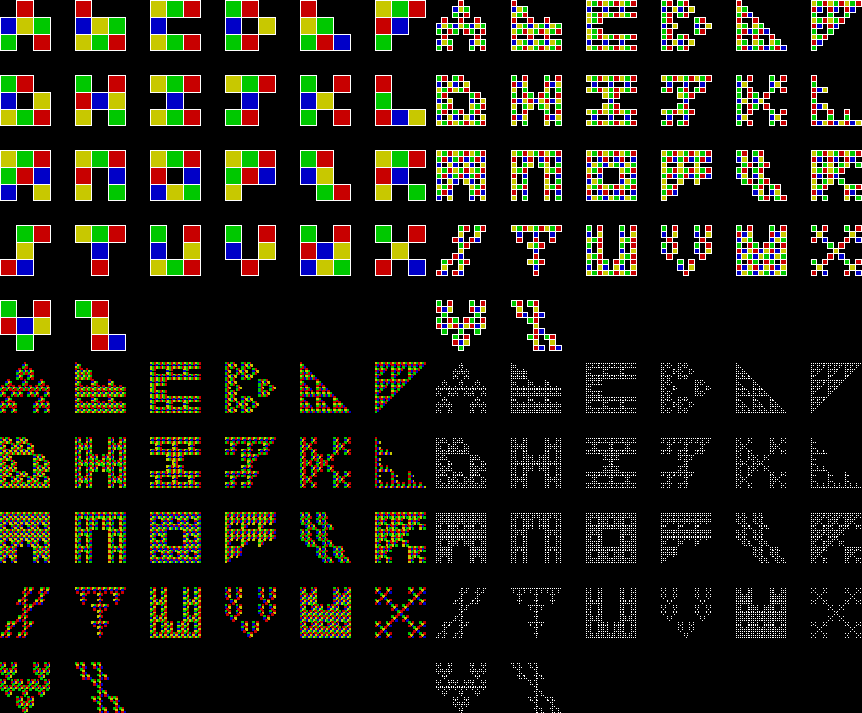
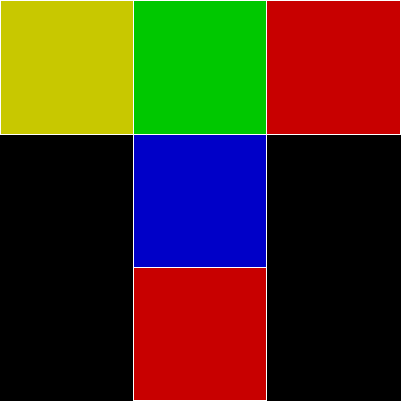
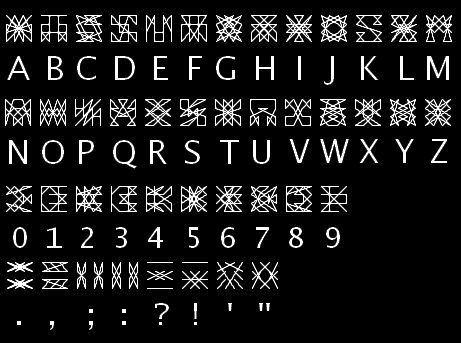
The fractalphabet starts with this minimal standard Roman alphabet in upper case, where each letter is created by filling selected squares in a 3×3 grid:


The above is stage 1 of the fractalphabet, when it isn’t actually a fractal alphabet at all. But if each filled square of the letter “A”, say, is replaced by the letter itself, the “A” turns into a fractal, like this:


Fractal A (animated)


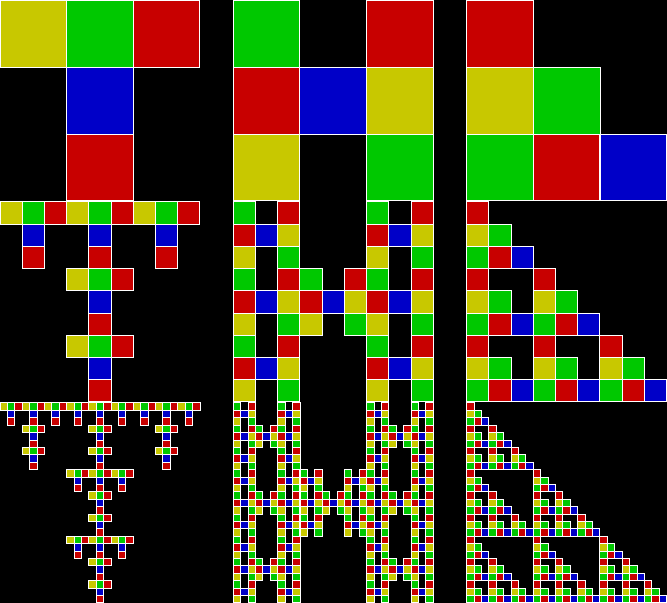
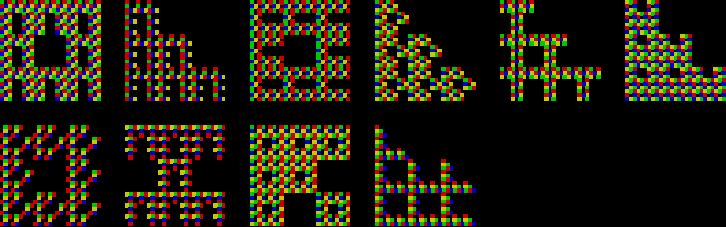
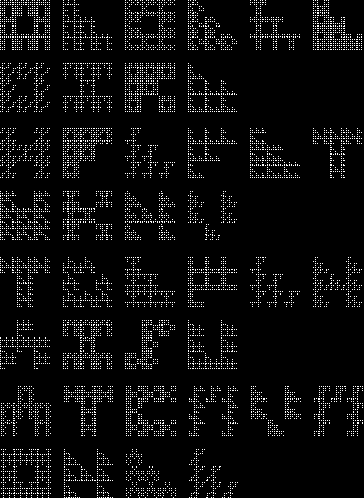
Here’s the whole alphabet being turned into fractals:

Full fractalphabet (black-and-white)


Full fractalphabet (color)


Full fractalphabet (b&w animated)


Full fractalphabet (color animated)


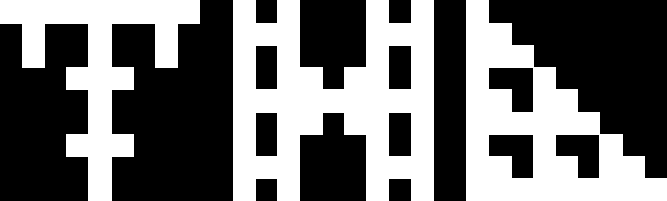
Now take a full word like “THE”:


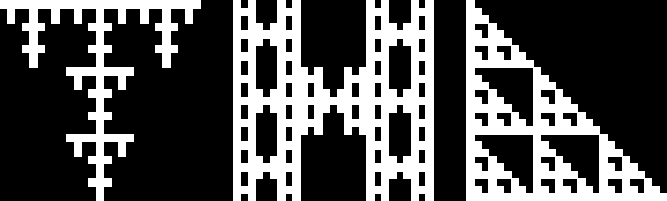
You can turn each letter into a fractal using smaller copies of itself:


Fractal THE (b&w animated)


Fractal THE (color animated)


But you can also create a fractal from “THE” by compressing the “H” into the “T”, then the “E” into the “H”, like this:


Compressed THE (animated)


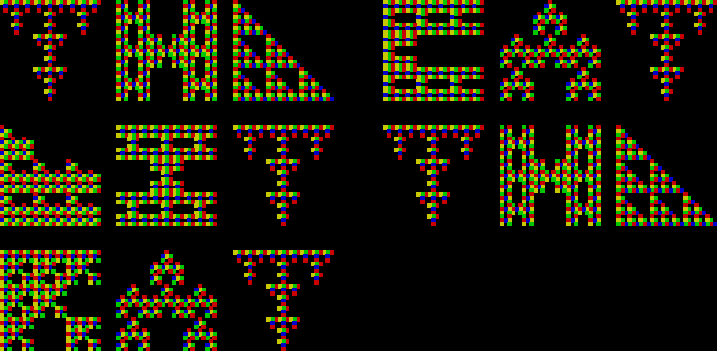
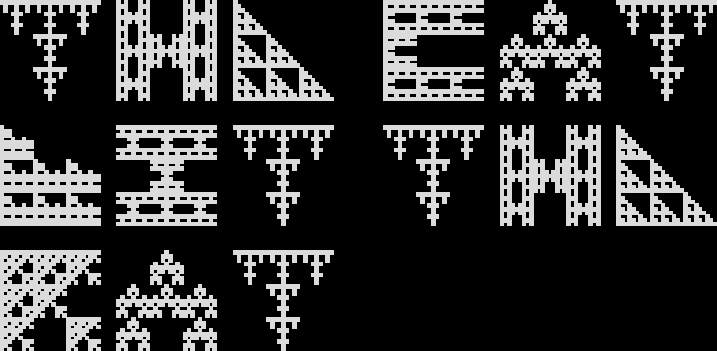
The compressed “THE” has a unique appearance and is both a letter and a word. Now try a complete sentence, “THE CAT BIT THE RAT”. This is the sentence in stage 1 of the fractalphabet:


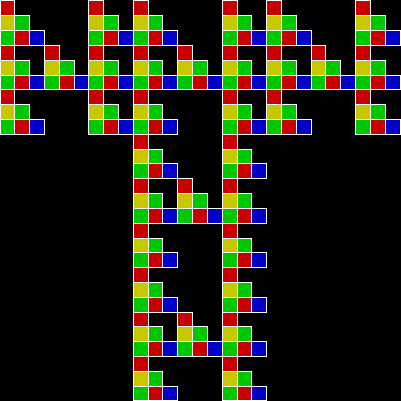
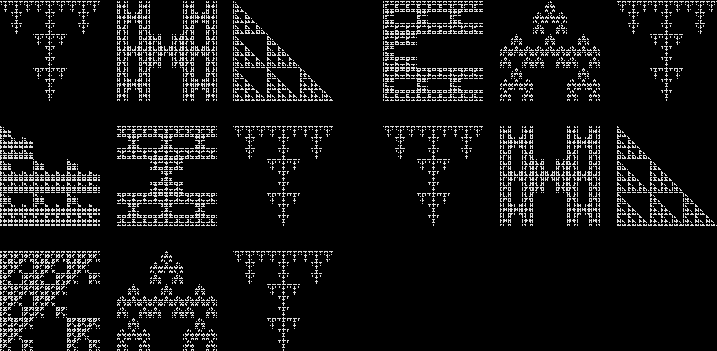
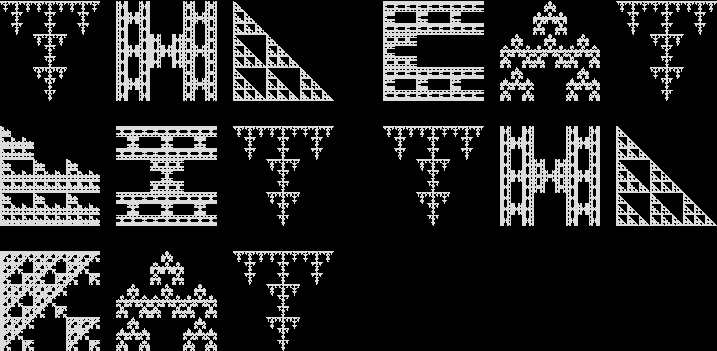
And stage 2:


And further stages:


Fractal CAT (b&w animated)


Fractal CAT (color animated)


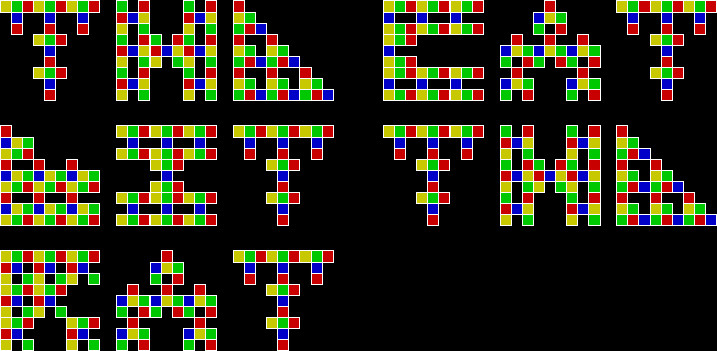
But, as we saw with “THE” above, that’s not the only fractal you can create from “THE CAT BIT THE RAT”. Here’s what I call a 2-compression of the sentence, where every second letter has been compressed into the letter that precedes it:


THE CAT BIT THE RAT (2-comp color)


THE CAT BIT THE RAT (2-comp b&w)


And here’s a 3-compression of the sentence, where every third letter has been compressed into every second letter, and every second-and-third letter has been compressed into the preceding letter:

THE CAT BIT THE RAT (3-comp color)


THE CAT BIT THE RAT (3-comp b&w)


As you can see above, each word of the original sentence is now a unique single letter of the fractalphabet. Theoretically, there’s no limit to the compression: you could fit every word of a book in the standard Roman alphabet into a single letter of the fractalphabet. Or you could fit an entire book into a single letter of the fractalphabet (with additional symbols for punctuation, which I haven’t bothered with here).

To see what the fractalphabeting of a longer text in the standard Roman alphabet might look like, take the first verse of a poem by A.E. Housman:

On Wenlock Edge the wood’s in trouble;
His forest fleece the Wrekin heaves;
The gale it plies the saplings double,
And thick on Severn snow the leaves. (“Poem XXXI” of A Shropshire Lad, 1896)

The first line looks like this in stage 1 of the fractalphabet:


Here’s stage 2 of the standard fractalphabet, where each letter is divided into smaller copies of itself:


And here’s stage 3 of the standard fractalphabet:


Now examine a colour version of the first line in stage 1 of the fractalphabet:


As with “THE” above, let’s try compressing each second letter into the letter that precedes it:


And here’s a 3-comp of the first line:


Finally, here’s the full first verse of Housman’s poem in 2-comp and 3-comp forms:

On Wenlock Edge the wood’s in trouble;
His forest fleece the Wrekin heaves;
The gale it plies the saplings double,
And thick on Severn snow the leaves. (“Poem XXXI of A Shropshire Lad, 1896)

“On Wenlock Edge” (2-comp)


“On Wenlock Edge” (3-comp)


Appendix

This is a possible lower-case version of the fractalphabet:

Ink For Your Elf

The Majikalph Script

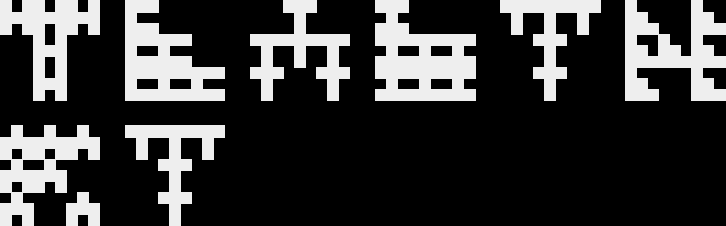
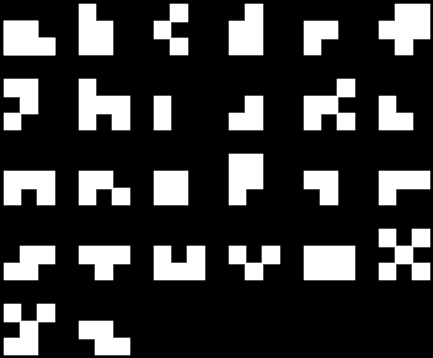
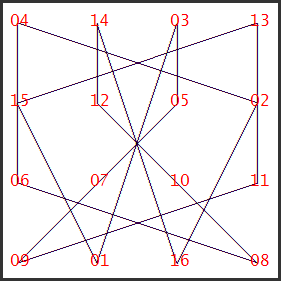
Majikalph was created by Simon Whitechapel in 2012 to combine his interests in artificial alphabets and recreational mathematics. It is based on the patterns created when lines are drawn between numbers of various 4×4 magic squares. In a magic square, every row, column, and diagonal of numbers adds to the same total. In the 4×4 magic square below, the most interesting patterns are created when each number is connected to the number 2 or 4 places higher than it (e.g. 2 goes to 4 or 6; 13 goes to 15 or 1).
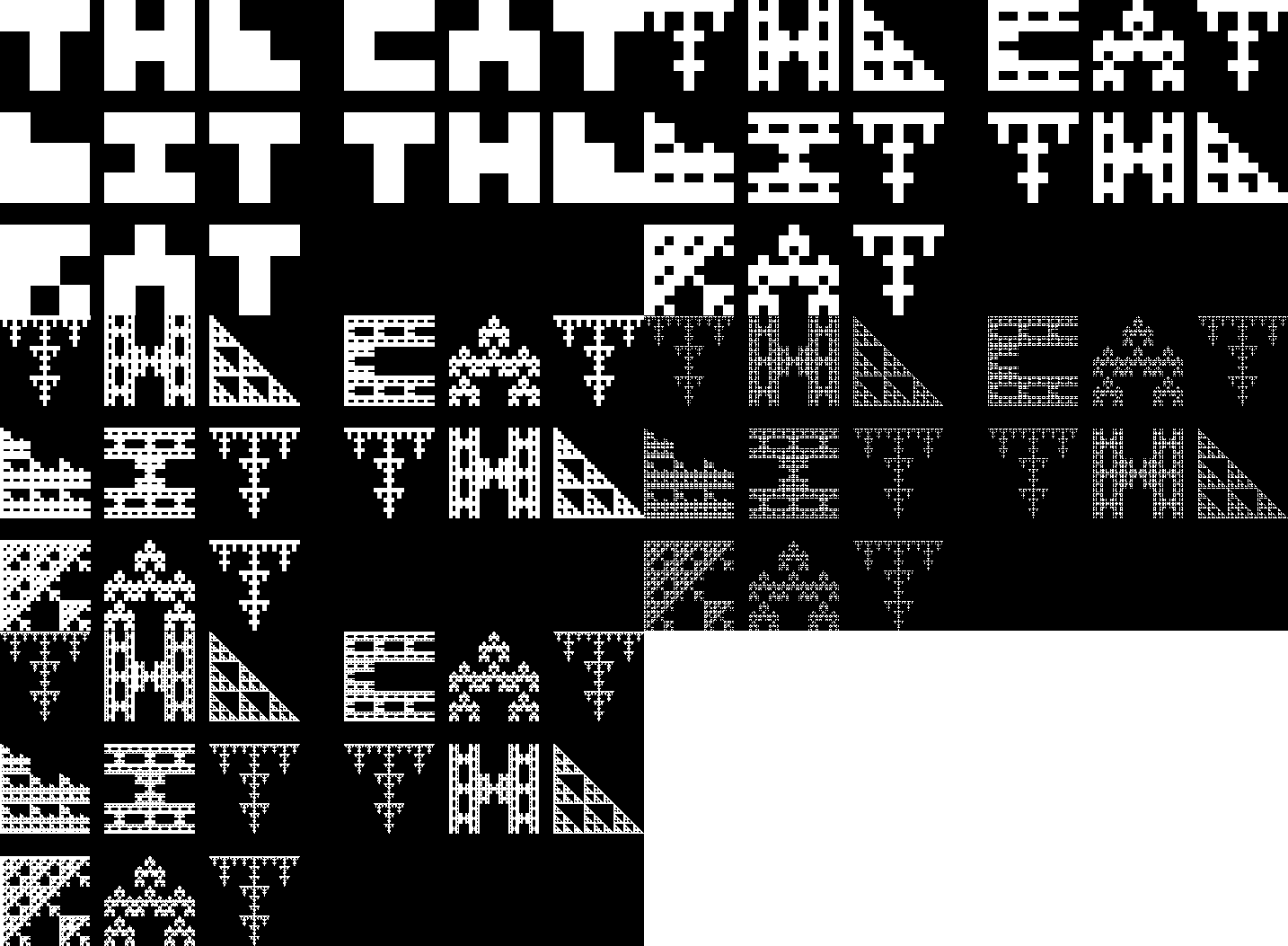
Majikalph is used for writing English and is written from right to left. There is no distinction between upper and lower case. No character of the script is invented: each is based on one or another of the 880 possible 4×4 magic squares (for further information, please see MagicSquares.net).

The sample text is an extract from Tennyson’s The Princess (1847):

Oh, hark, oh, hear! how thin and clear,
And thinner, clearer, farther going!
Oh, sweet and far from cliff and scar
The horns of Elfland faintly blowing!
Blow, let us hear the purple glens replying:
Blow, bugle; answer, echoes, dying, dying, dying.

Alfred, Lord Tennyson (1809-1892).

Sample Text

It’s Only Rot’n’Roll…

It’s Only Rot’n’Roll

A Porphyropolyhedric Tribute to Clark Ashton Smith

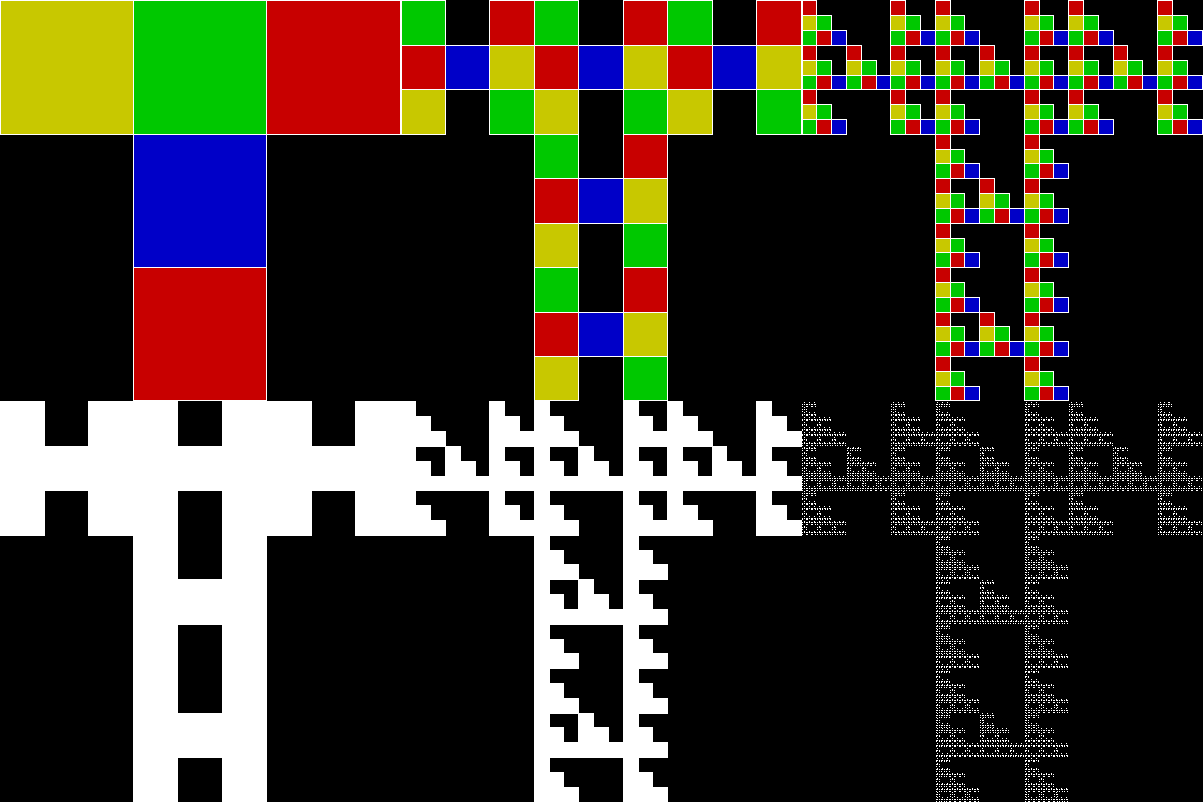
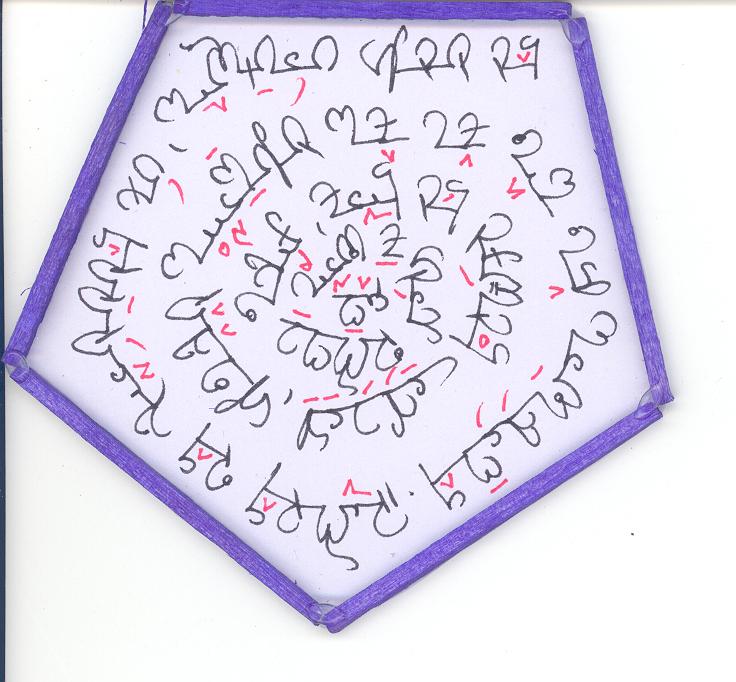
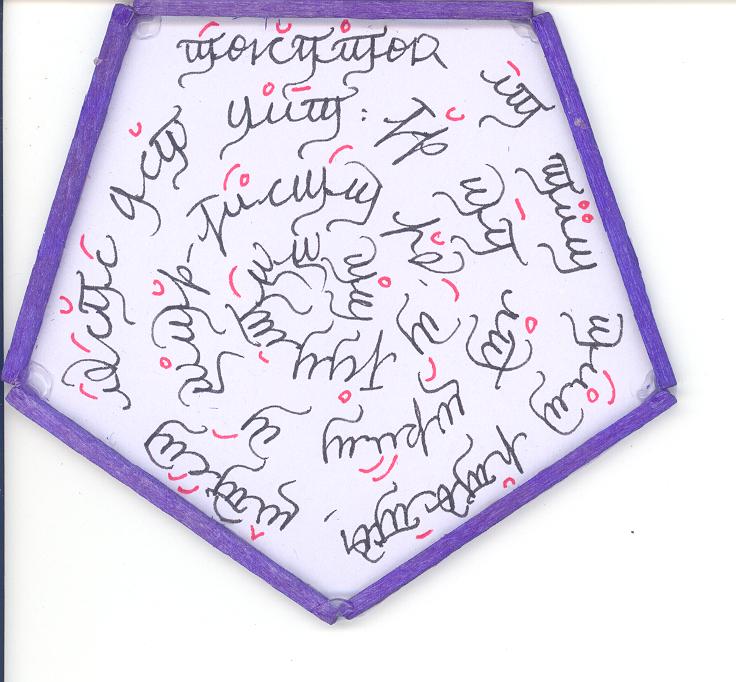
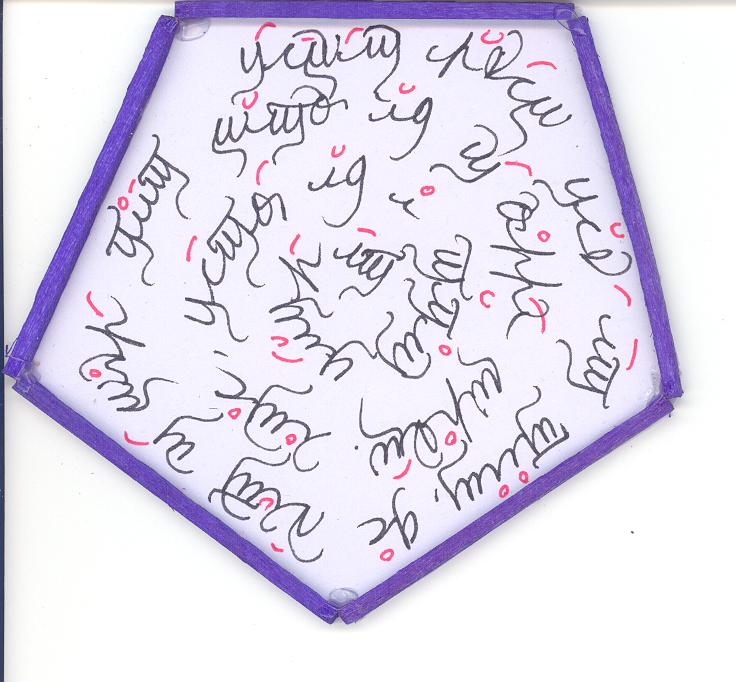
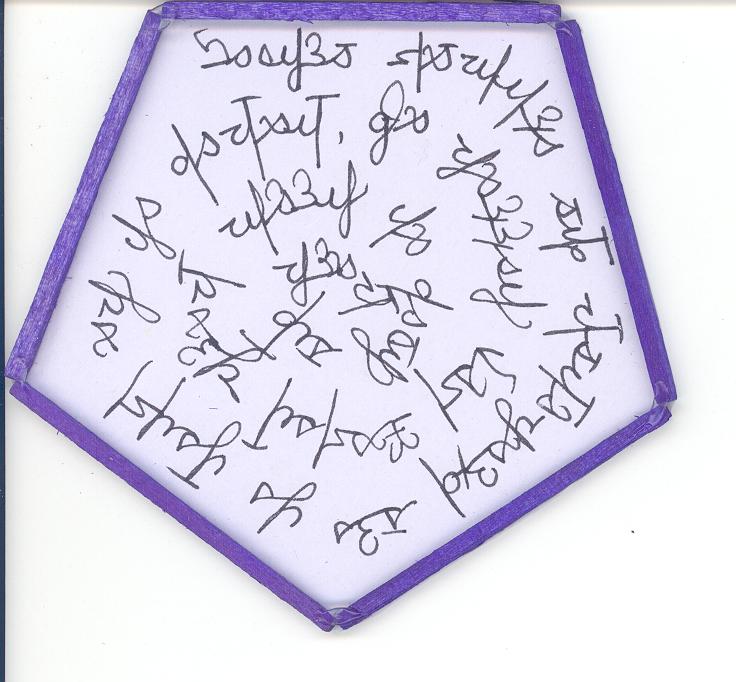
Banal, mundane, and dreary. Something needs to be done about the writing of Clark Ashton Smith — and I’ve tried to do it. The problem seems to me that the writing of CAS has been Roman in the gloamin’: that is, its twilight mystery, touched with Grecian glamor, plods across the page in the Roman alphabet, which is highly functional, but aesthetically unadventurous. Has any edition of CAS in English tried to match the beauty and complexity of the text with the beauty and complexity of a font? Not to my knowledge. Calligraphy, in the wider sense, is peripheral, at best, to English literature and and even the hyperlogomania of a book like Finnegans Wake takes place on a highly restricted graphological stage. Imagine what Joyce could have done with other alphabets, other ideographies, to stir into his mad meadish Sternen-stew of polyglossemanticity! And imagine CAS printed, or hand-written, in a script that reflects something of the beauty and complexity of his language. The beauty and fluidity of Georgian or Arabic would suit his tales of Zothique, for example; the complexity and density of Devanagari or Tamil would suit his tales of Hyperborea: but best of all would be a script invented specifically for CAS.

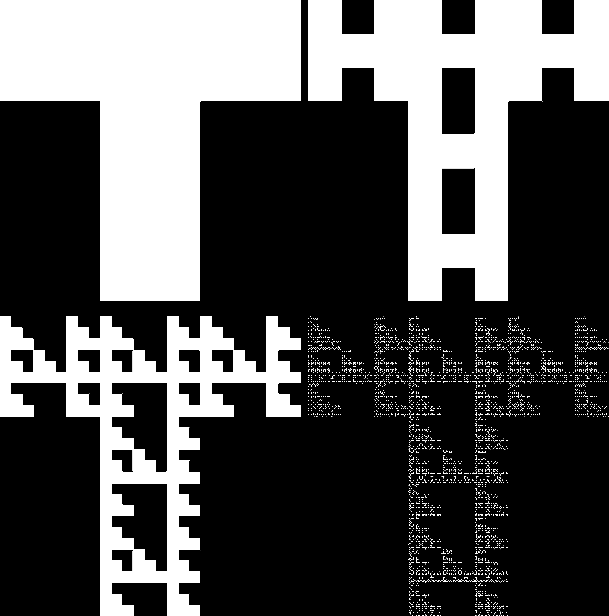
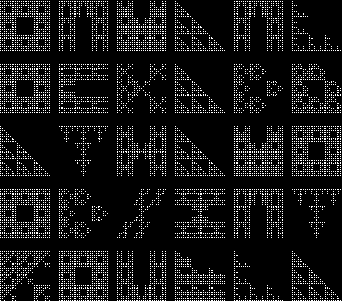
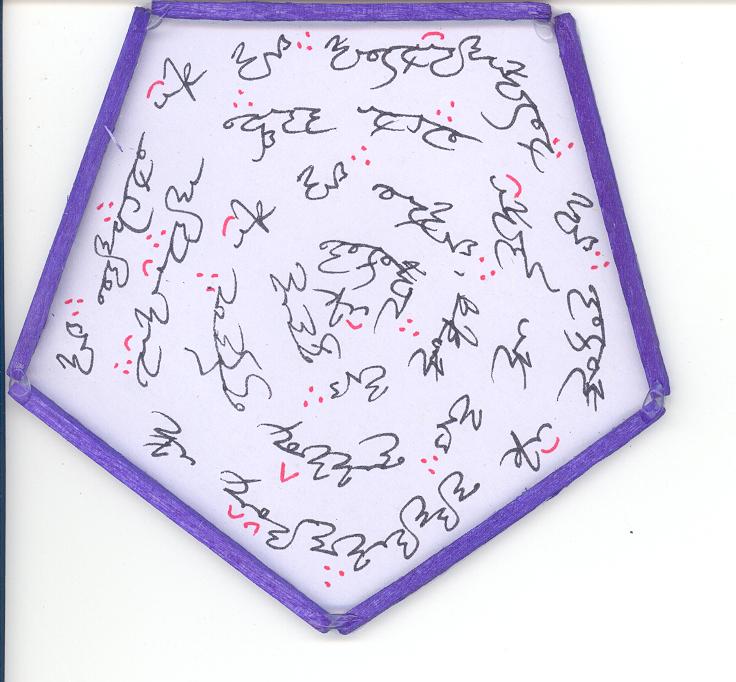
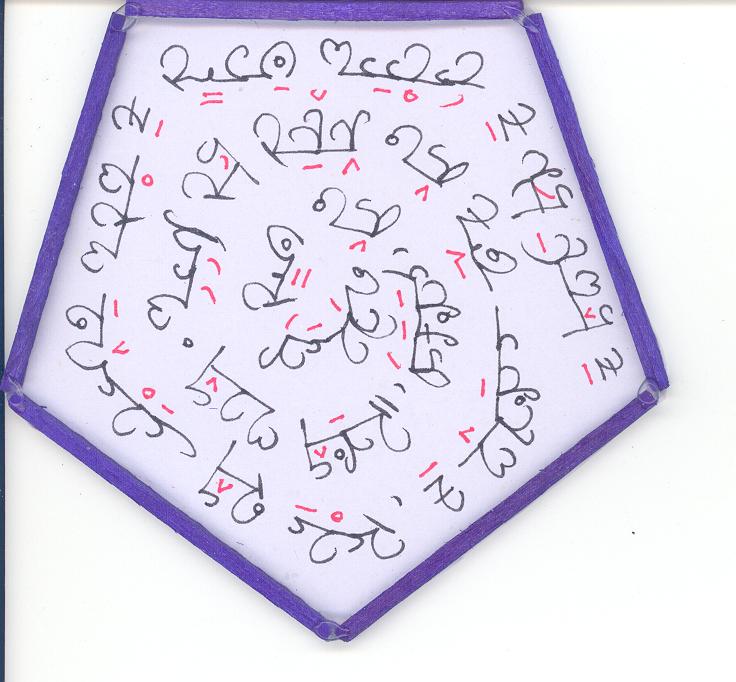
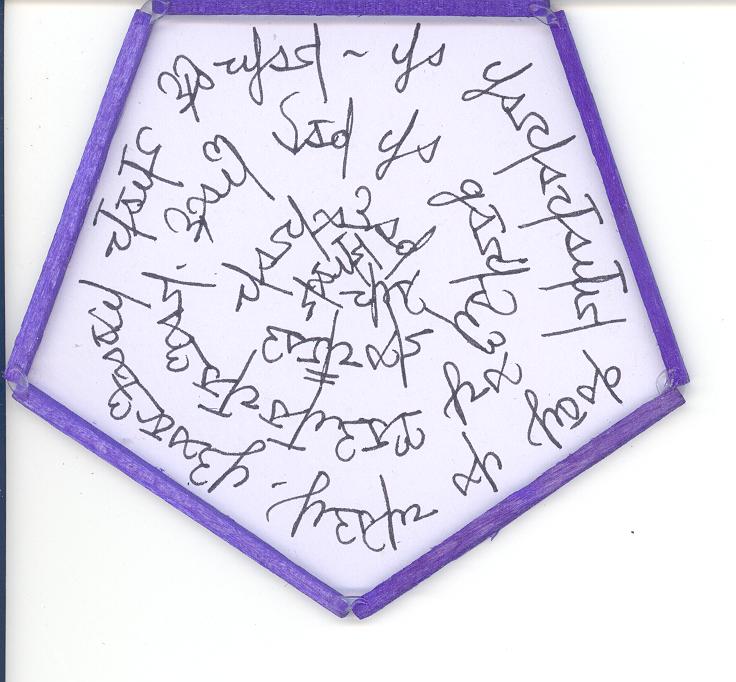
I haven’t supplied that, but I’ve tried to point the way with what I call a CAS-Whole, or porphyropolyhedric tribute to Clark Ashton Smith. It consists of a dodecahedron of paper and purple matches that uses four invented scripts to capture the opening lines of five of CAS’s best stories. In Plato’s cosmology, four of the regular (or Platonic) polyhedrons — the tetrahedron, the hexahedron, the octahedron, and the icosahedron — represent the four elements of which the universe is composed. The final regular polyhedron, the dodecahedron, represents the universe as a whole.[1] Hence, “CAS-Whole”. The purple matches — creating a porphyro-polyhedron — recall CAS’s words in The Black Book: “Strange pleasures are known to him who flaunts the immarcesible purple of poetry before the color-blind.”[2]

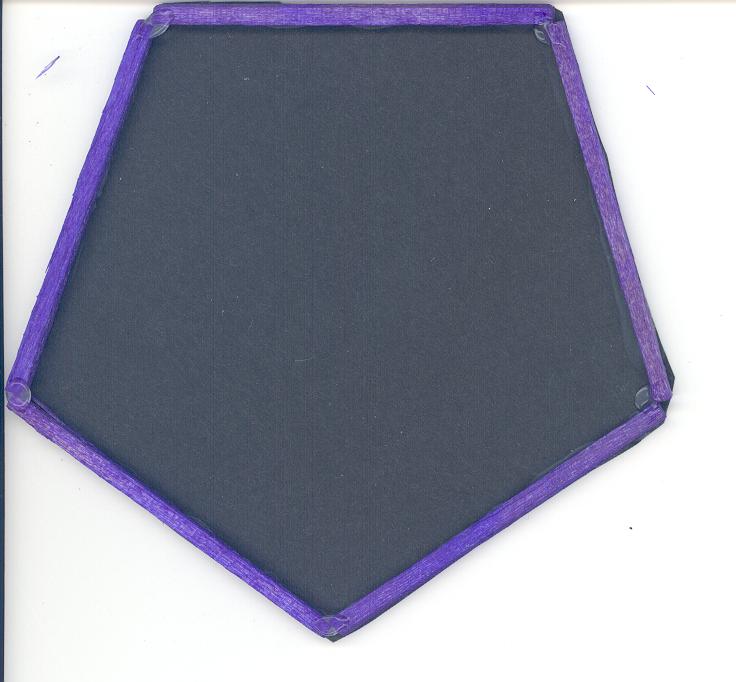
The dodecahedron itself, consisting of twelve regular dodecahedrons, is replete with the golden ratio, long regarded as of special significance in aesthetics.[3] One face is entirely black and might be called panglossic, representing all possible scripts in all possible languages; another, on the opposite side of the CAS-Whole, is entirely white and might be called an’glossic, representing silence and the blank page. Between the two, in a kind of “Goldilocks zone” between too much meaning and too little, are ten faces enscribed in four invented scripts with the opening words, in English, of five of CAS’s stories. Eight faces use a single, unadulterated script of the four, spiralling to the centre; two faces combine the four scripts. Given that the scripts are used for standard English, the stories can all be deciphered with a little effort and ingenuity. We are used, when reading in our mother tongues, to understanding with little effort and ingenuity, so the CAS-Whole might be regarded as a reminder of something we should not so carelessly take for granted. Furthermore, like all the Platonic solids, the dodecahedron can serve as a die, so the CAS-Whole reflects those central CASean themes of chance and fortune. Due to my ineptitude and impatience, not all of the faces are good regular pentagons, but that too can be woven into the symbolism of the CAS-Whole. The dodecahedron is not perfect, but I am not CAS and perfect dodecahedra do not occur in nature. Nor will the die roll true: fortune is biased.[4] Critics have pointed out that almost all CAS’s stories about death, so I hope that, imperfect as it is, one might say of the CAS-Whole: “It’s only rot’n’roll — but I like it.”

Notes

1. “There still remained a fifth construction, which God used for embroidering the constellations on the whole heaven.” Timaeus, c. 360 B.C. See http://www.ellopos.net/elpenor/physis/plato-timaeus/triangles.asp?pg=3

2. The Black Book of Clark Ashton Smith, Arkham House, 1979. See http://www.eldritchdark.com/writings/bibliography/writings/nonfiction/35/the-black-book-of-clark-ashton-smith

3. For more on the golden ratio, or golden section, please see http://www.maths.surrey.ac.uk/hosted-sites/R.Knott/Fibonacci/phi.html

4. A biased coin can be thrown “fair”, using a simple technique that can be adapted to a biased dodecahedron. Suppose a coin is much likelier to land heads than tails (or vice versa). Simply toss it twice. If it lands HH or TT, toss again. Otherwise, use the first of the two throws: simple probability will prove that even on a biased coin, HT is as likely as TH. Similarly, for a a biased dodecahedron, roll it twelve times. If any face repeats during the twelve rolls, roll twelve times again. When you have a sequence of twelve different faces, choose the first face. Based on my (far from reliable) caculations, there are 8,916,100,448,256 ways to roll a dodecahedral die twelve times, of which 479,001,600 contain no repeating number. One would therefore have to roll the die 18,614 times, on average, to produce a sequence in which no number repeats.