Performativizing Papyrocentricity #11

Papyrocentric Performativity Presents:

StellissimusThe Cosmic Gallery: The Most Beautiful Images of the Universe, Giles Sparrow (Quercus 2013)

Eyck’s EyesVan Eyck, Simone Ferrari (Prestel 2013)

Dealing Death at a DistanceSniper: Sniping Skills from the World’s Elite Forces, Martin J. Dougherty (Amber Books 2012)

Serious StimbulationCleaner, Kinder, Caringer: Women’s Wisdom for a Wounded World, edited by Dr Miriam B. Stimbers (University of Nebraska Press 2013)


Keeping It GweelGweel and Other Alterities, Simon Whitechapel (Ideophasis Press 2011) (posted @ Overlord of the Über-Feral)

Ave Aves!Collins Bird Guide: The Most Complete Guide to the Birds of Britain and Europe (second edition), text and maps by Lars Svensson, illustrations and captions by Killian Mullarney and Dan Zetterström (HarperCollins, 2009) (@ O.o.t.Ü.-F.)

Flesh and FearUnderstanding Owls: Biology, Management, Breeding, Training, Jemima Parry-Jones (David & Charles, 1998) (@ O.o.t.Ü.-F.)

Hit and SmithSongs that Saved Your Life: The Art of The Smiths 1982-87, Simon Goddard (Titan Books 2013) (@ O.o.t.Ü.-F.)


Or Read a Review at Random: RaRaR

Keeping It Gweel

Gweel & Other Alterities, Simon Whitechapel (Ideophasis Press, 2011)

This review is a useless waste of time. I can tell you very little about Gweel. It’s a book, if that helps. It’s made of paper. It has pages. Lots of little words on the pages.

What I can’t do is classify Gweel into a genre, not because none of them fit, but because the concept of a genre doesn’t seem to apply to Gweel. It stands alone, without classification. Calling Gweel “experimental” or “avant garde” would be like stamping a barcode on a moon rock.

It may have been written for an audience of one: author Simon Whitechapel. If we make the very reasonable assumption that he owns a copy of his own book, he may have attained 100% market saturation. However, there could be a valuable peripheral market: people who want to read a book that is very different from anything they’ve read before.

It is a collection of short pieces of writing, similar in tone but not in form, exploring “dread, death, and doom.” “Kopfwurmkundalini” and “Beating the Meat” resemble horror stories, and manage to be frightening yet strangely fantastic. The first one is about a man – paralysed in a motorbike accident, able to communicate only by eye-blinks – and his induction into a strange new reality. It contains a rather thrilling story-within-a-story called “MS Found in a Steel Bottle”, about two men journeying to the bottom of the ocean in a bathysphere. “Kopfwurmkundalini”’s final pages are written in a made-up language, but the author has encluded a glossary so that you can finish the story.

Those two/three stories make up about half of Gweel’s length. The remainder mostly consists of shorter work that seems to be more about creating an atmosphere or evoking an emotion. “Night Shift” is about a prison for planets (Venus, we learn, is serving a 10^3.2 year sentence for sex-trafficking), and a theme of prisons and planets runs through a fair few of the other stories here, although usually in a less surreal context. “Acariasis” is a vignette about a convict who sees a dust-mite crawling on his cell wall, and imagines it’s a grain of sand from Mars. The image is vivid and the piece has a powerful effect. “Primessence” is The Shawshank Redemption on peyote (and math). A prisoner believes that because his cell is a prime number, he will soon be snatched from it by some mathematical daemon (the story ends with the prisoner’s fate unknown). “The Whisper” is a ghost story of sorts, short and achingly sad.

No doubt my impression of Gweel differs from the one the author intended. But maybe his intention was that I have that different impression than him. Maybe Gweel reveals different secrets to each reader.

I can’t analyse it much, but Gweel struck me as an experience like Fellini’s Amarcord… lots of little story-threads, none of them terribly meaningful on their own. Experienced together, however, those threads will weave themselves into a tapestry in the hall of your mind, a tapestry that’s entirely unique… and your own.

Original review


Jesús say: I… S….. R… U… B… B… I… S…. H…. B… O… O… K…. | W… H… A…. N… K… C…. H… A… P… L…. E…. I… S…. H… I… J… O…. D… E…. P… U…. T… A…..

Previously pre-posted:

It’s The Gweel Thing…

Ave Aves!

Front cover of Collins Bird Guide by Lars SvenssonCollins Bird Guide: The Most Complete Guide to the Birds of Britain and Europe (second edition), text and maps by Lars Svensson, illustrations and captions by Killian Mullarney and Dan Zetterström, with a significant contribution by Peter J. Grant, translated by David Christie and Lars Svensson (HarperCollins, 2009)

A literate musician can read a score and hear a symphony in his head. I wonder whether the mega-minds of the future will be able to do something similar with genomes: read a DNA recipe and see the animal or plant cooked from it. The mega-minds will need to know about the oven, that is, the womb, egg or seed, but then musicians need to know about instruments, not just notes. The code can’t exist in isolation: it needs a world to be realized in and a musician’s mind can mimic that world.

But mega-minds aren’t here yet for genetics, so we have to use books like this to see the product of DNA-recipes. Collins Bird Guide is effectively a genetic cook-book or genomic score, but we don’t see the naked genes, just the dish or symphony cooked or played from them. Lars Svensson describes thousands of birds of all shapes, sizes, colours, diets and habitats, from the huge golden eagle, Aquila chrysaetos, which can carry off a lamb, to the tiny goldcrest, Regulus regulus, which isn’t much bigger than a bumblebee. But these two, like all other birds, have a common ancestor: when you see a bird sitting in a tree, it is also, metaphorically speaking, sitting in a genetic tree whose twigs, branches and boughs spring from a single trunk. One DNA-recipe has turned into many under the influence of natural and sexual selection.

Birds, which often come in very distinct male and female forms, offer lots of good examples of sexual selection. One of the most spectacular examples isn’t native to the region covered by the book, but it has been introduced here. And so there are pleasant surprises in store for some European ornithophiles. I once came across a wild-living golden pheasant, Chrysolophus pictus, early one morning in a park in northern England. I thought for a moment that I was hallucinating: the bird has a crest of spun gold, a scarlet breast and belly, and an orange/black “nuchal cape”, or neck-feathers, that “can be raised like a fan when displaying” (“Partridges & Pheasants”, pg. 59). It also has yellow legs, blue wings and a long, attractively patterned tail. “Unmistakable!” notes the book.

That’s true of the ♂, at least. The ♀, whose eyes and brain are responsible for the spectacular appearance of the ♂, is undistinguished and similar to the ♀ of Lady Amherst’s pheasant, Chrysolophus amherstiae, whose ♂ is again “Unmistakable!”, thanks to the sexual selection of its ♀. These closely related species are native to eastern Asia and “occasionally hybridize” in Britain (pg. 59). In other words, their common ancestor was fairly recent and their DNA recipes can still work together. But these hybridizations may also be a function of small populations and restricted habitat in Britain. “Function” is the operative word: birds, like all other forms of life, are mechanisms with inputs, throughputs and outputs. For a pheasant, some of the input is sense-data. The throughput is the processing of sense-data in the brain. The output is behaviour: for example, mating with a less-than-ideal partner under the restricted conditions of Britain.

All this can be modelled mathematically, but in the widest and deepest sense it already is mathematical: the human invention of mathematics, with a small “m”, is a symbolic representation of Mathematics with a big “M”. Mathematical symbols represent entities and operations and are manipulated according to logical rules. This mimics the inter-play of entities in the real world, which are subject to the rules of logic implicit in physics and chemistry. Human mathematics is fallible, albeit self-correcting. The mathematics underlying reality realizes the pipe-dreams of the papacy and is infallible, in the sense that it never disobeys the rules by which it is governed.

But this infallible mathematics can fail the entities for whom it operates: birds can die young and fail to reproduce or have fewer offspring than their competitors. But this is the fuel of a larger mechanism: evolution, which is a mathematical process. Genes mutate and vary in frequency under the influence of natural and sexual selection, inter alia. Birds offer more good examples of the effects, because they have wings, beaks and feet. These are mathematical mechanisms, shaped by and for the physics of a particular environment: wings have input from the air and provide the output of flight. Or the output of swimming: some wings are adapted for movement underwater, as in the cormorants, or Phalacrocoracidae, whose beaks are adapted for seizing fish and feet for paddling.

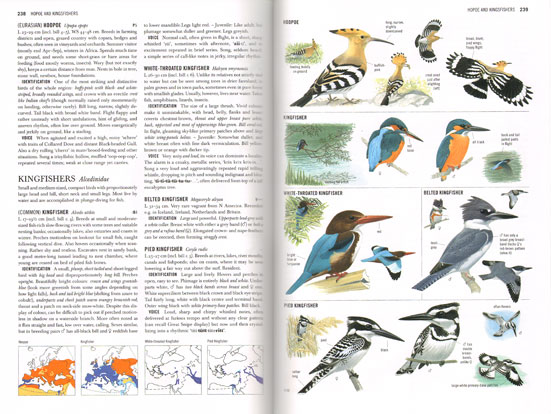
Sample page from Collins Bird Guide by Lars Svensson

You can look through this book and survey the varying geometry of wings, beaks and feet, from gliding gulls to hovering warblers, from seed-cracking finches to flesh-tearing owls, from tiny-toed swifts to wading egrets. The tool-kit of the common ancestor has become many tool-kits and evolution has been morally neutral as it has worked its multiplicative magic. The feet of the odd and endearing wallcreeper, Tichodroma muraria, are adapted to clinging onto vertical rock; the feet of eagles and owls are adapted to puncturing nerve-filled flesh. And presumably each species enjoys using its adaptation. A distinct psychology will accompany each distinct wing, beak and foot, because no organ can change in isolation: it is evolving within the environment of the body, influencing and influenced by other organs, in particular the brain.

But changes in the brain aren’t easily visible. If they were, some parts of evolution would be much less controversial: racial differences in human intelligence, for example. But races differ in other ways: in their attitudes to animals, for example. One generalization is that northern Europeans like listening to songbirds and southern Europeans like shooting them. So it’s not surprising that this book was originally published in Swedish as Fågelguiden, Europas och Medelhavsområdets fåglar i fält (1999). It would also be interesting to see the statistics of ornithological publishing in Europe. Those statistics will reflect genetic differences in the white European race, and so will readers’ reactions to the book.

My interest is partly aesthetic and mathematical, for example, and I quail at the thought of learning the differences between what bird-watchers call “little brown jobs”: the various kinds of warbler are hard enough to tell apart in pictures, let alone in the wild. But things can get even worse at night: Lars Svensson notes of Savi’s warbler, Locustella luscinioides, that “A possible confusion risk at distance and at night in S and C Europe is the mole-cricket” (“Warblers”, pg. 318). Birdsong and bird-cries are another aspect of ornitho-mathematics, but it’s hard to represent them in print: “kru-kih karra-kru-kih chivi trü chivi chih” (clamorous reed warbler, Acrocephalus stentoreus, pg. 322), “glipp-glipp-glipp” (common crossbill, Loxia curvirostra, pg. 386), “trrsh, trre-trre-trre-rrerrerre” (sand martin, Riparia riparia, pg. 258), “pyük…popopo…” (pygmy owl, Glaucidium passerinum, pg. 226), “brrreep, bip bip bip” (red phalarope, Phalaropus fulicarius, pg. 162), and so on.

In an electronic manual of ornithology, you’d be able to hear the songs, rather than imagine them, but electronic manuals, by offering more, in some ways offer less. Because the book has so many species to cover, it can’t describe any species in detail. So there are occasional fleeting comments like this:

Asian Desert Warbler, Sylvia nana V*** [= rare vagrant in northern Europe]… has the peculiar habit of sometimes “tailing” the Desert Wheatear [Oenanthe deserti] (“Warblers”, pg. 310-1)

The accompanying illustration shows a desert warbler standing under a small bush and peering out at a nearby wheatear. It’s anthropomorphic and anthropocentric to be amused by the behaviour, but ornithology is a human invention and humans don’t have to be purely scientific. I get a boy-racer thrill from another “V***” bird, the white-throated needletail, Hirundapus caudacutus:

Big, with heavy compact body, neckless, stub-tailed (shape somewhere between fat cigar and “flying barrel”). Flight impressively fast, the bird seems to draw easily away from other swifts (though these are still fast flyers!). (“Vagrants”, pg. 415)

That I would like to see. In the meantime, I have this book and the multiplex mutational mathematics it captures in pictures and words.

Flesh and Fear

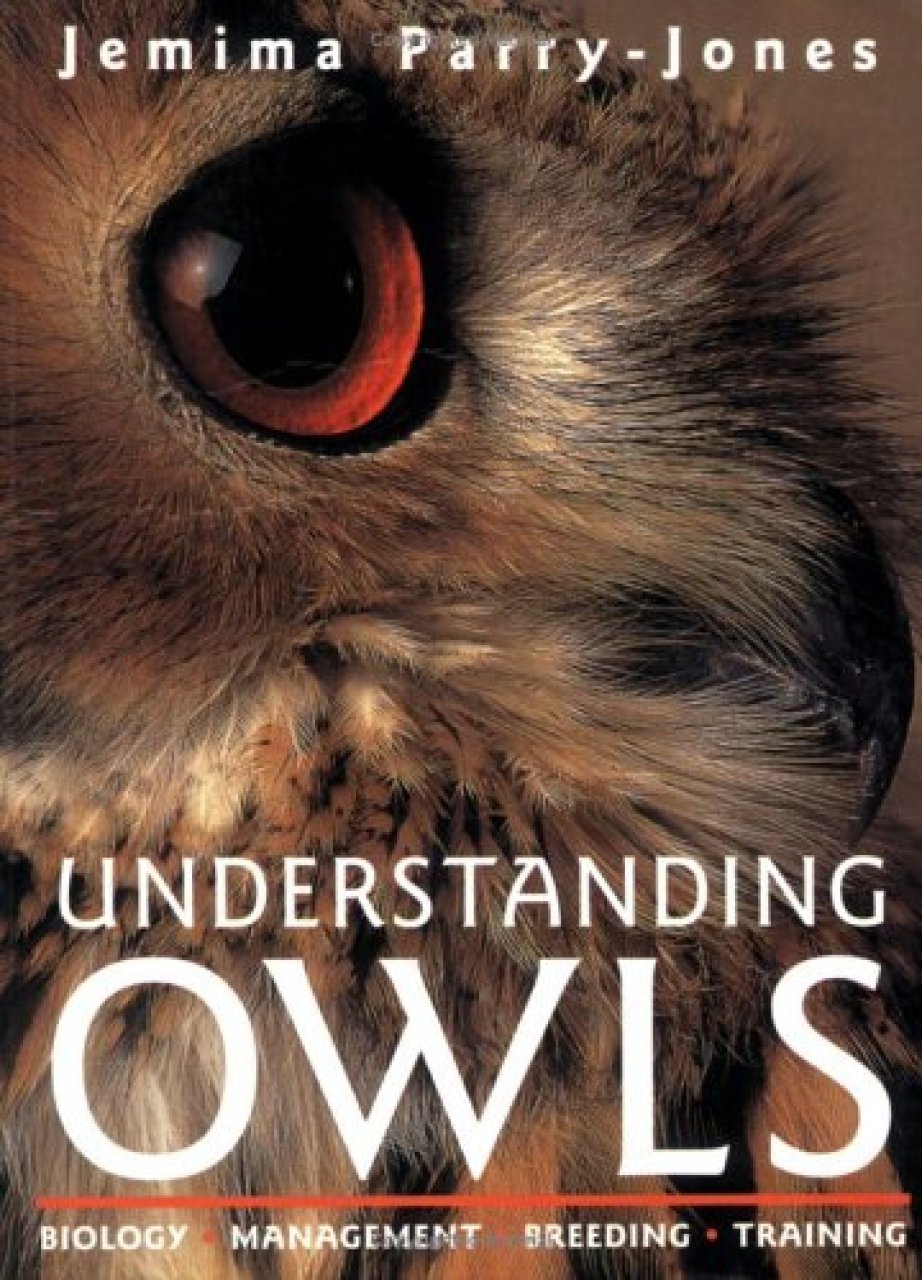
Understanding Owls by Jemima Parry-JonesUnderstanding Owls: Biology, Management, Breeding, Training, Jemima Parry-Jones (David & Charles, 1998)

We come into the world ready for the world. And in more ways than one. We aren’t just born with sense-organs and a brain designed to use them: we’re born with instinctive likes and dislikes. That’s where phobias come from. The common ones, about heights or contamination or potentially dangerous animals, are based on things that we’ve been facing and surviving for millions of years. Or failing to survive, because we didn’t pay them sufficient attention or respect. Those who did pay sufficient attention and respect were those who had more offspring and passed down the relevant, phobogenic genes.

How precisely those genes encode fear is an interesting question. Are spiders and snakes written into our brains in some sense? Monkeys are instinctively afraid of snakes, for example, and though that fear has to be triggered by example, it is obviously there to be triggered. A mother-monkey apparently reacting with fear to a flower will not induce a fear of flowers in her offspring. But if she reacts with fear to a snake, she will induce a fear of snakes. Monkeys also have special warning-calls for birds of prey. Human beings have been too big for too long to be easily afraid of birds, but we were small enough once to be their prey and genetic memories may linger. That might help explain our fascination with birds of prey. But I don’t think owls are written into our brains the way spiders and snakes probably are.

They do trigger other instincts, however: their uncanny stare, their nocturnal lives, their loud calls and the silence of their flight all help explain why they’re psychologically special to human beings and part of myth and legend around the world. This book is a practical introduction to keeping owls as pets, not general guide, but it has lots of owls in it, so it has lots of uncanny and unblinking eyes too. And a lot of beauty: owls don’t often have elegant shapes, but they often have beautiful feathers. They’re also intelligent birds and can be trained to the hand rather like eagles and falcons. Unlike eagles and falcons, however, they generally hunt small ground-animals and at night, so “Hunting with Owls” is unrewarding and Jemima Parry-Jones gives it only two pages, one of which is mostly taken up by a photo of an eagle owl (Bubo sp.). But it’s an interesting addition to a short but interesting book, with lots of attractive pictures and practical advice.

Hit and Smith

Front cover of Songs that Saved Your Life by Simon GoddardSongs that Saved Your Life: The Art of The Smiths 1982-87, Simon Goddard (Titan Books 2013)

I enjoyed Simon Goddard’s Mozipedia – The Encyclopedia of Morrissey and The Smiths a lot. And learnt a lot from it too. But I haven’t bothered finishing Simon Goddard’s Songs that Saved Your Life: The Art of The Smiths 1982-87 (an updated edition of The Smiths: Songs That Saved Your Life, 2002). There’s too much rock-writer rhetoric, too many mixed metaphors, too few pictures. None, in fact, apart from the band-photo on the front cover and the tickets on the back. Part of the problem is that The Smiths were only Act One in Mozza’s career. Johnny Marr played guitar well and wrote some beautiful tunes. But Morrissey was the interesting, eclectic and original one in The Smiths: the Mogpie didn’t need Marr a quarter as much as Marr needed the Mogpie. That’s part of why Mozipedia is better. Use this book as a supplement, because it’s got a lot of disc-o-detail and the appendices are good, covering The Smiths on record, in concert and on TV and radio. Goddard doesn’t have room to get rock-o-rhetorical there.

Performativizing Papyrocentricity #10

Papyrocentric Performativity Presents:

Sea HereSea Charts of the British Isles: A Voyage of Discovery around Britain & Ireland’s Coastline, John Blake (Conway Maritime Press, 2005)

Art-BanditOutsider II: Always Almost, Never Quite, Brian Sewell (Quartet Books, 2012)

Clarke’s ArksImperial Earth (1976) and Rendezvous with Rama (1972), Arthur C. Clarke

The Joy of ’LeksThe Dalek Handbook, Steve Tribe and James Goss (BBC Books, 2011)


Or Read a Review at Random: RaRaR

Ear Will An Thee

(This is a guest-review by Norman Foreman, B.A.)

Yr Wylan Ddu, Simon Whitechapel (Papyrocentric Press, ?)

If, like me, you froth at the mouth and roll on the floor biting the carpet when you hear the phrase “Pre-order now”, then relief is at hand. You might have thought that “pre-ordering now” was as logical as “ordering pre-now”. You were wrong. Here is a book that really can be pre-ordered now, because it doesn’t exist yet. If it ever does exist, it will cease to be pre-orderable now. In the meantime, you’re pre-ordering it whether you know it or not. In fact, the less you know, the more you’re pre-ordering it. All life-forms in the Universe, actual and otherwise, are pre-ordering it at this very moment, from the humblest virus to the mightiest hive-mind.

Front cover of yr wylan ddu by slow exploding gulls

Yr Wylan Ddu (2003) by Slow Exploding Gulls

There’s no escape, in other words. And no more review, you might think, given that the book doesn’t exist yet. True, but I can review the title. It’s Welsh, it means “The Black Gull”, and it’s pronounced something like “Ear Will An Thee”. It was also originally the title of an album in 2003 by the Exeter electronistas Slow Exploding Gulls. Whether S.E.G. will object to the appropriation remains to be seen. If they do, it can be pointed out that Dirgelwch Yr Wylan Ddu, or Secret of the Black Gull, was the title of a children’s book by Idwal Jones (1890-1964) published in 1978.

Front cover of Dirgelwch Yr Wylan Ddu by Idwal Jones

Idwal Jones’ Secret of the Black Gull (1978)

There is nothing corresponding to “of” in the original title of that book, but then Welsh grammar doesn’t work like that. Yr Wylan Ddu contains some good examples of how it does work. It’s an active, almost clockwork or organic, phrase compared to its static English equivalent. In isolation, the Welsh words for “the”, “black” and “gull” would be y, du, and gwylan, pronounced something like “ee”, “dee” and “goo-ill-an” in southern Welsh. But put them together and they mutate in more ways than one: Yr Wylan Ddu (adjectives generally follow the noun in Welsh). The similarity between gwylan and “gull” isn’t a coincidence: the English word is borrowed from Celtic.

However, it is unlikely that Yr Wylan Ddu will actually be written in Welsh or any other Celtic language. First, Whitechapel doubtless feels that this would reduce his already small audience. Second, he doesn’t speak Welsh. Or write it. So the book will probably follow past trends and be written in English. It’s also safe to predict that it will refer to at least one black gull. So: pre-order now. And please carry on doing so until further notice.

Performativizing Papyrocentricity #9

Papyrocentric Performativity Presents:

Booty and the BeastsFor Your Eyes Only, Ian Fleming (1960)

Flowering on FumesCollecting Cigarette & Trade Cards, Gordon Howsden (New Cavendish Books, 1995)

Passion for PartsDear Popsy: Collected Postcards of a Private Schoolboy to His Father, E. Bishop-Potter, illustrated by Paul Cox (Penguin, 1985)

Yes, We Can ShitWhy Your Five-Year-Old Could Not Have Done That: Modern Art Explained, Susie Hodge (Thames and Hudson, 2012)


Or Read a Review at Random: RaRaR

Performativizing Papyrocentricity #8

Papyrocentric Performativity Presents:

Auto-BiommiIron Man: My Journey through Heaven and Hell with Black Sabbath, Tony Iommi, as told to T.J. Lammers (Simon & Schuster, 2011)

Halfway to ParalysedHalfway to Paradise: The Birth of British Rock, Alwyn W. Turner (V&A Publishing, 2008)


Or Read a Review at Random: RaRaR

Guise and Molls

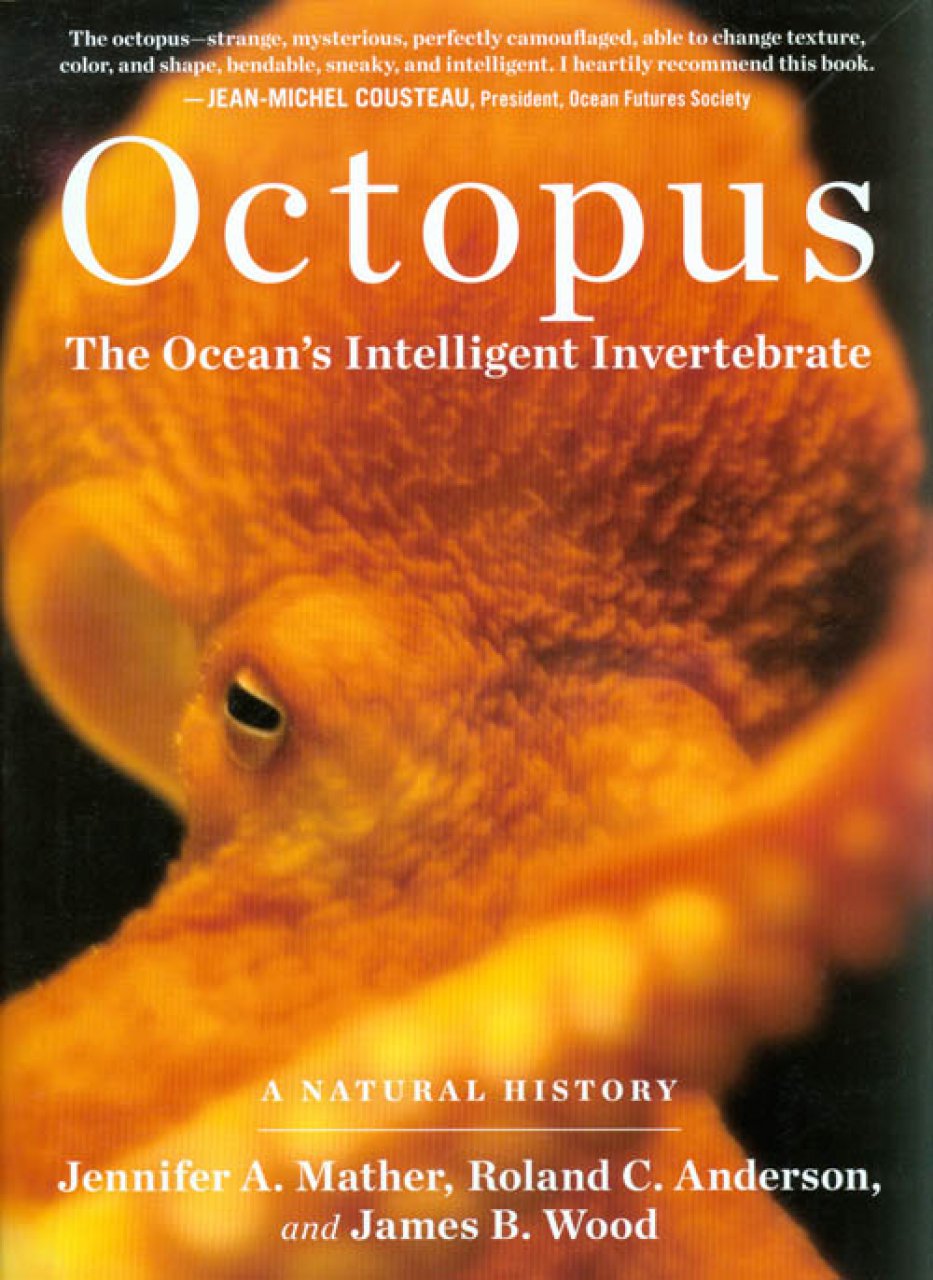
Front cover of Octopus: The Ocean’s Intelligent Invertebrate: A Natural History, by Jennifer A. Mather et al
Octopus: The Ocean’s Intelligent Invertebrate: A Natural History, Jennifer A. Mather, Roland C. Anderson and James B. Wood (Timber Press, 2010)

Who knows humanity who only human knows? We understand ourselves better by looking at other animals, but most other animals are not as remarkable as the octopus. These eight-armed invertebrates are much more closely related to oysters, limpets and ship-worms than they are to fish, let alone to mammals, but they lead fully active lives and seem fully conscious creatures of strong and even unsettling intelligence. Octopuses are molluscs, or “soft ones” (the same Latin root is found in “mollify”), with no internal skeleton and no rigid structure. Unlike some of their relatives, however, they do have brains. And more than one brain apiece, in a sense, because their arms are semi-autonomous. They don’t really have bodies, though, which is why they belong to the class known as Cephalopoda, or “head-foots”. Squid and cuttlefish, which are also covered in this book, are in the same class but do have more definite bodies, because they swim in open water rather than, like octopuses, living on the sea-floor. Another difference between the groups is that octopuses don’t have tentacles. Their limbs are too adaptable for that:

Because the arms are lined with suckers along the underside, octopuses can grasp anything. And since the animal has no skeleton, it can flex its arms and move them in any direction. The arms aren’t tentacles: tentacles are used for prey capture in squid, and these arms, with their flexibility, are used for many different actions. (“Introduction: Meet the Octopus”, pg. 15)

Octopuses would be interesting even if we humans knew ourselves perfectly. But one of the interesting things is whether they could be us, given time and opportunity. That is, could they become a tool-making, culture-forming, language-using species like us? After all, unlike most animals, they don’t use their limbs simply for locomotion or aggression: octopuses can manipulate objects with reasonably good precision. I used to think that one obstacle to their use of tools was their inability to make fine discriminations between shapes, because I remembered reading in the Oxford Book of the Mind (2004) that they couldn’t tell cubes from spheres. The explanation there was that their arms are too flexible and can’t, like rigid human arms and fingers, be used as fixed references to judge a manipulated object against. But this book says otherwise:

[The British researcher J.M.] Wells found that common octopuses can learn by touch and can tell a smooth cylinder from a grooved one or a cube from a sphere. They had much more trouble, though, telling a cube with smoothed-off corners from a sphere… They couldn’t learn to distinguish a heavy cylinder from a lighter one with the same surface texture. (ch. 9, “Intelligence”, pg. 130)

The problem isn’t simply that their arms are too flexible: their arms are also too independent:

Maybe the common octopus could not use information about the amount of sucker bending to send to the brain and calculate what an object’s shape would be, or calculate how much the arm bent to figure out weight. Octopuses have a lot of local control of arm movement: there are chains of ganglia [nerve-centres] down the arm and even sucker ganglia to control their individual actions. If local information is processed as reflexes in these ganglia, most touch and position information might not go to the brain and then couldn’t used in associative learning. (Ibid., pg. 130-1)

Or in manipulating an object with high precision and accuracy. An octopus can use rocks to make the entrance to its den narrower and less accessible to predators, but that’s a long way from being able to build a den. It is a start, however, and if man and other apes left the scene, octopuses would be a candidate to occupy his vacant throne one day. But I would give better odds to squirrels and to corvids (crow-like birds) than to cephalopods. Living in the sea may be a big obstacle to developing full, language-using, world-manipulating intelligence. The brevity of that life in the sea is definitely an obstacle: one deep-sea species of octopus may live over ten years, which would be “the longest for any octopus” (ch. 1, “In the Egg”). In shallower, warmer water, the Giant Pacific Octopus, Enteroctopus dofleini, is senescent at three or four years; some other species are senescent at a year or less. Males die after fertilizing the females, females die after guarding their eggs to hatching. In such an active, enquiring animal, senescence is an odd and unsettling process. A male octopus will stop eating, lose weight and start behaving in unnatural ways:

Senescent male giant Pacific octopuses and red octopuses are found crawling out of the water onto the beach [which is] likely to lead to attacks by gulls, crows, foxes, river otters or other animals… Senescent males have even been found in river mouths, going upstream to their eventual death from the low salinity of the fresh water. (ch. 10, “Sex at Last”, pg. 148)

Female octopuses stop eating and lose weight, but can’t behave unnaturally like that, because they have eggs to guard. Evolution keeps them on duty, because females that abandoned their eggs would leave fewer offspring. Meanwhile, males can become what might be called demob-demented: once they’ve mated, their behaviour doesn’t affect their offspring. In the deep sea, longer-lived species follow the same pattern of maturing, mating and senescing, but aren’t so much living longer as living slower. These short, or slow, lives wouldn’t allow octopuses to learn in the way human beings do. The most important part of human learning is, of course, central to this book and this review: language. Cephalopods don’t have good hearing, but they do have excellent sight and the ability to change the colour and patterning of their skin. So Arthur C. Clarke (1917-2008) suggested in his short-story “The Shining Ones” (1962) that they could become autodermatographers, or “self-skin-writers”, speaking with their skin. The fine control necessary for language is already there:

Within the outer layers of octopus skin are many chromatophores – sacs that contain yellow, red or brown pigment within an elastic container. When a set of muscles pulls a chromatophore sac out to make it bigger, its color is allowed to show. When the muscles relax, the elastic cover shrinks the sac and the color seems to vanish. A nerve connects to each set of chromatophore muscles, so that nervous signals from the brain can cause an overall change in color in less than 100 milliseconds at any point in the body… When chromatophores are contracted, there is another color-producing layer beneath them. A layer of reflecting cells, white leucophores or green iridophores depending on the area of the body, produces color in a different way: Like a hummingbird’s feathers, which only reflect color at a specific angle, these cells have no pigment themselves but reflect all or some of the colors in the environment back to the observer… (ch. 6, “Appearances”, pg. 89)

“Observer” is the operative word: changes in skin-colour, -texture and -shape are a way to fool the eyes and brains of predators. The molluscan octopus can adopt many guises: it can look like rocks, sand or seaweed. But the champion changer is Thaumoctopus mimicus, which lives in shallow waters off Indonesia. Its generic name means “marvel-octopus” and its specific name means “mimicking”. And its modes of mimicry are indeed marvellous:

This octopus can flatten its body and move across the sand, using its jet for propulsion and trailing its arms, with the same undulating motion as a flounder or sole. It can swim above the mud with its striped arms outspread, looking like a venomous lionfish or jellyfish. It can narrow the width of its combined slender body and arms to look like a striped sea-snake. And it may be able to carry out other mimicries we have yet to see. Particularly impressive about the mimic octopus is that not only can it take on the appearance of another animal but it can also assume the behaviour of that animal. (ch. 7, “Not Getting Eaten”, pg. 109)

But octopuses also change their skin to fool the eyes and brains of prey. The “Passing Cloud” may sound like a martial arts technique, but it’s actually a molluscan hunting technique. And it’s produced entirely within the skin, as the authors of this book observed after videotaping octopuses “in an outdoor saltwater pond on Coconut Island”, Hawaii:

Back in the lab and replaying the video frame by frame, we found how complex the Passing Cloud display is. The Passing Cloud formed on the posterior mantle, flowed forward past the head and became more of a bar in shape, then condensed into a small blob below the head. The shape then enlarged and moved out onto the outstretched mantle, flowing off the anterior mantle and disappearing. (ch. 6, “Appearances”, pg. 93)

It’s apparently used to startle crabs that have frozen and are hard to see. When the crab moves in response to the Passing Cloud, the octopus can grab it and bite it to death with its “parrotlike beak”. They “also use venom from the posterior salivary gland that can paralyze prey and start digestion” (ch. 3, “Making a Living”, pg. 62). But a bite from an octopus can kill much bigger things than crabs:

Blue-ringed octopuses, the four species that are members of the genus Hapalochlaena, display stunning coloration. Like other spectacular forms of marine and terrestrial life, they have vivid color patterns as a warning signal. These small octopuses pose a serious threat to humans. They pack a potent venomous bite that makes them among the most dangerous creatures on Earth. Their venom, the neurotoxin tetrodotoxin (TTX) described by Scheumack et al in 1978, is among the few cephalopod venoms that can affect humans. A variety of marine and terrestrial animals produce TTX [including] poisonous arrow frogs [untrue, according to Wikipedia, which refers to “toads of the genus Atelopus” instead], newts, and salamanders… but the classic example, and what the compound is named after, is the tetraodon puffer fish. The puffers are what the Japanese delicacy fufu is made from. If the fish is prepared correctly, extremely small amounts of TTX cause only a tingling or numbing sensation. But if it is prepared incorrectly, the substance kills by blocking sodium channels on the surface of nerve membranes. A single milligram, 1/2500 of the weight of a penny, will kill an adult human… Even in the minuscule doses delivered by a blue-ringed octopus’s nearly unnoticeable bite, TTX can shut down the nervous system of a large person in just minutes; the risk of death is very high. (“Postscript: Keeping a Captive Octopus”, pg. 170)

It’s interesting to see how often toxicity has evolved among animals. Puffer-fish and blue-ringed octopuses may get their toxin from bacteria or algae, while poison-arrow frogs get the even more potent batrachotoxin from eating beetles, as do certain species of bird on New Guinea. Accordingly, toxicity is found in animals with no legs, two legs, four legs, six legs, eight legs and ten legs (if squid have a poisonous bite too). Evolution has found similar solutions to similar problems in unrelated groups, because evolution is a way of exploring space: that of possibility. And it is all, in one way or another, chemical possibility. Blue-ringed octopuses have found a chemical solution to hunting and evading predators. Other cephalopods have found a chemical solution to staying afloat:

Another substance used to keep plankton buoyant is ammonia, again lighter than water. Ammonia is primarily used by the large squid species, including the giant squid (Architeuthis dux), in their tissues, although the glass squid (Cranchia scabra) concentrates ammonia inside a special organ. The ammonia in the tissues of these squid makes the living or dead animal smell pungent. Dead or dying squid on the ocean’s surface smell particularly foul. The ammonia in these giant squid also makes them inedible – there will be no giant squid calamari. (ch. 2, “Drifting and Settling”)

Other deep-sea solutions from chemical possibility-space include bioluminescence. This is used by a cephalopod that was little-known until it was used as a metaphor for the greedy behaviour of Goldman-Sachs and other bankers:

…although they do not have an ink-sac, vampire squid have a bioluminescent mucus that they can jet out, presumably at the approach of a potential predator, likely distracting it in the same way as a black ink jet for a shallow-water octopus or squid. Second, they have a pair of light organs at the base of the fins with a moveable flap that can be used as a shutter. These could act as a searchlight, turning a beam of light onto a potential prey species that tactile sensing from the [tentacle-like] filaments has picked up. And third, they have a huge number of tiny photophores all over the body and arms. These could work two ways: they might give a general dim lighting as a visual counter-shading. With even a little light from above, a dark animal would stand out in silhouette from below. With low-level light giving just enough illumination, it could blend in. And the second function of these lights has been seen by ROV [remotely operated underwater vehicle] viewers: a disturbed vampire squid threw its arms back over its body and flashed the lights on the arms, which should startle any creature. (ch. 11, “The Rest of the Group”, pg. 161)

I was surprised to learn that vampire squid can be prey, but in fact their scientific name – Vampyroteuthis infernalis – is almost as big as they are: “for those imagining that vampire squid are monsters of the deep, they are tiny – only up to 5 in. (13 cm) long” (ibid., pg. 162). Even less-studied, even deeper-living, and even longer-named is Vulcanoctopus hydrothermalis, the “specialized deep-sea vent octopus”, which is “found, as its name suggests, near deep-sea hydrothermal vents way down at 6000 ft. (2000 m)” (“Introduction: Meet the Octopus”, pg. 15). Life around hydrothermal vents, or mini-volcanoes on the ocean floor, is actually independent of the sun, because the food-pyramid there is based on bacteria that live on the enriched water flowing from the vents. So an asteroid strike or mega-volcano that clouded the skies and stopped photosynthesis wouldn’t directly affect that underwater economy. But vents sometimes go extinct and Vulcanoctopus hydrothermalis must lead a precarious existence.

I’d like to know more about the species, but it’s one interesting octopus among many. This book is an excellent introduction to this eight-limbed group and cousins like the ten-limbed squid and the sometimes ninety-limbed nautiluses. It will guide you through all aspects of their lives and behaviour, from chromatophores, detachable arms and jet propulsion to siphuncles, glue-glands and the hectocotylus, the “modified mating arm” of male cephalopods that was once thought to be a parasitic worm. That mystery has been solved, but lots more remain. Octopus: The Ocean’s Intelligent Invertebrate should appeal to any thalassophile who shares the enthusiasm of H.P. Lovecraft or Arthur C. Clarke for a group that has evolved high intelligence without ever leaving the ocean.