Amble On

“The Rolling English Road” (1913), G.K. Chesterton

Before the Roman came to Rye or out to Severn strode,
The rolling English drunkard made the rolling English road.
A reeling road, a rolling road, that rambles round the shire,
And after him the parson ran, the sexton and the squire;
A merry road, a mazy road, and such as we did tread
The night we went to Birmingham by way of Beachy Head.

I knew no harm of Bonaparte and plenty of the Squire,
And for to fight the Frenchman I did not much desire;
But I did bash their baggonets because they came arrayed
To straighten out the crooked road an English drunkard made,
Where you and I went down the lane with ale-mugs in our hands,
The night we went to Glastonbury by way of Goodwin Sands.

His sins they were forgiven him; or why do flowers run
Behind him; and the hedges all strengthening in the sun?
The wild thing went from left to right and knew not which was which,
But the wild rose was above him when they found him in the ditch.
God pardon us, nor harden us; we did not see so clear
The night we went to Bannockburn by way of Brighton Pier.

My friends, we will not go again or ape an ancient rage,
Or stretch the folly of our youth to be the shame of age,
But walk with clearer eyes and ears this path that wandereth,
And see undrugged in evening light the decent inn of death;
For there is good news yet to hear and fine things to be seen,
Before we go to Paradise by way of Kensal Green.


“The Rolling English Road” at Wikipedia

Performativizing Papyrocentricity #30

Papyrocentric Performativity Presents:

Ai Luv YewThe Bonsai Bible: The Definitive Guide to Choosing and Growing Bonsai, Peter Chan (Hamlyn 2014)

Starway to HeavenGuide to the Pyramids of Egypt, Alberto Siliotti, preface by Zahi Hawass (White Star Publishers 2000)

Escape and EssenceThe Wooden Horse, Eric Williams (Pen & Sword 2013)

Aspects of the AnnihilatorSub-Machine Gun: The development of sub-machine guns and their ammunition from World War I to the present day, Maxim Popenker and Anthony G. Williams (Crowood Press 2011)

Northanger AbyssJane in Blood: Castration, Clitoridolatry and Communal Cannibalism in the Novels of Jane Austen, Dr Miriam B. Stimbers (University of Nebraska Press 2014)


Or Read a Review at Random: RaRaR

Performativizing Papyrocentricity #29

Papyrocentric Performativity Presents:

Sky StoryThe Cloud Book: How to Understand the Skies, Richard Hamblyn (David & Charles 2008)

Wine WordsThe Oxford Companion to Wine, ed. Janice Robinson (Oxford University Press 2006)

Nu WorldsNumericon, Marianne Freiberger and Rachel Thomas (Quercus Editions 2014)

ThalassobiblionOcean: The Definitive Visual Guide, introduction by Fabien Cousteau (Dorling Kindersley 2014) (posted @ Overlord of the Über-Feral)


Or Read a Review at Random: RaRaR

She-Shell

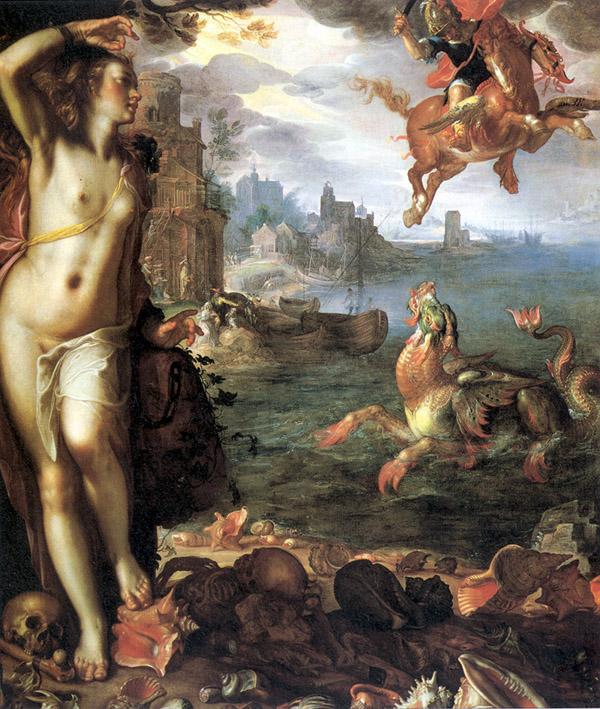
Perseus Releases Andromeda by Joachim Wtewael (mirrored)

Joachim Wtewael (sic), Perseus Rescuing Andromeda (1611) (mirrored)

When I first came across this painting in a recent edition of Arthur Cotterell’s Classic Mythology,* it had mutated in two ways: it was mirror-reversed (as above) and Wtewael’s name (pronounced something like “EET-a-vaal”) was printed “WIEWAEL”. At least, I assume the painting was mirror-reversed, because almost all versions on the web have Andromeda on the left, which means that Perseus is holding his sword in his right hand, as you would expect.

I think I prefer the mirrored version, though I don’t know whether that’s because it was the first one I saw. In either version, it is a rich and dramatic painting, full of meaning, seething with symbolism. It’s displayed in the Louvre and if French etymology had been a little different, I could have called it La Conque d’Andromède. Here is the commoner version:
Perseus Releases Andromeda by Joachim Wtewael


*Mythology of Greece and Rome (Southwater 2003).

Performativizing Papyrocentricity #28

Papyrocentric Performativity Presents:

HimmelangstNo Empty Chairs: The Short and Heroic Lives of the Young Aviators Who Fought and Died in the First World War, Ian Mackersey (Phoenix 2012)

Arioch’n’RollThe White Stuff: Archetype, Anomie and Allegorical Albinism in the Music of Hawkwind, 1972-81, Dr Miriam B. Stimbers (University of Nebraska Press 1996)

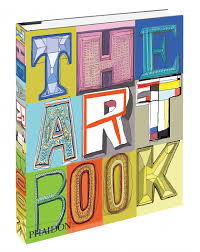
Jewels in the SkullThe Art Book, Phaidon (Second edition 2012) (posted @ Overlord of the Über-Feral)


Or Read a Review at Random: RaRaR

Jewels in the Skull

Phaidon Art BookThe Art Book, Phaidon (Second edition 2012)

An A to Z of artists, mostly painters, occasionally sculptors, installers and performers, with a few photographers and video-makers too. You can trace the development, culmination and corruption of high art all the way from Giotto and Fra Angelico through Van Eyck and Caravaggio to Auerbach and Twombly. But the modernist dreck heightens the power of the pre-modernist delights. A few pages after Pieter Claesz’s remarkable A Vanitas Still Life of 1645 there’s Joseph Cornell’s “Untitled” of 1950. One is a skull, watch and overturned glass, skilfully lit, minutely detailed, richly symbolic; the other is a wooden box containing a “frugal assortment of stamps, newspaper cuttings and other objects with no particular relevance to each other”. From the sublime to the slapdash. Over the page from Eleazar Lissitzky’s Composition of 1941 there’s Stefan Lochner’s The Virgin and Child in a Rose Arbour of 1442. One is like a child’s doodle, the other like a jewel. From the slapdash to the sublime.
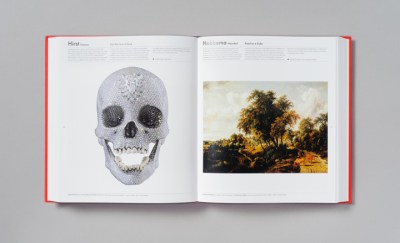
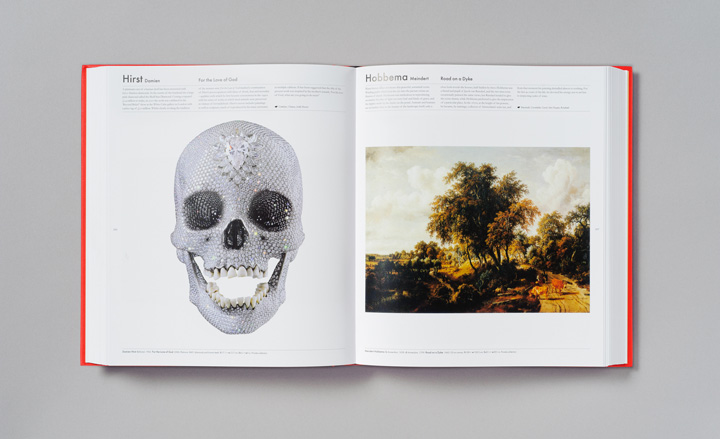
Hirst Skull and landscape
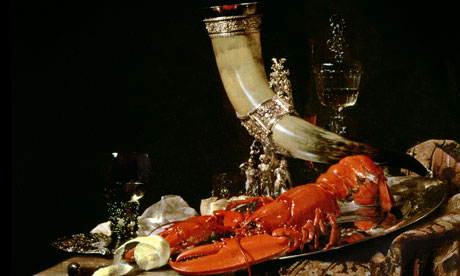
And so it goes on throughout the book, with beautiful art by great artists following or preceding ugly art by poseurs and charlatans. But some of the modern art is attractive or interesting, like Bridget Riley’s eye-alive Cataract 3 (1961) and Damien Hirst’s diamond-encrusted skull For the Love of God (2006). Riley and Hirst aren’t great and Hirst at least is more like an entrepreneur than an artist, but their art here is something that rewards the eye. So is Riley’s art elsewhere, as newcomers to her work might guess from the single example here. That is one of the purposes of a guide like this: to invite – or discourage – further investigation. I vaguely remember seeing the beautiful still-life of a boiled lobster, drinking horn and peeled lemon on page 283 before, but I wouldn’t have recognized the name of the Dutch artist: Willem Kalf (1619-93).

Willem Kalf, Still Life (c. 1653)

Willem Kalf, Still Life (c. 1653)


Elsewhere, I was surprised and pleased to see an old favourite: John Atkinson Grimshaw and his Nightfall on the Thames (1880). Many more people know Grimshaw’s atmospheric and eerie art than know his name, because it often appears on book-covers and as illustrations. If Phaidon are including him in popular guides with giants like Da Vinci, Dürer, Raphael and Titian, perhaps he’ll return to his previous fame. I certainly hope so.

Finding Grimshaw here made a good guide even better. The short texts above each art-work pack in a surprising amount of information and anecdote too. What you learn from the texts raises some interesting questions. For example: Why has one small nation contributed so much to the world’s treasury of art? From Van Eyck to Van Gogh by way of Hieronymus Bosch and Jan Vermeer, Holland is comparable to Italy in its importance. But only in painting, not sculpture or architecture. There aren’t just patterns of pigment, texture and geometry in this book: there are patterns of DNA, culture and evolution too. Brilliant, beautiful and banal; skilful, subtle and slapdash: The Art Book has all that and more. It puts jewels inside your skull.


Elsewhere other-posted:

Ai Wei to HellHow to Read Contemporary Art, Michael Wilson
Eyck’s EyesVan Eyck, Simone Ferrari
Face PaintA Face to the World: On Self-Portraits, Laura Cumming

Material Whirled

When we are conscious of being conscious, what are we consciousness-conscious with? If consciousness is a process in the brain, the process has become aware of itself, but how does it do so? And what purpose does consciousness-of-consciousness serve? Is it an artefact or an instrument? Is it an illusion? A sight or sound or smell is consciousness of a thing-in-itself, but that doesn’t apply here. We aren’t conscious of the thing-in-itself: the brain and its electro-chemistry. We’re conscious of the glitter on the swinging sword, but not the sword or the swing.

We can also be conscious of being conscious of being conscious, but beyond that my head begins to spin. Which brings me to an interesting reminder of how long the puzzle of consciousness has existed in its present form: how do we get from matter to mind? As far as I can see, science understands the material substrate of consciousness – the brain – in greater and greater detail, but is utterly unable to explain how objective matter becomes subjective consciousness. We have not moved an inch towards understanding how quanta become qualia since this was published in 1871:

Were our minds and senses so expanded, strengthened, and illuminated, as to enable us to see and feel the very molecules of the brain; were we capable of following all their motions, all their groupings, all their electric discharges, if such there be; and were we intimately acquainted with the corresponding states of thought and feeling, we should be as far as ever from the solution of the problem, “How are these physical processes connected with the facts of consciousness?” The chasm between the two classes of phenomena would still remain intellectually impassable.

Let the consciousness of love, for example, be associated with a right-handed spiral motion of the molecules of the brain, and the consciousness of hate with a left-handed spiral motion. We should then know, when we love, that the motion is in one direction, and, when we hate, that the motion is in the other; but the “Why?” would remain as unanswerable as before. — John Tyndall, Fragments of Science (1871), viâ Rational Buddhism.


Elsewhere other-posted:

Double Bubble
The Brain in Pain
The Brain in Train
This Mortal Doyle

Performativizing Papyrocentricity #25

Papyrocentric Performativity Presents:

Colouring the ChameleonOlivier, Philip Ziegler (MacLehose Press 2013)

Paper-DeepTreasure Island (1883) and Dr. Jekyll and Mr. Hyde (1885), Robert Louis Stevenson

Fins and FangsThe Fresh and Salt Water Fishes of the World, Edward C. Migdalski and George S. Fichter, illustrated by Norman Weaver (1977) (posted @ Overlord of the Über-Feral)


Or Read a Review at Random: RaRaR