Neuclid on the Block

How many blows does it take to demolish a wall with a hammer? It depends on the wall and the hammer, of course. If the wall is reality and the hammer is mathematics, you can do it in three blows, like this:

α’. Σημεῖόν ἐστιν, οὗ μέρος οὐθέν.
β’. Γραμμὴ δὲ μῆκος ἀπλατές.
γ’. Γραμμῆς δὲ πέρατα σημεῖα.

1. A point is that of which there is no part.
2. A line is a length without breadth.
3. The extremities of a line are points.

That is the astonishing, world-shattering opening in one of the strangest – and sanest – books ever written. It’s twenty-three centuries old, was written by an Alexandrian mathematician called Euclid (fl. 300 B.C.), and has been pored over by everyone from Abraham Lincoln to Bertrand Russell by way of Edna St. Vincent Millay. Its title is highly appropriate: Στοιχεῖα, or Elements. Physical reality is composed of chemical elements; mathematical reality is composed of logical elements. The second reality is much bigger – infinitely bigger, in fact. In his Elements, Euclid slipped the bonds of time, space and matter by demolishing the walls of reality with a mathematical hammer and escaping into a world of pure abstraction.

• Continue reading Neuclid on the Block

Numbered Days

Numbered Days: Literature, Mathematics and the Deus Ex Machina

Think French. Think genius. Think rebellious, tormented, iconoclastic. Finally, think dead tragically young in the nineteenth century… And if you’re thinking of anyone at all, I think you’ll be thinking of Rimbaud.

And you’d be right to do so. But only half-right. Because there were in fact two rebellious, tormented, iconoclastic French geniuses who died tragically young in the nineteenth century. One was called Arthur Rimbaud (1854-91) and the other Évariste Galois (1811-32). Rimbaud is still famous, Galois never has been. At least not to the general educated public, though on all objective criteria – but one – you might expect his fame to be greater. In every way – but one – Galois has the more powerful appeal.

Continue reading Numbered Days

Chicks, Dicks and H.B.D.

Britain has recently been entertained by a cat-fight conducted at Twitter, The Observer and other loci of liberalism. Or perhaps “cat-and-castrated-tom-fight” is a better way of putting it. In the cat corner: a pair of self-righteous feminist egomaniacs called Julie Burchill and Suzanne Moore. In the castrato corner: lots of self-righteous transsexual egomaniacs and their supporters. It’s been one of those fights you wish both sides could lose, but it’s also been interesting from a hateful, bestial and demonic point of view. That is, from an HBD POV. HBD stands for human bio-diversity and is about looking at how human biology influences social, cultural and political patterns. Transsexuality is obviously a biological phenomenon, but I think feminism and female writers are too. Read on, if you’re man enough, and I’ll explain how.

The fight started when Suzanne Moore wrote an essay about “female anger” for an anthology published by the booksellers Waterstones. I don’t know or care what the anthology was about, but Moore’s essay included these lines:

The cliché is that female anger is always turned inwards rather than outwards into despair. We are angry with ourselves for not being happier, not being loved properly and not having the ideal body shape – that of a Brazilian transsexual. (Moore article)

Moore was then politely challenged on Twitter by a transphilic woman who detected a hint of transphobia in her remark. Moore refused to retract it and was even sarcastic about the notion of “intersectionality”, i.e., the multiple oppressions suffered by, say, black homosexuals with bad legs, who will suffer not just from racism, homophobia or disabledism, but from all three. Finally, pushed too far, Moore announced that:

People can just fuck off really. Cut their dicks off and be more feminist than me. Good for them. (Transphobic tweeting)

Moore then left Twitter because of the “bullying” she was experiencing. Her friend Julie Burchill came to her defence in The Observer (i.e. The Guardian-on-Sunday) in an article that began like this:

Hey trannies, cut it out

Where do dicks in terrible wigs get off lecturing us natural-born women about not being quite feministic enough? (Burchill article)

Burchill went on to excoriate “dicks in chick’s clothing” and “bed-wetters in bad wigs” who have had their “nuts taken off”. Further uproar ensued, the “transsexual community” complained long and loudly, and The Observer withdrew the article and apologized for the offence it had caused. All this has been entertaining but also, I think, an example of the poisoning of politics described by Britain’s Chief Rabbi, Jonathan Sacks:

Sacks: Multiculturalism threatens democracy

Multiculturalism promotes segregation, stifles free speech and threatens liberal democracy, Britain’s top Jewish official warned in extracts from his book The Home We Build Together: Recreating Society… [Jonathan] Sacks said Britain’s politics had been poisoned by the rise of identity politics, as minorities and aggrieved groups jockeyed first for rights, then for special treatment. The process, he said, began with Jews, before being taken up by blacks, women and gays. He said the effect had been “inexorably divisive. A culture of victimhood sets group against group, each claiming that its pain, injury, oppression, humiliation is greater than that of others.” (Multiculturalism threatens democracy, The Jerusalem Post)

By claiming “pain, injury, oppression” and so on, transsexuals want to make themselves immune from criticism. Saints could be trusted to behave well when immune from criticism, but saints wouldn’t demand to be so. Transsexuals are, I think it’s safe to say, no more saintly than Jews, blacks, women or gays. All the same, I also think Moore and Burchill have shown bigotry – in the proper, rather than politically correct, sense – towards transsexuals. This transphobic twosome obviously don’t like their feminist franchise being challenged by transsexuals, i.e., people who were born in men’s bodies, but think they’re really women and have had surgery to prove it. From my own bigoted, biocentric point of view, I am happy to accept that bodies do not always match brains and that someone with a female mind can be born in a male body. Or vice versa. It’s an interesting phenomenon, scientifically speaking, but it must also sometimes be a distressing phenomenon, psycho-socially speaking. Burchill’s sneers about “phantom limbs” and “bed-wetters in bad wigs” don’t show much female solidarity, let alone imaginative sympathy. But then she doesn’t seem to accept that a real woman can be born in a male body:

Shims, shemales, whatever you’re calling yourselves these days – don’t threaten or bully we [sic] lowly natural-born women, I warn you. We may not have as many lovely big swinging PhDs as you, but we’ve experienced a lifetime of PMT and sexual harassment, and many of us are now staring HRT and the menopause straight in the face – and still not flinching. Trust me, you ain’t seen nothing yet. You really won’t like us when we’re angry.

That is echt essentialism – indeed, physio-fascism. Burchill seems to believe that you can’t be a real woman unless you’re born in a female body. The bit about “lovely big swinging PhDs” is a sneer too, but a funny one: Burchill is an entertaining writer who combines masculine vigour with feminine illogic. Look at her reasoning here, for example:

…their lot [i.e., transsexuals] describe born women as “cis” – sounds like syph, cyst, cistern; all nasty stuff…

If “cis” is nasty because it sounds a bit like “cistern”, presumably “sister” would be even worse. Like Burchill, Suzanne Moore has no time for the nasty male invention of logic; unlike Burchill, she isn’t an entertaining or amusing writer. I’d never read anything by her before this cat-fight and I don’t intend to read anything again. The fight itself seems a good example of narcisso-sisters playing tyranny-trumps and poisoning politics, as the Chief Rabbi warned. Burchill and Moore themselves seem good examples of testotero-sisters: they’re masculinized in both psychology and physiognomy. It’s not just their aggression and coarseness: take a look at their faces:

Suzanne Moore and Julie Burchill

Suzanne Moore and Julie Burchill

I suggest that Moore and Burchill, despite their female bodies, are less psychologically female than some transsexuals who were born in male bodies. Both of them are left-wing and opponents of biological determinism, but they are cruder in their bio-determinism than the supposedly right-wing psychologist Hans Eysenck (1916–97), who was writing about HBD before HBD existed under its present name. In his book Sex, Violence and the Media (1978), Eysenck discussed that idea that “there is a strong biological determinant which predisposes individuals in the direction of greater or lesser ‘maleness’”:

Some of the strongest evidence for this point of view comes from the work of Dr Wilhart Schlegel, a Hamburg physician who made an exhaustive study of the shape of the pelvis in men and women. In men, typically, the pelvis is shaped like a funnel, tapering down to a narrow outlet; in women, the pelvis is shaped more like a tube, with a broad outlet. There is much variety within each sex; thus there are men with tube-shaped pelvis outlet structures, and women with funnel-shaped ones. What made Schlegel interested in the pelvic outlet is that its shape is apparently determined at the foetal stage by precisely the kind of hormonal burst [determining masculinity or femininity] already described; if such androgenic material is supplied, the pelvic shape will be masculine; if not, feminine. This led Schlegel to study in detail the social and sexual behaviour of men and women having typical and atypical pelvic shapes, using over a thousand men and women in his researches. (Op. cit., H.J. Eysenck and D.K.B. Nias, Maurice Temple Smith, London, 1978, pg. 230-1)

Schlegel discovered a strong correlation between pelvic shape and behaviour:

A masculine-type pelvis correlated with leadership, an active sexual role, dominance and a preference for a younger sexual partner, in men and women alike. A feminine-type pelvis correlated with empathy, suggestibility, and compliance. In other words, behaviour in both sexes seemed to be determined by the same hormonal factors which originally produced skeletal features of the pelvis, namely androgen secretion at the foetal stage.

Faces, like pelvises, are shaped by hormonal factors and I suggest that Moore and Burchill have masculinized faces. I also suggest that, as female writers, they are not unique in this. Another example of a masculinized female writer seems to be Hilary Mantel, winner of last year’s Man-Booker Prize for her novel Bring Out the Bodies. Mantel has been placed under scientific analysis by Eysenck’s protegé Chris Brand at his g-Factor blog:

Hilary Mantel

Hilary Mantel

Incomprehensible bug-eyed leftist old bag authoress Hilary Mantel was welcomed by the London Review of Books to put in her two pennorth slagging off the gracious, cheerful and pregnant Duchess of Cornwall… Broad-beamed Mantelpiece was a leftie born and bred – a matter which her publishers had contrived to conceal for several years. Of Irish parentage, she was raised a Catholic by parents who separated (she never saw her father after age eleven). She gave up Christianity at twelve and progressed to full-blown socialism, as was readily compatible with her studies at the London School of Economics and the University of Sheffield. Her own lack of husband and family was perhaps traceable to gynaecological problems so serious that she had been treated by doctors for psychosis during her twenties. (IQ & PC – By Chris Brand, Monday, February 25, 2013)

Mantel’s unusually broad features seem to occur elsewhere among female writers:

L-R: Jane Austen, Harriet Beecher Stowe, Pearl S. Buck, Iris Murdoch

L-R: Jane Austen, Harriet Beecher Stowe, Pearl S. Buck, Iris Murdoch

L-R: Joyce Carol Oates, Maya Angelou, Alice Walker, Arundhati Roy

L-R: Joyce Carol Oates, Maya Angelou, Alice Walker, Arundhati Roy

I suggest that the particular genre in which a writer works would also be reflected in her – or his – biology, but female writers are a small, self-selected group and don’t seem typical of women in general. This also appears to be true of female politicians. I first began to notice their unusual features in the 1990s among women like Hillary Clinton and Madeleine Albright:

Hillary Clinton and Madelaine Albright

Hillary Clinton and Madelaine Albright

Like Moore and Burchill, Clinton and Albright are left-wing and opponents of biological determinism. But the reality may be that a rejection of biological determinism is itself, in part, biologically determined. The subjective self-confidence and aggression of a masculinized woman may lead her to deny any influence of biology on politics, even though there is more and more evidence that such influence exists:

The GOP has a feminine face, UCLA study finds

At least when it comes to female politicians, perhaps you can judge a book by its cover, suggest two UCLA researchers who looked at facial features and political stances in the U.S. House of Representatives. “Female politicians with stereotypically feminine facial features are more likely to be Republican than Democrat, and the correlation increases the more conservative the lawmaker’s voting record,” said lead author Colleen M. Carpinella, a UCLA graduate student in psychology.

The researchers also found the opposite to be true: Female politicians with less stereotypically feminine facial features were more likely to be Democrats, and the more liberal their voting record, the greater the distance the politician’s appearance strayed from stereotypical gender norms. In fact, the relationship is so strong that politically uninformed undergraduates were able to determine the political affiliation of the representatives with an overall accuracy rate that exceeded chance, and the accuracy of those predications increased in direct relation to the lawmaker’s proximity to feminine norms. (“The GOP has a feminine face, UCLA study finds”, Meg Sullivan, September 27, 2012)

Faces and pelvises are indirect guides to brains and it would be very interesting to have more direct data about the brains of female politicians, whether left- or right-wing. It would also be interesting to know how many children they have and the sex-ratio of those children, because that is also influenced by hormonal factors. Like Burchill and Moore, Hilary Mantel and Hillary Clinton would no doubt dismiss HBD as hateful, but all of them are biological entities and none of them can escape HBD. Neither can I or you or any other human being, but the more we know about ourselves the better we may be able to understand politics and culture. And the more we know about human biology, the more we may also understand that some forms of politics are far less caring and compassionate than they claim to be.


Mish’ Upon A Star

When Barack Obama first became famous in the United Kingdom, I concluded that he was a more intelligent, more histrionically skilled version of Tony Blair. But perhaps I was wrong. He may in fact be a less intelligent, more histrionically skilled version of Tony Blair. Otherwise the parallels between the two remain uncanny: the narcissism, the incompetence, the shallowness, the intellectual vacuity, the pathological dishonesty, the hatred of or indifference towards history and the historic nation. There are even the same rumours about past homosexuality, a similarly grotesque, Lady-Macbeth-like wife and a love of vapid, worthless celebrity culture shared with her. Michelle Obama’s recent Oscar-presentation stunt is the Cherie on the icing, though, to give Cherie Blair her due, she never gave me the impression that racial hatred was an even stronger element in her nature than egotism and desire for personal gain.

Michelle Obama presenting an Oscar at the White House

Mish’ Upon A Star — Michelle Obama presents an Oscar at the White House

Racial hatred may seem like one big difference between Obama and Blair, but their policies in terms of race, for reasons around which I won’t interrogate issues, have been more or less the same. Voting “conservative” in either nation wouldn’t have made any difference to that. It would also have made little difference to the speed with which each nation is being destroyed. But the Tories and Republicans couldn’t appeal to voters in the same way as their supposed rivals. Like Blair, Obama saw that the key to electoral success was to get people to vote not for him, but for themselves. That’s why so many Guardianistas in the UK so desperately wished they could “Vote O in ’8”. The narcissistic, self-righteous thrill would have been even greater than voting for Blair. Obama was black, after all. Black, for Mandela’s sake! Like Blair, Obama offered himself as a mirror for liberal narcissists; and like Blair, he’s disappointed more and more of those narcissists as the years have passed. But, by himself, he wouldn’t have destroyed my faith in democracy as comprehensively as Blair did. T.B. was an obvious fake and a bad con-man. B.O. is a better con-man and a less obvious fake. It isn’t as hard to understand how he fooled so many and got the chance to do so much harm.

A lot more harm, in fact, because the United States is a much bigger and much more important country than the UK. Historians will give its collapse much more attention in future, but I wonder how many of them will put the blame where it belongs: on one of the two great curses of modernity. The first great curse has been the car, the second has been television. Cars have destroyed our cities; TV has destroyed our culture. Blair and Obama are what TV hath wrought in politics: ultimate expressions of the ultimate abomination of liberalism. Après eux, le Déluge. “After them, the Flood.”

Vigor Mortis

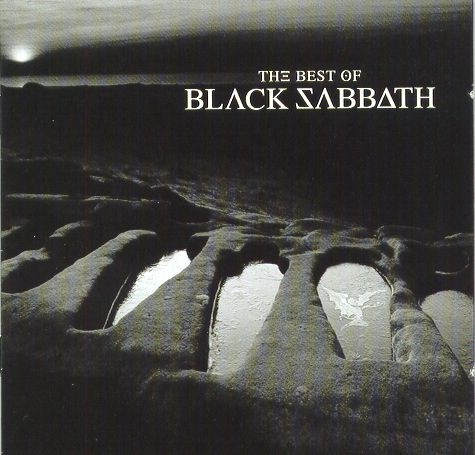
Front cover of The Best of Black Sabbath
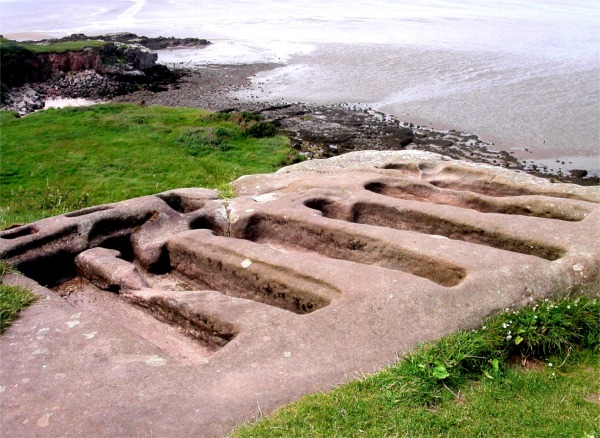
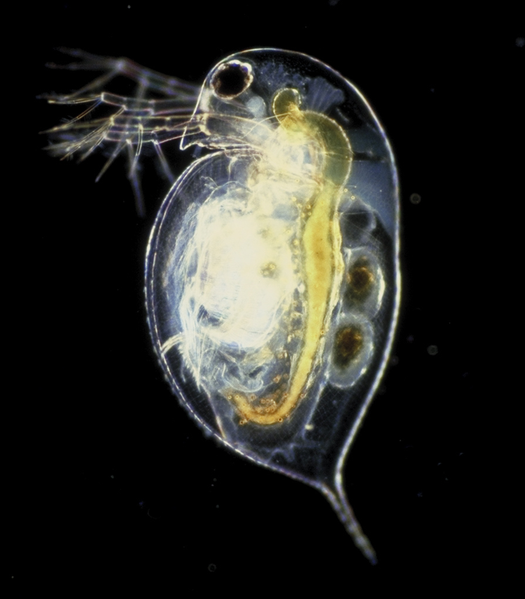
In the Christian religion, the resurrection follows the virgin birth. In the rock-graves at Heysham, the virgin birth follows the resurrection. Or rather: the virgin-births follow the resurrections. There are many of both. The rock-graves at Heysham* are carved in solid rock near the remains of St Patrick’s chapel, an ancient ruin overlooking Morecambe Bay on the coast of Lancashire in England. You may have seen them before, because they appear on the cover of a compilation album by the heavy-metal band Black Sabbath, where they’re filled with ice and look suitably dark and sinister. But the graves are sometimes full of life and activity. In spring, as the rainwater filling them begins to warm, there are resurrections – dozens of them. Tiny crustaceans (a group of animals that includes crabs, shrimps and woodlice) hatch from eggs that have over-wintered in the sediment on the floors of the graves. Some of the crustaceans are called water-fleas, others are called seed-shrimps. Water-fleas, whose scientific name is Daphnia, hop through the water with jerks of their antennae, sieving it for fresh-water plankton. Seed-shrimps, or ostracods, are enclosed in tiny double-sided shells through which their legs protrude. They trundle over the stone sides of the graves, scraping off algae and catching even smaller and simpler animals like rotifers and protozoa.

The rock graves at Heysham (c. 11th century A.D.)

Rock graves at Heysham, Lancs. (c. 1000s)

Water-fleas are famous for parthenogenesis, or their ability to produce offspring without sex. Those that hatch first in spring are female and give birth without mating with any males. A single water-flea in a jar of stagnant water soon becomes a swarm. It’s only later in the year that males are born and the water-fleas mate to produce winter eggs, which sink to the floor of the graves and lie there through the cold weather. The eggs of water-fleas and ostracods can also survive desiccation, or drying-up, and can be blown on the wind to new sites. That is probably how these crustaceans arrived in the rock-graves, which they must have occupied for centuries, through the coldest winters and the hottest summers, dying and being reborn again and again. When a human being or large animal dies, chemical changes in the body make the muscles rigid and wood-like. The scientific term for this is rigor mortis, or the “stiffness of death”. Rigor mortis wears off in time and the body begins to rot. The rock-graves at Heysham are an example of vigor mortis, or the “vigour of death”. Medieval human beings created the graves to bury their dead, but the bodies that were once there have been lost to history. The water-fleas and the seed-shrimps remain, tiny, overlooked and fascinating.

A seed-shrimp or ostracod

A seed-shrimp

A water-flea, Daphnia pulex

A water-flea


*Heysham is pronounced HEE-shum and is an old coastal village near the city of Lancaster, after which Lancashire is named.

Roses Are Golden

Sir Lawrence Alma-Tadema’s painting The Roses of Heliogabalus (1888) is based on an apocryphal episode in the sybaritic life of the Roman Emperor Elagabalus (204-222 A.D.), who is said to have suffocated guests with flowers at one of his feasts. The painting is in a private collection, but I saw it for real in an Alma-Tadema exhibition at the Walker Art Gallery in Liverpool sometime during the late 1990s. I wasn’t disappointed: it was a memorable meeting with a painting I’d been interested in for years. Roses is impressively large and impressively skilful. Close-up, the brush-strokes are obvious, obtrusive and hard to interpret as people and objects. It isn’t till you step back, far beyond the distance at which Alma-Tadema was painting, that the almost photographic realism becomes apparent. But you get more of the many details at close range, like the Latin inscription on a bowl below and slightly to the right of that scowling water-mask. Alas, I forgot to take a note of what the inscription was, though perhaps the memory is still locked away somewhere in my subconscious.

The Roses of Heliogabalus (1888)

The Roses of Heliogabalus (1888)

Whatever it is, I feel sure it is significant, because Roses is rich with meaning. That’s a large part of why I’m interested in it. Yes, I like it a lot as art, but the women would have to be more attractive for it to be higher in the list of my favourite paintings. As it is, I think there are only four reasonably good-looking people in it: the man with the beard on the right; the flautist striding past the marble pillar on the left; the red-headed girl with a crown of white flowers; and Heliogabalus himself, crowned in roses and clutching a handful of grapes beside the overweight man who’s wearing a wreath and sardonically saluting one of the rose-pelted guests in the foreground. When I first wrote about Roses in a pub-zine whose name escapes me, I misidentified the overweight man as Heliogabalus himself, even though I noted that he seemed many years old than Heliogabalus, toppled as a teen tyrant, should have been. It was a bad mistake, but one that, with less knowledge and more excuse, many people must make when they look at Roses, because the overweight man and his sardonic salute are a natural focus for the eye. Once your eye has settled on and noted him, you naturally follow the direction of his gaze down to the man in the foreground, who’s gazing right back.

A comparison between Alma-Tadema's portrayal of Heliogabalus and a bust of Heliogabalus from the Musei Capitolini in Rome

Something Like the Sun

And by following that gaze, you’ve performed a little ratio-ritual, just as Alma-Tadema intended you to do. Yes, Roses is full of meaning and much of that meaning is mathematical. I think the angle of the gaze is one of many references in Roses to the golden ratio, or φ (phi), a number that is supposed to have special aesthetic importance and has certainly been used by many artists and musicians to guide their work. A rectangle with sides in the proportions 8:13, for example, approximates the golden ratio pretty closely, but φ itself is impossible to represent physically, because it’s an irrational number with infinitely many decimal digits, like π or √2, the square root of two. π represents the ratio of a circle’s circumference to its diameter and √2 the ratio of a square’s diagonal to its side, but no earthly circle and no earthly square can ever capture these numbers with infinite precision. Similarly, no earthly rectangle can capture φ, but the rectangle of Roses is a good attempt, because it measures 52″ x 84 1/8". That extra eighth of an inch was my first clue to the painting’s mathematical meaningfulness. And sure enough, 52/84·125 = 416/673 = 0·61812…, which is a good approximation to φ’s never-ending 0·6180339887498948482045868343656…*
A circle with radii at 0 and 222 degrees
That deliberate choice of dimensions for the canvas led me to look for more instances of φ in the painting, though one of the most important and obvious might be called a meta-presence. The Roses of Heliogabalus is dated 1888, or 1666 years after the death of Heliogabalus in 222 AD. A radius at 222º divides a circle in the golden ratio, because 222/360 = 0·616… It’s very hard to believe Alma-Tadema didn’t intend this reference and I also think there’s something significant in 1888 itself, which equals 2 x 2 x 2 x 2 x 2 x 59 = 25 x 59. Recall that 416 is the expanded short side of Roses. This equals 25 x 13, while 673, the expanded long side, is the first prime number after 666. As one of the most technically skilled painters who ever lived, Alma-Tadema was certainly an exceptional implicit mathematician. But he clearly had explicit mathematical knowledge too and this painting is a phi-pie cooked by a master matho-chef. In short, when Roses is read, Roses turns out to be golden.


*φ is more usually represented as 1·6180339887498948482045868343656…, but it has the pecularity that 1/φ = φ-1, so the decimal digits don’t change and 0·6180339887498948482045868343656… is also legitimate.

Appendix I

I’ve looked at more of Alma-Tadema’s paintings to see if their dimensions approximate φ, √2, √3 or π, or their reciprocals. These were the results (ε = error, i.e. the difference between the constant and the ratio of the dimensions).

The Roman Wine Tasters (1861), 50" x 69 2/3": 150/209 = 0·717… ≈ 1/√2 (ε=0·02)
A Roman Scribe (1865), 21 1/2" x 15 1/2": 43/31 = 1·387… ≈ √2 (ε=0·027)
A Picture Gallery (1866), 16 1/8" x 23": 129/184 = 0·701… ≈ 1/√2 (ε=0·012)
A Roman Dance (1866), 16 1/8" x 22 1/8": 43/59 = 0·728… ≈ 1/√2 (ε=0·042)
In the Peristyle (1866), 23" x 16": 23/16 = 1·437… ≈ √2 (ε=0·023)
Proclaiming Emperor Claudius (1867), 18 1/2" x 26 1/3": 111/158 = 0·702… ≈ 1/√2 (ε=0·009)
Phidias and the Frieze of the Parthenon Athens (1868), 29 2/3" x 42 1/3": 89/127 = 0·7… ≈ 1/√2 (ε=0·012)
The Education of Children of Clovis (1868), 50" x 69 2/3": 150/209 = 0·717… ≈ 1/√2 (ε=0·02)
An Egyptian Juggler (1870), 31" x 19 1/4": 124/77 = 1·61… ≈ φ (ε=0·007)
A Roman Art Lover (1870), 29" x 40": 29/40 = 0·725… ≈ 1/√2 (ε=0·034)
Good Friends (1873), 4 1/2" x 7 1/4": 18/29 = 0·62… ≈ φ (ε=0·006)
Pleading (1876), 8 1/2" x 12 3/8": 68/99 = 0·686… ≈ 1/√2 (ε=0·041)
An Oleander (1882), 36 1/2" x 25 1/2": 73/51 = 1·431… ≈ √2 (ε=0·017)
Dolce Far Niente (1882), 9 1/4" x 6 1/2": 37/26 = 1·423… ≈ √2 (ε=0·008)
Anthony and Cleopatra (1884), 25 3/4" x 36 1/3": 309/436 = 0·708… ≈ 1/√2 (ε=0·003)
Rose of All Roses (1885), 15 1/4" x 9 1/4": 61/37 = 1·648… ≈ φ (ε=0·03)
The Roses of Heliogabalus (1888), 52" x 84 1/8": 416/673 = 0·618… ≈ φ (ε<0.001)
The Kiss (1891), 18" x 24 3/4": 8/11 = 0·727… ≈ 1/√2 (ε=0·039)
Unconscious Rivals (1893), 17 3/4" x 24 3/4": 71/99 = 0·717… ≈ 1/√2 (ε=0·019)
A Coign of Vantage (1895), 25 1/4" x 17 1/2": 101/70 = 1·442… ≈ √2 (ε=0·028)
A Difference of Opinion (1896), 15" x 9": 5/3 = 1·666… ≈ φ (ε=0·048)
Whispering Noon (1896), 22" x 15 1/2": 44/31 = 1·419… ≈ √2 (ε=0·005)
Her Eyes Are With Her Thoughts And Her Thoughts Are Far Away (1897), 9" x 15": 3/5 = 0·6… ≈ φ (ε=0·048)
The Baths of Caracalla (1899), 60" x 37 1/2": 8/5 = 1·6… ≈ φ (ε=0·018)
The Year’s at the Spring, All’s Right with the World (1902), 13 1/2" x 9 1/2": 27/19 = 1·421… ≈ √2 (ε=0·006)
Ask Me No More (1906), 31 1/2" x 45 1/2": 9/13 = 0·692… ≈ 1/√2 (ε=0·03)

Appendix II

The Roses of Heliogabalus is based on this section from Aelius Lampridius’ pseudonymous and largely apocryphal Vita Heliogabali, or Life of Heliogabalus, in the Historia Augusta (late fourth century):

XXI. 1 Canes iecineribus anserum pavit. Habuit leones et leopardos exarmatos in deliciis, quos edoctos per mansuetarios subito ad secundam et tertiam mensam iubebat accumbere ignorantibus cunctis, quod exarmati essent, ad pavorem ridiculum excitandum. 2 Misit et uvas Apamenas in praesepia equis suis et psittacis atque fasianis leones pavit et alia animalia. 3 Exhibuit et sumina apruna per dies decem tricena cottidie cum suis vulvis, pisum cum aureis, lentem cum cerauniis, fabam cum electris, orizam cum albis exhibens. 4 Albas praeterea in vicem piperis piscibus et tuberibus conspersit. 5 Oppressit in tricliniis versatilibus parasitos suos violis et floribus, sic ut animam aliqui efflaverint, cum erepere ad summum non possent. 6 Condito piscinas et solia temperavit et rosato atque absentato…

Historia Augusta: Vita Heliogabali

XXI. 1 He fed his dogs on goose-livers. He had pet lions and leopards, which had been rendered harmless and trained by tamers, and these he would suddenly order during the dessert and the after-dessert to get on the couches, thereby causing laughter and panic, for none knew that they were harmless. 2 He sent grapes from Apamea to his stables for the horses, and he fed parrots and pheasants to his lions and other beasts. 3 For ten days in a row, moreover, he served wild sows’ udders with the matrices, at a rate of thirty a day, serving, besides, peas with gold-pieces, lentils with onyx, beans with amber, and rice with pearls; 4 and he also sprinkled pearls on fish and used truffles instead of pepper. 5 In a banqueting-room with a reversible ceiling he once buried his parasites in violets and other flowers, so that some were actually smothered to death, being unable to crawl out to the top. 6 He flavoured his swimming-pools and bath-tubs with essence of spices or of roses or wormwood…

Augustan History: Life of Heliogabalus

Lauditor Temporis Acti

Music of the Crusades, David Munrow and the Early Music Consort of London (1991)

If a real mediæval audience could hear this magical and sometimes spine-tinglingly beautiful collection of mediæval ballads, I suspect they’d burst into roars of disbelieving laughter. It might sound like the real thing to us, but nobody knows what the real thing sounded like and this album must be getting something badly wrong. But it can’t be getting everything wrong and I think the spirit of the Middle Ages is here, or several spirits: some songs are wistful and yearning, some boisterous and playful, some pious and icily perfect. As was the medieval way, the artists and musicians did their work gratiâ Dei, for God’s sake, not their own, and most of the songs are attributed to a simple “Anonymous”. But one, “Ja nus hons pris” (“No Man Who’s Gaoled”), is attributed to a certain imprisoned “Richard Coeur-de-lion”. The best performances are by a tenor called James Bowman, who has a voice that would have made him famous across Europe back then; nowadays, when “early music” has to compete with thousands of other genres, it’s a treasure known only to a discerning few, rather like the languages – Latin and mediæval French – in which the songs are performed.

Music of the Crusades

You have to know both the Vulgate and mediæval history to appreciate titles like “Sede, Syon, in Pulvere” (“Seat Thyself, Zion, in the Dust”), but “Palästinalied”, or “Palestine-Song”, the only title in German, shows that the Middle Ages have never really gone away. Wars in the Middle East and the threat of militant Islam have been with us before, and though part of the joy of this album is the way it allows you to escape the modern world, there are some things you can’t escape and a dose of real mediæval life would cure many modern discontents and dissatisfactions. Still, as the human race enters its final days, some of us continue to look back and regret what we’re going to lose and what we’ve already lost. It’s a pleasing irony that a compact disc, product of the scientific hangman, can contain so much of both.