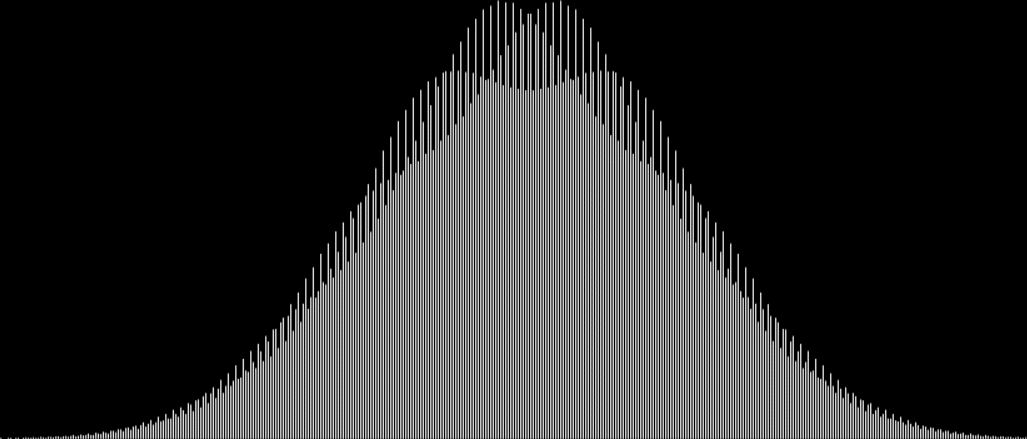
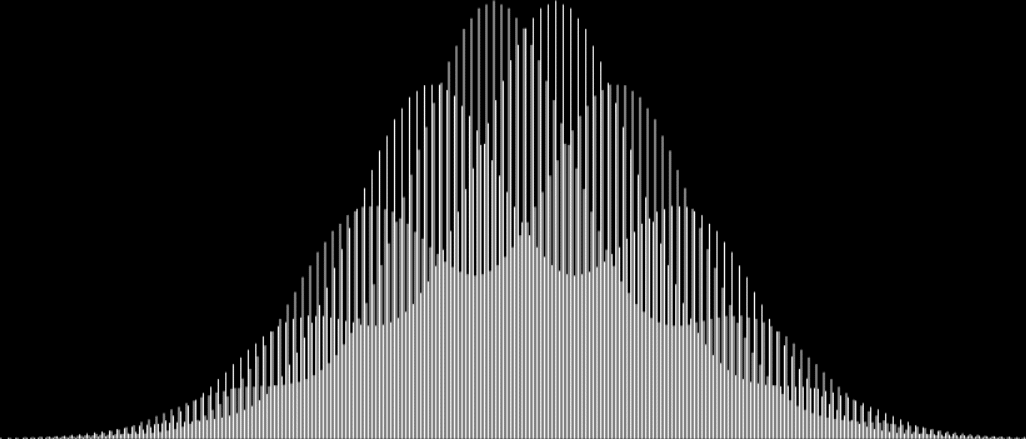
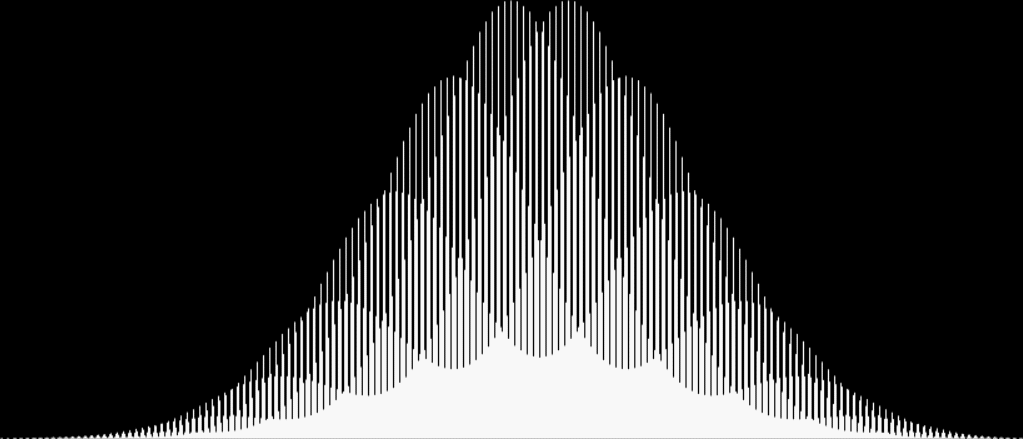
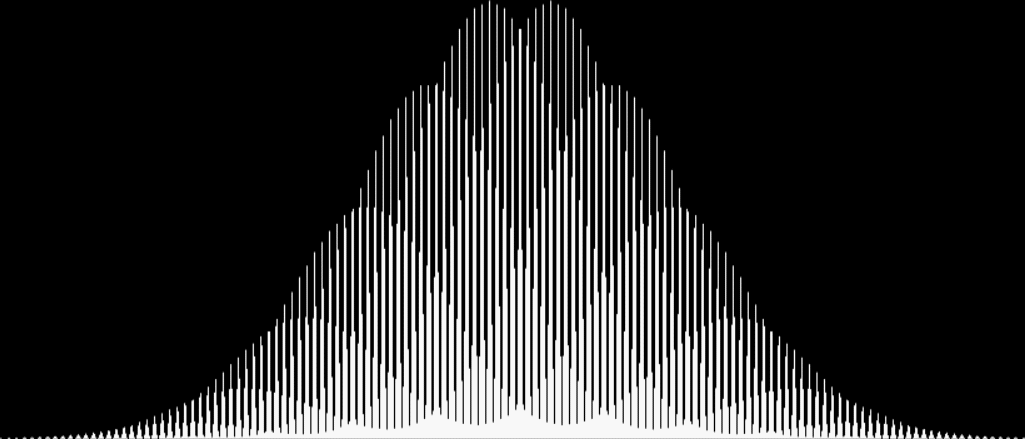
15,527,402,881 = 3534 = 304 + 1204 + 2724 + 3154 — from David Wells’ Penguin Dictionary of Curious and Interesting Numbers (1986), entry for “15,527,402,881”
Category Archives: Arithmetic
Pyramids for Pi
These are the odd numbers:
1, 3, 5, 7, 9, 11, 13, 15, 17, 19, 21, 23, 25, 27, 29, 31, 33, 35, 37, 39, 41, 43, 45, 47, 49, 51, 53, 55, 57, 59...
If you add the odd numbers, 1+3+5+7…, you get the square numbers:
1, 4, 9, 16, 25, 36, 49, 64, 81, 100, 121, 144, 169, 196, 225, 256, 289, 324, 361, 400, 441, 484, 529, 576, 625, 676, 729, 784, 841, 900...
And if you add the square numbers, 1+4+9+16…, you get what are called the square pyramidal numbers:
1, 5, 14, 30, 55, 91, 140, 204, 285, 385, 506, 650, 819, 1015, 1240, 1496, 1785, 2109, 2470, 2870, 3311, 3795, 4324, 4900, 5525, 6201, 6930, 7714, 8555, 9455...
There’s not a circle in sight, so you wouldn’t expect to find π amid the pyramids. But it’s there all the same. You can get π from this formula using the square pyramidal numbers:
π from a formula using square pyramidal numbers (Wikipedia)
Here are the approximations getting nearer and near to π:
3.1415926535897932384... = π
3.1666666666666666666... = sqpyra2pi(i=1) / 6 + 3
1 = sqpyra(1)3.1415926535897932384... = π
3.1452380952380952380... = sqpyra2pi(i=3) / 6 + 3
14 = sqpyra(3)3.1415926535897932384... = π
3.1412548236077647842... = sqpyra2pi(i=8) / 6 + 3
204 = sqpyra(8)3.1415926535897932384... = π
3.1415189855952756236... = sqpyra2pi(i=14) / 6 + 3
1,015 = sqpyra(14)3.1415926535897932384... = π
3.1415990074057163751... = sqpyra2pi(i=33) / 6 + 3
12,529 = sqpyra(33)3.1415926535897932384... = π
3.1415920110950124679... = sqpyra2pi(i=72) / 6 + 3
127,020 = sqpyra(72)3.1415926535897932384... = π
3.1415926017980070553... = sqpyra2pi(i=168) / 6 + 3
1,594,684 = sqpyra(168)3.1415926535897932384... = π
3.1415926599504002195... = sqpyra2pi(i=339) / 6 + 3
13,043,590 = sqpyra(339)3.1415926535897932384... = π
3.1415926530042565359... = sqpyra2pi(i=752) / 6 + 3
142,035,880 = sqpyra(752)3.1415926535897932384... = π
3.1415926535000384883... = sqpyra2pi(i=1406) / 6 + 3
927,465,791 = sqpyra(1406)3.1415926535897932384... = π
3.1415926535800054618... = sqpyra2pi(i=2944) / 6 + 3
8,509,683,520 = sqpyra(2944)3.1415926535897932384... = π
3.1415926535890006043... = sqpyra2pi(i=6806) / 6 + 3
105,111,513,491 = sqpyra(6806)3.1415926535897932384... = π
3.1415926535897000092... = sqpyra2pi(i=13892) / 6 + 3
893,758,038,910 = sqpyra(13892)3.1415926535897932384... = π
3.1415926535897999990... = sqpyra2pi(i=33315) / 6 + 3
12,325,874,793,790 = sqpyra(33315)3.1415926535897932384... = π
3.1415926535897939999... = sqpyra2pi(i=68985) / 6 + 3
109,433,980,000,485 = sqpyra(68985)3.1415926535897932384... = π
3.1415926535897932999... = sqpyra2pi(i=159563) / 6 + 3
1,354,189,390,757,594 = sqpyra(159563)3.1415926535897932384... = π
3.1415926535897932300... = sqpyra2pi(i=309132) / 6 + 3
9,847,199,658,130,890 = sqpyra(309132)3.1415926535897932384... = π
3.1415926535897932389... = sqpyra2pi(i=774865) / 6 + 3
155,080,688,289,901,465 = sqpyra(774865)3.1415926535897932384... = π
3.1415926535897932384... = sqpyra2pi(i=1586190) / 6 + 3
1,330,285,259,163,175,415 = sqpyra(1586190)
Summer Samer
10 can be represented in exactly 10 ways as a sum of distinct integers:
10 = 1 + 2 + 3 + 4
10 = 2 + 3 + 5
10 = 1 + 4 + 5
10 = 1 + 3 + 6
10 = 4 + 6 (c=5)
10 = 1 + 2 + 7
10 = 3 + 7
10 = 2 + 8
10 = 1 + 9
10 = 10 (c=10)
But there’s something unsatisfying about including 10 as a sum of itself. It’s much more satisfying that 76 can be represented in exactly 76 ways as a sum of distinct primes:
76 = 2 + 3 + 7 + 11 + 13 + 17 + 23
76 = 5 + 7 + 11 + 13 + 17 + 23
76 = 2 + 3 + 5 + 11 + 13 + 19 + 23
76 = 3 + 7 + 11 + 13 + 19 + 23
76 = 2 + 3 + 5 + 7 + 17 + 19 + 23 (c=5)
76 = 2 + 3 + 5 + 7 + 13 + 17 + 29
76 = 2 + 3 + 5 + 7 + 11 + 19 + 29
76 = 3 + 5 + 7 + 13 + 19 + 29
76 = 11 + 17 + 19 + 29
76 = 11 + 13 + 23 + 29 (c=10)
76 = 2 + 5 + 17 + 23 + 29
76 = 7 + 17 + 23 + 29
76 = 2 + 3 + 19 + 23 + 29
76 = 5 + 19 + 23 + 29
76 = 2 + 3 + 5 + 7 + 11 + 17 + 31 (c=15)
76 = 3 + 5 + 7 + 13 + 17 + 31
76 = 3 + 5 + 7 + 11 + 19 + 31
76 = 2 + 11 + 13 + 19 + 31
76 = 2 + 7 + 17 + 19 + 31
76 = 2 + 7 + 13 + 23 + 31 (c=20)
76 = 2 + 3 + 17 + 23 + 31
76 = 5 + 17 + 23 + 31
76 = 3 + 19 + 23 + 31
76 = 2 + 3 + 11 + 29 + 31
76 = 5 + 11 + 29 + 31 (c=25)
76 = 3 + 13 + 29 + 31
76 = 3 + 5 + 7 + 11 + 13 + 37
76 = 2 + 7 + 13 + 17 + 37
76 = 2 + 7 + 11 + 19 + 37
76 = 2 + 5 + 13 + 19 + 37 (c=30)
76 = 7 + 13 + 19 + 37
76 = 3 + 17 + 19 + 37
76 = 2 + 3 + 11 + 23 + 37
76 = 5 + 11 + 23 + 37
76 = 3 + 13 + 23 + 37 (c=35)
76 = 2 + 3 + 5 + 29 + 37
76 = 3 + 7 + 29 + 37
76 = 3 + 5 + 31 + 37
76 = 2 + 5 + 11 + 17 + 41
76 = 7 + 11 + 17 + 41 (c=40)
76 = 2 + 3 + 13 + 17 + 41
76 = 5 + 13 + 17 + 41
76 = 2 + 3 + 11 + 19 + 41
76 = 5 + 11 + 19 + 41
76 = 3 + 13 + 19 + 41 (c=45)
76 = 2 + 3 + 7 + 23 + 41
76 = 5 + 7 + 23 + 41
76 = 2 + 7 + 11 + 13 + 43
76 = 2 + 3 + 11 + 17 + 43
76 = 5 + 11 + 17 + 43 (c=50)
76 = 3 + 13 + 17 + 43
76 = 2 + 5 + 7 + 19 + 43
76 = 3 + 11 + 19 + 43
76 = 2 + 3 + 5 + 23 + 43
76 = 3 + 7 + 23 + 43 (c=55)
76 = 2 + 31 + 43
76 = 2 + 3 + 11 + 13 + 47
76 = 5 + 11 + 13 + 47
76 = 2 + 3 + 7 + 17 + 47
76 = 5 + 7 + 17 + 47 (c=60)
76 = 2 + 3 + 5 + 19 + 47
76 = 3 + 7 + 19 + 47
76 = 29 + 47
76 = 2 + 3 + 7 + 11 + 53
76 = 5 + 7 + 11 + 53 (c=65)
76 = 2 + 3 + 5 + 13 + 53
76 = 3 + 7 + 13 + 53
76 = 23 + 53
76 = 2 + 3 + 5 + 7 + 59
76 = 17 + 59 (c=70)
76 = 3 + 5 + 7 + 61
76 = 2 + 13 + 61
76 = 2 + 7 + 67
76 = 2 + 3 + 71
76 = 5 + 71 (c=75)
76 = 3 + 73
Summer Sets (and Truncated Triangulars)
Here is the sequence of triangular numbers, created by summing consecutive integers from 1 (i.e., 1+2+3+4+5…):
1, 3, 6, 10, 15, 21, 28, 36, 45, 55, 66, 78, 91, 105, 120, 136, 153, 171, 190, 210, 231, 253, 276, 300, 325, 351, 378, 406, 435, 465, 496, 528, 561, 595, 630, 666, 703, 741, 780, 820, 861, 903, 946, 990, 1035, 1081, 1128, 1176, 1225, 1275, 1326, 1378, 1431, 1485, 1540, 1596, 1653, 1711, 1770, 1830, 1891, 1953, 2016, 2080, 2145, 2211, 2278, 2346, 2415, 2485, 2556, 2628, 2701, 2775, 2850, 2926, 3003, 3081, 3160, 3240, 3321, 3403, 3486, 3570, 3655, 3741, 3828, 3916, 4005, 4095, 4186, 4278, 4371, 4465, 4560, 4656, 4753, 4851, 4950, 5050, 5151, 5253, 5356, 5460, 5565, 5671, 5778, 5886, 5995...
And here is a sequence of truncated triangulars, created by summing consecutive integers from 15 (i.e., 15+16+17+18+19…):
15, 31, 48, 66, 85, 105, 126, 148, 171, 195, 220, 246, 273, 301, 330, 360, 391, 423, 456, 490, 525, 561, 598, 636, 675, 715, 756, 798, 841, 885, 930, 976, 1023, 1071, 1120, 1170, 1221, 1273, 1326, 1380, 1435, 1491, 1548, 1606, 1665, 1725, 1786, 1848, 1911, 1975, 2040, 2106, 2173, 2241, 2310, 2380, 2451, 2523, 2596, 2670, 2745, 2821, 2898, 2976, 3055, 3135, 3216, 3298, 3381, 3465, 3550, 3636, 3723, 3811, 3900, 3990, 4081, 4173, 4266, 4360, 4455, 4551, 4648, 4746, 4845, 4945, 5046, 5148, 5251, 5355, 5460, 5566, 5673, 5781...
It’s obvious that the sequences are different at each successive step: 1 ≠ 15, 3 ≠ 31, 6 ≠ 48, 10 ≠ 66, 21 ≠ 85, and so on. But seven numbers occur in both sequences: 15, 66, 105, 171, 561, 1326 and 5460. And that’s it — 7 is the 14-th entry in A309507 at the Encyclopedia of Integer Sequences:
0, 1, 1, 1, 3, 3, 1, 2, 5, 3, 3, 3, 3, 7, 3, 1, 5, 5, 3, 7, 7, 3, 3, 5, 5, 7, 7, 3, 7, 7, 1, 3, 7, 7, 11, 5, 3, 7, 7, 3, 7, 7, 3, 11, 11, 3, 3, 5, 8, 11, 7, 3, 7, 15, 7, 7, 7, 3, 7, 7, 3, 11, 5, 3, 15, 7, 3, 7, 15, 7, 5, 5, 3, 11, 11, 7, 15, 7, 3, 9, 9, 3, 7 — A309507
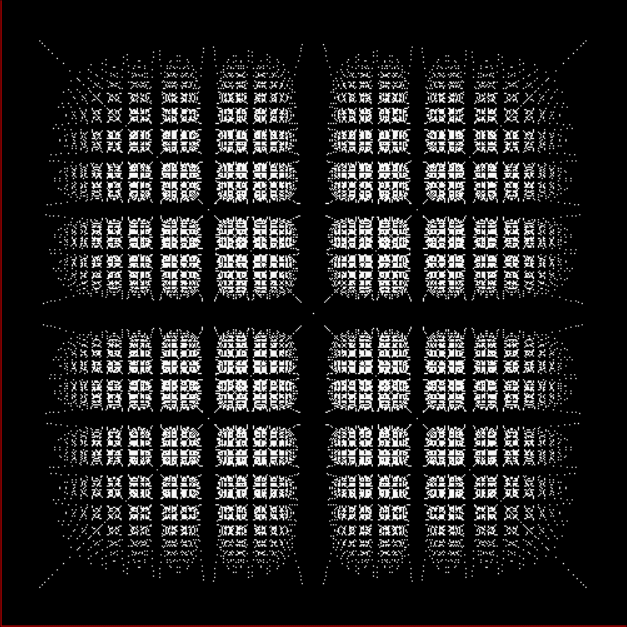
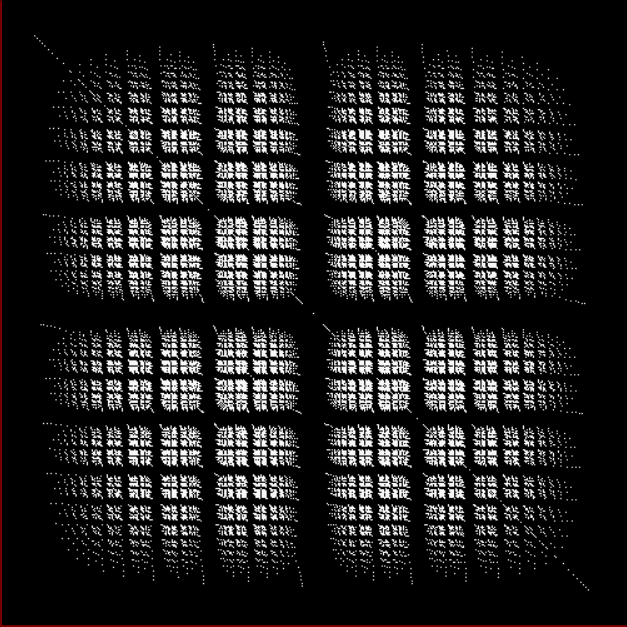
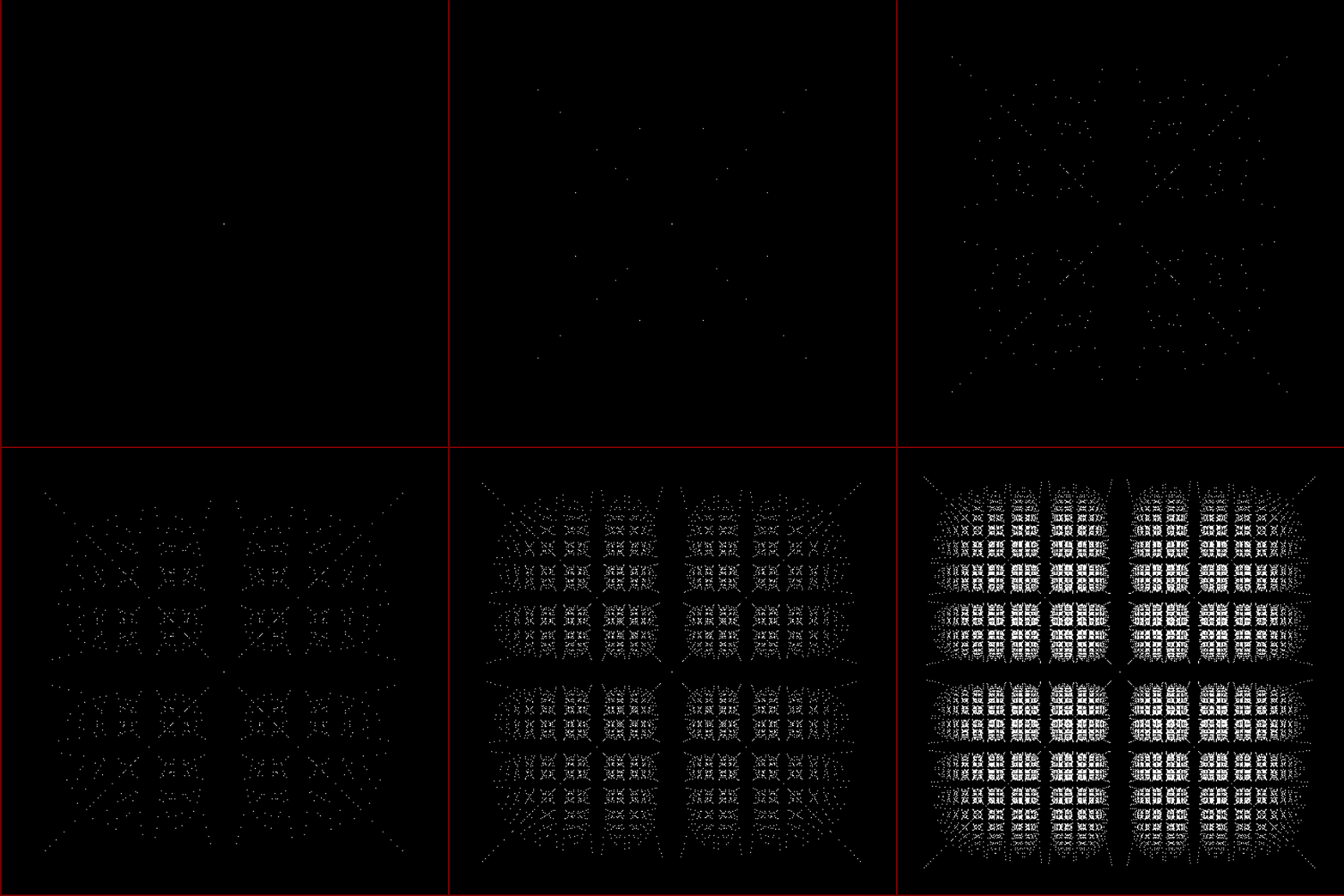
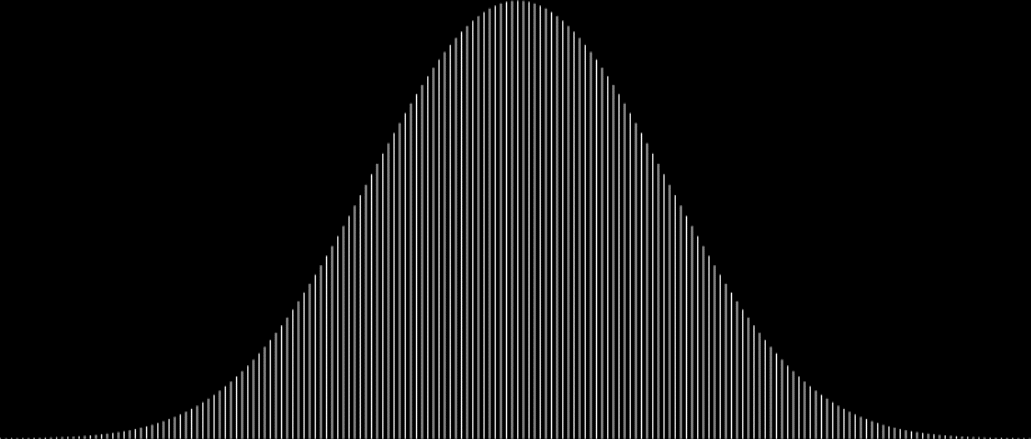
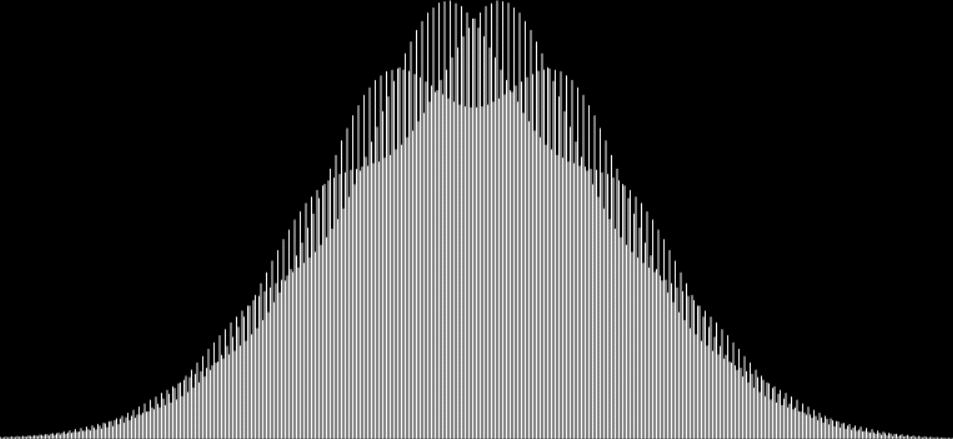
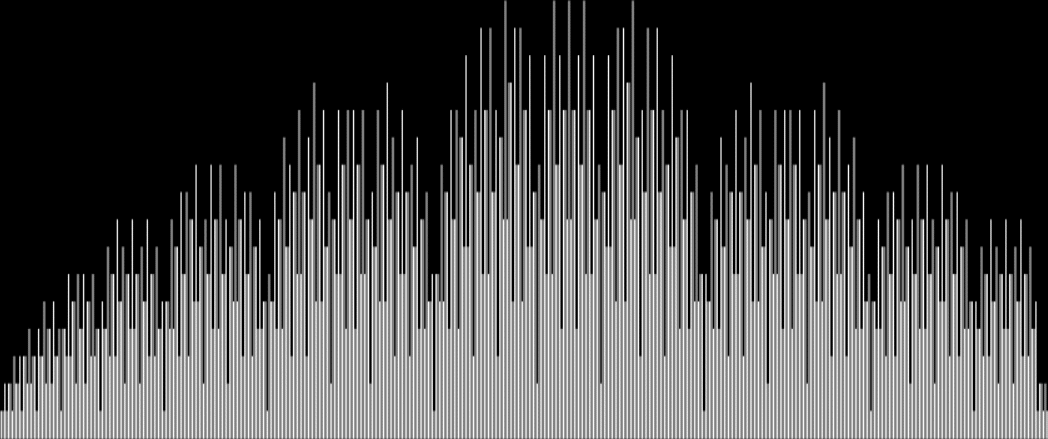
I decided to take create graphs of shared numbers in compared sequences like this. In the 135×135 grid below, the brightness of the squares corresponds to the count of shared numbers in the sequence-pair sum(x..x+n) and sum(y..y+n), where x and y are the coordinates of each individual square. I think the grid looks like a city of skyscrapers bisected by a highway:
Count of shared numbers in sequence-pairs sum(x..x+n) and sum(y..y+n)
Note that the bright white diagonal in the grid corresponds to the sequence-pairs where x = y. Because the sequences are identical in each pair, the count of shared numbers is infinite. The grid is symmetrically reflected along the diagonal because, for example, the sequence-pair for x=12, y=43, where sum(12..12+n) is compared with sum(43..43+n), corresponds to the sequence pair for x=43, y=12, where sum(43..43+n) is compared with sum(12..12+n). The scale of brightness runs from 0 (black) to 255 (full white) and increases by 32 for each shared number in the sequence. Obviously, then, the brightness can’t increase indefinitely and some maximally bright squares will represent sequence-pairs that have different counts of shared pairs.
Now try altering the size of the step in brightness. You get grids in which the width of the central strip increases (smaller step) or decreases (bigger step). Here are grids for steps for 1, 2, 4, 8, 16, 32 and 64 (I’ve removed the bright x=y diagonal for the first few grids, because it’s too prominent against duller shades):
Brightness-step = 1
Brightness-step = 2
Brightness-step = 4
Brightness-step = 8
Brightness-step = 16
Brightness-step = 32
Brightness-step = 63
Brightness-step = 1, 2, 4, 8, 16, 32, 63 (animated)
Power Flip
12 is an interesting number in a lot of ways. Here’s one way I haven’t seen mentioned before:
12 = 3^1 * 2^2
The digits of 12 represent the powers of the primes in its factorization, if primes are represented from right-to-left, like this: …7, 5, 3, 2. But I couldn’t find any more numbers like that in base 10, so I tried a power flip, from right-left to left-right. If the digits from left-to-right represent the primes in the order 2, 3, 5, 7…, then this number is has prime-power digits too:
81312000 = 2^8 * 3^1 * 5^3 * 7^1 * 11^2 * 13^0 * 17^0 * 19^0
Or, more simply, given that n^0 = 1:
81312000 = 2^8 * 3^1 * 5^3 * 7^1 * 11^2
I haven’t found any more left-to-right prime-power digital numbers in base 10, but there are more in other bases. Base 5 yields at least three (I’ve ignored numbers with just two digits in a particular base):
110 in b2 = 2^1 * 3^1 (n=6)
130 in b6 = 2^1 * 3^3 (n=54)
1010 in b2 = 2^1 * 3^0 * 5^1 (n=10)
101 in b3 = 2^1 * 3^0 * 5^1 (n=10)
202 in b7 = 2^2 * 3^0 * 5^2 (n=100)
3020 in b4 = 2^3 * 3^0 * 5^2 (n=200)
330 in b8 = 2^3 * 3^3 (n=216)
13310 in b14 = 2^1 * 3^3 * 5^3 * 7^1 (n=47250)
3032000 in b5 = 2^3 * 3^0 * 5^3 * 7^2 (n=49000)
21302000 in b5 = 2^2 * 3^1 * 5^3 * 7^0 * 11^2 (n=181500)
7810000 in b9 = 2^7 * 3^8 * 5^1 (n=4199040)
81312000 in b10 = 2^8 * 3^1 * 5^3 * 7^1 * 11^2
Post-Performative Post-Scriptum
When I searched for 81312000 at the Online Encyclopedia of Integer Sequences, I discovered that these are Meertens numbers, defined at A246532 as the “base n Godel encoding of x [namely,] 2^d(1) * 3^d(2) * … * prime(k)^d(k), where d(1)d(2)…d(k) is the base n representation of x.”
The Number of the Creased
Here’s an idea for a story à la M.R. James. A middle-aged scholar opens some mail one morning and finds nothing inside one envelope but a strip of paper with the numbers 216348597 written on it in sinister red ink. Someone has folded the strip several times so that there are creases between groups of numbers, like this: 216|348|5|97. Wondering what the significance of the creases is, the scholar hits on the step of adding the numbers created by them:
216 + 348 + 5 + 97 = 666
After that… Well, I haven’t written the story yet. But that beginning raises an obvious question. Is there any other way of getting a Number of the Creased from 216348597? That is, can you get 666, the Number of the Beast, by dividing 216348597 in another way? Yes, you can. In fact, there are six ways of creating 666 by dividing-and-summing 216348597:
666 = 2 + 1 + 634 + 8 + 5 + 9 + 7
666 = 2 + 163 + 485 + 9 + 7
666 = 216 + 348 + 5 + 97
666 = 21 + 63 + 485 + 97
666 = 21 + 6 + 34 + 8 + 597
666 = 2 + 16 + 3 + 48 + 597
216348597 is a permutation of 123456789, so does 123456789 yield a Number of the Creased? Yes. Two of them, in fact:
666 = 123 + 456 + 78 + 9
666 = 1 + 2 + 3 + 4 + 567 + 89
And 987654321 yields another:
666 = 9 + 87 + 6 + 543 + 21
And what about other permutations of 123456789? These are the successive records:
Using 123456789
666 = 123 + 456 + 78 + 9
666 = 1 + 2 + 3 + 4 + 567 + 89 (c=2)
Using 123564789
666 = 12 + 3 + 564 + 78 + 9
666 = 123 + 56 + 478 + 9
666 = 1 + 2 + 3 + 564 + 7 + 89 (c=3)
Using 125463978
666 = 1 + 2 + 5 + 4 + 639 + 7 + 8
666 = 12 + 546 + 3 + 97 + 8
666 = 1 + 254 + 6 + 397 + 8
666 = 1 + 2 + 546 + 39 + 78 (c=4)
Using 139462578
666 = 13 + 9 + 4 + 625 + 7 + 8
666 = 139 + 462 + 57 + 8
666 = 1 + 394 + 6 + 257 + 8
666 = 1 + 39 + 46 + 2 + 578
666 = 13 + 9 + 4 + 62 + 578 (c=5)
Using 216348597
666 = 2 + 1 + 634 + 8 + 5 + 9 + 7
666 = 2 + 163 + 485 + 9 + 7
666 = 216 + 348 + 5 + 97
666 = 21 + 63 + 485 + 97
666 = 21 + 6 + 34 + 8 + 597
666 = 2 + 16 + 3 + 48 + 597 (c=6)
216348597 is the best of the bestial. No other permutation of 123456789 yields as many as six Numbers of the Creased.
Fair Pairs
You can get a glimpse of the gorgeous very easily. After all, you can work out the following sum in your head: 1 + 2 + 3 + 4 + 5 = ?
The answer is… 1 + 2 + 3 + 4 + 5 = 15. So that sum is example of this pattern: n1:n2 = sum(n1..n2). A simple computer program will soon supply other sums of consecutive numbers following the same pattern. I think these patterns based on the pair n1 and n2 are beautiful, so I’d call them fair pairs:
15 = sum(1..5)
27 = sum(2..7)
429 = sum(4..29)
1353 = sum(13..53)
1863 = sum(18..63)
3388 = sum(33..88)
3591 = sum(35..91)
7119 = sum(7..119)
78403 = sum(78..403)
133533 = sum(133..533)
178623 = sum(178..623)
2282148 = sum(228..2148)
2732353 = sum(273..2353)
3882813 = sum(388..2813)
7103835 = sum(710..3835)
13335333 = sum(1333..5333)
17016076 = sum(1701..6076)
17786223 = sum(1778..6223)
I went looking for variants on that pattern. If the function rev(n) reverses the digits of n, here’s n1:rev(n2) = sum(n1..n2):
155975 = sum(155..579)
223407 = sum(223..704)
4957813 = sum(495..3187)
I like that pattern, but it doesn’t seem beautiful like n1:n2 = sum(n1..n2). Nor does rev(n1):n2 = sum(n1..n2):
1575 = sum(51..75)
96444 = sum(69..444)
304878 = sum(403..878)
392933 = sum(293..933)
3162588 = sum(613..2588)
3252603 = sum(523..2603)
3642738 = sum(463..2738)
3772853 = sum(773..2853)
6653691 = sum(566..3691)
8714178 = sum(178..4178)
But rev(n1):rev(n2) = sum(n1..n2) is beautiful again, in a twisted kind of way:
97944 = sum(79..449)
452489 = sum(254..984)
3914082 = sum(193..2804)
6097063 = sum(906..3607)
6552663 = sum(556..3662)
Now try swapping n1 and n2. Here’s n2:n1 = sum(n1..n2):
204 = sum(4..20)
216 = sum(6..21)
20328 = sum(28..203)
21252 = sum(52..212)
21762 = sum(62..217)
23287 = sum(87..232)
23490 = sum(90..234)
2006118 = sum(118..2006)
2077402 = sum(402..2077)
2132532 = sum(532..2132)
2177622 = sum(622..2177)
Do I find the pattern beautiful? Yes, but it’s not as beautiful as n1:n2 = sum(n1..n2). The beauty disappears in n2:rev(n1) = sum(n1..n2):
21074 = sum(47..210)
21465 = sum(56..214)
22797 = sum(79..227)
2013561 = sum(165..2013)
2046803 = sum(308..2046)
2099754 = sum(457..2099)
2145065 = sum(560..2145)
And rev(n2):n1 = sum(n1..n2):
638 = sum(8..36)
2952 = sum(52..92)
21252 = sum(52..212)
23287 = sum(87..232)
66341 = sum(41..366)
208477 = sum(477..802)
2522172 = sum(172..2252)
2852982 = sum(982..2582)
7493772 = sum(772..3947)
8714178 = sum(178..4178)
Finally, and fairly again, rev(n2):rev(n1) = sum(n1..n2):
638 = sum(8..36)
125541 = sum(145..521)
207972 = sum(279..702)
158046 = sum(640..851)
9434322 = sum(223..4349)
The beauty’s back. And it has almost become self-aware. In rev(n2):rev(n1) = sum(n1..n2), each side of the equation seems to be looking at the other half as those it’s looking into a mirror.
Previously Pre-Posted (Please Peruse)…
• Nuts for Numbers — looking at patterns like 2772 = sum(22..77)
Figure Philia
“I love figures, it gives me an intense satisfaction to deal with them, they’re living things to me, and now that I can handle them all day long I feel myself again.” — the imprisoned accountant Jean Charvin in W. Somerset Maugham’s short-story “A Man with a Conscience” (1939)
I’m a Beweaver
Here are some examples of what I call woven sums for sum(n1..n2), where the digits of n1 are interwoven with the digits of n2:
1599 = sum(19..59) = 19 + 20 + 21 + 22 + 23 + 24 + 25 + 26 + 27 + 28 + 29 + 30 + 31 + 32 + 33 + 34 + 35 + 36 + 37 + 38 + 39 + 40 + 41 + 42 + 43 + 44 + 45 + 46 + 47 + 48 + 49 + 50 + 51 + 52 + 53 + 54 + 55 + 56
2716 = sum(21..76)
159999 = sum(199..599)
275865 = sum(256..785)
289155 = sum(295..815)
15050747 = sum(1004..5577)
15058974 = sum(1087..5594)
15999999 = sum(1999..5999)
39035479 = sum(3057..9349)
In other words, the digits of n1 occupy digit-positions 1,3,5… and the digits of n2 occupy dig-pos 2,4,6…
But I can’t find woven sums where the digits of n2 are interwoven with the digits of n1, i.e. the digits of n2 occupy dig-pos 1,3,5… and the digits of n1 occupy dig-pos 2,4,6… Except when n1 has fewer digits than n2, e.g. 210 = sum(1..20).
Elsewhere Other-Accessible…
• Nuts for Numbers — a look at numbers like 2772 = sum(22..77) and 10470075 = sum(1075..4700).
Spiral Artefact #3
What’s the next number in this sequence?
1, 3, 0, 4, 9, 15, 8, 0, 9, 19, 30, 42, 29, 15, 0, 16, 33, 51, 70, 90, 69, 47, 24, 0, 25, ?
Even if you can’t work out the full rule generating the sequence, you may be able to deduce that the next number is… 51. There’s a pattern involving 0:
1, 3, 0, 4, 9, 15, 8, 0, 9, 19, 30, 42, 29, 15, 0, 16, 33, 51, 70, 90, 69, 47, 24, 0, 25... → 3, 0, 4, 9, [...] 8, 0, 9, 19, [...] 15, 0, 16, 33, [...] 24, 0, 25...
The first number after each 0 is 1 more than the first number before the 0. The second number after the 0 is equal to 2 * (first-number-after 0) + 1. So:
1, 3, 0, 4, 2*4+1 = 9, [...] 8, 0, 9, 2*9+1 = 19, [...] 15, 0, 16, 2*16+1 = 33, [...] 24, 0, 25, 2*25+1 = 51...
But what is the full rule for generating the sequence? It’s based on this pattern of sums I noticed:
1+2 = 3
4+5+6 = 7+8 = 15
9+10+11+12 = 13+14+15 = 42
16+17+18+19+20 = 21+22+23+24 = 90
25+26+27+28+29+30 = 31+32+33+34+35 = 165
36+37+38+39+40+41+42 = 43+44+45+46+47+48 = 273
49+50+51+52+53+54+55+56 = 57+58+59+60+61+62+63 = 420
64+65+66+67+68+69+70+71+72 = 73+74+75+76+77+78+79+80 = 612 — See A059270 at the OEIS
The sum of the first two integers (1+2) equals the next integer (3). The sum of the next three integers (4+5+6) equals the sum of the next two integers (7+8). The sum of the next four integers (9+10+11+12) equals the sum of the next three integers (13+14+15). And so on. The sequence is based on an adaptation of that pattern:
1 + 2 - 3 = 0
4 + 5 + 6 - 7 - 8 = 0
9 + 10 + 11 + 12 - 13 - 14 - 15 = 0
16 + 17 + 18 + 19 + 20 - 21 - 22 - 23 - 24 = 0
25 + 26 + 27 + 28 + 29 + 30 - 31 - 32 - 33 - 34 - 35 = 0↓
1 + 2 - 3 + 4 + 5 + 6 - 7 - 8 + 9 + 10 + 11 + 12 - 13 - 14 - 15 + 16 + 17 + 18 + 19 + 20 - 21 - 22 - 23 - 24 + 25 + 26 + 27 + 28 + 29 + 30 - 31 - 32 - 33 - 34 - 35...
If you work out the partial sums of the additions and subtractions, you get the sequence I started with, which regularly rises to a new high, then falls back to 0:
1, 3, 0, 4, 9, 15, 8, 0, 9, 19, 30, 42, 29, 15, 0, 16, 33, 51, 70, 90, 69, 47, 24, 0, 25, 51, 78, 106, 135, 165, 134, 102, 69, 35, 0, 36, 73, 111, 150, 190, 231, 273, 230, 186, 141, 95, 48, 0, 49, 99, 150, 202, 255, 309, 364, 420, 363, 305, 246, 186, 125, 63, 0, 64, 129, 195, 262, 330, 399, 469, 540, 612, 539, 465, 390, 314, 237, 159, 80, 0, 8
1, 163, 246, 330, 415, 501, 588, 676, 765, 855, 764, 672, 579, 485, 390, 294, 197, 99, 0, 100...
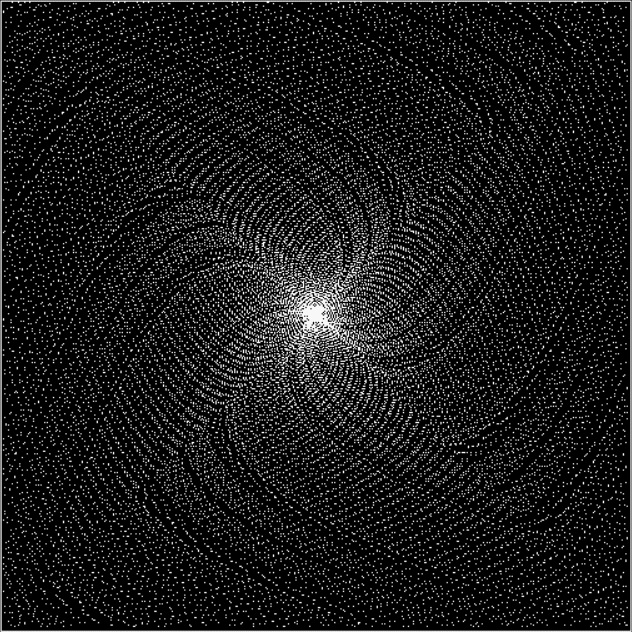
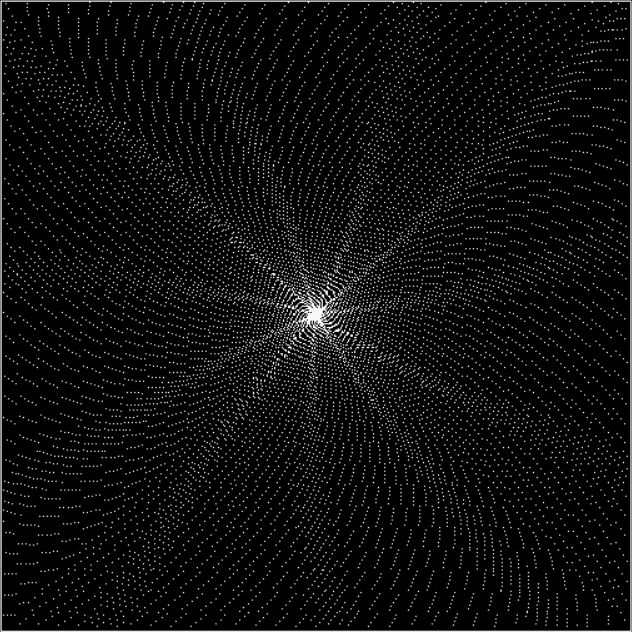
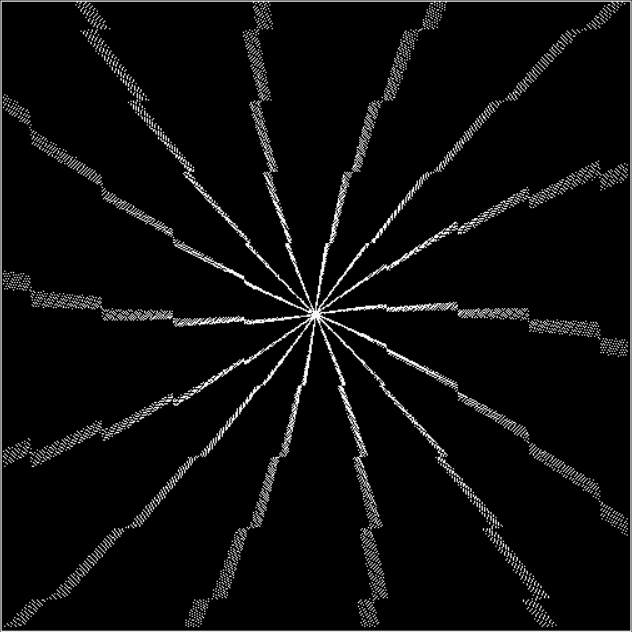
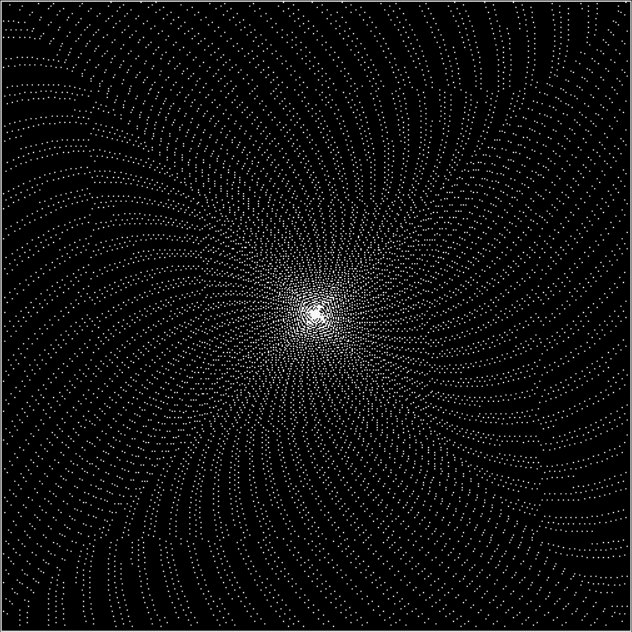
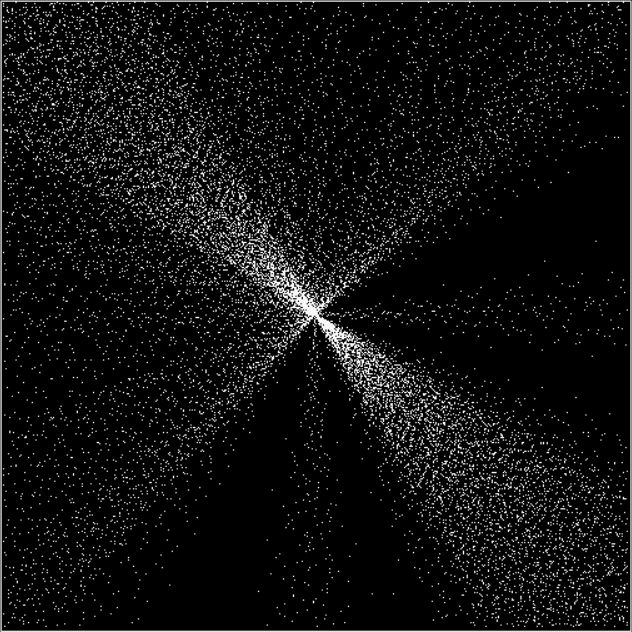
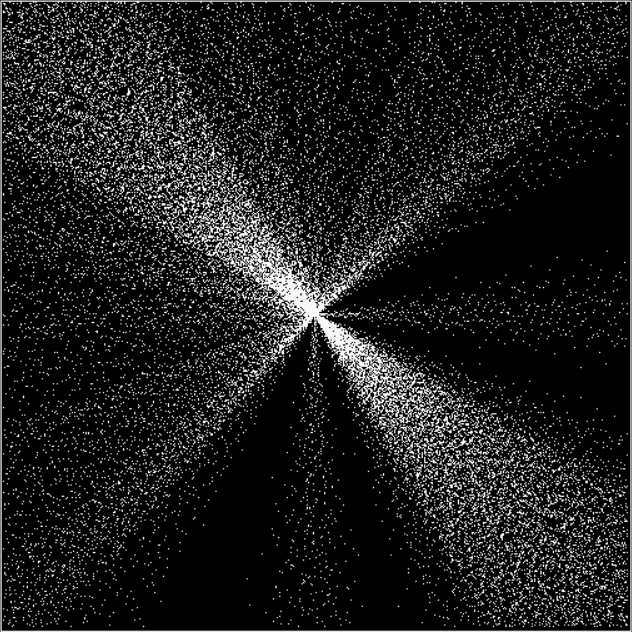
When you represent the numbers of the sequence on an Ulam-like spiral, you get this pattern of lines (and zigzags) against a haze of less regular points:
Spiral for pos2neg1 = 1, 3, 0, 4, 9, 15, 8, 0, 9, 19, 30, 42, 29, 15, 0, 16, 33…
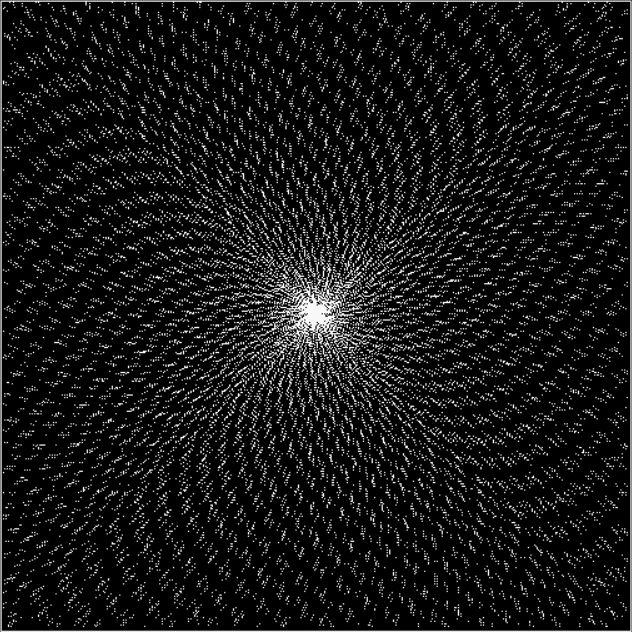
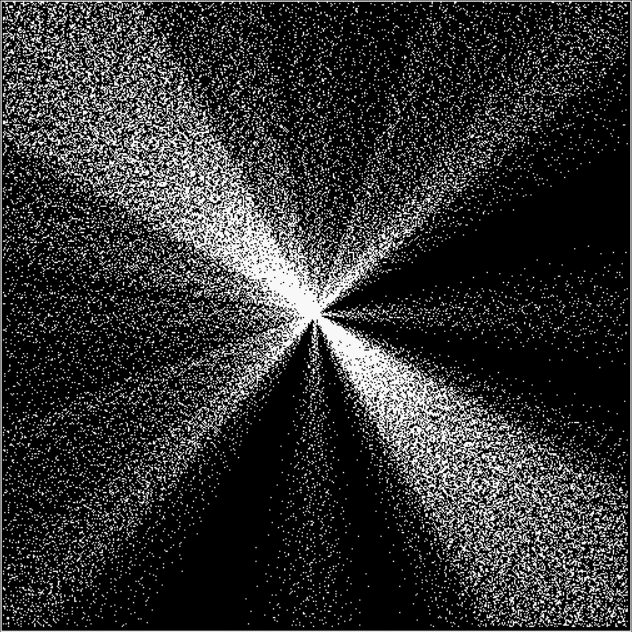
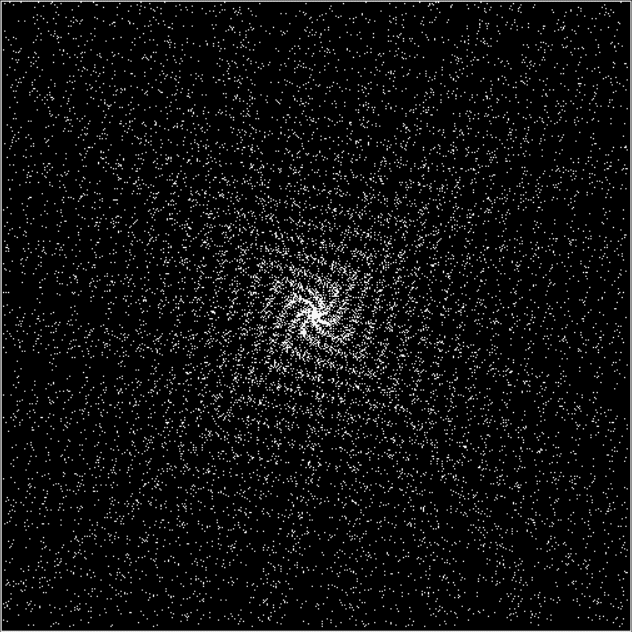
I’ll call the lines spiral artefacts. I don’t know what generates all of them, but the zigzag diagonal from top left to bottom right is partly created by the square numbers. Here’s the spiral at higher resolutions:
Spiral for pos2neg1 (x2)
Spiral for pos2neg1 (x4)
You’ll find more of the lines if you look at Ulam-like spirals for adaptations of the original sequence. Suppose you add the first three integers, then take away the next two, then add the next four integers, then take away the next three, and so on: 1 + 2 + 3 – 4 – 5 + 6 + 7 + 8 + 9 – 10 – 11 – 12 + 13 + 14… Here are the partials sums of these additions and subtractions:
1, 3, 6, 2, -3, 3, 10, 18, 27, 17, 6, -6, 7, 21, 36, 52, 69, 51, 32, 12, -9, 13, 36, 60, 85, 111, 138, 110, 81, 51, 20, -12, 21, 55, 90, 126, 163, 201, 240, 200, 159, 117, 74, 30, -15, 31, 78, 126, 175, 225, 276, 328, 381, 327, 272, 216, 159, 101, 42, -18, 43, 105, 168, 232, 297, 363, 430, 498, 567, 497, 426, 354, 281, 207, 132, 56, -21, 57, 136, 216, 297, 379, 462, 546, 631, 717, 804, 716, 627, 537, 446, 354, 261, 167, 72, -24, 73, 171, 270, 370...
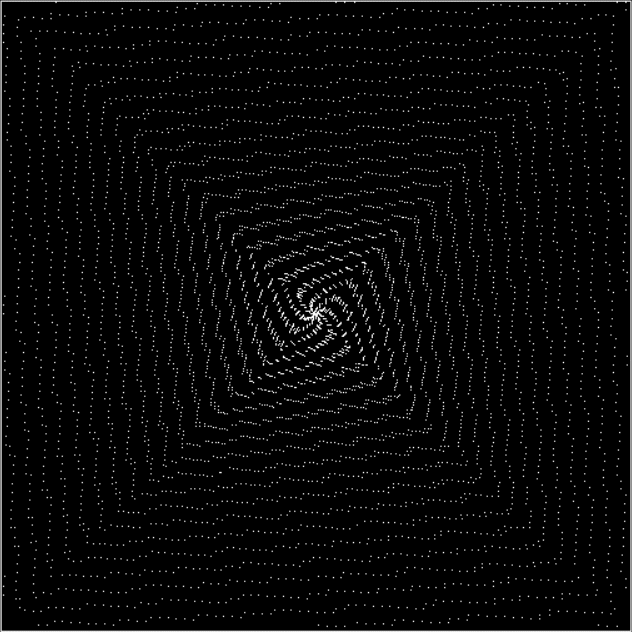
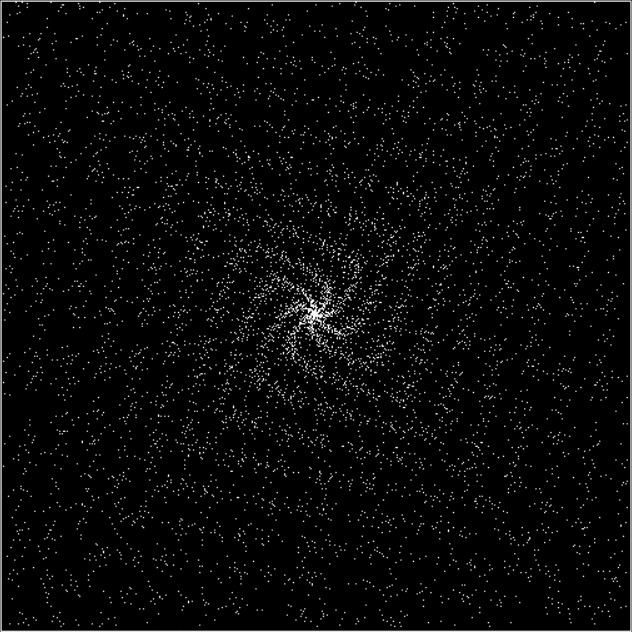
If the original sequence is pos2neg1 (add first two integers, take away next one integer, etc), this adapted sequence is pos3neg2 (add first three integers, take away next two, etc). Here’s the spiral for pos3neg2 (with negative numbers represented as positive):
Spiral for pos3neg2 = 1, 3, 6, 2, -3, 3, 10, 18, 27, 17, 6, -6, 7, 21, 36, 52,
69, 51, 32, 12…
Note that the spiral is incomplete and some of the lines not fully extended, because the lines are easier to see when the sequence doesn’t carry on too long and clutter the screen. Here are more adapted sequences shown on Ulam-like spirals (again, some of the spirals are incomplete):
Spiral for pos4neg3 = 1, 3, 6, 10, 5, -1, -8, 0, 9, 19, 30, 42, 29, 15, 0, -16, 1, 19, 38, 58…
Spiral for pos5neg4 = 1, 3, 6, 10, 15, 9, 2, -6, -15, -5, 6, 18, 31, 45, 60, 44, 27, 9, -10, -30…
Spiral for pos6neg5 = 1, 3, 6, 10, 15, 21, 14, 6, -3, -13, -24, -12, 1, 15, 30, 46, 63, 81, 62, 42…
Spiral for pos7neg6 = 1, 3, 6, 10, 15, 21, 28, 20, 11, 1, -10, -22, -35, -21, -6, 10, 27, 45, 64, 84…
Spiral for pos8neg7 = 1, 3, 6, 10, 15, 21, 28, 36, 27, 17, 6, -6, -19, -33, -48, -32, -15, 3, 22, 42…
Spiral for pos9neg8 = 1, 3, 6, 10, 15, 21, 28, 36, 45, 35, 24, 12, -1, -15, -30, -46, -63, -45, -26, -6…
Spiral for pos10neg9 = 1, 3, 6, 10, 15, 21, 28, 36, 45, 55, 44, 32, 19, 5, -10, -26, -43, -61, -80, -60…
Spiral for pos11neg10 = 1, 3, 6, 10, 15, 21, 28, 36, 45, 55, 66, 54, 41, 27, 12, -4, -21, -39, -58, -78…
Elsewhere Other-Engageable
• Spiral Artefact #1 — different patterns on an Ulam-like spiral
• Spiral Artefact #2 — more different patterns