
Here are two new fractals, both of which remind me of the seedheads of the wildflower known as a teasel, Dipsacus fullonum:
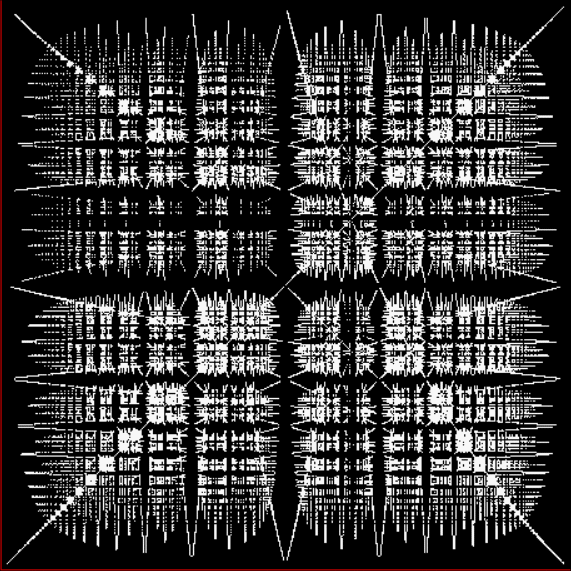
A FracTeasel fractal
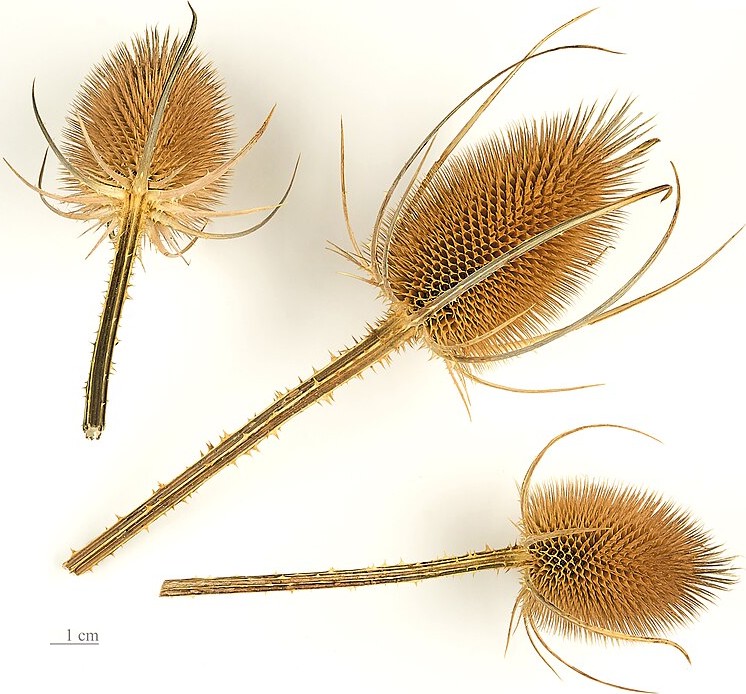
Dried seedheads of teasel, Dipsacus fullonum (Wikipedia)

Another FracTeasel fractal (embedded in the first)
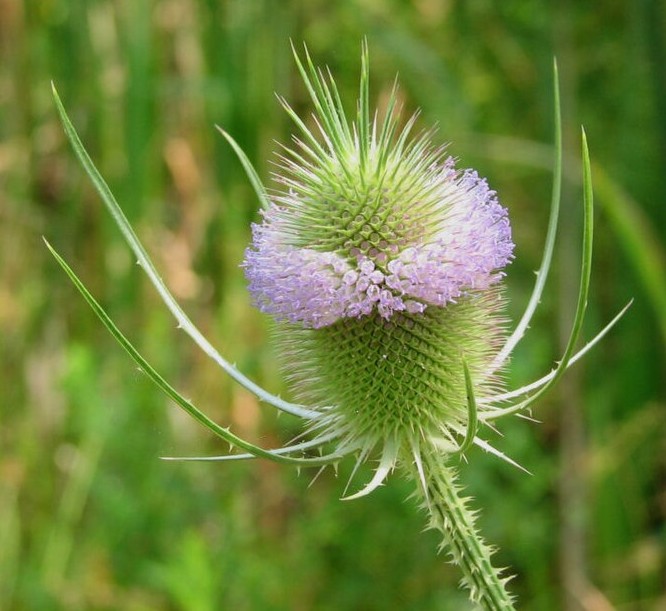
Flowering seedhead of teasel, Dipsacus fullonum (Wikipedia)
How do you create the two FracTeasels? Let’s look first at the fractal they’re inspired by. In “Back to Frac’” I talked about this fractional fractal, a variant of what I call the limestone fractal:
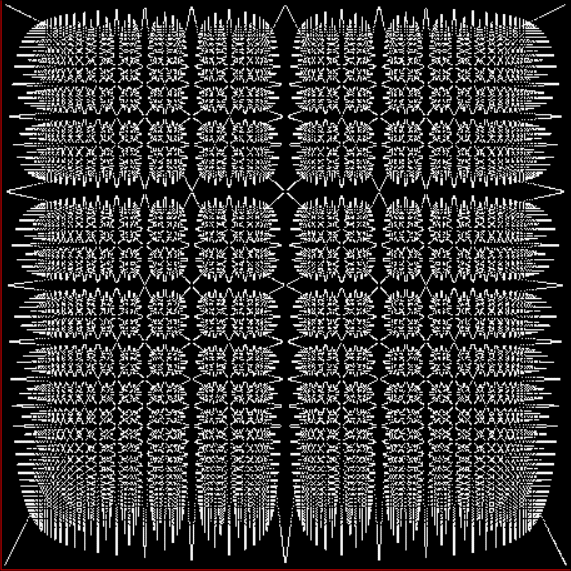
Variant of a limestone fractal or gryke fractal
It’s a fractal on a fract-L, that is, the x and y co-ordinates of the red L represent pairs of fractions generating decimals between 0 and 1. The x represents the fractions a1/b1 = 1/n to (n-1)/n in simplest form: 1/2, 1/3, 2/3, 1/4, 3/4, 1/5, 2/5, 3/5, 4/5, 1/6, 5/6, 1/7, 2/7, 3/7, 4/7, 5/7, 6/7, 1/8, 3/8, 5/8, 7/8,…
And what about the y? It represents the fraction found by taking the continued fraction of a1/b1, reversing it, and generating a new fraction, a2/b2, from the reversal. For example, here’s the continued fraction of a1/b1 = 3/23 = 0.1304347826…:
contfrac(3/23) = 7,1,2
The continued fraction of a1/b1 = 3/23 is used like this to reconstruct a1/b1:
7,1,2
0 → 1 / (0 + 2) = 1/2 → 1 / (1/2 + 1) = 2/3 → 1 / (7 + 2/3) = 3/23
Now reverse the continued fraction, 7,1,2 → 2,1,7, and generate a2/b2:
2,1,7
0 → 1 / (0 + 7) = 1/7 → 1 / (1/7 + 1) = 7/8 → 1 / (2 + 7/8) = 8/23 = 0.3478260869565…
The limestone fractal above appears when a1/b1 → a2/b2 for a1/b1 = 1/2, 1/3, 2/3, 1/4, 3/4, 1/5, 2/5, 3/5, 4/5, 1/6, 5/6, 1/7, 2/7, 3/7, 4/7, 5/7, 6/7, 1/8, 3/8, 5/8, 7/8,… But you can do other things to contfrac(a1/b1) beside just reversing it. What about the permutations of contfrac(a1/b1), for example? If length(contfrac(a1/b1)) = n, the permutations can generate up to n! (factorial n) new a2/b2 for the y co-ordinate (if all the numbers of contfrac(a1/b1) are different, you’ll get n! permutations). The resultant fractal is the first of the FracTeasels above (note that a2/b2 isn’t multiplied by two):
FracTeasel #1 from fract-L for y = perm(contfrac(a1/b1))
If you think about it, you’ll see that the fractal from permed contfrac(a1/b1) contains the fractal from reversed contfrac(a1/b1). It also contains the second FracTeasel:
FracTeasel #2
How so? Because the second FracTeasel — let’s call it the stemmed FracTeasel — is created by shifting some numbers in contfrac(a1/b1) and leaving others alone. For example:
contfrac(940/1089) = 1, 6, 3, 4, 5, 2 → 1, 4, 3, 2, 5, 6 = contfrac(1008/1243)
So the function is finding one particular permutation of contfrac(a1/b1) to generate a2/b2, not all permutations. And so the function creates the stemmed FracTeasel, which carries an infinite number of seedheads on the same stem. To show that, here’s an animated gif zooming in on the bend of the fract-L for the stemmed FracTeasel:
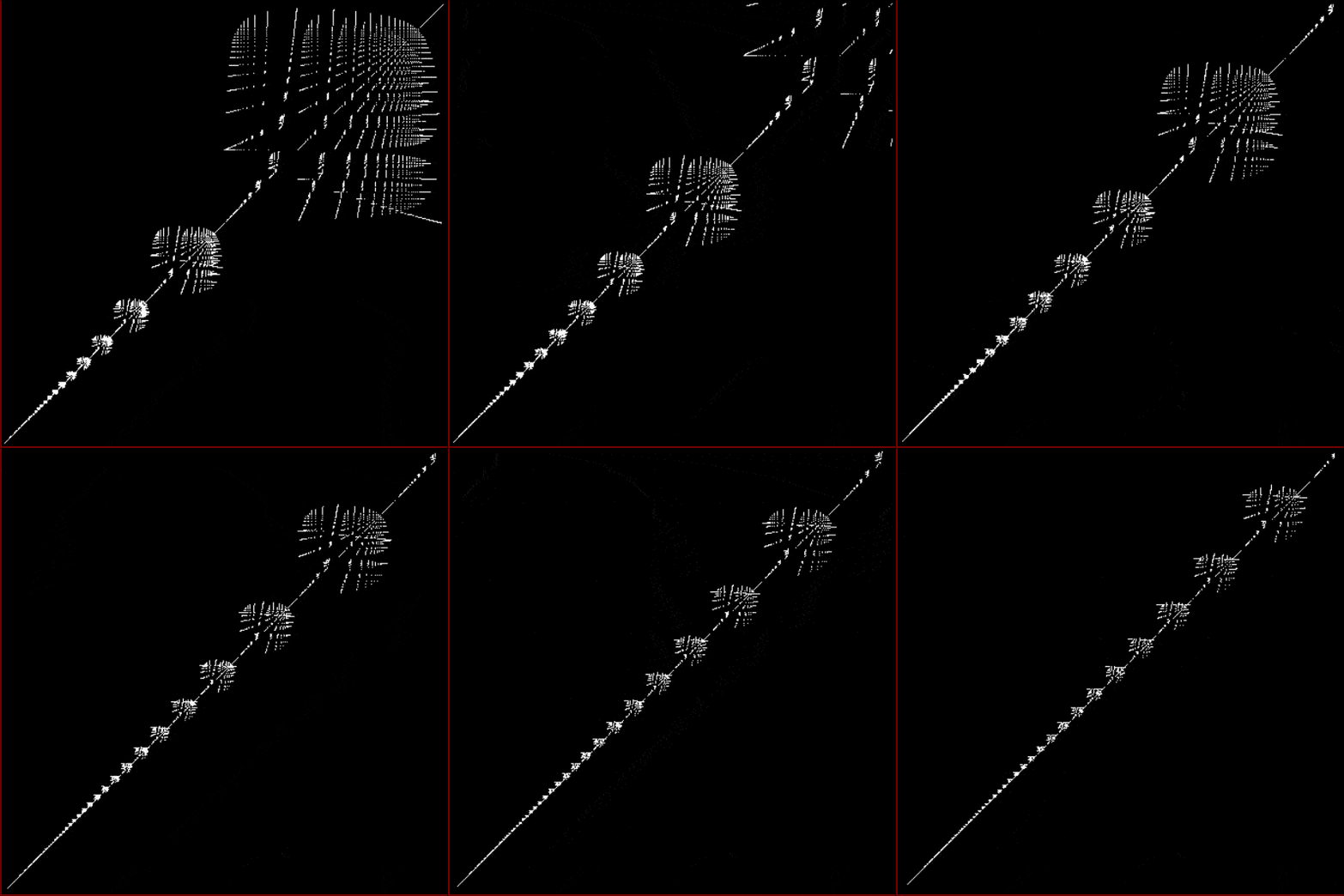
Zooming the FracTeasel (animated at ezGif)
Elsewhere Other-Accessible…
• I Like Gryke — a first look at the limestone fractal
• Lime Time — more on the limestone fractal
 Overlord In Terms of Core Issues Around Maximal Engagement with Key Notions of the Über-Feral