Priamonds and Pearls

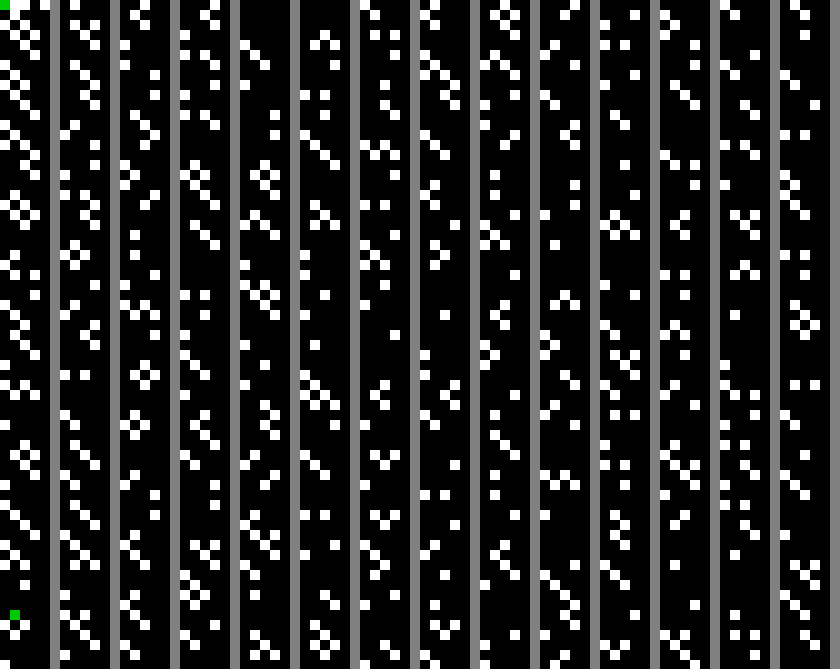
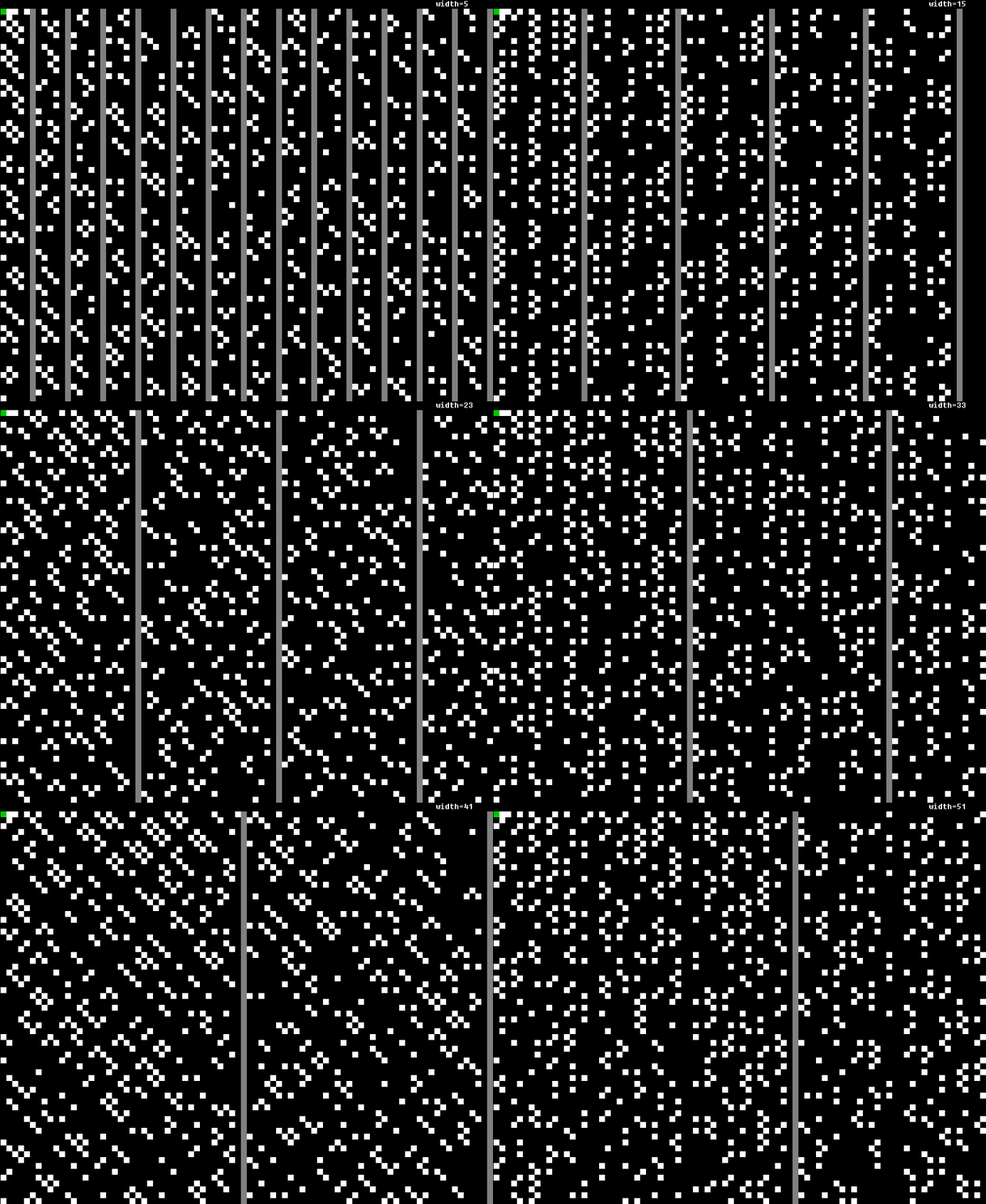
Interesting patterns emerge when primes are represented as white blocks in a series of n-width left-right lines laid vertically, one atop the other. When the line is five blocks wide, the patterns look like this (the first green block is 1, followed by primes 2, 3 and 5, then 7 in the next line):
5line

(Click for larger version)

Right at the bottom of the first column is an isolated prime diamond, or priamond (marked with a green block). It consists of the four primes 307-311-313-317, where the three latter primes equal 307 + 4 and 6 and 10, or 307 + 5-1, 5+1 and 5×2 (the last prime in the first column is 331 and the first prime in the second is 337). About a third of the way down the first column is a double priamond, consisting of 97, 101, 103, 107, 109 and 113. For a given n, then, a priamond is a set of primes, p1, p2, p3 and p4, such that p2 = p1 + n-1, p3 = p + n+1 and p4 = p1 + 2n.

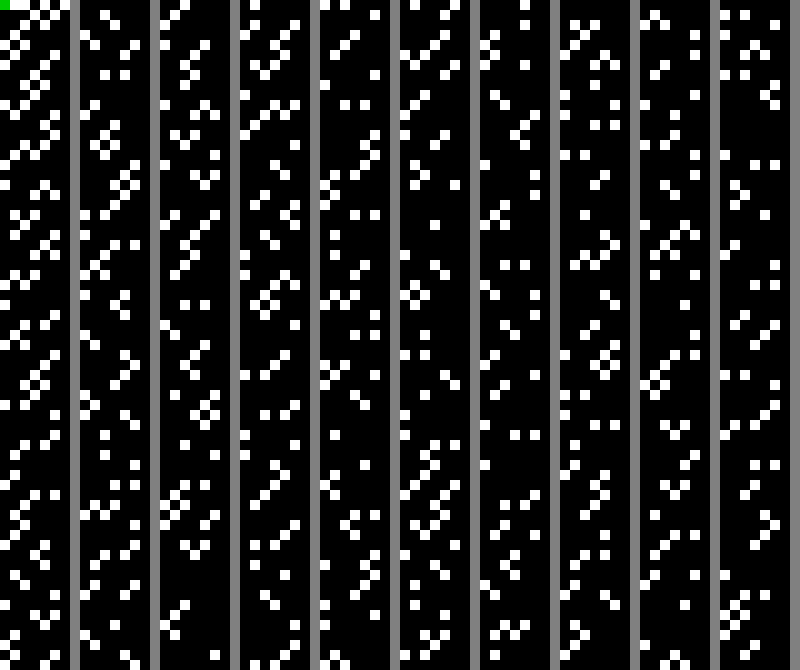
There are also fragments of pearl-necklace in the columns. One is above the isolated priamond. It consists of four prime-blocks slanting from left to right: 251-257-263-269, or 251 + 6, 12 and 18. A prearl-necklace, then, is a set of primes, p1, p2, p3…, such that p2 = p1 + n+i, p3 = p + 2(n+i)…, where i = +/-1. Now here are the 7-line and 9-line:

7line

Above: 7-line for primes

9line

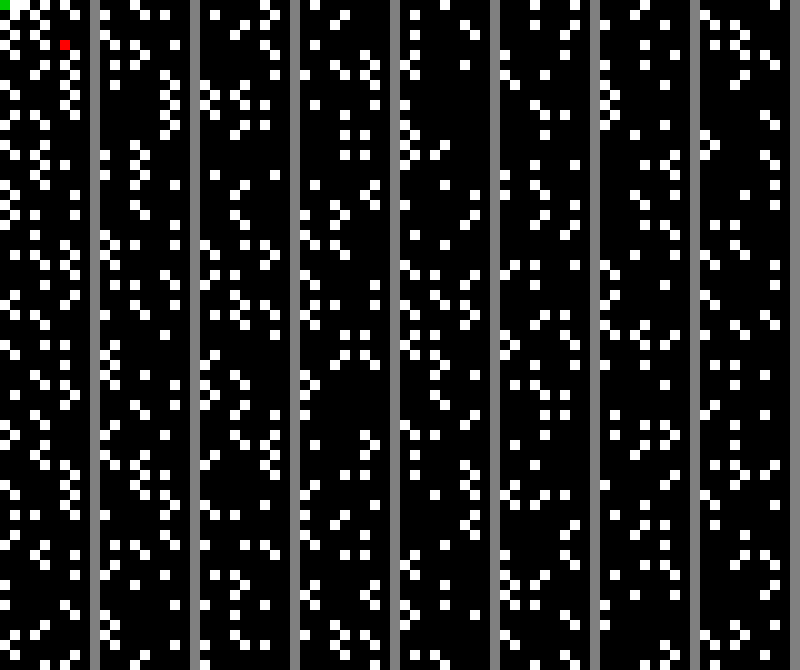
Above: 9-line for primes

In the 9-line, you can see a prime-ladder marked with a red block. It consists of the primes 43-53-61-71-79-89-97-107, in alternate increments of 10 and 8, or 9+1 and 9-1. A prime-ladder, then, is a set of primes, p1, p2, p3, p4…, such that p2 = p1 + n+1, p3 = p + 2n, p3 = p + 3n+1…

And here is an animated gif of lines 5 through 51:

lines5to51

(Click or open in new window for larger version or if file fails to animate)

Miss This

1,729,404 is seven digits long. If you drop one digit at a time, you can create seven more numbers from it, each six digits long. If you add these numbers, something special happens:

1,729,404 → 729404 (missing 1) + 129404 (missing 7) + 179404 (missing 2) + 172404 + 172904 + 172944 + 172940 = 1,729,404

So 1,729,404 is narcissistic, or equal to some manipulation of its own digits. Searching for numbers like this might seem like a big task, but you can cut the search-time considerably by noting that the final two digits determine whether a number is a suitable candidate for testing. For example, what if a seven-digit number ends in …38? Then the final digit of the missing-digit sum will equal (3 x 1 + 8 x 6) modulo 10 = (3 + 48) mod 10 = 51 mod 10 = 1. This means that you don’t need to check any seven-digit number ending in …38.

But what about seven-digit numbers ending in …57? Now the final digit of the sum will equal (5 x 1 + 7 x 6) modulo 10 = (5 + 42) mod 10 = 47 mod 10 = 7. So seven-digit numbers ending in …57 are possible missing-digit narcissistic sums. Then you can test numbers ending …157, …257, …357 and so on, to determine the last-but-one digit of the sum. Using this method, one quickly finds the only two seven-digit numbers of this form in base-10:

1,729,404 → 729404 + 129404 + 179404 + 172404 + 172904 + 172944 + 172940 = 1,729,404

1,800,000 → 800000 + 100000 + 180000 + 180000 + 180000 + 180000 + 180000 = 1,800,000

What about eight-digit numbers? Only those ending in these two digits need to be checked: …00, …23, …28, …41, …46, …64, …69, …82, …87. Here are the results:

• 13,758,846 → 3758846 + 1758846 + 1358846 + 1378846 + 1375846 + 1375846 + 1375886 + 1375884 = 13,758,846
• 13,800,000 → 3800000 + 1800000 + 1300000 + 1380000 + 1380000 + 1380000 + 1380000 + 1380000 = 13,800,000
• 14,358,846 → 4358846 + 1358846 + 1458846 + 1438846 + 1435846 + 1435846 + 1435886 + 1435884 = 14,358,846
• 14,400,000 → 4400000 + 1400000 + 1400000 + 1440000 + 1440000 + 1440000 + 1440000 + 1440000 = 14,400,000
• 15,000,000 → 5000000 + 1000000 + 1500000 + 1500000 + 1500000 + 1500000 + 1500000 + 1500000 = 15,000,000
• 28,758,846 → 8758846 + 2758846 + 2858846 + 2878846 + 2875846 + 2875846 + 2875886 + 2875884 = 28,758,846
• 28,800,000 → 8800000 + 2800000 + 2800000 + 2880000 + 2880000 + 2880000 + 2880000 + 2880000 = 28,800,000
• 29,358,846 → 9358846 + 2358846 + 2958846 + 2938846 + 2935846 + 2935846 + 2935886 + 2935884 = 29,358,846
• 29,400,000 → 9400000 + 2400000 + 2900000 + 2940000 + 2940000 + 2940000 + 2940000 + 2940000 = 29,400,000

But there are no nine-digit sumbers, or nine-digit numbers that supply missing-digit narcissistic sums. What about ten-digit sumbers? There are twenty-one:

1,107,488,889; 1,107,489,042; 1,111,088,889; 1,111,089,042; 3,277,800,000; 3,281,400,000; 4,388,888,889; 4,388,889,042; 4,392,488,889; 4,392,489,042; 4,500,000,000; 5,607,488,889; 5,607,489,042; 5,611,088,889; 5,611,089,042; 7,777,800,000; 7,781,400,000; 8,888,888,889; 8,888,889,042; 8,892,488,889; 8,892,489,042 (21 numbers)

Finally, the nine eleven-digit sumbers all take this form:

30,000,000,000 → 0000000000 + 3000000000 + 3000000000 + 3000000000 + 3000000000 + 3000000000 + 3000000000 + 3000000000 + 3000000000 + 3000000000 + 3000000000 = 30,000,000,000

So that’s forty-one narcissistic sumbers in base-10. Not all of them are listed in Sequence A131639 at the Encyclopedia of Integer Sequences, but I think I’ve got my program working right. Other bases show similar patterns. Here are some missing-digit narcissistic sumbers in base-5:

• 1,243 → 243 + 143 + 123 + 124 = 1,243 (b=5) = 198 (b=10)
• 1,324 → 324 + 124 + 134 + 132 = 1,324 (b=5) = 214 (b=10)
• 1,331 → 331 + 131 + 131 + 133 = 1,331 (b=5) = 216 (b=10)
• 1,412 → 412 + 112 + 142 + 141 = 1,412 (b=5) = 232 (b=10)

• 100,000 → 00000 + 10000 + 10000 + 10000 + 10000 + 10000 = 100,000 (b=5) = 3,125 (b=10)
• 200,000 → 00000 + 20000 + 20000 + 20000 + 20000 + 20000 = 200,000 (b=5) = 6,250 (b=10)
• 300,000 → 00000 + 30000 + 30000 + 30000 + 30000 + 30000 = 300,000 (b=5) = 9,375 (b=10)
• 400,000 → 00000 + 40000 + 40000 + 40000 + 40000 + 40000 = 400,000 (b=5) = 12,500 (b=10)

And here are some sumbers in base-16:

5,4CD,111,0EE,EF0,542 = 4CD1110EEEF0542 + 5CD1110EEEF0542 + 54D1110EEEF0542 + 54C1110EEEF0542 + 54CD110EEEF0542 + 54CD110EEEF0542 + 54CD110EEEF0542 + 54CD111EEEF0542 + 54CD1110EEF0542 + 54CD1110EEF0542 + 54CD1110EEF0542 + 54CD1110EEE0542 + 54CD1110EEEF542 + 54CD1110EEEF042 + 54CD1110EEEF052 + 54CD1110EEEF054 (b=16) = 6,110,559,033,837,421,890 (b=10)

6,5DD,E13,CEE,EF0,542 = 5DDE13CEEEF0542 + 6DDE13CEEEF0542 + 65DE13CEEEF0542 + 65DE13CEEEF0542 + 65DD13CEEEF0542 + 65DDE3CEEEF0542 + 65DDE1CEEEF0542 + 65DDE13EEEF0542 + 65DDE13CEEF0542 + 65DDE13CEEF0542 + 65DDE13CEEF0542 + 65DDE13CEEE0542 + 65DDE13CEEEF542 + 65DDE13CEEEF042 + 65DDE13CEEEF052 + 65DDE13CEEEF054 (b=16) = 7,340,270,619,506,705,730 (b=10)

10,000,000,000,000,000 → 0000000000000000 + 1000000000000000 + 1000000000000000 + 1000000000000000 + 1000000000000000 + 1000000000000000 + 1000000000000000 + 1000000000000000 + 1000000000000000 + 1000000000000000 + 1000000000000000 + 1000000000000000 + 1000000000000000 + 1000000000000000 + 1000000000000000 + 1000000000000000 + 1000000000000000 = 10,000,000,000,000,000 (b=16) = 18,446,744,073,709,551,616 (b=10)

F0,000,000,000,000,000 → 0000000000000000 + F000000000000000 + F000000000000000 + F000000000000000 + F000000000000000 + F000000000000000 + F000000000000000 + F000000000000000 + F000000000000000 + F000000000000000 + F000000000000000 + F000000000000000 + F000000000000000 + F000000000000000 + F000000000000000 + F000000000000000 + F000000000000000 = F0,000,000,000,000,000 (b=16) = 276,701,161,105,643,274,240 (b=10)

Next I’d like to investigate sumbers created by missing two, three and more digits at a time. Here’s a taster:

1,043,101 → 43101 (missing 1 and 0) + 03101 (missing 1 and 4) + 04101 (missing 1 and 3) + 04301 + 04311 + 04310 + 13101 + 14101 + 14301 + 14311 + 14310 + 10101 + 10301 + 10311 + 10310 + 10401 + 10411 + 10410 + 10431 + 10430 + 10431 = 1,043,101 (b=5) = 18,526 (b=10)

Reverssum

Here’s a simple sequence. What’s the next number?

1, 2, 4, 8, 16, 68, 100, ?

The rule I’m using is this: Reverse the number, then add the sum of the digits. So 1 doubles till it becomes 16. Then 16 becomes 61 + 6 + 1 = 68. Then 68 becomes 86 + 8 + 6 = 100. Then 100 becomes 001 + 1 = 2. And the sequence falls into a loop.

Reversing the number means that small numbers can get big and big numbers can get small, but the second tendency is stronger for the first few seeds:

• 1 → 2 → 4 → 8 → 16 → 68 → 100 → 2
• 2 → 4 → 8 → 16 → 68 → 100 → 2
• 3 → 6 → 12 → 24 → 48 → 96 → 84 → 60 → 12
• 4 → 8 → 16 → 68 → 100 → 2 → 4
• 5 → 10 → 2 → 4 → 8 → 16 → 68 → 100 → 2
• 6 → 12 → 24 → 48 → 96 → 84 → 60 → 12
• 7 → 14 → 46 → 74 → 58 → 98 → 106 → 608 → 820 → 38 → 94 → 62 → 34 → 50 → 10 → 2 → 4 → 8 → 16 → 68 → 100 → 2
• 8 → 16 → 68 → 100 → 2 → 4 → 8
• 9 → 18 → 90 → 18
• 10 → 2 → 4 → 8 → 16 → 68 → 100 → 2

An 11-seed is a little more interesting:

11 → 13 → 35 → 61 → 23 → 37 → 83 → 49 → 107 → 709 → 923 → 343 → 353 → 364 → 476 → 691 → 212 → 217 → 722 → 238 → 845 → 565 → 581 → 199 → 1010 → 103 → 305 → 511 → 122 → 226 → 632 → 247 → 755 → 574 → 491 → 208 → 812 → 229 → 935 → 556 → 671 → 190 → 101 → 103 (11 leads to an 18-loop from 103 at step 26; total steps = 44)

Now try some higher bases:

• 1 → 2 → 4 → 8 → 15 → 57 → 86 → 80 → 15 (base=11)
• 1 → 2 → 4 → 8 → 14 → 46 → 72 → 34 → 4A → B6 → 84 → 58 → 96 → 80 → 14 (base=12)
• 1 → 2 → 4 → 8 → 13 → 35 → 5B → C8 → A6 → 80 → 13 (base=13)
• 1 → 2 → 4 → 8 → 12 → 24 → 48 → 92 → 36 → 6C → DA → C8 → A4 → 5A → B6 → 80 → 12 (base=14)
• 1 → 2 → 4 → 8 → 11 → 13 → 35 → 5B → C6 → 80 → 11 (base=15)
• 1 → 2 → 4 → 8 → 10 → 2 (base=16)

Does the 1-seed always create a short sequence? No, it gets pretty long in base-19 and base-20:

• 1 → 2 → 4 → 8 → [16] → 1D → DF → [17]3 → 4[18] → 107 → 709 → 914 → 424 → 42E → E35 → 54[17] → [17]5C → C7D → D96 → 6B3 → 3C7 → 7D6 → 6EE → E[16]2 → 2[18]8 → 90B → B1A → A2E → E3[17] → [17]5A → A7B → B90 → AC→ DD → F1 → 2C → C[16] → [18]2 → 40 → 8 (base=19)
• 1 → 2 → 4 → 8 → [16] → 1C → CE → F[18] → 108 → 80A → A16 → 627 → 731 → 13[18] → [18]43 → 363 → 36F → F77 → 794 → 4A7 → 7B5 → 5CA → ADC → CF5 → 5[17]4 → 4[18]B → B[19][17] → [18]1[18] → [18]3F → F5E → E79 → 994 → 4AB → BB9 → 9D2 → 2ED → DFB → B[17]C → C[19]B → C1E → E2[19] → [19]49 → 96B → B7F → F94 → 4B3 → 3C2 → 2D0 → D[17] → [19]3 → 51 → 1B → BD → EF → [17]3 → 4[17] → [18]5 → 71 → 1F → F[17] → [19]7 → 95 → 63 → 3F → [16]1 → 2D → D[17] (base=20)

Then it settles down again:

• 1 → 2 → 4 → 8 → [16] → 1B → BD → EE → [16]0 → 1B (base=21)
• 1 → 2 → 4 → 8 → [16] → 1A → AC → DA → BE → FE → [16]0 → 1A (base=22)
• 1 → 2 → 4 → 8 → [16] → 19 → 9B → C6 → 77 → 7[21] → [22]C → EA → BF → [16]E → [16]0 → 19 (base=23)

Base-33 is also short:

1 → 2 → 4 → 8 → [16] → [32] → 1[31] → [32]0 → 1[31] (base=33)

And so is base-35:

1 → 2 → 4 → 8 → [16] → [32] → 1[29] → [29][31] → [33][19] → [21]F → [16][22] → [23][19] → [20][30] → [32]0 → 1[29] (base=35)

So what about base-34?

1 → 2 → 4 → 8 → [16] → [32] → 1[30] → [30][32] → 10[24] → [24]0[26] → [26]26 → 63[26] → [26]47 → 75[29] → [29]6E → E8A → A9C → CA7 → 7B7 → 7B[32] → [32]C[23] → [23]E[31] → [31][16][23] → [23][18][33] → [33][20][29] → [29][23]D → D[25][26] → [26][27]9 → 9[29][20] → [20][30][33] → [33][33]1 → 21[32] → [32]23 → 341 → 14B → B4[17] → [17]59 → 96E → E74 → 485 → 58[21] → [21]95 → 5A[22] → [22]B8 → 8C[29] → [29]D[23] → [23]F[26] → [26][17][19] → [19][19][20] → [20][21]9 → 9[23]2 → 2[24]9 → 9[25]3 → 3[26]C → C[27]A → A[28][27] → [27][30]7 → 7[32][23] → [24]01 → 11F → F1[18] → [18]2F → F3[19] → [19]4[18] → [18]5[26] → [26]6[33] → [33]8[23] → [23]A[29] → [29]C[17] → [17]E[19] → [19]F[33] → [33][17][18] → [18][19][33] → [33][21][20] → [20][24]5 → 5[26]1 → 1[27]3 → 3[27][32] → [32][28][31] → [31][31][21] → [22]0C → C1[22] → [22]2D → D3[25] → [25]4[20] → [20]66 → 67[18] → [18]83 → 39D → D9[28] → [28]A[29] → [29]C[27] → [27]E[29] → [29][16][29] → [29][19]1 → 1[21]A → A[21][33] → [33][23]6 → 6[25][27] → [27][26][30] → [30][29]8 → 8[31][29] → [29][33]8 → 91[31] → [31]2[16] → [16]4C → C5E → E69 → 979 → 980 → 8[26] → [27]8 → 9[28] → [29]C → E2 → 2[30] → [31]0 → 1[28] → [28][30] → [32][18] → [20]E → F[20] → [21][16] → [17][24] → [25][24] → [26]6 → 7[24] → [25]4 → 5[20] → [20][30] → [32]2 → 3[32] → [33]4 → 62 → 2E → E[18] → [19]C → D[16] → [17]8 → 98 → 8[26] (1 leads to a 30-loop from 8[26] / 298 in base-34 at step 111; total steps = 141)

An alternative rule is to add the digit-sum first and then reverse the result. Now 8 becomes 8 + 8 = 16 and 16 becomes 61. Then 61 becomes 61 + 6 + 1 = 68 and 68 becomes 86. Then 86 becomes 86 + 8 + 6 = 100 and 100 becomes 001 = 1:

• 1 → 2 → 4 → 8 → 61 → 86 → 1
• 2 → 4 → 8 → 61 → 86 → 1 → 2
• 3 → 6 → 21 → 42 → 84 → 69 → 48 → 6
• 4 → 8 → 61 → 86 → 1 → 2 → 4
• 5 → 1 → 2 → 4 → 8 → 62 → 7 → 48 → 6 → 27 → 63 → 27
• 6 → 21 → 42 → 84 → 69 → 48 → 6
• 7 → 41 → 64 → 47 → 85 → 89 → 601 → 806 → 28 → 83 → 49 → 26 → 43 → 5 → 6 → 27 → 63 → 27
• 8 → 61 → 86 → 1 → 2 → 4 → 8
• 9 → 81 → 9
• 10 → 11 → 31 → 53 → 16 → 32 → 73 → 38 → 94 → 701 → 907 → 329 → 343 → 353 → 463 → 674 → 196 → 212 → 712 → 227 → 832 → 548 → 565 → 185 → 991 → 101 → 301 → 503 → 115 → 221 → 622 → 236 → 742 → 557 → 475 → 194→ 802 → 218 → 922 → 539 → 655 → 176 → 91 → 102 → 501 → 705 → 717 → 237 → 942 → 759 → 87 → 208 → 812 → 328 → 143 → 151 → 851 → 568 → 785 → 508 → 125 → 331 → 833 → 748 → 767 → 787 → 908 → 529 → 545 → 955 → 479 → 994 → 6102 → 1116 → 5211 → 225 → 432 → 144 → 351 → 63 → 27 → 63

Block and Goal

123456789. How many ways are there to insert + and – between the numbers and create a formula for 100? With pen and ink it takes a long time to answer. With programming, the answer will flash up in an instant:

01. 1 + 2 + 3 - 4 + 5 + 6 + 78 + 9 = 100
02. 1 + 2 + 34 - 5 + 67 - 8 + 9 = 100
03. 1 + 23 - 4 + 5 + 6 + 78 - 9 = 100
04. 1 + 23 - 4 + 56 + 7 + 8 + 9 = 100
05. 12 - 3 - 4 + 5 - 6 + 7 + 89 = 100
06. 12 + 3 + 4 + 5 - 6 - 7 + 89 = 100
07. 12 + 3 - 4 + 5 + 67 + 8 + 9 = 100
08. 123 - 4 - 5 - 6 - 7 + 8 - 9 = 100
09. 123 + 4 - 5 + 67 - 89 = 100
10. 123 + 45 - 67 + 8 - 9 = 100
11. 123 - 45 - 67 + 89 = 100

And the beauty of programming is that you can easily generalize the problem to other bases. In base b, how many ways are there to insert + and – in the block [12345…b-1] to create a formula for b^2? When b = 10, the answer is 11. When b = 11, it’s 42. Here are two of those formulae in base-11:

123 - 45 + 6 + 7 - 8 + 9 + A = 100[b=11]
146 - 49 + 6 + 7 - 8 + 9 + 10 = 121

123 + 45 + 6 + 7 - 89 + A = 100[b=11]
146 + 49 + 6 + 7 - 97 + 10 = 121

When b = 12, it’s 51. Here are two of the formulae:

123 + 4 + 5 + 67 - 8 - 9A + B = 100[b=12]
171 + 4 + 5 + 79 - 8 - 118 + 11 = 144

123 + 4 + 56 + 7 - 89 - A + B = 100[b=12]
171 + 4 + 66 + 7 - 105 - 10 + 11 = 144

So that’s 11 formulae in base-10, 42 in base-11 and 51 in base-12. So what about base-13? The answer may be surprising: in base-13, there are no +/- formulae for 13^2 = 169 using the numbers 1 to 12. Nor are there any formulae in base-9 for 9^2 = 81 using the numbers 1 to 8. If you reverse the block, 987654321, the same thing happens. Base-10 has 15 formulae, base-11 has 54 and base-12 has 42. Here are some examples:

9 - 8 + 7 + 65 - 4 + 32 - 1 = 100
98 - 76 + 54 + 3 + 21 = 100

A9 + 87 - 65 + 4 - 3 - 21 = 100[b=11]
119 + 95 - 71 + 4 - 3 - 23 = 121

BA - 98 + 76 - 5 - 4 + 32 - 1 = 100[b=12]
142 - 116 + 90 - 5 - 4 + 38 - 1 = 144

But base-9 and base-13 again have no formulae. What’s going on? Is it a coincidence that 9 and 13 are each one more than a multiple of 4? No. Base-17 also has no formulae for b^2 = 13^2 = 169. Here is the list of formulae for bases-7 thru 17:

1, 2, 0, 11, 42, 51, 0, 292, 1344, 1571, 0 (block = 12345...)
3, 2, 0, 15, 54, 42, 0, 317, 1430, 1499, 0 (block = ...54321)

To understand what’s going on, consider any sequence of consecutive integers starting at 1. The number of odd integers in the sequence must always be greater than or equal to the number of even integers:

1, 2 (1 odd : 1 even)
1, 2, 3 (2 odds : 1 even)
1, 2, 3, 4 (2 : 2)
1, 2, 3, 4, 5 (3 : 2)
1, 2, 3, 4, 5, 6 (3 : 3)
1, 2, 3, 4, 5, 6, 7 (4 : 3)
1, 2, 3, 4, 5, 6, 7, 8 (4 : 4)

The odd numbers in a sequence determine the parity of the sum, that is, whether it is odd or even. For example:

1 + 2 = 3 (1 odd number)
1 + 2 + 3 = 6 (2 odd numbers)
1 + 2 + 3 + 4 = 10 (2 odd numbers)
1 + 2 + 3 + 4 + 5 = 15 (3 odd numbers)
1 + 2 + 3 + 4 + 5 + 6 = 21 (3 odd numbers)
1 + 2 + 3 + 4 + 5 + 6 + 7 = 28 (4 odd numbers)

If there is an even number of odd numbers, the sum will be even; if there is an odd number, the sum will be odd. Consider sequences that end in a multiple of 4:

1, 2, 3, 4 → 2 odds : 2 evens
1, 2, 3, 4, 5, 6, 7, 8 → 4 : 4
1, 2, 3, 4, 5, 6, 7, 8, 9, 10, 11, 12 → 6 : 6

Such sequences always contain an even number of odd numbers. Now, consider these formulae in base-10:

1. 12 + 3 + 4 + 56 + 7 + 8 + 9 = 99
2. 123 - 45 - 67 + 89 = 100
3. 123 + 4 + 56 + 7 - 89 = 101

They can be re-written like this:

1. 1×10^1 + 2×10^0 + 3×10^0 + 4×10^0 + 5×10^1 + 6×10^0 + 7×10^0 + 8×10^0 + 9×10^0 = 99

2. 1×10^2 + 2×10^1 + 3×10^0 – 4×10^1 – 5×10^0 – 6×10^1 – 7×10^0 + 8×10^1 + 9×10^0 = 100

3. 1×10^2 + 2×10^1 + 3×10^0 + 4×10^0 + 5×10^1 + 6×10^1 + 7×10^0 – 8×10^1 – 9×10^0 = 101

In general, the base-10 formulae will take this form:

1×10^a +/- 2×10^b +/- 3×10^c +/– 4×10^d +/– 5×10^e +/– 6×10^f +/– 7×10^g +/– 8×10^h +/– 9×10^i = 100

It’s important to note that the exponent of 10, or the power to which it is raised, determines whether an odd number remains odd or becomes even. For example, 3×10^0 = 3×1 = 3, whereas 3×10^1 = 3×10 = 30 and 3×10^2 = 3×100 = 300. Therefore the number of odd numbers in a base-10 formula can vary and so can the parity of the sum. Now consider base-9. When you’re trying to find a block-formula for 9^2 = 81, the formula will have to take this form:

1×9^a +/- 2×9^b +/- 3×9^c +/- 4×9^d +/- 5×9^e +/- 6×9^f +/- 7×9^g +/- 8×9^h = 81

But no such formula exists for 81 (with standard exponents). It’s now possible to see why this is so. Unlike base-10, the odd numbers in the formula will remain odd what the power of 9. For example, 3×9^0 = 3×1 = 3, 3×9^1 = 3×9 = 27 and 3×9^2 = 3×81 = 243. Therefore base-9 formulae will always contain four odd numbers and will always produce an even number. Odd numbers in base-2 always end in 1, even numbers always end in 0. Therefore, to determine the parity of a sum of integers, convert the integers to base-2, discard all but the final digit of each integer, then sum the 1s. In a base-9 formula, these are the four possible results:

1 + 1 + 1 + 1 = 4
1 + 1 + 1 - 1 = 2
1 + 1 - 1 - 1 = 0
1 - 1 - 1 - 1 = -2

The sum represents the parity of the answer, which is always even. Similar reasoning applies to base-13, base-17 and all other base-[b=4n+1].

Persist List

Multiplicative persistence is a complex term but a simple concept. Take a number, multiply its digits, repeat. Sooner or later the result is a single digit:

25 → 2 x 5 = 10 → 1 x 0 = 0 (mp=2)
39 → 3 x 9 = 27 → 2 x 7 = 14 → 1 x 4 = 4 (mp=3)

So 25 has a multiplicative persistence of 2 and 39 a multiplicative persistence of 3. Each is the smallest number with that m.p. in base-10. Further records are set by these numbers:

77 → 49 → 36 → 18 → 8 (mp=4)
679 → 378 → 168 → 48 → 32 → 6 (mp=5)
6788 → 2688 → 768 → 336 → 54 → 20 → 0 (mp=6)
68889 → 27648 → 2688 → 768 → 336 → 54 → 20 → 0 (mp=7)
2677889 → 338688 → 27648 → 2688 → 768 → 336 → 54 → 20 → 0 (mp=8)
26888999 → 4478976 → 338688 → 27648 → 2688 → 768 → 336 → 54 → 20 → 0 (mp=9)
3778888999 → 438939648 → 4478976 → 338688 → 27648 → 2688 → 768 → 336 → 54 → 20 → 0 (mp=10)

Now here’s base-9:

25[b=9] → 11 → 1 (mp=2)
38[b=9] → 26 → 13 → 3 (mp=3)
57[b=9] → 38 → 26 → 13 → 3 (mp=4)
477[b=9] → 237 → 46 → 26 → 13 → 3 (mp=5)
45788[b=9] → 13255 → 176 → 46 → 26 → 13 → 3 (mp=6)
2577777[b=9] → 275484 → 13255 → 176 → 46 → 26 → 13 → 3 (mp=7)

And base-11:

26[b=11] → 11 → 1 (mp=2)
3A[b=11] → 28 → 15 → 5 (mp=3)
69[b=11] → 4A → 37 → 1A → A (=10b=10) (mp=4)
269[b=11] → 99 → 74 → 26 → 11 → 1 (mp=5)
3579[b=11] → 78A → 46A → 1A9 → 82 → 15 → 5 (mp=6)
26778[b=11] → 3597 → 78A → 46A → 1A9 → 82 → 15 → 5 (mp=7)
47788A[b=11] → 86277 → 3597 → 78A → 46A → 1A9 → 82 → 15 → 5 (mp=8)
67899AAA[b=11] → 143A9869 → 299596 → 2A954 → 2783 → 286 → 88 → 59 → 41 → 4 (mp=9)
77777889999[b=11] → 2AA174996A → 143A9869 → 299596 → 2A954 → 2783 → 286 → 88 → 59 → 41 → 4 (mp=10)

I was also interested in the narcissism of multiplicative persistence. That is, are any numbers equal to the sum of the numbers created while calculating their multiplicative persistence? Yes:

86 = (8 x 6 = 48) + (4 x 8 = 32) + (3 x 2 = 6)

I haven’t found any more in base-10 (apart from the trivial 0 to 9) and can’t prove that this is the only one. Base-9 offers this:

78[b=9] = 62 + 13 + 3

I can’t find any at all in base-11, but here are base-12 and base-27:

57[b=12] = 2B + 1A + A
A8[b=12] = 68 + 40 + 0

4[23][b=27] = 3B + 16 + 6
7[24][b=27] = 66 + 19 + 9
A[18][b=27] = 6[18] + 40 + 0
[26][24][b=27] = [23]3 + 2F + 13 + 3
[26][23][26][b=27] = [21]8[23] + 583 + 4C + 1[21] + [21]

But the richest base I’ve found so far is base-108, with fourteen narcissistic multiplicative-persistence sums:

4[92][b=108] = 3[44] + 1[24] + [24]
5[63][b=108] = 2[99] + 1[90] + [90]
7[96][b=108] = 6[24] + 1[36] + [36]
A[72][b=108] = 6[72] + 40 + 0
[19][81][b=108] = E[27] + 3[54] + 1[54] + [54]
[26][96][b=108] = [23]C + 2[60] + 1C + C
[35][81][b=108] = [26][27] + 6[54] + 30 + 0
[37][55][b=108] = [18][91] + F[18] + 2[54] + 10 + 0
[73][60][b=108] = [40][60] + [22][24] + 4[96] + 3[60] + 1[72] + [72]
[107][66][b=108] = [65][42] + [25][30] + 6[102] + 5[72] + 3[36] + 10 + 0
[71][84][b=108] = [55][24] + C[24] + 2[72] + 1[36] + [36]
[107][99][b=108] = [98]9 + 8[18] + 1[36] + [36]
5[92][96][b=108] = 3[84][96] + 280 + 0
8[107][100][b=108] = 7[36][64] + 1[41][36] + D[72] + 8[72] + 5[36] + 1[72] + [72]


Update (10/ii/14): The best now is base-180 with eighteen multiplicative-persistence sums.

5[105][b=180] = 2[165] + 1[150] + [150]
7[118][b=180] = 4[106] + 2[64] + [128]
7[160][b=180] = 6[40] + 1[60] + [60]
8[108][b=180] = 4[144] + 3[36] + [108]
A[120][b=180] = 6[120] + 40 + 0 (s=5)
[19][135][b=180] = E[45] + 3[90] + 1[90] + [90]
[21][108][b=180] = C[108] + 7[36] + 1[72] + [72]
[26][160][b=180] = [23][20] + 2[100] + 1[20] + [20]
[31][98][b=180] = [16][158] + E8 + [112]
[35][135][b=180] = [26][45] + 6[90] + 30 + 0 (s=10)
[44][96][b=180] = [23][84] + A[132] + 7[60] + 2[60] + [120]
[71][140][b=180] = [55][40] + C[40] + 2[120] + 1[60] + [60]
[73][100][b=180] = [40][100] + [22][40] + 4[160] + 3[100] + 1[120] + [120]
[107][110][b=180] = [65][70] + [25][50] + 6[170] + 5[120] + 3[60] + 10 + 0
[107][165][b=180] = [98]F + 8[30] + 1[60] + [60] (s=15)
[172][132][b=180] = [126][24] + [16][144] + C[144] + 9[108] + 5[72] + 20 + 0
5[173][145][b=180] = 3[156][145] + 2[17]0 + 0
E[170][120][b=180] = 8[146][120] + 4[58][120] + [154][120] + [102][120] + [68]0 + 0

The Whisper from the Sea

─But what is that whisper?

─Ah. Then ye hear it?

─Aye. ’Tis thin and eerie, mingling with the waves, and seemeth to come from great distance. I know not the language thereof, but I hear great rage therein.

─As well ye might. We stand near the spot at which the wizard Zigan-Uvalen bested a demon sent against him by an enemy. ’Tis the demon’s whisper ye hear.

─Tell me the tale.

─It is after this wise…

Zigan-Uvalen woke to a stench of brimstone, a crackle of flame, and found himself staring up at a fearsome ebon face, lapped in blood-red fire, horned with curling jet, fanged in razor-sharp obsidian.

“Wake, Wizard!” the apparition boomed. “And make thy peace with thy gods, for I am come to devour thee!”

Zigan-Uvalen sat up and pinched himself thrice.

“Without introduction?” he asked, having verified that he was truly awake.

“Introduction?”

“Well, ’tis customary, in the better magickal circles.”

“Aye? Then know this: I am the Demon Ormaguz, summoned from the hottest corner of the deepest pit of Hell by your most puissant and malicious enemy, the wizard Muran-Egah. I have been dispatched by him over many leagues of plain and ocean to wreak his long-meditated, slow-readied, at-last-matured vengeance on thee.”

“Very well. And what are your qualifications?”

“Qualifications?”

“Aye. Are ye worthy of him who sent you, O Demon Ormaguz?”

“Aye, that I am! And will now dev–”

“Nay, nay!” The wizard raised a supplicatory hand. “Take not offence, O Ormaguz. I ask merely out of form. ’Tis customary, in the better magickal circles.”

“Truly?”

“Truly.”

“Then know this… Well, of formal qualifications, diplomas, and the like, I have none, ’tis true. But I am a demon, thou puny mortal. I have supernatural powers of body and mind, far beyond thy ken.”

“I doubt them not. At least, I doubt not your powers of body, in that ye have travelled so very far and very fast this very night. Or so ye say. But powers of mind? Of what do they consist?”

“Of aught thou carest to name, O Wizard.”

“Then ye have, for instance, much mathematical skill?”

“Far beyond thy ken.”

“How far?”

“Infinitely far, wizard!”

“Infinitely? Then could ye, for instance, choose a number at hazard from the whole and endless series of the integers?”

“Aye, that I could!”

“Entirely at hazard, as though ye rolled a die of infinite sides?”

“Aye! In less than the blink of an eye!”

“Well, so ye say.”

“So I say? Aye, so I say, and say sooth!”

“Take not offence, O Demon, but appearances are against you.”

“Against me?”

“Ye are a demon, after all, unbound by man’s pusillanimous morality.”

“I speak sooth, I tell thee! I could, in an instant, choose a number, entirely at hazard, from the whole and endless series of the integers.”

“And speak it to me?”

“Ha! So that is thy game, wizard! Thou seekest to occupy me with some prodigious number whilst thou makest thy escape.”

“Nay, nay, ye misjudge me, O Demon. Let me suggest this. If ye can, as ye say, choose such a number, then do so and recite its digits to me after the following wise: in the first second, name a single digit – nay, nay, O Demon, hear me out, I pray! Aye, in the first second, name a single digit thereof; in the second second, name four digits, which is to say, two raised to the second power; in the third second, name a number of digits I, as a mere mortal, cannot describe to you, for ’tis equal to three raised to the third power of three.”

“That would be 7,625,597,484,987 digits named in the third second, O Wizard.”

“Ah, most impressive! And your tongue would not falter to enunciate them?”

“Nay, not at all! Did I not tell thee my powers are supernatural?”

“That ye did, O Demon. And in the fourth second, of course, ye would name a number of digits equal to four raised to four to the fourth power of four. And so proceed till the number is exhausted. Does this seem well to you?”

“Aye, very well. Thou wilt have the satisfaction of knowing that ’tis an honest demon who devoureth thee.”

“That I will. Then, O Ormaguz, prove your honesty. Choose your number and recite it to me, after the wise I described to you. Then devour me at your leisure.”

─Then the Demon chose a number at hazard from the whole and endless series of the integers and began to recite it after the wise Zigan-Uvalen had described. That was eighteen centuries ago. The demon reciteth the number yet. That is the whisper ye hear from the sea, which rose long ago above the tomb of Zigan-Uvalen.

Clock around the Rock

If you like minimalism, you should like binary. There is unsurpassable simplicity and elegance in the idea that any number can be reduced to a series of 1’s and 0’s. It’s unsurpassable because you can’t get any simpler: unless you use finger-counting, two symbols are the minimum possible. But with those two – a stark 1 and 0, true and false, yin and yang, sun and moon, black and white – you can conquer any number you please. 2 = 10[2]. 5 = 101. 100 = 1100100. 666 = 1010011010. 2013 = 11111011101. 9^9 = 387420489 = 10111000101111001000101001001. You can also perform any mathematics you please, from counting sheep to modelling the evolution of the universe.

Yin and Yang symbol

1 + 0 = ∞

But one disadvantage of binary, from the human point of view, is that numbers get long quickly: every doubling in size adds an extra digit. You can overcome that disadvantage using octal or hexadecimal, which compress blocks of binary into single digits, but those number systems need more symbols: eight and sixteen, as their names suggest. There’s an elegance there too, but binary goes masked, hiding its minimalist appeal beneath apparent complexity. It doesn’t need to wear a mask for computers, but human beings can appreciate bare binary too, even with our weak memories and easily tiring nervous systems. I especially like minimalist binary when it’s put to work on those most maximalist of numbers: the primes. You can compare integers, or whole numbers, to minerals. Some are like mica or shale, breaking readily into smaller parts, but primes are like granite or some other ultra-hard, resistant rock. In other words, some integers are easy to divide by other integers and some, like the primes, are not. Compare 256 with 257. 256 = 2^8, so it’s divisible by 128, 64, 32, 16, 8, 4, 2 and 1. 257 is a prime, so it’s divisible by nothing but itself and 1. Powers of two are easy to calculate and, in binary, very easy to represent:

2^0 = 1 = 1
2^1 = 2 = 10[2]
2^2 = 4 = 100
2^3 = 8 = 1000
2^4 = 16 = 10000
2^5 = 32 = 100000
2^6 = 64 = 1000000
2^7 = 128 = 10000000
2^8 = 256 = 100000000

Primes are the opposite: hard to calculate and usually hard to represent, whatever the base:

02 = 000010[2]
03 = 000011
05 = 000101
07 = 000111
11 = 001011
13 = 001101
17 = 010001
19 = 010011
23 = 010111
29 = 011101
31 = 011111
37 = 100101
41 = 101001
43 = 101011

Maximalist numbers, minimalist base: it’s a potent combination. But “brimes”, or binary primes, nearly all have one thing in common. Apart from 2, a special case, each brime must begin and end with 1. For the digits in-between, the God of Mathematics seems to be tossing a coin, putting 1 for heads, 0 for tails. But sometimes the coin will come up all heads or all tails: 127 = 1111111[2] and 257 = 100000001, for example. Brimes like that have a stark simplicity amid the jumble of 83 = 1010011[2], 113 = 1110001, 239 = 11101111, 251 = 11111011, 277 = 100010101, and so on. Brimes like 127 and 257 are also palindromes, or the same reading in both directions. But less simple brimes can be palindromes too:

73 = 1001001
107 = 1101011
313 = 100111001
443 = 110111011
1193 = 10010101001
1453 = 10110101101
1571 = 11000100011
1619 = 11001010011
1787 = 11011111011
1831 = 11100100111
1879 = 11101010111

But, whether they’re palindromes or not, all brimes except 2 begin and end with 1, so they can be represented as rings, like this:
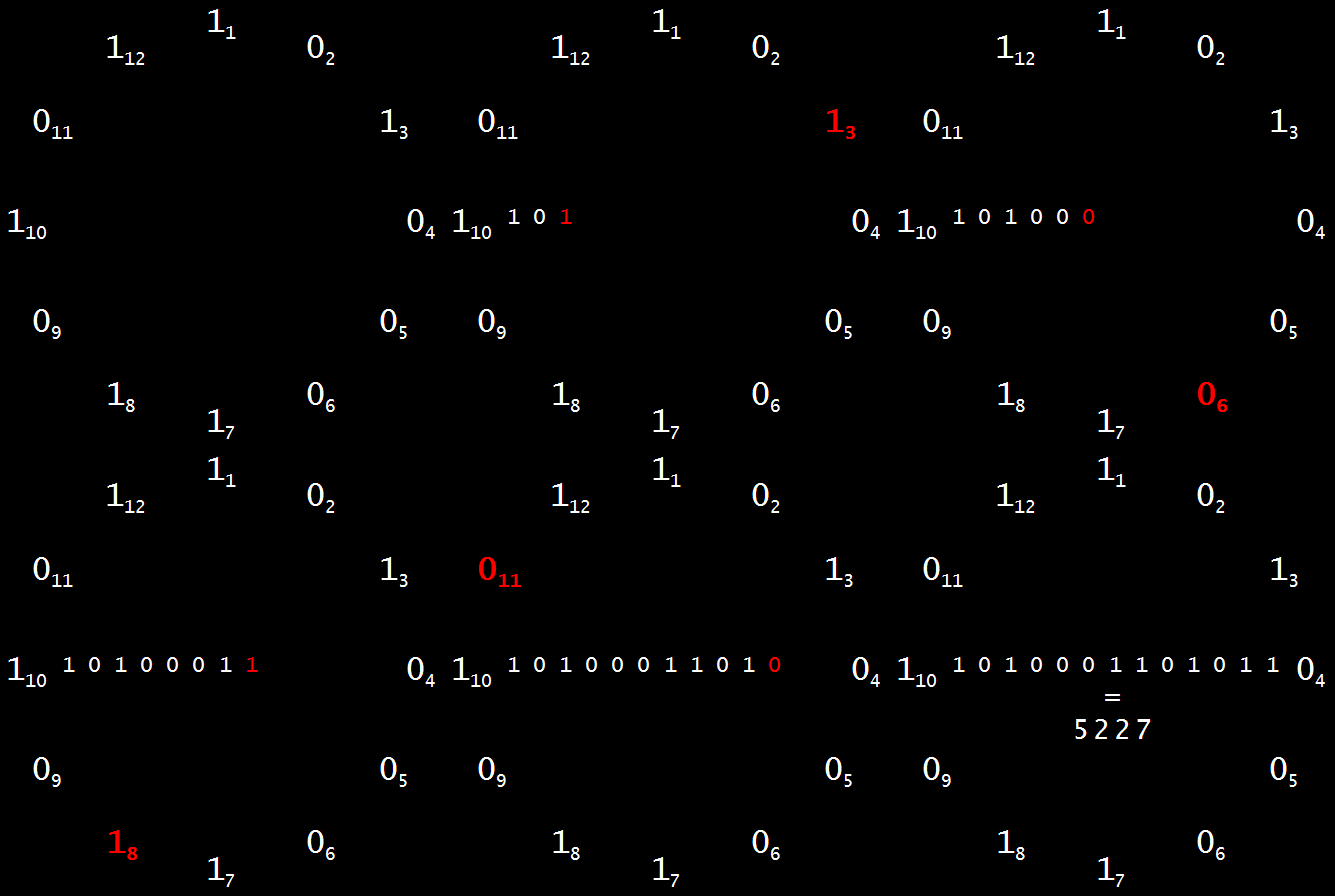
Ouroboros5227

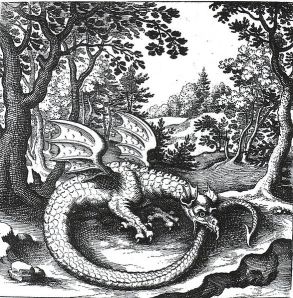
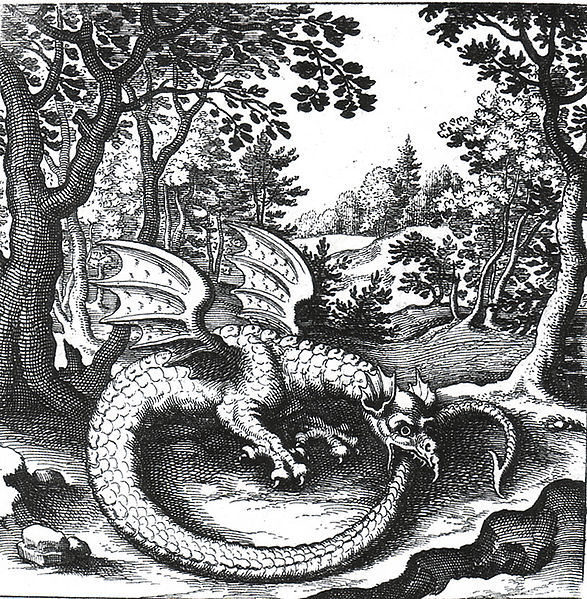
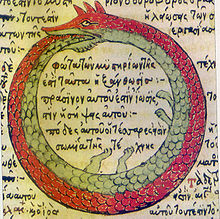
Those twelve bits, or binary digits, actually represent the thirteen bits of 5227 = 1,010,001,101,011. Start at twelve o’clock (digit 1 of the prime) and count clockwise, adding 1’s and 0’s till you reach 12 o’clock again and add the final 1. Then you’ve clocked around the rock and created the granite of 5227, which can’t be divided by any integers but itself and 1. Another way to see the brime-ring is as an Ouroboros (pronounced “or-ROB-or-us”), a serpent or dragon biting its own tail, like this:
Alchemical Ouroboros

Alchemical Ouroboros (1478)

Dragon Ouroboros

Another alchemical Ouroboros (1599)

But you don’t have to start clocking around the rock at midday or midnight. Take the Ouroboprime of 5227 and start at eleven o’clock (digit 12 of the prime), adding 1’s and 0’s as you move clockwise. When you’ve clocked around the rock, you’ll have created the granite of 6709, another prime:
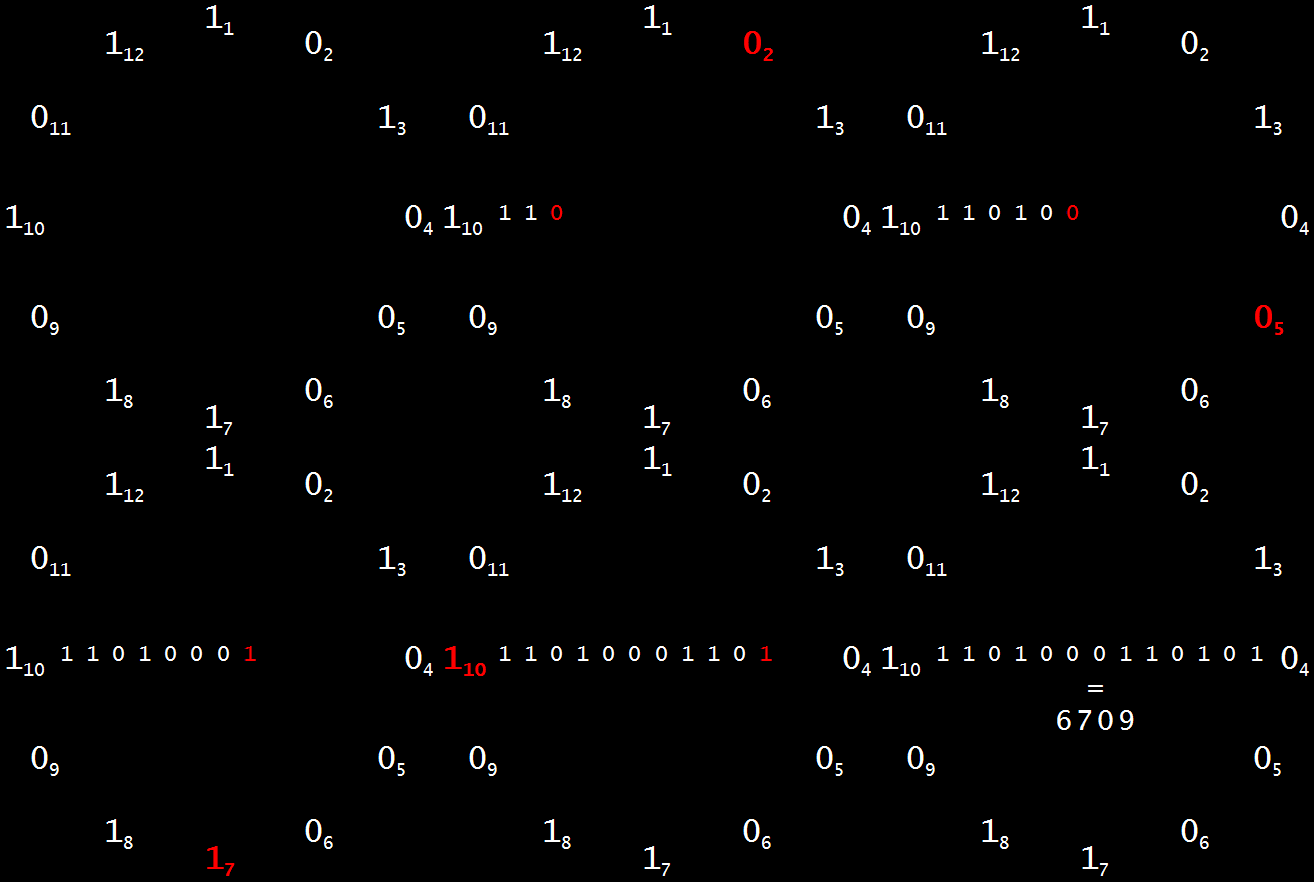
Ouroboros6709

Other Ouroboprimes produce brimes both clockwise and anti-clockwise, like 47 = 101,111.

Clockwise

101,111 = 47
111,011 = 59
111,101 = 61

Anti-Clockwise

111,101 = 61
111,011 = 59
101,111 = 47

If you demand the clock-rocked brime produce distinct primes, you sometimes get more in one direction than the other. Here is 151 = 10,010,111:

Clockwise

10,010,111 = 151
11,100,101 = 229

Anti-Clockwise

11,101,001 = 233
11,010,011 = 211
10,100,111 = 167
10,011,101 = 157

The most productive brime I’ve discovered so far is 2,326,439 = 1,000,110,111,111,110,100,111[2], which produces fifteen distinct primes:

Clockwise (7 brimes)

1,000,110,111,111,110,100,111 = 2326439
1,100,011,011,111,111,010,011 = 3260371
1,110,100,111,000,110,111,111 = 3830207
1,111,101,001,110,001,101,111 = 4103279
1,111,110,100,111,000,110,111 = 4148791
1,111,111,010,011,100,011,011 = 4171547
1,101,111,111,101,001,110,001 = 3668593

Anti-Clockwise (8 brimes)

1,110,010,111,111,110,110,001 = 3768241
1,100,101,111,111,101,100,011 = 3342179
1,111,111,011,000,111,001,011 = 4174283
1,111,110,110,001,110,010,111 = 4154263
1,111,101,100,011,100,101,111 = 4114223
1,111,011,000,111,001,011,111 = 4034143
1,110,110,001,110,010,111,111 = 3873983
1,000,111,001,011,111,111,011 = 2332667


Appendix: Deciminimalist Primes

Some primes in base ten use only the two most basic symbols too. That is, primes like 11[10], 101[10], 10111[10] and 1011001[10] are composed of only 1’s and 0’s. Furthermore, when these numbers are read as binary instead, they are still prime: 11[2] = 3, 101[2] = 5, 10111[2] = 23 and 1011001[2] = 89. Here is an incomplete list of these deciminimalist primes:

11[10] = 1,011[2]; 11[2] = 3[10] is also prime.

101[10] = 1,100,101[2]; 101[2] = 5[10] is also prime.

10,111[10] = 10,011,101,111,111[2]; 10,111[2] = 23[10] is also prime.

101,111[10] = 11,000,101,011,110,111[2]; 101,111[2] = 47[10] is also prime.

1,011,001[10] = 11,110,110,110,100,111,001[2]; 1,011,001[2] = 89[10] is also prime.

1,100,101[10] = 100,001,100,100,101,000,101[2]; 1,100,101[2] = 101[10] is also prime.

10,010,101[10] = 100,110,001,011,110,111,110,101[2]; 10,010,101[2] = 149[10] is also prime.

10,011,101[10] = 100,110,001,100,000,111,011,101[2]; 10,011,101[2] = 157[10] is also prime.

10,100,011[10] = 100,110,100,001,110,100,101,011[2]; 10,100,011[2] = 163[10] is also prime.

10,101,101[10] = 100,110,100,010,000,101,101,101[2]; 10,101,101[2] = 173[10] is also prime.

10,110,011[10] = 100,110,100,100,010,000,111,011[2]; 10,110,011[2] = 179[10] is also prime.

10,111,001[10] = 100,110,100,100,100,000,011,001[2].

11,000,111[10] = 101,001,111,101,100,100,101,111[2]; 11,000,111[2] = 199[10] is also prime.

11,100,101[10] = 101,010,010,101,111,111,000,101[2]; 11,100,101[2] = 229[10] is also prime.

11,110,111[10] = 101,010,011,000,011,011,011,111[2].

11,111,101[10] = 101,010,011,000,101,010,111,101[2].

100,011,001[10] = 101,111,101,100,000,101,111,111,001[2]; 100,011,001[2] = 281[10] is also prime.

100,100,111[10] = 101,111,101,110,110,100,000,001,111[2].

100,111,001[10] = 101,111,101,111,001,001,010,011,001[2]; 100,111,001[2] = 313[10] is also prime.

101,001,001[10] = 110,000,001,010,010,011,100,101,001[2].

101,001,011[10] = 110,000,001,010,010,011,100,110,011[2]; 101,001,011[2] = 331[10] is also prime.

101,001,101[10] = 110,000,001,010,010,011,110,001,101[2].

101,100,011[10] = 110,000,001,101,010,100,111,101,011[2].

101,101,001[10] = 110,000,001,101,010,110,111,001,001[2].

101,101,111[10] = 110,000,001,101,010,111,000,110,111[2]; 101,101,111[2] = 367[10] is also prime.

101,110,111[10] = 110,000,001,101,101,000,101,011,111[2].

101,111,011[10] = 110,000,001,101,101,010,011,100,011[2]; 101,111,011[2] = 379[10] is also prime.

101,111,111[10] = 110,000,001,101,101,010,101,000,111[2]; 101,111,111[2] = 383[10] is also prime.

110,010,101[10] = 110,100,011,101,001,111,011,110,101[2].

110,100,101[10] = 110,100,011,111,111,111,010,000,101[2]; 110,100,101[2] = 421[10] is also prime.

110,101,001[10] = 110,100,100,000,000,001,000,001,001[2].

110,110,001[10] = 110,100,100,000,010,010,100,110,001[2]; 110,110,001[2] = 433[10] is also prime.

110,111,011[10] = 110,100,100,000,010,100,100,100,011[2]; 110,111,011[2] = 443[10] is also prime.