Feral Fractions

“The uniquely unrepresentative ‘Egyptian’ fraction.” That’s what David Wells calls 2/3 = 0·666… in The Penguin Dictionary of Curious and Interesting Numbers (1986). Why unrepresentative”? Wells goes on to explain: “the Egyptians used only unit fractions, with this one exception. All other fractional quantities were expressed as sums of unit fractions.”

A unit fraction is 1 divided by a higher integer: 1/2, 1/3, 1/4, 1/5 and so on. Modern mathematicians are interested in those sums of unit fractions that produce integers, like this:

1 = 1/2 + 1/3 + 1/6 = egypt(2,3,6)
1 = 1/2 + 1/4 + 1/6 + 1/12 = egypt(2,4,6,12)
1 = 1/2 + 1/3 + 1/10 + 1/15 = = egypt(2,3,10,15)
1 = egypt(2,4,10,12,15)
1 = egypt(3,4,6,10,12,15)
1 = egypt(2,3,9,18)
1 = egypt(2,4,9,12,18)
1 = egypt(3,4,6,9,12,18)
1 = egypt(2,6,9,10,15,18)
1 = egypt(3,4,9,10,12,15,18)
1 = egypt(2,4,5,20)
1 = egypt(3,4,5,6,20)
1 = egypt(2,5,6,12,20)
1 = egypt(3,4,5,10,15,20)
1 = egypt(2,5,10,12,15,20)
1 = egypt(3,5,6,10,12,15,20)
1 = egypt(3,4,5,9,18,20)
1 = egypt(2,5,9,12,18,20)
1 = egypt(3,5,6,9,12,18,20)
1 = egypt(4,5,6,9,10,15,18,20)

2 = egypt(2,3,4,5,6,8,9,10,15,18,20,24)
2 = 1/2 + 1/3 + 1/4 + 1/5 + 1/6 + 1/8 + 1/9 + 1/10 + 1/15 + 1/18 + 1/20 + 1/24


Sums-to-integers like those are called Egyptian fractions, for short. I looked for some such sums that included 1/666:

1 = egypt(2,3,7,63,222,518,666)
1 = egypt(2,3,8,36,111,296,666)
1 = egypt(2,3,9,20,444,555,666)
1 = egypt(2,3,9,21,222,518,666)
1 = egypt(2,3,9,24,111,296,666)
1 = egypt(2,3,9,26,74,481,666)
1 = egypt(2,4,8,9,111,296,666)


And I looked for Egyptian fractions whose denominators summed to rep-digits like 111 and 666 (denominators are the bit below the stroke of 1/3 or 2/3, where the bit above is called the numerator):

1 = egypt(4,6,7,9,10,14,15,18,28)
111 = 4+6+7+9+10+14+15+18+28


1 = egypt(3,6,8,9,10,15,21,24,126)
222 = 3+6+8+9+10+15+21+24+126


1 = egypt(2,6,8,12,16,17,272)
333 = 2+6+8+12+16+17+272


1 = egypt(2,4,9,11,22,396)
444 = 2+4+9+11+22+396


1 = egypt(5,6,9,10,11,12,15,20,21,22,28,396)
555 = 5+6+9+10+11+12+15+20+21+22+28+396


1 = egypt(2,6,8,10,15,25,600)
666 = 2+6+8+10+15+25+600


1 = egypt(4,5,8,12,14,18,20,21,24,26,28,819)
999 = 4+5+8+12+14+18+20+21+24+26+28+819


Alas, Egyptian fractions like those are attractive but trivial. This isn’t trivial, though:

Prof Greg Martin of the University of British Columbia has found a remarkable Egyptian fraction for 1 with 454 denominators all less than 1000.

1 = egypt(97, 103, 109, 113, 127, 131, 137, 190, 192, 194, 195, 196, 198, 200, 203, 204, 205, 206, 207, 208, 209, 210, 212, 213, 214, 215, 216, 217, 218, 219, 220, 221, 225, 228, 230, 231, 234, 235, 238, 240, 244, 245, 248, 252, 253, 254, 255, 256, 259, 264, 265, 266, 267, 268, 272, 273, 274, 275, 279, 280, 282, 284, 285, 286, 287, 290, 291, 294, 295, 296, 299, 300, 301, 303, 304, 306, 308, 309, 312, 315, 319, 320, 321, 322, 323, 327, 328, 329, 330, 332, 333, 335, 338, 339, 341, 342, 344, 345, 348, 351, 352, 354, 357, 360, 363, 364, 365, 366, 369, 370, 371, 372, 374, 376, 377, 378, 380, 385, 387, 390, 391, 392, 395, 396, 399, 402, 403, 404, 405, 406, 408, 410, 411, 412, 414, 415, 416, 418, 420, 423, 424, 425, 426, 427, 428, 429, 430, 432, 434, 435, 437, 438, 440, 442, 445, 448, 450, 451, 452, 455, 456, 459, 460, 462, 464, 465, 468, 469, 470, 472, 473, 474, 475, 476, 477, 480, 481, 483, 484, 485, 486, 488, 490, 492, 493, 494, 495, 496, 497, 498, 504, 505, 506, 507, 508, 510, 511, 513, 515, 516, 517, 520, 522, 524, 525, 527, 528, 530, 531, 532, 533, 536, 539, 540, 546, 548, 549, 550, 551, 552, 553, 555, 558, 559, 560, 561, 564, 567, 568, 570, 572, 574, 575, 576, 580, 581, 582, 583, 584, 585, 588, 589, 590, 594, 595, 598, 603, 605, 608, 609, 610, 611, 612, 616, 618, 620, 621, 623, 624, 627, 630, 635, 636, 637, 638, 640, 642, 644, 645, 646, 648, 649, 650, 651, 654, 657, 658, 660, 663, 664, 665, 666, 667, 670, 671, 672, 675, 676, 678, 679, 680, 682, 684, 685, 688, 689, 690, 693, 696, 700, 702, 703, 704, 705, 707, 708, 710, 711, 712, 713, 714, 715, 720, 725, 726, 728, 730, 731, 735, 736, 740, 741, 742, 744, 748, 752, 754, 756, 759, 760, 762, 763, 765, 767, 768, 770, 774, 775, 776, 777, 780, 781, 782, 783, 784, 786, 790, 791, 792, 793, 798, 799, 800, 804, 805, 806, 808, 810, 812, 814, 816, 817, 819, 824, 825, 826, 828, 830, 832, 833, 836, 837, 840, 847, 848, 850, 851, 852, 854, 855, 856, 858, 860, 864, 868, 869, 870, 871, 872, 873, 874, 876, 880, 882, 884, 888, 890, 891, 893, 896, 897, 899, 900, 901, 903, 904, 909, 910, 912, 913, 915, 917, 918, 920, 923, 924, 925, 928, 930, 931, 935, 936, 938, 940, 944, 945, 946, 948, 949, 950, 952, 954, 957, 960, 962, 963, 966, 968, 969, 972, 975, 976, 979, 980, 981, 986, 987, 988, 989, 990, 992, 994, 996, 999) — "Egyptian Fractions" by Ron Knott at Surrey University
Abounding in Abundants

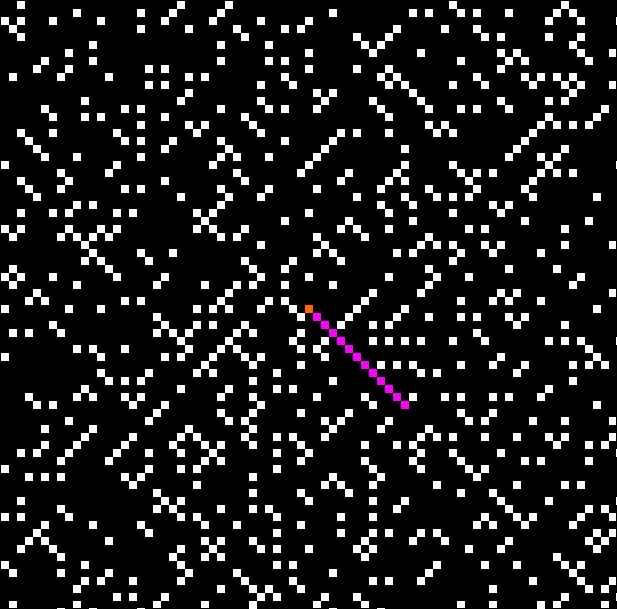
This is the famous Ulam spiral, invented by the Jewish mathematician Stanisław Ulam (pronounced OO-lam) to represent prime numbers on a square grid:

The Ulam spiral of prime numbers


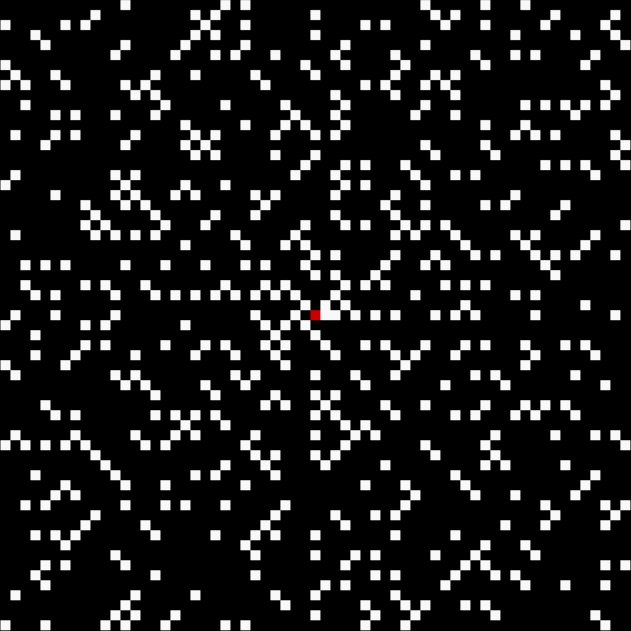
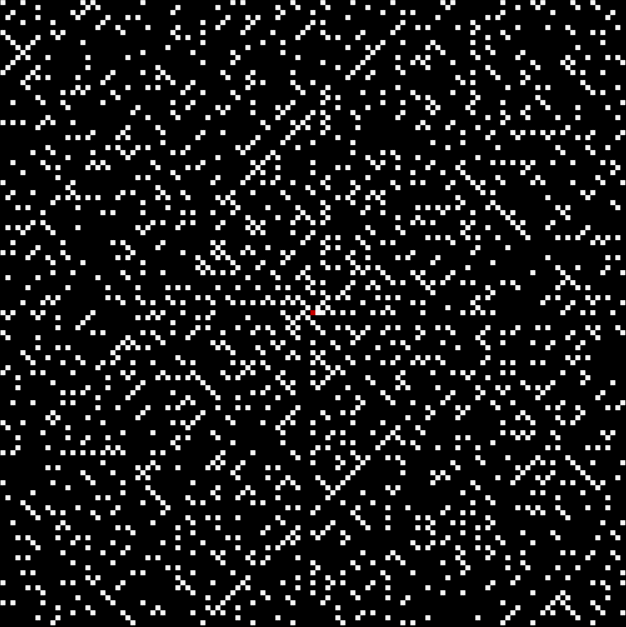
The red square represents 1, with 2 as the white block immediately to its right and 3 immediately above 2. Then 5 is the white block one space to the left of 3 and 7 the white block one space below 5. Then 11 is the white block right beside 2 and 13 the white block one space above 11. And so on. The primes aren’t regularly spaced on the spiral but patterns are nevertheless appearing. Here’s the Ulam spiral at higher resolutions:

The Ulam spiral x2


The Ulam spiral x4


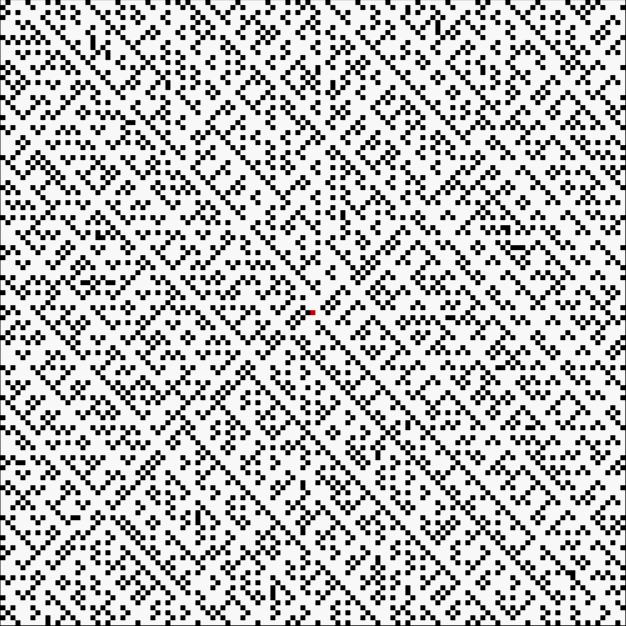
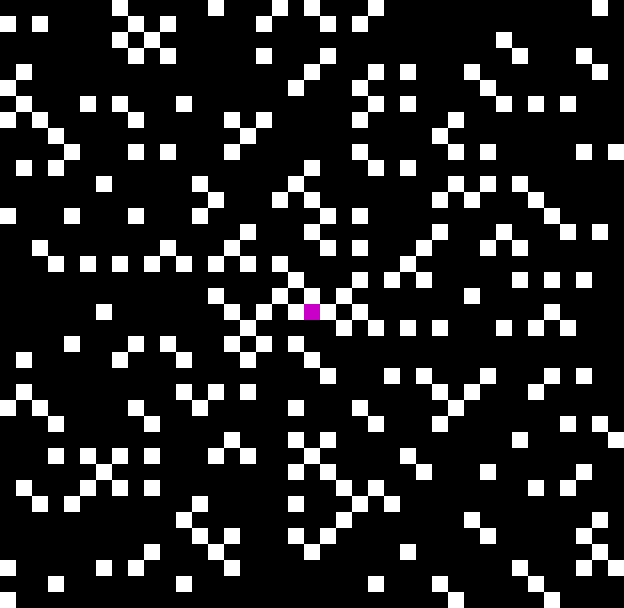
The primes are neither regular nor random in their distribution on the spiral. They stand tantalizingly betwixt and between. So the numbers represented on this Ulam-like spiral, which looks like an aerial view of a city designed by architects who occasionally get drunk:
Ulam-like spiral of abundant numbers


The distribution of abundant numbers is much more regular than the primes, but is far from wholly predictable. And what are abundant numbers? They’re numbers n such that sum(divisors(n)-n) > n. In other words, when you add the divisors of n less than n, the sum is greater than n. The first abundant number is 12:

12 is divisible by 1, 2, 3, 4, 6 → 1 + 2 + 3 + 4 + 6 = 16 > 12

The abundant numbers go like this:

12, 18, 20, 24, 30, 36, 40, 42, 48, 54, 56, 60, 66, 70, 72, 78, 80, 84, 88, 90, 96, 100, 102, 104, 108, 112, 114, 120, 126, 132, 138, 140, 144, 150, 156, 160, 162, 168, 174, 176, 180, 186, 192, 196, 198, 200, 204, 208, 210, 216, 220, 222, 224, 228, 234, 240, 246, 252, 258, 260, 264, 270… — A005101 at the Online Encyclopedia of Integer Sequences

Are all abundant numbers even? No, but the first odd abundant number takes a long time to arrive: it’s 45045. The abundance of 45045 was first discovered by the French mathematician Charles de Bovelles or Carolus Bovillus (c. 1475-1566), according to David Wells in his wonderful Penguin Dictionary of Curious and Interesting Numbers (1986):

45045 = 3^2 * 5 * 7 * 11 * 13 → 1 + 3 + 5 + 7 + 9 + 11 + 13 + 15 + 21 + 33 + 35 + 39 + 45 + 55 + 63 + 65 + 77 + 91 + 99 + 105 + 117 + 143 + 165 + 195 + 231 + 273 + 315 + 385 + 429 + 455 + 495 + 585 + 693 + 715 + 819 + 1001 + 1155 + 1287 + 1365 + 2145 + 3003 + 3465 + 4095 + 5005 + 6435 + 9009 + 15015 = 59787 > 45045

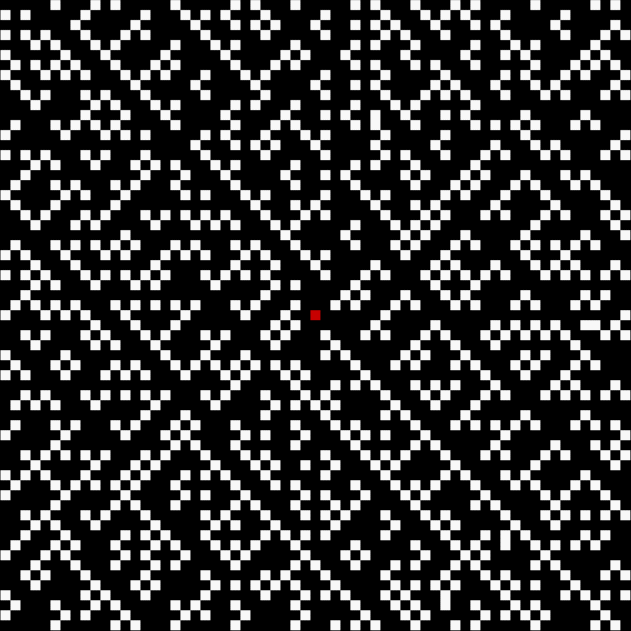
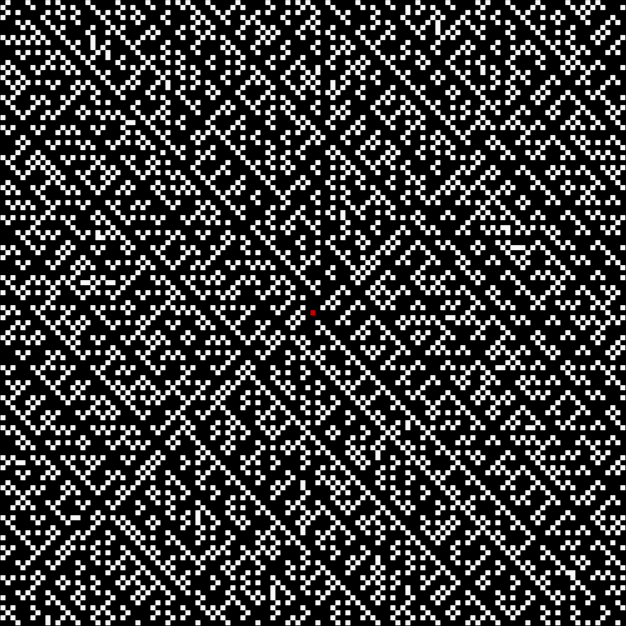
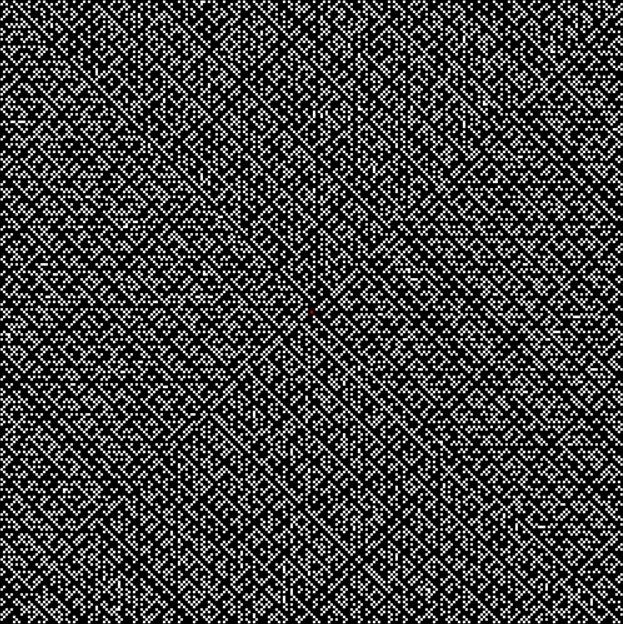
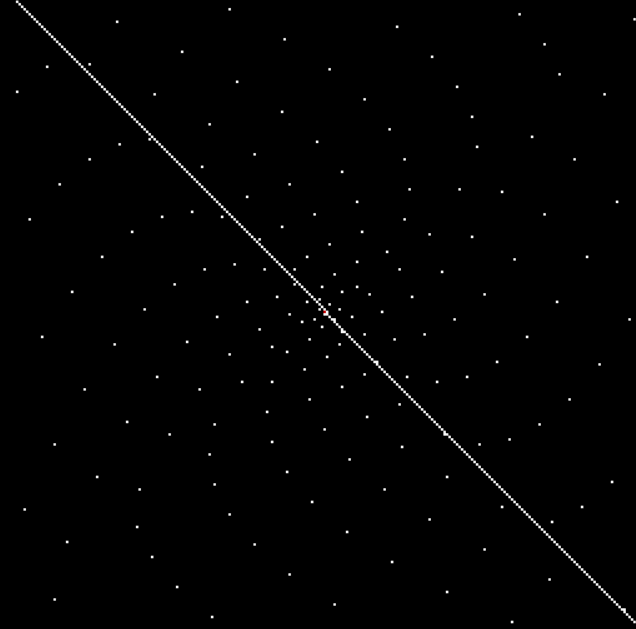
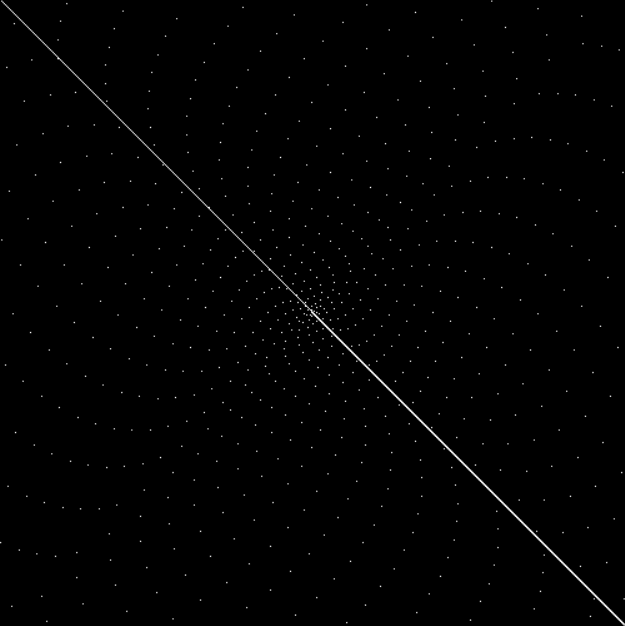
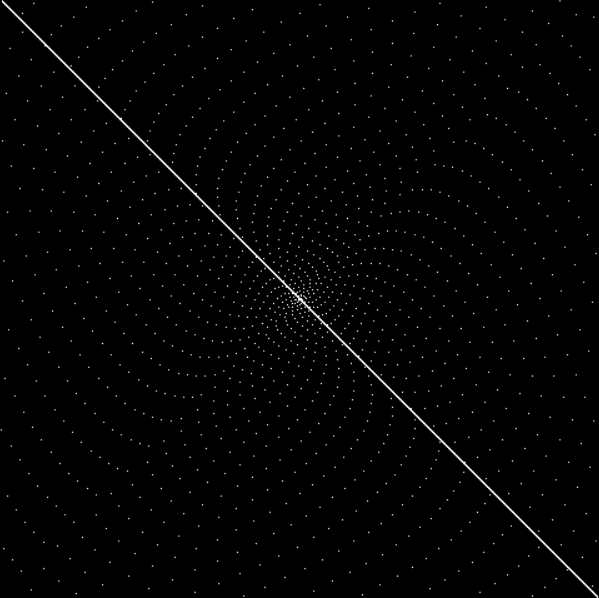
Here’s the spiral of abundant numbers at higher resolutions:

Abundant numbers x2


Abundant numbers x4


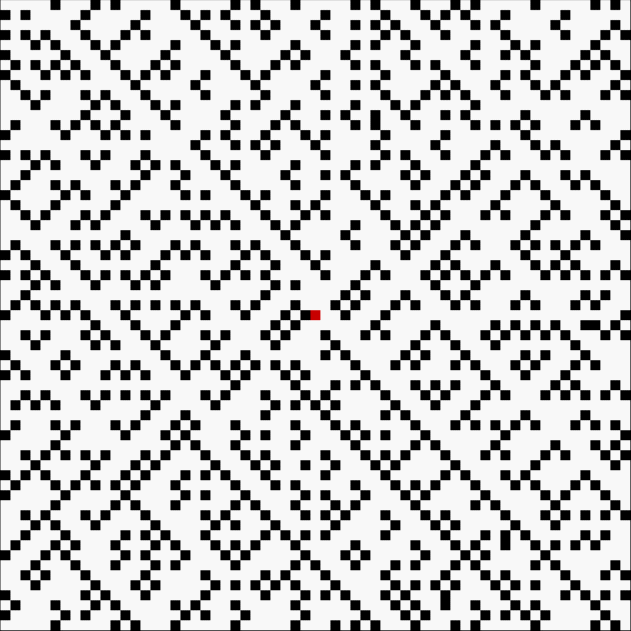
Negating the spiral of the abundant numbers — almost — is the spiral of the deficient numbers, where sum(divisors(n)-n) < n. Like most odd numbers, 15 is deficient:

15 = 3 * 5 → 1 + 3 + 5 = 9 < 15

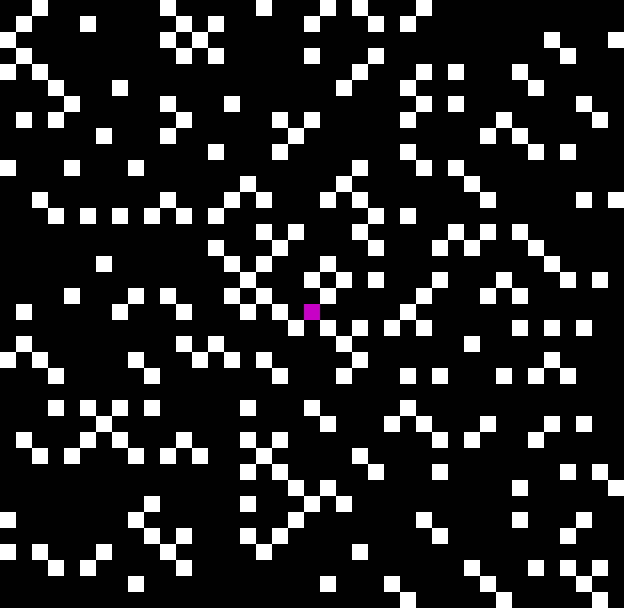
Here’s the spiral of deficient numbers at various resolutions:

Deficient numbers on Ulam-like spiral


Deficient numbers x2


Deficient numbers x4


The spiral of deficient numbers doesn’t quite negate (reverse the colors of) the spiral of abundant numbers because of the very rare perfect numbers, where sum(divisors(n)-n) = n. That is, their factor-sums are exactly equal to themselves:

• 6 = 2 * 3 → 1 + 2 + 3 = 6
• 28 = 2^2 * 7 → 1 + 2 + 4 + 7 + 14 = 28
• 496 = 2^4 * 31 → 1 + 2 + 4 + 8 + 16 + 31 + 62 + 124 + 248 = 496

Now let’s try numbers n such than sum(divisors(n)) mod 2 = 1 (“n mod 2″ gives the remainder when n is divided by 2, i.e. n mod 2 is either 0 or 1). For example:

• 4 = 2^2 → 1 + 2 + 4 = 7 → 7 mod 2 = 1
• 18 = 2 * 3^2 → 1 + 2 + 3 + 6 + 9 + 18 = 39 → 39 mod 2 = 1
• 72 = 2^3 * 3^2 → 1 + 2 + 3 + 4 + 6 + 8 + 9 + 12 + 18 + 24 + 36 + 72 = 195 → 195 mod 2 = 1

Here are spirals for these numbers:

Ulam-like spiral for n such than sum(divisors(n)) mod 2 = 1


sum(divisors(n)) mod 2 = 1 x2


sum(divisors(n)) mod 2 = 1 x4


sum(divisors(n)) mod 2 = 1 x8


sum(divisors(n)) mod 2 = 1 x16


Period Panes

In his Penguin Dictionary of Curious and Interesting Numbers (1986), David Wells says that 142857 is “beloved of all recreational mathematicians”. He then says it’s the decimal period of the reciprocal of the fourth prime: “1/7 = 0·142857142857142…” And the reciprocal has maximum period. There are 6 = 7-1 digits before repetition begins, unlike the earlier prime reciprocals:


1/2 = 0·5
1/3 = 0·333...
1/5 = 0·2
1/7 = 0·142857 142857 142...

In other words, all possible remainders appear when you calculate the decimals of 1/7:


1*10 / 7 = 1 remainder 3 → 0·1
3*10 / 7 = 4 remainder 2 → 0·14
2*10 / 7 = 2 remainder 6 → 0·142
6*10 / 7 = 8 remainder 4 → 0·1428
4*10 / 7 = 5 remainder 5 → 0·14285
5*10 / 7 = 7 remainder 1 → 0·142857
1*10 / 7 = 1 remainder 3 → 0·142857 1
3*10 / 7 = 4 remainder 2 → 0·142857 14
2*10 / 7 = 2 remainder 6 → 0·142857 142...

That happens again with 1/17 and 1/19, but Wells says that “surprisingly, there is no known method of predicting which primes have maximum period.” It’s a simple question that involves some deep mathematics. Looking at prime reciprocals is like peering through a small window into a big room. Some things are easy to see, some are difficult and some are presently impossible.

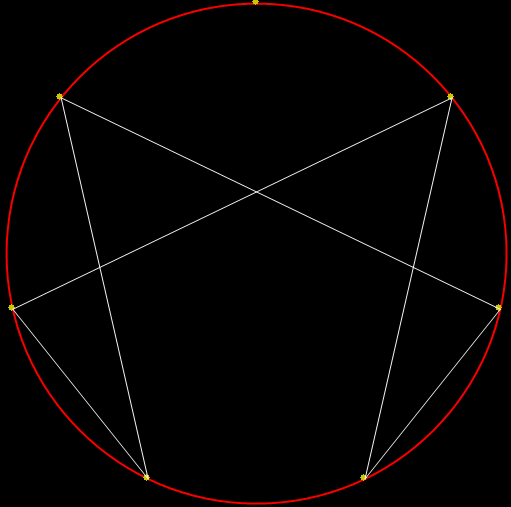
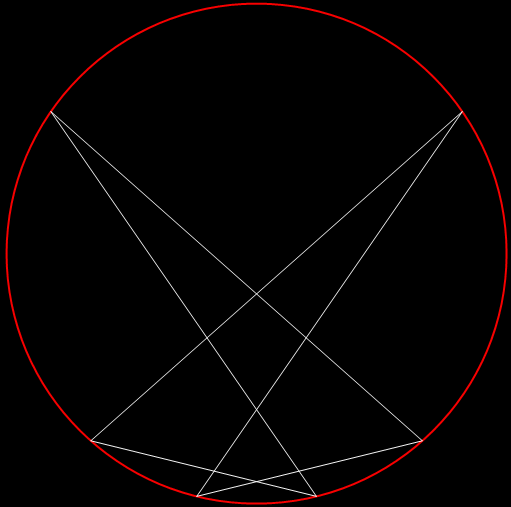
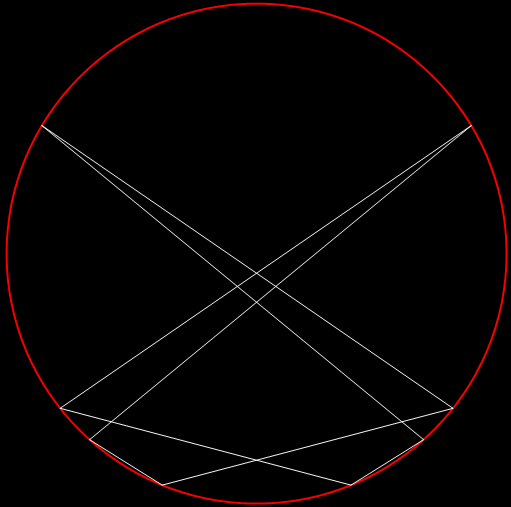
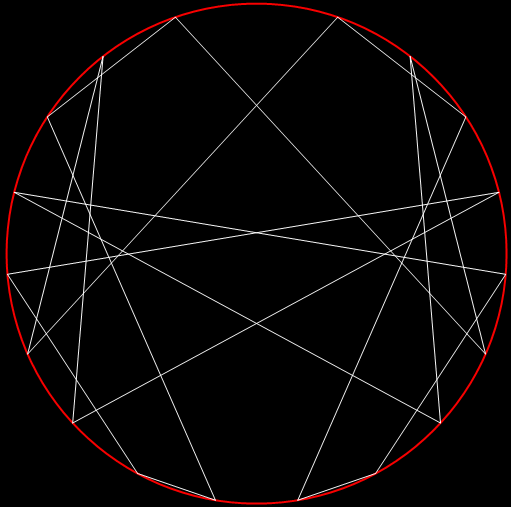
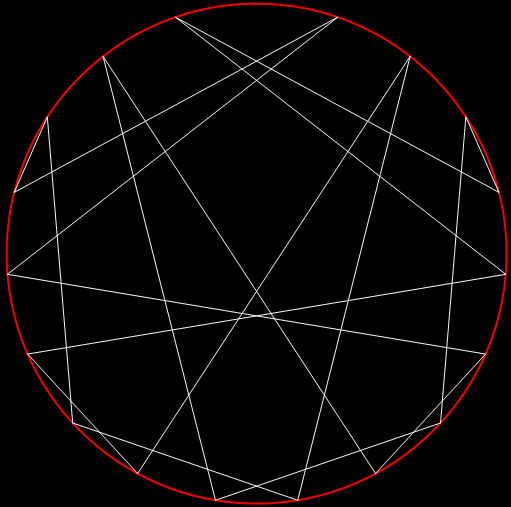
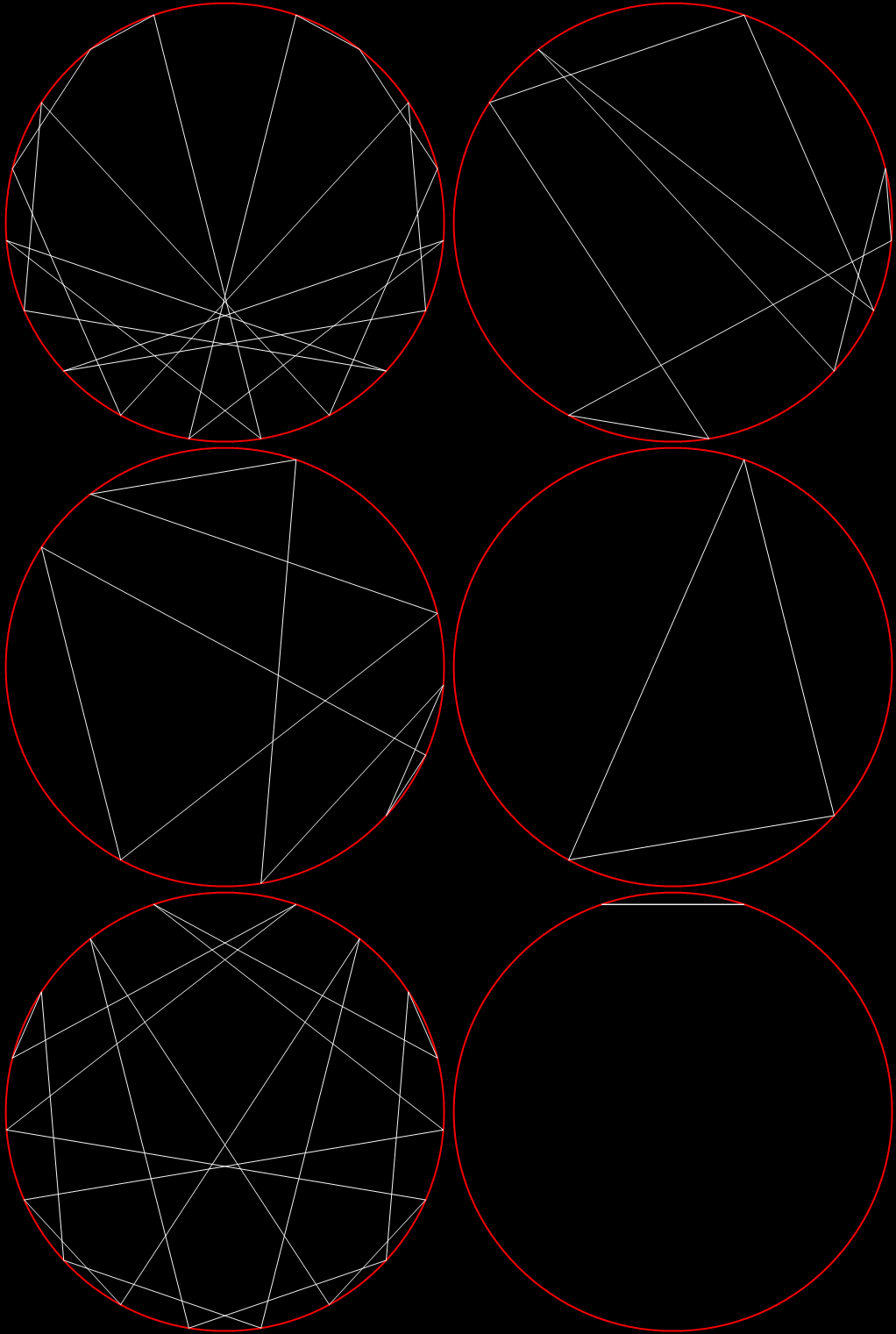
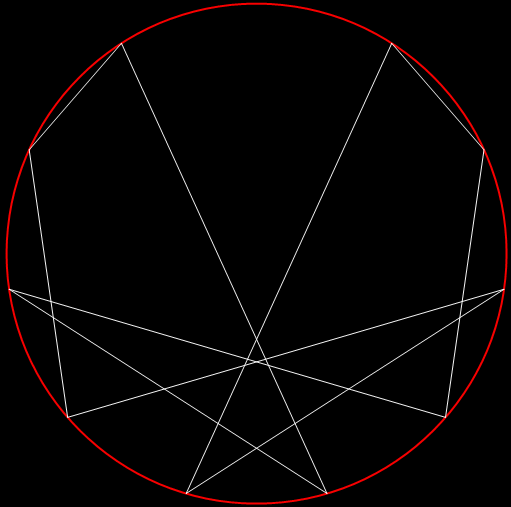
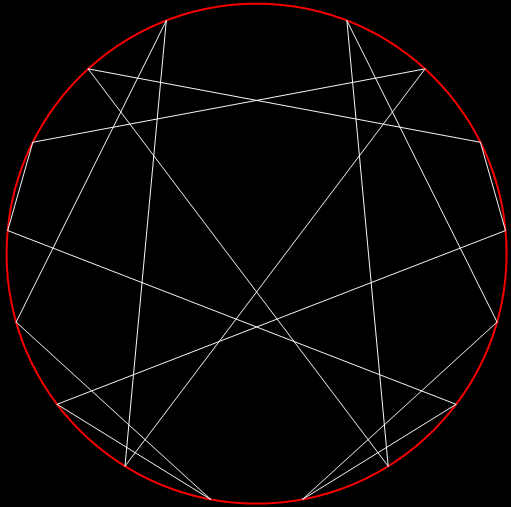
In his discussion of 142857, Wells mentions one way of peering through a period pane: “The sequence of digits also makes a striking pattern when the digits are arranged around a circle.” Here is the pattern, with ten points around the circle representing the digits 0 to 9:

The digits of 1/7 = 0·142857142…


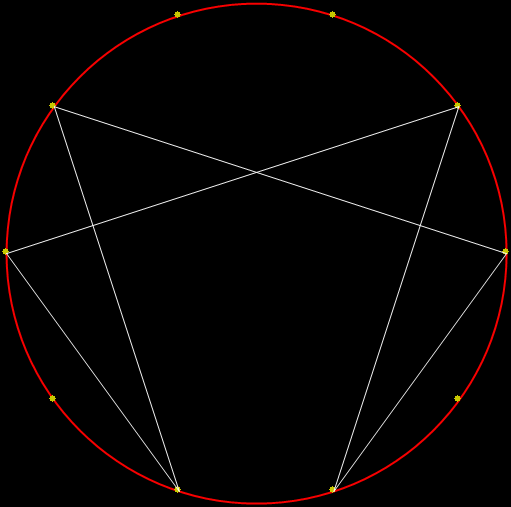
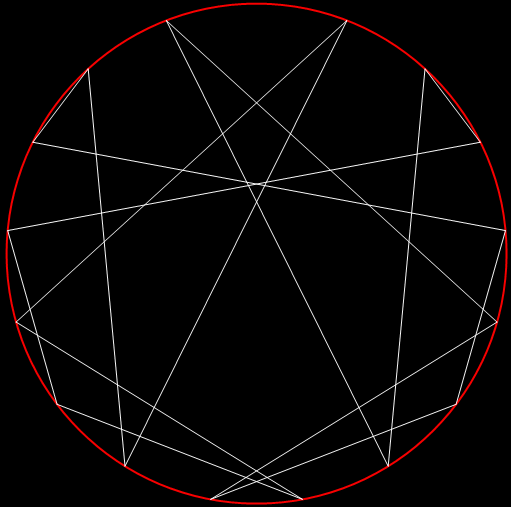
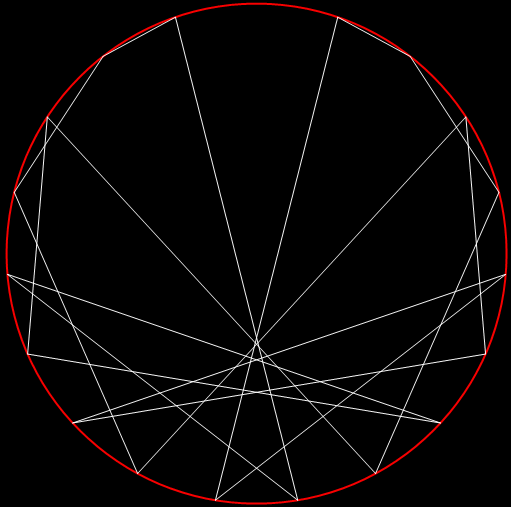
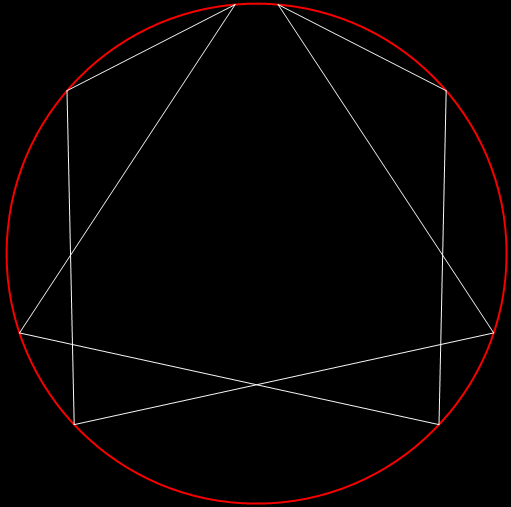
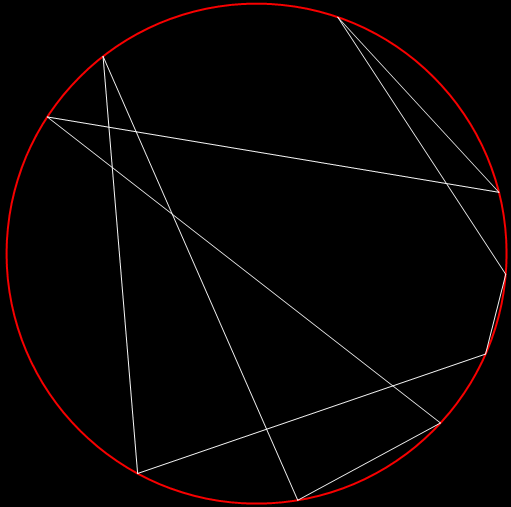
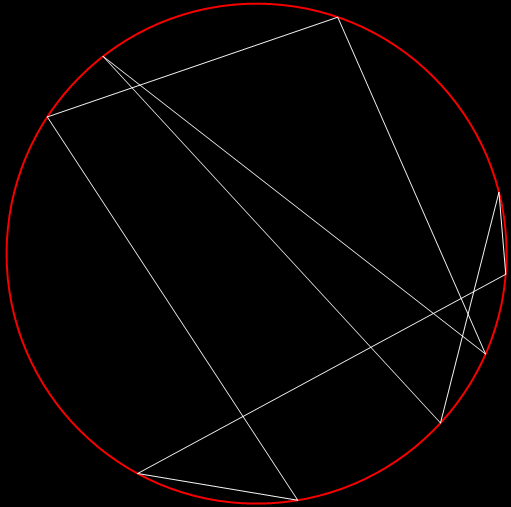
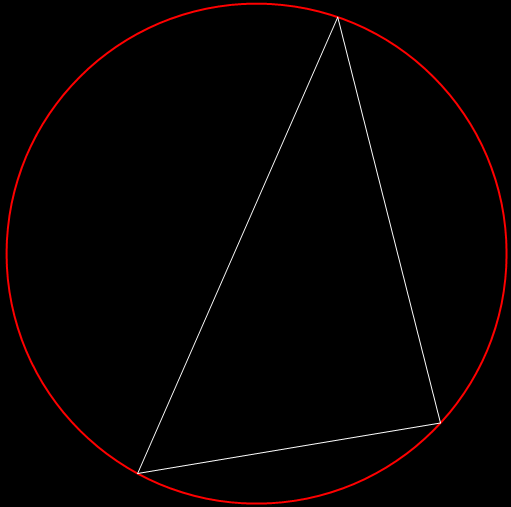
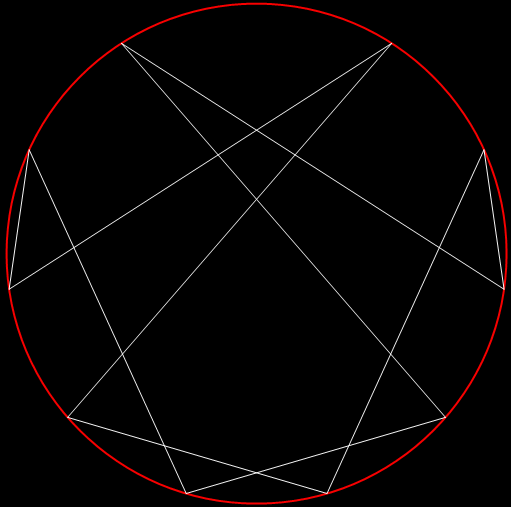
But I prefer, for further peers through the period-panes, to create the period-panes using remainders rather than digits. That is, the number of points around the circle is determined by the prime itself rather than the base in which the reciprocal is calculated:

The remainders of 1/7 = 1, 3, 2, 6, 4, 5…


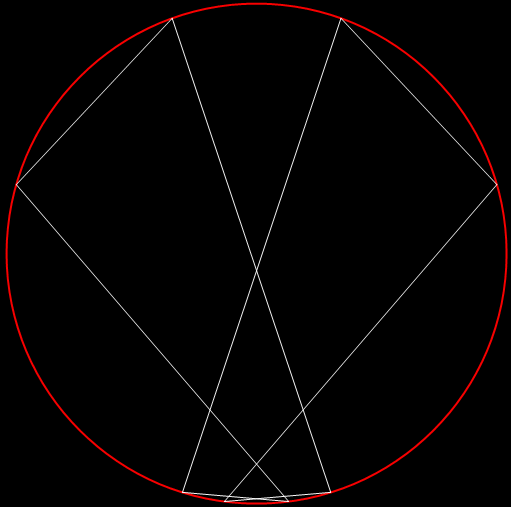
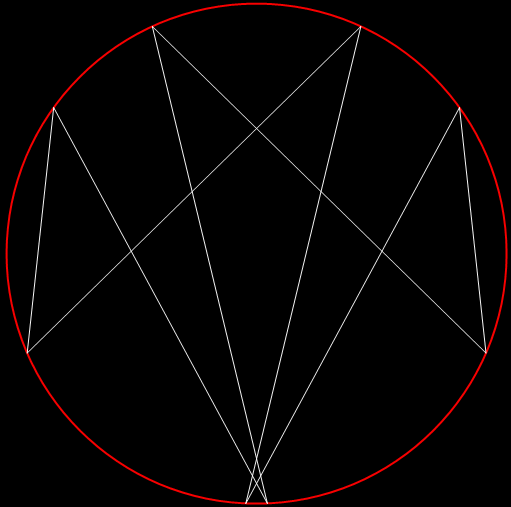
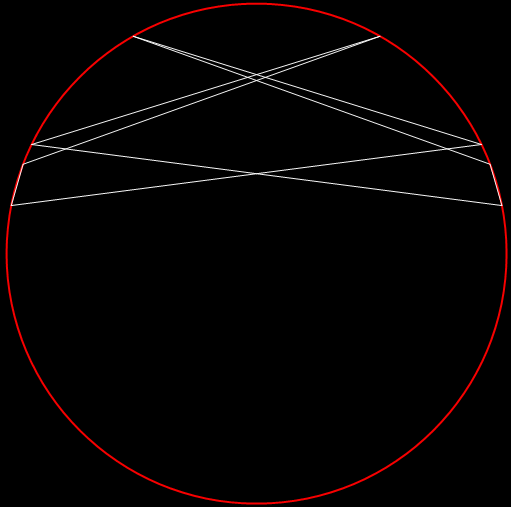
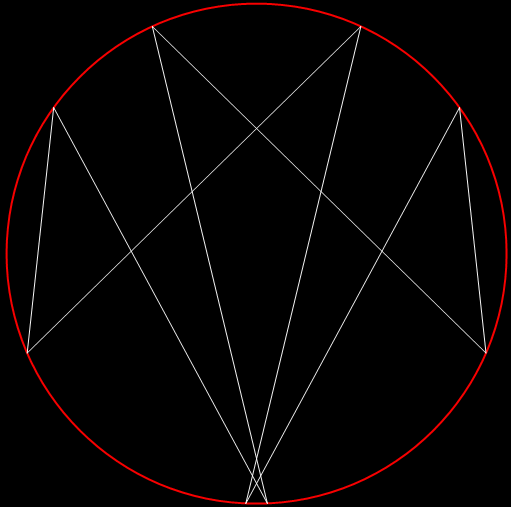
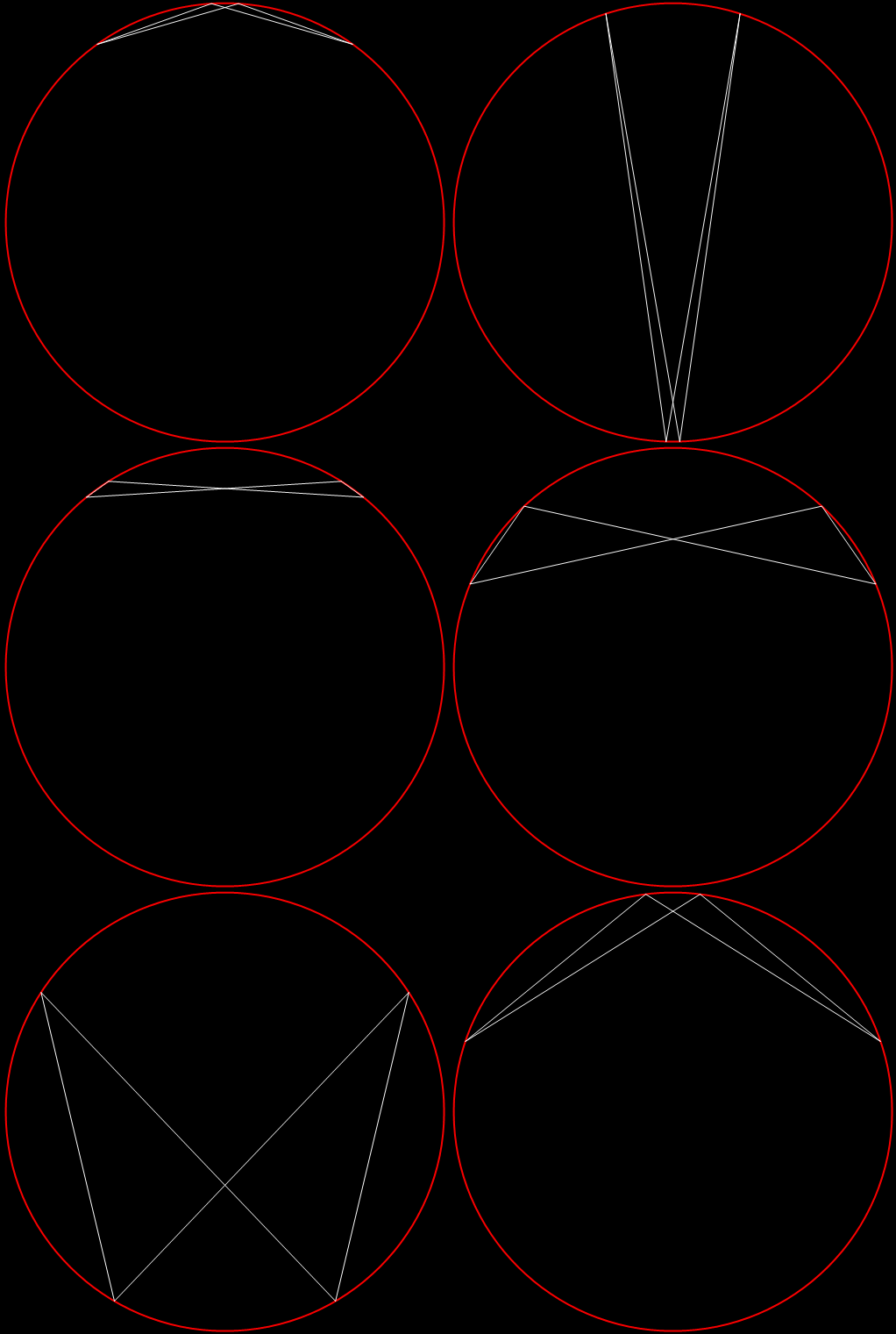
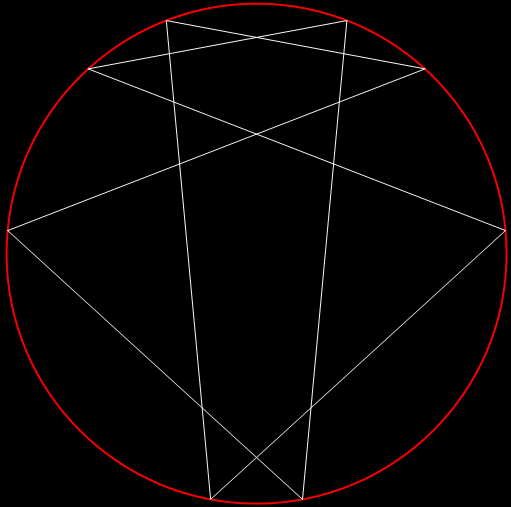
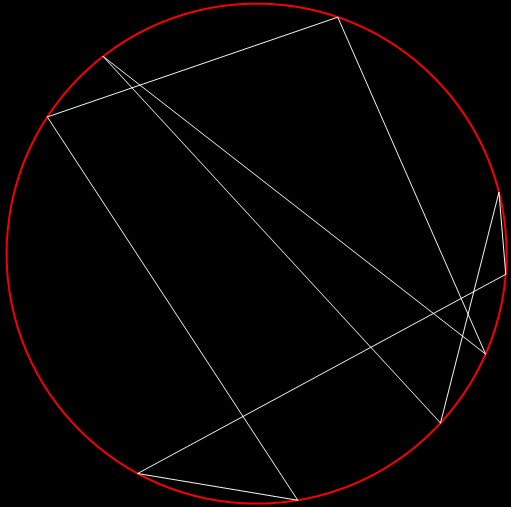
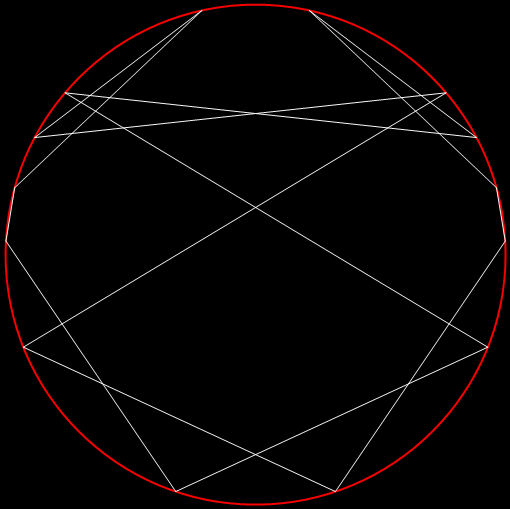
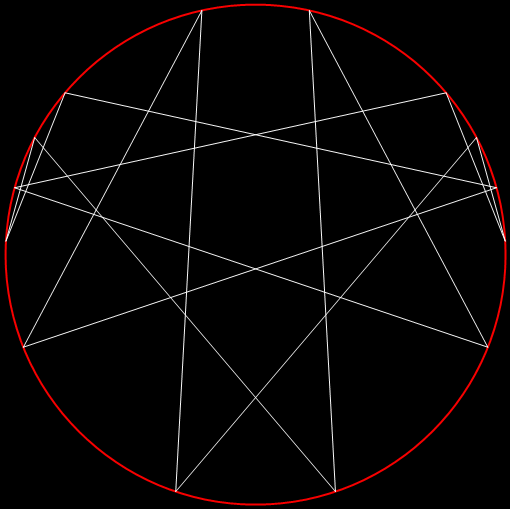
Period-panes can look like butterflies or bats or bivalves or spiders or crabs or even angels. Try the remainders of 1/13. This prime reciprocal doesn’t have maximum period: 1/13 = 0·076923 076923 076923… So there are only six remainders, creating this pattern:

remainders(1/13) = 1, 10, 9, 12, 3, 4


The multiple 2/13 has different remainders and creates a different pattern:

remainders(2/13) = 2, 7, 5, 11, 6, 8


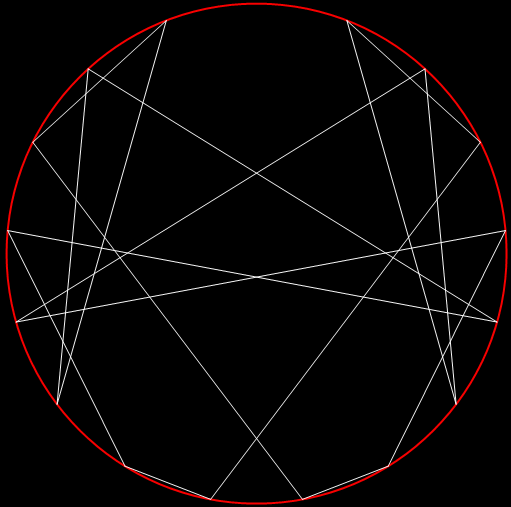
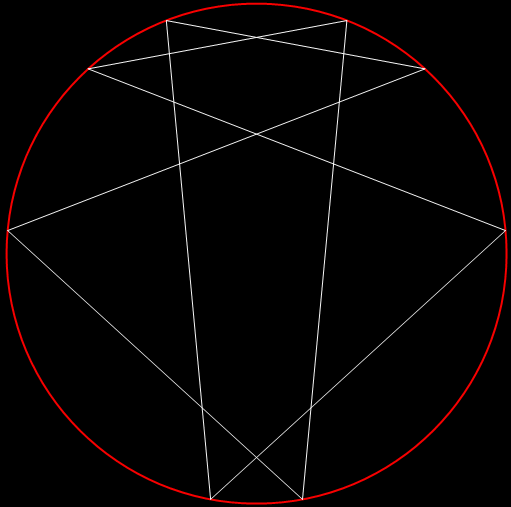
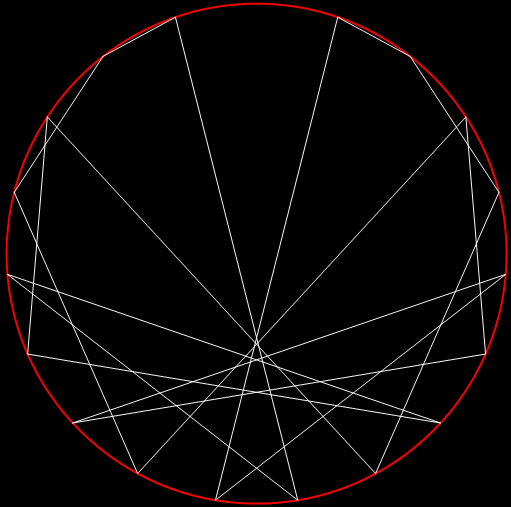
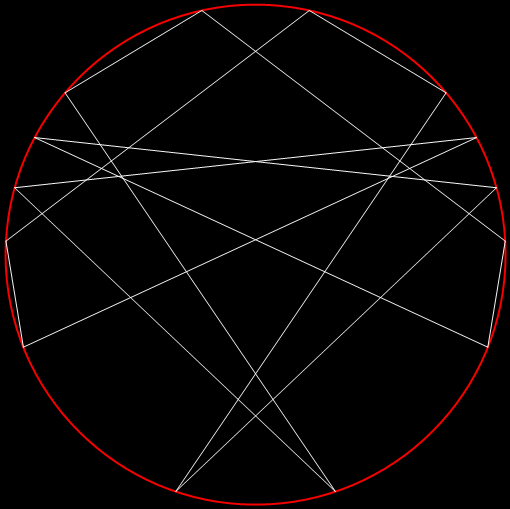
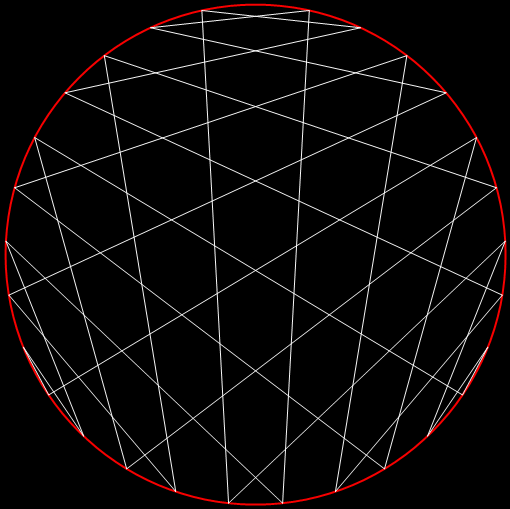
But 1/17, 1/19 and 1/23 all have maximum period and yield these period-panes:

remainders(1/17) = 1, 10, 15, 14, 4, 6, 9, 5, 16, 7, 2, 3, 13, 11, 8, 12


remainders(1/19) = 1, 10, 5, 12, 6, 3, 11, 15, 17, 18, 9, 14, 7, 13, 16, 8, 4, 2


remainders(1/23) = 1, 10, 8, 11, 18, 19, 6, 14, 2, 20, 16, 22, 13, 15, 12, 5, 4, 17, 9, 21, 3, 7


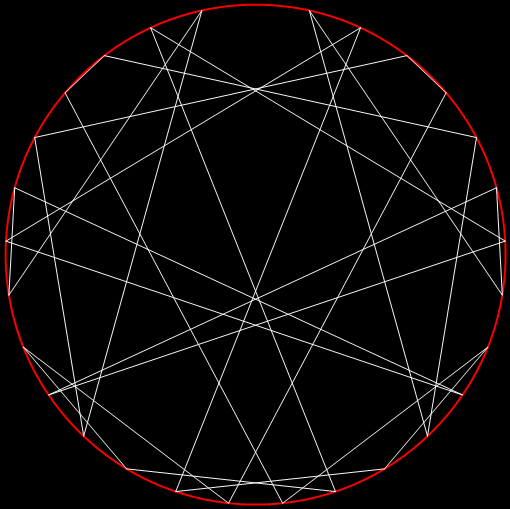
It gets mixed again with the prime 73, which doesn’t have maximum period and yields a plethora of period-panes (some patterns repeat with different n * 1/73, so I haven’t included them):

remainders(1/73)


remainders(2/73)


remainders(3/73)


remainders(4/73)


remainders(5/73)


remainders(6/73)


remainders(9/73)


remainders(11/73) (identical to pattern of 5/73)


remainders(12/73)


remainders(18/73)


101 yields a plethora of period-panes, but they’re variations on a simple theme. They look like flapping wings in this animated gif:

remainders of n/101 (animated)


The remainders of 137 yield more complex period-panes:

remainders of n/137 (animated)


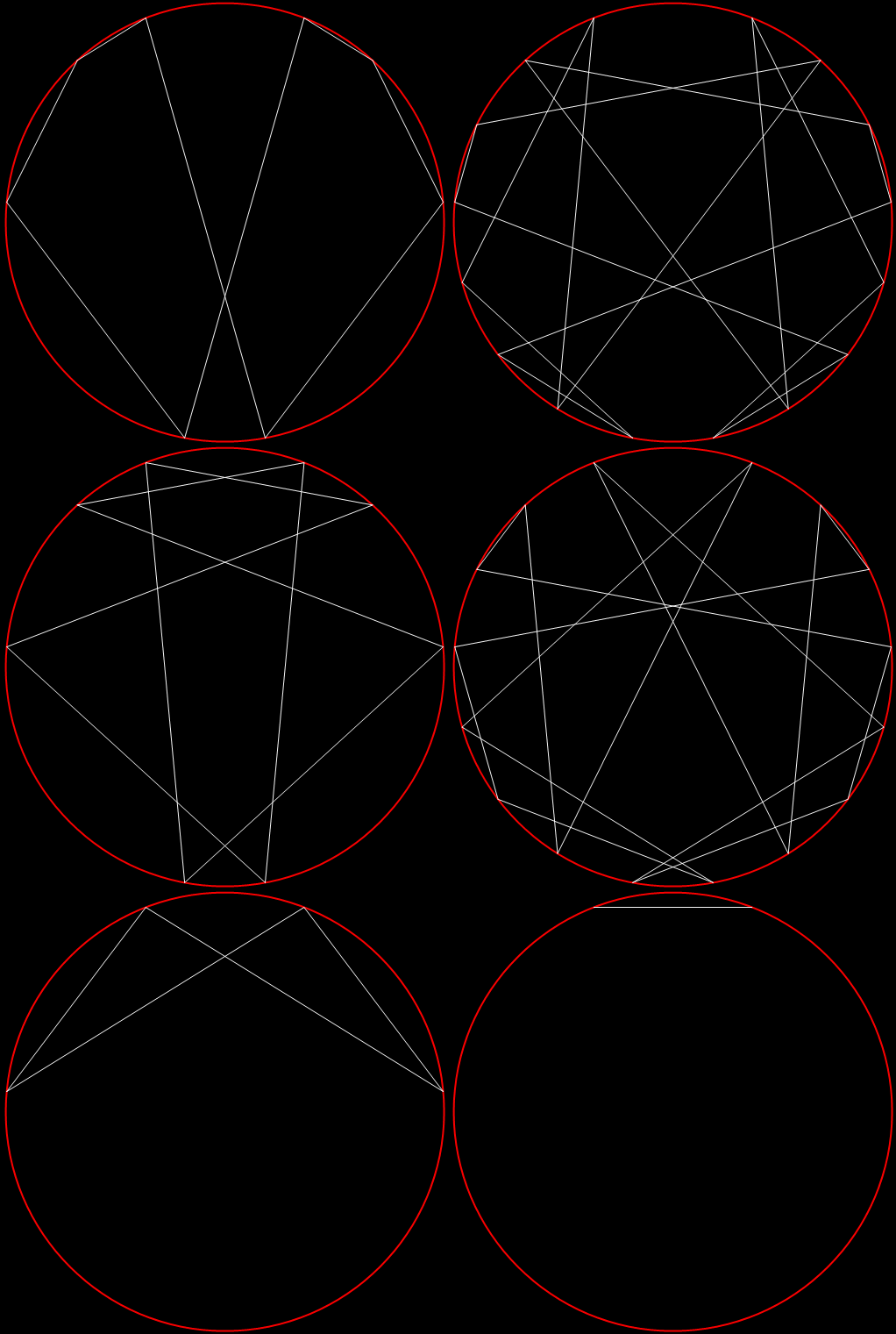
And what about different bases? Here are period-panes for the remainders of 1/17 in bases 2 to 16:

remainders(1/17) in base 2


remainders(1/17) in b3


remainders(1/17) in b4


remainders(1/17) in b5


remainders(1/17) in b6


remainders(1/17) in b7


remainders(1/17) in b8


remainders(1/17) in b9


remainders(1/17) in b10


remainders(1/17) in b11


remainders(1/17) in b12


remainders(1/17) in b13


remainders(1/17) in b14


remainders(1/17) in b15


remainders(1/17) in b16


remainders(1/17) in bases 2 to 16 (animated)


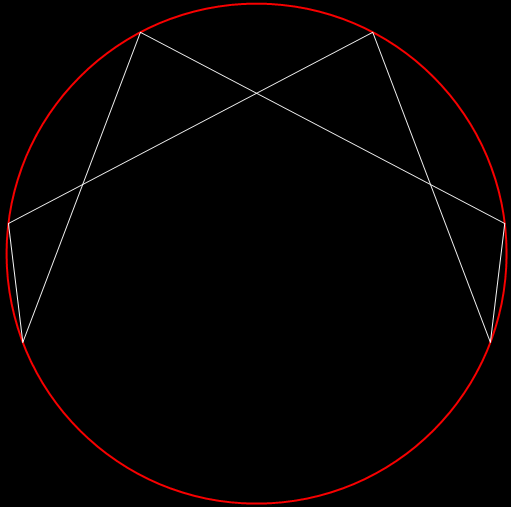
But the period-panes so far have given a false impression. They’ve all been symmetrical. That isn’t the case with all the period-panes of n/19:

remainders(1/19) in b2


remainders(1/19) in b3


remainders(1/19) in b4 = 1, 4, 16, 7, 9, 17, 11, 6, 5 (asymmetrical)


remainders(1/19) in b5 = 1, 5, 6, 11, 17, 9, 7, 16, 4 (identical pattern to that of b4)


remainders(1/19) in b6


remainders(1/19) in b7


remainders(1/19) in b8


remainders(1/19) in b9


remainders(1/19) in b10 (identical pattern to that of b2)


remainders(1/19) in b11


remainders(1/19) in b12


remainders(1/19) in b13


remainders(1/19) in b14


remainders(1/19) in b15


remainders(1/19) in b16


remainders(1/19) in b17


remainders(1/19) in b18


remainders(1/19) in bases 2 to 18 (animated)


Here are a few more period-panes in different bases:

remainders(1/11) in b2


remainders(1/11) in b7


remainders(1/13) in b6


remainders(1/43) in b6


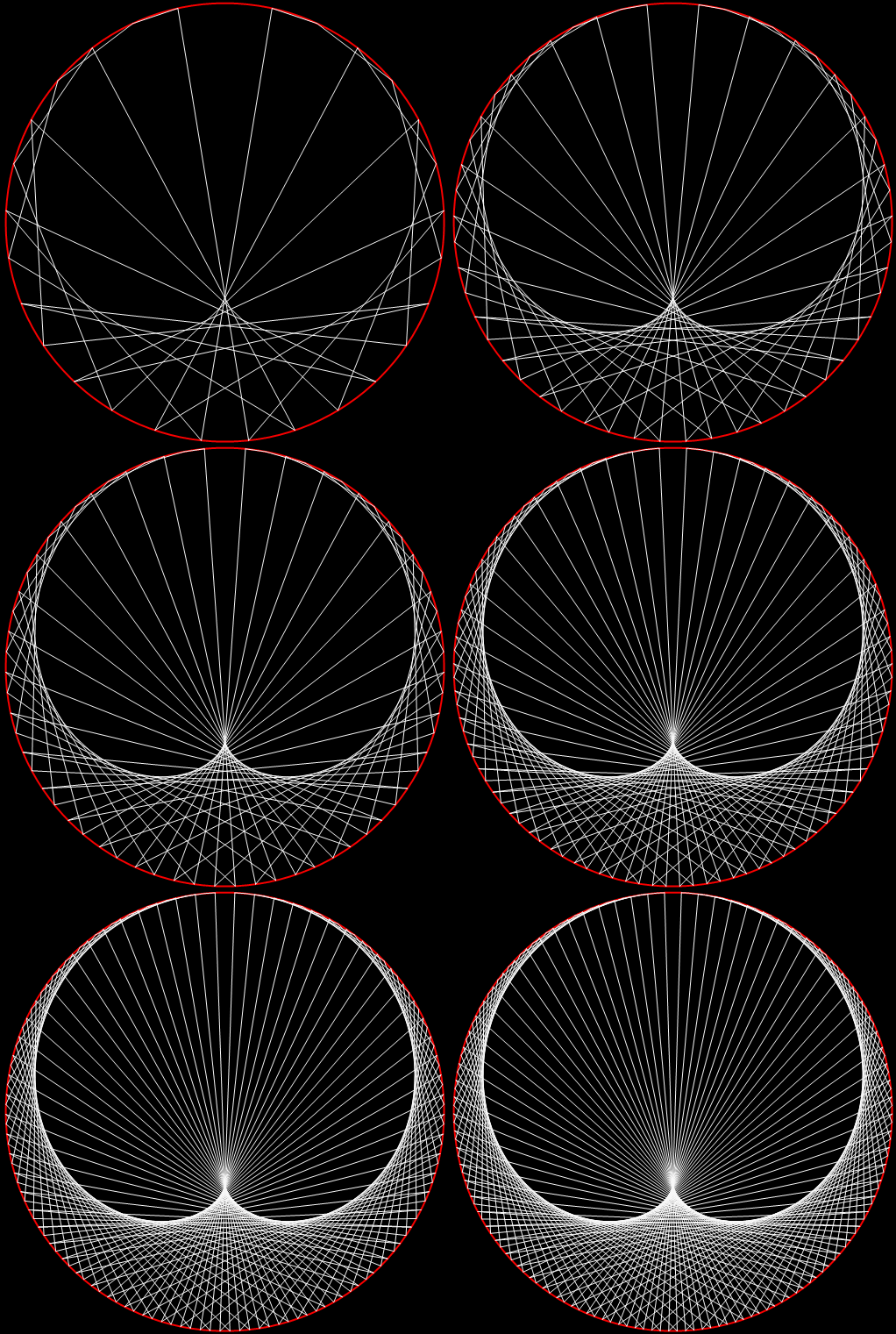
remainders in b2 for reciprocals of 29, 37, 53, 59, 61, 67, 83, 101, 107, 131, 139, 149 (animated)


And finally, to performativize the pun of “period pane”, here are some period-panes for 1/29, whose maximum period will be 28 (NASA says that the “Moon takes about one month to orbit Earth … 27.3 days to complete a revolution, but 29.5 days to change from New Moon to New Moon”):

remainders(1/29) in b4


remainders(1/29) in b5


remainders(1/29) in b8


remainders(1/29) in b9


remainders(1/29) in b11


remainders(1/29) in b13


remainders(1/29) in b14


remainders(1/29) in various bases (animated)


Grow Fourth

Write the integers in groups of one, two, three, four… numbers like this:

1, 2,3, 4,5,6, 7,8,9,10, 11,12,13,14,15, 16,17,18,19,20,21, 22,23,24,25,26,27,28, 29,30,31,32,33,34,35,36, 37,38,39,40,41,42,43,44,45, 46,47,48,49,50,51,52,53,54,55, 56,57,58,59,60,61,62,63,64,65,66


Now delete every second group:

1, 2,3, 4,5,6, 7,8,9,10, 11,12,13,14,15, 16,17,18,19,20,21, 22,23,24,25,26,27,28, 29,30,31,32,33,34,35,36, 37,38,39,40,41,42,43,44,45, 46,47,48,49,50,51,52,53,54,55, 56,57,58,59,60,61,62,63,64,65,66…

↓↓↓

1, 4,5,6, 11,12,13,14,15, 22,23,24,25,26,27,28, 37,38,39,40,41,42,43,44,45, 56,57,58,59,60,61,62,63,64,65,66…


The sum of the first n remaining groups equals n^4:

1 = 1 = 1^4

1 + 4+5+6 = 16 = 2^4

1 + 4+5+6 + 11+12+13+14+15 = 81 = 3^4

1 + 4+5+6 + 11+12+13+14+15 + 22+23+24+25+26+27+28 = 256 = 4^4

1 + 4+5+6 + 11+12+13+14+15 + 22+23+24+25+26+27+28 + 37+38+39+40+41+42+43+44+45 = 625 = 5^4

1 + 4+5+6 + 11+12+13+14+15 + 22+23+24+25+26+27+28 + 37+38+39+40+41+42+43+44+45 + 56+57+58+59+60+61+62+63+64+65+66 = 1296 = 6^4

1 + 4+5+6 + 11+12+13+14+15 + 22+23+24+25+26+27+28 + 37+38+39+40+41+42+43+44+45 + 56+57+58+59+60+61+62+63+64+65+66 + 79+80+81+82+83+84+85+86+87+88+89+90+91 = 2401 = 7^4

1 + 4+5+6 + 11+12+13+14+15 + 22+23+24+25+26+27+28 + 37+38+39+40+41+42+43+44+45 + 56+57+58+59+60+61+62+63+64+65+66 + 79+80+81+82+83+84+85+86+87+88+89+90+91 + 106+107+108+109+110+111+112+113+114+115+116+117+118+119+120 = 4096 = 8^4

1 + 4+5+6 + 11+12+13+14+15 + 22+23+24+25+26+27+28 + 37+38+39+40+41+42+43+44+45 + 56+57+58+59+60+61+62+63+64+65+66 + 79+80+81+82+83+84+85+86+87+88+89+90+91 + 106+107+108+109+110+111+112+113+114+115+116+117+118+119+120 + 137+138+139+140+141+142+143+144+145+146+147+148+149+150+151+152+153 = 6561 = 9^4


From David Wells’ Penguin Dictionary of Curious and Interesting Numbers (1986), entry for “81”

The Odd Couple

12,285

Together with 14,595 the smallest pair of odd amicable numbers, discovered by [the American mathematician] B.H. Brown in 1939. — The Penguin Dictionary of Curious and Interesting Numbers, David Wells (1986)

Reciprocal Recipes

Here’s a sequence. What’s the next number?

1, 1, 1, 1, 1, 1, 1, 1, 1, 1, 1...

Here’s another sequence. What’s the next number?

0, 1, 1, 2, 3, 5, 8, 13, 21, 34...

Those aren’t trick questions, so the answers are 1 and 55, respectively. The second sequence is the famous Fibonacci sequence, where each number after [0,1] is the sum of the previous two numbers.

Now try dividing each of those sequences by powers of 2 and summing the results, like this:

1/2 + 1/4 + 1/8 + 1/16 + 1/32 + 1/64 + 1/128 + 1/256 + 1/512 + 1/1024 + 1/2048 + 1/4096 + 1/8192 + 1/16384 + 1/32768 + 1/65536 + 1/131072 + 1/262144 + 1/524288 + 1/1048576 +... = ?

0/2 + 1/4 + 1/8 + 2/16 + 3/32 + 5/64 + 8/128 + 13/256 + 21/512 + 34/1024 + 55/2048 + 89/4096 + 144/8192 + 233/16384 + 377/32768 + 610/65536 + 987/131072 + 1597/262144 + 2584/524288 + 4181/1048576 +... = ?

What are the sums? I was surprised to learn that they’re identical:

1/2 + 1/4 + 1/8 + 1/16 + 1/32 + 1/64 + 1/128 + 1/256 + 1/512 + 1/1024 + 1/2048 + 1/4096 + 1/8192 + 1/16384 + 1/32768 + 1/65536 + 1/131072 + 1/262144 + 1/524288 + 1/1048576 +... = 1

0/2 + 1/4 + 1/8 + 2/16 + 3/32 + 5/64 + 8/128 + 13/256 + 21/512 + 34/1024 + 55/2048 + 89/4096 + 144/8192 + 233/16384 + 377/32768 + 610/65536 + 987/131072 + 1597/262144 + 2584/524288 + 4181/1048576 +... = 1

I discovered this when I was playing with an old scientific calculator and calculated these sums:

5^2 + 2^2 = 29
5^2 + 4^2 = 41
5^2 + 6^2 = 61
5^2 + 8^2 = 89

The sums are all prime numbers. Then I idly calculated the reciprocal of 1/89:

1/89 = 0·011235955056179775...

The digits 011235… are the start of the Fibonacci sequence. It seems to go awry after that, but I remembered what David Wells had said in his wonderful Penguin Dictionary of Curious and Interesting Numbers (1986): “89 is the 11th Fibonacci number, and the period of its reciprocal is generated by the Fibonacci sequence: 1/89 = 0·11235…” He means that the Fibonacci sequence generates the digits of 1/89 like this, when you sum the columns and move carries left as necessary:

0
1
↓↓1
↓↓↓2
↓↓↓↓3
↓↓↓↓↓5
↓↓↓↓↓↓8
↓↓↓↓↓↓13
↓↓↓↓↓↓↓21
↓↓↓↓↓↓↓↓34
↓↓↓↓↓↓↓↓↓55
↓↓↓↓↓↓↓↓↓↓89...
↓↓↓↓↓↓↓↓↓↓
0112359550...

I tried this method of summing the Fibonacci sequence in other bases. Although it was old, the scientific calculator was crudely programmable. And it helpfully converted the sum into a final fraction once there were enough decimal digits:

0/3 + 1/32 + 1/33 + 2/34 + 3/35 + 5/36 + 8/37 + 13/38 + 21/39 + 34/310 + 55/311 + 89/312 + 144/313 + 233/314 + 377/315 + 610/316 + 987/317 + 1597/318 + 2584/319 + 4181/320 +... = 1/5 = 0·012101210121012101210 in b3


0/4 + 1/42 + 1/43 + 2/44 + 3/45 + 5/46 + 8/47 + 13/48 + 21/49 + 34/410 + 55/411 + 89/412 + 144/413 + 233/414 + 377/415 + 610/416 + 987/417 + 1597/418 + 2584/419 + 4181/420 +... = 1/11 = 0·011310113101131011310 in b4


0/5 + 1/52 + 1/53 + 2/54 + 3/55 + 5/56 + 8/57 + 13/58 + 21/59 + 34/510 + 55/511 + 89/512 + 144/513 + 233/514 + 377/515 + 610/516 + 987/517 + 1597/518 + 2584/519 + 4181/520 +... = 1/19 = 0·011242141011242141011 in b5


0/6 + 1/62 + 1/63 + 2/64 + 3/65 + 5/66 + 8/67 + 13/68 + 21/69 + 34/610 + 55/611 + 89/612 + 144/613 + 233/614 + 377/615 + 610/616 + 987/617 + 1597/618 + 2584/619 + 4181/620 +... = 1/29 = 0·011240454431510112404 in b6


0/7 + 1/72 + 1/73 + 2/74 + 3/75 + 5/76 + 8/77 + 13/78 + 21/79 + 34/710 + 55/711 + 89/712 + 144/713 + 233/714 + 377/715 + 610/716 + 987/717 + 1597/718 + 2584/719 + 4181/720 +... = 1/41 = 0·011236326213520225056 in b7

It was interesting to see that all the reciprocals so far were of primes. I carried on:

0/8 + 1/82 + 1/83 + 2/84 + 3/85 + 5/86 + 8/87 + 13/88 + 21/89 + 34/810 + 55/811 + 89/812 + 144/813 + 233/814 + 377/815 + 610/816 + 987/817 + 1597/818 + 2584/819 + 4181/820 +... = 1/55 = 0·011236202247440451710 in b8

Not a prime reciprocal, but a reciprocal of a Fibonacci number. Here are some more sums:

0/9 + 1/92 + 1/93 + 2/94 + 3/95 + 5/96 + 8/97 + 13/98 + 21/99 + 34/910 + 55/911 + 89/912 + 144/913 + 233/914 + 377/915 + 610/916 + 987/917 + 1597/918 + 2584/919 + 4181/920 +... = 1/71 (another prime) = 0·011236067540450563033 in b9


0/10 + 1/102 + 1/103 + 2/104 + 3/105 + 5/106 + 8/107 + 13/108 + 21/109 + 34/1010 + 55/1011 + 89/1012 + 144/1013 + 233/1014 + 377/1015 + 610/1016 + 987/1017 + 1597/1018 + 2584/1019 + 4181/1020 +... = 1/89 (and another) = 0·011235955056179775280 in b10


0/11 + 1/112 + 1/113 + 2/114 + 3/115 + 5/116 + 8/117 + 13/118 + 21/119 + 34/1110 + 55/1111 + 89/1112 + 144/1113 + 233/1114 + 377/1115 + 610/1116 + 987/1117 + 1597/1118 + 2584/1119 + 4181/1120 +... = 1/109 (and another) = 0·011235942695392022470 in b11


0/12 + 1/122 + 1/123 + 2/124 + 3/125 + 5/126 + 8/127 + 13/128 + 21/129 + 34/1210 + 55/1211 + 89/1212 + 144/1213 + 233/1214 + 377/1215 + 610/1216 + 987/1217 + 1597/1218 + 2584/1219 + 4181/1220 +... = 1/131 (and another) = 0·011235930336A53909A87 in b12


0/13 + 1/132 + 1/133 + 2/134 + 3/135 + 5/136 + 8/137 + 13/138 + 21/139 + 34/1310 + 55/1311 + 89/1312 + 144/1313 + 233/1314 + 377/1315 + 610/1316 + 987/1317 + 1597/1318 + 2584/1319 + 4181/1320 +... = 1/155 (not a prime or a Fibonacci number) = 0·01123591ACAA861794044 in b13

The reciprocals go like this:

1/1, 1/5, 1/11, 1/19, 1/29, 1/41, 1/55, 1/71, 1/89, 1/109, 1/131, 1/155...

And it should be easy to see the rule that generates them:

5 = 1 + 4
11 = 5 + 6
19 = 11 + 8
29 = 19 + 10
41 = 29 + 12
55 = 41 + 14
71 = 55 + 16
89 = 17 + 18
109 = 89 + 20
131 = 109 + 22
155 = 131 + 24
[...]

But I don’t understand why the rule applies, let alone why the Fibonacci sequence generates these reciprocals in the first place.

Period Panes

In The Penguin Dictionary of Curious and Interesting Numbers (1987), David Wells remarks that 142857 is “a number beloved of all recreational mathematicians”. He then explains that it’s “the decimal period of 1/7: 1/7 = 0·142857142857142…” and “the first decimal reciprocal to have maximum period, that is, the length of its period is only one less than the number itself.”

Why does this happen? Because when you’re calculating 1/n, the remainders can only be less than n. In the case of 1/7, you get remainders for all integers less than 7, i.e. there are 6 distinct remainders and 6 = 7-1:

(1*10) / 7 = 1 remainder 3, therefore 1/7 = 0·1...
(3*10) / 7 = 4 remainder 2, therefore 1/7 = 0·14...
(2*10) / 7 = 2 remainder 6, therefore 1/7 = 0·142...
(6*10) / 7 = 8 remainder 4, therefore 1/7 = 0·1428...
(4*10) / 7 = 5 remainder 5, therefore 1/7 = 0·14285...
(5*10) / 7 = 7 remainder 1, therefore 1/7 = 0·142857...
(1*10) / 7 = 1 remainder 3, therefore 1/7 = 0·1428571...
(3*10) / 7 = 4 remainder 2, therefore 1/7 = 0·14285714...
(2*10) / 7 = 2 remainder 6, therefore 1/7 = 0·142857142...

Mathematicians know that reciprocals with maximum period can only be prime reciprocals and with a little effort you can work out whether a prime will yield a maximum period in a particular base. For example, 1/7 has maximum period in bases 3, 5, 10, 12 and 17:

1/21 = 0·010212010212010212... in base 3
1/12 = 0·032412032412032412... in base 5
1/7 =  0·142857142857142857... in base 10
1/7 =  0·186A35186A35186A35... in base 12
1/7 =  0·274E9C274E9C274E9C... in base 17

To see where else 1/7 has maximum period, have a look at this graph:

Period pane for primes 3..251 and bases 2..39


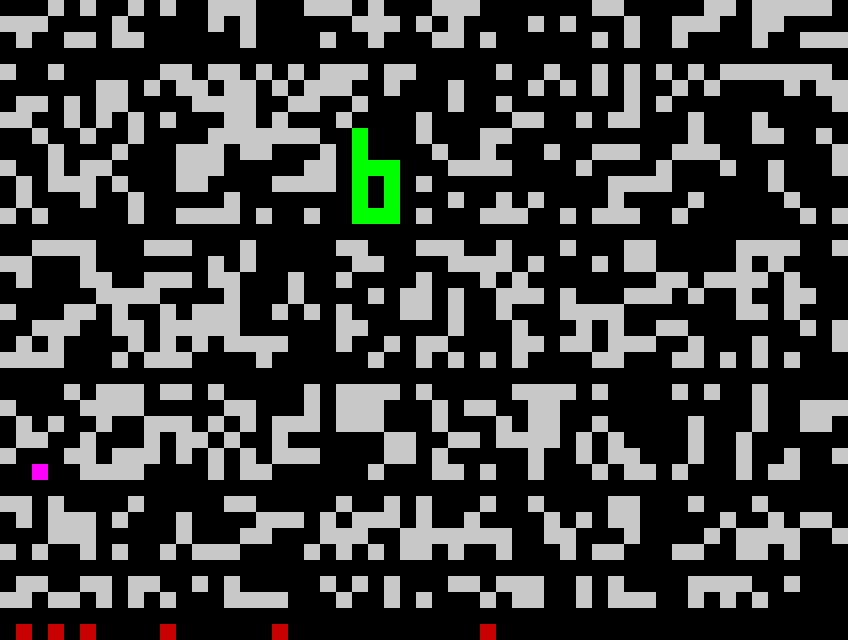
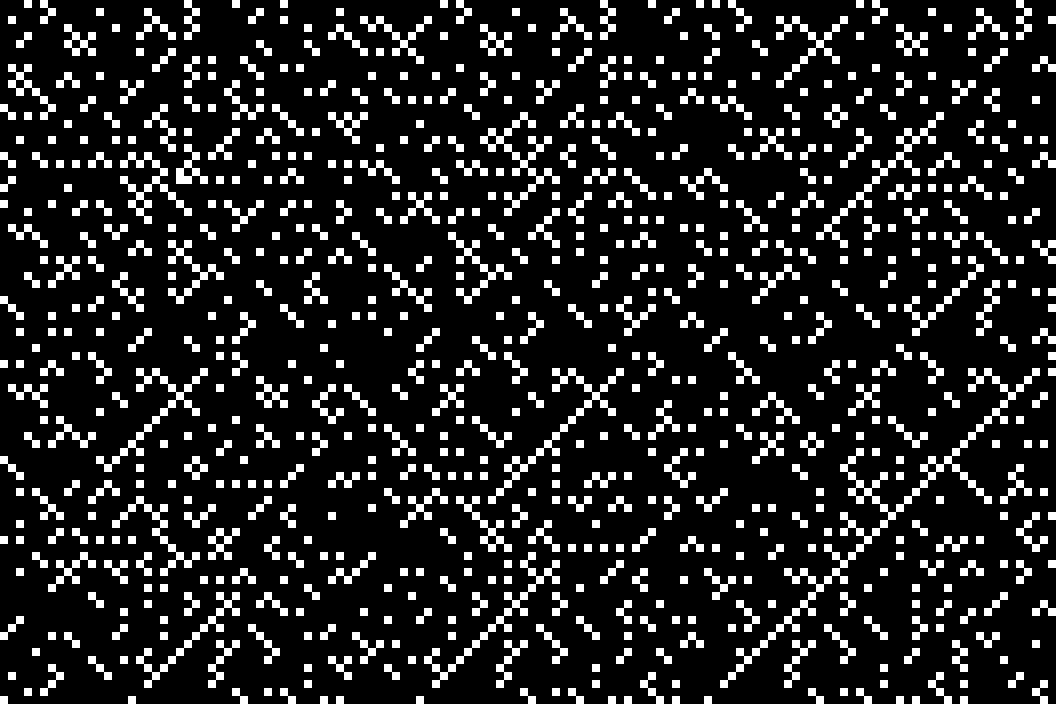
I call it a “period pane”, because it’s a kind of window into the behavior of prime reciprocals. But what is it, exactly? It’s a graph where the x-axis represents primes from 3 upward and the y-axis represents bases from 2 upward. The red squares along the bottom aren’t part of the graph proper, but indicate primes that first occur after a power of two: 5 after 4=2^2; 11 after 8=2^3; 17 after 16=2^4; 37 after 32=2^5; 67 after 64=2^6; and so on.

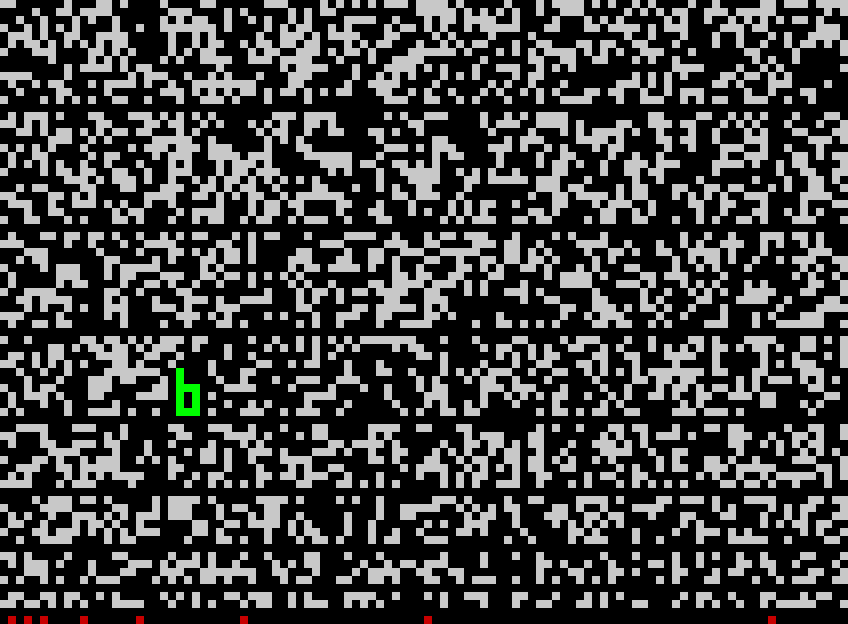
If a prime reciprocal has maximum period in a particular base, the graph has a solid colored square. Accordingly, the purple square at the bottom left represents 1/7 in base 10. And as though to signal the approval of the goddess of mathematics, the graph contains a lower-case b-for-base, which I’ve marked in green. Here are more period panes in higher resolution (open the images in a new window to see them more clearly):

Period pane for primes 3..587 and bases 2..77


Period pane for primes 3..1303 and bases 2..152


An interesting pattern has begun to appear: note the empty lanes, free of reciprocals with maximum period, that stretch horizontally across the period panes. These lanes are empty because there are no prime reciprocals with maximum period in square bases, that is, bases like 4, 9, 25 and 36, where 4 = 2*2, 9 = 3*3, 25 = 5*5 and 36 = 6*6. I don’t know why square bases don’t have max-period prime reciprocals, but it’s probably obvious to anyone with more mathematical nous than me.
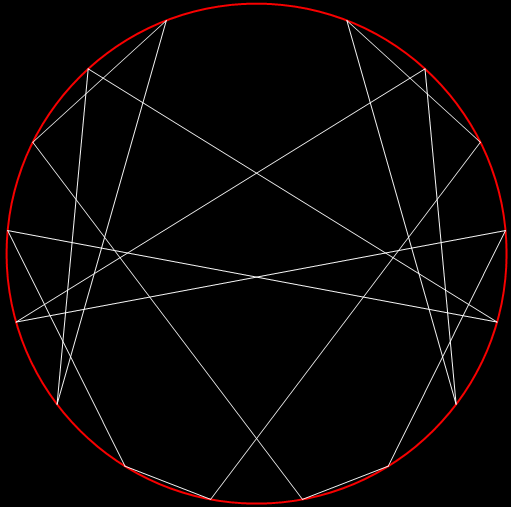
Period pane for primes 3..2939 and bases 2..302


Period pane for primes 3..6553 and bases 2..602


Like the Ulam spiral, other and more mysterious patterns appear in the period panes, hinting at the hidden regularities in the primes.

WhirlpUlam

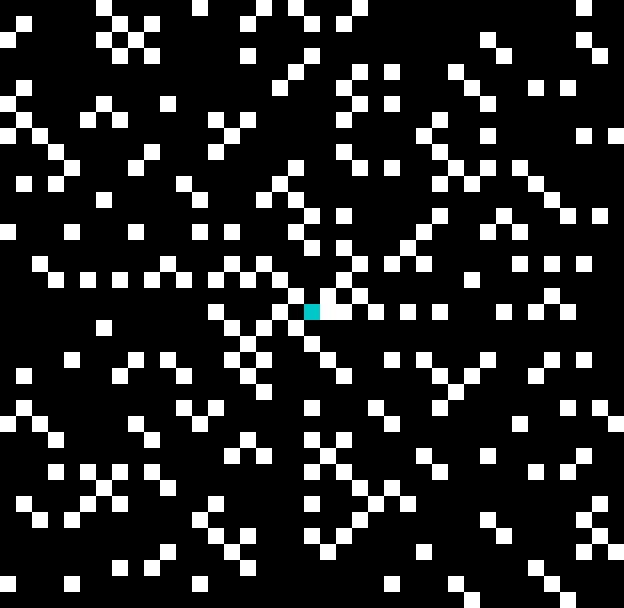
Stanislaw Ulam (pronounced OO-lam) was an American mathematician who was doodling one day in 1963 and created what is now called the Ulam spiral. It’s a spiral of integers on a square grid with the prime squares filled in and the composite squares left empty. At the beginning it looks like this (the blue square is the integer 1, with 2 to the east, 3 to the north-east, 4 to the north, 5 to the north-west, 6 to the west, and so on):

Ulam spiral


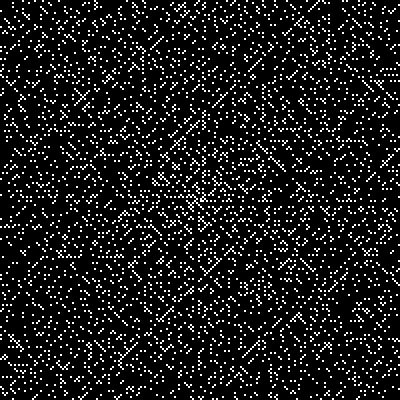
And here’s an Ulam spiral with more integers:

Ulam spiral at higher resolution


The primes aren’t scattered at random over the spiral: they often fall into lines that are related to what are called polynomial functions, such as n2 + n + 1. To understand polynomial functions better, let’s look at how the Ulam spiral is made. Here is a text version with the primes underlined:


Here’s an animated version:


Here’s the true spiral again with 1 marked as a blue square:

Ulam spiral centred on 1


What happens when you try other numbers at the centre? Here’s 2 at the centre as a purple square, because it’s prime:

Ulam spiral centred on 2


And 3 at the centre, also purple because it’s also prime:

Ulam spiral centred on 3


And 4 at the centre, blue again because 4 = 2^2:

Ulam spiral centred on 4


And 5 at the centre, prime and purple:

Ulam spiral centred on 5


Each time the central number changes, the spiral shifts fractionally. Here’s an animation of the central number shifting from 1 to 41. If you watch, you’ll see patterns remaining stable, then breaking up as the numbers shift towards the center and disappear (the central number is purple if prime, blue if composite):

Ulam whirlpool, or WhirlpUlam


I think the animation looks like a whirlpool or whirlpUlam (prounced whirlpool-am), as numbers spiral towards the centre and disappear. You can see the whirlpUlam more clearly here:

An animated Ulam Spiral pausing at n=11, 17, 41


WhirlpUlam again


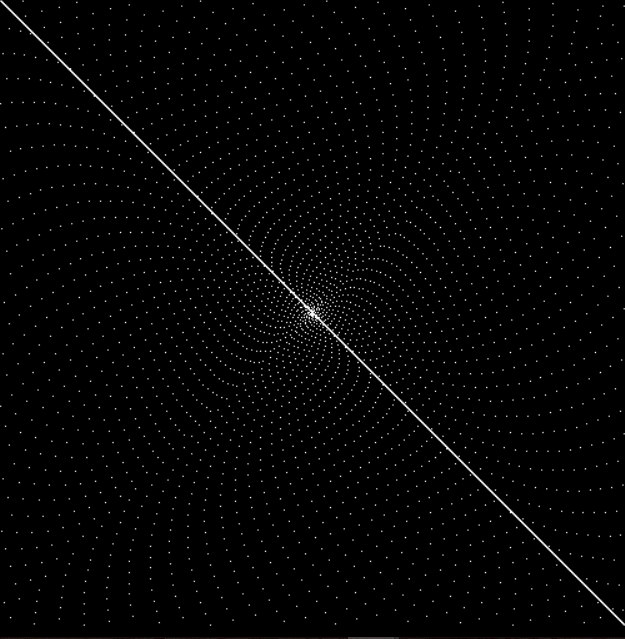
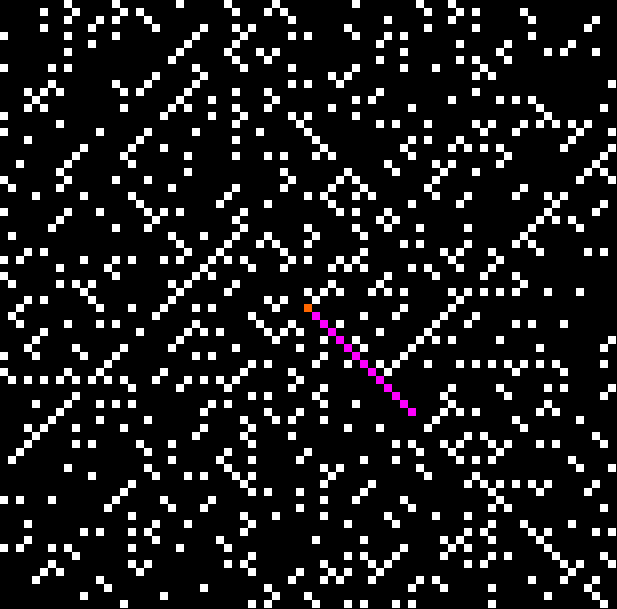
Note that something interesting happens when the central number is 41. The spiral is bisected by a long line of prime squares, like this:

Ulam spiral centred on 41


The line is actually a visual representation of something David Wells wrote about in The Penguin Dictionary of Curious and Interesting Numbers (1986):

Euler discovered the excellent and famous formula x2 + x + 41, which gives prime values for x = 0 to 39.

Here are the primes generated by the formula:

41, 43, 47, 53, 61, 71, 83, 97, 113, 131, 151, 173, 197, 223, 251, 281, 313, 347, 383, 421, 461, 503, 547, 593, 641, 691, 743, 797, 853, 911, 971, 1033, 1097, 1163, 1231, 1301, 1373, 1447, 1523, 1601

You’ll see other lines appear and disappear as the whirlpUlam whirls:

Ulam spiral centred on 17


Primes in line: 17, 19, 23, 29, 37, 47, 59, 73, 89, 107, 127, 149, 173, 199, 227, 257 (n=0..15)


Ulam spiral centred on 59


Primes in line: 59, 67, 83, 107, 139, 179, 227, 283, 347, 419, 499, 587, 683, 787 (n=0..13)


Ulam spiral centred on 163


Primes in line: 163, 167, 179, 199, 227, 263, 307, 359, 419, 487, 563, 647, 739, 839, 947, 1063, 1187, 1319, 1459, 1607 (n=0..19)


Ulam spiral centred on 233


Primes in line: 233, 241, 257, 281, 313, 353, 401, 457, 521, 593, 673, 761, 857 ((n=0..12)


Ulam spiral centred on 653


Primes in line: 653, 661, 677, 701, 733, 773, 821, 877, 941, 1013, 1093, 1181, 1277, 1381, 1493, 1613, 1741, 1877 (n=0..17)


Ulam spiral centred on 409,333


Primes in line: 409,333, 409337, 409349, 409369, 409397, 409433, 409477, 409529, 409589, 409657, 409733, 409817, 409909, 410009, 410117, 410233 (n=0..15)


Some bisect the centre, some don’t, because you could say that the Ulam spiral has six diagonals, two that bisect the centre (top-left-to-bottom-right and bottom-left-to-top-right) and four that don’t. You could also call them spokes:


If you look at the integers in the spokes, you can see that they’re generated by polynomial functions in which c stands for the central number:

North-west spoke: 1, 5, 17, 37, 65, 101, 145, 197, 257, 325, 401, 485, 577, 677, 785, 901, 1025, 1157, 1297, 1445, 1601, 1765, 1937, 2117, 2305, 2501, 2705, 2917... = c + (2n)^2


South-east spoke: 1, 9, 25, 49, 81, 121, 169, 225, 289, 361, 441, 529, 625, 729, 841, 961, 1089, 1225, 1369, 1521, 1681, 1849, 2025, 2209, 2401, 2601, 2809, 3025, 3249, 3481, 3721, 3969, 4225, 4489, 4761, 5041, 5329, 5625... = c+(2n+1)^2-1


NW-SE diagonal: 1, 5, 9, 17, 25, 37, 49, 65, 81, 101, 121, 145, 169, 197, 225, 257, 289, 325, 361, 401, 441, 485, 529, 577, 625, 677, 729, 785, 841, 901, 961, 1025, 1089, 1157, 1225, 1297, 1369, 1445, 1521, 1601, 1681 = c + n^2 + 1 - (n mod 2)


North-east spoke: 1, 3, 13, 31, 57, 91, 133, 183, 241, 307, 381, 463, 553, 651, 757, 871, 993, 1123, 1261, 1407, 1561, 1723, 1893, 2071... = c + (n+1)^2 - n - 1


South-west spoke: 1, 7, 21, 43, 73, 111, 157, 211, 273, 343, 421, 507, 601, 703, 813, 931, 1057, 1191, 1333, 1483, 1641, 1807, 1981, 2163... = c + (2n)^2 + 2n


SW-NE diagonal: 1, 3, 7, 13, 21, 31, 43, 57, 73, 91, 111, 133, 157, 183, 211, 241, 273, 307, 343, 381, 421, 463, 507, 553, 601, 651, 703, 757, 813, 871, 931, 993, 1057, 1123, 1191, 1261, 1333, 1407, 1483, 1561, 1641... = c + n^2 + n


Elsewhere other-engageable:

All posts interrogating issues around the Ulam spiral

Prime Time #2

“2n2 + 29 is prime for all values of n for 1 to 28.” — The Penguin Dictionary of Curious and Interesting Numbers, David Wells (1986).

• 31, 37, 47, 61, 79, 101, 127, 157, 191, 229, 271, 317, 367, 421, 479, 541, 607, 677, 751, 829, 911, 997, 1087, 1181, 1279, 1381, 1487, 1597.


Elsewhere other-posted:

Prime Time #1
Poulet’s Propellor — Musings on Math and Mathculinity
La Spirale è Mobile