
Fract-L Geometry

Suppose you set up an L, i.e. a vertical and horizontal line, representing the x,y coordinates between 0 and 1. Next, find the fractional pairs x = 1/2, 1/3, 2/3, 1/4, 2/4…, y = 1/2, 1/3, 2/3, 1/4, 2/4… and mark the point (x,y). That is, find the point, say, 1/5 of the way along the x-line, then the points 1/5, 2/5, 3/5 and 4/5 along the y-line, marking the points (1/5, 1/5), (1/5, 2/5), (1/5, 3/5), (1/5, 4/5). Then find (2/5, 1/5), (2/5, 2/5), (2/5, 3/5), (2/5, 4/5) and so on. Some interesting patterns appear in what I call a Frac-L (pronounced “frackle”) or Fract-L:
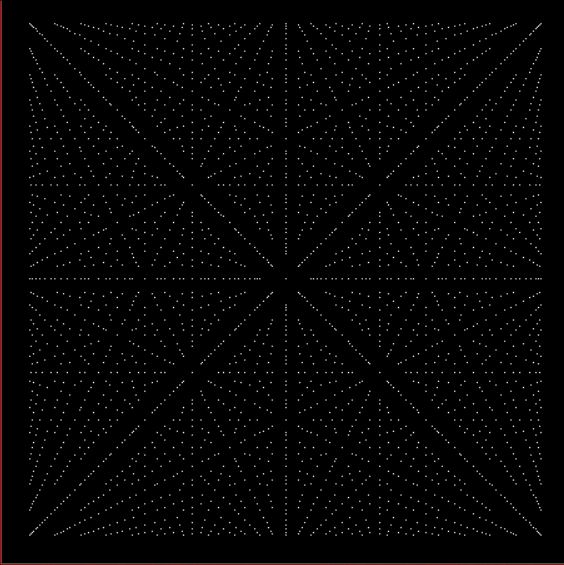
Frac-L for 1/2 to 21/22
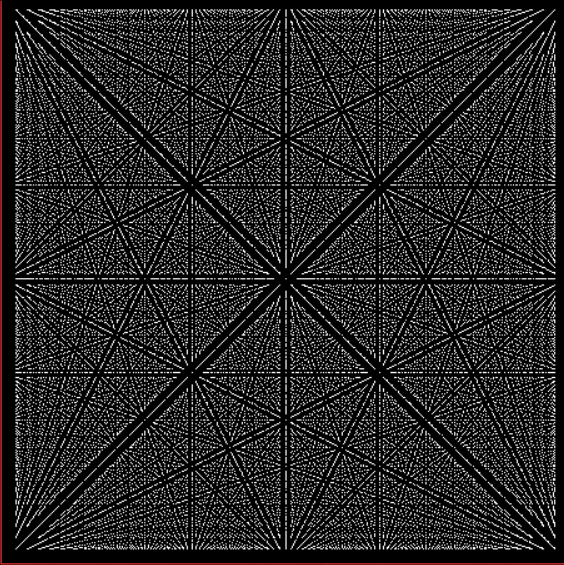

Frac-L for 1/2 to 48/49
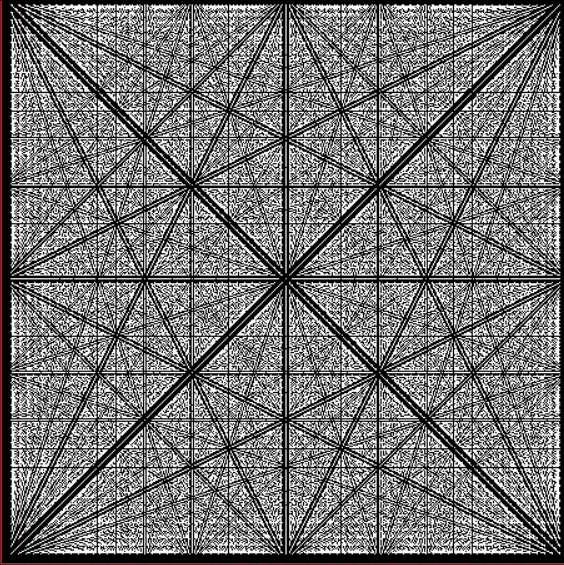

Frac-L for 1/2 to 75/76
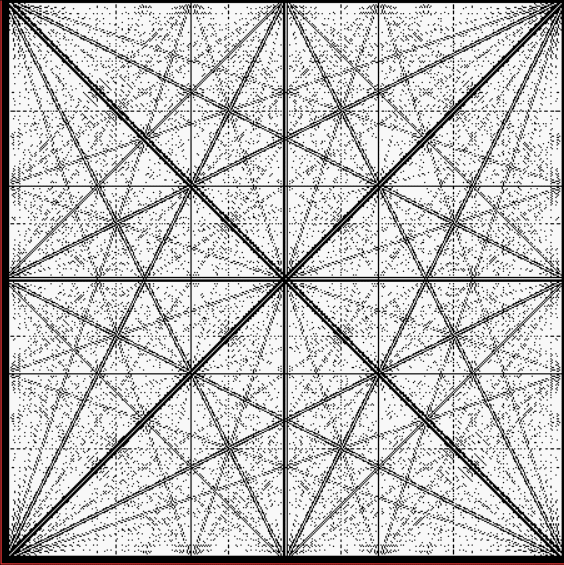

Frac-L for 1/2 to 102/103
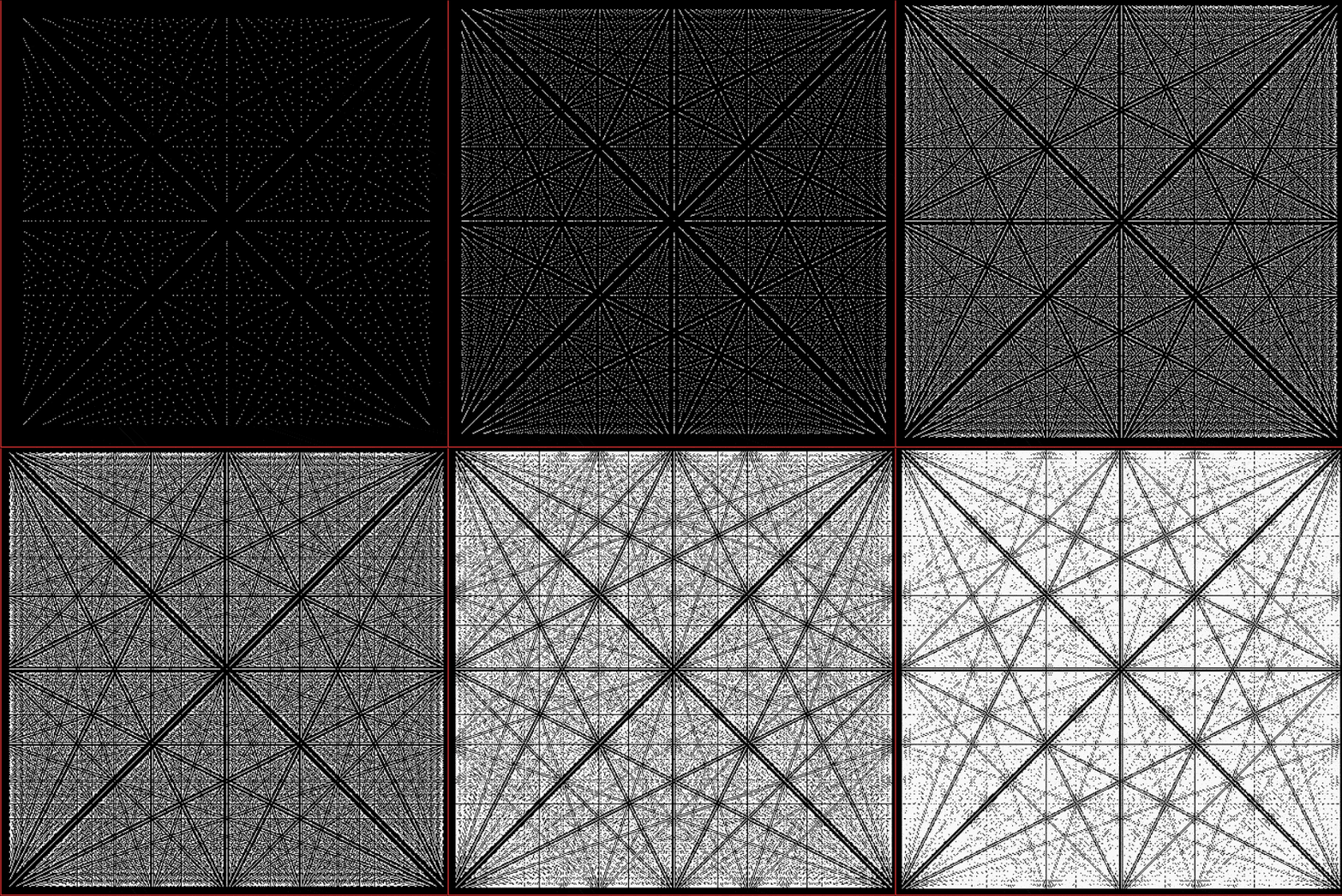

Frac-L for 1/2 to 102/103 (animated)


If the (x,y) point is first red, then becomes different colors as it is repeatedly found, you get these patterns:
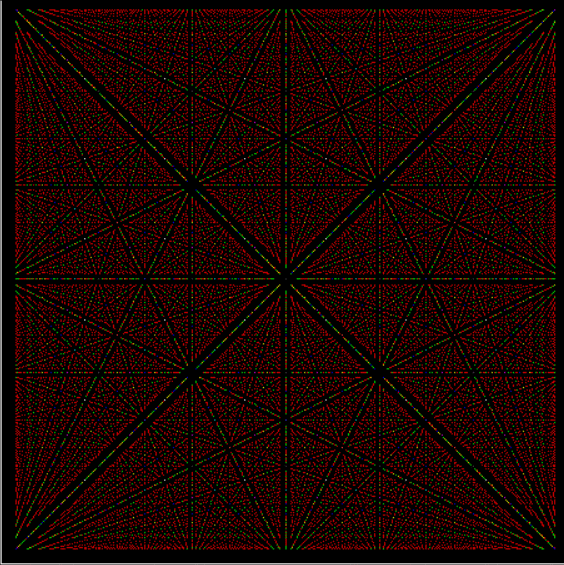
Frac-L for 1/2 to 48/49 (color)
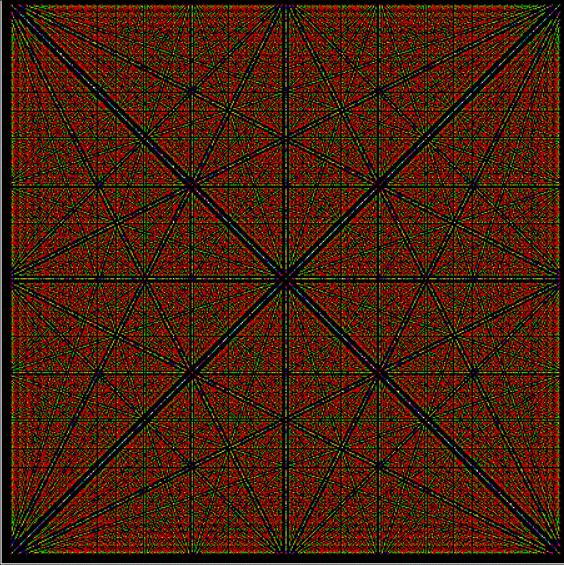

Frac-L for 1/2 to 75/79 (color)
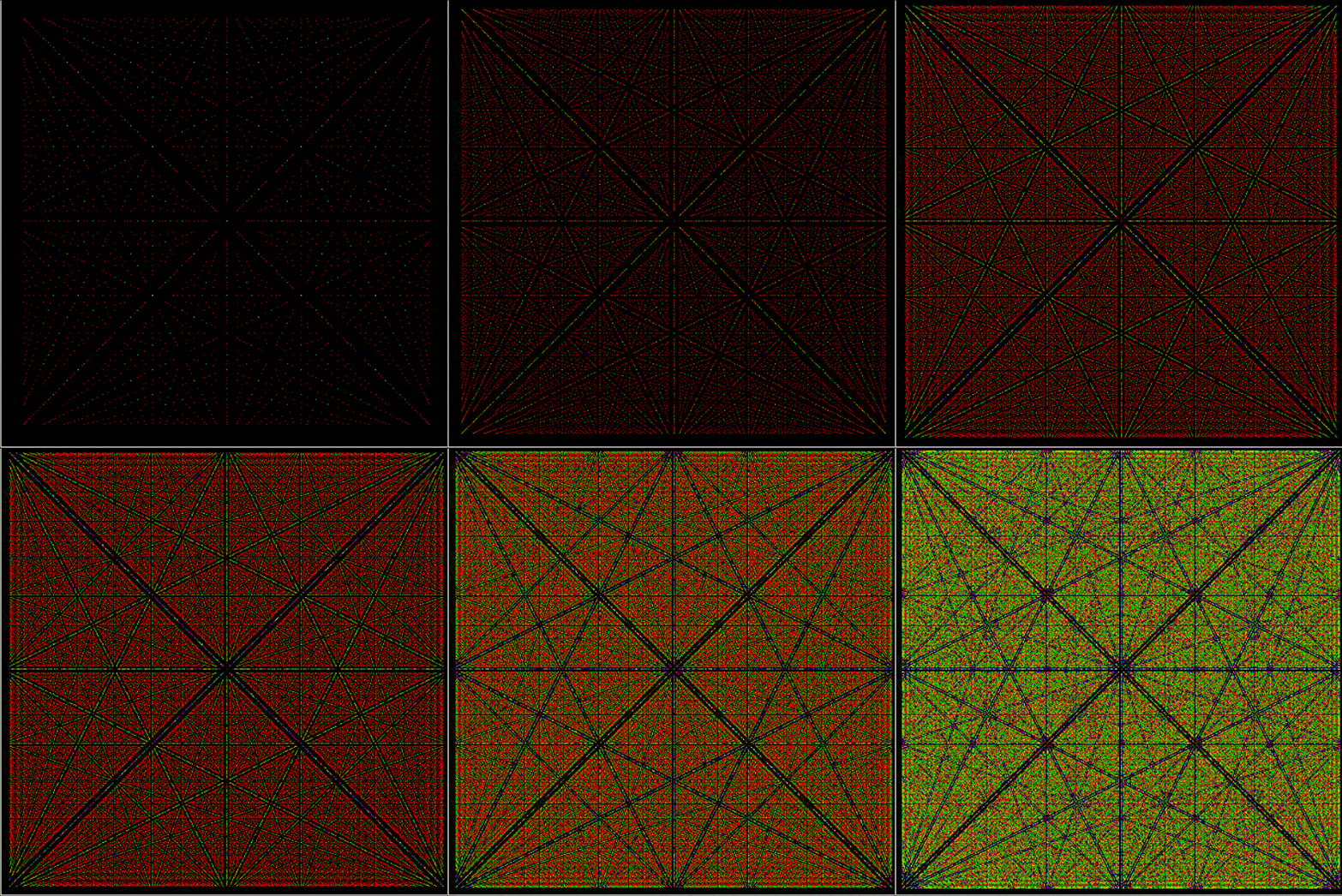

Frac-L for 1/2 to 102/103 (color) (animated)


Now try polygonal numbers. The triangular numbers are 1, 3, 6, 10, 15, 21, 28, 36, 45, 55, 66, 78…, so you’re finding the fractional pairs, say, (1/21, 1/21), (1/21, 3/21, (1/21, 6/21), (1/21, 10/21), (1/21, 15/21), then (3/21, 1/21), (3/21, 3/21, (3/21, 6/21), (3/21, 10/21), (3/21, 15/21), and so on:
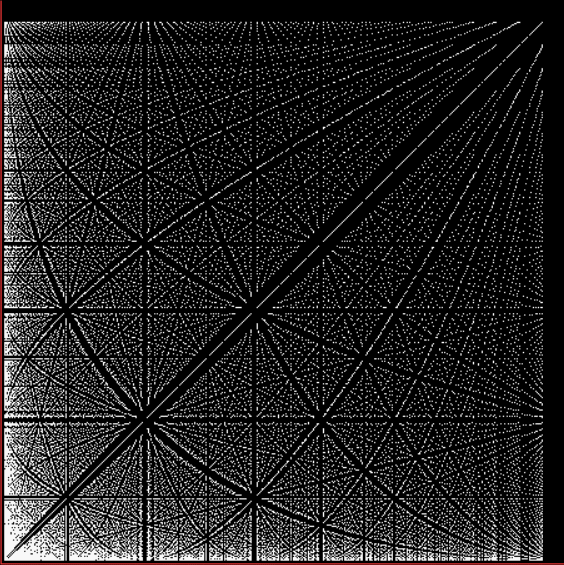
Frac-L for triangular fractions


The frac-L for square numbers (1, 4, 9, 16, 25, 36, 49, 64, 81, 100…) is almost identical:
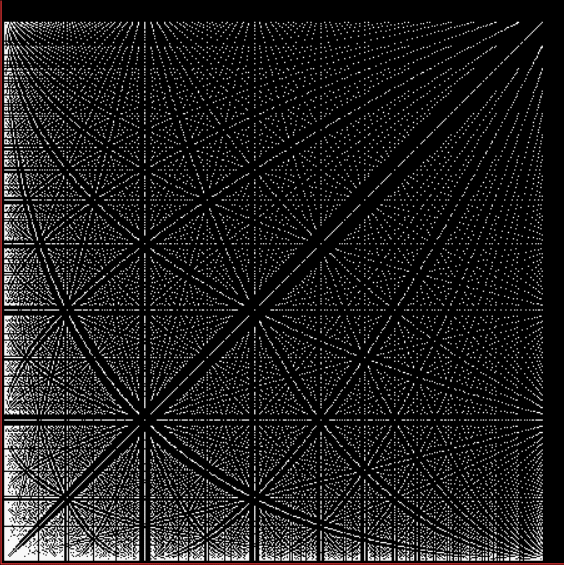
Frac-L for square fractions, e.g. (1/16, 1/16), (1/16, 4/16), (1/16, 9/16)…


So is the frac-L for pentagonal numbers (1, 5, 12, 22, 35, 51, 70, 92, 117, 145, 176, 210, 247, 287, 330…):
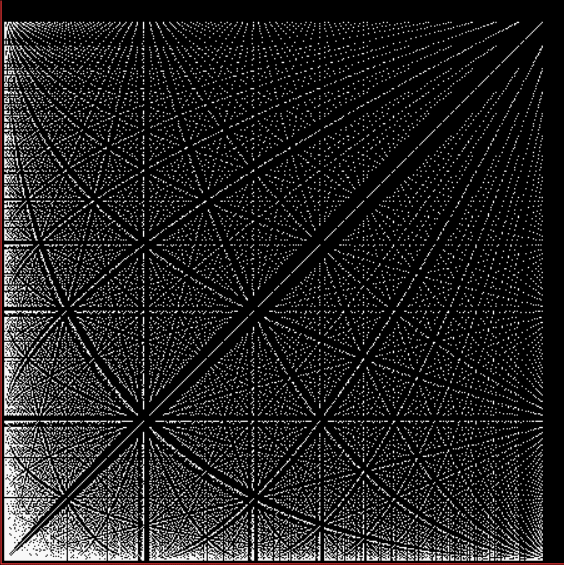
Frac-L for pentagonal fractions, e.g. (1/35, 5/35), (1/35, 12/35), (1/35,22/35)…


Here are frac-Ls for tetrahedral and square-pyramidal numbers:
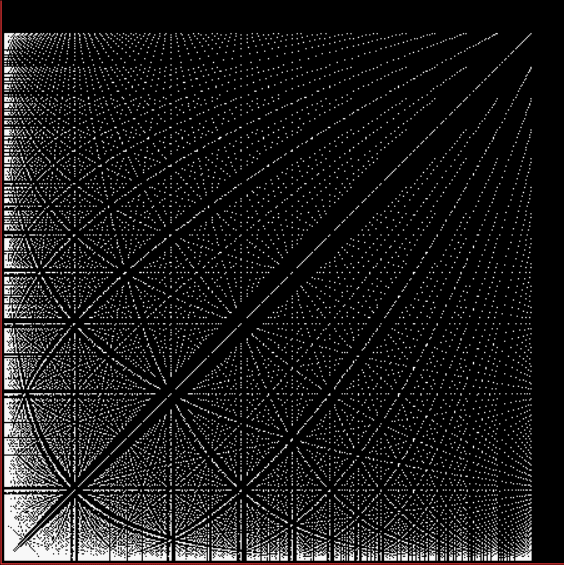
Frac-L for tetrahedral fractions
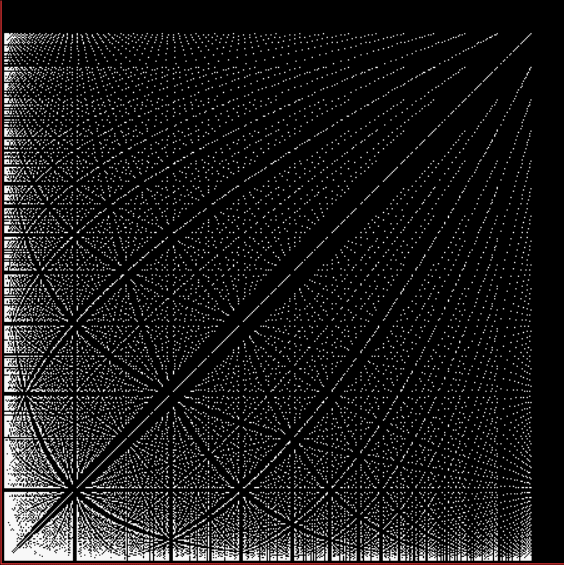

Frac-L for square pyramidal fractions


But what about prime numbers (skipping 2)? Here the fractional pairs are, say, (1/17, 1/17), (1/17, 3/17), (1/17, 5/17), (1/17, 7/17), (1/17, 11/17), (1/17, 13/17), then (3/17, 1/17), (3/17, 3/17), (3/17, 5/17), (3/17, 7/17), (3/17, 11/17), (3/17, 13/17), and so on:
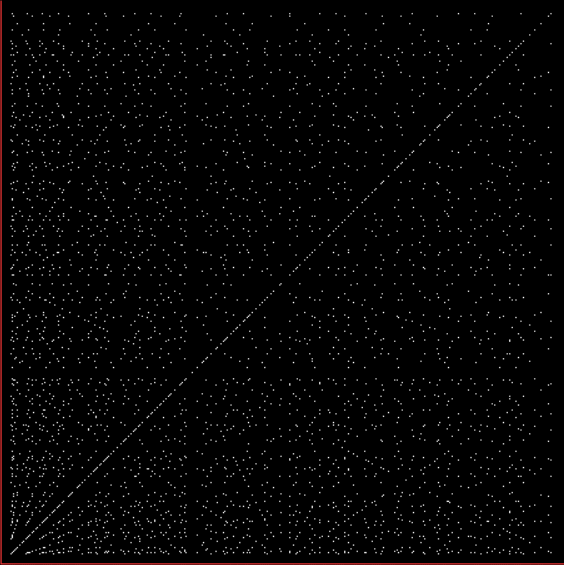
Frac-L for 1/3 to 73/79 (prime fractions)
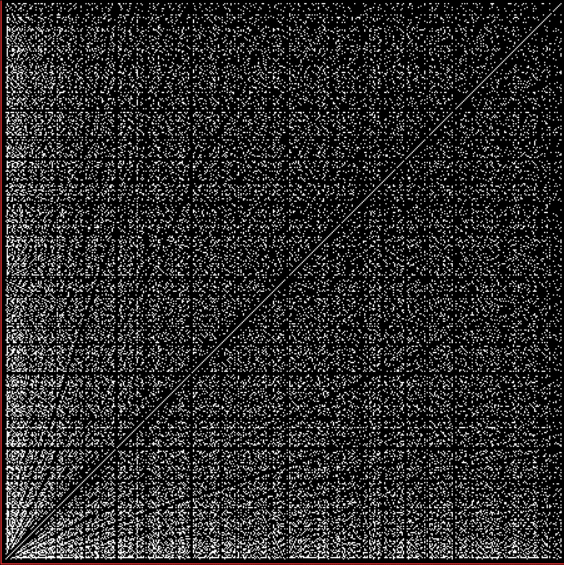

Frac-L for 1/3 to 223/227
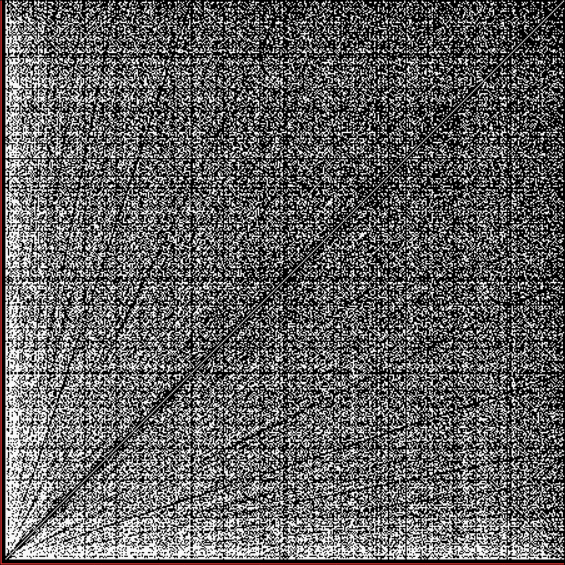

Frac-L for 1/3 to 307/331
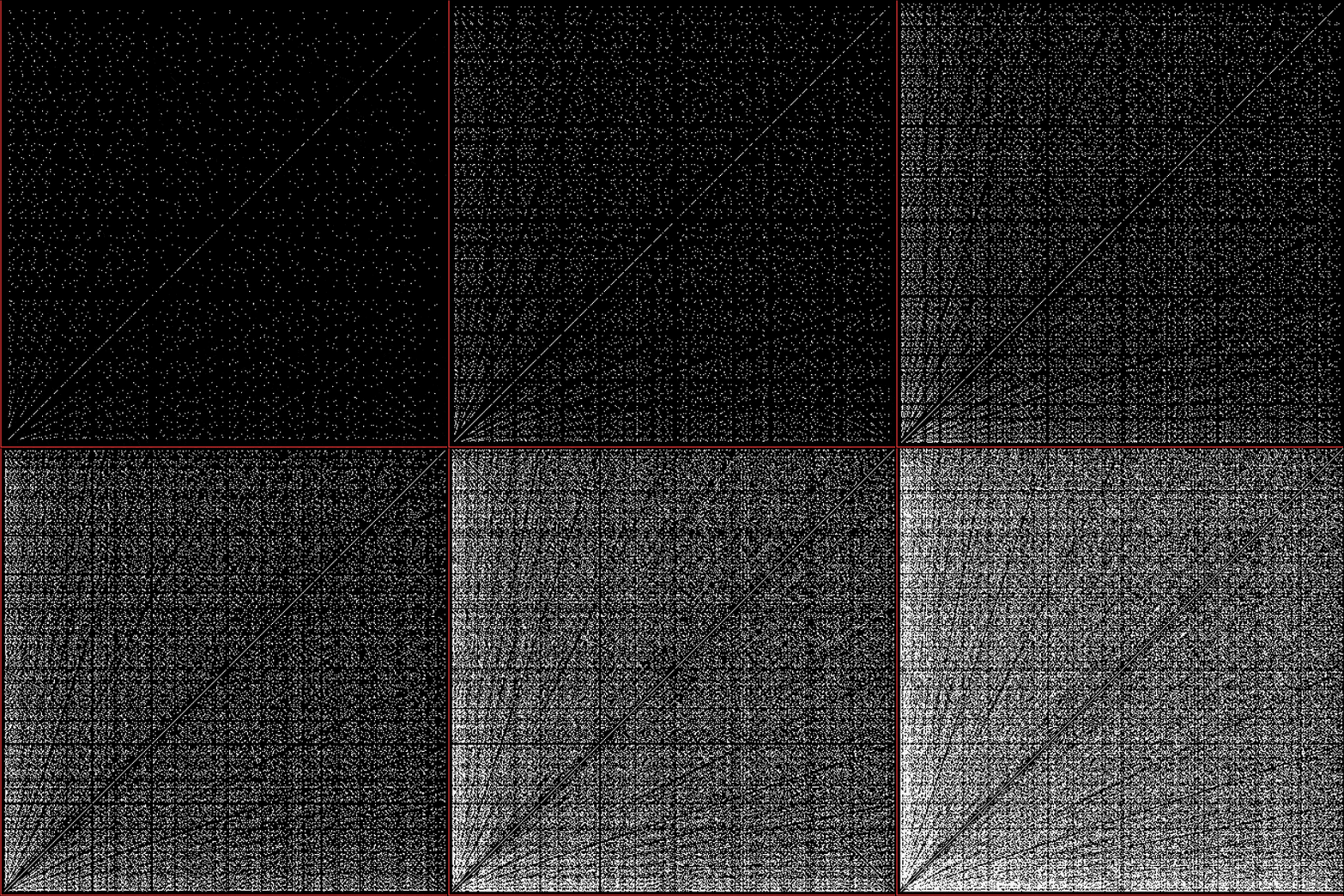

Frac-L for 1/3 to 307/331 (animated)
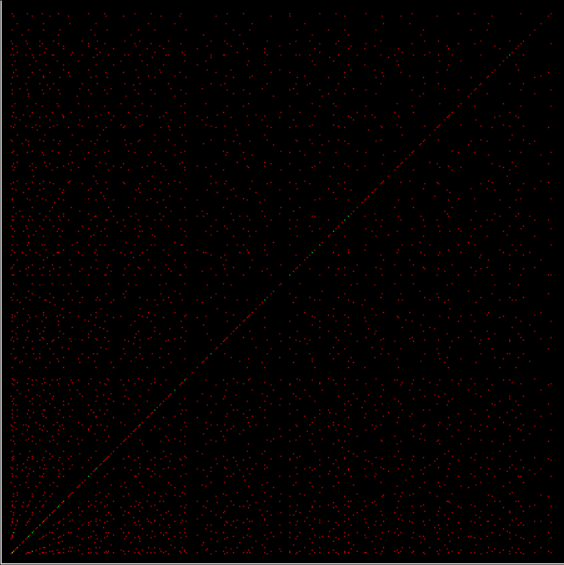

Frac-L for 1/3 to 73/79 (color) (prime fractions)
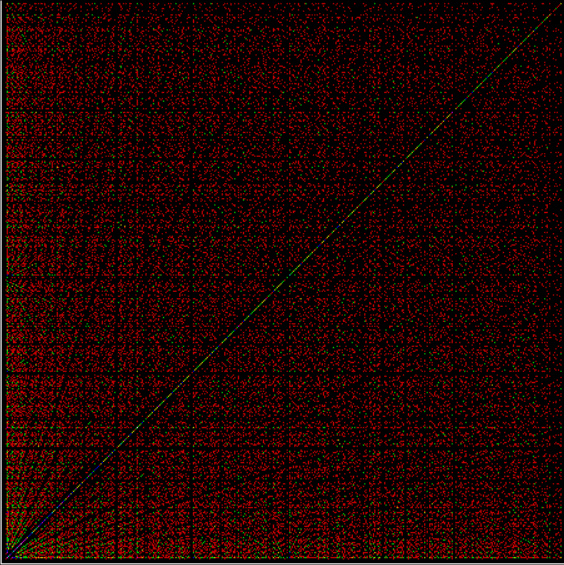

Frac-L for 1/3 to 223/227 (color)
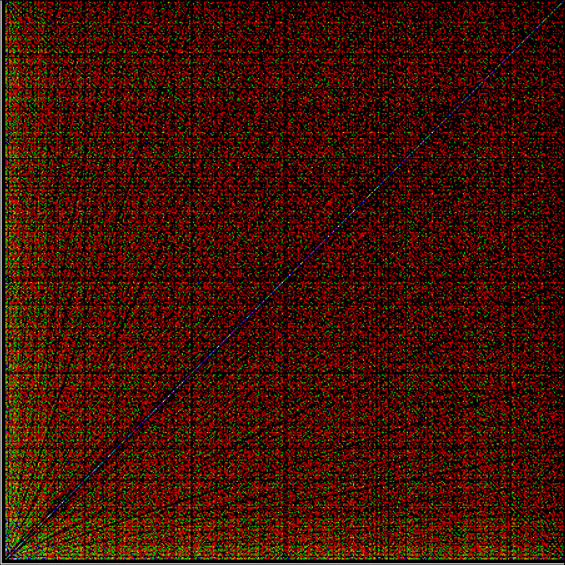

Frac-L for 1/3 to 307/331 (color)


Frac-L for 1/3 to 307/331 (color) (animated)


And finally (for now), a frac-L for Fibonnaci numbers, where the fractional pairs are, say, (1/13, /13), (1/13, 2/13), (1/13, 3/13), (1/13, 5/13), (1/13, 8/13), then (2/13, /13), (2/13, 2/13), (2/13, 3/13), (2/13, 5/13), (2/13, 8/13), and so on:
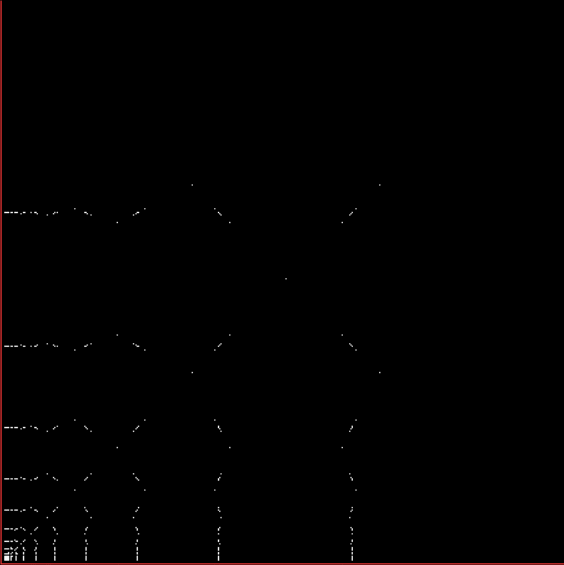
Frac-L for Fibonacci fractions to 14930352/2178309 = fibonacci(36)/fibonacci(37)

Fine as Nine

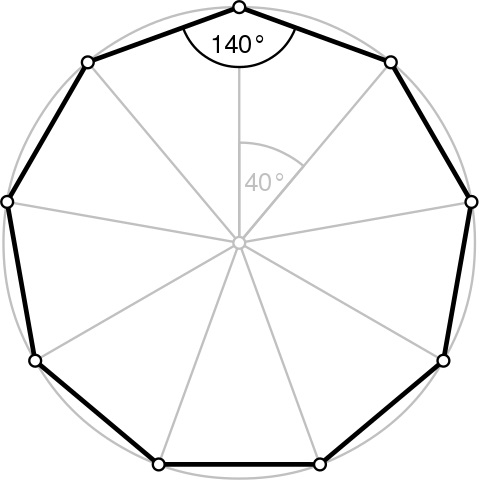
This is a regular nonagon (a polygon with nine sides):

A nonagon or enneagon (from Wikipedia)

And this is the endlessly repeating decimal of the reciprocal of 7:

1/7 = 0.142857142857142857142857…

What is the curious connection between 1/7 and nonagons? If I’d been asked that a week ago, I’d’ve had no answer. Then I found a curious connection when I was looking at the leading digits of polygonal numbers. A polygonal number is a number that can be represented in the form of a polygon. Triangular numbers look like this:


* = 1

*
** = 3

*
**
*** = 6

*
**
***
**** = 10

*
**
***
****
***** = 15

By looking at the shapes rather than the numbers, it’s easy to see that you generate the triangular numbers by simply summing the integers:


1 = 1
1+2=3
1+2+3=6
1+2+3+4=10
1+2+3+4+5=15

Now try the square numbers:


* = 1

**
** = 4

***
***
*** = 9

****
****
****
**** = 16

*****
*****
*****
*****
***** = 25


You generate the square numbers by summing the odd integers:


1 = 1
1+3 = 4
1+3+5 = 9
1+3+7 = 16
1+3+7+9 = 25

Next come the pentagonal numbers, the hexagonal numbers, the heptagonal numbers, and so on. I was looking at the leading digits of these numbers and trying to find patterns. For example, when do the leading digits of the k-th triangular number, tri(k), match the digits of k? This is when:


tri(1) = 1
tri(19) = 190
tri(199) = 19900
tri(1999) = 1999000
tri(19999) = 199990000
tri(199999) = 19999900000
[...]

That pattern is easy to explain. The formula for the k-th polygonal number is k * ((pn-2)*k + (4-pn)) / 2, where pn = 3 for the triangular numbers, 4 for the square numbers, 5 for the pentagonal numbers, and so on. Therefore the k-th triangular number is k * (k + 1) / 2. When k = 19, the formula is 19 * (19 + 1) / 2 = 19 * 20 / 2 = 19 * 10 = 190. And so on. Now try the pol(k) = leaddig(pol(k)) for higher polygonal numbers. The patterns are easy to predict until you get to the nonagonal numbers:


square(10) = 100
square(100) = 10000
square(1000) = 1000000
square(10000) = 100000000
square(100000) = 10000000000
[...]


pentagonal(7) = 70
pentagonal(67) = 6700
pentagonal(667) = 667000
pentagonal(6667) = 66670000
pentagonal(66667) = 6666700000
[...]


hexagonal(6) = 66
hexagonal(51) = 5151
hexagonal(501) = 501501
hexagonal(5001) = 50015001
hexagonal(50001) = 5000150001
[...]


heptagonal(5) = 55
heptagonal(41) = 4141
heptagonal(401) = 401401
heptagonal(4001) = 40014001
heptagonal(40001) = 4000140001
[...]


octagonal(4) = 40
octagonal(34) = 3400
octagonal(334) = 334000
octagonal(3334) = 33340000
octagonal(33334) = 3333400000
[...]


nonagonal(4) = 46
nonagonal(30) = 3075
nonagonal(287) = 287574
nonagonal(2858) = 28581429
nonagonal(28573) = 2857385719
nonagonal(285715) = 285715000000
nonagonal(2857144) = 28571444285716
nonagonal(28571430) = 2857143071428575
nonagonal(285714287) = 285714287571428574
nonagonal(2857142858) = 28571428581428571429
nonagonal(28571428573) = 2857142857385714285719
nonagonal(285714285715) = 285714285715000000000000
nonagonal(2857142857144) = 28571428571444285714285716
nonagonal(28571428571430) = 2857142857143071428571428575
nonagonal(285714285714287) = 285714285714287571428571428574
nonagonal(2857142857142858) = 28571428571428581428571428571429
nonagonal(28571428571428573) = 2857142857142857385714285714285719
nonagonal(285714285714285715) = 285714285714285715000000000000000000
nonagonal(2857142857142857144) = 28571428571428571444285714285714285716
nonagonal(28571428571428571430) = 2857142857142857143071428571428571428575
[...]


What’s going on with the leading digits of the nonagonals? Well, they’re generating a different reciprocal. Or rather, they’re generating the multiple of a different reciprocal:


1/7 * 2 = 2/7 = 0.285714285714285714285714285714...

And why does 1/7 have this curious connection with the nonagonal numbers? Because the nonagonal formula is k * (7k-5) / 2 = k * ((9-2) * k + (4-pn)) / 2. Now look at the pentadecagonal numbers, where pn = 15:


pentadecagonal(1538461538461538461540) = 15384615384615384615406923076923076923076930

2/13 = 0.153846153846153846153846153846...

pentadecagonal formula = k * (13k - 11) / 2 = k * ((15-2)*k + (4-15)) / 2

Penultimately, let’s look at the icosikaihenagonal numbers, where pn = 21:


icosikaihenagonal(2) = 21
icosikaihenagonal(12) = 1266
icosikaihenagonal(107) = 107856
icosikaihenagonal(1054) = 10544743
icosikaihenagonal(10528) = 1052878960
icosikaihenagonal(105265) = 105265947385
icosikaihenagonal(1052633) = 10526335263165
icosikaihenagonal(10526317) = 1052631731578951
icosikaihenagonal(105263159) = 105263159210526318
icosikaihenagonal(1052631580) = 10526315801578947370
icosikaihenagonal(10526315791) = 1052631579163157894746
icosikaihenagonal(105263157896) = 105263157896368421052636
icosikaihenagonal(1052631578949) = 10526315789497368421052643
icosikaihenagonal(10526315789475) = 1052631578947542105263157900
icosikaihenagonal(105263157894738) = 105263157894738263157894736845
icosikaihenagonal(1052631578947370) = 10526315789473706842105263157905
icosikaihenagonal(10526315789473686) = 1052631578947368689473684210526331
icosikaihenagonal(105263157894736843) = 105263157894736843000000000000000000
icosikaihenagonal(1052631578947368422) = 10526315789473684220526315789473684211
icosikaihenagonal(10526315789473684212) = 1052631578947368421257894736842105263166

2/19 = 0.1052631578947368421052631579

icosikaihenagonal formula = k * (19k - 17) / 2 = k * ((21-2)*k + (4-21)) / 2

And ultimately, let’s look at this other pattern in the leading digits of the triangular numbers, which I can’t yet explain at all:


tri(904) = 409060
tri(6191) = 19167336
tri(98984) = 4898965620
tri(996694) = 496699963165
tri(9989894) = 49898996060565
tri(99966994) = 4996699994681515
tri(999898994) = 499898999601055515
tri(9999669994) = 49996699999451815015
tri(99998989994) = 4999898999960055555015
tri(999996699994) = 499996699999945018150015
tri(9999989899994) = 49999898999996005055550015
tri(99999966999994) = 4999996699999994500181500015
tri(999999898999994) = 499999898999999600500555500015
[...]

The Trivial Troot

Here is the square root of 2:

√2 = 1·414213562373095048801688724209698078569671875376948073176679738...

Here is the square root of 20:

√20 = 4·472135954999579392818347337462552470881236719223051448541794491...

And here are the first few triangular numbers:

1, 3, 6, 10, 15, 21, 28, 36, 45, 55, 66, 78, 91, 105, 120, 136, 153, 171, 190, 210, 231, 253, 276, 300, 325, 351, 378, 406, 435, 465, 496, 528, 561, 595, 630, 666, 703, 741, 780, 820, 861, 903, 946, 990, 1035...

What links √2 and √20 strongly with the triangular numbers? At first glance, nothing does. The square roots of 2 and 20 are very different from the triangular numbers. Square roots like those are irrational, that is, they can’t be represented as a fraction or ratio of integers. This means that their digits go on for ever, never falling into a regular pattern. So the digits are hard to calculate. The sequence of triangular numbers also goes on for ever, but it’s very easy to calculate. The triangular numbers get their name from the way they can be arranged into simple triangles, like this:

* = 1


*
** = 3


*
**
*** = 6


*
**
***
**** = 10


*
**
***
****
***** = 15

The 1st triangular number is 1, the 2nd is 3 = 1+2, the 3rd is 6 = 1+2+3, the 4th is 10 = 1+2+3+4, and so on. The n-th triangular number = 1+2+3…+n, so the formula for the n-th triangular number is n*(n+1)/2 = (n^2+n)/2. So what’s the 123456789th triangular number? Easy: it’s 7620789436823655 (see A077694 at the OEIS). But what’s the 123456789th digit of √2 or √20? That’s not easy to answer. But here’s something else that is easy to answer. If tri(n) is the n-th triangular number, what are the values of n when tri(n) is one digit longer than tri(n-1)? That is, what are the values of n when tri(n) increases in length by one digit? If you look at the beginning of the sequence, you can see the first three answers:

1, 3, 6, 10, 15, 21, 28, 36, 45, 55, 66, 78, 91, 105...

1 is one digit longer than nothing, as it were, and 1 = tri(1); 10 is one digit longer than 6 and 10 = tri(4); 105 is one digit longer than 91 and 105 = tri(14). Here are some more answers, giving triangular numbers on the left, as they increase in length by one digit, and the n of tri(n) on the right:

1 ← 1
10 ← 4
105 ← 14
1035 ← 45
10011 ← 141
100128 ← 447
1000405 ← 1414
10001628 ← 4472
100005153 ← 14142
1000006281 ← 44721
10000020331 ← 141421
100000404505 ← 447214
1000001326005 ← 1414214
10000002437316 ← 4472136
100000012392316 ← 14142136
1000000042485480 ← 44721360
10000000037150046 ← 141421356
100000000000018810 ← 447213595
1000000000179470703 ← 1414213562
10000000002237948990 ← 4472135955
100000000010876002500 ← 14142135624
1000000000022548781025 ← 44721359550
10000000000026940078203 ← 141421356237
100000000000242416922750 ← 447213595500
1000000000000572687476751 ← 1414213562373
10000000000004117080477500 ← 4472135955000
100000000000007771272992046 ← 14142135623731
1000000000000031576491575006 ← 44721359549996
10000000000000140731196136705 ← 141421356237310
100000000000000250760786750861 ← 447213595499958
1000000000000000638090771126060 ← 1414213562373095
10000000000000000479330922588410 ← 4472135954999579
100000000000000000169466805816725 ← 14142135623730950
1000000000000000025572412483843115 ← 44721359549995794
10000000000000000087657358700327265 ← 141421356237309505
100000000000000000097566473134542830 ← 447213595499957939
1000000000000000000987561276980703725 ← 1414213562373095049
10000000000000000003048443380954913921 ← 4472135954999579393
100000000000000000006832246143819194316 ← 14142135623730950488
1000000000000000000014155501020518731556 ← 44721359549995793928

Can you spot the patterns? When tri(n) has an odd number of digits, n approximates the digits of √2; when tri(n) has an even number of digits, n approximates the digits of √20. And what can you call the approximations? Well, in a way they’re triangular roots so I’m calling them troots. Here are the troots for tri(n) with an odd number of digits:

1 → 1
14 → 105
141 → 10011
1414 → 1000405
14142 → 100005153
141421 → 10000020331
1414214 → 1000001326005
14142136 → 100000012392316
141421356 → 10000000037150046
1414213562 → 1000000000179470703
14142135624 → 100000000010876002500
141421356237 → 10000000000026940078203
1414213562373 → 1000000000000572687476751
14142135623731 → 100000000000007771272992046
141421356237310 → 10000000000000140731196136705
1414213562373095 → 1000000000000000638090771126060
14142135623730950 → 100000000000000000169466805816725
141421356237309505 → 10000000000000000087657358700327265
1414213562373095049 → 1000000000000000000987561276980703725
14142135623730950488 → 100000000000000000006832246143819194316
14142135623730950488... = √2 (without the decimal point)

When I first found these patterns, I thought I might have discovered something mathematically profound. I hadn’t. Troots are trivial. I think troots are beautiful too, but a little thought soon showed me how easily and obviously they arise. Remember that the formula for tri(n), the n-th triangular number, is tri(n) = (n^2+n)/2. As you can see above, when tri(n) is increasing in length by one digit, it rises above the next power of 10, which always begins with 1 followed by only 0s. Therefore n^2+n will begin with the digit 2 followed by some 0s, which then becomes 1 followed by some 0s as (n^2+n) is divided by 2. So n for tri(n) increasing-by-one-digit will be the first integer, n, where n^2+n yields a number with 2 as the leading digit followed by more and more 0s.

And that’s why n approximates the digits of √2·0000… and √20·0000…, for tri(n) with an odd and even number of digits, respectively. Similar trootful patterns exist in other bases and for other polygonal numbers, like the square numbers, the pentagonal numbers and so on. The troots are beautiful to see but trivial to explain. All the same, there is a sense in which you can say the mindless sequence of triangular numbers is “calculating” the digits of √2 and √20. It even rounds up the final digits when necessary:

1414214 → 1000001326005
14142136 → 100000012392316
141421356 → 10000000037150046
141421356... = √2
[...]
14142135624 → 100000000010876002500
141421356237 → 10000000000026940078203
141421356237... = √2
[...]
14142135623731 → 100000000000007771272992046
141421356237310 → 10000000000000140731196136705
1414213562373095 → 1000000000000000638090771126060
1414213562373095... = √2
[...]
1414213562373095049 → 1000000000000000000987561276980703725
14142135623730950488 → 100000000000000000006832246143819194316
14142135623730950488... = √2