Think Frink

Inky Bloaters (1987) is the name of an album by psycho-songstress Danielle Dax. Frinky growthers are those who are interested in frincremental growth. That’s growth by fractions, as in the equation x = x + 1/x. If the initial x = 1, its frincremental growth looks like this:

1
1 + 1/1 = 1 + 1 = 2
2 + 1/2 = 2_1/2
2_1/2 + 1/2_1/2 = 2_9/10
2_9/10 + 1/2_9/10 = 3_71/290
3_71/290 + 1/3_71/290 = 3_150911/272890
3_150911/272890 → 3_220789390391/264588959090 → 4_25570190327910692085061/268440386798659418988490 → 4_100170363026578204006507990129853967021051645381/295105036840595214385430531020664149472669868290

As you can see, the numerators and denominators of the fractional part of x get very large very quickly. So you can’t track the frincremental growth of x with perfect accuracy. Even the most compendious computer will run out of space. But representing x as a decimal is usually enough for us frinky growthers:

1 + 1 = 2
2 + 1/2 = 2 + 0.5 = 2.5
2.5 + 1/2.5 = 2.9
3.244827586206896551724137931…
3.553010370478947561288431236…
3.834461842815967366750790750…
4.095254632258778985771918456…
4.339439692724345181049239663…
4.569884190357676650018985962…
4.788708116379690742064597208…
4.997532704493448986664559639…
5.197631445038131469095668466…
5.390026771750770995914851381…
5.575554607204394029915651664…
5.754908962142979073283550015…
5.928673657045750549124213874…
6.097345447373015508408978797…
6.261351244425377152997703626…
6.421061179383957004641284553…
6.576798676981813718180627345…

The larger x gets, the slower it grows. But it never stops growing and will pass any finite integer in finite time. I was interested in the fractional part of x += 1/x (a shorthand for x = x + 1/x). Plainly, it’s almost unique for every integer seed (the fractional part is identical, just displaced by one step, for initial x = 1 = 2). I graphed the fractional part of x += 1/x for 1, 2, 3, 4, 5… and discovered some interesting patterns:

frac(x) of x += 1/x for x = 1, 2, 3, 4, 5…


Later frac(x) of x += 1/x



In time, the rounded patterns disappear for lower initial x. But you also get symmetrical patterns for x += sqrt(x), that is, x = x + square_root(x). And they last longer:
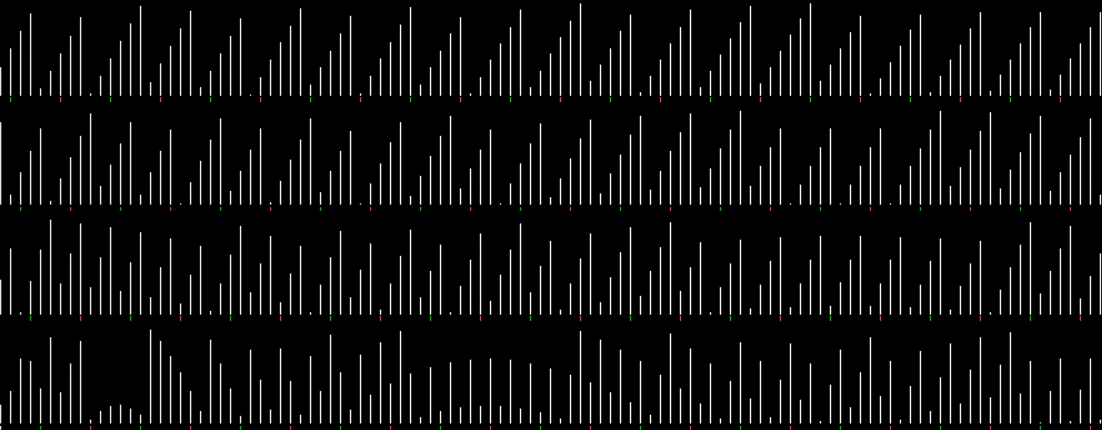
frac(x) of x += sqrt(x) for 1, 2, 3, 4, 5… #1


frac(x) of x += sqrt(x) for 1, 2, 3, 4, 5… #2


frac(x) of x += sqrt(x) for 1, 2, 3, 4, 5… #3


frac(x) of x += sqrt(x) for 1, 2, 3, 4, 5… #4


frac(x) of x += sqrt(x) for 1, 2, 3, 4, 5… #5


Here’s an animation of the first fifty steps of x += sqrt(x):
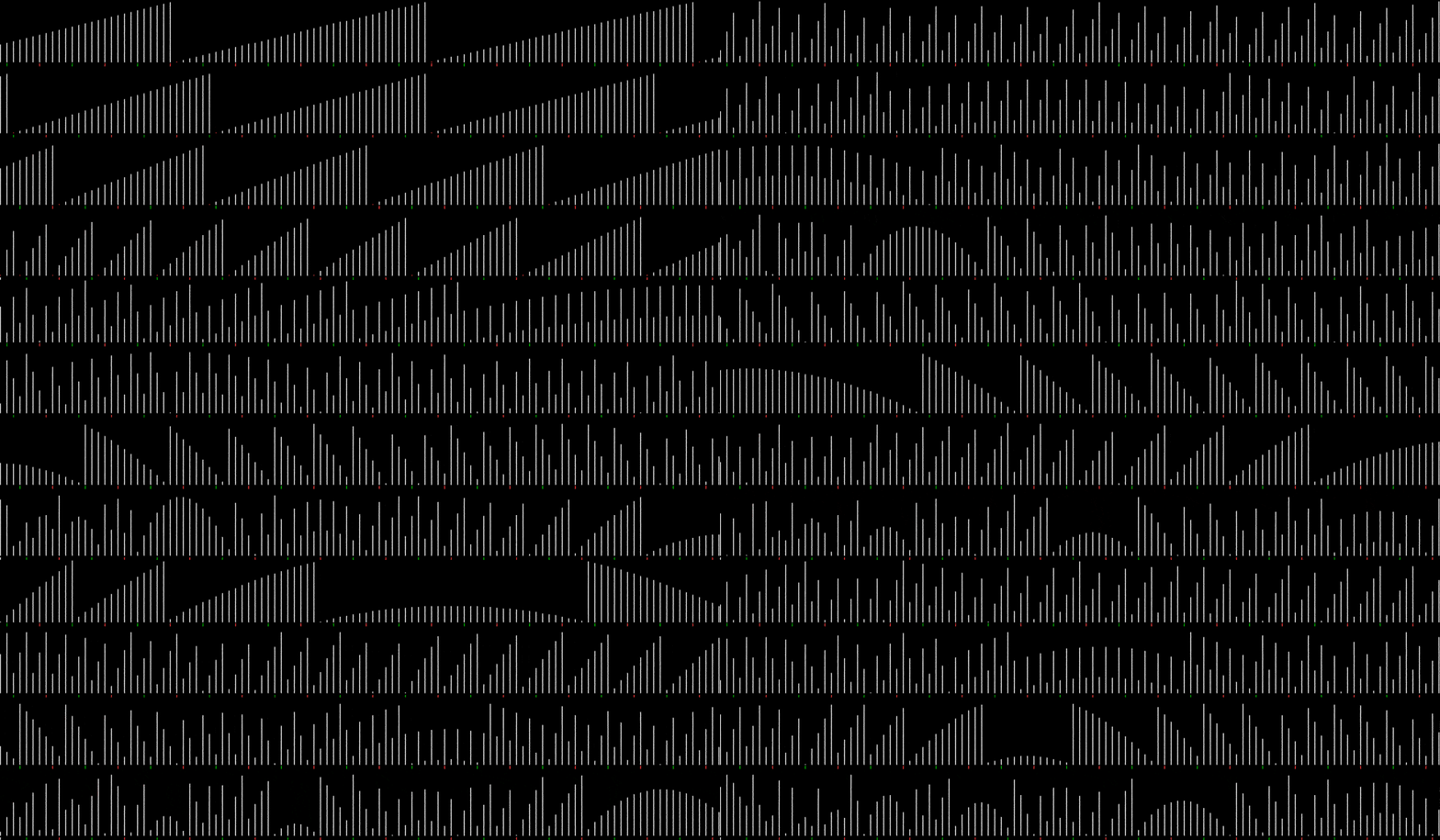
animated frac(x) of x += sqrt(x) for 1, 2, 3, 4, 5… (animated at EZgif) (click for larger image)


And what about x += ln(x), or x = x + natural_logarithm(x)? The patterns are both more dynamic and longer-lasting for lower initial x:

frac(x) of x += ln(x) for 1, 2, 3, 4, 5… #1


frac(x) of x += ln(x) for 1, 2, 3, 4, 5… #2


frac(x) of x += ln(x) for 1, 2, 3, 4, 5… #3


frac(x) of x += ln(x) for 1, 2, 3, 4, 5… #4


And two animations of x += ln(x), one slower, one faster:

animated frac(x) of x += sqrt(x) for 1, 2, 3, 4, 5… (EZgif) (click for larger)


faster animated frac(x) of x += sqrt(x) for 1, 2, 3, 4, 5… (click for larger)

Faux-Fib Funcs for Phiday

Today isn’t Friday, let alone Phriday. But it is Phiday, that is, it’s a date when the digits of the day of the month, the 23rd, reproduce two successive terms in the famous Fibonacci sequence:

1, 1, 2, 3, 5, 8, 13, 21, 34, 55, 89, 144, 233, 377, 610, 987, 1597, 2584, 4181, 6765, 10946, 17711, 28657, 46368, 75025, 121393, 196418, 317811, 514229, 832040, 1346269, 2178309, 3524578, 5702887, 9227465, 14930352, 24157817, 39088169, 63245986, 102334155,…

The rule for the Fibonacci sequence is very simple. If n(i) represents the i-th term of the sequence, n(i) = n(i-1) + n(i-2). So 8, the sixth term, equals the sum of 3 and 5, the fourth and fifth terms, respectively. Dividing successive terms in the sequence, n(i)/n(i-1), gives you closer and closer approximations to a famous constant called the golden ratio or phi or φ, which equals 1.6180339887498948482045868343656381177203091798… So the Phidays in a month are the 11th, the 12th and the 23rd (except in other bases, where you can get 112 in base 3 = 14 in base 10 and 123 in b4 = 27 in b10). Obviously, you can try variants on the Fibonacci sequence. Here’s one I hadn’t tried before, summing the reciprocals of the two previous terms (1/x is the reciprocal of x) and seeded with (1,1):

f(i) = 1/f(i-1) + 1/f(i-2)

A good mathematician might not be surprised by what happens when you apply that function, but I was. Here’s the sequence in action:

1/1 + 1/1 = 1 + 1 = 2
1/2 + 1/1 = 1/2 + 1 = 3/2 = 1.5
1/2 + 1/(3/2) = 1/2 + 2/3 = 7/6 = 1.1666666666666666…
1/(3/2) + 1/(7/6) = 2/3 + 6/7 = 32/21 = 1.5238095238095…
1/(7/6) + 1/(32/21) = 6/7 + 21/32 = 339/224 = 1.51339285714285…
1/(32/21) + 1/(339/224) = 14287/10848 = 1.3170169616519174…
1/(339/224) + 1/(14287/10848) = 6877760/4843293 = 1.4200586254…
1/(14287/10848) = 1/(6877760/4843293) = 143806067571/98262557120 = 1.4634879427713391…

And here’s the sequence as a list:

1, 1, 2, 1.5, 1.16666666…, 1.52380952…, 1.51339286…, 1.31701696…, 1.42005863…, 1.46348794…, 1.38749538…, 1.40402222…, 1.43296256…, 1.41009438…, 1.40702733…, 1.41989064…, 1.41499784…, 1.41099445…, 1.41543487…, 1.41521666…, 1.41310224…, 1.41426846…, 1.41474221…, 1.41392189…, 1.4140952…, 1.41441861…, 1.41417024…, 1.41413272…, 1.41427565…, 1.41422294…, 1.41417783…, 1.41422674…, 1.41422484…, 1.41420133…, 1.41421404…, 1.41421944…, 1.41421039…, 1.41421221…, 1.41421583…, 1.41421311…, 1.41421266…, 1.41421424…, 1.41421367…, 1.41421317…, 1.4142137…, 1.41421369…, 1.41421343…, 1.41421357…, 1.41421363…, 1.41421353…, 1.41421355…, 1.41421359…

The successive terms themselves (not the division of two successive terms) get closer and closer to another famous constant, 1.4142135623… = sqrt(2) = √2 = the square root of 2. That is, 2 = 1.4142135623…^2 = √2 * √2 = 2.

Now try this faux-Fibonacci function, which sums the reciprocals of three previous terms and is seeded with (1,1,1):

f(i) = 1/f(i-1) + 1/f(i-2) + 1/f(i-3)

1, 1, 1, 3, 2.33333333…, 1.76190476…, 1.32947233…, 1.74831712…, 1.8917243…, 1.85277499…, 1.64032782…, 1.67798344…, 1.74531862…, 1.77854896…, 1.73117082…, 1.71286113…, 1.72371834…, 1.74160342…, 1.73814321…, 1.7296513…, 1.72766133…, 1.73229495…, 1.73423726…, 1.73270842…, 1.73102242…, 1.73144679…, 1.7323761…, 1.73248681…, 1.73199851…, 1.73181453…, 1.73200171…, 1.73216337…, 1.73210842…, 1.73201045…, 1.73200754…, 1.73205948…, 1.73207579…, 1.73205401…, 1.73203852…, 1.73204551…, 1.7320556…, 1.73205507…, 1.73204955…, 1.73204821…, 1.73205067…, 1.73205214…, 1.73205128…, 1.73205025…, 1.73205039…, 1.73205097…, 1.73205108…, 1.7320508…, 1.73205066…

This time the terms are approximating √3 = 1.7320508075688772…

The pattern should be becoming clear. Here’s a faux-Fibonacci function summing the reciprocals of four previous terms and seeded with (1,1,1,1):

f(i) = 1/f(i-1) + 1/f(i-2) + 1/f(i-3) + 1/f(i-4) = f(i) = sum(j=1,4,1/f(i-j)) → 1, 1, 1, 1, 4, 3.25…, 2.55769231…, 1.94866975…, 1.46184034…, 1.89590957…, 2.11566858…, 2.19735496…, 2.13927698…, 1.9226554…, 1.91531809…, 1.96476075…, 2.01863597…, 2.04657233…, 2.0150802…, 1.98923188…, 1.98297066…, 1.99188053…, 2.00529681…, 2.00771794…, 2.00308927…, 1.99802424…, 1.99648053…, 1.99868265…, 2.00093427…, 2.00147194…, 2.0006098…, 1.99957598…, 1.99935245…, 1.99974785…, 2.00017861…, 2.00028636…, 2.00010876…, 1.99991963…, 1.99987668…, 1.99995216…, 2.0000357…, 2.00005396…, 2.00002038…, 1.99998445…, 1.99997638…, 1.99999121…, 2.0000069…, 2.00001027…, 2.00000381…, 1.99999695…, 1.99999552…, 1.99999836…, 2.00000134…, 2.00000196…

It’s approximating √4 = 2. Finally, a faux-Fibonacci function summing five previous terms and seeded with (1,1,1,1,1):

f(i) = sum(j=1,5,1/f(i-j)) → 1, 1, 1, 1, 1, 5, 4.2, 3.43809524…, 2.72895396…, 2.09539474…, 1.57263179…, 2.00850854…, 2.26829518…, 2.41829618…, 2.46536969…, 2.39375132…, 2.1756289…, 2.13738424…, 2.1643861…, 2.2128966…, 2.25917432…, 2.28405957…, 2.26223931…, 2.2364176…, 2.22153651…, 2.21977901…, 2.22763471…, 2.23872439…, 2.24336745…, 2.24198222…, 2.23787719…, 2.23423394…, 2.23290801…, 2.23407155…, 2.23592634…, 2.2371344…, 2.23728276…, 2.23667283…, 2.235919…, 2.23554916…, 2.23562462…, 2.23592649…, 2.23619761…, 2.23629263…, 2.2362179…, 2.23608413…, 2.23599221…, 2.23597907…, 2.23602277…, 2.23607674…, 2.23610497…, 2.2361008…, 2.23607908…, 2.23605908…, 2.23605182…

f(i) = sum(j=1,5,1/f(i-j)) → √5 = 2.2360679774997896964…

What’s going on? Why does a faux-Fibonacci function summing the reciprocals of n previous terms approximate √n? Simple. It’s because √n/n = 1/√n, so:

√2 = 1/√2 + 1/√2
√3 = 1/√3 + 1/√3 + 1/√3
√4 = 1/√4 + 1/√4 + 1/√4 + 1/√4
√5 = 1/√5 + 1/√5 + 1/√5 + 1/√5 + 1/√5
√6 = 1/√6 + 1/√6 + 1/√6 + 1/√6 + 1/√6 + 1/√6
√7 = 1/√7 + 1/√7 + 1/√7 + 1/√7 + 1/√7 + 1/√7 + 1/√7

Now try a variant of this variant on the standard Fibonacci function. Rather than summing the reciprocals of n previous terms, that is, adding all the reciprocals, you can try adding some, subtracting others and leaving others out. When I played with add-subtract-ignore, I had another surprise. Consider the faux-Fibonacci function using four terms where you add f(i-4), subtract f(i-3) and f(i-2), and neither add nor subtract f(i-1). If it’s seeded with (1,1,1,1), it behaves like this (note that subtracting a negative number is the same as adding its positive form):

f(i) = 1/f(i-4) – 1/f(i-3) – 1/f(i-2) = f(i) = -1/f(i-2) – 1/f(i-3) + 1/f(i-4)

1, 1, 1, 1, -1, -1, 1, 3, -1, -2.33333333…, 1.66666667…, 1.76190476…, -1.17142857…, -1.596139…, 0.886090969…, 2.04773796…, -1.35569898…, -2.24340789…, 1.37783544…, 1.67172102…, -1.01765253…, -1.76971243…, 1.11024382…, 2.14590316…, -1.31829317…, -1.93177087…, 1.19325541…, 1.7422206…, -1.07894042…, -1.92968341…, 1.19089866…, 2.01903508…, -1.24831753…, -1.85320783…, 1.14549415…, 1.83596921…, -1.13445903…, -1.95726202…, 1.20979165…, 1.93706664…, -1.19714822…, -1.85375091…, 1.14566257…, 1.89100976…, -1.16872901…, -1.94112216…, 1.19966969…, 1.89961427…, -1.17402719…, -1.87515137…, 1.15890915…, 1.91148197…, -1.18135916…, -1.91932498…, 1.18620874…, 1.89065342…, -1.16848806…, -1.89295612…, 1.16991105…, 1.91299871…, -1.18229835…, -1.90577961…, 1.17783653…, 1.89326935…, -1.1701048…, -1.90192076…, 1.17545169…, 1.90859542…, -1.17957683…, -1.90046656…, 1.17455293…, 1.89789374…, -1.17296284…, -1.90447424…, 1.17702981…, 1.90452112…, -1.17705878…, -1.89974183…, 1.17410502…, 1.90102893…, -1.17490049…, -1.9041308…, 1.17681755…, 1.90234084…, -1.1757113…, -1.90059155…, 1.17463018…, 1.90236908…, -1.17572875…, -1.90314411…, 1.17620774…, 1.90164296…, -1.17527998…, -1.9014973…, 1.17518996…, 1.90262351…, -1.17588599…, -1.90241767…, 1.17575878…, 1.90165956…, -1.17529024…, -1.902018…, 1.17551177…, 1.90246751…

The function cycles through approximations of four constants consisting of successive pairs that are identical except for their sign (positive and negative). When you square those constants, you get this (multiplying two negative numbers is the same as multiplying their positive forms):

+1.1755705045849462583374119093…^2 = 1.3819660112501051517954131656…
+1.9021130325903071442328786668…^2 = 3.6180339887498948482045868343…
-1.1755705045849462583374119093…^2 = 1.3819660112501051517954131656…
-1.9021130325903071442328786668…^2 = 3.6180339887498948482045868343…

I was surprised to see that φ had appeared:

3.6180339887498948482045868344… = 2 + φ = 1 + φ^2
1.3819660112501051517954131656… = 1 + (φ-1)^2 = 1 + (1/φ)^2


Elsewhere Other-Accessible…

Friday is Φday — a first look at Phiday

Root Pursuit

Roots are hard, powers are easy. For example, the square root of 2, or √2, is the mysterious and never-ending number that is equal to 2 when multiplied by itself:

• √2 = 1·414213562373095048801688724209698078569671875376948073...

It’s hard to calculate √2. But the powers of 2, or 2^p, are the straightforward numbers that you get by multiplying 2 repeatedly by itself. It’s easy to calculate 2^p:

• 2 = 2^1
• 4 = 2^2
• 8 = 2^3
• 16 = 2^4
• 32 = 2^5
• 64 = 2^6
• 128 = 2^7
• 256 = 2^8
• 512 = 2^9
• 1024 = 2^10
• 2048 = 2^11
• 4096 = 2^12
• 8192 = 2^13
• 16384 = 2^14
• 32768 = 2^15
• 65536 = 2^16
• 131072 = 2^17
• 262144 = 2^18
• 524288 = 2^19
• 1048576 = 2^20
[...]

But there is a way to find √2 by finding 2^p, as I discovered after I asked a simple question about 2^p and 3^p. What are the longest runs of matching digits at the beginning of each power?

131072 = 2^17
129140163 = 3^17
1255420347077336152767157884641... = 2^193
1214512980685298442335534165687... = 3^193
2175541218577478036232553294038... = 2^619
2177993962169082260270654106078... = 3^619
7524389324549354450012295667238... = 2^2016
7524012611682575322123383229826... = 3^2016

There’s no obvious pattern. Then I asked the same question about 2^p and 5^p. And an interesting pattern appeared:

32 = 2^5
3125 = 5^5
316912650057057350374175801344 = 2^98
3155443620884047221646914261131... = 5^98
3162535207926728411757739792483... = 2^1068
3162020133383977882730040274356... = 5^1068
3162266908803418110961625404267... = 2^127185
3162288411569894029343799063611... = 5^127185

The digits 31622 rang a bell. Isn’t that the start of √10? Yes, it is:

• √10 = 3·1622776601683793319988935444327185337195551393252168268575...

I wrote a fast machine-code program to find even longer runs of matching initial digits. Sure enough, the pattern continued:

• 316227... = 2^2728361
• 316227... = 5^2728361
• 3162277... = 2^15917834
• 3162277... = 5^15917834
• 31622776... = 2^73482154
• 31622776... = 5^73482154
• 3162277660... = 2^961700165
• 3162277660... = 5^961700165

But why are powers of 2 and 5 generating the digits of √10? If you’re good at math, that’s a trivial question about a trivial discovery. Here’s the answer: We use base ten and 10 = 2 * 5, 10^2 = 100 = 2^2 * 5^2 = 4 * 25, 10^3 = 1000 = 2^3 * 5^3 = 8 * 125, and so on. When the initial digits of 2^p and 5^p match, those matching digits must come from the digits of √10. Otherwise the product of 2^p * 5^p would be too large or too small. Here are the records for matching initial digits multiplied by themselves:

32 = 2^5
3125 = 5^5
• 3^2 = 9

316912650057057350374175801344 = 2^98
3155443620884047221646914261131... = 5^98
• 31^2 = 961

3162535207926728411757739792483... = 2^1068
3162020133383977882730040274356... = 5^1068
• 3162^2 = 9998244

3162266908803418110961625404267... = 2^127185
3162288411569894029343799063611... = 5^127185
• 31622^2 = 999950884

• 316227... = 2^2728361
• 316227... = 5^2728361
• 316227^2 = 99999515529

• 3162277... = 2^15917834
• 3162277... = 5^15917834
• 3162277^2 = 9999995824729

• 31622776... = 2^73482154
• 31622776... = 5^73482154
• 31622776^2 = 999999961946176

• 3162277660... = 2^961700165
• 3162277660... = 5^961700165
• 3162277660^2 = 9999999998935075600

The square of each matching run falls short of 10^p. And so when the digits of 2^p and 5^p stop matching, one power must fall below √10, as it were, and one must rise above:

3 162266908803418110961625404267... = 2^127185
3·162277660168379331998893544432... = √10
3 162288411569894029343799063611... = 5^127185

In this way, 2^p * 5^p = 10^p. And that’s why matching initial digits of 2^p and 5^p generate the digits of √10. The same thing, mutatis mutandis, happens in base 6 with 2^p and 3^p, because 6 = 2 * 3:

• 2.24103122055214532500432040411... = √6 (in base 6)

24 = 2^4
213 = 3^4
225522024 = 2^34 in base 6 = 2^22 in base 10
22225525003213 = 3^34 (3^22)
2241525132535231233233555114533... = 2^1303 (2^327)
2240133444421105112410441102423... = 3^1303 (3^327)
2241055222343212030022044325420... = 2^153251 (2^15007)
2241003215453455515322105001310... = 3^153251 (3^15007)
2241032233315203525544525150530... = 2^233204 (2^20164)
2241030204225410320250422435321... = 3^233204 (3^20164)
2241031334114245140003252435303... = 2^2110415 (2^102539)
2241031103430053425141014505442... = 3^2110415 (3^102539)

And in base 30, where 30 = 2 * 3 * 5, you can find the digits of √30 in three different ways, because 30 = 2 * 15 = 3 * 10 = 5 * 6:

• 5·E9F2LE6BBPBF0F52B7385PE6E5CLN... = √30 (in base 30)

55AA4 = 2^M in base 30 = 2^22 in base 10
5NO6CQN69C3Q0E1Q7F = F^M = 15^22
5E63NMOAO4JPQD6996F3HPLIMLIRL6F... = 2^K6 (2^606)
5ECQDMIOCIAIR0DGJ4O4H8EN10AQ2GR... = F^K6 (15^606)
5E9DTE7BO41HIQDDO0NB1MFNEE4QJRF... = 2^B14 (2^9934)
5E9G5SL7KBNKFLKSG89J9J9NT17KHHO... = F^B14 (15^9934)
[...]
5R4C9 = 3^E in base 30 = 3^14 in base 10
52CE6A3L3A = A^E = 10^14
5E6SOQE5II5A8IRCH9HFBGO7835KL8A = 3^3N (3^113)
5EC1BLQHNJLTGD00SLBEDQ73AH465E3... = A^3N (10^113)
5E9FI455MQI4KOJM0HSBP3GG6OL9T8P... = 3^EJH (3^13187)
5E9EH8N8D9TR1AH48MT7OR3MHAGFNFQ... = A^EJH (10^13187)
[...]
5OCNCNRAP = 5^I in base 30 = 5^18 in base 10
54NO22GI76 = 6^I (6^18)
5EG4RAMD1IGGHQ8QS2QR0S0EH09DK16... = 5^1M7 (5^1567)
5E2PG4Q2G63DOBIJ54E4O035Q9TEJGH... = 6^1M7 (6^1567)
5E96DB9T6TBIM1FCCK8A8J7IDRCTM71... = 5^F9G (5^13786)
5E9NM222PN9Q9TEFTJ94261NRBB8FCH... = 6^F9G (6^13786)
[...]

So that’s √10, √6 and √30. But I said at the beginning that you can find √2 by finding 2^p. How do you do that? By offsetting the powers, as it were. With 2^p and 5^p, you can find the digits of √10. With 2^(p+1) and 5^p, you can find the digits of √2 and √20, because 2^(p+1) * 5^p = 2 * 2^p * 5^p = 2 * 10^p:

•  √2 = 1·414213562373095048801688724209698078569671875376948073...
• √20 = 4·472135954999579392818347337462552470881236719223051448...

16 = 2^4
125 = 5^3
140737488355328 = 2^47
142108547152020037174224853515625 = 5^46
1413... = 2^243
1414... = 5^242
14141... = 2^6651
14142... = 5^6650
141421... = 2^35389
141420... = 5^35388
4472136... = 2^162574
4472135... = 5^162573
141421359... = 2^3216082
141421352... = 5^3216081
447213595... = 2^172530387
447213595... = 5^172530386
[...]

The Trivial Troot

Here is the square root of 2:

√2 = 1·414213562373095048801688724209698078569671875376948073176679738...

Here is the square root of 20:

√20 = 4·472135954999579392818347337462552470881236719223051448541794491...

And here are the first few triangular numbers:

1, 3, 6, 10, 15, 21, 28, 36, 45, 55, 66, 78, 91, 105, 120, 136, 153, 171, 190, 210, 231, 253, 276, 300, 325, 351, 378, 406, 435, 465, 496, 528, 561, 595, 630, 666, 703, 741, 780, 820, 861, 903, 946, 990, 1035...

What links √2 and √20 strongly with the triangular numbers? At first glance, nothing does. The square roots of 2 and 20 are very different from the triangular numbers. Square roots like those are irrational, that is, they can’t be represented as a fraction or ratio of integers. This means that their digits go on for ever, never falling into a regular pattern. So the digits are hard to calculate. The sequence of triangular numbers also goes on for ever, but it’s very easy to calculate. The triangular numbers get their name from the way they can be arranged into simple triangles, like this:

* = 1


*
** = 3


*
**
*** = 6


*
**
***
**** = 10


*
**
***
****
***** = 15

The 1st triangular number is 1, the 2nd is 3 = 1+2, the 3rd is 6 = 1+2+3, the 4th is 10 = 1+2+3+4, and so on. The n-th triangular number = 1+2+3…+n, so the formula for the n-th triangular number is n*(n+1)/2 = (n^2+n)/2. So what’s the 123456789th triangular number? Easy: it’s 7620789436823655 (see A077694 at the OEIS). But what’s the 123456789th digit of √2 or √20? That’s not easy to answer. But here’s something else that is easy to answer. If tri(n) is the n-th triangular number, what are the values of n when tri(n) is one digit longer than tri(n-1)? That is, what are the values of n when tri(n) increases in length by one digit? If you look at the beginning of the sequence, you can see the first three answers:

1, 3, 6, 10, 15, 21, 28, 36, 45, 55, 66, 78, 91, 105...

1 is one digit longer than nothing, as it were, and 1 = tri(1); 10 is one digit longer than 6 and 10 = tri(4); 105 is one digit longer than 91 and 105 = tri(14). Here are some more answers, giving triangular numbers on the left, as they increase in length by one digit, and the n of tri(n) on the right:

1 ← 1
10 ← 4
105 ← 14
1035 ← 45
10011 ← 141
100128 ← 447
1000405 ← 1414
10001628 ← 4472
100005153 ← 14142
1000006281 ← 44721
10000020331 ← 141421
100000404505 ← 447214
1000001326005 ← 1414214
10000002437316 ← 4472136
100000012392316 ← 14142136
1000000042485480 ← 44721360
10000000037150046 ← 141421356
100000000000018810 ← 447213595
1000000000179470703 ← 1414213562
10000000002237948990 ← 4472135955
100000000010876002500 ← 14142135624
1000000000022548781025 ← 44721359550
10000000000026940078203 ← 141421356237
100000000000242416922750 ← 447213595500
1000000000000572687476751 ← 1414213562373
10000000000004117080477500 ← 4472135955000
100000000000007771272992046 ← 14142135623731
1000000000000031576491575006 ← 44721359549996
10000000000000140731196136705 ← 141421356237310
100000000000000250760786750861 ← 447213595499958
1000000000000000638090771126060 ← 1414213562373095
10000000000000000479330922588410 ← 4472135954999579
100000000000000000169466805816725 ← 14142135623730950
1000000000000000025572412483843115 ← 44721359549995794
10000000000000000087657358700327265 ← 141421356237309505
100000000000000000097566473134542830 ← 447213595499957939
1000000000000000000987561276980703725 ← 1414213562373095049
10000000000000000003048443380954913921 ← 4472135954999579393
100000000000000000006832246143819194316 ← 14142135623730950488
1000000000000000000014155501020518731556 ← 44721359549995793928

Can you spot the patterns? When tri(n) has an odd number of digits, n approximates the digits of √2; when tri(n) has an even number of digits, n approximates the digits of √20. And what can you call the approximations? Well, in a way they’re triangular roots so I’m calling them troots. Here are the troots for tri(n) with an odd number of digits:

1 → 1
14 → 105
141 → 10011
1414 → 1000405
14142 → 100005153
141421 → 10000020331
1414214 → 1000001326005
14142136 → 100000012392316
141421356 → 10000000037150046
1414213562 → 1000000000179470703
14142135624 → 100000000010876002500
141421356237 → 10000000000026940078203
1414213562373 → 1000000000000572687476751
14142135623731 → 100000000000007771272992046
141421356237310 → 10000000000000140731196136705
1414213562373095 → 1000000000000000638090771126060
14142135623730950 → 100000000000000000169466805816725
141421356237309505 → 10000000000000000087657358700327265
1414213562373095049 → 1000000000000000000987561276980703725
14142135623730950488 → 100000000000000000006832246143819194316
14142135623730950488... = √2 (without the decimal point)

When I first found these patterns, I thought I might have discovered something mathematically profound. I hadn’t. Troots are trivial. I think troots are beautiful too, but a little thought soon showed me how easily and obviously they arise. Remember that the formula for tri(n), the n-th triangular number, is tri(n) = (n^2+n)/2. As you can see above, when tri(n) is increasing in length by one digit, it rises above the next power of 10, which always begins with 1 followed by only 0s. Therefore n^2+n will begin with the digit 2 followed by some 0s, which then becomes 1 followed by some 0s as (n^2+n) is divided by 2. So n for tri(n) increasing-by-one-digit will be the first integer, n, where n^2+n yields a number with 2 as the leading digit followed by more and more 0s.

And that’s why n approximates the digits of √2·0000… and √20·0000…, for tri(n) with an odd and even number of digits, respectively. Similar trootful patterns exist in other bases and for other polygonal numbers, like the square numbers, the pentagonal numbers and so on. The troots are beautiful to see but trivial to explain. All the same, there is a sense in which you can say the mindless sequence of triangular numbers is “calculating” the digits of √2 and √20. It even rounds up the final digits when necessary:

1414214 → 1000001326005
14142136 → 100000012392316
141421356 → 10000000037150046
141421356... = √2
[...]
14142135624 → 100000000010876002500
141421356237 → 10000000000026940078203
141421356237... = √2
[...]
14142135623731 → 100000000000007771272992046
141421356237310 → 10000000000000140731196136705
1414213562373095 → 1000000000000000638090771126060
1414213562373095... = √2
[...]
1414213562373095049 → 1000000000000000000987561276980703725
14142135623730950488 → 100000000000000000006832246143819194316
14142135623730950488... = √2

The Power of Powder

• Racine carrée de 2, c’est 1,414 et des poussières… Et quelles poussières ! Des grains de sable qui empêchent d’écrire racine de 2 comme une fraction. Autrement dit, cette racine n’est pas dans Q. — Rationnel mon Q: 65 exercices de styles, Ludmilla Duchêne et Agnès Leblanc (2010)

• The square root of 2 is 1·414 and dust… And what dust! Grains of sand that stop you writing the root of 2 as a fraction. Put another way, this root isn’t in Q [the set of rational numbers].

Root Rite

A square contains one of the great — perhaps the greatest — intellectual rites of passage. If each side of the square is 1 unit in length, how long are its diagonals? By Pythagoras’ theorem:

a^2 + b^2 = c^2
1^2 + 1^2 = 2, so c = √2

So each diagonal is √2 units long. But what is √2? It’s a new kind of number: an irrational number. That doesn’t mean that it’s illogical or against reason, but that it isn’t exactly equal to any ratio of integers like 3/2 or 17/12. When represented as decimals, the digits of all integer ratios either end or fall, sooner or later, into an endlessly repeating pattern:

3/2 = 1.5

17/12 = 1.416,666,666,666,666…

577/408 = 1.414,2156 8627 4509 8039,2156 8627 4509 8039,2156 8627 4509 8039,2156 8627 4509 8039,2156 8627 4509 8039,…

But when √2 is represented as a decimal, its digits go on for ever without any such pattern:

√2 = 1.414,213,562,373,095,048,801,688,724,209,698,078,569,671,875,376,948,073,176,679,737,990,732,478,462,107…

The intellectual rite of passage comes when you understand why √2 is irrational and behaves like that:

Proof of the irrationality of √2

1. Suppose that there is some ratio, a/b, such that

2. a and b have no factors in common and

3. a^2/b^2 = 2.

4. It follows that a^2 = 2b^2.

5. Therefore a is even and there is some number, c, such that 2c = a.

6. Substituting c in #4, we derive (2c)^2 = 4c^2 = 2b^2.

7. Therefore 2c^2 = b^2 and b is also even.

8. But #7 contradicts #2 and the supposition that a and b have no factors in common.

9. Therefore, by reductio ad absurdum, there is no ratio, a/b, such that a^2/b^2 = 2. Q.E.D.

Given that subtle proof, you might think the digits of an irrational number like √2 would be difficult to calculate. In fact, they’re easy. And one method is so easy that it’s often re-discovered by recreational mathematicians. Suppose that a is an estimate for √2 but it’s too high. Clearly, if 2/a = b, then b will be too low. To get a better estimate, you simply split the difference: a = (a + b) / 2. Then do it again and again:

a = (2/a + a) / 2

If you first set a = 1, the estimates improve like this:

(2/1 + 1) / 2 = 3/2
2 – (3/2)^2 = -0.25
(2/(3/2) + 3/2) / 2 = 17/12
2 – (17/12)^2 = -0.00694…
(2/(17/12) + 17/12) / 2 = 577/408
2 – (577/408)^2 = -0.000006007…
(2/(577/408) + 577/408) / 2 = 665857/470832
2 – (665857/470832)^2 = -0.00000000000451…

In fact, the estimate doubles in accuracy (or better) at each stage (the first digit to differ is underlined):

1.5… = 3/2 (matching digits = 1)
1.4… = √2

1.416… = 17/12 (m=3)
1.414… = √2

1.414,215… = 577/408 (m=6)
1.414,213… = √2

1.414,213,562,374… = 665857/470832 (m=12)
1.414,213,562,373… = √2

1.414,213,562,373,095,048,801,689… = 886731088897/627013566048 (m=24)
1.414,213,562,373,095,048,801,688… = √2

1.414,213,562,373,095,048,801,688,724,209,698,078,569,671,875,377… (m=48)
1.414,213,562,373,095,048,801,688,724,209,698,078,569,671,875,376… = √2

1.414,213,562,373,095,048,801,688,724,209,698,078,569,671,875,376,948,073,176,679,737,990,732,478,46
2,107,038,850,387,534,327,641,6… (m=97)
1.414,213,562,373,095,048,801,688,724,209,698,078,569,671,875,376,948,073,176,679,737,990,732,478,46
2,107,038,850,387,534,327,641,5… = √2

1.414,213,562,373,095,048,801,688,724,209,698,078,569,671,875,376,948,073,176,679,737,990,732,478,46
2,107,038,850,387,534,327,641,572,735,013,846,230,912,297,024,924,836,055,850,737,212,644,121,497,09
9,935,831,413,222,665,927,505,592,755,799,950,501,152,782,060,8… (m=196)
1.414,213,562,373,095,048,801,688,724,209,698,078,569,671,875,376,948,073,176,679,737,990,732,478,46
2,107,038,850,387,534,327,641,572,735,013,846,230,912,297,024,924,836,055,850,737,212,644,121,497,09
9,935,831,413,222,665,927,505,592,755,799,950,501,152,782,060,5… = √2

1.414,213,562,373,095,048,801,688,724,209,698,078,569,671,875,376,948,073,176,679,737,990,732,478,46
2,107,038,850,387,534,327,641,572,735,013,846,230,912,297,024,924,836,055,850,737,212,644,121,497,09
9,935,831,413,222,665,927,505,592,755,799,950,501,152,782,060,571,470,109,559,971,605,970,274,534,59
6,862,014,728,517,418,640,889,198,609,552,329,230,484,308,714,321,450,839,762,603,627,995,251,407,98
9,687,253,396,546,331,808,829,640,620,615,258,352,395,054,745,750,287,759,961,729,835,575,220,337,53
1,857,011,354,374,603,43… (m=392)
1.414,213,562,373,095,048,801,688,724,209,698,078,569,671,875,376,948,073,176,679,737,990,732,478,46
2,107,038,850,387,534,327,641,572,735,013,846,230,912,297,024,924,836,055,850,737,212,644,121,497,09
9,935,831,413,222,665,927,505,592,755,799,950,501,152,782,060,571,470,109,559,971,605,970,274,534,59
6,862,014,728,517,418,640,889,198,609,552,329,230,484,308,714,321,450,839,762,603,627,995,251,407,98
9,687,253,396,546,331,808,829,640,620,615,258,352,395,054,745,750,287,759,961,729,835,575,220,337,53
1,857,011,354,374,603,40… = √2

1.414,213,562,373,095,048,801,688,724,209,698,078,569,671,875,376,948,073,176,679,737,990,732,478,46
2,107,038,850,387,534,327,641,572,735,013,846,230,912,297,024,924,836,055,850,737,212,644,121,497,09
9,935,831,413,222,665,927,505,592,755,799,950,501,152,782,060,571,470,109,559,971,605,970,274,534,59
6,862,014,728,517,418,640,889,198,609,552,329,230,484,308,714,321,450,839,762,603,627,995,251,407,98
9,687,253,396,546,331,808,829,640,620,615,258,352,395,054,745,750,287,759,961,729,835,575,220,337,53
1,857,011,354,374,603,408,498,847,160,386,899,970,699,004,815,030,544,027,790,316,454,247,823,068,49
2,936,918,621,580,578,463,111,596,668,713,013,015,618,568,987,237,235,288,509,264,861,249,497,715,42
1,833,420,428,568,606,014,682,472,077,143,585,487,415,565,706,967,765,372,022,648,544,701,585,880,16
2,075,847,492,265,722,600,208,558,446,652,145,839,889,394,437,092,659,180,031,138,824,646,815,708,26
3,010,059,485,870,400,318,648,034,219,489,727,829,064,104,507,263,688,131,373,985,525,611,732,204,02
4,509,122,770,022,694,112,757,362,728,049,574… (m=783)
1.414,213,562,373,095,048,801,688,724,209,698,078,569,671,875,376,948,073,176,679,737,990,732,478,46
2,107,038,850,387,534,327,641,572,735,013,846,230,912,297,024,924,836,055,850,737,212,644,121,497,09
9,935,831,413,222,665,927,505,592,755,799,950,501,152,782,060,571,470,109,559,971,605,970,274,534,59
6,862,014,728,517,418,640,889,198,609,552,329,230,484,308,714,321,450,839,762,603,627,995,251,407,98
9,687,253,396,546,331,808,829,640,620,615,258,352,395,054,745,750,287,759,961,729,835,575,220,337,53
1,857,011,354,374,603,408,498,847,160,386,899,970,699,004,815,030,544,027,790,316,454,247,823,068,49
2,936,918,621,580,578,463,111,596,668,713,013,015,618,568,987,237,235,288,509,264,861,249,497,715,42
1,833,420,428,568,606,014,682,472,077,143,585,487,415,565,706,967,765,372,022,648,544,701,585,880,16
2,075,847,492,265,722,600,208,558,446,652,145,839,889,394,437,092,659,180,031,138,824,646,815,708,26
3,010,059,485,870,400,318,648,034,219,489,727,829,064,104,507,263,688,131,373,985,525,611,732,204,02
4,509,122,770,022,694,112,757,362,728,049,573… = √2

Squooh You

Here’s an interesting little puzzle:

Winnie-the-Pooh and Piglet set out to visit one another. They leave their houses at the same time and walk along the same road. But Piglet is absorbed in counting the birds overhead, and Winnie-the-Pooh is composing a new “hum,” so they pass one another without noticing. One minute after the meeting, Winnie-the-Pooh is at Piglet’s house, and 4 minutes after the meeting Piglet is at Winnie-the-Pooh’s. How long has each of them walked? — “A puzzle by S. Sefibekov” viâ Futility Closet

If you’re good at maths, you should see the answer in an intuitive instant. I’m not good at maths, so it took me much longer, because I didn’t understand what was going on. But I can explain the answer like this. Pooh is obviously walking faster than Piglet. Therefore, Pooh and Piglet can’t have met after one minute, because that would mean Pooh takes one minute to walk the distance walked by Piglet in one minute.

So let’s suppose Pooh and Piglet met after two minutes. If Pooh takes one minute to walk the distance walked by Piglet in two minutes, then Pooh is walking twice as fast as Piglet. Does that work? Yes, because Piglet walks Pooh’s distance in four minutes, which is twice as long as Pooh took. Therefore Piglet is walking twice as slowly as Pooh. It’s symmetrical and we can conclude that they did indeed meet after two minutes. Pooh then walks another minute, for three minutes in total, and Piglet walks another four minutes, for six minutes in total.

But guessing is not a good way to find the answer to the puzzle. Let’s try to reason it through properly. Suppose that Pooh and Piglet meet after one unit of time, during which Piglet has walked one unit of distance and Pooh has walked x units of distance, where x > 1. In other words, Pooh is walking x times faster than Piglet. The distances they walk before meeting are therefore in the ratio:

1 : x

Next, note that Pooh will cover the distance Piglet has already walked in 1 unit / x = 1 minute, while Piglet covers the distance Pooh has already walked in x / 1 = 4 minutes. The times they take are therefore in the ratio:

1 / x : x → 1 : x^2 → 1 : 4

And if 1 : x^2 is 1 : 4 (the ratio of the minutes they walk after meeting), then 1 : x (the ratio of the distances they walk before meeting) = 1 : √(x^2) = 1 : √4 = 1 : 2. Pooh is therefore walking 2x faster than Piglet and Piglet is walking 2x slower than Pooh. If Pooh covers Piglet’s distance in 1 minute, Piglet must have taken 2 minutes to walk that distance. And if Piglet covers Pooh’s distance in 4 minutes, Pooh must have taken 2 minutes to walk that distance.

Therefore, when they meet, each of them has been walking for 2 minutes. Pooh therefore walks 2 + 1 = 3 minutes in total and Piglet walks 2 + 4 = 6 minutes in total.

The result can be generalized for all relative speeds. Suppose that Pooh and Piglet meet after m1 minutes and that Pooh then takes m2 minutes to walk the distance Piglet walked in m1 minutes, while Piglet takes m3 minutes to walk the distance Pooh walked in m1 minutes. The time they walk before they meet, m1 minutes, is therefore supplied by this simple equation:

m1 = √(m3 / m2)

And you can call √(m3 / m2), the square root of m3 / m2, the squooh function:

m1 = √(m3 / m2) = squooh(m2,m3)

Now suppose the distance between Pooh’s and Piglet’s houses houses is 12 units of distance and that Piglet always walks at 1 unit a minute. If Pooh walks at the same speed as Piglet, i.e. 1 unit a minute, then:

After they meet, Pooh walks 6 more min = m2, Piglet walks 6 more min = m3.

How long do they walk before they meet?

m1 = m3 / m2 = 1, √1 * 6 = 6

They meet after 6 min.

Now suppose that after they meet, Pooh walks 2 more min, Piglet walks 8 more min.

Therefore, m3 / m2 = 4, √4 * 2 = 2 * 2 = 4 = m1

Therefore they walk for 4 min before they meet and Pooh walks 2x faster than Piglet.

After they meet, Pooh walks 1 more min, Piglet walks 9 more min (m3 / m2 = 9, √9 * 1 = 3)

Therefore they walk for 3 min before they meet and Pooh walks 3x faster than Piglet.

After they meet, Pooh walks 0·6 more min, Piglet walks 9·6 more min (m3 / m2 = 16, √16 * 0·6 = 4 * 0·6 = 2·4)

Therefore they walk for 2·4 min before they meet and Pooh walks 4x faster than Piglet:

After they meet, Pooh walks 0·4 more min, Piglet walks 10 more min (m3 / m2 = 25, √25 * 0·4 = 5 * 0·4 = 2)

Therefore they walk for 2 min before they meet and Pooh walks 5x faster than Piglet.

And so on.

Total Score

The number 23 is always (and trivially) equal to some running total of the digits of its roots in base 2. In other bases, that’s not always true (n.b. numbers inside square brackets represent single digits in that base):

√23 = 23^(1/2) = 100.1100101110111011100111010101110111000001000... in base 2
23 = digsum(100.110010111011101110011101010111011)
23^(1/2) = 11.21011101110011111122022101121121... in base 3
23 = digsum(11.2101110111001111112202)
23^(1/2) = 4.8832850[10]89028... in base 11
23 = digsum(4.883)
23^(1/2) = 4.[14]5[15]53[14]0[12]0[14]5[13]... in base 18
23 = digsum(4.[14]5)
23^(1/2) = 4.[19]29[13][19]4[11][23][19][11][20]... in base 24
23 = digsum(4.[19])
23^(1/2) = 4.[19][22]9[21][17]5[12][10]456... in base 25
23 = digsum(4.[19])

23^(1/3) = 10.11011000000001111010101010011000101000110000001100000010010000101011... in base 2
23 = digsum(10.1101100000000111101010101001100010100011000000110000001001)
23^(1/3) = 2.21121001121111121022212100220... in base 3
23 = digsum(2.2112100112111112102)
23^(1/3) = 2.312000132222212022030003... in base 4
23 = digsum(2.31200013222221)
23^(1/3) = 2.6600365246121403... in base 8
23 = digsum(2.660036)
23^(1/3) = 2.753154453877080... in base 9
23 = digsum(2.75315)
23^(1/3) = 2.93120691571[10]001[10]... in base 11
23 = digsum(2.931206)
23^(1/3) = 2.[12]9[13]0[11]74[11]61[14]2... in base 15
23 = digsum(2.[12]9)
23^(1/3) = 2.[13]807[10][10]98[10]303... in base 16
23 = digsum(2.[13]8)
23^(1/3) = 2.[21]2[10][10][13][11][21][23][15][24][21]... in base 25
23 = digsum(2.[21])
23^(1/3) = 2.[21][24][11][20][24][22][23][25]0[11][11]... in base 26
23 = digsum(2.[21])

23^(1/4) = 10.0011000010011111110100101010011000001001011110001110101... in base 2
23 = digsum(10.001100001001111111010010101001100000100101111)
23^(1/4) = 2.1411772251404570... in base 8
23 = digsum(2.141177)
23^(1/4) = 2.1634161832077814... in base 9
23 = digsum(2.163416)
23^(1/4) = 2.33[15]2[14][13]967[10]6[12]5... in base 17
23 = digsum(2.33[15])
23^(1/4) = 2.6[15][19][11][31][17][10][18][21]30[27]... in base 34
23 = digsum(2.6[15])
23^(1/4) = 2.[12]9[63][18][41][32][37][56][58][60]1[17]... in base 64
23 = digsum(2.[12]9)
23^(1/4) = 2.[21]9[26]6[54][21][20]3[64][86][110]... in base 111
23 = digsum(2.[21])
23^(1/4) = 2.[21][30][66][22][73][19]3[15][51][24]8... in base 112
23 = digsum(2.[21])
23^(1/4) = 2.[21][52][36][111][32][104][66][40][95][33]5... in base 113
23 = digsum(2.[21])
23^(1/4) = 2.[21][74][50][62][27]19[100][70][48][89]... in base 114
23 = digsum(2.[21])
23^(1/4) = 2.[21][96][108]2[101][62][43][18][71][113][37]... in base 115
23 = digsum(2.[21])

23^(1/5) = 1.110111110100011010011101000111111011111011000... in base 2
23 = digsum(1.11011111010001101001110100011111101)
23^(1/5) = 1.313310122131013323323010... in base 4
23 = digsum(1.31331012213101)
23^(1/5) = 1.[10]5714140[10][11][11]61... in base 12
23 = digsum(1.[10]57)
23^(1/5) = 1.[11]45210[12]3974[12]0[11]... in base 13
23 = digsum(1.[11]452)
23^(1/5) = 1.[22][17][15]788[12][20][10][16]5... in base 26
23 = digsum(1.[22])

And in base 10:

23^(1/7) = 1.565065607960239...
23 = digsum(1.56506)

23^(1/11) = 1.32982177397055...
23 = digsum(1.3298)

23^(1/25) = 1.133624213096260543...
23 = digsum(1.13362421)

23^(1/43) = 1.075642836327515...
23 = digsum(1.07564)

23^(1/51) = 1.0634095245502272...
23 = digsum(1.063409)

23^(1/59) = 1.054581462032154...
23 = digsum(1.05458)

23^(1/74) = 1.043282031364111825...
23 = digsum(1.04328203)

23^(1/78) = 1.041017545329593513...
23 = digsum(1.04101754)

23^(1/81) = 1.039468791371841...
23 = digsum(1.03946)

23^(1/85) = 1.037576979258809...
23 = digsum(1.03757)

23^(1/86) = 1.0371320245405187874...
23 = digsum(1.037132024)

23^(1/101) = 1.031531403111493041428...
23 = digsum(1.03153140311)

Self-Raising Power

The square root of 2 is the number that, raised to the power of 2, equals 2. That is, if r^2 = r * r = 2, then r = √2. The cube root of 2 is the number that, raised to the power of 3, equals 2. That is, if r^3 = r * r * r = 2, then r = [3]√2.

But what do you call the number that, raised to the power of itself, equals 2? I suggest “the auto-root of 2”. Here, if r^r = 2, then r = [r]√2. I don’t know a quick way to calculate the auto-root, but you can adapt a well-known algorithm for approximating the square root of a number. The square-root algorithm looks like this:

n = 2
r = 1
for c = 1 to 20
    r = (r + n/r) / 2
next c
print r

r = 1.414213562…

Note the fourth line of the algorithm: r = (r + n/r) / 2. When r is an over-estimate of √2, then 2/r will be an under-estimate (and vice versa). (r + 2/r) / 2 splits the difference and refines the estimate. Using the lines above as the model, the auto-root algorithm looks like this:

n = 2
r = 1
for c = 1 to 20
    r = (r + [r]√n) / 2[*]
next c
print r

r = 1.559610469…


*This is equivalent to r = (r + n^(1/r)) / 2

Here are the first 100 digits of [r]√2 = r in base 10:

1, 5, 5, 9, 6, 1, 0, 4, 6, 9, 4, 6, 2, 3, 6, 9, 3, 4, 9, 9, 7, 0, 3, 8, 8, 7, 6, 8, 7, 6, 5, 0, 0, 2, 9, 9, 3, 2, 8, 4, 8, 8, 3, 5, 1, 1, 8, 4, 3, 0, 9, 1, 4, 2, 4, 7, 1, 9, 5, 9, 4, 5, 6, 9, 4, 1, 3, 9, 7, 3, 0, 3, 4, 5, 4, 9, 5, 9, 0, 5, 8, 7, 1, 0, 5, 4, 1, 3, 4, 4, 4, 6, 9, 1, 2, 8, 3, 9, 7, 3…

And here is [r]n = r for n = 2..20:

autopower(2) = 1.5596104694623693499703887…
autopower(3) = 1.8254550229248300400414692…
autopower(4) = 2
autopower(5) = 2.1293724827601566963803119…
autopower(6) = 2.2318286244090093673920215…
autopower(7) = 2.3164549587856123013255030…
autopower(8) = 2.3884234844993385564187215…
autopower(9) = 2.4509539280155796306228059…
autopower(10) = 2.5061841455887692562929409…
autopower(11) = 2.5556046121008206152514542…
autopower(12) = 2.6002950000539155877172082…
autopower(13) = 2.6410619164843958084118390…
autopower(14) = 2.6785234858912995813011990…
autopower(15) = 2.7131636040042392095764012…
autopower(16) = 2.7453680235674634847098492…
autopower(17) = 2.7754491049442334313328329…
autopower(18) = 2.8036632456580215496843618…
autopower(19) = 2.8302234384970308956026277…
autopower(20) = 2.8553085030012414128332189…

I assume that the auto-root is always an irrational number, except when n is a perfect power of suitable form, i.e. n = p^p for some integer p. For example, autoroot(4) = 2, because 2^2 = 4, autoroot(27) = 3, because 3^3 = 27, and so on.

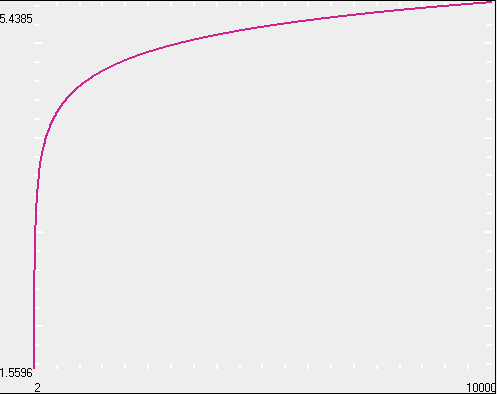
And here is the graph of autoroot(n) for n = 2..10000:
autoroot