Graham’s Sumber

77

Every number greater than 77 is the sum of integers, the sum of whose reciprocals is 1.

For example, 78 = 2 + 6 + 8 + 10 + 12 + 40 and 1/2 + 1/6 + 1/8 + 1/10 + 1/12 + 1/40 = 1.

R.L. Graham, “A Theorem on Partitions”, Journal of the Australian Mathematical Society, 1963; quoted in Le Lionnais, 1983.

• From David Wells’ Penguin Dictionary of Curious and Interesting Mathematics (1986)


Post-Performative Post-Scriptum…

The title of this post is a pun on the gargantuan Graham’s number, described by the same American mathematician and famous among math-fans for its mindboggling size. “Le Lionnais, 1983” must refer to a book called Les Nombres remarquables by the French mathematician François Le Lionnais (1901-84).

Period Panes

In his Penguin Dictionary of Curious and Interesting Numbers (1986), David Wells says that 142857 is “beloved of all recreational mathematicians”. He then says it’s the decimal period of the reciprocal of the fourth prime: “1/7 = 0·142857142857142…” And the reciprocal has maximum period. There are 6 = 7-1 digits before repetition begins, unlike the earlier prime reciprocals:


1/2 = 0·5
1/3 = 0·333...
1/5 = 0·2
1/7 = 0·142857 142857 142...

In other words, all possible remainders appear when you calculate the decimals of 1/7:


1*10 / 7 = 1 remainder 3 → 0·1
3*10 / 7 = 4 remainder 2 → 0·14
2*10 / 7 = 2 remainder 6 → 0·142
6*10 / 7 = 8 remainder 4 → 0·1428
4*10 / 7 = 5 remainder 5 → 0·14285
5*10 / 7 = 7 remainder 1 → 0·142857
1*10 / 7 = 1 remainder 3 → 0·142857 1
3*10 / 7 = 4 remainder 2 → 0·142857 14
2*10 / 7 = 2 remainder 6 → 0·142857 142...

That happens again with 1/17 and 1/19, but Wells says that “surprisingly, there is no known method of predicting which primes have maximum period.” It’s a simple question that involves some deep mathematics. Looking at prime reciprocals is like peering through a small window into a big room. Some things are easy to see, some are difficult and some are presently impossible.

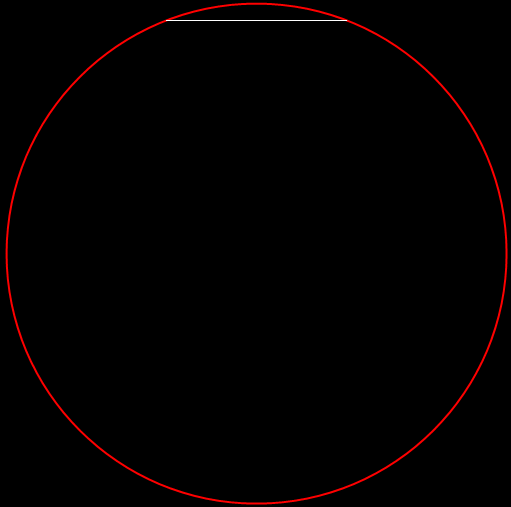
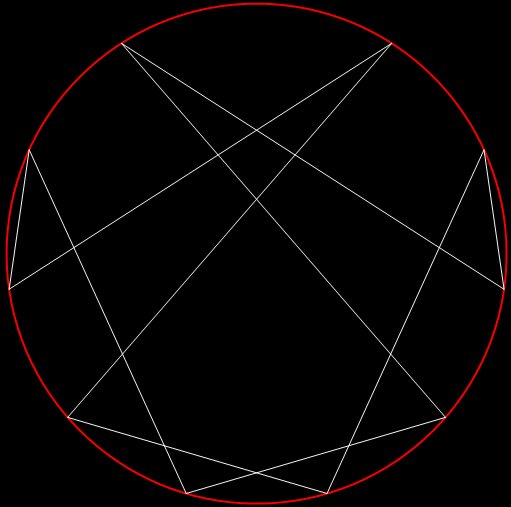
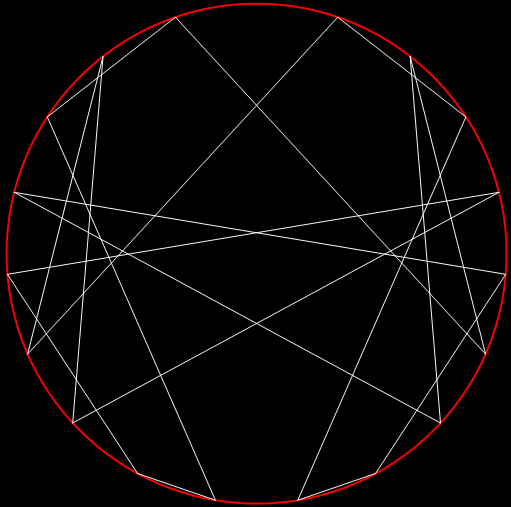
In his discussion of 142857, Wells mentions one way of peering through a period pane: “The sequence of digits also makes a striking pattern when the digits are arranged around a circle.” Here is the pattern, with ten points around the circle representing the digits 0 to 9:

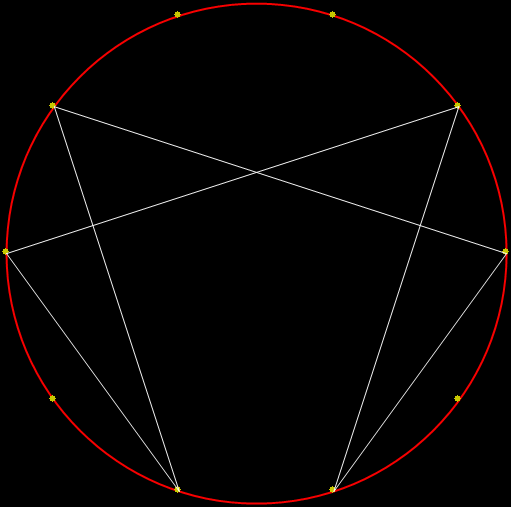
The digits of 1/7 = 0·142857142…


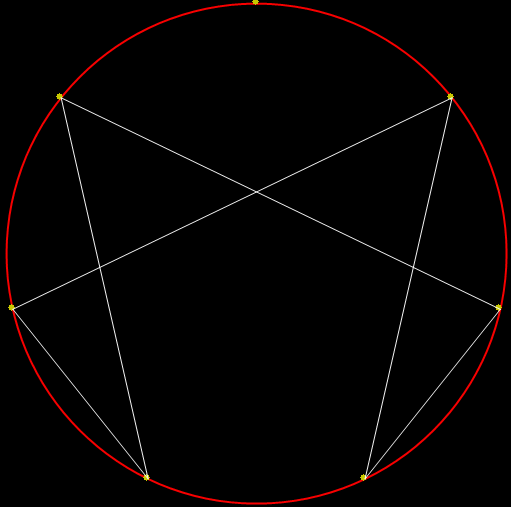
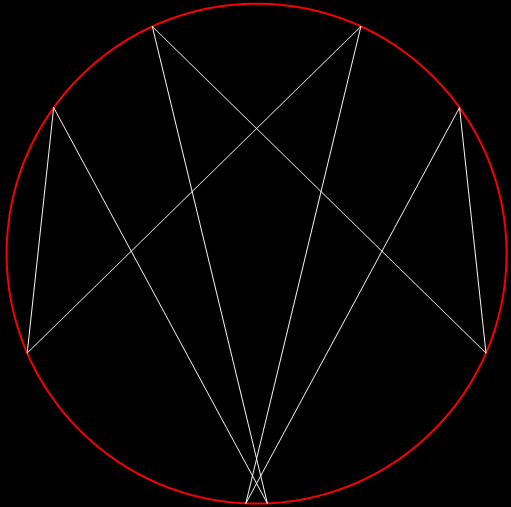
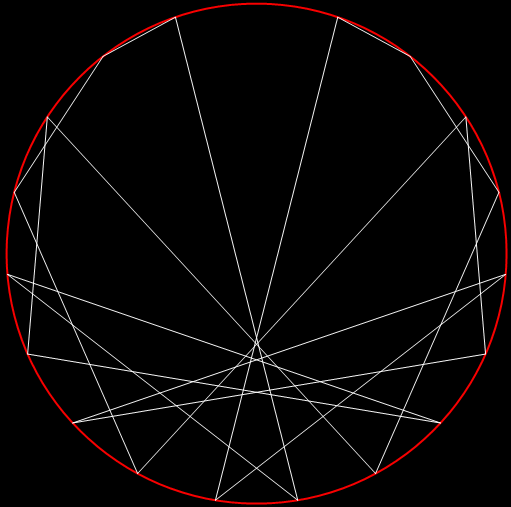
But I prefer, for further peers through the period-panes, to create the period-panes using remainders rather than digits. That is, the number of points around the circle is determined by the prime itself rather than the base in which the reciprocal is calculated:

The remainders of 1/7 = 1, 3, 2, 6, 4, 5…


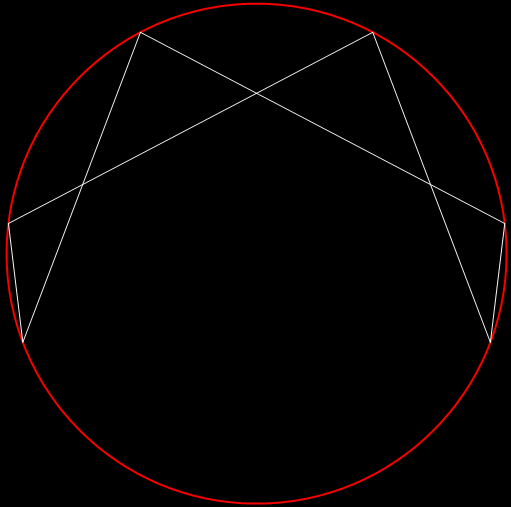
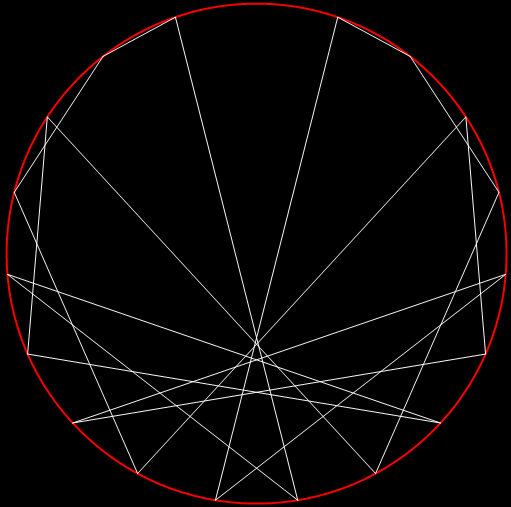
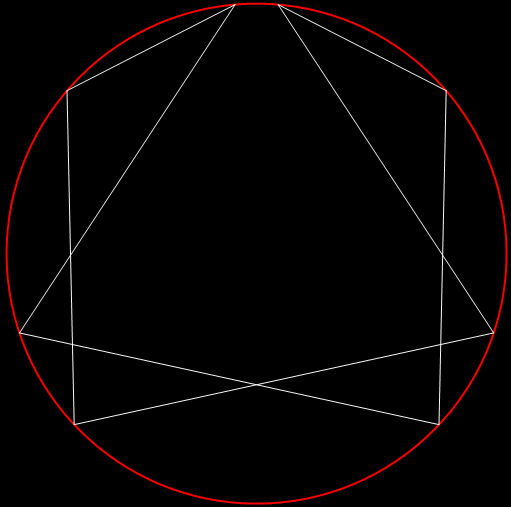
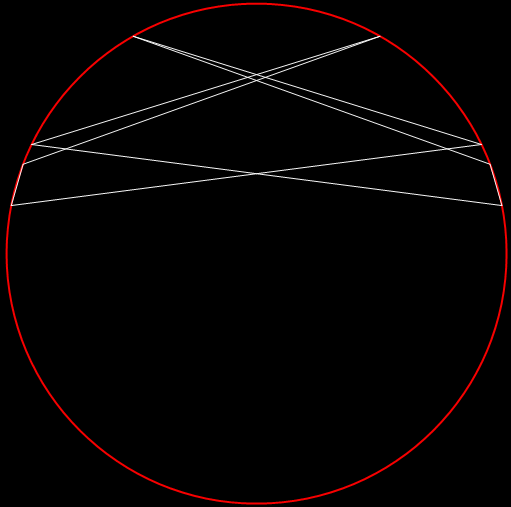
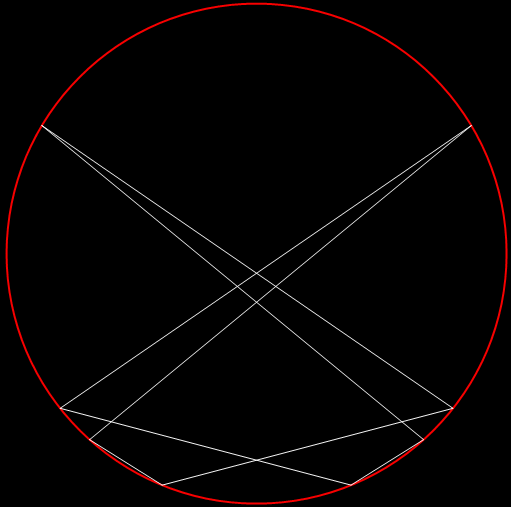
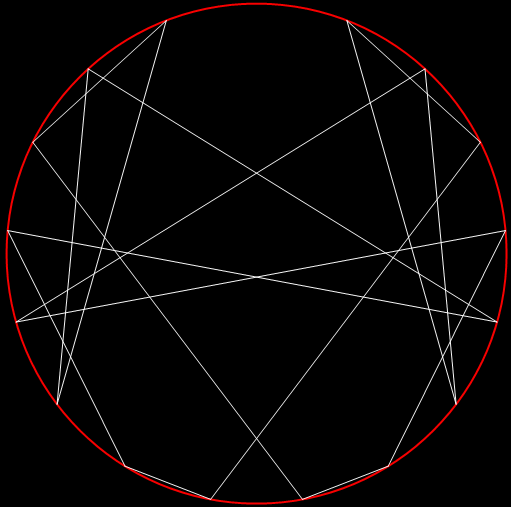
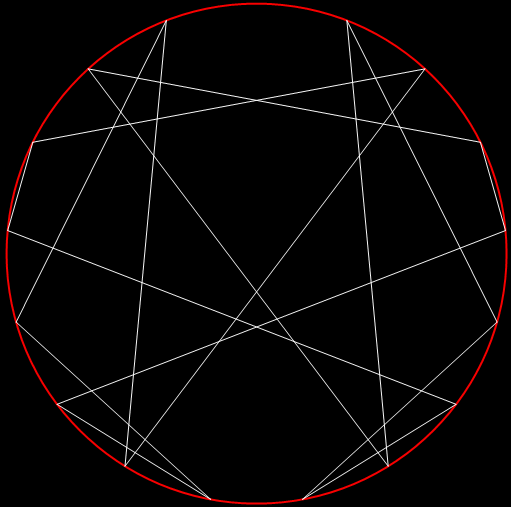
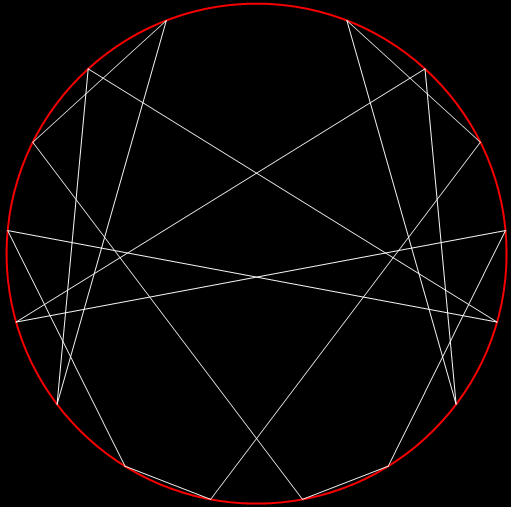
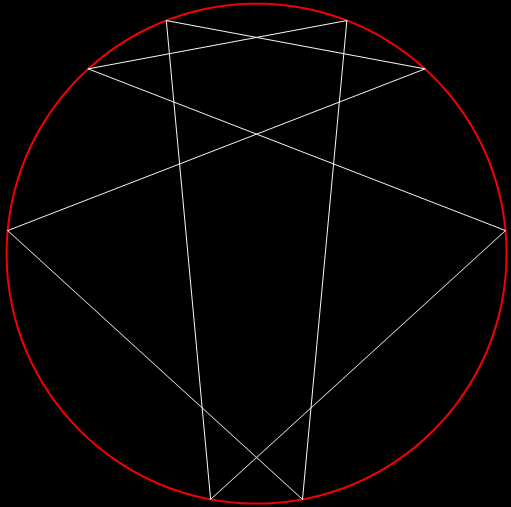
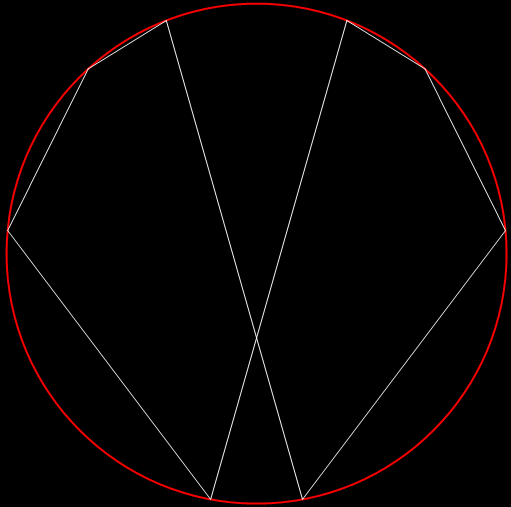
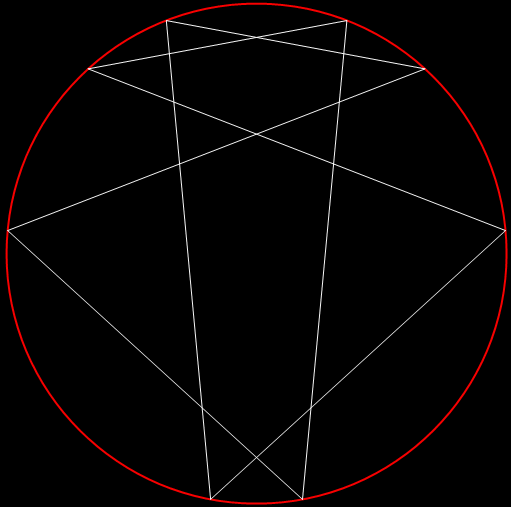
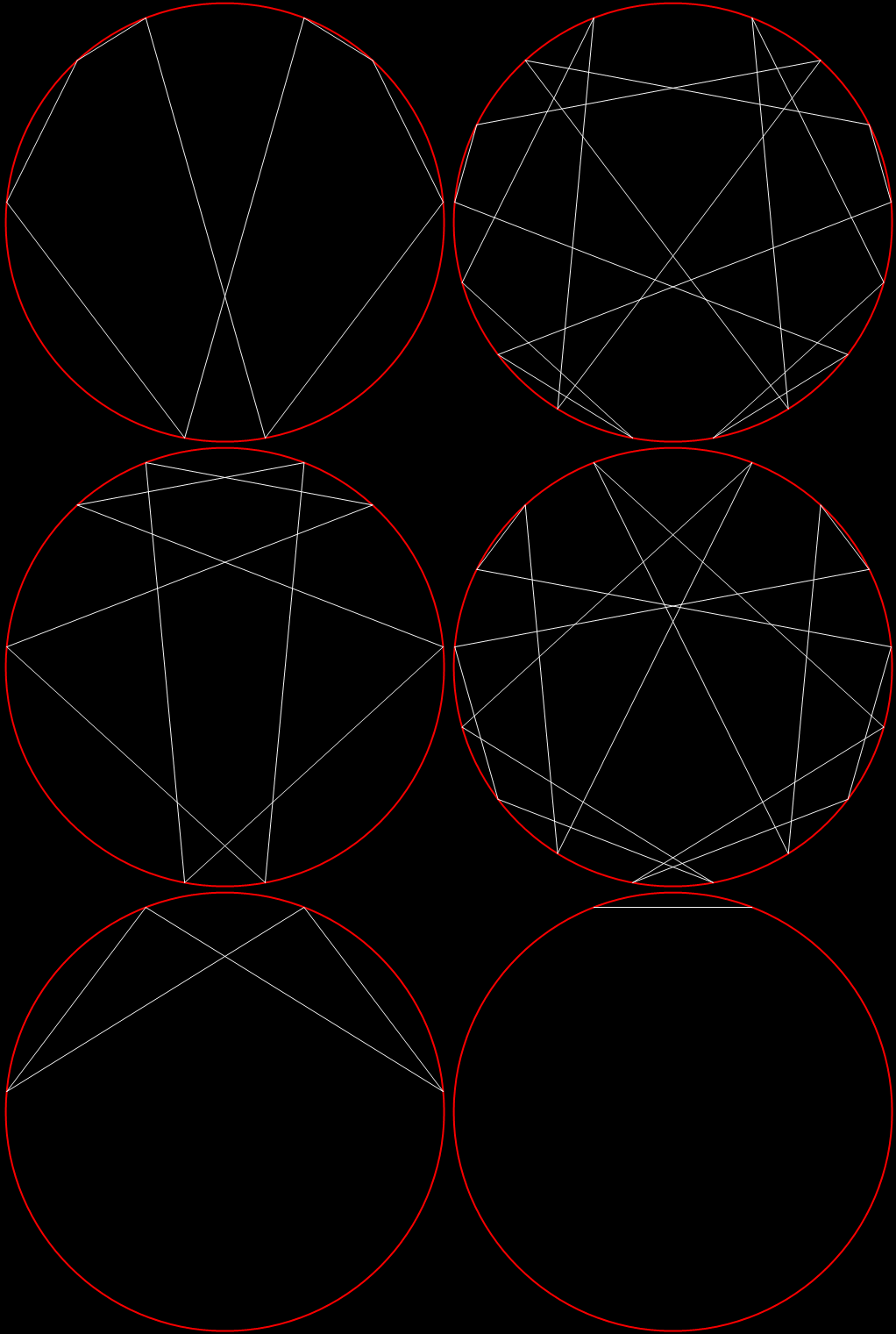
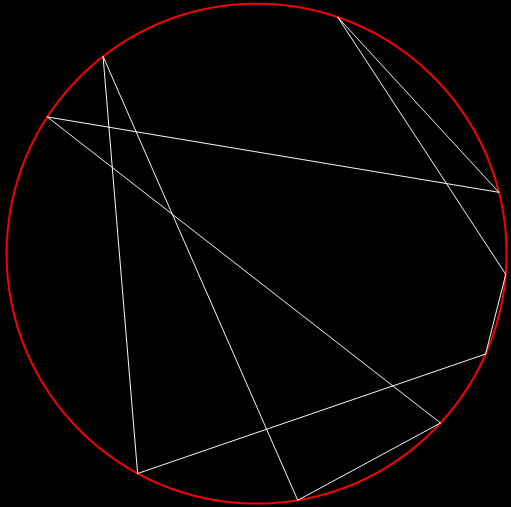
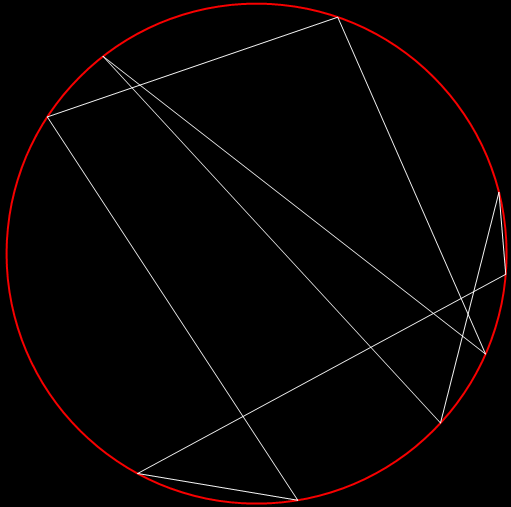
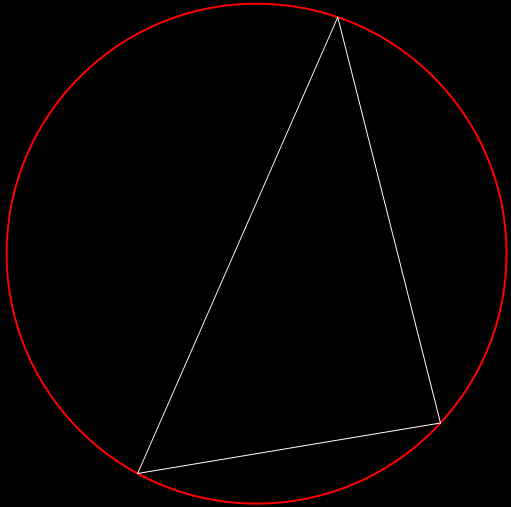
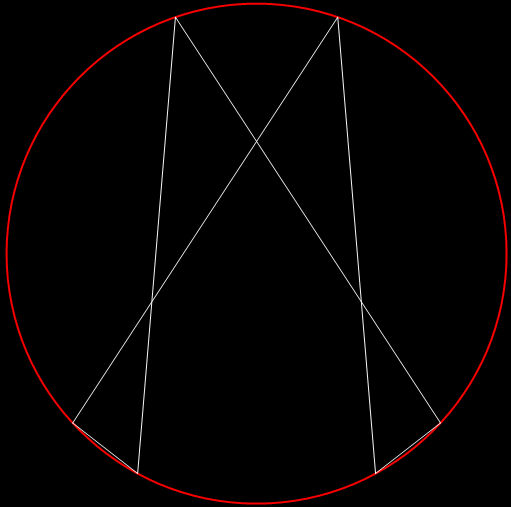
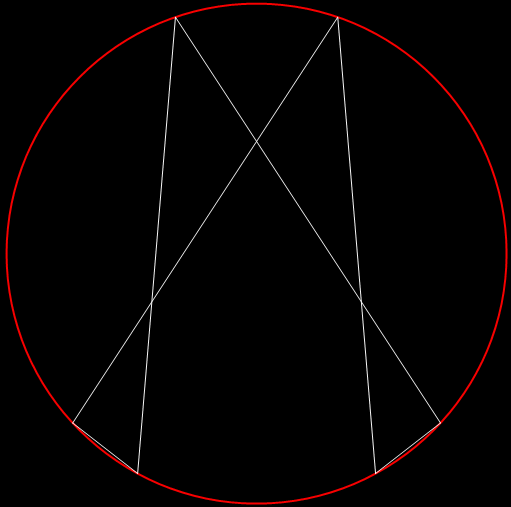
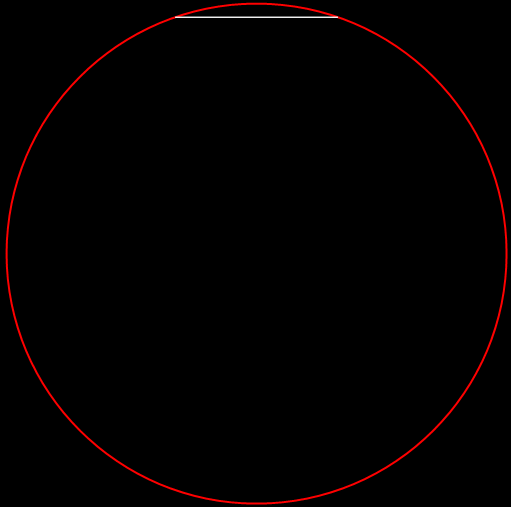
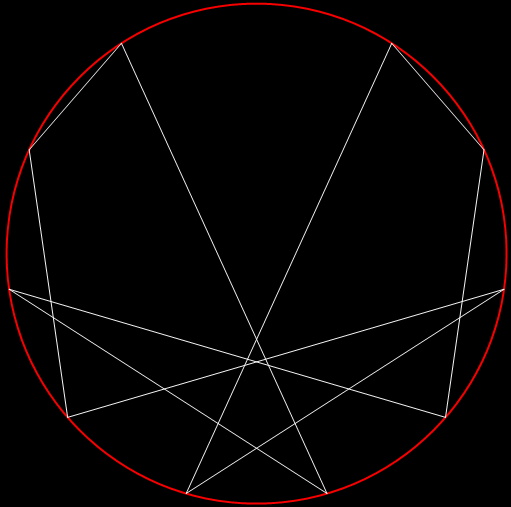
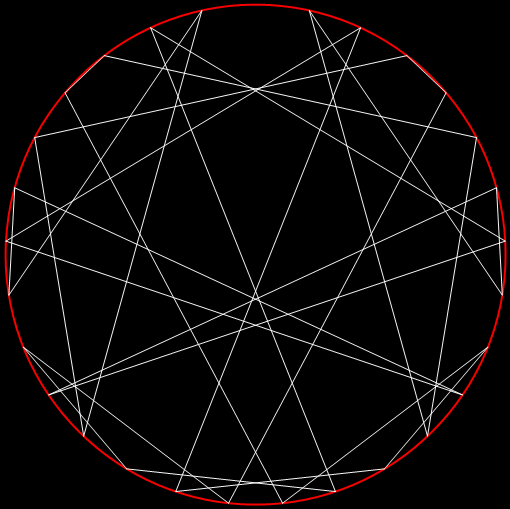
Period-panes can look like butterflies or bats or bivalves or spiders or crabs or even angels. Try the remainders of 1/13. This prime reciprocal doesn’t have maximum period: 1/13 = 0·076923 076923 076923… So there are only six remainders, creating this pattern:

remainders(1/13) = 1, 10, 9, 12, 3, 4


The multiple 2/13 has different remainders and creates a different pattern:

remainders(2/13) = 2, 7, 5, 11, 6, 8


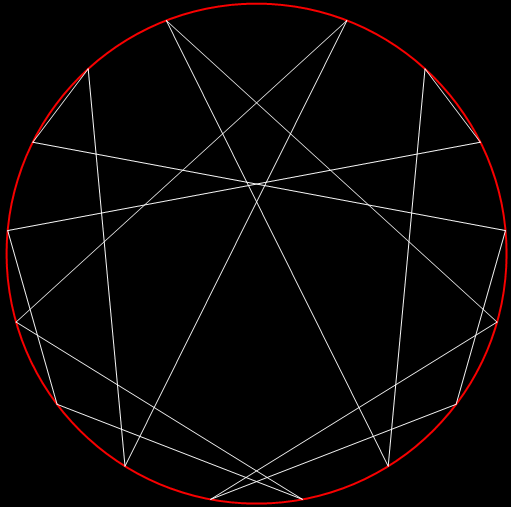
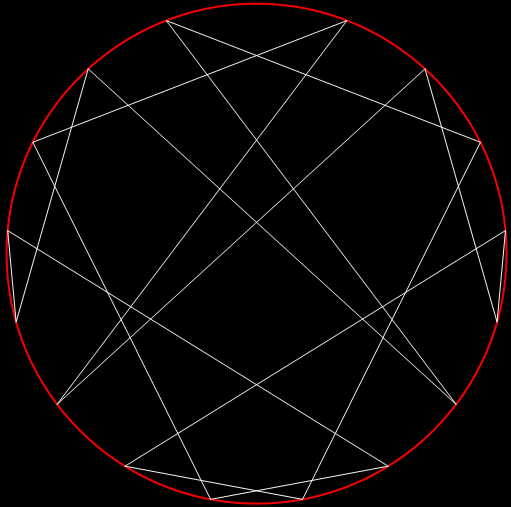
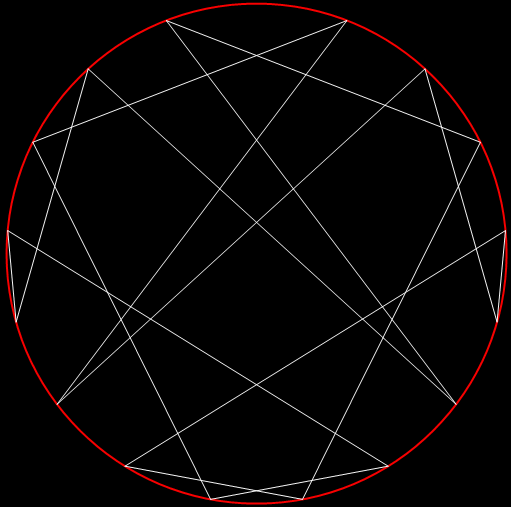
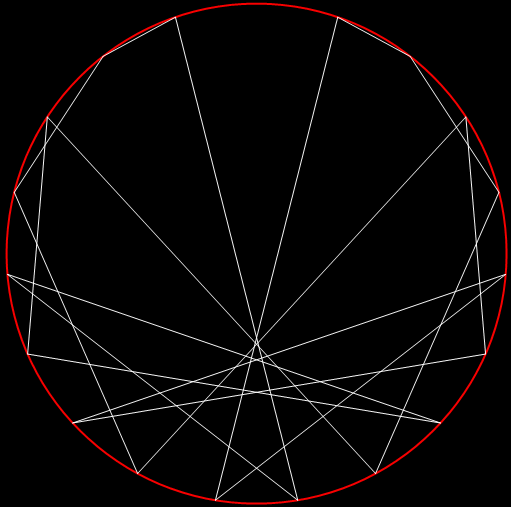
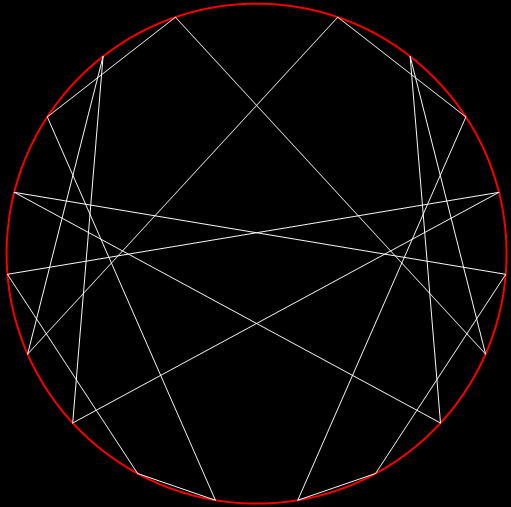
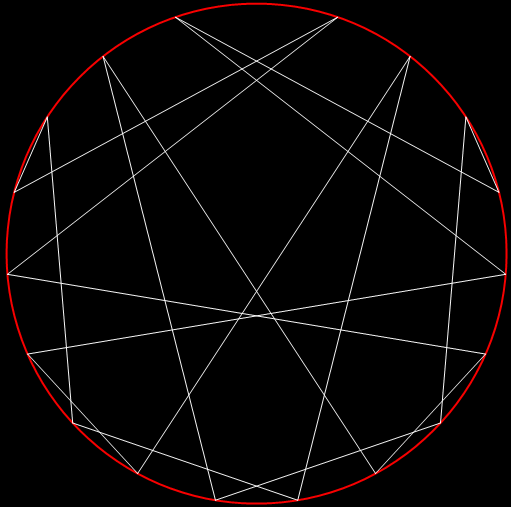
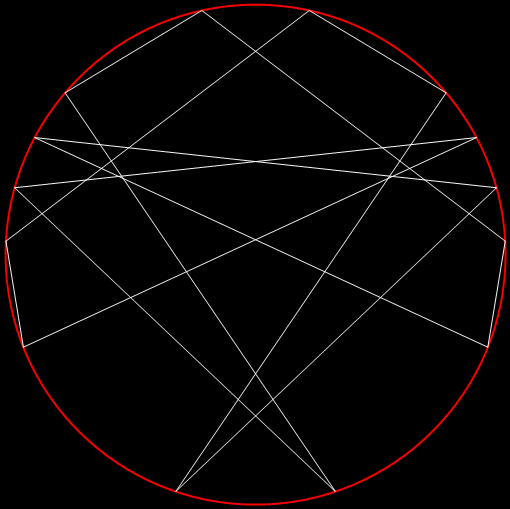
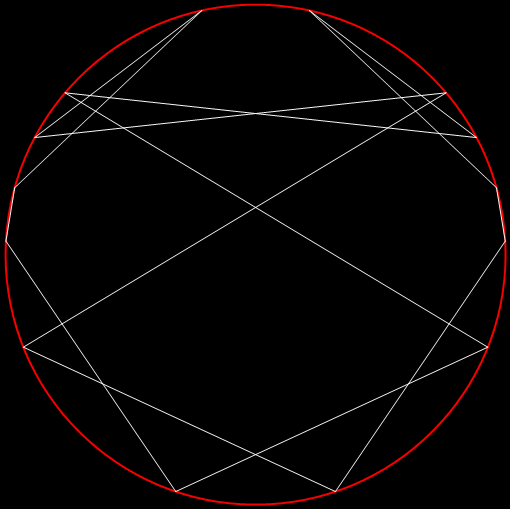
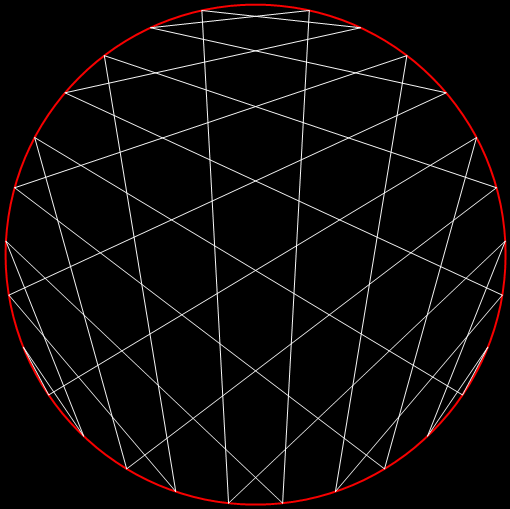
But 1/17, 1/19 and 1/23 all have maximum period and yield these period-panes:

remainders(1/17) = 1, 10, 15, 14, 4, 6, 9, 5, 16, 7, 2, 3, 13, 11, 8, 12


remainders(1/19) = 1, 10, 5, 12, 6, 3, 11, 15, 17, 18, 9, 14, 7, 13, 16, 8, 4, 2


remainders(1/23) = 1, 10, 8, 11, 18, 19, 6, 14, 2, 20, 16, 22, 13, 15, 12, 5, 4, 17, 9, 21, 3, 7


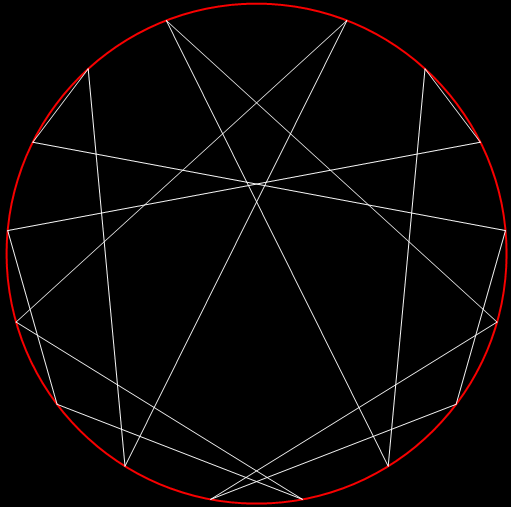
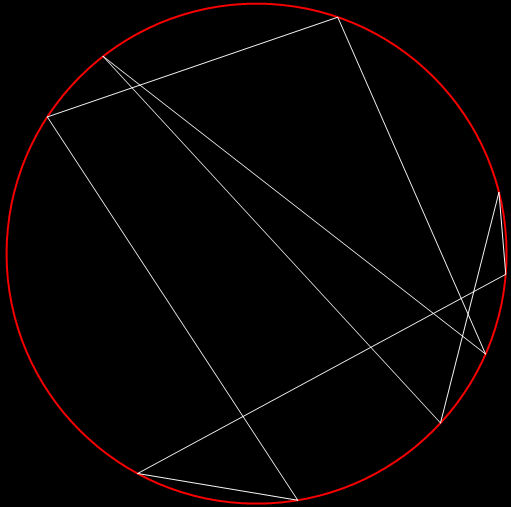
It gets mixed again with the prime 73, which doesn’t have maximum period and yields a plethora of period-panes (some patterns repeat with different n * 1/73, so I haven’t included them):

remainders(1/73)


remainders(2/73)


remainders(3/73)


remainders(4/73)


remainders(5/73)


remainders(6/73)


remainders(9/73)


remainders(11/73) (identical to pattern of 5/73)


remainders(12/73)


remainders(18/73)


101 yields a plethora of period-panes, but they’re variations on a simple theme. They look like flapping wings in this animated gif:

remainders of n/101 (animated)


The remainders of 137 yield more complex period-panes:

remainders of n/137 (animated)


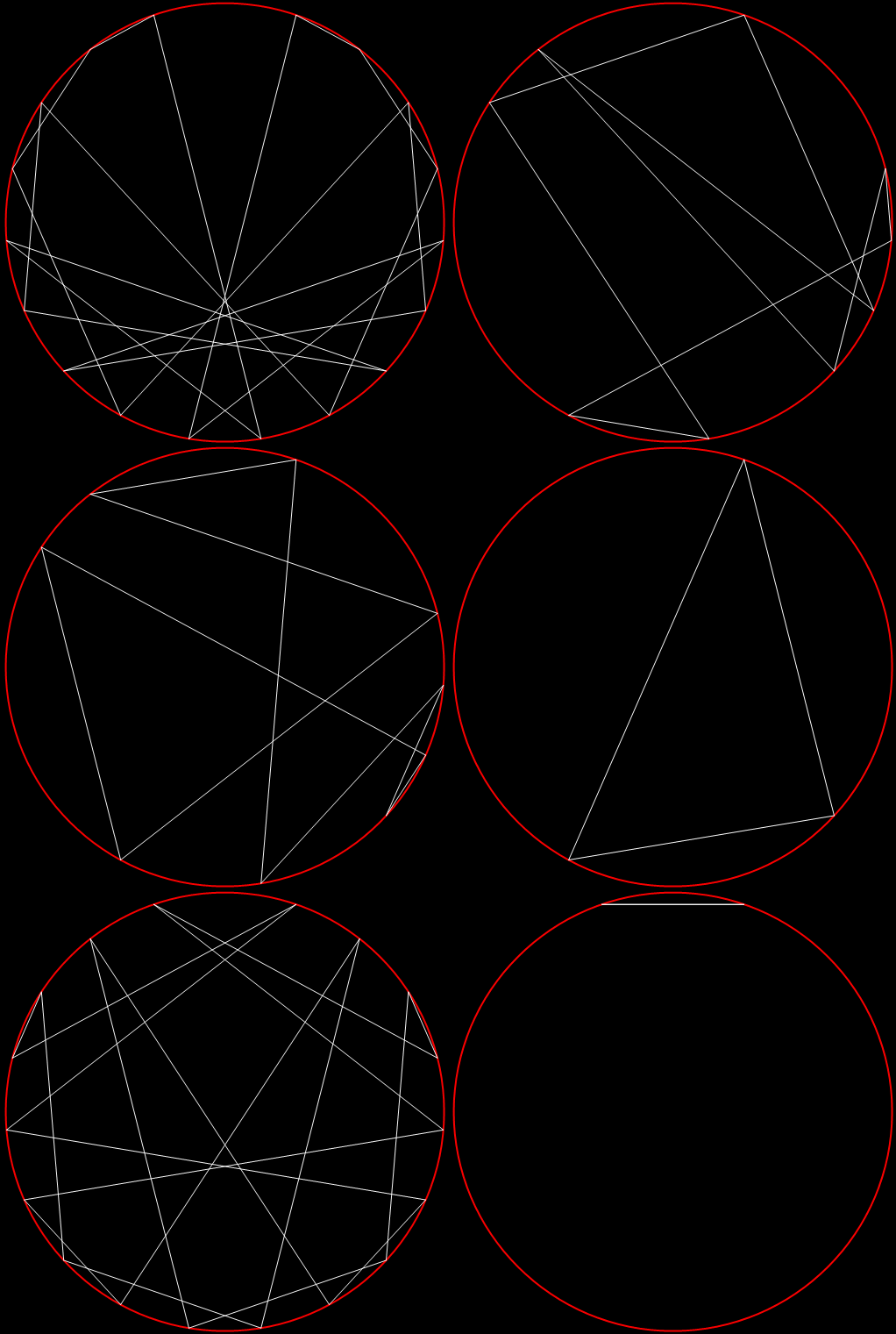
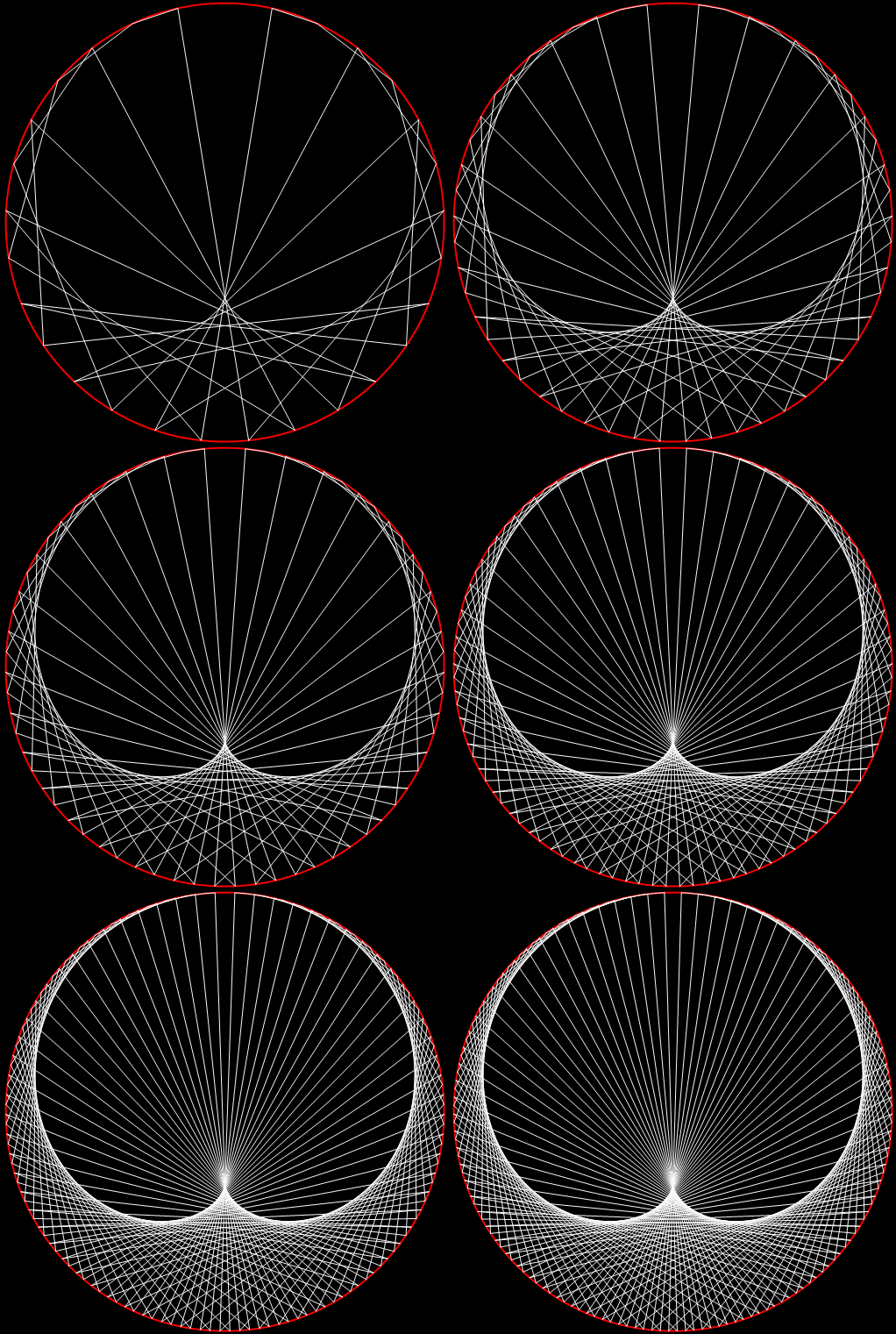
And what about different bases? Here are period-panes for the remainders of 1/17 in bases 2 to 16:

remainders(1/17) in base 2


remainders(1/17) in b3


remainders(1/17) in b4


remainders(1/17) in b5


remainders(1/17) in b6


remainders(1/17) in b7


remainders(1/17) in b8


remainders(1/17) in b9


remainders(1/17) in b10


remainders(1/17) in b11


remainders(1/17) in b12


remainders(1/17) in b13


remainders(1/17) in b14


remainders(1/17) in b15


remainders(1/17) in b16


remainders(1/17) in bases 2 to 16 (animated)


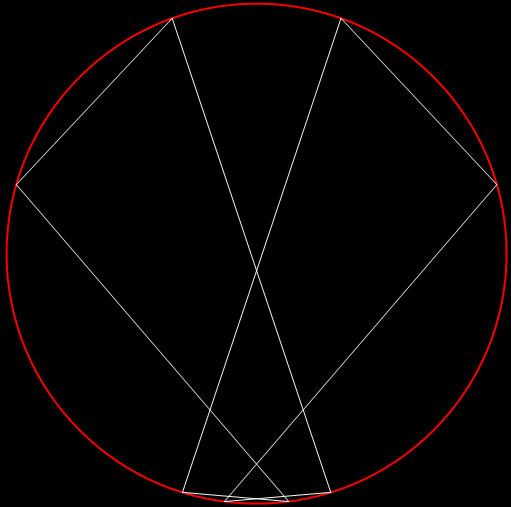
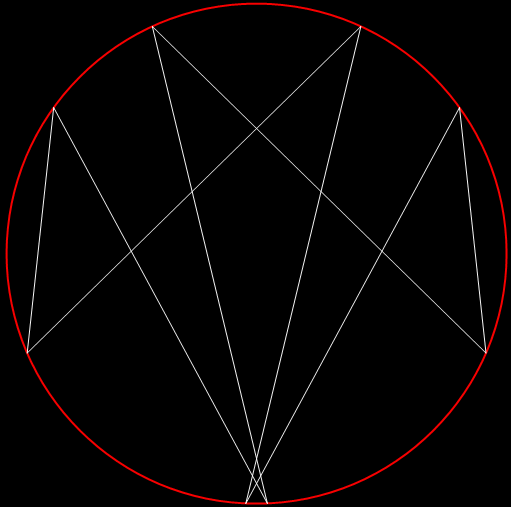
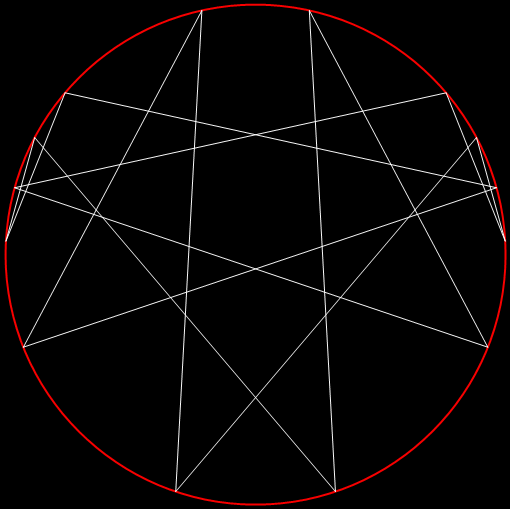
But the period-panes so far have given a false impression. They’ve all been symmetrical. That isn’t the case with all the period-panes of n/19:

remainders(1/19) in b2


remainders(1/19) in b3


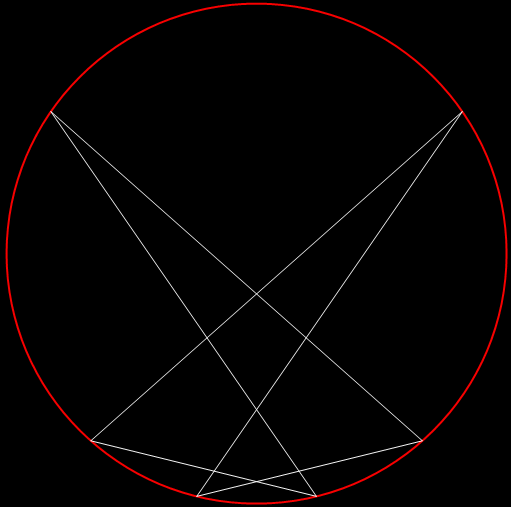
remainders(1/19) in b4 = 1, 4, 16, 7, 9, 17, 11, 6, 5 (asymmetrical)


remainders(1/19) in b5 = 1, 5, 6, 11, 17, 9, 7, 16, 4 (identical pattern to that of b4)


remainders(1/19) in b6


remainders(1/19) in b7


remainders(1/19) in b8


remainders(1/19) in b9


remainders(1/19) in b10 (identical pattern to that of b2)


remainders(1/19) in b11


remainders(1/19) in b12


remainders(1/19) in b13


remainders(1/19) in b14


remainders(1/19) in b15


remainders(1/19) in b16


remainders(1/19) in b17


remainders(1/19) in b18


remainders(1/19) in bases 2 to 18 (animated)


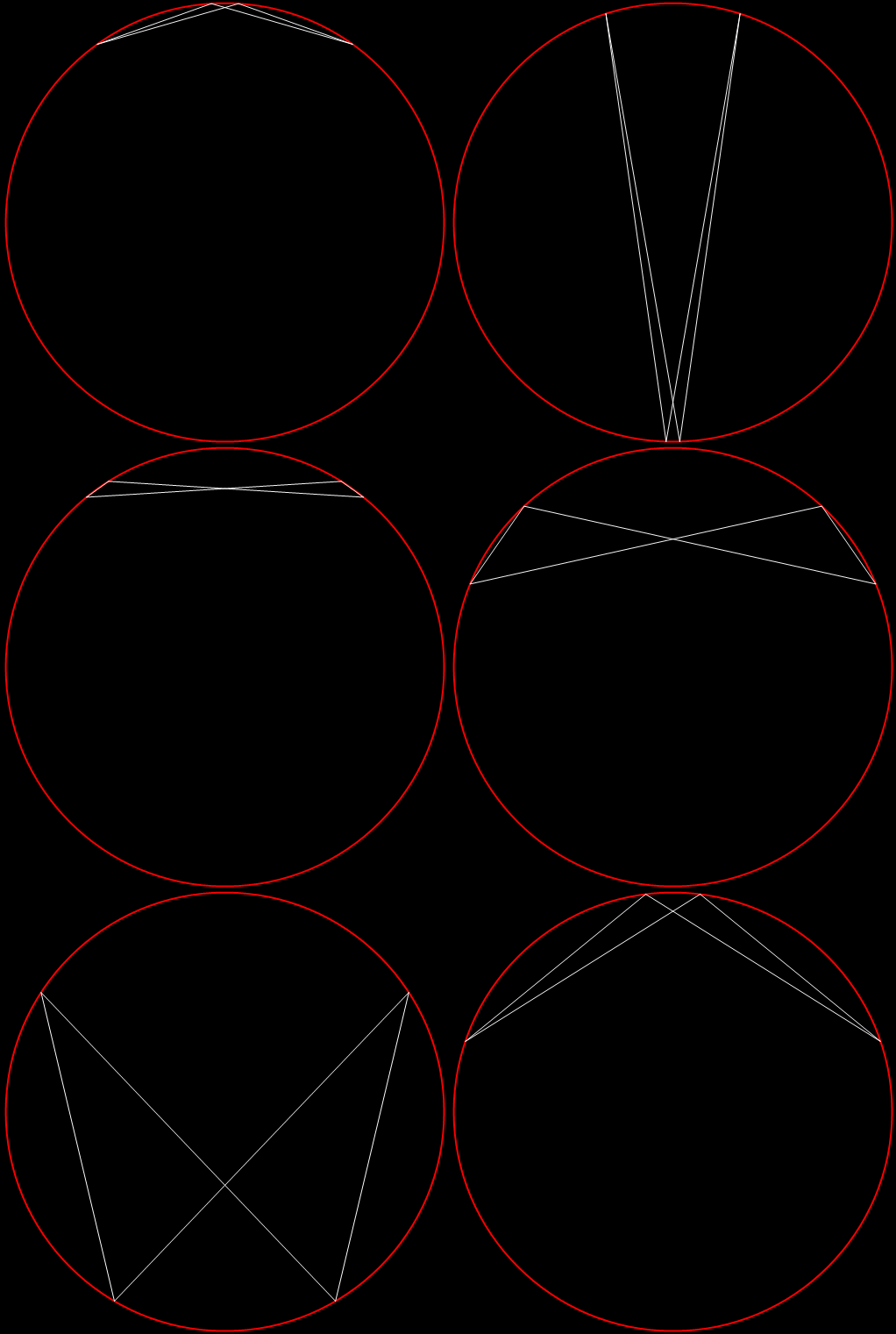
Here are a few more period-panes in different bases:

remainders(1/11) in b2


remainders(1/11) in b7


remainders(1/13) in b6


remainders(1/43) in b6


remainders in b2 for reciprocals of 29, 37, 53, 59, 61, 67, 83, 101, 107, 131, 139, 149 (animated)


And finally, to performativize the pun of “period pane”, here are some period-panes for 1/29, whose maximum period will be 28 (NASA says that the “Moon takes about one month to orbit Earth … 27.3 days to complete a revolution, but 29.5 days to change from New Moon to New Moon”):

remainders(1/29) in b4


remainders(1/29) in b5


remainders(1/29) in b8


remainders(1/29) in b9


remainders(1/29) in b11


remainders(1/29) in b13


remainders(1/29) in b14


remainders(1/29) in various bases (animated)


Fine as Nine

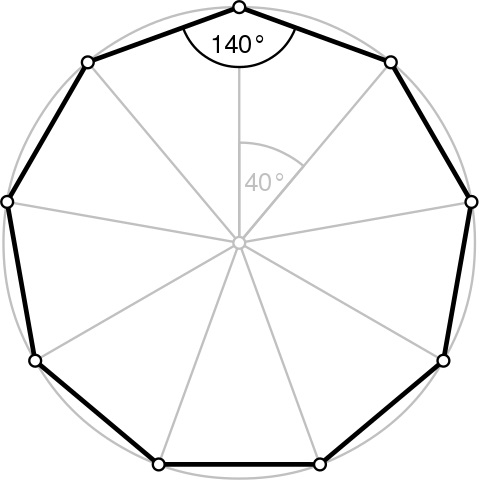
This is a regular nonagon (a polygon with nine sides):

A nonagon or enneagon (from Wikipedia)

And this is the endlessly repeating decimal of the reciprocal of 7:

1/7 = 0.142857142857142857142857…

What is the curious connection between 1/7 and nonagons? If I’d been asked that a week ago, I’d’ve had no answer. Then I found a curious connection when I was looking at the leading digits of polygonal numbers. A polygonal number is a number that can be represented in the form of a polygon. Triangular numbers look like this:


* = 1

*
** = 3

*
**
*** = 6

*
**
***
**** = 10

*
**
***
****
***** = 15

By looking at the shapes rather than the numbers, it’s easy to see that you generate the triangular numbers by simply summing the integers:


1 = 1
1+2=3
1+2+3=6
1+2+3+4=10
1+2+3+4+5=15

Now try the square numbers:


* = 1

**
** = 4

***
***
*** = 9

****
****
****
**** = 16

*****
*****
*****
*****
***** = 25


You generate the square numbers by summing the odd integers:


1 = 1
1+3 = 4
1+3+5 = 9
1+3+7 = 16
1+3+7+9 = 25

Next come the pentagonal numbers, the hexagonal numbers, the heptagonal numbers, and so on. I was looking at the leading digits of these numbers and trying to find patterns. For example, when do the leading digits of the k-th triangular number, tri(k), match the digits of k? This is when:


tri(1) = 1
tri(19) = 190
tri(199) = 19900
tri(1999) = 1999000
tri(19999) = 199990000
tri(199999) = 19999900000
[...]

That pattern is easy to explain. The formula for the k-th polygonal number is k * ((pn-2)*k + (4-pn)) / 2, where pn = 3 for the triangular numbers, 4 for the square numbers, 5 for the pentagonal numbers, and so on. Therefore the k-th triangular number is k * (k + 1) / 2. When k = 19, the formula is 19 * (19 + 1) / 2 = 19 * 20 / 2 = 19 * 10 = 190. And so on. Now try the pol(k) = leaddig(pol(k)) for higher polygonal numbers. The patterns are easy to predict until you get to the nonagonal numbers:


square(10) = 100
square(100) = 10000
square(1000) = 1000000
square(10000) = 100000000
square(100000) = 10000000000
[...]


pentagonal(7) = 70
pentagonal(67) = 6700
pentagonal(667) = 667000
pentagonal(6667) = 66670000
pentagonal(66667) = 6666700000
[...]


hexagonal(6) = 66
hexagonal(51) = 5151
hexagonal(501) = 501501
hexagonal(5001) = 50015001
hexagonal(50001) = 5000150001
[...]


heptagonal(5) = 55
heptagonal(41) = 4141
heptagonal(401) = 401401
heptagonal(4001) = 40014001
heptagonal(40001) = 4000140001
[...]


octagonal(4) = 40
octagonal(34) = 3400
octagonal(334) = 334000
octagonal(3334) = 33340000
octagonal(33334) = 3333400000
[...]


nonagonal(4) = 46
nonagonal(30) = 3075
nonagonal(287) = 287574
nonagonal(2858) = 28581429
nonagonal(28573) = 2857385719
nonagonal(285715) = 285715000000
nonagonal(2857144) = 28571444285716
nonagonal(28571430) = 2857143071428575
nonagonal(285714287) = 285714287571428574
nonagonal(2857142858) = 28571428581428571429
nonagonal(28571428573) = 2857142857385714285719
nonagonal(285714285715) = 285714285715000000000000
nonagonal(2857142857144) = 28571428571444285714285716
nonagonal(28571428571430) = 2857142857143071428571428575
nonagonal(285714285714287) = 285714285714287571428571428574
nonagonal(2857142857142858) = 28571428571428581428571428571429
nonagonal(28571428571428573) = 2857142857142857385714285714285719
nonagonal(285714285714285715) = 285714285714285715000000000000000000
nonagonal(2857142857142857144) = 28571428571428571444285714285714285716
nonagonal(28571428571428571430) = 2857142857142857143071428571428571428575
[...]


What’s going on with the leading digits of the nonagonals? Well, they’re generating a different reciprocal. Or rather, they’re generating the multiple of a different reciprocal:


1/7 * 2 = 2/7 = 0.285714285714285714285714285714...

And why does 1/7 have this curious connection with the nonagonal numbers? Because the nonagonal formula is k * (7k-5) / 2 = k * ((9-2) * k + (4-pn)) / 2. Now look at the pentadecagonal numbers, where pn = 15:


pentadecagonal(1538461538461538461540) = 15384615384615384615406923076923076923076930

2/13 = 0.153846153846153846153846153846...

pentadecagonal formula = k * (13k - 11) / 2 = k * ((15-2)*k + (4-15)) / 2

Penultimately, let’s look at the icosikaihenagonal numbers, where pn = 21:


icosikaihenagonal(2) = 21
icosikaihenagonal(12) = 1266
icosikaihenagonal(107) = 107856
icosikaihenagonal(1054) = 10544743
icosikaihenagonal(10528) = 1052878960
icosikaihenagonal(105265) = 105265947385
icosikaihenagonal(1052633) = 10526335263165
icosikaihenagonal(10526317) = 1052631731578951
icosikaihenagonal(105263159) = 105263159210526318
icosikaihenagonal(1052631580) = 10526315801578947370
icosikaihenagonal(10526315791) = 1052631579163157894746
icosikaihenagonal(105263157896) = 105263157896368421052636
icosikaihenagonal(1052631578949) = 10526315789497368421052643
icosikaihenagonal(10526315789475) = 1052631578947542105263157900
icosikaihenagonal(105263157894738) = 105263157894738263157894736845
icosikaihenagonal(1052631578947370) = 10526315789473706842105263157905
icosikaihenagonal(10526315789473686) = 1052631578947368689473684210526331
icosikaihenagonal(105263157894736843) = 105263157894736843000000000000000000
icosikaihenagonal(1052631578947368422) = 10526315789473684220526315789473684211
icosikaihenagonal(10526315789473684212) = 1052631578947368421257894736842105263166

2/19 = 0.1052631578947368421052631579

icosikaihenagonal formula = k * (19k - 17) / 2 = k * ((21-2)*k + (4-21)) / 2

And ultimately, let’s look at this other pattern in the leading digits of the triangular numbers, which I can’t yet explain at all:


tri(904) = 409060
tri(6191) = 19167336
tri(98984) = 4898965620
tri(996694) = 496699963165
tri(9989894) = 49898996060565
tri(99966994) = 4996699994681515
tri(999898994) = 499898999601055515
tri(9999669994) = 49996699999451815015
tri(99998989994) = 4999898999960055555015
tri(999996699994) = 499996699999945018150015
tri(9999989899994) = 49999898999996005055550015
tri(99999966999994) = 4999996699999994500181500015
tri(999999898999994) = 499999898999999600500555500015
[...]

Reciprocal Recipes

Here’s a sequence. What’s the next number?

1, 1, 1, 1, 1, 1, 1, 1, 1, 1, 1...

Here’s another sequence. What’s the next number?

0, 1, 1, 2, 3, 5, 8, 13, 21, 34...

Those aren’t trick questions, so the answers are 1 and 55, respectively. The second sequence is the famous Fibonacci sequence, where each number after [0,1] is the sum of the previous two numbers.

Now try dividing each of those sequences by powers of 2 and summing the results, like this:

1/2 + 1/4 + 1/8 + 1/16 + 1/32 + 1/64 + 1/128 + 1/256 + 1/512 + 1/1024 + 1/2048 + 1/4096 + 1/8192 + 1/16384 + 1/32768 + 1/65536 + 1/131072 + 1/262144 + 1/524288 + 1/1048576 +... = ?

0/2 + 1/4 + 1/8 + 2/16 + 3/32 + 5/64 + 8/128 + 13/256 + 21/512 + 34/1024 + 55/2048 + 89/4096 + 144/8192 + 233/16384 + 377/32768 + 610/65536 + 987/131072 + 1597/262144 + 2584/524288 + 4181/1048576 +... = ?

What are the sums? I was surprised to learn that they’re identical:

1/2 + 1/4 + 1/8 + 1/16 + 1/32 + 1/64 + 1/128 + 1/256 + 1/512 + 1/1024 + 1/2048 + 1/4096 + 1/8192 + 1/16384 + 1/32768 + 1/65536 + 1/131072 + 1/262144 + 1/524288 + 1/1048576 +... = 1

0/2 + 1/4 + 1/8 + 2/16 + 3/32 + 5/64 + 8/128 + 13/256 + 21/512 + 34/1024 + 55/2048 + 89/4096 + 144/8192 + 233/16384 + 377/32768 + 610/65536 + 987/131072 + 1597/262144 + 2584/524288 + 4181/1048576 +... = 1

I discovered this when I was playing with an old scientific calculator and calculated these sums:

5^2 + 2^2 = 29
5^2 + 4^2 = 41
5^2 + 6^2 = 61
5^2 + 8^2 = 89

The sums are all prime numbers. Then I idly calculated the reciprocal of 1/89:

1/89 = 0·011235955056179775...

The digits 011235… are the start of the Fibonacci sequence. It seems to go awry after that, but I remembered what David Wells had said in his wonderful Penguin Dictionary of Curious and Interesting Numbers (1986): “89 is the 11th Fibonacci number, and the period of its reciprocal is generated by the Fibonacci sequence: 1/89 = 0·11235…” He means that the Fibonacci sequence generates the digits of 1/89 like this, when you sum the columns and move carries left as necessary:

0
1
↓↓1
↓↓↓2
↓↓↓↓3
↓↓↓↓↓5
↓↓↓↓↓↓8
↓↓↓↓↓↓13
↓↓↓↓↓↓↓21
↓↓↓↓↓↓↓↓34
↓↓↓↓↓↓↓↓↓55
↓↓↓↓↓↓↓↓↓↓89...
↓↓↓↓↓↓↓↓↓↓
0112359550...

I tried this method of summing the Fibonacci sequence in other bases. Although it was old, the scientific calculator was crudely programmable. And it helpfully converted the sum into a final fraction once there were enough decimal digits:

0/3 + 1/32 + 1/33 + 2/34 + 3/35 + 5/36 + 8/37 + 13/38 + 21/39 + 34/310 + 55/311 + 89/312 + 144/313 + 233/314 + 377/315 + 610/316 + 987/317 + 1597/318 + 2584/319 + 4181/320 +... = 1/5 = 0·012101210121012101210 in b3


0/4 + 1/42 + 1/43 + 2/44 + 3/45 + 5/46 + 8/47 + 13/48 + 21/49 + 34/410 + 55/411 + 89/412 + 144/413 + 233/414 + 377/415 + 610/416 + 987/417 + 1597/418 + 2584/419 + 4181/420 +... = 1/11 = 0·011310113101131011310 in b4


0/5 + 1/52 + 1/53 + 2/54 + 3/55 + 5/56 + 8/57 + 13/58 + 21/59 + 34/510 + 55/511 + 89/512 + 144/513 + 233/514 + 377/515 + 610/516 + 987/517 + 1597/518 + 2584/519 + 4181/520 +... = 1/19 = 0·011242141011242141011 in b5


0/6 + 1/62 + 1/63 + 2/64 + 3/65 + 5/66 + 8/67 + 13/68 + 21/69 + 34/610 + 55/611 + 89/612 + 144/613 + 233/614 + 377/615 + 610/616 + 987/617 + 1597/618 + 2584/619 + 4181/620 +... = 1/29 = 0·011240454431510112404 in b6


0/7 + 1/72 + 1/73 + 2/74 + 3/75 + 5/76 + 8/77 + 13/78 + 21/79 + 34/710 + 55/711 + 89/712 + 144/713 + 233/714 + 377/715 + 610/716 + 987/717 + 1597/718 + 2584/719 + 4181/720 +... = 1/41 = 0·011236326213520225056 in b7

It was interesting to see that all the reciprocals so far were of primes. I carried on:

0/8 + 1/82 + 1/83 + 2/84 + 3/85 + 5/86 + 8/87 + 13/88 + 21/89 + 34/810 + 55/811 + 89/812 + 144/813 + 233/814 + 377/815 + 610/816 + 987/817 + 1597/818 + 2584/819 + 4181/820 +... = 1/55 = 0·011236202247440451710 in b8

Not a prime reciprocal, but a reciprocal of a Fibonacci number. Here are some more sums:

0/9 + 1/92 + 1/93 + 2/94 + 3/95 + 5/96 + 8/97 + 13/98 + 21/99 + 34/910 + 55/911 + 89/912 + 144/913 + 233/914 + 377/915 + 610/916 + 987/917 + 1597/918 + 2584/919 + 4181/920 +... = 1/71 (another prime) = 0·011236067540450563033 in b9


0/10 + 1/102 + 1/103 + 2/104 + 3/105 + 5/106 + 8/107 + 13/108 + 21/109 + 34/1010 + 55/1011 + 89/1012 + 144/1013 + 233/1014 + 377/1015 + 610/1016 + 987/1017 + 1597/1018 + 2584/1019 + 4181/1020 +... = 1/89 (and another) = 0·011235955056179775280 in b10


0/11 + 1/112 + 1/113 + 2/114 + 3/115 + 5/116 + 8/117 + 13/118 + 21/119 + 34/1110 + 55/1111 + 89/1112 + 144/1113 + 233/1114 + 377/1115 + 610/1116 + 987/1117 + 1597/1118 + 2584/1119 + 4181/1120 +... = 1/109 (and another) = 0·011235942695392022470 in b11


0/12 + 1/122 + 1/123 + 2/124 + 3/125 + 5/126 + 8/127 + 13/128 + 21/129 + 34/1210 + 55/1211 + 89/1212 + 144/1213 + 233/1214 + 377/1215 + 610/1216 + 987/1217 + 1597/1218 + 2584/1219 + 4181/1220 +... = 1/131 (and another) = 0·011235930336A53909A87 in b12


0/13 + 1/132 + 1/133 + 2/134 + 3/135 + 5/136 + 8/137 + 13/138 + 21/139 + 34/1310 + 55/1311 + 89/1312 + 144/1313 + 233/1314 + 377/1315 + 610/1316 + 987/1317 + 1597/1318 + 2584/1319 + 4181/1320 +... = 1/155 (not a prime or a Fibonacci number) = 0·01123591ACAA861794044 in b13

The reciprocals go like this:

1/1, 1/5, 1/11, 1/19, 1/29, 1/41, 1/55, 1/71, 1/89, 1/109, 1/131, 1/155...

And it should be easy to see the rule that generates them:

5 = 1 + 4
11 = 5 + 6
19 = 11 + 8
29 = 19 + 10
41 = 29 + 12
55 = 41 + 14
71 = 55 + 16
89 = 17 + 18
109 = 89 + 20
131 = 109 + 22
155 = 131 + 24
[...]

But I don’t understand why the rule applies, let alone why the Fibonacci sequence generates these reciprocals in the first place.

Gyp Cip

Abundance often overwhelms, but restriction reaps riches. That’s true in mathematics and science, where you can often understand the whole better by looking at only a part of it first — restriction reaps riches. Egyptian fractions are one example in maths. In ancient Egypt, you could have any kind of fraction you liked so long as it was a reciprocal like 1/2, 1/3, 1/4 or 1/5 (well, there were two exceptions: 2/3 and 3/4 were also allowed).

So when mathematicians speak of “Egyptian fractions”, they mean those fractions that can be represented as a sum of reciprocals. Egyptian fractions are restricted and that reaps riches. Here’s one example: how many ways can you add n distinct reciprocals to make 1? When n = 1, there’s one way to do it: 1/1. When n = 2, there’s no way to do it, because 1 – 1/2 = 1/2. Therefore the summed reciprocals aren’t distinct: 1/2 + 1/2 = 1. After that, 1 – 1/3 = 2/3, 1 – 1/4 = 3/4, and so on. By the modern meaning of “Egyptian fraction”, there’s no solution for n = 2.

However, when n = 3, there is a way to do it:

• 1/2 + 1/3 + 1/6 = 1

But that’s the only way. When n = 4, things get better:

• 1/2 + 1/4 + 1/6 + 1/12 = 1
• 1/2 + 1/3 + 1/10 + 1/15 = 1
• 1/2 + 1/3 + 1/9 + 1/18 = 1
• 1/2 + 1/4 + 1/5 + 1/20 = 1
• 1/2 + 1/3 + 1/8 + 1/24 = 1
• 1/2 + 1/3 + 1/7 + 1/42 = 1

What about n = 5, n = 6 and so on? You can find the answer at the Online Encyclopedia of Integer Sequences (OEIS), where sequence A006585 is described as “Egyptian fractions: number of solutions to 1 = 1/x1 + … + 1/xn in positive integers x1 < … < xn”. The sequence is one of the shortest and strangest at the OEIS:

• 1, 0, 1, 6, 72, 2320, 245765, 151182379

When n = 1, there’s one solution: 1/1. When n = 2, there’s no solution, as I showed above. When n = 3, there’s one solution again. When n = 4, there are six solutions. And the OEIS tells you how many solutions there are for n = 5, 6, 7, 8. But n >= 9 remains unknown at the time of writing.

To understand the problem, consider the three reciprocals, 1/2, 1/3 and 1/5. How do you sum them? They have different denominators, 2, 3 and 5, so you have to create a new denominator, 30 = 2 * 3 * 5. Then you have to adjust the numerators (the numbers above the fraction bar) so that the new fractions have the same value as the old:

• 1/2 = 15/30 = (2*3*5 / 2) / 30
• 1/3 = 10/30 = (2*3*5 / 3) / 30
• 1/5 = 06/30 = (2*3*5 / 5) / 30
• 15/30 + 10/30 + 06/30 = (15+10+6) / 30 = 31/30 = 1 + 1/30

Those three reciprocals don’t sum to 1. Now try 1/2, 1/3 and 1/6:

• 1/2 = 18/36 = (2*3*6 / 2) / 36
• 1/3 = 12/36 = (2*3*6 / 3) / 36
• 1/6 = 06/36 = (2*3*6 / 6) / 36
• 18/36 + 12/36 + 06/36 = (18+12+6) / 36 = 36/36 = 1

So when n = 3, the problem consists of finding three reciprocals, 1/a, 1/b and 1/c, such that for a, b, and c:

• a*b*c = a*b + a*c + b*c

There is only one solution: a = 2, b = 3 and c = 6. When n = 4, the problem consists of finding four reciprocals, 1/a, 1/b, 1/c and 1/d, such that for a, b, c and d:

• a*b*c*d = a*b*c + a*b*d + a*c*d + b*c*d

For example:

• 2*4*6*12 = 576
• 2*4*6 + 2*4*12 + 2*6*12 + 4*6*12 = 48 + 96 + 144 + 288 = 576
• 2*4*6*12 = 2*4*6 + 2*4*12 + 2*6*12 + 4*6*12 = 576

Therefore:

• 1/2 + 1/4 + 1/6 + 1/12 = 1

When n = 5, the problem consists of finding five reciprocals, 1/a, 1/b, 1/c, 1/d and 1/e, such that for a, b, c, d and e:

• a*b*c*d*e = a*b*c*d + a*b*c*e + a*b*d*e + a*c*d*e + b*c*d*e

There are 72 solutions and here they are:

• 1/2 + 1/4 + 1/10 + 1/12 + 1/15 = 1 (#1)
• 1/2 + 1/4 + 1/9 + 1/12 + 1/18 = 1 (#2)
• 1/2 + 1/5 + 1/6 + 1/12 + 1/20 = 1 (#3)
• 1/3 + 1/4 + 1/5 + 1/6 + 1/20 = 1 (#4)
• 1/2 + 1/4 + 1/8 + 1/12 + 1/24 = 1 (#5)
• 1/2 + 1/3 + 1/12 + 1/21 + 1/28 = 1 (#6)
• 1/2 + 1/4 + 1/6 + 1/21 + 1/28 = 1 (#7)
• 1/2 + 1/4 + 1/7 + 1/14 + 1/28 = 1 (#8)
• 1/2 + 1/3 + 1/12 + 1/20 + 1/30 = 1 (#9)
• 1/2 + 1/4 + 1/6 + 1/20 + 1/30 = 1 (#10)
• 1/2 + 1/5 + 1/6 + 1/10 + 1/30 = 1 (#11)
• 1/2 + 1/3 + 1/11 + 1/22 + 1/33 = 1 (#12)
• 1/2 + 1/3 + 1/14 + 1/15 + 1/35 = 1 (#13)
• 1/2 + 1/3 + 1/12 + 1/18 + 1/36 = 1 (#14)
• 1/2 + 1/4 + 1/6 + 1/18 + 1/36 = 1 (#15)
• 1/2 + 1/3 + 1/10 + 1/24 + 1/40 = 1 (#16)
• 1/2 + 1/4 + 1/8 + 1/10 + 1/40 = 1 (#17)
• 1/2 + 1/4 + 1/7 + 1/12 + 1/42 = 1 (#18)
• 1/2 + 1/3 + 1/9 + 1/30 + 1/45 = 1 (#19)
• 1/2 + 1/4 + 1/5 + 1/36 + 1/45 = 1 (#20)
• 1/2 + 1/5 + 1/6 + 1/9 + 1/45 = 1 (#21)
• 1/2 + 1/3 + 1/12 + 1/16 + 1/48 = 1 (#22)
• 1/2 + 1/4 + 1/6 + 1/16 + 1/48 = 1 (#23)
• 1/2 + 1/3 + 1/9 + 1/27 + 1/54 = 1 (#24)
• 1/2 + 1/3 + 1/8 + 1/42 + 1/56 = 1 (#25)
• 1/2 + 1/3 + 1/8 + 1/40 + 1/60 = 1 (#26)
• 1/2 + 1/3 + 1/10 + 1/20 + 1/60 = 1 (#27)
• 1/2 + 1/3 + 1/12 + 1/15 + 1/60 = 1 (#28)
• 1/2 + 1/4 + 1/5 + 1/30 + 1/60 = 1 (#29)
• 1/2 + 1/4 + 1/6 + 1/15 + 1/60 = 1 (#30)
• 1/2 + 1/4 + 1/5 + 1/28 + 1/70 = 1 (#31)
• 1/2 + 1/3 + 1/8 + 1/36 + 1/72 = 1 (#32)
• 1/2 + 1/3 + 1/9 + 1/24 + 1/72 = 1 (#33)
• 1/2 + 1/4 + 1/8 + 1/9 + 1/72 = 1 (#34)
• 1/2 + 1/3 + 1/12 + 1/14 + 1/84 = 1 (#35)
• 1/2 + 1/4 + 1/6 + 1/14 + 1/84 = 1 (#36)
• 1/2 + 1/3 + 1/8 + 1/33 + 1/88 = 1 (#37)
• 1/2 + 1/3 + 1/10 + 1/18 + 1/90 = 1 (#38)
• 1/2 + 1/3 + 1/7 + 1/78 + 1/91 = 1 (#39)
• 1/2 + 1/3 + 1/8 + 1/32 + 1/96 = 1 (#40)
• 1/2 + 1/3 + 1/9 + 1/22 + 1/99 = 1 (#41)
• 1/2 + 1/4 + 1/5 + 1/25 + 1/100 = 1 (#42)
• 1/2 + 1/3 + 1/7 + 1/70 + 1/105 = 1 (#43)
• 1/2 + 1/3 + 1/11 + 1/15 + 1/110 = 1 (#44)
• 1/2 + 1/3 + 1/8 + 1/30 + 1/120 = 1 (#45)
• 1/2 + 1/4 + 1/5 + 1/24 + 1/120 = 1 (#46)
• 1/2 + 1/5 + 1/6 + 1/8 + 1/120 = 1 (#47)
• 1/2 + 1/3 + 1/7 + 1/63 + 1/126 = 1 (#48)
• 1/2 + 1/3 + 1/9 + 1/21 + 1/126 = 1 (#49)
• 1/2 + 1/3 + 1/7 + 1/60 + 1/140 = 1 (#50)
• 1/2 + 1/4 + 1/7 + 1/10 + 1/140 = 1 (#51)
• 1/2 + 1/3 + 1/12 + 1/13 + 1/156 = 1 (#52)
• 1/2 + 1/4 + 1/6 + 1/13 + 1/156 = 1 (#53)
• 1/2 + 1/3 + 1/7 + 1/56 + 1/168 = 1 (#54)
• 1/2 + 1/3 + 1/8 + 1/28 + 1/168 = 1 (#55)
• 1/2 + 1/3 + 1/9 + 1/20 + 1/180 = 1 (#56)
• 1/2 + 1/3 + 1/7 + 1/54 + 1/189 = 1 (#57)
• 1/2 + 1/3 + 1/8 + 1/27 + 1/216 = 1 (#58)
• 1/2 + 1/4 + 1/5 + 1/22 + 1/220 = 1 (#59)
• 1/2 + 1/3 + 1/11 + 1/14 + 1/231 = 1 (#60)
• 1/2 + 1/3 + 1/7 + 1/51 + 1/238 = 1 (#61)
• 1/2 + 1/3 + 1/10 + 1/16 + 1/240 = 1 (#62)
• 1/2 + 1/3 + 1/7 + 1/49 + 1/294 = 1 (#63)
• 1/2 + 1/3 + 1/8 + 1/26 + 1/312 = 1 (#64)
• 1/2 + 1/3 + 1/7 + 1/48 + 1/336 = 1 (#65)
• 1/2 + 1/3 + 1/9 + 1/19 + 1/342 = 1 (#66)
• 1/2 + 1/4 + 1/5 + 1/21 + 1/420 = 1 (#67)
• 1/2 + 1/3 + 1/7 + 1/46 + 1/483 = 1 (#68)
• 1/2 + 1/3 + 1/8 + 1/25 + 1/600 = 1 (#69)
• 1/2 + 1/3 + 1/7 + 1/45 + 1/630 = 1 (#70)
• 1/2 + 1/3 + 1/7 + 1/44 + 1/924 = 1 (#71)
• 1/2 + 1/3 + 1/7 + 1/43 + 1/1806 = 1 (#72)

All the sums start with 1/2 except for one:

• 1/2 + 1/5 + 1/6 + 1/12 + 1/20 = 1 (#3)
• 1/3 + 1/4 + 1/5 + 1/6 + 1/20 = 1 (#4)

Here are the solutions in another format:

(2,4,10,12,15), (2,4,9,12,18), (2,5,6,12,20), (3,4,5,6,20), (2,4,8,12,24), (2,3,12,21,28), (2,4,6,21,28), (2,4,7,14,28), (2,3,12,20,30), (2,4,6,20,30), (2,5,6,10,30), (2,3,11,22,33), (2,3,14,15,35), (2,3,12,18,36), (2,4,6,18,36), (2,3,10,24,40), (2,4,8,10,40), (2,4,7,12,42), (2,3,9,30,45), (2,4,5,36,45), (2,5,6,9,45), (2,3,12,16,48), (2,4,6,16,48), (2,3,9,27,54), (2,3,8,42,56), (2,3,8,40,60), (2,3,10,20,60), (2,3,12,15,60), (2,4,5,30,60), (2,4,6,15,60), (2,4,5,28,70), (2,3,8,36,72), (2,3,9,24,72), (2,4,8,9,72), (2,3,12,14,84), (2,4,6,14,84), (2,3,8,33,88), (2,3,10,18,90), (2,3,7,78,91), (2,3,8,32,96), (2,3,9,22,99), (2,4,5,25,100), (2,3,7,70,105), (2,3,11,15,110), (2,3,8,30,120), (2,4,5,24,120), (2,5,6,8,120), (2,3,7,63,126), (2,3,9,21,126), (2,3,7,60,140), (2,4,7,10,140), (2,3,12,13,156), (2,4,6,13,156), (2,3,7,56,168), (2,3,8,28,168), (2,3,9,20,180), (2,3,7,54,189), (2,3,8,27,216), (2,4,5,22,220), (2,3,11,14,231), (2,3,7,51,238), (2,3,10,16,240), (2,3,7,49,294), (2,3,8,26,312), (2,3,7,48,336), (2,3,9,19,342), (2,4,5,21,420), (2,3,7,46,483), (2,3,8,25,600), (2,3,7,45,630), (2,3,7,44,924), (2,3,7,43,1806)


Note

Strictly speaking, there are two solutions for n = 2 in genuine Egyptian fractions, because 1/3 + 2/3 = 1 and 1/4 + 3/4 = 1. As noted above, 2/3 and 3/4 were permitted as fractions in ancient Egypt.

Square on a Three String

222 A.D. was the year in which the Emperor Heliogabalus was assassinated by his own soldiers. Exactly 1666 years later, the Anglo-Dutch classicist Sir Lawrence Alma-Tadema exhibited his painting The Roses of Heliogabalus (1888). I suggested in “Roses Are Golden” that Alma-Tadema must have chosen the year as deliberately as he chose the dimensions of his canvas, which, at 52″ x 84 1/8“, is an excellent approximation to the golden ratio.

But did Alma-Tadema know that lines at 0º and 222º divide a circle in the golden ratio? He could easily have done, just as he could easily have known that 222 precedes the 48th prime, 223. But it is highly unlikely that he knew that 223 yields a magic square whose columns, rows and diagonals all sum to 222. To create the square, simply list the 222 multiples of the reciprocal 1/223 in base 3, or ternary. The digits of the reciprocal repeat after exactly 222 digits and its multiples begin and end like this:

001/223 = 0.00001002102101021212111012022211122022... in base 3
002/223 = 0.00002011211202120201222101122200021121...
003/223 = 0.00010021021010212121110120222111220221...
004/223 = 0.00011100200112011110221210022100120020...
005/223 = 0.00012110002220110100102222122012012120...

[...]

218/223 = 0.22210112220002112122120000100210210102... in base 3
219/223 = 0.22211122022110211112001012200122102202...
220/223 = 0.22212201201212010101112102000111002001...
221/223 = 0.22220211011020102021000121100022201101...
222/223 = 0.22221220120121201010111210200011100200...

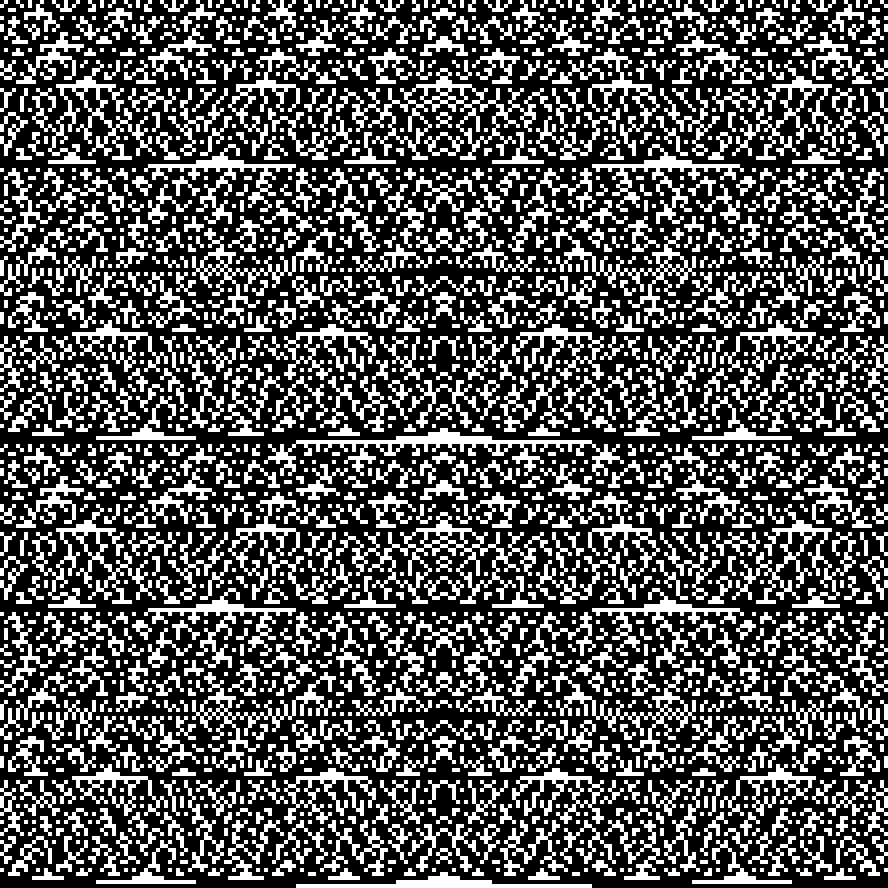
Each column, row and diagonal of ternary digits sums to 222. Here is the full n/223 square represented with 0s in grey, 1s in white and 2s in red:

(Click for larger)


It isn’t difficult to see that the white squares are mirror-symmetrical on a horizontal axis. Here is the symmetrical pattern rotated by 90º:

(Click for larger)


But why should the 1s be symmetrical? This isn’t something special to 1/223, because it happens with prime reciprocals like 1/7 too:

1/7 = 0.010212... in base 3
2/7 = 0.021201...
3/7 = 0.102120...
4/7 = 0.120102...
5/7 = 0.201021...
6/7 = 0.212010...

And you can notice something else: 0s mirror 2s and 2s mirror 0s. A related pattern appears in base 10:

1/7 = 0.142857...
2/7 = 0.285714...
3/7 = 0.428571...
4/7 = 0.571428...
5/7 = 0.714285...
6/7 = 0.857142...

The digit 1 in the decimal digits of n/7 corresponds to the digit 8 in the decimal digits of (7-n)/7; 4 corresponds to 5; 2 corresponds to 7; 8 corresponds to 1; 5 corresponds to 4; and 7 corresponds to 2. In short, if you’re given the digits d1 of n/7, you know the digits d2 of (n-7)/7 by the rule d2 = 9-d1.

Why does that happen? Examine these sums:

 1/7 = 0.142857142857142857142857142857142857142857...
+6/7 = 0.857142857142857142857142857142857142857142...
 7/7 = 0.999999999999999999999999999999999999999999... = 1.0

 2/7 = 0.285714285714285714285714285714285714285714...
+5/7 = 0.714285714285714285714285714285714285714285...
 7/7 = 0.999999999999999999999999999999999999999999... = 1.0

 3/7 = 0.428571428571428571428571428571428571428571...
+4/7 = 0.571428571428571428571428571428571428571428...
 7/7 = 0.999999999999999999999999999999999999999999... = 1.0

And here are the same sums in ternary (where the first seven integers are 1, 2, 10, 11, 12, 20, 21):

  1/21 = 0.010212010212010212010212010212010212010212...
+20/21 = 0.212010212010212010212010212010212010212010...
 21/21 = 0.222222222222222222222222222222222222222222... = 1.0

  2/21 = 0.021201021201021201021201021201021201021201...
+12/21 = 0.201021201021201021201021201021201021201021...
 21/21 = 0.222222222222222222222222222222222222222222... = 1.0

 10/21 = 0.102120102120102120102120102120102120102120...
+11/21 = 0.120102120102120102120102120102120102120102...
 21/21 = 0.222222222222222222222222222222222222222222... = 1.0

Accordingly, in base b with the prime p, the digits d1 of n/p correspond to the digits (p-n)/p by the rule d2 = (b-1)-d1. This explains why the 1s mirror themselves in ternary: 1 = 2-1 = (3-1)-1. In base 5, the 2s mirror themselves by the rule 2 = 4-2 = (5-1) – 2. In all odd bases, some digit will mirror itself; in all even bases, no digit will. The mirror-digit will be equal to (b-1)/2, which is always an integer when b is odd, but never an integer when b is even.

Here are some more examples of the symmetrical patterns found in odd bases:

Patterns of 1s in 1/19 in base 3


Patterns of 6s in 1/19 in base 13


Patterns of 7s in 1/19 in base 15


Elsewhere other-posted:

Roses Are Golden — more on The Roses of Heliogabalus (1888)
Three Is The Key — more on the 1/223 square

Get Your Ox Off

Boustrophedon (pronounced “bough-stra-FEE-dun” or “boo-stra-FEE-dun”) is an ancient Greek word literally meaning “as the ox turns (in ploughing)”, that is, moving left-right, right-left, and so on. The word is used of writing that runs down the page in the same way. To see what that means, examine two versions of the first paragraph of Clark Ashton Smith’s story “The Demon of the Flower” (1933). The first is written in the usual way, the second is written boustrophedon:

Not as the plants and flowers of Earth, growing peacefully beneath a simple sun, were the blossoms of the planet Lophai. Coiling and uncoiling in double dawns; tossing tumultuously under vast suns of jade green and balas-ruby orange; swaying and weltering in rich twilights, in aurora-curtained nights, they resembled fields of rooted servants that dance eternally to an other-worldly music.


Not as the plants and flowers of Earth, growing peacefully
.iahpoL tenalp eht fo smossolb eht erew ,nus elpmis a htaeneb
Coiling and uncoiling in double dawns; tossing tumultuously
;egnaro ybur-salab dna neerg edaj fo snus tsav rednu
swaying and weltering in rich twilights, in aurora-curtained
ecnad taht stnavres detoor fo sdleif delbmeser yeht ,sthgin
eternally to an other-worldly music.


Boustrophedon writing was once common and sometimes the left-right lines would also be mirror-reversed, like this:


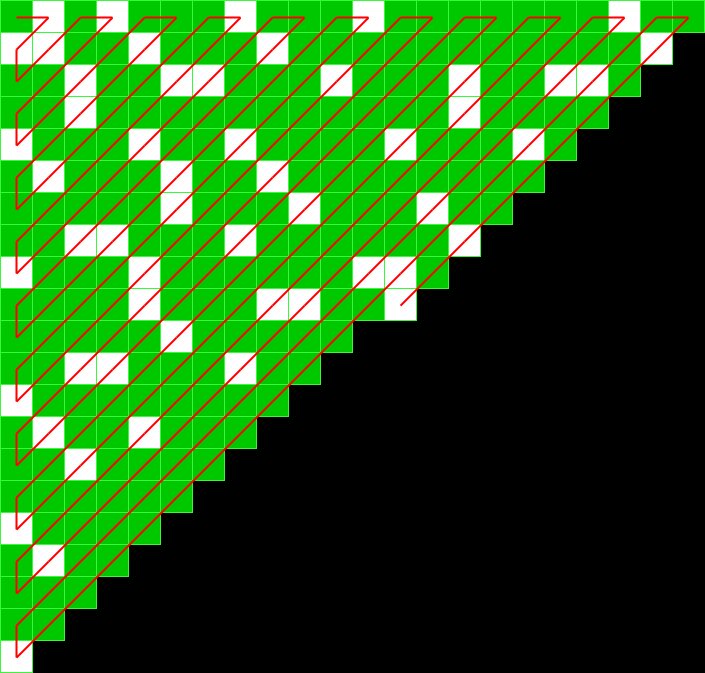
You could also use the term “boustrophedon” to describe the way this table of numbers is filled:

primes_table


The table begins with “1” in the top left-hand corner, then moves right for “2”, then down for “3”, then right-and-up for “4”, “5” and “6”, then right for “7”, then left-and-down for “8”, “9” and “10”, and so on. You could also say that the numbers snake through the table. I’ve marked the primes among them, because I was interested in the patterns made by the primes when the numbers were represented as blocks on a grid, like this:

primes_large


Primes are in solid white (compare the Ulam spiral). Here’s the boustrophedon prime-grid on a finer scale:

primes

(click for full image)


And what about other number-tests? Here are the even numbers marked on the grid (i.e. n mod 2 = 0):

mod2

n mod 2 = 0


And here are some more examples of a modulus test:

mod3

n mod 3 = 0


mod5

n mod 5 = 0


mod9

n mod 9 = 0


mod15

n mod 15 = 0


mod_various

n mod various = 0 (animated gif)


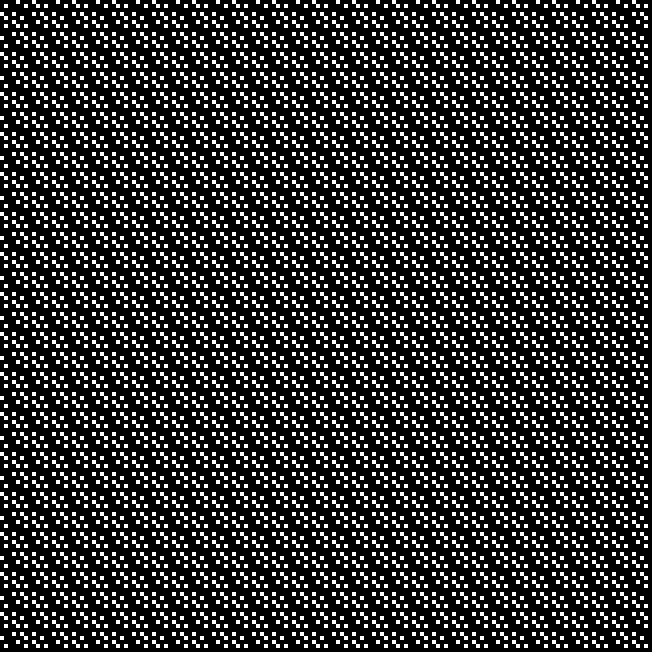
Next I looked at reciprocals (numbers divided into 1) marked on the grid, with the digits of a reciprocal marking the number of blank squares before a square is filled in (if the digit is “0”, the square is filled immediately). For example, in base ten 1/7 = 0.142857142857142857…, where the block “142857” repeats for ever. When represented on the grid, 1/7 has 1 blank square, then a filled square, then 4 blank squares, then a filled square, then 2 blank squares, then a filled square, and so on:

recip7_base10

1/7 in base 10


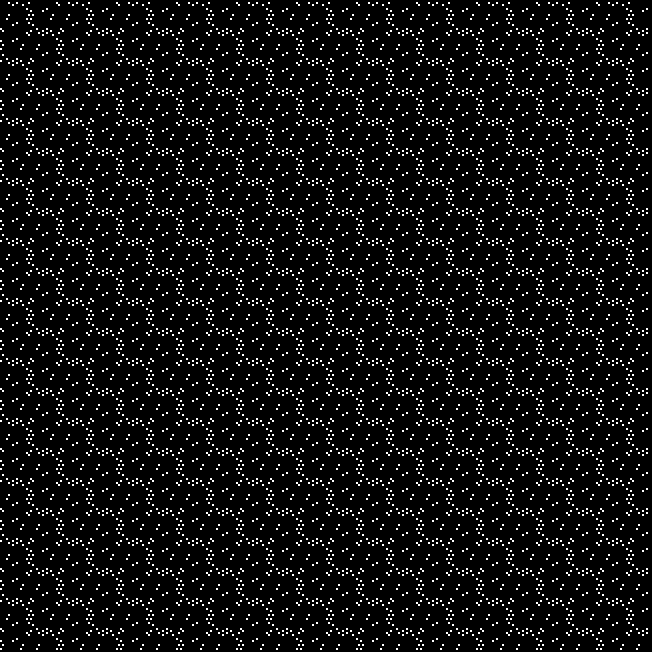
And here are some more reciprocals (click for full images):

recip9_base2

1/9 in base 2


recip13_base10

1/13 in base 10


recip27_base10

1/27 in base 10


recip41_base10

1/41 in base 10


recip63_base10

1/63 in base 10


recip82_base10

1/82 in base 10


recip101_base10

1/101 in base 10


recip104_base10

1/104 in base 10


recip124_base10

1/124 in base 10


recip143_base10

1/143 in base 10


recip175_base10

1/175 in base 10


recip604_base8

1/604 in base 8


recip_various

1/n in various bases (animated gif)


Prime Time

1/29[b=2] = 0·0000100011010011110111001011… (l=28)
1/29[b=3] = 0·0002210102011122200121202111… (l=28)
1/29[b=5] = 0·00412334403211… (l=14)
1/29[b=7] = 0·0145536… (l=7)
1/29[b=11] = 0·04199534608387[10]69115764[10]2723… (l=28)
1/29[b=13] = 0·05[10]9[11]28[12]7231[10]4… (l=14)
1/29[b=17] = 0·09[16]7… (l=4)
1/29[b=19] = 0·0[12]89[15][13][14]7[16]73[17][13]1[18]6[10]9354[11]2[11][15]15[17]… (l=28)
1/29[b=23] = 0·0[18]5[12][15][19][19]… (l=7)
1/29[b=29] = 0·1 (l=1)
1/29[b=31] = 0·1248[17]36[12][25][20]9[19]7[14][29][28][26][22][13][27][24][18]5[10][21][11][23][16]… (l=28)
1/29[b=37] = 0·1[10]7[24]8[34][16][21][25][19]53[30][22][35][26][29][12][28]2[20][15][11][17][31][33]6[14]… (l=28)
1/29[b=41] = 0·1[16][39][24]… (l=4)
1/29[b=43] = 0·1[20][32][26][29][28]7[17][34]4[19][11][37]2[41][22][10][16][13][14][35][25]8[38][23][31]5[40]… (l=28)
1/29[b=47] = 0·1[29]84[40][24][14][27][25][43][35][30][37][12][45][17][38][42]6[22][32][19][21]3[11][16]9[34]… (l=28)
1/29[b=53] = 0·1[43][45][36][29][12][42]… (l=7)
1/29[b=59] = 0·2… (l=1)
1/29[b=61] = 0·26[18][56][48][23]8[25][14][44][10][31][33][39][58][54][42]4[12][37][52][35][46][16][50][29][27][21]… (l=28)
1/29[b=67] = 0·2[20][53]9[16][11][36][64][46][13][57][50][55][30]… (l=14)
1/29[b=71] = 0·2[31][58][53][61][14][48][68][39][12][17]9[56][22]… (l=14)
1/29[b=73] = 0·2[37][55][27][50][25][12][42][57][65][32][52][62][67][70][35][17][45][22][47][60][30][15]7[40][20][10]5… (l=28)
1/29[b=79] = 0·2[57][16][27][19]5[35][32][54][38][10][70][65][29][76][21][62][51][59][73][43][46][24][40][68]8[13][49]… (l=28)
1/29[b=83] = 0·2[71][45][65][68][57][20]… (l=7)
1/29[b=89] = 0·36[12][24][49]9[18][36][73][58][27][55][21][42][85][82][76][64][39][79][70][52][15][30][61][33][67][46]… (l=28)
1/29[b=97] = 0·3[33][43][46][80][26][73][56][83][60][20]6[66][86][93][63][53][50][16][70][23][40][13][36][76][90][30][10]… (l=28)

More Narcissisum

The number 23 is special, inter alia, because it’s prime, divisible by only itself and 1. It’s also special because its reciprocal has maximum period. That is, the digits of 1/23 come in repeated blocks of 22, like this:

1/23 = 0·0434782608695652173913  0434782608695652173913  0434782608695652173913…

But 1/23 fails to be special in another way: you can’t sum its digits and get 23:

0 + 4 + 3 + 4 + 7 = 18
0 + 4 + 3 + 4 + 7 + 8 = 26
0 + 4 + 3 + 4 + 7 + 8 + 2 + 6 + 0 + 8 + 6 + 9 + 5 + 6 + 5 + 2 + 1 + 7 + 3 + 9 + 1 + 3 = 99

1/7 is different:

1/7 = 0·142857… → 1 + 4 + 2 = 7

This means that 7 is narcissistic: it reflects itself by manipulation of the digits of 1/7. But that’s in base ten. If you try base eight, 23 becomes narcissistic too (note that 23 = 2 x 8 + 7, so 23 in base eight is 27):

1/27 = 0·02620544131… → 0 + 2 + 6 + 2 + 0 + 5 + 4 + 4 = 27 (base=8)

Here are more narcissistic reciprocals in base ten:

1/3 = 0·3… → 3 = 3
1/7 = 0·142857… → 1 + 4 + 2 = 7
1/8 = 0·125 → 1 + 2 + 5 = 8
1/13 = 0·076923… → 0 + 7 + 6 = 13
1/14 = 0·0714285… → 0 + 7 + 1 + 4 + 2 = 14
1/34 = 0·02941176470588235… → 0 + 2 + 9 + 4 + 1 + 1 + 7 + 6 + 4 = 34
1/43 = 0·023255813953488372093… → 0 + 2 + 3 + 2 + 5 + 5 + 8 + 1 + 3 + 9 + 5 = 43
1/49 = 0·020408163265306122448979591836734693877551… → 0 + 2 + 0 + 4 + 0 + 8 + 1 + 6 + 3 + 2 + 6 + 5 + 3 + 0 + 6 + 1 + 2 = 49
1/51 = 0·0196078431372549… → 0 + 1 + 9 + 6 + 0 + 7 + 8 + 4 + 3 + 1 + 3 + 7 + 2 = 51
1/76 = 0·01315789473684210526… → 0 + 1 + 3 + 1 + 5 + 7 + 8 + 9 + 4 + 7 + 3 + 6 + 8 + 4 + 2 + 1 + 0 + 5 + 2 = 76
1/83 = 0·01204819277108433734939759036144578313253… → 0 + 1 + 2 + 0 + 4 + 8 + 1 + 9 + 2 + 7 + 7 + 1 + 0 + 8 + 4 + 3 + 3 + 7 + 3 + 4 + 9 = 83
1/92 = 0·010869565217391304347826… → 0 + 1 + 0 + 8 + 6 + 9 + 5 + 6 + 5 + 2 + 1 + 7 + 3 + 9 + 1 + 3 + 0 + 4 + 3 + 4 + 7 + 8 = 92
1/94 = 0·01063829787234042553191489361702127659574468085… → 0 + 1 + 0 + 6 + 3 + 8 + 2 + 9 + 7 + 8 + 7 + 2 + 3 + 4 + 0 + 4 + 2 + 5 + 5 + 3 + 1 + 9 + 1 + 4 = 94
1/98 = 0·0102040816326530612244897959183673469387755… → 0 + 1 + 0 + 2 + 0 + 4 + 0 + 8 + 1 + 6 + 3 + 2 + 6 + 5 + 3 + 0 + 6 + 1 + 2 + 2 + 4 + 4 + 8 + 9 + 7 + 9 + 5 = 98


Previously pre-posted (please peruse):

Digital Disfunction
The Hill to Power
Narcissarithmetic #1
Narcissarithmetic #2

Three Is The Key

If The Roses of Heliogabalus (1888) is any guide, Sir Lawrence Alma-Tadema (1836-1912) thought that 222 is a special number. But his painting doesn’t exhaust its secrets. To get to another curiosity of 222, start with 142857. As David Wells puts it in his Penguin Dictionary of Curious and Interesting Numbers (1986), 142857 is a “number beloved of all recreational mathematicians”. He then describes some of its properties, including this:

142857 x 1 = 142857
142857 x 2 = 285714
142857 x 3 = 428571
142857 x 4 = 571428
142857 x 5 = 714285
142857 x 6 = 857142

The multiples are cyclic permutations: the order of the six numbers doesn’t change, only their starting point. Because each row contains the same numbers, it sums to the same total: 1 + 4 + 2 + 8 + 5 + 7 = 27. And because each row begins with a different number, each column contains the same six numbers and also sums to 27, like this:
1 4 2 8 5 7
+ + + + + +
2 8 5 7 1 4
+ + + + + +
4 2 8 5 7 1
+ + + + + +
5 7 1 4 2 8
+ + + + + +
7 1 4 2 8 5
+ + + + + +
8 5 7 1 4 2

= = = = = =

2 2 2 2 2 2
7 7 7 7 7 7

If the diagonals of the square also summed to the same total, the multiples of 142857 would create a full magic square. But the diagonals don’t have the same total: the left-right diagonal sums to 31 and the right-left to 23 (note that 31 + 23 = 54 = 27 x 2).

But where does 142857 come from? It’s actually the first six digits of the reciprocal of 7, i.e. 1/7 = 0·142857… Those six numbers repeat for ever, because 1/7 is a prime reciprocal with maximum period: when you calculate 1/7, all integers below 7 are represented in the remainders. The square of multiples above is simply another way of representing this:

1/7 = 0·142857…
2/7 = 0·285714…
3/7 = 0·428571…
4/7 = 0·571428…
5/7 = 0·714285…
6/7 = 0·857142…
7/7 = 0·999999…

The prime reciprocals 1/17 and 1/19 also have maximum period, so the squares created by their multiples have the same property: each row and each column sums to the same total, 72 and 81, respectively. But the 1/19 square has an additional property: both diagonals sum to 81, so it is fully magic:

01/19 = 0·0 5 2 6 3 1 5 7 8 9 4 7 3 6 8 4 2 1
02/19 = 0·1 0 5 2 6 3 1 5 7 8 9 4 7 3 6 8 4 2…
03/19 = 0·1 5 7 8 9 4 7 3 6 8 4 2 1 0 5 2 6 3…
04/19 = 0·2 1 0 5 2 6 3 1 5 7 8 9 4 7 3 6 8 4…
05/19 = 0·2 6 3 1 5 7 8 9 4 7 3 6 8 4 2 1 0 5…
06/19 = 0·3 1 5 7 8 9 4 7 3 6 8 4 2 1 0 5 2 6…
07/19 = 0·3 6 8 4 2 1 0 5 2 6 3 1 5 7 8 9 4 7…
08/19 = 0·4 2 1 0 5 2 6 3 1 5 7 8 9 4 7 3 6 8…
09/19 = 0·4 7 3 6 8 4 2 1 0 5 2 6 3 1 5 7 8 9…
10/19 = 0·5 2 6 3 1 5 7 8 9 4 7 3 6 8 4 2 1 0…
11/19 = 0·5 7 8 9 4 7 3 6 8 4 2 1 0 5 2 6 3 1…
12/19 = 0·6 3 1 5 7 8 9 4 7 3 6 8 4 2 1 0 5 2…
13/19 = 0·6 8 4 2 1 0 5 2 6 3 1 5 7 8 9 4 7 3…
14/19 = 0·7 3 6 8 4 2 1 0 5 2 6 3 1 5 7 8 9 4…
15/19 = 0·7 8 9 4 7 3 6 8 4 2 1 0 5 2 6 3 1 5…
16/19 = 0·8 4 2 1 0 5 2 6 3 1 5 7 8 9 4 7 3 6…
17/19 = 0·8 9 4 7 3 6 8 4 2 1 0 5 2 6 3 1 5 7…
18/19 = 0·9 4 7 3 6 8 4 2 1 0 5 2 6 3 1 5 7 8

First line = 0 + 5 + 2 + 6 + 3 + 1 + 5 + 7 + 8 + 9 + 4 + 7 + 3 + 6 + 8 + 4 + 2 + 1 = 81

Left-right diagonal = 0 + 0 + 7 + 5 + 5 + 9 + 0 + 3 + 0 + 4 + 2 + 8 + 7 + 5 + 6 + 7 + 5 + 8 = 81

Right-left diagonal = 9 + 9 + 2 + 4 + 4 + 0 + 9 + 6 + 9 + 5 + 7 + 1 + 2 + 4 + 3 + 2 + 4 + 1 = 81

In base 10, this doesn’t happen again until the 1/383 square, whose magic total is 1719 (= 383-1 x 10⁻¹ / 2). But recreational maths isn’t restricted to base 10 and lots more magic squares are created by lots more primes in lots more bases. The prime 223 in base 3 is one of them. Here the first line is

1/223 = 1/220213 = 0·

0000100210210102121211101202221112202
2110211112001012200122102202002122220
2110110201020210001211000222011010010
2222122012012120101011121020001110020
0112011110221210022100120020220100002
0112112021202012221011222000211212212…

The digits sum to 222, so 222 is the magic total for all rows and columns of the 1/223 square. It is also the total for both diagonals, so the square is fully magic. I doubt that Alma-Tadema knew this, because he lived before computers made calculations like that fast and easy. But he was probably a Freemason and, if so, would have been pleased to learn that 222 had a link with squares.