Leave and Let Dice

Imagine a game with six players, numbered #1 to #6, and one six-sided die. Someone rolls the die and the player who matches the number wins the game. That is, if the die rolls 1, player #1 wins; if the die rolls 2, player #2 wins; and so on. With a fair die, this is a fair game, because each player has exactly a 1/6 chance of winning. You could call it a simultaneous game, because all players are playing at once. It has one rule:

• If the die rolls n, then player #n wins.

Now try a different game with six players and one die. Player #1 rolls the die. If he gets 1, he wins the game. If not, then he leaves the game and player #2 rolls the die. If he gets 2, he wins the game. If not, then he leaves the game and player #3 rolls the die. And so on. You could call this a sequential game, because the players are playing in sequence. It has two rules:

• If player #n rolls n on the die, then he wins.
• If player #n doesn’t roll n, then player n+1 rolls the die.

Is it a fair game? No, definitely not. Player #1 has the best chance of winning. 1/6 or 16.6% of the time he rolls 1 and wins the game. 5/6 of the time, he rolls 2, 3, 4, 5 or 6 and passes the die to player #2. Now player #2 has a 1/6 chance of rolling a 2 and winning. But he has the opportunity to roll the die only 5/6 of the time, so his chance of winning the game is 1/6 * 5/6 = 5/36 = 13.8%. However, if player #2 rolls a 1, 3, 4, 5 or 6, then he loses and player #3 rolls the die. But player #3 has that opportunity only 5/6 * 5/6 = 25/36 of the time. So his chance of winning is 1/6 * 25/36 = 11.57%. And so on.

To put it another way, if the six players play 46656 = 6^6 games under the sequential rules, then on average:

• Player #1 wins 7776 games
• Player #2 wins 6480 games
• Player #3 wins 5400 games
• Player #4 wins 4500 games
• Player #5 wins 3750 games
• Player #6 wins 3125 games
• 15625 games end without a winner.

In other words, player #1 is 20% more likely to win than player #2, 44% more likely than player #3, 72.8% more likely than player #4, 107% more likely than player #5, and 148.8% more likely than player #6. Furthermore, player #2 is 20% more likely to win than player #3, 44% more likely than player #4, 72.8% more likely than player #5, and so on.

But there is a simple way to make the sequential game perfectly fair, so long as it’s played with a fair die. At least, I’ve thought of a simple way, but there might be more than one.


To make the sequential game fair, you add an extra rule:

1. If player #n rolls n on the die, he wins the game.
2. If player #n rolls a number greater than n, he loses and the die passes to player n+1.
3. If player #n rolls a number less than n, then he rolls again.

Let’s run through a possible game to see that it’s fair. Player #1 rolls first. He has a 1/6 chance of rolling a 1 and winning the game. However, 5/6 of the time he loses and passes the die to player #2. If player #2 rolls a 1, he rolls again. In other words, player #2 is effectively playing with a five-sided die, because all rolls of 1 are ignored. Therefore, he has a 1/5 chance of winning the game at that stage.

But hold on: a 1/5 chance of winning is better than a 1/6 chance, which is what player #1 had. So how is the game fair? Well, note the qualifying phrase at the end of the previous paragraph: at that stage. The game doesn’t always reach that stage, because if player #1 rolls a 1, the game is over. Player #2 rolls only if player doesn’t roll 1, which is 5/6 of the time. Therefore player #2’s chance of winning is really 1/5 * 5/6 = 5/30 = 1/6.

However, 4/5 of the time player #2 rolls a 3, 4, 5 or 6 and the die passes to player #3. If player #3 rolls a 1 or 2, he rolls again. In other words, player #3 is effectively playing with a four-sided die, because all rolls of 1 and 2 are ignored. Therefore, he has a 1/4 chance of winning the game at that stage.

A 1/4 chance of winning is better than a 1/5 chance and a 1/6 chance, but the same reasoning applies as before. Player #3 rolls the die only 5/6 * 4/5 = 20/30 = 2/3 of the time, so his chance of winning is really 1/4 * 2/3 = 2/12 = 1/6.

However, 3/4 of the time player #2 rolls a 4, 5 or 6 and the die passes to player #4. If player #4 rolls a 1, 2 or 3, he rolls again. In other words, player #4 is effectively playing with a three-sided die, because all rolls of 1, 2 and 3 are ignored. Therefore, he has a 1/3 chance of winning the game at that stage. 1/3 > 1/4 > 1/5 > 1/6, but the same reasoning applies as before. Player #4 rolls the die only 5/6 * 4/5 * 3/4 = 60/120 = 1/2 of the time, so his chance of winning is really 1/3 * 1/2 = 1/6.

And so on. If the die reaches player #5 and he gets a 1, 2, 3 or 4, then he rolls again. He is effectively rolling with a two-sided die, so his chance of winning is 1/2 * 5/6 * 4/5 * 3/4 * 2/3 = 120/720 = 1/6. If player #5 rolls a 6, he loses and the die passes to player #6. But there’s no need for player #6 to roll the die, because he’s bound to win. He rolls again if he gets a 1, 2, 3, 4 or 5, so eventually he must get a 6 and win the game. If player #5 loses, then player #6 automatically wins.

It’s obvious that this form of the game will get slower as more players drop out, because later players will be rolling again more often. To speed the game up, you can refine the rules like this:

1. If Player #1 rolls a 1, he wins the game. Otherwise…
2. If player #2 rolls a 2, he wins the game. If he rolls a 1, he rolls again. Otherwise…
3. Player #3 rolls twice and adds his scores. If the total is 3, 4 or 5, he wins the game. Otherwise…
4. Player #4 rolls once. If he gets 1 or 2, he wins the game. Otherwise…
5. Player #5 rolls once. If he gets 1, 2 or 3, he wins the game. Otherwise…
6. Player #6 wins the game.

Only player #2 might have to roll more than twice. Player #3 has to roll twice because he needs a way to get a 1/4 chance of winning. If you roll two dice, there are:

• Two ways of getting a total of 3: roll #1 is 1 and roll #2 is 2, or vice versa.
• Three ways of getting a total of 4 = 1+3, 3+1, 2+2.
• Four ways of getting 5 = 1+4, 4+1, 2+3, 3+2.

This means player #3 has 2 + 3 + 4 = 9 ways of winning. But there are thirty-six ways of rolling one die twice. Therefore player #3 has a 9/36 = 1/4 chance of winning. Here are the thirty-six ways of rolling one die twice, with asterisks marking the winning totals for player #3:

01. (1,1)
02. (1,2)*
03. (2,1)*
04. (1,3)*
05. (3,1)*
06. (1,4)*
07. (4,1)*
08. (1,5)
09. (5,1)
10. (1,6)
11. (6,1)
12. (2,2)*
13. (2,3)*
14. (3,2)*
15. (2,4)
16. (4,2)
17. (2,5)
18. (5,2)
19. (2,6)
20. (6,2)
21. (3,3)
22. (3,4)
23. (4,3)
24. (3,5)
25. (5,3)
26. (3,6)
27. (6,3)
28. (4,4)
29. (4,5)
30. (5,4)
31. (4,6)
32. (6,4)
33. (5,5)
34. (5,6)
35. (6,5)
36. (6,6)

Fract-Hills

The Farey sequence is a fascinating sequence of fractions that divides the interval between 0/1 and 1/1 into smaller and smaller parts. To find the Farey fraction a[i] / b[i], you simply find the mediant of the Farey fractions on either side:

• a[i] / b[i] = (a[i-1] + a[i+1]) / (b[i-1] + b[i+1])

Then, if necessary, you reduce the numerator and denominator to their simplest possible terms. So the sequence starts like this:

• 0/1, 1/1

To create the next stage, find the mediant of the two fractions above: (0+1) / (1+1) = 1/2

• 0/1, 1/2, 1/1

For the next stage, there are two mediants to find: (0+1) / (1+2) = 1/3, (1+1) / (2+3) = 2/3

• 0/1, 1/3, 1/2, 2/3, 1/1

Note that 1/2 is the mediant of 1/3 and 2/3, that is, 1/2 = (1+2) / (3+3) = 3/6 = 1/2. The next stage is this:

• 0/1, 1/4, 1/3, 2/5, 1/2, 3/5, 2/3, 3/4, 1/1

Now 1/2 is the mediant of 2/5 and 3/5, that is, 1/2 = (2+3) / (5+5) = 5/10 = 1/2. Further stages go like this:

• 0/1, 1/5, 1/4, 2/7, 1/3, 3/8, 2/5, 3/7, 1/2, 4/7, 3/5, 5/8, 2/3, 5/7, 3/4, 4/5, 1/1

• 0/1, 1/6, 1/5, 2/9, 1/4, 3/11, 2/7, 3/10, 1/3, 4/11, 3/8, 5/13, 2/5, 5/12, 3/7, 4/9, 1/2, 5/9, 4/7, 7/12, 3/5, 8/13, 5/8, 7/11, 2/3, 7/10, 5/7, 8/11, 3/4, 7/9, 4/5, 5/6, 1/1

• 0/1, 1/7, 1/6, 2/11, 1/5, 3/14, 2/9, 3/13, 1/4, 4/15, 3/11, 5/18, 2/7, 5/17, 3/10, 4/13, 1/3, 5/14, 4/11, 7/19, 3/8, 8/21, 5/13, 7/18, 2/5, 7/17, 5/12, 8/19, 3/7, 7/16, 4/9, 5/11, 1/2, 6/11, 5/9, 9/16, 4/7, 11/19, 7/12, 10/17, 3/5, 11/18, 8/13, 13/21, 5/8, 12/19, 7/11, 9/14, 2/3, 9/13, 7/10, 12/17, 5/7, 13/18, 8/11, 11/15, 3/4, 10/13, 7/9, 11/14, 4/5, 9/11, 5/6, 6/7, 1/1

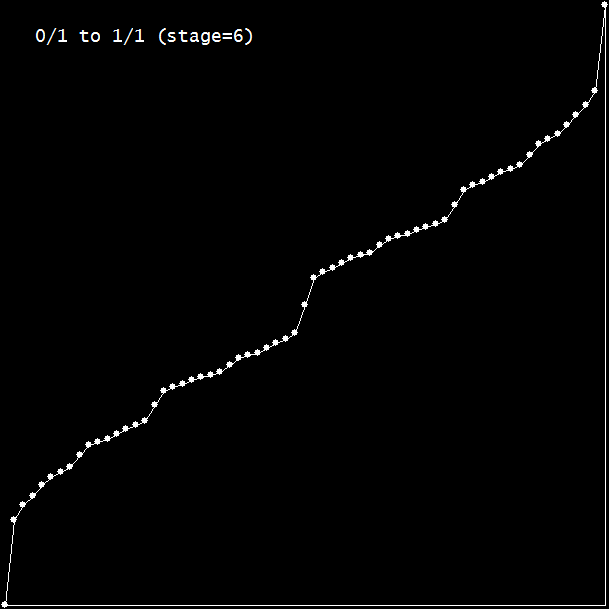
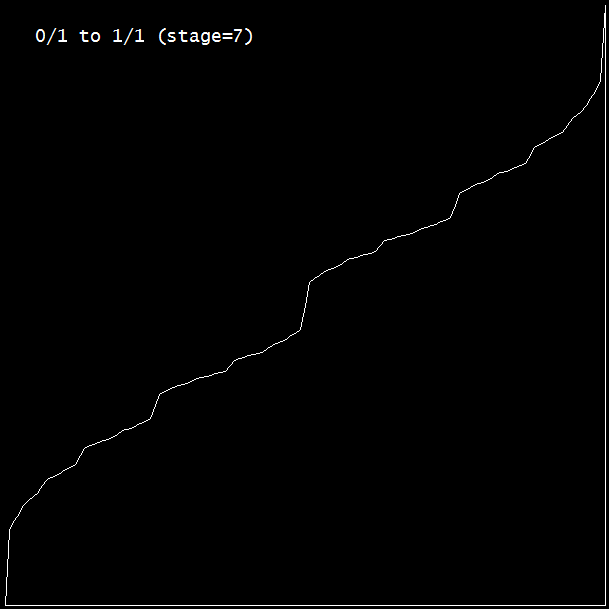
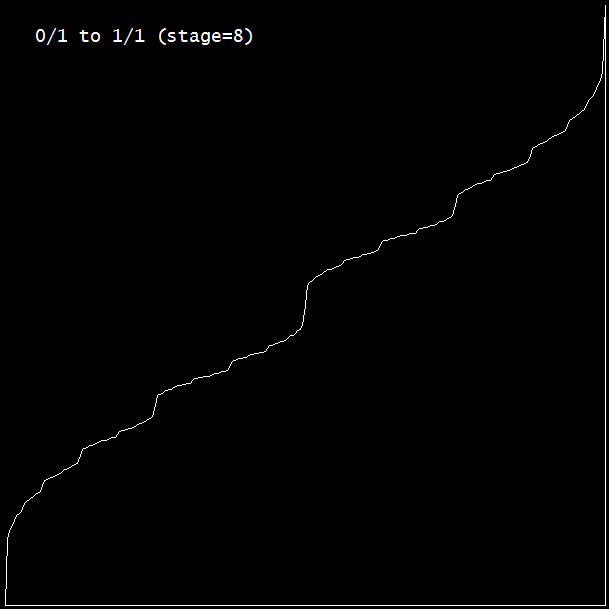
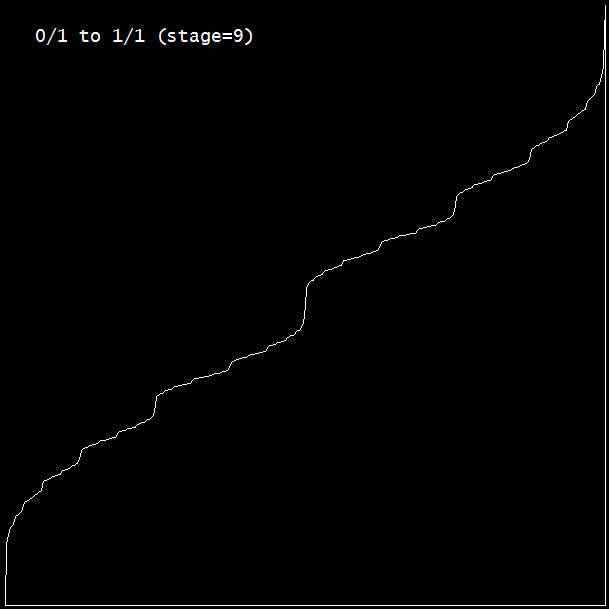
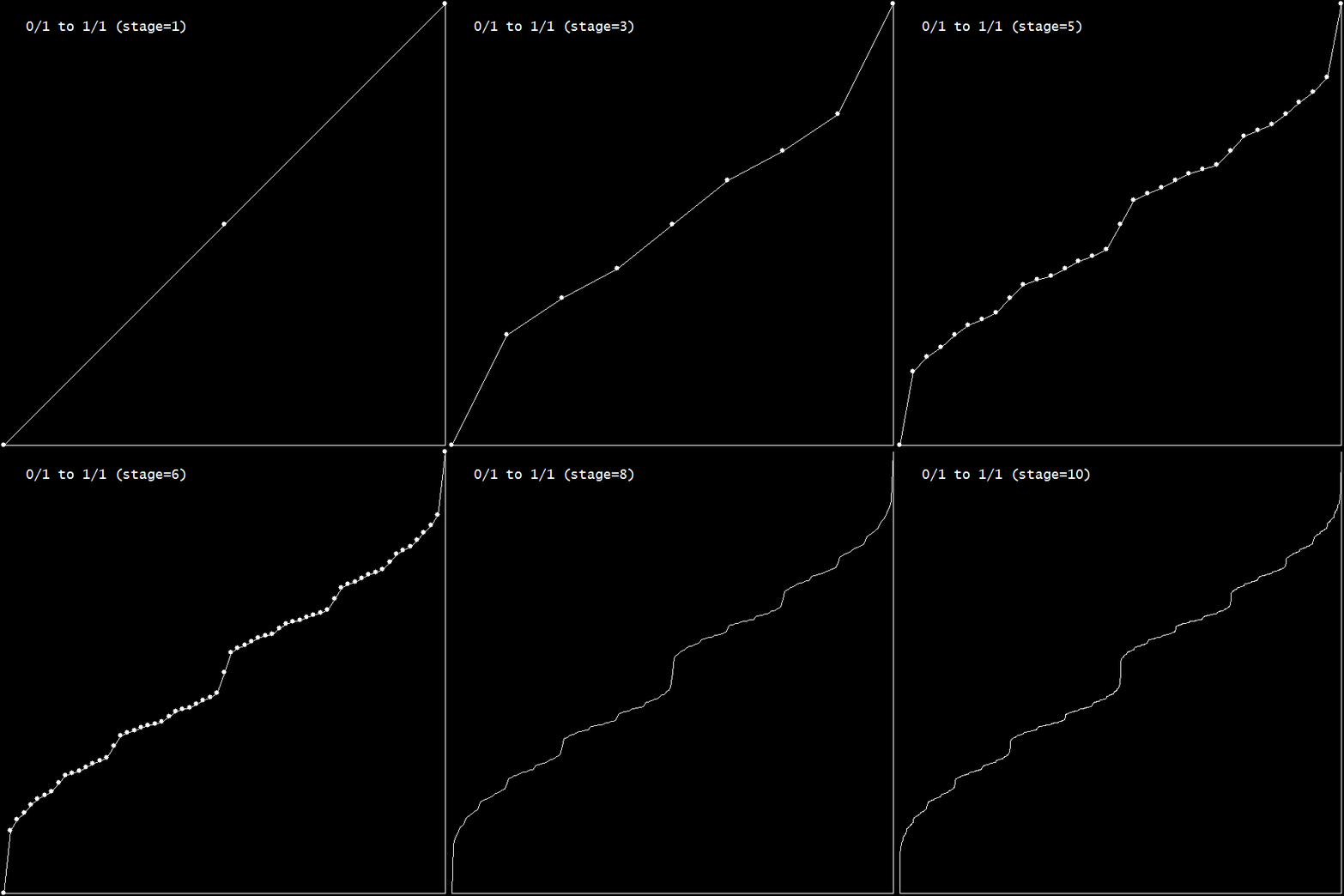
The Farey sequence is actually a fractal, as you can see more easily when it’s represented as an image:

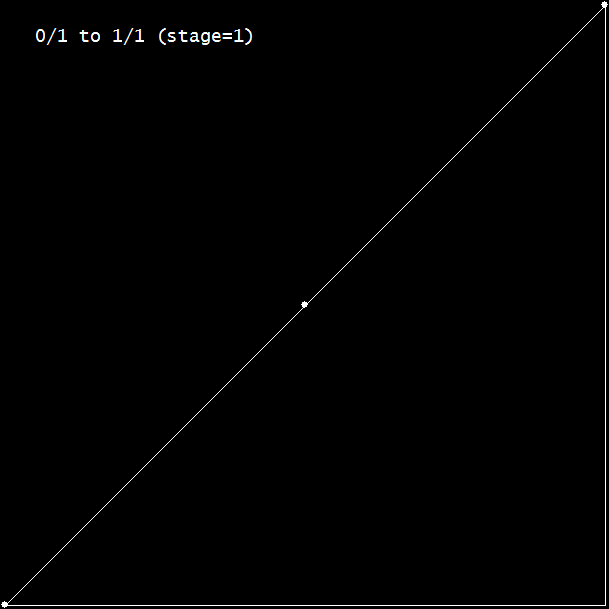
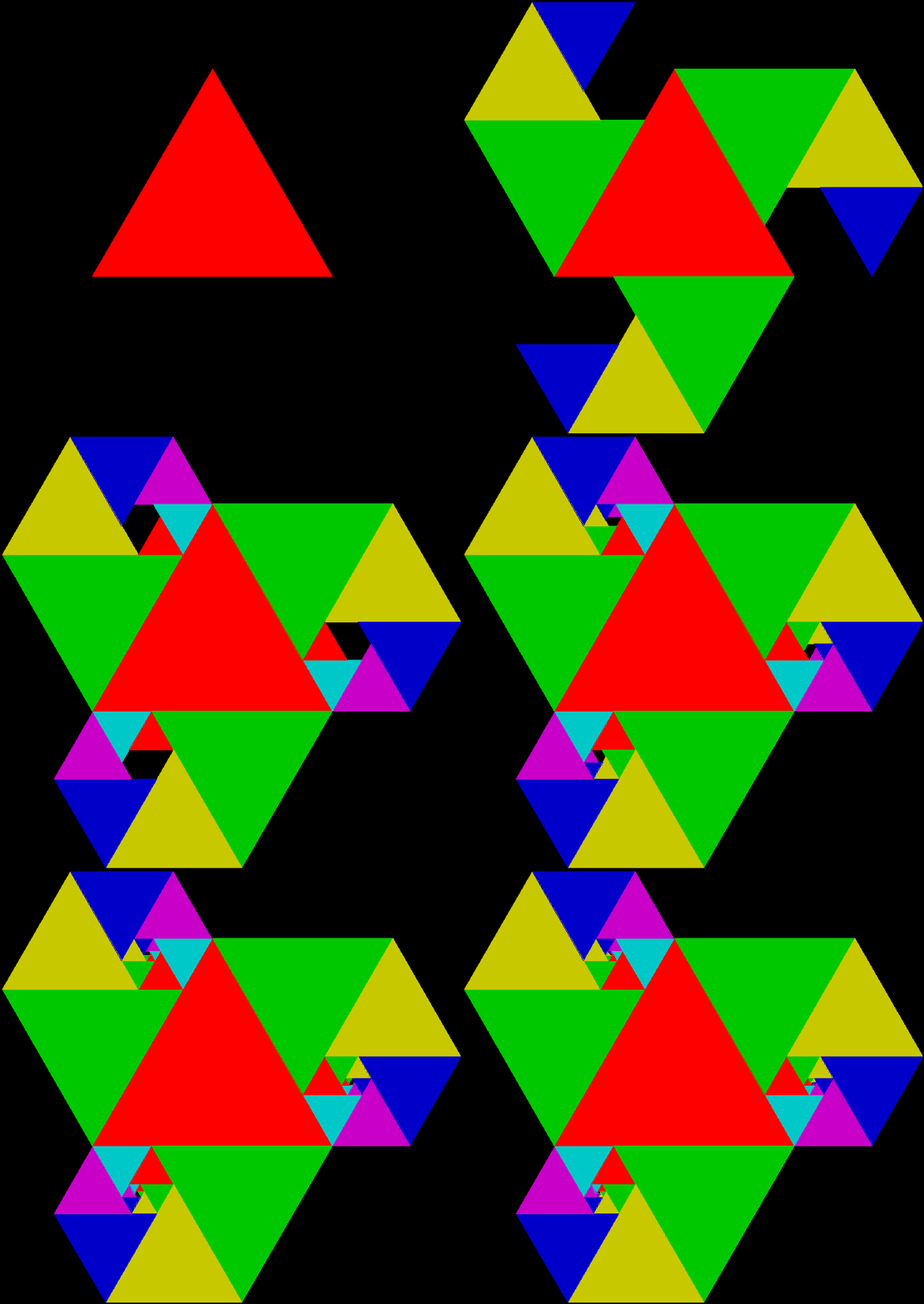
Farey fractal stage #1, representing 0/1, 1/2, 1/1

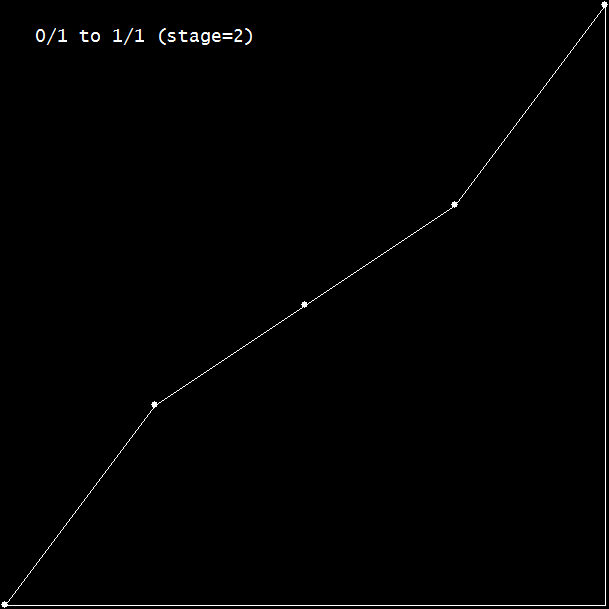
Farey fractal stage #2, representing 0/1, 1/3, 1/2, 2/3, 1/1

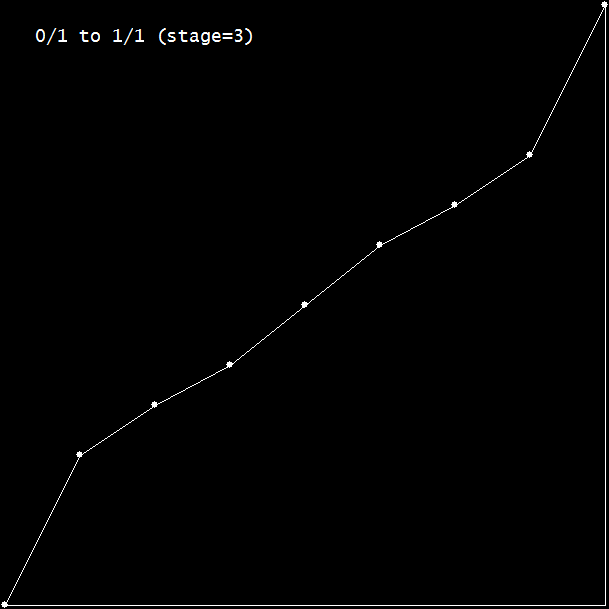
Farey fractal stage #3, representing 0/1, 1/4, 1/3, 2/5, 1/2, 3/5, 2/3, 3/4, 1/1

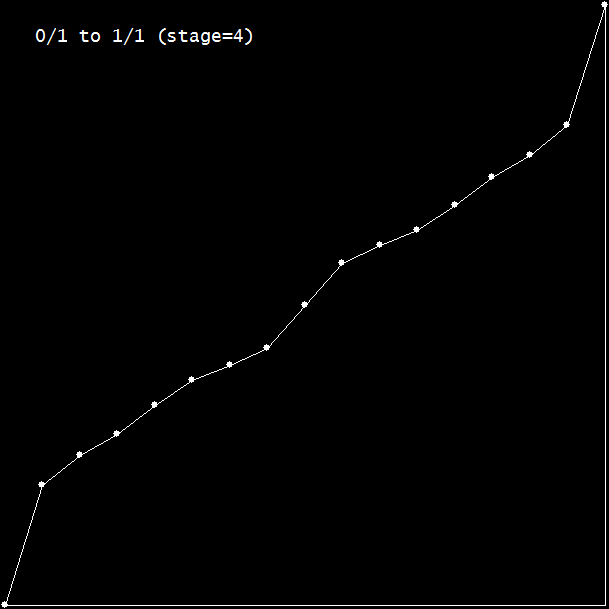
Farey fractal stage #4, representing 0/1, 1/5, 1/4, 2/7, 1/3, 3/8, 2/5, 3/7, 1/2, 4/7, 3/5, 5/8, 2/3, 5/7, 3/4, 4/5, 1/1

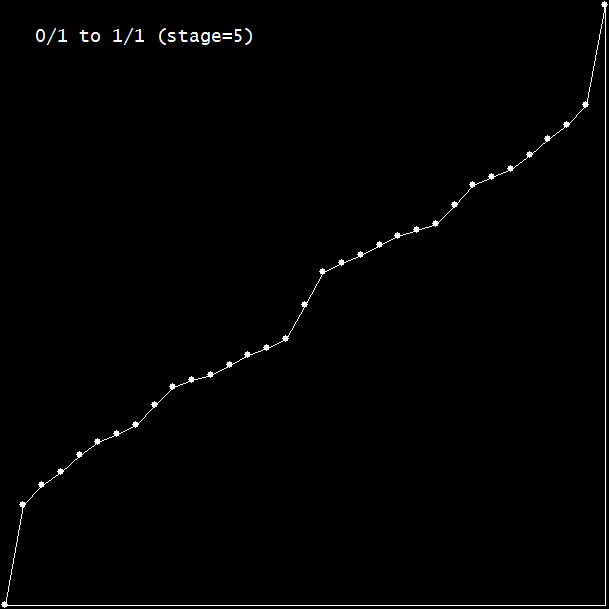
Farey fractal stage #5

Farey fractal stage #6

Farey fractal stage #7

Farey fractal stage #8

Farey fractal stage #9

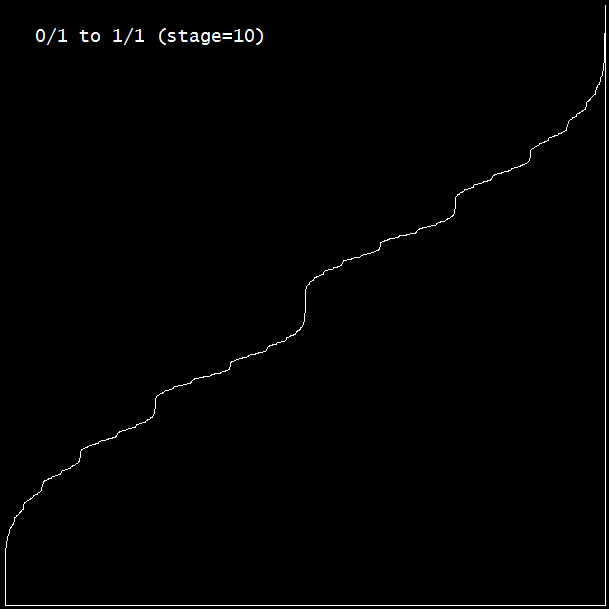
Farey fractal stage #10

Farey fractal (animated)

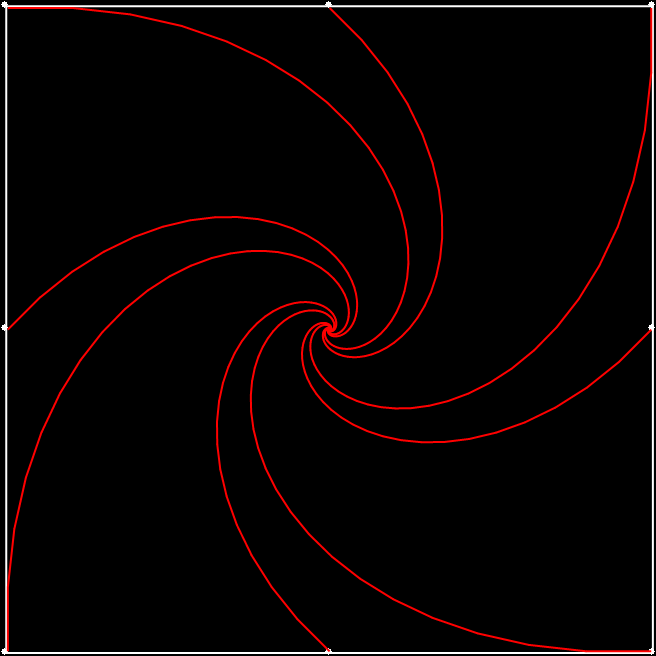
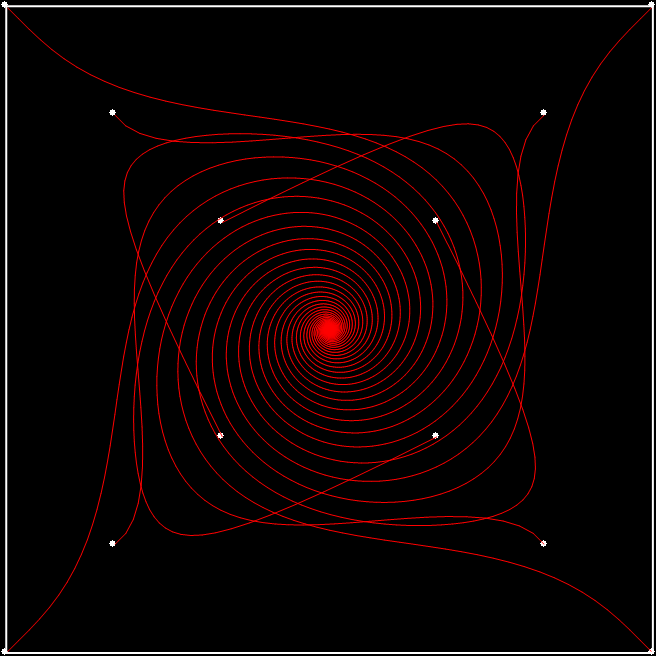
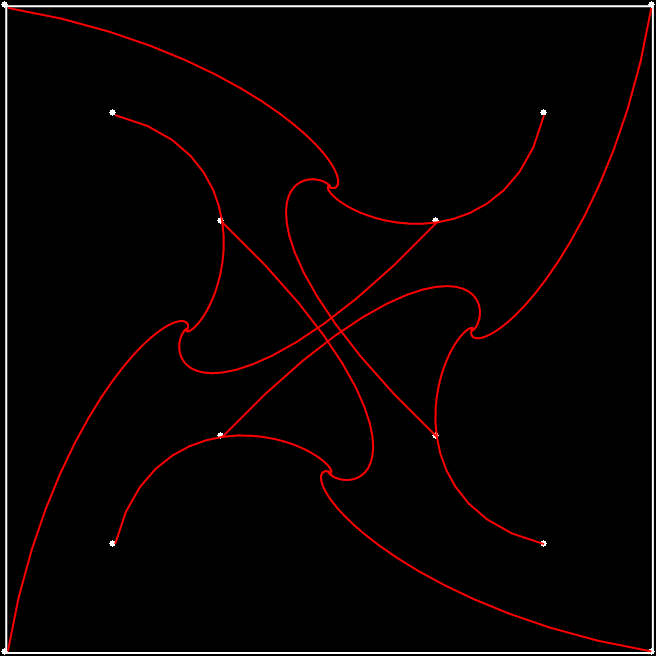
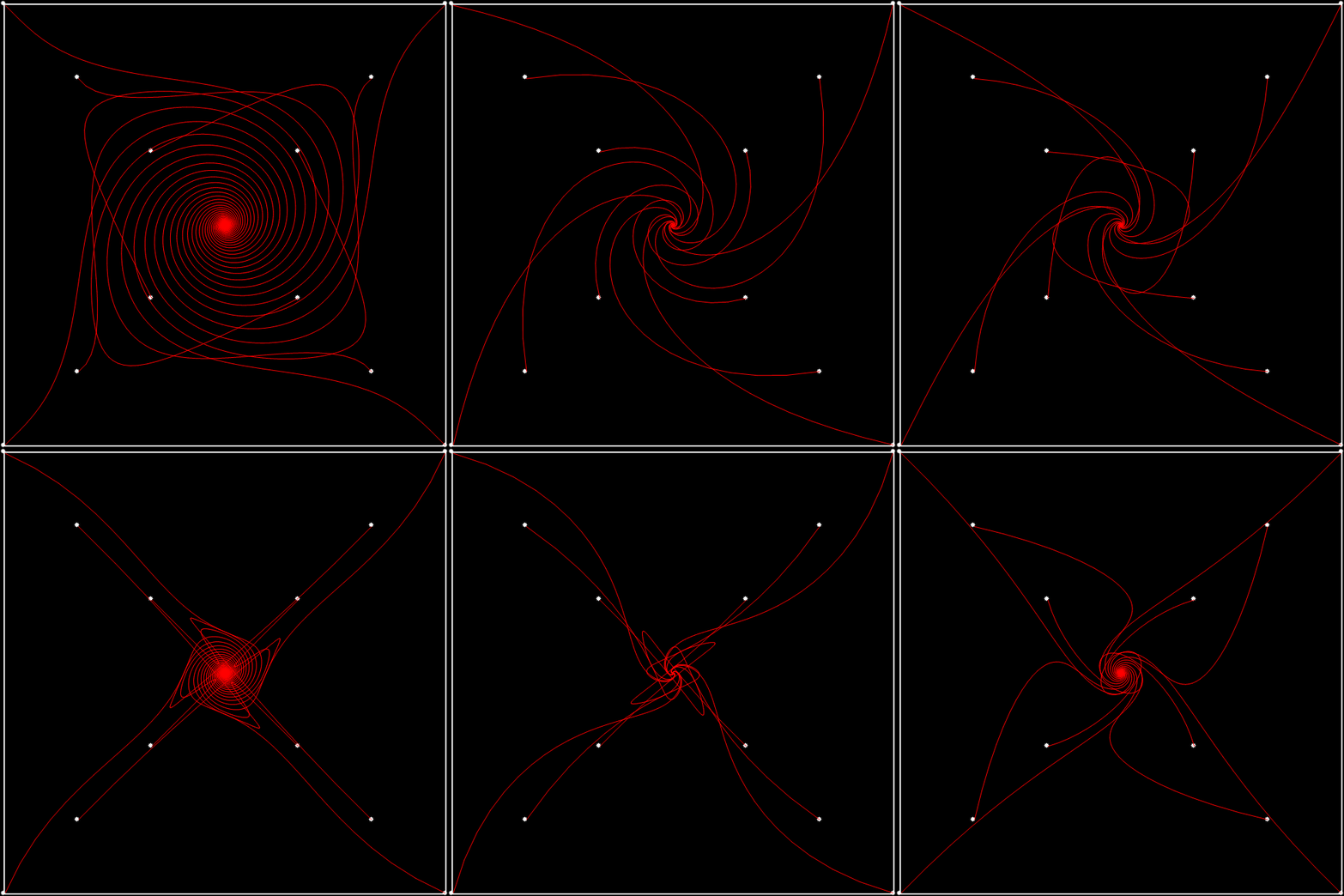
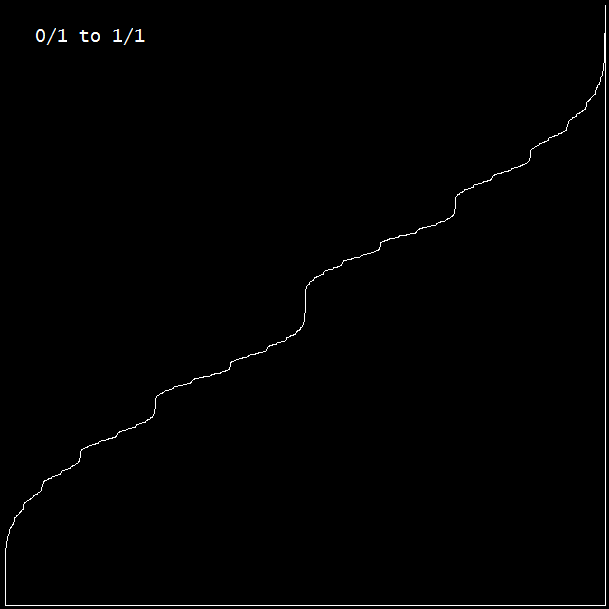
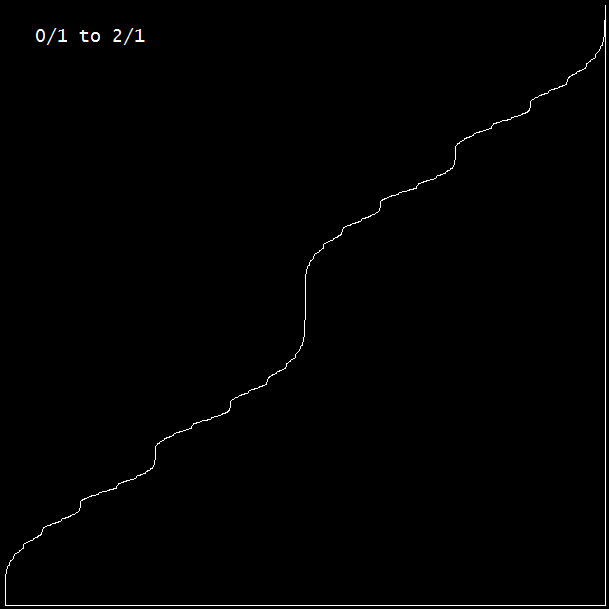
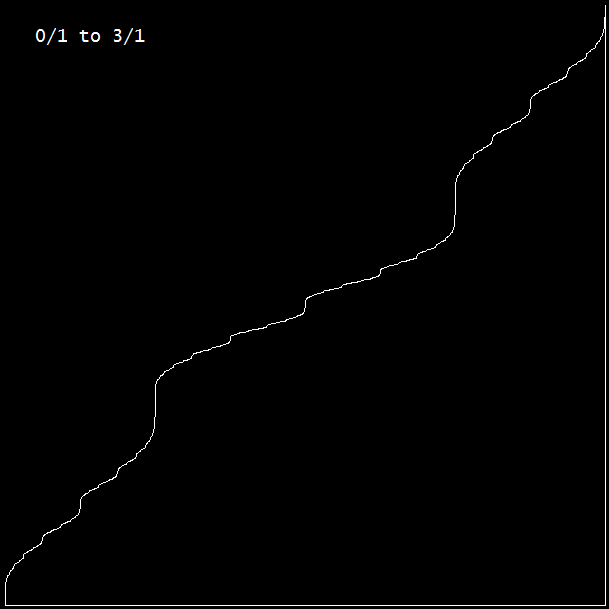
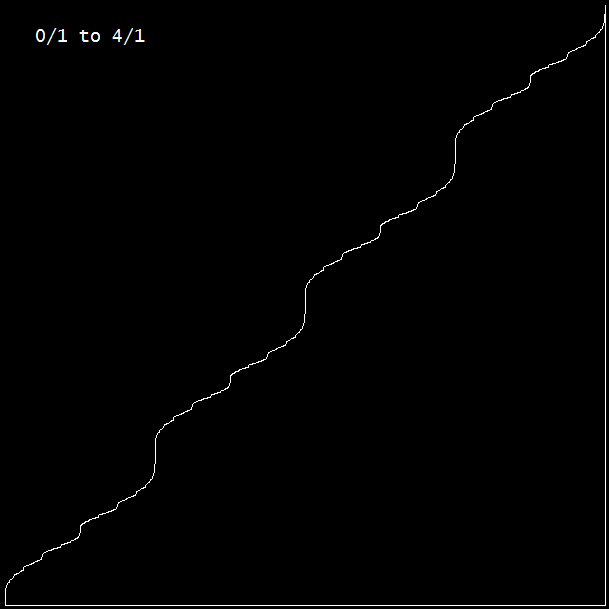
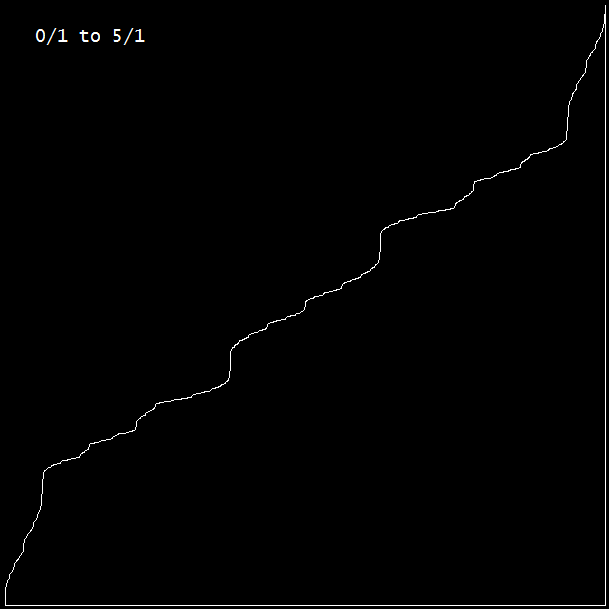
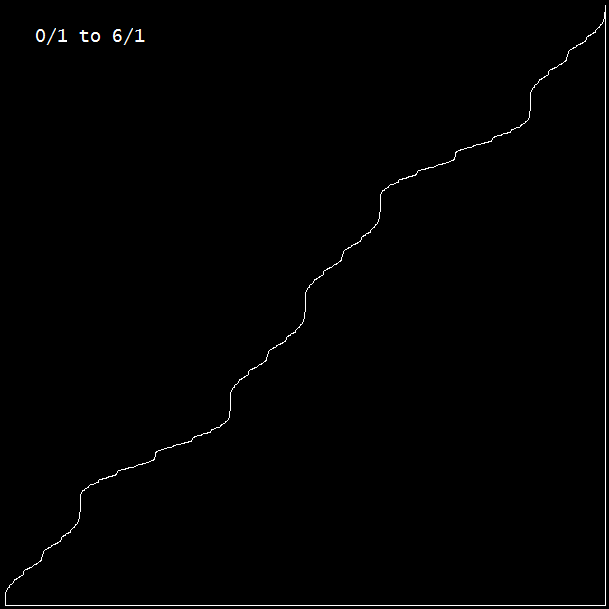
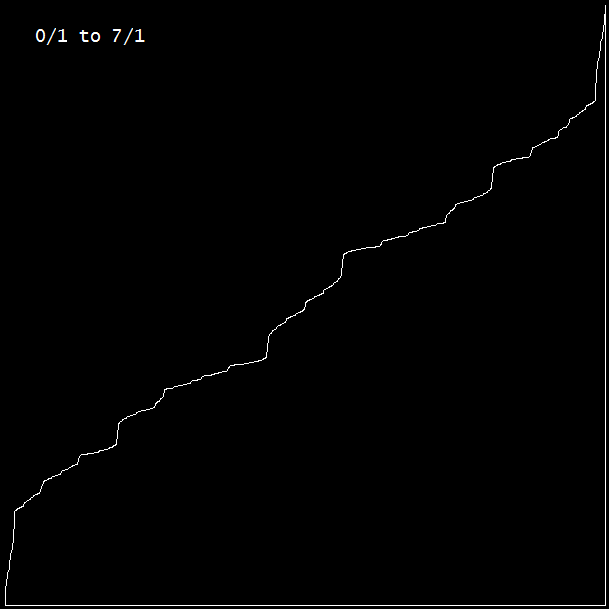
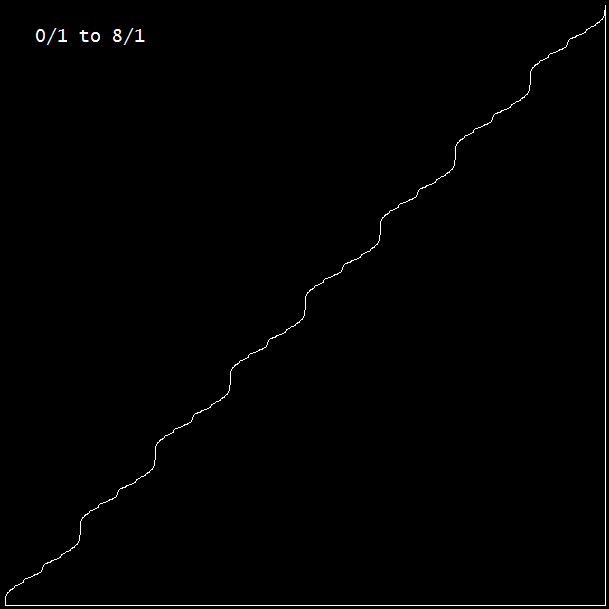
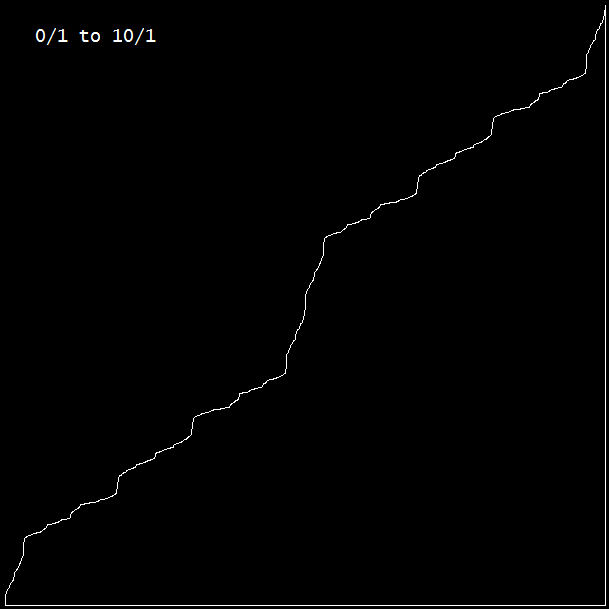
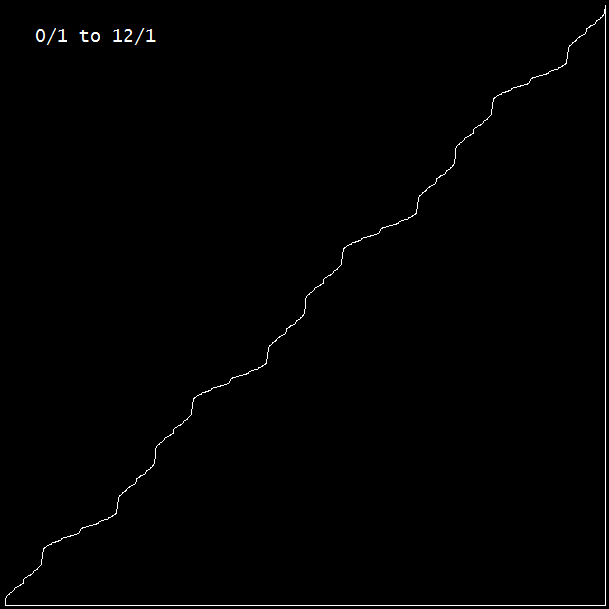
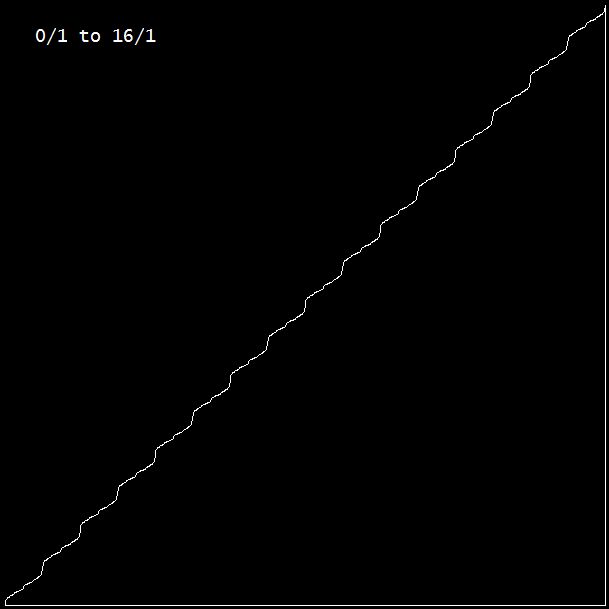
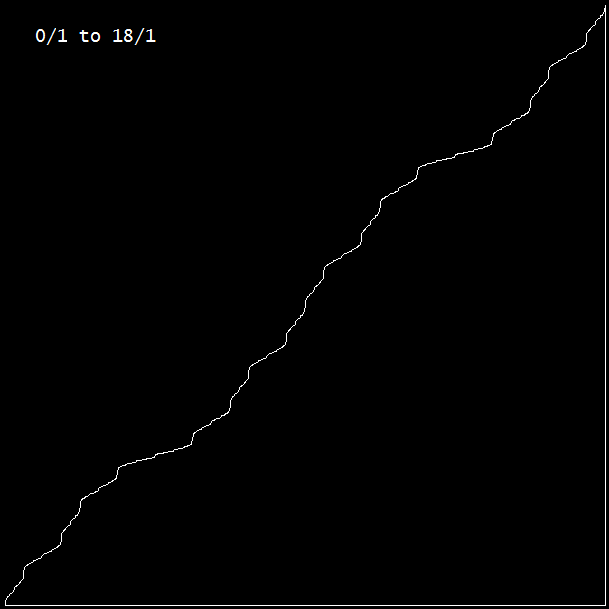
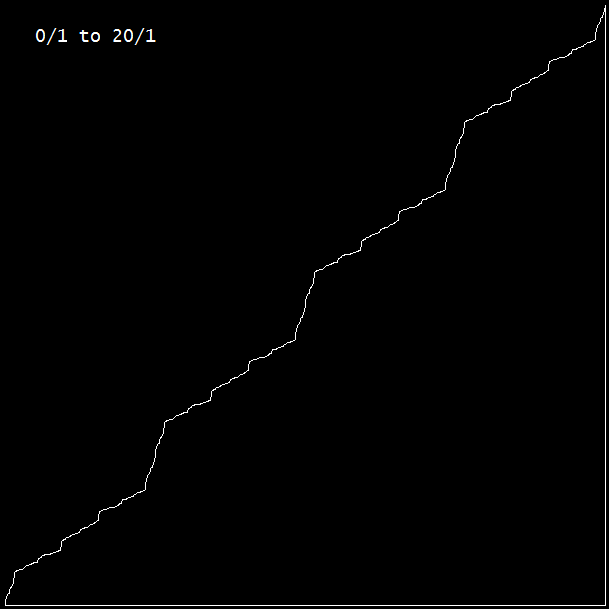
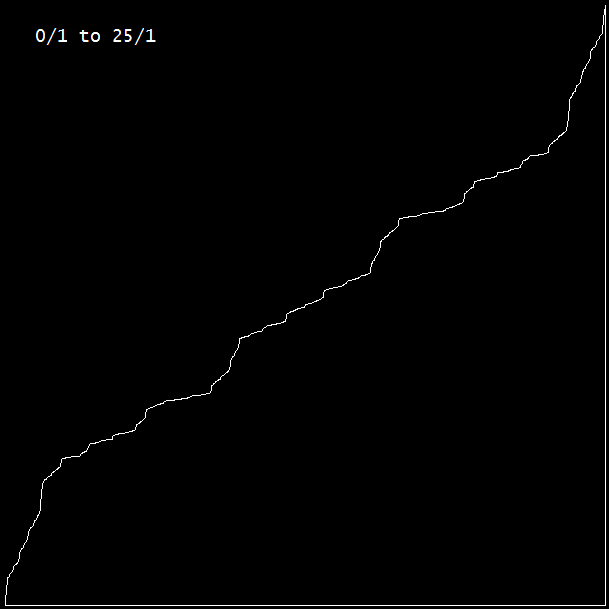
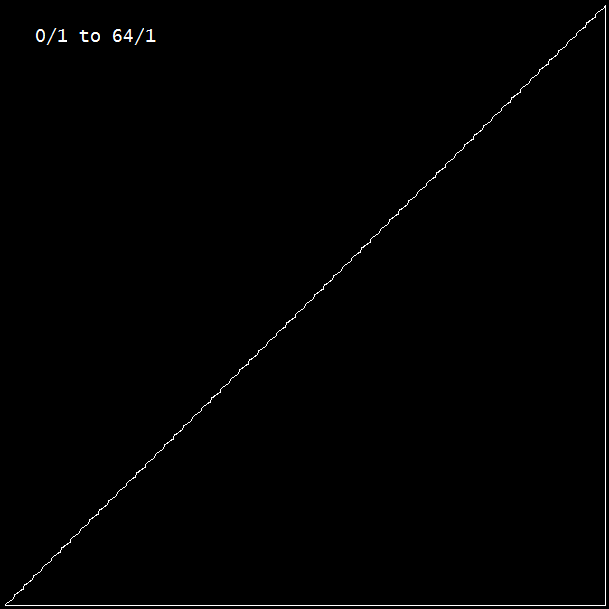
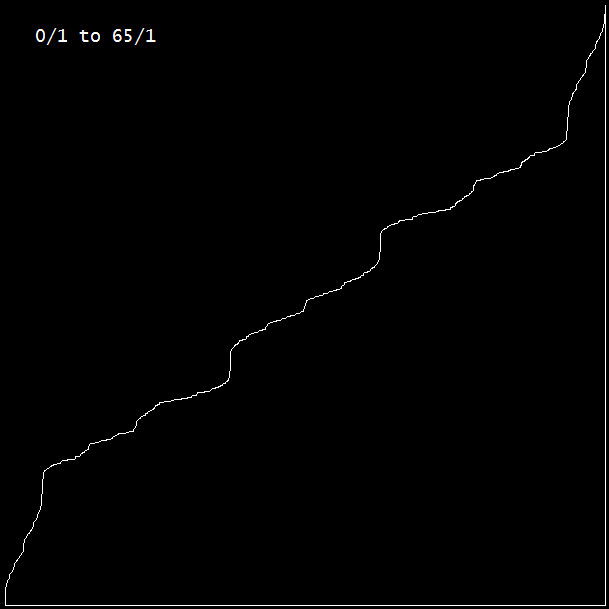
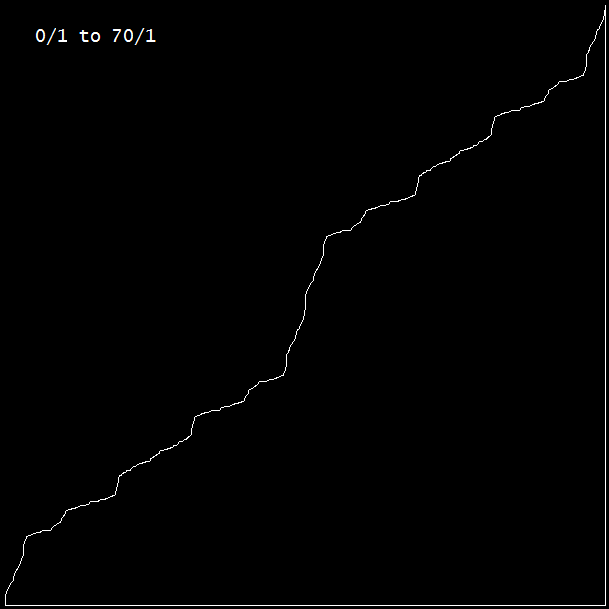
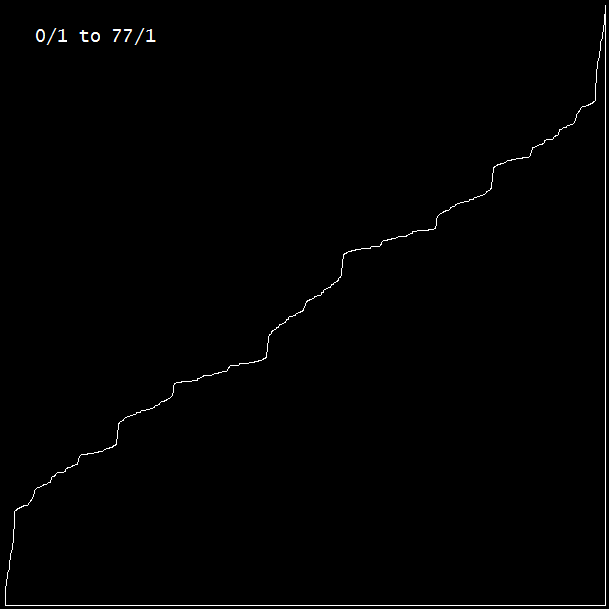
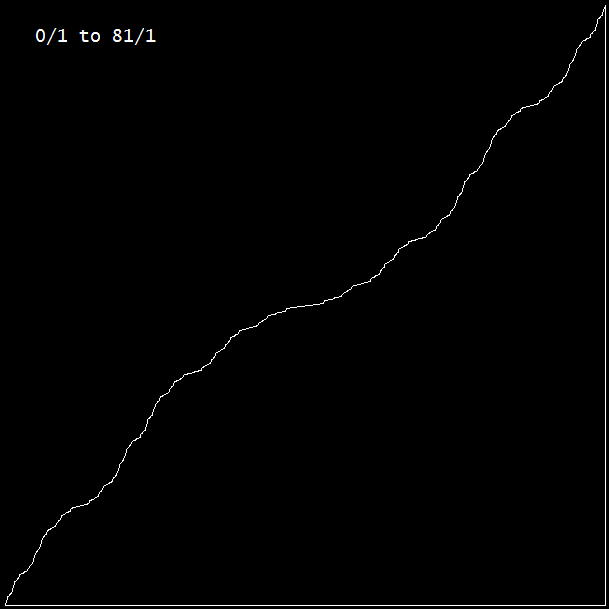
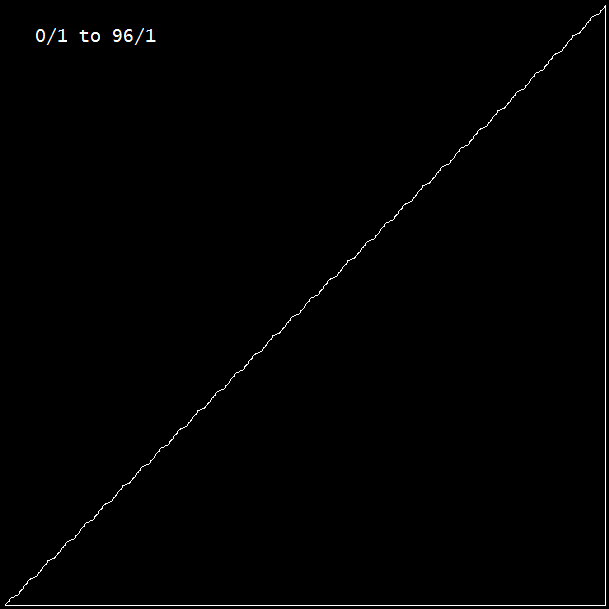
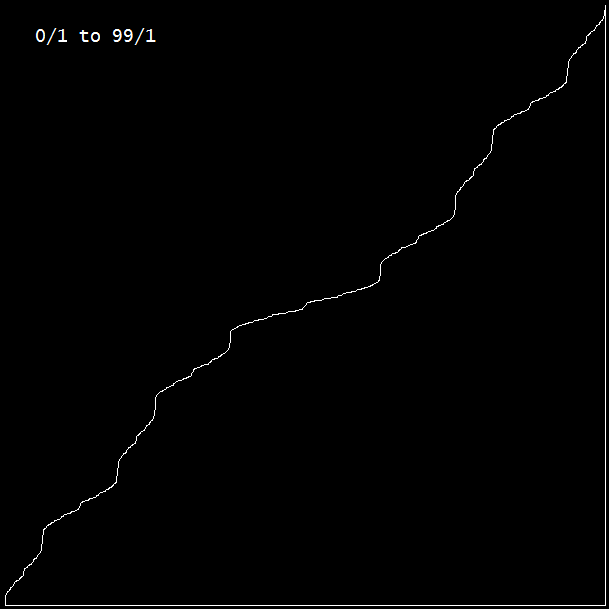
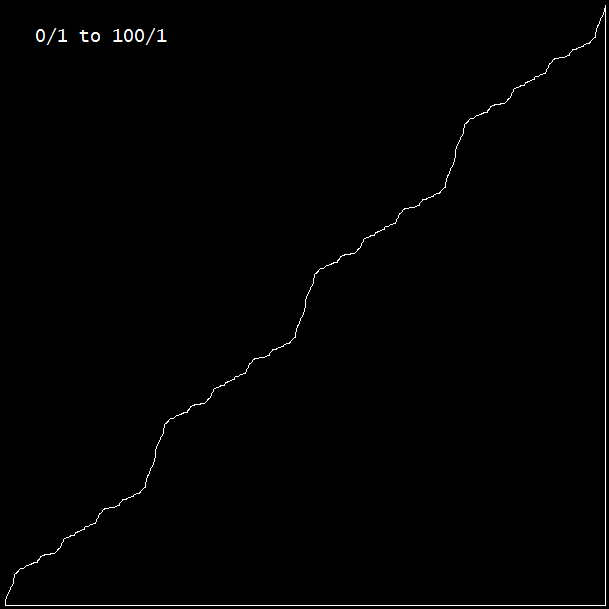
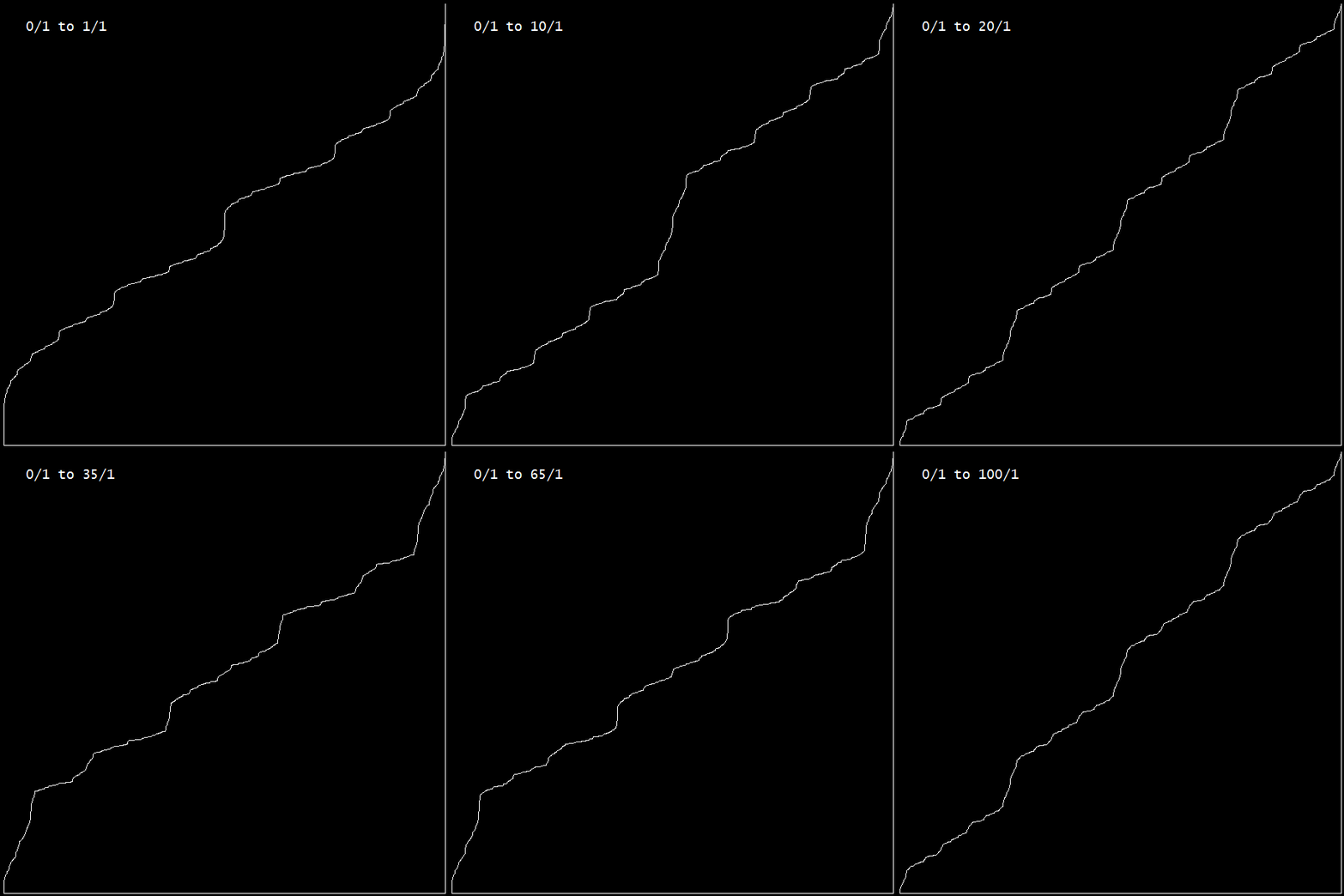
That looks like the slope of a hill to me, so you could call it a Farey fract-hill. But Farey fract-hills or Farey fractals aren’t confined to the unit interval, 0/1 to 1/1. Here are Farey fractals for the intervals 0/1 to n/1, n = 1..10:

Farey fractal for interval 0/1 to 1/1

Farey fractal for interval 0/1 to 2/1, beginning 0/1, 1/4, 1/3, 2/5, 1/2, 3/5, 2/3, 3/4, 1/1, 5/4, 4/3, 7/5, 3/2, 8/5, 5/3, 7/4, 2/1

Farey fractal for interval 0/1 to 3/1, beginning 0/1, 1/3, 1/2, 2/3, 1/1, 5/4, 4/3, 7/5, 3/2, 8/5, 5/3, 7/4, 2/1, 7/3, 5/2, 8/3, 3/1

Farey fractal for interval 0/1 to 4/1, beginning
0/1, 1/3, 1/2, 2/3, 1/1, 4/3, 3/2, 5/3, 2/1, 7/3, 5/2, 8/3, 3/1, 10/3, 7/2, 11/3, 4/1

Farey fractal for interval 0/1 to 5/1, beginning 0/1, 1/1, 5/4, 10/7, 5/3, 7/4, 2/1, 7/3, 5/2, 8/3, 3/1, 13/4, 10/3, 25/7, 15/4, 4/1, 5/1

Farey fractal for interval 0/1 to 6/1, beginning 0/1, 1/2, 1/1, 4/3, 3/2, 5/3, 2/1, 5/2, 3/1, 7/2, 4/1, 13/3, 9/2, 14/3, 5/1, 11/2, 6/1

Farey fractal for interval 0/1 to 7/1, beginning 0/1, 7/5, 7/4, 2/1, 7/3, 21/8, 14/5, 3/1, 7/2, 4/1, 21/5, 35/8, 14/3, 5/1, 21/4, 28/5, 7/1

Farey fractal for interval 0/1 to 8/1, beginning 0/1, 1/2, 1/1, 3/2, 2/1, 5/2, 3/1, 7/2, 4/1, 9/2, 5/1, 11/2, 6/1, 13/2, 7/1, 15/2, 8/1

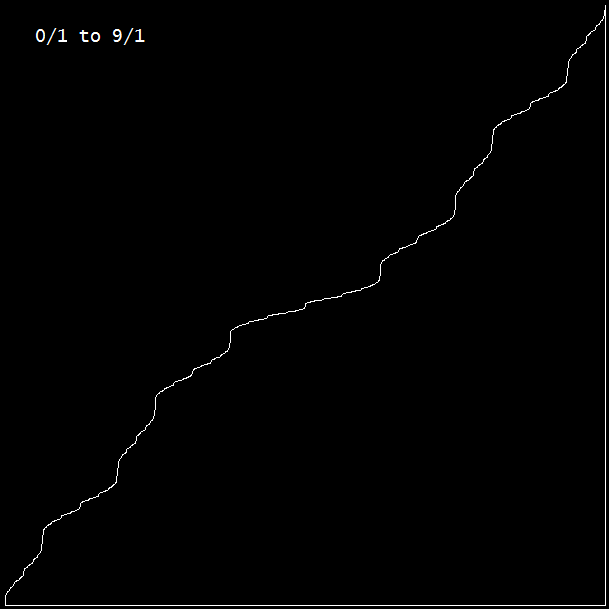
Farey fractal for interval 0/1 to 9/1, beginning 0/1, 1/1, 3/2, 2/1, 3/1, 7/2, 4/1, 13/3, 9/2, 14/3, 5/1, 11/2, 6/1, 7/1, 15/2, 8/1, 9/1

Farey fractal for interval 0/1 to 10/1, beginning 0/1, 5/4, 5/3, 2/1, 5/2, 3/1, 10/3, 15/4, 5/1, 25/4, 20/3, 7/1, 15/2, 8/1, 25/3, 35/4, 10/1

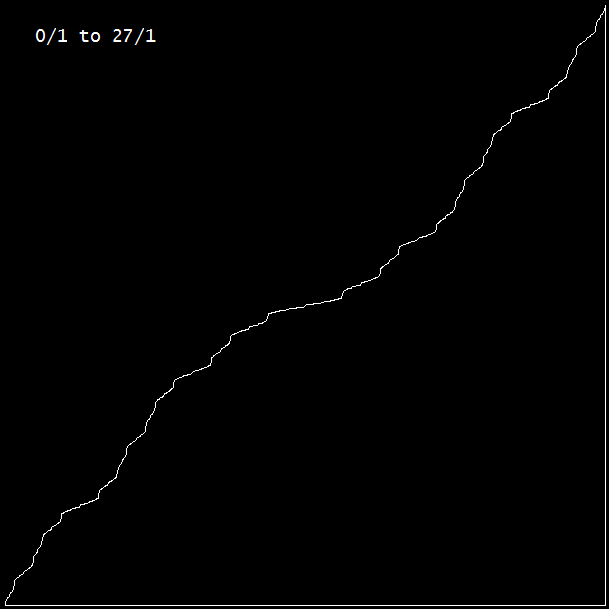
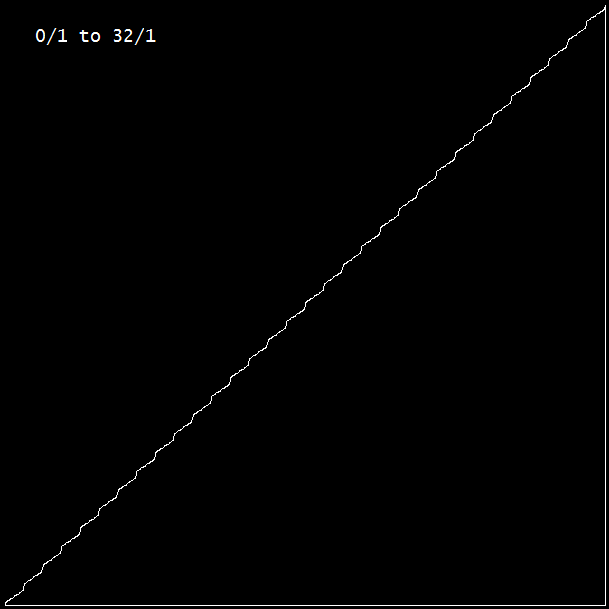
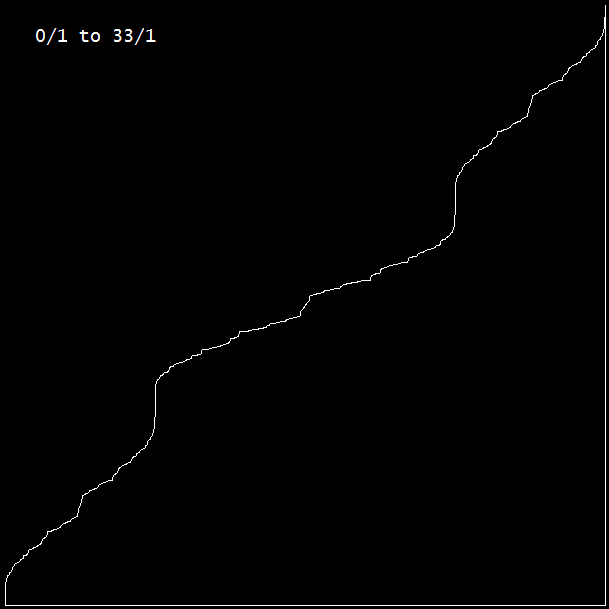
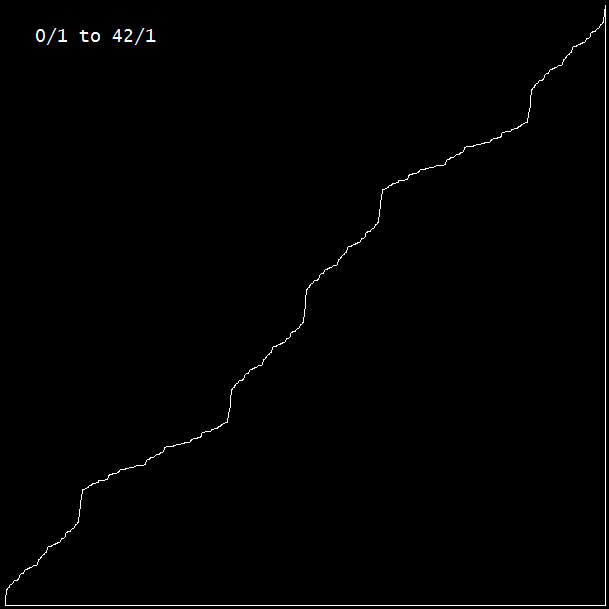
The shape of the slope is determined by the factorization of n:

n = 12 = 2^2 * 3

n = 16 = 2^4

n = 18 = 2 * 3^2

n = 20 = 2^2 * 5

n = 25 = 5^2

n = 27 = 3^3

n = 32 = 2^5

n = 33 = 3 * 11

n = 42 = 2 * 3 * 7

n = 64 = 2^6

n = 65 = 5 * 13

n = 70 = 2 * 5 * 7

n = 77 = 7 * 11

n = 81 = 3^4

n = 96 = 2^5 * 3

n = 99 = 3^2 * 11

n = 100 = 2^2 * 5^2

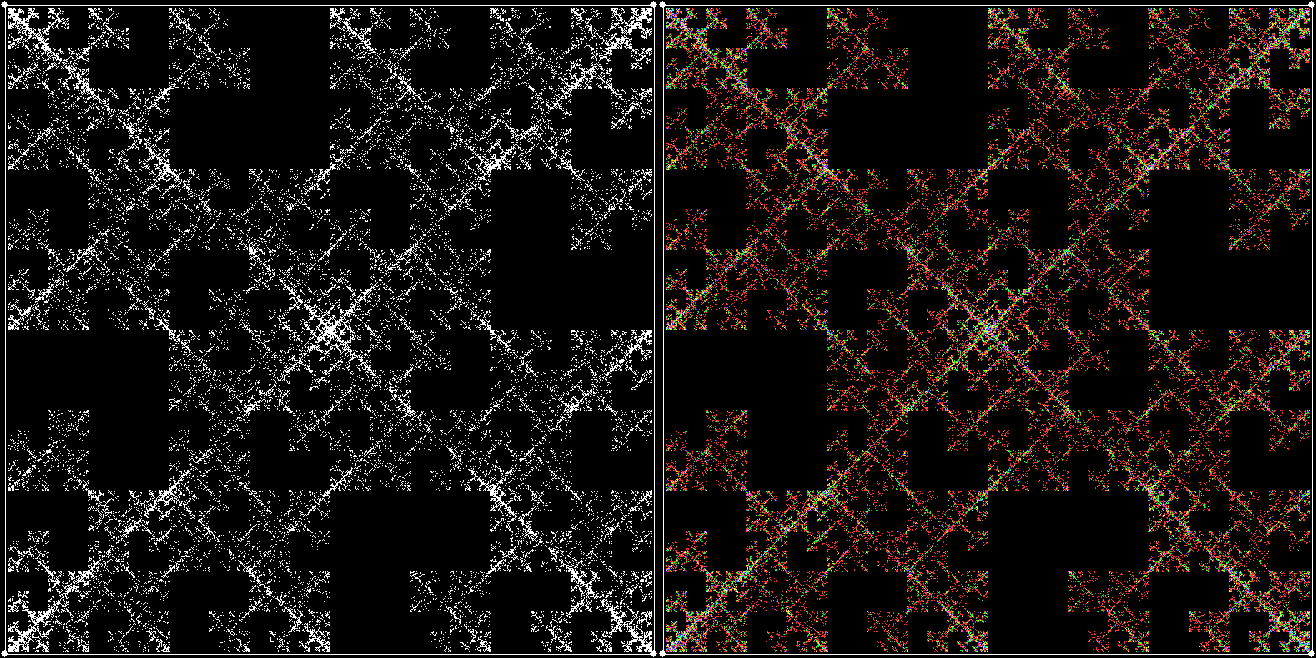
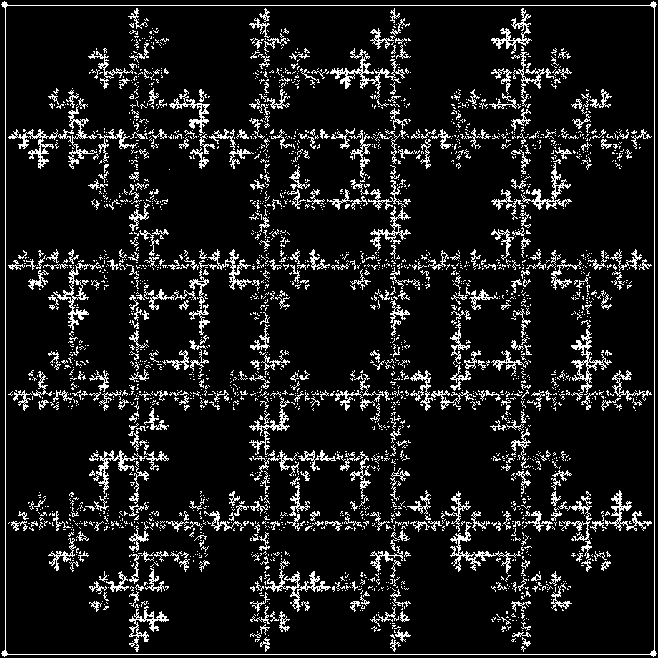
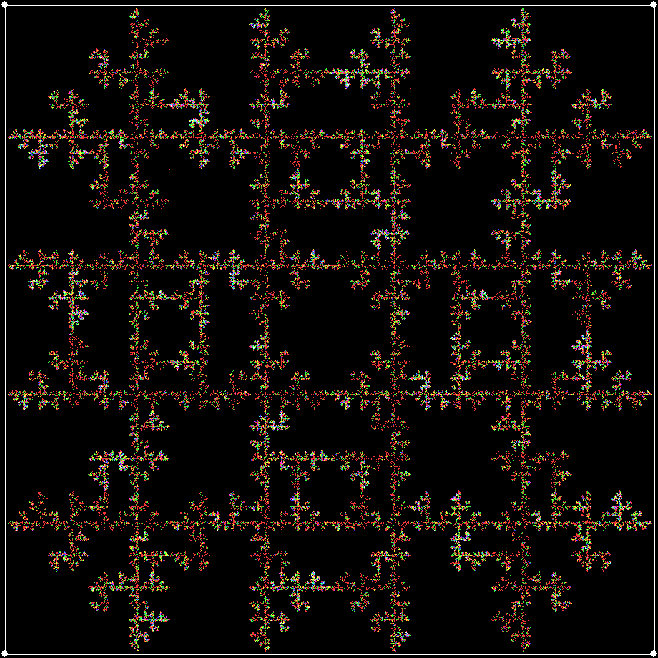
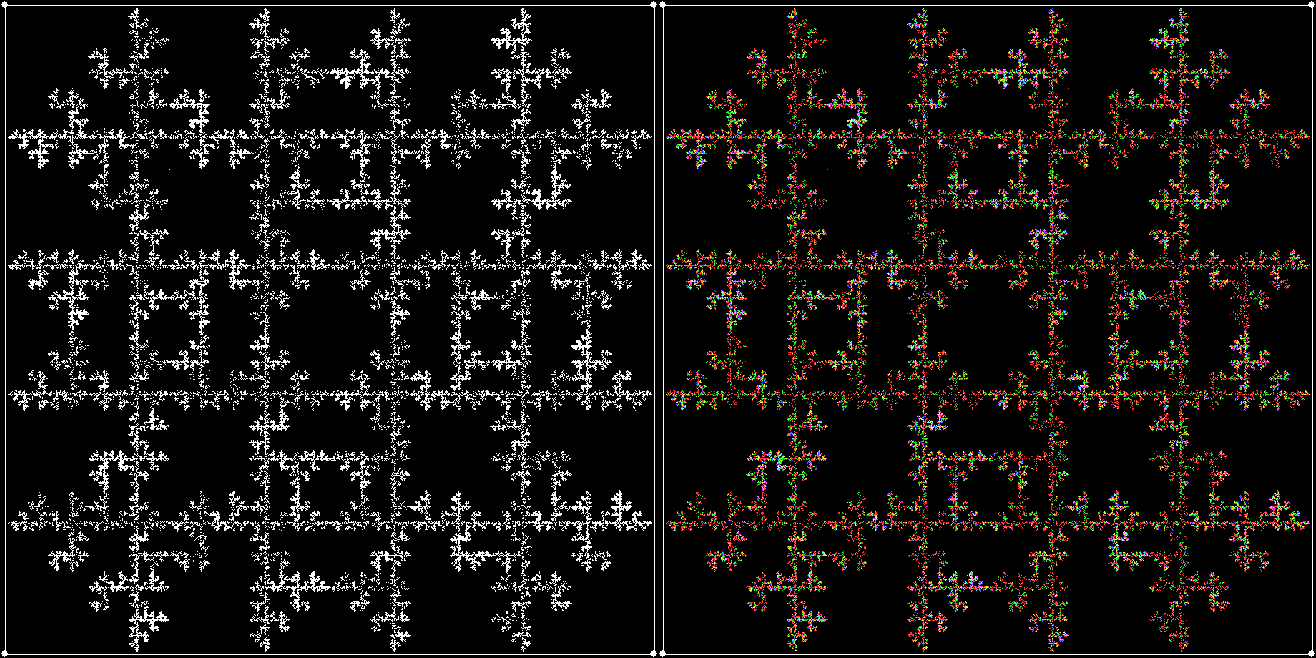
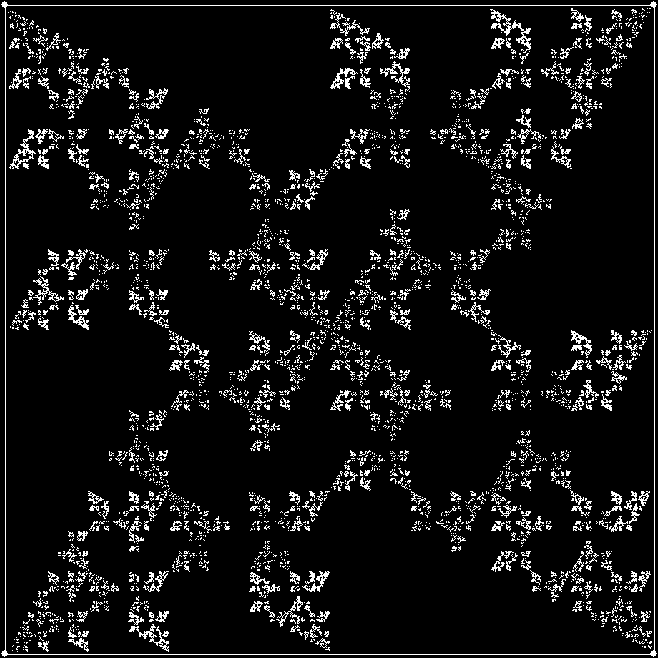
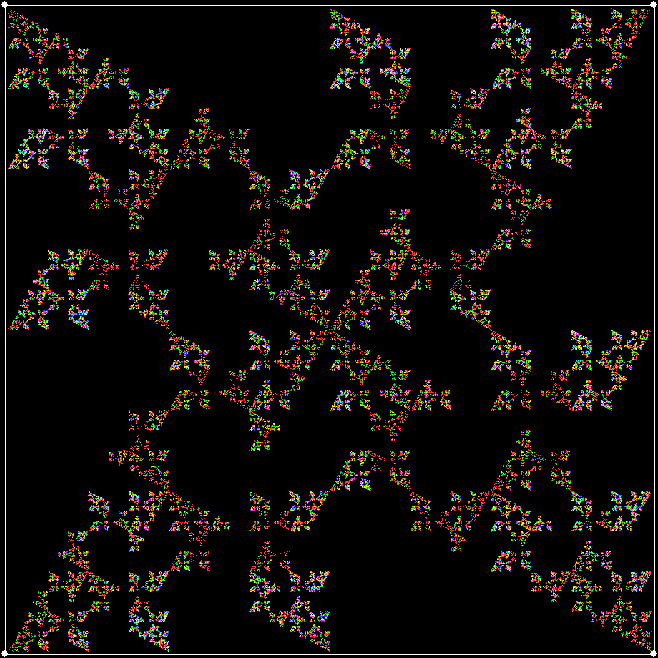
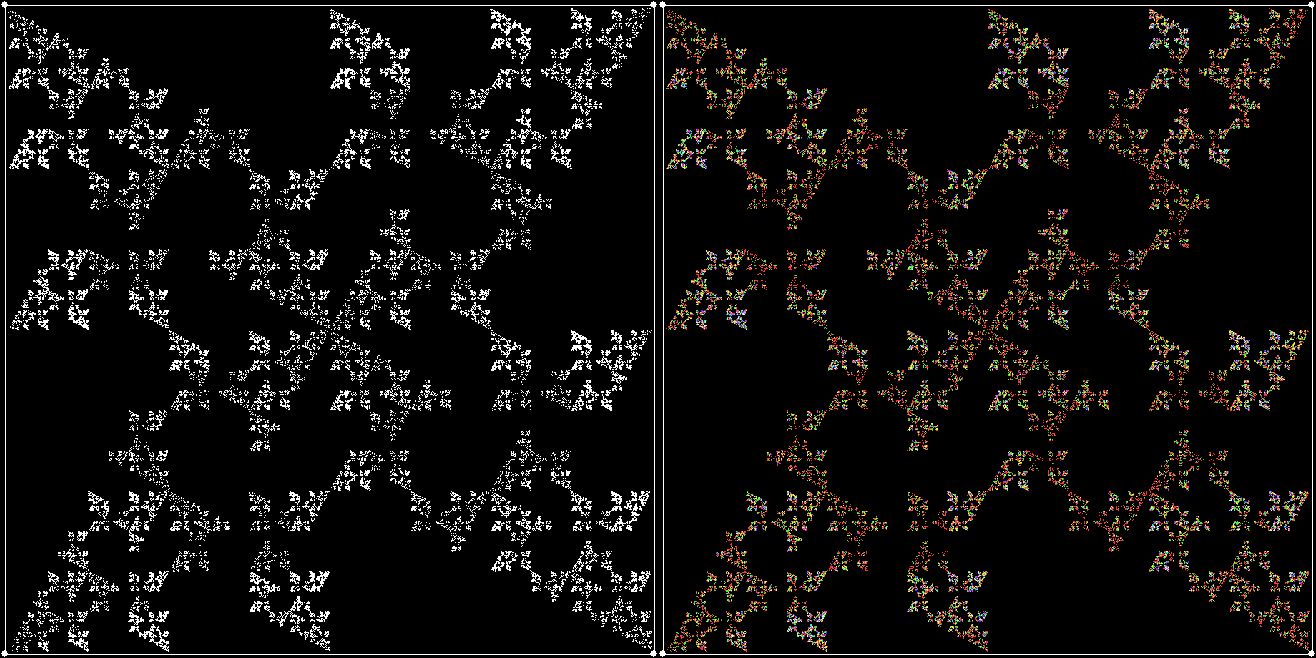
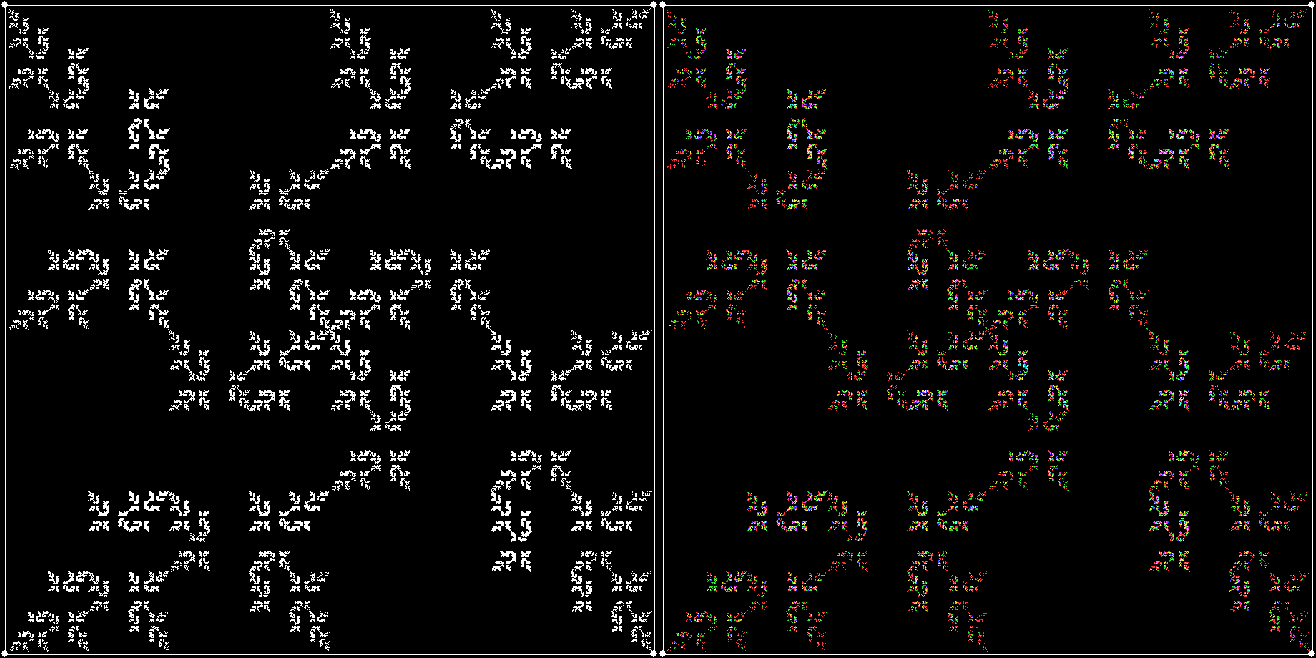
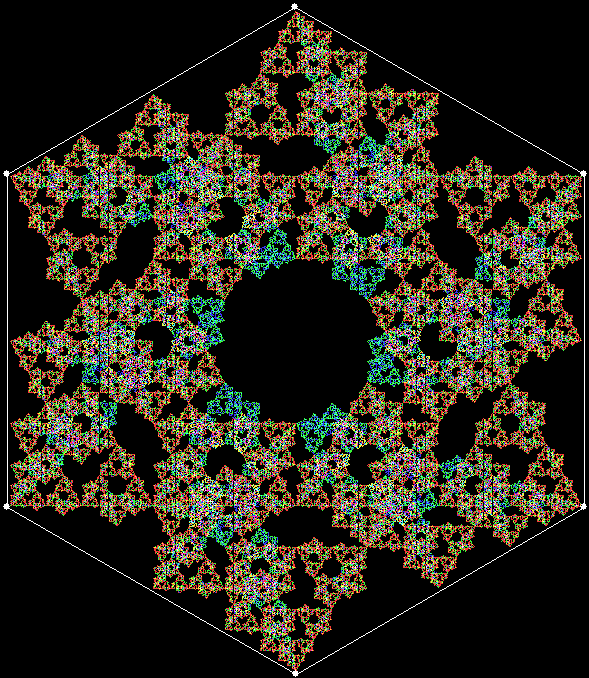
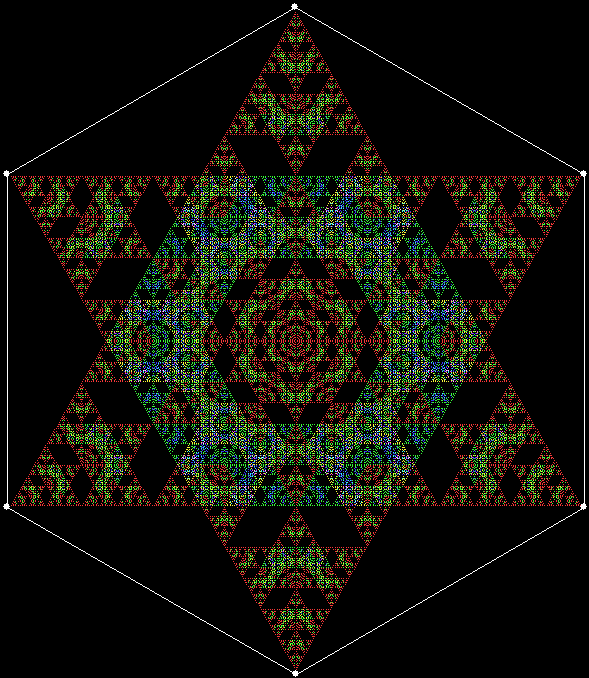
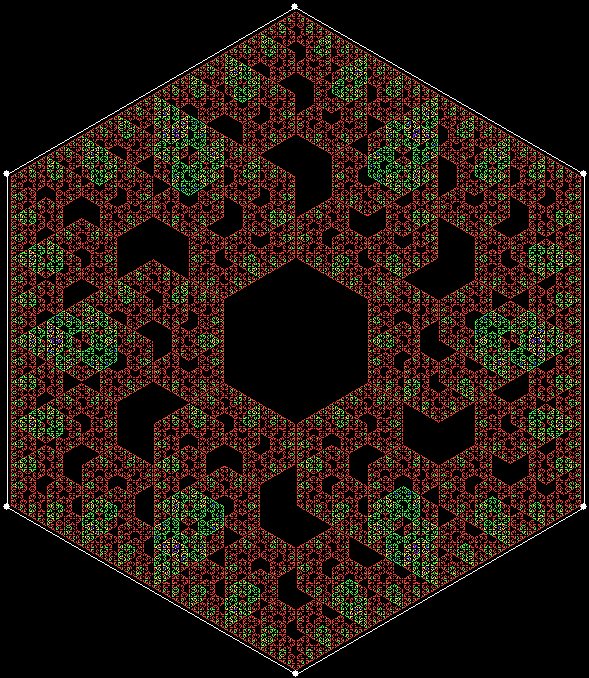
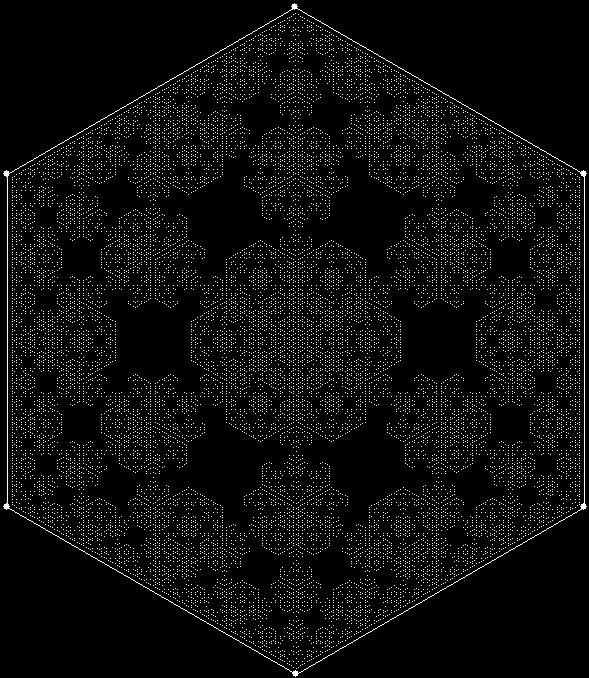
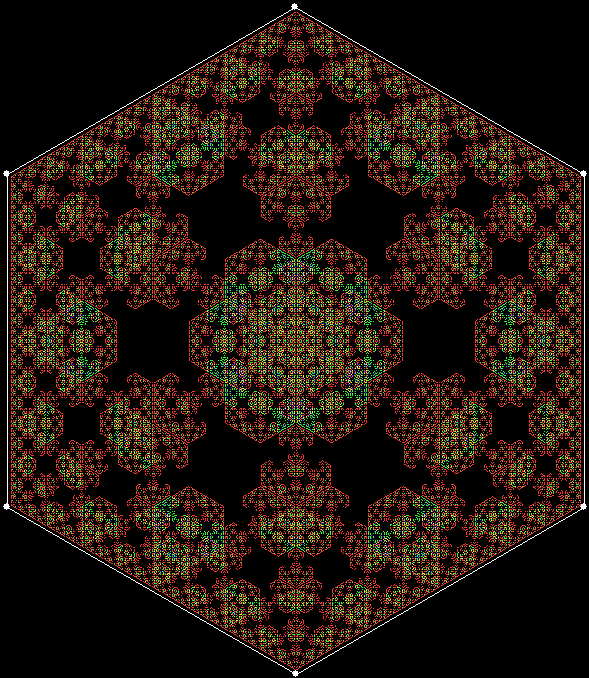
Farey fractal-hills, n = various

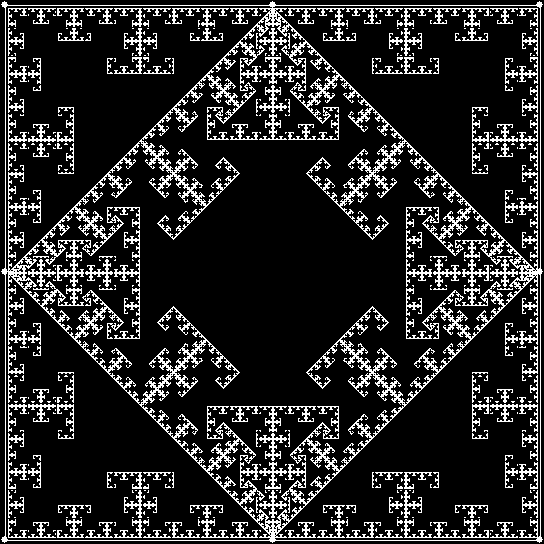
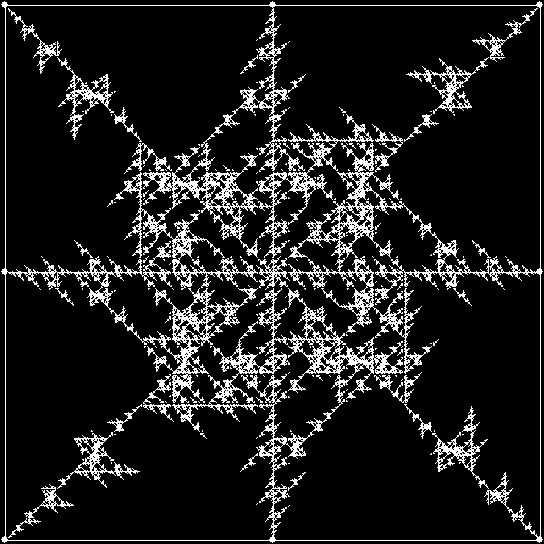
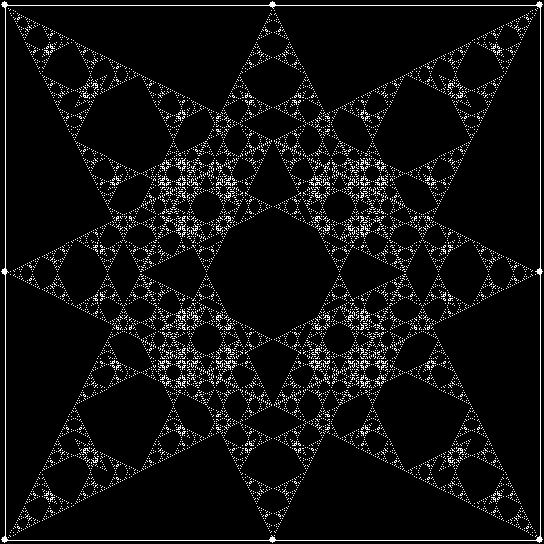
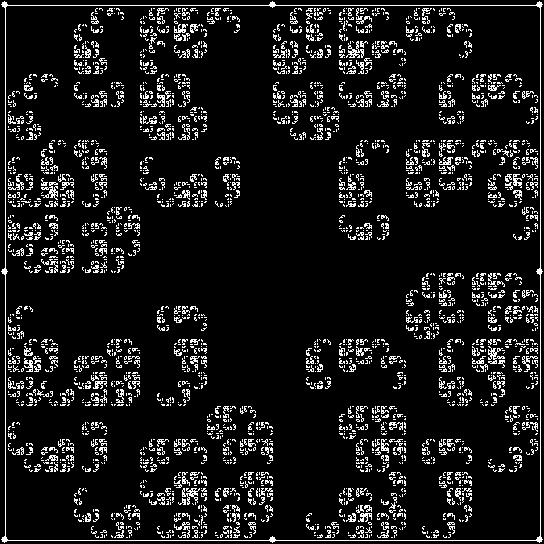
Jumping Jehosophracts!

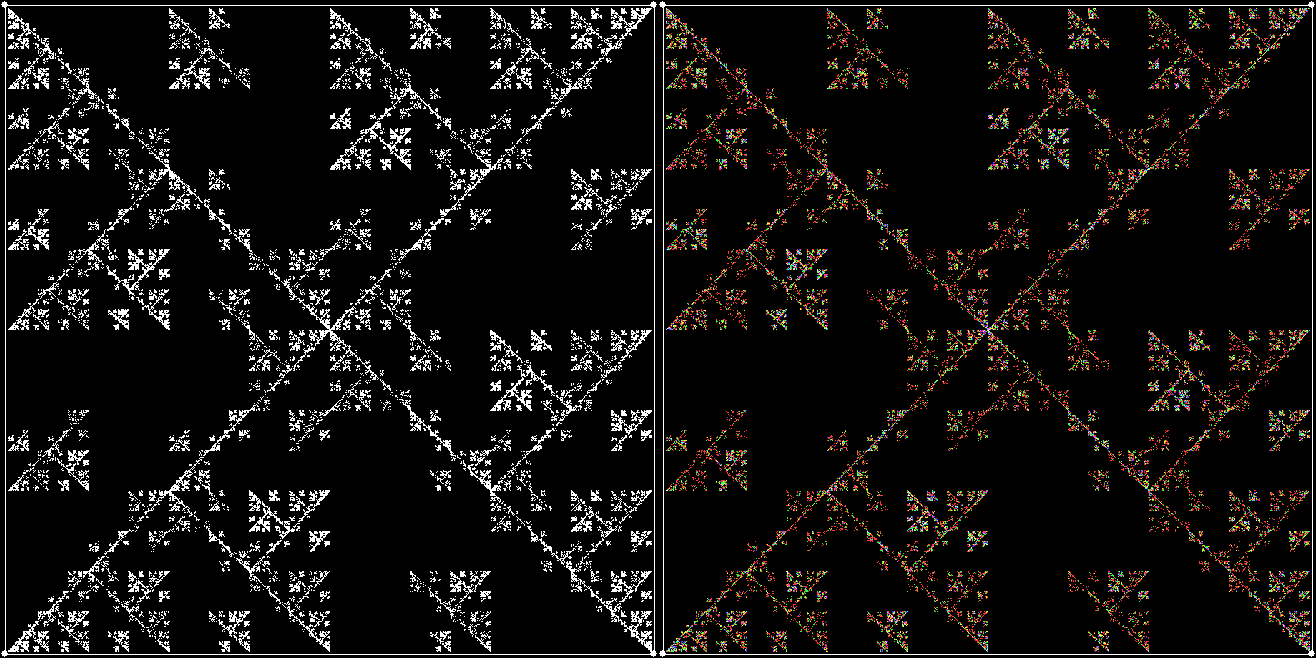
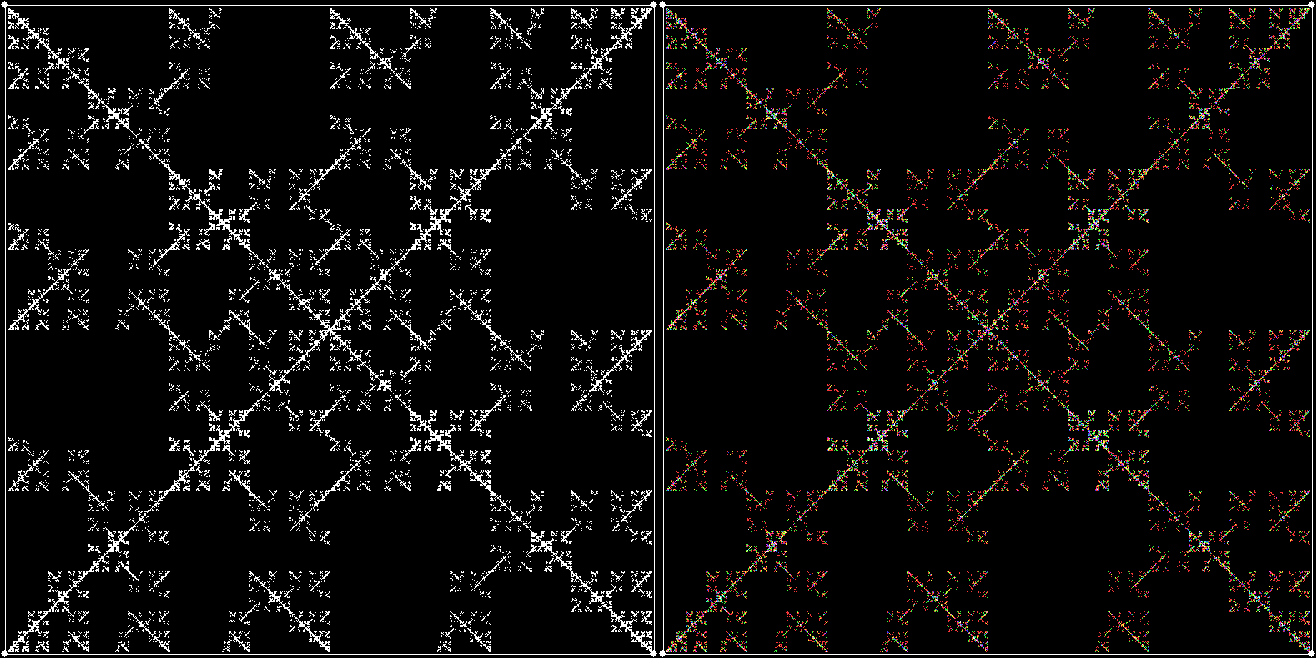
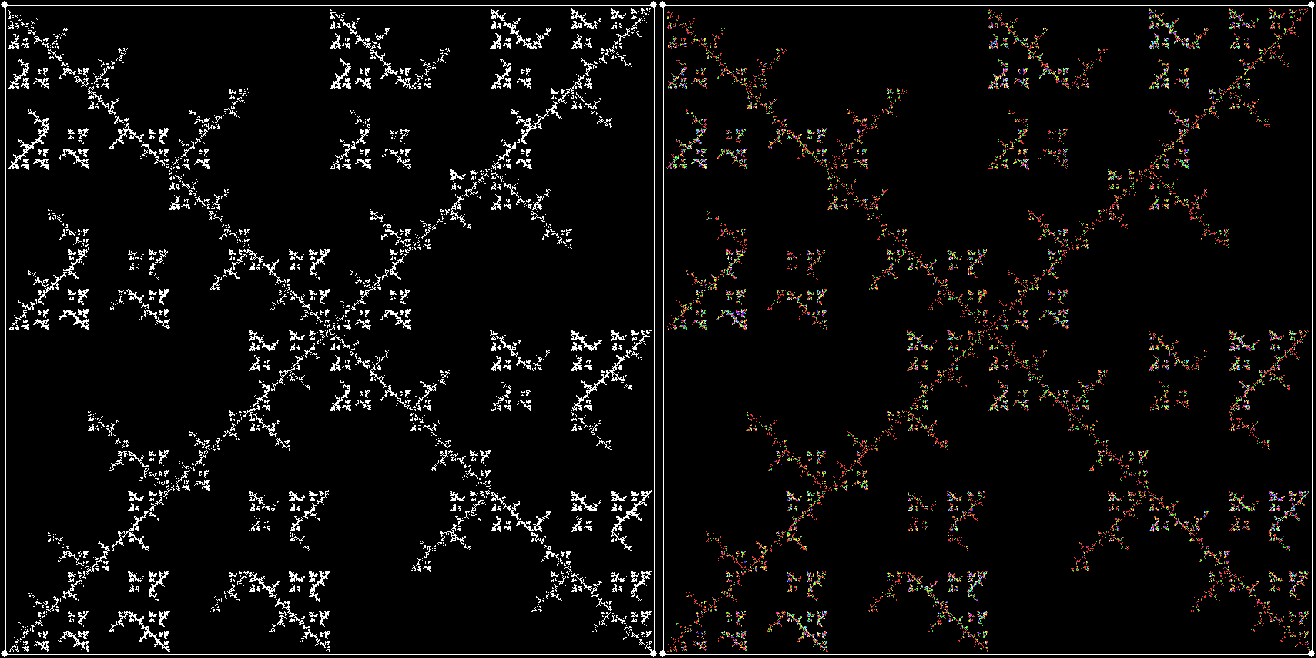
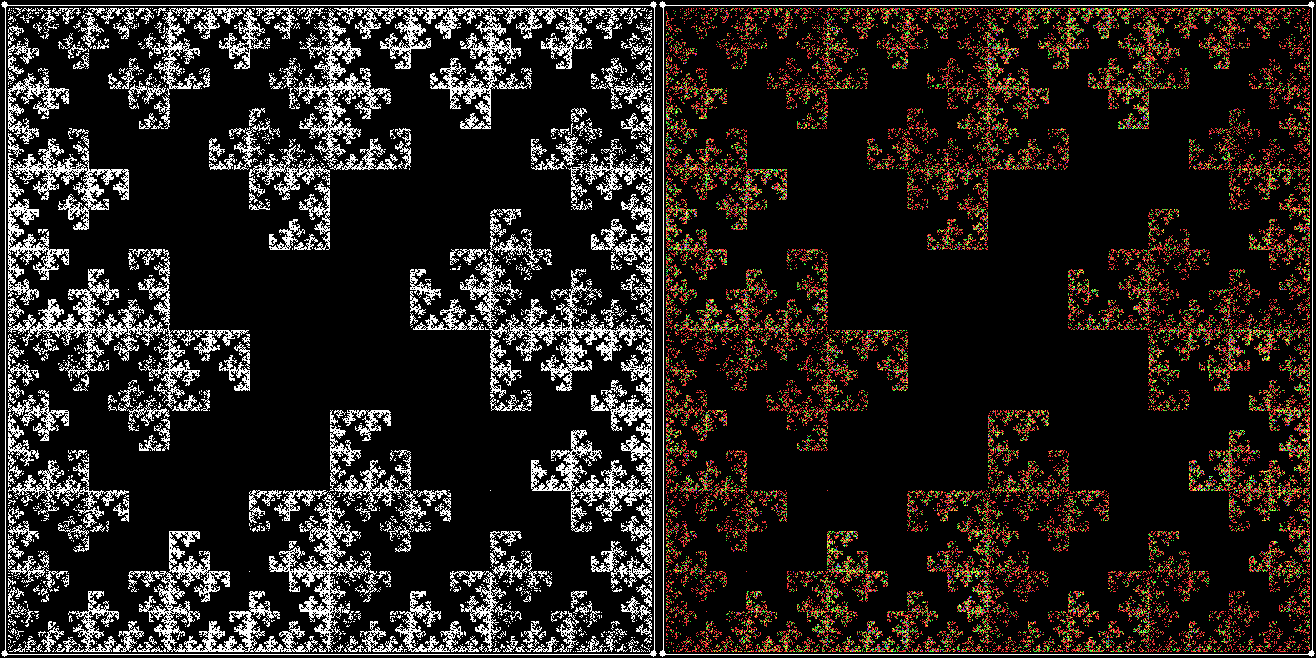
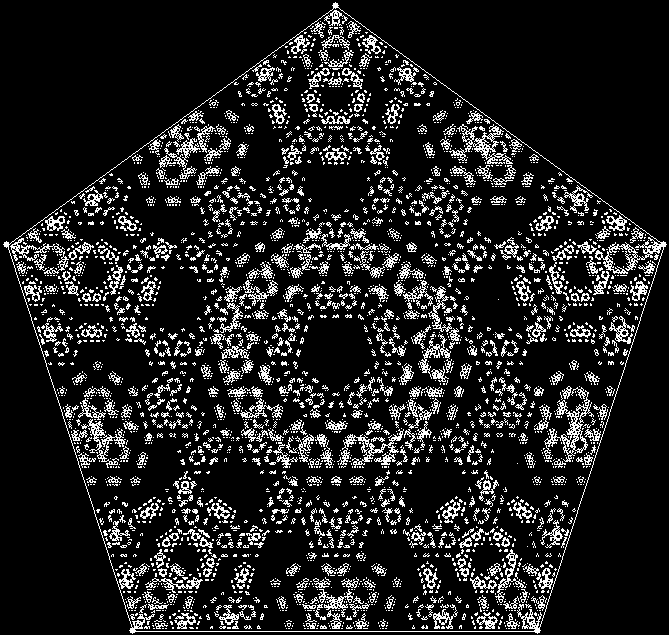
As I’ve shown pre-previously on Overlord-in-terms-of-issues-around-the-Über-Feral, you can create interesting fractals by placing restrictions on a point jumping inside a fractal towards a randomly chosen vertex. For example, the point can be banned from jumping towards the same vertex twice in a row, and so on.

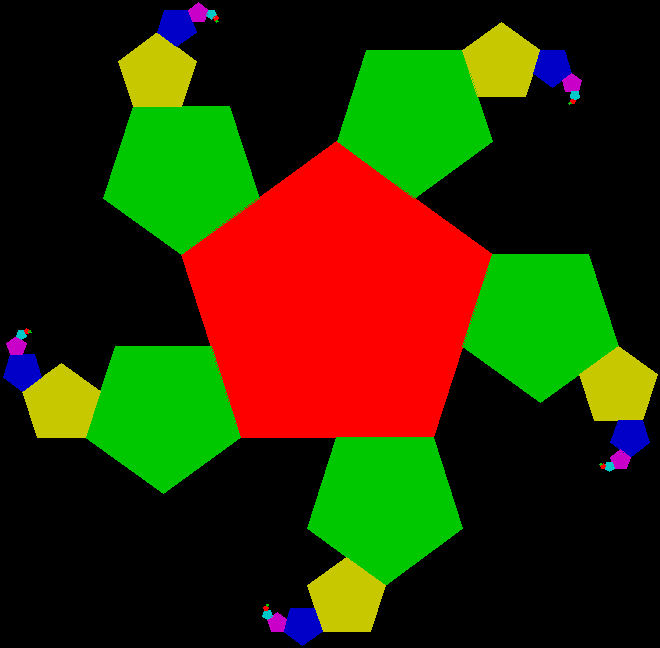
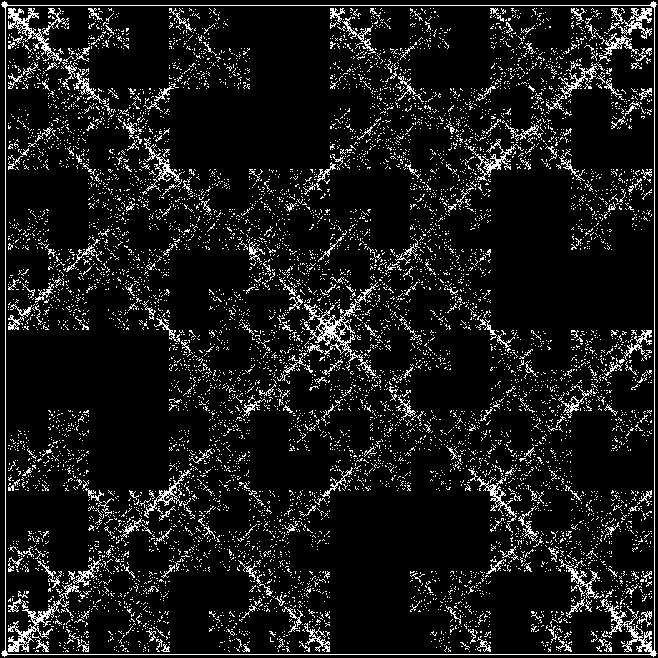
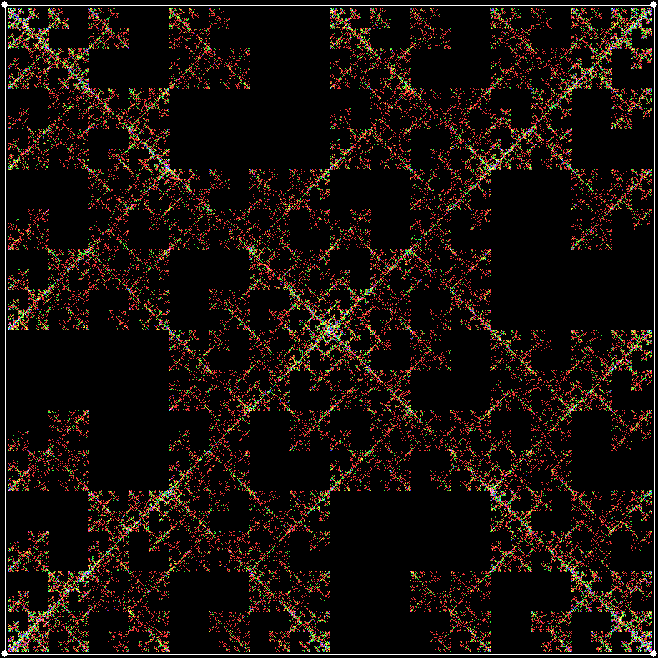
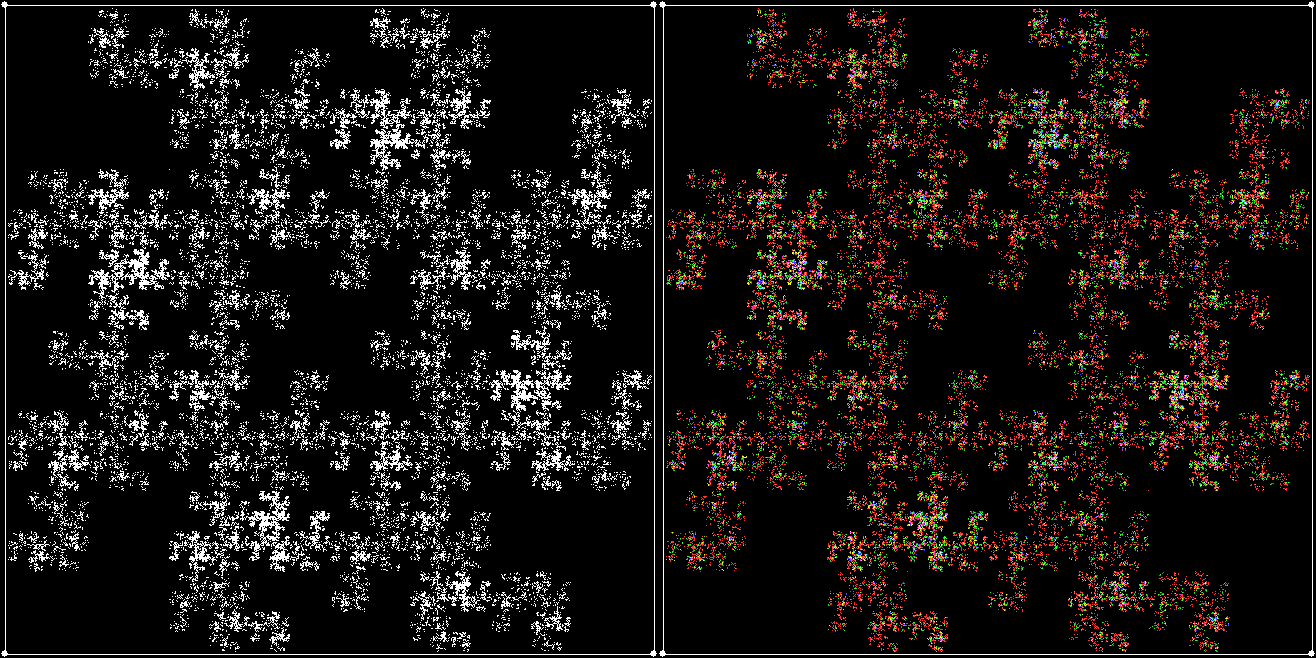
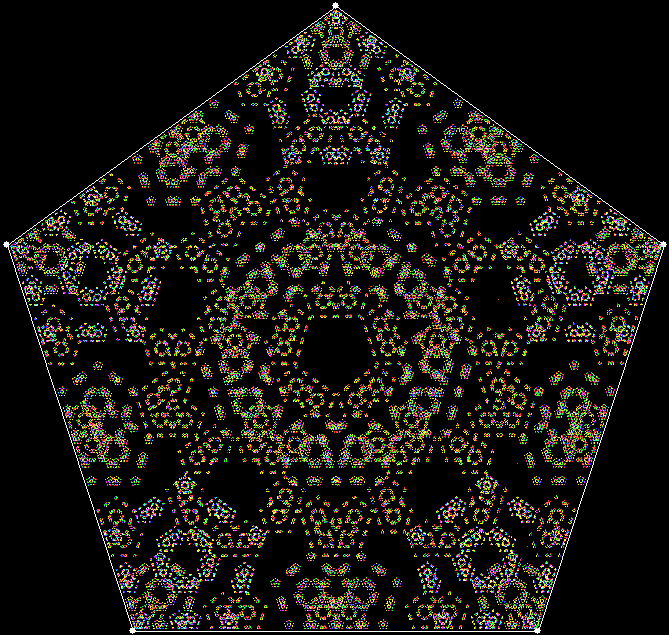
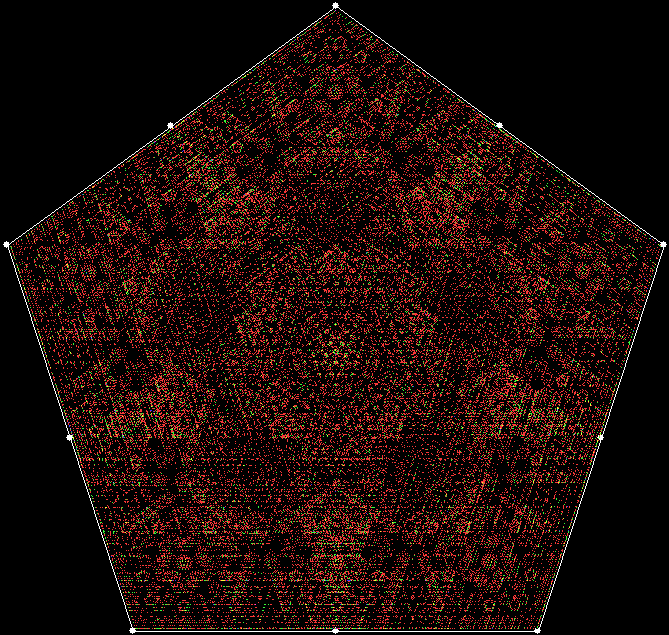
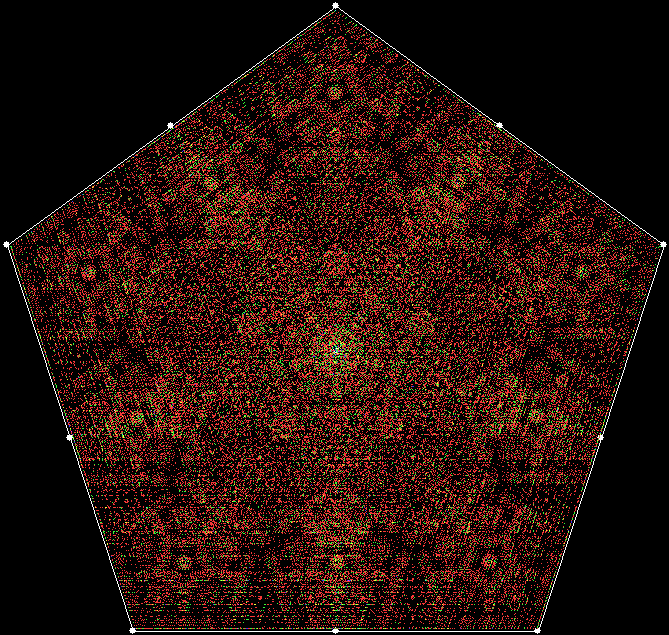
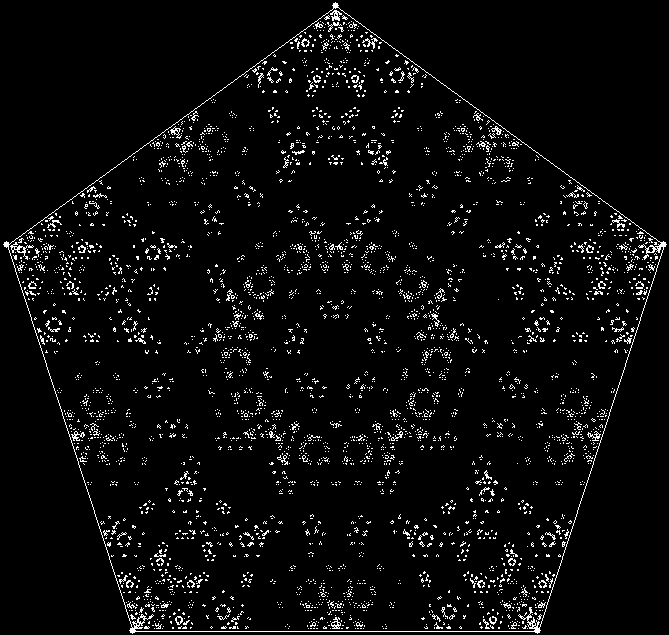
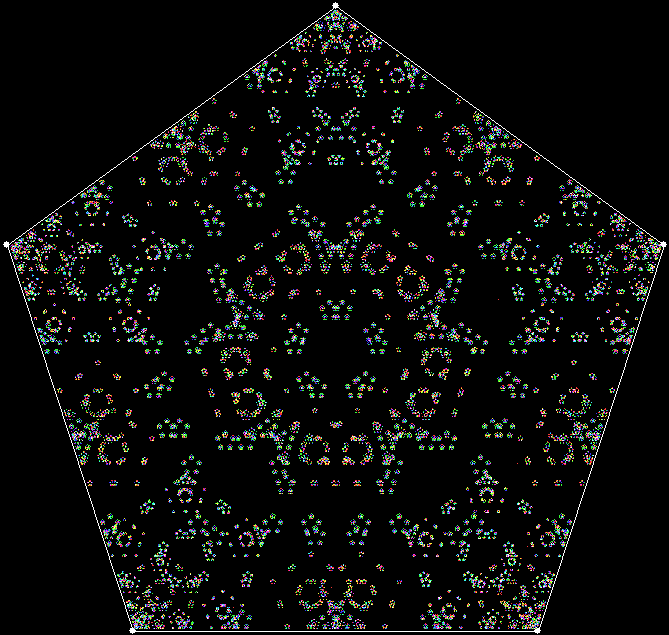
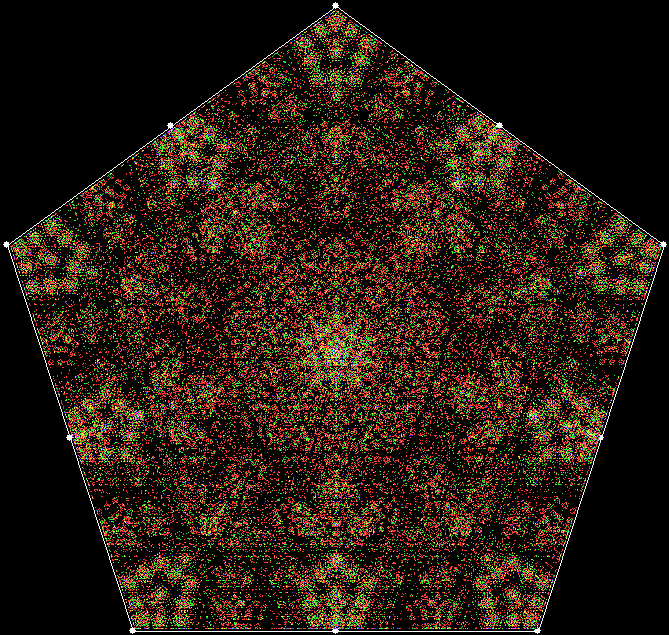
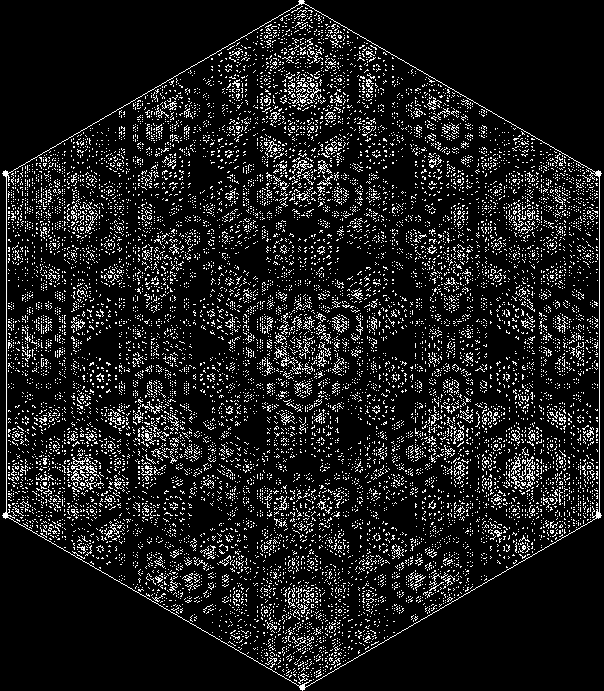
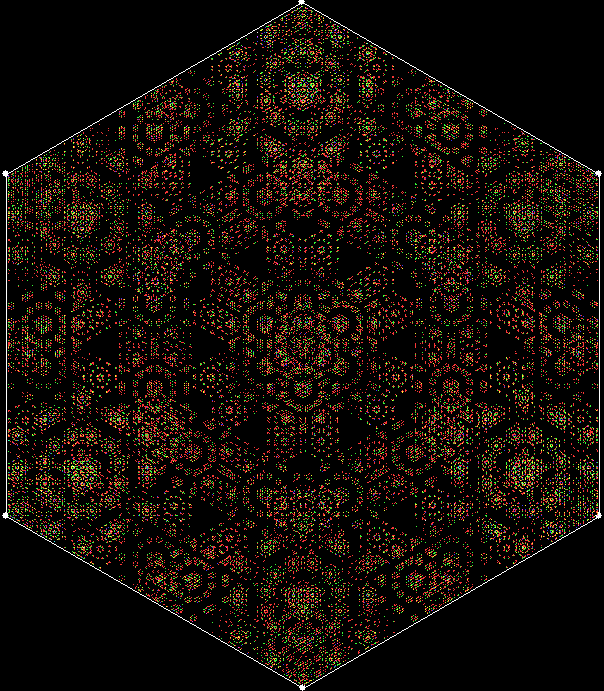
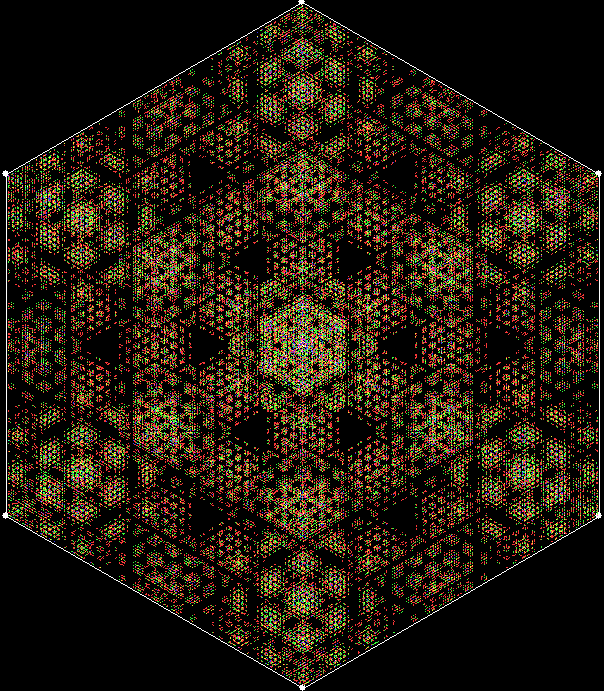
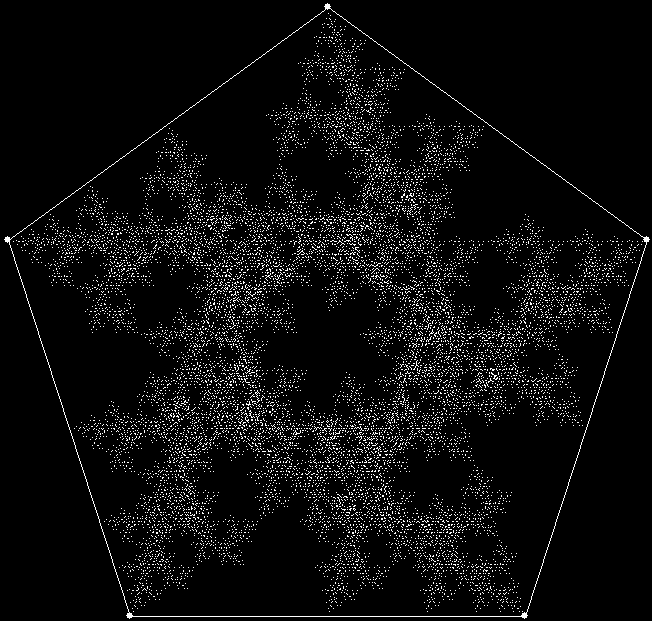
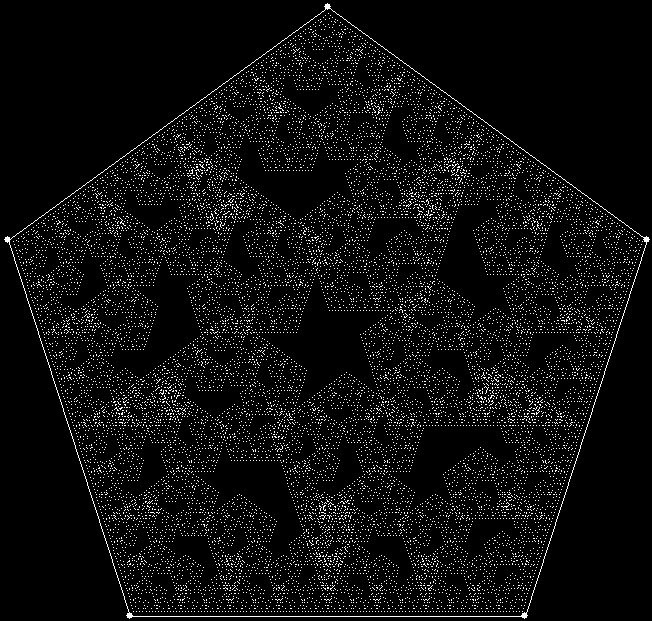
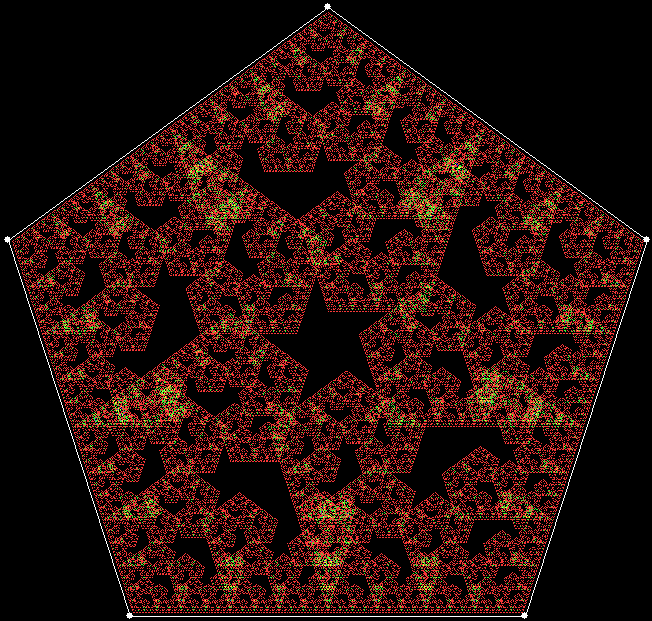
But you can use other restrictions. For example, suppose that the point can jump only once or twice towards any vertex, that is, (j = 1,2). It can then jump towards the same vertex again, but not the same number of times as it previously jumped. So if it jumps once, it has to jump twice next time; and vice versa. If you use this rule on a pentagon, this fractal appears:

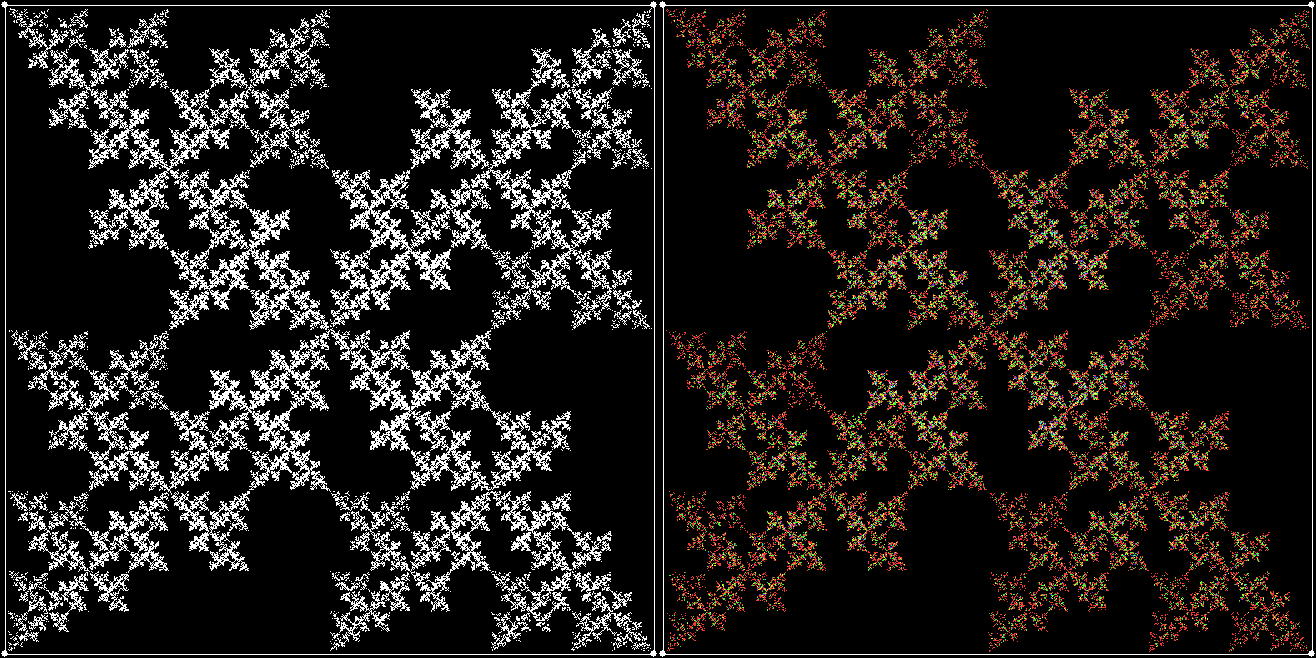
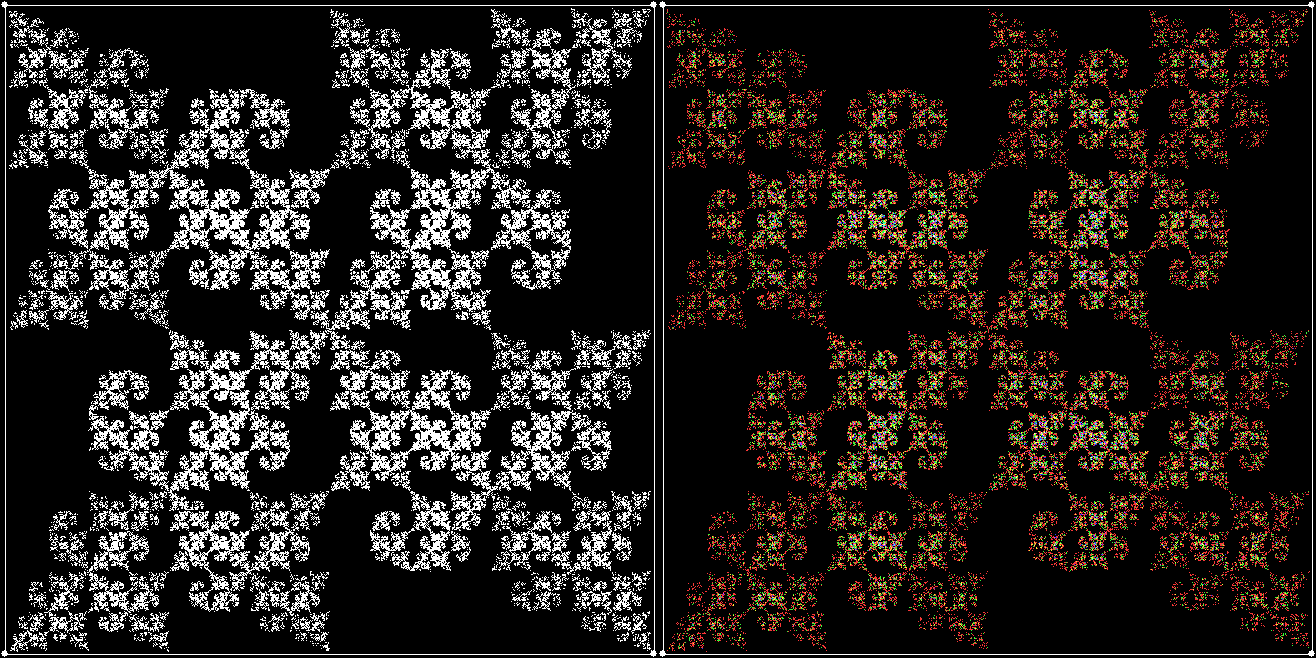
v = 5, j = 1,2 (black-and-white)


v = 5, j = 1,2 (colour)


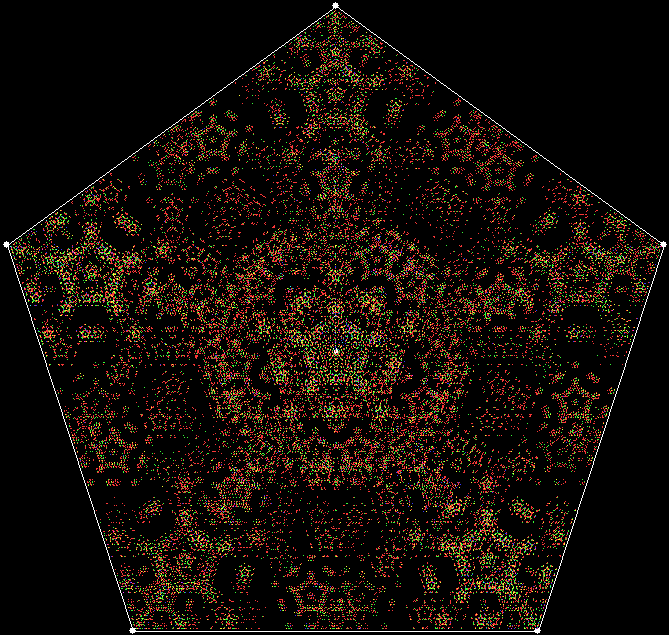
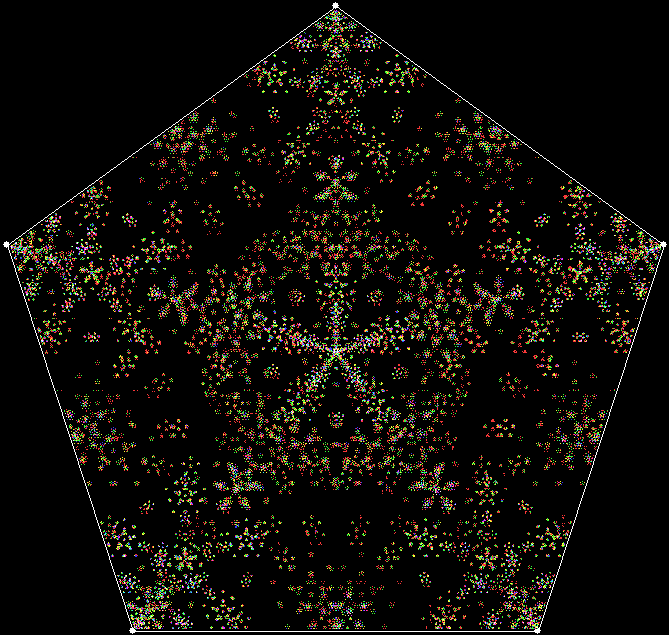
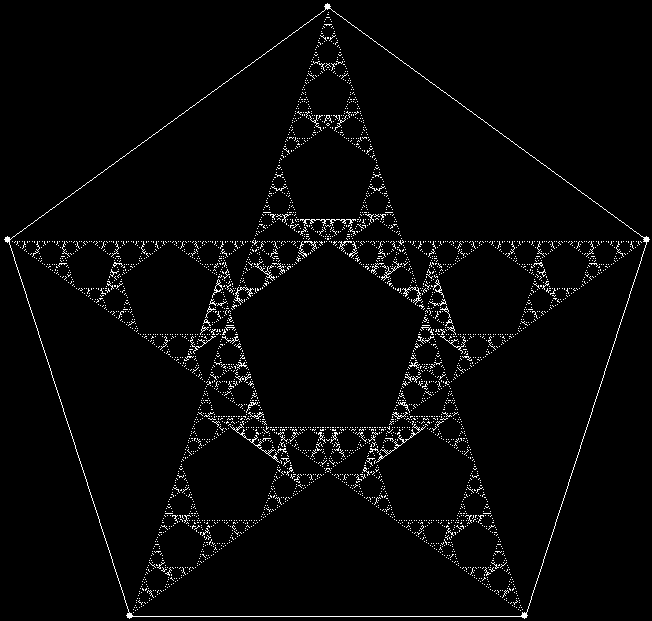
If the point can also jump towards the centre of the pentagon, this fractal appears:

v = 5, j = 1,2 (with centre)


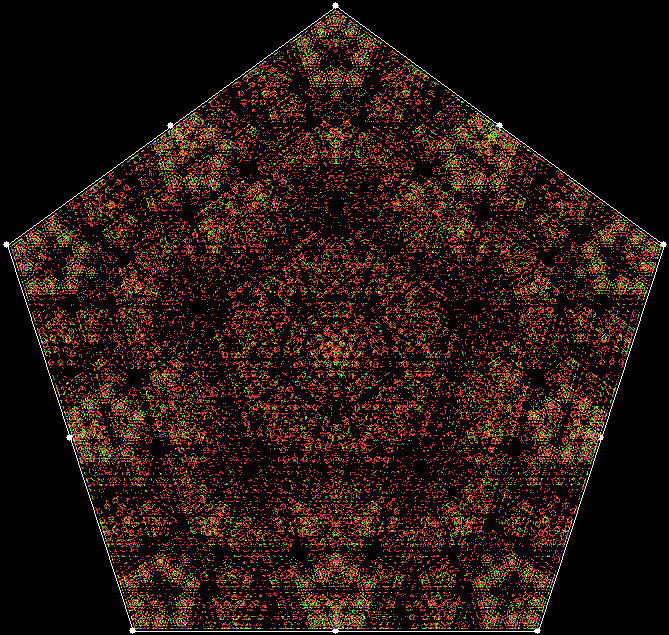
And if the point can also jump towards the midpoints of the sides:

v = 5, j = 1,2 (with midpoints)


v = 5, j = 1,2 (with midpoints and centre)


And here the point can jump 1, 2 or 3 times, but not once in a row, twice in a row or thrice in a row:

v = 5, j = 1,2,3


v = 5, j = 1,2,3 (with centre)


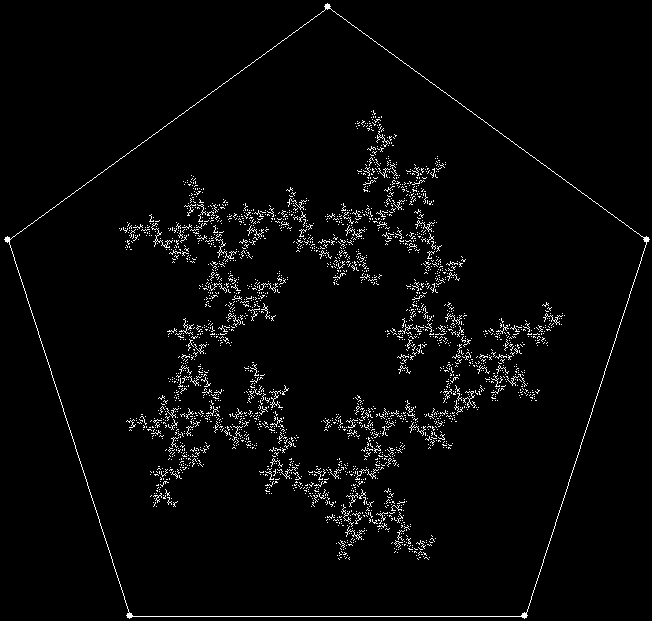
Here the point remembers its previous two moves, rather than just its previous move:

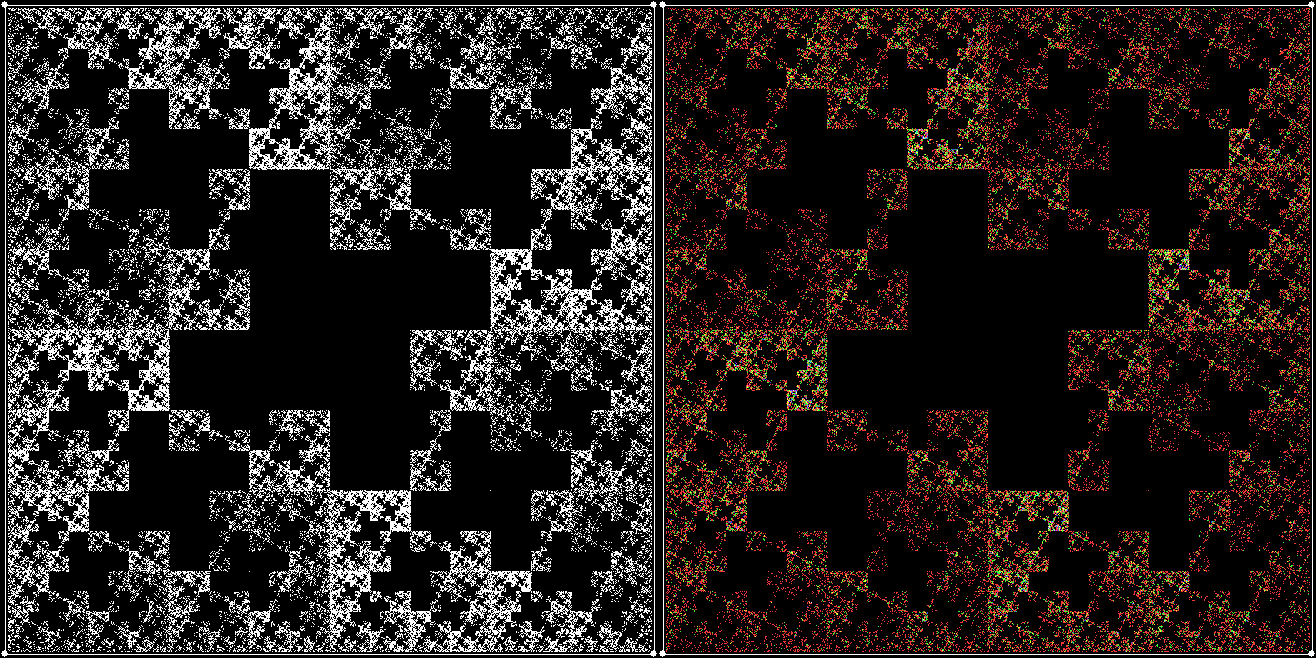
v = 5, j = 1,2,3, hist = 2 (black-and-white)


v = 5, j = 1,2,3, hist = 2


v = 5, j = 1,2,3, hist = 2 (with center)


v = 5, j = 1,2,3, hist = 2 (with midpoints)


v = 5, j = 1,2,3, hist = 2 (with midpoints and centre)


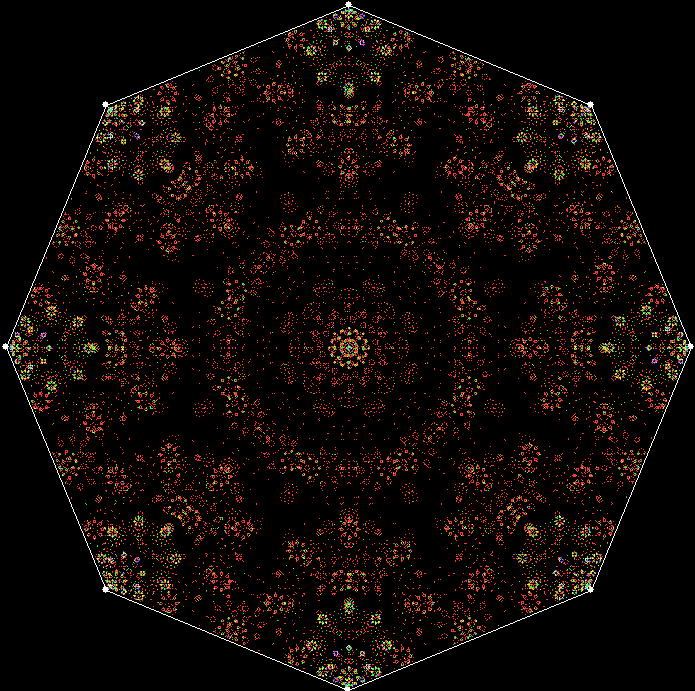
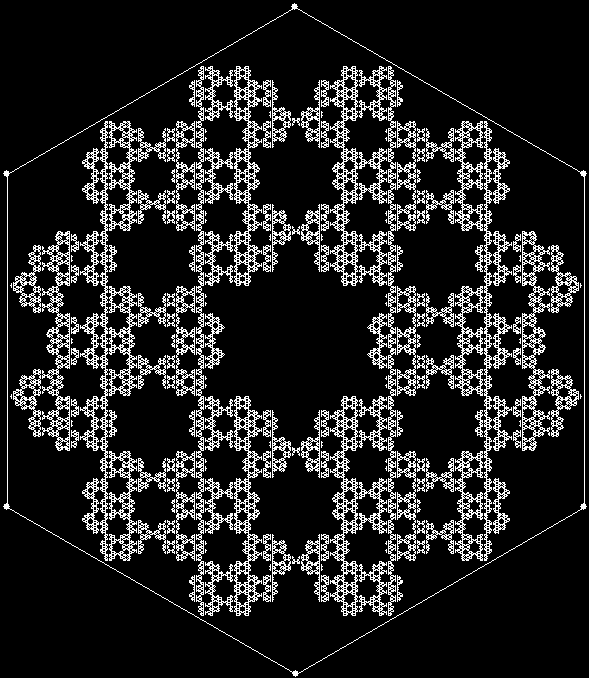
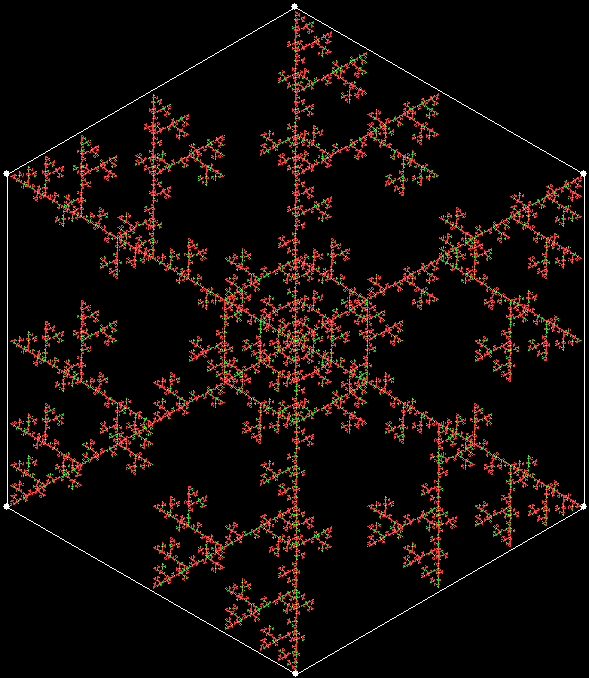
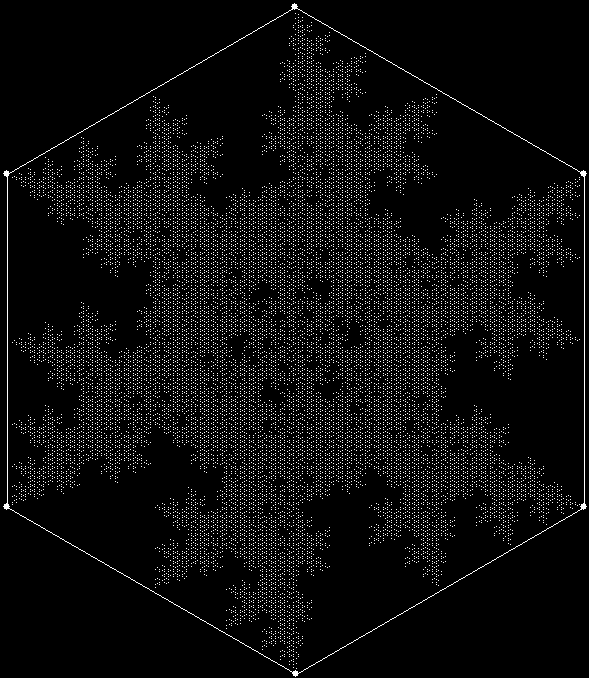
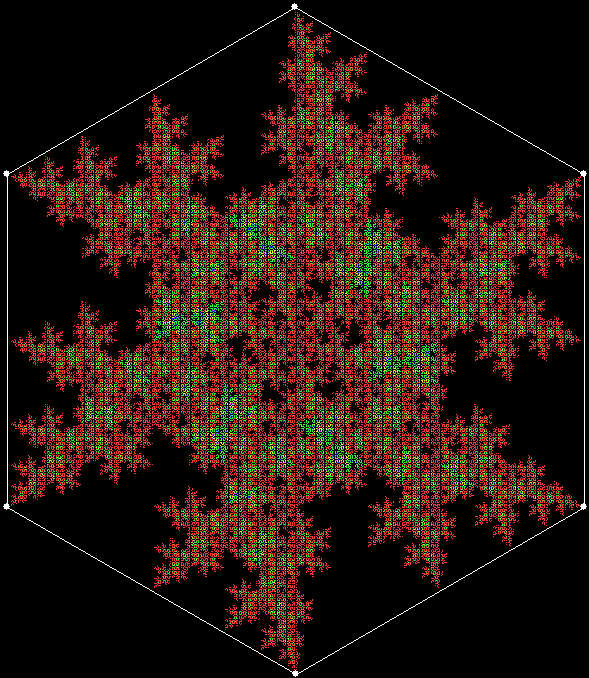
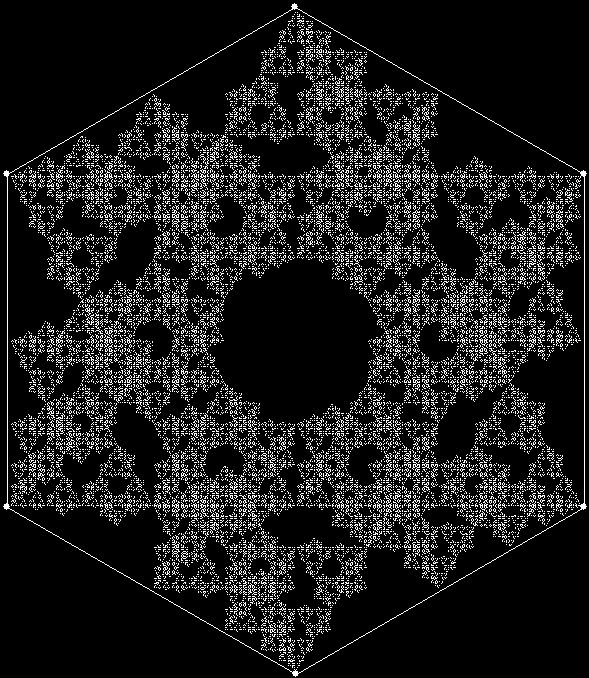
And here are hexagons using the same rules:

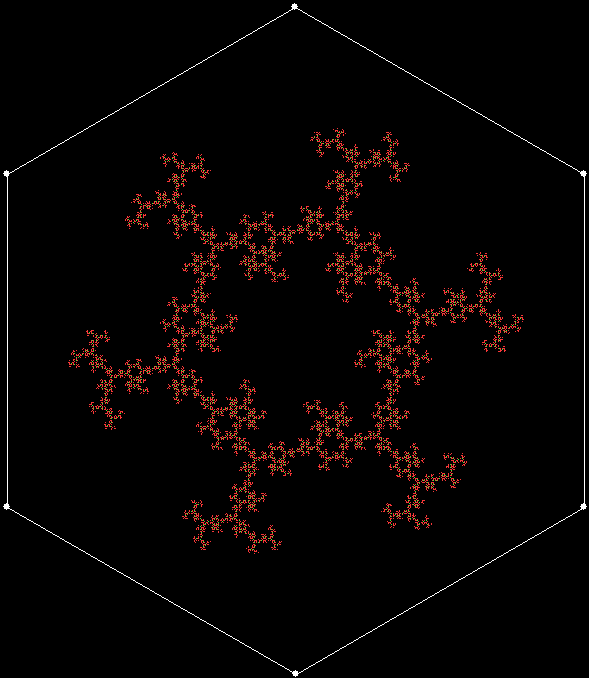
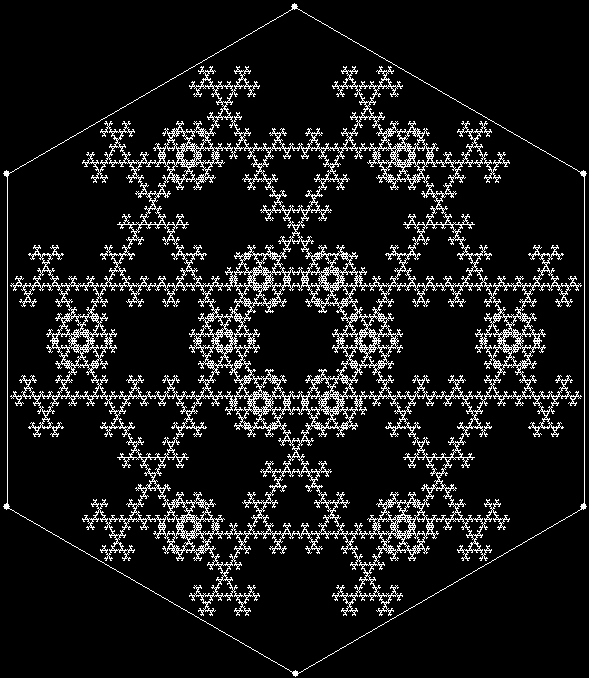
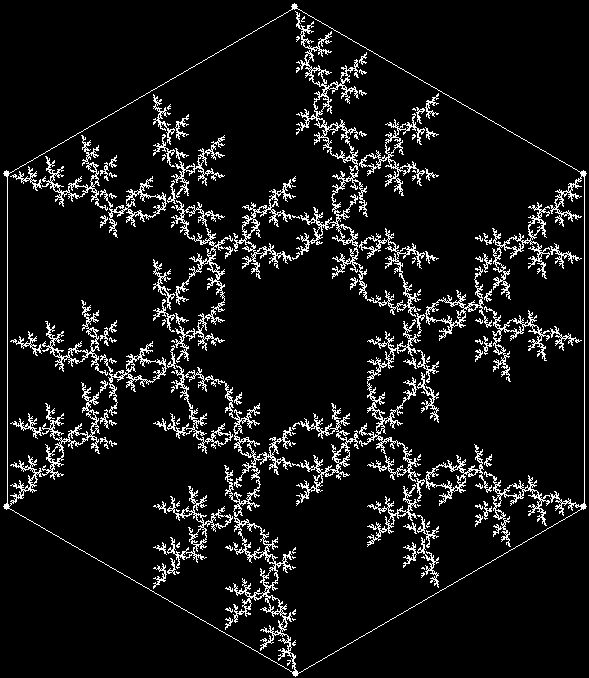
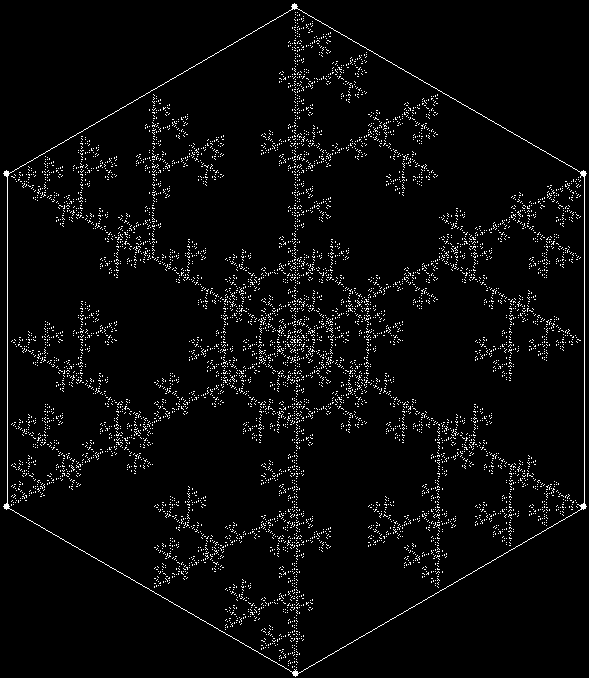
v = 6, j = 1,2 (black-and-white)


v = 6, j = 1,2


v = 6, j = 1,2 (with centre)


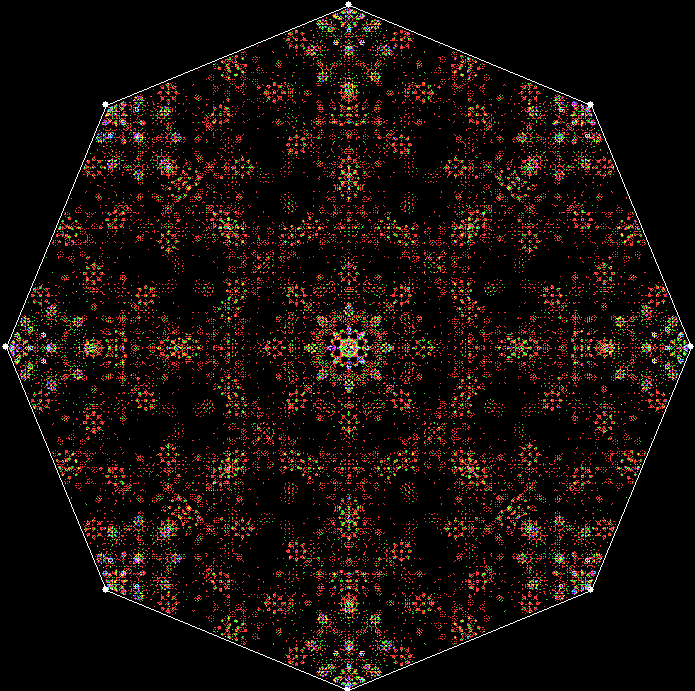
And octagons:

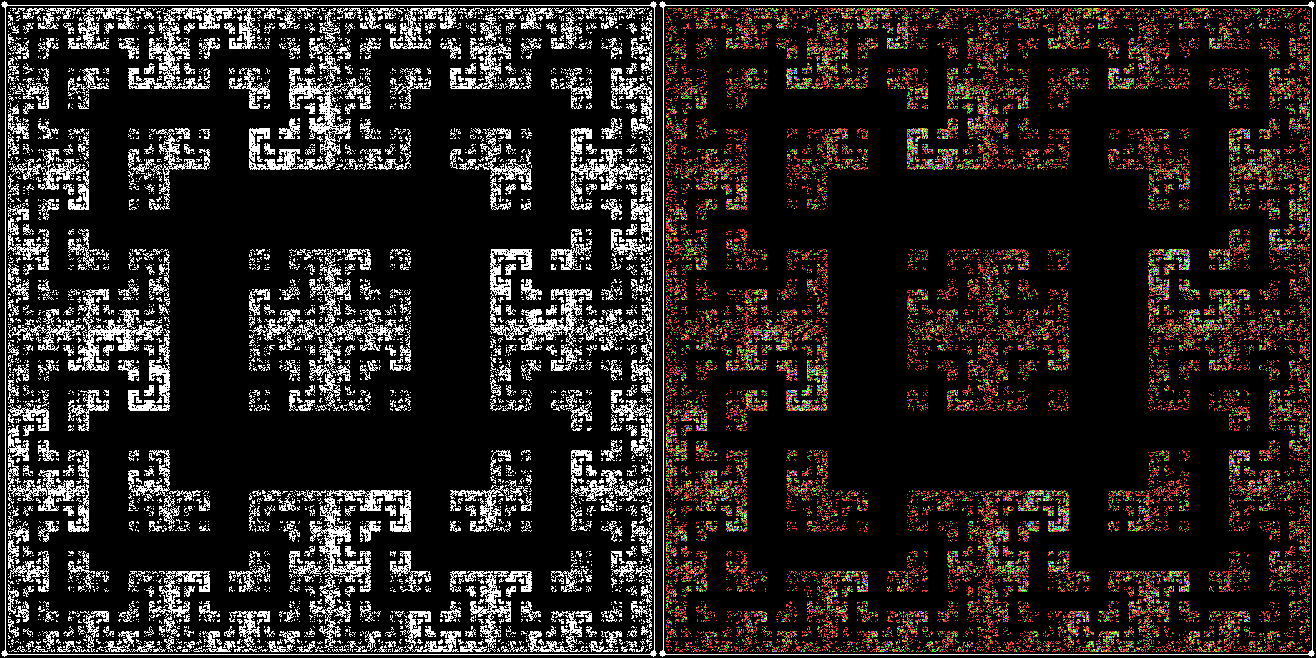
v = 8, j = 1,2


v = 8, j = 1,2 (with centre)


v = 8, j = 1,2,3, hist = 2


v = 8, j = 1,2,3, hist = 2


v = 8, j = 1,2,3,4 hist = 3


v = 8, j = 1,2,3,4 hist = 3 (with center)


The Hex Fractor #2

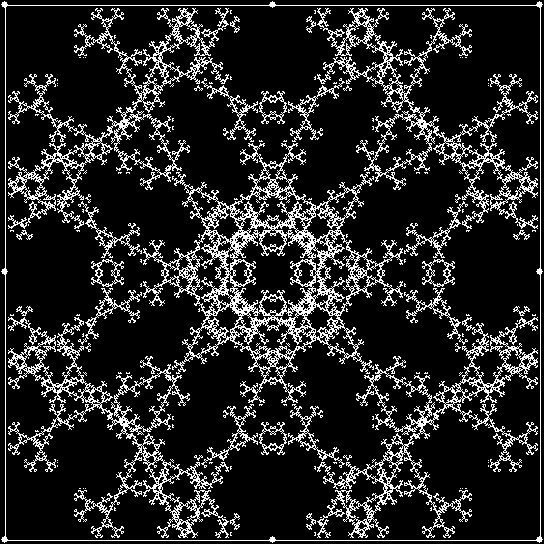
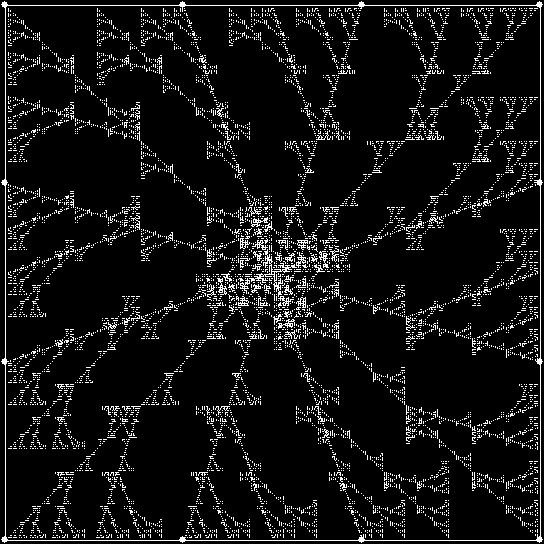
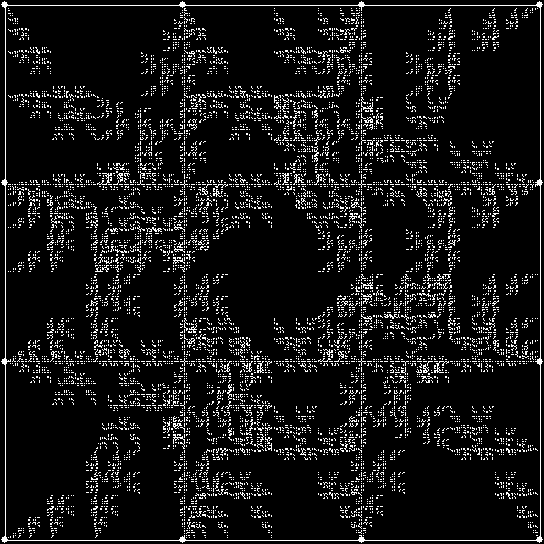
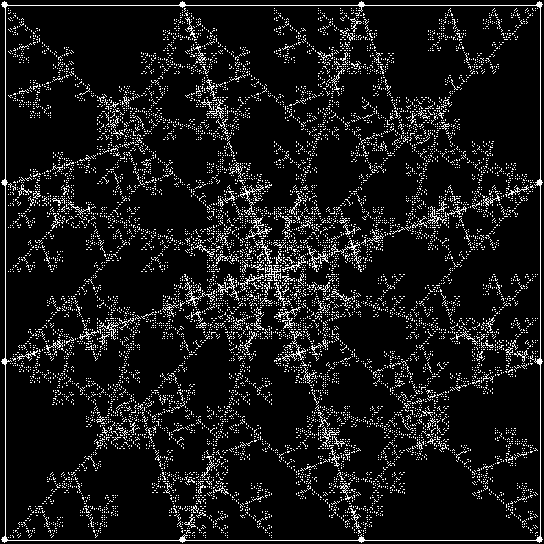
Pre-previously on Overlord-in-terms-of-issues-around-the-Über-Feral, I looked at the fractals created when various restrictions are placed on a point jumping at random half-way towards the vertices of a square. For example, the point can be banned from jumping towards the same vertex twice in a row or towards the vertex to the left of the vertex it has just jumped towards, and so on.

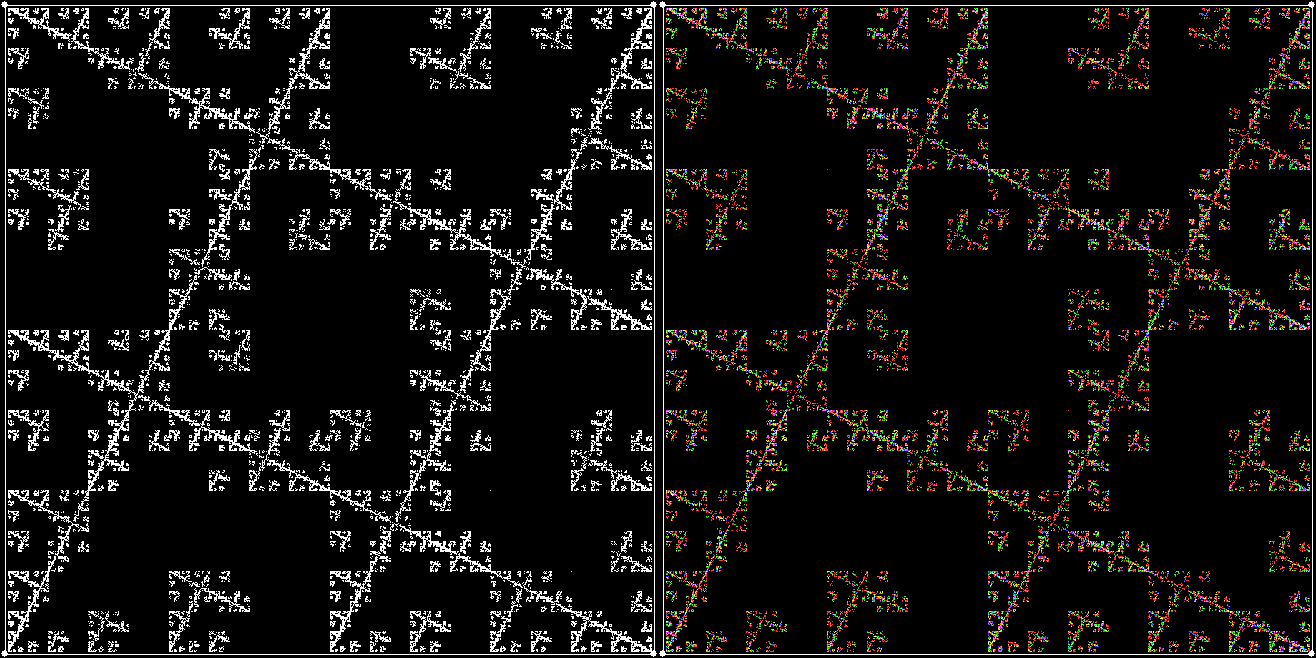
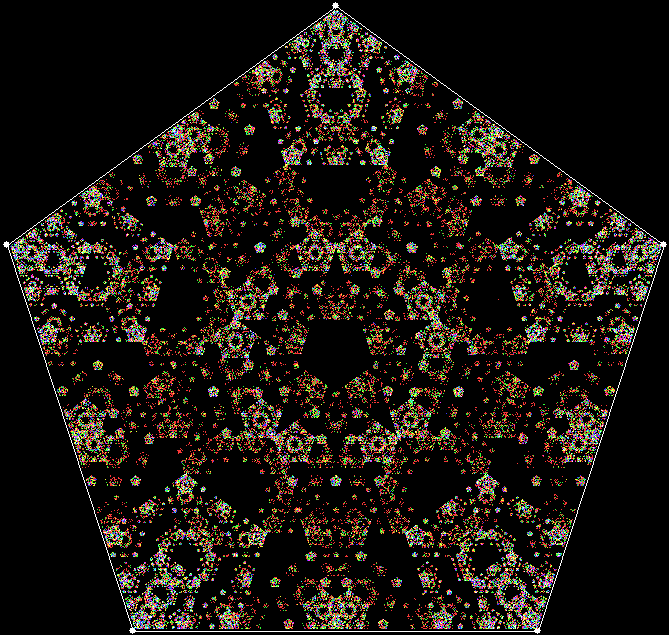
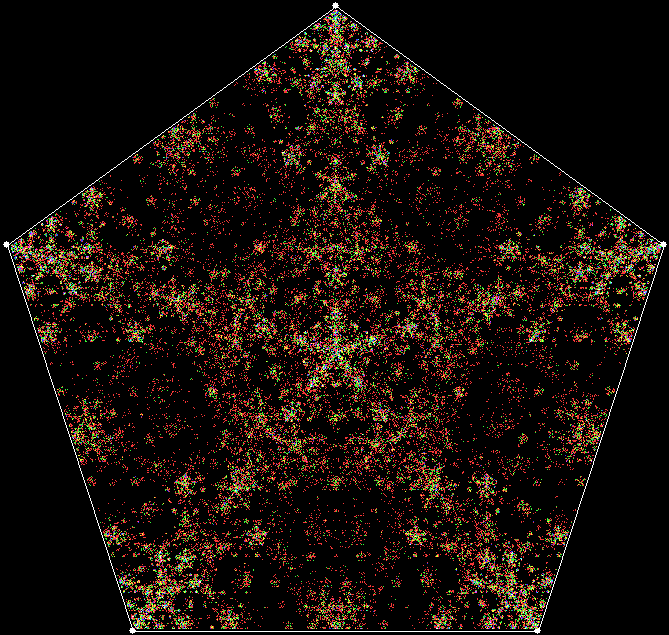
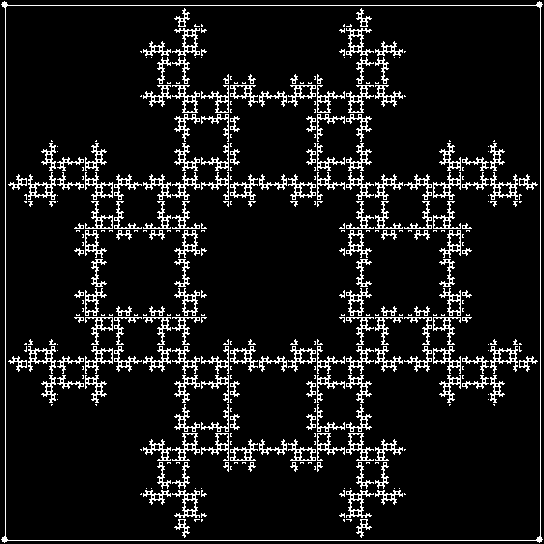
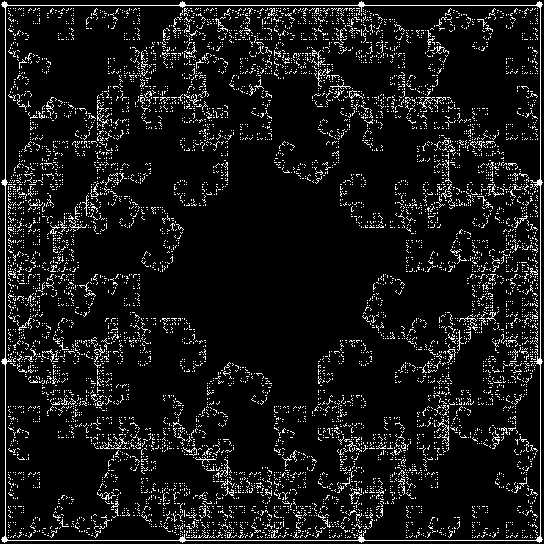
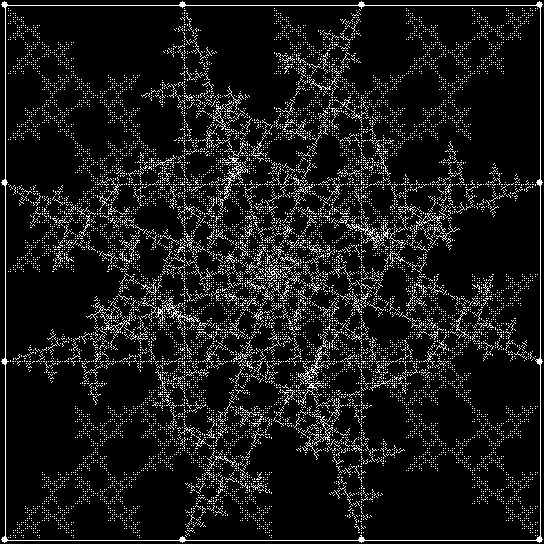
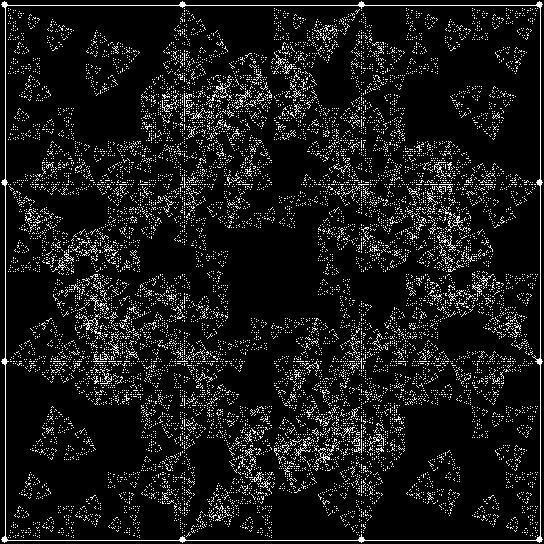
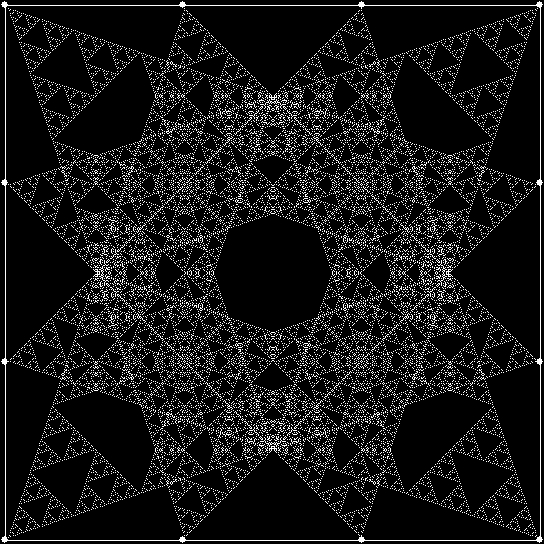
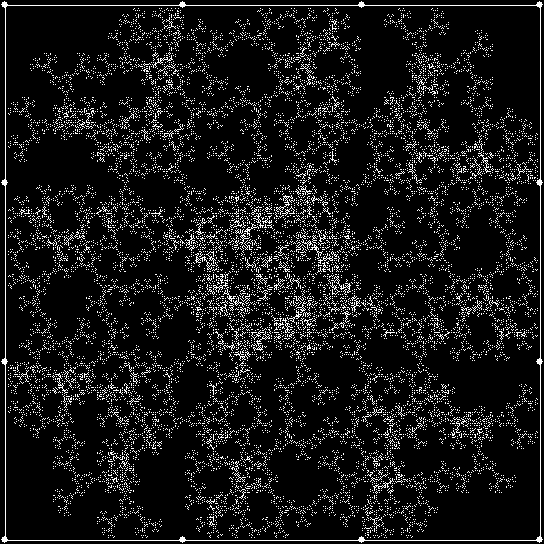
Today I want to look at what happens to a similar point moving inside pentagons and hexagons. If the point can’t jump twice towards the same vertex of a pentagon, this is the fractal that appears:

Ban second jump towards same vertex (v + 0)


Ban second jump towards same vertex (color)


If the point can’t jump towards the vertex immediately to the left of the one it’s just jumped towards, this is the fractal that appears:

Ban jump towards v + 1


Ban jump towards v + 1 (color)


And this is the fractal when the ban is on the vertex two places to the left:

Ban jump towards v + 2


Ban jump towards v + 2 (color)


You can also ban more than one vertex:

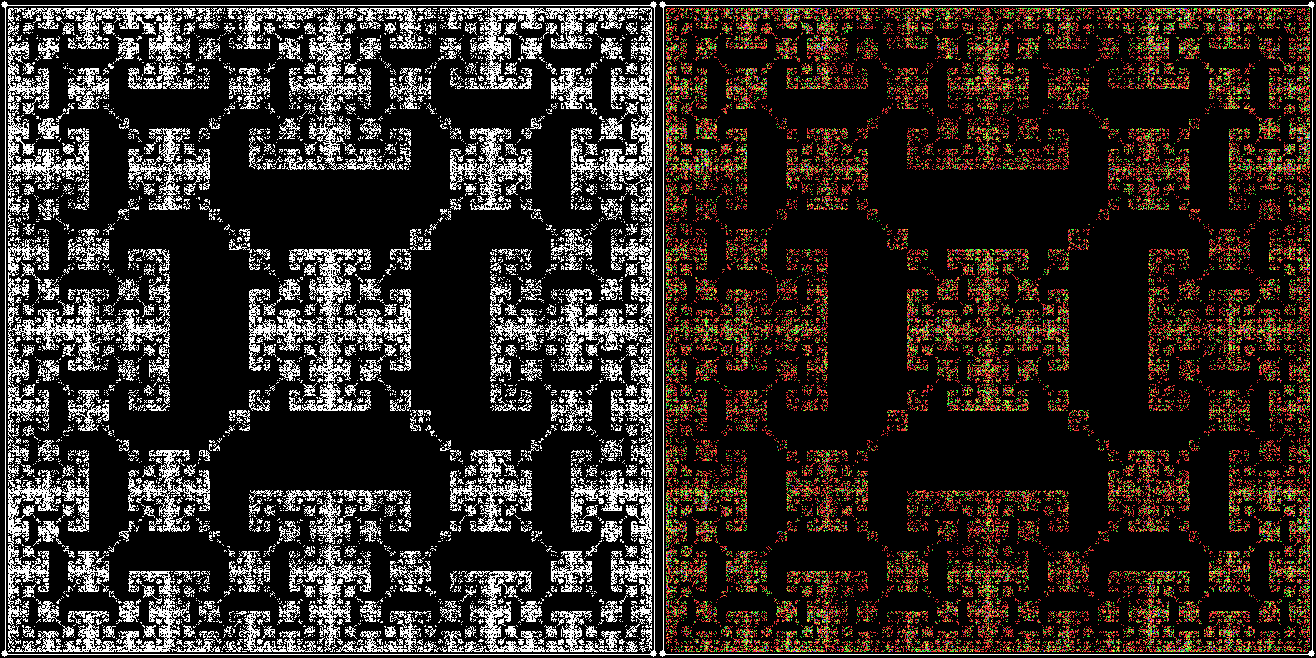
Ban jump towards v + 0,1


Ban jump towards v + 1,2


Ban jump towards v + 1,4


Ban jump towards v + 1,4 (color)


Ban jump towards v + 2,3


And here are fractals created in similar ways inside hexagons:

Ban jump towards v + 0,1


Ban jump towards v + 0,3


Ban jump towards v + 0,1,2


Ban jump towards v + 0,1,2 (color)


Ban jump towards v + 0,1,4


Ban jump towards v + 0,1,5


Ban jump towards v + 0,2,4


Ban jump towards v + 0,2,4 (color)


Ban jump towards v + 1,2,3


Ban jump towards v + 1,2,3 (color)


Ban jump towards v + 1,2,4


Ban jump towards v + 1,2,4, (color)


Ban jump towards v + 1,3,5


Ban jump towards v + 1,3,5 (color)


Ban jump towards v + 1,2


Ban jump towards v + 1,2


Ban jump towards v + 1,3


Ban jump towards v + 1,3 (color)


Ban jump towards v + 1,5


Ban jump towards v + 1,5 (color)


Ban jump towards v + 2,3


Ban jump towards v + 2,3 (color)


Ban jump towards v + 2,4


Ban jump towards v + 2,4 (color)


Elsewhere other-accessible:

Square Routes Re-Verticed

Square Routes Re-Verticed

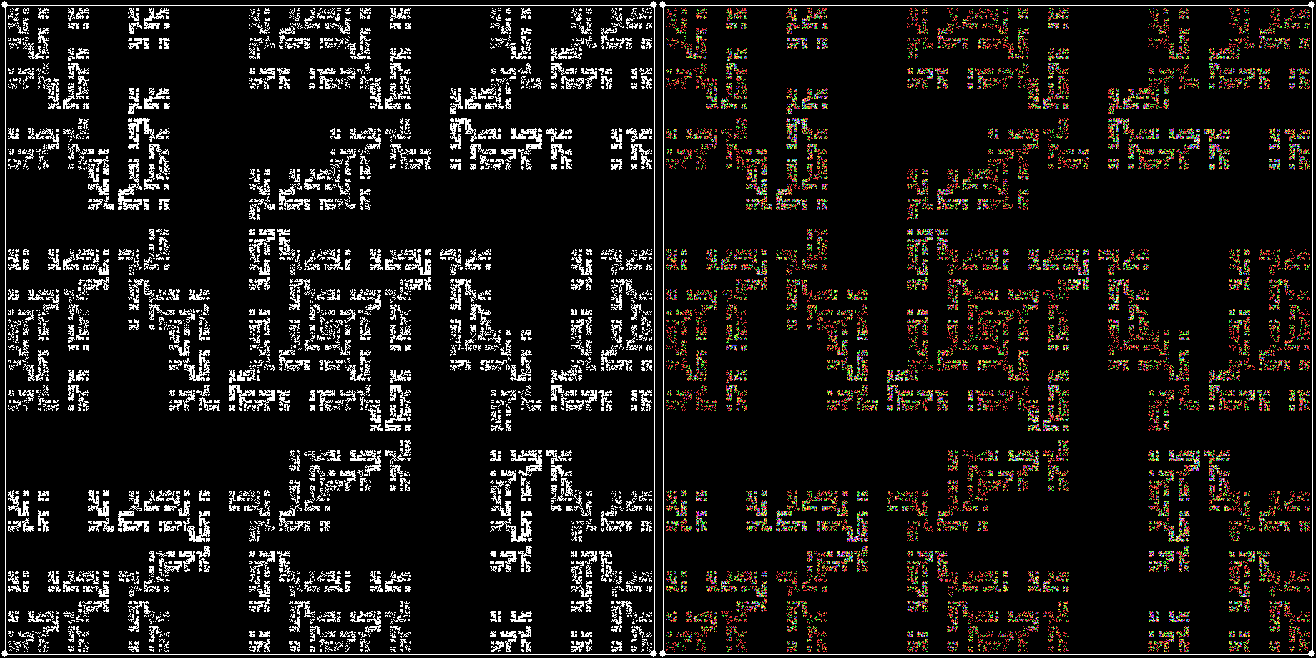
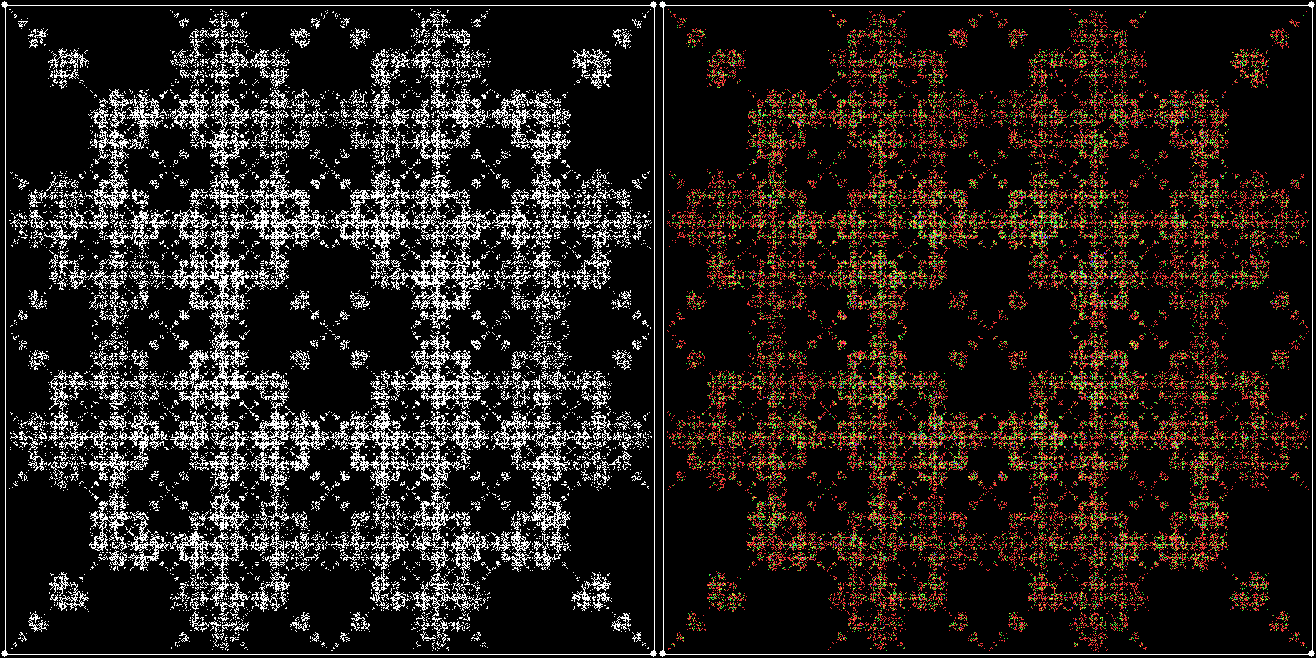
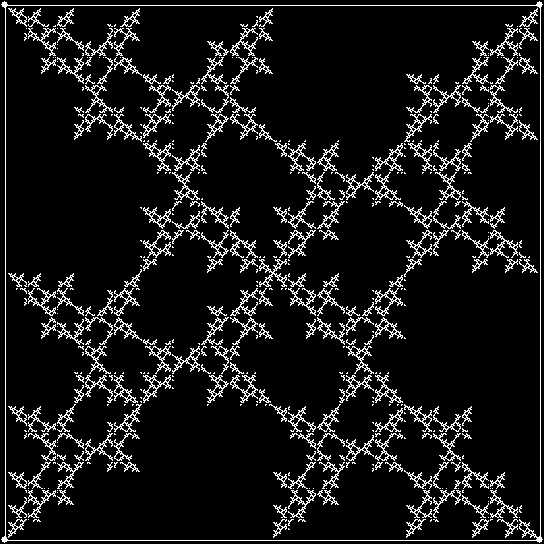
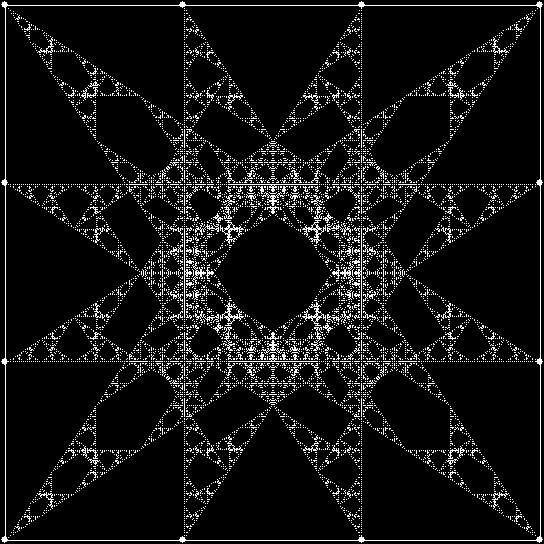
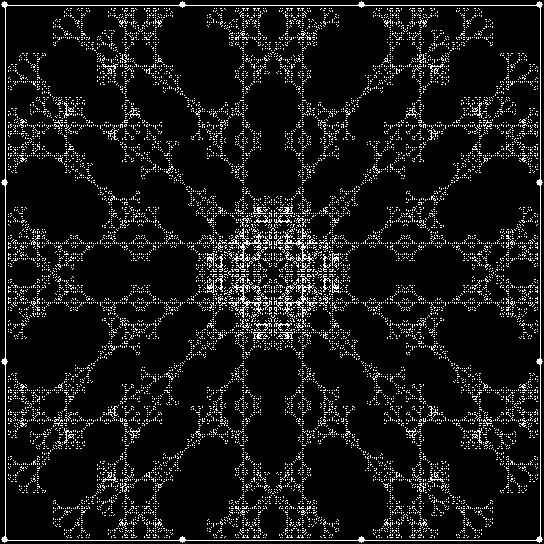
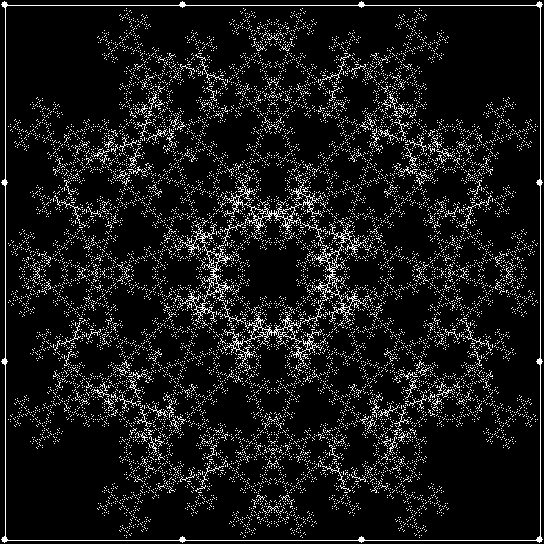
Start with a point in the middle of a square. Allow it to make a series of, say, eight jumps towards the vertices of the square, but with one restriction: it can’t jump towards the same vertex twice in a row. When the point has made the eight jumps, mark its position. If you do this for every possible route, the result will look like this:

Ban jump towards same vertex


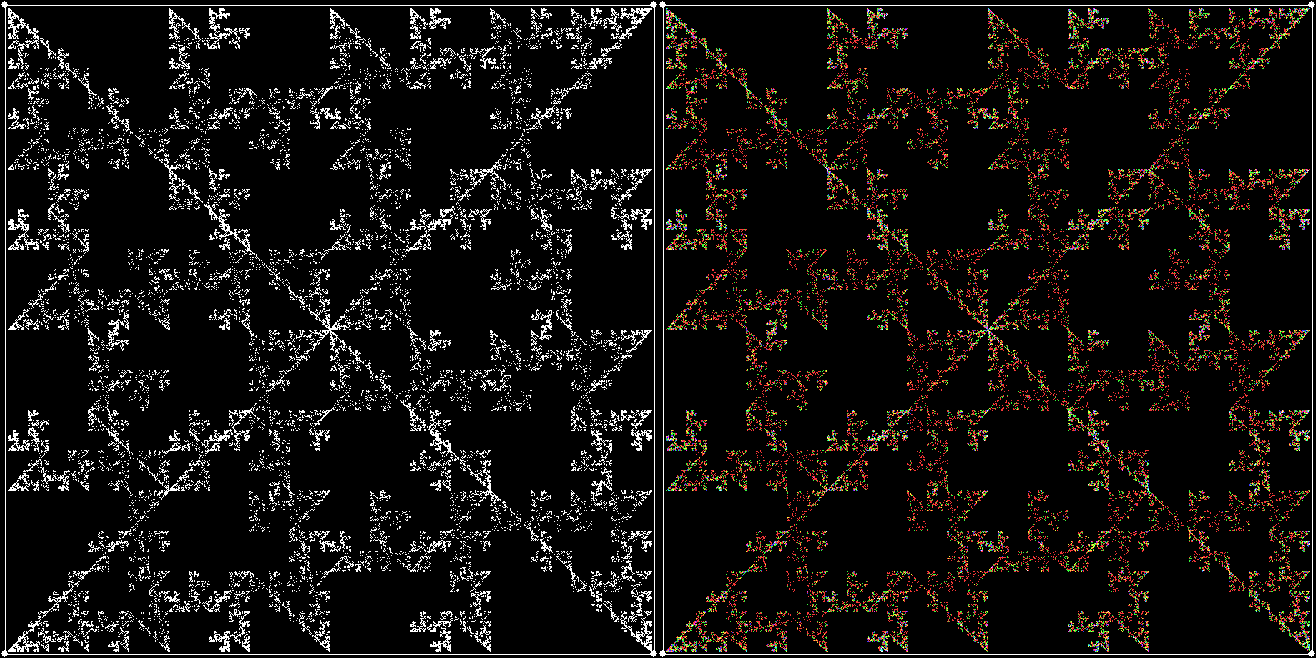
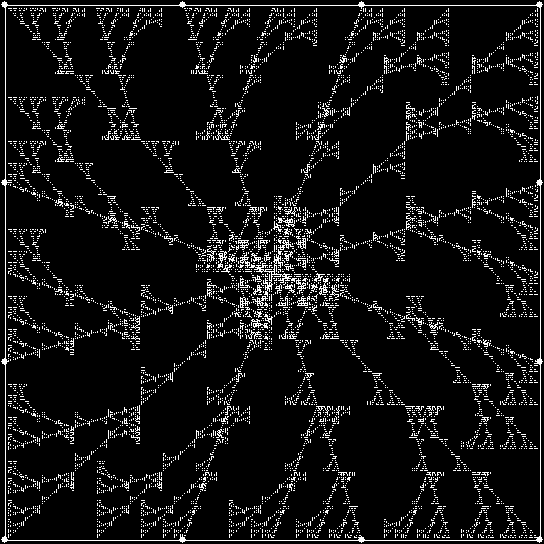
And here’s a different restriction: the point can’t jump towards the vertex immediately to the left of the vertex it has just jumped towards:

Ban jump towards v + 1


And here it can’t jump towards the vertex diagonally opposite the vertex it has just jumped towards:

Ban jump towards v + 2


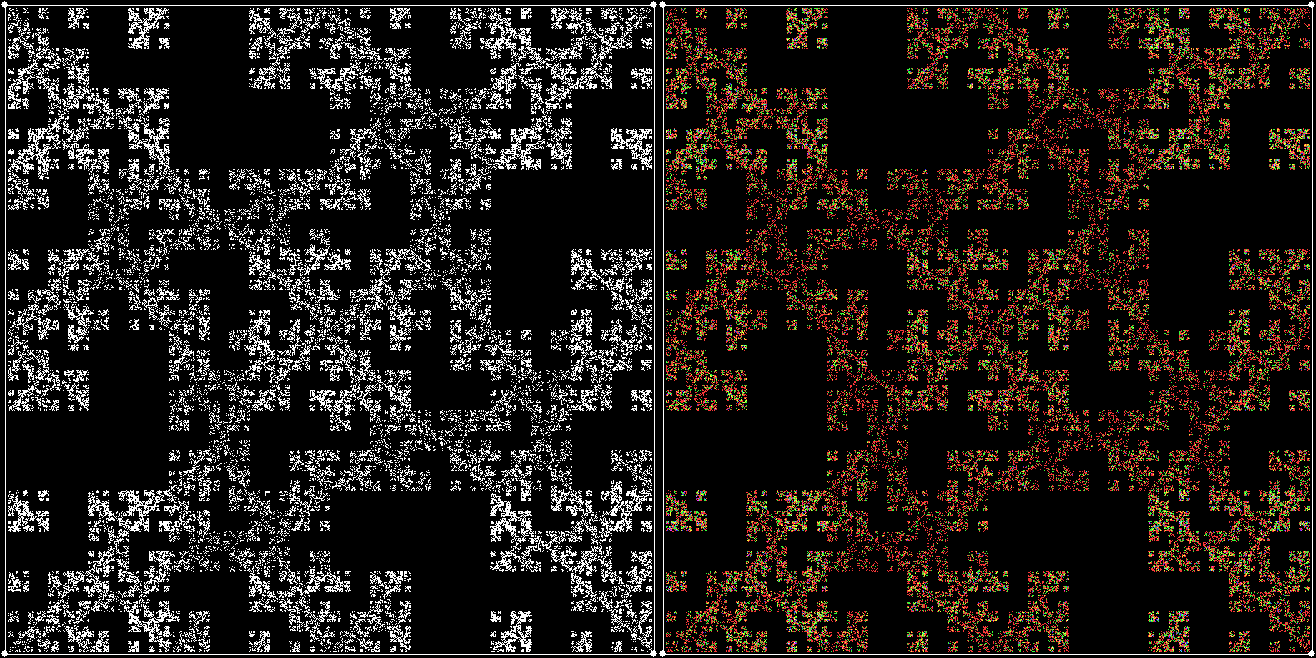
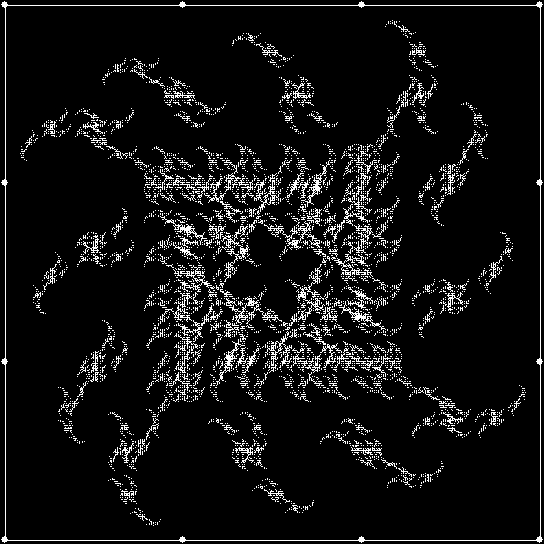
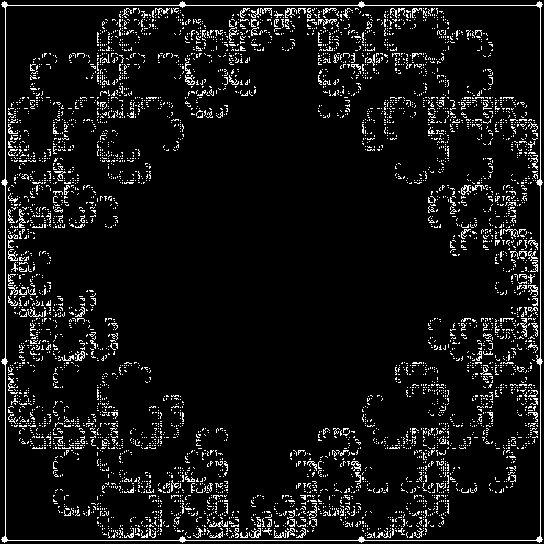
Now allow the point to jump not just towards the vertices, but towards points midway between the vertices. And expand and reverse the restrictions: instead of not allowing a jump towards v + i1, v + i2…, only allow a jump towards v + i1, v + i2… Some interesting shapes appear:

Jump must be towards v, v + 1 or v + 2 (one point between vertices)


v, v + 1 or v + 6


v, v + 2 or v + 3


v, v + 2 or v + 4


v, v + 2 or v + 6


v, v + 3 or v + 4


v, v + 3 or v + 5


v, v + 2 or v + 7


v + 1, v + 4 or v + 7


v, v + 1 or v + 6 (two points between vertices)


v, v + 2 or v + 4


v, v + 2 or v + 6


v, v + 2 or v + 9


v, v + 3 or v + 6


v, v + 3 or v + 8


v, v + 4 or v + 8


v, v + 5 or v + 7


v , v + 6 or v + 11


v + 1, v + 5 or v + 6


v + 1, v + 2 or v + 10


v + 1, v + 6 or v + 10


v + 1, v + 6 or v + 11


v + 2, v + 6 or v + 10


Elsewhere other-posted:

Square Routes
Square Routes Revisited
Square Routes Re-Revisited
Square Routes Re-Re-Revisited

Mod’s Chosen

When you divide one integer by another, one of two things happens. Either the second number goes perfectly into the first or there’s a remainder:


15 / 5 = 3
18 / 5 = 3⅗

In the first case, there’s no remainder, that is, the remainder is 0. In the second case, there’s a remainder of 3. And all that gives you the basis for what’s called modular arithmetic. It returns the remainder when one number is divided by another:


15 mod 5 = 0
16 mod 5 = 1
17 mod 5 = 2
18 mod 5 = 3
19 mod 5 = 4
20 mod 5 = 0
21 mod 5 = 1
22 mod 5 = 2...

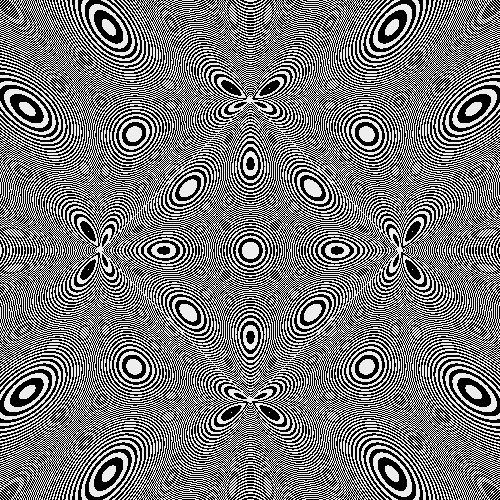
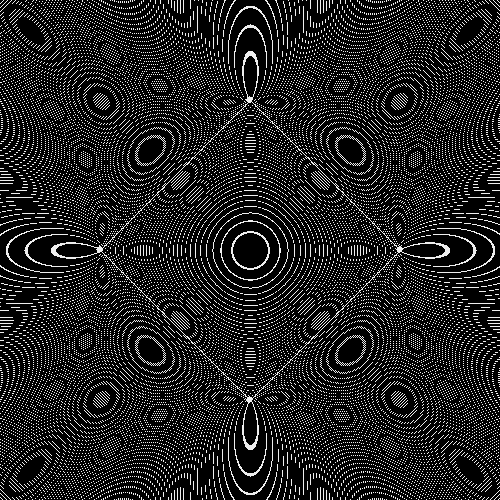
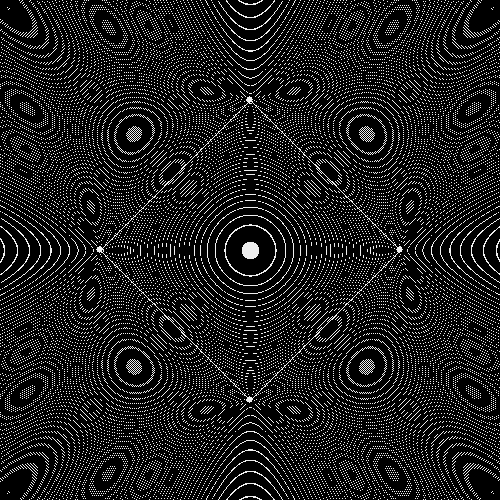
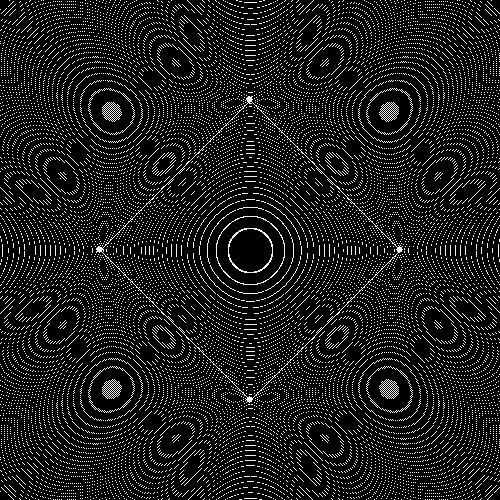
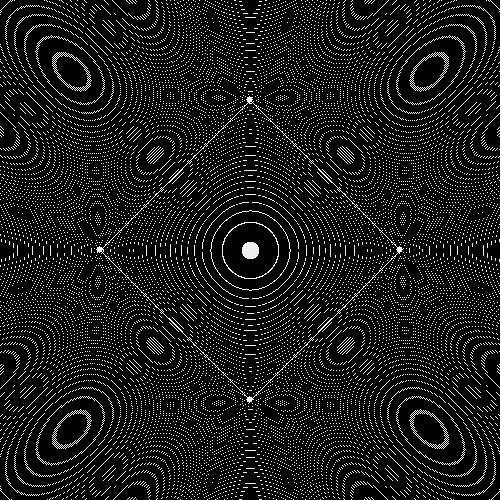
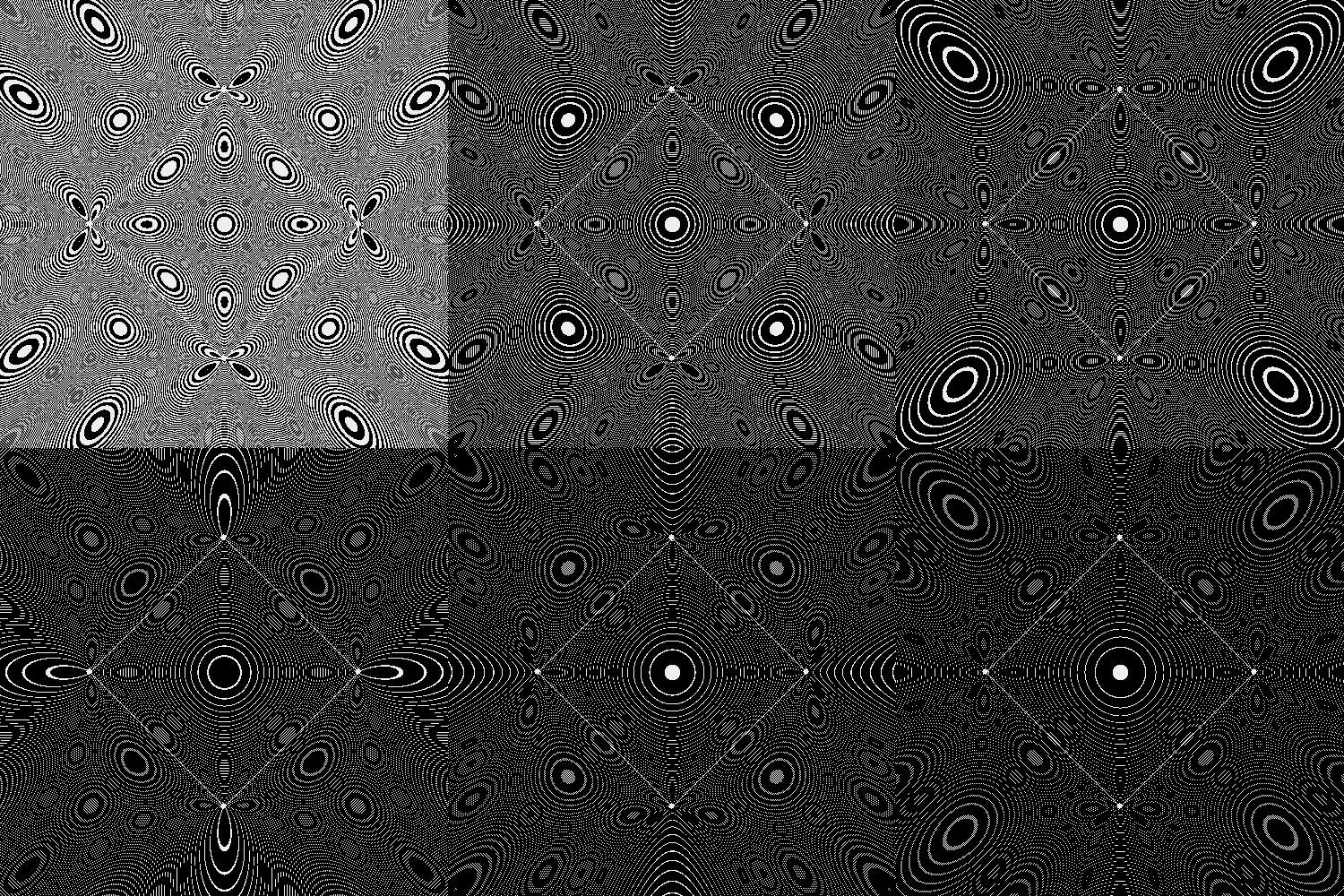
It looks simple but a lot of mathematics is built on it. I don’t know much of that maths, but I know one thing I like: the patterns you can get from modular arithmetic. Suppose you draw a square, then find a point and measure the distances from that point to all the vertices of the square. Then add the distances up, turn the result into an integer if necessary, and test whether the result is divisible by 2 or not. If it is divisible, colour the point in. If it isn’t, leave the point blank.

Then move on to another point and perform the same test. This is modular arithematic, because for each point you’re asking whether d mod 2 = 0. The result looks like this:

d mod 2 = 0


Here are more divisors:

d mod 3 = 0


d mod 4 = 0


d mod 5 = 0


d mod 6 = 0


d mod 7 = 0


d mod 8 = 0


d mod 9 = 0


d mod 10 = 0


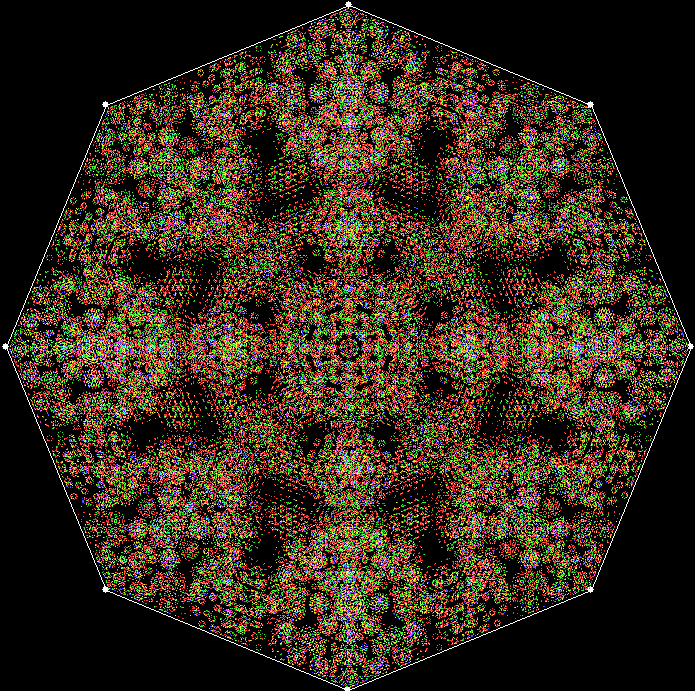
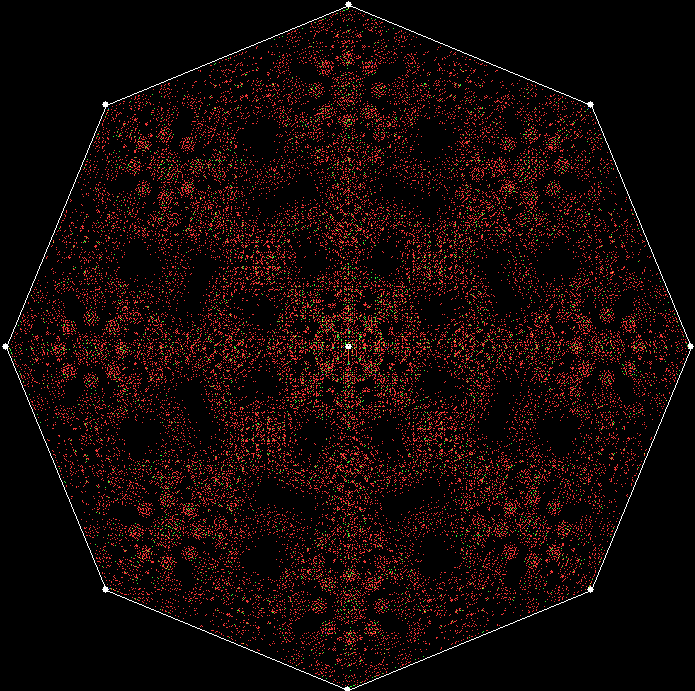
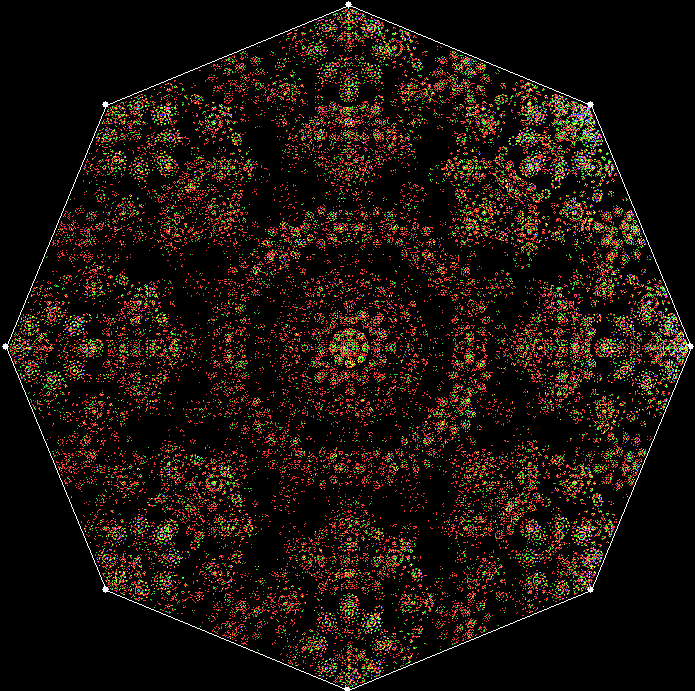
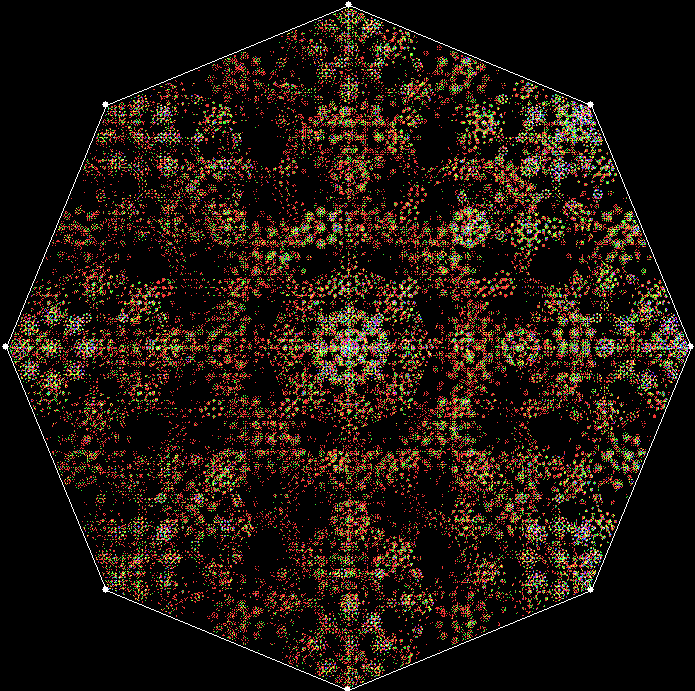
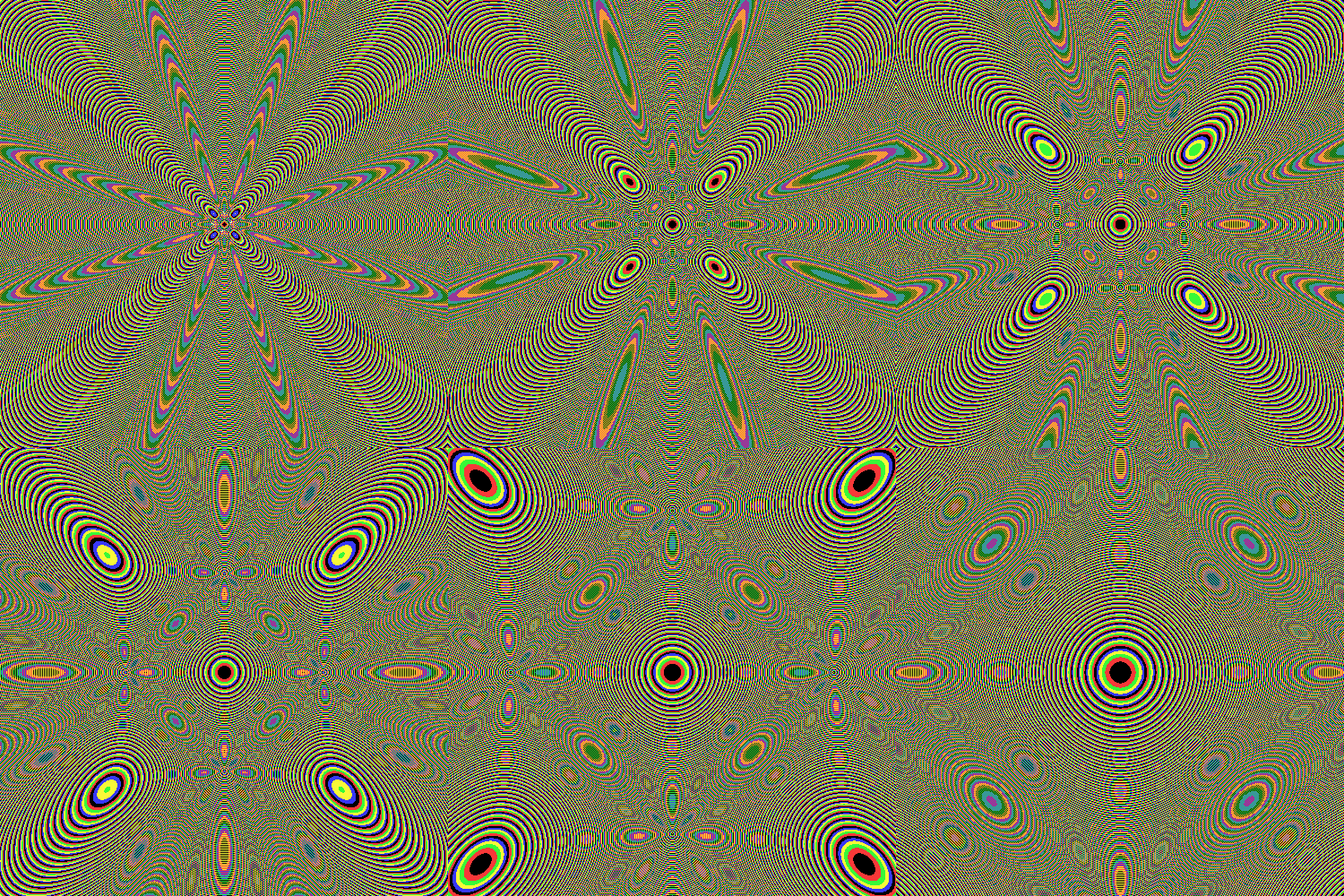
d mod various = 0 (animated)


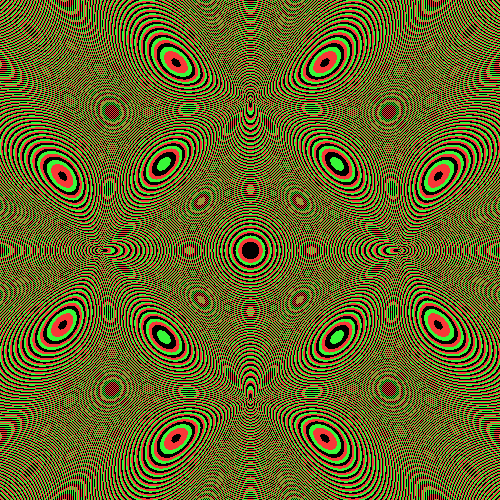
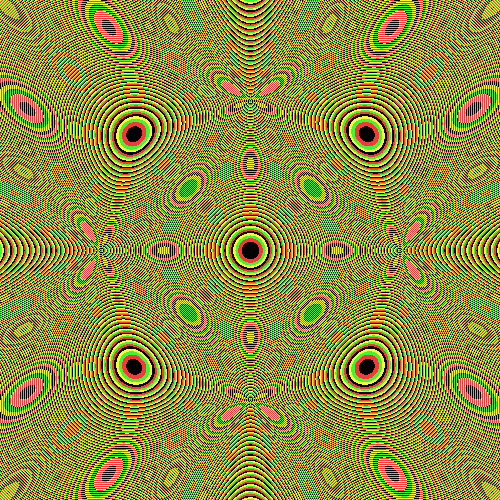
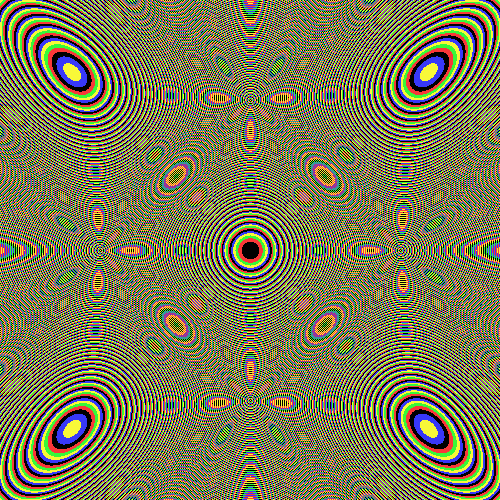
You can also use modular arithmetic to determine the colour of the points. For example, if d mod n = 0, the point is black; if d mod n = 1, the point is red; if d mod n = 2, the point is green; and so on.

d mod 3 = 0, 1, 2 (coloured)


d mod 4 = 0, 1, 2, 3 (coloured)


d mod 5 = 0, 1, 2, 3, 4 (coloured)


d mod 5 = 0, 1, 2, 3, 4 (animated and expanding)


Zequality Now

Here are the numbers one to eight in base 2:

1, 10, 11, 100, 101, 110, 111, 1000…

Now see what happens when you count the zeroes:


1, 10[1], 11, 10[2]0[3], 10[4]1, 110[5], 111, 10[6]0[7]0[8]...

In base 2, the numbers one to eight contain exactly eight zeroes, that is, zerocount(1..8,b=2) = 8. But it doesn’t work out so exactly in base 3:


1, 2, 10[1], 11, 12, 20[2], 21, 22, 10[3]0[4], 10[5]1, 10[6]2, 110[7], 111, 112, 120[8], 121, 122, 20[9]0[10], 20[11]1, 20[12]2, 210[13], 211, 212, 220[14], 221, 222, 10[15]0[16]0[17], 10[18]0[19]1, 10[20]0[21]2, 10[22]10[23], 10[24]11, 10[25]12, 10[26]20[27], 10[28]21, 10[29]22, 110[30]0[31], 110[32]1, 110[33]2, 1110[34], 1111, 1112, 1120[35], 1121, 1122, 120[36]0[37], 120[38]1, 120[39]2, 1210[40], 1211, 1212, 1220[41], 1221, 1222, 20[42]0[43]0[44], 20[45]0[46]1, 20[47]0[48]2, 20[49]10[50], 20[51]11, 20[52]12, 20[53]20[54], 20[55]21, 20[56]22, 210[57]0[58], 210[59]1, 210[60]2, 2110[61], 2111, 2112, 2120[62], 2121, 2122, 220[63]0[64], 220[65]1, 220[66]2, 2210[67], 2211, 2212, 2220[68], 2221, 2222, 10[69]0[70]0[71]0[72], 10[73]0[74]0[75]1, 10[76]0[77]0[78]2, 10[79]0[80]10[81], 10[82]0[83]11, 10[84]0[85]12, 10[86]0[87]20[88]...

In base 3, 10020 = 87 and zerocount(1..87,b=3) = 88. And what about base 4? zerocount(1..1068,b=4) = 1069 (n=100,230 in base 4). After that, zerocount(1..16022,b=5) = 16023 (n=1,003,043 in base 5) and zerocount(1..284704,b=6) = 284,705 (n=10,034,024 in base 6).

The numbers are getting bigger fast and it’s becoming increasingly impractible to count the zeroes individually. What you need is an algorithm that will take any given n and work out how many zeroes are required to write the numbers 1 to n. The simplest way to do this is to work out how many times 0 has appeared in each position of the number. The 1s position is easy: you simply divide the number by the base and discard the remainder. For example, in base 10, take the number 25. The 0 must have appeared in the 1s position twice, for 10 and 20, so zerocount(1..25) = 25 \ 10 = 2. In 2017, the 0 must have appeared in the 1s position 201 times = 2017 \ 10. And so on.

It gets a little trickier for the higher positions, the 10s, 100s, 1000s and so on, but the same basic principle applies. And so you can easily create an algorithm that takes a number, n, and produces zerocount(1..n) in a particular base. With this algorithm, you can quickly find zerocount(1..n) >= n in higher bases:


zerocount(1..1000,b=2) = 1,000 (n=8)*
zerocount(1..10020,b=3) = 10,021 (n=87)
zerocount(1..100230,b=4) = 100,231 (n=1,068)
zerocount(1..1003042,b=5) = 1,003,043 (n=16,022)
zerocount(1..10034024,b=6) = 10,034,025 (n=284,704)
zerocount(1..100405550,b=7) = 100,405,551 (n=5,834,024)
zerocount(1..1004500236,b=8) = 1,004,500,237 (n=135,430,302)
zerocount(1..10050705366,b=9) = 10,050,705,367 (n=3,511,116,537)
zerocount(1..100559404366,b=10) = 100,559,404,367
zerocount(1..1006083A68919,b=11) = 1,006,083,A68,919 (n=3,152,738,985,031)*
zerocount(1..10066AA1430568,b=12) = 10,066,AA1,430,569 (n=107,400,330,425,888)
zerocount(1..1007098A8719B81,b=13) = 100,709,8A8,719,B81 (n=3,950,024,143,546,664)*
zerocount(1..10077C39805D81C7,b=14) = 1,007,7C3,980,5D8,1C8 (n=155,996,847,068,247,395)
zerocount(1..10080B0034AA5D16D,b=15) = 10,080,B00,34A,A5D,171 (n=6,584,073,072,068,125,453)
zerocount(1..10088DBE29597A6C77,b=16) = 100,88D,BE2,959,7A6,C77 (n=295,764,262,988,176,583,799)*
zerocount(1..10090C5309AG72CBB3F,b=17) = 1,009,0C5,309,AG7,2CB,B3G (n=14,088,968,131,538,370,019,982)
zerocount(1..10099F39070FC73C1G73,b=18) = 10,099,F39,070,FC7,3C1,G75 (n=709,394,716,006,812,244,474,473)
zerocount(1..100A0DC1258614CA334EB,b=19) = 100,A0D,C12,586,14C,A33,4EC (n=37,644,984,315,968,494,382,106,708)
zerocount(1..100AAGDEEB536IBHE87006,b=20) = 1,00A,AGD,EEB,536,IBH,E87,008 (n=2,099,915,447,874,594,268,014,136,006)

And you can also easily find the zequal numbers, that is, the numbers n for which, in some base, zerocount(1..n) exactly equals n:


zerocount(1..1000,b=2) = 1,000 (n=8)
zerocount(1..1006083A68919,b=11) = 1,006,083,A68,919 (n=3,152,738,985,031)
zerocount(1..1007098A8719B81,b=13) = 100,709,8A8,719,B81 (n=3,950,024,143,546,664)
zerocount(1..10088DBE29597A6C77,b=16) = 100,88D,BE2,959,7A6,C77 (n=295,764,262,988,176,583,799)
zerocount(1..100CCJFFAD4MI409MI0798CJB3,b=24) = 10,0CC,JFF,AD4,MI4,09M,I07,98C,JB3 (n=32,038,681,563,209,056,709,427,351,442,469,835)
zerocount(1..100DDL38CIO4P9K0AJ7HK74EMI7L,b=26) = 1,00D,DL3,8CI,O4P,9K0,AJ7,HK7,4EM,I7L (n=160,182,333,966,853,031,081,693,091,544,779,177,187)
zerocount(1..100EEMHG6OE8EQKO0BF17LCCIA7GPE,b=28) = 100,EEM,HG6,OE8,EQK,O0B,F17,LCC,IA7,GPE (n=928,688,890,453,756,699,447,122,559,347,771,300,777,482)
zerocount(1..100F0K7MQO6K9R1S616IEEL2JRI73PF,b=29) = 1,00F,0K7,MQO,6K9,R1S,616,IEE,L2J,RI7,3PF (n=74,508,769,042,363,852,559,476,397,161,338,769,391,145,562)
zerocount(1..100G0LIL0OQLF2O0KIFTK1Q4DC24HL7BR,b=31) = 100,G0L,IL0,OQL,F2O,0KI,FTK,1Q4,DC2,4HL,7BR (n=529,428,987,529,739,460,369,842,168,744,635,422,842,585,510,266)
zerocount(1..100H0MUTQU3A0I5005WL2PD7T1ASW7IV7NE,b=33) = 10,0H0,MUT,QU3,A0I,500,5WL,2PD,7T1,ASW,7IV,7NE (n=4,262,649,311,868,962,034,947,877,223,846,561,239,424,294,726,563,632)
zerocount(1..100HHR387RQHK9OP6EDBJEUDAK35N7MN96LB,b=34) = 100,HHR,387,RQH,K9O,P6E,DBJ,EUD,AK3,5N7,MN9,6LB (n=399,903,937,958,473,433,782,862,763,628,747,974,628,490,691,628,136,485)
zerocount(1..100IISLI0CYX2893G9E8T4I7JHKTV41U0BKRHT,b=36) = 10,0II,SLI,0CY,X28,93G,9E8,T4I,7JH,KTV,41U,0BK,RHT (n=3,831,465,379,323,568,772,890,827,210,355,149,992,132,716,389,119,437,755,185)
zerocount(1..100LLX383BPWE[40]ZL0G1M[40]1OX[39]67KOPUD5C[40]RGQ5S6W9[36],b=42) = 10,0LL,X38,3BP,WE[40],ZL0,G1M,[40]1O,X[39]6,7KO,PUD,5C[40],RGQ,5S6,W9[36] (n=6,307,330,799,917,244,669,565,360,008,241,590,852,337,124,982,231,464,556,869,653,913,711,854)
zerocount(1..100MMYPJ[38]14KDV[37]OG[39]4[42]X75BE[39][39]4[43]CK[39]K36H[41]M[37][43]5HIWNJ,b=44) = 1,00M,MYP,J[38]1,4KD,V[37]O,G[39]4,[42]X7,5BE,[39][39]4,[43]CK,[39]K3,6H[41],M[37][43],5HI,WNJ (n=90,257,901,046,284,988,692,468,444,260,851,559,856,553,889,199,511,017,124,021,440,877,333,751,943)
zerocount(1..100NN[36]3813[38][37]16F6MWV[41]UBNF5FQ48N0JRN[40]E76ZOHUNX2[42]3[43],b=46) = 100,NN[36],381,3[38][37],16F,6MW,V[41]U,BNF,5FQ,48N,0JR,N[40]E,76Z,OHU,NX2,[42]3[43] (n=1,411,636,908,622,223,745,851,790,772,948,051,467,006,489,552,352,013,745,000,752,115,904,961,213,172,605)
zerocount(1..100O0WBZO9PU6O29TM8Y0QE3I[37][39]A7E4YN[44][42]70[44]I[46]Z[45][37]Q2WYI6,b=47) = 1,00O,0WB,ZO9,PU6,O29,TM8,Y0Q,E3I,[37][39]A,7E4,YN[44],[42]70,[44]I[46],Z[45][37],Q2W,YI6 (n=182,304,598,281,321,725,937,412,348,242,305,189,665,300,088,639,063,301,010,710,450,793,661,266,208,306,996)
zerocount(1..100PP[39]37[49]NIYMN[43]YFE[44]TDTJ00EAEIP0BIDFAK[46][36]V6V[45]M[42]1M[46]SSZ[40],b=50) = 1,00P,P[39]3,7[49]N,IYM,N[43]Y,FE[44],TDT,J00,EAE,IP0,BID,FAK,[46][36]V,6V[45],M[42]1,M[46]S,SZ[40] (n=444,179,859,561,011,965,929,496,863,186,893,220,413,478,345,535,397,637,990,204,496,296,663,272,376,585,291,071,790)
zerocount(1..100Q0Y[46][44]K[49]CKG[45]A[47]Z[43]SPZKGVRN[37]2[41]ZPP[36]I[49][37]EZ[38]C[44]E[46]00CG[38][40][48]ROV,b=51) = 10,0Q0,Y[46][44],K[49]C,KG[45],A[47]Z,[43]SP,ZKG,VRN,[37]2[41],ZPP,[36]I[49],[37]EZ,[38]C[44],E[46]0,0CG,[38][40][48],ROV (n=62,191,970,278,446,971,531,566,522,791,454,395,351,613,891,150,548,291,266,262,575,754,206,359,828,753,062,692,619,547)
zerocount(1..100QQ[40]TL[39]ZA[49][41]J[41]7Q[46]4[41]66A1E6QHHTM9[44]8Z892FRUL6V[46]1[38][41]C[40][45]KB[39],b=52) = 100,QQ[40],TL[39],ZA[49],41]J[41],7Q[46],4[41]6,6A1,E6Q,HHT,M9[44],8Z8,92F,RUL,6V[46],1[38][41],C[40][45],KB[39] (n=8,876,854,501,927,007,077,802,489,292,131,402,136,556,544,697,945,824,257,389,527,114,587,644,068,732,794,430,403,381,731)
zerocount(1..100S0[37]V[53]Y6G[51]5J[42][38]X[40]XO[38]NSZ[42]XUD[47]1XVKS[52]R[39]JAHH[49][39][50][54]5PBU[42]H3[45][46]DEJ,b=55) = 100,S0[37],V[53]Y,6G[51],5J[42],[38]X[40],XO[38],NSZ,[42]XU,D[47]1,XVK,S[52]R,[39]JA,HH[49],[39][50][54],5PB,U[42]H,3[45][46],DEJ (n=28,865,808,580,366,629,824,612,818,017,012,809,163,332,327,132,687,722,294,521,718,120,736,868,268,650,080,765,802,786,141,387,114)

Autonomata

“Describe yourself.” You can say it to people. And you can say it to numbers too. For example, here’s the number 3412 describing the positions of its own digits, starting at 1 and working upward:


3412 – the 1 is in the 3rd position, the 2 is in the 4th position, the 3 is in the 1st position, and the 4 is in the 2nd position.

In other words, the positions of the digits 1 to 4 of 3412 recreate its own digits:


3412 → (3,4,1,2) → 3412
The number 3412 describes itself – it’s autonomatic (from Greek auto, “self” + onoma, “name”). So are these numbers:


1
21
132
2143
52341
215634
7243651
68573142
321654798

More precisely, they’re panautonomatic numbers, because they describe the positions of all their own digits (Greek pan or panto, “all”). But what if you use the positions of only, say, the 1s or the 3s in a number? In base ten, only one number describes itself like that: 1. But we’re not confined to base 10. In base 2, the positions of the 1s in 110 (= 6) are 1 and 10 (= 2). So 110 is monautonomatic in binary (Greek mono, “single”). 10 is also monautonomatic in binary, if the digit being described is 0: it’s in 2nd position or position 10 in binary. These numbers are monoautonomatic in binary too:

110100 = 52 (digit = 1)
10100101111 = 1327 (d=0)

In 110100, the 1s are in 1st, 2nd and 4th position, or positions 1, 10, 100 in binary. In 10100101111, the 0s are in 2nd, 4th, 5th and 7th position, or positions 10, 100, 101, 111 in binary. Here are more monautonomatic numbers in other bases:


21011 in base 4 = 581 (digit = 1)
11122122 in base 3 = 3392 (d=2)
131011 in base 5 = 5131 (d=1)
2101112 in base 4 = 9302 (d=1)
11122122102 in base 3 = 91595 (d=2)
13101112 in base 5 = 128282 (d=1)
210111221 in base 4 = 148841 (d=1)

For example, in 131011 the 1s are in 1st, 3rd, 5th and 6th position, or positions 1, 3, 10 and 11 in quinary. But these numbers run out quickly and the only monautonomatic number in bases 6 and higher is 1. However, there are infinitely long monoautonomatic integer sequences in all bases. For example, in binary this sequence at the Online Encyclopedia of Integer Sequences describes itself using the positions of its 1s:


A167502: 1, 10, 100, 111, 1000, 1001, 1010, 1110, 10001, 10010, 10100, 10110, 10111, 11000, 11010, 11110, 11111, 100010, 100100, 100110, 101001, 101011, 101100, 101110, 110000, 110001, 110010, 110011, 110100, 111000, 111001, 111011, 111101, 11111, …

In base 10, it looks like this:


A167500: 1, 2, 4, 7, 8, 9, 10, 14, 17, 18, 20, 22, 23, 24, 26, 30, 31, 34, 36, 38, 41, 43, 44, 46, 48, 49, 50, 51, 52, 56, 57, 59, 61, 62, 63, 64, 66, 67, 68, 69, 70, 71, 75, 77, 80, 83, 86, 87, 89, 91, 94, 95, 97, 99, 100, 101, 103, 104, 107, 109, 110, 111, 113, 114, 119, 120, 124, … (see A287515 for a similar sequence using 0s)

Bat out of L

Pre-previously on Overlord-in-terms-of-the-Über-Feral, I’ve looked at intensively interrogated issues around the L-triomino, a shape created from three squares that can be divided into four copies of itself:

An L-triomino divided into four copies of itself


I’ve also interrogated issues around a shape that yields a bat-like fractal:

A fractal full of bats


Bat-fractal (animated)


Now, to end the year in spectacular fashion, I want to combine the two concepts pre-previously interrogated on Overlord-in-terms-of-the-Über-Feral (i.e., L-triominoes and bats). The L-triomino can also be divided into nine copies of itself:

An L-triomino divided into nine copies of itself


If three of these copies are discarded and each of the remaining six sub-copies is sub-sub-divided again and again, this is what happens:

Fractal stage 1


Fractal stage 2


Fractal #3


Fractal #4


Fractal #5


Fractal #6


Et voilà, another bat-like fractal:

L-triomino bat-fractal (static)


L-triomino bat-fractal (animated)


Elsewhere other-posted:

Tri-Way to L
Bats and Butterflies
Square Routes
Square Routes Revisited
Square Routes Re-Revisited
Square Routes Re-Re-Revisited

Tridentine Math

The Tridentine Mass is the Roman Rite Mass that appears in typical editions of the Roman Missal published from 1570 to 1962. — Tridentine Mass, Wikipedia

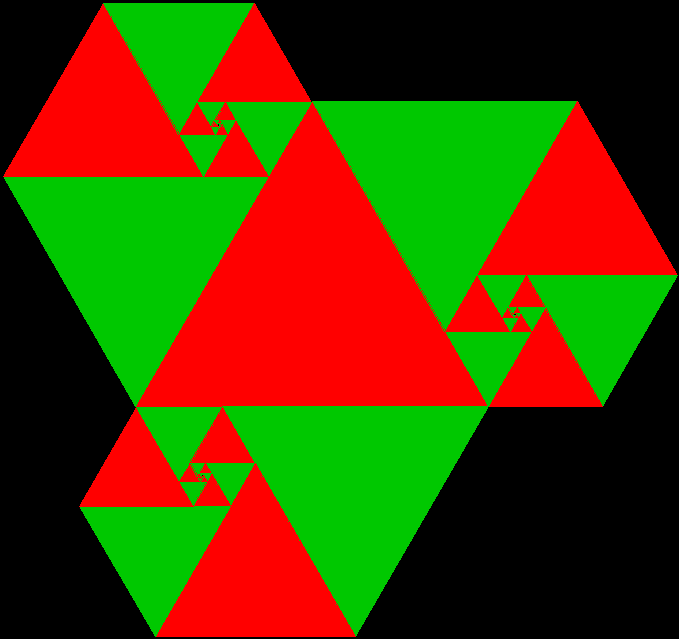
A 30°-60°-90° right triangle, with sides 1 : √3 : 2, can be divided into three identical copies of itself:

30°-60°-90° Right Triangle — a rep-3 rep-tile…


And if it can be divided into three, it can be divided into nine:

…that is also a rep-9 rep-tile


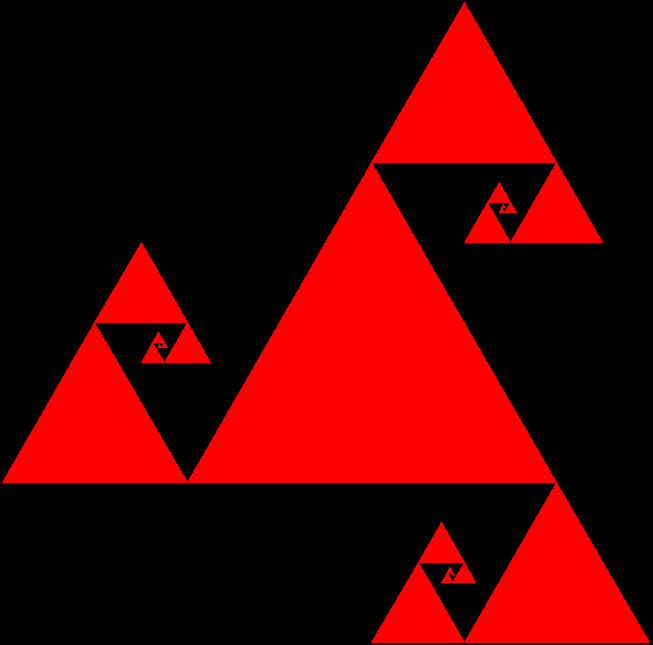
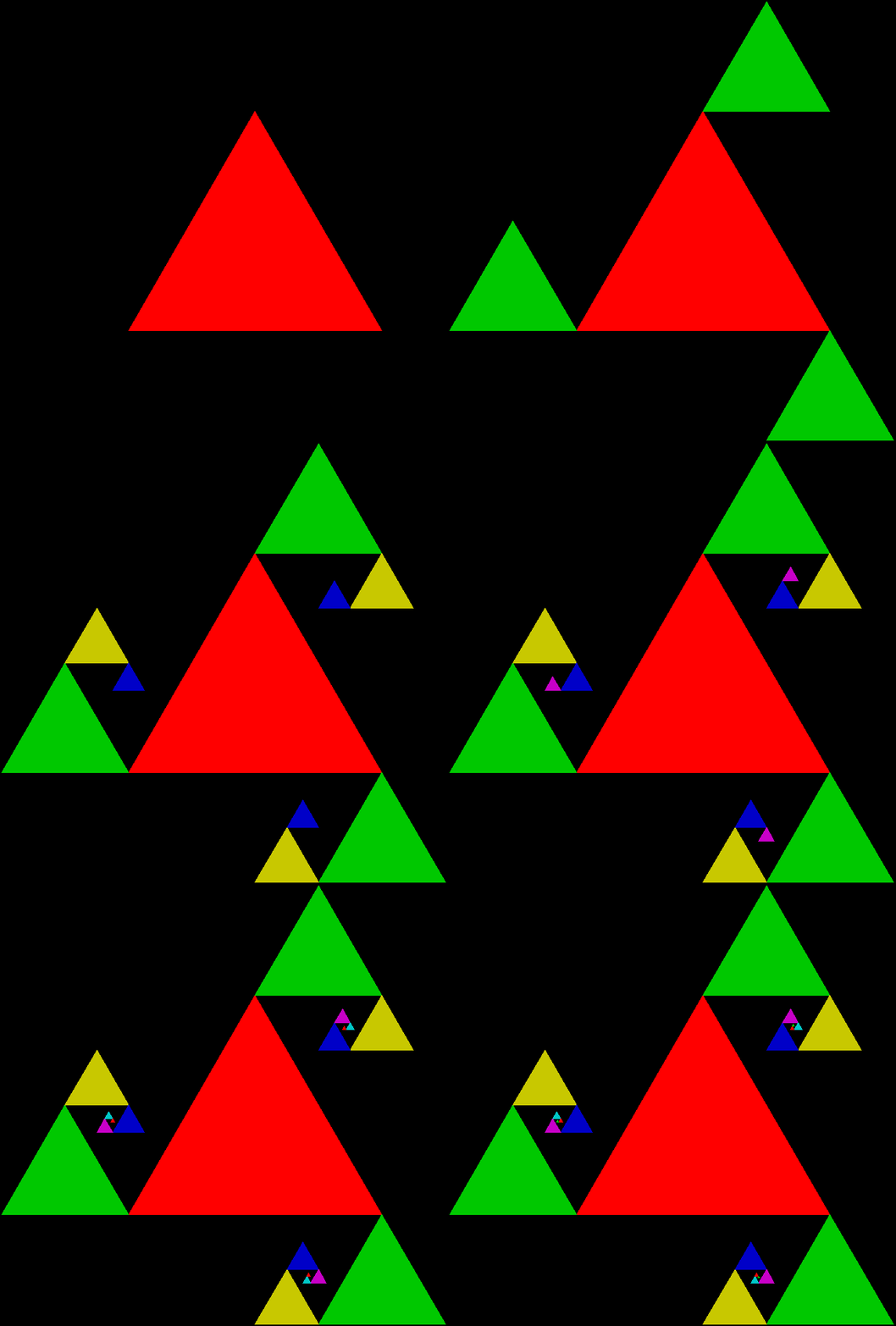
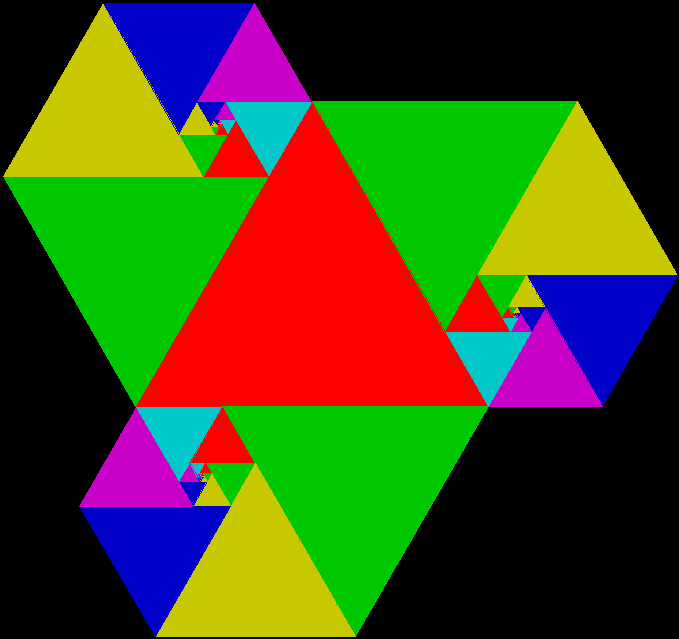
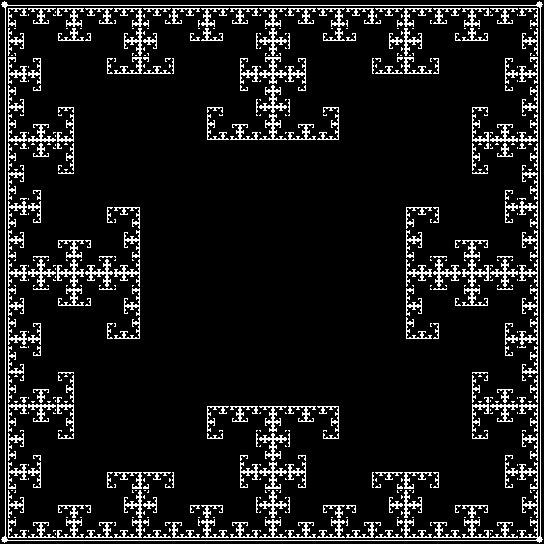
Five of the sub-copies serve as the seed for an interesting fractal:

Fractal stage #1


Fractal stage #2


Fractal stage #3


Fractal #4


Fractal #5


Fractal #6


Fractal #6


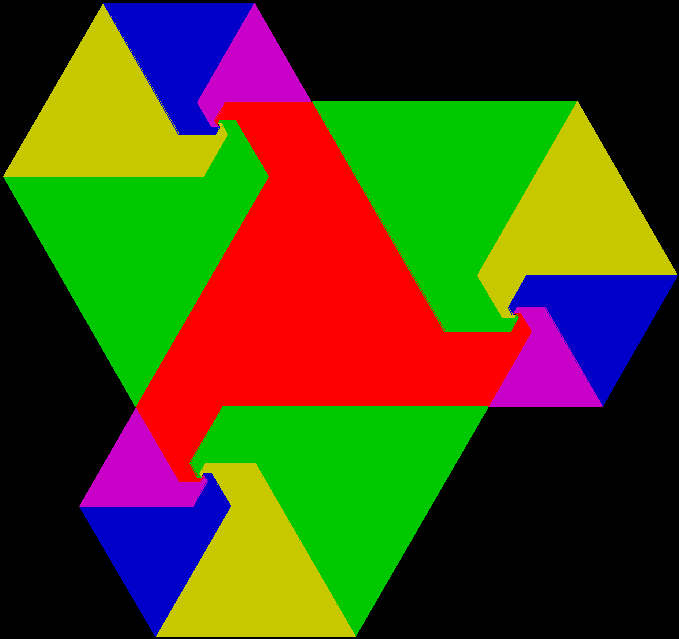
Tridentine cross (animated)


Tridentine cross (static)


This is a different kind of rep-tile:

Noniamond trapezoid


But it yields the same fractal cross:

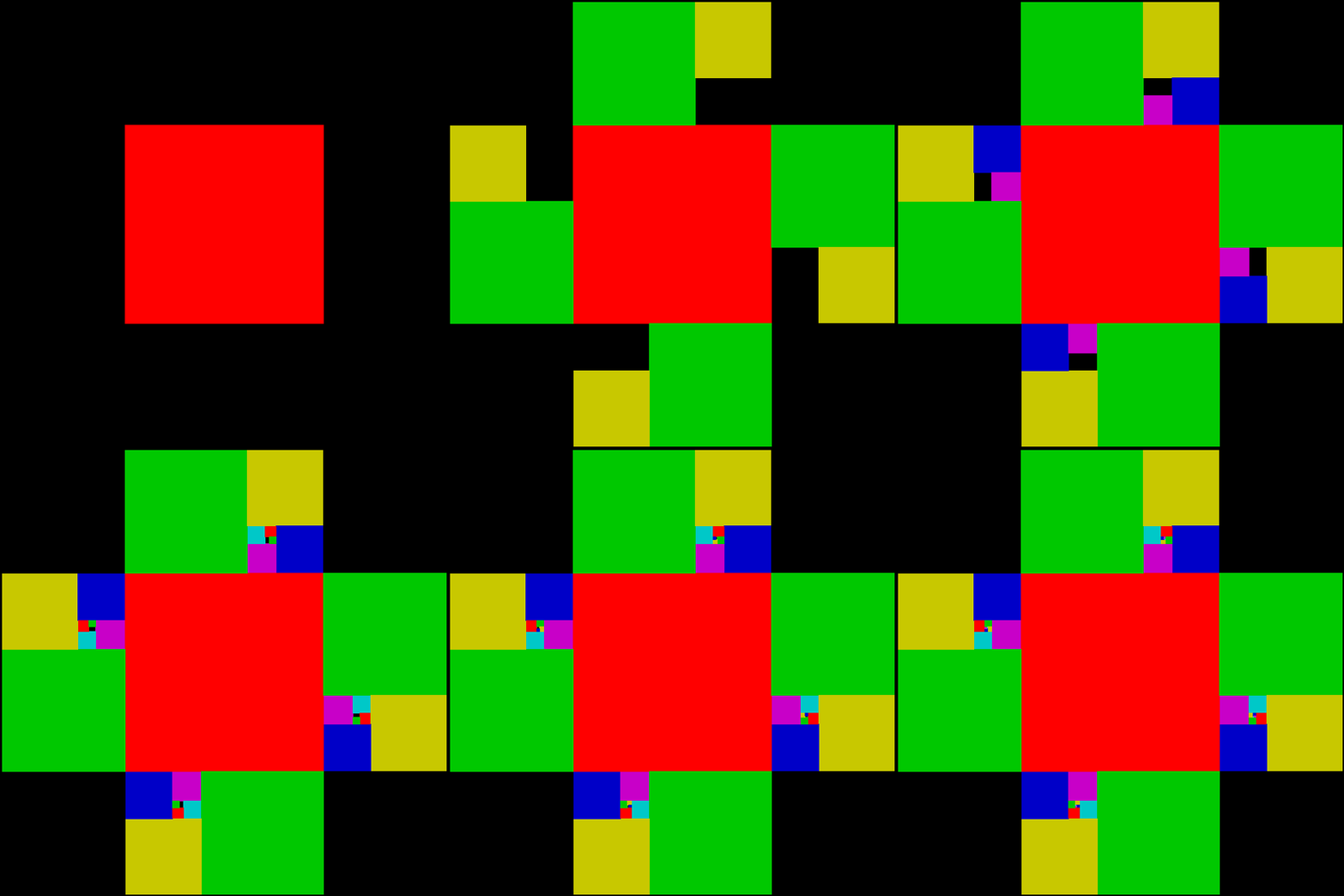
Fractal #1


Fractal #2


Fractal #3


Fractal #4


Fractal #5


Fractal #6


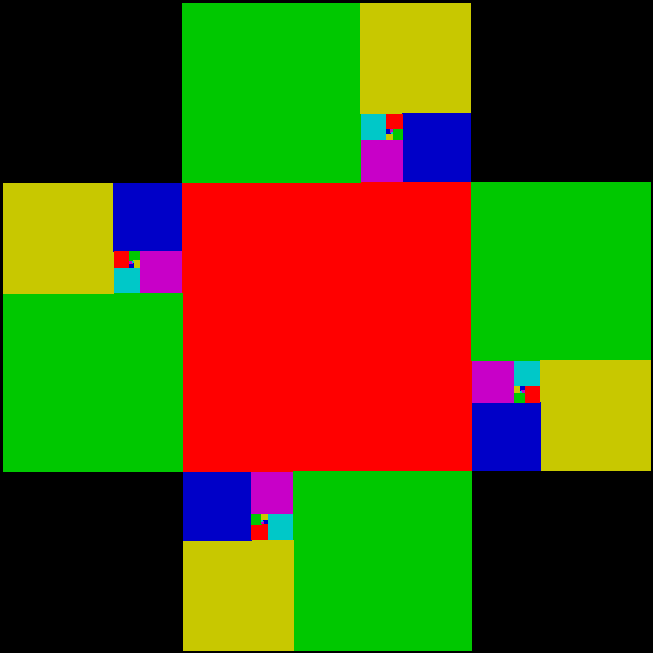
Tridentine cross (animated)


Tridentine cross (static)


Elsewhere other-available:

Holey Trimmetry — another fractal cross