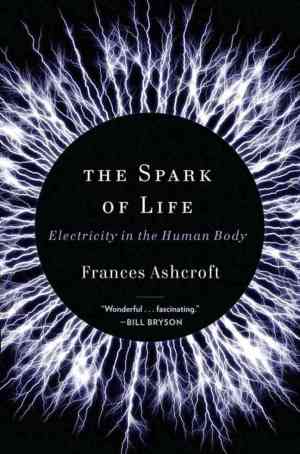
 The Spark of Life: Electricity in the Human Body, Frances Ashcroft (Penguin 2013)
“Electricity in the Human Body” is the subtitle of this book. Make that the goat, frog, eel, shark, torpedo-ray, snake, platypus, spiny anteater, sooty shearwater and fruit-fly body too. And if Venus flytraps, maize and algae have bodies, throw them in next. Frances Ashcroft gives you a bargeload of buzz for your buck, a shedload of shock for your shekel: The Spark of Life describes the use of electricity by many different forms of life. But it discusses death a lot too, from lightning-strikes and electric chairs to heart-attacks and toxicology. Poisons can be a cheap and highly effective way of interfering with the electro-chemistry of the body:
The importance of sodium and potassium channels in generating the nerve impulse is demonstrated by the fact that a vast array of poisons from spiders, shellfish, sea anemones, frogs, snakes, scorpions and many other exotic creatures interact with these channels and thereby modify the function of nerve and muscle. … The tetrodotoxin contained in the liver and other tissues of this fish [the fugu or puffer-fish, Takifugu spp., Lagocephalus spp., etc] is a potent blocker of the sodium channels found in your nerves and skeletal muscles. It causes numbness and tingling of the lips and mouth within as little as thirty minutes … This sensation of “pins and needles” spreads rapidly to the face and neck, moves onto the fingers and toes, and is then followed by gradual paralysis of the skeletal muscles … Ultimately the respiratory muscles are paralysed, which can be fatal. The heart is not affected, as it has a different kind of sodium channel that is far less sensitive to tetrodotoxin. The toxin is also unable to cross the blood-brain barrier so that, rather horrifyingly, although unable to move and near death, the patient remains conscious. (ch. 3, “Acting on Impulse”, pp. 69-70)
In short, fugu-poisoning is the opposite of electrocution: it’s the absence rather than the excess of electricity that kills its victims. Those “channels” are a reminder that electro-chemistry could also be called electro-mechanics: unlike an electricity-filled computer, an electricity-filled body has moving parts – and in more ways than one. Our muscles move because ions move in and out of our cells. This means that a body has to be wet inside, not dry like a computer, but it’s easy to imagine a human brain controlling a robotic body. But would a brain still be conscious if it became metal-and-plastic too? Perhaps a brain has to be both soggy and sparky to be conscious.
The electrical nature of the brain certainly seems important, though that may be a superstitious conclusion. Electricity is a mysterious phenomenon and so is consciousness, so they seem to go together well. Ashcroft writes a lot about the sense-organs and the data they supply to the brain, but like all scientists she cannot explain how those data are turned into conscious experience as the maths-engine of the brain applies its neuro-functions and neuro-algorithms. However, she does suggest ways in which our consciousness might be expanded in future. Humans have colour vision, based on the three types of cone-cells in our eyes:
Most mammals, such as cats and dogs, have only two types of cone photopigment and so see only a limited range of colour … Other animals live in a world entirely without colour. But humans should not be too complacent, for we are far from having the best colour vision in the animal world and lag far behind the mantis shrimp, which enjoys ten or more different visual pigments. Even tropical fish possess four or five types of cones. (ch. 9, “The Doors of Perception”, pg. 199)
Bio-engineering may one day sharpen and extend all our senses, from sight and hearing to touch, taste and smell. It may also give us new senses, like the ability to form sound-pictures like bats and detect infra-red like pit-vipers. And why not X-rays and radio-waves too? It’s an exciting prospect, but in a sense it won’t be anything new: our new senses, like our old ones, will depend on nerve-impulses and the way they’re mashed and mathed in that handful of “electrified clay” known as the brain.
“Electrified clay” is Shelley’s phrase: like his wife Mary, he was fascinated by the early electric experiments of the Italian scientists Luigi Galvani and Alessandro Volta. Mary turned her fascination into a book called Frankenstein (1818) and her invention is part of the scientific history in this book. The story of bio-electricity is still going strong: there are electric mysteries in all kinds of bodies waiting to be solved. Maybe consciousness is one of them. And if science proves unable to crack consciousness, it’s certainly able to expand it. Reading this book is one way to experience the mind-expanding powers of science, but seeing like a mantis shrimp would be good too.

 Eye Bogglers: A Mesmerizing Mass of Amazing Illusions, Gianni A. Sarcone and Marie-Jo Waeber (Carlton Books 2011; paperback 2013)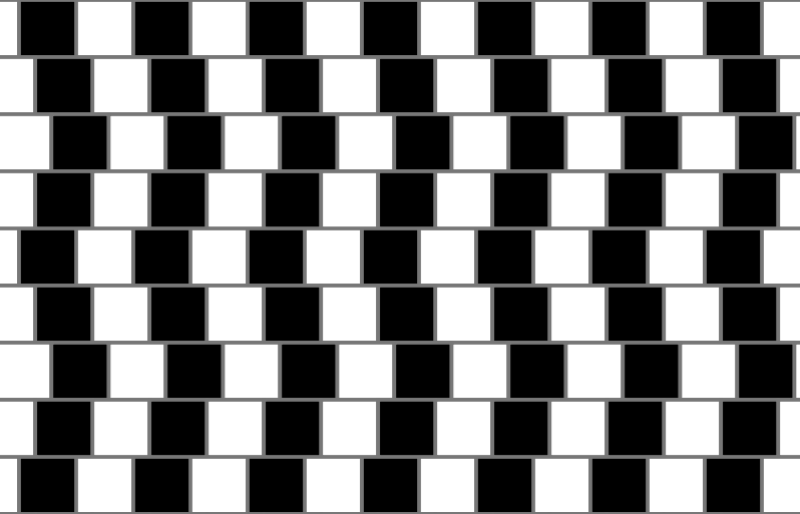
 Overlord In Terms of Core Issues Around Maximal Engagement with Key Notions of the Über-Feral