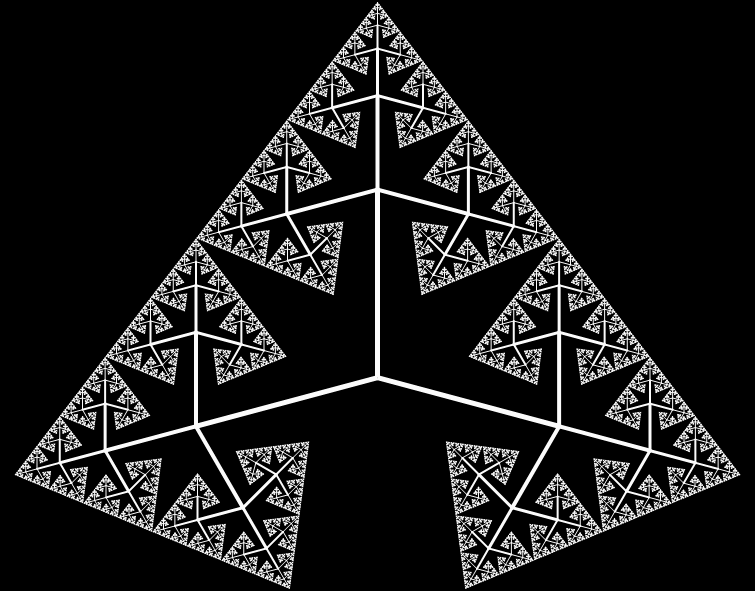
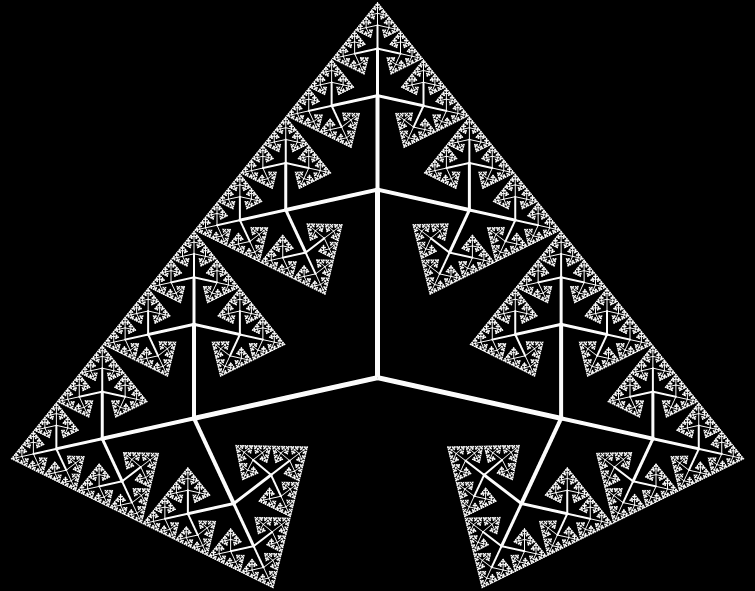
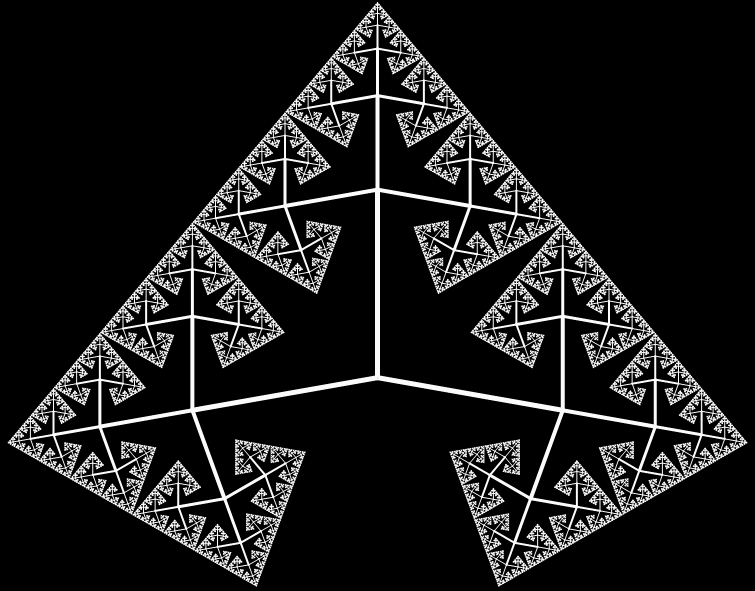
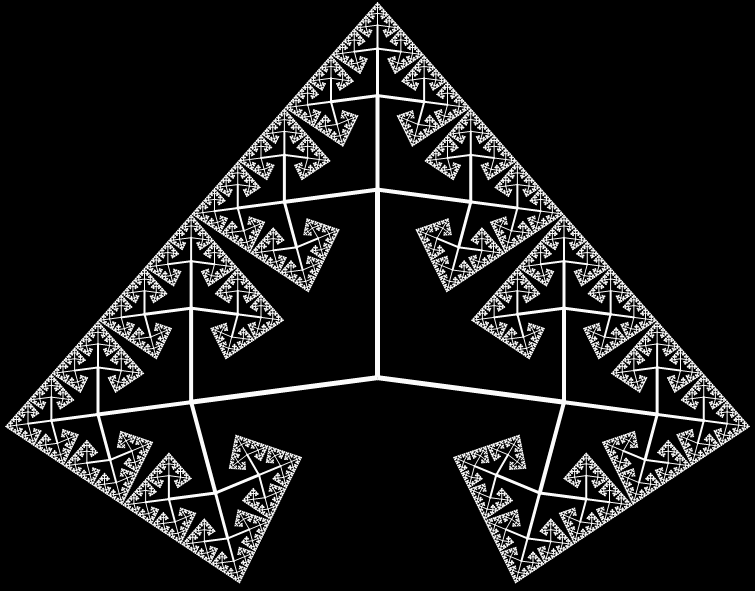
Squaring the Triangle

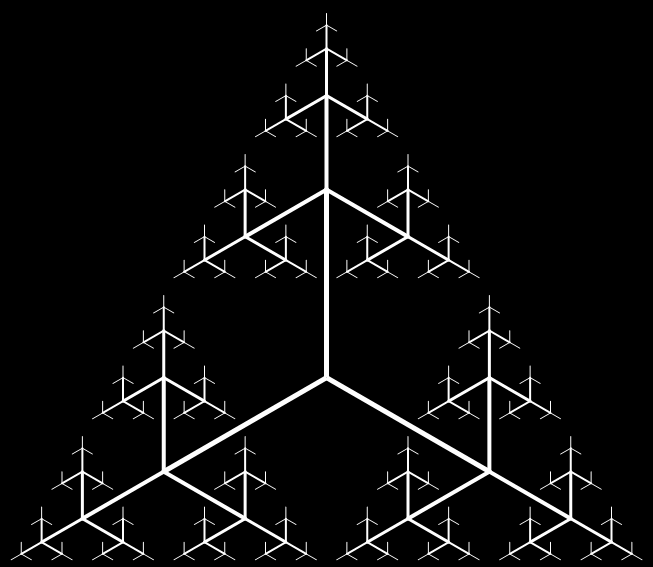
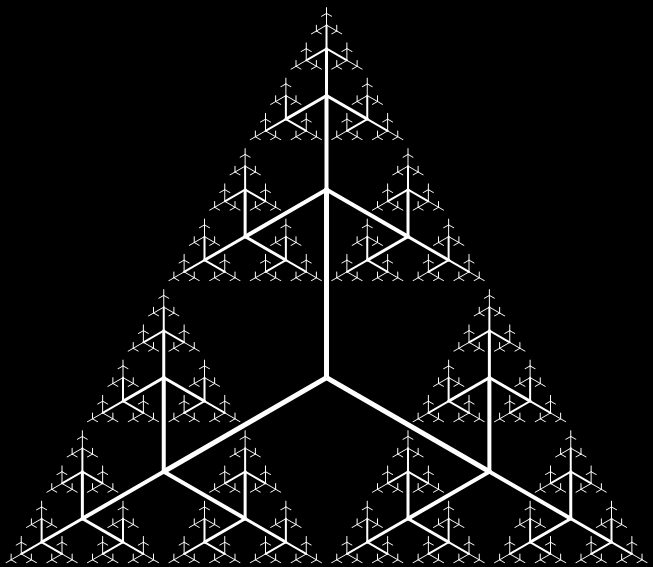
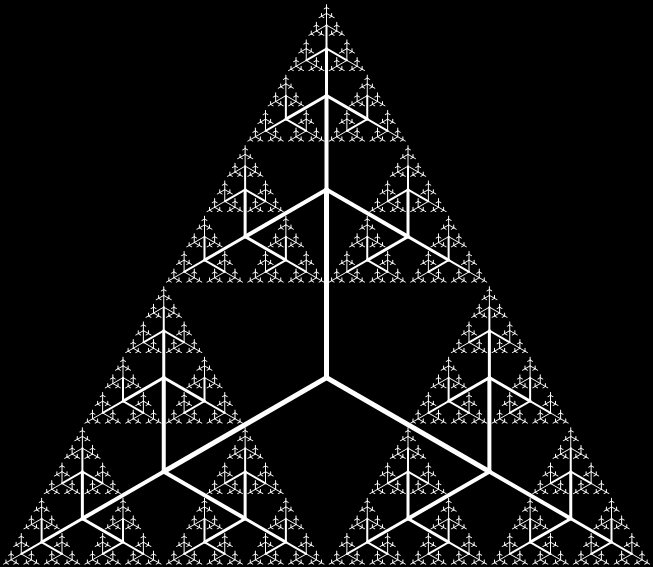
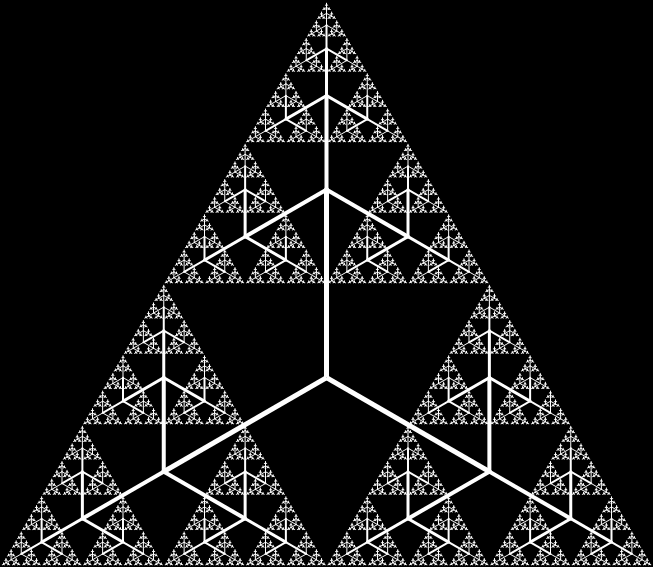
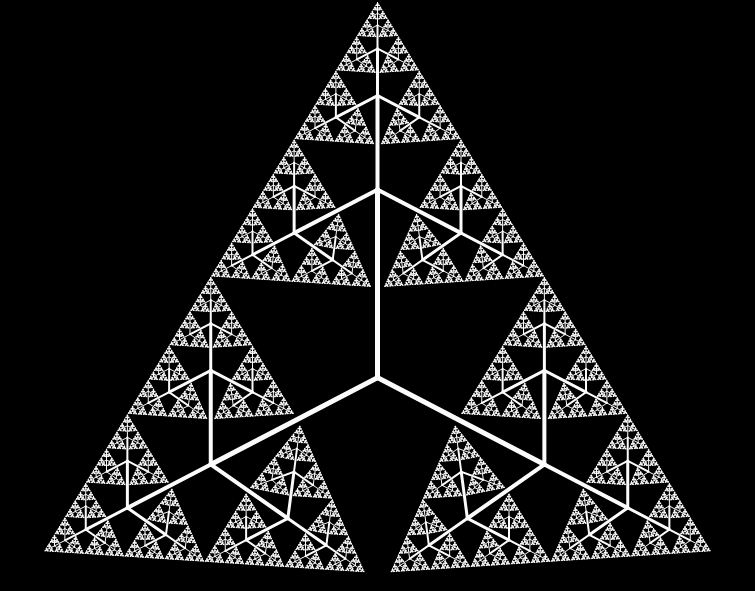
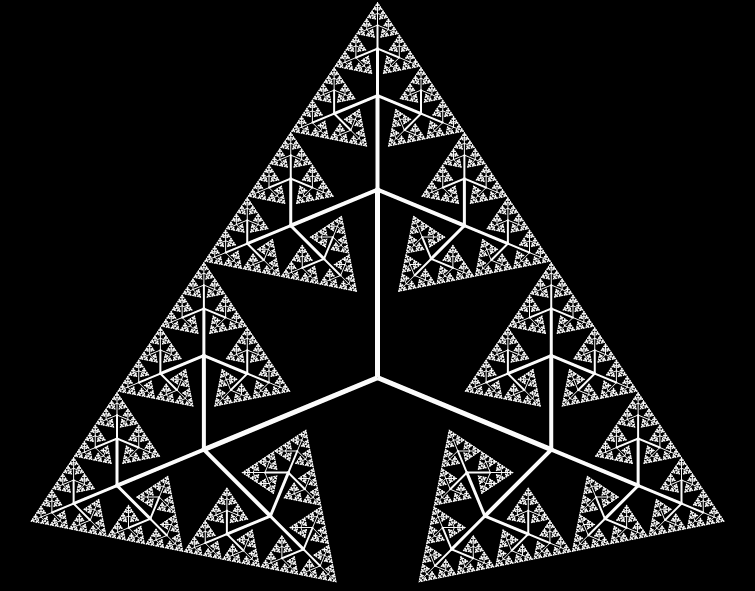
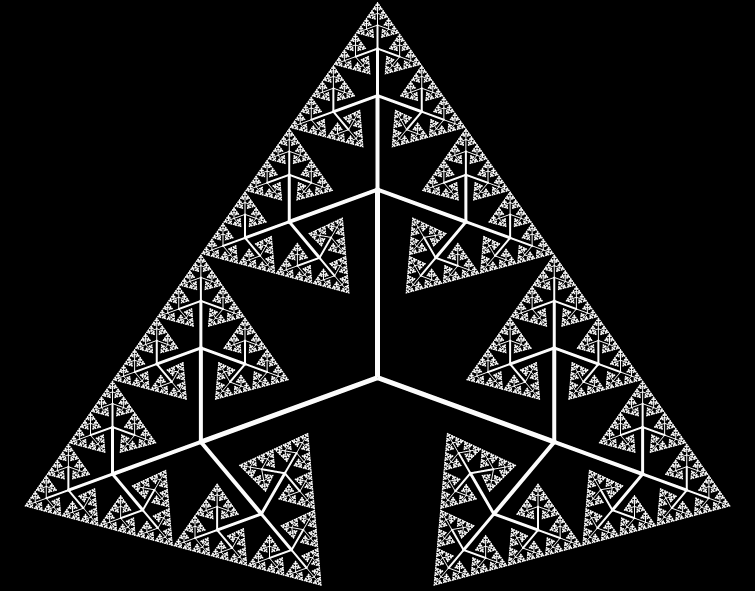
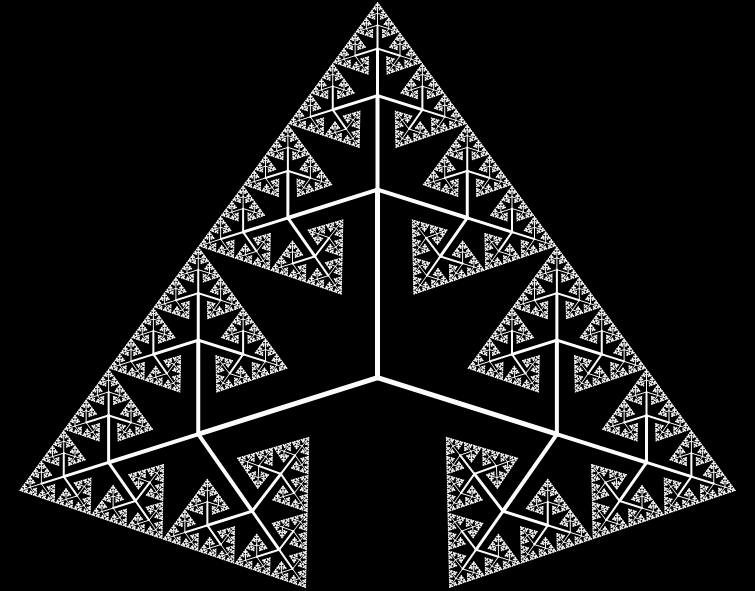
It’s an interesting little exercise in elementary trigonometry to turn the Sierpiński triangle…
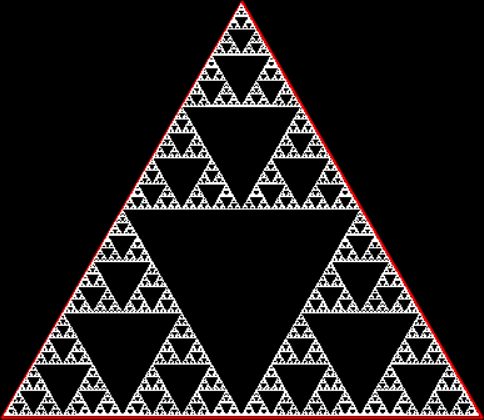
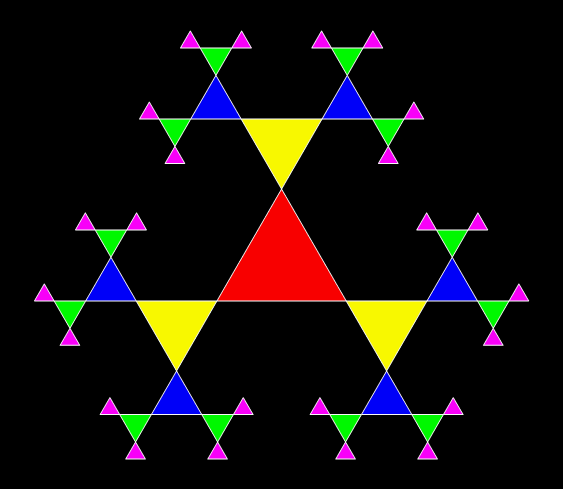
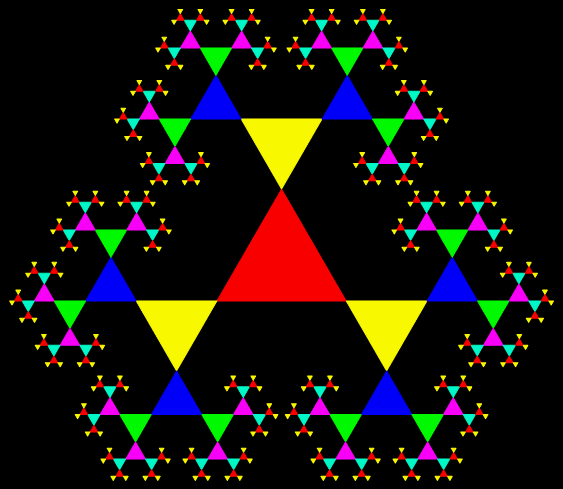
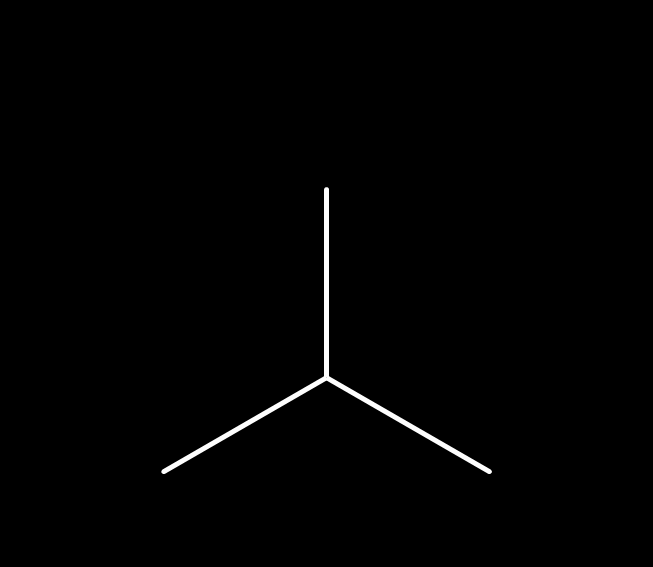
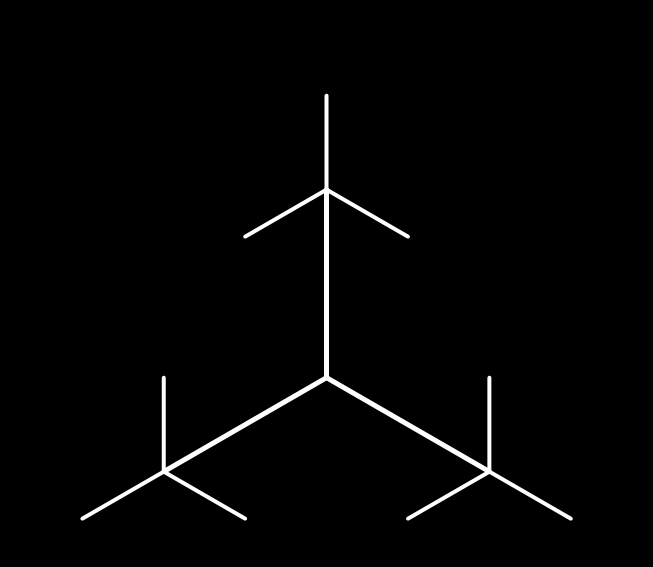
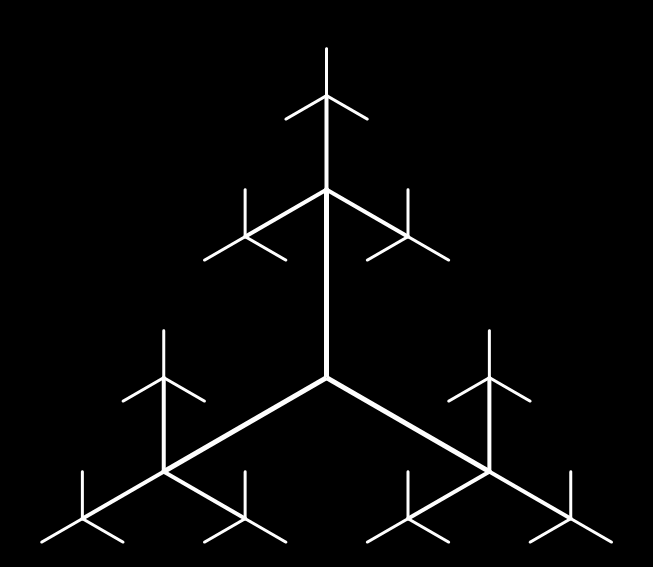
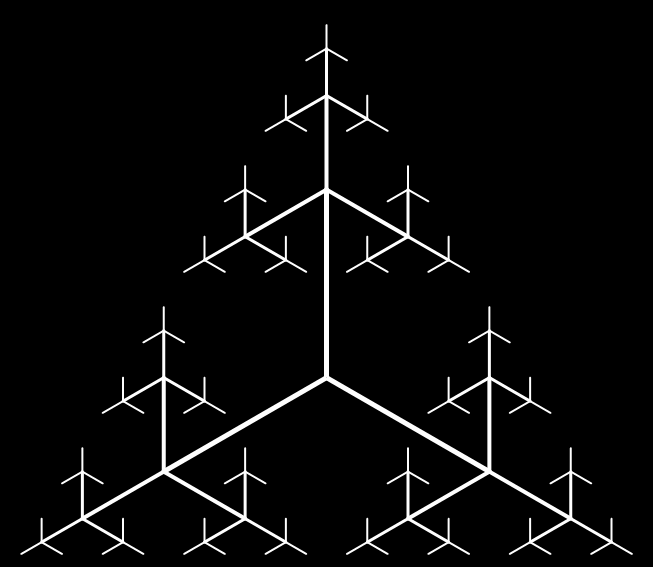
A Sierpiński triangle


…into its circular equivalent:
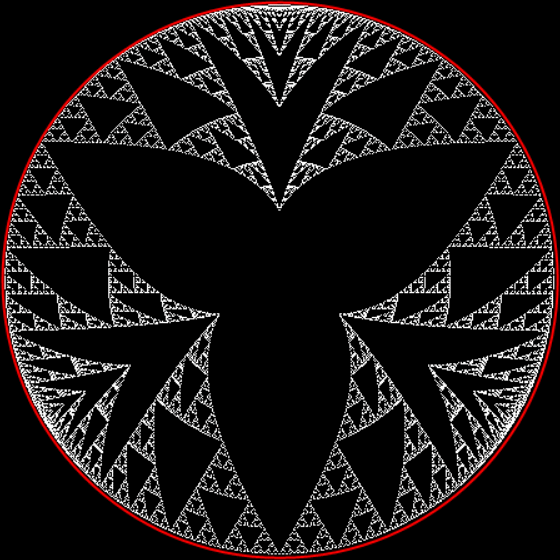
A Sierpiński trisc


You could call that a trisc, because it’s a triangle turned into a disc. And here’s triangle-and-trisc in one image:
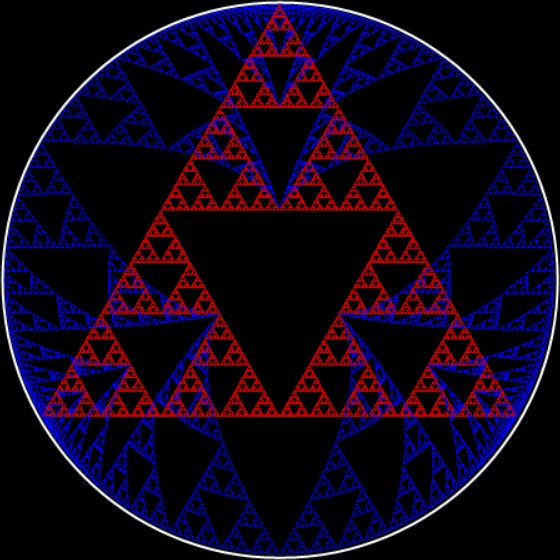
Sierpiński triangle + Sierpiński trisc


But what’s the square equivalent of a Sierpiński triangle? This is:
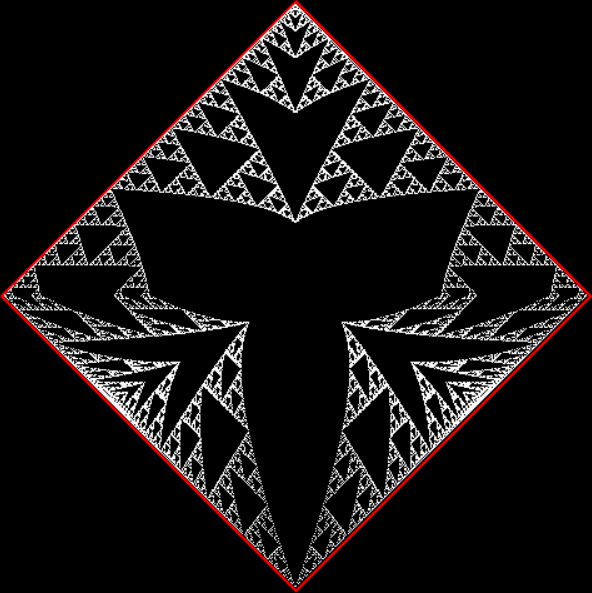
Square from Sierpiński triangle


You can do that directly, as it were:
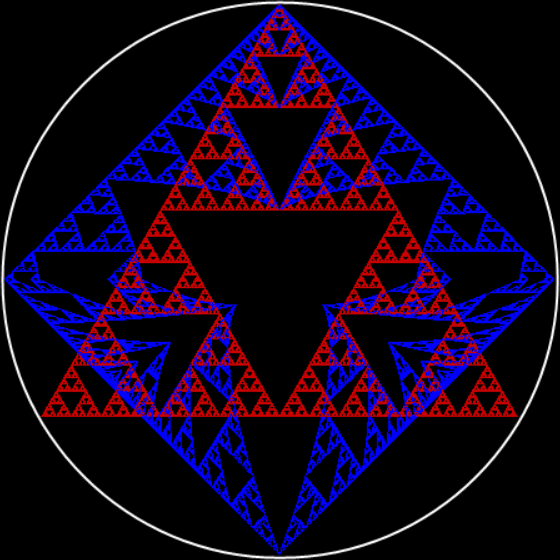
Sierpiński triangle → square


Or you can convert the triangle into a disc, then the disc into a square, like this:
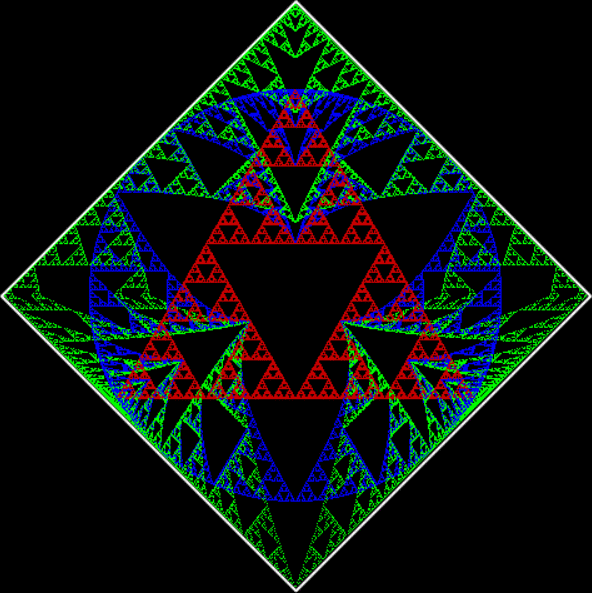
Sierpiński triangle → trisc → square


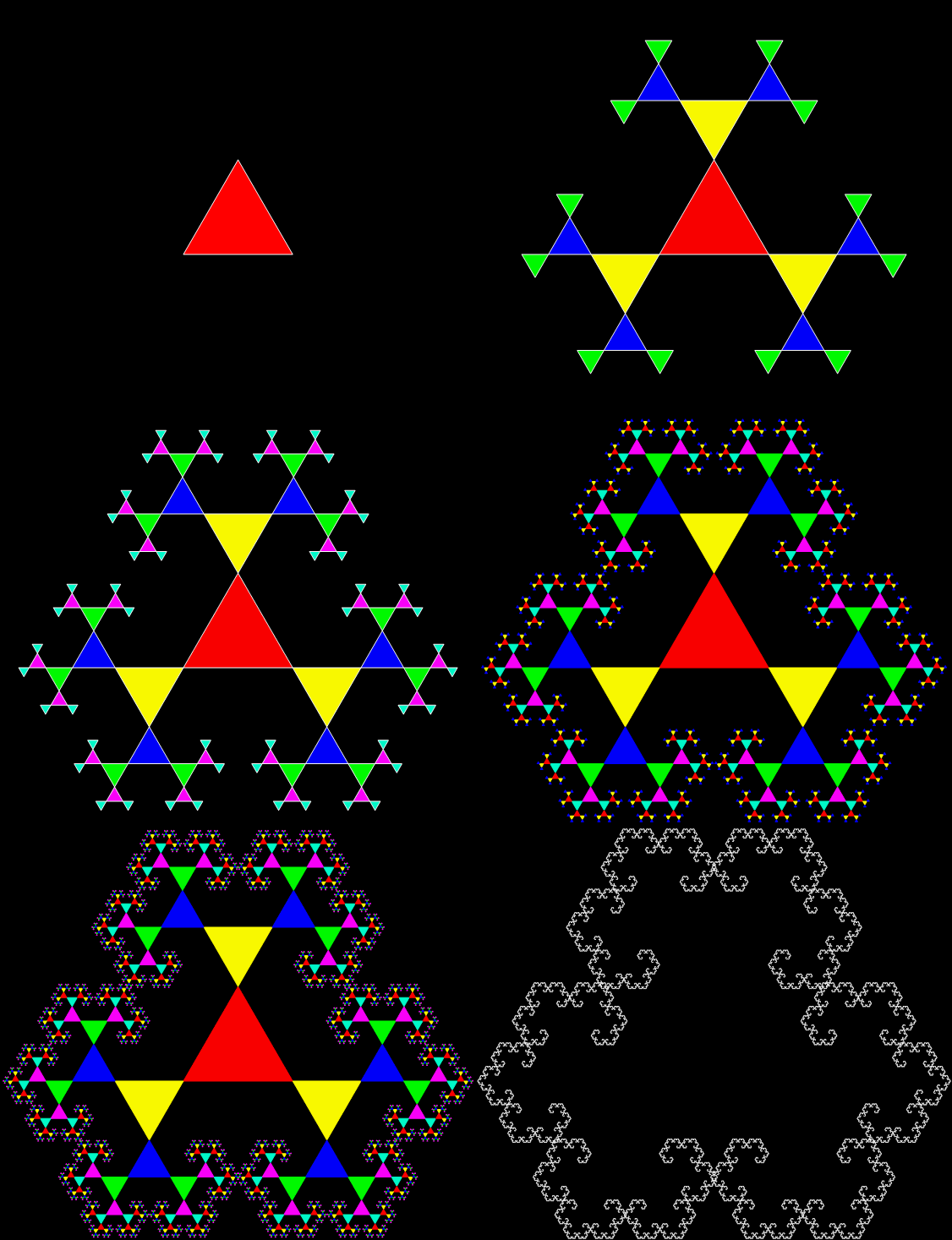
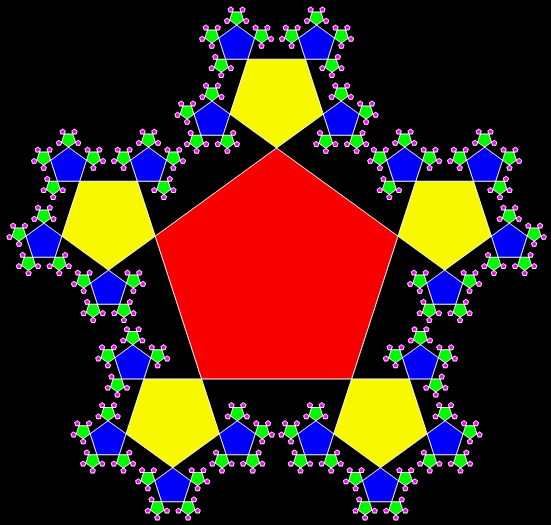
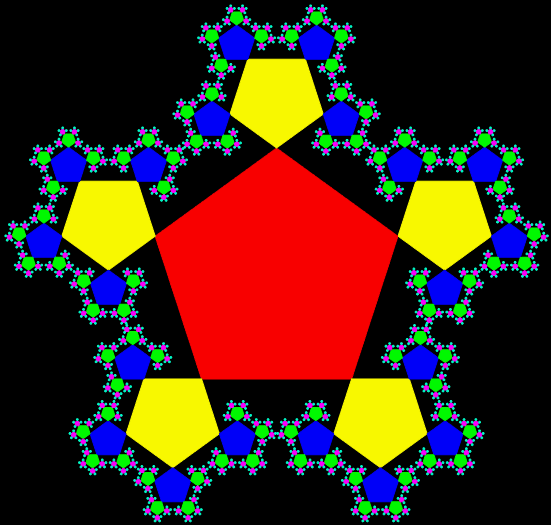
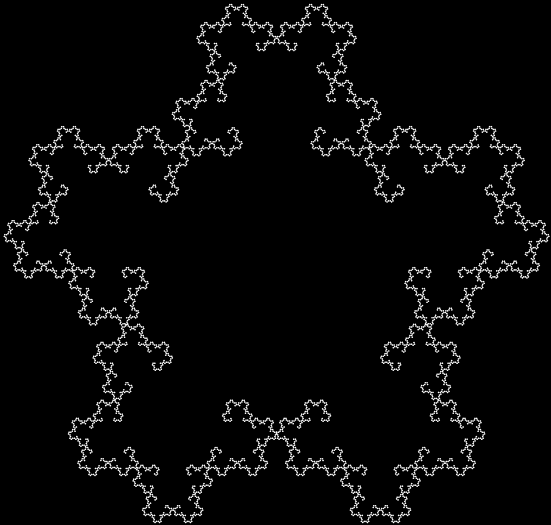
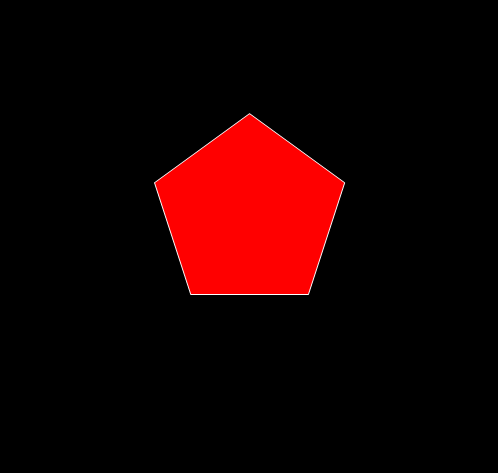
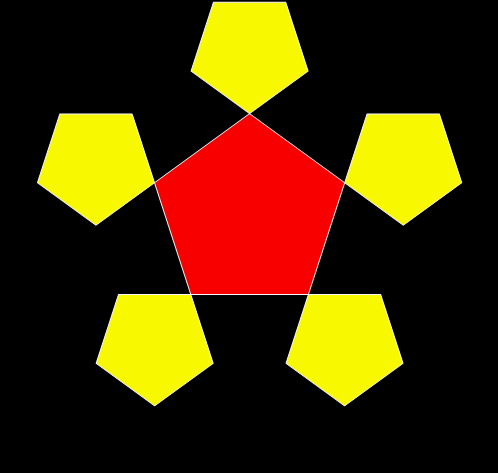
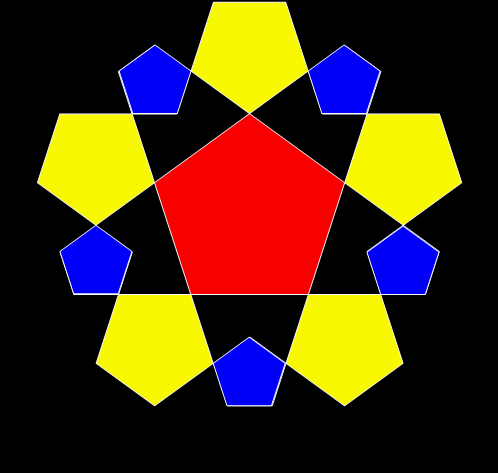
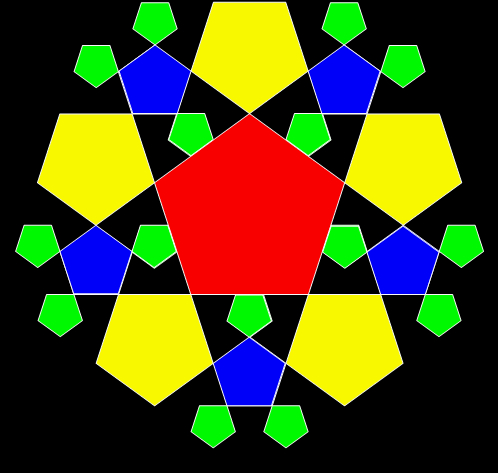
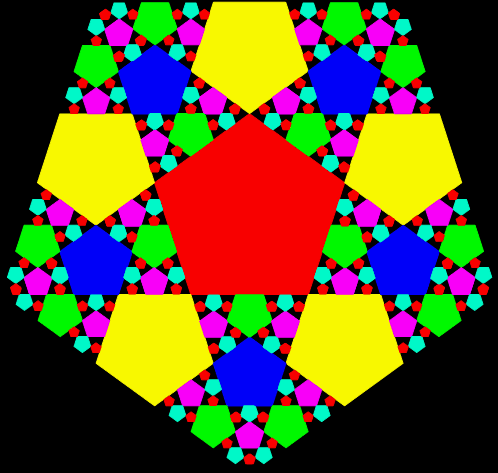
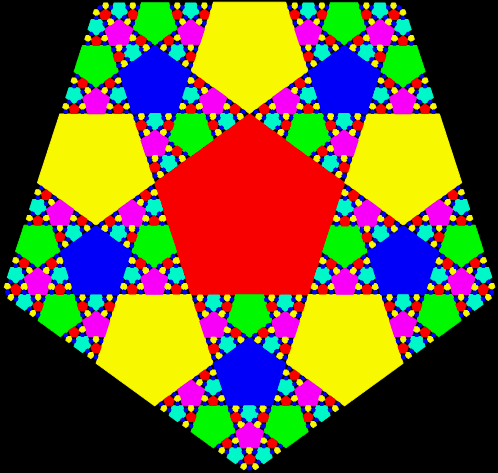
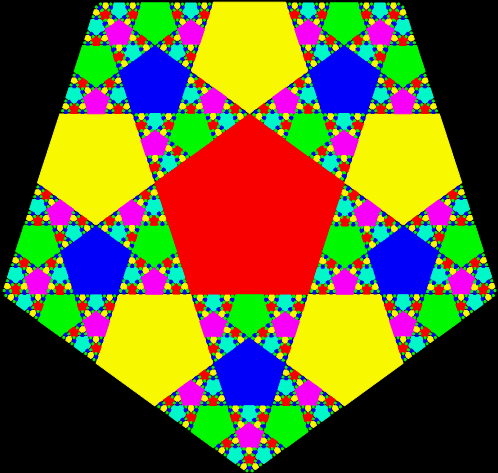
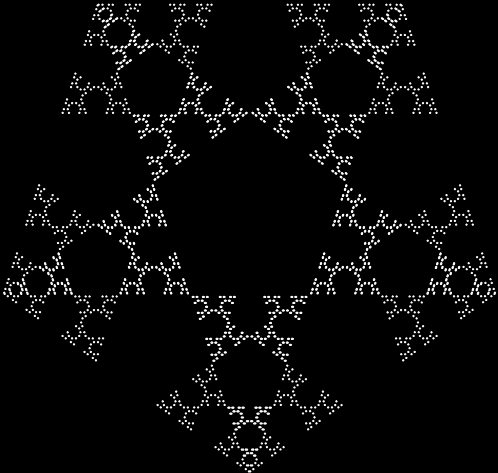
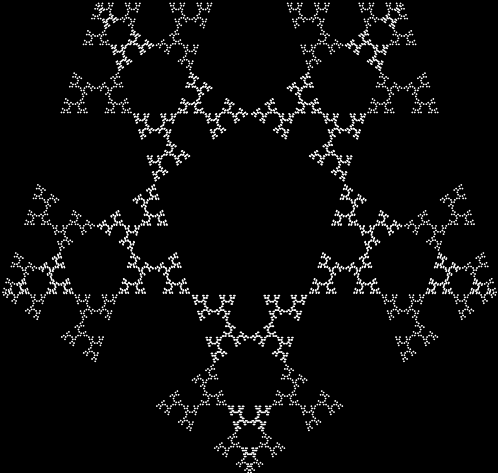
Now try converting the triangle into a pentagon:
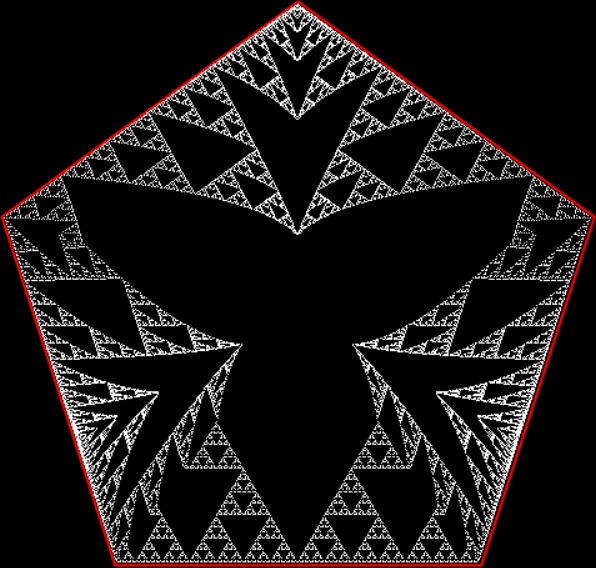
Pentagon from Sierpiński triangle
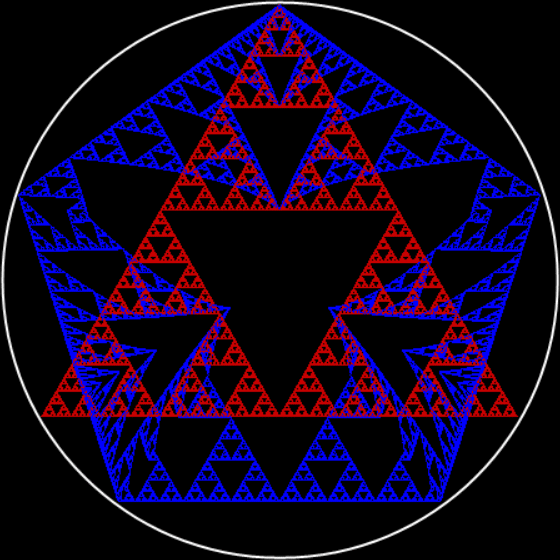

Sierpiński triangle → pentagon
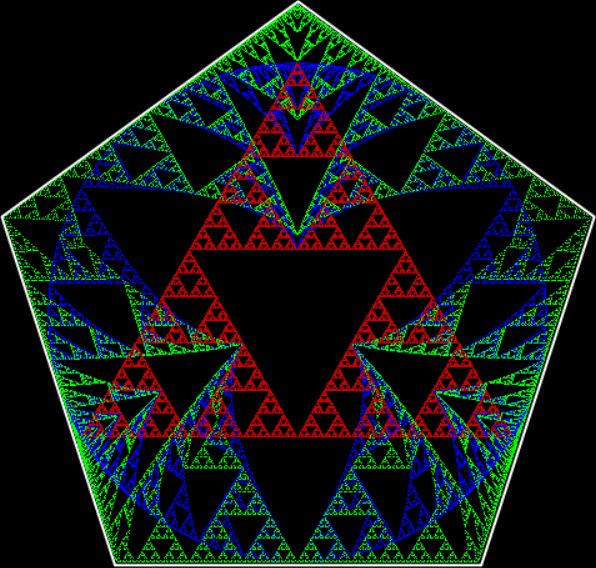

Sierpiński triangle → trisc → pentagon


And a hexagon:
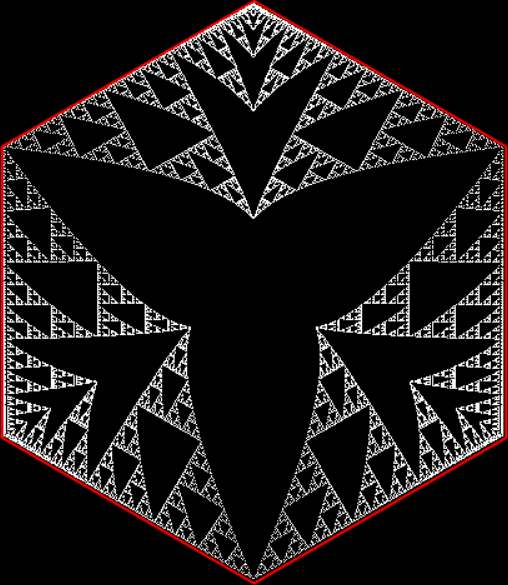
Hexagon from Sierpiński triangle
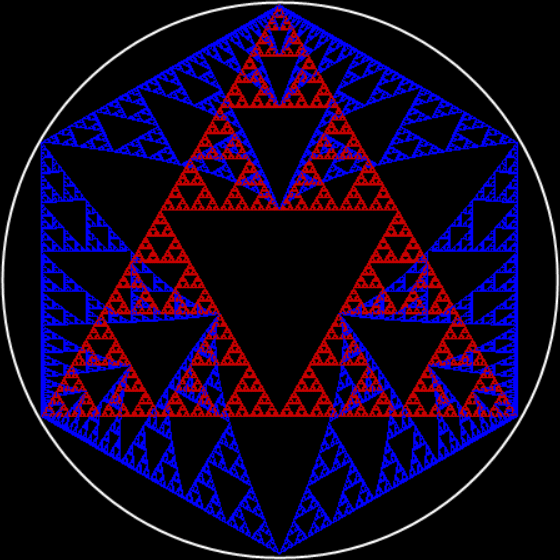

Sierpiński triangle → hexagon
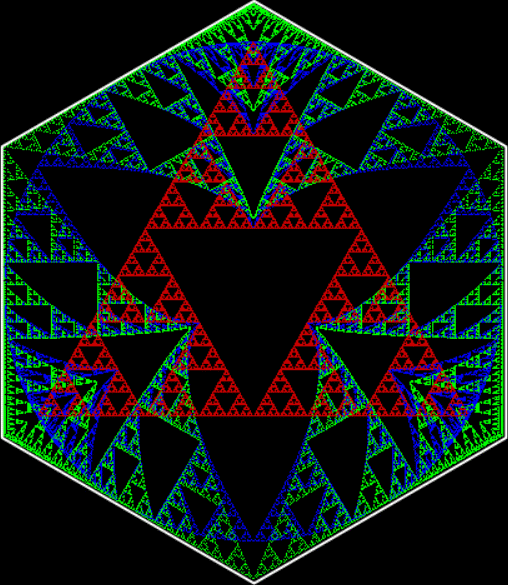

Sierpiński triangle → trisc → hexagon


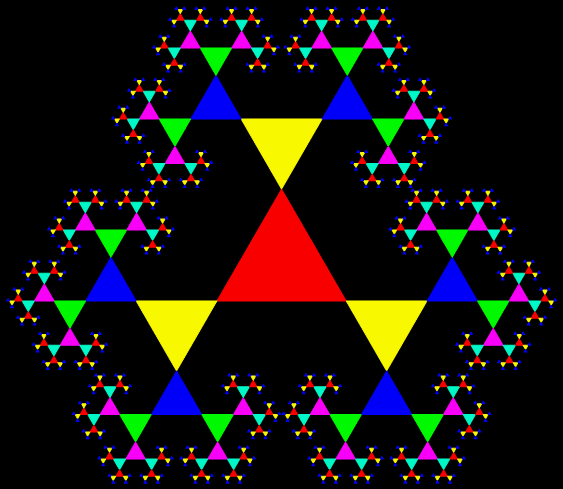
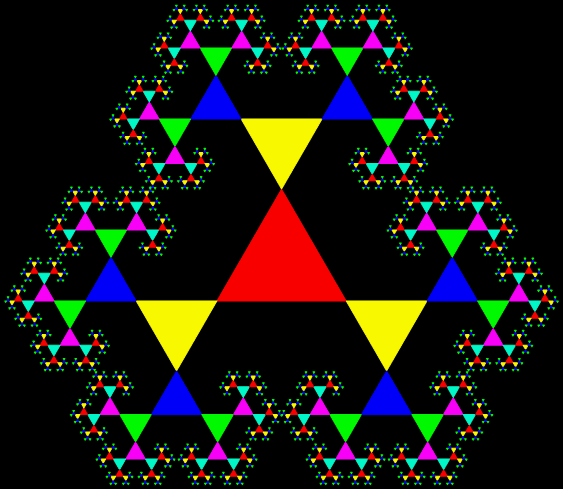
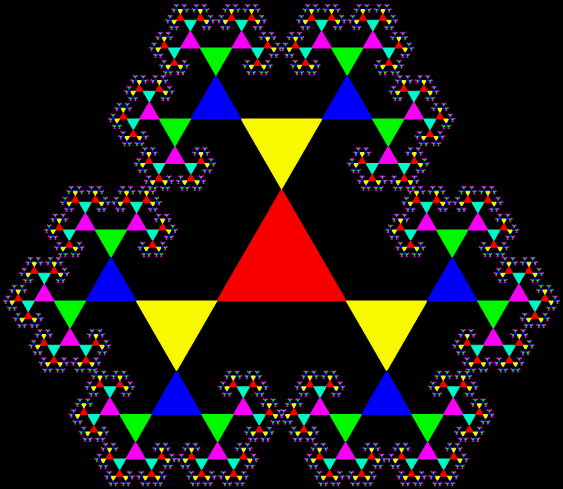
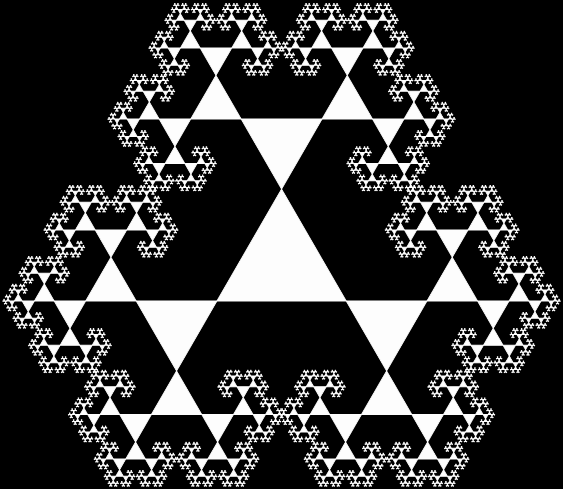
But you can also convert the Sierpiński trisc back into a Sierpiński triangle, then into a Sierpiński trisc again:
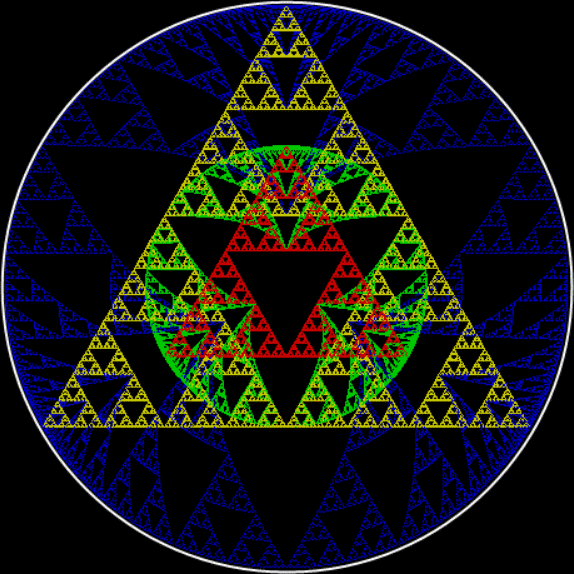
Sierpiński triangle → trisc → triangle → trisc
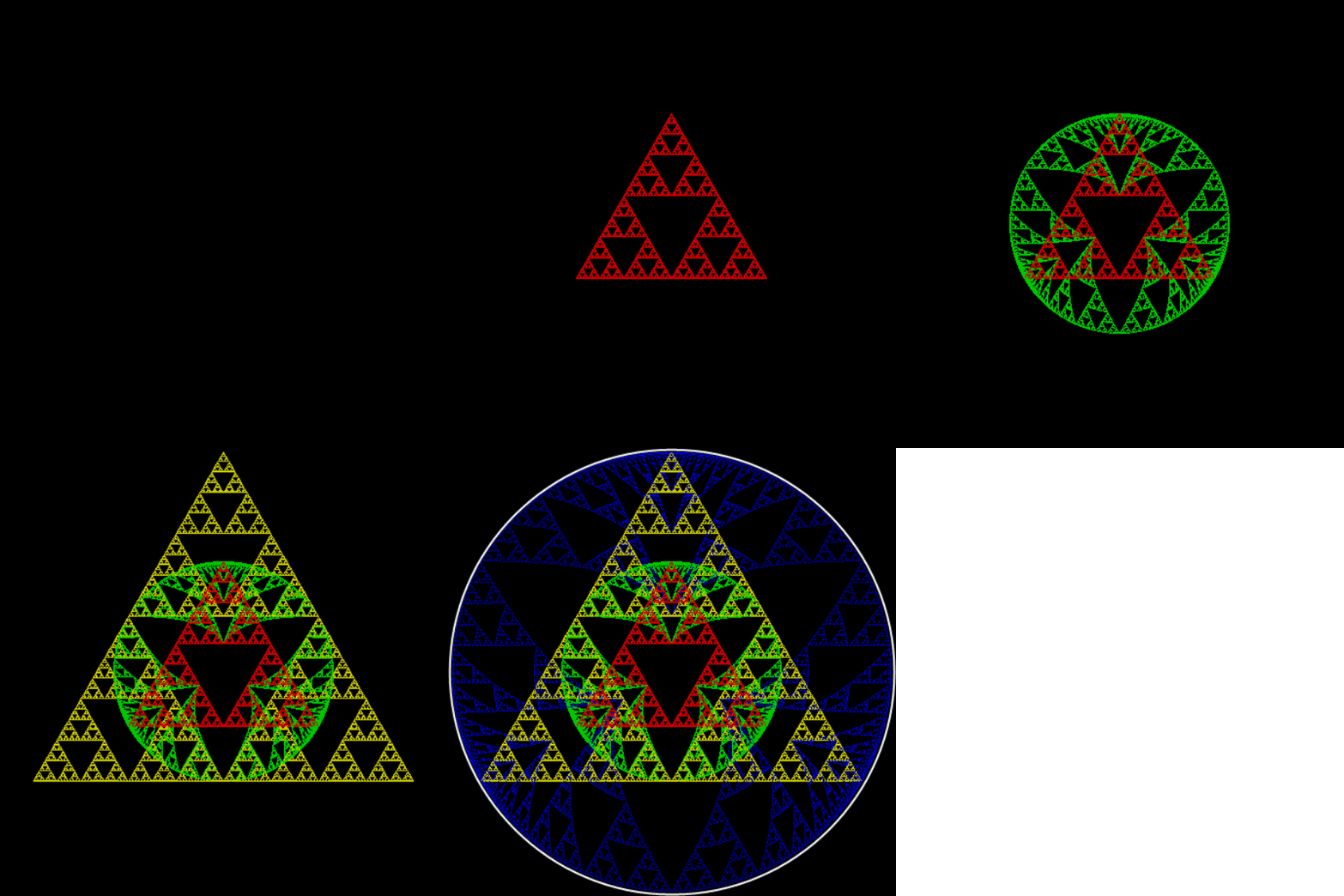

Sierpiński triangle → trisc → triangle → trisc (animated at Ezgif)
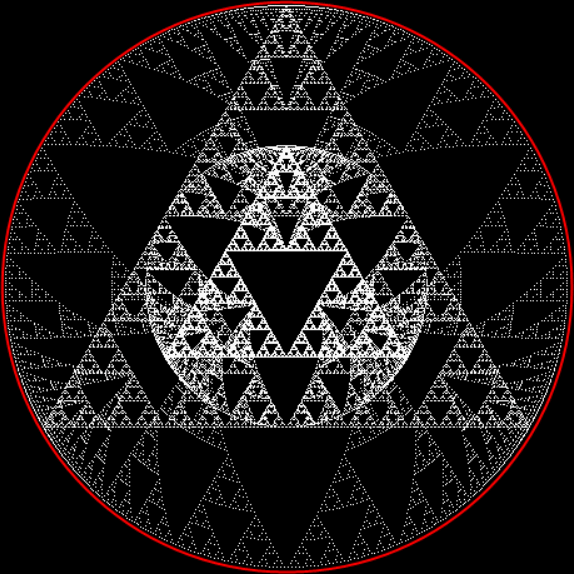

Sierpiński triangle → trisc → triangle → trisc (b&w)
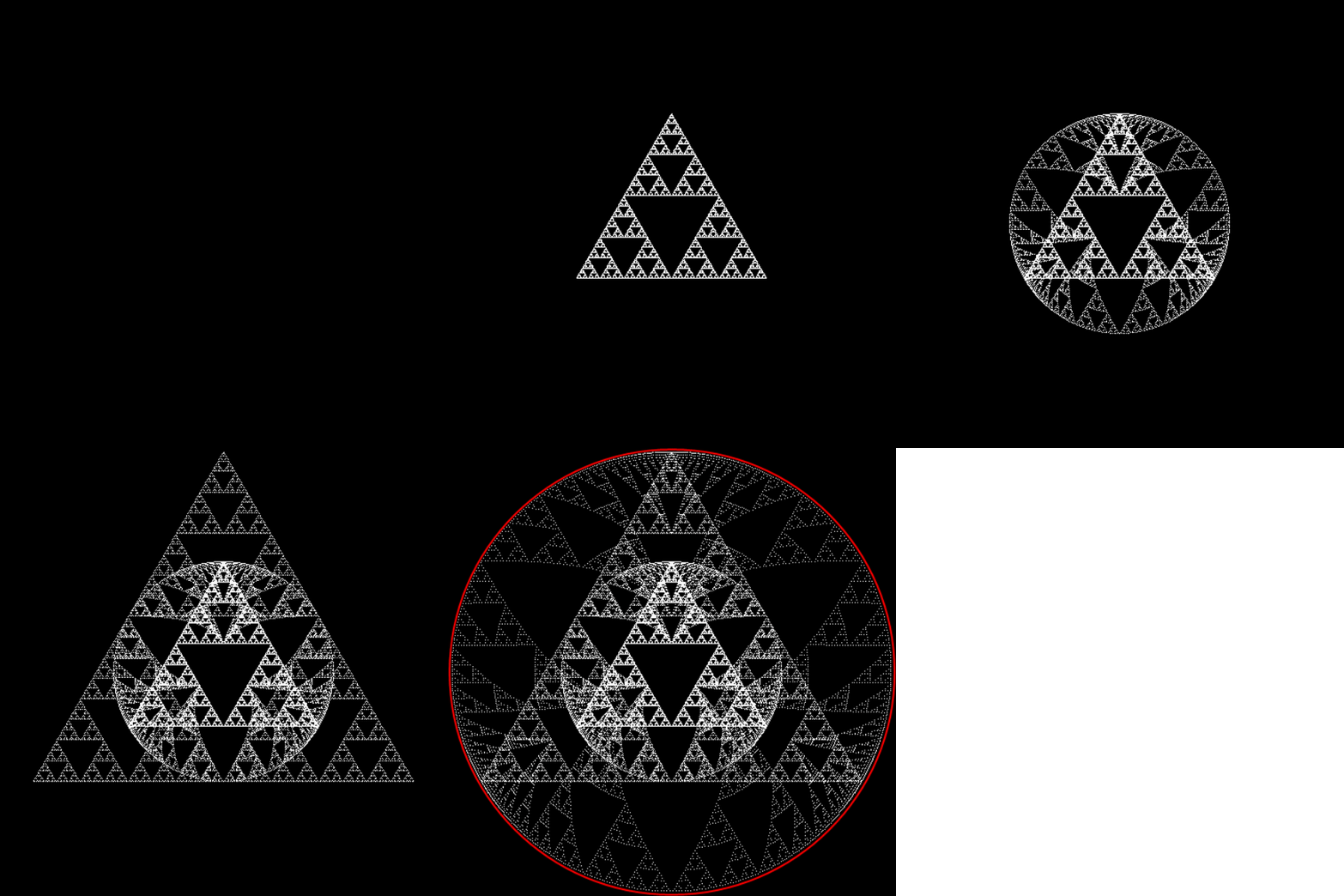

Sierpiński triangle → trisc → triangle → trisc (b&w) (animated at Ezgif)


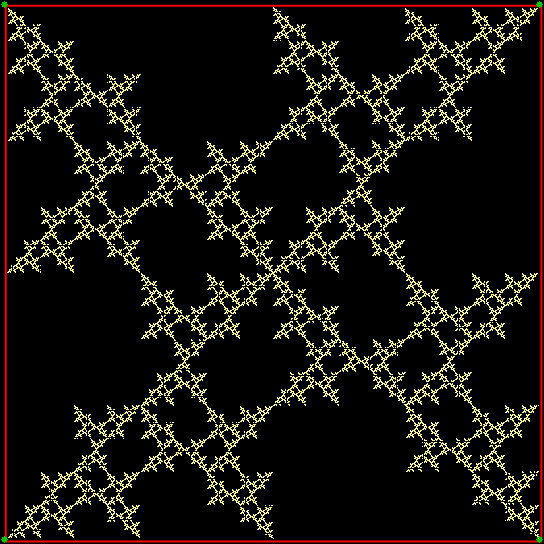
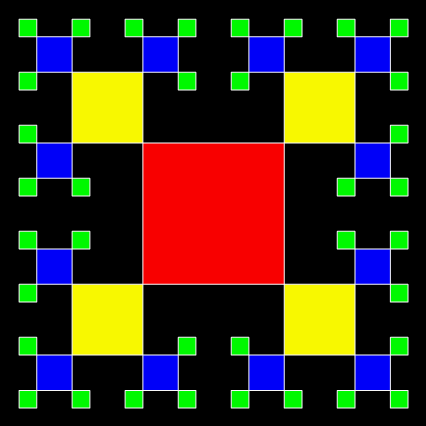
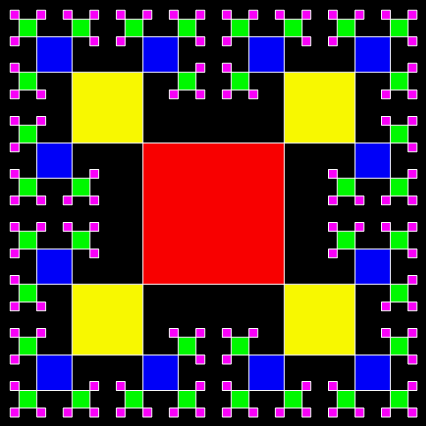
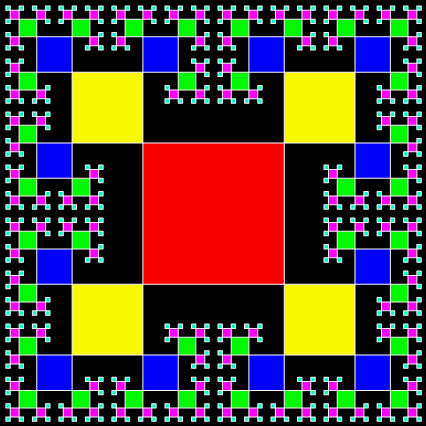
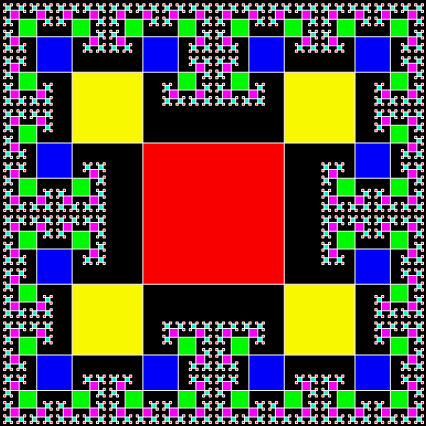
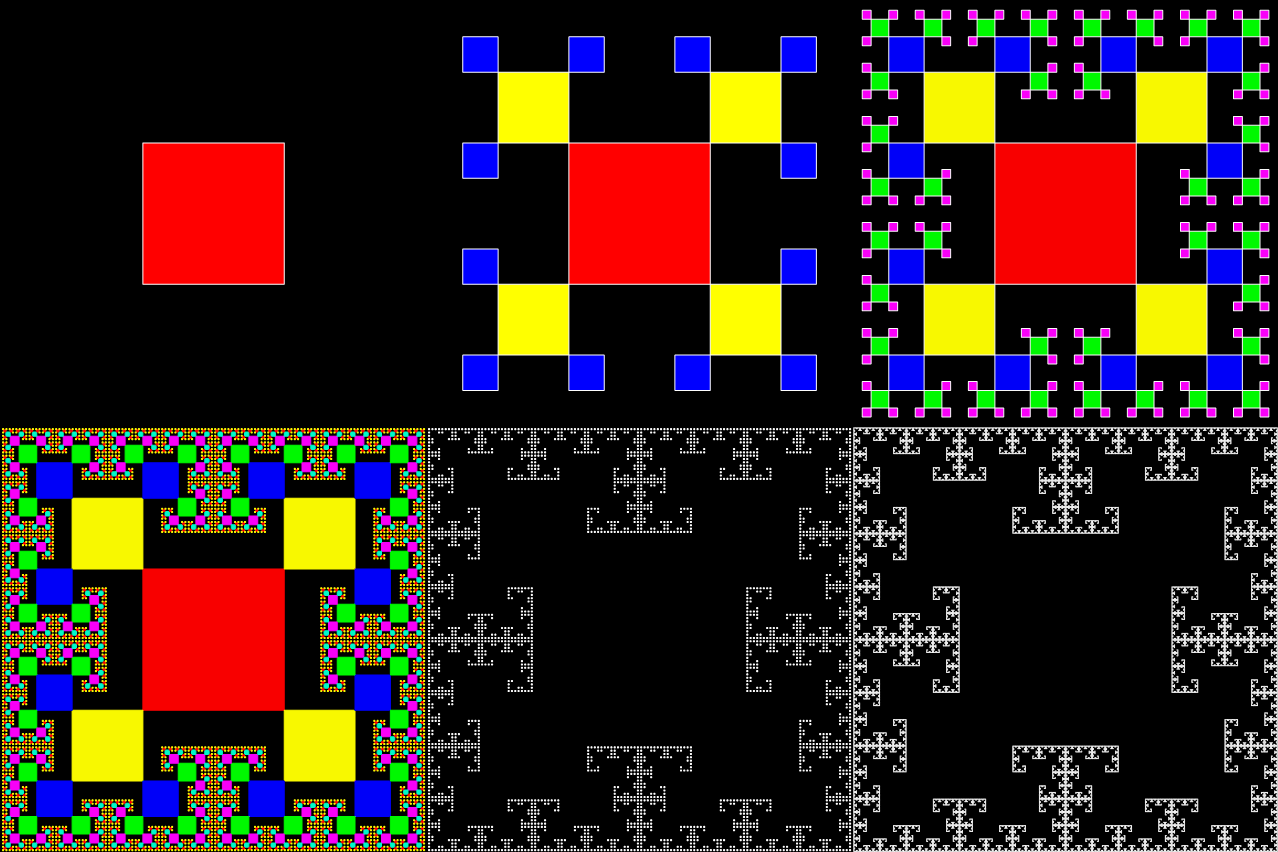
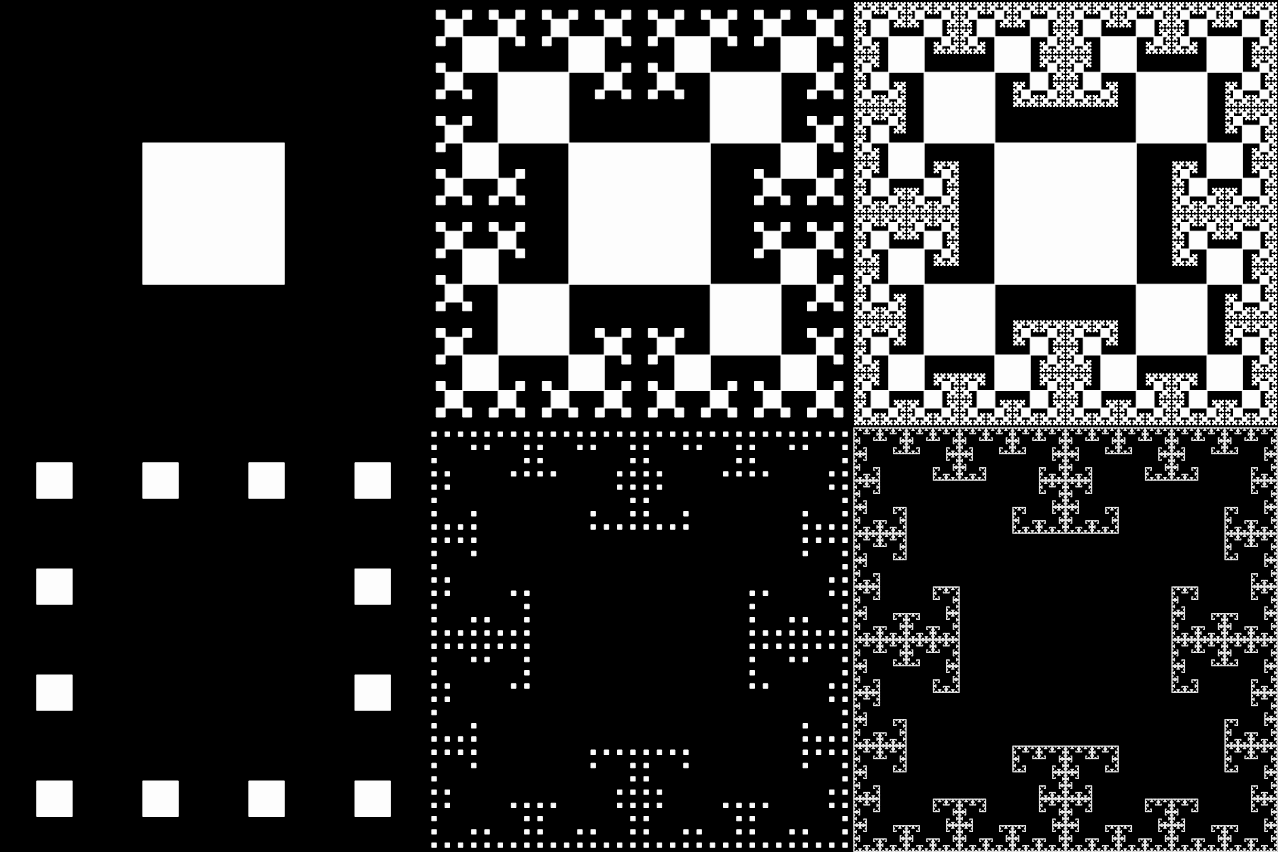
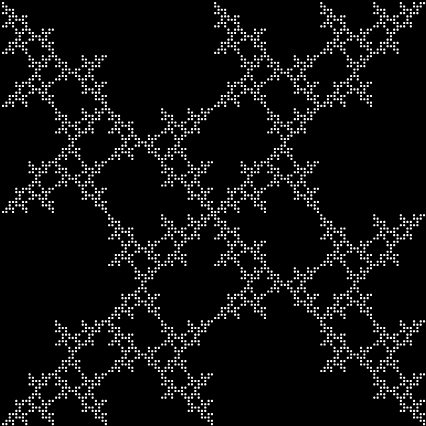
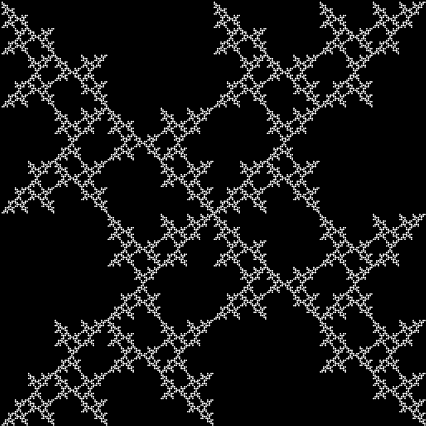
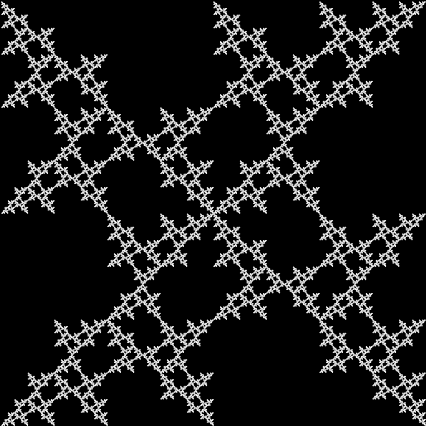
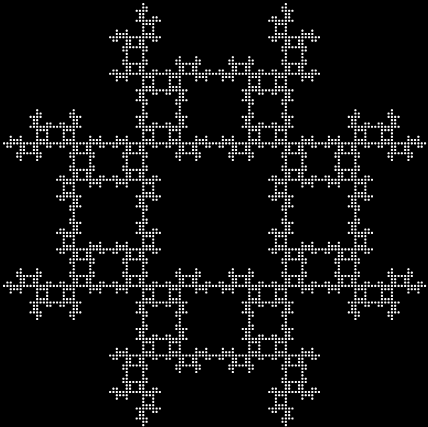
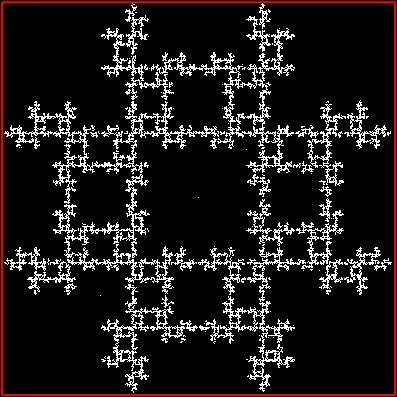
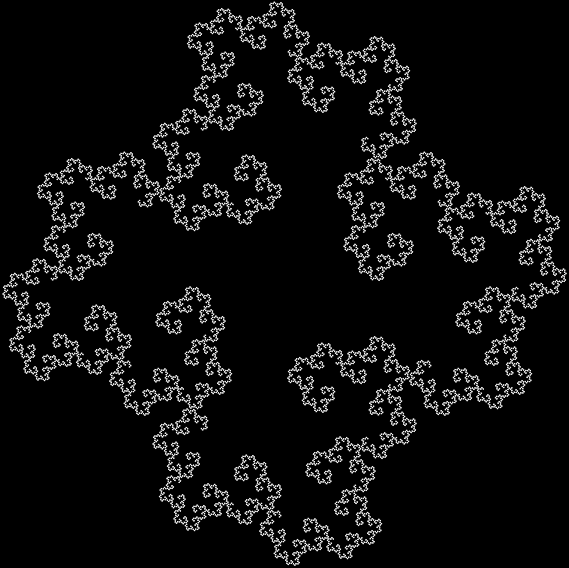
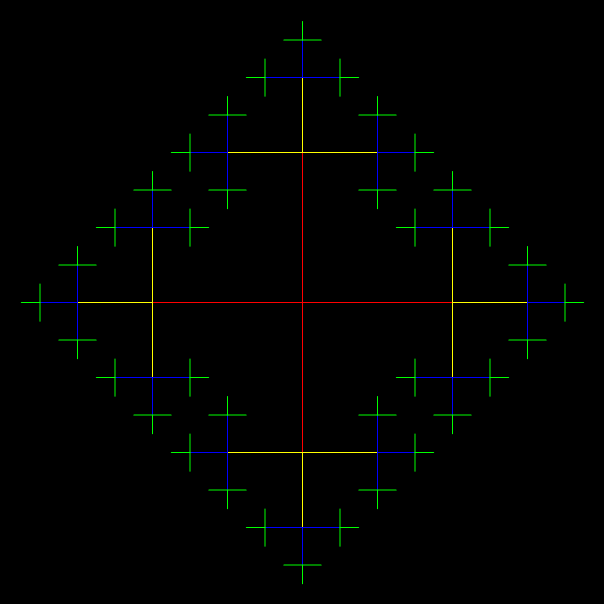
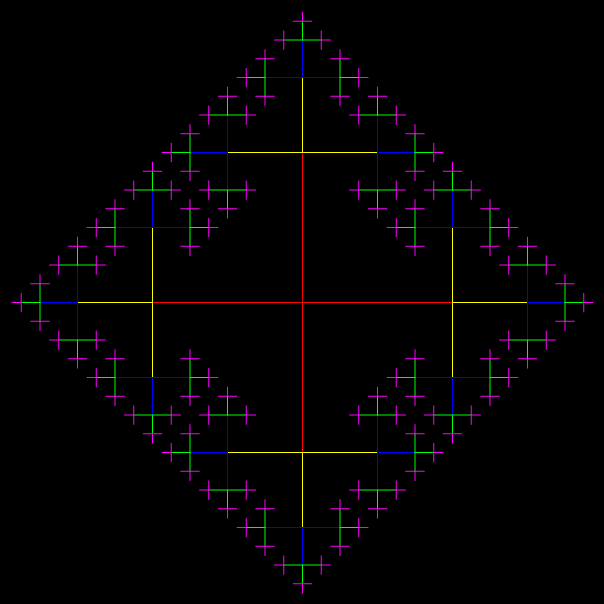
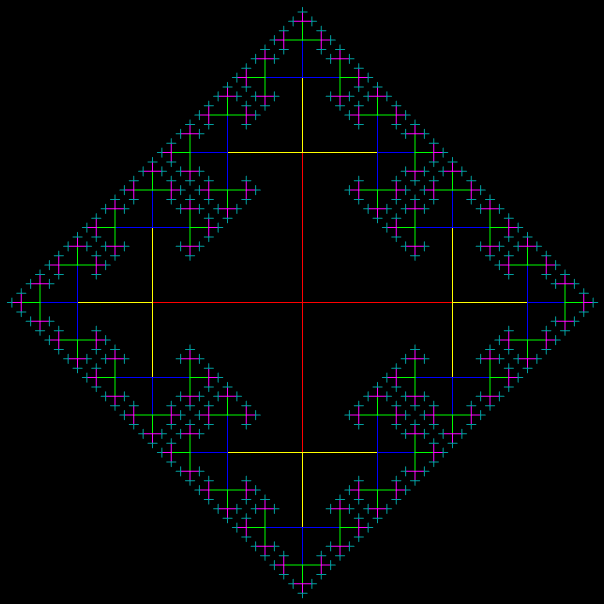
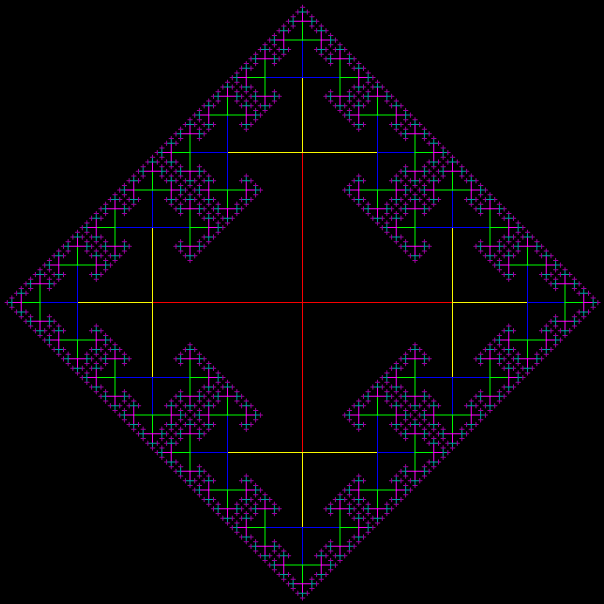
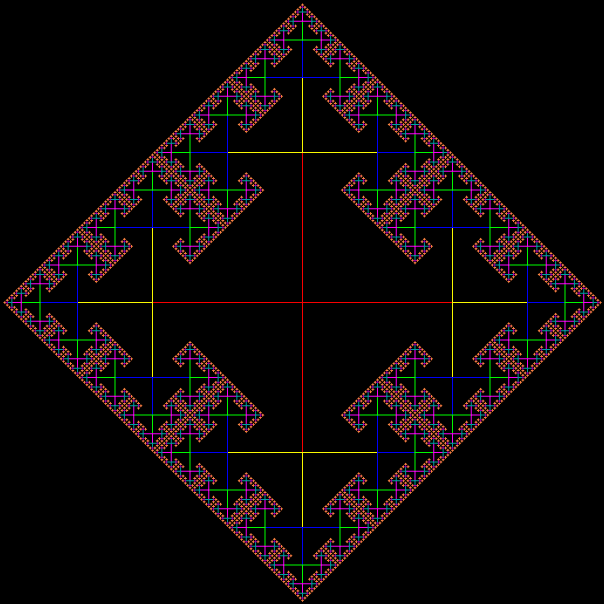
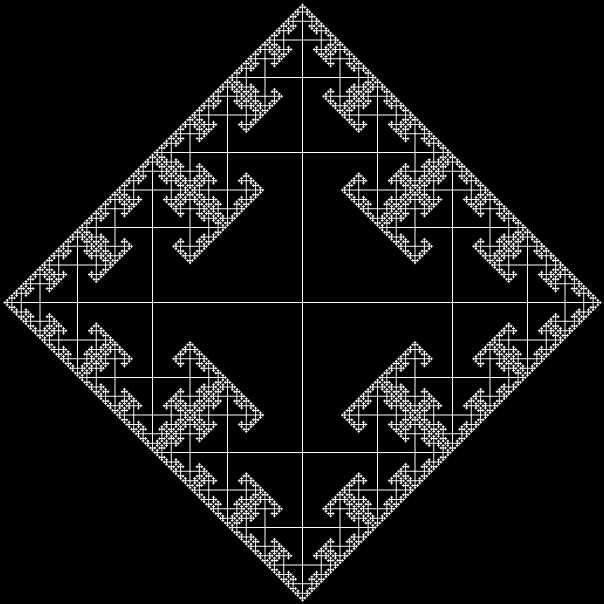
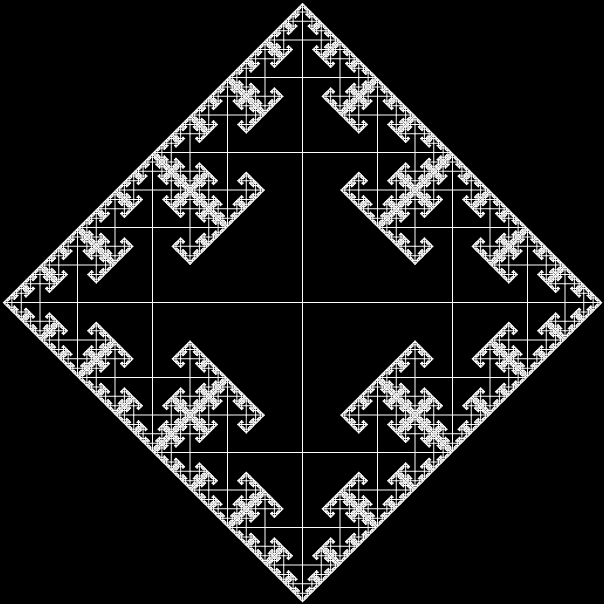
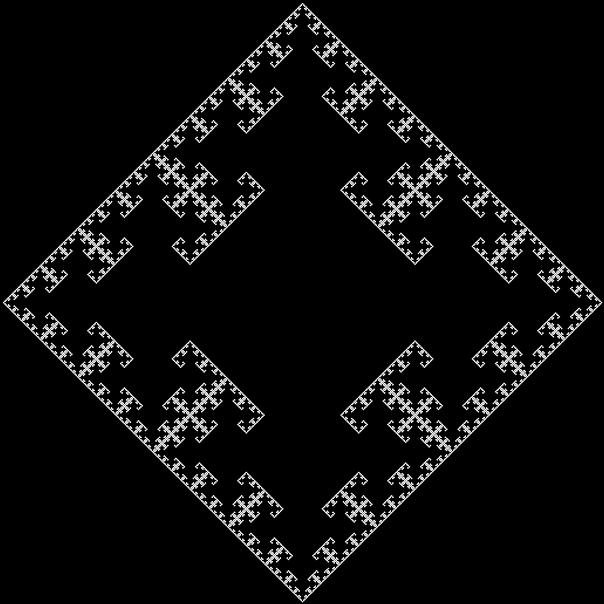
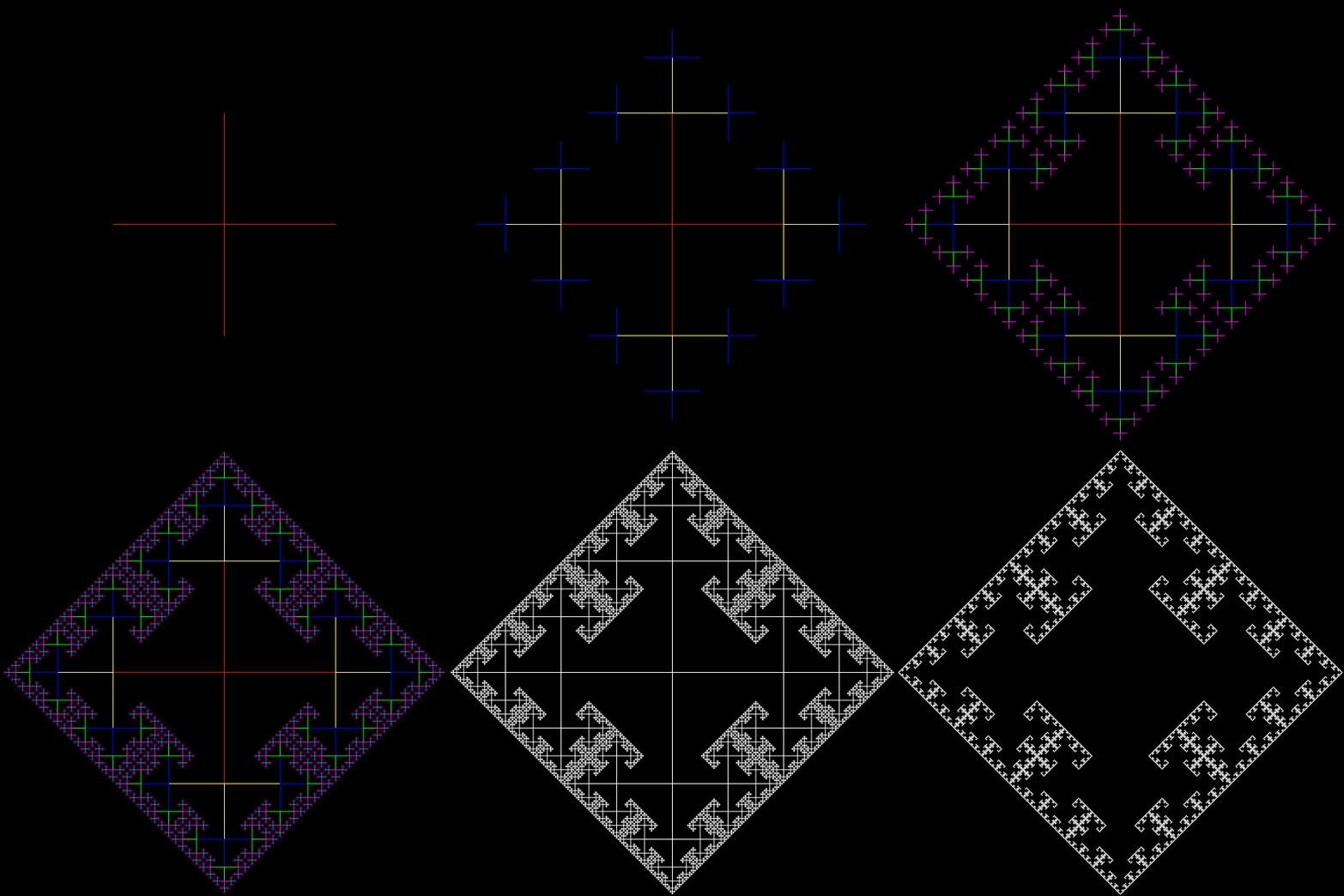
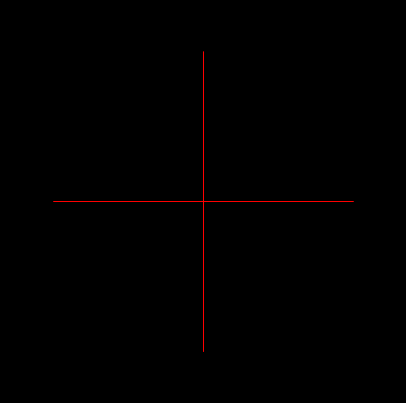
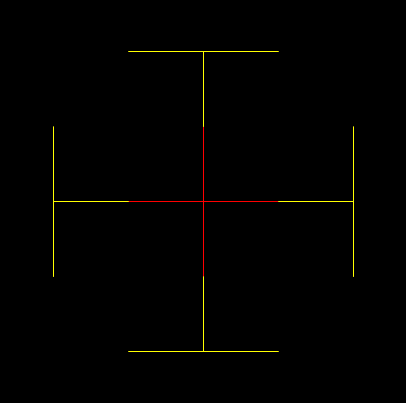
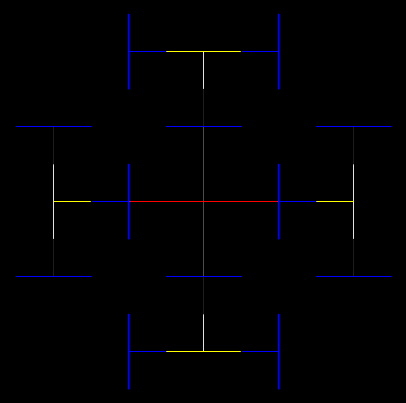
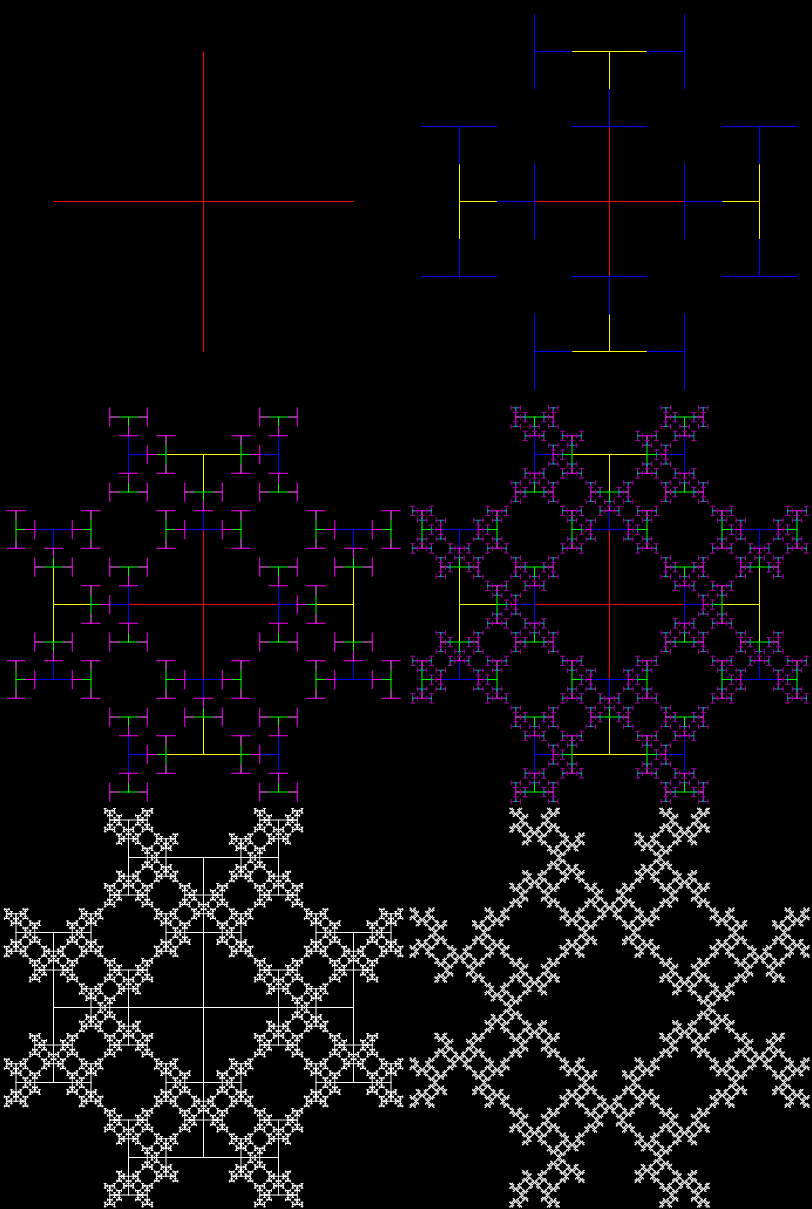
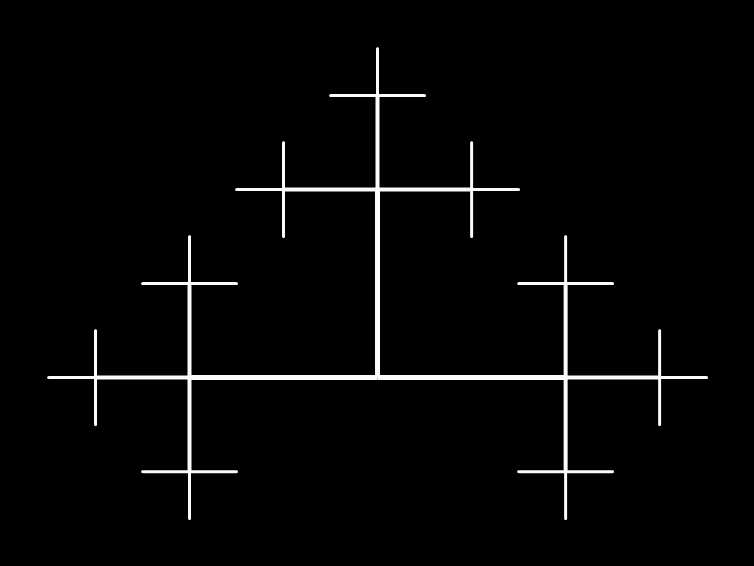
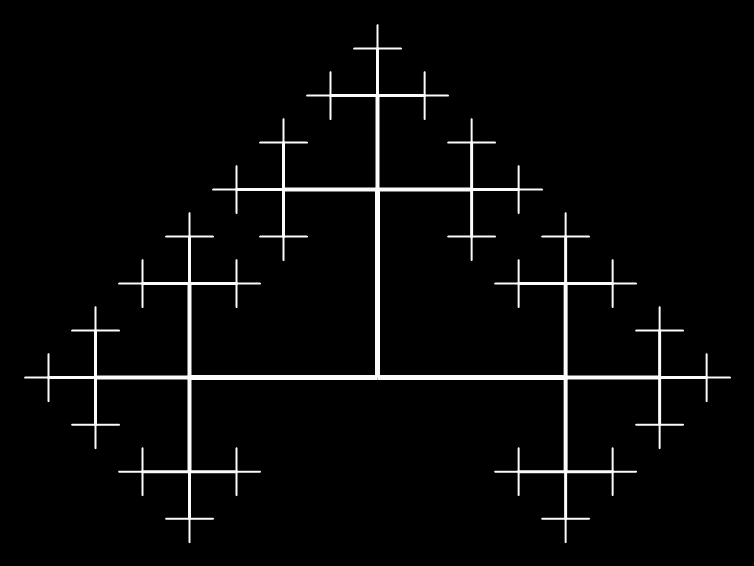
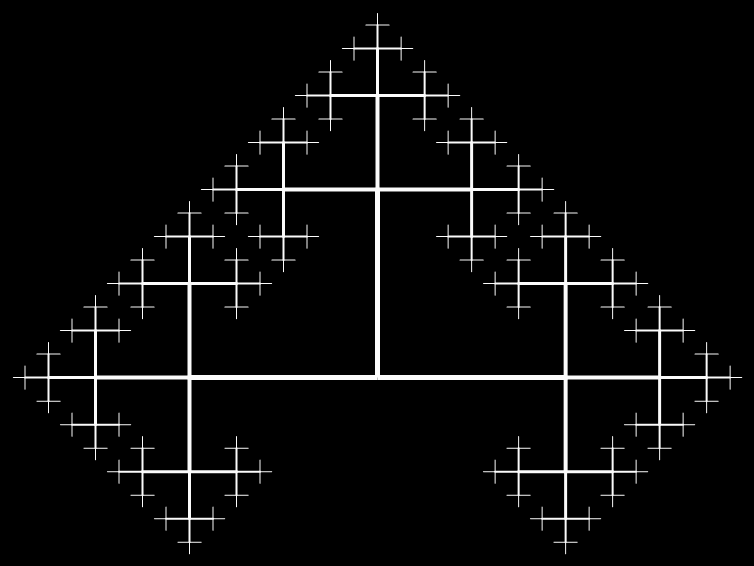
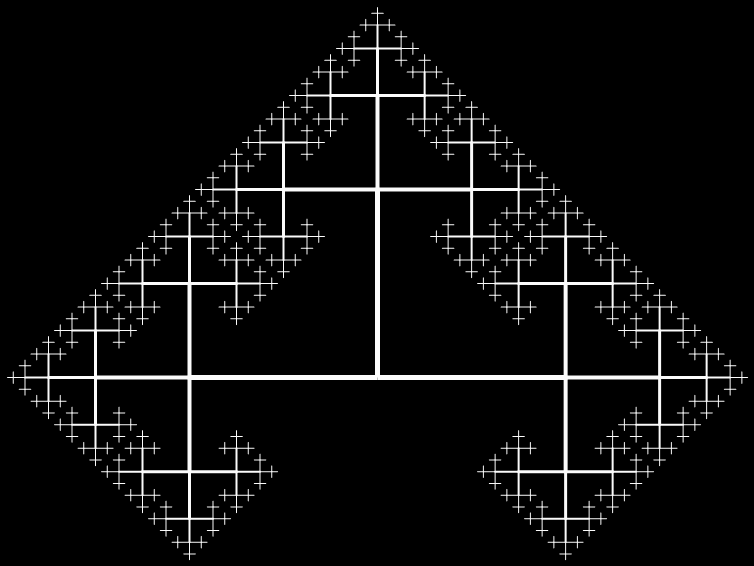
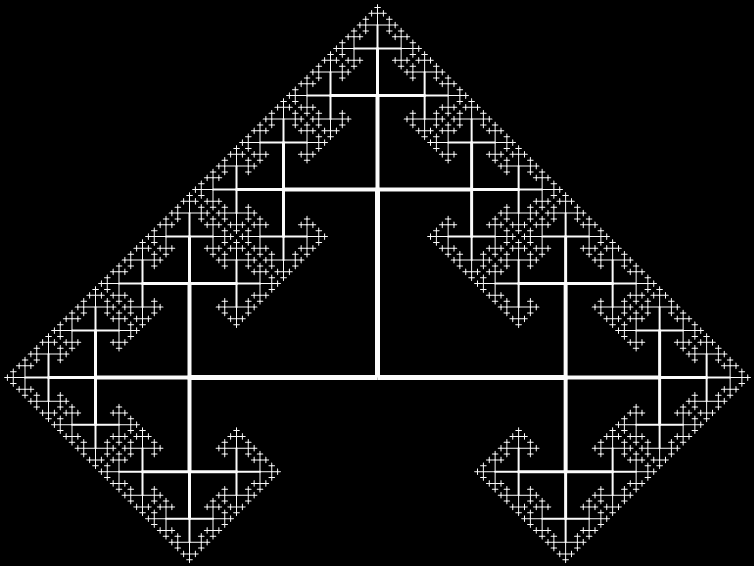
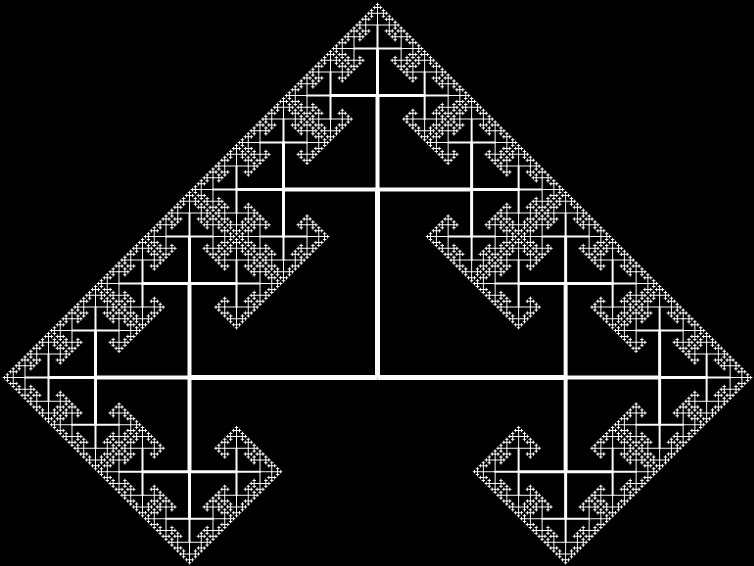
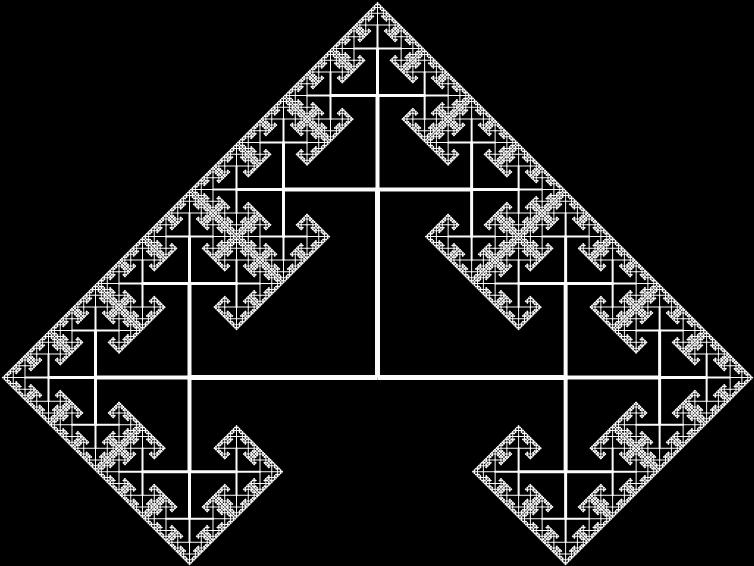
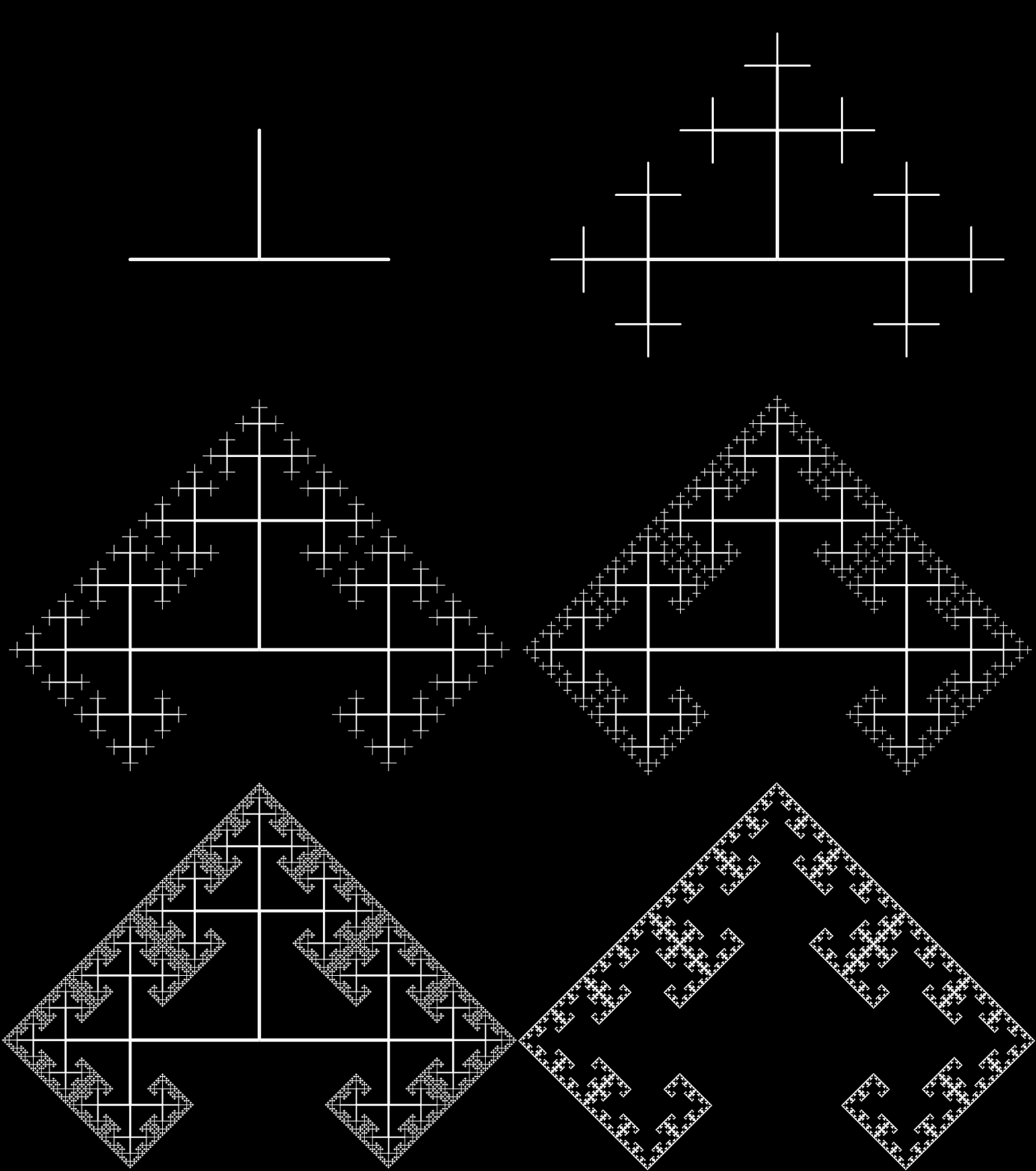
After triangles come squares. Here’s a shape called a T-square fractal:
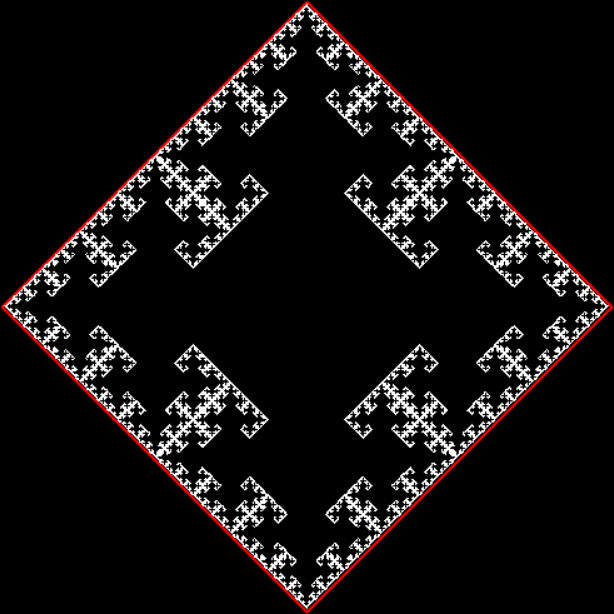
T-square fractal


And here’s the circular equivalent of a T-square fractal:
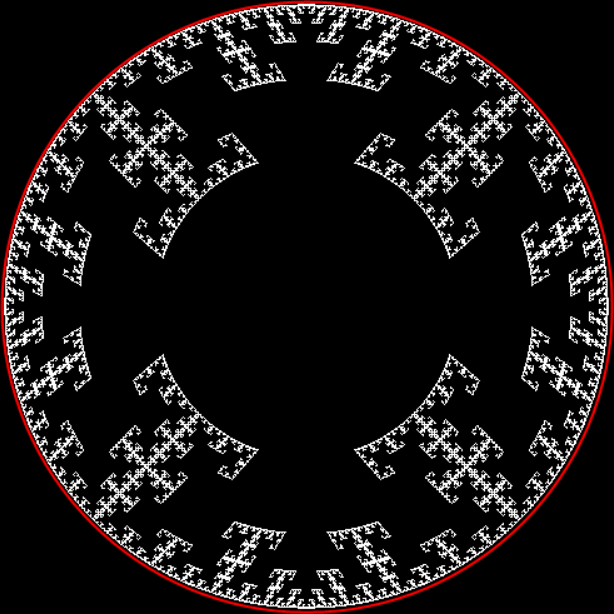
T-square fractal → T-squisc
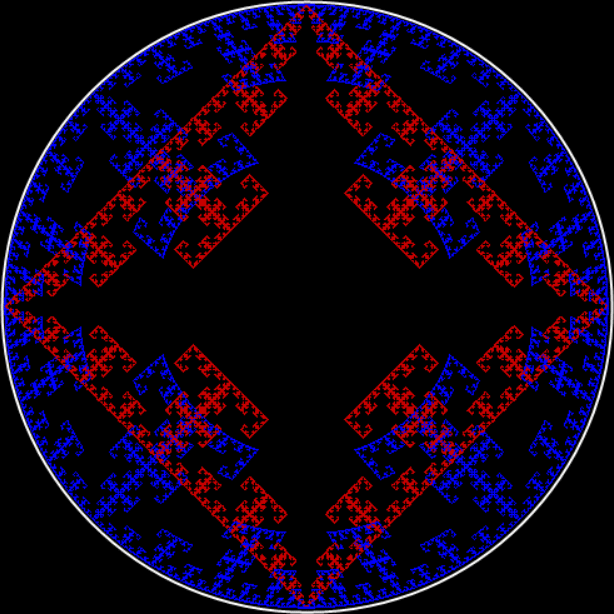

T-square fractal + T-squisc


If a disc from a triangle is a trisc, then a disc from a square is a squisc (it would be pentisc, hexisc, heptisc for pentagonal, hexagonal and heptagonal fractals). Here’s the octagonal equivalent of a T-square fractal:
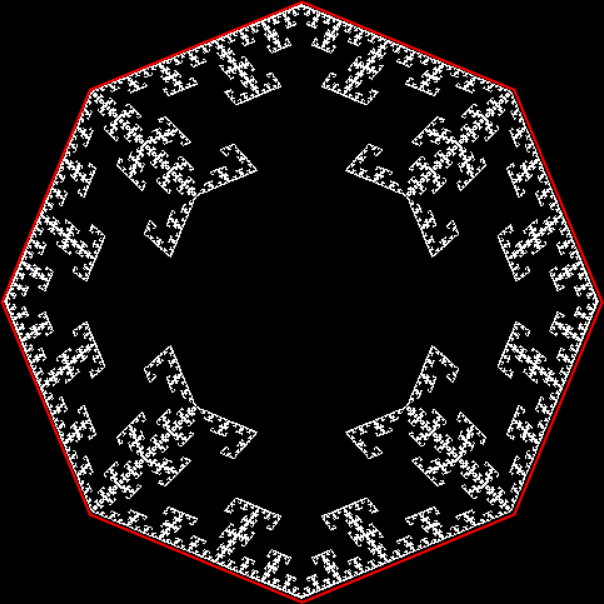
Octagon from T-square fractal


As with the Sierpiński trisc, you can use the T-squisc to create the T-octagon:
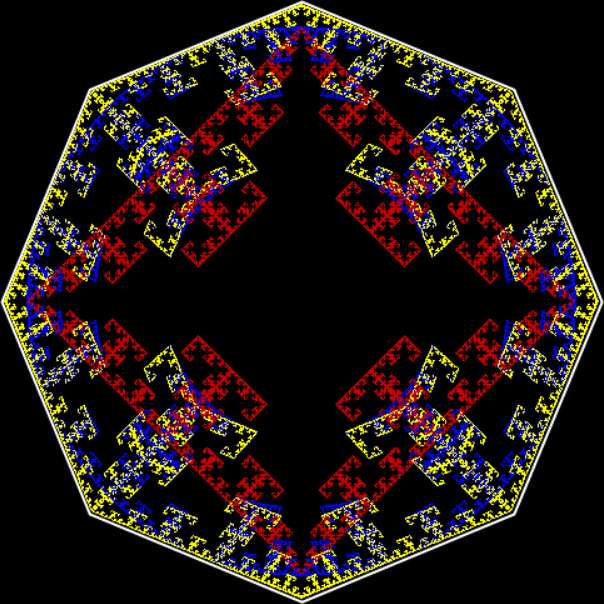
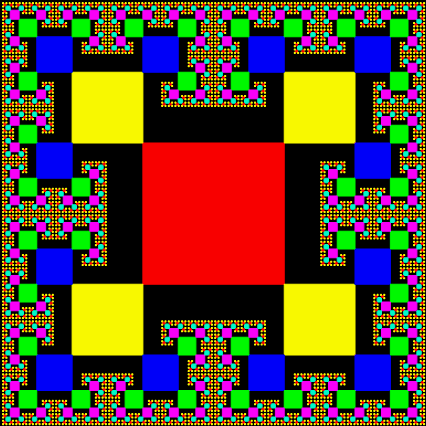
T-square fractal → T-squisc → T-octagon (color)


Or you can convert the T-square directly into the T-octagon:
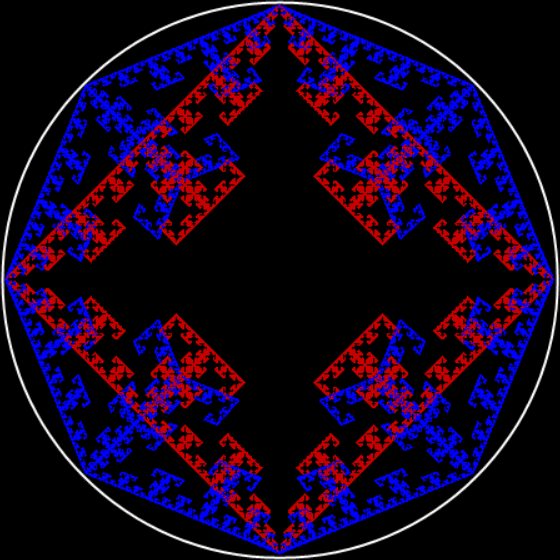
T-square fractal to T-octagon fractal

But using the squisc makes for interesting multiple images:
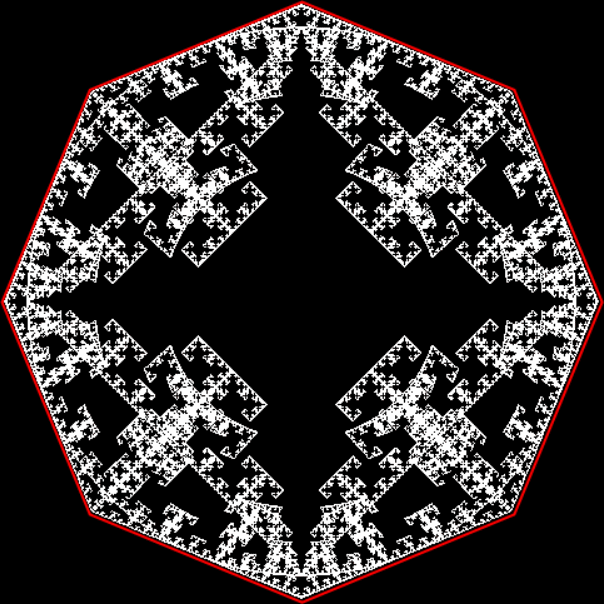

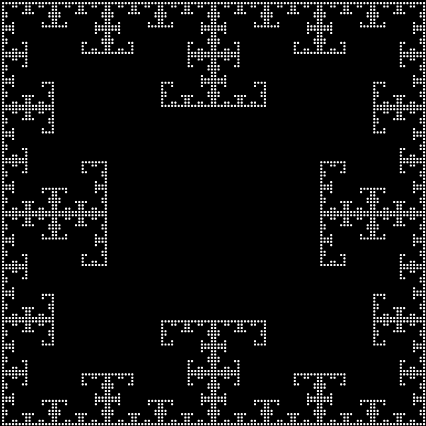
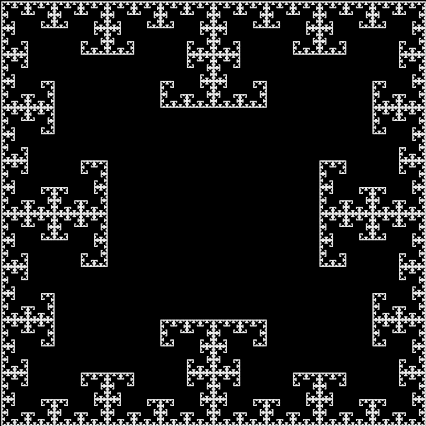
T-square fractal → T-squisc → T-octagon (b&w)
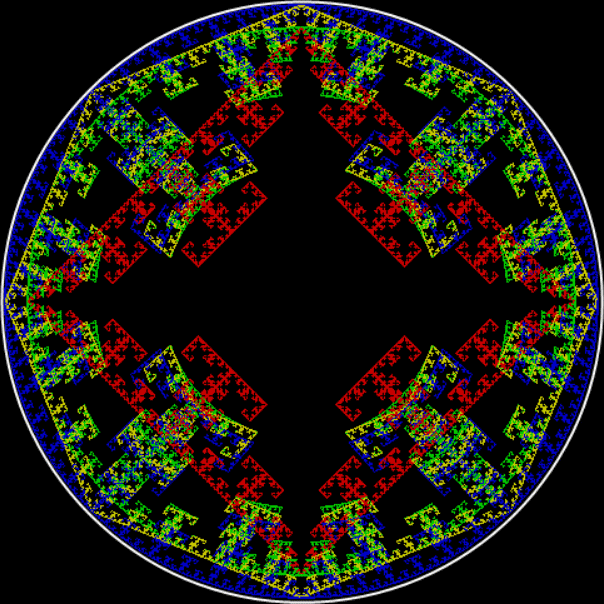

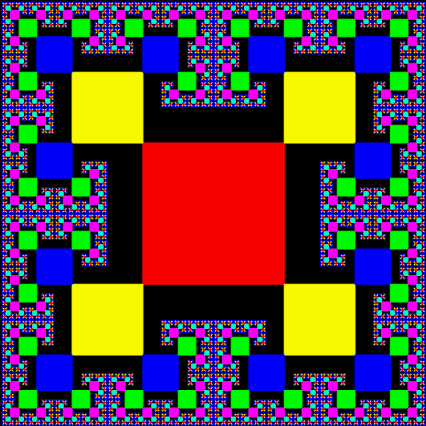
T-square fractal → T-squisc → T-octagon → T-squisc
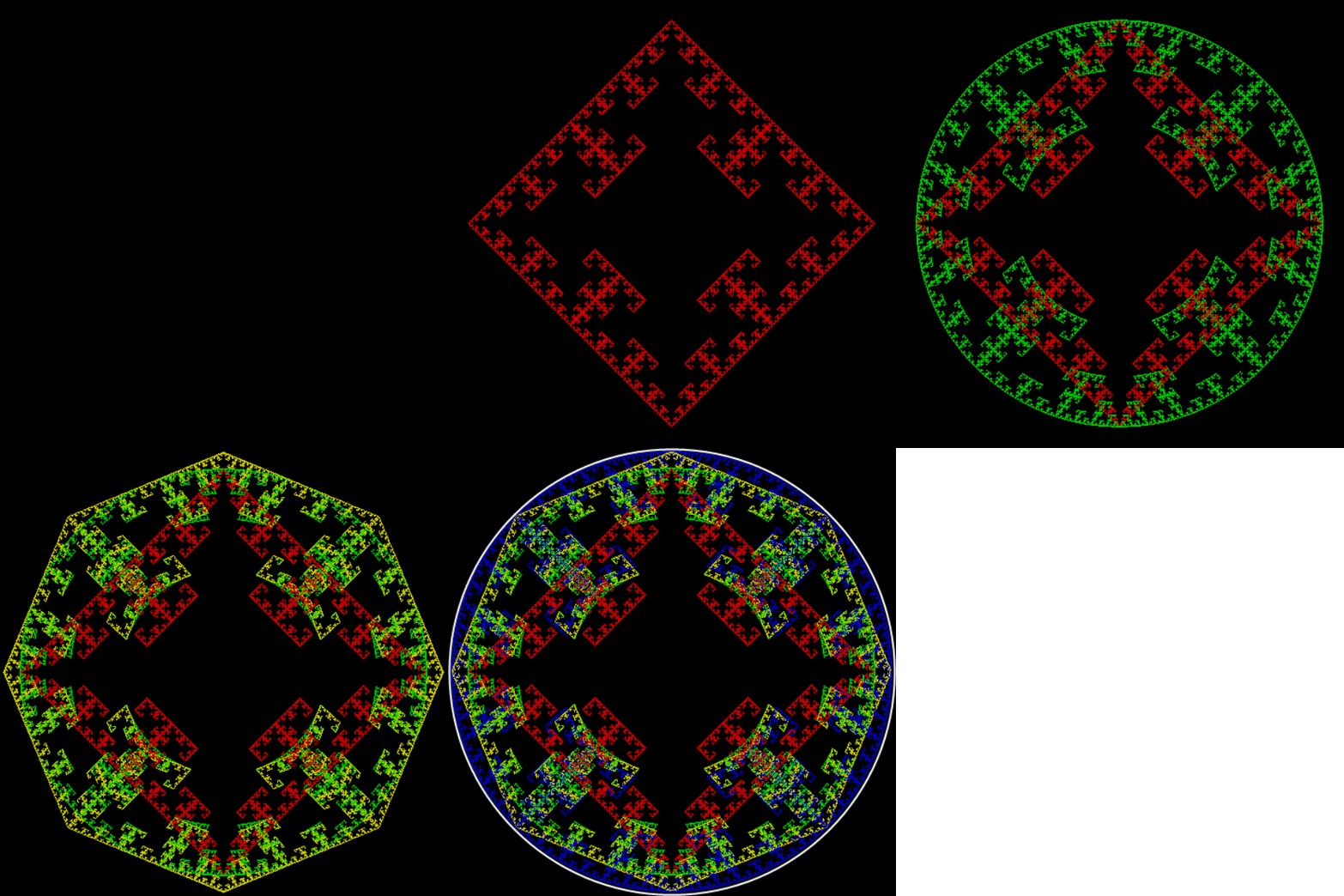

T-square fractal → T-squisc → T-octagon → T-squisc (animated at Ezgif)


The conversions from polygon to polygon look best when the number of sides in the higher polygon are a multiple of the number of sides in the lower, like this:
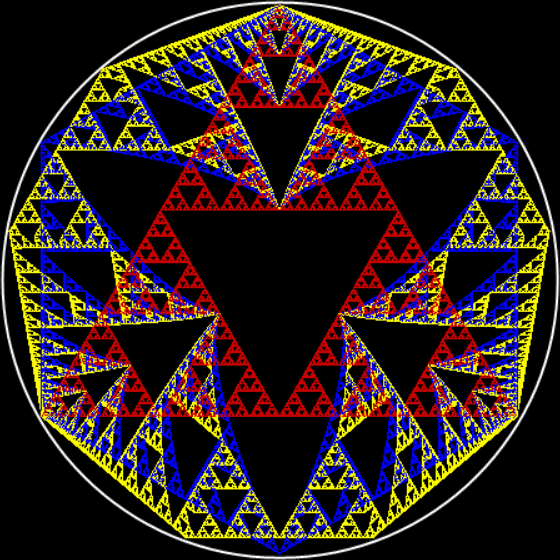
Sierpiński triangle → Sierpiński hexagon → Sierpiński nonagon

Square Routes Re-Re-Re-Re-Re-Re-Revisited

Suppose you trace all possible routes followed by a point inside a triangle jumping halfway towards one or another of the three vertices of the triangle. If you mark each jump, you get a famous geometrical shape called the Sierpiński triangle (or Sierpiński sieve).

Sierpiński triangle found by tracing all possible routes for a point jumping halfway towards the vertices of a triangle


The Sierpiński triangle is a fractal, because it contains copies of itself at smaller and smaller scales. Now try the same thing with a square. If you trace all possible routes followed by a point inside a square jumping halfway towards one or another of the four vertices of the square, you don’t get an obvious fractal. Instead, the interior of the square fills steadily (and will eventually be completely solid):

Routes of a point jumping halfway towards vertices of a square


Try a variant. If the point is banned from jumping towards the same vertex twice or more in a row, the routes trace out a fractal that looks like this:

Ban on choosing same vertex twice or more in a row
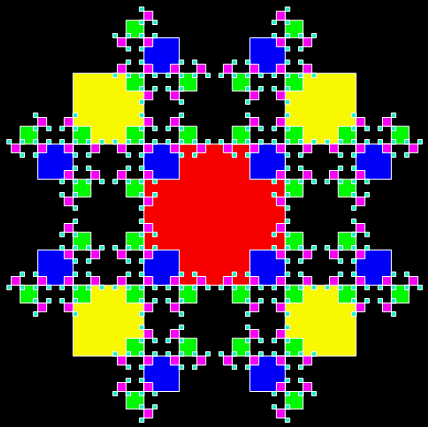
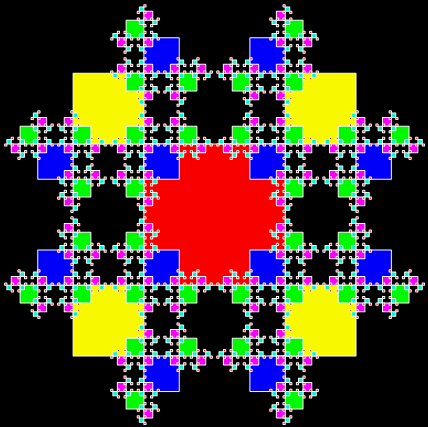

If the point is banned from jumping towards the vertex one place anti-clockwise of the vertex it’s just jumped towards, you get a fractal like this:

Ban on jumping towards vertex one place anti-clockwise of previously chosen vertex
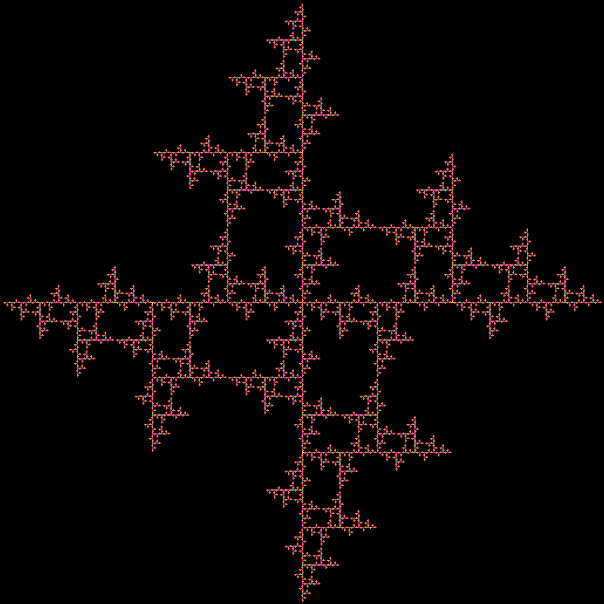

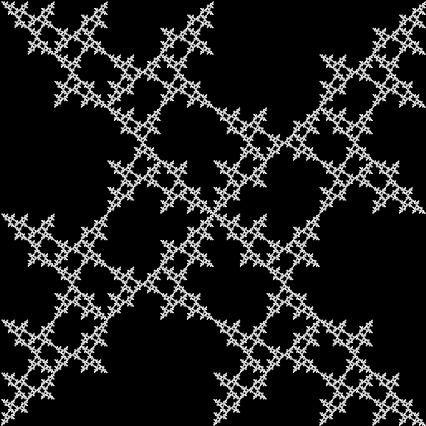
And if the point can’t jump towards two places clockwise or anti-clockwise of the currently chosen vertex, this fractal appears (called a T-square fractal):

Ban on jumping towards the vertex diagonally opposite of the previously chosen vertex


That ban is equivalent to banning the point from jumping from the vertex diagonally opposite to the vertex it’s just jumped towards. Finally, here’s the fractal created when you ban the point from jumping towards the vertex one place clockwise of the vertex it’s just jumped towards:

Ban on jumping towards vertex one place clockwise of previously chosen vertex


As you can see, the fractal is a mirror-image of the one-place-anti-clockwise-ban fractal.

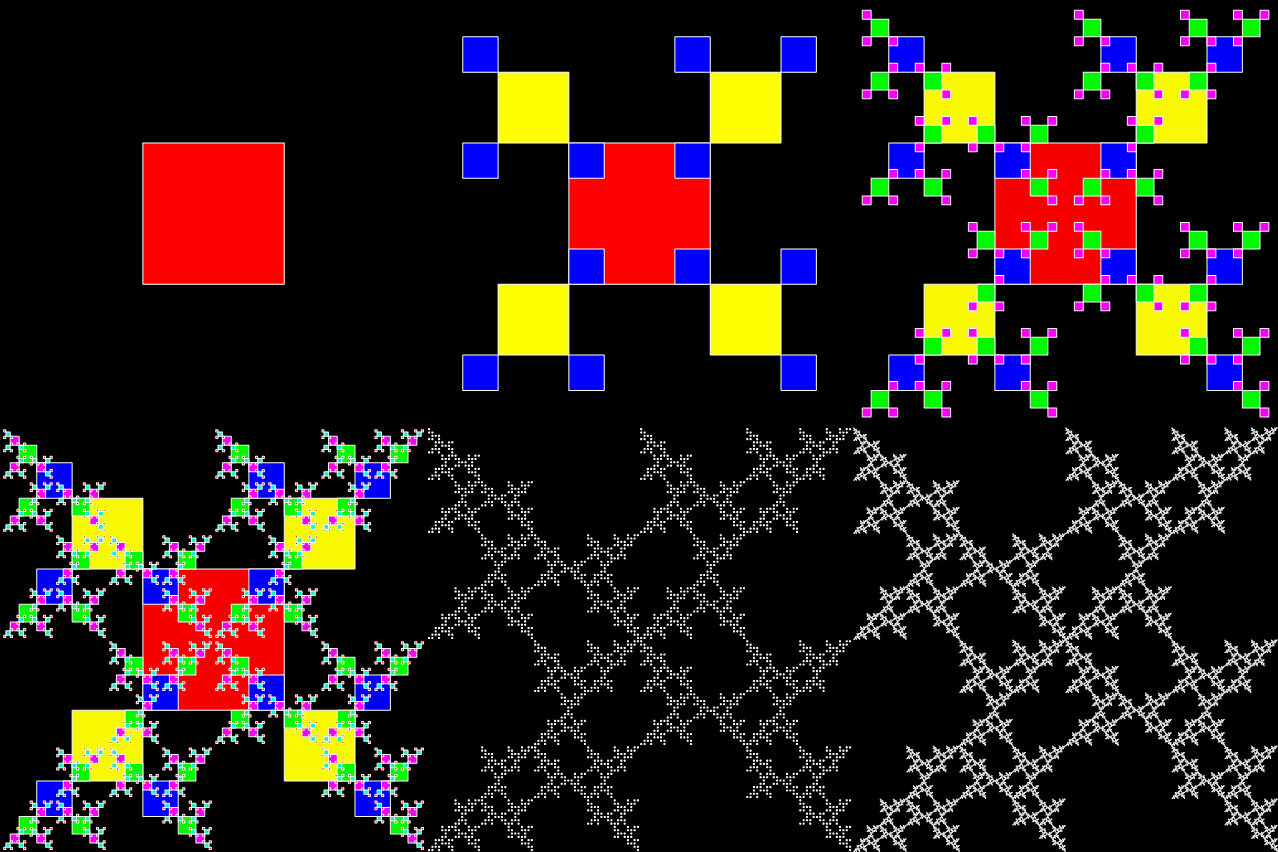
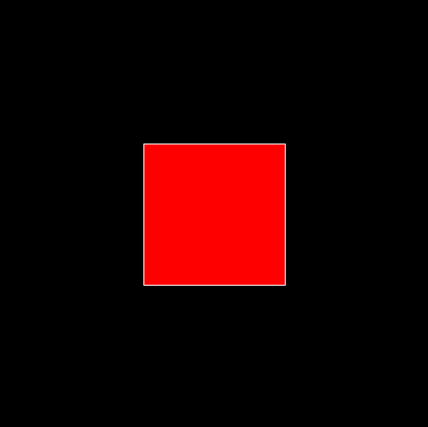
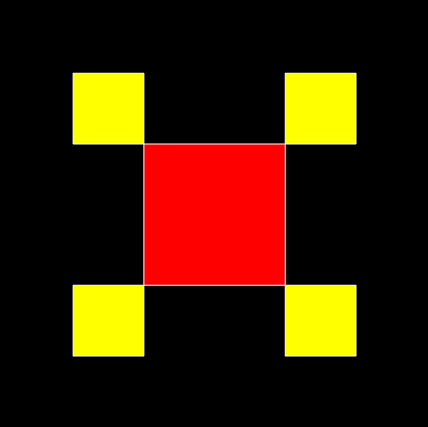
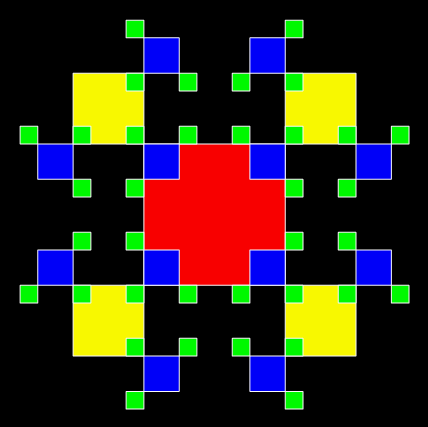
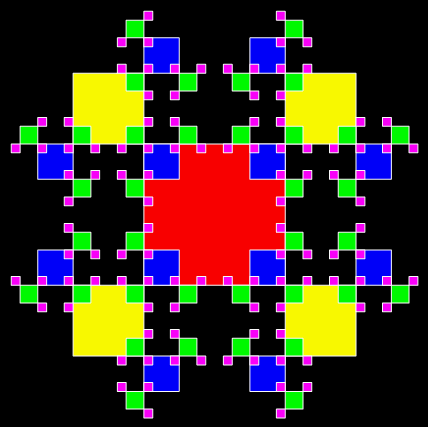
I discovered the ban-construction of those fractals more than twenty years ago. Then I found that I was re-discovering the same fractals when I looked at what first seemed like completely different ways of constructing fractals. There are lots of different routes to the same result. I’ve recently discovered yet another route. Let’s try what seems like an entirely different way of constructing fractals. Take a square and erect four new half-sized squares, sq1, sq2, sq3, sq4, on each corner. Then erect three more quarter-sized squares on the outward facing corners of sq1, sq2, sq3 and sq4. Carry on doing that and see what happens at the end when you remove all the previous stages of construction:


Animation of the new construction


Animation in black-and-white


It’s the T-square fractal again. Now try rotating the squares you add at stage 3 and see what happens (the rotation means that two new squares are added on adjacent outward-facing corners and one new square on the inward-facing corner):


Animation of the construction


It’s the one-place-clockwise-ban fractal again. Now try rotating the squares two places, so that two new squares are added on diagonally opposite outward-facing corners and one new square on the inward-facing corner:


Animation of the construction


It’s the same-vertex-ban fractal again. Finally, rotate squares one place more:

Animation of the construction


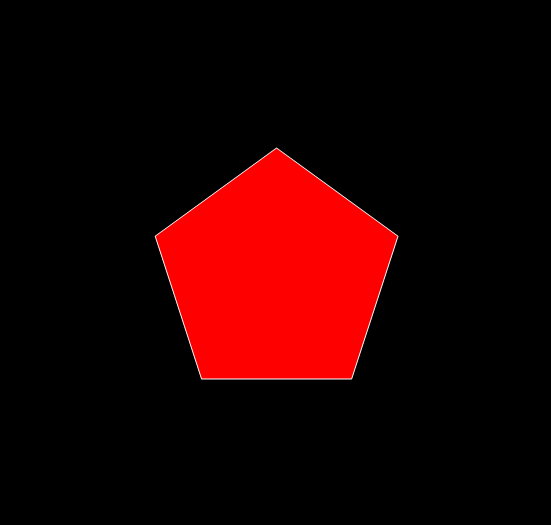
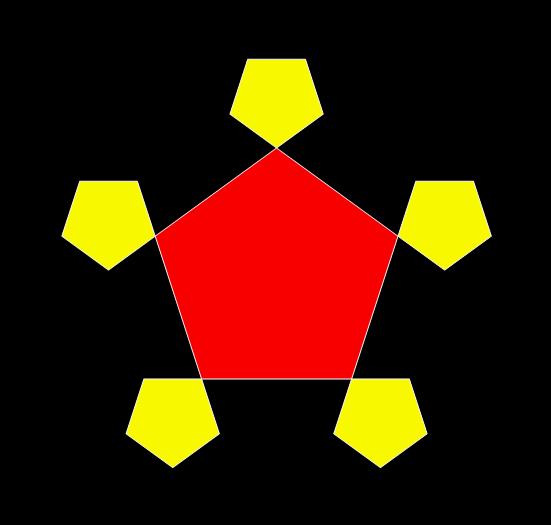
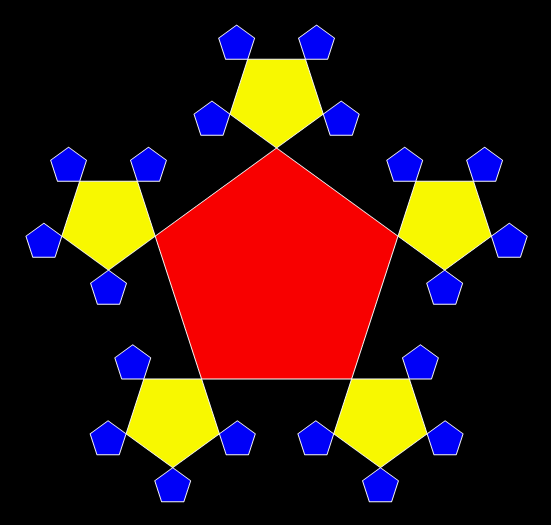
It’s the one-place-clockwise-ban fractal again. And this method isn’t confined to squares. Here’s what happens when you add 5/8th-sized triangles to the corners of triangles:


Animation of the construction


And here’s what happens when you add 5/13th-sized pentagons to the corners of pentagons:


Animation of the construction


Finally, here’s a variant on that pentagonal fractal (adding two rather than four pentagons at stage 3 and higher):


Animation of the construction


Previously pre-posted (please peruse):

Square Routes
Square Routes Revisited
Square Routes Re-Revisited
Square Routes Re-Re-Revisited
Square Routes Re-Re-Re-Revisited
Square Routes Re-Re-Re-Re-Revisited
Square Routes Re-Re-Re-Re-Re-Revisited

Game of Throwns

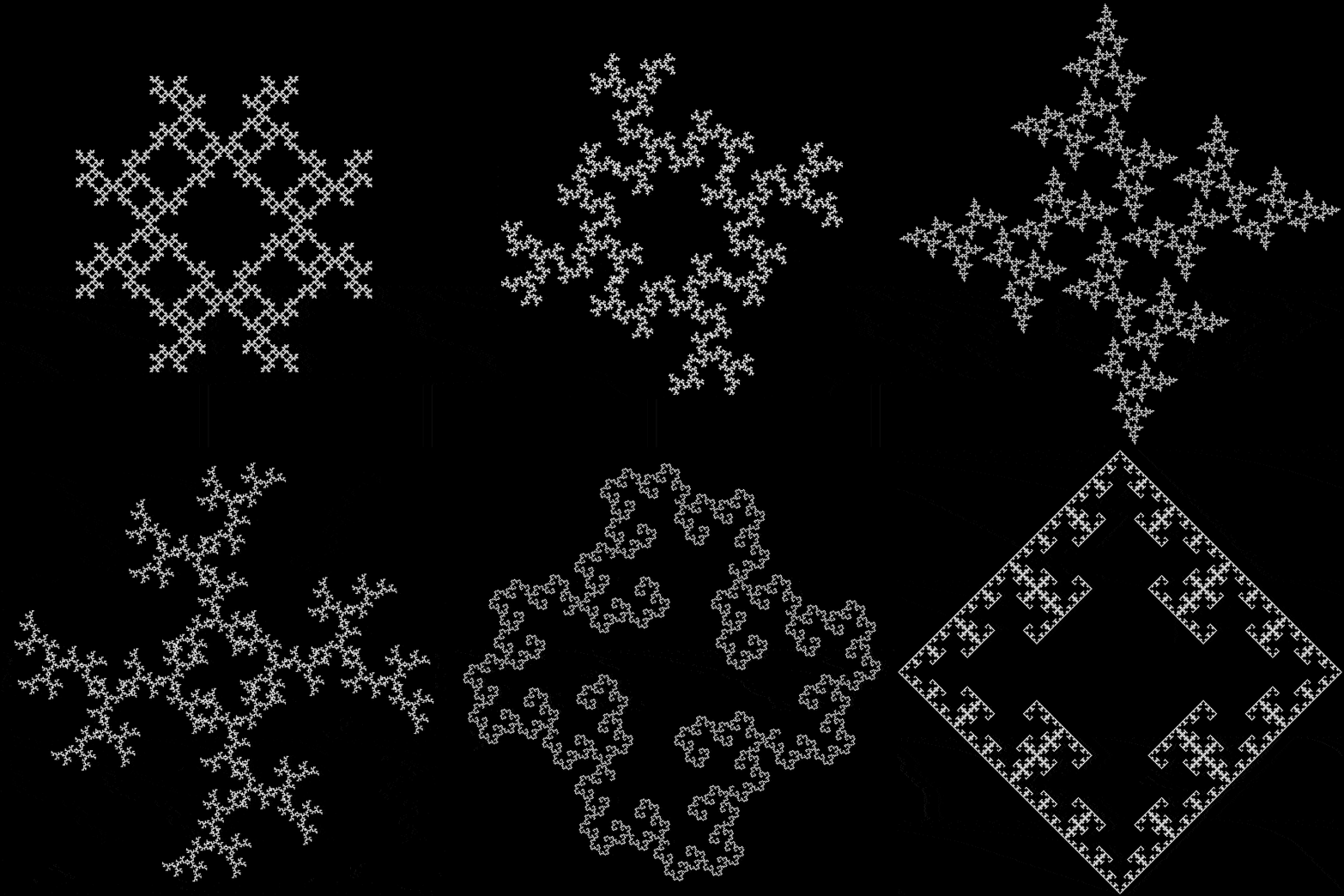
In “Scaffscapes”, I looked at these three fractals and described how they were in a sense the same fractal, even though they looked very different:

Fractal #1


Fractal #2


Fractal #3


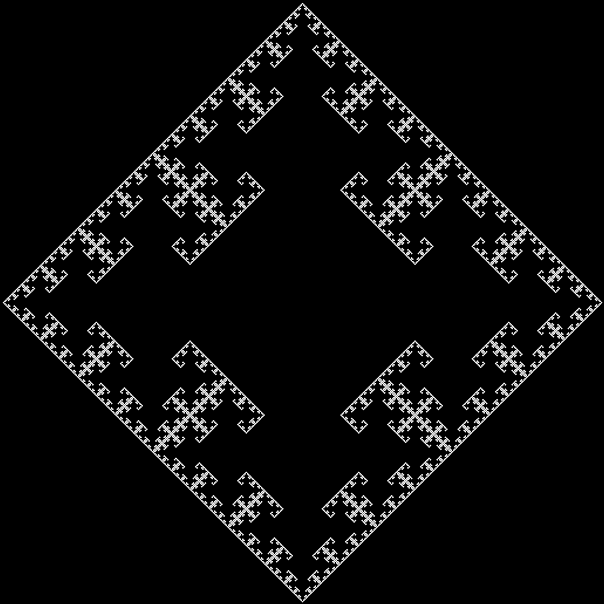
But even if they are all the same in some mathematical sense, their different appearances matter in an aesthetic sense. Fractal #1 is unattractive and seems uninteresting:

Fractal #1, unattractive, uninteresting and unnamed


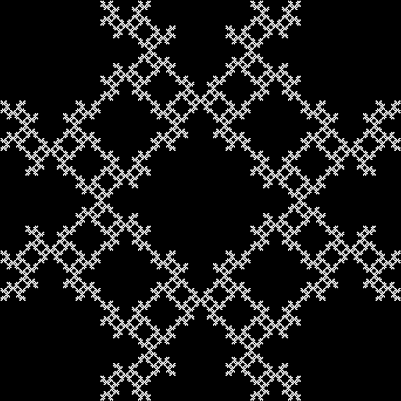
Fractal #3 is attractive and interesting. That’s part of why mathematicians have given it a name, the T-square fractal:

Fractal #3 — the T-square fractal


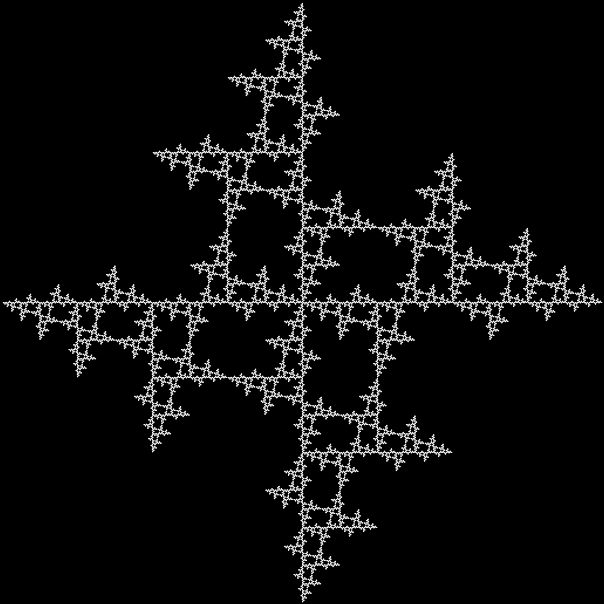
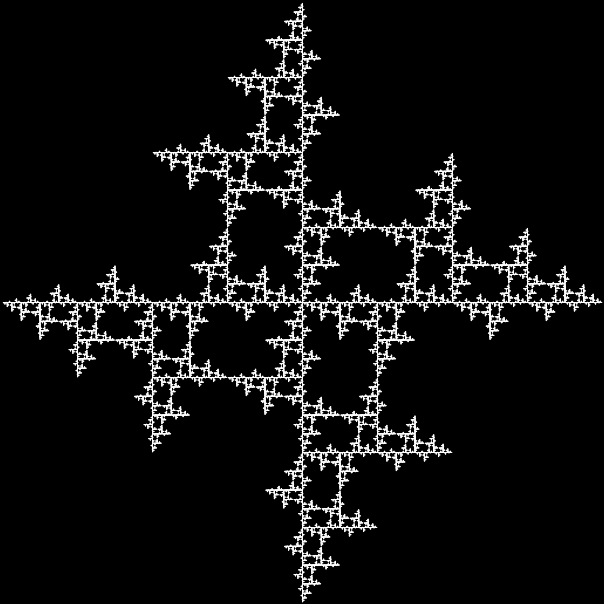
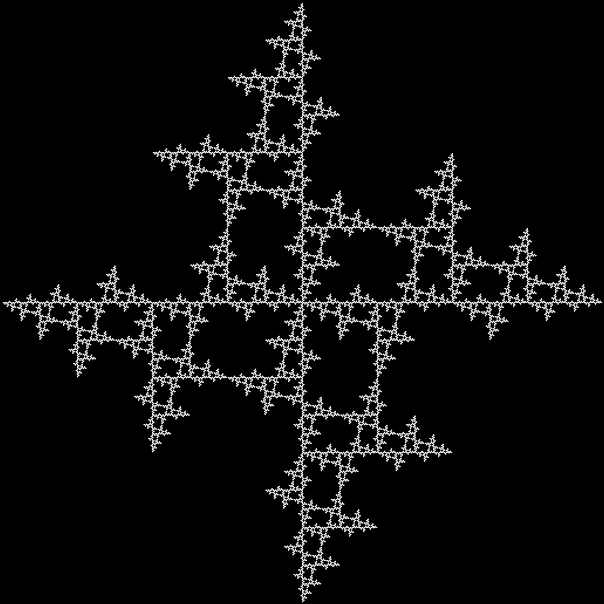
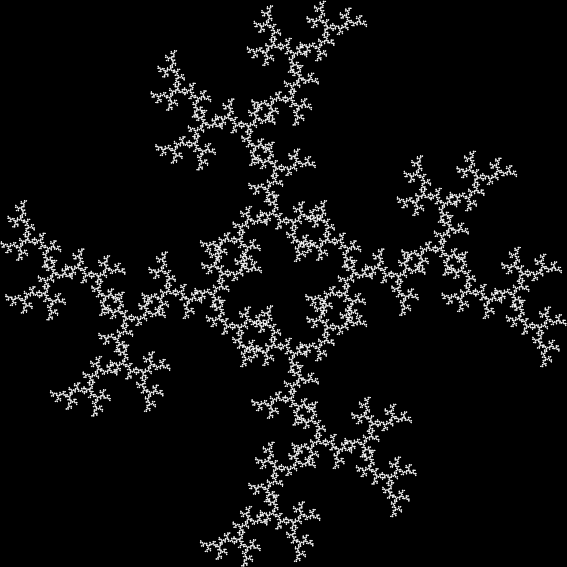
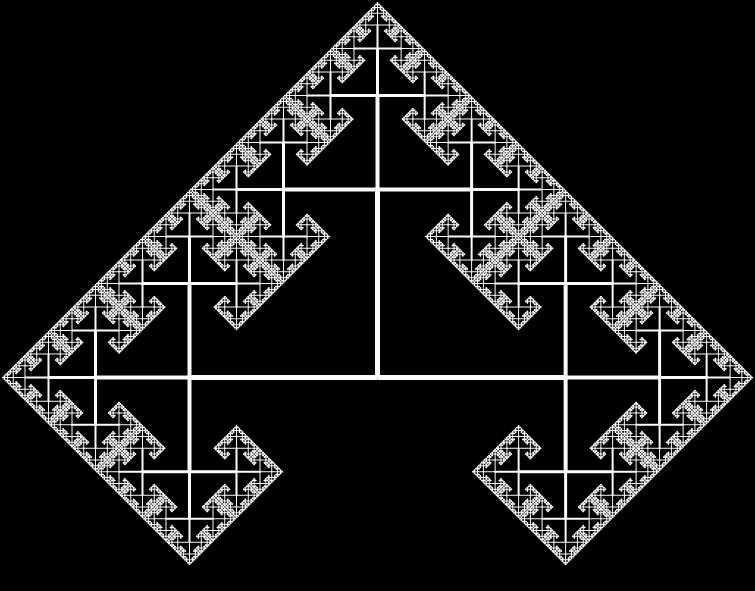
But fractal #2, although it’s attractive and interesting, doesn’t have a name. It reminds me of a ninja throwing-star or shuriken, so I’ve decided to call it the throwing-star fractal or ninja-star fractal:

Fractal #2, the throwing-star fractal


A ninja throwing-star or shuriken


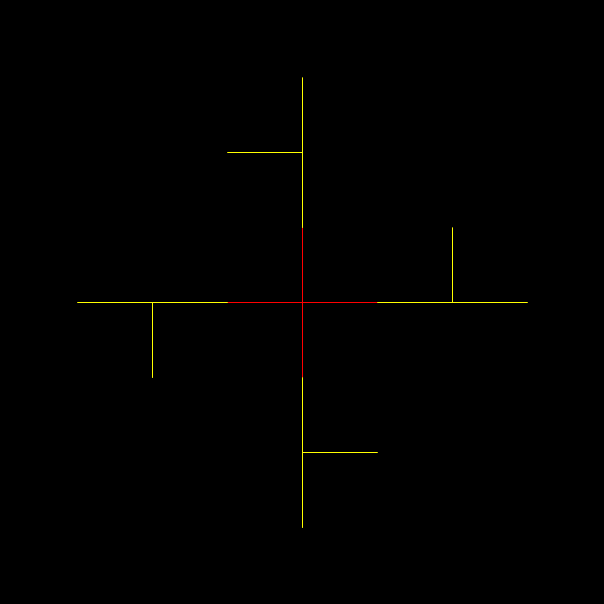
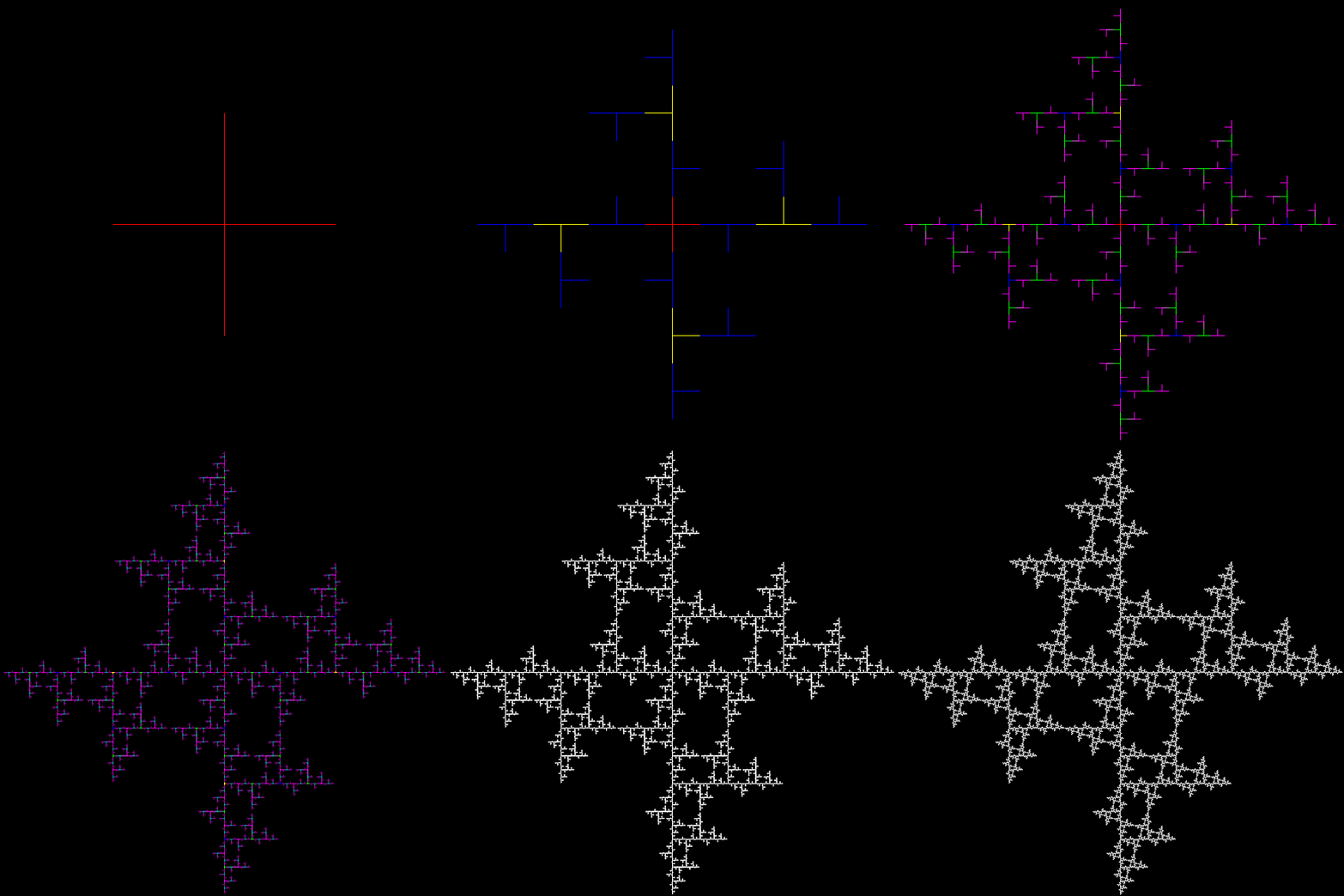
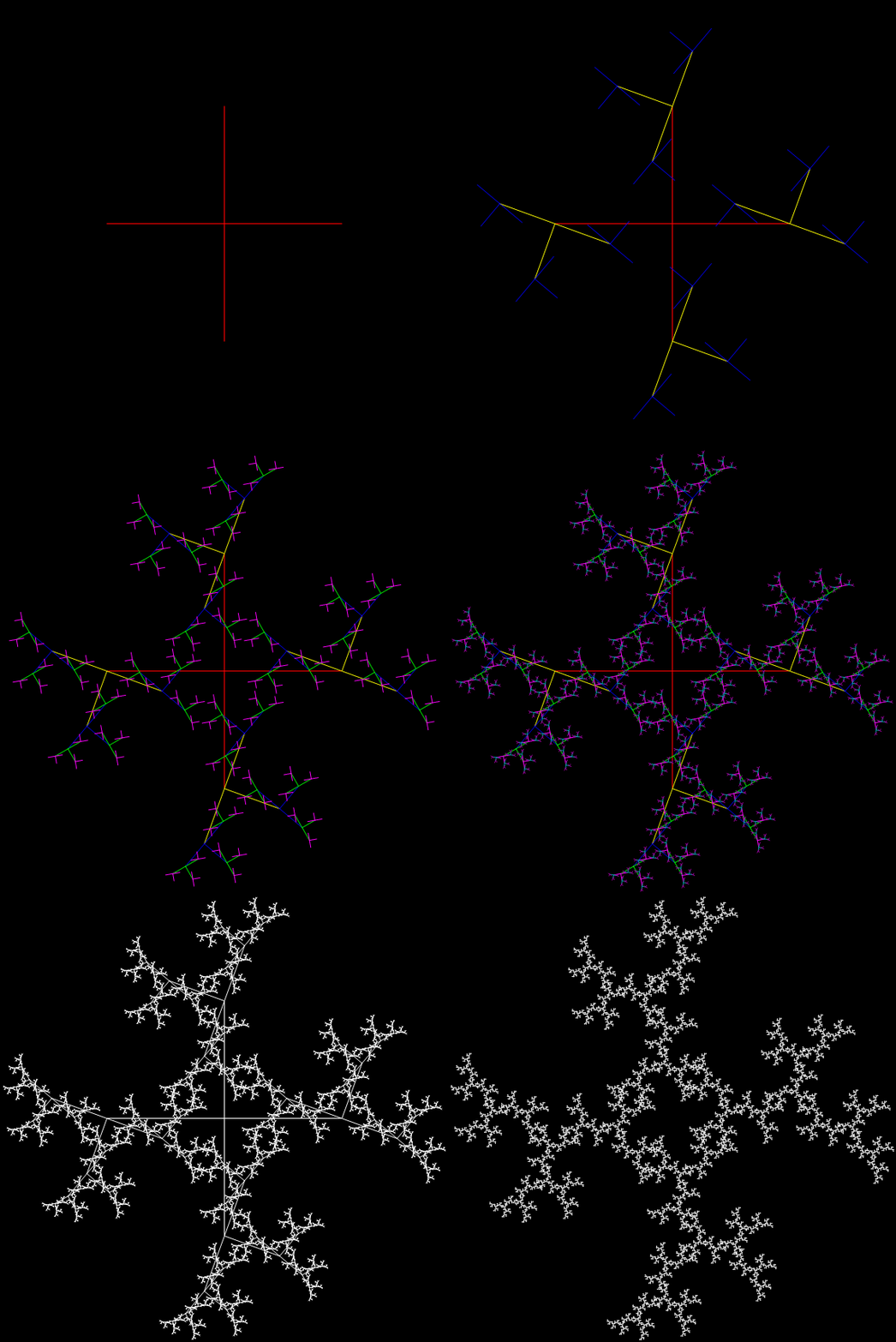
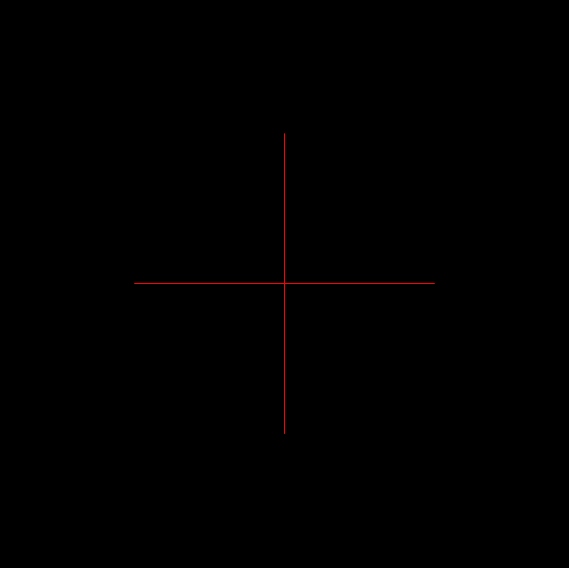
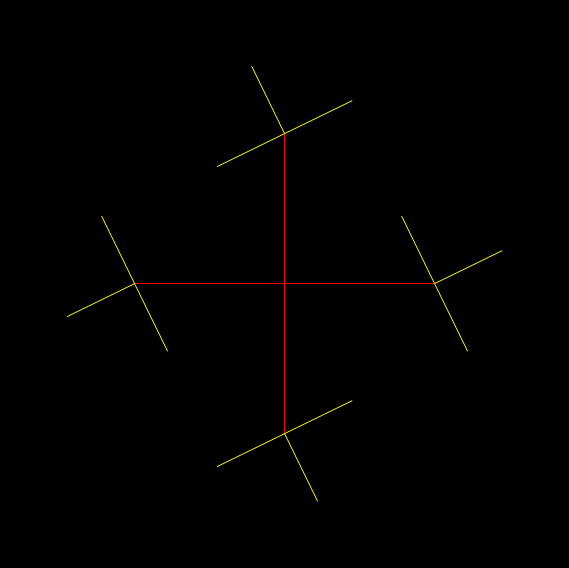
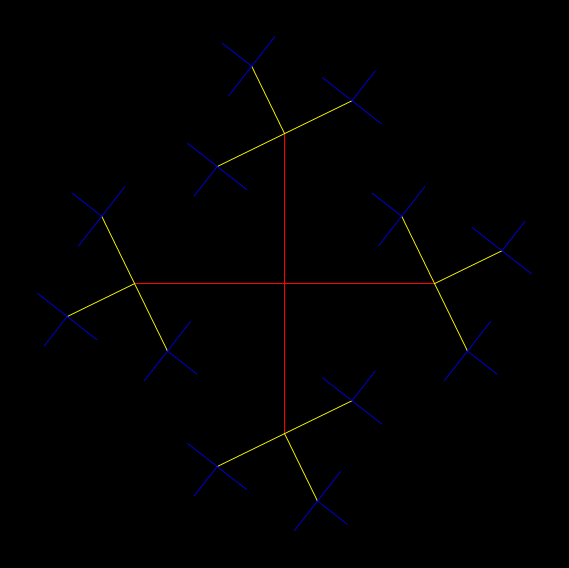
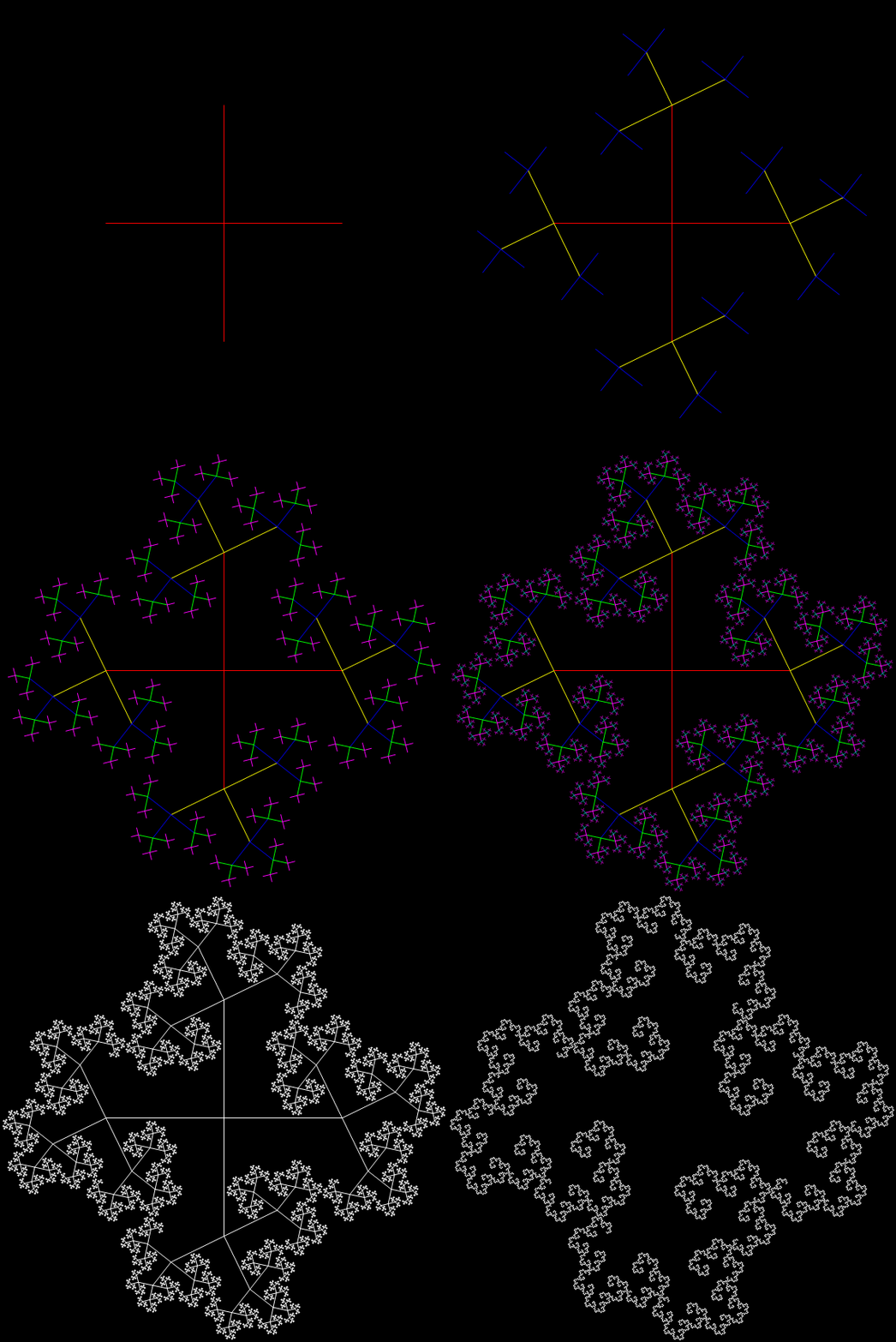
This is one way to construct a throwing-star fractal:

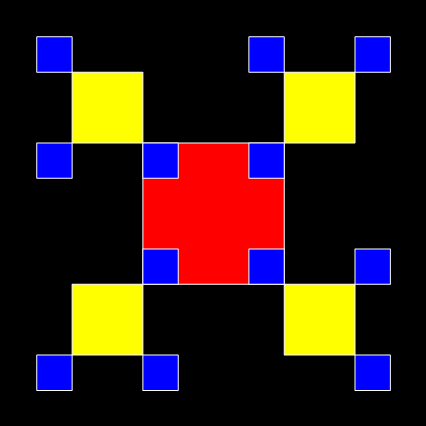
Throwing-star fractal, stage 1


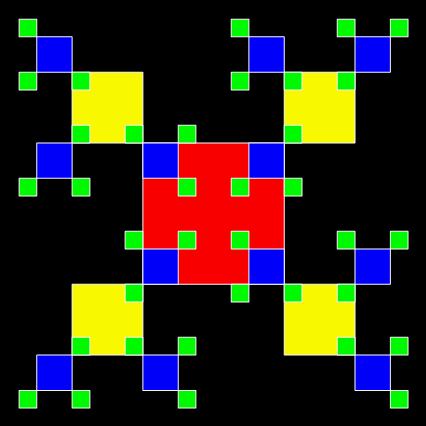
Throwing-star fractal, #2


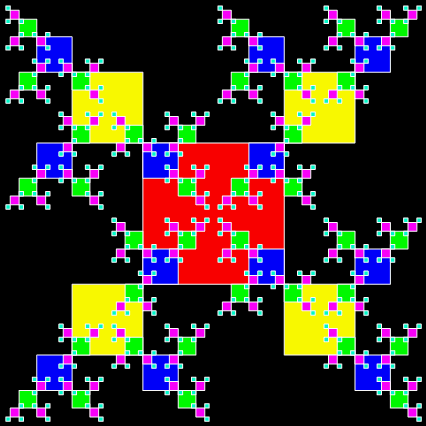
Throwing-star fractal, #3


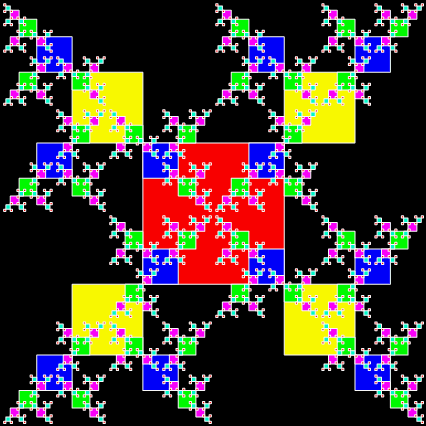
Throwing-star fractal, #4


Throwing-star fractal, #5


Throwing-star fractal, #6


Throwing-star fractal, #7


Throwing-star fractal, #8


Throwing-star fractal, #9


Throwing-star fractal, #10


Throwing-star fractal, #11


Throwing-star fractal (animated)


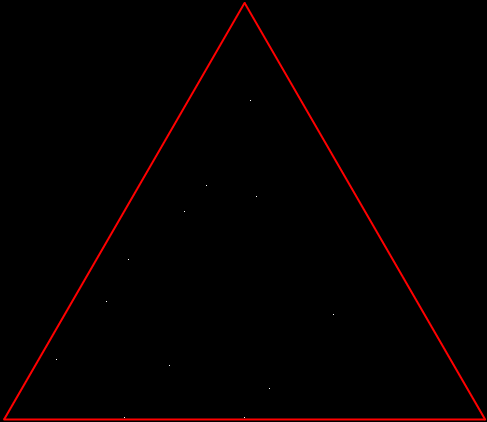
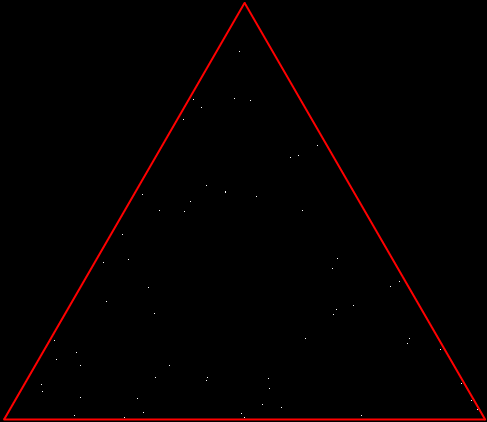
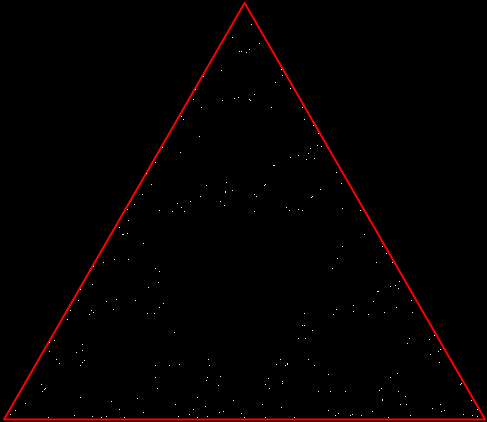
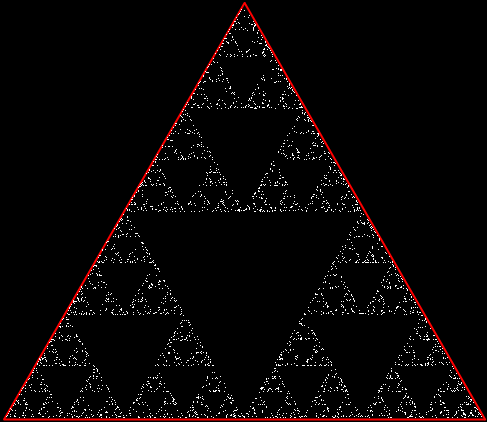
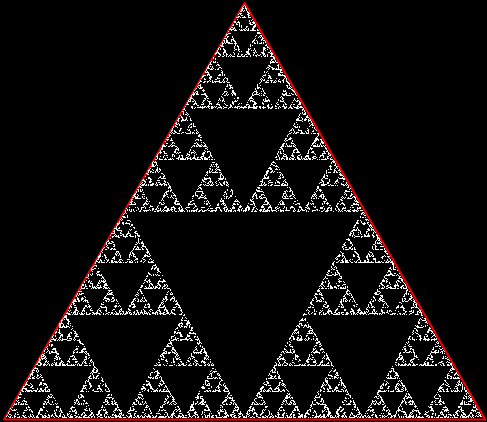
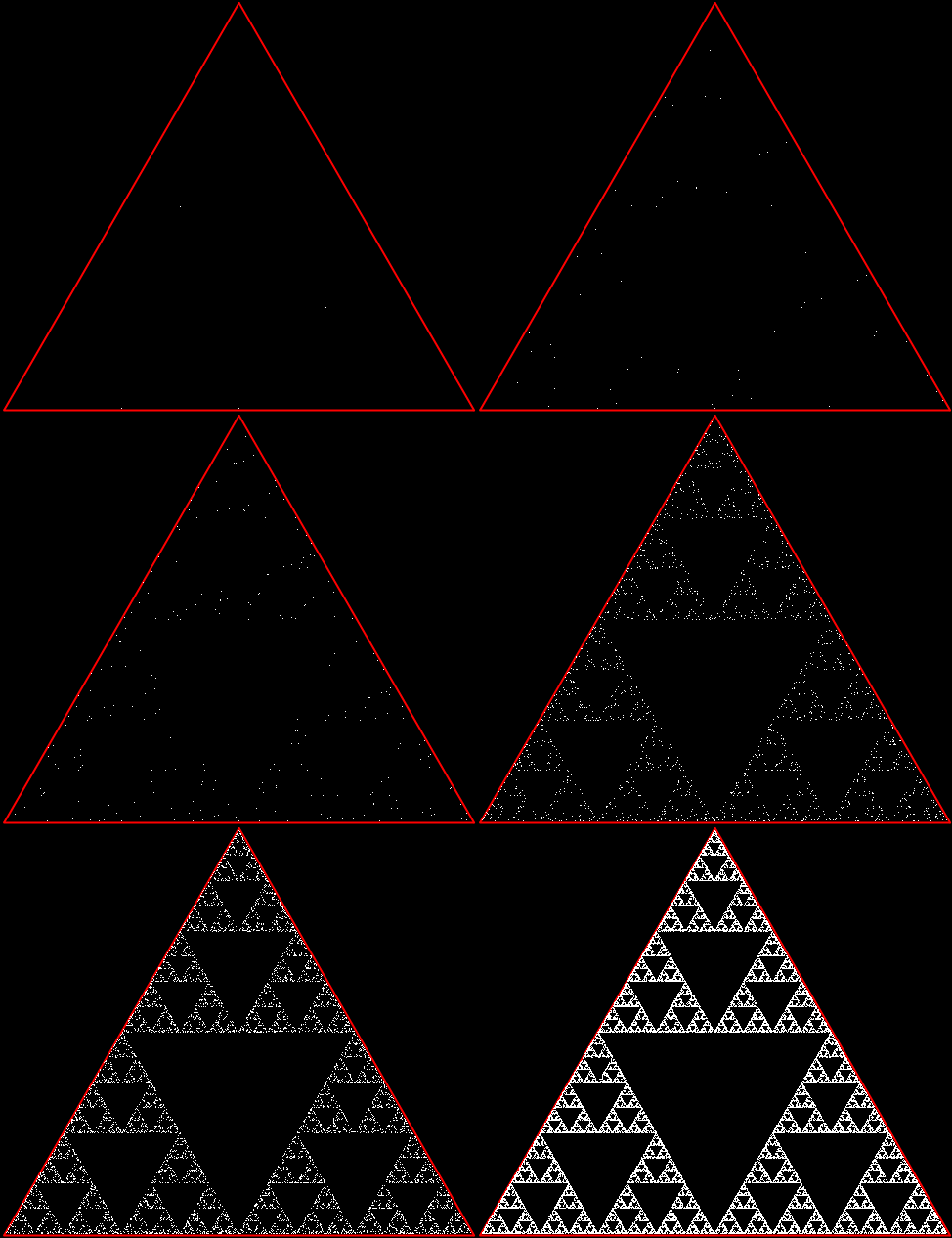
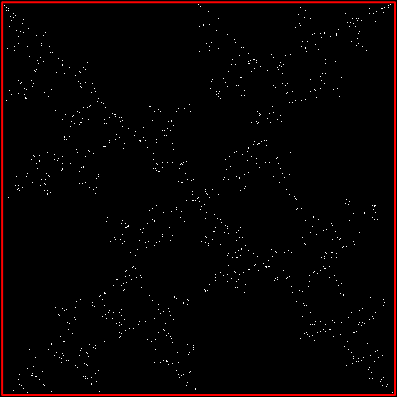
But there’s another way to construct a throwing-star fractal. You use what’s called the chaos game. To understand the commonest form of the chaos game, imagine a ninja inside an equilateral triangle throwing a shuriken again and again halfway towards a randomly chosen vertex of the triangle. If you mark each point where the shuriken lands, you eventually get a fractal called the Sierpiński triangle:

Chaos game with triangle stage 1


Chaos triangle #2


Chaos triangle #3


Chaos triangle #4


Chaos triangle #5


Chaos triangle #6


Chaos triangle #7


Chaos triangle (animated)


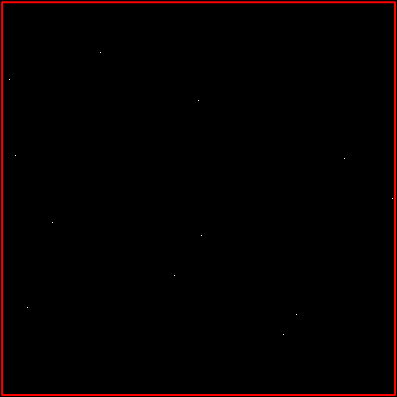
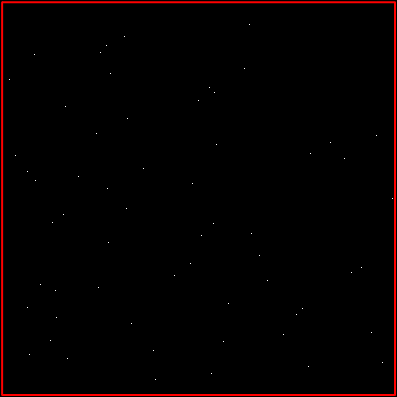
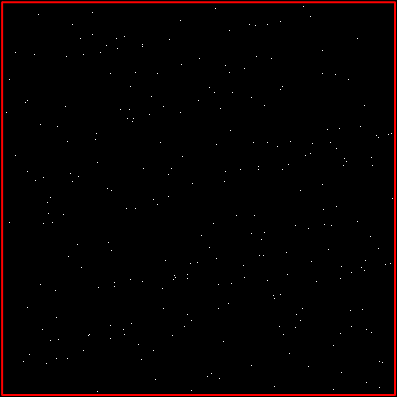
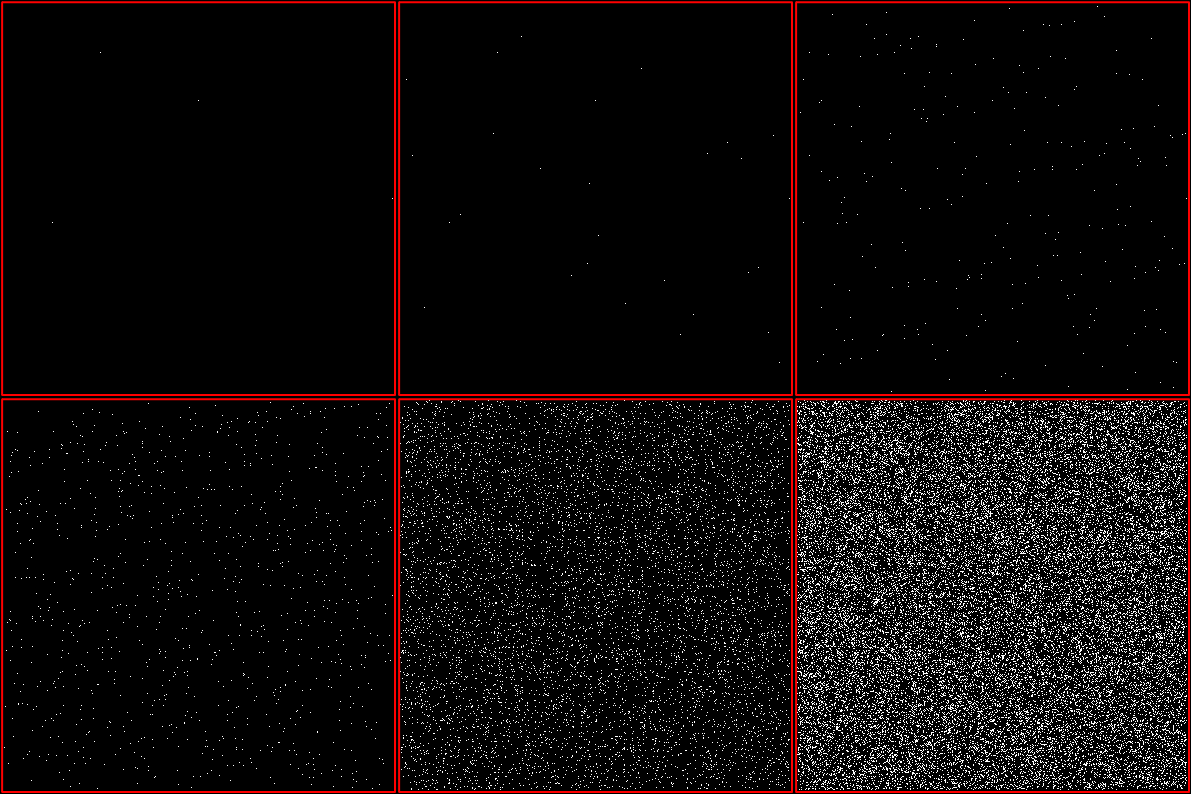
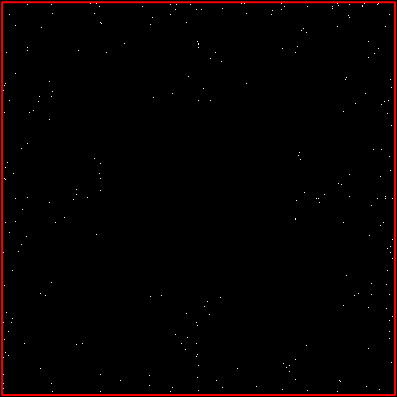
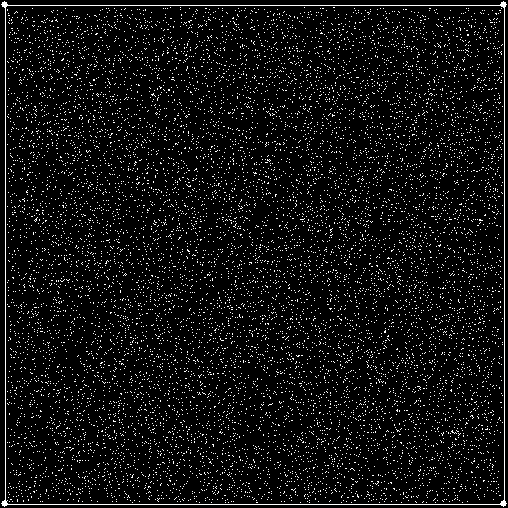
When you try the chaos game with a square, with the ninja throwing the shuriken again and again halfway towards a randomly chosen vertex, you don’t get a fractal. The interior of the square just fills more or less evenly with points:

Chaos game with square, stage 1


Chaos square #2


Chaos square #3


Chaos square #4


Chaos square #5


Chaos square #6


Chaos square (anim)


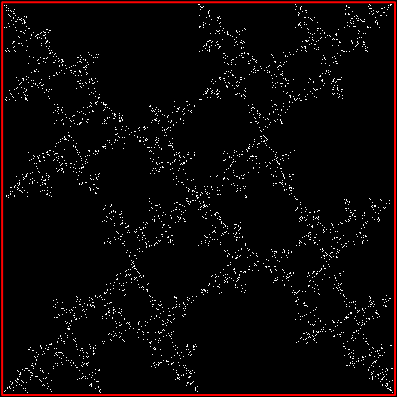
But suppose you restrict the ninja’s throws in some way. If he can’t throw twice or more in a row towards the same vertex, you get a familiar fractal:

Chaos game with square, ban on throwing towards same vertex, stage 1


Chaos square, ban = v+0, #2


Chaos square, ban = v+0, #3


Chaos square, ban = v+0, #4


Chaos square, ban = v+0, #5


Chaos square, ban = v+0, #6


Chaos square, ban = v+0 (anim)


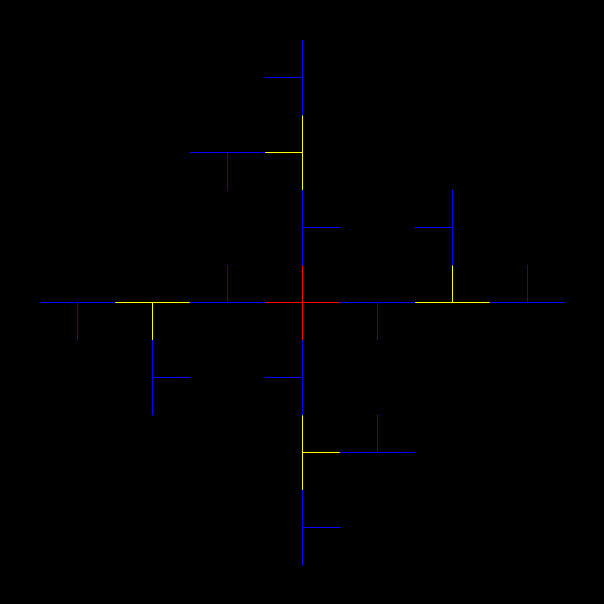
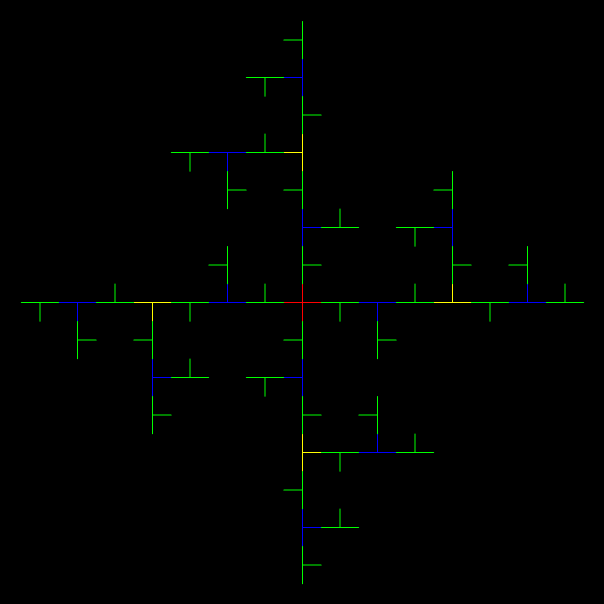
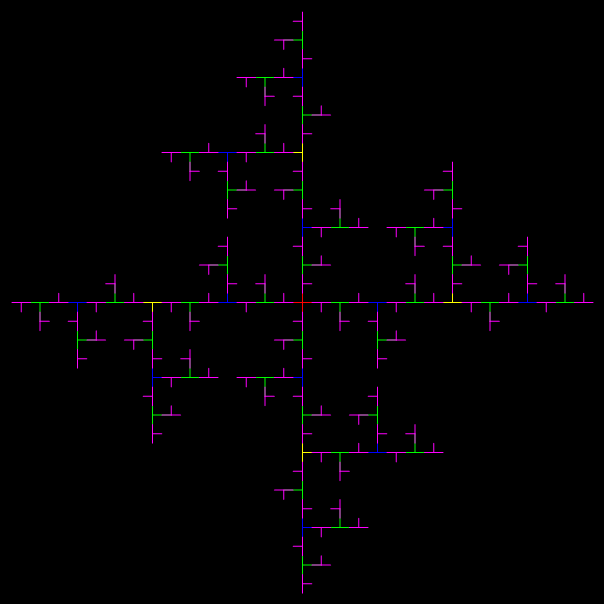
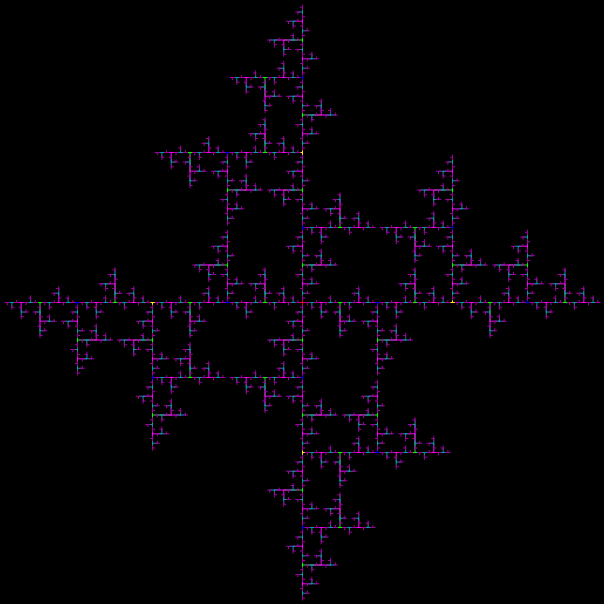
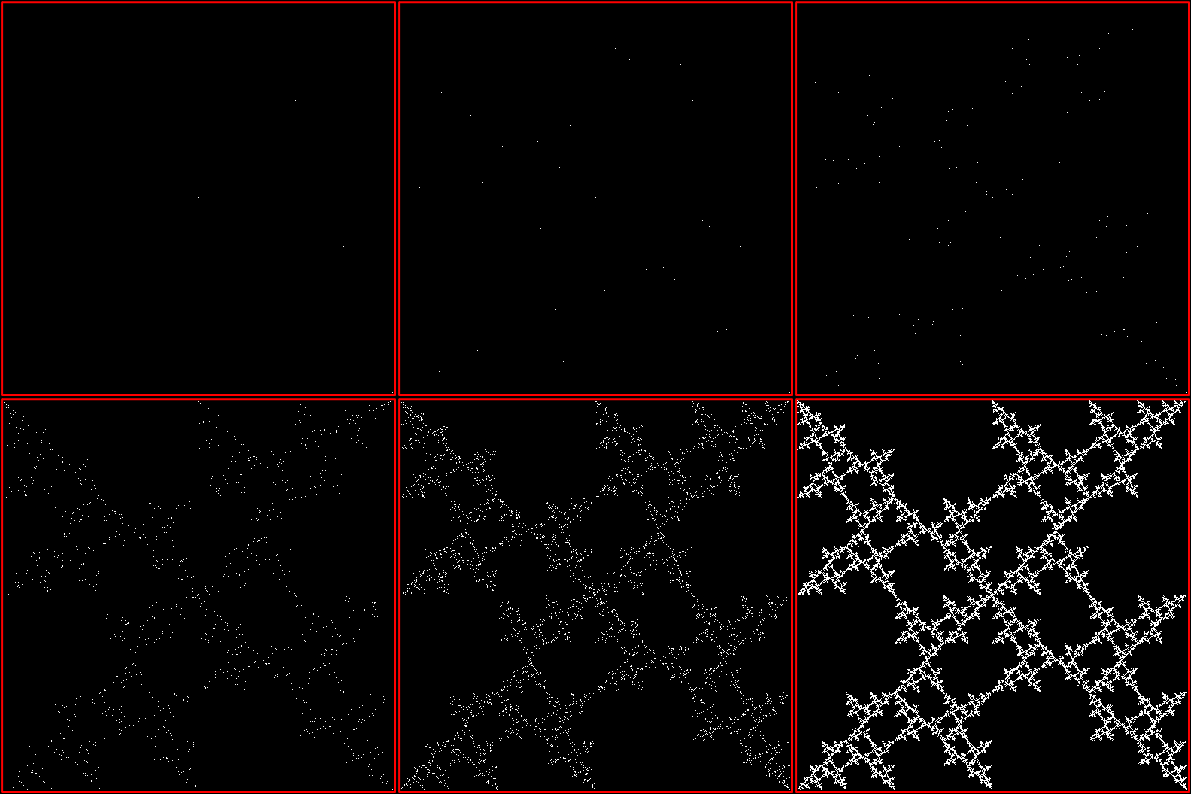
But what if the ninja can’t throw the shuriken towards the vertex one place anti-clockwise of the vertex he’s just thrown it towards? Then you get another familiar fractal — the throwing-star fractal:

Chaos square, ban = v+1, stage 1


Chaos square, ban = v+1, #2


Chaos square, ban = v+1, #3


Chaos square, ban = v+1, #4


Chaos square, ban = v+1, #5


Game of Throwns — throwing-star fractal from chaos game (static)


Game of Throwns — throwing-star fractal from chaos game (anim)


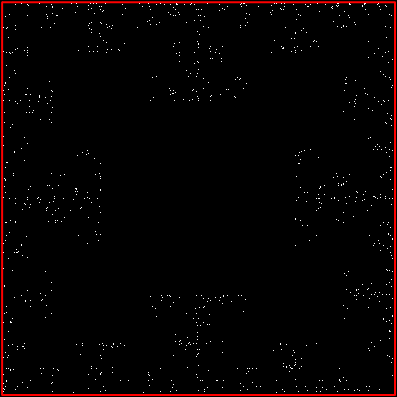
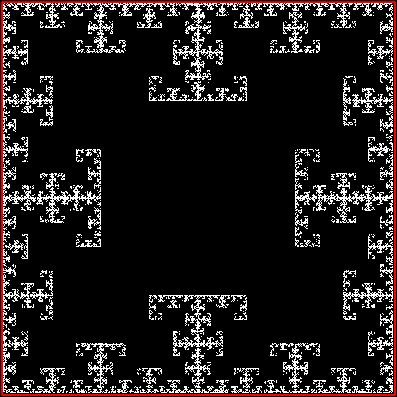
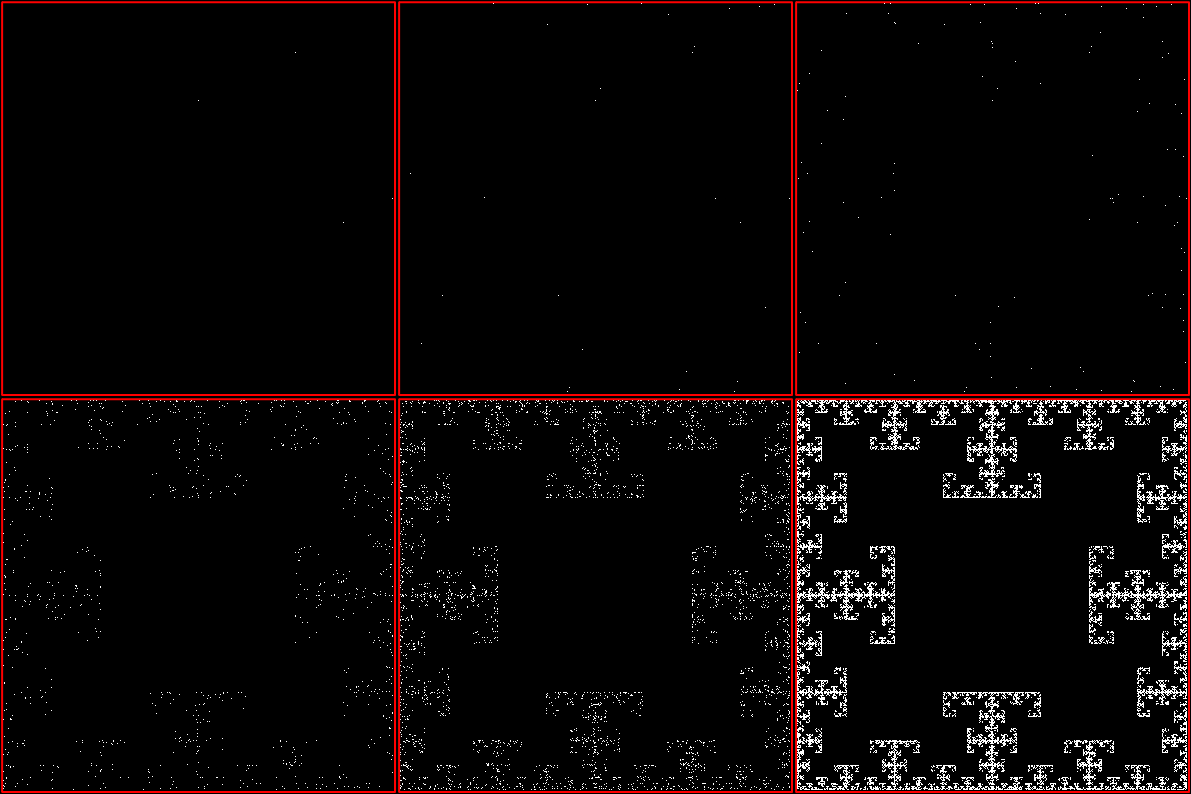
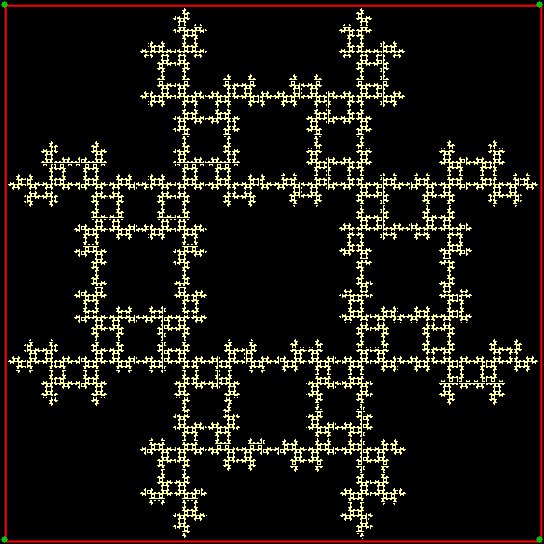
And what if the ninja can’t throw towards the vertex two places anti-clockwise (or two places clockwise) of the vertex he’s just thrown the shuriken towards? Then you get a third familiar fractal — the T-square fractal:

Chaos square, ban = v+2, stage 1


Chaos square, ban = v+2, #2


Chaos square, ban = v+2, #3


Chaos square, ban = v+2, #4


Chaos square, ban = v+2, #5


T-square fractal from chaos game (static)


T-square fractal from chaos game (anim)


Finally, what if the ninja can’t throw towards the vertex three places anti-clockwise, or one place clockwise, of the vertex he’s just thrown the shuriken towards? If you can guess what happens, your mathematical intuition is much better than mine.


Post-Performative Post-Scriptum

I am not now and never have been a fan of George R.R. Martin. He may be a good author but I’ve always suspected otherwise, so I’ve never read any of his books or seen any of the TV adaptations.

Scaffscapes

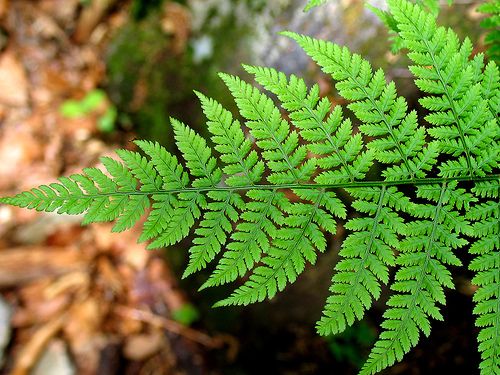
A fractal is a shape that contains copies of itself on smaller and smaller scales. You can find fractals everywhere in nature. Part of a fern looks like the fern as a whole:

Fern as fractal (source)


Part of a tree looks like the tree as a whole:

Tree as fractal (source)


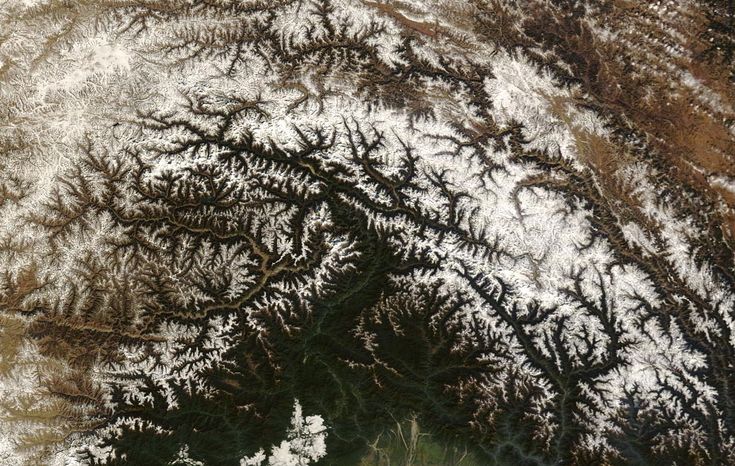
Part of a landscape looks like the landscape as a whole:

Landscape as fractal (source)


You can also create fractals for yourself. Here are three that I’ve constructed:

Fractal #1


Fractal #2


Fractal #3 — the T-square fractal


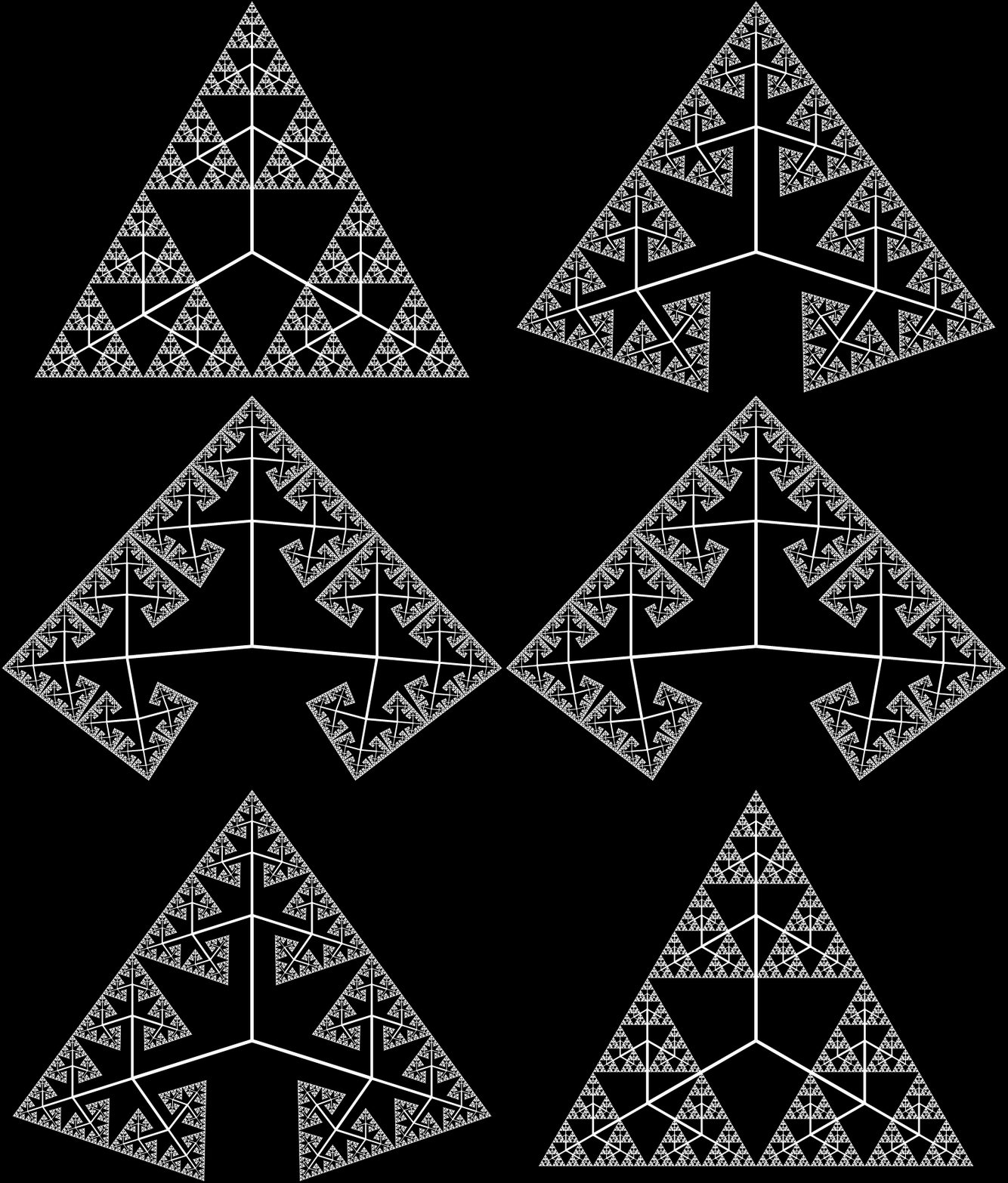
The three fractals look very different and, in one sense, that’s exactly what they are. But in another sense, they’re the same fractal. Each can morph into the other two:

Fractal #1 → fractal #2 → fractal #3 (animated)


Here are two more fractals taken en route from fractal #2 to fractal #3, as it were:

Fractal #4


Fractal #5


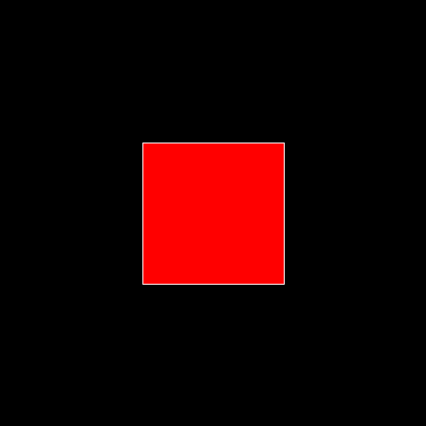
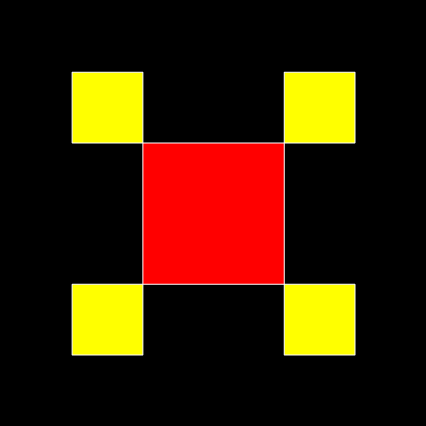
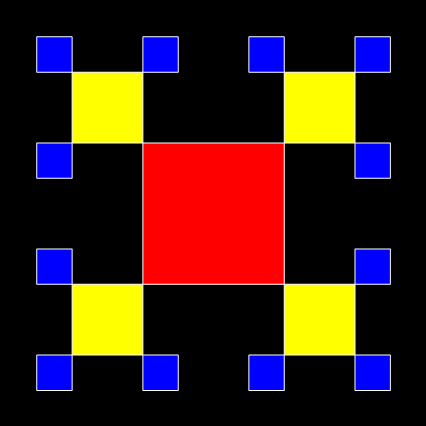
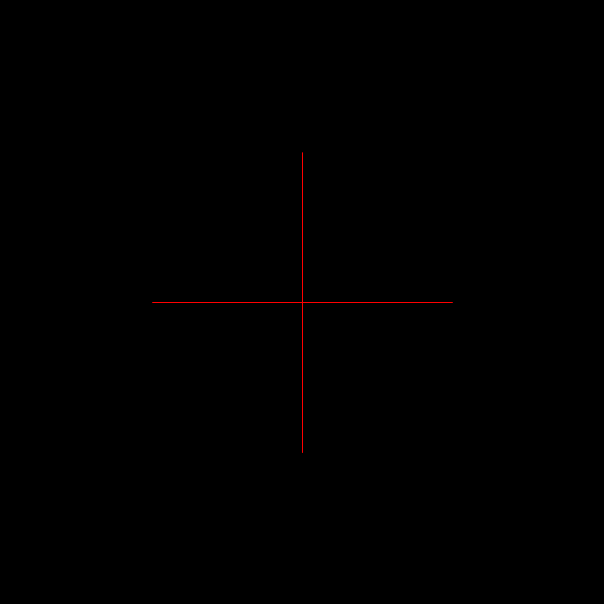
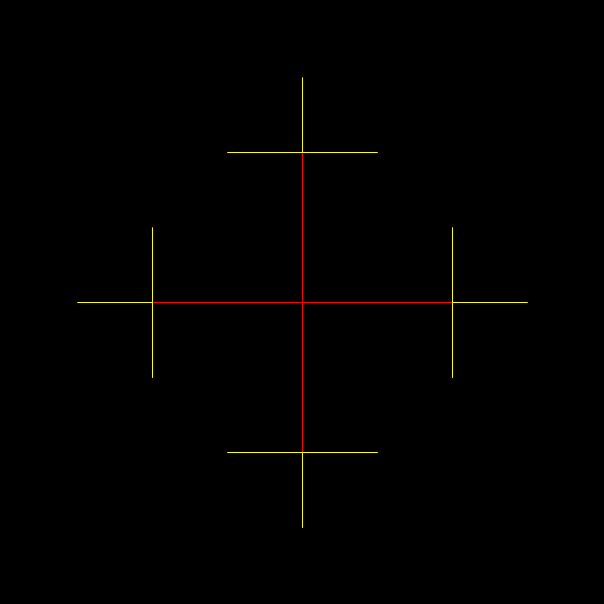
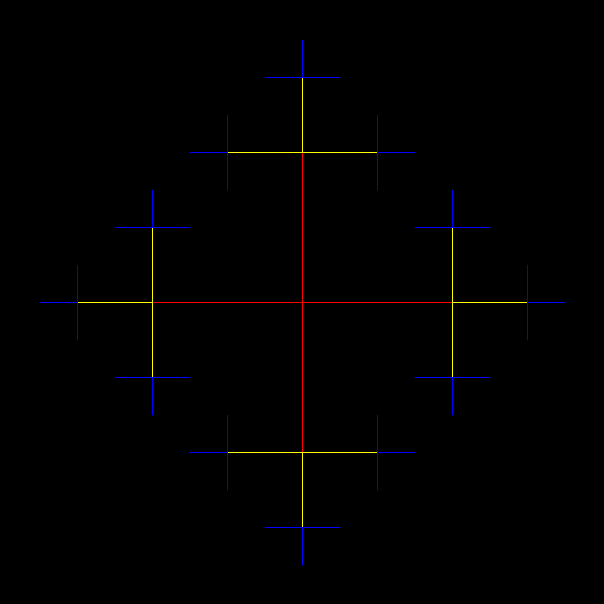
To understand how the fractals belong together, you have to see what might be called the scaffolding. The construction of fractal #3 is the easiest to understand. First you put up the scaffolding, then you take it away and leave the final fractal:

Fractal #3, scaffolding stage 1


Fractal #3, stage 2


Fractal #3, stage 3


Fractal #3, stage 4


Fractal #3, stage 5


Fractal #3, stage 6


Fractal #3, stage 7


Fractal #3, stage 8


Fractal #3, stage 9


Fractal #3, stage 10


Fractal #3 (scaffolding removed)


Construction of fractal #3 (animated)


Now here’s the construction of fractal #1:

Fractal #1, stage 1


Fractal #1, stage 2


Fractal #1, stage 3

Construction of fractal #1 (animated)


Fractal #1 (static)


And the constructions of fractals #2, #4 and #5:

Fractal #2, stage 1


Fractal #2, stage 2


Fractal #2, stage 3

Fractal #2 (animated)


Fractal #2 (static)


Fractal #4, stage 1


Fractal #4, stage 2


Fractal #4, stage 3

Fractal #4 (animated)


Fractal #4 (static)


Fractal #5, stage 1


Fractal #5, stage 2


Fractal #5, stage 3

Fractal #5 (animated)


Fractal #5


See-Saw Jaw

From Sierpiński triangle to T-square to Mandibles (and back again) (animated)
(Open in new window if distorted)


Elsewhere other-accessible…

Mandibular Metamorphosis — explaining the animation above
Agnathous Analysis — more on the Sierpiński triangle and T-square fractal

Agnathous Analysis

In Mandibular Metamorphosis, I looked at two distinct fractals and how you could turn one into the other in one smooth sweep. The Sierpiński triangle was one of the fractals:

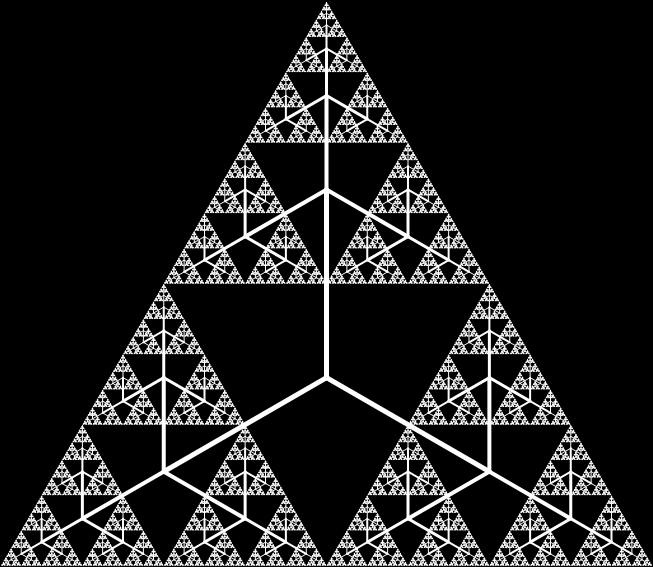
Sierpiński triangle


The T-square fractal was the other:

T-square fractal (or part thereof)


And here they are turning into each other:

Sierpiński ↔ T-square (anim)
(Open in new window if distorted)


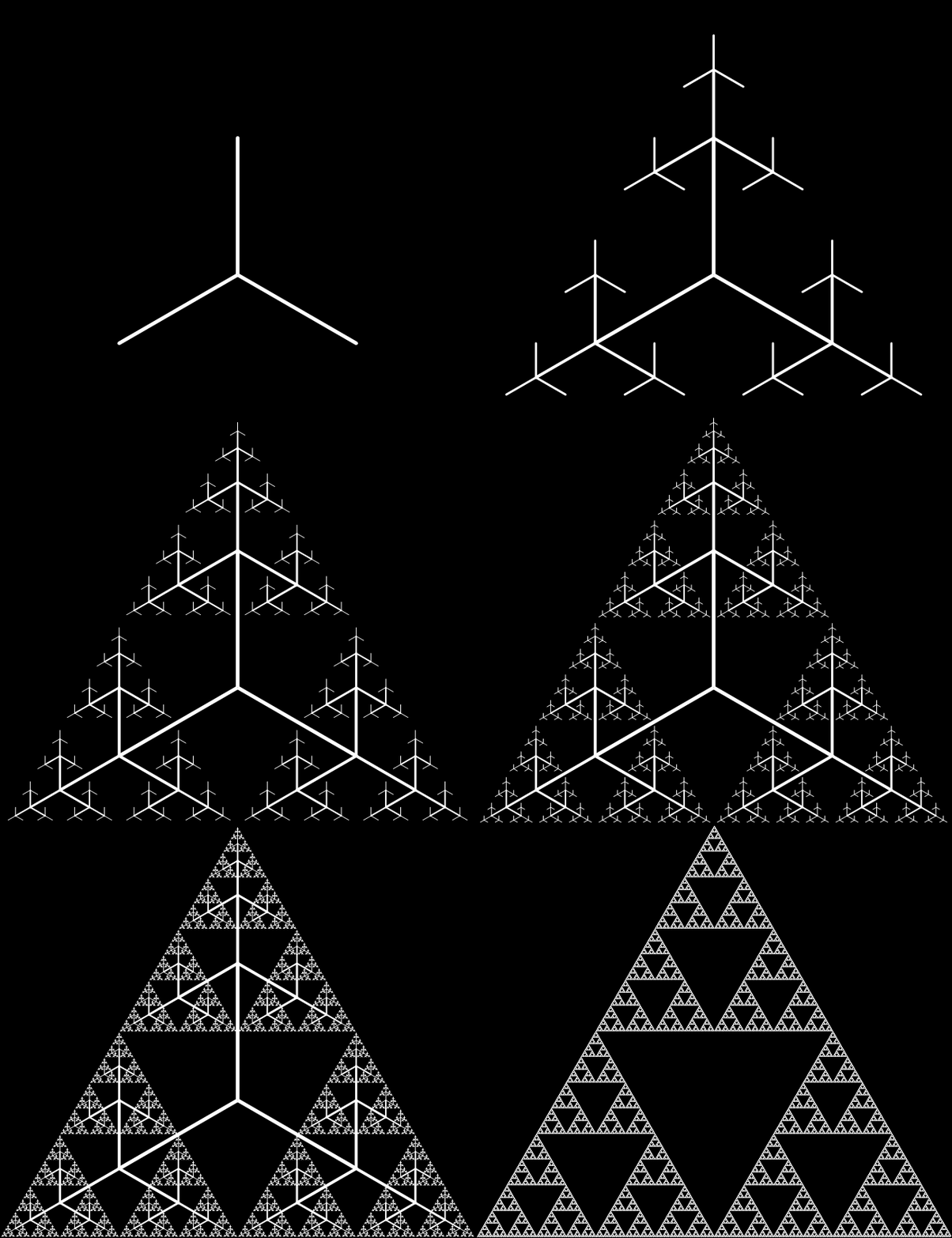
But what exactly is going on? To answer that, you need to see how the two fractals are created. Here are the stages for one way of constructing the Sierpiński triangle:

Sierpiński triangle #1


Sierpiński triangle #2


Sierpiński triangle #3


Sierpiński triangle #4


Sierpiński triangle #5


Sierpiński triangle #6


Sierpiński triangle #7


Sierpiński triangle #8


Sierpiński triangle #9


When you take away all the construction lines, you’re left with a simple Sierpiński triangle:


Constructing a Sierpiński triangle (anim)


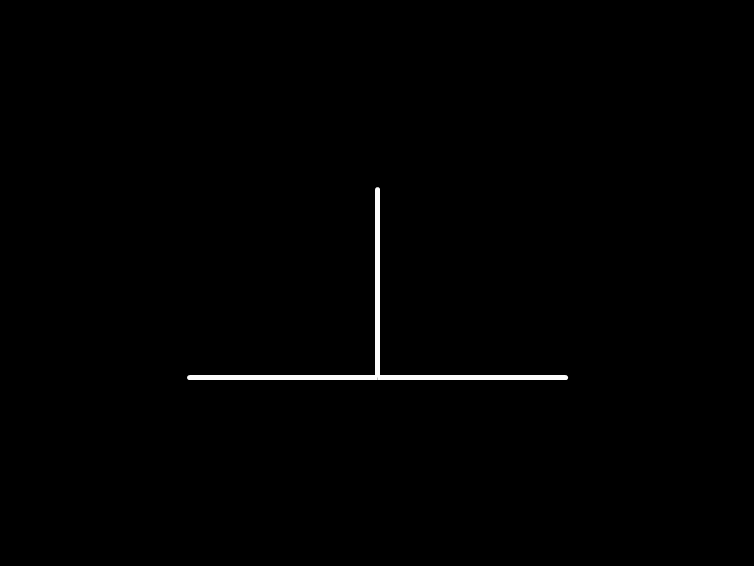
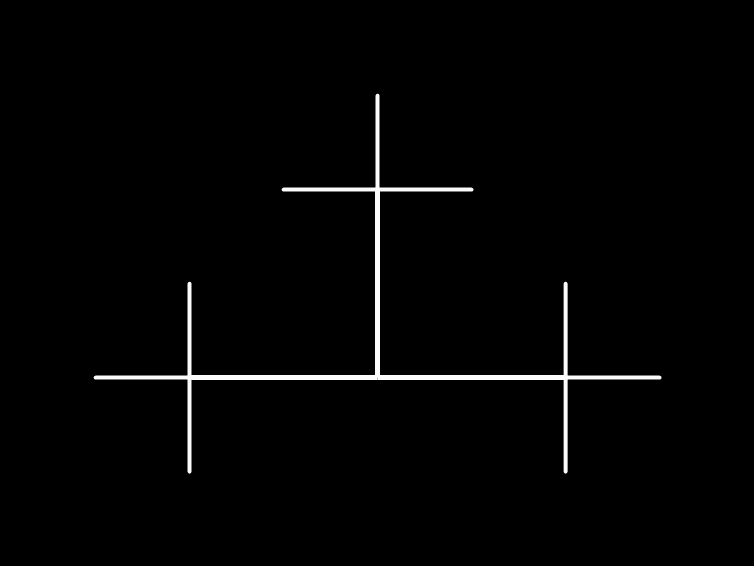
Now here’s the construction of a T-square fractal:

T-square fractal #1


T-square fractal #2


T-square fractal #3


T-square fractal #4


T-square fractal #5


T-square fractal #6


T-square fractal #7


T-square fractal #8


T-square fractal #9


Take away the construction lines and you’re left with a simple T-square fractal:

T-square fractal


Constructing a T-square fractal (anim)


And now it’s easy to see how one turns into the other:

Sierpiński → T-square #1


Sierpiński → T-square #2


Sierpiński → T-square #3


Sierpiński → T-square #4


Sierpiński → T-square #5


Sierpiński → T-square #6


Sierpiński → T-square #7


Sierpiński → T-square #8


Sierpiński → T-square #9


Sierpiński → T-square #10


Sierpiński → T-square #11


Sierpiński → T-square #12


Sierpiński → T-square #13


Sierpiński ↔ T-square (anim)
(Open in new window if distorted)


Post-Performative Post-Scriptum

Mandibular Metamorphosis also looked at a third fractal, the mandibles or jaws fractal. Because I haven’t included the jaws fractal in this analysis, the analysis is therefore agnathous, from Ancient Greek ἀ-, a-, “without”, + γνάθ-, gnath-, “jaw”.

Mandibular Metamorphosis

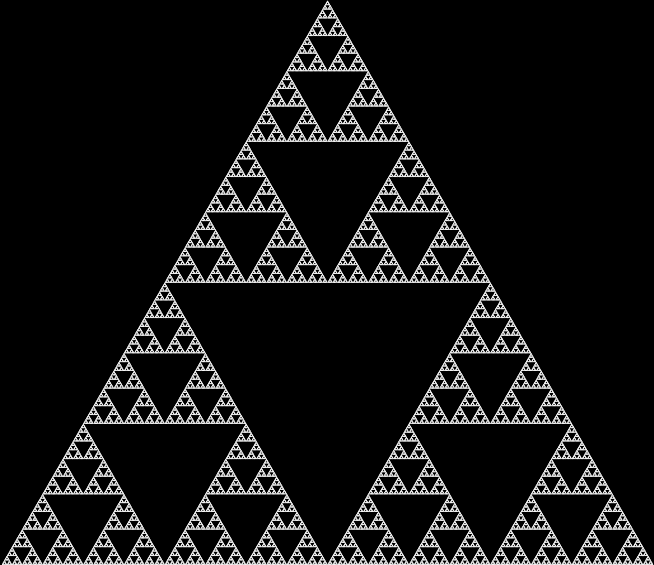
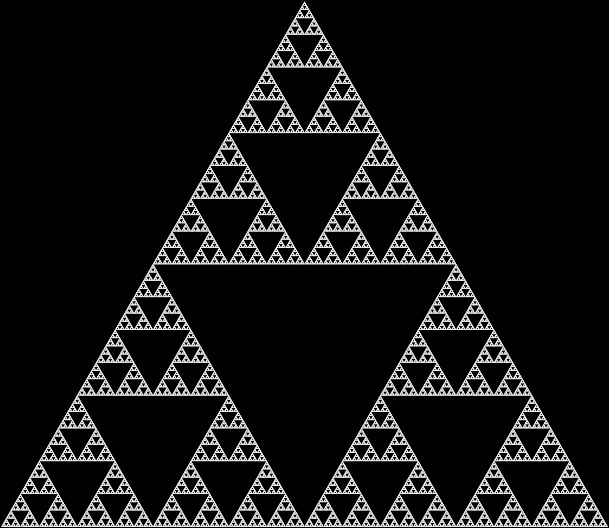
Here’s the famous Sierpiński triangle:

Sierpiński triangle


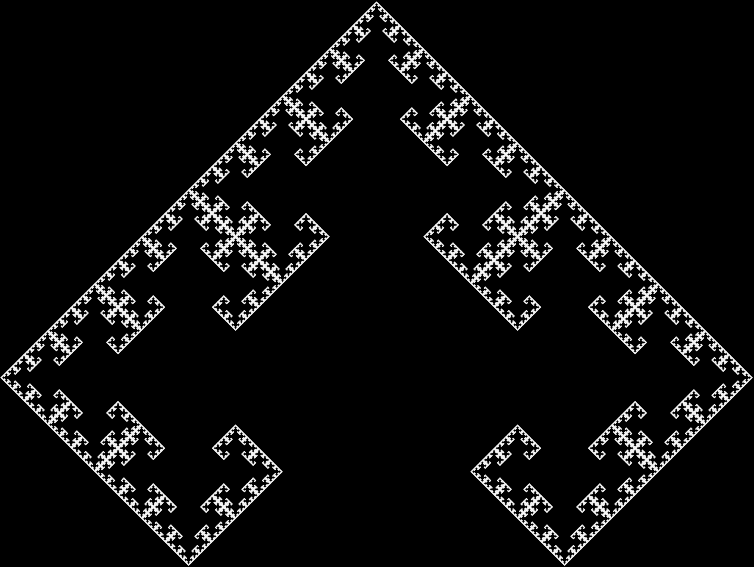
And here’s the less famous T-square fractal:

T-square fractal (or part of it, at least)


How do you get from one to the other? Very easily, as it happens:

From Sierpiński triangle to T-square (and back again) (animated)
(Open in new window if distorted)


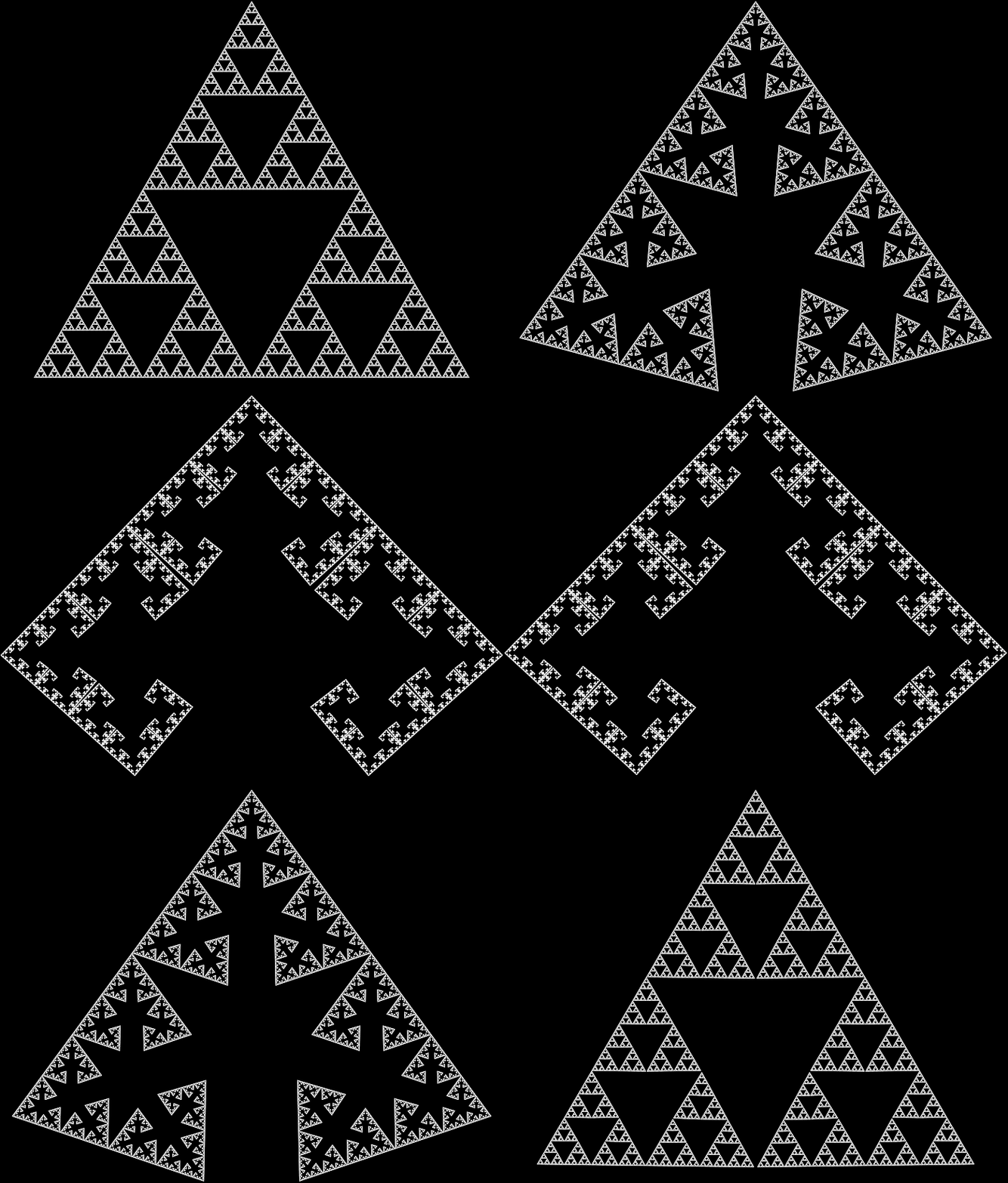
Now, here are the Sierpiński triangle, the T-square fractal and what I call the mandibles or jaws fractal:

Sierpiński triangle


T-square fractal


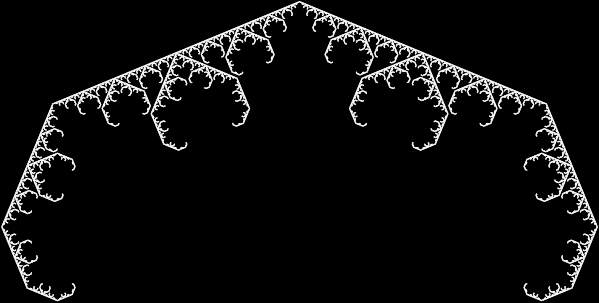
Mandibles / Jaws fractal


How do you cycle between them? Again, very easily:

From Sierpiński triangle to T-square to Mandibles (and back again) (animated)
(Open in new window if distorted)


Elsewhere other-accessible…

Agnathous Analysis — a closer look at these shapes