
What is a Darling Dud? It’s my name for a band that meets two simple criteria: 1) I like them (hence “darling”); 2) they aren’t as well-known as I think they should be (hence “dud”). I based the name on…
The Darling Buds
A Welsh female-fronted jingle-jangle indie band who are, for me, the archetypal darling duds. I like them a lot and I think they should have been much more successful. But if they had been, I might not enjoy their melodic music as much.
• The Darling Buds at Bandcamp
The Primitives
An English female-fronted jingle-jangle indie band who I like a lot and who I think should have been much more successful. The Guardian said of them: “The Primitives is a great, great name for a group, and barely a day goes by when I don’t lament the fact that it was wasted on brittle little one-hit indie wonders from Coventry with a fifth-rate Debbie Harry wannabe for a singer. There oughta be a law against it.” As so often, the Guardian gets it badly wrong. In fact, Tracy of the Primitives was a third-rate Debbie Harry wannabe. But she was more attractive than Debbie Harry, which perhaps explains the vituperation in the Guardian.
Compulsion
Kinda punk, but with much more musical subtlety and lyrical intelligence than that label usually suggests. Why weren’t they more successful? I don’t know, but two things occur to me. They’re obtrusively loud on record in a way that I think detracts from that subtlety and intelligence. And they looked old in their publicity photos. With less volume and fresher faces, they might have done better.
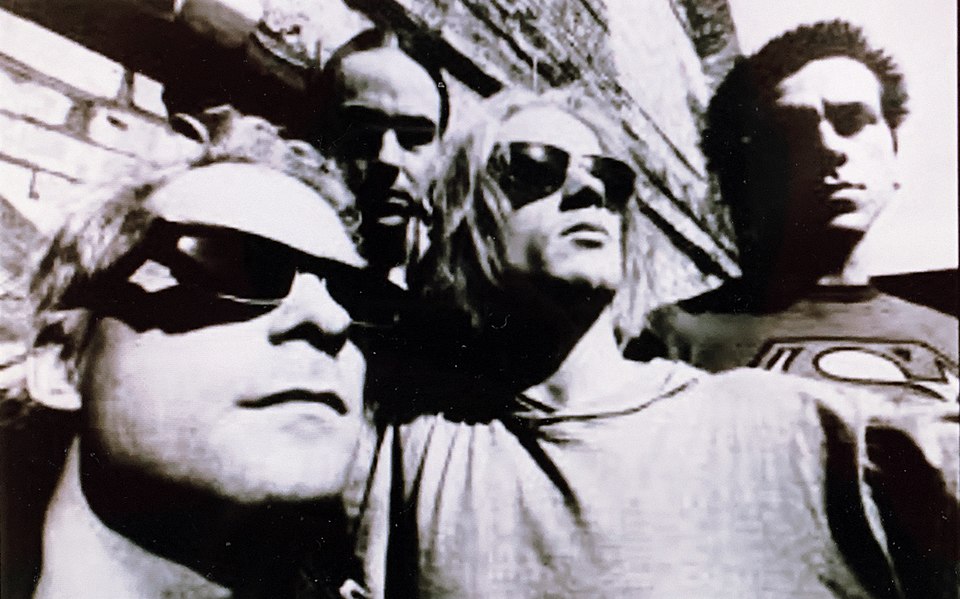
Compulsion in shades (Wikipedia)
David Tyrrell
Perhaps the most undeservingly unsuccessful of the lot, because you’ve never heard of him and he’s much better than lots of people you have heard of. Which is not to say he’s an undiscovered musical genius, but I like his 2008 album Substance a lot. I think it was self-released. I know it should have done much better. It’s catchy like Compulsion, but quieter and Tyrrell does something unusual in popular music. He sings clearly, so you can understand the lyrics.
• David Tyrrell song at Youtube
Morbid Saint
Here’s a heretical thought. I don’t think Slayer are the real Slayer. I think the real Slayer – the real kings of crushing, red-in-tooth-and-claw ’80s metal – are Morbid Saint. They sound more brutal and more evil than Slayer. They play thrash metal and make it rage like death metal. So why didn’t they get the success they deserved? The delayed release of Spectrum of Death (1989) can’t have helped. Nor can the ludicrous cover. And yes, they’re obviously and heavily influenced by Kreator. But still: they deserved a lot more than they got.
Beach Riot
“Fuzz pop” they called their music. It was loud and bouncy, with alternating male-female vocals, and was a lot of fun. But after releasing a few singles and an EP, they disappeared. Shame. Also a shame is that some of their songs come in two versions: a version with energy and a version without.
Stop-Press: No, Beach Riot haven’t disappeared and have released their first album. Or something.
Obiat
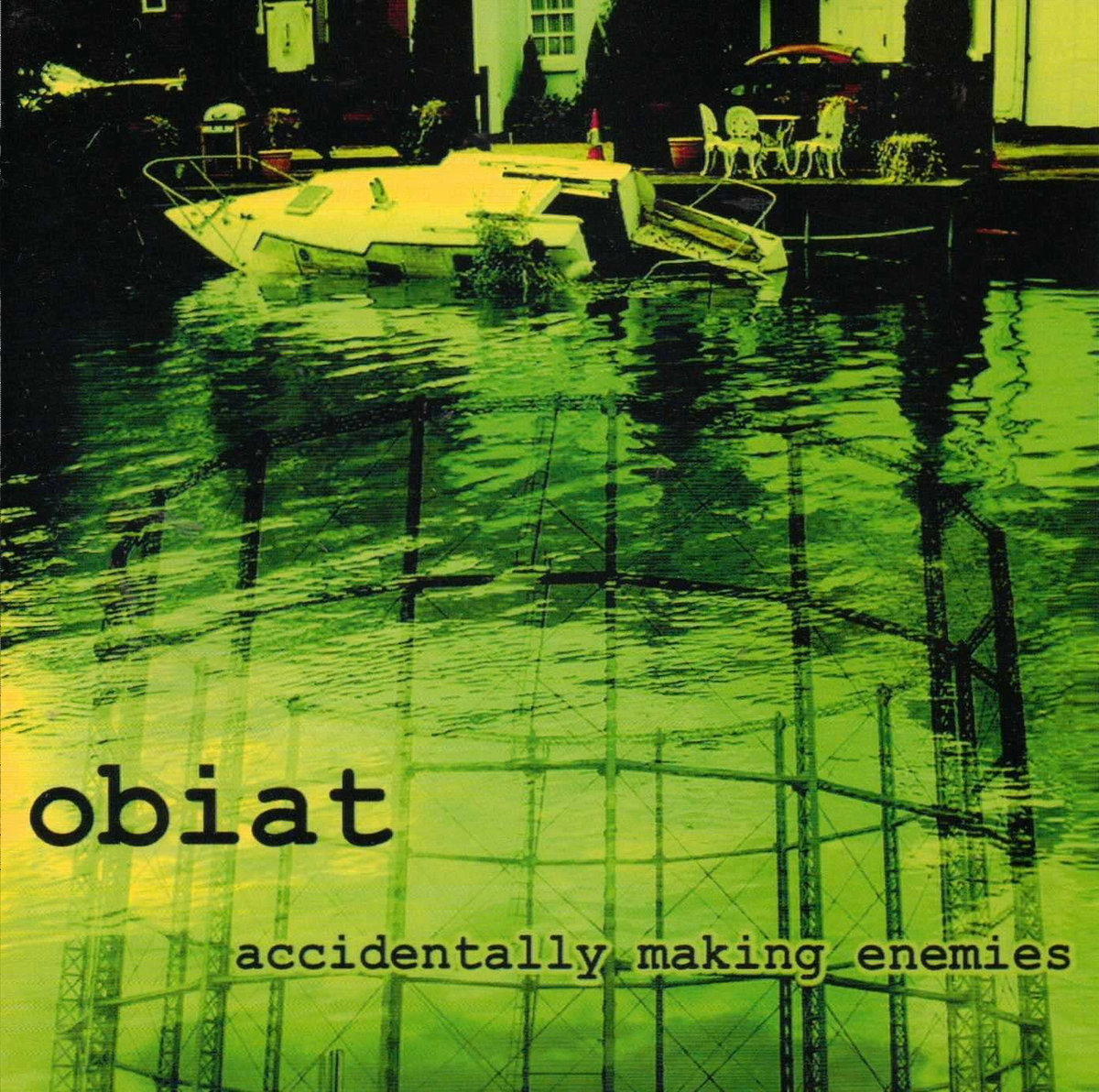
One way of translating the Polish word Obiat is “funeral feast.” And one way of describing Obiat’s music is “stoner-doom.” But translation and description fail to capture the full meaning and the full music. Obiat can be very heavy, but they can also be very quirky. In short, expect the unexpected. Trying to define Obiat’s music is like trying to herd cats. So it’s appropriate that one of their songs has guest vocals from a cat. And look at the cover for Accidentally Making Enemies (2002). What does it mean? Why choose a sunken speed-boat? I don’t know, but I like the cover and I like Obiat.
• Obiat
Feline
Female-fronted rock from the 1990s with a good name, because there’s mystery and elegance in the music on their first album, Save Your Face (1997). Melancholy too. And menace. Velvet paws + razor claws. But they were never very successful. Grog, the female fronter of Feline, has soldiered on with Die So Fluid, whose music I also like. But it’s more metal and doesn’t have everything that Feline’s had, particularly not the mystery and the melancholy.
Split Enz
The nucleus of Crowded House. Split Enz were big in New Zealand, moderately successful overseas. I prefer them to Crowded House because their music is simultaneously more varied and, in a good way, more insular. New Zealand is an island nation, after all. The catchiness and melodies were there from the start, though.
The Chills
Another New Zealand band. They were like Split Enz, but more so: fairly big at home, moderately successful overseas. They had melodies and catchiness too, but they were more musically unusual than Split Enz. The late Martin Phillips was the mainstay and the motor of that. He was self-taught and his music had an alien, outsider edge to it, as though he’d taught himself by listening to fuzzy, fifth-generation pirate tapes of the Byrds, Velvet Underground and XTC whilst living in a hut deep in the rain-forests of the South Island. Or even in an oxygen-tent on Mars.

The Heartbreaks
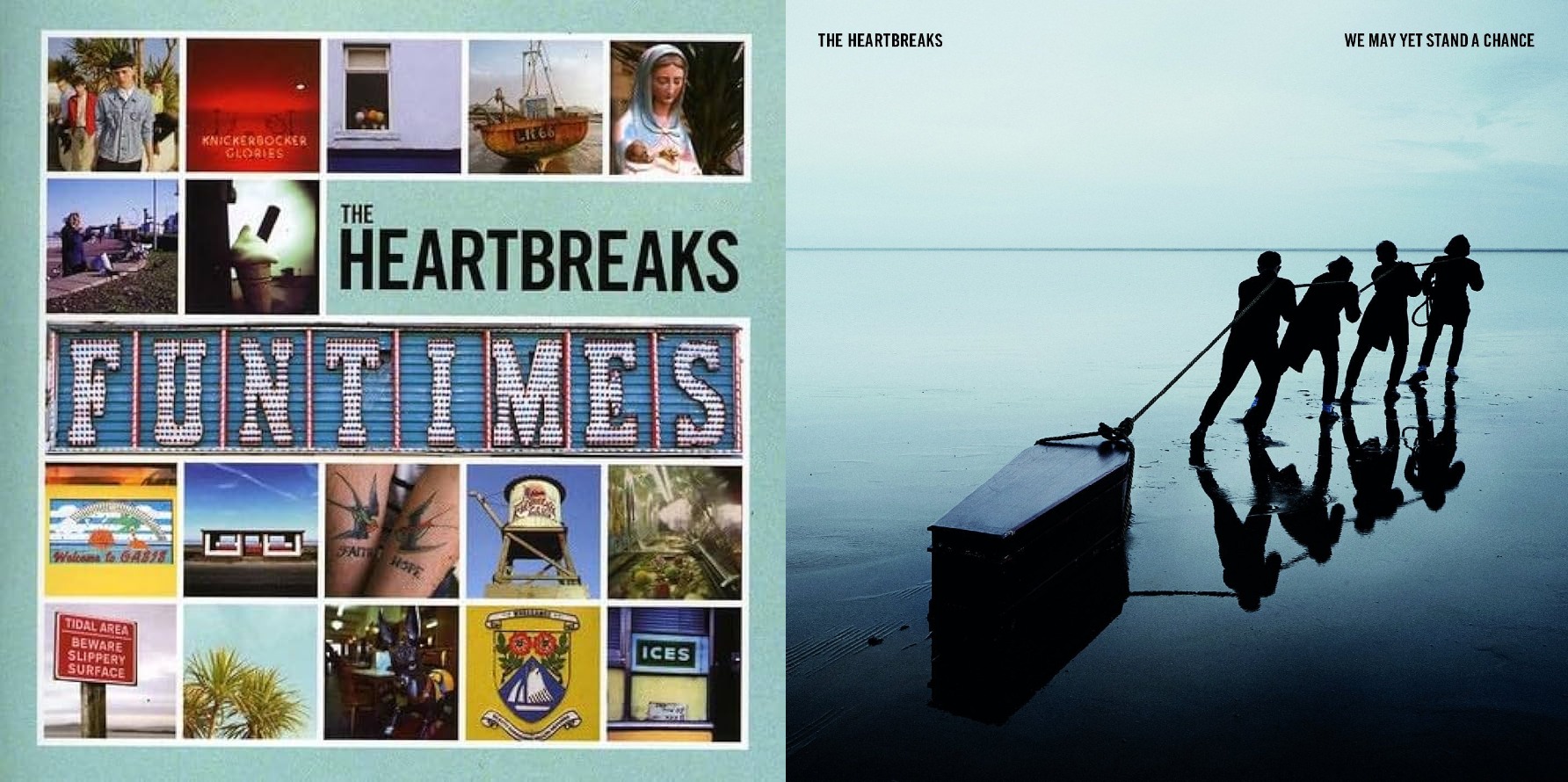
English indie-rockers who rose like a rocket with their debut, Funtimes (2012), and fell like the stick with the follow-up, We May Yet Stand a Chance (2014). Some invoke the curse of Morrissey, which dooms bands that Morrissey praises or takes on tour, but in fact no supernatural explanations are needed. Funtimes had some very good songs and We May Yet Stand a Chance had no good songs at all.
Afterword: Or so I thought when I first heard the two albums. I’m coming round to We May Yet Stand a Chance much more now, but a slow-burning second album would explain their fall too. Funtimes is immediately catchy indie rock. I thought: The Smiths. We May Yet Stand a Chance is trying to be sophisticated. I thought: Sinatra. Which wasn’t good. And the cover was a hostage to fortune too.
• The Heartbreaks at Youtube
Anna Pingina
A Russian singer singing in Russian, which explains some of why I don’t think she’s been as successful as I think she should have been. She isn’t experimental or unusual in any way, but she can write attractive melodies and she sounds folky without sounding fey or feeble.
Necros Christos
I thoughtlessly assumed from their name that Necros Christos were Greek when I first heard them. So I rated their music higher than I did when I subsequently learned they were in fact German. That’s because it seemed competent, power-packed and intelligent in a way I don’t associate with Greek bands but do associate with German bands (which is naughty of me). Perhaps other people think the same way and N.C. would have been more successful if they’d been Greek. It’s hard to explain their relative unsuccess otherwise, because they had a distinctive sound, apparently sincere occult obsessions, and were, as I said, competent, power-packed and intelligent.
Nubes en mi Casa
Years ago I downloaded a lot of free MP3s, listened to them, deleted the ones I didn’t like, then listened on-and-off to the rest. “Mareo” by Nubes en mi Casa was one of the ones I liked and kept. But I didn’t notice the sweetly surreal name of the band (“Clouds in my House”) or the true quality of the music until I was listening to a load of MP3s on random play one day. Then the power of contrast came to its rescue. After a lot of stuff I recognized at once and more or less enjoyed, “Mareo” started playing. I thought: “Hold on, what’s this? It’s good!” You could describe it as wistful indie. You could also describe it as wet indie. But I like it a lot and I hunted down more by Nubes en mi Casa, who were a female-fronted Argentinian band with Spanish lyrics. That explains at least part of their unsuccess.
Chant of the Goddess
Brazilian stoner-doom metallers whose first album is an excellent illustration (audistration?) of a simple fact of auditory psychology: loud is louder when it’s mixed with soft. Chant of the Goddess go from quiet to cacophonic in a compelling way. Or they do that on their first album, at least. Their second album doesn’t grab me in the same way.
Red Eye
Spanish stoner-doomers who quote Lovecraft, use Old English, and play music that’s both powerful and intelligent. So why hasn’t that music had all the success I think it deserves? I see one obvious reason: “Red Eye” is a bad name. To 21st-century Anglophones it goes most naturally with jet-travel, not gigantic sounds. Were they translating Ojo Rojo? That means the same thing in Spanish and would have been better. In fact, they could have gone with rOjO as a logo. I don’t like their album covers either. But I do like their music.
• Red Eye
16Volt
Kind of a cross between industrial metal, emo and indie. Nine Inch Nails territory. But I don’t like NiN and I do like 16Volt. I don’t like everything they’ve done or even most of what they’ve done, but what I like, I like. My first listen made me wish I were a teenager in sunny California in the 1980s or ’90s, which is not something that’s ever happened to me before. Onomastic psychology explains some or all of their unsuccess, I’d say. “16Volt” just sounds feeble. 16 is not just too small a number but too easily divisible into even smaller numbers: 16 → 8 → 4 → 2 → 1. Using a prime would have been better: “23Volt” or “37Volt”.
• 16Volt
Owlcrusher
A three-piece from Northern Ireland who really whip up a storm with their take on blackened doom. That’s black metal + doom metal. So they crush genres together in the way that their name crushes concepts together.

Akelei
Dutch doomsters centered on the ever-present Misha Nuis. They play meandering melancholy music that’s often very loud and sometimes very gentle. Perhaps the gentleness explains some of their unsuccess, but two obvious things come before that: their name and their lyrics. They sing exclusively in Dutch and their Dutch name means nothing to Anglophones. It’s actually the name of a flower, columbine or aquilegium, which is a quirky choice. And I like it. Singing in Dutch is a quixotic choice. And I also like it:
De reis gaat door met lenig hart
En zonder verwachtingen
Wij raakten allengs ver van huis
Alles is anders nu
Oud licht helpt ons aan nieuw inzicht
Onthult al wat komt hierna
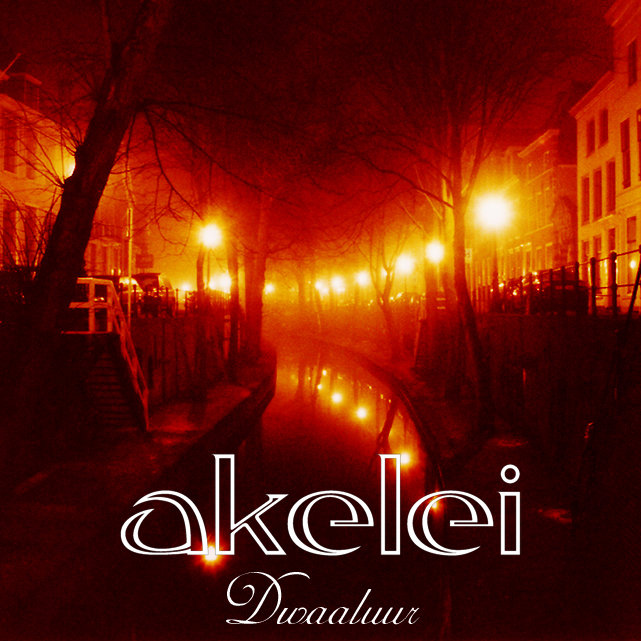
Akelei’s “Dwaaluur” (Wandering-Hour)
The journey goes on with a shifting heart
And without expectations
We slowly drifted far from home
Everything is other now
Old light helps us to new insights
Reveals all that comes next
Akelei want to go their own way, not chase popularity. And their meandering melancholy reminds me of more depressive art from the Low Countries. It’s a book of 1892 by the Belgian writer Georges Rodenbach (1855-98). It’s called Bruges-la-Morte or Bruges the Dead City, it’s illustrated in melancholy monochrome, and it too wanders and westers and woes:
Le jour déclinait, assombrissant les corridors de la grande demeure silencieuse, mettant des écrans de crêpe aux vitres. Hugues Viane se disposa à sortir, comme il en avait l’habitude quotidienne à la fin des après-midi. Inoccupé, solitaire, il passait toute la journée dans sa chambre, une vaste pièce au premier étage, dont les fenêtres donnaient sur le quai du Rosaire, au long duquel s’alignait sa maison, mirée dans l’eau. Il lisait un peu : des revues, de vieux livres; fumait beaucoup; rêvassait à la croisée ouverte par les temps gris, perdu dans ses souvenirs. Voilà cinq ans qu’il vivait ainsi, depuis qu’il était venu se fixer à Bruges, au lendemain de la mort de sa femme. Cinq ans déjà ! Et il se répétait à lui-même : « Veuf! Être veuf! Je suis le veuf! » Mot irrémédiable et bref! d’une seule syllabe, sans écho. Mot impair et qui désigne bien l’être dépareillé.

Some melancholy monochrome from Bruges-la-Morte (1892)
The day was fading, darkening the corridors of the large, silent house, laying screens of crepe on the windows. Hugues Viane readied to go out, as was his daily habit as the afternoon faded. Idle, solitary, he spent all day in his room, a vast room on the first floor whose windows overlooked the Quai du Rosaire, along which his house lay, reflected in the water. He read a little: magazines, old books; smoked a lot; daydreamed at the window open on to gray weather, lost in his memories. He had been living like this for five years, ever since he came to settle in Bruges, the day after his wife’s death. Five years already! And he repeated to himself: “Veuf! Widower! To be a widower! Je suis le veuf!” An irremediable word, so brief! A single syllable, without echo. An odd word, and one that well captures this mismatched creature.
• Akelei
 Overlord In Terms of Core Issues Around Maximal Engagement with Key Notions of the Über-Feral