Aventurhyme

The Merry Guide

Once in the wind of morning
     I ranged the thymy wold;
The world-wide air was azure
     And all the brooks ran gold.

There through the dews beside me
     Behold a youth that trod,
With feathered cap on forehead,
     And poised a golden rod.

With mien to match the morning
     And gay delightful guise
And friendly brows and laughter
     He looked me in the eyes.

Oh whence, I asked, and whither?
     He smiled and would not say,
And looked at me and beckoned
      And laughed and led the way.

And with kind looks and laughter
     And nought to say beside
We two went on together,
     I and my happy guide.

Across the glittering pastures
     And empty upland still
And solitude of shepherds
     High in the folded hill,

By hanging woods and hamlets
     That gaze through orchards down
On many a windmill turning
     And far-discovered town,

With gay regards of promise
     And sure unslackened stride
And smiles and nothing spoken
     Led on my merry guide.

By blowing realms of woodland
     With sunstruck vanes afield
And cloud-led shadows sailing
     About the windy weald,

By valley-guarded granges
     And silver waters wide,
Content at heart I followed
     With my delightful guide.

And like the cloudy shadows
     Across the country blown
We two fare on for ever,
     But not we two alone.

With the great gale we journey
     That breathes from gardens thinned,
Borne in the drift of blossoms
      Whose petals throng the wind;

Buoyed on the heaven-heard whisper
     Of dancing leaflets whirled
From all the woods that autumn
     Bereaves in all the world.

And midst the fluttering legion
     Of all that ever died
I follow, and before us
     Goes the delightful guide,

With lips that brim with laughter
     But never once respond,
And feet that fly on feathers,
     And serpent-circled wand.

• A.E. Housman, A Shropshire Lad, XLII
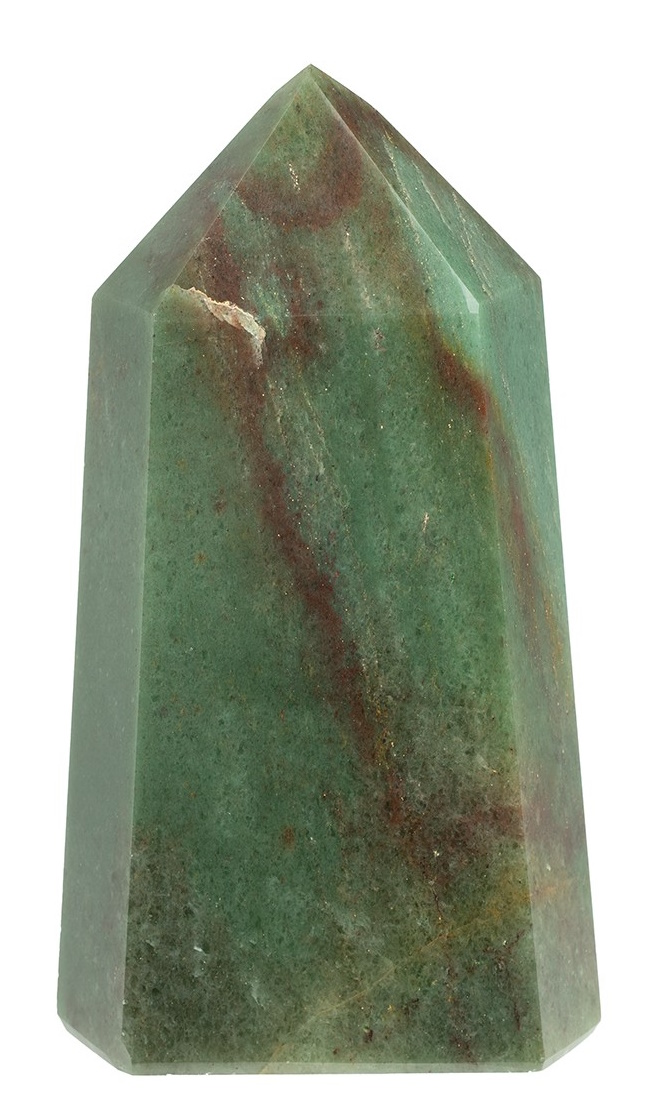

An aventurine obelisk (Unlimited Crystals)
Snow No

XXXI

On Wenlock Edge the wood’s in trouble;
   His forest fleece the Wrekin heaves;
The gale, it plies the saplings double,
   And thick on Severn strew the leaves.

’Twould blow like this through holt and hanger
   When Uricon the city stood:
’Tis the old wind in the old anger,
   But then it threshed another wood.

Then, ’twas before my time, the Roman
   At yonder heaving hill would stare:
The blood that warms an English yeoman,
   The thoughts that hurt him, they were there.

There, like the wind through woods in riot,
   Through him the gale of life blew high;
The tree of man was never quiet:
   Then ’twas the Roman, now ’tis I.

The gale, it plies the saplings double,
   It blows so hard, ’twill soon be gone:
To-day the Roman and his trouble
   Are ashes under Uricon. — from A.E. Housman’s A Shropshire Lad (1896)


Post-Performative Post-Scriptum

If you were already familiar with the poem, you may have noticed that I replaced “snow” with “strew” in line four. I don’t think the original “snow” works, because leaves don’t fall like snow or look anything like snow. Plus, leaves don’t melt like snowflakes when they land on water. Plus plus, the consonant-cluster of “strew” works well with the idea of leaves coating the water.

The Sound of Silex

Some of the most beautiful patterns in nature arise from the interaction of three very simple things: sand and water, sand and air. Sculptrix Sabulorum, a side-project of the Exeter band Slow Exploding Gulls, are an attempt to do with sound what nature does with sand: turn simple ingredients into beautiful patterns. Here are extracts from an interview and review in the Plymouth fanzine EarHax:

Hector Anderton: OK. The obvious first. Sculptrix Sabulorum. What does it mean and why did you choose it?

Joe Corvin: It’s Latin and literally means “Sculptress of the Sands”. We chose it, well, because we thought it looked and sounded good. Good but mysterious.

Hector Anderton: And who is the sculptress? The sea?

Joe Corvin: Well, the sculptress is Mother Nature, in the fullest sense, but she uses the sea. The wind. Gravity. Simple things, but put them together with sand and interesting things happen.

Cath Orne: Which we wanted to explore, but we didn’t think S.E.G. [Slow Exploding Gulls] was the way to explore them.

Cover of Silica by Slow Exploding Gulls

Hector Anderton: But hadn’t you done that in Silica?

Joe Corvin: We’d started to, but Silica hadn’t exhausted the theme. Of sand, I mean. It’s something I’d always been interested in, but with S.E.G. we tend to go with the organic side of the sea, with sea life.

Hector Anderton: Whereas sand is inorganic?

Joe Corvin: Exactly. Silica was a bit of a departure for us, in that respect. It was as though we were walking down a corridor and we opened a door in passing and thought, yeah, that room looks interesting.

Sand Band: Sculptrix Sabulorum

Sand Band: Sculptrix Sabulorum

Cath Orne: So we’ll come back and have a proper look later.

Joe Corvin: Yeah. Under a new name. Which we’ve done. Hence, Sculptrix Sabulorum.

Extract © EarHax (1992)


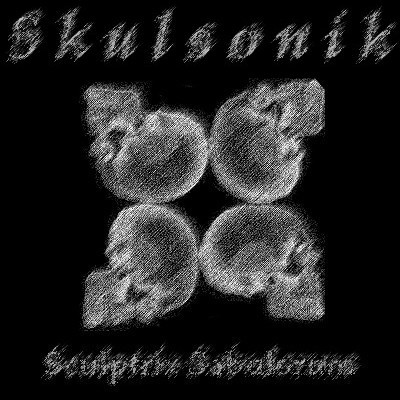
Skulsonik, Sculptrix Sabulorum (Umbra Mundi 1995)

Macca to Madonna: “Listen to the music playing in your head.” In fact, we never do anything else. We don’t experience the world: we experience a sensory simulacrum of the world. Light or sound-waves or chemicals floating in the air stimulate the nerves in our eyes or ears or nose and the brain turns the resultant stream of electrical pulses into sight or sound or smell.

Skulsonik (1995)

Sculptrix Sabulorum: Skulsonik (1995)

But it does more than that: it covers up the cracks. Raw nerve-stuff is not smooth and polished sensation. We have blind-spots, but the brain edits them out. Only a small part of our visual field is actually in clear focus, but we think otherwise. If we could see raw nerve-stuff, it would be a blurry, fuzzy mess.

The same is true of hearing. And Skulsonik is an attempt to record raw nerve-stuff: to capture not sound out there, but sound in here – the music playing in your head. Sculptrix Sabulorum have set out to answer a simple question: “What does music really sound like?” Or rather: what does music cerebrally sound like? What does it sound like in your head?

Extract © EarHax (1995)


Previously pre-posted (please peruse):

Mental Marine Music – Slow Exploding Gulls

The Whale’s Way

“Sea Fever” (1902)

I must go down to the seas again, to the lonely sea and the sky,
And all I ask is a tall ship and a star to steer her by,
And the wheel’s kick and the wind’s song and the white sail’s shaking,
And a grey mist on the sea’s face, and a grey dawn breaking.

I must go down to the seas again, for the call of the running tide
Is a wild call and a clear call that may not be denied;
And all I ask is a windy day with the white clouds flying,
And the flung spray and the blown spume, and the sea-gulls crying.

I must go down to the seas again, to the vagrant gypsy life,
To the gull’s way and the whale’s way, where the wind’s like a whetted knife;
And all I ask is a merry yarn from a laughing fellow-rover,
And quiet sleep and a sweet dream when the long trick’s over.


John Masefield (1878–1967)