Double Bubble

The most mysterious thing in the universe is also the most intimate: consciousness. It’s an inti-mystery, something we experience constantly at first hand and yet cannot describe or explain. We are each a double bubble: a bubble of flesh and a bubble of conscious experience. The second bubble bursts regularly, when we sleep. Sooner or later, the first bubble will burst too, when we die. And that will be it for the second bubble, the bubble of consciousness. Or will it? Can consciousness survive death? Can it exist without a material substrate? Or without a particular kind of material substrate: the soggy, sparky substance of the brain? Can the clean, dry metal of a computer be conscious? Who knows? The double bubble attracts lots of double-u’s: what, where, why, when, (w)how. What is consciousness? What is its relation to matter? Is it king or courtier? Where does it exist? Why does it exist? When? And how?

Continue reading Double Bubble

Guitardämmerung

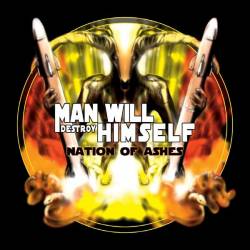
Cover of Nation of Ashes by Man Will Destroy HimselfMan Will Destroy Himself, Nation of Ashes (2007)

I’ve enjoyed this album a lot. It’s short, sharp and psycho-sonically stimulating. It could be called sonic-ironic too. Hardcore, in the guitar sense, is an accelerated and intensified form of punk that first appeared in the late 1980s. It was then an extreme, bleeding-edge – and bleeding-ear – form of music. But now it has three decades of tradition behind it. One of the men who first championed it, the BBC D.J. John Peel (1939-2004), would be seventy-four if he were still alive today. This is from Peel’s auto/biography, Margrave of the Marshes (2004), which was begun by him but completed by his wife Sheila after he died of a heart-attack in Peru:

William [one of Peel’s sons] and I [his wife writes] went regularly with John to gigs that Extreme Noise Terror and Napalm Death played together at the Caribbean Centre in Ipswich. They were grimy, chaotic affairs attended largely by crusties wearing layers of shredded denim and dreadlocks thick as rope. The moshpit was like an initiation ritual – if you could make it out of there in one piece, you knew you could survive anything life had to throw at you. People would stagger out with nosebleeds, clutching their heads, complaining of double vision, drenched in sweat. And yet a good-natured atmosphere prevailed somehow. William, who was around thirteen at the time, took one look at these crusties, who mostly shunned bathing or showering, and decided that this was the musical sub-genre to which he wanted to pledge undying allegiance. His karate teacher attended the reggae nights upstairs at the Caribbean Centre, and would say to William on the way out, “What are you doing listening to that?” (Op. cit., pg. 387-8)

That extract sums up the music well: hardcore is adolescent and part of its early appeal was its ability to shock your parents and conventional society. Okay, the adolescent William Peel was attending Extreme Noise Terror gigs actually with his parents, but then John Peel was a permanent adolescent and the music didn’t appeal to the karate teacher. Before long, William Peel probably did something his father never did, namely begin to grow up. He would then have lost interest in hardcore. Or grindcore, as Sheila Peel calls it. I don’t think E.N.T. were grindcore (and neither do they, apparently) and I don’t think Napalm Death belong with E.N.T. or with Man Will Destroy Himself. For one thing, Napalm Death are crap. For another, they are, or became, much more metal and lost the grimy authenticity of E.N.T. and M.W.D.H.

Grime is authentic, after all: you’re closer to reality when you’re dirty and smelly and living in a squat, far from the nine-to-five conformity of deluded mainstream society. Or are you? In fact, the crusties – named from the crustiness of their unwashed skin and hair – could not have existed without the generous benefit-systems of Western Europe. Crusties sneered at straights – and lived off the taxes of straights. They bemoaned the brutal military-industrial complex – and were kept safe by it from a communist system that would not have tolerated their rebellion for a second. And, of course, they were using electricity to create and record their music. Not to mention benefitting from the transport network for food, the sewage network for hygiene, and the generally law-abiding, relatively uncorrupt societies that surrounded them and without which their “lifestyle” would have been impossible or unsustainable. If crusty political ideas had been realized – or are realized, because they’re alive and well in the Occupy movement – even crusties might begin to see that Western society was rather more complex and benign than they recognized.

But recognizing the complexity and benignity would get in the way of the self-righteousness that is another and essential part of hardcore’s adolescent appeal. You have to strip down your music to get the exciting speed and you have to strip down your ideas to get the exciting sneer. The first track on this album, “Subdivide”, begins with a sample from the end of the film Planet of the Apes (1968), when Charlton Heston learns, in a particularly dramatic and memorable way, where he has been all the time and what man has done with his super-sized brain. “Goddamn you all to Hell!” he cries – and the music swells up and screams off in that exciting, but by now very familiar, hardcore way. It’s an effective opening, but it reminds me of the term used of art by Aldous Huxley in Brave New World (1931): “emotional engineering”. The sample relies for its power on listeners’ previous knowledge of the film. Man has indeed destroyed himself – but in a science-fiction universe. The sample is effective, but insincere. Heston is acting and so, I feel, are M.W.D.H. The theme of nuclear armageddon was very well-trodden well before the ’noughties, when this album was released: Planet of the Apes appeared in 1968 and is based on a book published in 1963. Extreme Noise Terror were railing against the arms-trade from the beginning and E.N.T. have been assaulting ears, offending noses, and straining their throats for a long time now. Which is sonic-ironic: M.W.D.H. could never shock E.N.T. with their music, even though E.N.T. are probably old enough to be their dads.

Global warming, the apocalyptic theme now occupying the progressive community, isn’t so much fun to scream about: it’s slower and less obviously an act of malevolent free-will. But what about the much bigger threats posed not by man but by Mother Nature, with things like asteroid-strikes and mega-volcanoes? Well, hardcore bands have never worked themselves into self-righteous frenzies about those. How can you be self-righteous about billions of people dying if no human agency is involved? If we’re wiped out by an asteroid or a mega-volcano, it will be, at worst, a sin of omission. We could have spent more money researching the threat and inventing ways to prevent or avoid it. We’ve not been wiped out like that yet, but the threats remain and I think we should spend more money watching the skies, for example. But it’s difficult to get emotional about it: there are no self-righteous thrills to be found in nearby asteroids. Nuclear arsenals are different: men made those and men may use them. So you can get emotional about the threat. The strong sensations of hardcore aren’t supplied by just the speed and volume: the self-righteousness and sanctimony are important too. That’s why M.W.D.H. use that sample from Planet of the Apes and put nuclear missiles on the front cover of this album.

I don’t know whether they scream about global warming too, because I can’t understand the lyrics and haven’t found them on the web yet. The final track, “M.O.A.B.”, is presumably about the mega-munition called the “Mother Of All Bombs” by the U.S. military. Whether or not that bomb is the subject, it’s surprising how quickly you reach “M.O.A.B.”: this album whirls by and can seem even shorter than its actual running-time of twenty minutes. Hardcore is headlong, like sheets and shards of metal being blown along by a hurricane. And metal is a word that comes to mind a lot as you listen to this album. The sounds are metallic in an almost literal sense: strong but flexible, meaty but malleable. Nation of Ashes sounds like a sonic factory taking the raw ore of volume and hammering, twisting, and rolling it into shape. That’s appropriate for a form of music that depends on an advanced technological civilization, though it’s sonic-ironic because the music is being used to criticize that civilization. But Nation of Ashes also sounds metallic in a more strictly musical sense. As I’ve said, M.W.D.H. and E.N.T. aren’t metal bands like Napalm Death, but heavy metal does influence the sound of hardcore. There are throbbing, thundering passages between the headlong charges on this album, but that variety increases the power of the music. And has been doing so on hundreds of albums for thousands of days. So, as M.W.D.H.’s music pounds, listeners can ponder things like authenticity and originality.

I’ve certainly pondered my own originality while writing this review. I’m pleased with the title of the review – “Guitardämmerung” – but I’ve found from a web-search that it’s been used before. Other minds have worked like mine, noting the similarity between “guitar” and Götter. The point of a pun is to distort language and create a new sensation from something familiar. That’s also what punk did to rock music, and what hardcore did to punk: they were distortions for new sensations. Sometimes musical distortion is inadvertent: new forms of music, like new forms of life, can arise when there’s a mistake in copying. Or when the technology of the art does undesigned and originally unwanted things, like causing feedback. An accidental thing like that can then become something pursued and valued in its own right. Hardcore is about distortion in lots of ways: it uses distorted guitars and voices to protest about the distortion of society and justice. But this album isn’t distorted in one way: it adheres faithfully to the hardcore recipe first laid down in the late 1980s. So that’s sonic-ironic again.

“Guitardämmerung” also blends ideas in the way that hardcore blends punk and heavy metal. Götterdämmerung means “Twilight of the Gods” and refers to the cataclysmic end of the world in Norse mythology. Man Will Destroy Himself use electric guitars to create music about cataclysm and apocalypse, but are we now in the final stages of guitar-based music? Will hardcore, heavy metal, and other forms of rock exist much longer? I don’t think they will. There are cataclysms of various kinds ahead: political, social, scientific, and technological. The political and social cataclysms probably won’t be those foreseen by the self-righteous and sanctimonious crusty community (crummunity?). And that community may realize that it’s been working for political and social cataclysm in a lot of ways, rather than against it. The scientific and technological cataclysms will be more powerful and long-lasting in their effects – assuming science and technology survive what is ahead in politics and sociology. I don’t think the Deus Ex Machina, the electronically enhanced superhuman now in preparation, will be interested in loud guitars. But I’m not superhuman, or properly grown-up, and I am still interested in loud guitars. Although the music is quite different, this album makes me nostalgic – or prostalgic – in a similar way to the mediaeval ballads on Music of the Crusades. That music was traditional, and so, sonic-ironically, is hardcore, three decades after it first appeared. Hardcore expresses ugly emotions in an ugly way, but it’s still human. And Man is indeed about to be Destroyed.

Nation of Ashes is available for free at Last.fm


Elsewhere other-engageable:

Musings on Music

Lauditor Temporis Acti

Music of the Crusades, David Munrow and the Early Music Consort of London (1991)

If a real mediæval audience could hear this magical and sometimes spine-tinglingly beautiful collection of mediæval ballads, I suspect they’d burst into roars of disbelieving laughter. It might sound like the real thing to us, but nobody knows what the real thing sounded like and this album must be getting something badly wrong. But it can’t be getting everything wrong and I think the spirit of the Middle Ages is here, or several spirits: some songs are wistful and yearning, some boisterous and playful, some pious and icily perfect. As was the medieval way, the artists and musicians did their work gratiâ Dei, for God’s sake, not their own, and most of the songs are attributed to a simple “Anonymous”. But one, “Ja nus hons pris” (“No Man Who’s Gaoled”), is attributed to a certain imprisoned “Richard Coeur-de-lion”. The best performances are by a tenor called James Bowman, who has a voice that would have made him famous across Europe back then; nowadays, when “early music” has to compete with thousands of other genres, it’s a treasure known only to a discerning few, rather like the languages – Latin and mediæval French – in which the songs are performed.

Music of the Crusades

You have to know both the Vulgate and mediæval history to appreciate titles like “Sede, Syon, in Pulvere” (“Seat Thyself, Zion, in the Dust”), but “Palästinalied”, or “Palestine-Song”, the only title in German, shows that the Middle Ages have never really gone away. Wars in the Middle East and the threat of militant Islam have been with us before, and though part of the joy of this album is the way it allows you to escape the modern world, there are some things you can’t escape and a dose of real mediæval life would cure many modern discontents and dissatisfactions. Still, as the human race enters its final days, some of us continue to look back and regret what we’re going to lose and what we’ve already lost. It’s a pleasing irony that a compact disc, product of the scientific hangman, can contain so much of both.

Spin: The Beginning

Spiders, Michael Chinery, with illustrations by Sophie Allington (1996)

Spiders are special: they spin. And they’ve been doing so for millions of years. Their speciality is the root of their name: spider is from Middle English spither, meaning “spinner”. The root is even more obvious in German: Spinne. Not all languages call spiders spinners, but then not all spiders obviously spin. Some don’t make webs, though “all species protect their eggs by packing them in silken cocoons” (pg. 24). Not all spiders use venom either, but all of them are predators, mostly on insects and other arthropods, sometimes on larger prey like lizards, birds, and even fish. That is another part of what is interesting about them: like all predators, they are lurkers on the threshold between life and death. Spiders are dedicated death-dealers and sophisticated slayers. To see that dedication and sophistication in action, just watch a spider spinning its web. It will be using a minute brain to follow complex but flexible rules, because invariable webs would not fit an variable world. This is why spiders, like human beings, need nervous systems: web-making is an instinct, laid down in the genes, but instincts have to be triggered and adjusted according to the messages in sense-data.

Front cover of Spiders by Michael Chinery, illustrated by Sophie Allington

One thing needing adjustment is the kind of silk used: you’ll learn from this book that in most species “individuals possess between three and six different kinds of silk” (pg. 25). It ranges from pyriform and ampullate silk, extruded from the “anterior spinneret” and used for webs and life-lines, to aggregate and flagelliform, extruded from the “posterior spinneret” and used, inter alia, for the sticky threads of orb-spiders’ webs. There’s also cribellate silk, produced by the cribellum, or “little sieve”, a special organ in the cribellate spiders:

The cribellate spider produces perfectly normal silk from its spinnerets and then covers them with the cribellum silk, which is brushed from the cribellum by a compact patch of bristles, called the calamistrum [Latin for “curling-iron”], on each hind leg. Each bristle carries several rows of microscopic teeth and acts like a minute hair brush. The cribellum silk forms ribbons but, because the legs vibrate rapidly when brushing, the individual threads – only 0.000015mm in diameter – are thrown into microscopic loops… Any insect unfortunate to touch the ribbons quickly gets its feet entangled in the loops and is held fast – without any glue. (“Spider Silk”, pg. 28)

Sticky aggregate silk is a chemical solution to the problem of catching prey; entangling cribellate silk is a physical one. Neither has been consciously designed: evolution did the work by selecting and rejecting millions of individuals down millions of generations. It’s important, and awe-inspiring, to remember that spiders and humans have a common ancestor that didn’t use silk. The spider-line, step by unconscious step, perfected the manufacture and manipulation of silk; our line, step by less unconscious step, perfected the manufacture and manipulation of mind. That’s why human beings write books about spiders and not vice versa. But both lines, the arachnid and the human, were undertaking a mathematical journey: we followed complicated trajectories in multi-dimensional information-space, or rather our genes did. Natural selection, and its odder and sometimes antagonistic cousin sexual selection, are editors of a microscopic text called DNA, which lays down recipes for brains, bodies, and behaviour.

Most natural history books describe what is cooked by DNA, not the genetic recipe itself, but then the cooked product is the most obvious thing and what we’ve been familiar with longest. But all biology, whether it’s studying bats or beetles, frogs or fungi (or dragonflies), is about evolutionary variations on an organic theme. DNA is like a giant recipe-book or giant musical score: each species is a particular dish or particular melody. Higher biological divisions are like styles or genres: spiders taste or sound similar, as it were, and they harmonize with scorpions, mites, and ticks, other eight-legged members of the class Arachnida. But the harmonies extend further and terrestrial life can be seen as a giant symphony played by the orchestra of evolution. If we discover life away from the earth, we’ll find it playing a half-familiar tune: mathematics, the Magistra Mundi, or Mistress of the World, will have been waving her baton there too and Richard Dawkins suggests that Darwinian evolution may be a universal principle, as the only means for life to arise from inanimate matter.

Or the only means until we can create life ab novo, that is: human beings are on the verge of being able to synthesize life from chemicals. Intelligent design, a fantasy of the anti-Darwinists, will soon become a reality in human laboratories. It will be further proof of the praeternatural nature of humanity, but this book provides proof of that too. Pages sixty-four to sixty-five, for example, illustrate the arachnid instinct of web-making using the human skill of drawing. One of the attractions of the book is that, apart from a photograph of the yellow-and-black orb-spider, Argiope bruennichi, on the front cover, all the illustrations are hand-drawn, from the anatomical cross-section of a typical spider on page twenty-three to the “balletic courtship dance of a jumping spider” on page eighty-seven. You can admire the sophistication of Sophie Allington’s drawings rather in the way you admire the sophistication of a spider’s web, though the credit of a human’s abilities generally accrue to the individual, rather than to the species. But is drawing a Darwinian activity like web-making? That is, is it a means of enhancing the survival of an individual and the transmission of the individual’s genes? One big difference between drawing and web-spinning, of course, is that not all human beings draw or create other forms of art. And human beings will not have specific genes for drawing in the way that we have specific genes for language. Which is another praeternatural part of human nature: all other forms of life use a symbolic code to survive, because DNA is a symbolic code, but human DNA allows us to use a second symbolic code, language – and sometimes a third, mathematics.

The mathematics in this book is implicit, but Michael Chinery supplies the explicit language. Although his prose is not as obviously and powerfully admirable as the illustrations, it provides the most meat for the mind and the imagination:

Bolas spiders, also called angling or fishing spiders, live in North and South America, Africa and Australasia. Odd-looking creatures whose squat bodies are often studded with horns and “warts”, they are among the very few araneid spiders whose bites are potentially dangerous to people. Typified by Australia’s Dichrostichus magnificus, commonly known as the magnificent spider, they cling motionless to leaves and twigs by day and don’t stir till nightfall. Hanging from a short thread attached to the underside of a twig, each spider pulls out a “fishing line” about 5cm (2 inches) long and carrying one or more blobs of very sticky glue. Whirling the line about with one of its legs, the spider waits for a moth to take the bait. This seems a bit of a hit-and-miss method, and pretty tiring as well, but the spider has a secret weapon in its armoury – a scent just like that released by certain female moths. The male moths can’t resist it and come flocking to the spider’s line… The bolas spider does not usually need to whirl its line around for more than a few minutes each evening. (“Finding Food”, pg. 71-2)

This hunting technique is ingenious, effective, and entirely undesigned: lying isn’t confined to human beings, because this type of spider is lying with a chemical, rather as human fisherman lie with baited hooks. Other spiders fish more literally: the European aquatic spider, Argyroneta aquatica, “inhabits ponds and slow-moving streams all over the temperate regions of Eurasia” (pg. 48-9). It builds a “domed web” underwater, fills it with air from the surface, and uses it as a base for hunting and chamber for feasting: “water would dilute the digestive enzymes poured onto the prey if the spider tried to dine in the water” (pg. 49). But digestive enzymes don’t just help spiders feed: they help spiders overwhelm their food. Like snake venoms, spider venoms are a kind of super-charged saliva, designed to deal death rather than simply help with digestion. Webs are not complete solutions to the problems of predation: large insects can break free, given time, or fight back when cornered. Venom is a force-multiplier, or rather a force-nullifier. And it is a sinister thing to see in operation, as a non-scientific observer of spiders, John Betjeman (1906-84), described in his poem “The Cottage Hospital”:

…Apple and plum espaliers
   basked upon bricks of brown;
The air was swimming with insects
   and children played in the street.
Out of this bright intentness
   into the mulberry shade
Musca domestica (housefly)
   swung from the August light
Slap into slithery rigging
   by the waiting spider made
Which spun the lithe elastic
   till the fly was shrouded tight.
Down came the hairy talons
   and horrible poison blade
And none of the garden noticed
   that fizzing, hopeless fight.

(from A Few Late Chrysanthemums, 1954)

The beauty of a web, and sometimes of the web-mistress too, combine unsettlingly with the deadliness of its purpose: spiders are like tiny vampires. But they aren’t very dangerous to man and it’s puzzling that one of the commonest phobias, arachnophobia, should be inspired by them. There are a lot of arachnophobes in countries that don’t have dangerous spiders and their phobia can seriously affect their lives. Is it an exaggeration of an instinct that was written into our brains long ago, when we were smaller and more vulnerable creatures living in the tropics? Perhaps. I like the idea that human beings have records of spiders not just in our books and idioms, but in our DNA too, transmitted from generation to generation since we left the trees of Africa. For example, I like and am fascinated by spiders, but I am still startled if I see a large spider unexpectedly close at hand, even though I know that no species in Britain is dangerous and that none will bite without being provoked.

But fear is a potent, and piquant, spice at the spider-feast. Spiders are like snakes and sharks: interesting in part because they are associated with pain, injury, and death. This book discusses that aspect of their natural history and much more beside. Its chatty text and attractive illustrations make it an excellent introduction to a strange and wonderful family of animals, and to biology and evolution in general. Spiders have existed long enough and widely enough to have diversified into all manner of ecological niches, from parasitism to mimicry. Some spin silk, some squirt it. Some catch prey, some steal it. Meet them all in this set of symbols and codes.