Toxic Turntable #30

Currently listening…

• Vrocsec, Rosa sub Luna (1981)
• Usward Quenched, Trust the Dust (2006)
• Under the Willows, Of Mouse and Man (1999)
• Doom Quota, A Gloomier Land Never Was (2009)
• Jay Victor Caldwell, Symphony in V Minor (1926)
• Elementic TS, Eight’s Too Late (2022)
• Gauntlet Fox, Evensongs of Eleven Counties (1971)
• Les Xenonymphes, Acétone (1995)
• Gnosthrill, God Gnose (1998)
• Malodious, Τῶν Βδελυγμάτων τῆς Γῆς (2007)
• Yickthraite, Om Gom Nom (1997)
• Koukog, Gluehouse (1997)
• Harold Meistmeyer, Best Of (1986)
• Uzuzuzu, We Want Wonders (1992)
• Kotzu, Zone of Clones (1985)
• Liam Tolloway, Ragtime Rex (1913)
• Ptosis, 1991 (1992)
• Nsurosus, Eight Cold Moons (1975)
• Rita Haunts Rita, Ghost to Ghost (2017)


Previously pre-posted:

Toxic Turntable #1#2#3#4#5#6#7#8#9#10#11#12#13#14#15#16#17#18#19#20#21#22#23#24#25#26#27#28#29

Graph durch Euler

This is the famous Ulam spiral, in which prime numbers are represented on filled squares on a square spiral:

The Ulam spiral


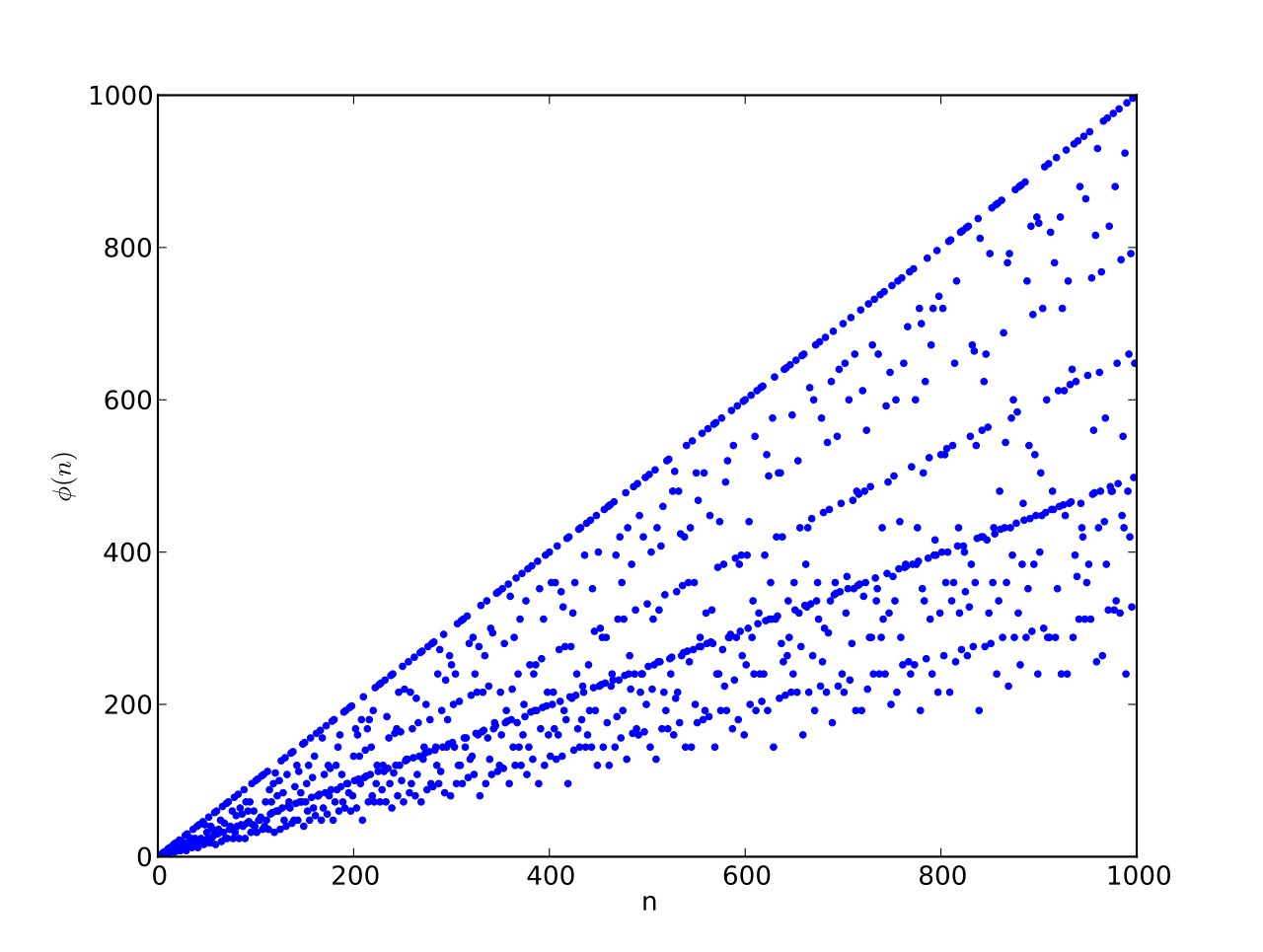
I like the way the spiral sits between chaos and calm. It’s not wholly random and it’s not wholly regular — it’s betwixt and between. You get a similar chaos-and-calm vibe from a graph for a function called Euler phi. And primes are at work there too. Here’s the graph from Wikipedia:

Graph of eulerphi(n) = φ(n) (see Euler’s totient function)


But what is the Euler phi function? For any integer n, eulerphi(n) gives you the count of numbers < n that are relatively prime to n. That is, the count of numbers < n that have no common factors with n other than one. You can see how eulerphi(n) works by considering whether you can simplify the fraction a/b, where a = 1..n-1 and b = n:

φ(6) = 2
1/6 (1)
2/6 → 1/3
3/6 → 1/2
4/6 → 2/3
5/6, ∴ φ(6) = 2


φ(7) = 6
1/7 (1)
2/7 (2)
3/7 (3)
4/7 (4)
5/7 (5)
6/7, ∴ φ(7) = 6


φ(12) = 4
1/12 (1)
2/12 → 1/6
3/12 → 1/4
4/12 → 1/3
5/12 (2)
6/12 → 1/2
7/12 (3)
8/12 → 2/3
9/12 → 3/4
10/12 → 5/6
11/12, ∴ φ(12) = 4


φ(13) = 12
1/13 (1)
2/13 (2)
3/13 (3)
4/13 (4)
5/13 (5)
6/13 (6)
7/13 (7)
8/13 (8)
9/13 (9)
10/13 (10)
11/13 (11)
12/13, ∴ φ(13) = 12


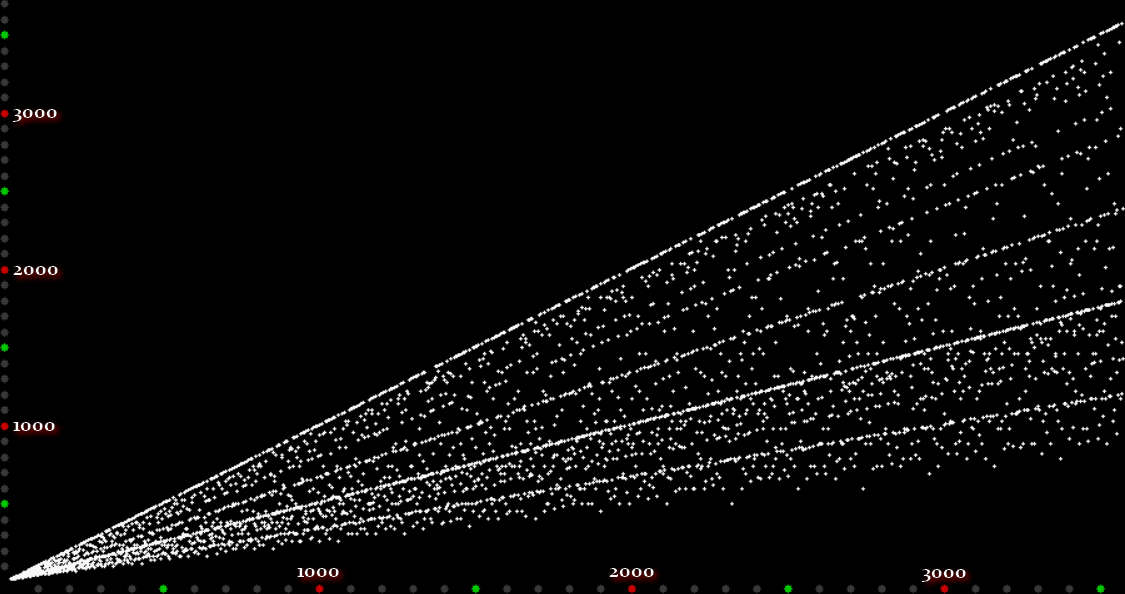
As you can see, eulerphi(n) = n-1 for primes. Now you know what the top line of the Eulerphi graph is. It’s the primes. Here’s a bigger version of the graph:

Graph of eulerphi(n) = φ(n)


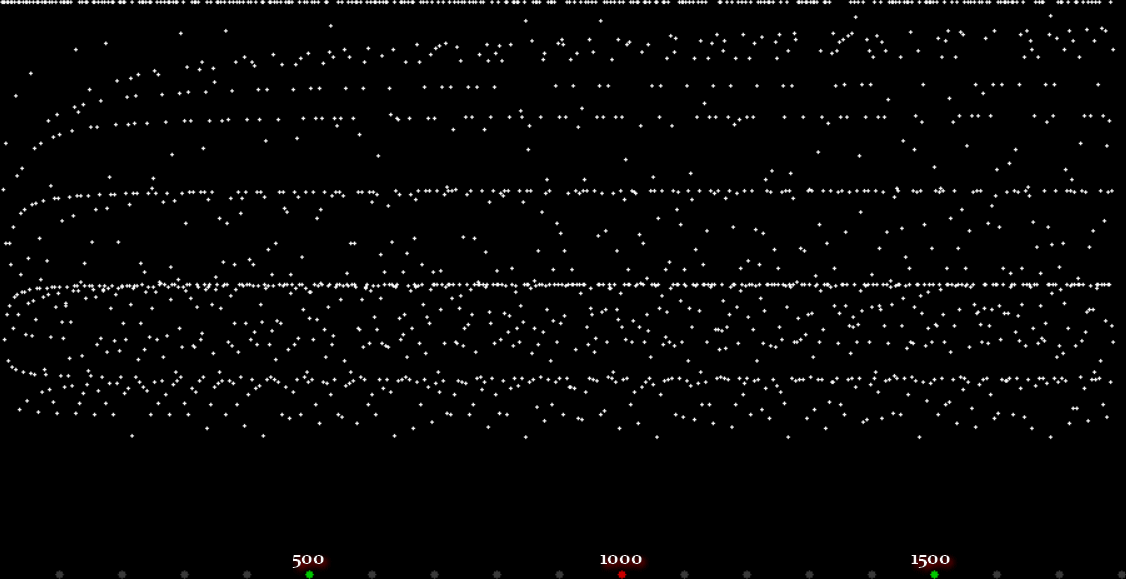
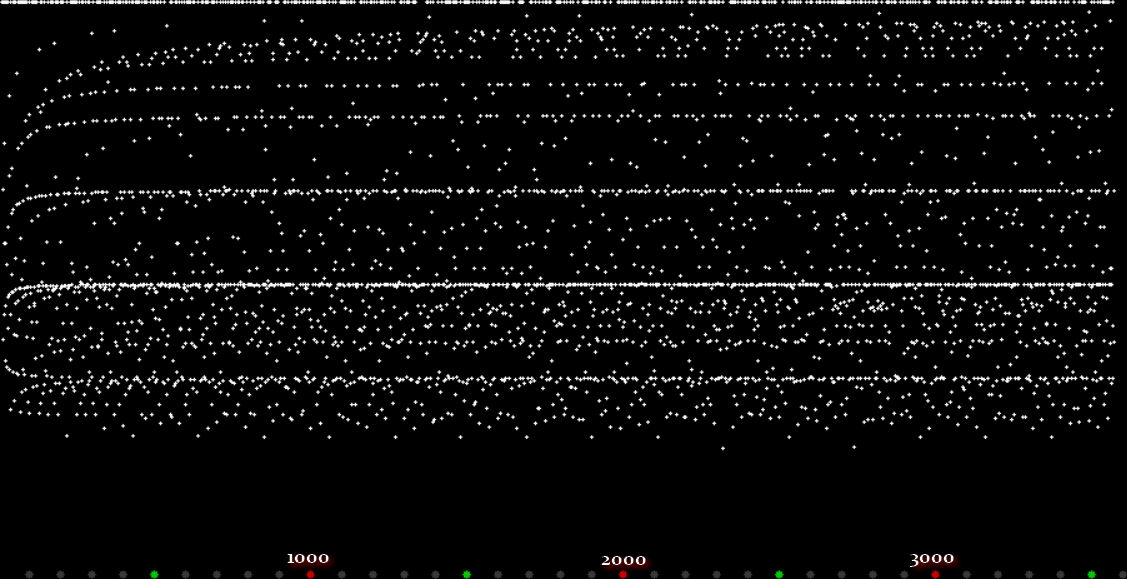
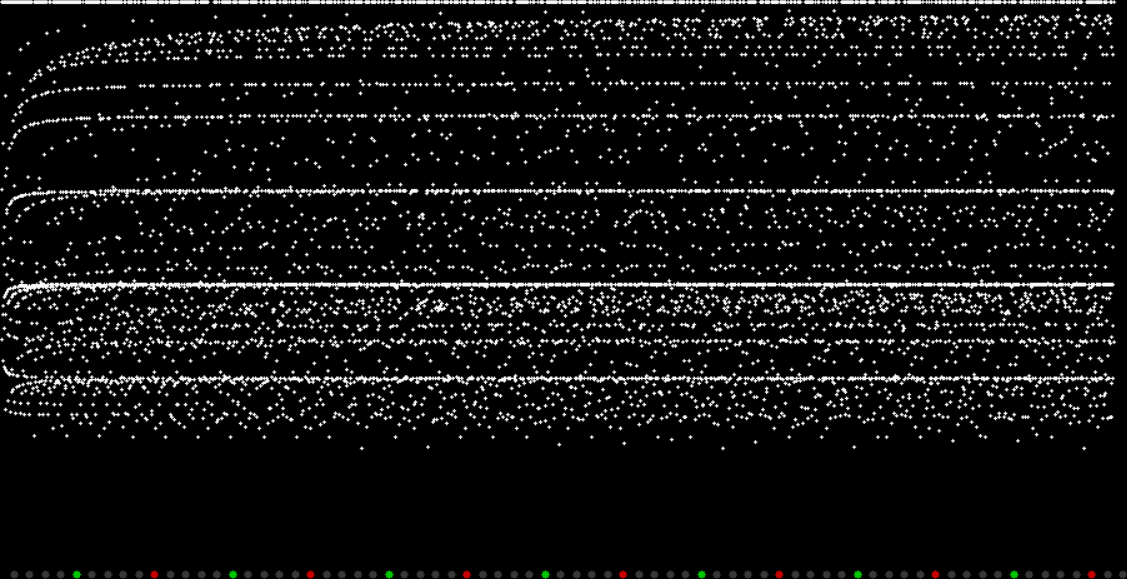
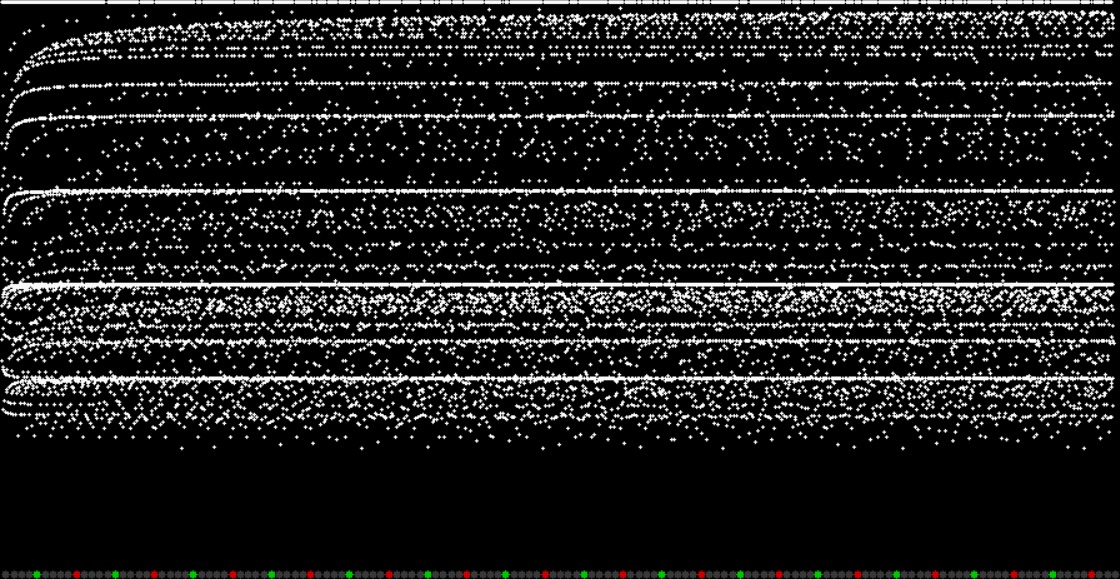
Unlike the Ulam spiral, however, the Eulerphi graph is cramped. But it’s easy to stretch it. You can represent φ(n) as a fraction between 0 and 1 like this: phifrac(n) = φ(n) / (n-1). Using phifrac(n), you can create Eulerphi bands, like this:

Eulerphi band, n <= 1781


Eulerphi band, n <= 3561


Eulerphi band, n <= 7121


Eulerphi band, n <= 14241


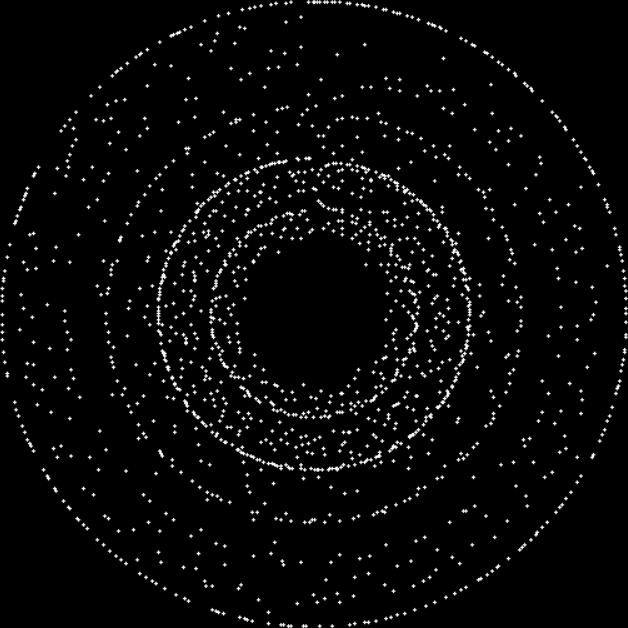
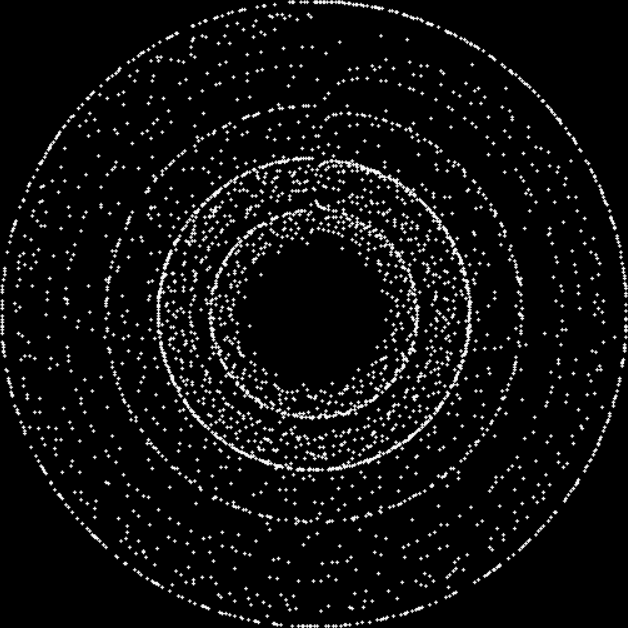
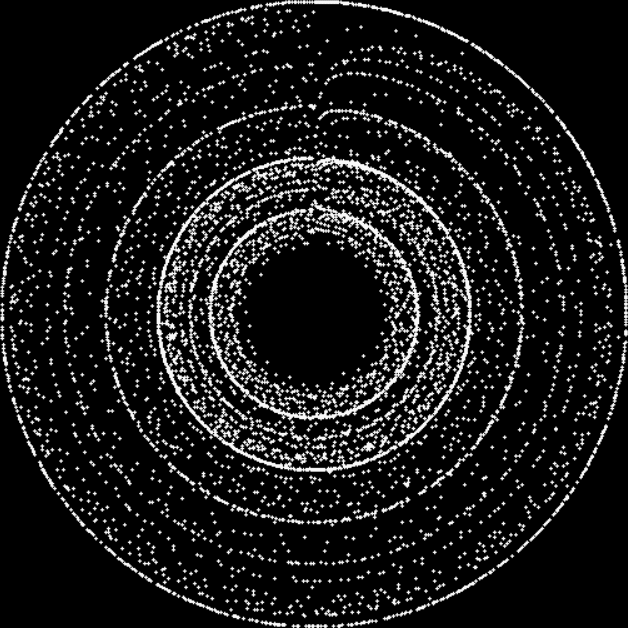
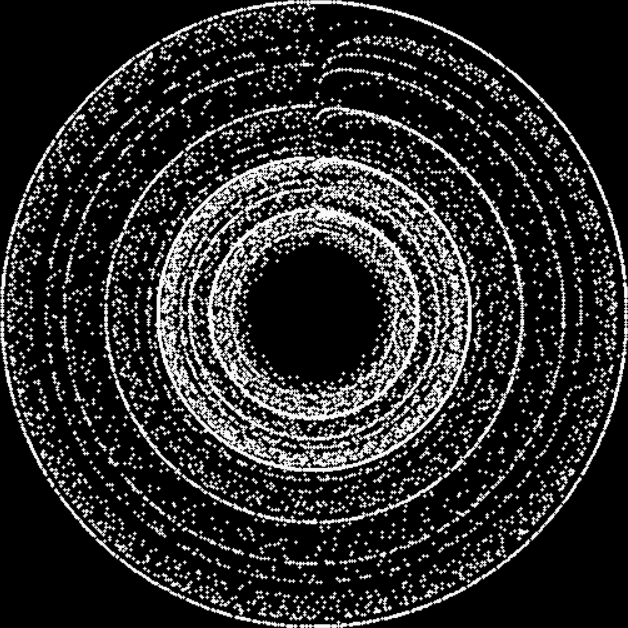
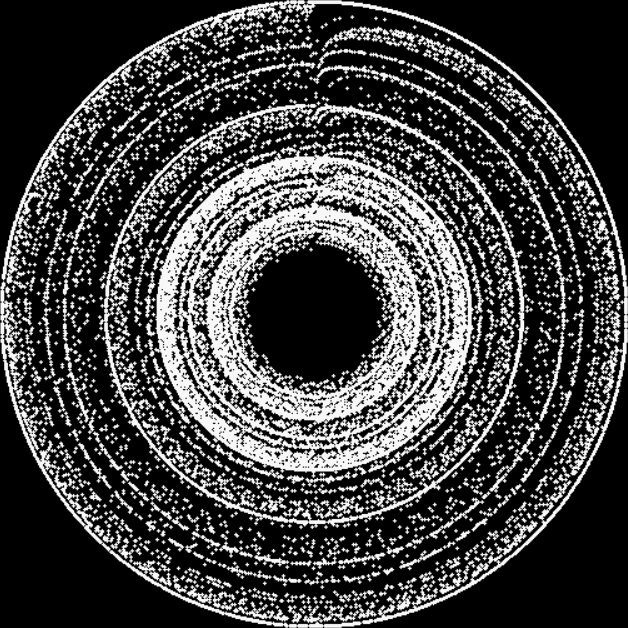
Or you can create Eulerphi discs, like this:

Eulerphi disc, n <= 1601


Eulerphi disc, n <= 3201


Eulerphi disc, n <= 6401


Eulerphi disc, n <= 12802


Eulerphi disc, n <= 25602


But what is the bottom line of the Eulerphi bands and inner ring of the Eulerphi discs, where φ(n) is smallest relative to n? Well, the top line or outer ring is the primes and the bottom line or inner ring is the primorials (and their multiples). The function primorial(n) is the multiple of the first n primes:

primorial(1) = 2
primorial(2) = 2*3 = 6
primorial(3) = 2*3*5 = 30
primorial(4) = 2*3*5*7 = 210
primorial(5) = 2*3*5*7*11 = 2310
primorial(6) = 2*3*5*7*11*13 = 30030
primorial(7) = 2*3*5*7*11*13*17 = 510510
primorial(8) = 2*3*5*7*11*13*17*19 = 9699690
primorial(9) = 2*3*5*7*11*13*17*19*23 = 223092870
primorial(10) = 2*3*5*7*11*13*17*19*23*29 = 6469693230


Here are the numbers returning record lows for φfrac(n) = φ(n) / (n-1):

φ(4) = 2 (2/3 = 0.666…)
4 = 2^2
φ(6) = 2 (2/5 = 0.4)
6 = 2.3
φ(12) = 4 (4/11 = 0.363636…)
12 = 2^2.3
[…]
φ(30) = 8 (8/29 = 0.275862…)
30 = 2.3.5
φ(60) = 16 (16/59 = 0.27118…)
60 = 2^2.3.5
[…]
φ(210) = 48 (48/209 = 0.229665…)
210 = 2.3.5.7
φ(420) = 96 (96/419 = 0.2291169…)
420 = 2^2.3.5.7
φ(630) = 144 (144/629 = 0.228934…)
630 = 2.3^2.5.7
[…]
φ(2310) = 480 (480/2309 = 0.2078822…)
2310 = 2.3.5.7.11
φ(4620) = 960 (960/4619 = 0.20783719…)
4620 = 2^2.3.5.7.11
[…]
30030 = 2.3.5.7.11.13
φ(60060) = 11520 (11520/60059 = 0.191811385…)
60060 = 2^2.3.5.7.11.13
φ(90090) = 17280 (17280/90089 = 0.1918103209…)
90090 = 2.3^2.5.7.11.13
[…]
φ(510510) = 92160 (92160/510509 = 0.18052571061…)
510510 = 2.3.5.7.11.13.17
φ(1021020) = 184320 (184320/1021019 = 0.18052553…)
1021020 = 2^2.3.5.7.11.13.17
φ(1531530) = 276480 (276480/1531529 = 0.180525474868579…)
1531530 = 2.3^2.5.7.11.13.17
φ(2042040) = 368640 (368640/2042039 = 0.18052544540040616…)
2042040 = 2^3.3.5.7.11.13.17

Maven of Mixcegenation

The obfuscating and intentional doublespeak swirling around the emotive cauldron ingredients of “immigration”, “illegal immigration” and “small boats” has been intentionally leveraged into mainstream political and media jargon by Reform UK, big tech algorithms, and thence into the baying mob. […] We are daily enriched by, and should feel deeply indebted to, the many people of colour in this and other sectors of our society. — “This capitulation to racist rhetoric will not end well for Labour or Britain”, letter by Quentin Cowen of Laxfield, Suffolk in The Guardian, 18xi25


Post-Performative Post-Scriptum

“The obfuscating and intentional doublespeak swirling around the emotive cauldron of…” woulda bin even betterer. If the ingredients aren’t bubbling away in the emotive cauldron, why would doublespeak bother to swirl around them? It certainly wouldn’t swirl around them as much, one would’ve thought. And does “emotive cauldron ingredients” mean “emotive-cauldron ingredients” or “emotive cauldron-ingredients”? Maybe it’s both. I’m also struck by the implications of “intentionally leveraged”. Is it possible to “unintentionally leverage” something? Not in this context, one would have thought. And if doublespeak is swirling, that is, if it’s fluid, it’s hard to see how one could exert leverage on it.

Etc, etc. Like all the best Guardianese, this passage is passionately pregnant with interrogation-inducing imagery in a way that is very difficult to achieve by conscious effort. Perhaps Quentin has been smoking some wacky baccy or other psychoactive stimulant supplied by one of the many Persons of Colour enriching his life and fighting da power in da extensive hoodz of Laxfield, Suffolk.

Talking Stalking…

“Most of the trouble in the world has been caused by ten to twenty percent of folks who can’t mind their own business, because they have no business of their own to mind, any more than a smallpox virus.” — Bill Burroughs

“I could a tale unfold whose lightest word
Would harrow up thy soul, freeze thy young blood,
Make thy two eyes like stars start from their spheres,
Thy knotted and combined locks to part,
And each particular hair to stand on end
Like quills upon the fretful porpentine.
But this eternal blazon must not be
To ears of flesh and blood.
List, list, O list!” — Bill Shakespeare

Aldapuerta’s Acute Angst… A Toxic True Tale of Traumatic Teratotropism…

Hue Views

The fact is, we none of us enough appreciate the nobleness and sacredness of color. Nothing is more common than to hear it spoken of as a subordinate beauty, — nay, even as the mere source of a sensual pleasure; and we might almost believe that we were daily among men who

“Could strip, for aught the prospect yields
To them, their verdure from the fields;
And take the radiance from the clouds
With which the sun his setting shrouds.”

But it is not so. Such expressions are used for the most part in thoughtlessness; and if the speakers would only take the pains to imagine what the world and their own existence would become, if the blue were taken from the sky, and the gold from the sunshine, and the verdure from the leaves, and the crimson from the blood which is the life of man, the flush from the cheek, the darkness from the eye, the radiance from the hair, — if they could but see for an instant, white human creatures living in a white world, — they would soon feel what they owe to color. The fact is, that, of all God’s gifts to the sight of man, color is the holiest, the most divine, the most solemn. We speak rashly of gay color, and sad color, for color cannot at once be good and gay. All good color is in some degree pensive, the loveliest is melancholy, and the purest and most thoughtful minds are those which love color the most.

• John Ruskin, The Stones of Venice, Vol II, Chapter 5, xxx

Primal Polynomial

n² + n + 17 is one of the best-known polynomial formulas for primes. Its values for n = 0 to 15 are all prime, starting with 17 and ending with 257. — David Wells in The Penguin Dictionary of Curious and Interesting Numbers (1986), entry for “17”

• 17, 19, 23, 29, 37, 47, 59, 73, 89, 107, 127, 149, 173, 199, 227, 257

Eye-Dentity Politics…

In terms of core issues around key notions of maximal engagement with Aldapuerta’s The Eyes (1996), a coupla corely key counter-cultural conundrums coalesce compulsively in the crania of all competent committed contemplators of the Counter Culture…

The first (of course) is that of why all Aldapuerta acolytes are so slim, good-looking, intelligent, imaginative, neurosis-free, psychosis-free, rigorously abstemious from drink, drugs and pornography, and inflexibly adherent to William S. Burroughs’ keyly core counter-cultural commandment of “Mind Your Own Business and Leave Other People Alone…”

The second (also of course) is the ultra-esoteric, über-exciting and endlessly enticing enigma of Aldapuerta’s identity

I myself spend six or seven hours every day on a daily basis contemplating this core counter-cultural conundrum… “Who is Jesús Aldapuerta?” I ax myself on repeat.

And I think – I think – I’ve finally cracked it.

The supposed Spanish writer Jesús Aldapuerta is really the undoubted English writer and former politician… Jeffrey Archer.

Here’s the proof…

The initials are identical: J.A.

Jeffrey Archer = J.A.
Jesús Aldapuerta = J.A.

Coincidence? No. This is the literary equivalent of leaving your monogrammed handkerchief at the scene of the crime.

Both spent time in prison

Archer did two years for perjury. Aldapuerta allegedly had several stints in Spanish jails for offences including petty theft and micturating on nuns from a second-floor balcony.

Both love extravagant lies

Archer invented CV details, fake charities, and imaginary meetings with the Queen. Aldapuerta invented an entire biography (born 1953, tortured by Franco’s secret police, ate his own manuscript, etc.). Same inclination to pathological mendacity.

Both vanished at convenient moments

Aldapuerta “died” in 1988 and no identifiable corpse was ever photographed. Archer “retired” from politics in 1987 after a tabloid sex scandal. Translation: he needed a gap year in Madrid to write necrophile sestinas under a new passport.

Shared obsession with eyes

Archer titled one novel A Prisoner of Birth — birth = eyes opening. Aldapuerta’s masterpiece is literally called The Eyes. Both men clearly have an Oedipal eye-fetish that Freud would need a bigger couch for.

Aldapuerta was never seen in the same room as Jeffrey Archer

Classic doppelgänger logic. Whenever Archer is signing books at Harrods, Aldapuerta’s ghost is allegedly pushing daisies in Madrid. Suspiciously convenient.

The ultimate smoking gun: the lost manuscripts

In 1992, Archer claimed he accidentally burned an entire unpublished novel in his garden. In 1988, Aldapuerta supposedly ate his only copy of The Eyes sequel. Only one man could be that clumsy with priceless manuscripts.

And there you have it. Jeffrey Archer is Jesús Aldapuerta, and the transgressive literary world has been punk’d for four decades by a Tory peer with a fondness for disembowelment metaphors.


A fractal based on juggled eyeballs

S’éteignent, S’encroûtent, S’allument…

« Des soleils s’éteignent & s’encroûtent, des planètes périssent & se dispersent dans les plaines des airs ; d’autres soleils s’allument, de nouvelles planètes se forment pour faire leurs révolutions ou pour décrire de nouvelles routes, & l’homme, portion infiniment petite d’un globe, qui n’est lui-même qu’un point imperceptible dans l’immensité, croit que c’est pour lui que l’univers est fait, s’imagine qu’il doit être le confident de la nature, se flatte d’être éternel, se dit le roi de l’univers ! » — Baron d’Holbach, Système de la nature (1770), Partie 1, Chapitre 6

“Suns are extinguished or become corrupted, planets perish and scatter across the wastes of the sky; other suns are kindled, new planets formed to make their revolutions or describe new orbits, and man, an infinitely minute part of a globe which itself is only an imperceptible point in the immense whole, believes that the universe is made for himself, flatters himself that he is eternal, calls himself king of the universe!”


Post-Performative Post-Scriptum…

Mais… Mens Major Est Quam Materia…