
The highly toxic Textile Cone, Conus textile (Wikipedia)
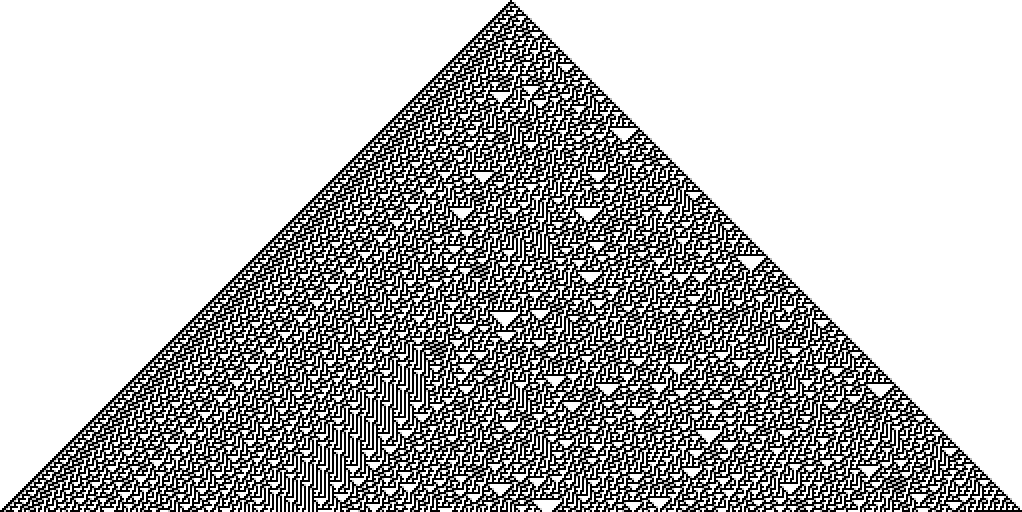
Rule 30 cellular automaton (Wikipedia)

Two views of toxic C. textile (Wikipedia)

Eh bien, avant-hier 17 mars 1838, cet homme est mort. Des médecins sont venus, et ont embaumé le cadavre. Pour cela, à la manière des Égyptiens, ils ont retiré les entrailles du ventre et le cerveau du crâne. La chose faite, après avoir transformé le prince de Talleyrand en momie et cloué cette momie dans une bière tapissée de satin blanc, ils se sont retirés, laissant sur une table la cervelle, cette cervelle qui avait pensé tant de choses, inspiré tant d’hommes, construit tant d’édifices, conduit deux révolutions, trompé vingt rois, contenu le monde.
Les médecins partis, un valet est entré, il a vu ce qu’ils avaient laissé : Tiens ! ils ont oublié cela. Qu’en faire ? Il s’est souvenu qu’il y avait un égout dans la rue, il y est allé, et a jeté ce cerveau dans cet égout. — Victor Hugo, Choses vues: Talleyrand, 1838
And so, the day before yesterday, March 17, 1838, this man died. Doctors came and embalmed the corpse. They did this like the Egyptians, removing the entrails from the stomach and the brain from the skull. When they were done, having transformed Prince Talleyrand into a mummy and nailing this mummy in a bier lined with white satin, they withdrew, leaving the brain on a table, this brain that had thought so many things, inspired so many men, built so many buildings, led two revolutions, deceived twenty kings, had contained the world.
With the doctors gone, a valet came in and saw what they had left: Hey! they forgot that. What shall I do with it? He remembered that there was a sewer in the street, so he went out and threw the brain into the sewer. — Victor Hugo, Things Seen, 1838
To understand clock-arithmetic, simply picture a clock-face with one hand and a big fat 0 in place of the 12. Now you can do some clock-arithmetic. For example, set the hour-hand to 5, then move on 4 hours. You’ve done this sum:
5 + 4 → 9
Now try 9 + 7. The hour-hand is already on 9, so move forward 7 hours:
9 + 7 → 4
Now try 3 + 8 + 1:
3 + 8 + 1 → 0
And 3 * 4:
4 * 3 = 4 + 4 + 4 → 0
That’s clock-arithmetic. But you’re not confined to 12-hour clocks. Here’s a 7-hour clock, where the 7 is replaced with a 0:
3 + 1 → 4
4 + 5 → 2
2 + 4 + 1 → 0
3 * 3 = 3 + 3 + 3 → 2
Another name for clock-arithmetic is modular arithmetic, because the clocks model the process of dividing a number by 12 or 7 and finding the remainder or residue — 12 or 7 is known as the modulus (and modulo is Latin for “by the modulus”).
5 + 4 = 9 → 9 / 12 = 0*12 + 9
(5 + 4) modulo 12 = 9
3 + 8 + 1 = 12 → 12 / 12 = 1*12 + 0
(3 + 8 + 1) modulo 12 = 0
19 / 12 = 1*12 + 7
19 mod 12 = 7
3 + 1 = 4 → 4 / 7 = 0*7 + 4
(3 + 1) mod 7 = 4
2 + 4 + 1 = 7 → 7 / 7 = 1*7 + 0
(2 + 4 + 1) mod 7 = 0
19 / 7 = 2*7 + 5
19 mod 7 = 5
Modular arithmetic can do wonderful things. One small but beautiful example is the way it can uncover hidden fractals in Pascal’s triangle:
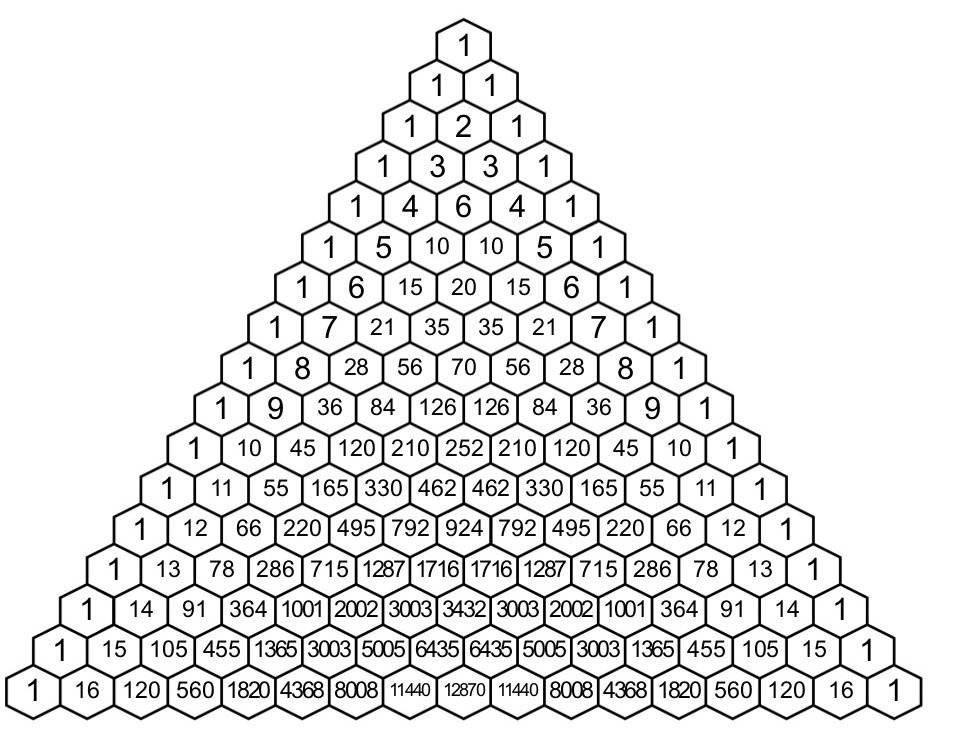
Pascal’s Triangle (via Desmos)
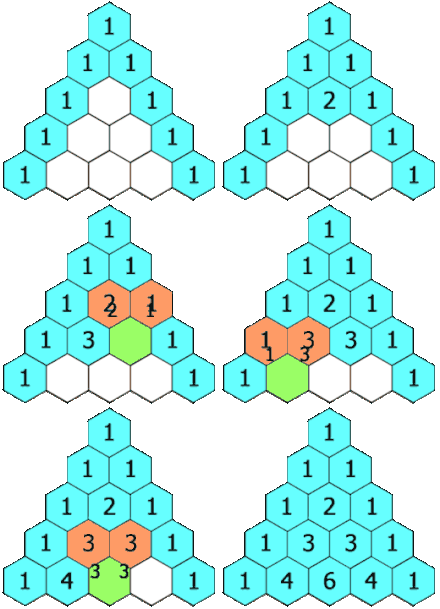
How to create Pascal’s triangle (via Wikipedia)
If you color all numbers n mod 2 = 1 (i.e., odd numbers) in the triangle, they create the famous Sierpiński triangle:
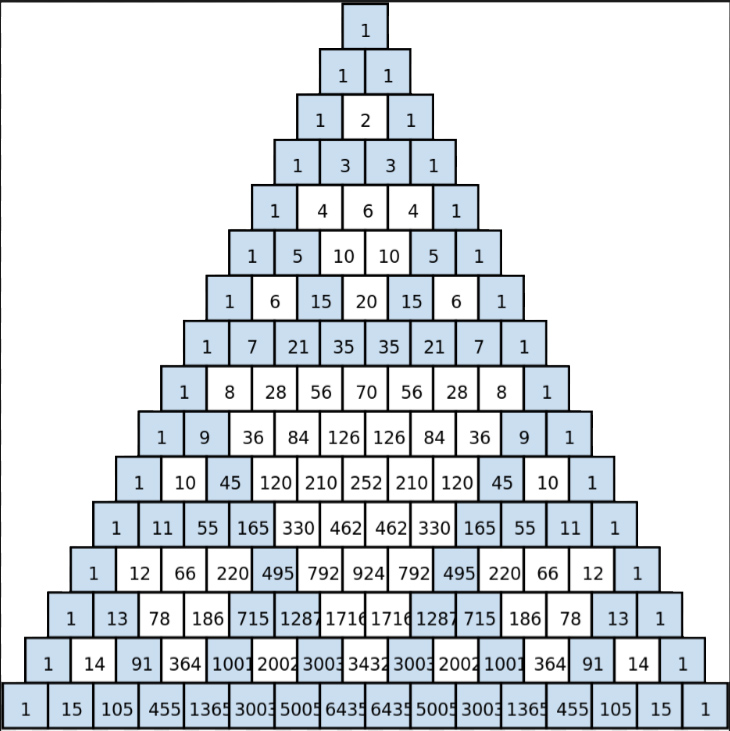
The Sierpiński triangle in Pascal’s triangle (via Fractal Foundation)
↓
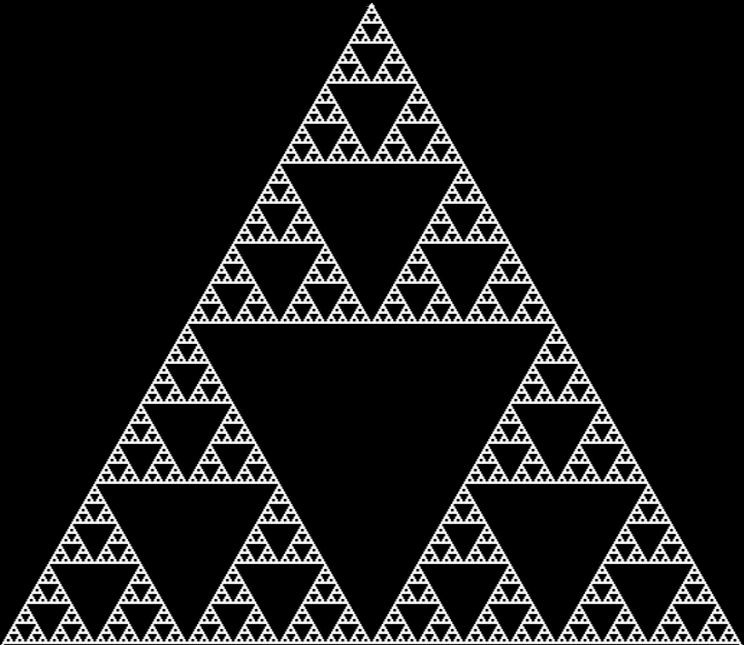
Pascal’s triangle, n mod 2 = 1 (click for larger)
The Sierpiński triangle appears like this for all n mod 4 = 2 in Pascal’s triangle:
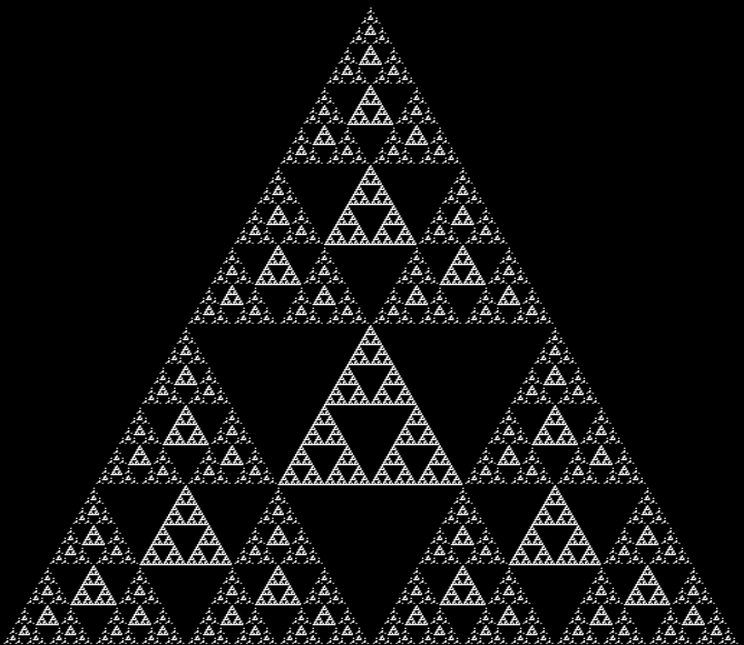
Pascal’s triangle, n mod 4 = 2 (click for larger)
And so on:
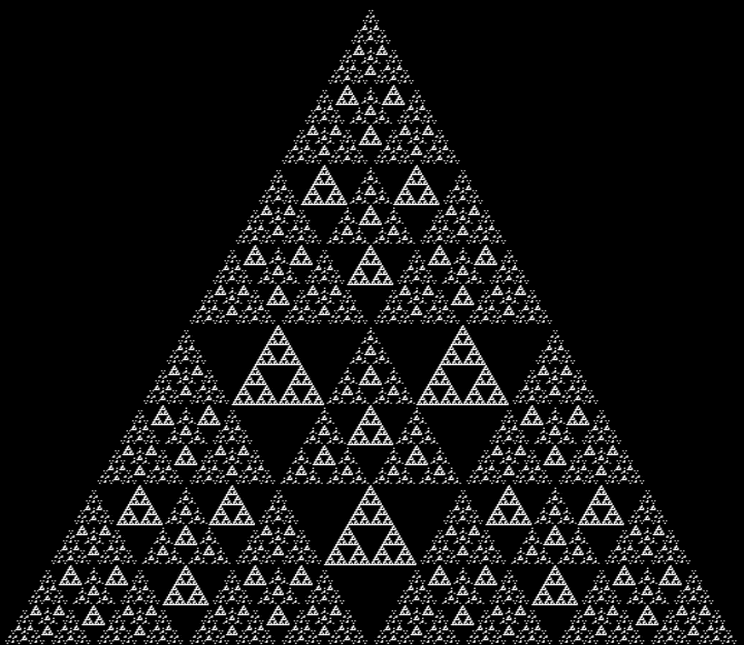
Pascal’s triangle, n mod 8 = 4
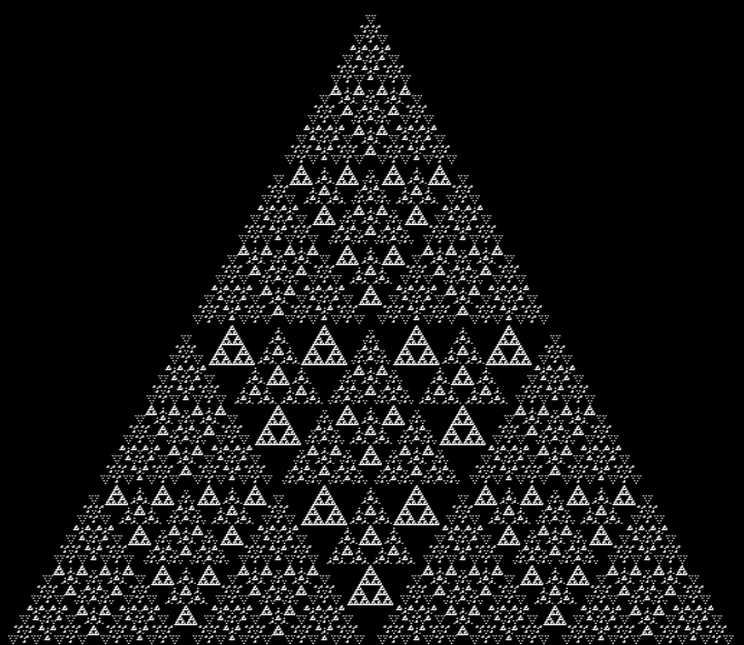
Pascal’s triangle, n mod 16 = 8

Pascal’s triangle, n mod 32 = 16
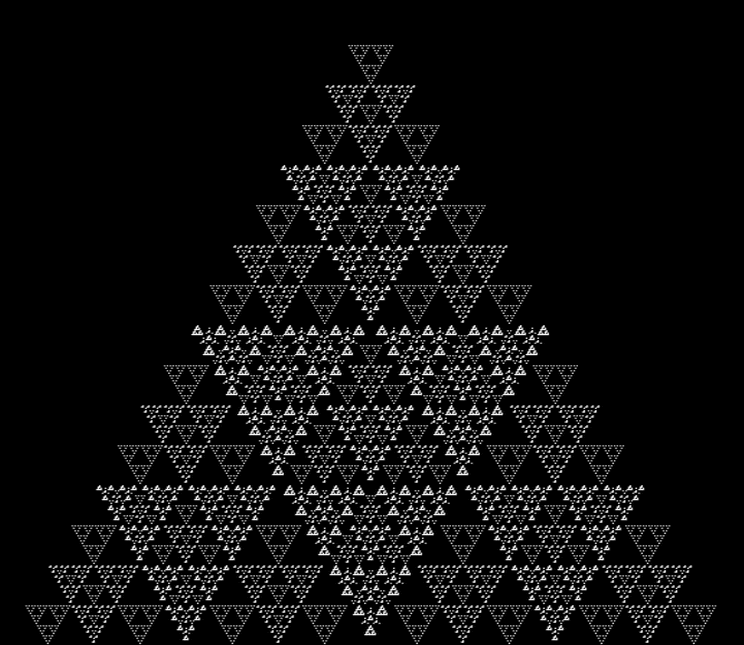
Pascal’s triangle, n mod 64 = 32
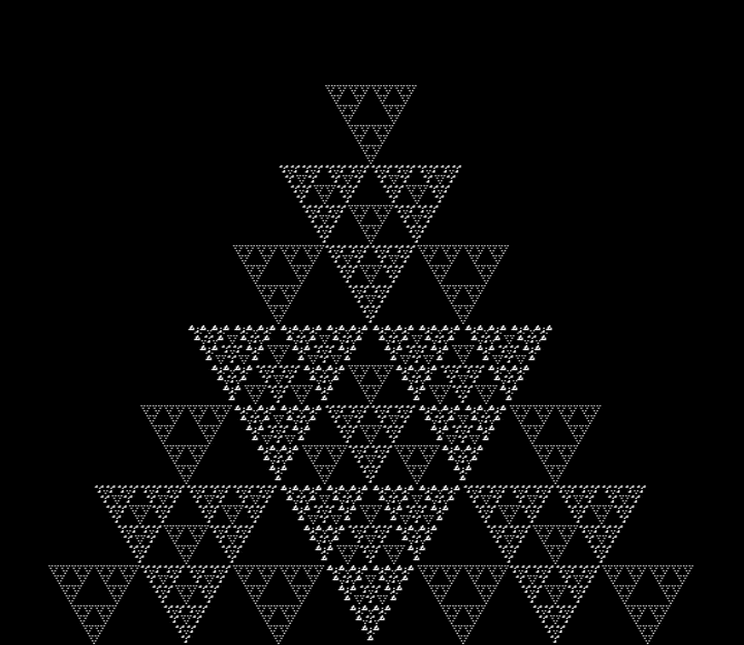
Pascal’s triangle, n mod 128 = 64
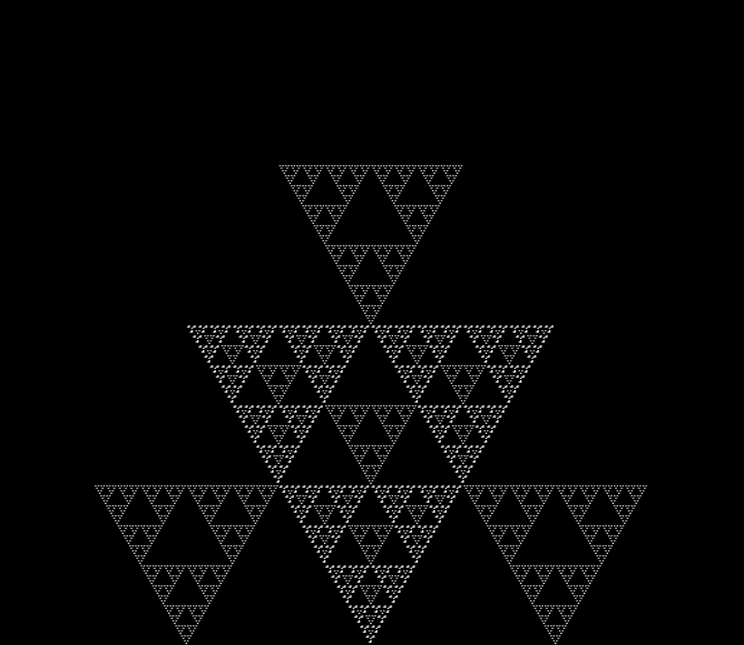
Pascal’s triangle, n mod 256 = 128
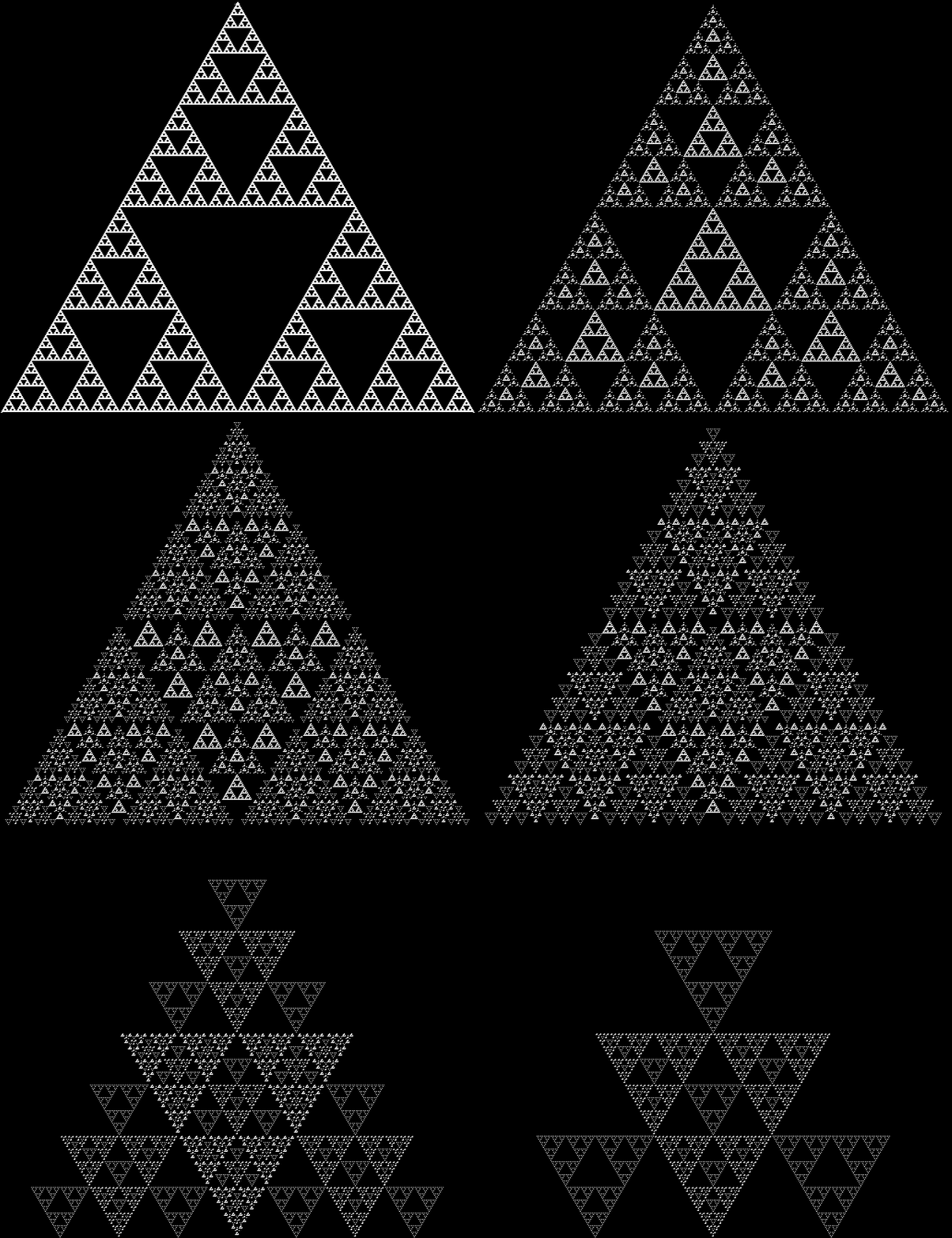
Pascal’s triangle, n mod 2,4,8… = 1,2,4… (animated via EzGif)
Post-Performative Post-Scriptum
There’s no need to calculate Pascal’s triangle in full to find the fractals above. The 10th row of Pascal’s triangle is this:
1, 10, 45, 120, 210, 252, 210, 120, 45, 10, 1
The 20th row is this:
1, 20, 190, 1140, 4845, 15504, 38760, 77520, 125970, 167960, 184756, 167960, 125970, 77520, 38760, 15504, 4845, 1140, 190, 20, 1
And the 29th is this:
1, 29, 406, 3654, 23751, 118755, 475020, 1560780, 4292145, 10015005, 20030010, 34597290, 51895935, 67863915, 77558760, 77558760, 67863915, 51895935, 34597290, 20030010, 10015005, 4292145, 1560780, 475020, 118755, 23751, 3654, 406, 29, 1
But you don’t need to consider those ever-growing numbers in the triangle when you’re finding fractals with modular arithmetic. When the modulus is 2, you just work with 0 and 1, that is, you add the previous numbers in the triangle and find the sum modulo 2. When the modulus is 4, you just work with 0, 1, 2 and 3, adding the numbers and finding the sum modulo 4. When it’s 8, you just work with 0, 1, 2, 3, 4, 5, 6 and 7, finding the sum modulo 8. And so on.
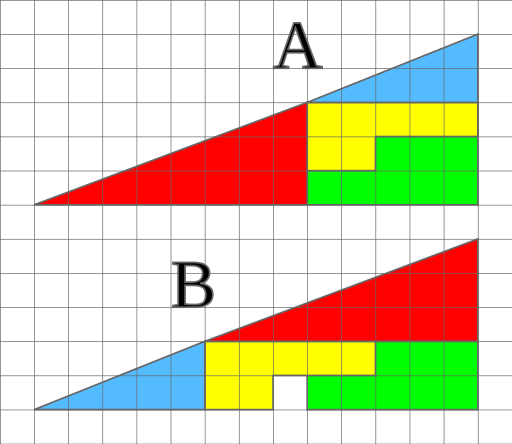
The Missing Square Puzzle
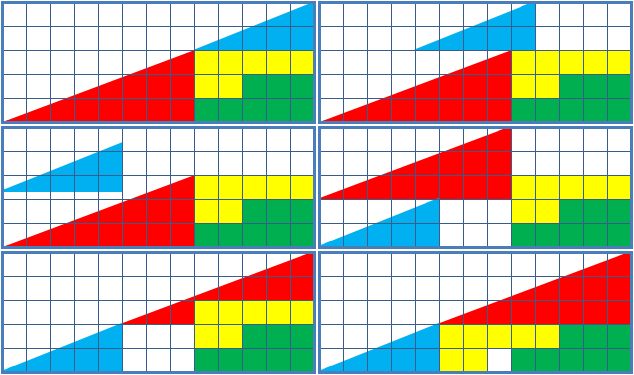
An animation of the puzzle
Elsewhere Other-Accessible…
• Missing square puzzle — all is explained at Wikipedia
Papyrocentric Performativity Presents…
• Sky-Fi – The Fountains of Paradise, Arthur C. Clarke (1979)
• Ars Gratia Martis – The Klarkash-Ton Cycle: Clark Ashton Smith’s Cthulhu Mythos Fiction, edited by Robert M. Price (Chaosium 2008)
• The Oy of Voy – Theseus 34, Rory Hughes (Incunabula Books 2024)
• Fog on a Blog – The Fog Prince: Interrogating Core Themes around Positive Orality and Negative Textuality In Terms Of Evelyn Waugh’s Put Out More Flags (1942)
• Hyp Parade – Hellfire: Evelyn Waugh and the Hypocrites Club, David Fleming (2022)
• Kamala vs KKKockroach – an interview with Dr Nigel M. Goldbaum
• Maximally. Morbid. Magazine. – saluting the sizzling scopophilia of Love It Journal
Or simply…
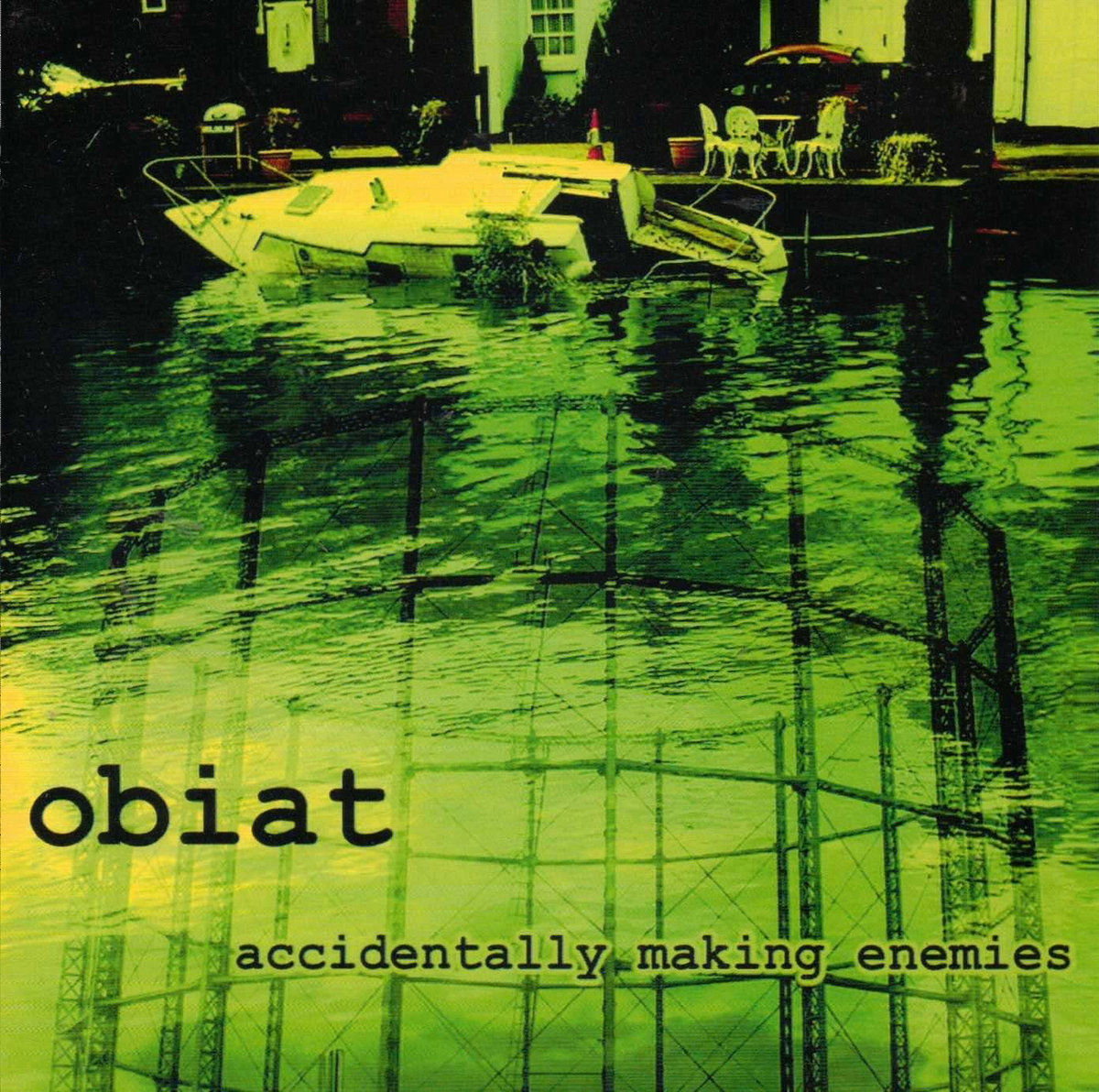
The curious cover of Obiat’s Accidentally Making Enemies (2002)
Elsewhere Other-Accessible
• Obiat at Bandcamp
• From Parallinear: 16 European Poets in Prose Translation (Symban Press 1977)
Jorisz Prokata, born Nembutå, Austro-Hungarian Empire, 1901; died Paris, 1943 […]
’Ndra ven ožedigō tranvu
Istahe zesfusna vo kōb
G’va: svas moe’, oxoaz, hežbu
Vem mižurt qocrsiūjy aplouxōb
Veń ġucij doīv.
L’gefq tsiži, xveby, qa indreza:
Kipidi, aūcu mdvo, lkåd’vud
Utcuzu, veń gomfōj’t vgeza
Vqežefq keflozu ven užud
Odzub’za lkåtū sxoīv.
It’s raining and I walk by the river
Watching gulls on the opposite bank.
Then: two ducks, mergansers, I think,
And I take off my glasses to wipe them
And take a closer look.
It’s now I see what the rain has done:
The small drops, pearl-patterns, constellating
The lenses, and so beautiful beneath the dull sky
That I cannot touch them and walk on
My panes full of stars.
Translator’s notes
[…] The paronomasia in the final line rests on the ambiguity of the contracted odzub’za, which could mean either odzubaza, “my pains, my sufferings” or odzupeza, “my lookers, my specs” (otsupa, “look, observe”), with sandhi of p to b before z.
Translation © Caroline Dawkins 1956
David Lynch has died and, just as with David Bowie in 2016, my mind flies irresistibly to the ever-fascinating and ever-important topic of myself his artistic genius and how much I have it has meant to me down the years. I can barely remember as clear as day the first of the three countless times I saw Eraserhead. I was 18 15 and working in a chip-shop as a rent-boy to fund my sweet tooth heroin addiction during my History of Art degree at Bath tortured adolescence in Aberdeen. The brand-new ancient cinema smelt pleasantly of floor-polish stank of piss and my seat was so comfortable that I fell asleep twice rats scuttled around my feet beneath the splinter-filled seat. But I barely noticed, transfixed by the sheer weirdness taking place on the over-bright stained screen before me. As I left the cinema I was yawning my head teemed with the visceral visions I had just witnessed and wondering what to have for tea I marvelled at this surreal new super-luminary who had soared above my aesthetic horizon. In the years that followed I… Blue Velvet… I… me… Wild at Heart… I… my… Twin Peaks… my… I… Eraserhead… I… I… my… Eraserhead… Eraserhead… I… me… mine… Eraserhead… David, for your darkness, your deviance, your depravity, I salute me you!
© 2025 Multi-Millions of Mega-Mavericks in the Hardcore Hyper-Heretical Hive-Mind Community
Post-Performative Post-Scriptum
As for someone whose opinion on David Lynch really does matter – namely, mega-me, the omniscient Overlord of the Über-Feral – well, I didn’t have one. I didn’t think he was crap like Cormac McCarthy, I had no opinion at all. As the great (no, seriously) Public Enemy once said: “Elvis was a hero to most, but he never meant shit to me.” The only thing I’ve ever marvelled at in terms of core issues around David Lynch is the loudness of the buzzing in terms of with which the Hardcore Hyper-Heretical Hive-Mind has greeted his departure. If film is more important to you than literature, then you’re like the vast majority of the human race. Wow. Etc.
Elsewhere Other-Accessible…
• King Cormac – my thoughts on Cormac McCarthy, another visceral visionary whose departure elicited loud buzzing in the Hardcore Hyper-Heretical Hive-Mind (but less so)
• The Cruddiness of Cormac (continued) – further thoughts on visceral visionary Cormac McCarthy
77
Every number greater than 77 is the sum of integers, the sum of whose reciprocals is 1.
For example, 78 = 2 + 6 + 8 + 10 + 12 + 40 and 1/2 + 1/6 + 1/8 + 1/10 + 1/12 + 1/40 = 1.
R.L. Graham, “A Theorem on Partitions”, Journal of the Australian Mathematical Society, 1963; quoted in Le Lionnais, 1983.
• From David Wells’ Penguin Dictionary of Curious and Interesting Mathematics (1986)
Post-Performative Post-Scriptum…
The title of this post is a pun on the gargantuan Graham’s number, described by the same American mathematician and famous among math-fans for its mindboggling size. “Le Lionnais, 1983” must refer to a book called Les Nombres remarquables by the French mathematician François Le Lionnais (1901-84).
In my story “The Web of Nemilloth”, I wrote about a wizard, Vmirr-Psumm, who sought to escape the web of necessity spun over all matter in the universe by the spider-goddess Nemilloth. Vmirr-Psumm knew the legend of a fore-wizard, Tšenn-Gilë, who had sought the same escape and had cast a giant spell to tear the entire planet of Pmimmb from Nemilloth’s web. Alas, the legend ran, Tšenn-Gilë had made an error in his working and Pmimmb had exploded, broadcasting fragments of itself throughout the universe in the form of a seemingly worthless black mineral called sorraim.
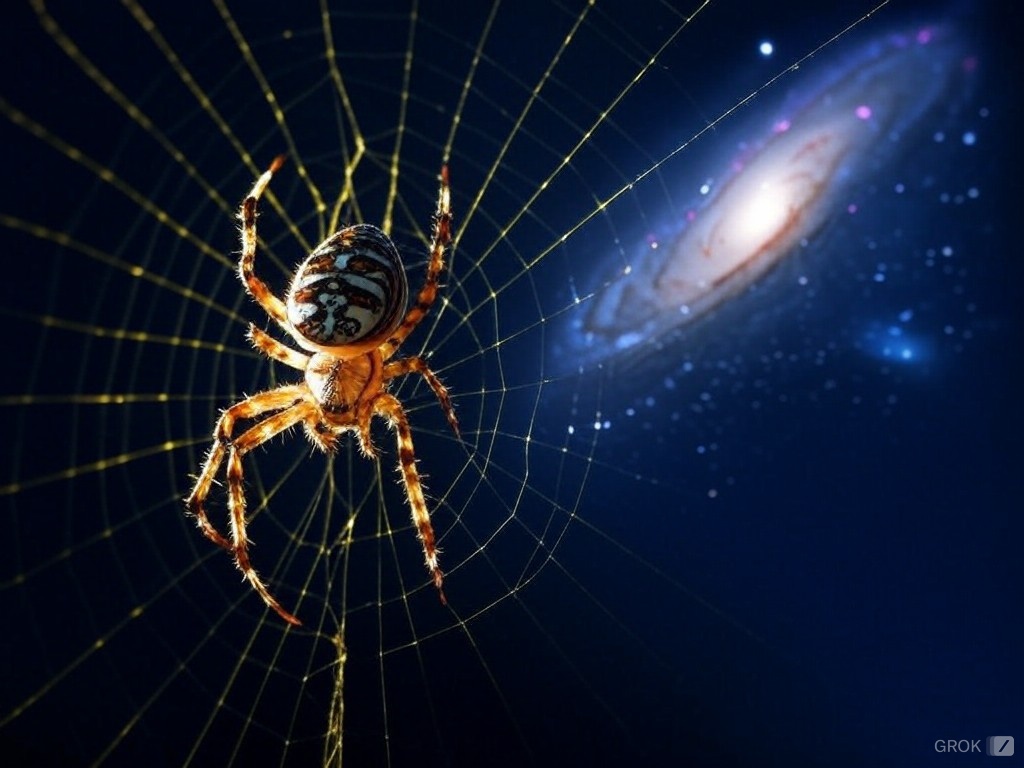
The spider-goddess Nemilloth binds the Universe in Her web (AI-rtist’s impression)
Pieces of sorraim were found on Vmirr-Psumm’s own planet and he reasoned that, were the legend true, he could lift Nemilloth’s web from his own brain by carving and throwing a die of the mineral, wherein the virtue of Tšenn-Gilë’s spell still lingered. A die of any ordinary material would be within the web and therefore bound by necessity, generating only pseudo-random numbers in its throws. But a die of sorraim, being outside the web, would generate veri-random numbers that would alter the working of his brain, inspire thoughts unbound by Nemilloth, and grant him true freedom from Her tyranny.
Unfortunately for Vmirr-Psumm, he did not realize that “he who loosens the web of Nemilloth in rebellion grants matter itself leave to rebel.” A fragment of sorraim was small enough to remain outside the web and survive, but anything larger, from a planet to a human brain, would be destroyed. And that is why, absorbing the veri-random throws of the sorraim die, Vmirr-Psumm’s brain exploded with the power of an atom bomb at the end of the story, “succumbing, on its vastly smaller scale, to the same forces that had torn apart the planet of Pmimmb.”
Reflections on ranDOOM
Thinking about “The Web of Nemilloth” again at the end of 2024, I’ve realized that it raises some interesting questions. If a truly random sequence of numbers could cause a brain to explode, how long would the sequence have to be? I conjecture that a single number, and single throw of Vmirr-Psumm’s deadly die, would suffice, because it would be truly random in a way no number generated in any normal way could be. After all, if the brain of the die-thrower didn’t explode after one throw, why should it explode after two or three or any other finite number of throws? If the true randomness of the sequence is not established after one throw, then (one might reason) it could be established only after infinite throws. But Vmirr-Psumm did not throw the die infinitely often. Therefore, I conjecture, he must have rolled it only once, seen but one uppermost face of his dodecahedral die of sorraim, and die-d on that instant, as his brain absorbed the first veri-random number and exploded.
But why should sorraim need to be carved into a die to be deadly? If the mineral were truly outside the web of Nemilloth, then would not merely seeing or touching sorraim introduce unnecessitated sense-data into the brain of the beholder or betoucher and provoke an explosion? And why would the influence of the sorraim need to be on a conscious brain? If it’s insentient matter itself that rebels when outside the web, then ordinary matter influenced by sorraim would explode. And that explosion itself would be unnecessitated and thereby provoke further explosion in all the ordinary matter that it influenced.
And the influence of such an explosion would propagate at the speed of light, because the photons it created would be unnecessitated and therefore explosive in their influence. One could conclude, then, that the fore-wizard’s spell would have destroyed not only the planet of Pmimmb whereon it was worked but, in time, the entire universe, as the photons bearing the news of the initial explosion sped outward and triggered further explosions in all the ordinary matter they effected in some way. Vmirr-Psumm could never have found his sorraim and carved his die, because photons from Pmimmb would have reached his planet far before fragments of sorraim ever did. And it seems illogical or arbitrary to suppose that sorraim could exist anyway. Would not all matter be destroyed – turn into electro-magnetic radiation – if outside the web or if influenced by unnecessitated fundamental particles?
Psychopaths and Stoics
Still, let’s suppose that my story doesn’t succumb to this explosive logic, that sorraim could exist and be carved into a die, and that a single truly random number could cause a brain to explode. What a method of assassination or murder that would be! But it would be like the head of Medusa: you would have to emulate Perseus and avoid beholding your own weapon. If sorraim really existed and you could carve a die from it, you’d have to set up an automatic mechanism to roll that die, record the number first generated, then transmit that number to your target in some way. But to use such a weapon you’d have to have a psychopathic indifference to collateral damage: when your target’s brain absorbed the single veri-random number and exploded, this would destroy any city that your target happened to be present in at the time. But suppose you were indeed a psychopath and wanted to destroy a city or a nation or a continent or the entire world. Then you’d simply arrange for your single truly random number to be seen by the requisite number of people.
A final thought: I have a recollection that the Stoics believed necessity rules the universe and true randomness is therefore impossible, because it would trigger destruction in the necessitated material order of the universe. But I can’t remember where (or if) I read this and am pretty sure I read it only after I’d written “The Web of Nemilloth”.
Post-Performative Post-Scriptum
• “The Web of Nemilloth” appears in the CAS-inspired collection Tales of Silence and Sortilege, re-published by Incunabula Books in 2023.
 Overlord In Terms of Core Issues Around Maximal Engagement with Key Notions of the Über-Feral