
“Our fantastic civilization has fallen out of touch with many aspects of nature, and with none more completely than with night. Primitive folk, gathered at a cave mouth round a fire, do not fear night; they fear, rather, the energies and creatures to whom night gives power; we of the age of the machines, having delivered ourselves of nocturnal enemies, now have a dislike of night itself. With lights and ever more lights, we drive the holiness and beauty of night back to the forests and the sea; the little villages, the cross-roads even, will have none of it. Are modern folk, perhaps, afraid of night? Do they fear that vast serenity, the mystery of infinite space, the austerity of stars?” — Henry Beston (1888-1968), The Outermost House, 1933
Category Archives: Civilization
Night Blight
Mythopoëtic Mathematics
• Shakespeare + Beethoven + Michelangelo = Wagner
Performativizing Papyrocentricity #40
Papyrocentric Performativity Presents:
• Humanist Hubris – The Wreck of Western Culture: Humanism Revisited, John Carroll (Scribe 2010)
• Paw is Less – The Plague Dogs, Richard Adams (Penguin 1977)
• I Like Bike – Fifty Bicycles That Changed the World, Alex Newson (Conran Octopus 2013)
• Morc is Less – The Weird Shadow Over Morecambe, Edmund Glasby (Linford 2013)
• Nekro-a-Kokoa – Comfort Corps: Cuddles, Calmatives and Cosy Cups of Cocoa in the Music of Korpse-Hump Kannibale, Dr Miriam B. Stimbers (University of Nebraska Press 2015)
Or Read a Review at Random: RaRaR
Performativizing Papyrocentricity #29
Papyrocentric Performativity Presents:
• Sky Story – The Cloud Book: How to Understand the Skies, Richard Hamblyn (David & Charles 2008)
• Wine Words – The Oxford Companion to Wine, ed. Janice Robinson (Oxford University Press 2006)
• Nu Worlds – Numericon, Marianne Freiberger and Rachel Thomas (Quercus Editions 2014)
• Thalassobiblion – Ocean: The Definitive Visual Guide, introduction by Fabien Cousteau (Dorling Kindersley 2014) (posted @ Overlord of the Über-Feral)
Or Read a Review at Random: RaRaR
Hip-Hop Hermeneuticized
The Guardian undertakes a close hermeneutical analysis of some respected figures in the rap community and their complex and challenging lyrical interrogation of issues around neo-liberal capitalism:
In contemporary America, success in overcoming adversity (and often systemic racism) is most often represented in financial terms, and it’s a recurring theme in hip-hop. Consider Kanye West:
I treat the cash the way the government treats AIDS
I won’t be satisfied til all my niggas get it, get it?Or Dr Dre:
Get your money right
Don’t be worried ’bout the next man – make sure your business tight
Get your money right
Go inside the safe, grab your stash that you copped tonight
Get your money right
Be an international player, don’t be scared to catch those red eye flights
You better get your money right
Cause when you out there on the streets, you gotta get it – get itOr even TI himself:
Regardless what haters say I’m as real as they come
I’m chasin that paper baby however it come
I’m singin a song and movin yay by the ton
I bet you never seen a nigga gettin money so young.
The Plane Truth
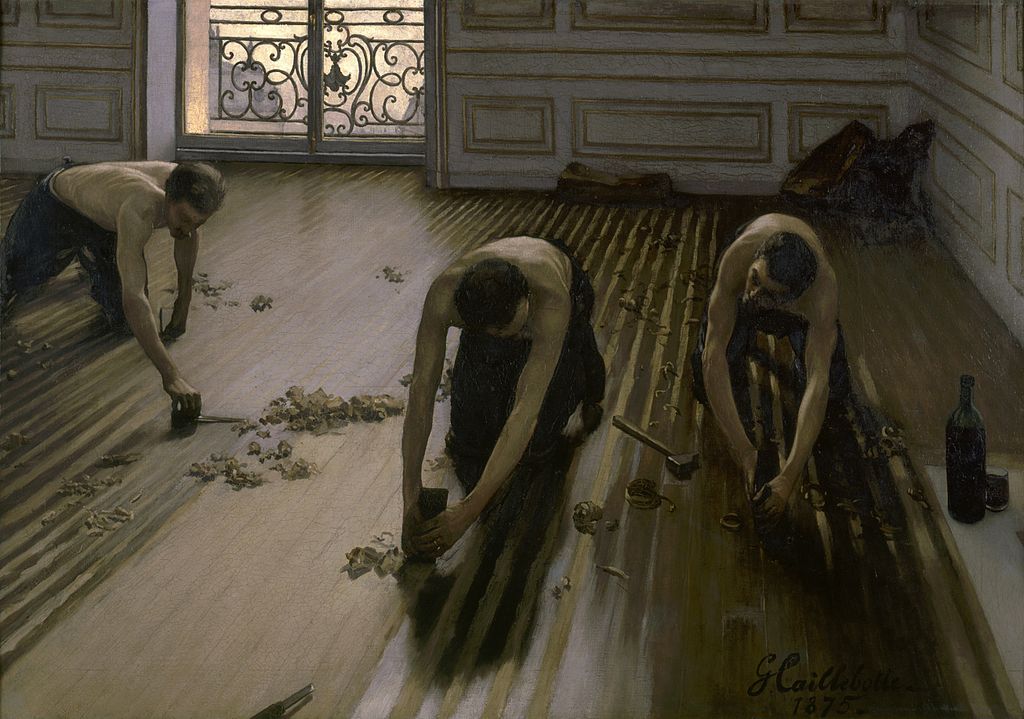
Gustave Caillebotte, Les Raboteurs de parquet (1875).
Performativizing Papyrocentricity #22
Papyrocentric Performativity Presents:
• Plates from the Great – Shots from the Front: The British Soldier 1914-18, Richard Holmes (HarperPress 2008; paperback 2010)
• Math for the Mistress – A Mathematician’s Apology, G.H. Hardy (1940)
• Sinister Sinema – Scalarama: A Celebration of Subterranean Cinema at Its Sleazy, Slimy and Sinister Best, ed. Norman Foreman, B.A. (TransVisceral Books 2015)
• Rick Pickings – Lost, Stolen or Shredded: Stories of Missing Works of Art and Literature, Rick Gekoski (Profile Books 2013/2014)
• Slug is a Drug – Collins Complete Guide to British Coastal Wildlife, Paul Sterry and Andrew Cleave (HarperCollins 2012) (posted @ Overlord of the Über-Feral)
Or Read a Review at Random: RaRaR
Omnibusserunt
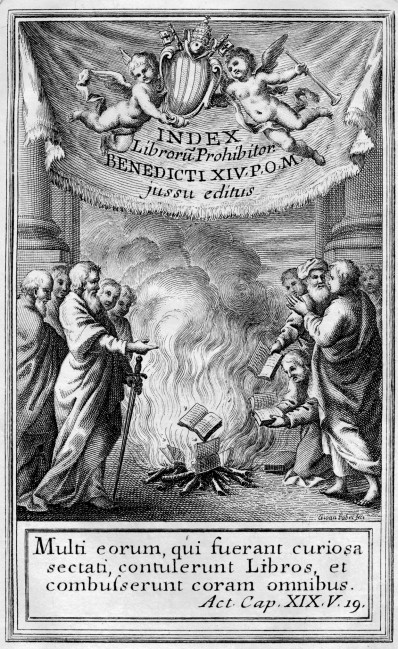
• Multi eorum, qui fuerant curiosa sectati, contulerant Libros et combusserunt coram omnibus. — Actus Apostolorum, xix, 19.
• Many of them also which used curious arts brought their books together, and burned them before all men. — The Acts of the Apostles, 19:19.
I Say, I Sigh, I Sow #8
Technology advances; human beings remain trivial.
Neuclid on the Block
How many blows does it take to demolish a wall with a hammer? It depends on the wall and the hammer, of course. If the wall is reality and the hammer is mathematics, you can do it in three blows, like this:
α’. Σημεῖόν ἐστιν, οὗ μέρος οὐθέν.
β’. Γραμμὴ δὲ μῆκος ἀπλατές.
γ’. Γραμμῆς δὲ πέρατα σημεῖα.1. A point is that of which there is no part.
2. A line is a length without breadth.
3. The extremities of a line are points.
That is the astonishing, world-shattering opening in one of the strangest – and sanest – books ever written. It’s twenty-three centuries old, was written by an Alexandrian mathematician called Euclid (fl. 300 B.C.), and has been pored over by everyone from Abraham Lincoln to Bertrand Russell by way of Edna St. Vincent Millay. Its title is highly appropriate: Στοιχεῖα, or Elements. Physical reality is composed of chemical elements; mathematical reality is composed of logical elements. The second reality is much bigger – infinitely bigger, in fact. In his Elements, Euclid slipped the bonds of time, space and matter by demolishing the walls of reality with a mathematical hammer and escaping into a world of pure abstraction.
• Continue reading Neuclid on the Block
 Overlord In Terms of Core Issues Around Maximal Engagement with Key Notions of the Über-Feral