Vers d’un Veuf

El Desdichado

Je suis le Ténébreux, – le Veuf, – l’Inconsolé,
Le prince d’Aquitaine à la tour abolie :
Ma seule étoile est morte, – et mon luth constellé
Porte le Soleil noir de la Mélancolie.

Dans la nuit du tombeau, toi qui m’as consolé,
Rends-moi le Pausilippe et la mer d’Italie,
La fleur qui plaisait tant à mon cœur désolé,
Et la treille où le pampre à la rose s’allie.

Suis-je Amour ou Phébus ?… Lusignan ou Biron ?
Mon front est rouge encor du baiser de la reine ;
J’ai rêvé dans la grotte où nage la syrène…

Et j’ai deux fois vainqueur traversé l’Achéron :
Modulant tour à tour sur la lyre d’Orphée
Les soupirs de la sainte et les cris de la fée.

Gérard de Nerval, Les Chimères (1856)


The Misfortunate One

I am the Dark One, – the Widower, – the Inconsolable,
The Prince of Aquitaine in the ruined tower:
My only star is dead, – and my star-studded lute
Bears the black Sun of Melancholy.

In the night of the tomb, thou who consoledst me,
Give me back Posillipo and the Italian sea,
The flower that so pleased my desolate heart,
And the vine where the tendril entwines with the rose.

Am I Love or Phoebus?… Lusignan or Biron?
My brow is still red from the queen’s kiss;

I dreamed in the grotto where the siren swims…

And twice victorious I crossed the Acheron:
Fingering in turn from Orpheus’s lyre
The sighs of the saint and the cries of the fairy.

Poeta Moquitur

Poeta Loquitur

If a person conceives an opinion
     That my verses are stuff that will wash,
Or my Muse has one plume on her pinion,
     That person’s opinion is bosh.
My philosophy, politics, free-thought!
     Are worth not three skips of a flea,
And the emptiest thoughts that can be thought
        Are mine on the sea.

In a maze of monotonous murmur
     Where reason roves ruined by rhyme,
In a voice neither graver nor firmer
     Than the bells on a fool’s cap chime,
A party pretentiously pensive,
     With a Muse that deserves to be skinned,
Makes language and metre offensive
        With rhymes on the wind.

A perennial procession of phrases
     Pranked primly, though pruriently prime,
Precipitates preachings on praises
     In a ruffianly riot of rhyme
Through the pressure of print on my pages:
     But reckless the reader must be
Who imagines me one of the sages
        That steer through Time’s sea.

Mad mixtures of Frenchified offal
     With insults to Christendom’s creed,
Blind blasphemy, schoolboylike scoff, all
     These blazon me blockhead indeed.
I conceive myself obviously some one
     Whose audience will never be thinned,
But the pupil must needs be a rum one
        Whose teacher is wind.

In my poems, with ravishing rapture
     Storm strikes me and strokes me and stings:
But I’m scarcely the bird you might capture
     Out of doors in the thick of such things.
I prefer to be well out of harm’s way
     When tempest makes tremble the tree,
And the wind with omnipotent arm-sway
        Makes soap of the sea.

Hanging hard on the rent rags of others,
     Who before me did better, I try
To believe them my sisters and brothers,
     Though I know what a low lot am I.
The mere sight of a church sets me yelping
     Like a boy that at football is shinned!
But the cause must indeed be past helping
        Whose gospel is wind.

All the pale past’s red record of history
     Is dusty with damnable deeds;
But the future’s mild motherly mystery
     Peers pure of all crowns and all creeds.
Truth dawns on time’s resonant ruin,
     Frank, fulminant, fragrant, and free:
And apparently this is the doing
        Of wind on the sea.

Fame flutters in front of pretension
     Whose flagstaff is flagrantly fine:
And it cannot be needful to mention
     That such beyond question is mine.
Some singers indulging in curses,
     Though sinful, have splendidly sinned:
But my would-be maleficent verses
        Are nothing but wind.

• Algernon Charles Swinburne viâ Pseudopodium


Elsewhere Other-Accessible…

Swinburne on Swinburne — “Poeta Loquitur” at Mind of Winter

Sky-Guy for the Strayed Eye

The sky is in the sand,
That blend of sea and land,
Where ribbled pools
Make optic fools
Of eyes that stray or strand.


Peri-Performative Post-Scriptum

This poem is my sub-Housmanesque attempt to capture the sight of sky reflected in pools between wave-ribbed sand, so that there seemed to be another world floating there. I don’t like “optic fools”, where the adjective is obtrusively un-Anglish. But I also considered “photic fools”, for the alliteration. In the end, I might have used “eyeish fools”, if it hadn’t meant I couldn’t use “eyes” in the final line. Alternatives like “Of all that…” or “Of those that…” didn’t seem good. Oh, and “Sky-Guy” uses guy in the sense of “trick” or “hoax”, not as it’s used in the title of the TV program paronomasized in the title of this post.

Papillons de Papier

Tsavudz’ gvdjo
Hmorksa ržmju:
Í hmístaghjo,
Í hmůldzva lšju! — Franček Zymosjő (1883-1941)

White butterflies,
On paper wings,
Are mystagogues,
Enchanted things!


• Translation by Elena Nebotsaya in On Paper Wings: Selected Poems and Prose of Franček Zymosjő (Symban Press 1986)

Absolutely Sabulous

Smooth between sea and land
Is laid the yellow sand,
And here through summer days
The seed of Adam plays.

Here the child comes to found
His unremaining mound,
And the grown lad to score
Two names upon the shore.

Here, on the level sand,
Between the sea and land,
What shall I build or write
Against the fall of night?

Tell me of runes to grave
That hold the bursting wave,
Or bastions to design
For longer date than mine.

Shall it be Troy or Rome
I fence against the foam,
Or my own name, to stay
When I depart for aye?

Nothing: too near at hand,
Planing the figure sand,
Effacing clean and fast
Cities not built to last
And charms devised in vain,
Pours the confounding main. — A.E. Housman, “XLV” of More Poems (1936)

Aventurhyme

The Merry Guide

Once in the wind of morning
     I ranged the thymy wold;
The world-wide air was azure
     And all the brooks ran gold.

There through the dews beside me
     Behold a youth that trod,
With feathered cap on forehead,
     And poised a golden rod.

With mien to match the morning
     And gay delightful guise
And friendly brows and laughter
     He looked me in the eyes.

Oh whence, I asked, and whither?
     He smiled and would not say,
And looked at me and beckoned
      And laughed and led the way.

And with kind looks and laughter
     And nought to say beside
We two went on together,
     I and my happy guide.

Across the glittering pastures
     And empty upland still
And solitude of shepherds
     High in the folded hill,

By hanging woods and hamlets
     That gaze through orchards down
On many a windmill turning
     And far-discovered town,

With gay regards of promise
     And sure unslackened stride
And smiles and nothing spoken
     Led on my merry guide.

By blowing realms of woodland
     With sunstruck vanes afield
And cloud-led shadows sailing
     About the windy weald,

By valley-guarded granges
     And silver waters wide,
Content at heart I followed
     With my delightful guide.

And like the cloudy shadows
     Across the country blown
We two fare on for ever,
     But not we two alone.

With the great gale we journey
     That breathes from gardens thinned,
Borne in the drift of blossoms
      Whose petals throng the wind;

Buoyed on the heaven-heard whisper
     Of dancing leaflets whirled
From all the woods that autumn
     Bereaves in all the world.

And midst the fluttering legion
     Of all that ever died
I follow, and before us
     Goes the delightful guide,

With lips that brim with laughter
     But never once respond,
And feet that fly on feathers,
     And serpent-circled wand.

• A.E. Housman, A Shropshire Lad, XLII


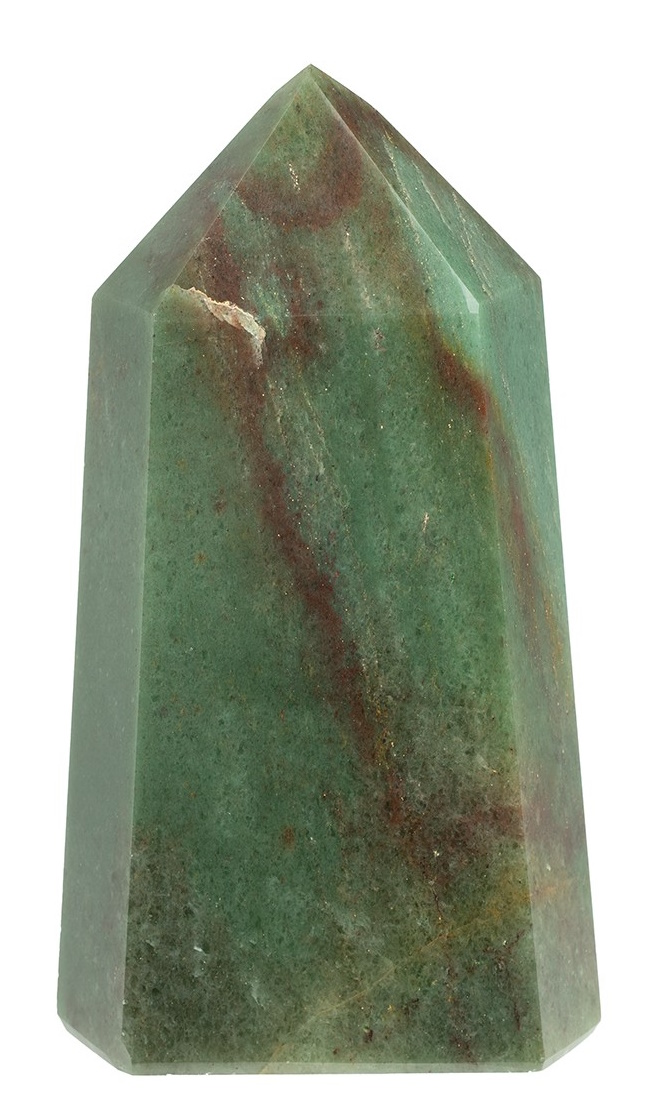
An aventurine obelisk (Unlimited Crystals)

This Old Housman

ტელლ მე ნოტ ჰერე, იტ ნეედს ნოტ საჲინგ,
უჰატ ტუნე თე ენჩანტრესს პლაჲს
ინ აფტერმათს ოფ სოფტ შეპტემბერ
ორ უნდერ ბლანჩინგ მაჲს,
ფორ შე ანდ ი უერე ლონგ აკყუაინტედ
ანდ ი კნეუ ალლ ჰერ უაჲს.

ონ რუსსეტ ფლოორს, ბჲ უატერს იდლე,
თე პინე ლეტს ფალლ იტს კონე;
თე კუკკოო შოუტს ალლ დაჲ ატ ნოთინგ
ინ ლეაფჲ დელლს ალონე;
ანდ ტრაველლერს ჯოჲ ბეგუილეს ინ აუტუმნ
ჰეარტს თატ ჰავე ლოსტ თეირ ოუნ.

ონ აკრეს ოფ თე სეედედ გრასსეს
თე ჩანგინგ ბურნიშ ჰეავეს;
ორ მარშალლედ უნდერ მოონს ოფ ჰარვესტ
შტანდ სტილლ ალლ ნიგჰტ თე შეავეს;
ორ ბეეჩეს სტრიპ ინ სტორმს ფორ უინტერ
ანდ სტაინ თე უინდ უით ლეავეს.

პოსსესს, ას ი პოსსესსედ ა სეასონ,
თე კოუნტრიეს ი რესიგნ,
უჰერე ოვერ ელმჲ პლაინს თე ჰიგჰუაჲ
უოულდ მოუნტ თე ჰილლს ანდ შინე,
ანდ ფულლ ოფ შადე თე პილლარედ ფორესტ
უოულდ მურმურ ანდ ბე მინე.

ფორ ნატურე, ჰეარტლესს, უიტლესს ნატურე,
უილლ ნეითერ კარე ნორ კნოუ
უჰატ სტრანგერს ფეეტ მაჲ ფინდ თე მეადოუ
ანდ ტრესპასს თერე ანდ გო,
ნორ ასკ ამიდ თე დეუს ოფ მორნინგ
იფ თეჲ არე მინე ორ ნო.

Viler Smiler

Less is more. It’s a principle for good writing, not an unalterable law. And one of the best expositions of the principle was given by A.E. Housman in his lecture “The Name and Nature of Poetry” (1933):

Dryden’s translation [of The Canterbury Tales] shows Dryden in the maturity of his power and accomplishment, and much of it can be honestly and soberly admired. Nor was he insensible to all the peculiar excellence of Chaucer: he had the wit to keep unchanged such lines as ‘Up rose the sun and up rose Emily’ or ‘The slayer of himself yet saw I there’; he understood that neither he nor anyone else could better them. But much too often in a like case he would try to improve, because he thought that he could. He believed, as he says himself, that he was ‘turning some of the Canterbury Tales into our language, as it is now refined’; ‘the words’ he says again ‘are given up as a post not to be defended in our poet, because he wanted the modern art of fortifying’; ‘in some places’ he tells us ‘I have added somewhat of my own where I thought my author was deficient, and had not given his thoughts their true lustre, for want of words in the beginning of our language’.

Let us look at the consequences. Chaucer’s vivid and memorable line

The smiler with the knife under the cloke

becomes these three:

Next stood Hypocrisy, with holy leer,
Soft smiling and demurely looking down,
But hid the dagger underneath the gown.

Again:

Alas, quod he, that day that I was bore.

So Chaucer, for want of words in the beginning of our language. Dryden comes to his assistance and gives his thoughts their true lustre thus:

Cursed be the day when first I did appear;
Let it be blotted from the calendar,
Lest it pollute the month and poison all the year.

Or yet again:

The queen anon for very womanhead
Gan for to weep, and so did Emily
And all the ladies in the company.

If Homer or Dante had the same thing to say, would he wish to say it otherwise? But to Dryden Chaucer wanted the modern art of fortifying, which he thus applies:

He said; dumb sorrow seized the standers-by.
The queen, above the rest, by nature good
(The pattern formed of perfect womanhood)
For tender pity wept: when she began
Through the bright quire the infectious virtue ran.
All dropped their tears, even the contended maid.


• “The Name and Nature of Poetry” (1933) by A.E. Housman — more of “less is more”