Summer Samer

10 can be represented in exactly 10 ways as a sum of distinct integers:


10 = 1 + 2 + 3 + 4
10 = 2 + 3 + 5
10 = 1 + 4 + 5
10 = 1 + 3 + 6
10 = 4 + 6 (c=5)
10 = 1 + 2 + 7
10 = 3 + 7
10 = 2 + 8
10 = 1 + 9
10 = 10 (c=10)

But there’s something unsatisfying about including 10 as a sum of itself. It’s much more satisfying that 76 can be represented in exactly 76 ways as a sum of distinct primes:


76 = 2 + 3 + 7 + 11 + 13 + 17 + 23
76 = 5 + 7 + 11 + 13 + 17 + 23
76 = 2 + 3 + 5 + 11 + 13 + 19 + 23
76 = 3 + 7 + 11 + 13 + 19 + 23
76 = 2 + 3 + 5 + 7 + 17 + 19 + 23 (c=5)
76 = 2 + 3 + 5 + 7 + 13 + 17 + 29
76 = 2 + 3 + 5 + 7 + 11 + 19 + 29
76 = 3 + 5 + 7 + 13 + 19 + 29
76 = 11 + 17 + 19 + 29
76 = 11 + 13 + 23 + 29 (c=10)
76 = 2 + 5 + 17 + 23 + 29
76 = 7 + 17 + 23 + 29
76 = 2 + 3 + 19 + 23 + 29
76 = 5 + 19 + 23 + 29
76 = 2 + 3 + 5 + 7 + 11 + 17 + 31 (c=15)
76 = 3 + 5 + 7 + 13 + 17 + 31
76 = 3 + 5 + 7 + 11 + 19 + 31
76 = 2 + 11 + 13 + 19 + 31
76 = 2 + 7 + 17 + 19 + 31
76 = 2 + 7 + 13 + 23 + 31 (c=20)
76 = 2 + 3 + 17 + 23 + 31
76 = 5 + 17 + 23 + 31
76 = 3 + 19 + 23 + 31
76 = 2 + 3 + 11 + 29 + 31
76 = 5 + 11 + 29 + 31 (c=25)
76 = 3 + 13 + 29 + 31
76 = 3 + 5 + 7 + 11 + 13 + 37
76 = 2 + 7 + 13 + 17 + 37
76 = 2 + 7 + 11 + 19 + 37
76 = 2 + 5 + 13 + 19 + 37 (c=30)
76 = 7 + 13 + 19 + 37
76 = 3 + 17 + 19 + 37
76 = 2 + 3 + 11 + 23 + 37
76 = 5 + 11 + 23 + 37
76 = 3 + 13 + 23 + 37 (c=35)
76 = 2 + 3 + 5 + 29 + 37
76 = 3 + 7 + 29 + 37
76 = 3 + 5 + 31 + 37
76 = 2 + 5 + 11 + 17 + 41
76 = 7 + 11 + 17 + 41 (c=40)
76 = 2 + 3 + 13 + 17 + 41
76 = 5 + 13 + 17 + 41
76 = 2 + 3 + 11 + 19 + 41
76 = 5 + 11 + 19 + 41
76 = 3 + 13 + 19 + 41 (c=45)
76 = 2 + 3 + 7 + 23 + 41
76 = 5 + 7 + 23 + 41
76 = 2 + 7 + 11 + 13 + 43
76 = 2 + 3 + 11 + 17 + 43
76 = 5 + 11 + 17 + 43 (c=50)
76 = 3 + 13 + 17 + 43
76 = 2 + 5 + 7 + 19 + 43
76 = 3 + 11 + 19 + 43
76 = 2 + 3 + 5 + 23 + 43
76 = 3 + 7 + 23 + 43 (c=55)
76 = 2 + 31 + 43
76 = 2 + 3 + 11 + 13 + 47
76 = 5 + 11 + 13 + 47
76 = 2 + 3 + 7 + 17 + 47
76 = 5 + 7 + 17 + 47 (c=60)
76 = 2 + 3 + 5 + 19 + 47
76 = 3 + 7 + 19 + 47
76 = 29 + 47
76 = 2 + 3 + 7 + 11 + 53
76 = 5 + 7 + 11 + 53 (c=65)
76 = 2 + 3 + 5 + 13 + 53
76 = 3 + 7 + 13 + 53
76 = 23 + 53
76 = 2 + 3 + 5 + 7 + 59
76 = 17 + 59 (c=70)
76 = 3 + 5 + 7 + 61
76 = 2 + 13 + 61
76 = 2 + 7 + 67
76 = 2 + 3 + 71
76 = 5 + 71 (c=75)
76 = 3 + 73
Summer Sets (and Truncated Triangulars)

Here is the sequence of triangular numbers, created by summing consecutive integers from 1 (i.e., 1+2+3+4+5…):


1, 3, 6, 10, 15, 21, 28, 36, 45, 55, 66, 78, 91, 105, 120, 136, 153, 171, 190, 210, 231, 253, 276, 300, 325, 351, 378, 406, 435, 465, 496, 528, 561, 595, 630, 666, 703, 741, 780, 820, 861, 903, 946, 990, 1035, 1081, 1128, 1176, 1225, 1275, 1326, 1378, 1431, 1485, 1540, 1596, 1653, 1711, 1770, 1830, 1891, 1953, 2016, 2080, 2145, 2211, 2278, 2346, 2415, 2485, 2556, 2628, 2701, 2775, 2850, 2926, 3003, 3081, 3160, 3240, 3321, 3403, 3486, 3570, 3655, 3741, 3828, 3916, 4005, 4095, 4186, 4278, 4371, 4465, 4560, 4656, 4753, 4851, 4950, 5050, 5151, 5253, 5356, 5460, 5565, 5671, 5778, 5886, 5995...

And here is a sequence of truncated triangulars, created by summing consecutive integers from 15 (i.e., 15+16+17+18+19…):


15, 31, 48, 66, 85, 105, 126, 148, 171, 195, 220, 246, 273, 301, 330, 360, 391, 423, 456, 490, 525, 561, 598, 636, 675, 715, 756, 798, 841, 885, 930, 976, 1023, 1071, 1120, 1170, 1221, 1273, 1326, 1380, 1435, 1491, 1548, 1606, 1665, 1725, 1786, 1848, 1911, 1975, 2040, 2106, 2173, 2241, 2310, 2380, 2451, 2523, 2596, 2670, 2745, 2821, 2898, 2976, 3055, 3135, 3216, 3298, 3381, 3465, 3550, 3636, 3723, 3811, 3900, 3990, 4081, 4173, 4266, 4360, 4455, 4551, 4648, 4746, 4845, 4945, 5046, 5148, 5251, 5355, 5460, 5566, 5673, 5781...

It’s obvious that the sequences are different at each successive step: 1 ≠ 15, 3 ≠ 31, 6 ≠ 48, 10 ≠ 66, 21 ≠ 85, and so on. But seven numbers occur in both sequences: 15, 66, 105, 171, 561, 1326 and 5460. And that’s it — 7 is the 14-th entry in A309507 at the Encyclopedia of Integer Sequences:

0, 1, 1, 1, 3, 3, 1, 2, 5, 3, 3, 3, 3, 7, 3, 1, 5, 5, 3, 7, 7, 3, 3, 5, 5, 7, 7, 3, 7, 7, 1, 3, 7, 7, 11, 5, 3, 7, 7, 3, 7, 7, 3, 11, 11, 3, 3, 5, 8, 11, 7, 3, 7, 15, 7, 7, 7, 3, 7, 7, 3, 11, 5, 3, 15, 7, 3, 7, 15, 7, 5, 5, 3, 11, 11, 7, 15, 7, 3, 9, 9, 3, 7 — A309507

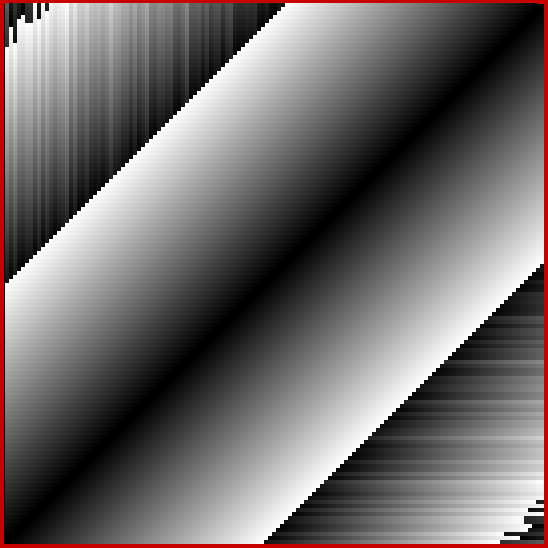
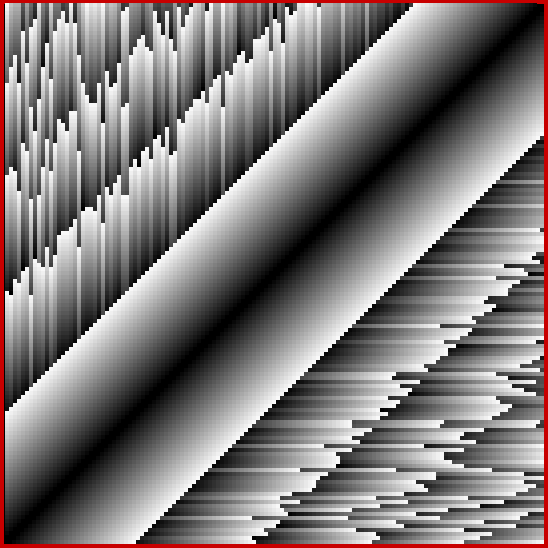
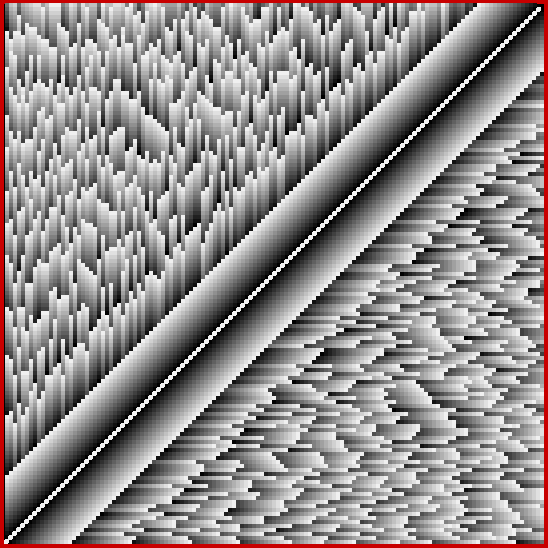
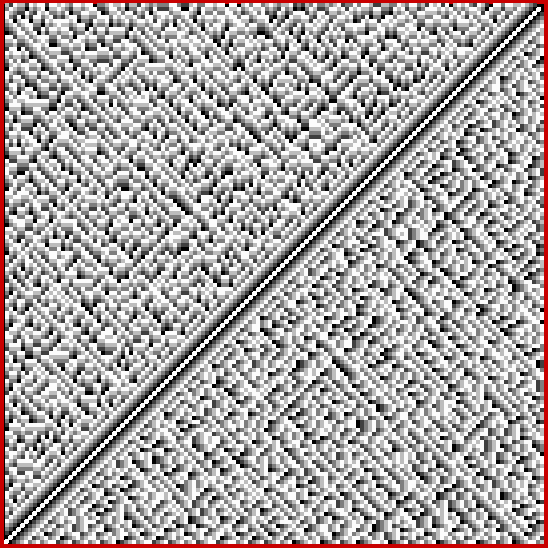
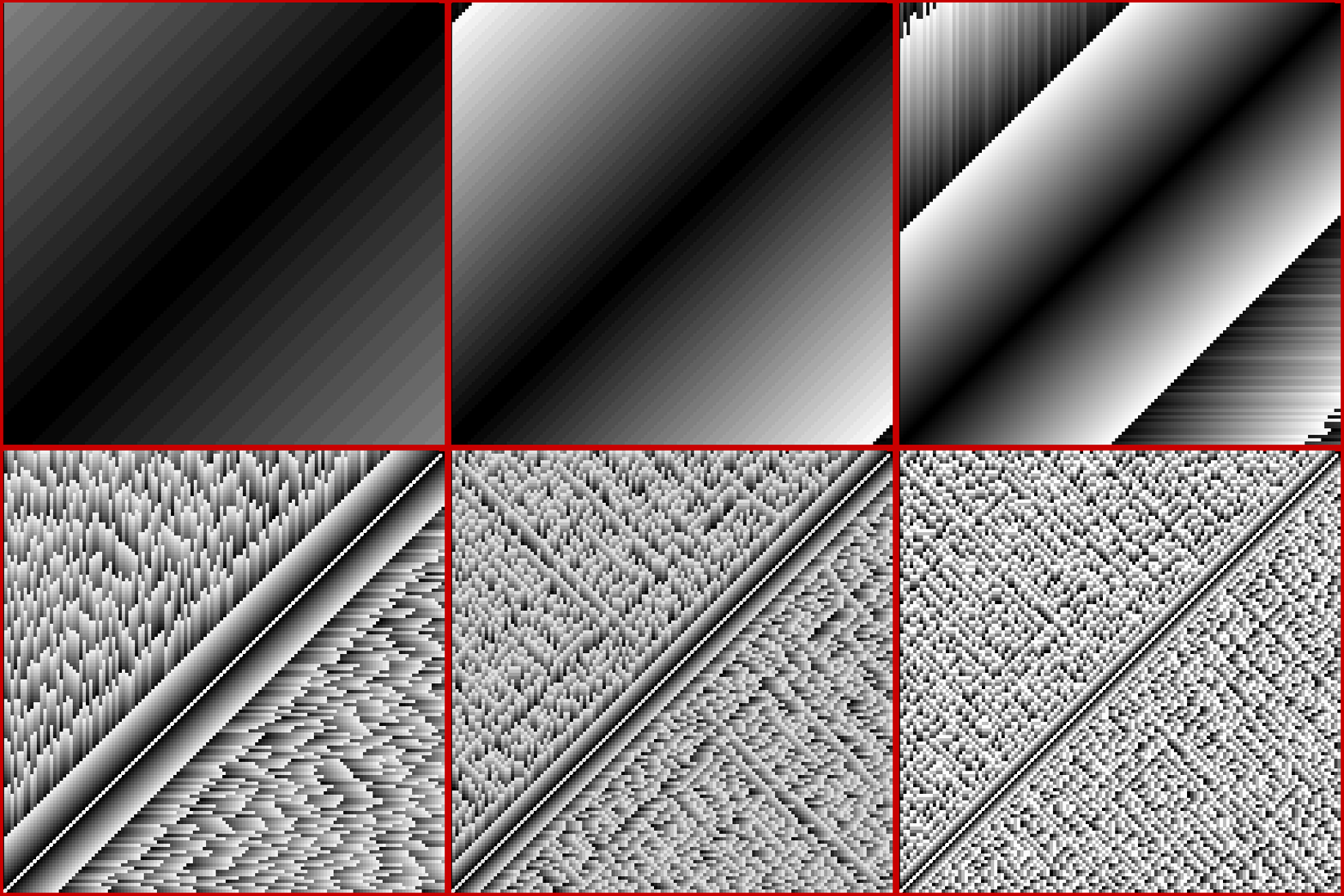
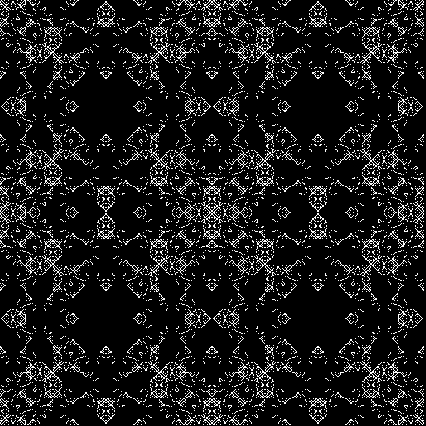
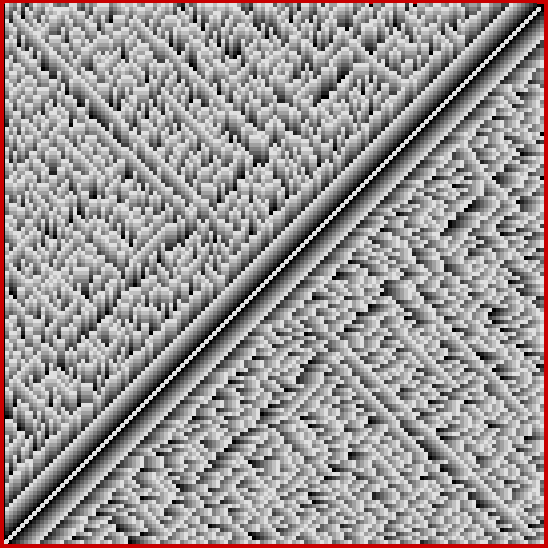
I decided to take create graphs of shared numbers in compared sequences like this. In the 135×135 grid below, the brightness of the squares corresponds to the count of shared numbers in the sequence-pair sum(x..x+n) and sum(y..y+n), where x and y are the coordinates of each individual square. I think the grid looks like a city of skyscrapers bisected by a highway:

Count of shared numbers in sequence-pairs sum(x..x+n) and sum(y..y+n)


Note that the bright white diagonal in the grid corresponds to the sequence-pairs where x = y. Because the sequences are identical in each pair, the count of shared numbers is infinite. The grid is symmetrically reflected along the diagonal because, for example, the sequence-pair for x=12, y=43, where sum(12..12+n) is compared with sum(43..43+n), corresponds to the sequence pair for x=43, y=12, where sum(43..43+n) is compared with sum(12..12+n). The scale of brightness runs from 0 (black) to 255 (full white) and increases by 32 for each shared number in the sequence. Obviously, then, the brightness can’t increase indefinitely and some maximally bright squares will represent sequence-pairs that have different counts of shared pairs.

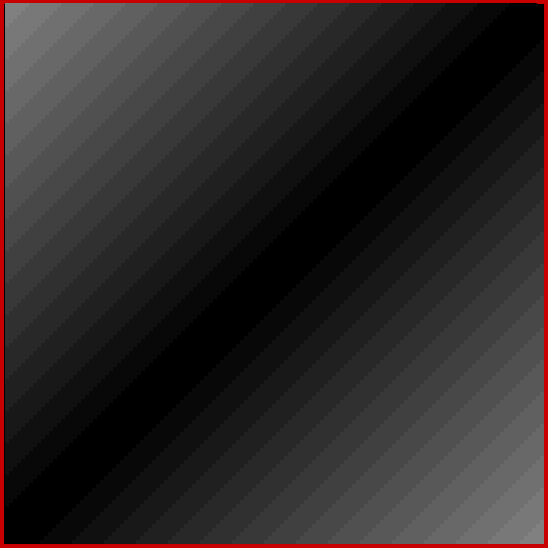
Now try altering the size of the step in brightness. You get grids in which the width of the central strip increases (smaller step) or decreases (bigger step). Here are grids for steps for 1, 2, 4, 8, 16, 32 and 64 (I’ve removed the bright x=y diagonal for the first few grids, because it’s too prominent against duller shades):

Brightness-step = 1


Brightness-step = 2


Brightness-step = 4


Brightness-step = 8


Brightness-step = 16


Brightness-step = 32


Brightness-step = 63


Brightness-step = 1, 2, 4, 8, 16, 32, 63 (animated)


Power Flip

12 is an interesting number in a lot of ways. Here’s one way I haven’t seen mentioned before:

12 = 3^1 * 2^2


The digits of 12 represent the powers of the primes in its factorization, if primes are represented from right-to-left, like this: …7, 5, 3, 2. But I couldn’t find any more numbers like that in base 10, so I tried a power flip, from right-left to left-right. If the digits from left-to-right represent the primes in the order 2, 3, 5, 7…, then this number is has prime-power digits too:

81312000 = 2^8 * 3^1 * 5^3 * 7^1 * 11^2 * 13^0 * 17^0 * 19^0


Or, more simply, given that n^0 = 1:

81312000 = 2^8 * 3^1 * 5^3 * 7^1 * 11^2


I haven’t found any more left-to-right prime-power digital numbers in base 10, but there are more in other bases. Base 5 yields at least three (I’ve ignored numbers with just two digits in a particular base):

110 in b2 = 2^1 * 3^1 (n=6)
130 in b6 = 2^1 * 3^3 (n=54)
1010 in b2 = 2^1 * 3^0 * 5^1 (n=10)
101 in b3 = 2^1 * 3^0 * 5^1 (n=10)
202 in b7 = 2^2 * 3^0 * 5^2 (n=100)
3020 in b4 = 2^3 * 3^0 * 5^2 (n=200)
330 in b8 = 2^3 * 3^3 (n=216)
13310 in b14 = 2^1 * 3^3 * 5^3 * 7^1 (n=47250)
3032000 in b5 = 2^3 * 3^0 * 5^3 * 7^2 (n=49000)
21302000 in b5 = 2^2 * 3^1 * 5^3 * 7^0 * 11^2 (n=181500)
7810000 in b9 = 2^7 * 3^8 * 5^1 (n=4199040)
81312000 in b10 = 2^8 * 3^1 * 5^3 * 7^1 * 11^2


Post-Performative Post-Scriptum

When I searched for 81312000 at the Online Encyclopedia of Integer Sequences, I discovered that these are Meertens numbers, defined at A246532 as the “base n Godel encoding of x [namely,] 2^d(1) * 3^d(2) * … * prime(k)^d(k), where d(1)d(2)…d(k) is the base n representation of x.”

The Number of the Creased

Here’s an idea for a story à la M.R. James. A middle-aged scholar opens some mail one morning and finds nothing inside one envelope but a strip of paper with the numbers 216348597 written on it in sinister red ink. Someone has folded the strip several times so that there are creases between groups of numbers, like this: 216|348|5|97. Wondering what the significance of the creases is, the scholar hits on the step of adding the numbers created by them:


216 + 348 + 5 + 97 = 666

After that… Well, I haven’t written the story yet. But that beginning raises an obvious question. Is there any other way of getting a Number of the Creased from 216348597? That is, can you get 666, the Number of the Beast, by dividing 216348597 in another way? Yes, you can. In fact, there are six ways of creating 666 by dividing-and-summing 216348597:


666 = 2 + 1 + 634 + 8 + 5 + 9 + 7
666 = 2 + 163 + 485 + 9 + 7
666 = 216 + 348 + 5 + 97
666 = 21 + 63 + 485 + 97
666 = 21 + 6 + 34 + 8 + 597
666 = 2 + 16 + 3 + 48 + 597


216348597 is a permutation of 123456789, so does 123456789 yield a Number of the Creased? Yes. Two of them, in fact:


666 = 123 + 456 + 78 + 9
666 = 1 + 2 + 3 + 4 + 567 + 89


And 987654321 yields another:


666 = 9 + 87 + 6 + 543 + 21


And what about other permutations of 123456789? These are the successive records:

Using 123456789

666 = 123 + 456 + 78 + 9
666 = 1 + 2 + 3 + 4 + 567 + 89 (c=2)


Using 123564789

666 = 12 + 3 + 564 + 78 + 9
666 = 123 + 56 + 478 + 9
666 = 1 + 2 + 3 + 564 + 7 + 89 (c=3)


Using 125463978

666 = 1 + 2 + 5 + 4 + 639 + 7 + 8
666 = 12 + 546 + 3 + 97 + 8
666 = 1 + 254 + 6 + 397 + 8
666 = 1 + 2 + 546 + 39 + 78 (c=4)


Using 139462578

666 = 13 + 9 + 4 + 625 + 7 + 8
666 = 139 + 462 + 57 + 8
666 = 1 + 394 + 6 + 257 + 8
666 = 1 + 39 + 46 + 2 + 578
666 = 13 + 9 + 4 + 62 + 578 (c=5)


Using 216348597

666 = 2 + 1 + 634 + 8 + 5 + 9 + 7
666 = 2 + 163 + 485 + 9 + 7
666 = 216 + 348 + 5 + 97
666 = 21 + 63 + 485 + 97
666 = 21 + 6 + 34 + 8 + 597
666 = 2 + 16 + 3 + 48 + 597 (c=6)


216348597 is the best of the bestial. No other permutation of 123456789 yields as many as six Numbers of the Creased.

Fair Pairs

You can get a glimpse of the gorgeous very easily. After all, you can work out the following sum in your head: 1 + 2 + 3 + 4 + 5 = ?

The answer is… 1 + 2 + 3 + 4 + 5 = 15. So that sum is example of this pattern: n1:n2 = sum(n1..n2). A simple computer program will soon supply other sums of consecutive numbers following the same pattern. I think these patterns based on the pair n1 and n2 are beautiful, so I’d call them fair pairs:


15 = sum(1..5)
27 = sum(2..7)
429 = sum(4..29)
1353 = sum(13..53)
1863 = sum(18..63)
3388 = sum(33..88)
3591 = sum(35..91)
7119 = sum(7..119)
78403 = sum(78..403)
133533 = sum(133..533)
178623 = sum(178..623)
2282148 = sum(228..2148)
2732353 = sum(273..2353)
3882813 = sum(388..2813)
7103835 = sum(710..3835)
13335333 = sum(1333..5333)
17016076 = sum(1701..6076)
17786223 = sum(1778..6223)


I went looking for variants on that pattern. If the function rev(n) reverses the digits of n, here’s n1:rev(n2) = sum(n1..n2):


155975 = sum(155..579)
223407 = sum(223..704)
4957813 = sum(495..3187)


I like that pattern, but it doesn’t seem beautiful like n1:n2 = sum(n1..n2). Nor does rev(n1):n2 = sum(n1..n2):


1575 = sum(51..75)
96444 = sum(69..444)
304878 = sum(403..878)
392933 = sum(293..933)
3162588 = sum(613..2588)
3252603 = sum(523..2603)
3642738 = sum(463..2738)
3772853 = sum(773..2853)
6653691 = sum(566..3691)
8714178 = sum(178..4178)


But rev(n1):rev(n2) = sum(n1..n2) is beautiful again, in a twisted kind of way:


97944 = sum(79..449)
452489 = sum(254..984)
3914082 = sum(193..2804)
6097063 = sum(906..3607)
6552663 = sum(556..3662)


Now try swapping n1 and n2. Here’s n2:n1 = sum(n1..n2):


204 = sum(4..20)
216 = sum(6..21)
20328 = sum(28..203)
21252 = sum(52..212)
21762 = sum(62..217)
23287 = sum(87..232)
23490 = sum(90..234)
2006118 = sum(118..2006)
2077402 = sum(402..2077)
2132532 = sum(532..2132)
2177622 = sum(622..2177)


Do I find the pattern beautiful? Yes, but it’s not as beautiful as n1:n2 = sum(n1..n2). The beauty disappears in n2:rev(n1) = sum(n1..n2):


21074 = sum(47..210)
21465 = sum(56..214)
22797 = sum(79..227)
2013561 = sum(165..2013)
2046803 = sum(308..2046)
2099754 = sum(457..2099)
2145065 = sum(560..2145)


And rev(n2):n1 = sum(n1..n2):


638 = sum(8..36)
2952 = sum(52..92)
21252 = sum(52..212)
23287 = sum(87..232)
66341 = sum(41..366)
208477 = sum(477..802)
2522172 = sum(172..2252)
2852982 = sum(982..2582)
7493772 = sum(772..3947)
8714178 = sum(178..4178)


Finally, and fairly again, rev(n2):rev(n1) = sum(n1..n2):


638 = sum(8..36)
125541 = sum(145..521)
207972 = sum(279..702)
158046 = sum(640..851)
9434322 = sum(223..4349)


The beauty’s back. And it has almost become self-aware. In rev(n2):rev(n1) = sum(n1..n2), each side of the equation seems to be looking at the other half as those it’s looking into a mirror.


Previously Pre-Posted (Please Peruse)…

Nuts for Numbers — looking at patterns like 2772 = sum(22..77)

Trigging Triangles

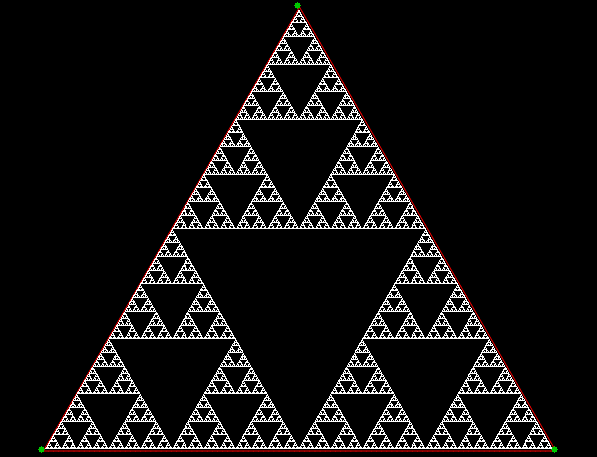
A fractal is a shape in which a part looks like the whole. Trees are fractals. And lungs. And clouds. But there are man-made fractals too and probably the most famous of them all is the Sierpiński triangle, invented by the Polish mathematician Wacław Sierpiński (1882-1969):

Sierpiński triangle


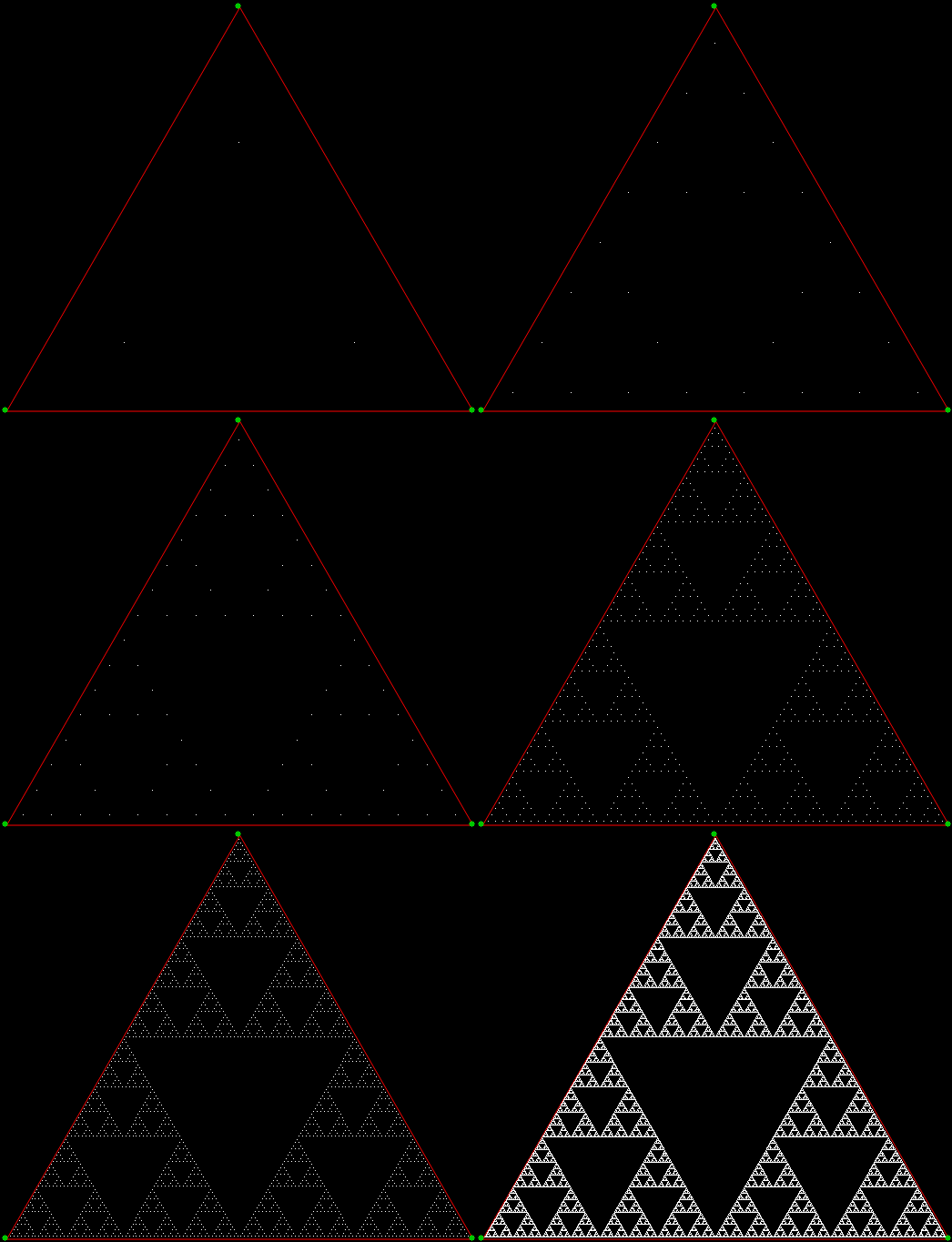
There are many ways to create a Sierpiński triangle, but one of the simplest is to trace all possible routes followed by a point jumping halfway towards the vertices of an equilateral triangle. If you mark the endpoint of the jumps, the Sierpiński triangle appears as the routes get longer and longer, like this:

Point jumping 1/2 way towards vertices of an equilateral triangle (animated)


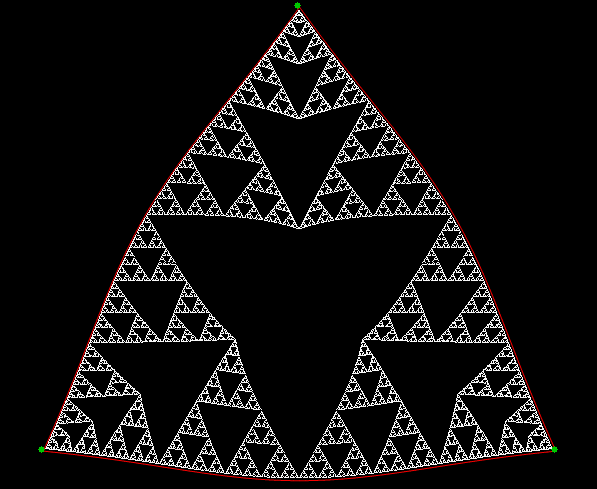
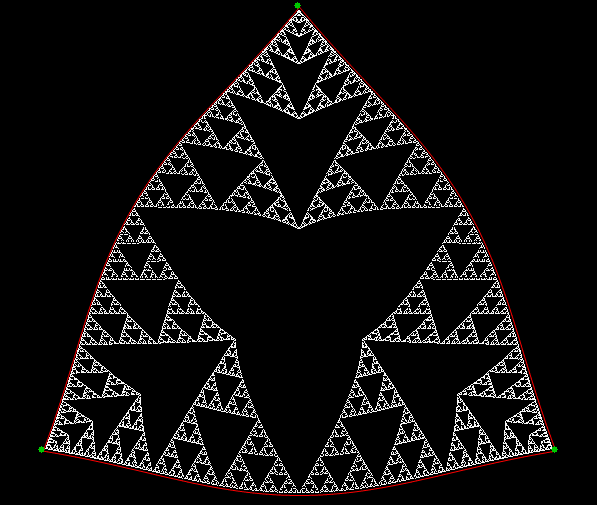
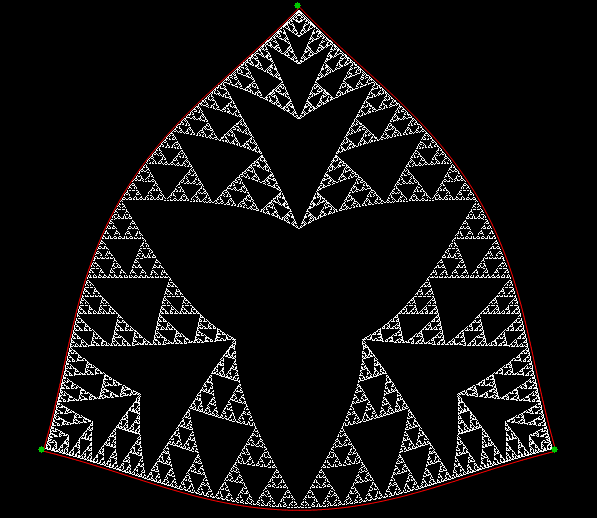
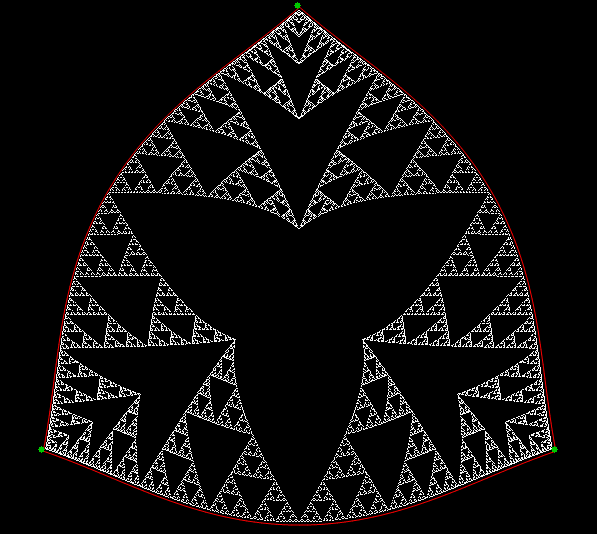
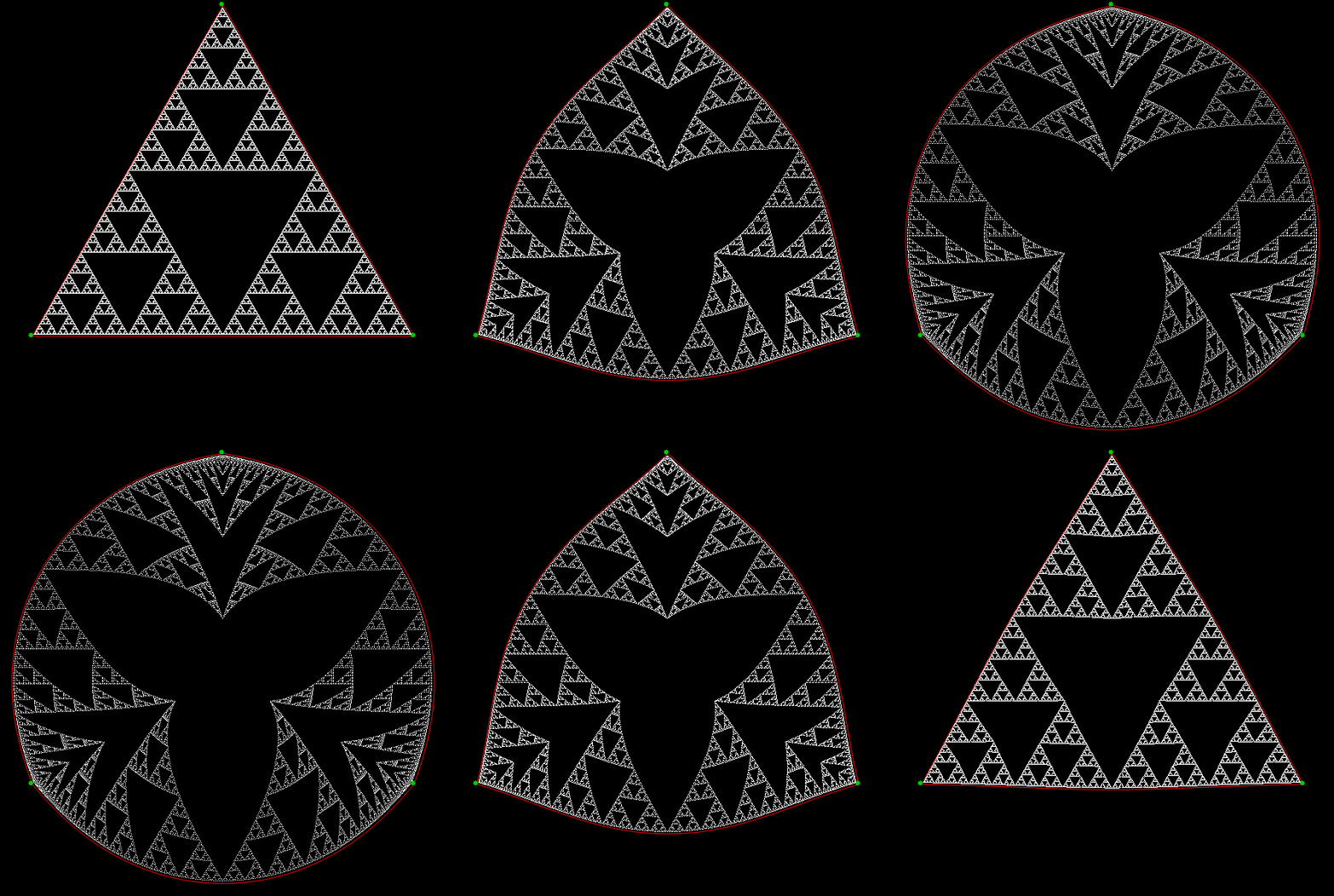
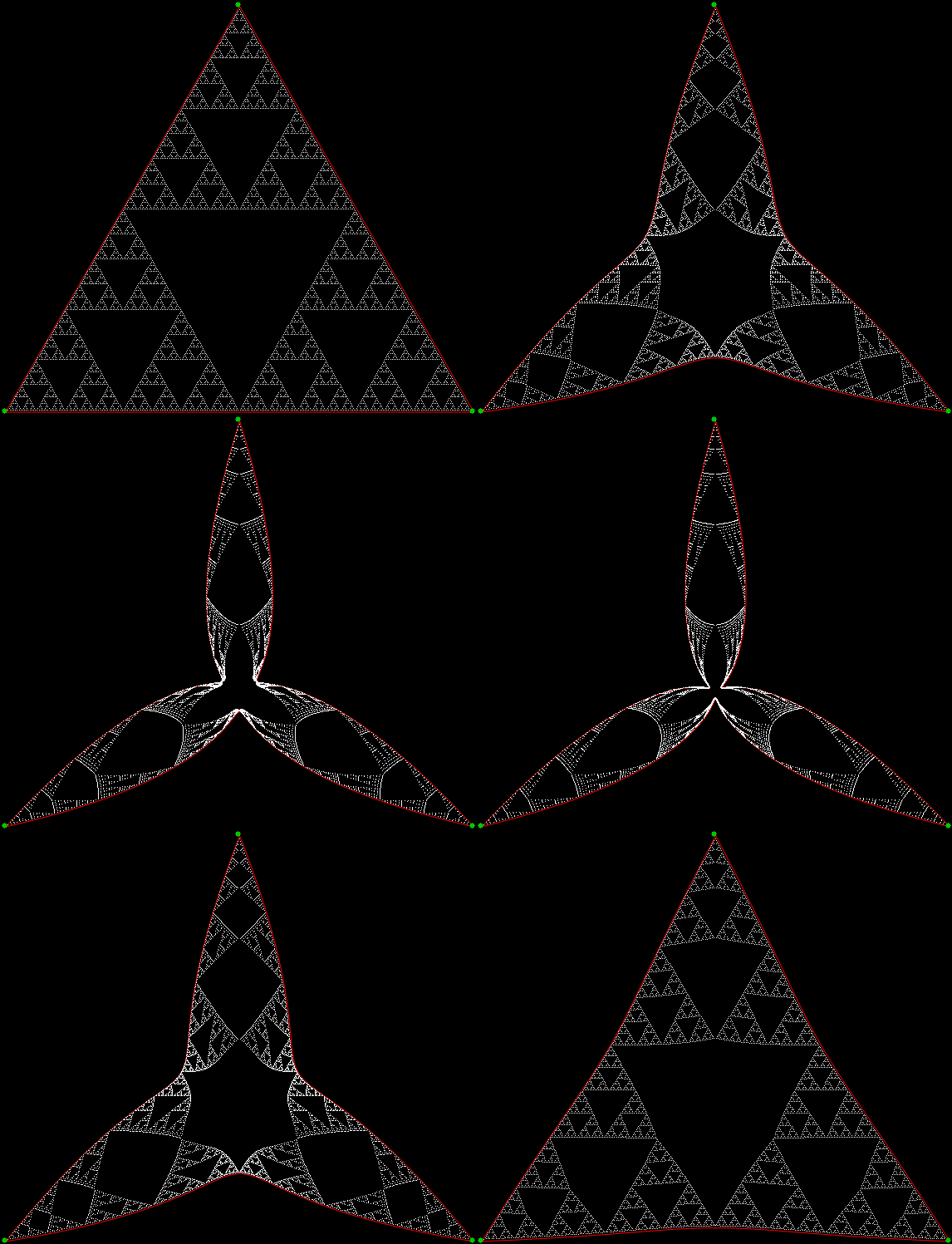
Once you’ve created a Sierpiński triangle like that, you can play with it. For example, you can use simple trigonometry to stretch the triangle into a circle:

Sierpiński triangle to circle stage #1


Sierpiński triangle to circle #2


Sierpiński triangle to circle #3


Sierpiński triangle to circle #4


Sierpiński triangle to circle #5


Sierpiński triangle to circle #6


Sierpiński triangle to circle #7


Sierpiński triangle to circle #8


Sierpiński triangle to circle #9


Sierpiński triangle to circle #10


Sierpiński triangle to Sierpiński circle (animated)


But the trigging of the triangle can go further. You can expand the Sierpiński circle further, like this:

Sierpiński circle expanded


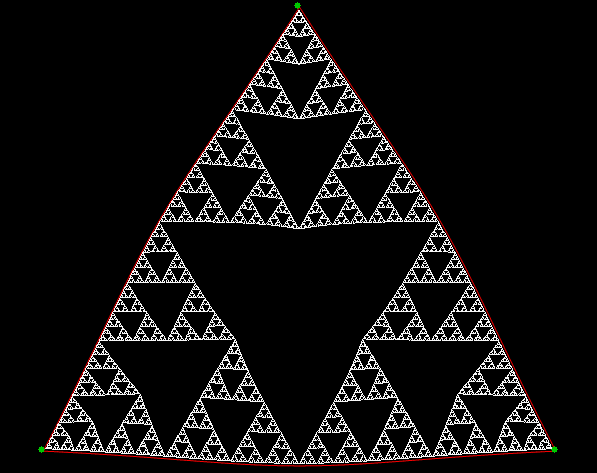
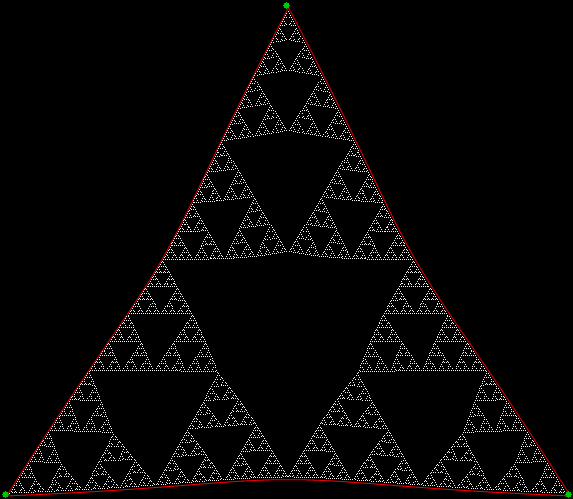
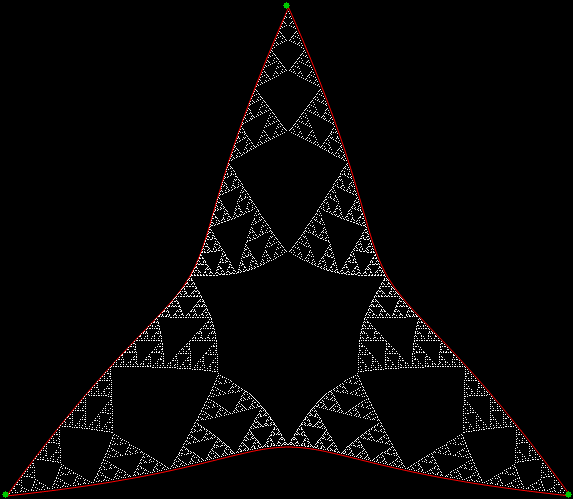
Or shrink the Sierpiński triangle like this:

Shrinking Sierpiński triangle stage #1


Shrinking Sierpiński triangle #2


Shrinking Sierpiński triangle #3


Shrinking Sierpiński triangle #4


Shrinking Sierpiński triangle #5


Shrinking Sierpiński triangle #6


Shrinking Sierpiński triangle (animated)


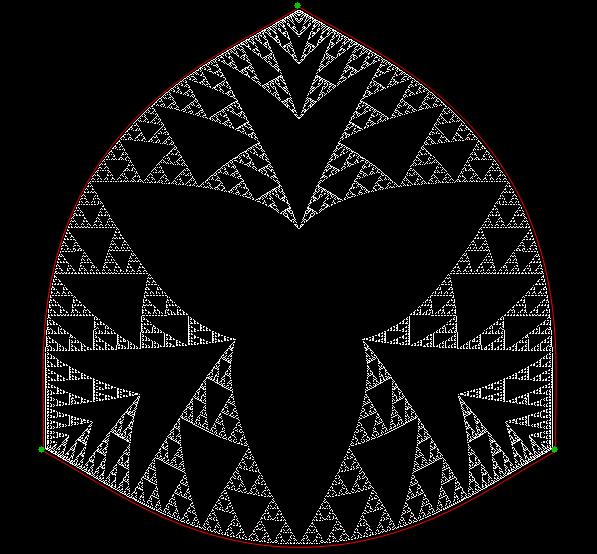
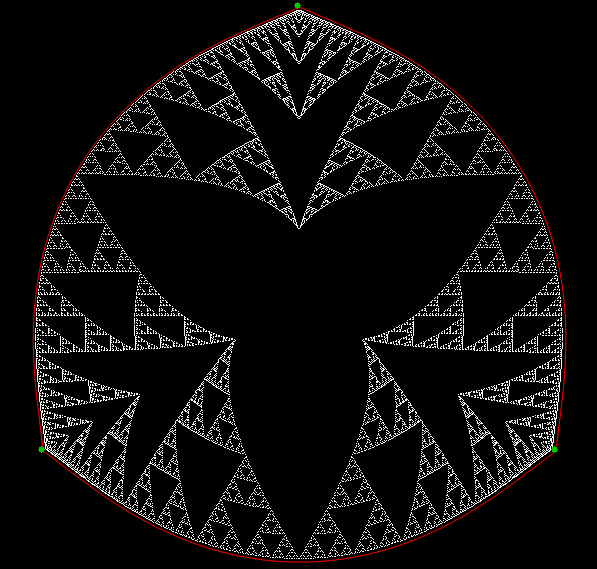
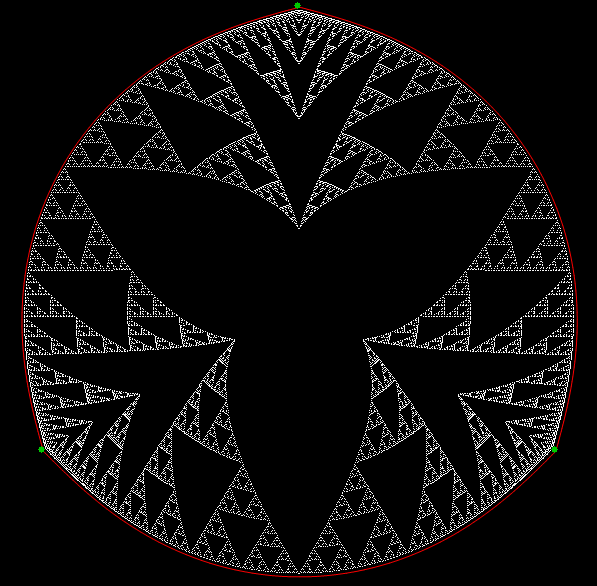
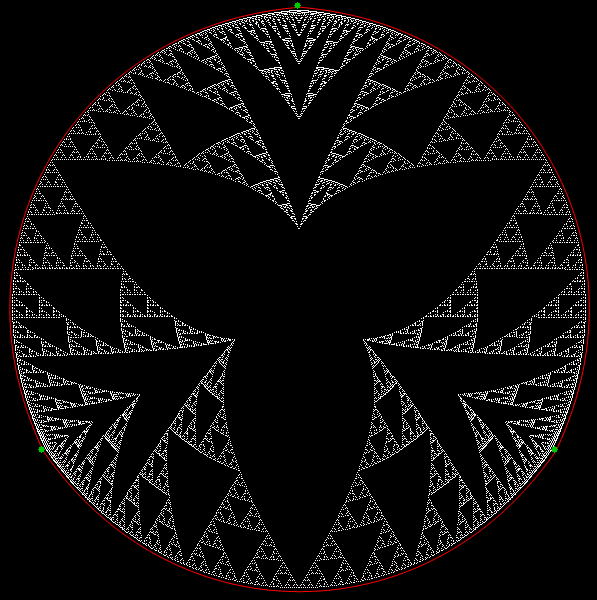
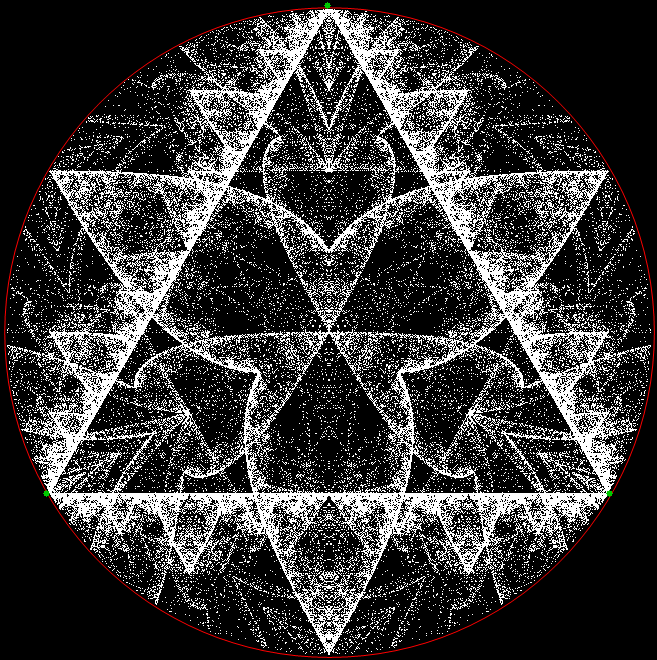
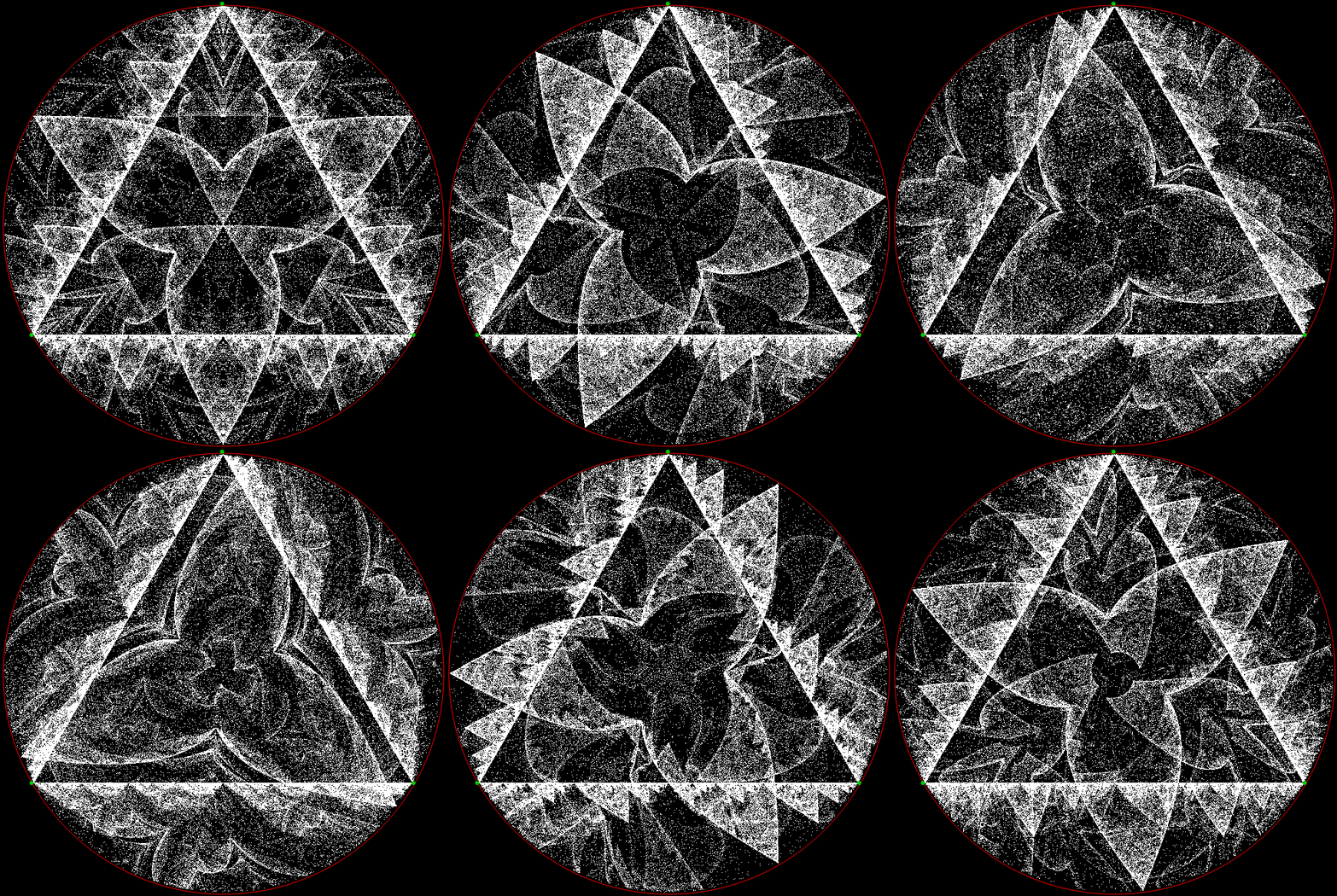
You can also create new shapes using the jumping-point technique. Suppose that, as the point is jumping, you adjust its position outwards into the circumscribed circle whenever it lands within the boundaries of the governing triangle. But if the point lands outside those boundaries, you leave it alone. Using this adapted technique, you get a shape like this:

Adjusted Sierpiński circle


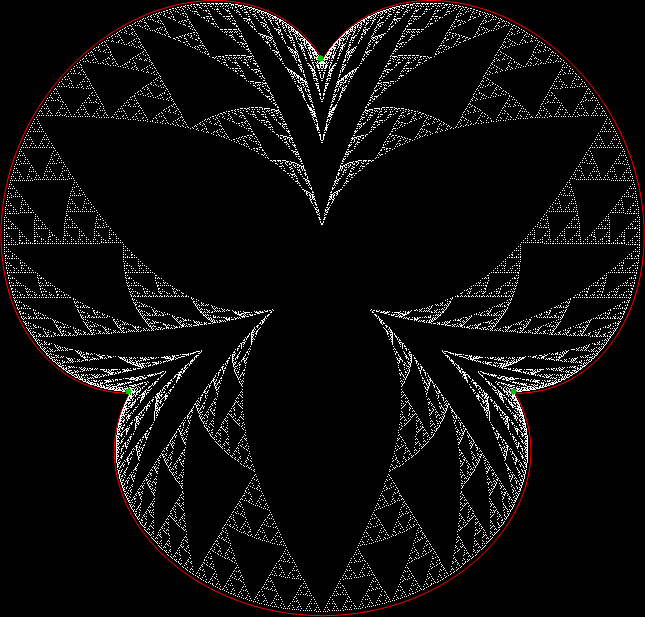
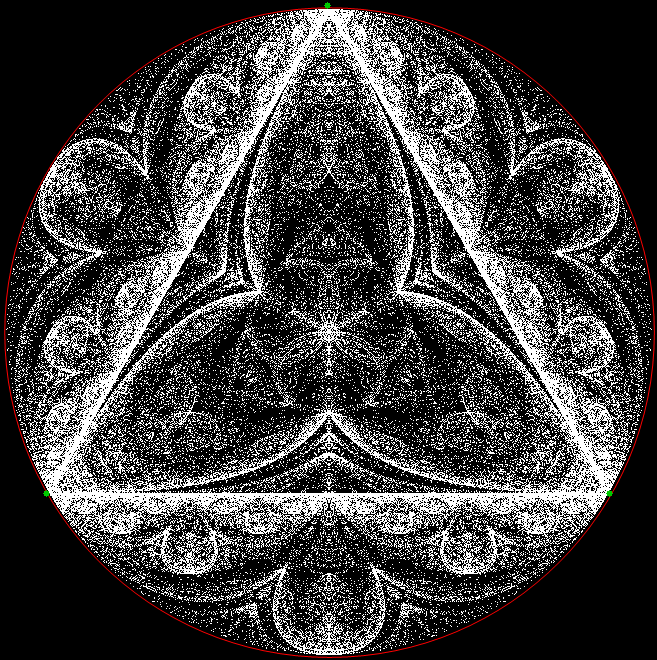
And if the point is swung by 60° after it’s adjusted into the circle, you get a shape like this:

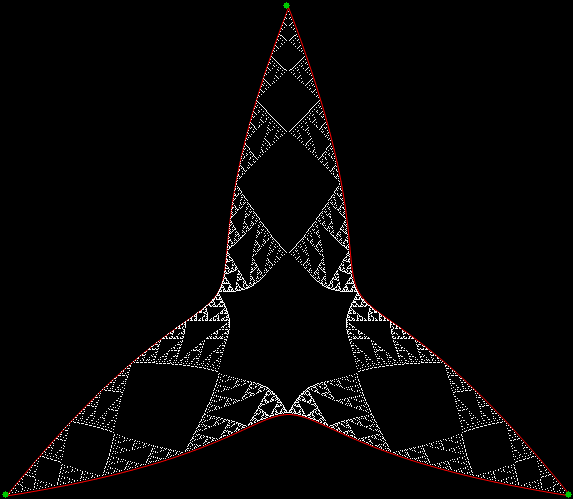
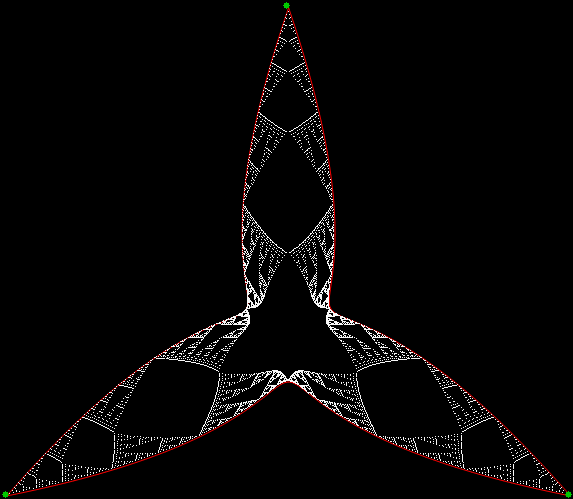
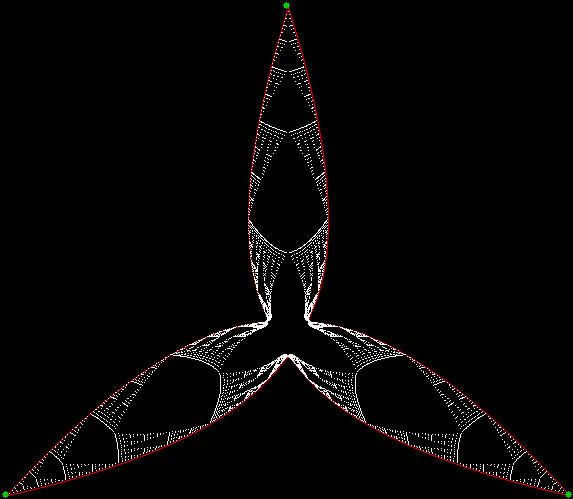
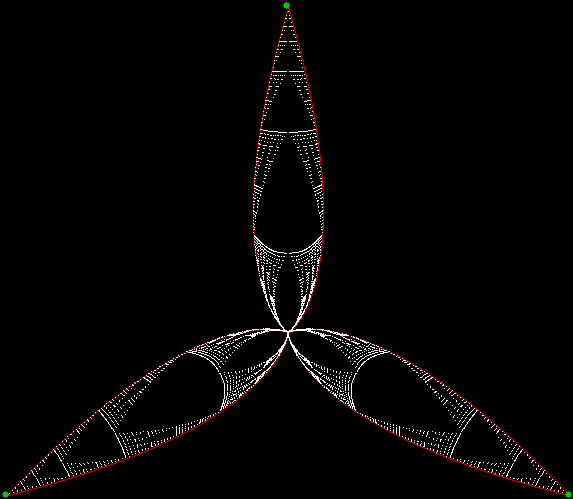
Adjusted Sierpiński circle (60° swing)


Here are some animated gifs showing these shapes rotating in a full circle at various speeds:

Adjusted Sierpiński circle (swinging animation) (fast)


Adjusted Sierpiński circle (swinging animation) (medium)


Adjusted Sierpiński circle (swinging animation) (slow)


Figure Philia

“I love figures, it gives me an intense satisfaction to deal with them, they’re living things to me, and now that I can handle them all day long I feel myself again.” — the imprisoned accountant Jean Charvin in W. Somerset Maugham’s short-story “A Man with a Conscience” (1939)

Arty Fish Haul

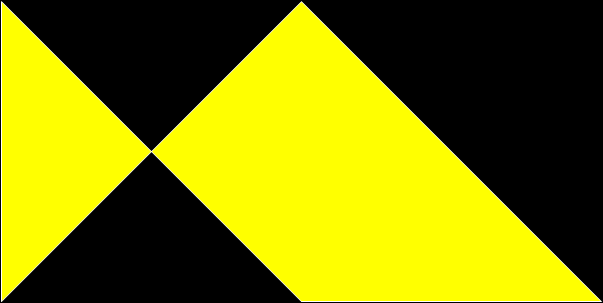
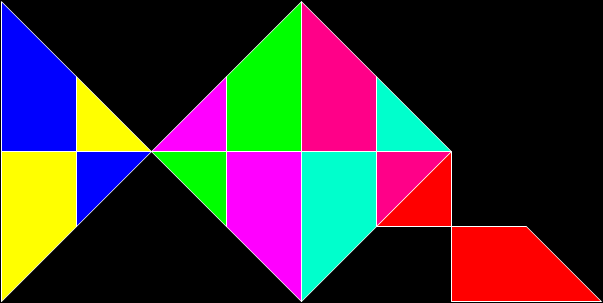
When is a fish a reptile? When it looks like this:

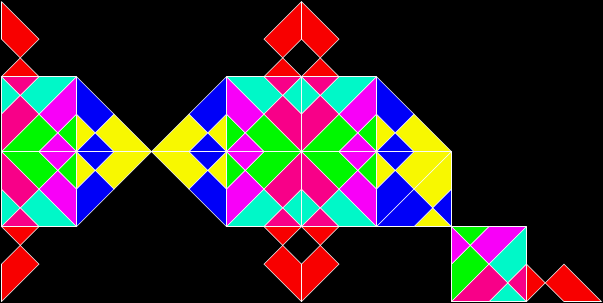
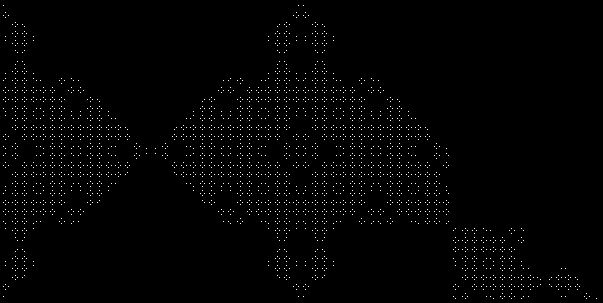
Fish from four isosceles right triangles


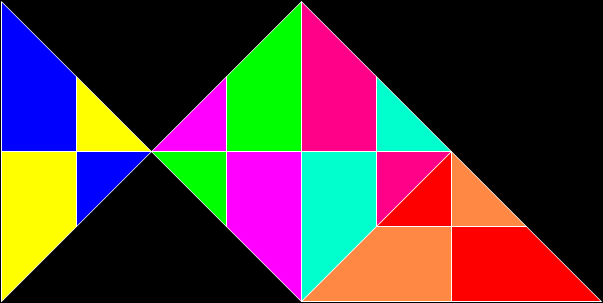
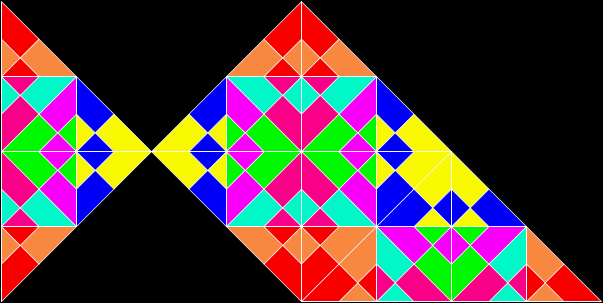
The fish-shape can be divided into eight identical sub-copies of itself. That is, it can be repeatedly tiled with copies of itself, so it’s an example of what geometry calls a rep-tile:

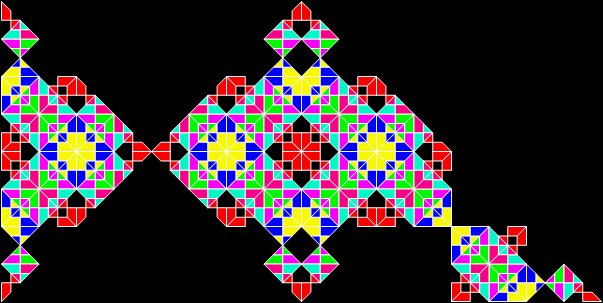
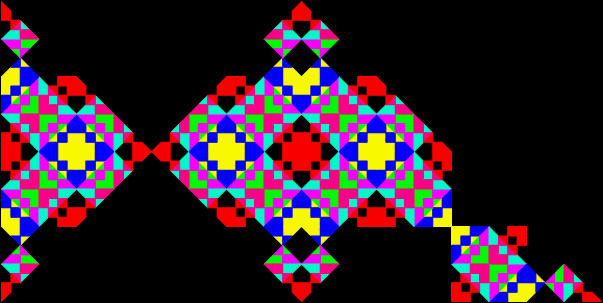
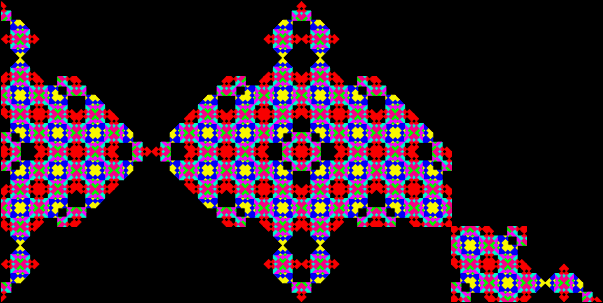
Fish divided into eight identical sub-copies


Fish divided again


Fish divided #4


Fish divided #5


Fish divided #6


Fish (animated rep-tiling)


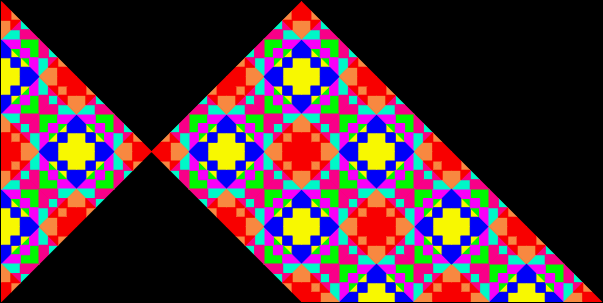
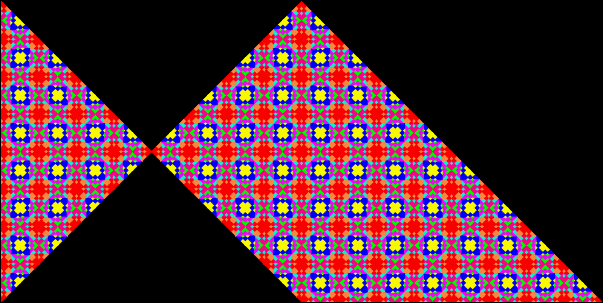
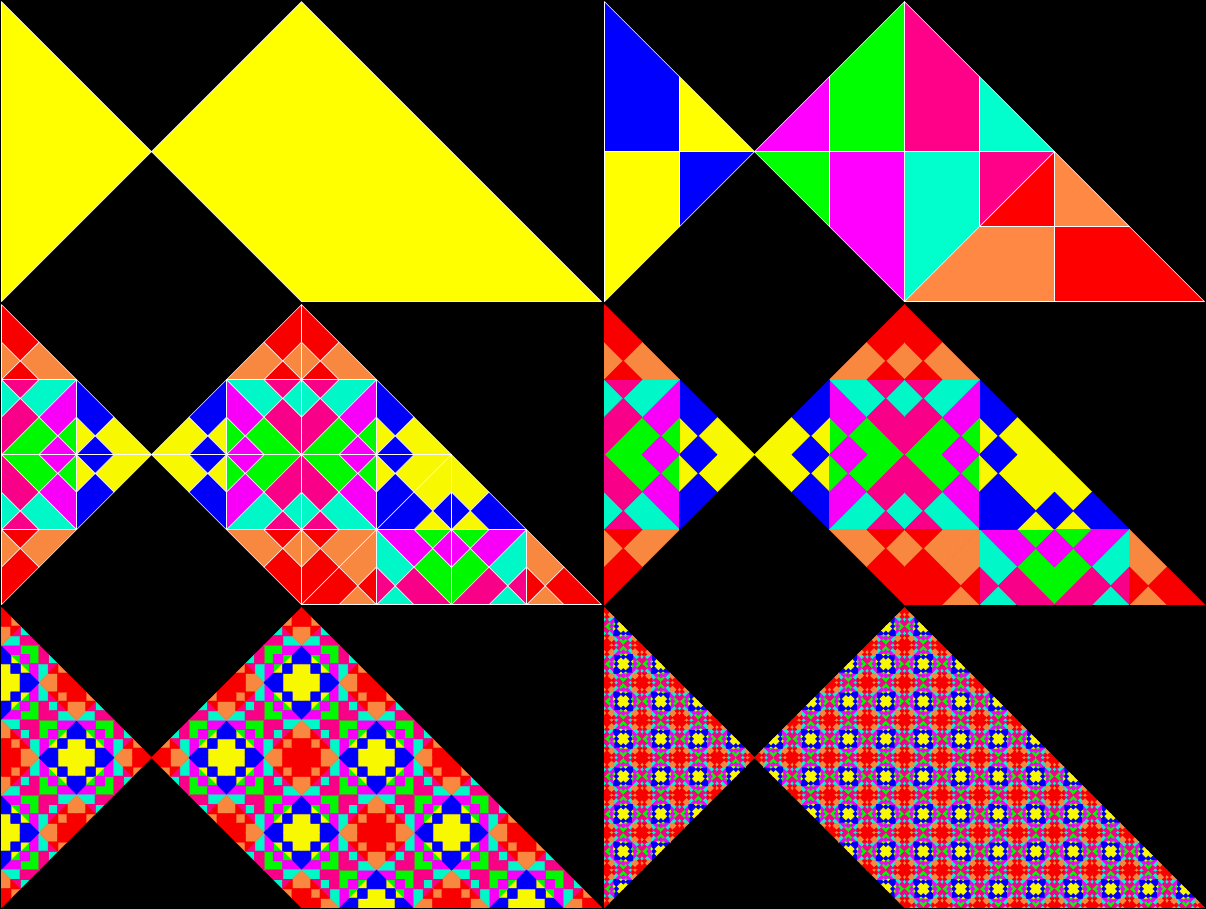
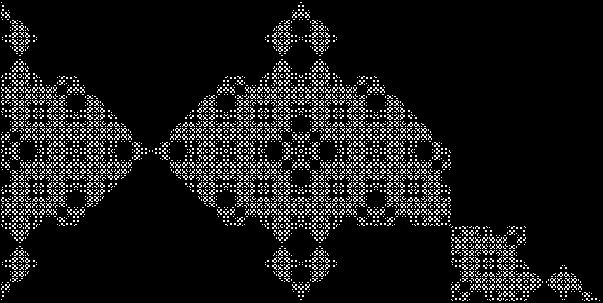
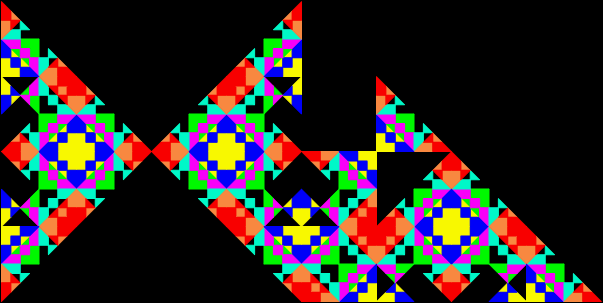
Now suppose you divide the fish, then discard one of the sub-copies. And carry on dividing-and-discarding like that:

Fish discarding sub-copy 7 (#1)


Fish discarding sub-copy 7 (#2)


Fish discarding sub-copy 7 (#3)


Fish discarding sub-copy 7 (#4)


Fish discarding sub-copy 7 (#5)


Fish discarding sub-copy 7 (#6)


Fish discarding sub-copy 7 (#7)


Fish discarding sub-copy 7 (animated)


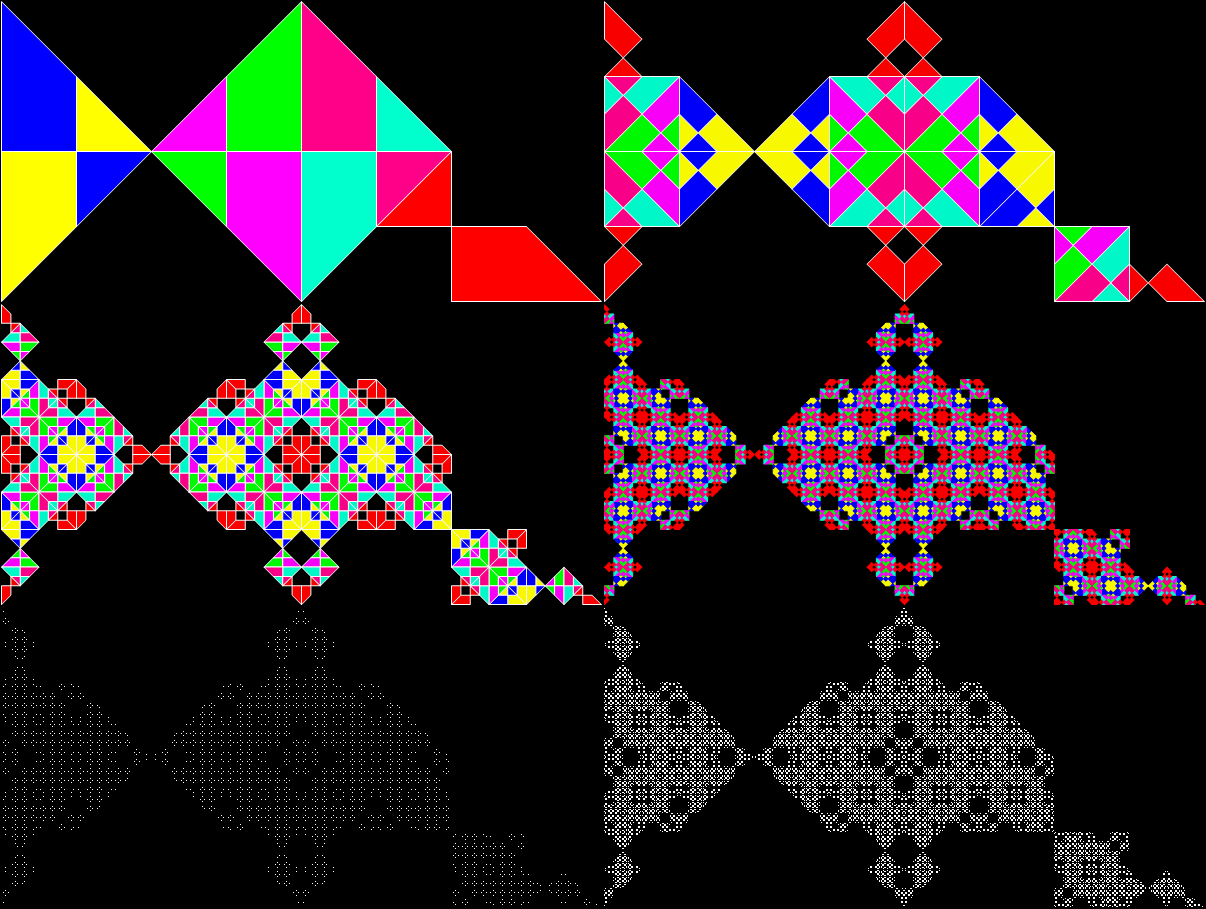
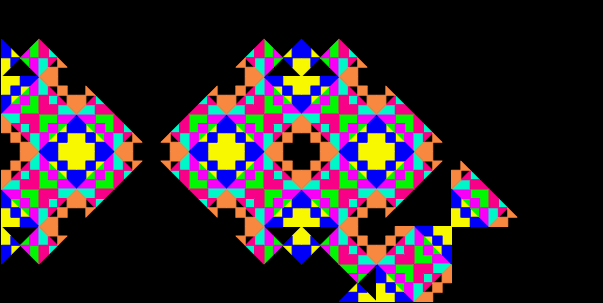
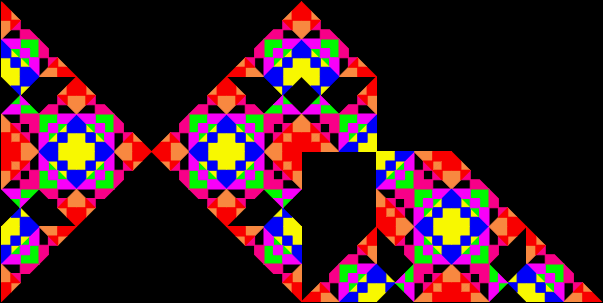
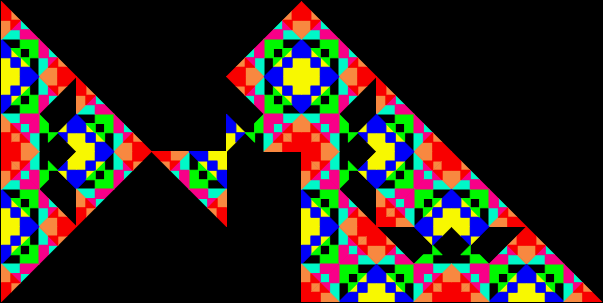
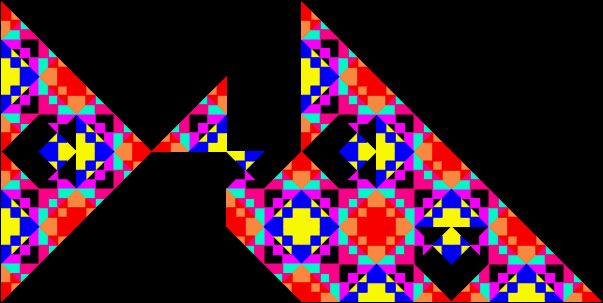
Here are more examples of the fish sub-dividing, then discarding sub-copies:

Fish discarding sub-copy #1


Fish discarding sub-copy #2


Fish discarding sub-copy #3


Fish discarding sub-copy #4


Fish discarding sub-copy #5


Fish discarding sub-copy #6


Fish discarding sub-copy #7


Fish discarding sub-copy #8


Fish discarding sub-copies (animated)


Now try a square divided into four copies of the fish, then sub-divided again and again:

Fish-square #1


Fish-square #2


Fish-square #3


Fish-square #4


Fish-square #5


Fish-square #6


Fish-square (animated)


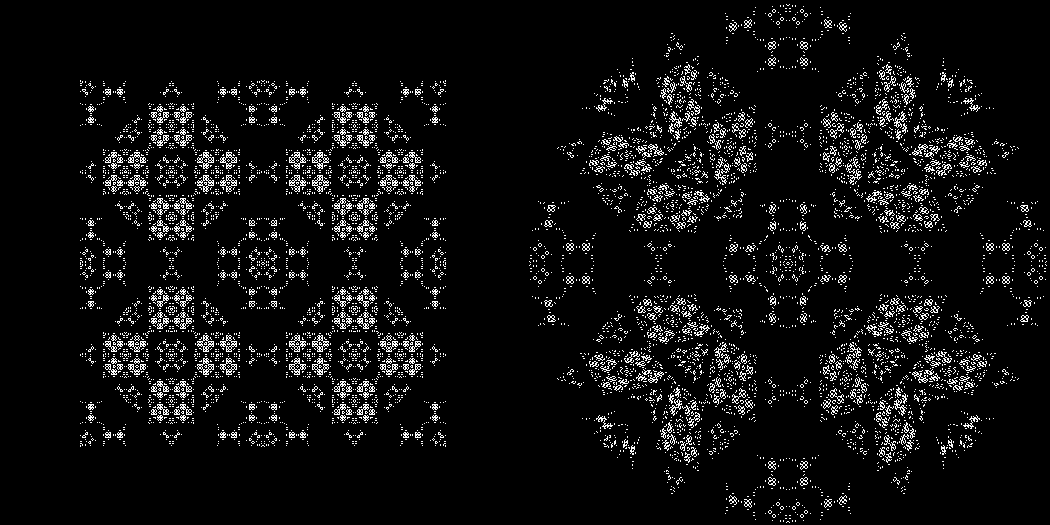
The fish-square can be used to create more symmetrical patterns when the divide-and-discard rule is applied. Here’s the pattern created by dividing-and-discarded two of the sub-copies:

Fish-square divide-and-discard #1


Fish-square divide-and-discard #2


Fish-square divide-and-discard #3


Fish-square divide-and-discard #4


Fish-square divide-and-discard #5


Fish-square divide-and-discard #6


Fish-square divide-and-discard #7


Fish-square divide-and-discard #8 (delayed discard)


Fish-square divide-and-discard (animated)


Using simple trigonometry, you can convert the square pattern into a circular pattern:

Circular version


Square to circle (animated)


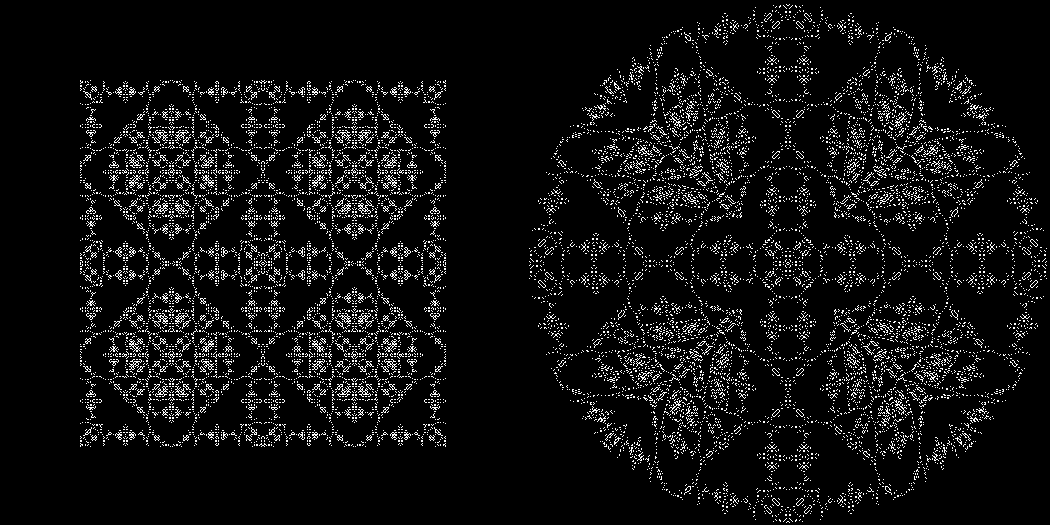
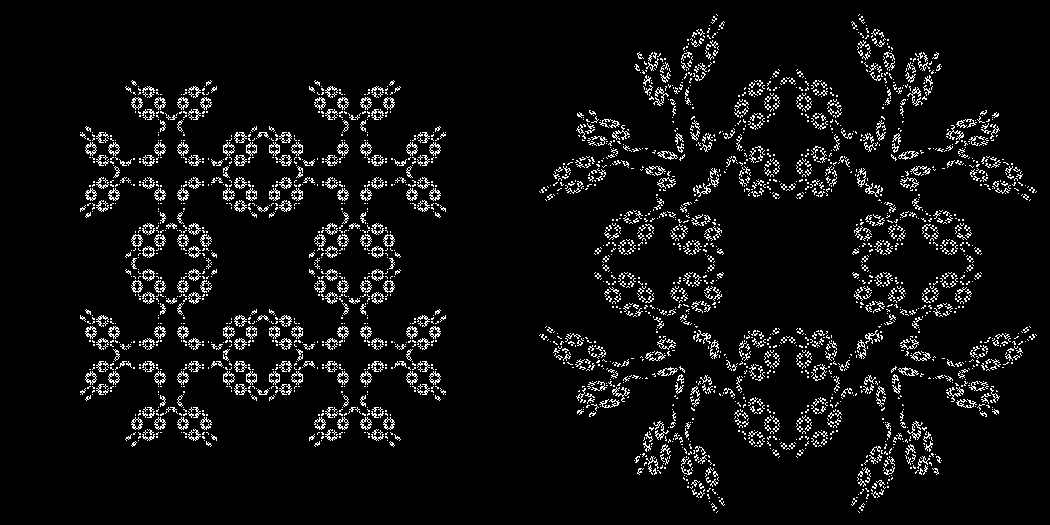
Here are more examples of divide-and-discard fish-squares:

Fish-square divide-and-discard #1


Fish-square divide-and-discard #2


Fish-square divide-and-discard #3


Fish-square divide-and-discard #4


Fish-square divide-and-discard #5


Fish-square divide-and-discard #6


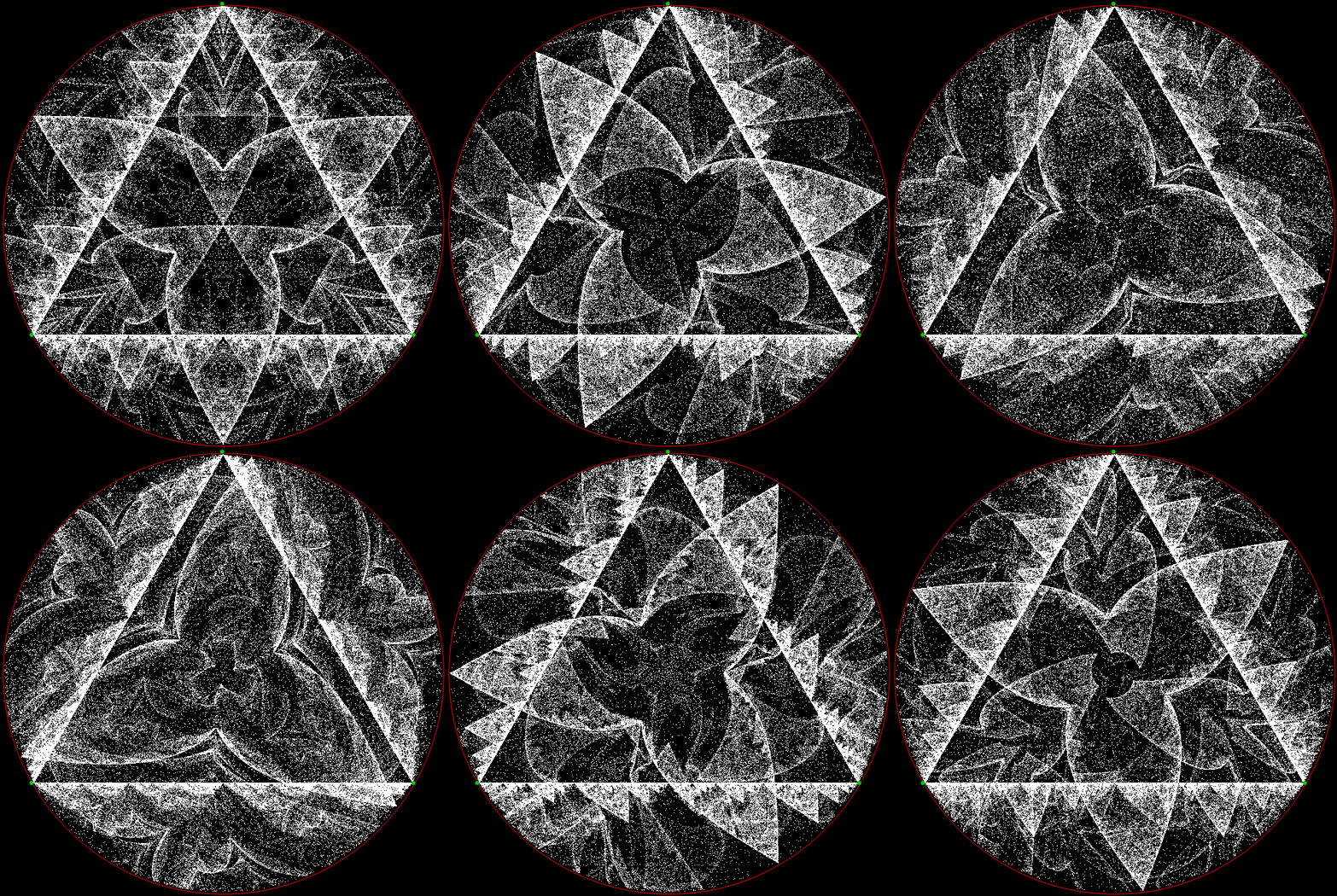
And more examples of fish-squares being converted into circles:

Fish-square to circle #1 (animated)


Fish-square to circle #2


Fish-square to circle #3


Fish-square to circle #4


Fish-square to circle #5


Fish-square to circle #6


I’m a Beweaver

Here are some examples of what I call woven sums for sum(n1..n2), where the digits of n1 are interwoven with the digits of n2:

1599 = sum(19..59) = 19 + 20 + 21 + 22 + 23 + 24 + 25 + 26 + 27 + 28 + 29 + 30 + 31 + 32 + 33 + 34 + 35 + 36 + 37 + 38 + 39 + 40 + 41 + 42 + 43 + 44 + 45 + 46 + 47 + 48 + 49 + 50 + 51 + 52 + 53 + 54 + 55 + 56
2716 = sum(21..76)
159999 = sum(199..599)
275865 = sum(256..785)
289155 = sum(295..815)
15050747 = sum(1004..5577)
15058974 = sum(1087..5594)
15999999 = sum(1999..5999)
39035479 = sum(3057..9349)


In other words, the digits of n1 occupy digit-positions 1,3,5… and the digits of n2 occupy dig-pos 2,4,6…

But I can’t find woven sums where the digits of n2 are interwoven with the digits of n1, i.e. the digits of n2 occupy dig-pos 1,3,5… and the digits of n1 occupy dig-pos 2,4,6… Except when n1 has fewer digits than n2, e.g. 210 = sum(1..20).


Elsewhere Other-Accessible…

Nuts for Numbers — a look at numbers like 2772 = sum(22..77) and 10470075 = sum(1075..4700).