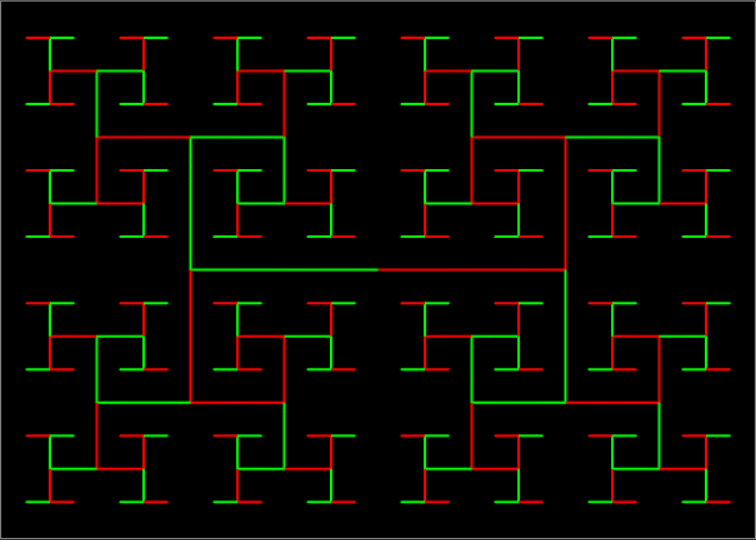
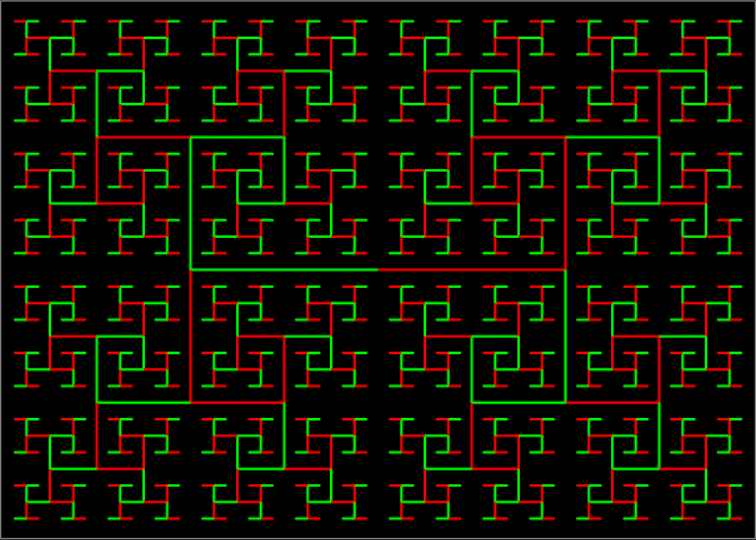
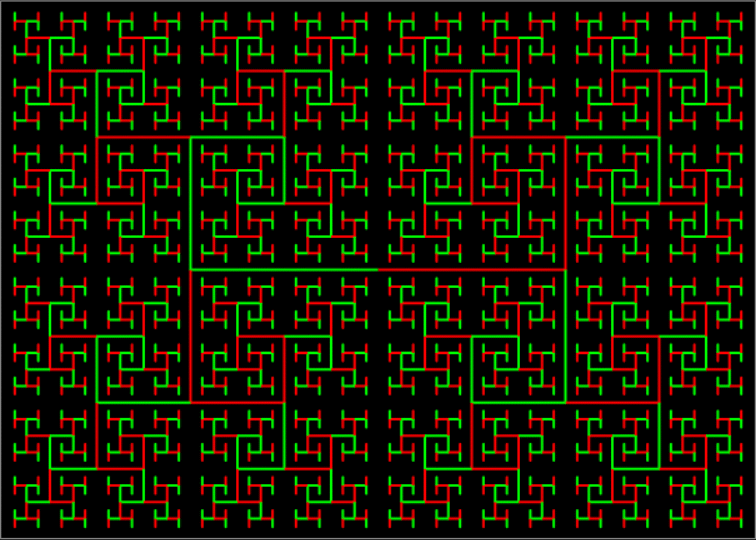
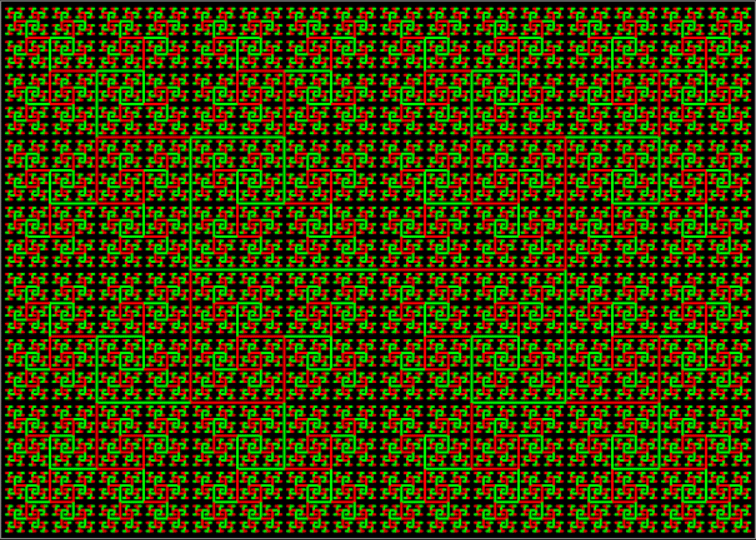
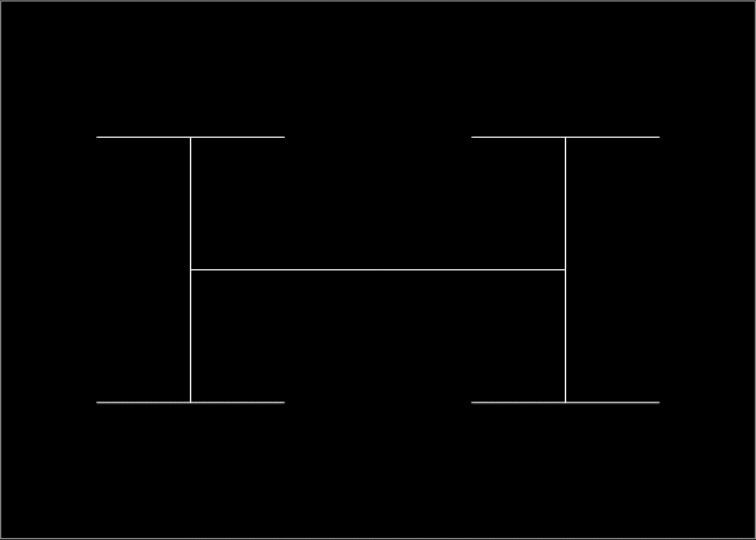
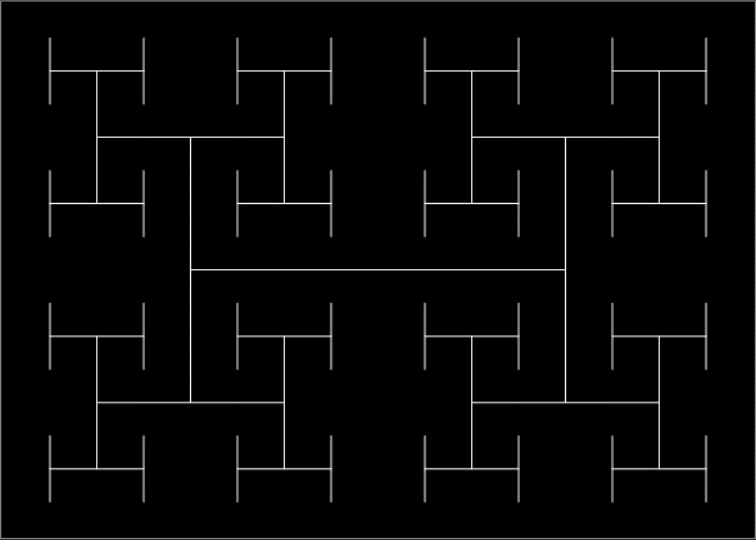
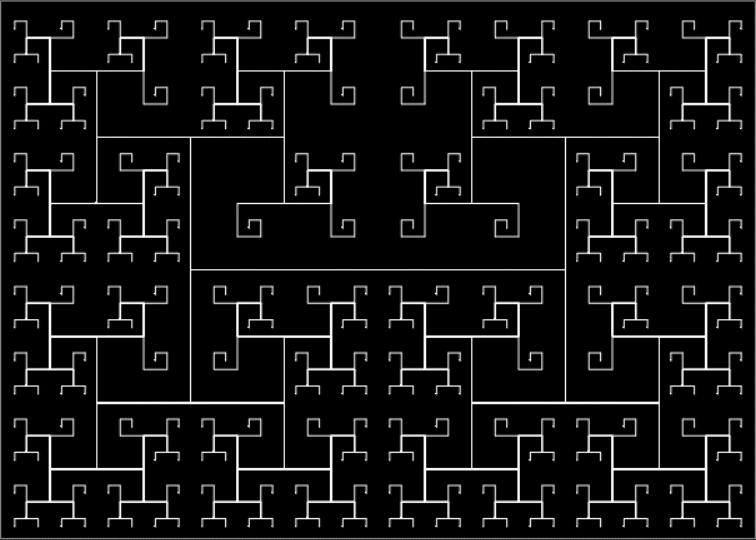
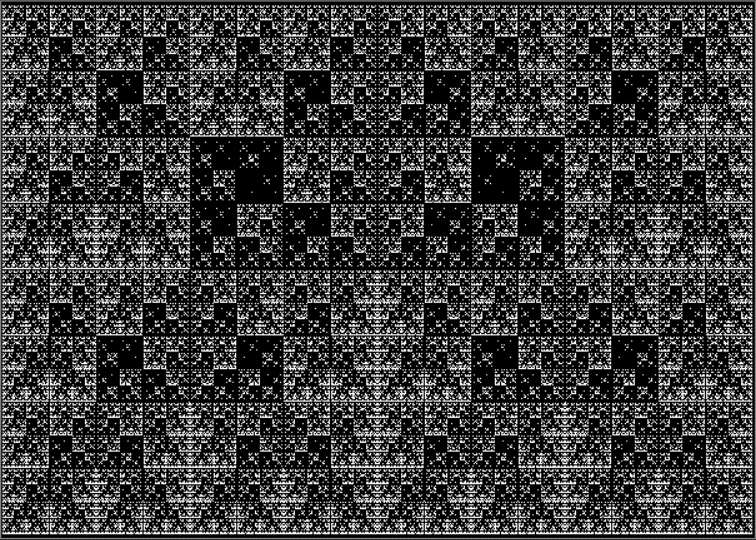
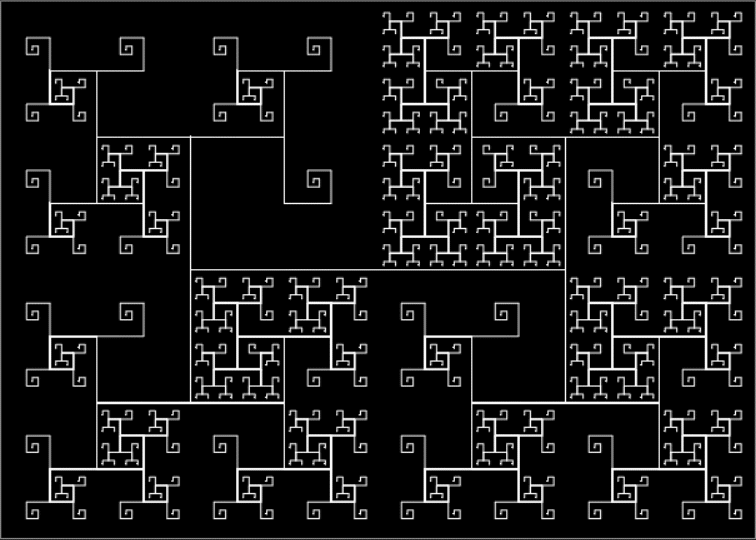
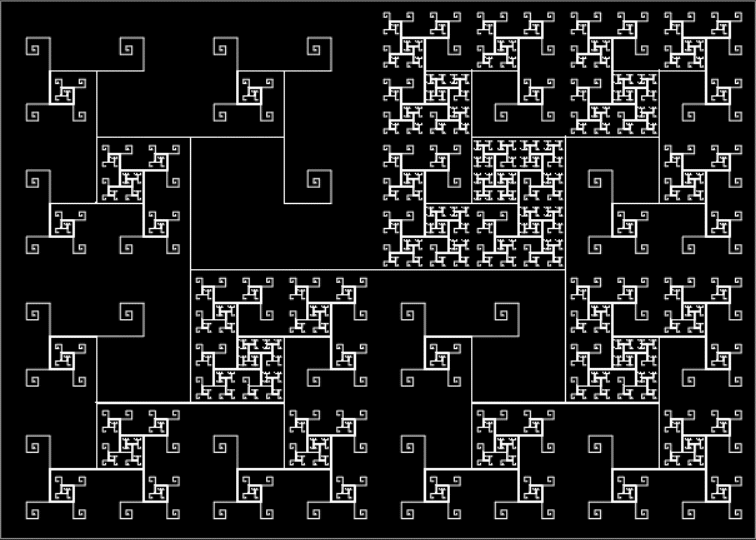
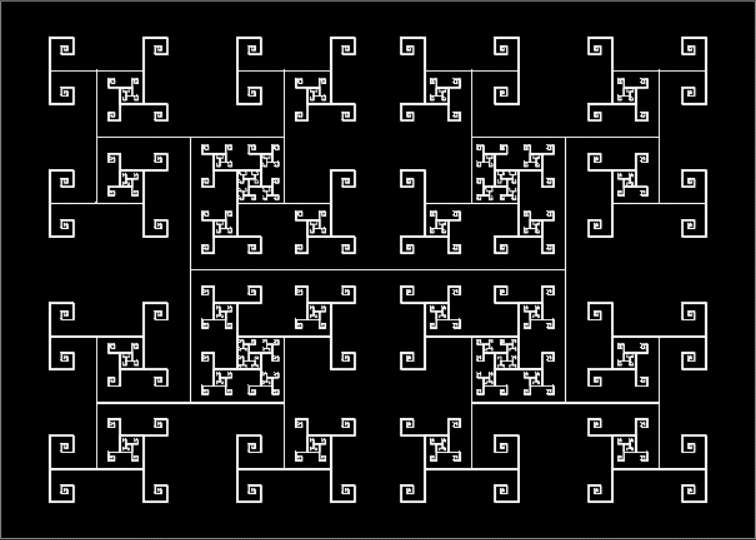
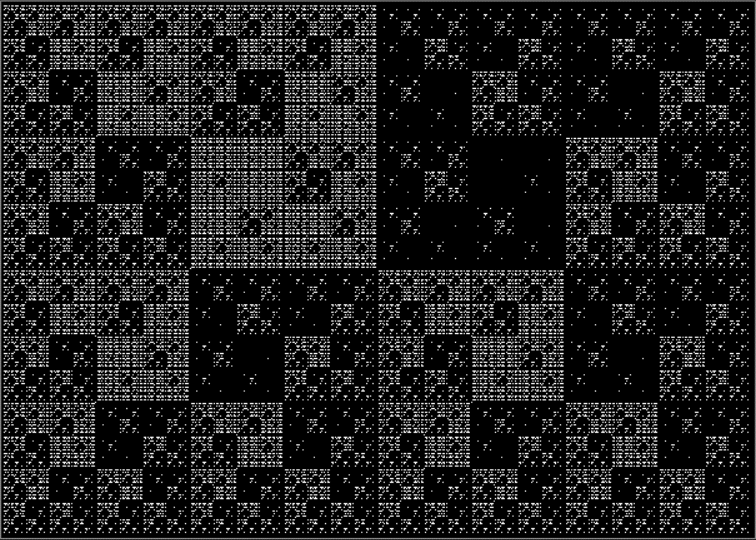
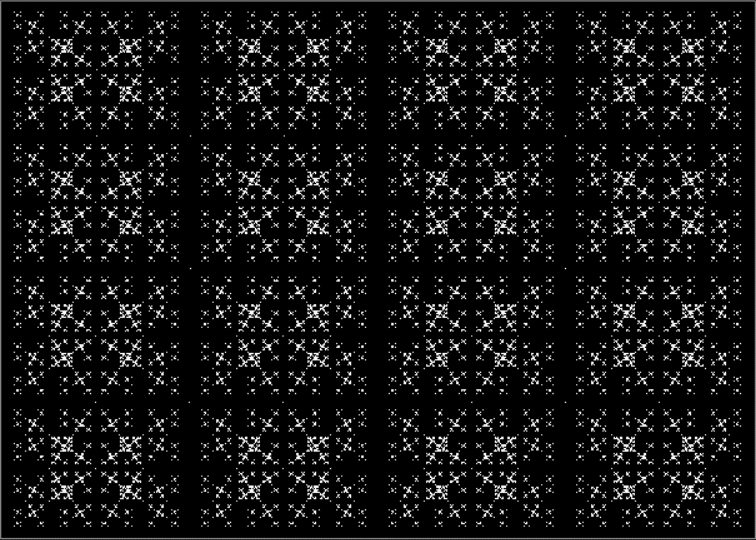
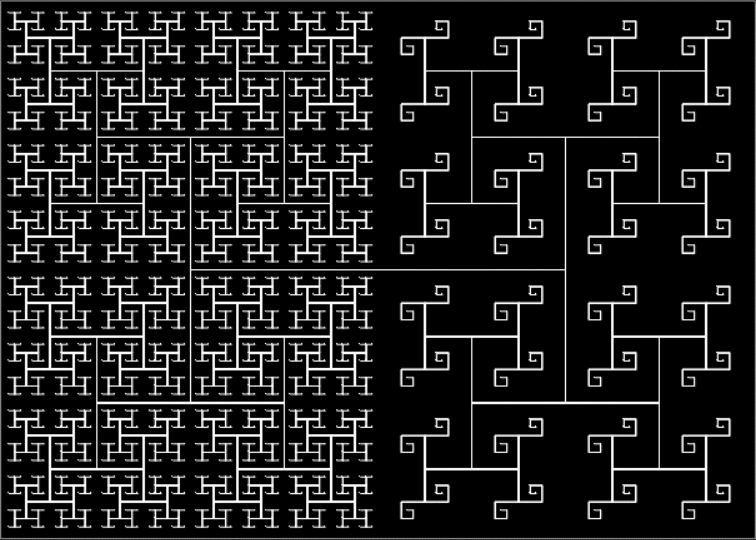
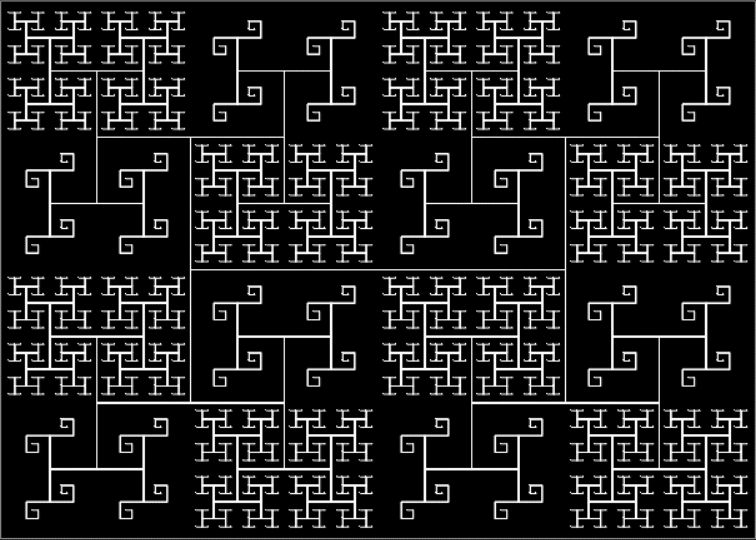
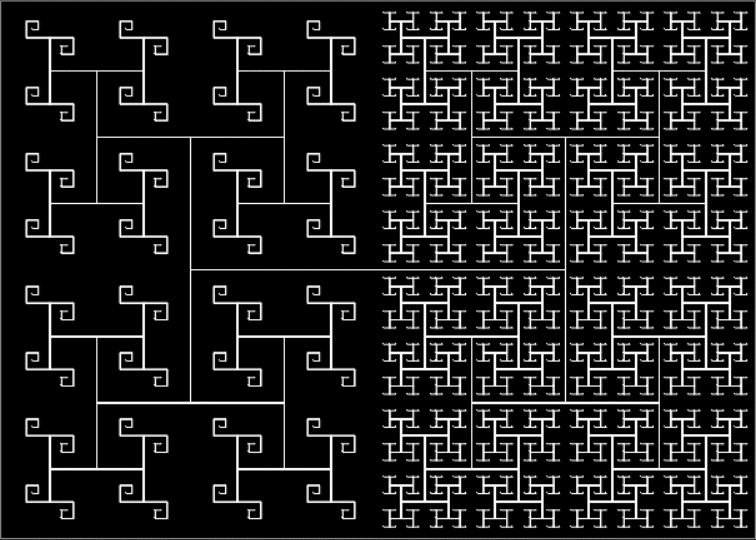
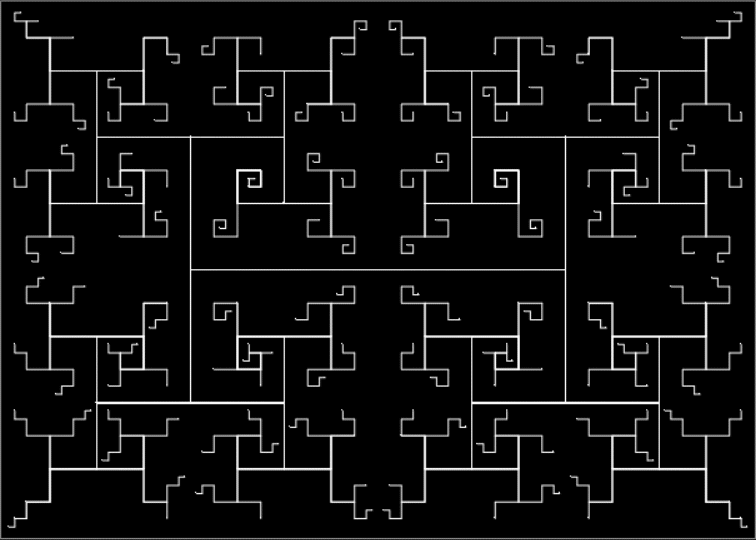
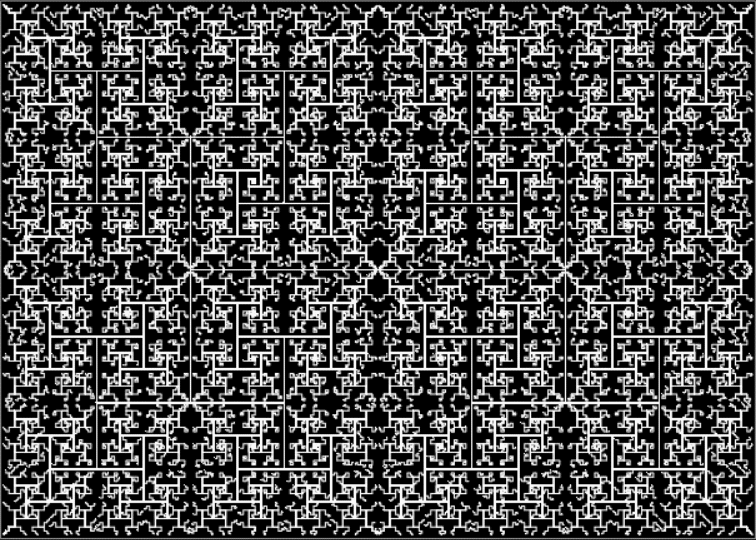
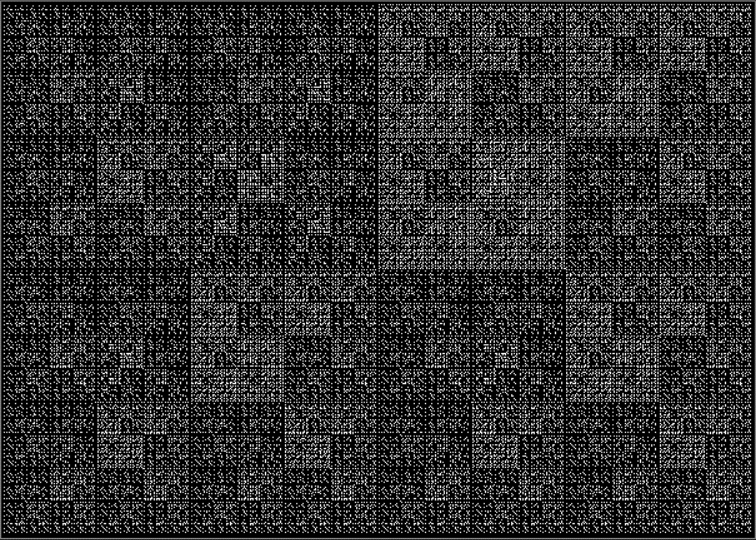
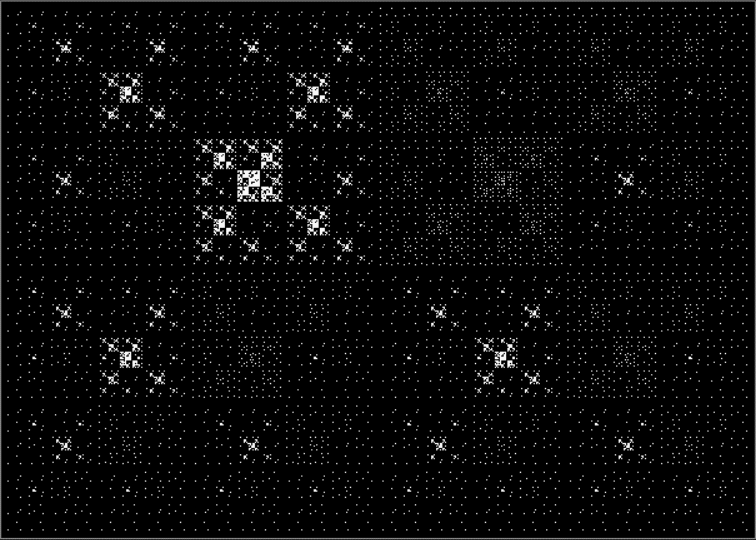
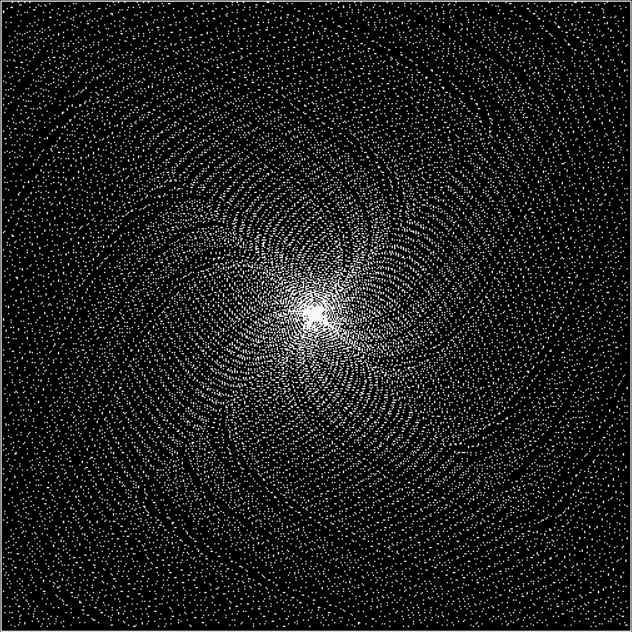
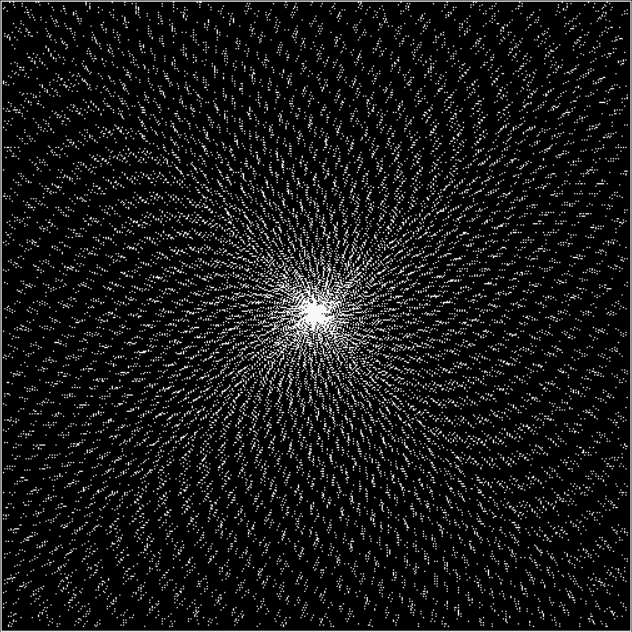
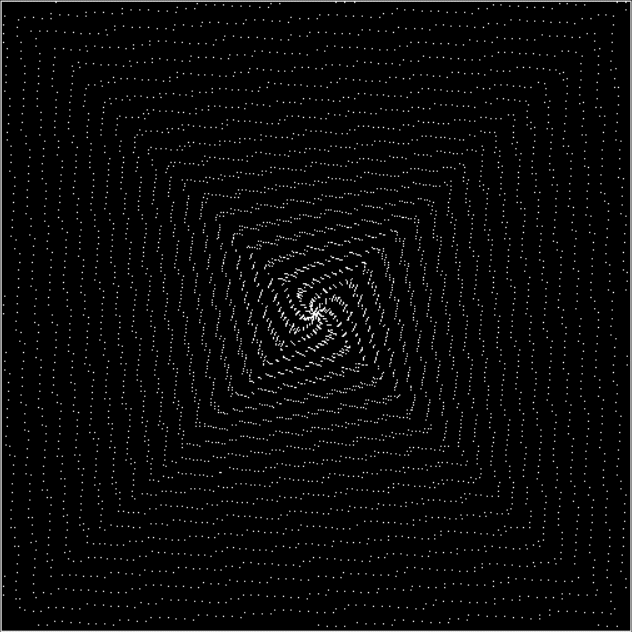
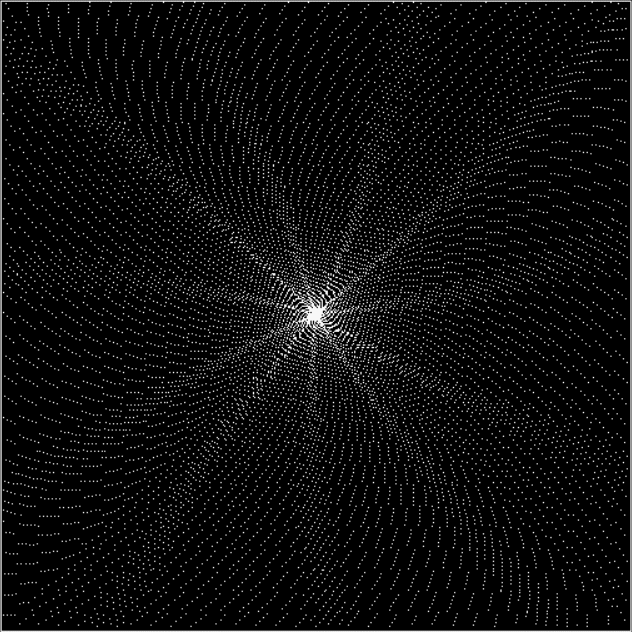
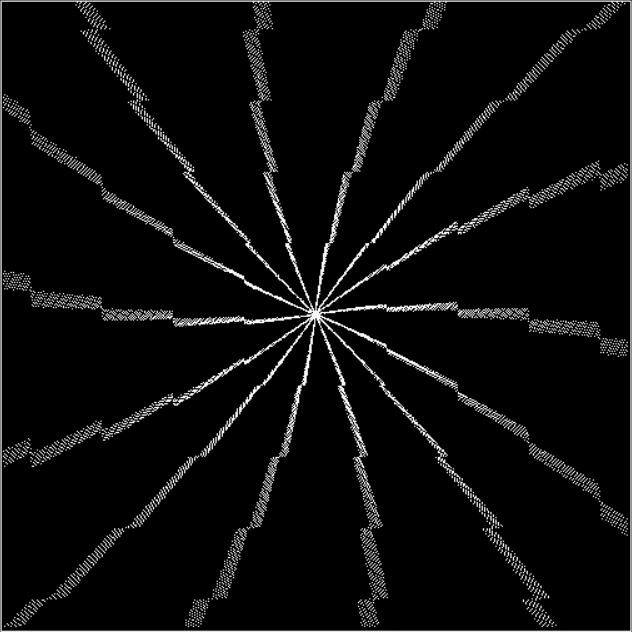
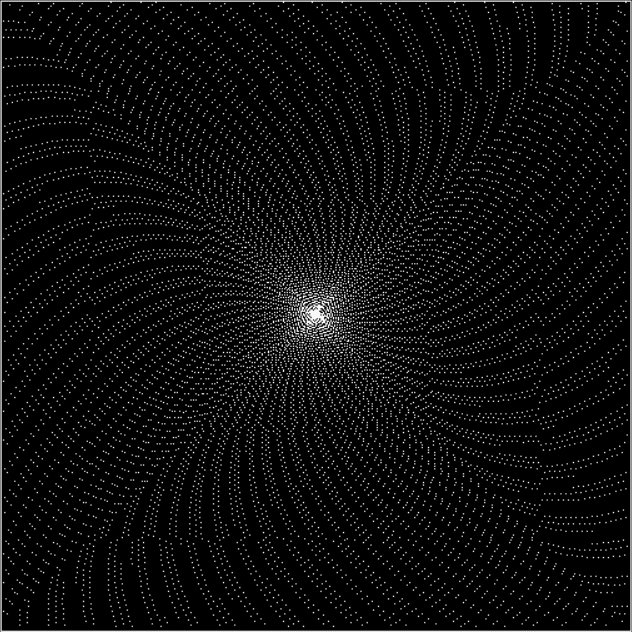
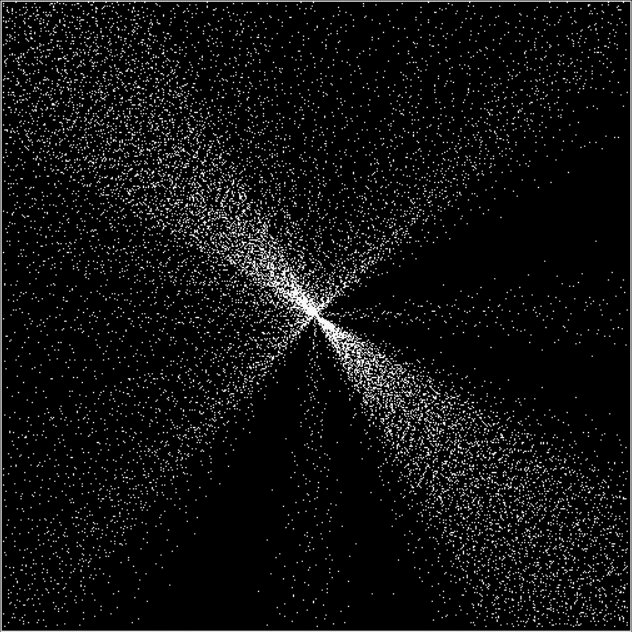
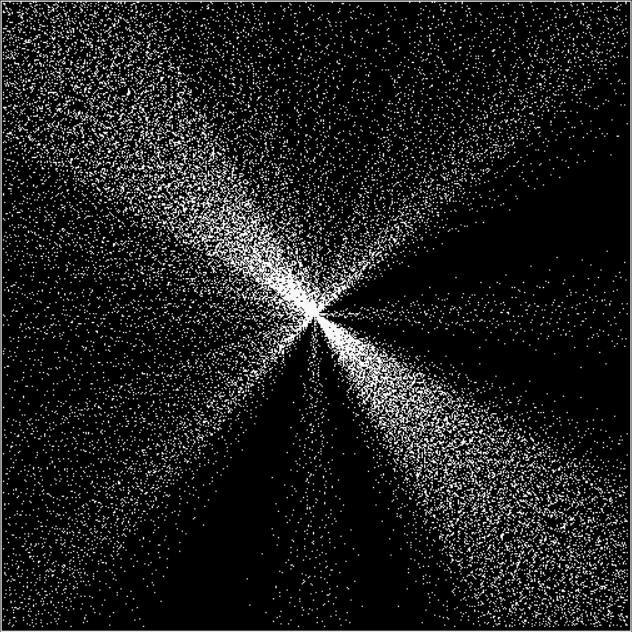
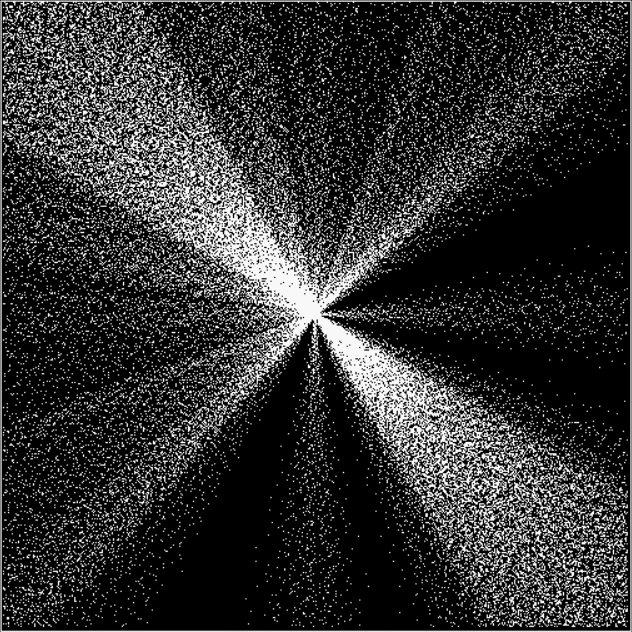
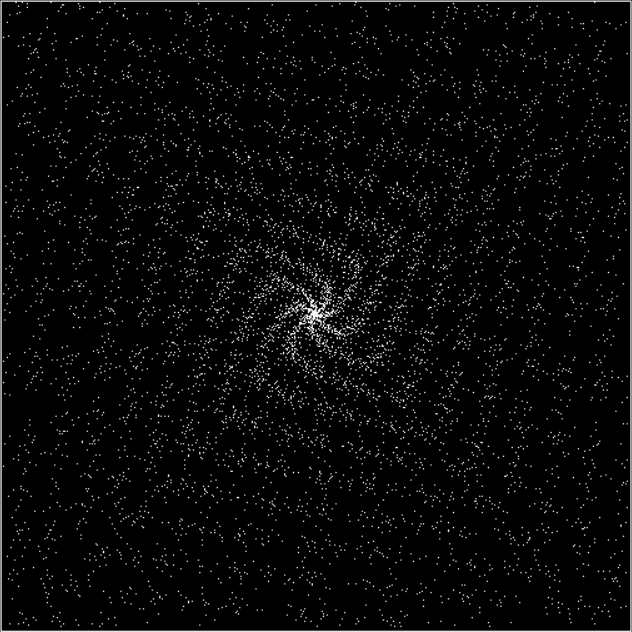
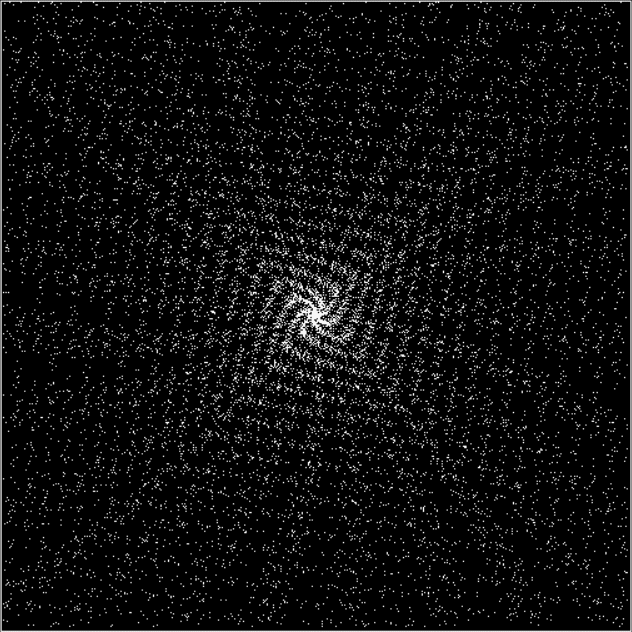
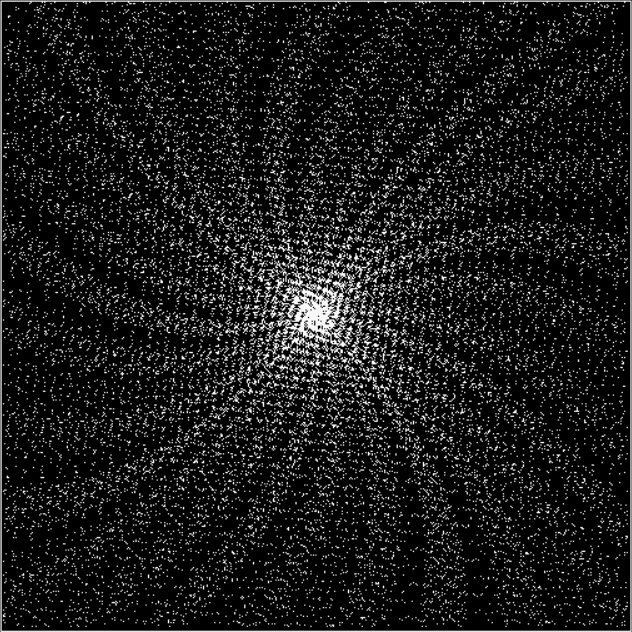
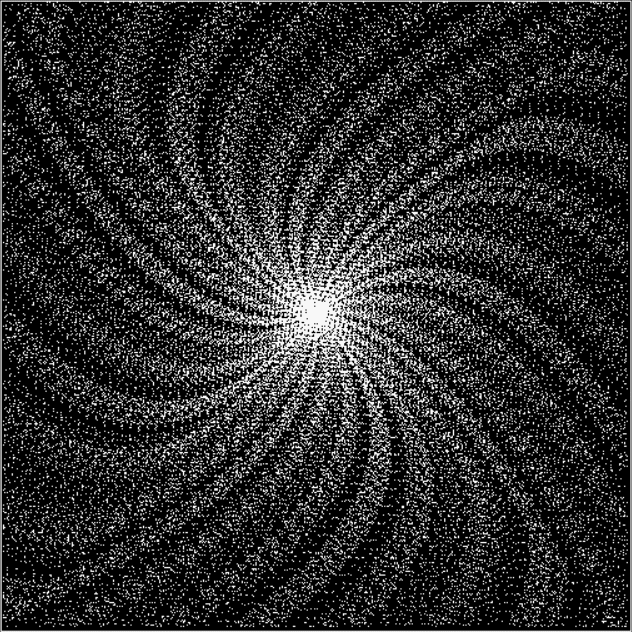
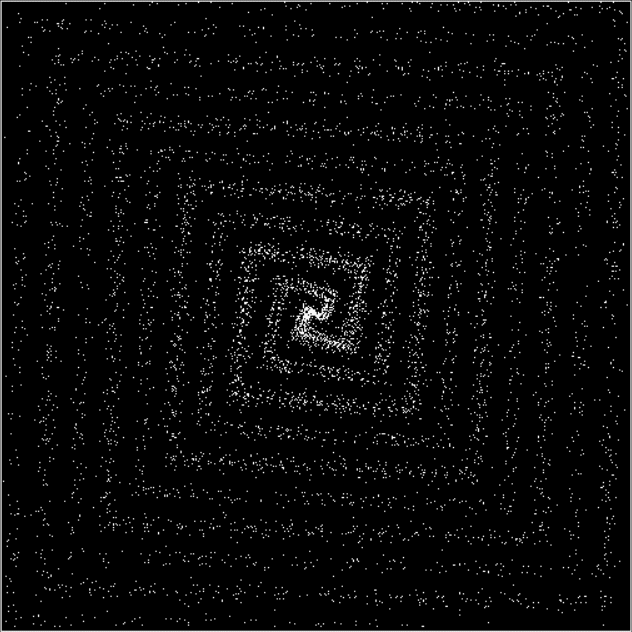
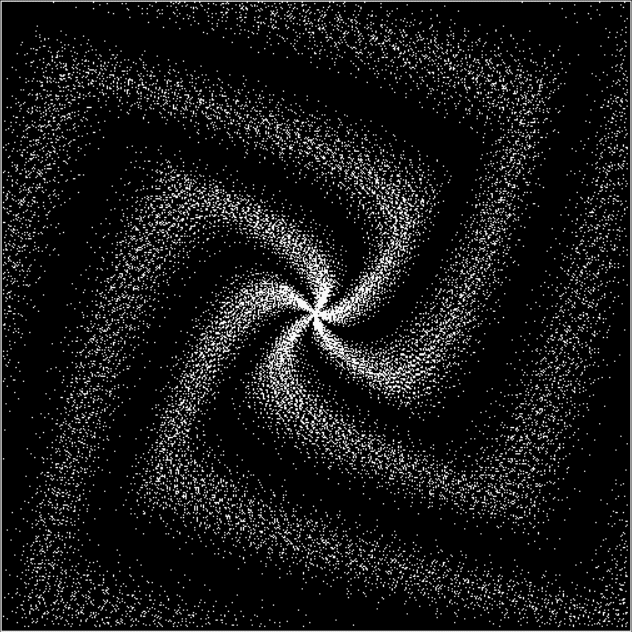
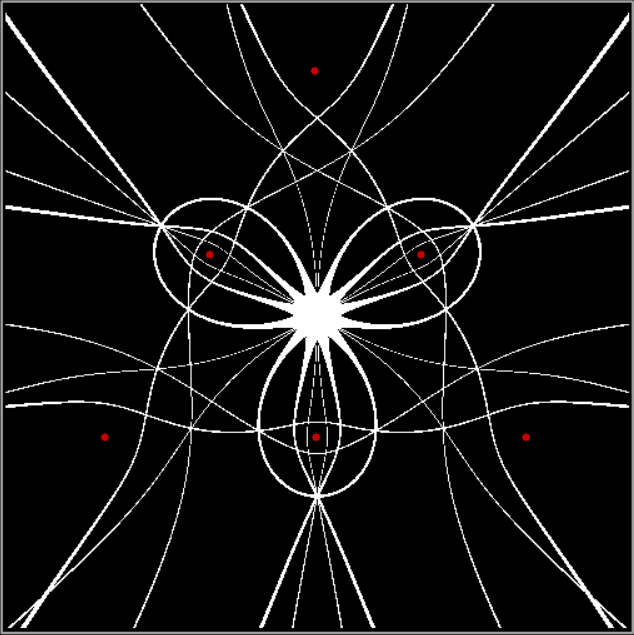
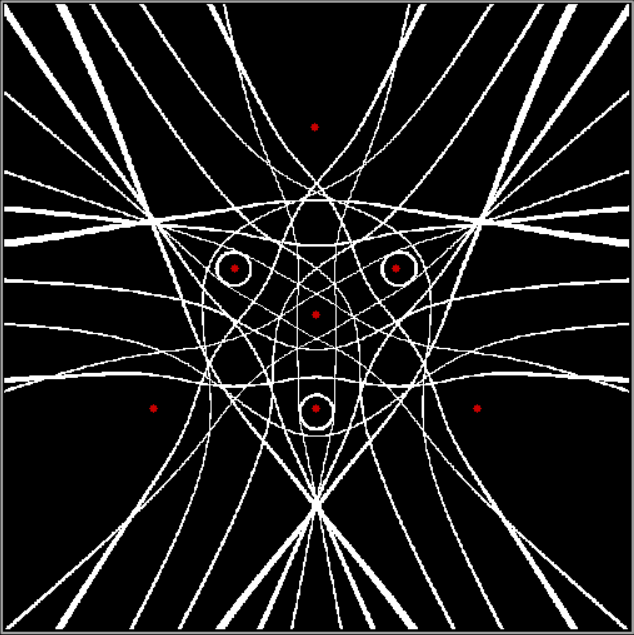
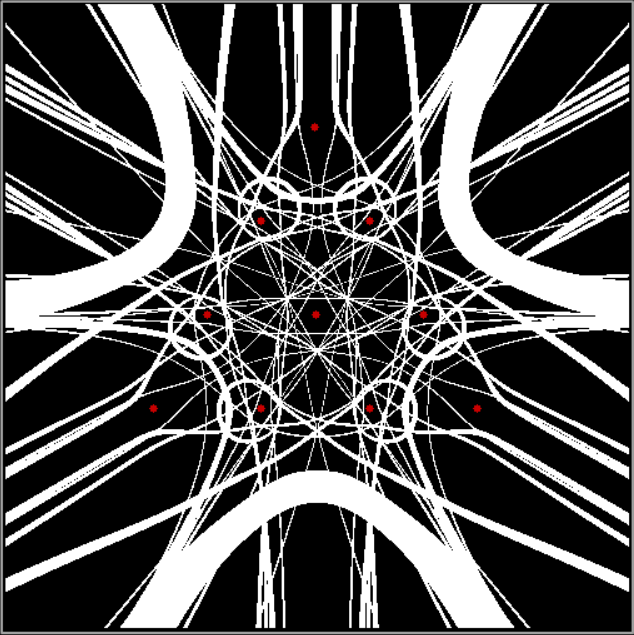
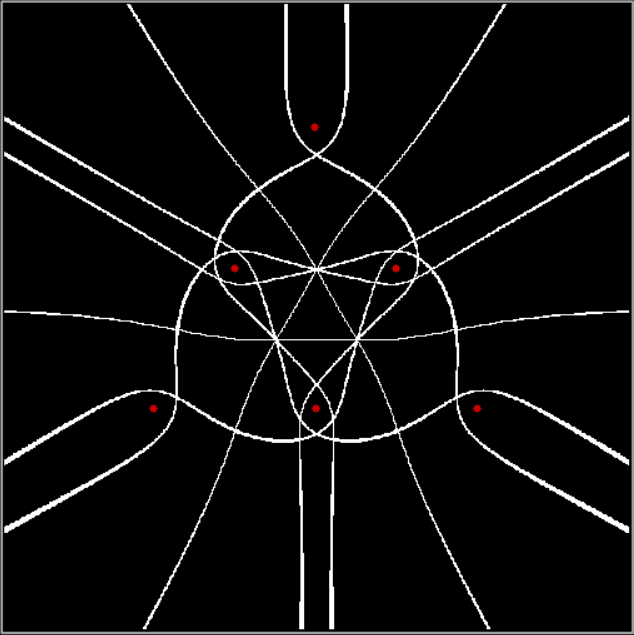
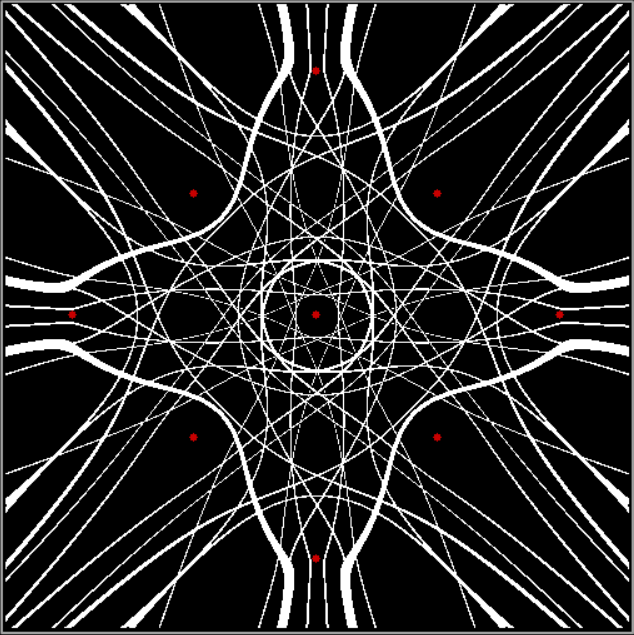
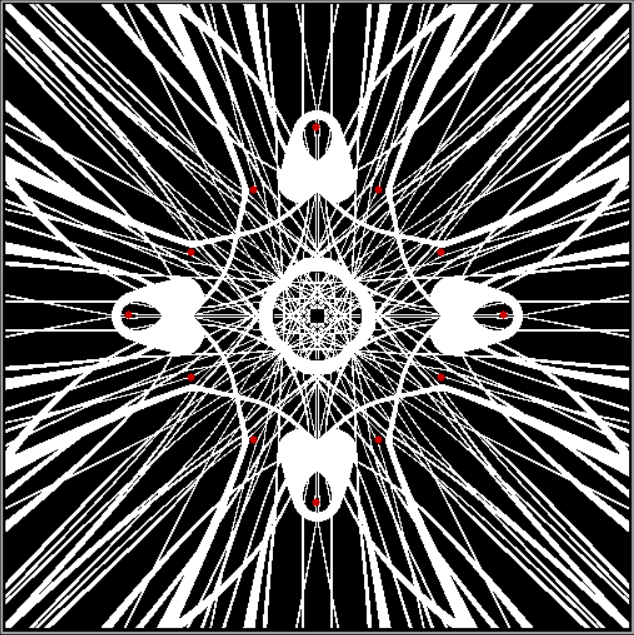
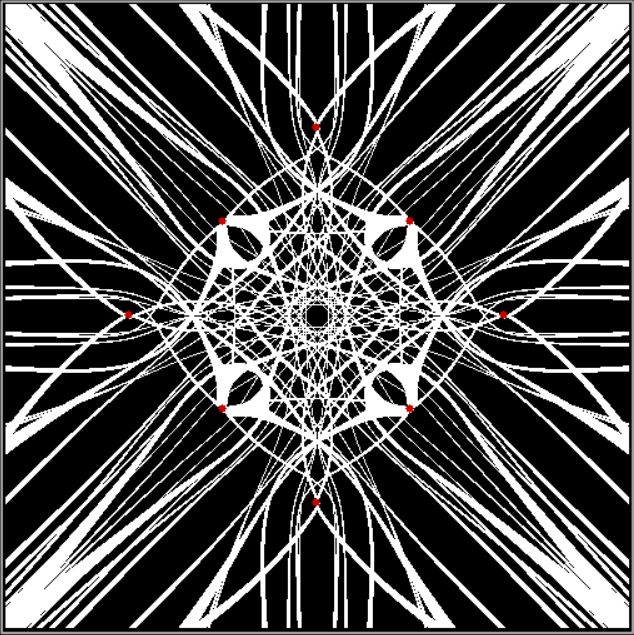
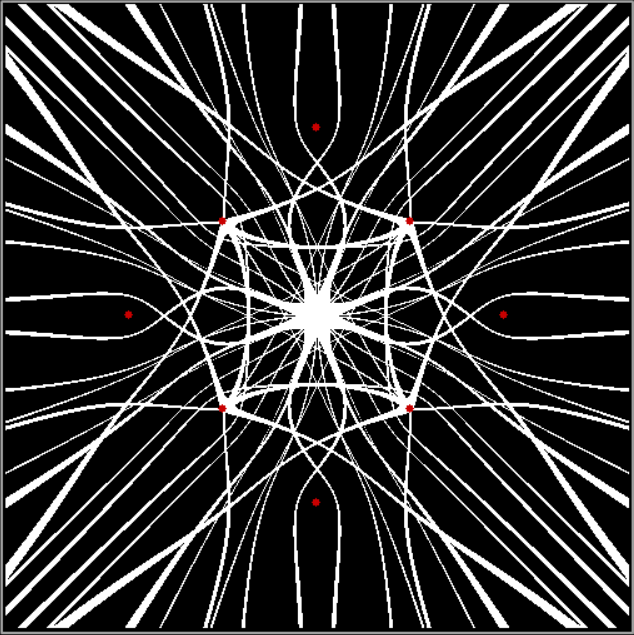
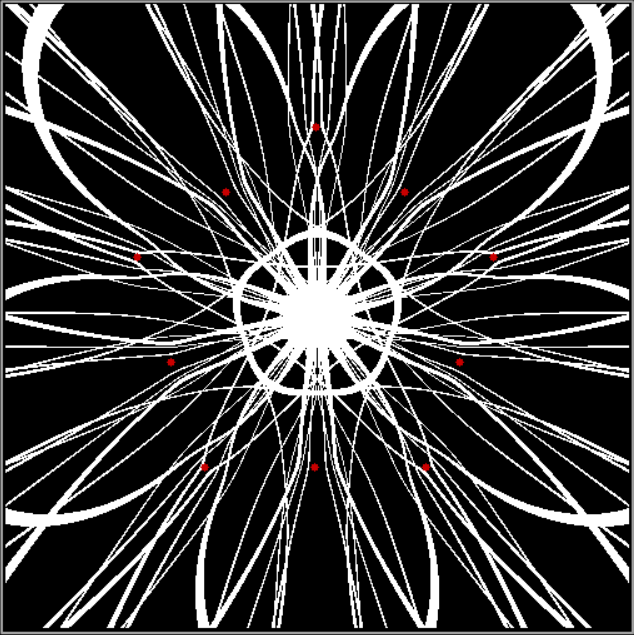
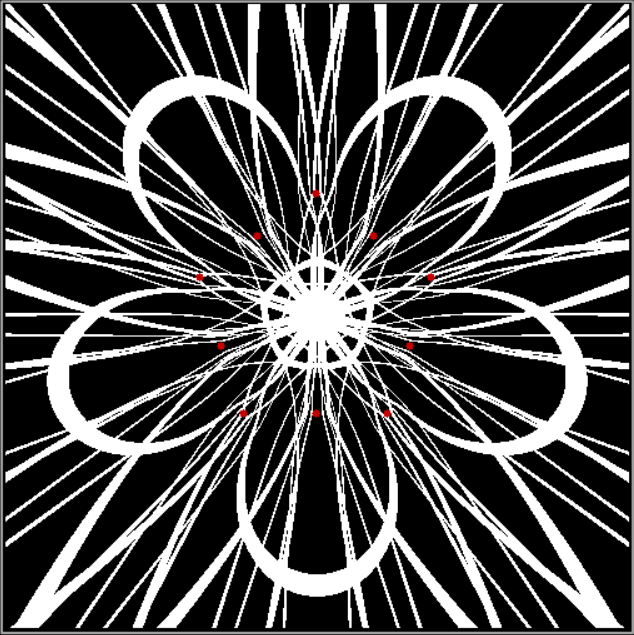
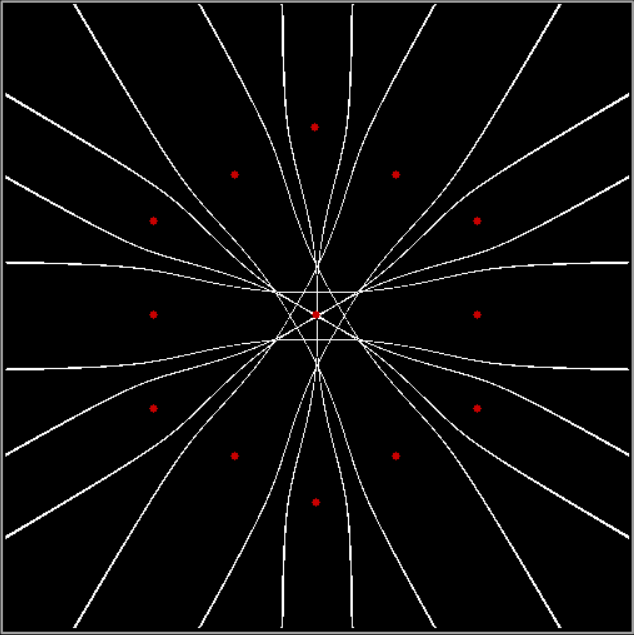
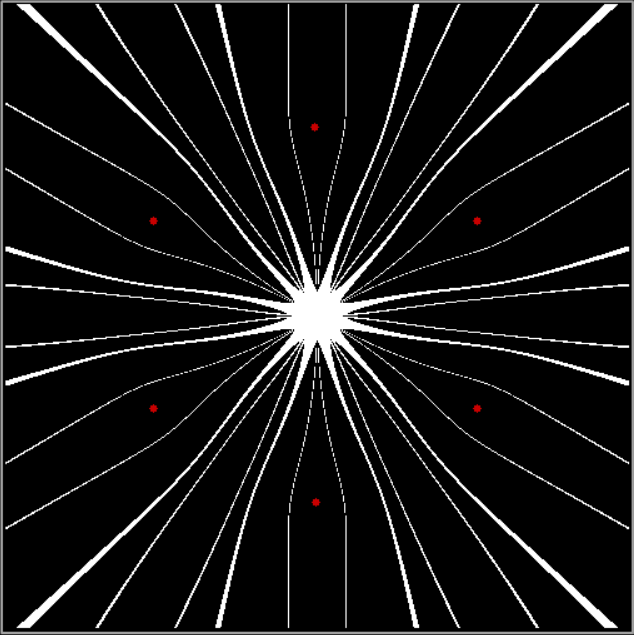
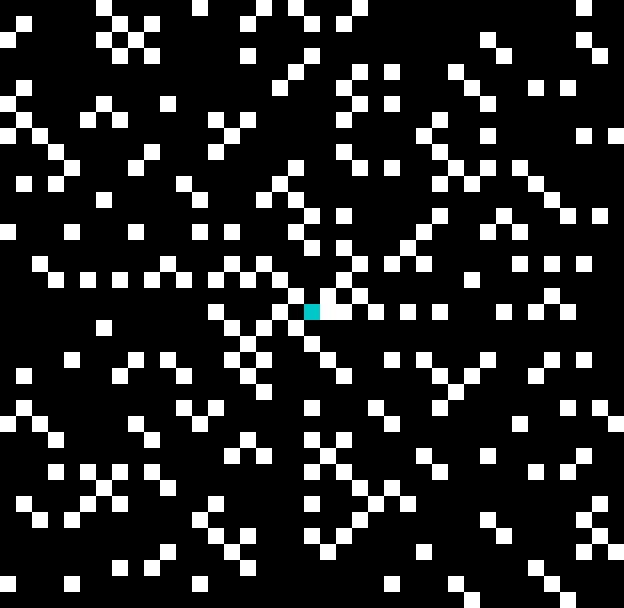
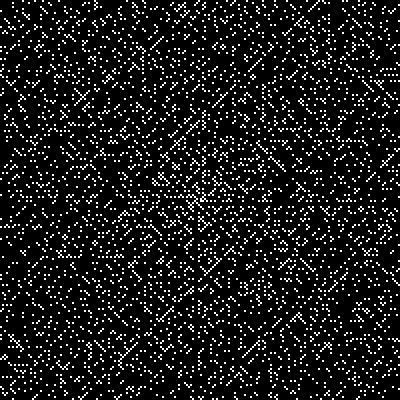
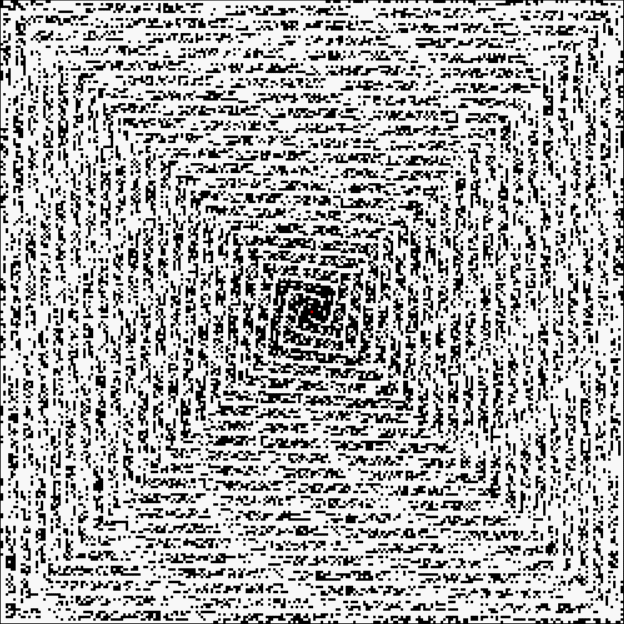
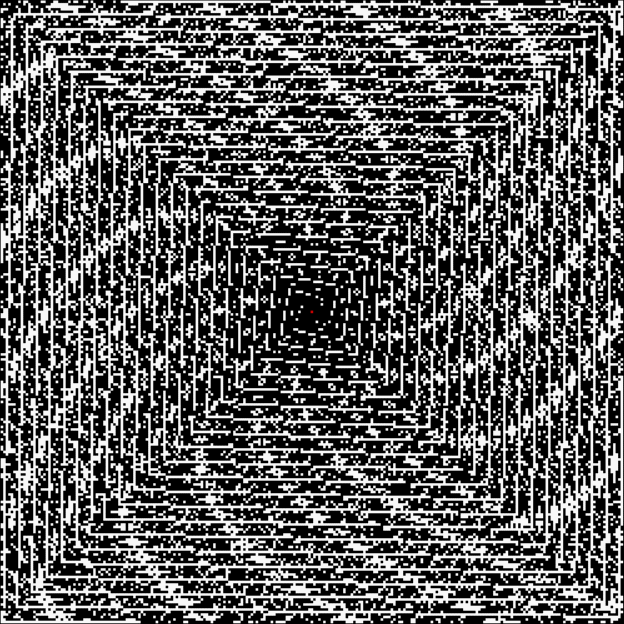
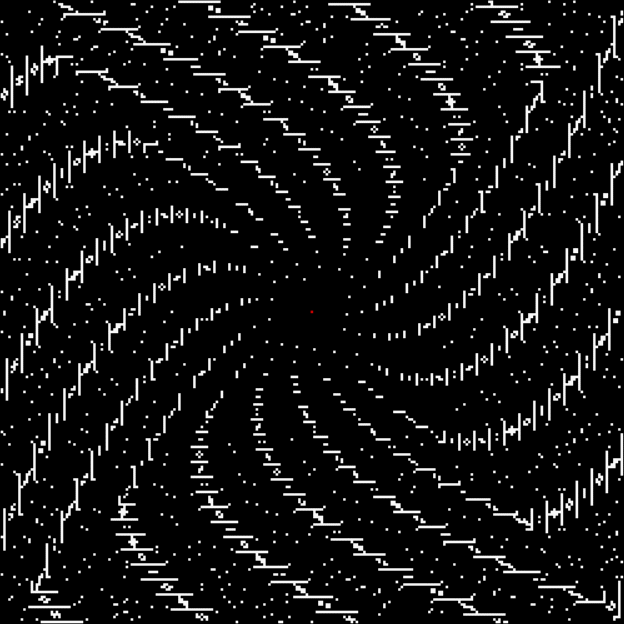
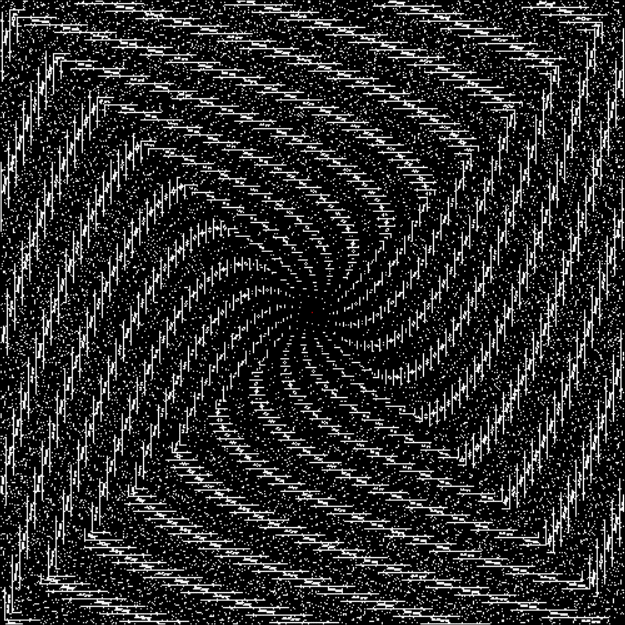
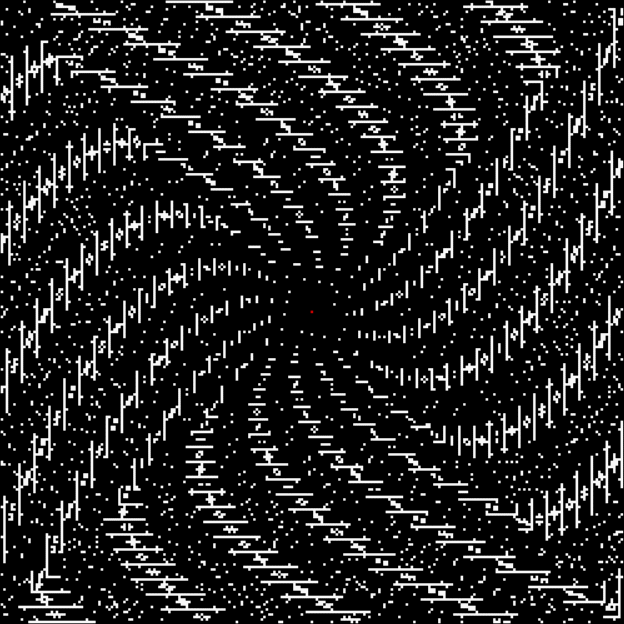
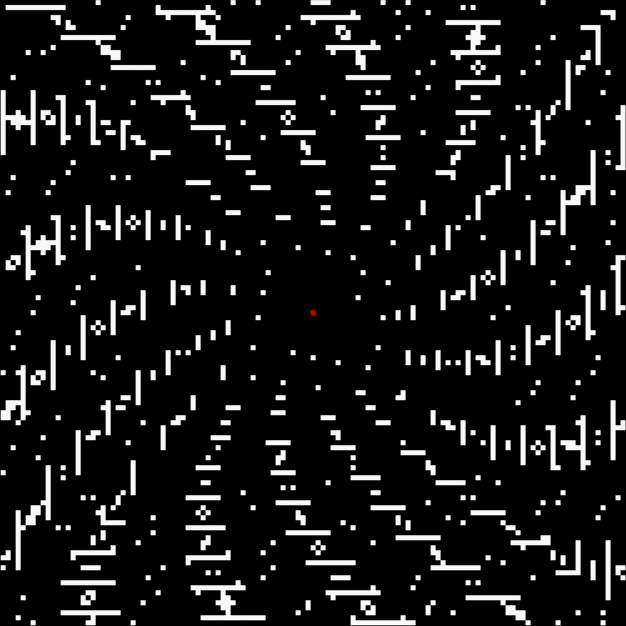
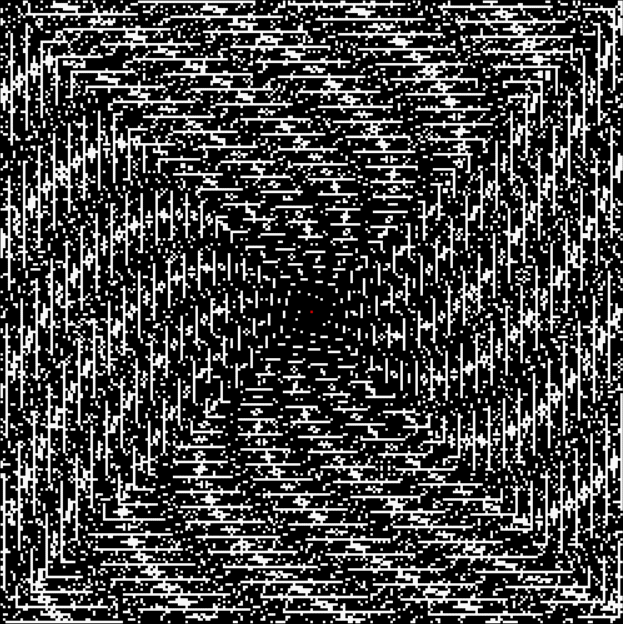
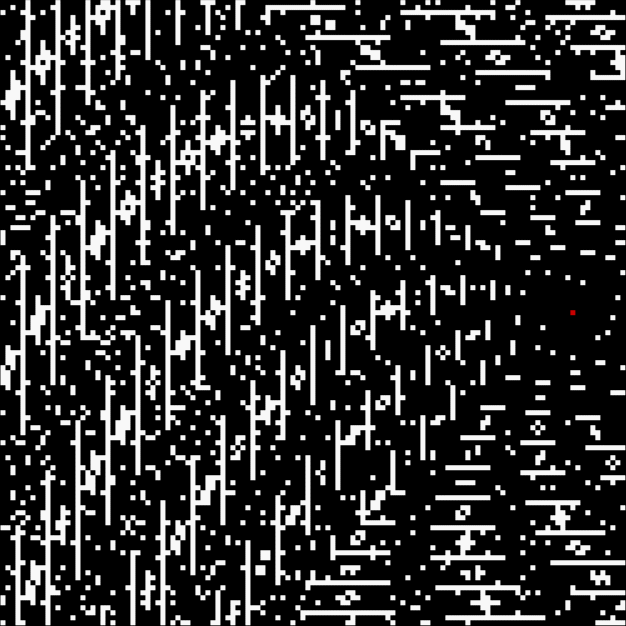
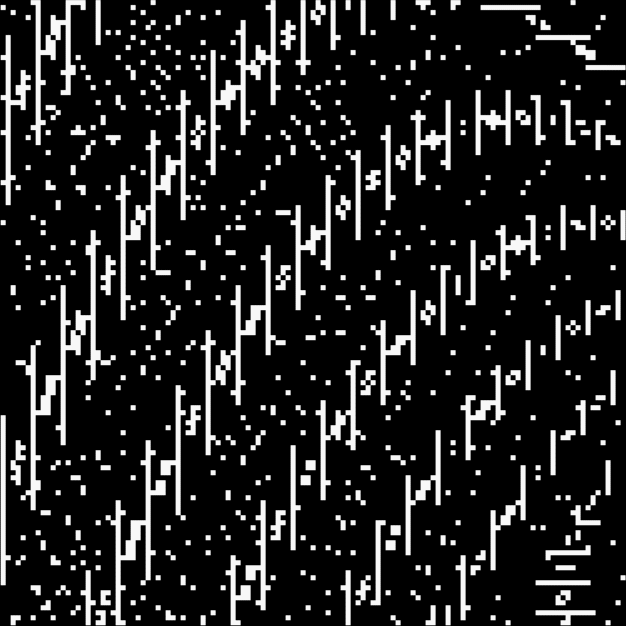
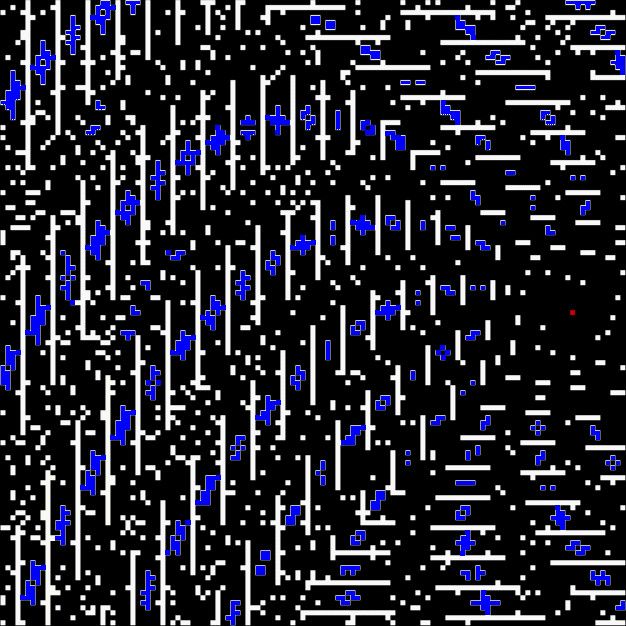
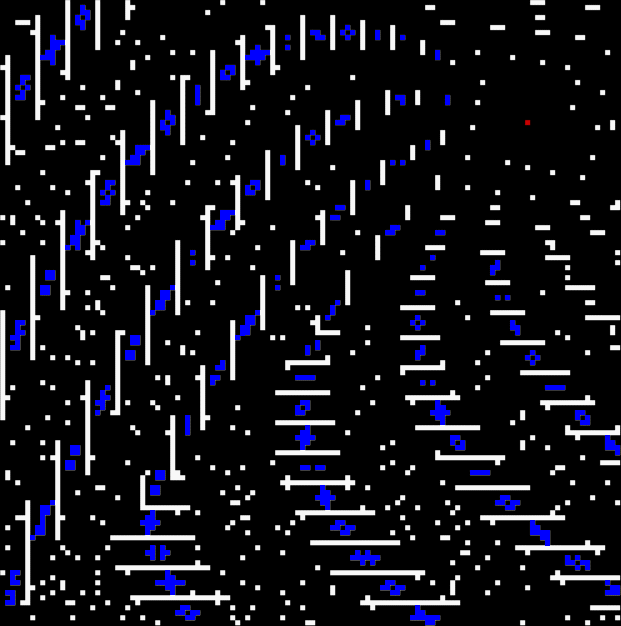
Suppose you set up an L, i.e. a vertical and horizontal line, representing the x,y coordinates between 0 and 1. Next, find the fractional pairs x = 1/2, 1/3, 2/3, 1/4, 2/4…, y = 1/2, 1/3, 2/3, 1/4, 2/4… and mark the point (x,y). That is, find the point, say, 1/5 of the way along the x-line, then the points 1/5, 2/5, 3/5 and 4/5 along the y-line, marking the points (1/5, 1/5), (1/5, 2/5), (1/5, 3/5), (1/5, 4/5). Then find (2/5, 1/5), (2/5, 2/5), (2/5, 3/5), (2/5, 4/5) and so on. Some interesting patterns appear in what I call a Frac-L (pronounced “frackle”) or Fract-L:
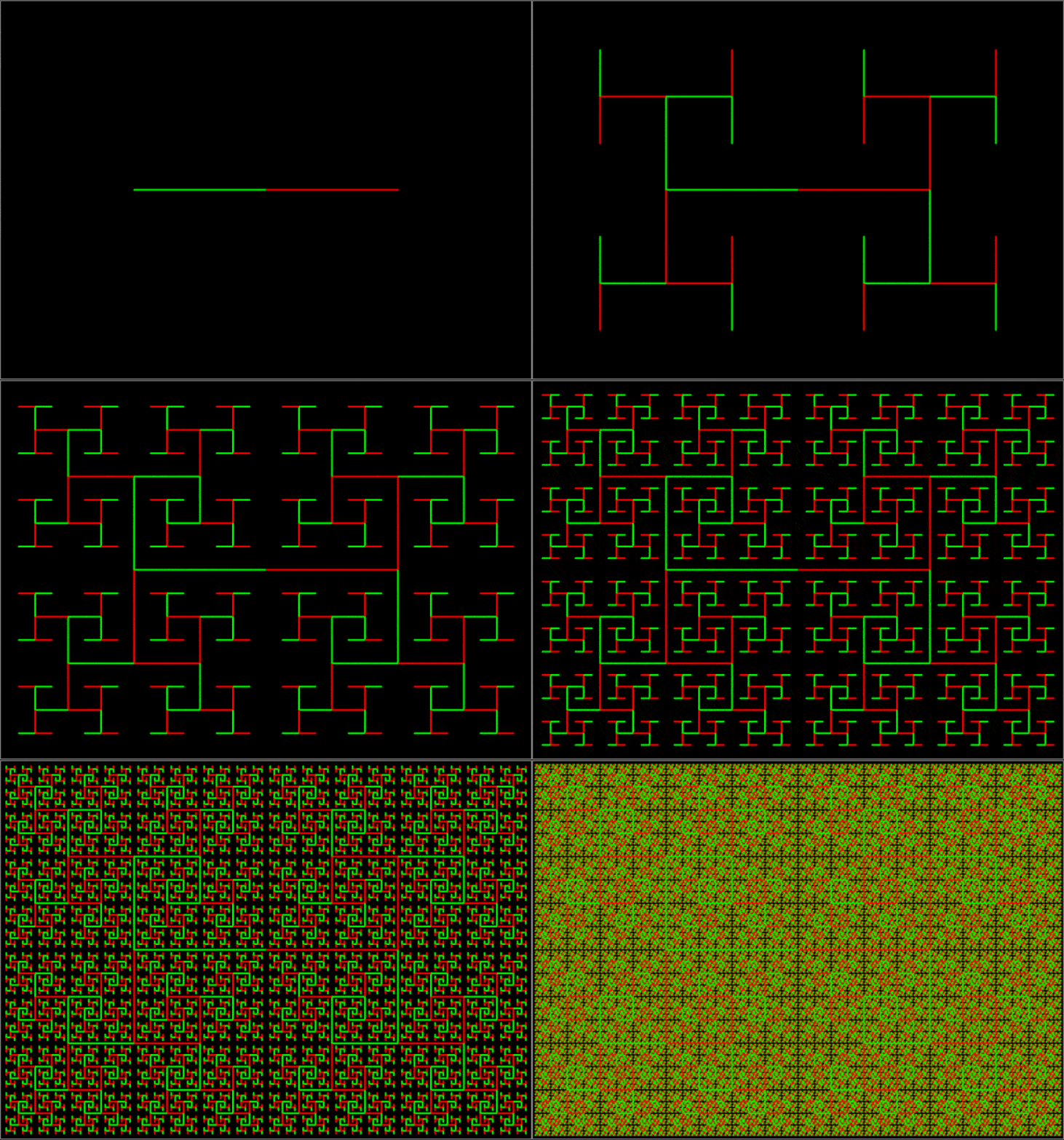
Frac-L for 1/2 to 21/22
Frac-L for 1/2 to 48/49
Frac-L for 1/2 to 75/76
Frac-L for 1/2 to 102/103
Frac-L for 1/2 to 102/103 (animated)
If the (x,y) point is first red, then becomes different colors as it is repeatedly found, you get these patterns:
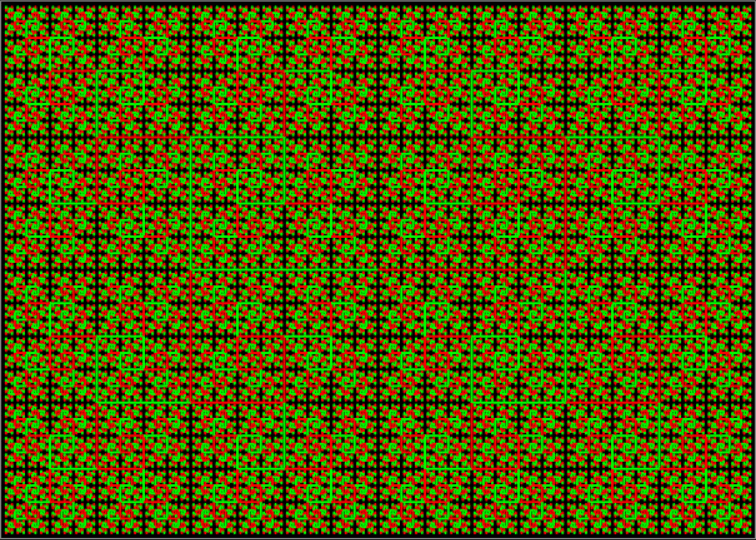
Frac-L for 1/2 to 48/49 (color)
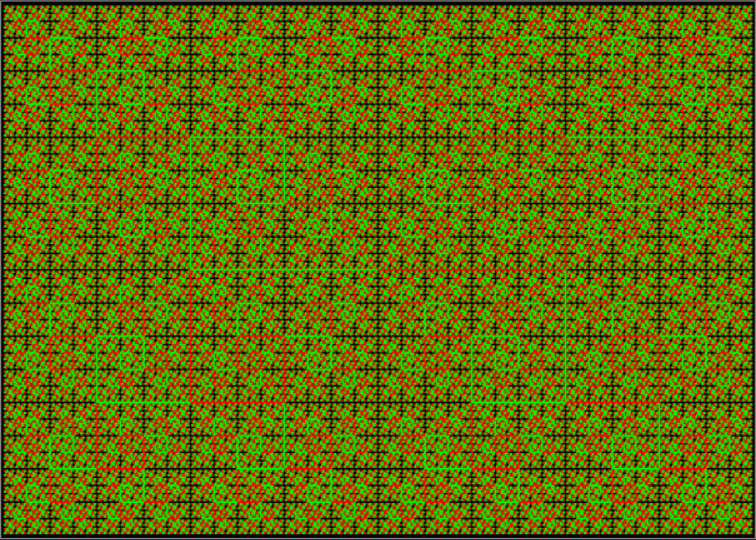
Frac-L for 1/2 to 75/79 (color)
Frac-L for 1/2 to 102/103 (color) (animated)
Now try polygonal numbers. The triangular numbers are 1, 3, 6, 10, 15, 21, 28, 36, 45, 55, 66, 78…, so you’re finding the fractional pairs, say, (1/21, 1/21), (1/21, 3/21, (1/21, 6/21), (1/21, 10/21), (1/21, 15/21), then (3/21, 1/21), (3/21, 3/21, (3/21, 6/21), (3/21, 10/21), (3/21, 15/21), and so on:
Frac-L for triangular fractions
The frac-L for square numbers (1, 4, 9, 16, 25, 36, 49, 64, 81, 100…) is almost identical:
Frac-L for square fractions, e.g. (1/16, 1/16), (1/16, 4/16), (1/16, 9/16)…
So is the frac-L for pentagonal numbers (1, 5, 12, 22, 35, 51, 70, 92, 117, 145, 176, 210, 247, 287, 330…):
Frac-L for pentagonal fractions, e.g. (1/35, 5/35), (1/35, 12/35), (1/35,22/35)…
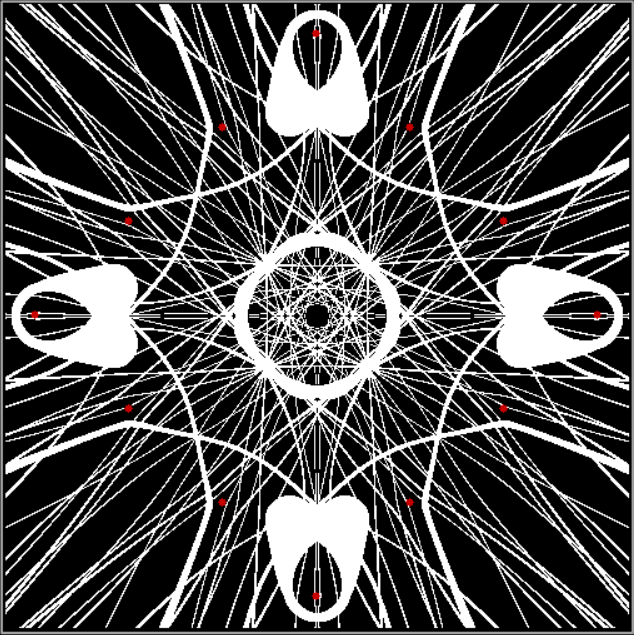
But what about prime numbers (skipping 2)? Here the fractional pairs are, say, (1/17, 1/17), (1/17, 3/17), (1/17, 5/17), (1/17, 7/17), (1/17, 11/17), (1/17, 13/17), then (3/17, 1/17), (3/17, 3/17), (3/17, 5/17), (3/17, 7/17), (3/17, 11/17), (3/17, 13/17), and so on:
Frac-L for 1/3 to 73/79 (prime fractions)
Frac-L for 1/3 to 223/227
Frac-L for 1/3 to 307/331
Frac-L for 1/3 to 307/331 (animated)
Frac-L for 1/3 to 73/79 (color) (prime fractions)
Frac-L for 1/3 to 223/227 (color)
Frac-L for 1/3 to 307/331 (color)
Frac-L for 1/3 to 307/331 (color) (animated)
And finally (for now), a frac-L for Fibonnaci numbers, where the fractional pairs are, say, (1/13, /13), (1/13, 2/13), (1/13, 3/13), (1/13, 5/13), (1/13, 8/13), then (2/13, /13), (2/13, 2/13), (2/13, 3/13), (2/13, 5/13), (2/13, 8/13), and so on:
Frac-L for Fibonacci fractions to 14930352/2178309 = fibonacci(36)/fibonacci(37)
It’s a very simple function that raises a very difficult question. An unanswered question, in fact. Take any whole number. If it’s odd, multiply it by 3 and add 1. If it’s even, divide it by 2. Repeat until you reach 1. That’s the hailstone function, because the numbers rise and fall like hailstones being formed in a cloud. Here are some examples:
But is this function truly a hailstone function? That is, does every number fall finally to earth and reach 1? So far, for every number tested, the answer has been yes. But do all numbers reach 1? The Collatz conjecture says they do. But no-one can prove it. Or disprove it. All it would take is one number failing to fall to earth. Mathematicians don’t think there is one, but numbers can take a surprising length of time to get to the ground. Here’s 27:
27 takes 111 steps to reach 1. And the 111 made me think of another question. If the function hail(n) returns the number of steps required for n to reach 1, then hail(27) = 111. But what about hail(n) = 666? That is, what is the first number that requires 666 steps to reach 1? I say “first number”, because one very big number is guaranteed to take 666 steps:
Put another way, 666 = hail(2^666), because for any power of 2, hail(2^p) = p. But is there a smaller number, which I’ll call satan, for which hail(satan) = 666? Here’s a tantalizing taster of the task:
Here’s a question I haven’t answered: if satanic numbers are those n satisfying hail(n) = 666, how many satanic numbers are there? We’ve already seen two of them: 666 = hail(2^666) = hail(26597116). But how many more are there? Not infinitely many, because for n > 2^666, hail(n) > 666. In fact, after satan = 26597116, the next three satanic numbers arrive very quickly:
So there are four consecutive satanic numbers. But it isn’t unusual for a run of consecutive numbers to have the same hail(). Here’s a graph of the values of hail(n) for n = 1,2,3… (running left-to-right, down-up, with 1,2,3… in the lower lefthand corner). When n is divisible by 10, hail(n) is represented in red; when n is odd and divisible by 5, hail(n) is green. Note how many runs of identical hail(n) there are:
Graph for hail(n)
Here are successive records for runs of identical hail(n):
To understand clock-arithmetic, simply picture a clock-face with one hand and a big fat 0 in place of the 12. Now you can do some clock-arithmetic. For example, set the hour-hand to 5, then move on 4 hours. You’ve done this sum:
5 + 4 → 9
Now try 9 + 7. The hour-hand is already on 9, so move forward 7 hours:
9 + 7 → 4
Now try 3 + 8 + 1:
3 + 8 + 1 → 0
And 3 * 4:
4 * 3 = 4 + 4 + 4 → 0
That’s clock-arithmetic. But you’re not confined to 12-hour clocks. Here’s a 7-hour clock, where the 7 is replaced with a 0:
Another name for clock-arithmetic is modular arithmetic, because the clocks model the process of dividing a number by 12 or 7 and finding the remainder or residue — 12 or 7 is known as the modulus (and modulo is Latin for “by the modulus”).
5 + 4 = 9 → 9 / 12 = 0*12 + 9
(5 + 4) modulo 12 = 9
3 + 8 + 1 = 12 → 12 / 12 = 1*12 + 0
(3 + 8 + 1) modulo 12 = 0
19 / 12 = 1*12 + 7
19 mod 12 = 7
3 + 1 = 4 → 4 / 7 = 0*7 + 4
(3 + 1) mod 7 = 4
2 + 4 + 1 = 7 → 7 / 7 = 1*7 + 0
(2 + 4 + 1) mod 7 = 0
19 / 7 = 2*7 + 5
19 mod 7 = 5
Modular arithmetic can do wonderful things. One small but beautiful example is the way it can uncover hidden fractals in Pascal’s triangle:
But you don’t need to consider those ever-growing numbers in the triangle when you’re finding fractals with modular arithmetic. When the modulus is 2, you just work with 0 and 1, that is, you add the previous numbers in the triangle and find the sum modulo 2. When the modulus is 4, you just work with 0, 1, 2 and 3, adding the numbers and finding the sum modulo 4. When it’s 8, you just work with 0, 1, 2, 3, 4, 5, 6 and 7, finding the sum modulo 8. And so on.
Every number greater than 77 is the sum of integers, the sum of whose reciprocals is 1.
For example, 78 = 2 + 6 + 8 + 10 + 12 + 40 and 1/2 + 1/6 + 1/8 + 1/10 + 1/12 + 1/40 = 1.
R.L. Graham, “A Theorem on Partitions”, Journal of the Australian Mathematical Society, 1963; quoted in Le Lionnais, 1983.
• From David Wells’ Penguin Dictionary of Curious and Interesting Mathematics (1986)
Post-Performative Post-Scriptum…
The title of this post is a pun on the gargantuan Graham’s number, described by the same American mathematician and famous among math-fans for its mindboggling size. “Le Lionnais, 1983” must refer to a book called Les Nombres remarquables by the French mathematician François Le Lionnais (1901-84).
In my story “The Web of Nemilloth”, I wrote about a wizard, Vmirr-Psumm, who sought to escape the web of necessity spun over all matter in the universe by the spider-goddess Nemilloth. Vmirr-Psumm knew the legend of a fore-wizard, Tšenn-Gilë, who had sought the same escape and had cast a giant spell to tear the entire planet of Pmimmb from Nemilloth’s web. Alas, the legend ran, Tšenn-Gilë had made an error in his working and Pmimmb had exploded, broadcasting fragments of itself throughout the universe in the form of a seemingly worthless black mineral called sorraim.
Pieces of sorraim were found on Vmirr-Psumm’s own planet and he reasoned that, were the legend true, he could lift Nemilloth’s web from his own brain by carving and throwing a die of the mineral, wherein the virtue of Tšenn-Gilë’s spell still lingered. A die of any ordinary material would be within the web and therefore bound by necessity, generating only pseudo-random numbers in its throws. But a die of sorraim, being outside the web, would generate veri-random numbers that would alter the working of his brain, inspire thoughts unbound by Nemilloth, and grant him true freedom from Her tyranny.
Unfortunately for Vmirr-Psumm, he did not realize that “he who loosens the web of Nemilloth in rebellion grants matter itself leave to rebel.” A fragment of sorraim was small enough to remain outside the web and survive, but anything larger, from a planet to a human brain, would be destroyed. And that is why, absorbing the veri-random throws of the sorraim die, Vmirr-Psumm’s brain exploded with the power of an atom bomb at the end of the story, “succumbing, on its vastly smaller scale, to the same forces that had torn apart the planet of Pmimmb.”
Reflections on ranDOOM
Thinking about “The Web of Nemilloth” again at the end of 2024, I’ve realized that it raises some interesting questions. If a truly random sequence of numbers could cause a brain to explode, how long would the sequence have to be? I conjecture that a single number, and single throw of Vmirr-Psumm’s deadly die, would suffice, because it would be truly random in a way no number generated in any normal way could be. After all, if the brain of the die-thrower didn’t explode after one throw, why should it explode after two or three or any other finite number of throws? If the true randomness of the sequence is not established after one throw, then (one might reason) it could be established only after infinite throws. But Vmirr-Psumm did not throw the die infinitely often. Therefore, I conjecture, he must have rolled it only once, seen but one uppermost face of his dodecahedral die of sorraim, and die-d on that instant, as his brain absorbed the first veri-random number and exploded.
But why should sorraim need to be carved into a die to be deadly? If the mineral were truly outside the web of Nemilloth, then would not merely seeing or touching sorraim introduce unnecessitated sense-data into the brain of the beholder or betoucher and provoke an explosion? And why would the influence of the sorraim need to be on a conscious brain? If it’s insentient matter itself that rebels when outside the web, then ordinary matter influenced by sorraim would explode. And that explosion itself would be unnecessitated and thereby provoke further explosion in all the ordinary matter that it influenced.
And the influence of such an explosion would propagate at the speed of light, because the photons it created would be unnecessitated and therefore explosive in their influence. One could conclude, then, that the fore-wizard’s spell would have destroyed not only the planet of Pmimmb whereon it was worked but, in time, the entire universe, as the photons bearing the news of the initial explosion sped outward and triggered further explosions in all the ordinary matter they effected in some way. Vmirr-Psumm could never have found his sorraim and carved his die, because photons from Pmimmb would have reached his planet far before fragments of sorraim ever did. And it seems illogical or arbitrary to suppose that sorraim could exist anyway. Would not all matter be destroyed – turn into electro-magnetic radiation – if outside the web or if influenced by unnecessitated fundamental particles?
Psychopaths and Stoics
Still, let’s suppose that my story doesn’t succumb to this explosive logic, that sorraim could exist and be carved into a die, and that a single truly random number could cause a brain to explode. What a method of assassination or murder that would be! But it would be like the head of Medusa: you would have to emulate Perseus and avoid beholding your own weapon. If sorraim really existed and you could carve a die from it, you’d have to set up an automatic mechanism to roll that die, record the number first generated, then transmit that number to your target in some way. But to use such a weapon you’d have to have a psychopathic indifference to collateral damage: when your target’s brain absorbed the single veri-random number and exploded, this would destroy any city that your target happened to be present in at the time. But suppose you were indeed a psychopath and wanted to destroy a city or a nation or a continent or the entire world. Then you’d simply arrange for your single truly random number to be seen by the requisite number of people.
A final thought: I have a recollection that the Stoics believed necessity rules the universe and true randomness is therefore impossible, because it would trigger destruction in the necessitated material order of the universe. But I can’t remember where (or if) I read this and am pretty sure I read it only after I’d written “The Web of Nemilloth”.
Post-Performative Post-Scriptum
• “The Web of Nemilloth” appears in the CAS-inspired collection Tales of Silence and Sortilege, re-published by Incunabula Books in 2023.
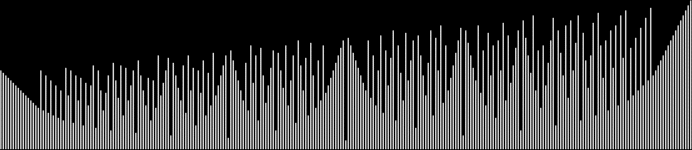
At least, I think it’s a fractal. I came across it when I was counting the ways in which the integers can be the sum of distinct Fibonacci numbers. Here for reference is the Fibonacci sequence, the beautiful and endlessly fertile sequence that’s seeded with “1, 1” and continued by summing the two previous numbers:
I also noticed a pattern relating to the maximum count reached in the numbers between the 1s. Suppose the function max(fib(i)-1..fib(i+1)-1) returns the highest count of ways to represent the numbers from fib(i)-1 to fib(i+1)-1. Notice how max() increases:
The pattern is described like this at the Online Encyclopedia of Integer Sequences:
a(n) = 1 if and only if n+1 is a Fibonacci number. The length of such a quasi-period (from Fib(i)-1 to Fib(i+1)-1, inclusive) is a Fibonacci number + 1. The maximum value of a(n) within each subsequent quasi-period increases by a Fibonacci number. For example, from n = 143 to n = 232, the maximum is 13. From 232 to 376, the maximum is 16, an increase of 3. From 376 to 609, 21, an increase of 5. From 609 to 986, 26, increasing by 5 again. Each two subsequent maxima seem to increase by the same increment, the next Fibonacci number. – Kerry Mitchell, Nov 14 2009
The maxima of the quasi-periods are in A096748. – Max Barrentine, Sep 13 2015 — See commentary for A000119 at OEIS
I can’t remember where I came across this clever little puzzle and what precise form it took, but here’s my version of it:
A famously eccentric inventor and recreational mathematician has invited you to tour the factory where his company manufactures locks, keys, safes, cash-boxes and so on. At the end of the tour he brings you to a conference room, pours you a glass of wine, and invites you to test your wits against a puzzle. He points out that a hundred numbered boxes have been set out on two long tables in the room. You sip your wine as you listen to him explain that each box is locked and contains a slip of paper bearing a number between 0 and 9. If you accept the challenge, the inventor will order a hundred workers to walk in turn past the boxes, using a master-key to unlock or lock the boxes like this:
The first worker will use the key on every box (boxes #1,2,3…), the second worker will use the key on every second box (boxes #2,4,6…), the third worker the key on every third box (boxes #3,6,9…), and so on.
Now, you can’t tell by simply looking at a box whether it’s unlocked or not, but it’s obvious that the first box will be unlocked when all that is over. Box #1 is originally locked and the master-key will be used on it just once. But how many other boxes will be unlocked? If you can choose nothing but the unlocked boxes, you get to keep the contents. Otherwise you get nothing. That is, if you choose one or more locked boxes, you get nothing.
And what good are the contents of the unlocked boxes? Well, if you take the numbered slips of paper they contain in order, they will give you the combination of a locked safe the inventor now points out in the wall behind you. The safe contains the antidote for the deadly but slow-acting poison he secretly slipped into the wine you have been sipping as you listened to him explain the details of the puzzle. So you have to choose all and only the unlocked boxes to save your life. Can you do it?
Solution
I’m sure there’s a simpler explanation of which boxes will be unlocked, but here’s my complicated one:
Whether box #n is locked or unlocked in the end depends on how many divisors the number n has. If it has an even number of divisors, it will be locked; if it has an odd number of divisors, it will be unlocked. Take box #12. The number 12 has six divisors: 1, 2, 3, 4, 6 and 12. So workers #1, #3 and #6 will unlock it with the master-key, but workers #2, #4 and #12 will lock it again. Worker #12 will be the final worker to use the master-key on the box, so it will be locked.
Now take box #16. The number #16 has five divisors: 1, 2, 4, 8 and 16. So workers #1, #4 and #16 will unlock the box with the master-key, while workers #2 and #8 will lock it. Worker #16 will be the final worker to use the master-key on the box, so it will be unlocked.
In other words, the puzzle reduces to this: Which numbers from 1 to 100 have an odd number of divisors? To work out the number of divisors n has, you add 1 to the exponent of each of its prime factors and multiply the results. For example, 24 has eight divisors thus:
• 36 = 2^2 * 3^2 → (2+1) * (2+1) = 3 * 3 = 9, so 36 has nine divisors: 1, 2, 3, 4, 6, 9, 12, 18, 36
36 demonstrates that a number has to have only even exponents on its prime factors to have an odd number of divisors (the only number without prime factors is 1, which has one divisor, namely itself). Numbers with only even exponents on their prime factors are square numbers:
• 4 = 2^2 → (2+1) = 3, so 4 has three divisors: 1, 2, 4
• 9 = 3^2 → (2+1) = 3, so 9 has three divisors: 1, 3, 9
• 16 = 2^4 → (4+1) = 5, so 16 has five divisors: 1, 2, 4, 8, 16
• 25 = 5^2 → (2+1) = 3, so 25 has divisors: 1, 5, 25
• 36 = 2^2 * 3^2 → (2+1) * (2+1) = 3 * 3 = 9, so 36 has nine divisors: 1, 2, 3, 4, 6, 9, 12, 18, 36
• 49 = 7^2 → (2+1) = 3, so 49 has three divisors: 1, 7, 49
• 64 = 2^6 → (6+1) = 7, so 64 has seven divisors: 1, 2, 4, 8, 16, 32, 64
• 81 = 3^4 → (4+1) = 5, so 81 has five divisors: 1, 3, 9, 27, 81
• 100 = 2^2 * 5^2 → (2+1) * (2+1) = 3 * 3 = 9, so 100 has nine divisors: 1, 2, 4, 5, 10, 20, 25, 50, 100
So if you choose boxes #1, #4, #9, #16, #25, #36, #49, #64, #81 and #100, you’ll get the combination for the safe and save your life.
Appendix
Here’s the full description of what happens to the boxes:
• box #1 is unlocked by worker #1 and locked by no-one, therefore it’s unlocked
• box #2 is unlocked by worker #1 and locked by worker #2, therefore it’s locked
• box #3 is unlocked by worker #1 and locked by worker #3, therefore it’s locked
• box #4 is unlocked by workers #1 and #4, and locked by worker #2, therefore it’s unlocked
• box #5 is unlocked by worker #1 and locked by worker #5, therefore it’s locked
• box #6 is unlocked by workers #1 and #3, and locked by workers #2 and #6, therefore it’s locked
• box #7 is unlocked by worker #1 and locked by worker #7, therefore it’s locked
• box #8 is unlocked by workers #1 and #4, and locked by workers #2 and #8, therefore it’s locked
• box #9 is unlocked by workers #1 and #9, and locked by worker #3, therefore it’s unlocked
• box #10 is unlocked by workers #1 and #5, and locked by workers #2 and #10, therefore it’s locked
• box #11 is unlocked by worker #1 and locked by worker #11, therefore it’s locked
• box #12 is unlocked by workers #1, #3 and #6, and locked by workers #2, #4 and #12, therefore it’s locked
• box #13 is unlocked by worker #1 and locked by worker #13, therefore it’s locked
• box #14 is unlocked by workers #1 and #7, and locked by workers #2 and #14, therefore it’s locked
• box #15 is unlocked by workers #1 and #5, and locked by workers #3 and #15, therefore it’s locked
• box #16 is unlocked by workers #1, #4 and #16, and locked by workers #2 and #8, therefore it’s unlocked
• box #17 is unlocked by worker #1 and locked by worker #17, therefore it’s locked
• box #18 is unlocked by workers #1, #3 and #9, and locked by workers #2, #6 and #18, therefore it’s locked
• box #19 is unlocked by worker #1 and locked by worker #19, therefore it’s locked
• box #20 is unlocked by workers #1, #4 and #10, and locked by workers #2, #5 and #20, therefore it’s locked
• box #21 is unlocked by workers #1 and #7, and locked by workers #3 and #21, therefore it’s locked
• box #22 is unlocked by workers #1 and #11, and locked by workers #2 and #22, therefore it’s locked
• box #23 is unlocked by worker #1 and locked by worker #23, therefore it’s locked
• box #24 is unlocked by workers #1, #3, #6 and #12, and locked by workers #2, #4, #8 and #24, therefore it’s locked
• box #25 is unlocked by workers #1 and #25, and locked by worker #5, therefore it’s unlocked
• box #26 is unlocked by workers #1 and #13, and locked by workers #2 and #26, therefore it’s locked
• box #27 is unlocked by workers #1 and #9, and locked by workers #3 and #27, therefore it’s locked
• box #28 is unlocked by workers #1, #4 and #14, and locked by workers #2, #7 and #28, therefore it’s locked
• box #29 is unlocked by worker #1 and locked by worker #29, therefore it’s locked
• box #30 is unlocked by workers #1, #3, #6 and #15, and locked by workers #2, #5, #10 and #30, therefore it’s locked
• box #31 is unlocked by worker #1 and locked by worker #31, therefore it’s locked
• box #32 is unlocked by workers #1, #4 and #16, and locked by workers #2, #8 and #32, therefore it’s locked
• box #33 is unlocked by workers #1 and #11, and locked by workers #3 and #33, therefore it’s locked
• box #34 is unlocked by workers #1 and #17, and locked by workers #2 and #34, therefore it’s locked
• box #35 is unlocked by workers #1 and #7, and locked by workers #5 and #35, therefore it’s locked
• box #36 is unlocked by workers #1, #3, #6, #12 and #36, and locked by workers #2, #4, #9 and #18, therefore it’s unlocked
• box #37 is unlocked by worker #1 and locked by worker #37, therefore it’s locked
• box #38 is unlocked by workers #1 and #19, and locked by workers #2 and #38, therefore it’s locked
• box #39 is unlocked by workers #1 and #13, and locked by workers #3 and #39, therefore it’s locked
• box #40 is unlocked by workers #1, #4, #8 and #20, and locked by workers #2, #5, #10 and #40, therefore it’s locked
• box #41 is unlocked by worker #1 and locked by worker #41, therefore it’s locked
• box #42 is unlocked by workers #1, #3, #7 and #21, and locked by workers #2, #6, #14 and #42, therefore it’s locked
• box #43 is unlocked by worker #1 and locked by worker #43, therefore it’s locked
• box #44 is unlocked by workers #1, #4 and #22, and locked by workers #2, #11 and #44, therefore it’s locked
• box #45 is unlocked by workers #1, #5 and #15, and locked by workers #3, #9 and #45, therefore it’s locked
• box #46 is unlocked by workers #1 and #23, and locked by workers #2 and #46, therefore it’s locked
• box #47 is unlocked by worker #1 and locked by worker #47, therefore it’s locked
• box #48 is unlocked by workers #1, #3, #6, #12 and #24, and locked by workers #2, #4, #8, #16 and #48, therefore it’s locked
• box #49 is unlocked by workers #1 and #49, and locked by worker #7, therefore it’s unlocked
• box #50 is unlocked by workers #1, #5 and #25, and locked by workers #2, #10 and #50, therefore it’s locked
• box #51 is unlocked by workers #1 and #17, and locked by workers #3 and #51, therefore it’s locked
• box #52 is unlocked by workers #1, #4 and #26, and locked by workers #2, #13 and #52, therefore it’s locked
• box #53 is unlocked by worker #1 and locked by worker #53, therefore it’s locked
• box #54 is unlocked by workers #1, #3, #9 and #27, and locked by workers #2, #6, #18 and #54, therefore it’s locked
• box #55 is unlocked by workers #1 and #11, and locked by workers #5 and #55, therefore it’s locked
• box #56 is unlocked by workers #1, #4, #8 and #28, and locked by workers #2, #7, #14 and #56, therefore it’s locked
• box #57 is unlocked by workers #1 and #19, and locked by workers #3 and #57, therefore it’s locked
• box #58 is unlocked by workers #1 and #29, and locked by workers #2 and #58, therefore it’s locked
• box #59 is unlocked by worker #1 and locked by worker #59, therefore it’s locked
• box #60 is unlocked by workers #1, #3, #5, #10, #15 and #30, and locked by workers #2, #4, #6, #12, #20 and #60, therefore it’s locked
• box #61 is unlocked by worker #1 and locked by worker #61, therefore it’s locked
• box #62 is unlocked by workers #1 and #31, and locked by workers #2 and #62, therefore it’s locked
• box #63 is unlocked by workers #1, #7 and #21, and locked by workers #3, #9 and #63, therefore it’s locked
• box #64 is unlocked by workers #1, #4, #16 and #64, and locked by workers #2, #8 and #32, therefore it’s unlocked
• box #65 is unlocked by workers #1 and #13, and locked by workers #5 and #65, therefore it’s locked
• box #66 is unlocked by workers #1, #3, #11 and #33, and locked by workers #2, #6, #22 and #66, therefore it’s locked
• box #67 is unlocked by worker #1 and locked by worker #67, therefore it’s locked
• box #68 is unlocked by workers #1, #4 and #34, and locked by workers #2, #17 and #68, therefore it’s locked
• box #69 is unlocked by workers #1 and #23, and locked by workers #3 and #69, therefore it’s locked
• box #70 is unlocked by workers #1, #5, #10 and #35, and locked by workers #2, #7, #14 and #70, therefore it’s locked
• box #71 is unlocked by worker #1 and locked by worker #71, therefore it’s locked
• box #72 is unlocked by workers #1, #3, #6, #9, #18 and #36, and locked by workers #2, #4, #8, #12, #24 and #72, therefore it’s locked
• box #73 is unlocked by worker #1 and locked by worker #73, therefore it’s locked
• box #74 is unlocked by workers #1 and #37, and locked by workers #2 and #74, therefore it’s locked
• box #75 is unlocked by workers #1, #5 and #25, and locked by workers #3, #15 and #75, therefore it’s locked
• box #76 is unlocked by workers #1, #4 and #38, and locked by workers #2, #19 and #76, therefore it’s locked
• box #77 is unlocked by workers #1 and #11, and locked by workers #7 and #77, therefore it’s locked
• box #78 is unlocked by workers #1, #3, #13 and #39, and locked by workers #2, #6, #26 and #78, therefore it’s locked
• box #79 is unlocked by worker #1 and locked by worker #79, therefore it’s locked
• box #80 is unlocked by workers #1, #4, #8, #16 and #40, and locked by workers #2, #5, #10, #20 and #80, therefore it’s locked
• box #81 is unlocked by workers #1, #9 and #81, and locked by workers #3 and #27, therefore it’s unlocked
• box #82 is unlocked by workers #1 and #41, and locked by workers #2 and #82, therefore it’s locked
• box #83 is unlocked by worker #1 and locked by worker #83, therefore it’s locked
• box #84 is unlocked by workers #1, #3, #6, #12, #21 and #42, and locked by workers #2, #4, #7, #14, #28 and #84, therefore it’s locked
• box #85 is unlocked by workers #1 and #17, and locked by workers #5 and #85, therefore it’s locked
• box #86 is unlocked by workers #1 and #43, and locked by workers #2 and #86, therefore it’s locked
• box #87 is unlocked by workers #1 and #29, and locked by workers #3 and #87, therefore it’s locked
• box #88 is unlocked by workers #1, #4, #11 and #44, and locked by workers #2, #8, #22 and #88, therefore it’s locked
• box #89 is unlocked by worker #1 and locked by worker #89, therefore it’s locked
• box #90 is unlocked by workers #1, #3, #6, #10, #18 and #45, and locked by workers #2, #5, #9, #15, #30 and #90, therefore it’s locked
• box #91 is unlocked by workers #1 and #13, and locked by workers #7 and #91, therefore it’s locked
• box #92 is unlocked by workers #1, #4 and #46, and locked by workers #2, #23 and #92, therefore it’s locked
• box #93 is unlocked by workers #1 and #31, and locked by workers #3 and #93, therefore it’s locked
• box #94 is unlocked by workers #1 and #47, and locked by workers #2 and #94, therefore it’s locked
• box #95 is unlocked by workers #1 and #19, and locked by workers #5 and #95, therefore it’s locked
• box #96 is unlocked by workers #1, #3, #6, #12, #24 and #48, and locked by workers #2, #4, #8, #16, #32 and #96, therefore it’s locked
• box #97 is unlocked by worker #1 and locked by worker #97, therefore it’s locked
• box #98 is unlocked by workers #1, #7 and #49, and locked by workers #2, #14 and #98, therefore it’s locked
• box #99 is unlocked by workers #1, #9 and #33, and locked by workers #3, #11 and #99, therefore it’s locked
• box #100 is unlocked by workers #1, #4, #10, #25 and #100, and locked by workers #2, #5, #20 and #50, therefore it’s unlocked
Example: a(6)=325267931 is the starting point of the first occurrence of 6 consecutive pairs of twin primes: (325267931 325267933) (325267937 325267939) (325267949 325267951) (325267961 325267963) (325267979 325267981) (325267991 325267993).
• A087641 at the Encyclopedia of Integer Sequences