Kore. Kounter-Kultural. Kommandments.

One thing I’ve noticed about in terms of the hardcore heretics and mentally magnipotent mega-mavericks who corely comprise the counter-cultural community… is that… some of them can get very upset… if you don’t think in exactly the same way as… they do and/or you criticize and/or… question anything they like, like…

With this in mind, I’ve drawn up some key counter-cultural commandments for anyone who wants to gain and/or retain popularity and/or influence among in terms of the hardcore heretics and mentally magnipotent mega-mavericks who corely comprise the counter-cultural community…

• Thou shalt NOT mock The Guardian and/or Guardian-adjacent media outlets…
• Thou shalt NOT exhibit sniffy superiority towards vis à vis folk with EngLit and/or Film Studies and/or EngLit-and/or-Film-Studies-adjacent degrees…
• Thou shalt NOT pyogenically problematize use of italics or trailing dots
• Thou shalt NOT teratically toxicize “in terms of”, “prior to”, “core”, “key” or “toxicity”…
• Thou shalt NOT atrabiliously aspersicize the 2SLGBTQ+ Community
• Thou shalt NOT even hint that American English and/or usage [CENSORED]
• Thou shalt NOT say Cormac was Crap
• Thou shalt NOT refer to reference Mike Moorcock as “Britain’s biggest bearded Burroughsian lit-twat”…

But above all

• Thou shalt NOT suggest that crisps are a key component of core counter-culturalicity (wow)…

So. Now. You. Know.

[Parallel-Posted at Papyrocentric Performativity]

The Cruddiness of Cormac (continued)

Cormac McCarthy was a bad writer and an interesting phenomenon. Why did so many people say that he was a great writer, a genius, a giant of American letters? The puzzle isn’t as big as it appears. As with most over-rated artists, some of the people who said they liked him could see or glimpse the truth. They knew that he was pretentious and posturing, that he chose words clumsily and carelessly, had no sense of rhythm or the ridiculous, and wrote with all the natural grace and beauty of a chimpanzee riding a tricycle.

But most of those who saw the truth about Mccarthy didn’t dare to speak it. They stood beside the procession of praise and prizes and stayed shtum, when they should have shouted: “The emperor has no clothes!” A critic called B.R. Myers did dare to speak the truth. He shouted “The emperor has no clothes!” at the Atlantic in 2001:

McCarthy relies more on barrages of hit-and-miss verbiage than on careful use of just the right words. […] No novelist with a sense of the ridiculous would write such nonsense. Although his characters sometimes rib one another, McCarthy is among the most humorless writers in American history. […] It is a rare passage that can make you look up, wherever you may be, and wonder if you are being subjected to a diabolically thorough Candid Camera prank. I can just go along with the idea that horses might mistake human retching for the call of wild animals. But “wild animals” isn’t epic enough: McCarthy must blow smoke about some rude provisional species, as if your average quadruped had impeccable table manners and a pension plan. […] All the Pretty Horses received the National Book Award in 1992. “Not until now,” the judges wrote in their fatuous citation, “has the unhuman world been given its own holy canon.” What a difference a pseudo-biblical style makes; this so-called canon has little more to offer than the conventional belief that horses, like dogs, serve us well enough to merit exemption from an otherwise sweeping disregard for animal life. (No one ever sees a cow’s soul.) – “A Reader’s Manifesto”, The Atlantic (July 2001)

Myers is also right on the money when he says that McCarthy “thinks it more important to sound literary than to make sense.” He lets the gas out of McCarthy’s bloated reputation like a bad simile firing a bazooka into a dead whale. If you can’t see the cruddiness of Cormac, I recommend that you read Myers’ essay. It covers more bad writers than McCarthy, though, so if you’re pressed for time, just search for “Cormac” and have your eyes opened. Or not, as the case may be.

As for me, I’d like to re-quote a passage from McCarthy’s Pulitzer-prize-winning The Road (2006). I’ve already looked at it in “King Cormac”, but I have more to say:

When he woke in the woods in the dark and the cold of the night he’d reach out to touch the child sleeping beside him. Nights dark beyond darkness and the days more gray each one than what had gone before. Like the onset of some cold glaucoma dimming away the world. His hand rose and fell softly with each precious breath. He pushed away the plastic tarpaulin and raised himself in the stinking robes and blankets and looked toward the east for any light but there was none. In the dream from which he’d wakened he had wandered in a cave where the child led him by the hand. Their light playing over the wet flowstone walls. Like pilgrims in a fable swallowed up and lost among the inward parts of some granitic beast.

Is that good writing? No, it’s cruddy writing. Please consider these two sentences:

Like the onset of some cold glaucoma dimming away the world. His hand rose and fell softly with each precious breath.

You’ve got the pretentious and portentous “some cold glaucoma” followed by the hackneyed, Oprah-esque “precious breath”. The noun didn’t need any adjective. This is far stronger:

His hand rose and fell softly with each breath.

With “precious breath”, McCarthy was telling his readers what to think about the feelings of a father for his son. With just “breath”, he would have let his readers think it for themselves. Now look at this sentence:

He pushed away the plastic tarpaulin and raised himself in the stinking robes and blankets and looked toward the east for any light but there was none.

Is that good writing? No, again it’s cruddy writing. The sentence has no grace or rhythm and ends as McCarthy’s sentences so often do: with a bathetic thud. As Myers says of another of Cormac’s cruds: it can’t be “read aloud in a natural fashion.” This re-write of the sentence is stronger:

He pushed away the tarpaulin and raised himself in the stinking blankets and looked toward the east for light. But there was none.

And the re-write can be “read aloud in a natural fashion”. The Road is full of sentences that cry out in vain for a re-write. So are McCarthy’s other books. Not that I’ve read those other books, but I can see it from Myers’ essay and from quotes like this:

You can appreciate the language in McCarthy’s fiction for its lexical richness, gothic rhythms, and descriptive precision. In Suttree, you positively live on the grimy shore of the Tennessee River, where the “water was warm to the touch and had a granular lubricity like graphite.” Same for Blood Meridian. The Southwest desert is your home, or prison. You look up at the night sky. “All night sheetlightning quaked sourceless to the west beyond the midnight thunderheads, making a bluish day of the distant desert, the mountains on the sudden skyline stark and black and livid like a land of some other order out there whose true geology was not stone but fear.” – “a href=”https://www.theparisreview.org/blog/2023/06/16/on-cormac-mccarthy/”>On Cormac McCarthy”, The Paris Review (June 2023)

No, McCarthy’s language did not have “descriptive precision”. As B.R. Myers repeatedly demonstrates, it had the opposite: descriptive imprecision. That bit about the “true geology” being “fear” is, like so much of McCarthy’s writing, unintentionally funny. It suffers from the same fault as A.E. Housman identified in some of Swinburne’s more careless moments:

[M]uch worse can be said of another kind of simile, which grows common in his later writings. When a poet says that hatred is hot as fire or chastity white as snow, we can only object that we have often heard this before and that, considered as ornament, it is rather trite and cheap. But when he inverts his comparison and says that fire is hot as hatred and snow white as chastity, he is a fool for his pains. The heat of fire and the whiteness of snow are so much more sharply perceived than those qualities of hatred and chastity which have heat and whiteness for courtesy titles, that these similes actually blur the image and dilute the force of what is said. – “Swinburne” by A.E. Housman (1910)

A geology of stone is “much more sharply perceived” than a geology of fear. Whatever that is anyway. The cruddiness of Cormac also inspired cruddy writing by others. And still does:

McCarthy wrote figures, like Judge Holden, who were the genocidal tycoons of that brutal machine [of American history] and greased its wheels. Others, like Billy Parham, became its more indirect, melancholic grist. – “On Cormac McCarthy”, The Paris Review (June 2023)

Tycoons don’t grease wheels. That’s a job for underlings, not tycoons. And grist is what’s ground in a mill, not what fuels a brutal machine with wheels. “Indirect grist” doesn’t make sense. What do you do with indirect grist? Pretend to put it in a mill? As for “melancholic grist”: that’s both clumsy and funny. Cormac’s cruddiness continues. Le Roi Est Mort, Vive Le Roi!


Previously Pre-Posted (please peruse)

King Cormac — a look at the malign influence of McCarthy on the far better writer Stephen King

King Cormac

I had only one problem with Cormac McCarthy. He was crap.

More later.

Okay?

For now, let’s consider another famous writer. Millions of people have been writing English for hundreds of years. So the competition is intense for “Worst Simile Ever Written in English”. I still think this must be a leading contender:

Billy Nolan was at the pink fuzz-covered wheel [of the car]. Jackie Talbot, Henry Blake, Steve Deighan, and the Garson brothers, Kenny and Lou, were also squeezed in. Three joints were going, passing through the inner dark like the lambent eyes of some rotating Cerberus.

That’s from Stephen King’s Carrie (1974), describing some ill-intentioned teenagers smoking joints in a car. The paragraph starts gently and unpretentiously, lulling you into a false sense of security. Then wham! It hits you with “like the lambent eyes of some rotating Cerberus”. And where do I begin to dissect the wrongness of that simile? It’s simultaneously pretentious and illogical and ill-judged and anachronistic and clankingly clumsy and just plain stoopid. So where do I begin? Okay, I’ll begin with this observation: Cerberus had six eyes, not three (he had three heads, remember). So how did his six “lambent eyes” look like three glowing joints? Were his eyes very close-set? Did he keep three of them closed? Was he in fact part-dog, part-Cyclops, so that he only had three eyes after all? Yes, by “rotating” King means that now the three right eyes, now the three left eyes of Cerberus are visible, but there would be times when all six eyes were visible. And why is Cerberus rotating anyway?

I don’t know. And those questions by no means exhaust the idiotic possibilities raised by the simile. Let’s now ask how King’s lambent-eyed Cerberus was “rotating”. If his whole body was rotating on a vertical axis through his shoulders, say, then his three heads and six eyes would have been following too big an arc to fit the scene. So one has to assume that it was only his three heads and six eyes rotating on his one neck. Round and round and round. Which is a ridiculous image, not an eerie or ominous one.

No, we gotta face facts: King aimed for the Underworld and shot himself in the arse. And for the icing on the cake, we’ve got that poetic “some”. It wasn’t “a rotating Cerberus”, which would have been quite bad enough. It was “some rotating Cerberus”, as though King was setting his simile gently and carefully down on a bed of black velvet or plinth of polished obsidian, awestruck by the depth of his own erudition and the breadth of his own imagination. Fair enough: he’s human, he erred, I can forgive him. But how did the simile get past his editor and publisher and wife? Why did someone not say to him: “Steve, I like the book, in fact I love the book, but that appalling simile in part one has just gotta go?” Or why didn’t an editor suggest a re-write? I’d suggest this:

• Three joints were going, shifting in the inner dark like the glowing eyes of a watchful Cerberus.

Now the simile kinda works. The teenagers are up to something evil, but they don’t know that they’re going to unleash hell and harm themselves too. There’s authorial irony in the simile now: the hell-hound Cerberus is with them in spirit, conjured by the passing of the joints, but they, as characters in the story, don’t know it. They don’t know that Cerberus is patiently watching them, waiting to feast on their souls. I think the re-write removes the pretentiousness of linking ’70s American teenagers in a car with a monster from Greek mythology. The teenagers are evil but petty. It’s appropriate that they’re ignorant of grander and grotesquer things, like the three-headed hell-hound Cerberus and the telekinetic powers of the girl they’re planning to humiliate.

Alas, King or one of his editors didn’t re-write the simile. The original stayed put and turned the sentence into one of the worst I’ve ever read. And it was definitely the worst I’ve ever read in a book by Stephen King. That simile was bad by King’s own standards, because he’s not usually a pretentious or preening writer. So why did he write so badly there? I suspect the malign influence of another and much more critically acclaimed writer: the recently deceased Cormac McCarthy, who is easily the most pretentious and over-rated writer I’ve ever come across. I couldn’t finish Blood Meridian (1985) and although I did manage to finish The Road (2006), it didn’t change my opinion of the author. Cormac is crap. But Stephen King takes him seriously and, I suspect, was paying some kind of misguided homage to him when he came up with that appallingly bad “like the lambent eyes of some rotating Cerberus.”

If I’d read more of Cormac McCarthy’s books, I might be able to provide stronger evidence of my theory about his malign influence on that particular sentence in Carrie. But why would I want to read more of Cormac McCarthy’s books? I’m not a masochist and I don’t like reading bad English and pretentious prose. All the same, here’s a bit from The Road that suggests to me that King was imitating Cormac:

When he woke in the woods in the dark and the cold of the night he’d reach out to touch the child sleeping beside him. Nights dark beyond darkness and the days more gray each one than what had gone before. Like the onset of some cold glaucoma dimming away the world. His hand rose and fell softly with each precious breath. He pushed away the plastic tarpaulin and raised himself in the stinking robes and blankets and looked toward the east for any light but there was none. In the dream from which he’d wakened he had wandered in a cave where the child led him by the hand. Their light playing over the wet flowstone walls. Like pilgrims in a fable swallowed up and lost among the inward parts of some granitic beast.

There’s a lot of bad writing there, but I want to look at the two similes. They both use bad and pretentious imagery and they both have a would-be poetic “some”. Take the first simile. What on earth is a “cold glaucoma”? That doesn’t make sense. It isn’t the glaucoma that’s cold: it’s the way the glaucoma makes the world appear. “Cold glaucoma” is certainly an interesting medical concept, but it’s crap writing in a novel. Now take the second simile. What on earth is a “granitic beast”? If a beast is made of granite, how does it swallow people, let alone digest them? Granite is very solid and very rigid. The simile doesn’t work. And why did McCarthy say “inward parts” rather than the stronger “bowels”? Because he was doing what he did so often: writing badly and carelessly and pretentiously. “Granitic beast” is a stoopid image and the pretentious “granitic” makes it even worse.

Okay, neither simile is as bad as King’s “lambent-eyes-of-Cerberus” atrocity, but I detect a family resemblance and I think that King was trying to imitate some earlier writing by McCarthy. He shouldn’t have done. The ironic thing is that King himself is a better writer than McCarthy. I am too. But then who isn’t? It’s much easier to think of writers who are better than Cormac McCarthy than of writers who are worse. Let’s see: Will Self is worse. But who else? I’m glad to say that I can’t come up with anyone else. If I could come up with someone else, I would’ve suffered by reading another very bad writer.

Anyway, here’s my re-write of that extract from The Road:

When he woke in the woods in the dark and cold he’d reach out and touch the child sleeping beside him. Nights dark beyond darkness and each day grayer than the day before, as though he viewed the world through dying eyes. His hand rose and fell softly with each breath. He pushed away the tarpaulin and raised himself in the stinking blankets and looked toward the east for light. In the dream from which he’d wakened he had wandered in a cave where the child led him by the hand. Light played over the wet flowstone walls. They seemed like travelers in a story, swallowed and lost in the bowels of a petrified giant.

That’s still not very good, but it’s a definite improvement. If you don’t agree, you have a cloth ear for prose. And here’s my review of the whole book from 2013:

Highway to Hell

Cormac McCarthy won the Pulitzer Prize for The Road in 2007. The book is set in the aftermath of a world-wide cataclysm.

So is Stephen King’s The Stand (1978).

But The Road is much shorter than The Stand.

It makes up for this by being

much more pre

tentious

too.

Okay?

It is also much

less enter

taining.

Which is not to say that

The Road doesn’t have its

entertain

ing

bits.

For example

(spoiler alert)

the bit where the

unnamedfatherandsonprotagonists

go

into a wood and find

a fire where

some folks (far from

unferal)

have been preparing to

roast

and

eat a

b

a

b

y

.

.

.

For me

this was a

laugh-

out-loud mo

ment.

The “catamites” were pretty

funny

,

also

.

If you take Cormac McCarthy

seriously

my brother (or

sister)

I think that

you need to

grow up.

Okay?

But you

probably

nev

er

w

i

l

l

.

.

.


Elsewhere Other-Accessible…

A Reader’s Manifesto — B.R. Myers agrees with me about McCarthy, inter alios (et alias)

Performativizing Papyrocentricity #15

Papyrocentric Performativity Presents:

Brought to BookA Book of English Essays, selected by W.E. Williams (Pelican 1942)

GlamourdämmerungTreasures of Nirvana, Gillian G. Gaar (Carlton 2011)

Highway to Hell – The Road, Cormac McCarthy (2006)

Solids and ShadowsAn Adventure in Multidimensional Space: The Art and Geometry of Polygons, Polyhedra, and Polytopes, Koji Miyazaki (Wiley-Interscience 1987) (posted @ Overlord of the Über-Feral)

Magna Mater MarinaThe Illustrated World Encyclopedia of Marine Fish and Sea Creatures, Amy-Jane Beer and Derek Hall (Lorenz Books 2007) (@ O.o.t.Ü.-F.)


Or Read a Review at Random: RaRaR

Vermilion Glands

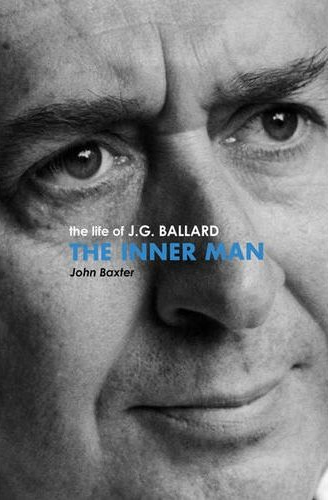
Front cover of The Inner Man The Life of J.G. Ballard by John BaxterReaders’ Advisory: Contains Self-abuse and reference to Mancas.

The Inner Man: The Life of J.G. Ballard, John Baxter (W&N 2011)

“B” is for Bataille, Burroughs, and Ballard. I’ve never read Bataille, I can’t stand Burroughs, I used to love Ballard. Nowadays I have strong doubts about him. Vermilion Sands, yes. Crash, no. Vermilion Sands is surreal, haunting, funny, endlessly inventive, and extravagantly intelligent. Crash, by contrast, is silly and sordid. The last time I tried to read it I quickly gave up. I couldn’t take it seriously any more. It’s a book for pretentious, wanna-be-intellectual adolescents of all ages who like Dark’n’Dangerous Sex’n’Violence. A book for Guardian-readers, in short – the sort of people who continually use and hear the phrase “in terms of”, who believe passionately in Equality, Justice, and the Fight against Hate, and who desperately, desperately, wished they’d been able to stimulate the largest erogenous zone in their bodies by voting for Barack Obama in 2008.

What is that erogenous zone? Well, though not all liberals are Guardianistas, all Guardianistas are liberals, so the largest erogenous zone in a Guardianista’s body is his-or-her narcissism. Guardianistas are also, alas, the sort of people who write biographies of J.G. Ballard. John Baxter is most definitely a committed component of the core community. As a big admirer of Mike Moorcock, Britain’s biggest bearded Burroughsian lit-twat, how could he not be? This is part of why I now have doubts about Ballard. I don’t like liking things that Guardianistas like and I don’t like the fact that Moorcock was mates (on and off) with Ballard. On the other hand, I do like the fact that Moorcock and the Guardian boosted Burroughs big-time back in the day and that the Guardian now bigs up Cormac McCarthy and his Dark’n’Dangerous Sex’n’Violence. Good, I think: they all deserve each other. Perhaps one day, in some drug-stoked, depravity-soaked über-orgy of trans-transgressive hyper-homoeroticism, they’ll all manage to climb up each other’s arseholes and disappear from history.

But Guardianistas don’t just like Burroughs and McCarthy: they like Ballard too. They write books about him. Fortunately, The Inner Man isn’t a good book. That would have been disturbing, believe me. The dedication is by far the best thing in it: “To the insane. I owe them everything.” And guess whose lines those are? After that, it’s mostly Baxter and mostly dull. When it’s not, you’ll usually have Ballard to thank:

Novels sent to him in hope of endorsement got short shrift. He enjoyed describing the satisfying thump of Salman Rushdie’s Midnight’s Children as it hit the bottom of the dustbin. (pg. 47) In September 1995, the Observer, for a piece about odd bequests, invited him to answer the question, “What would you leave to whom, and why?” Jim said, “I would leave Andrea Dworkin my testicles. She could have testicules flambés.” Anti-pornography campaigner Dworkin was a close friend of Mike and Linda Moorcock but a bête noire of Ballard’s. (pg. 308)

I think Ballard was right in his cod-bequest for Dworkin and bum’s-rush for Rushdie. And if Baxter had the same sense of humour and mischief, The Inner Man would have been a much better book. Okay, it’s not that bad, because I managed to finish it, but that was disappointing in its own way. I’d almost have preferred a boldly, flamboyantly pretentious Ballard bio full of solecisms and mixed metaphors to a plodding, mediocre one like this. I like sneering at and feeling sniffily superior to Guardianistas. And all I’ve got to go on here are occasional lines like these:

Like another diligent civil servant, he [Ballard] was Agent 00∞: licensed to chill… (pg. 3) But in surrealism, as in most things, Jim was drawn to the extremity, the dangerous edge, the abyss which, as H.G. Wells warned, will, if you stare into it long enough, stare back at you. (pg. 36)

It’s puzzling that Baxter misattributes such a famous quote and that his editors didn’t spot the misattribution. It’s also puzzling that Baxter doesn’t seem to like Ballard much, to be very interested in Ballard’s life, or to be very enthusiastic about Ballard’s writing. Born in Shanghai, incarcerated (and half-starved) under the Japanese during the war, trained as a doctor: Ballard had an unusual early life for a writer and one can only admire Baxter’s ability to keep the interest out of it. Baxter devotes much more attention to Ballard’s time in advertising and life in suburbia. Yes, the contrast between this apparently staid existence and the wildness of Ballard’s veridically visceral visions is interesting, but it’s obviously related to his early experiences in China. Baxter has got those out of the way within the first 26 pages of a 377-page book. When he himself takes visionary flight, he doesn’t do so to Ballard’s advantage. Why did Ballard turn down the chance to be published in “a series of de luxe limited editions of fantasy classics” by Manchester’s most maverick messiahs, “the radical publishing enterprise of Savoy Books”? Baxter conducts an interview with his own imagination and reports back with this:

He may have felt that involvement with Savoy and [David] Britton – who had already served two prison terms under the Obscene Publications and Dangerous Dogs Acts – risked once again placing him in hazard, as had been the case with “Why I Want to Fuck Ronald Reagan”. (pg. 321)

Eh? Yes, he “may”, but simpler explanations are to hand. Either way, Baxter says the rejection meant that “a sense of grievance” now “permeated his relationship with” the messianic Mancas. Again: Eh? The grievance would have been one-sided, there was never much of a relationship, and although Savoy “put a lot of effort” into persuading Fenella Fielding to record extracts from one of Ballard’s books (no prizes for guessing which), they put in the effort without first asking Ballard if he was interested. When the recordings were made and they did ask, he “refused to cooperate”. It was now that grievance began to permeate the relationship.

Reading about this important episode in Ballard’s career, I felt another feeling begin to permeate me. A familiar feeling. Yes, “S” is for Savoy (B), Sontag (S), and Self (W). All three turn up in this biography, variously offering to publish Ballard, heaping praise on him, and having dinner with him. All three are part of the Guardianista demographic in one way or another: Self nails his colours firmly to the gasbag when he speaks of a “scintilla” of an “affectation” that forms an “armature” (pg. 341). All three add to my doubts about Ballard. If people like that like him, should I like him too, like? I think if Ballard had been born ten or twenty years later, the question wouldn’t arise. A younger Ballard would have been sucked fully into the macroverse of Guardianista subversion, radicalism, and counter-cultural twattishness and I’d never have liked him at all. As it was, he was too big to entirely fit. Crash got sucked and does suck. Vermilion Sands didn’t and doesn’t.

And this biography? Well, it could have been much worse. Yes, it’s dull but that may be partly because Ballard himself is such an interesting and memorable writer. As I’ve pointed out elsewhere, the danger in literary biographies is that the biographee is likely to be a better writer than the biographer. The implicit comparison will always be there and Ballard’s autobiography, Miracles of Life (2008), is likely to remain better, and briefer, than anything a biographer ever turns out. But Baxter tells you about things that Ballard doesn’t, possibly because they’re not true. Like the air of menace Ballard could project and his occasional violence towards his girlfriend Claire Walsh, who “appeared at parties with facial bruises, usually hidden between sunglasses” (pg. 187).

And “girlfriend” is the word: Baxter reports that Ballard “always” and “anachronistically” used it of Walsh (pg. 171), rather than (he implies) the smarmy Guardianista “partner”. Good for Ballard. But bad for Ballard in terms of engagement with issues around the bruises, if true. As George Orwell said:

If Shakespeare returned to the earth to-morrow, and if it were found that his favourite recreation was raping little girls in railway carriages, we should not tell him to go ahead with it on the ground that he might write another King Lear. (“Benefit of Clergy: Some Notes on Salvador Dalí”, 1944)

It would have been better that Ballard hadn’t punched his girlfriend, just as it would have been better that Caravaggio hadn’t been a murderer. But if they hadn’t been violent men, with more than a touch of psychosis, they might not have produced such interesting art. I don’t think Ballard is as significant a figure in European art as Caravaggio, and even if he is, he and his art won’t have as much time to be significant in. One way or another, Europe is now entering its final days. We are about to reap the whirlwinds so diligently sown for us by the Guardianistas and their continental cousins. And science is busy measuring mankind for its coffin. Ballard saw and wrote about parts of this future, but I now prefer his surreal side to his sinister and his dreams to his depravity. It’s bad, v. bad, that Will Self hails Ballard as “My single most important mentor and influence.” But Self (thank Bog) didn’t write this biography. He didn’t write Vermilion Sands either. He couldn’t. Ballard could and did. He could and did write other good stuff. I don’t love him any more, but, despite the Guardian and the Guardianistas, I will continue to read him. Lucky Jim, eh?


Post-Performative Post-Scriptum…

In terms of all Savoy-fans and other non-conformist mavericks, keyly committed core components of the counter-cultural community et al having read this review prior to departing in terms of departure… please can you stop using “in terms of” and “prior to” and stuff? You wouldn’t allow bloated flesh to adversely impact your body, so why do you allow bloated phrases to negatively trajectorize your English?

Ex-term-in-ate! — more on “in terms of”
Prior Analytics — more on “prior to”