
Let’s look at a simple arithmetical rule and a simple arithmetical fact. And the complexity they can create. First the rule. Subtracting a negative number is the same as adding the positive form of that number:
7 – +2 = 5
7 – -2 = 7 + 2 = 9-10 – +4 = -14
-10 – -4 = -10 + 4 = -6
Now the simple arithmetical fact: The reciprocal of positive x, namely 1/x, is less than 1 when x > 1, identical to x when x = 1, and greater than 1 when 0 < x < 1. Negative x, -x, works in the opposite direction:
1/5 = 0.2; 1/-5 = -0.2
1/4 = 0.25; 1/-4 = -0.25
1/3 = 0.333333…; 1/-3 = -0.333333…
1/2 = 0.5; 1/-2 = -0.51/1 = 1; 1/-1 = -1
1/0.5 = 2; 1/-0.5 = -2
1/0.25 = 4; 1/-0.25 = -4
1/0.333333.. = 3; 1/-0.333333.. = -3
1/0.2 = 5; 1/-0.2 = -5
Now, the simple arithmetical rule and the simple arithmetical fact explain the wildly different behaviour of these two nearly identical formulae:
Formula #1: x = x + 1/x
Formula #2: x = x – 1/x
If you seed x = x + 1/x with 2, this is what happens:
2 = x
2.5 = 2 + 1/2 = 2 + 0.5
2.9 = 2.5 + 1/2.5 = 2.5 + 0.4
3.244827586206896551724137931… = 2.9 + 1/2.9 = 2.9 + 0.3448275862…
3.553010370478947561288431236…
3.834461842815967366750790750…
4.095254632258778985771918456…
4.339439692724345181049239663…
4.569884190357676650018985962…
4.788708116379690742064597208…
4.997532704493448986664559639…
5.197631445038131469095668466…
5.390026771750770995914851381…
5.575554607204394029915651664…
5.754908962142979073283550015…
5.928673657045750549124213874…
6.097345447373015508408978797…
6.261351244425377152997703626…
6.421061179383957004641284553…
6.576798676981813718180627345…
The value of x steadily (but more and more slowly) increases. But when you seed the other formula, x = x – 1/x, with 2, this is what happens:
+2
+1.5 = 2 – 1/2 = 2 – 0.5
+0.8333333… = 1.5 – 1/1.5 = 1.5 – 0.666666…
-0.3666666… = 0.8333333… – 1/0.8333333… = 0.8333333… – 1.2
+2.3606060606… = -0.3666666… – 1/-0.3666666… = -0.3666666… – -2.72727272… = -0.3666666… + 2.72727272…
+1.936986034932119656124790913…
+1.420720051612810742016492942…
+0.716851616121389735975863550…
-0.678137217705362317788764881…
+0.796490591963802485322149292…
-0.459017018658980935029501857…
+1.719551442531198550688634398…
+1.138004432499332885157841729…
+0.259273233005005595158072588…
-3.597661740227243739940039228…
-3.319703423907923593779727545…
-3.018471695555874174383708009…
-2.687178213005645221877765061…
-2.315040631969854351245993463…
-1.883082770759830608578236571…
-1.352038668223383718148747858…
-0.612414851610188982350276645…
+1.020465208974159220420492697…
+0.040519992610273807119693182…
-24.63865528804984441050796942…
-24.59806865747650234381633987…
-24.55741505926418687092326558…
-24.51669416101057552476382150…
-24.47590562755526483917345018…
-24.43504912094763238695385804…
The value of x swings between positive and negative in an irregular, non-periodic way, alternating between slow deterministic decay and instantaneous jumps to sometimes large positive or negative values. The deterministic decays explains why, as we’ll see, there are beautiful regular curves — parabolic curves — amid the irregularity. When the function creates a positive number x > 1, it nibbles away at x until x x > -1, x becomes positive at the next step and the process continues. Represented as a graph, x = x – 1/x looks like this when seeded with 2 — note the parabolic curves:

x[i] = x[i-1] – 1/x[i-1], x[1] = 2 (click for larger)

A shark-fin and some red sails (images StockCake + Para-Sailing World Championship)

Sydney Opera House (image Wikipedia)
When x > 0, its value is represented in white; when x < 0, its value is represented in red. The curves created remind of me of shark-fins or sails or Sydney Opera House. So you could say the graph contains red sails in the subset, i.e. the set of values of x that are sub-zero. Here are some variations on the formula:
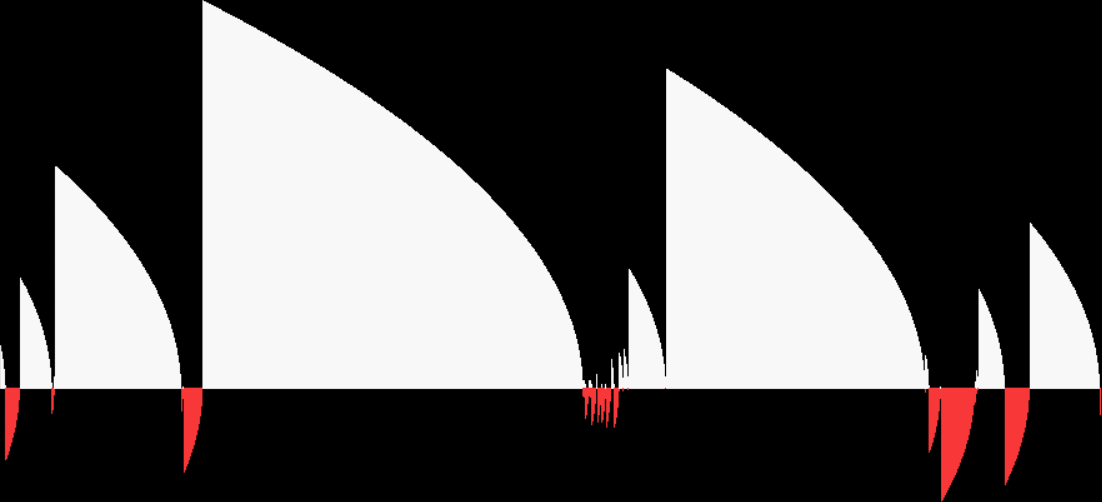
x = x – (1/4)/x, x[1] = 2
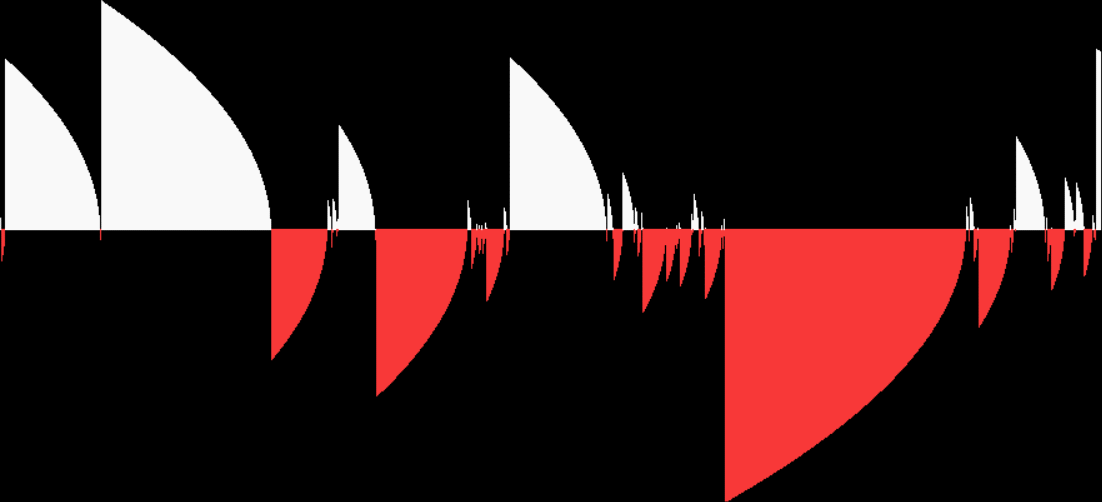
x = x – (4/3)/x, x[1] = 2

x = x – (4/5)/x, x[1] = 2
Now try this formula, x = 1 – 1/x. When it’s seeded with 2, it behaves like this:
2
0.5 = 1 – 1/2 = 1 – 0.5
-1 = 1 – 1/0.5 = 1 – 2
2 = 1 – -1/-1 = 1 – -1 = 1 + 1
1/2
-1
2
[…]
The values cycles through 2, 0.5, -1, 2, 0.5… for ever. So try varying the formula. This is what happens with x = 0.1 – 1.7/x, seeded with 2:
+2
-0.75
+2.366666666666666666666666666…
-0.618309859154929577464788732…
+2.849430523917995444191343963…
-0.496610440482852346310656327…
+3.523206323143542441364433927…
-0.382515028663775083373274222…
+4.544269826308639632084352464…
-0.274097504104620631734792447…
+6.302172491695235560374503419…
-0.169748249867834571832745868…
+10.11483079397645866692882142…
-0.068070038404634195480677189…
+25.07427708053510247498559239…
When you look at the graph of x = 0.1 – 1.7/x, you’ll see it’s also cycling, just in a more complicated way:
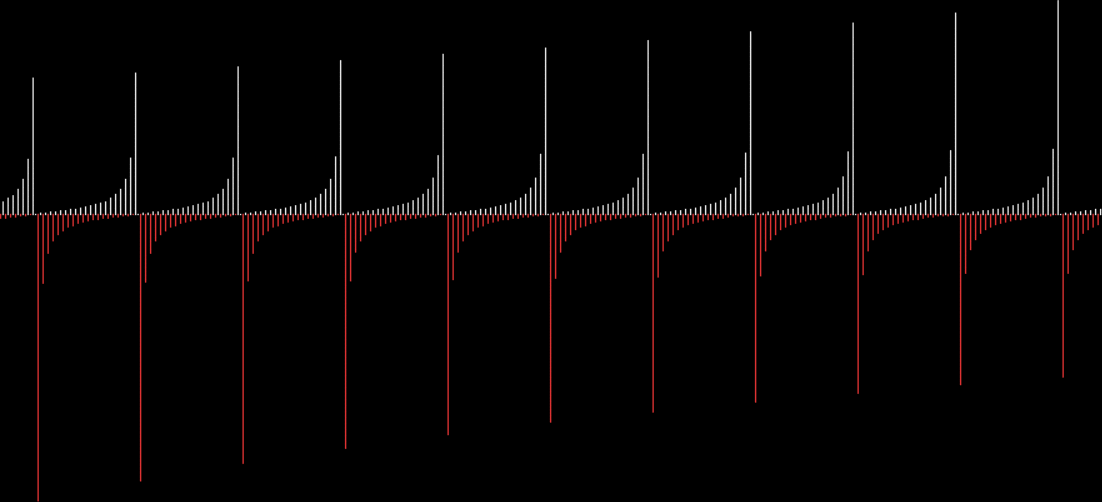
x = 0.1 – 1.7/x, x[1] = 2 (click for larger)
And here’s how different seeds can change the graph:
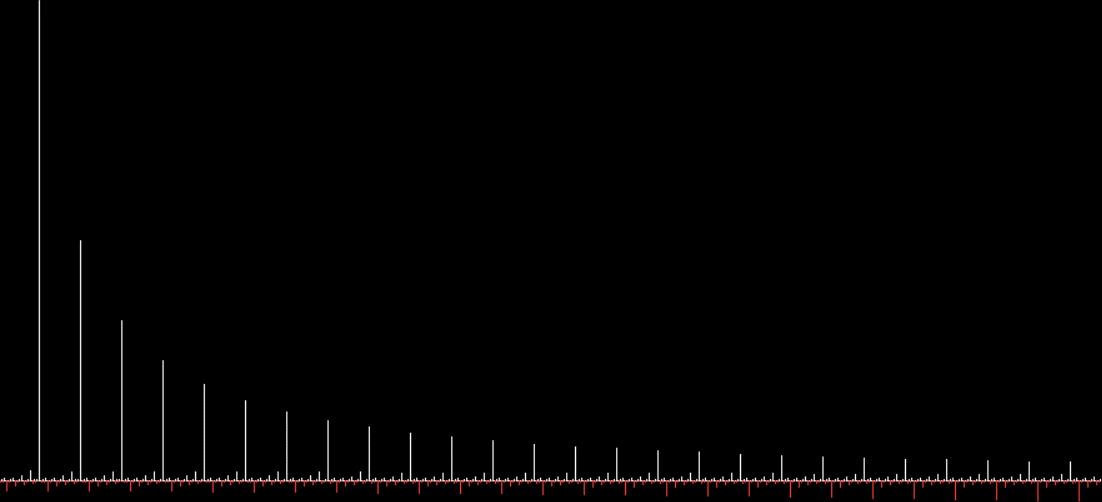
x = 2/3 – 1/x, x[1] = 2/3
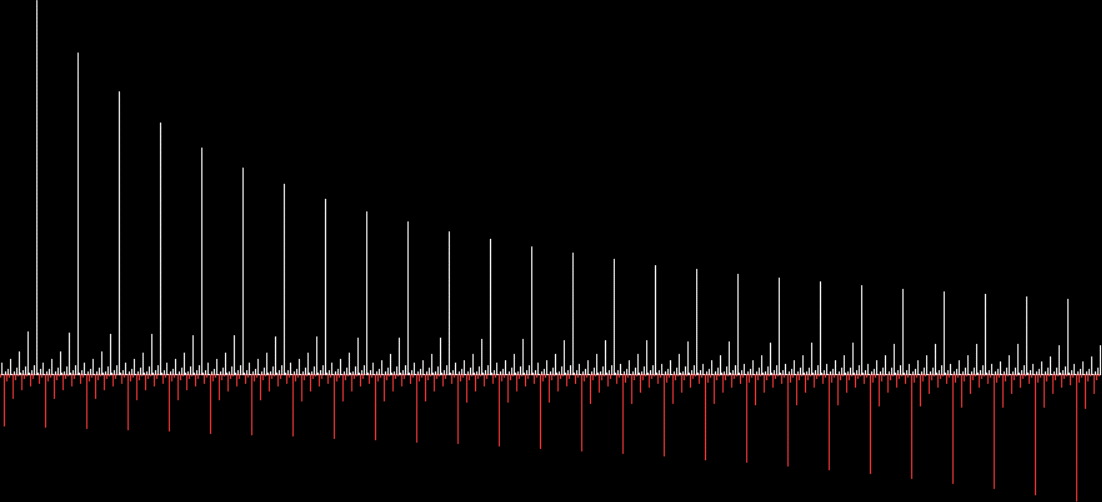
x = 2/3 – 1/x, x[1] = 3/2
This graph reminds me of vertebrae:
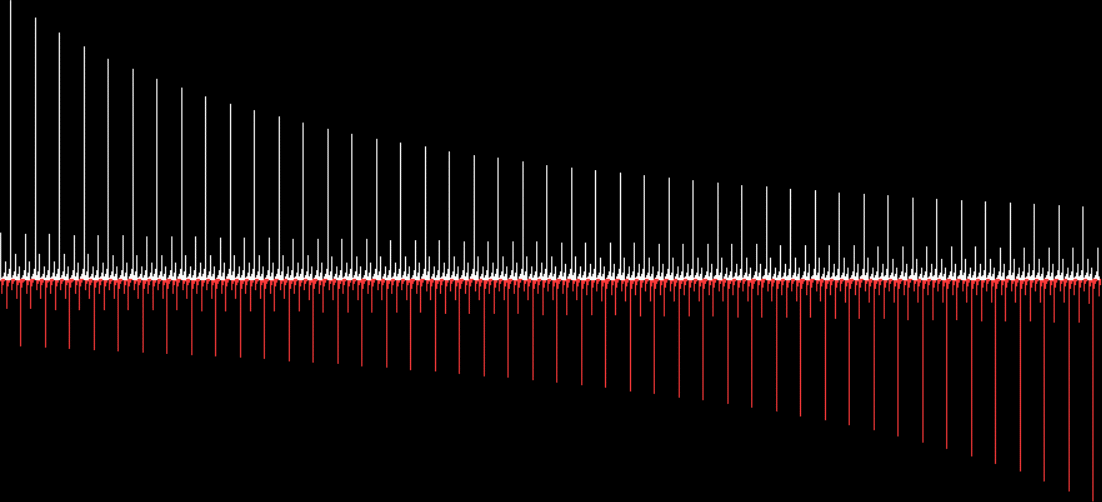
x = 2/5 – 1/x, x[1] = 2
And this graph reminds of a bone:
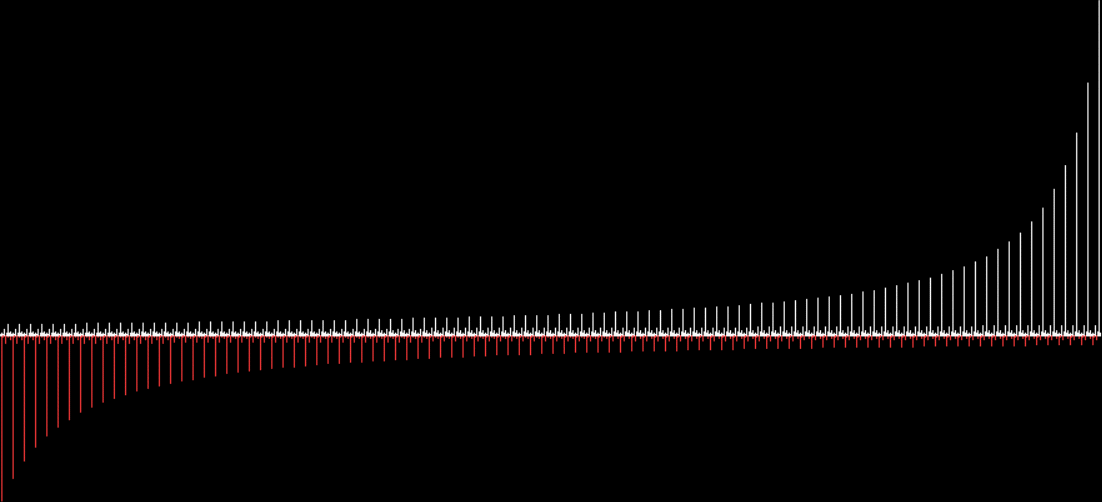
x = 9/7 – 1/x, x[1] = 2
As Lucretius nearly said: Mathematica Moles et Machina Mundi — Mathematics is the Mass and Body of the World.
Elsewhere Other-Accessible…
• Moto-Motto — what Lucretius did say

