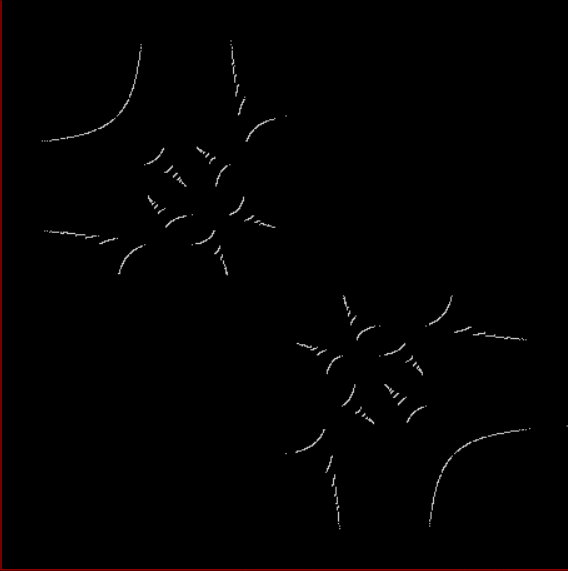
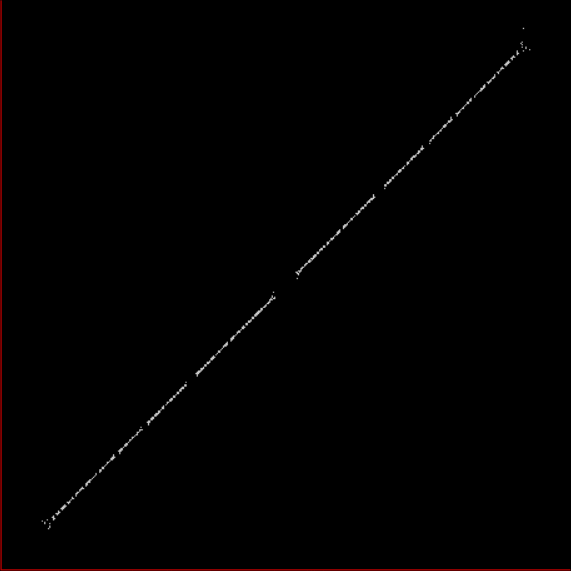
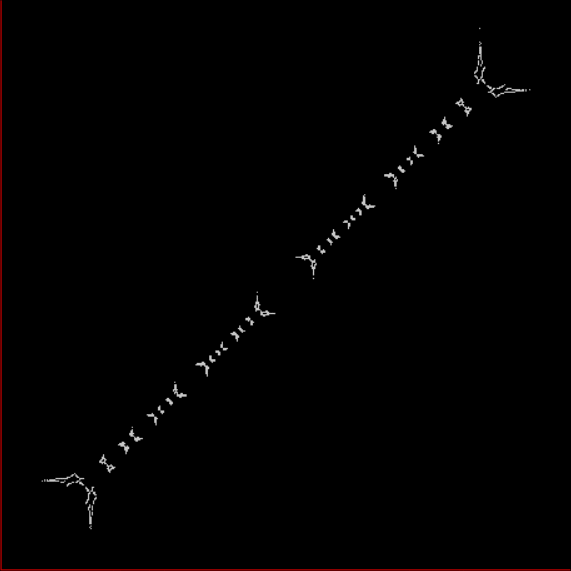
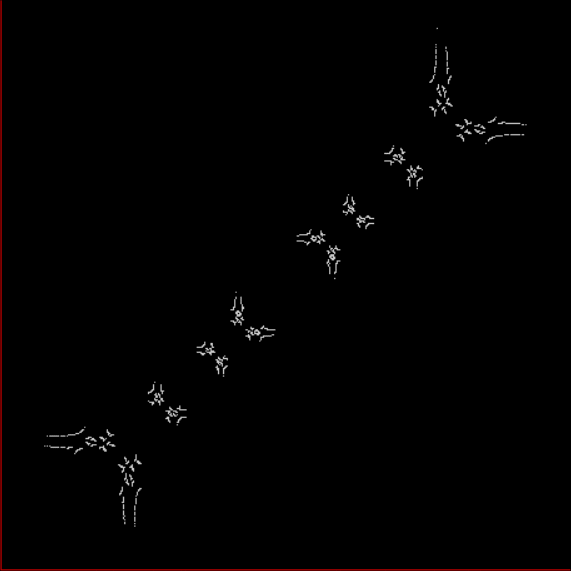
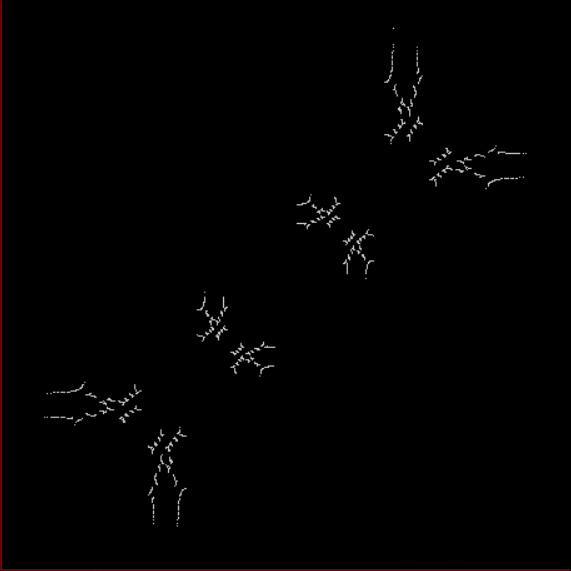
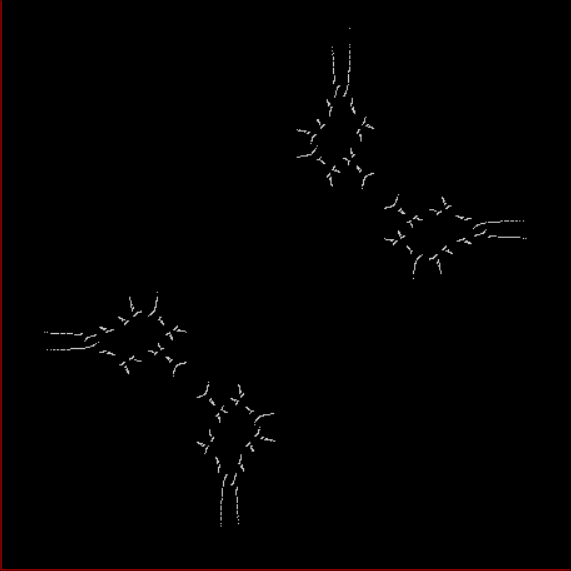
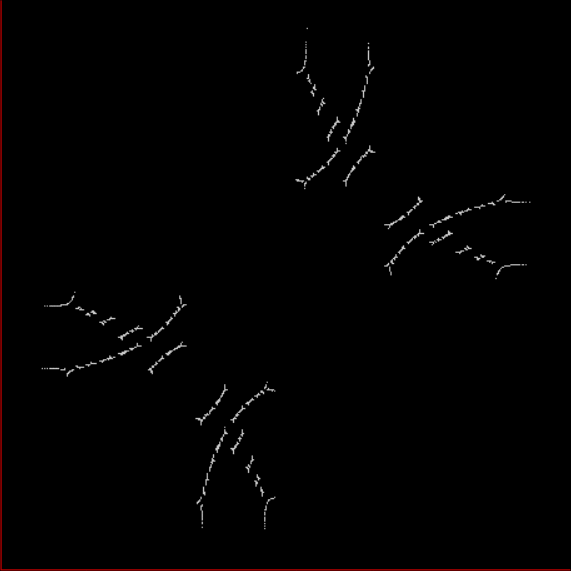
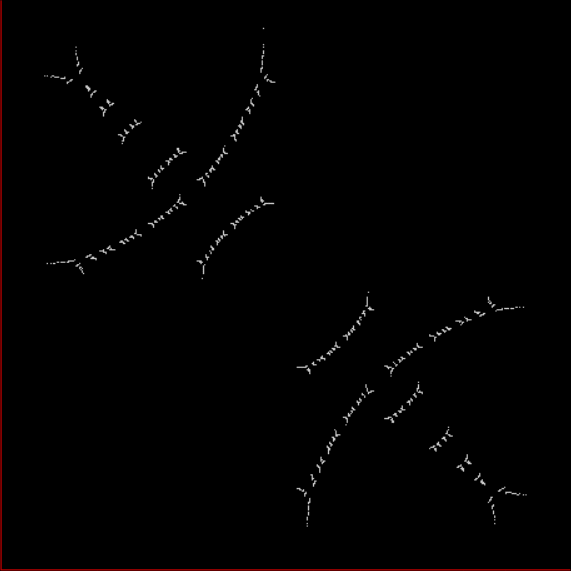
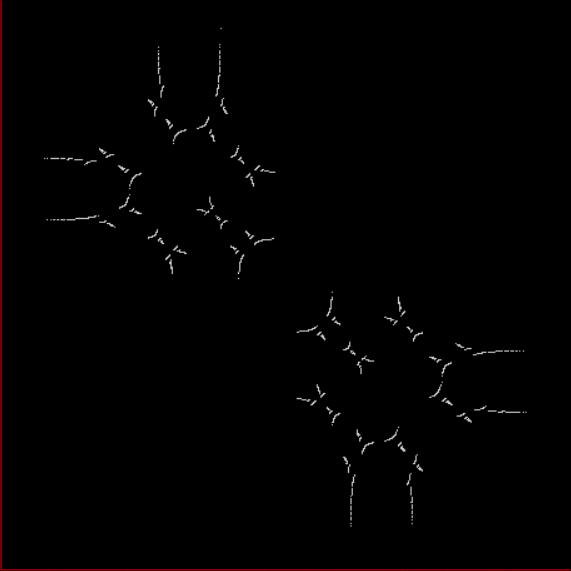
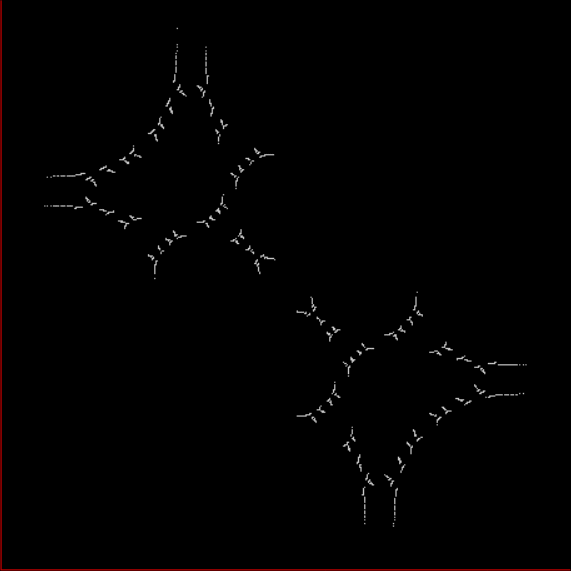
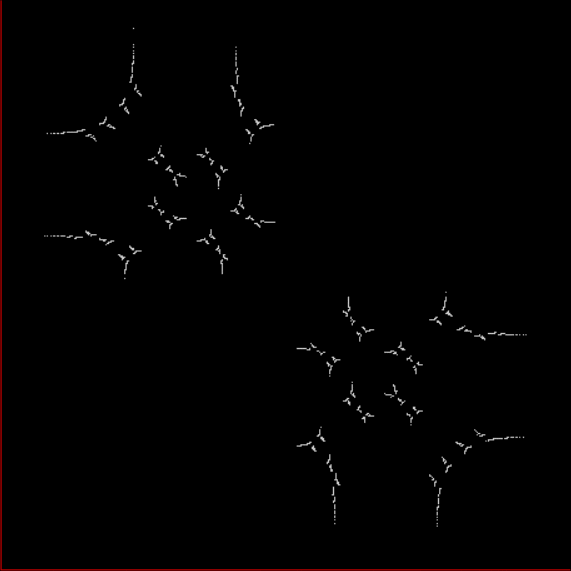
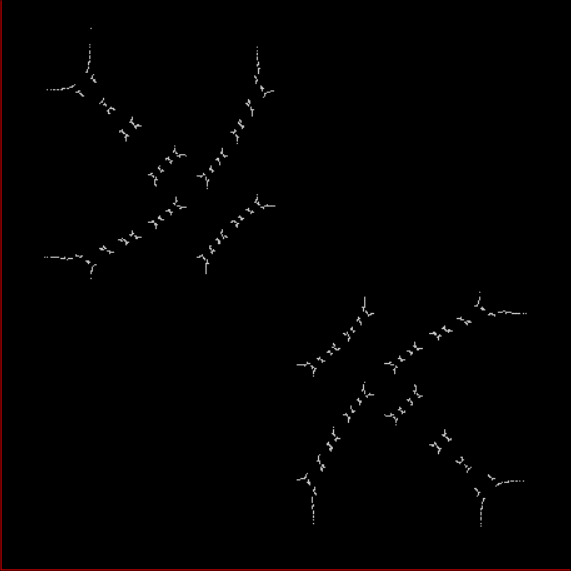
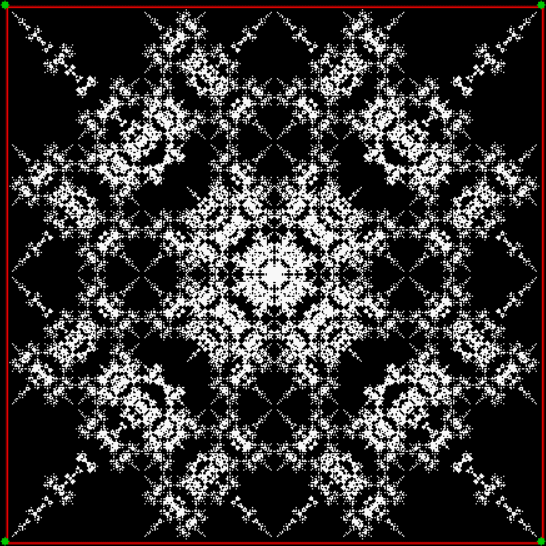
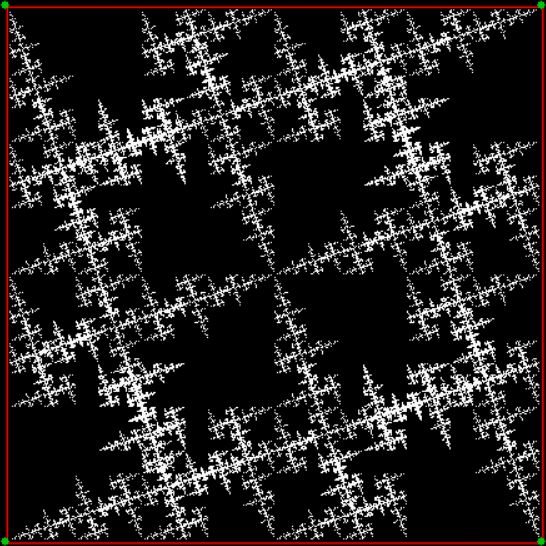
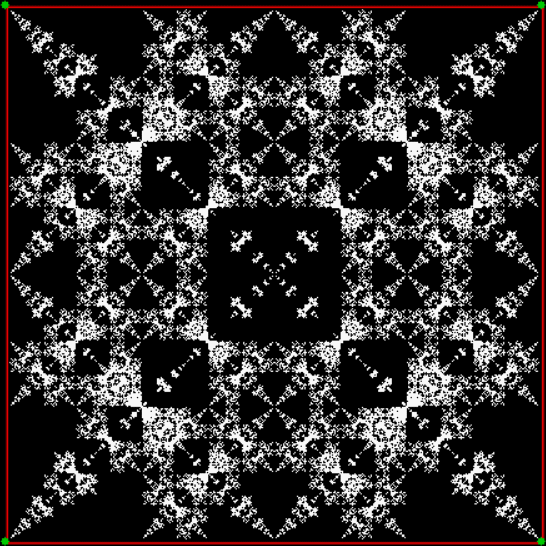
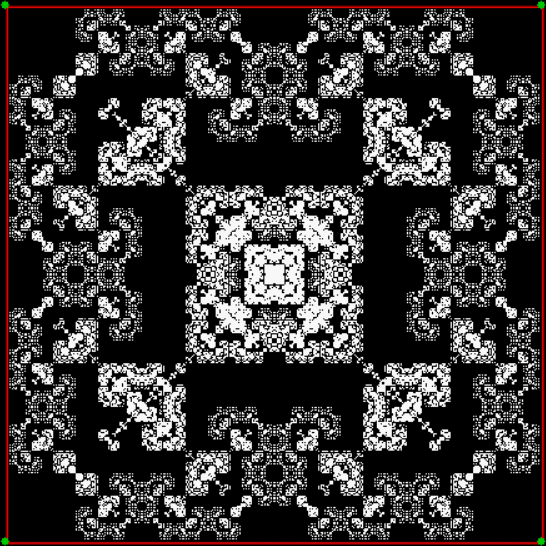
The Wyrm Ferns

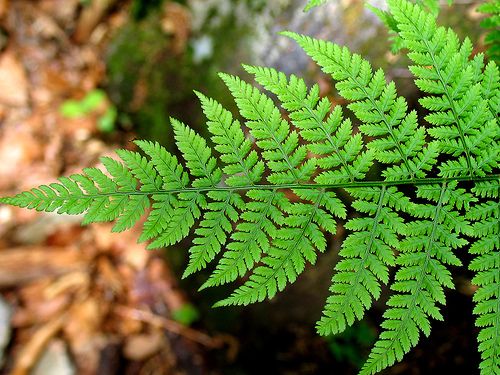
A fern is a fractal, a shape that contains copies of itself at smaller and smaller scales. That is, part of a fern looks like the fern as a whole:

Fern as fractal (source)


Millions of years after Mother Nature, man got in on the fract, as it were:

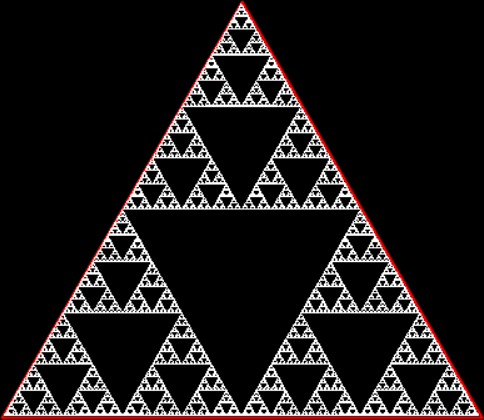
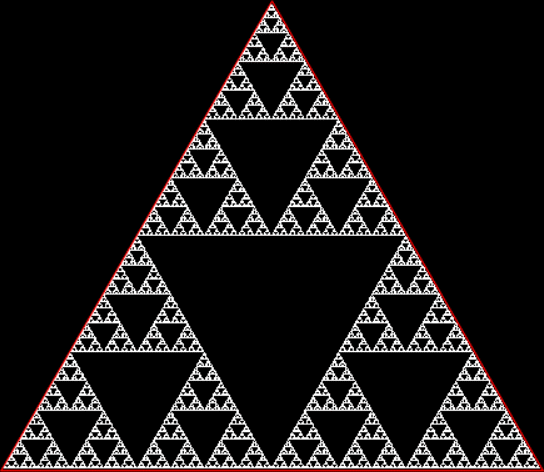
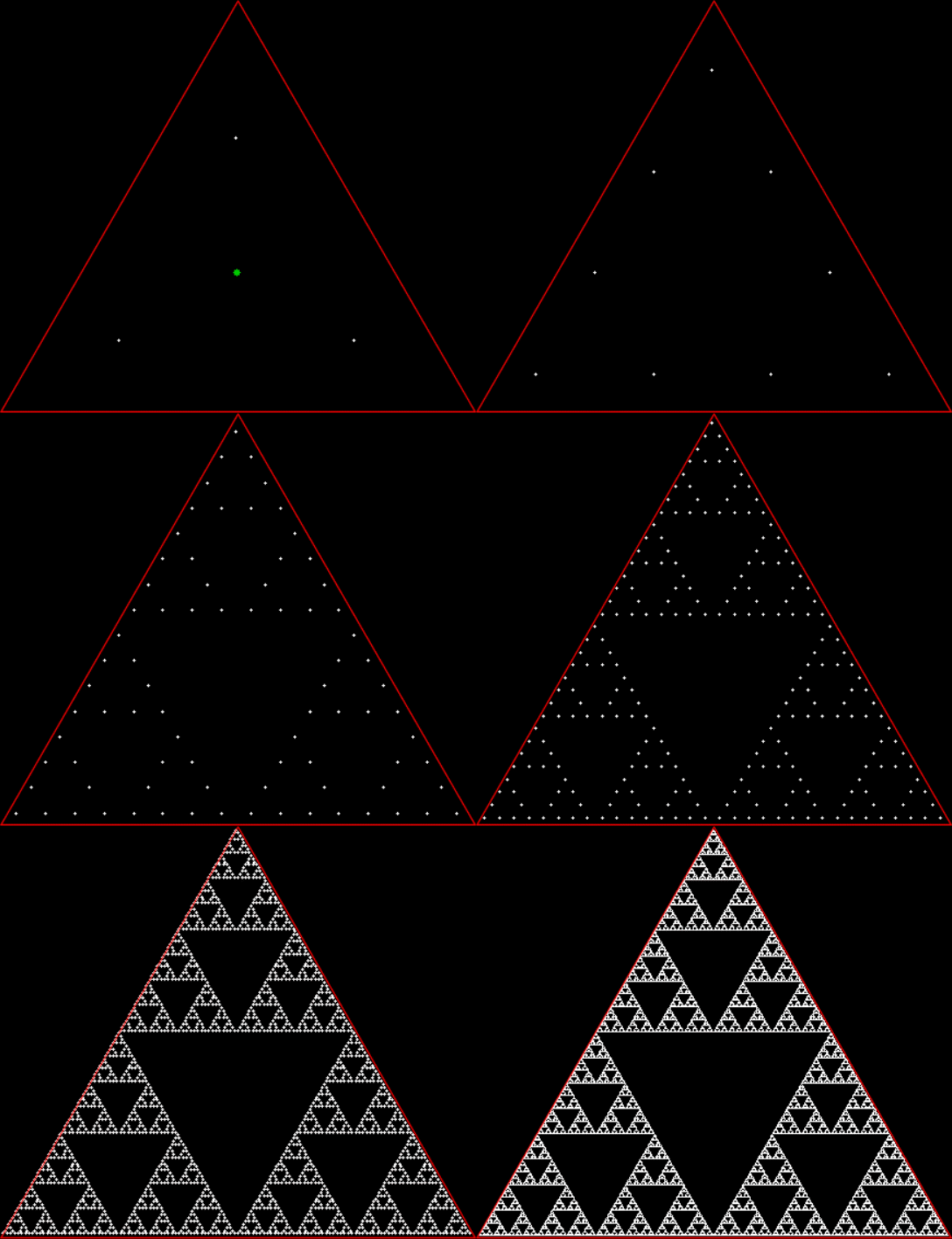
The Sierpiński triangle, a 2d fractal


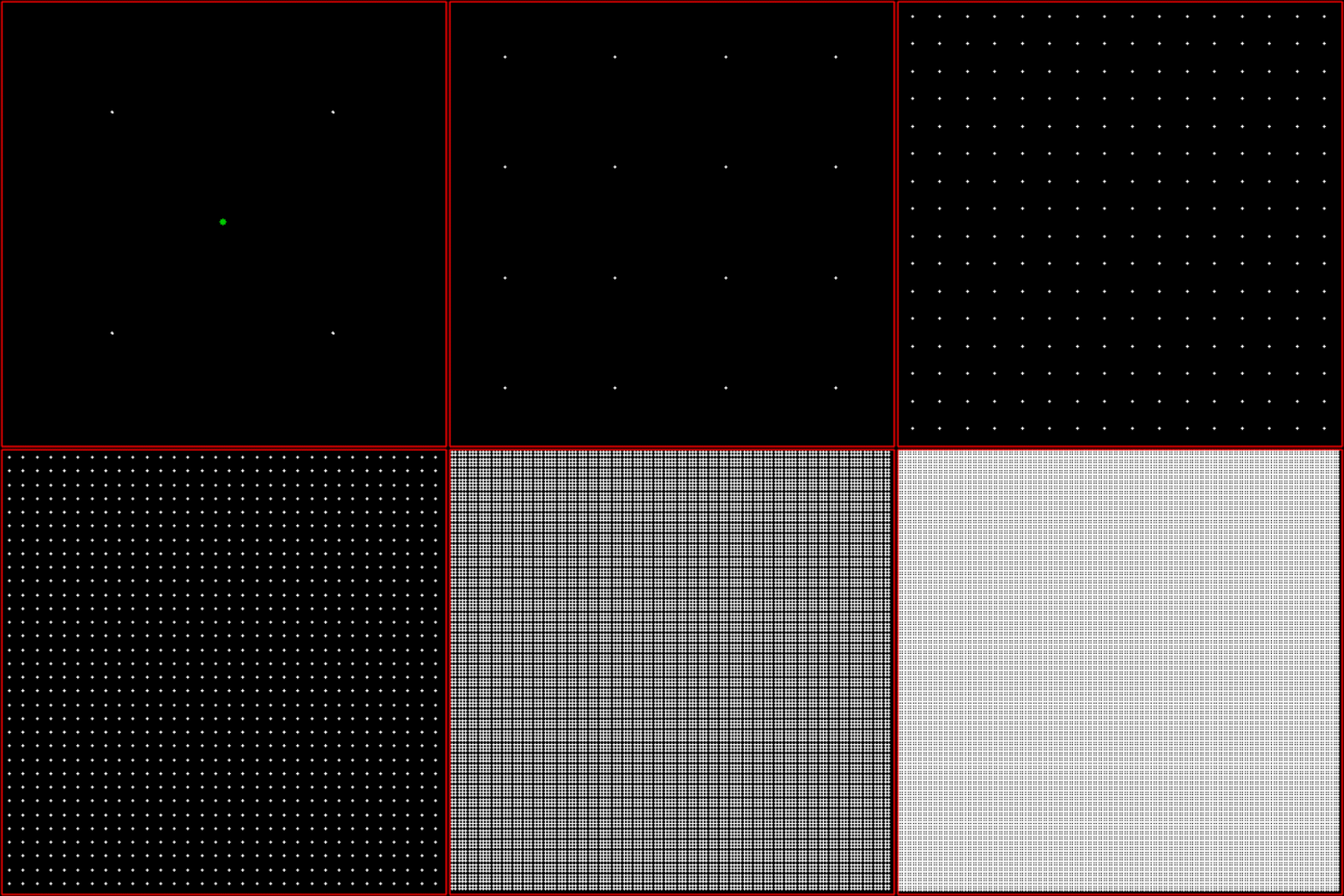
The Sierpiński triangle is a fractal created in two dimensions by a point jumping halfway towards one or another of the three vertices of a triangle. And here is a fractal created in one dimension by a point jumping halfway towards one or another of the two ends of a line:

A 1d fractal


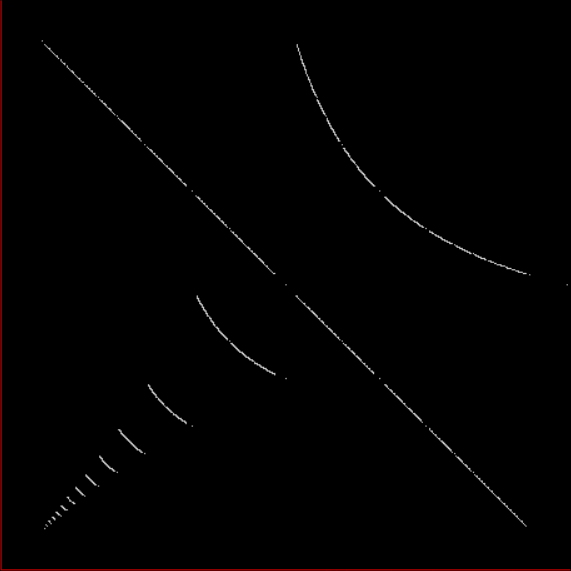
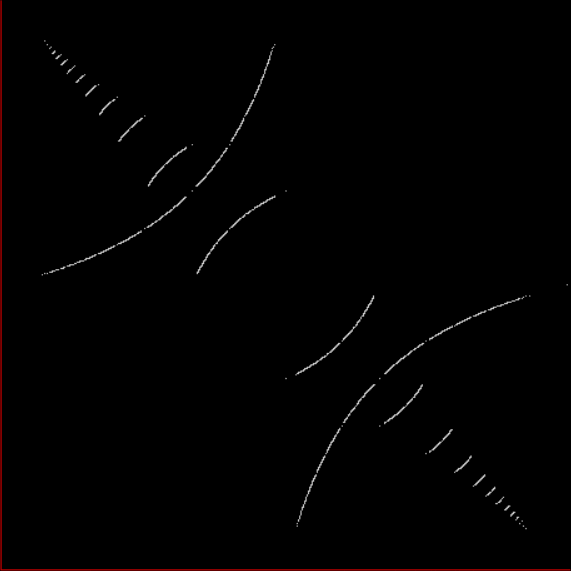
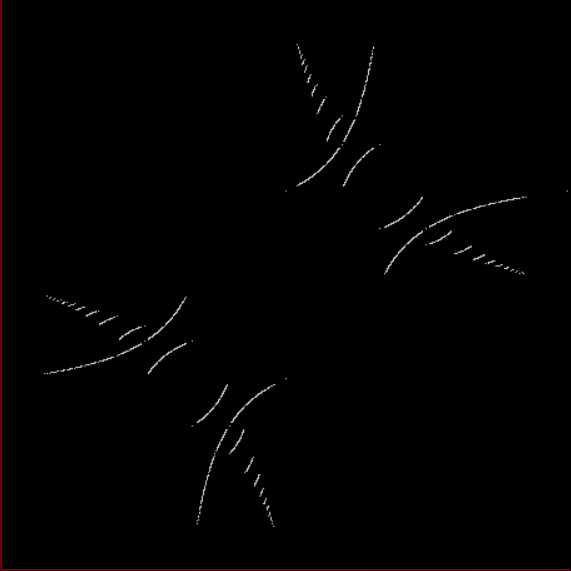
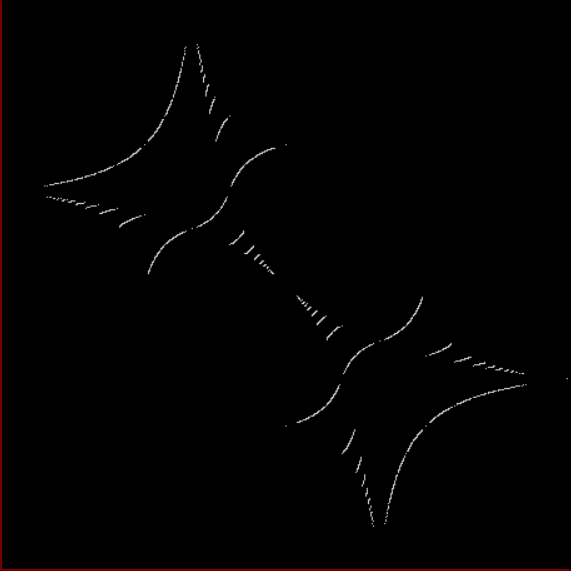
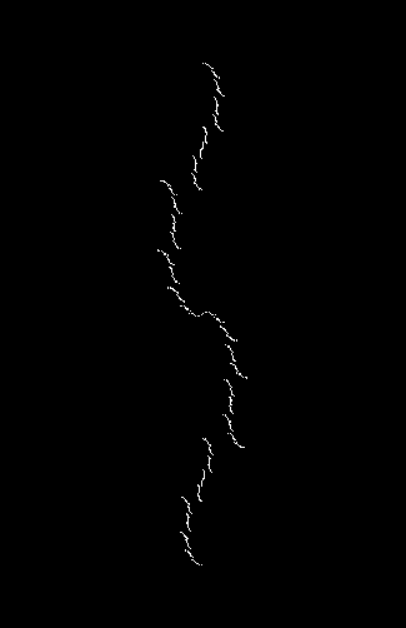
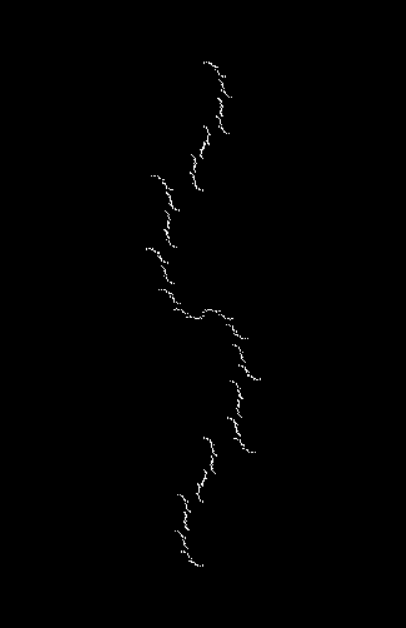
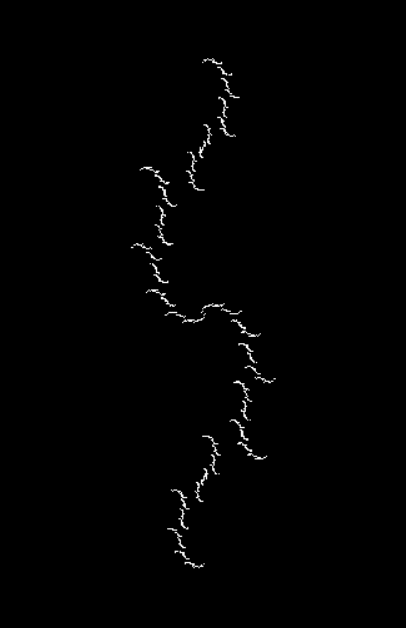
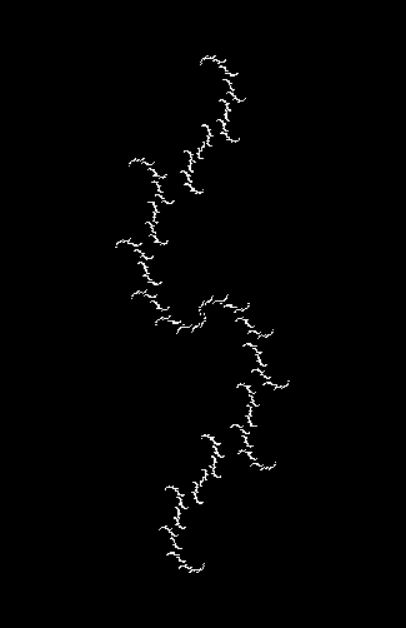
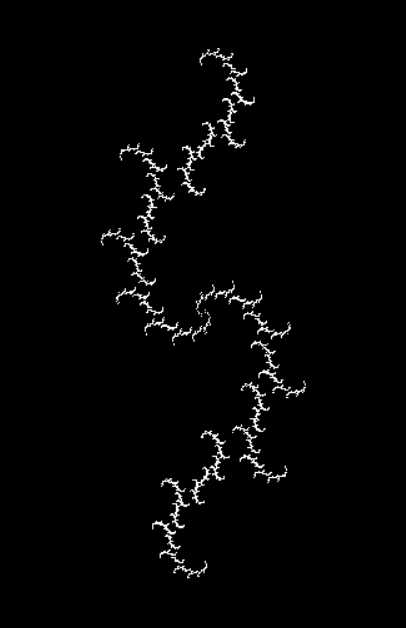
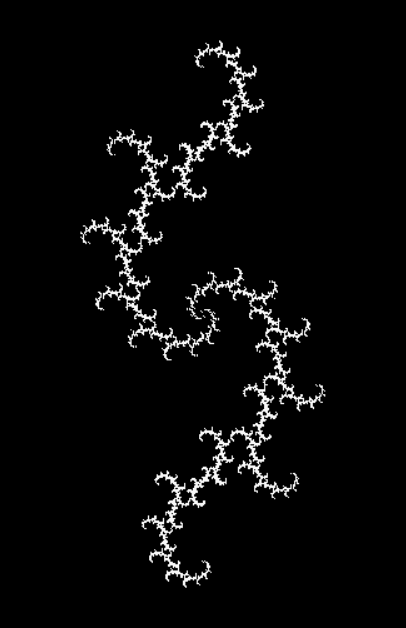
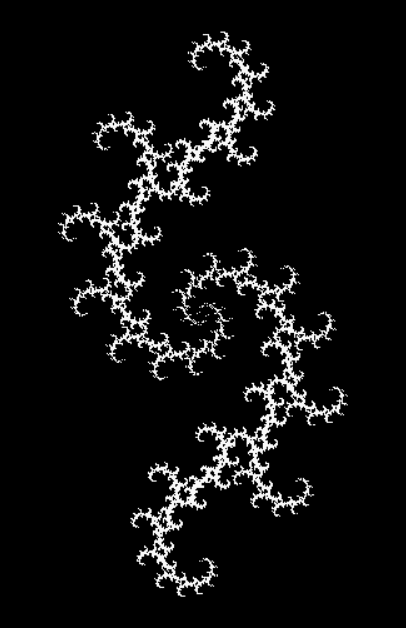
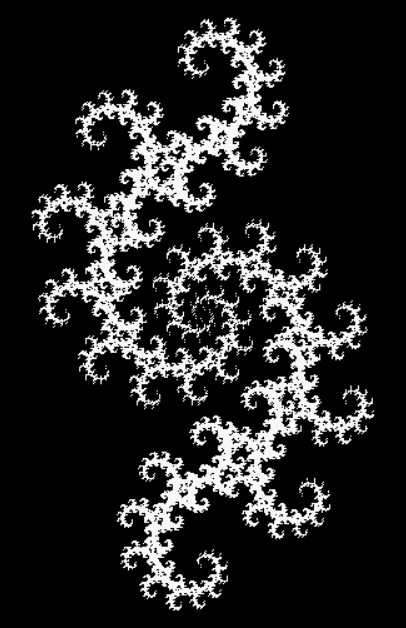
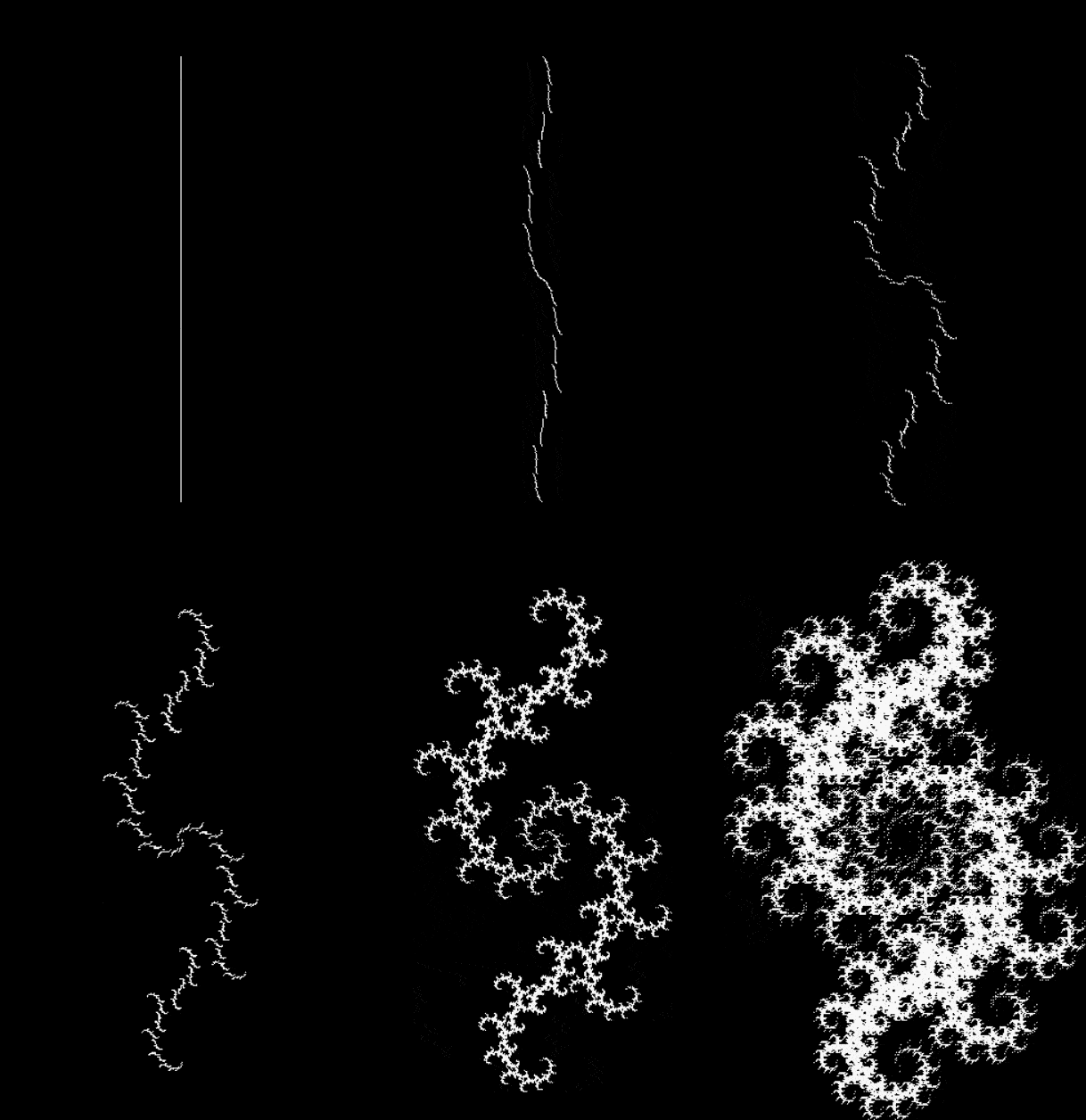
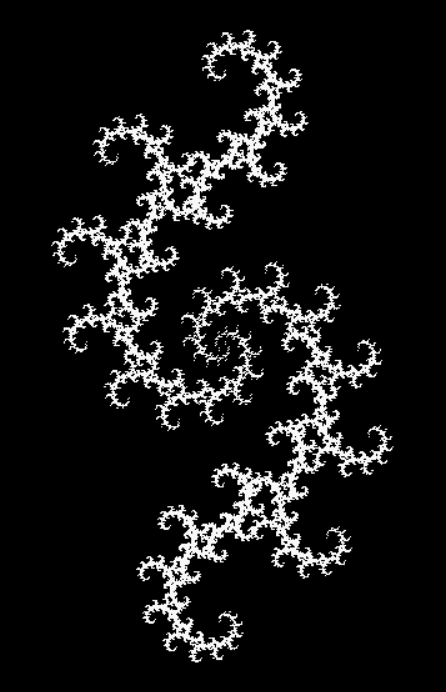
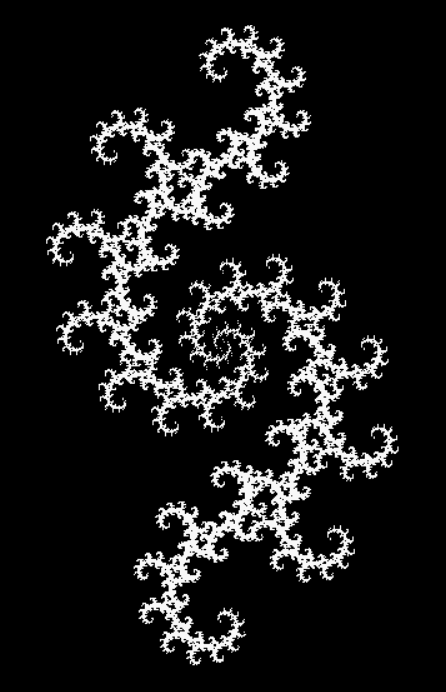
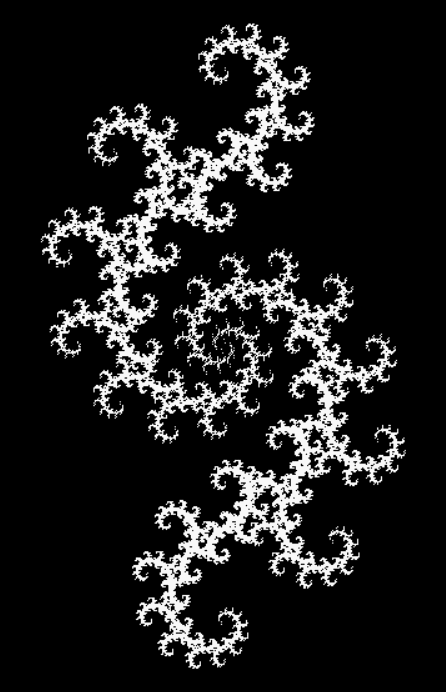
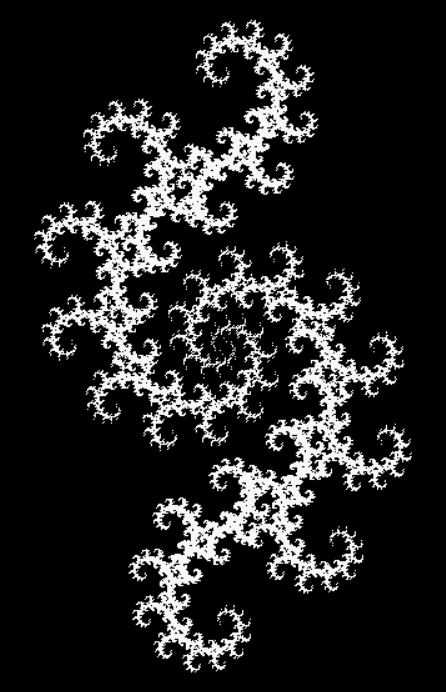
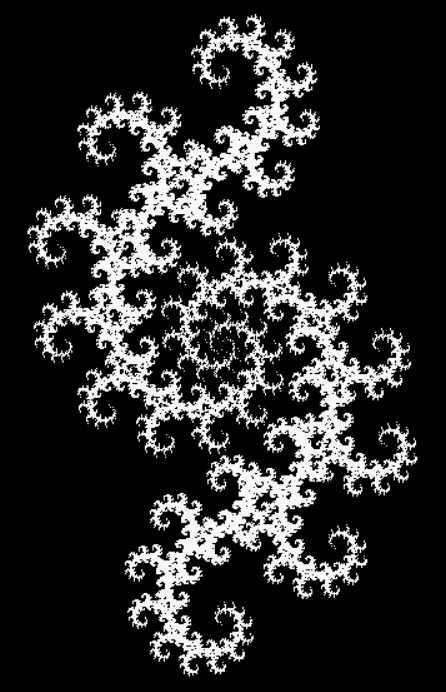
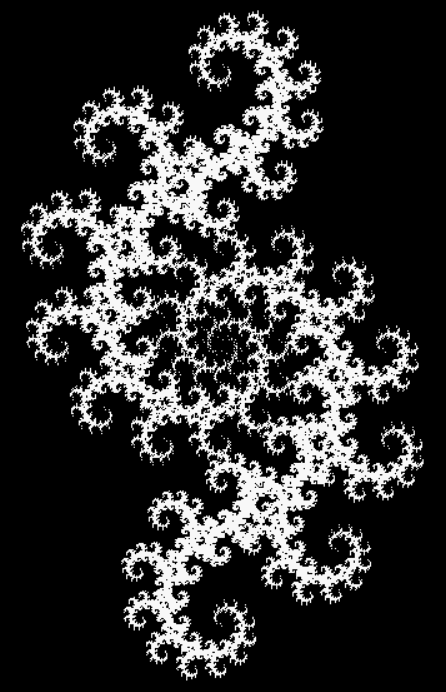
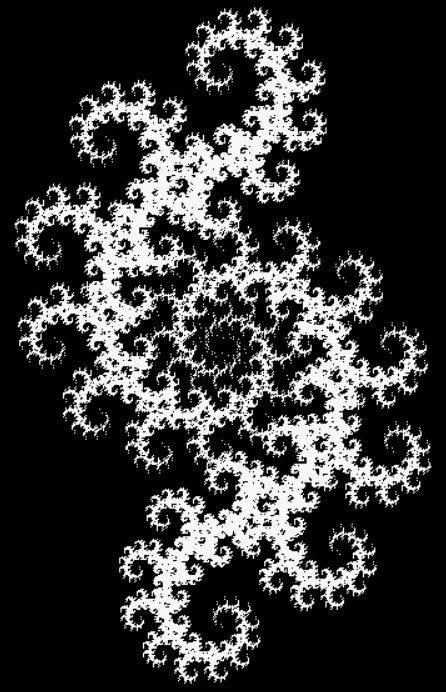
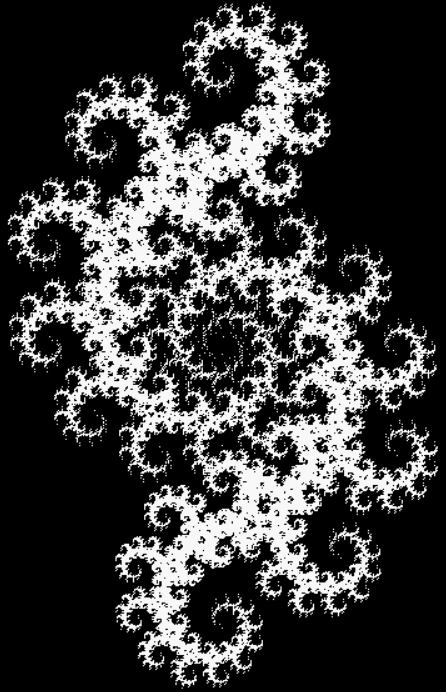
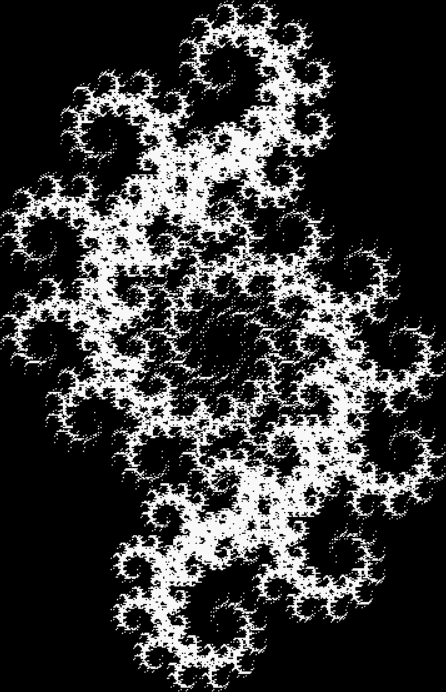
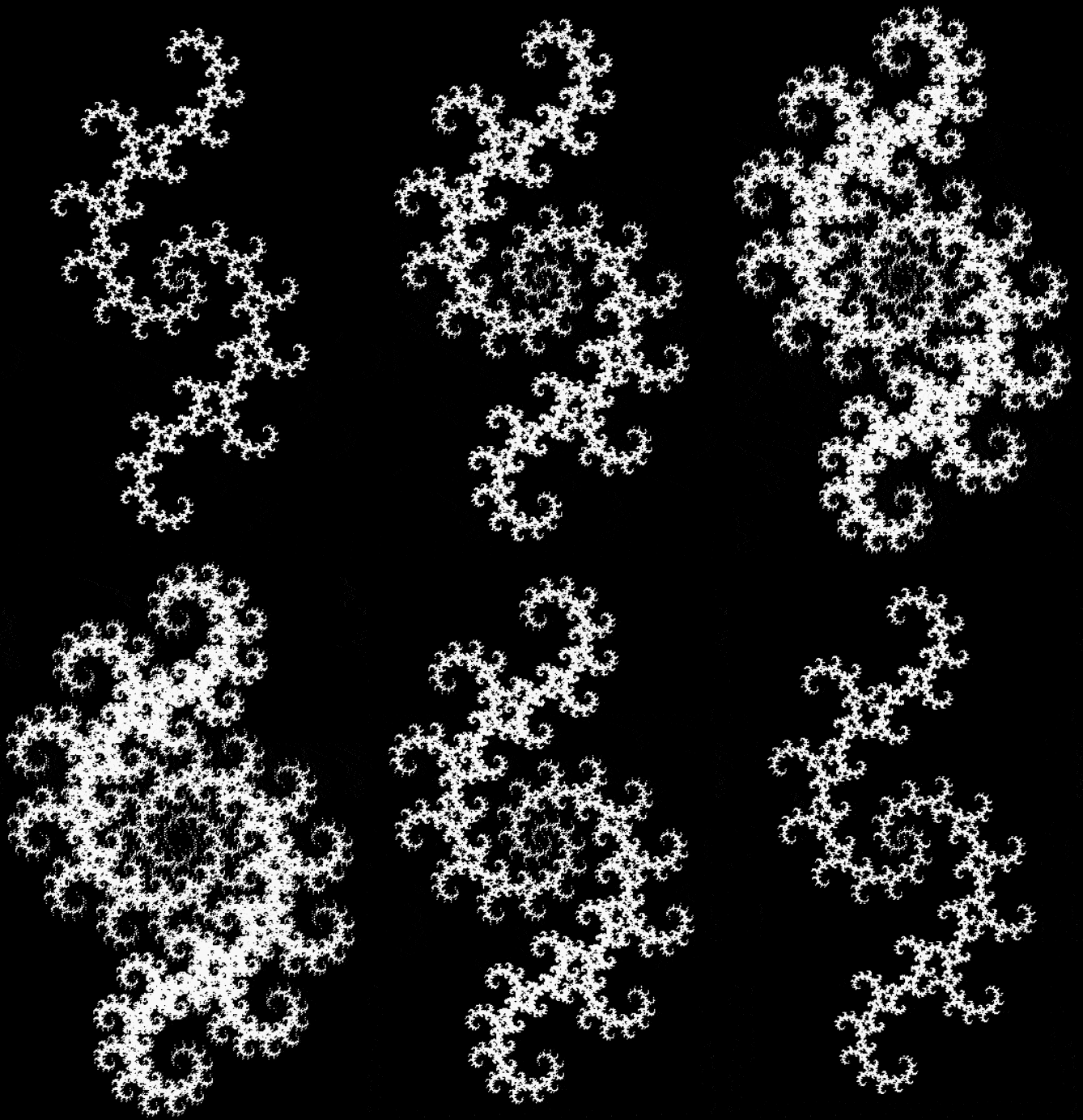
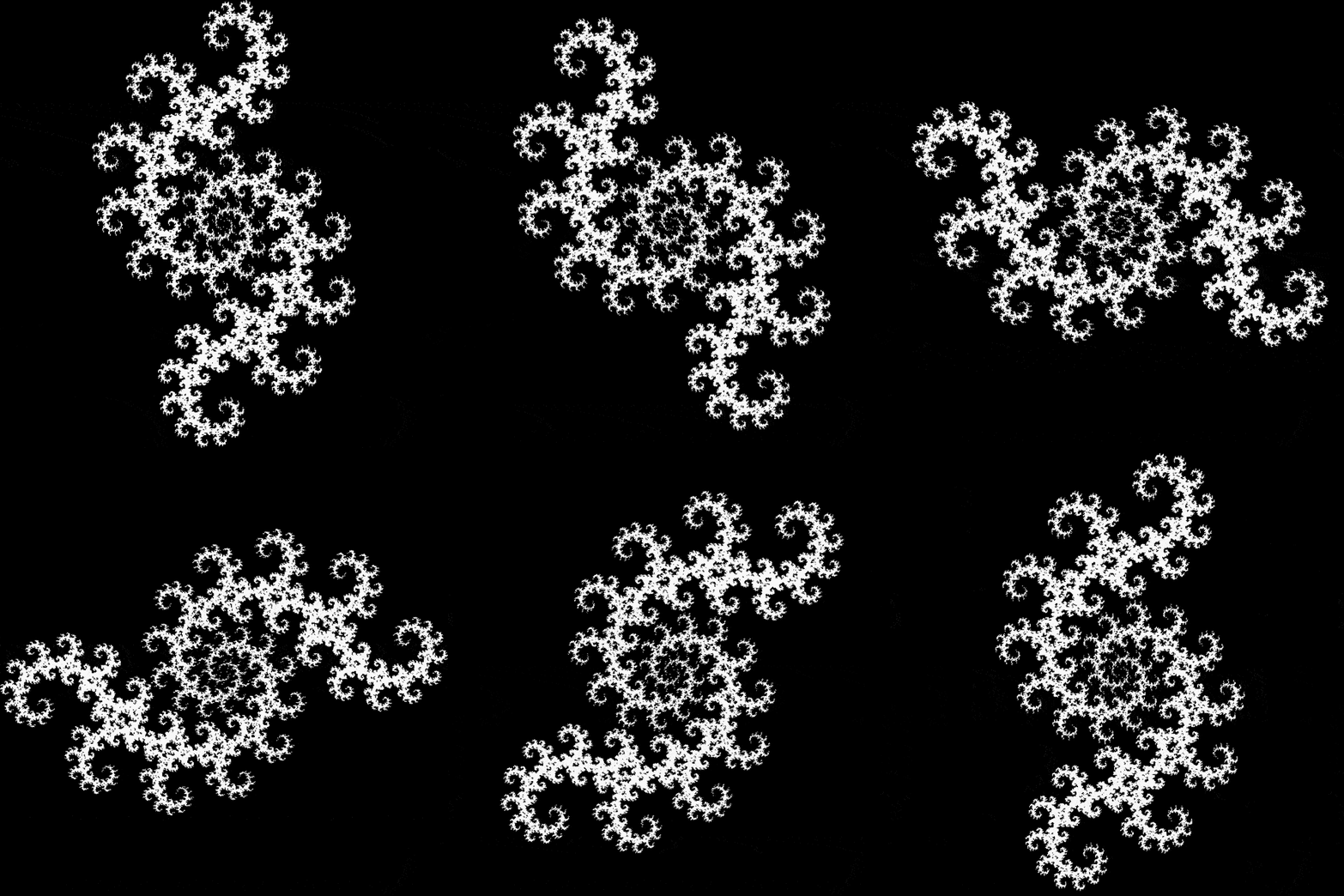
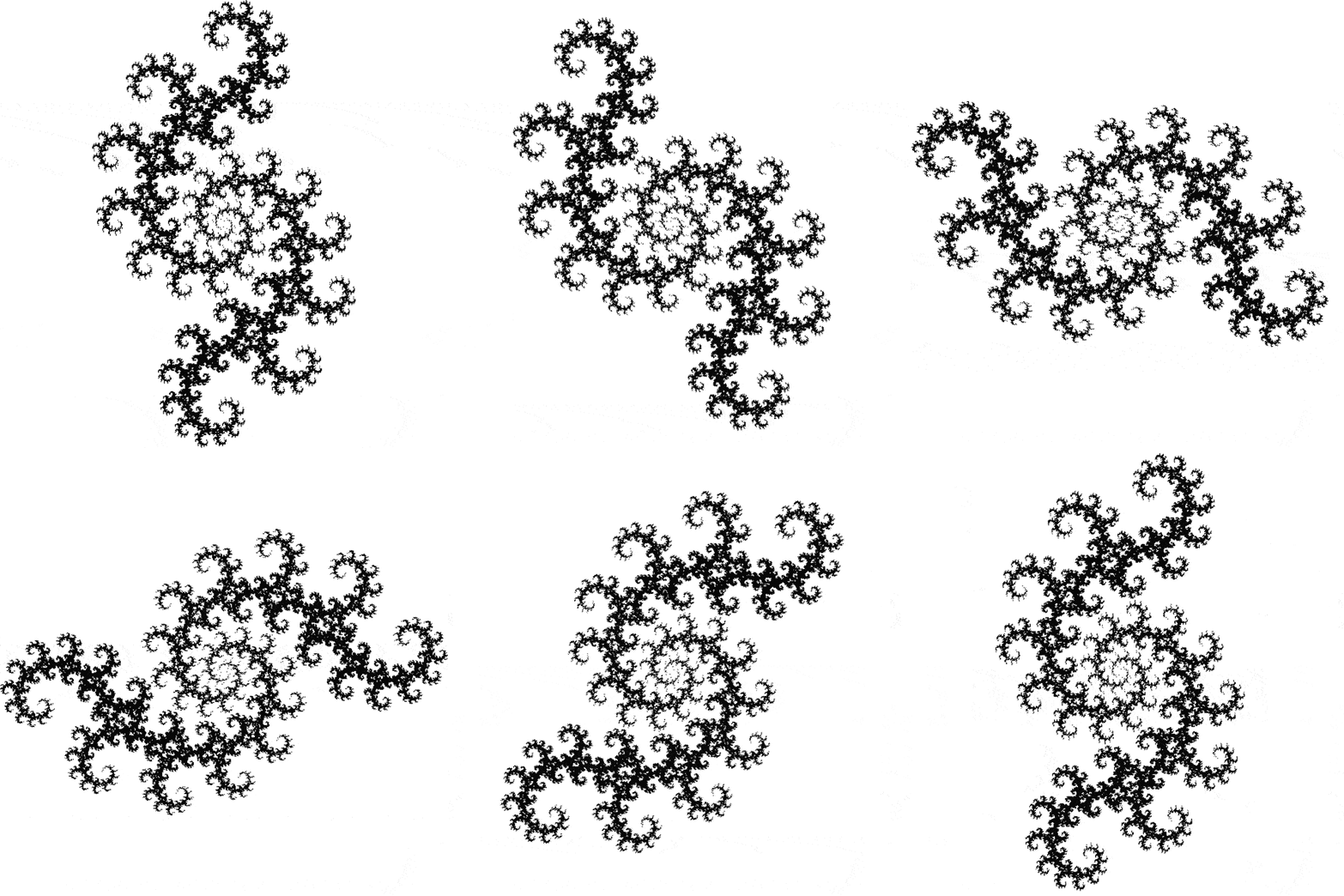
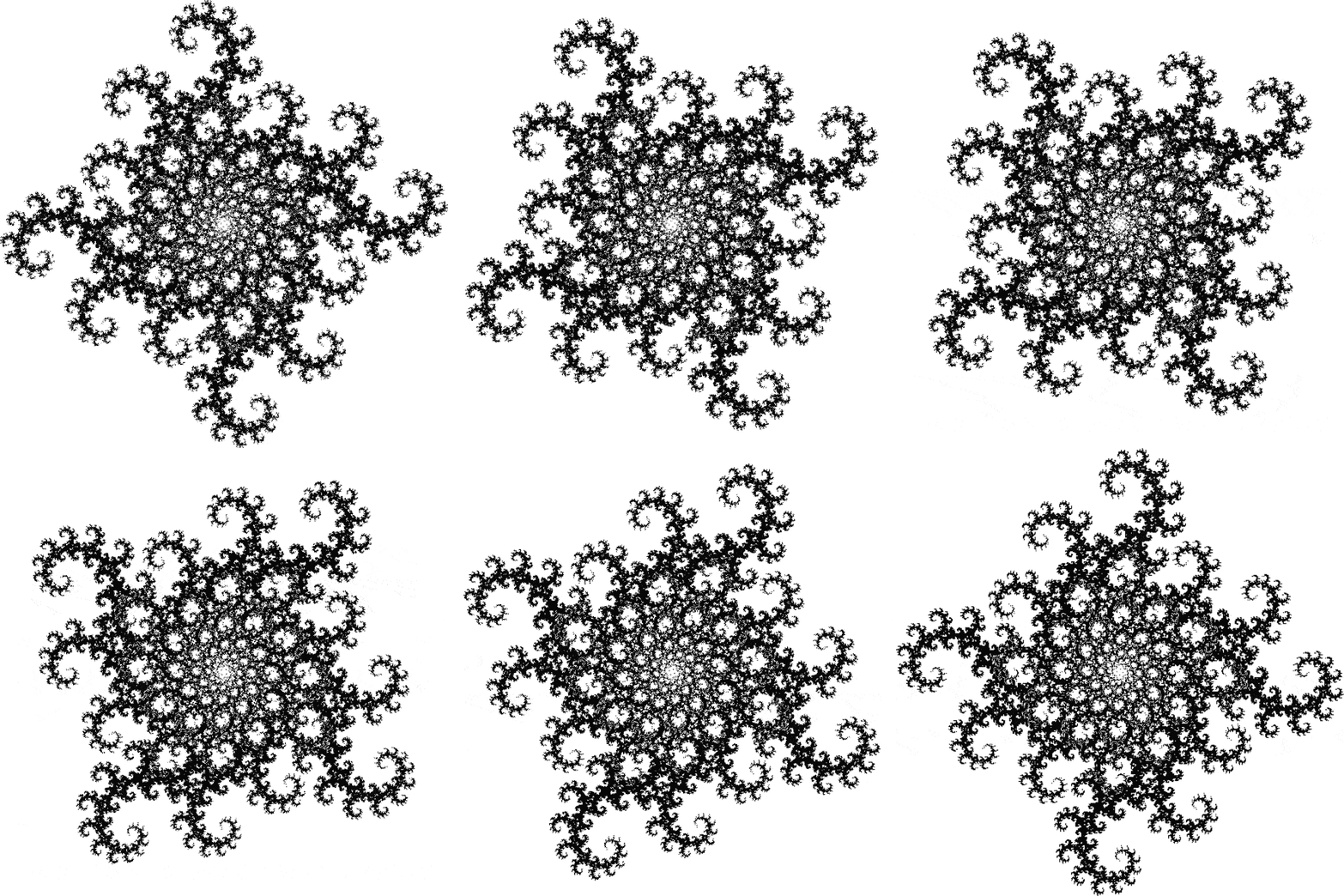
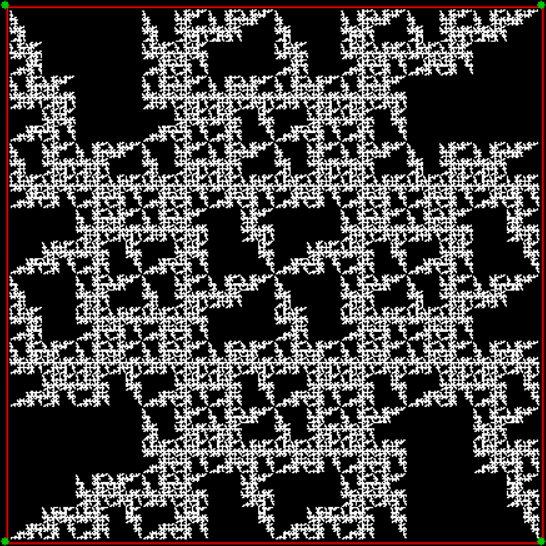
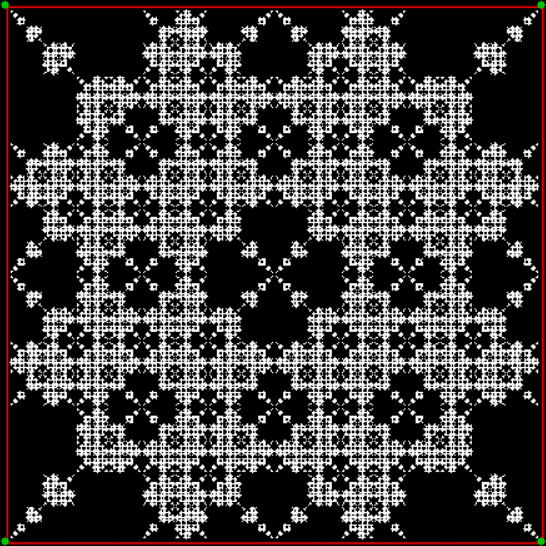
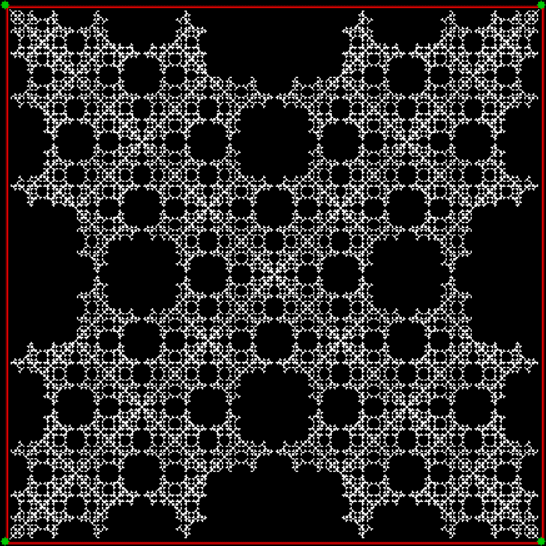
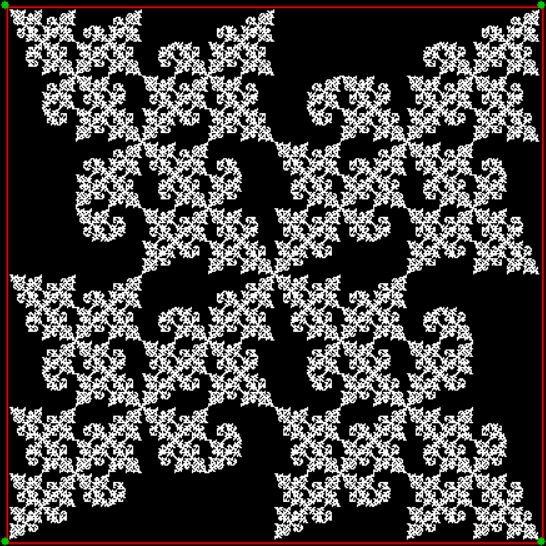
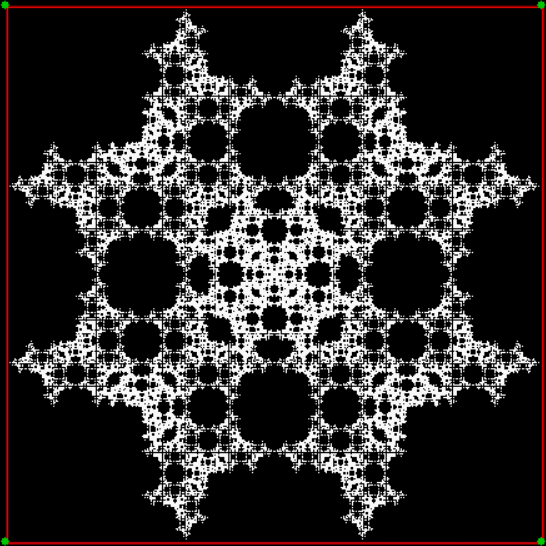
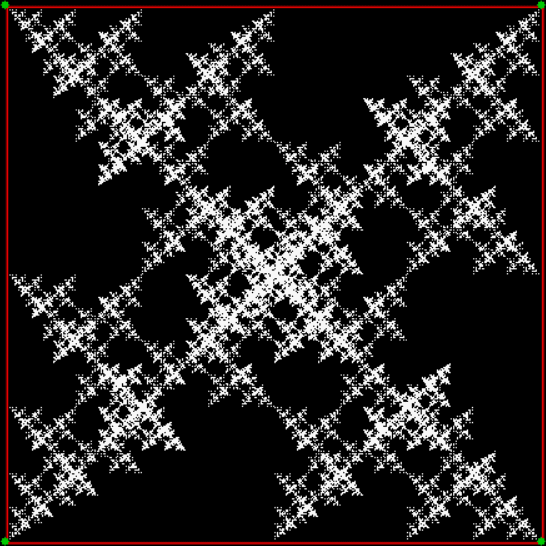
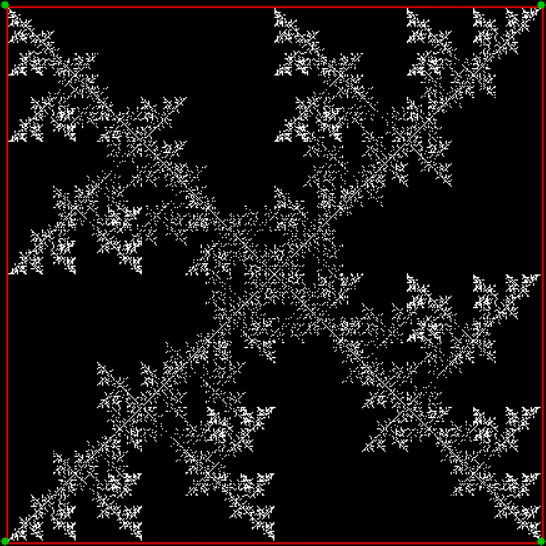
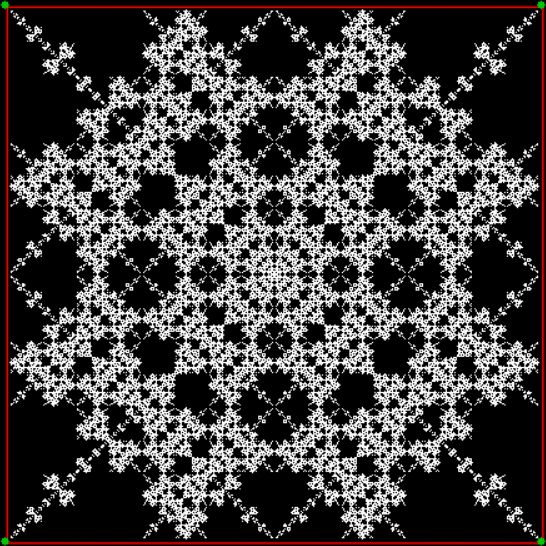
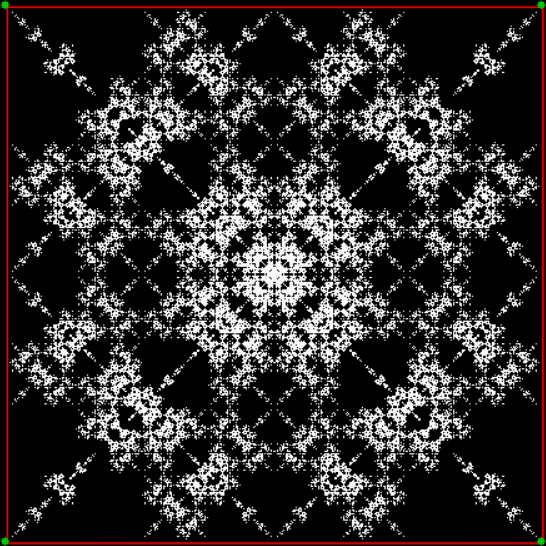
In one dimension, the fractality of the fractal isn’t obvious. But you can try draggin’ out (or dragon out) the fractality of the fractal by ferning the wyrm, as it were. Suppose that after the point jumps halfway towards one or another of the two points, it’s rotated by some angle around the midpoint of the two original points. When you do that, the fractal becomes more and more obvious. In fact, it becomes what’s called a dragon curve (in Old English, “dragon” was wyrm or worm):

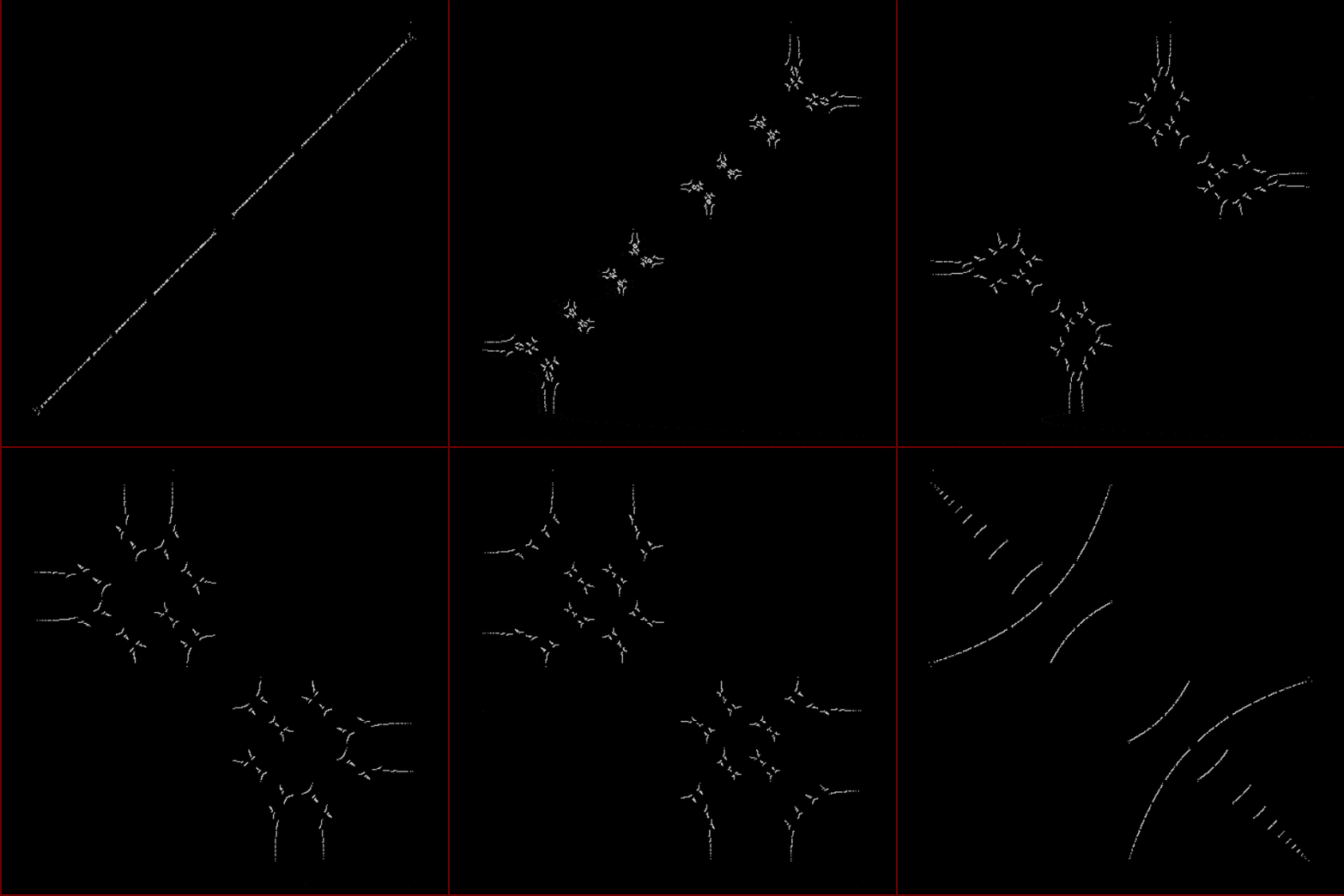
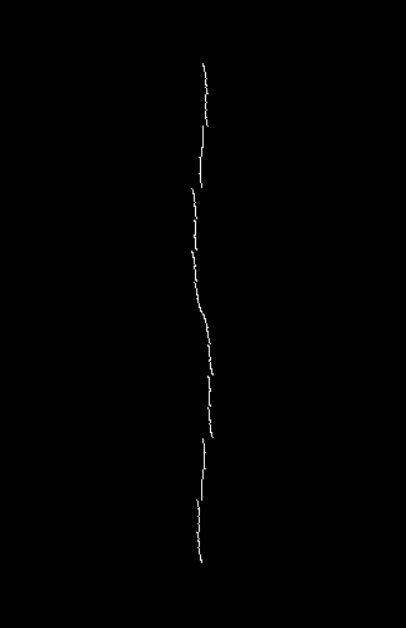
Fractal with angle = 5°


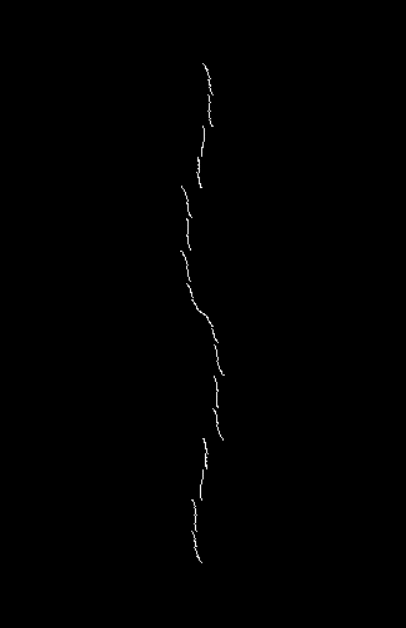
Fractal 10°


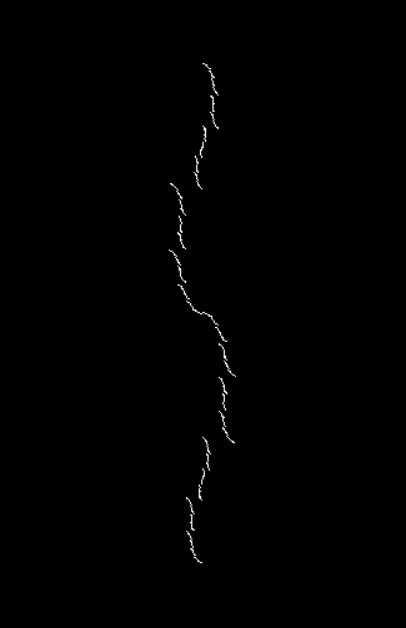
Fractal 15°


Fractal 20°


Fractal 25°


Fractal 30°


Fractal 35°


Fractal 40°


Fractal 45°


Fractal 50°


Fractal 55°


Fractal 60°


Fractal 0° to 60° (animated at ezGif)


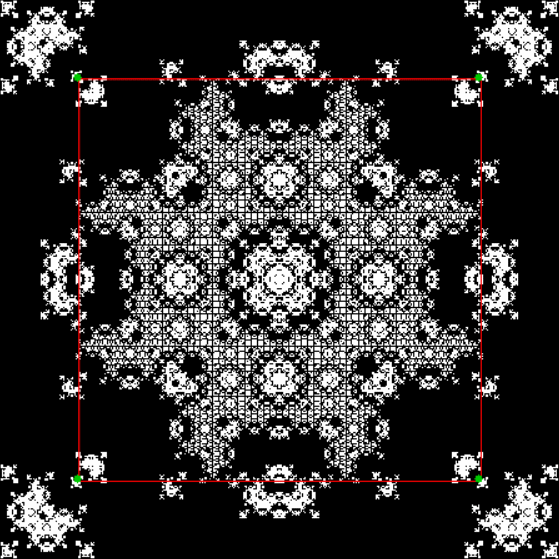
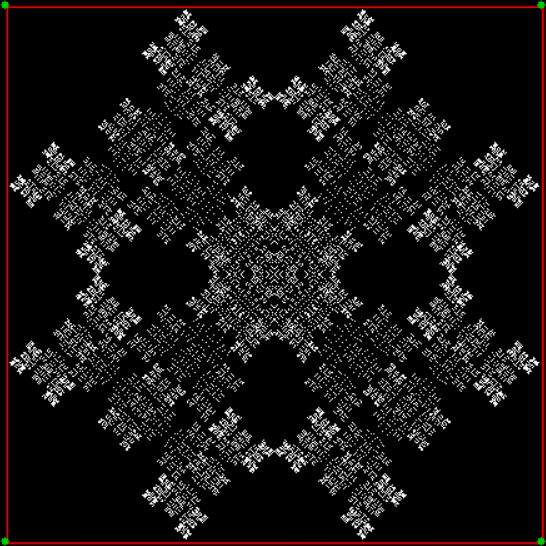
But as the angle gets bigger, an interesting aesthetic question arises. When is the ferned wyrm, the dragon curve, at its most attractive? I’d say it’s when angle ≈ 55°:

Fractal 50°


Fractal 51°


Fractal 52°


Fractal 53°


Fractal 54°


Fractal 55°


Fractal 56°


Fractal 57°


Fractal 58°


Fractal 59°


Fractal 60°


Fractal 50° to 60° (animated)


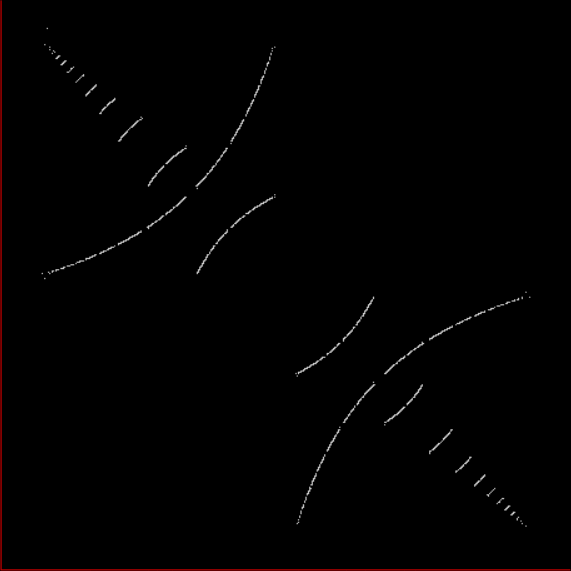
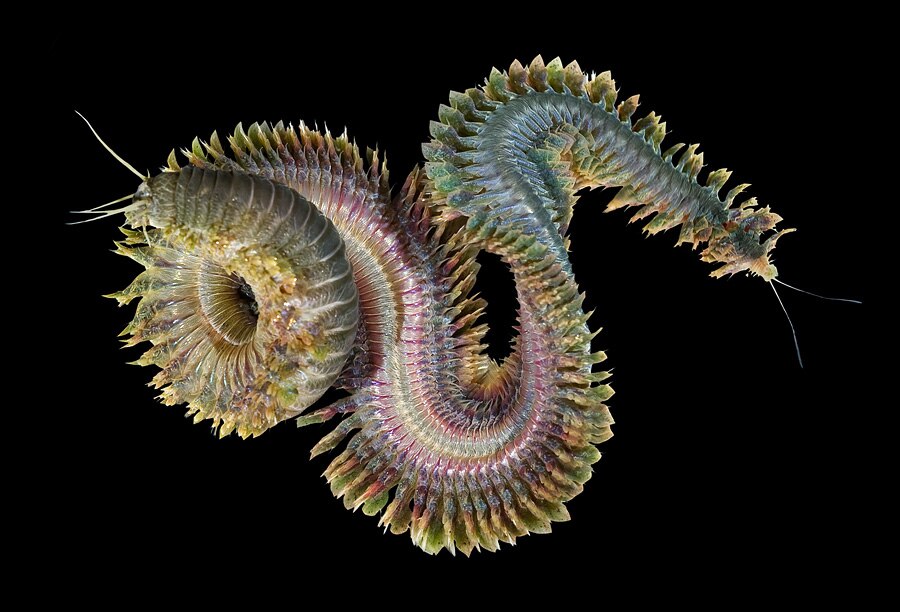
At angle >= 57°, I think the dragon curve starts to look like some species of bristleworm, which are interesting but unattractive marine worms:

A bristleworm, Nereis virens (see polychaete at Wikipedia)


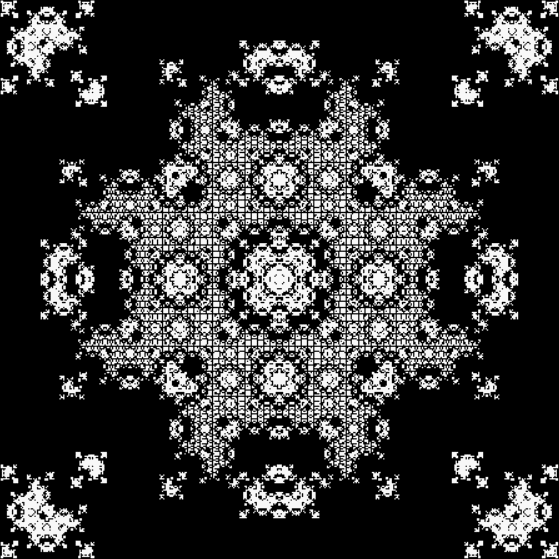
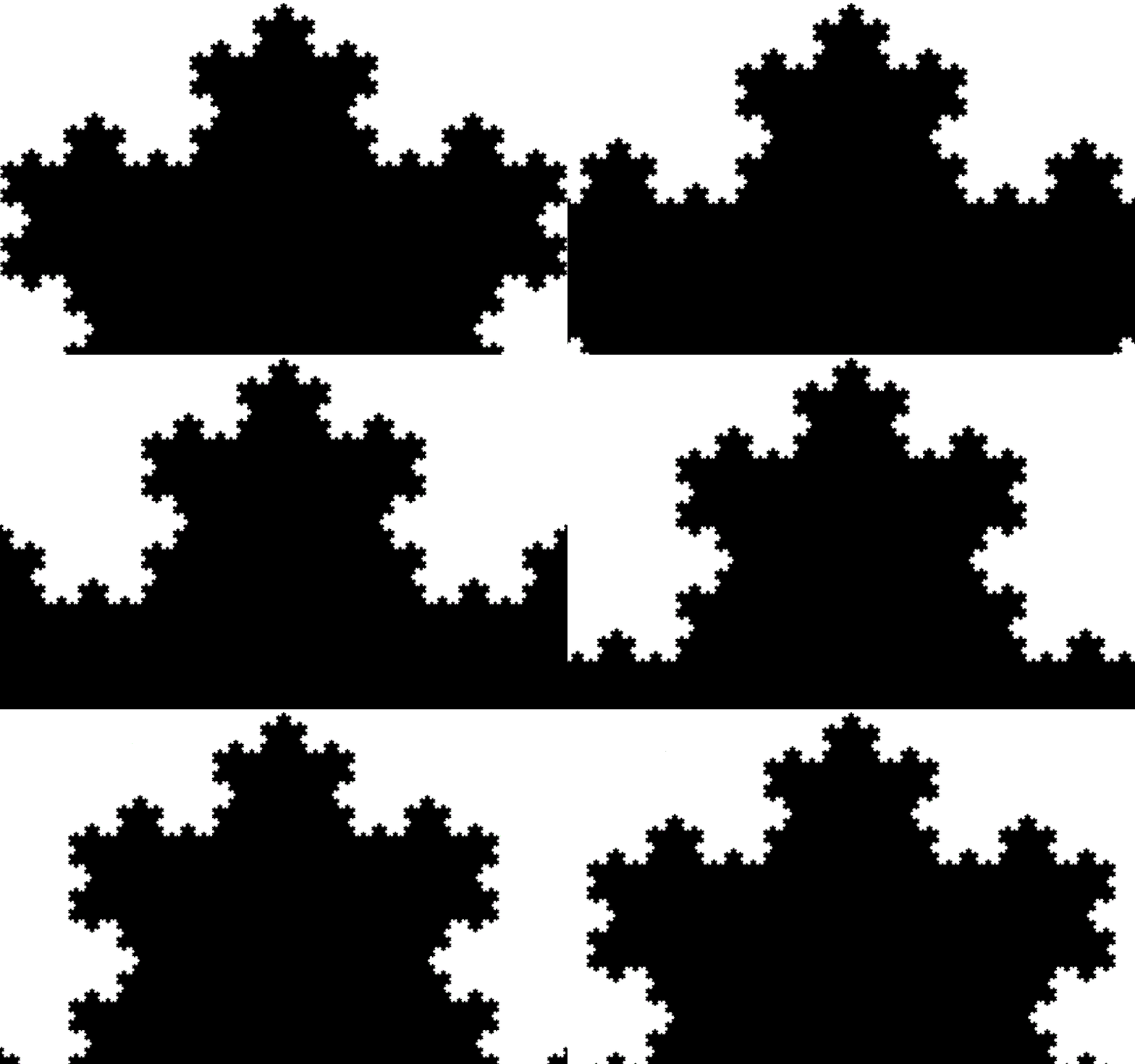
Finally, here’s what the ferned wyrm looks like in black-and-white and when it’s rotating:

Fractal 0° to 60° (b&w, animated)


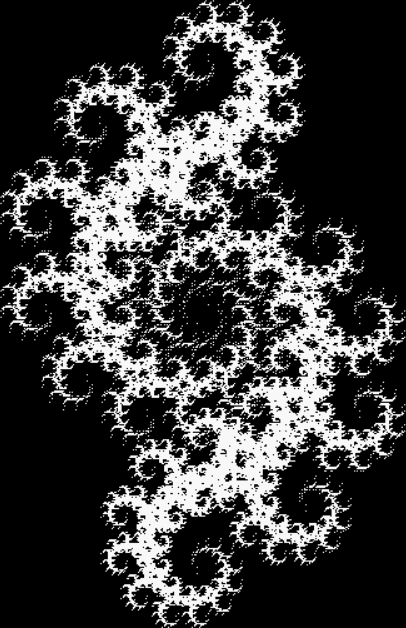
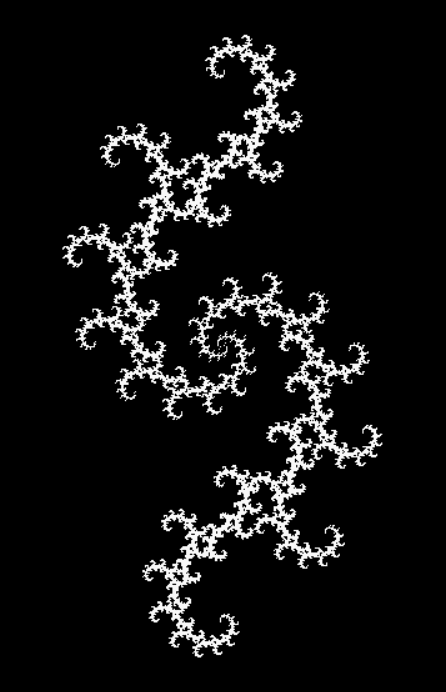
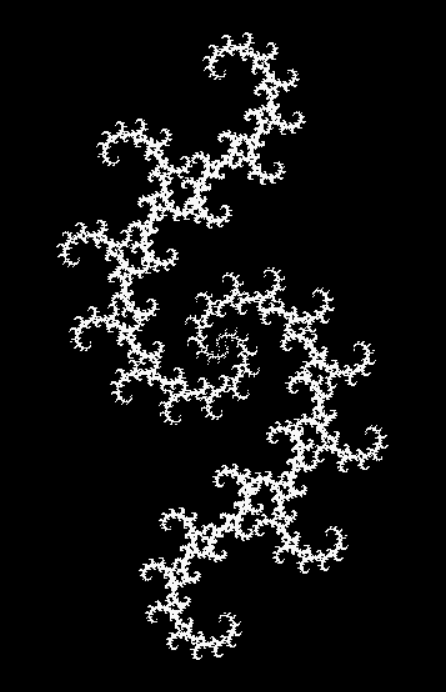
Fractal 56° (rotating)


Fractal 56° (b&w, rotating)


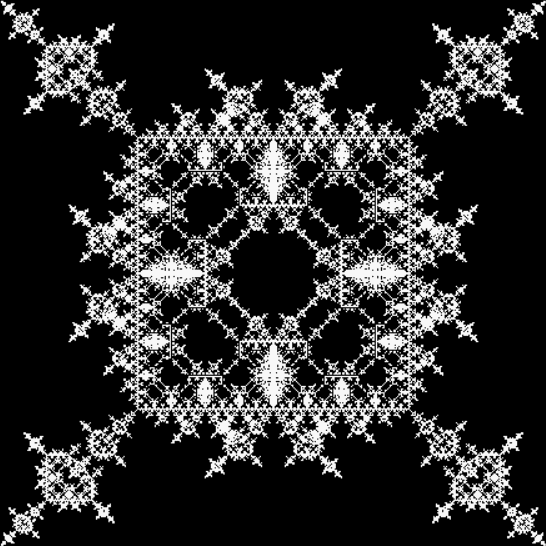
Double fractal 56° (b&w, rotating)


Previously Pre-Posted (Please Peruse)…

Curvous Energy — a first look at dragon curves
Back to Drac’ — another look at dragon curves

Squaring the Triangle

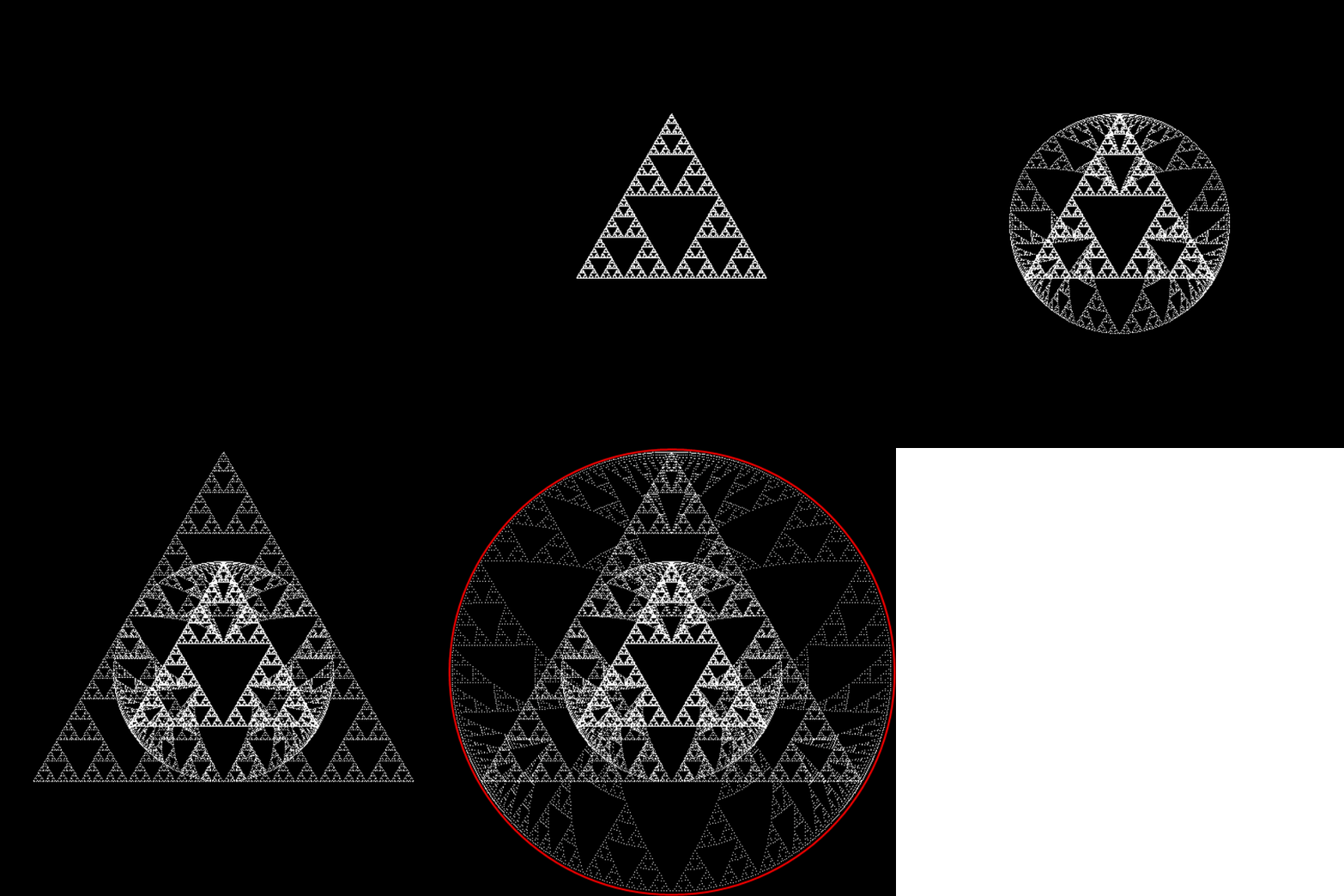
It’s an interesting little exercise in elementary trigonometry to turn the Sierpiński triangle…

A Sierpiński triangle


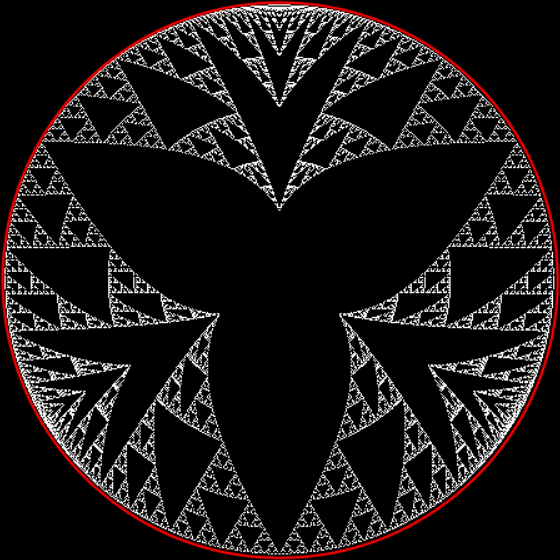
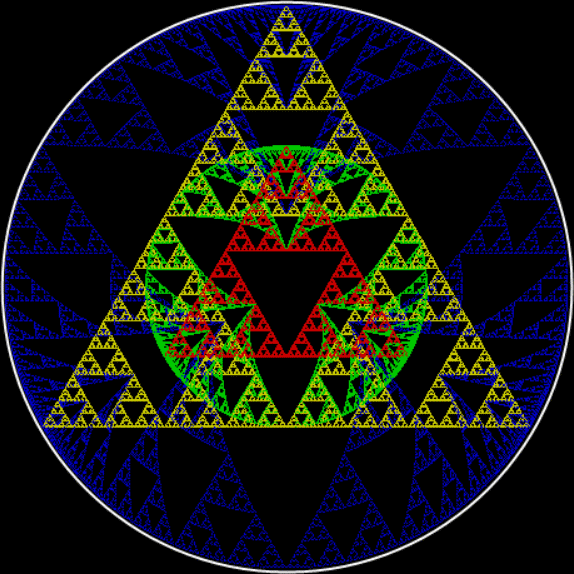
…into its circular equivalent:

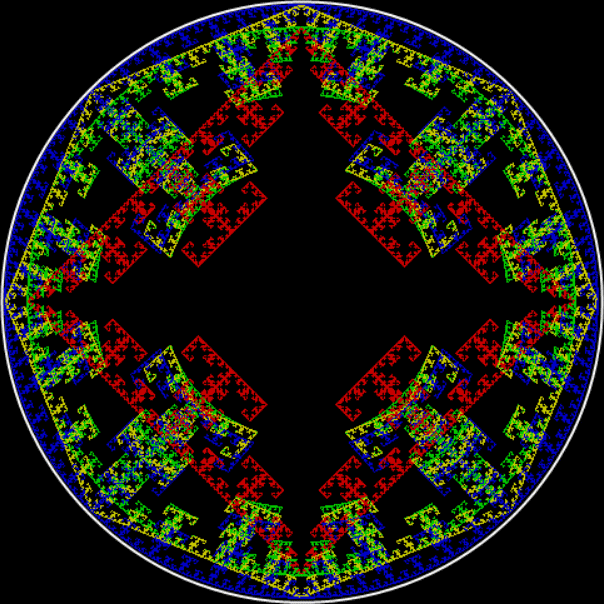
A Sierpiński trisc


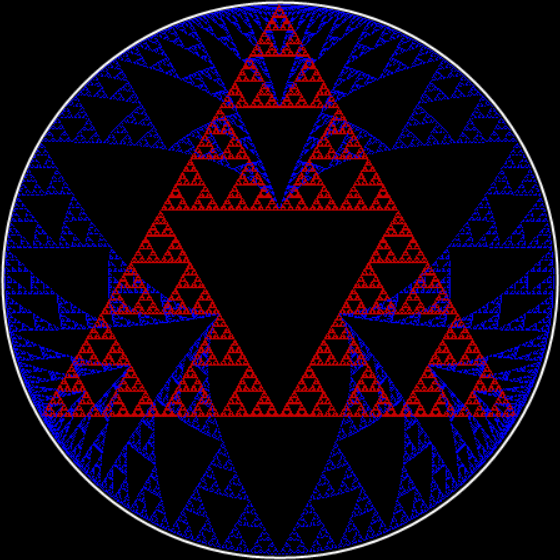
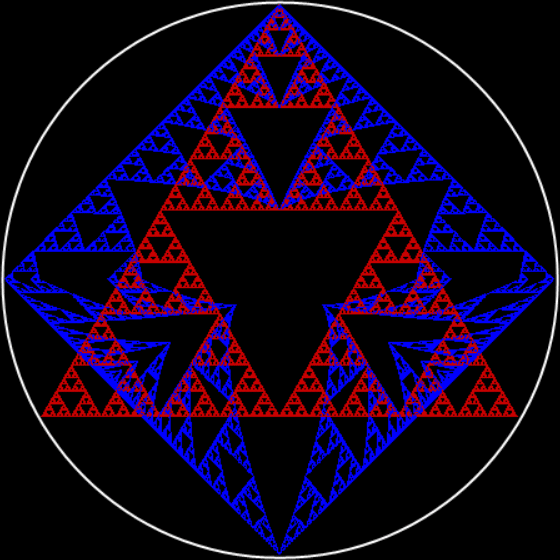
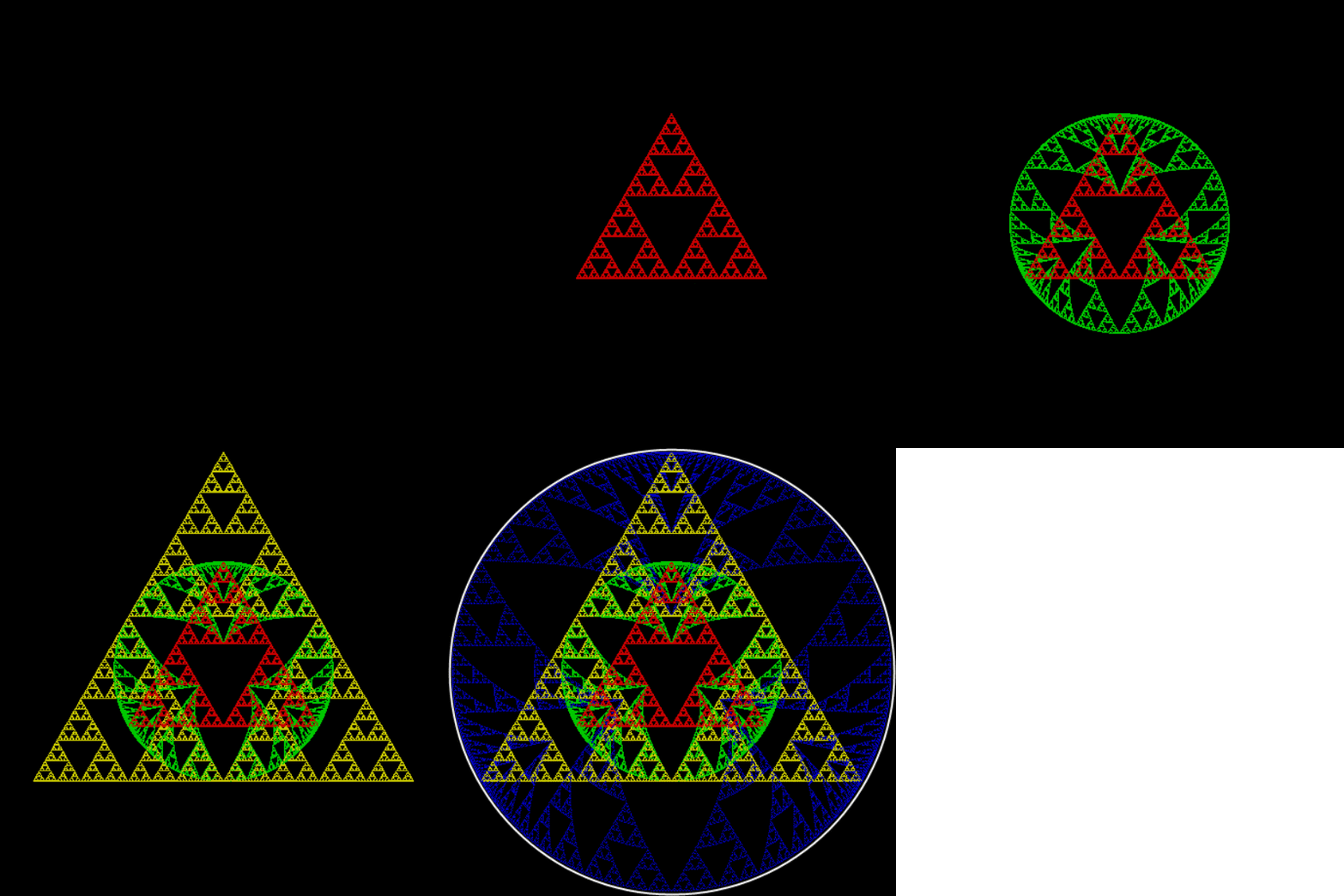
You could call that a trisc, because it’s a triangle turned into a disc. And here’s triangle-and-trisc in one image:

Sierpiński triangle + Sierpiński trisc


But what’s the square equivalent of a Sierpiński triangle? This is:

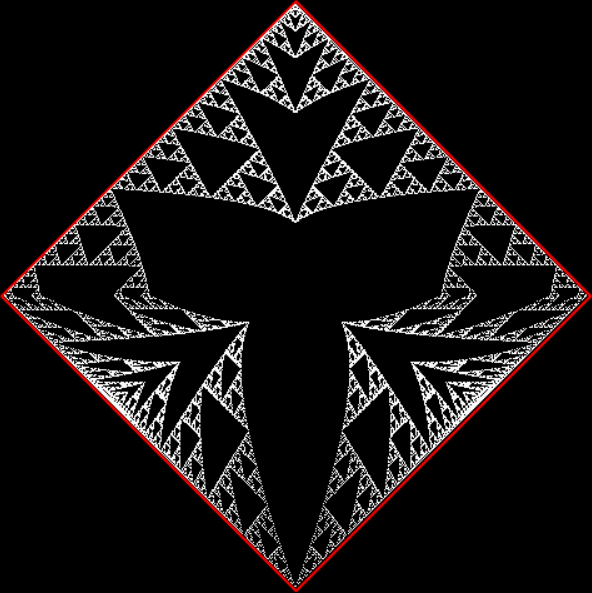
Square from Sierpiński triangle


You can do that directly, as it were:

Sierpiński triangle → square


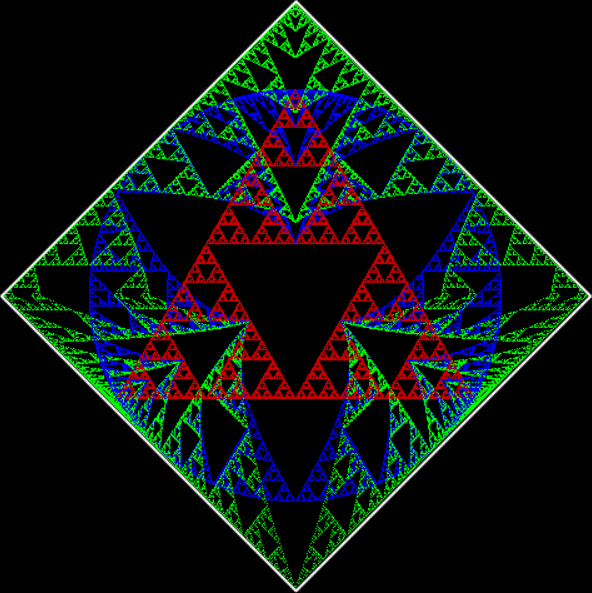
Or you can convert the triangle into a disc, then the disc into a square, like this:

Sierpiński triangle → trisc → square


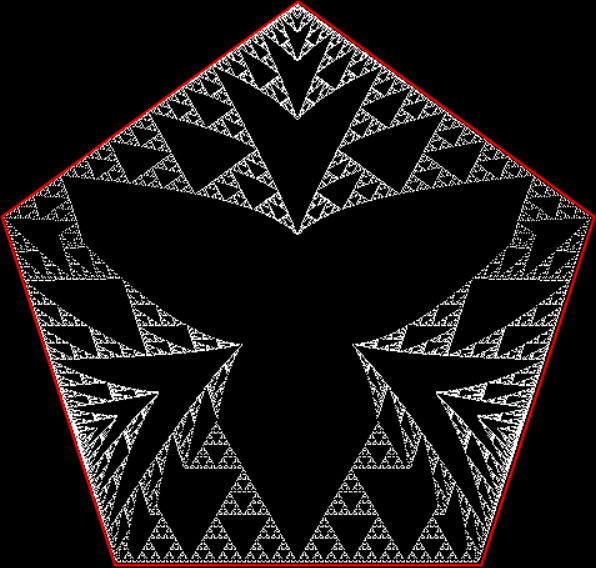
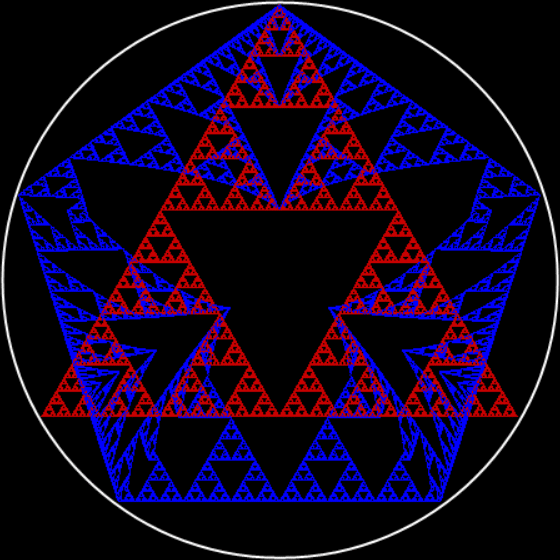
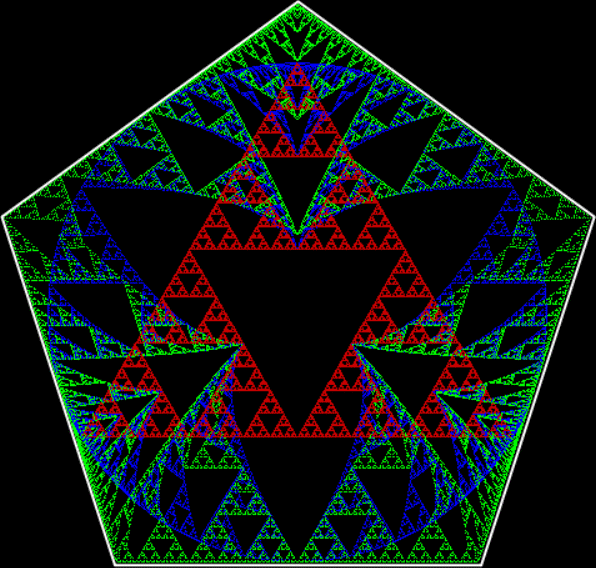
Now try converting the triangle into a pentagon:

Pentagon from Sierpiński triangle


Sierpiński triangle → pentagon


Sierpiński triangle → trisc → pentagon


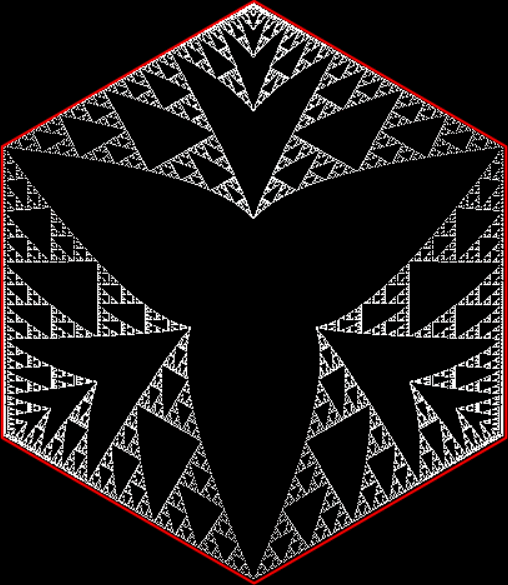
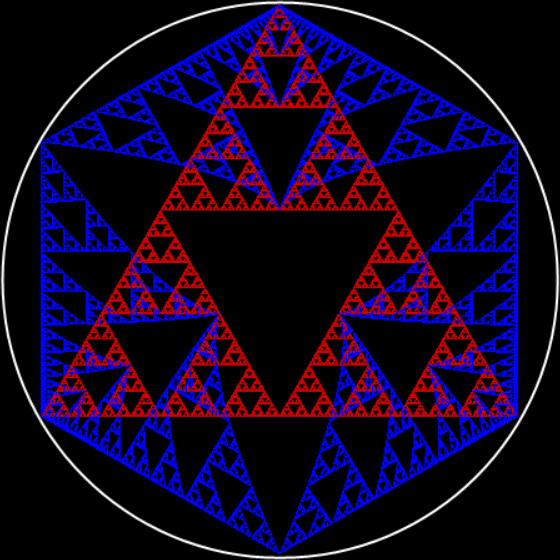
And a hexagon:

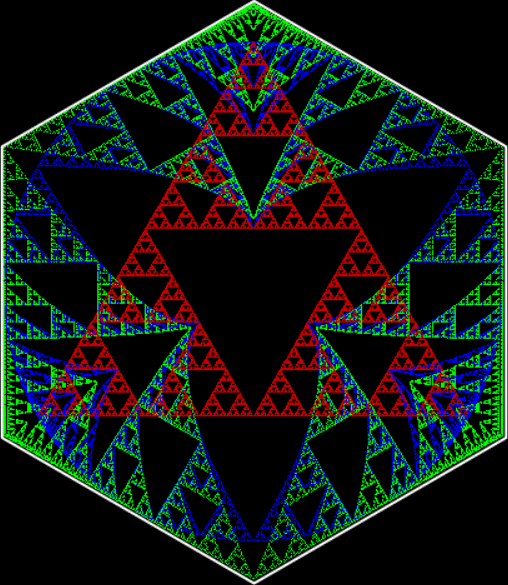
Hexagon from Sierpiński triangle


Sierpiński triangle → hexagon


Sierpiński triangle → trisc → hexagon


But you can also convert the Sierpiński trisc back into a Sierpiński triangle, then into a Sierpiński trisc again:

Sierpiński triangle → trisc → triangle → trisc


Sierpiński triangle → trisc → triangle → trisc (animated at Ezgif)


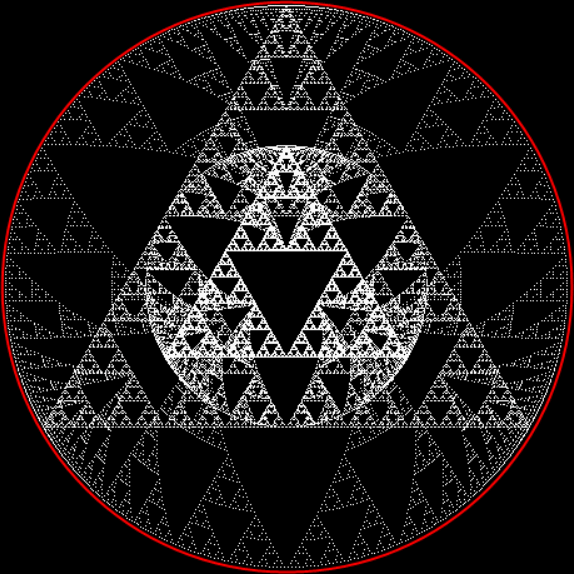
Sierpiński triangle → trisc → triangle → trisc (b&w)


Sierpiński triangle → trisc → triangle → trisc (b&w) (animated at Ezgif)


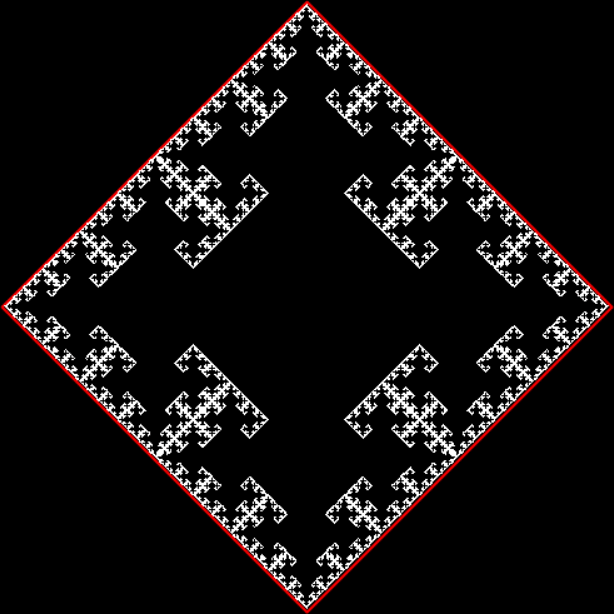
After triangles come squares. Here’s a shape called a T-square fractal:

T-square fractal


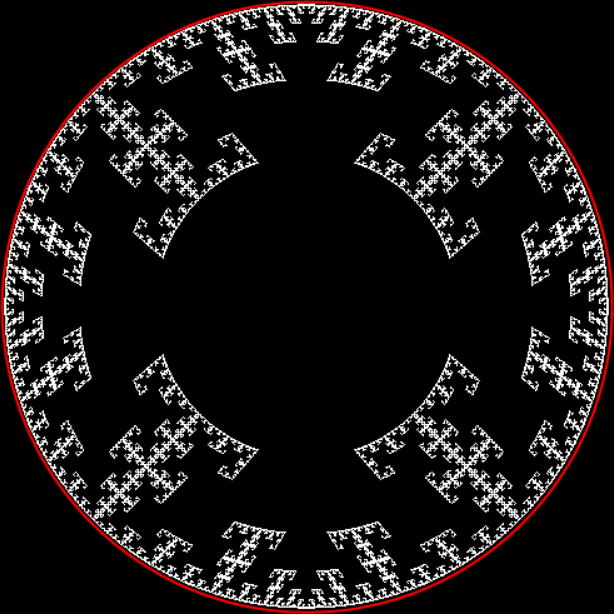
And here’s the circular equivalent of a T-square fractal:

T-square fractal → T-squisc


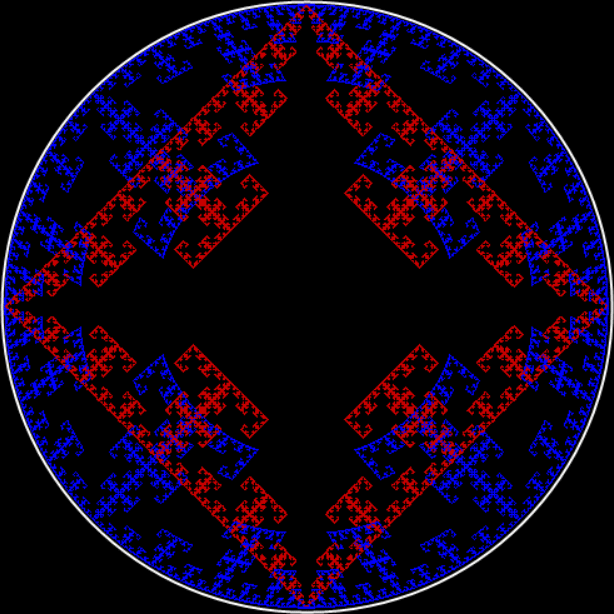
T-square fractal + T-squisc


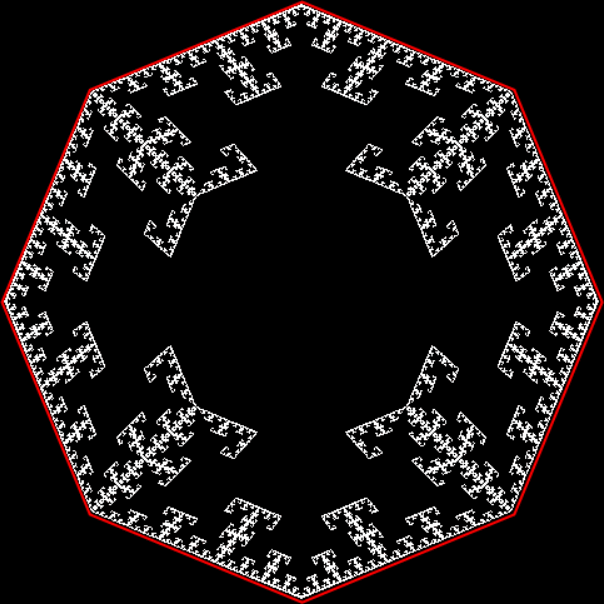
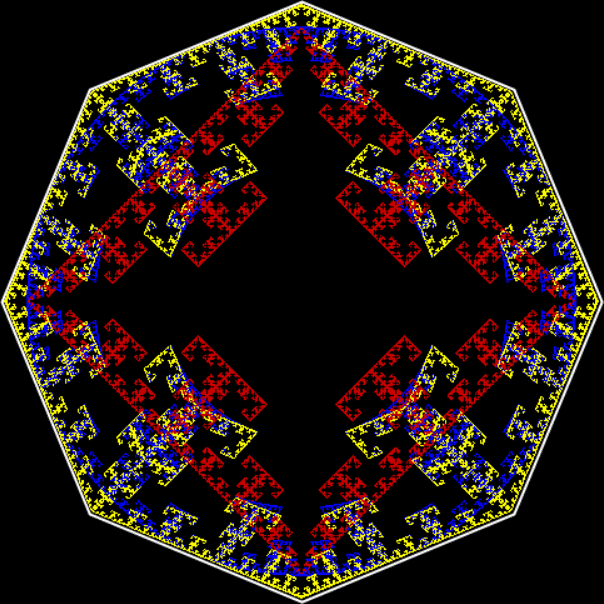
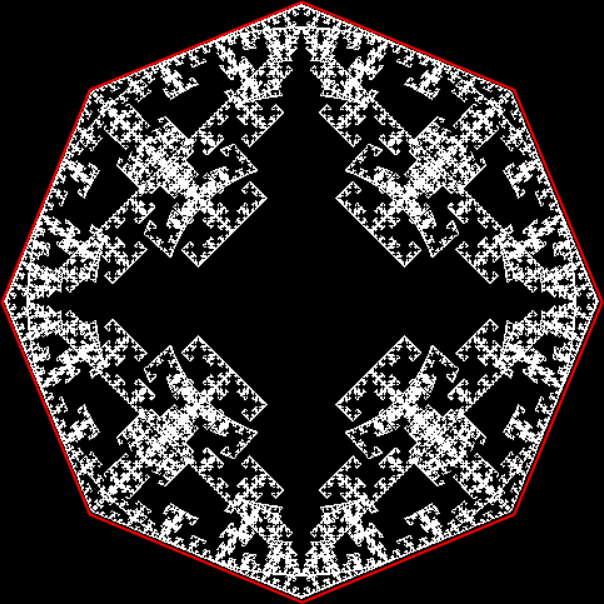
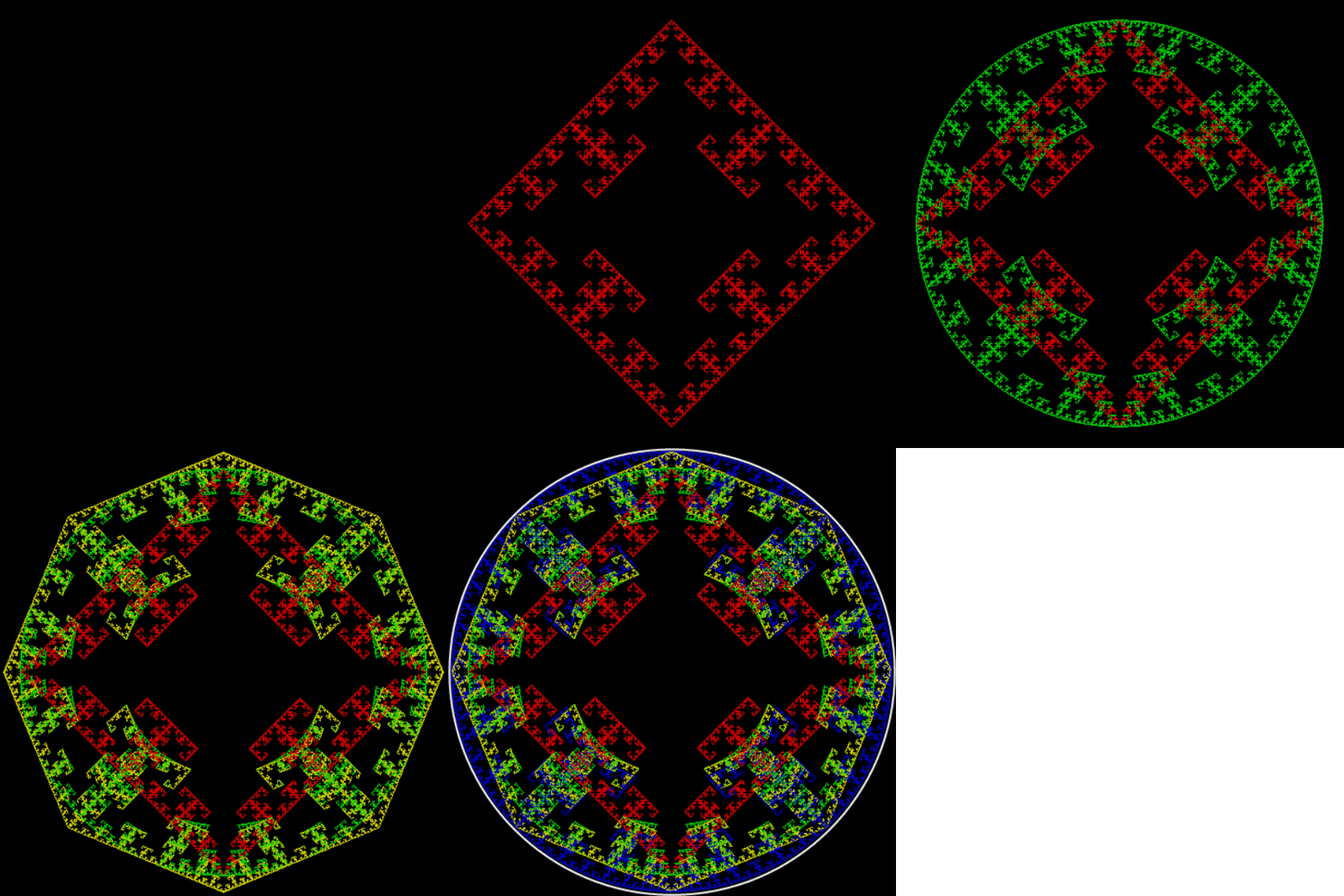
If a disc from a triangle is a trisc, then a disc from a square is a squisc (it would be pentisc, hexisc, heptisc for pentagonal, hexagonal and heptagonal fractals). Here’s the octagonal equivalent of a T-square fractal:

Octagon from T-square fractal


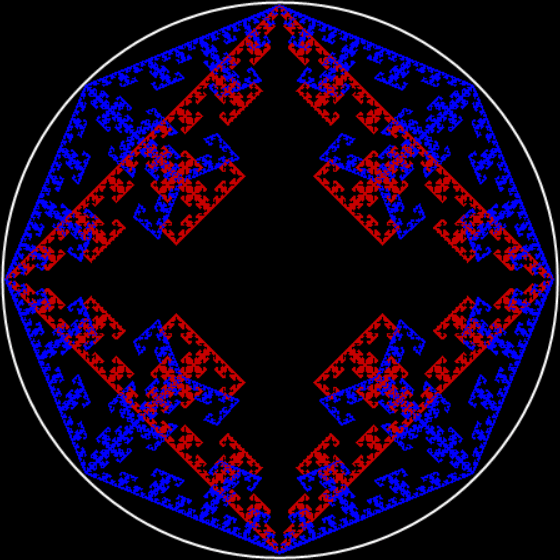
As with the Sierpiński trisc, you can use the T-squisc to create the T-octagon:

T-square fractal → T-squisc → T-octagon (color)


Or you can convert the T-square directly into the T-octagon:

T-square fractal to T-octagon fractal

But using the squisc makes for interesting multiple images:


T-square fractal → T-squisc → T-octagon (b&w)


T-square fractal → T-squisc → T-octagon → T-squisc


T-square fractal → T-squisc → T-octagon → T-squisc (animated at Ezgif)


The conversions from polygon to polygon look best when the number of sides in the higher polygon are a multiple of the number of sides in the lower, like this:

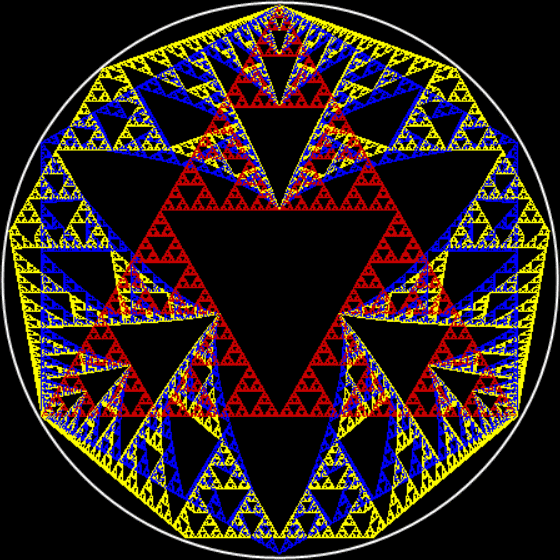
Sierpiński triangle → Sierpiński hexagon → Sierpiński nonagon


Scout the Routes

Triangles? Yes. Squares? No. If you scout the routes with a triangle, you get a beautiful fractal. If you scout the routes with a square, you don’t. Here’s what you get with a triangle:

A Sierpiński triangle


But how do you scout the routes? (That phrase works best in the American dialects where “scout” rhymes with “route”.) Simple: you mark the final positions reached when a point traces all possible ways of jumping, say, eight times 1/2-way towards the vertices of a polygon. Here’s an animation of a point scouting the routes of eight jumps towards the vertices of a triangle (it starts each time at the center):

Creating a Sierpiński triangle by scouting the routes (animated at Ezgif)


If you scout the routes with a square, you don’t get a fractal. Instead, the interior of the square fills evenly (and boringly) with the end-points of the routes:

Scouting the routes with a square (animated at Ezgif)


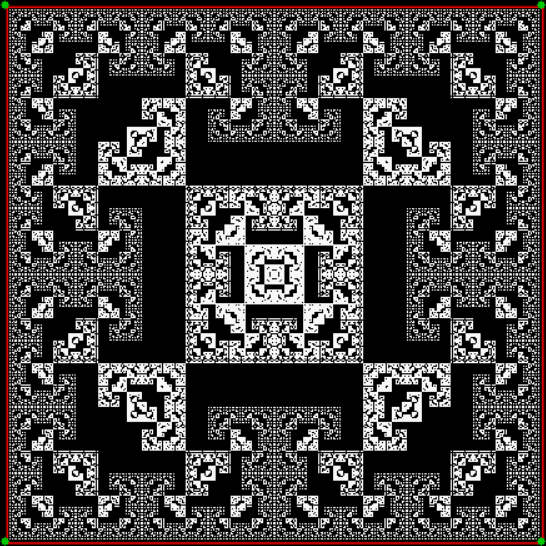
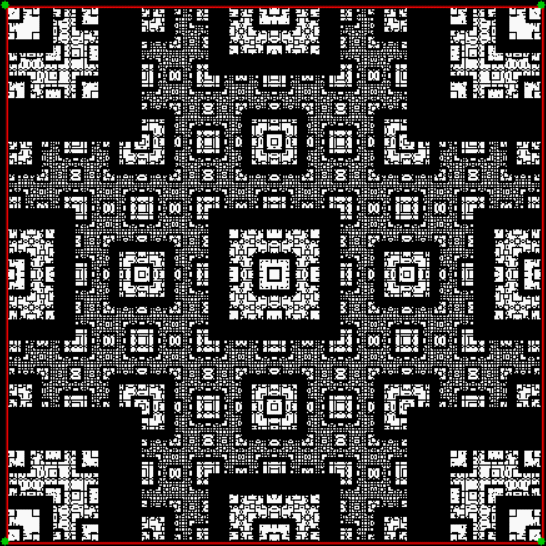
But you can create fractals with a square if you out routes as you scout routes. That is, if you exclude some routes and don’t mark their end-points. One way to do this is to compare the proposed next jump-vertex (vertex-jumped-towards) with the previous jump-vertex. For example, if the proposed jump-vertex, jv[t], is the same as the previous jump-vertex, jv[t-1], you don’t jump towards jv[t] or you jump towards it in a different way. The test is jv[t] = jv[t-1] + vi. If vi = 0 and you jump towards the clockwise neighbor of jv when the test is true, you get a fractal looking like this:

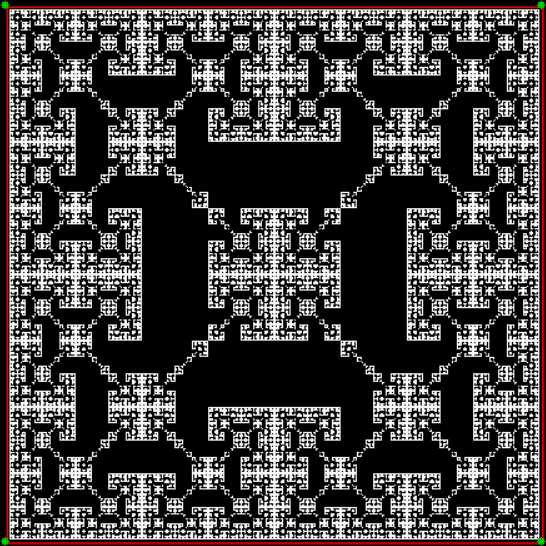
vi = 0, action = jv → jv + 1


Here’s the fractal if you jump towards the clockwise-neighbor-but-one when the test is true:

vi = 0, action = jv + 2


Now try varying the vi of the jv[t-1] + vi:

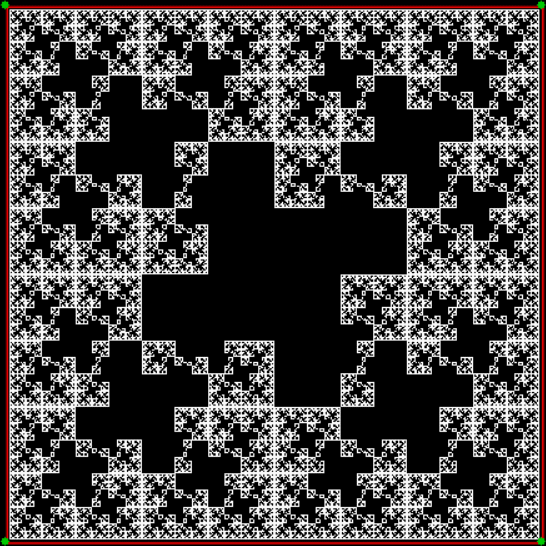
vi = 2, action = jv + 2


vi = 2, action = jv + 1


vi = 3, action = jv + 1


Or what about jumping in a different way towards jv when the test is true? If you jump 2/3 of the way rather 1/2, you get his fractal:

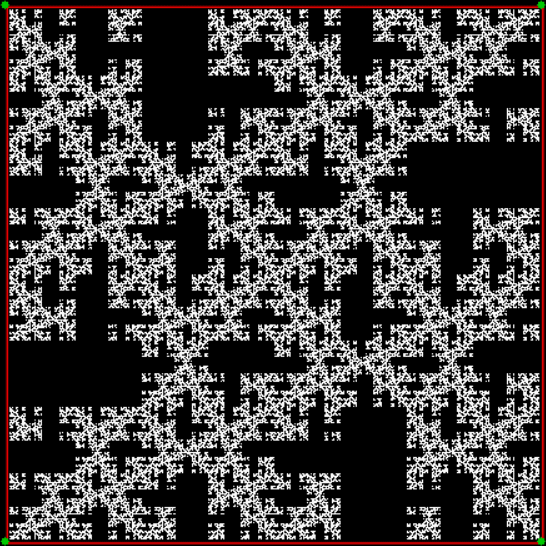
vi = 2, action = jump 2/3


And if you jump 4/3 of the way (i.e., you overshoot the vertex jv), you get this fractal:

vi = 0, action = jump 4/3rds to vertex


vi = 0, jump 4/3 (guide-square removed)


vi = 2, jump 4/3rds (guide-square removed)


And in this fractal the point jumps 2/3 of the way to the center of the square when the test is true:

vi = 2, action = jump 2/3rds of way to center of square


But why apply only one test to jv[1] and use only when one alternative jump? If jv[t] = jv[t-1] + 1 or jv[t] = jv[t-1] + 3, jv[t] becomes jv[t]+1 or jv[t]+3, respectively, you get this fractal:

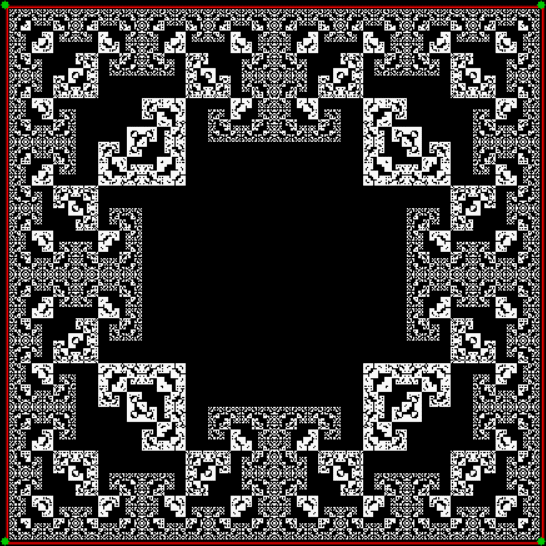
vi = 1, jv + 1; vi = 3, jv + 3


Here are more fractals created by single and double tests:

vi = 1, jv + 1


vi = 0, jump 2/3


vi = 0, jump towards center 2/3rds


vi = 1, jump-center 2/3


vi = 2, jump 1/3; vi = 3, jump 1/1 (i.e, 1)


vi = 0, jv + 2; vi = 2, jump-center 1/2


vi = 0, jv + 2; vi = 2, jump-center 2/3


vi = 0, jv + 2; vi = 2, jump-center 4/3


vi = 0, jv + 1; vi = 2, jump 2/3


vi = 0, jv + 2; vi = 2, jump 2/3


vi = 0, jump 4/3; vi = 2, jv + 2


vi = 0, jump 2/3; vi = 2, jv + 1


vi = 0, jump 4/3; vi = 1, jv + 2


vi = 0, jump 2/3; vi = 2, jump 1/3


vi =0, jump 1/3; vi = 2, jump 2/3


vi = 0, jump 0/1 (i.e, 0); vi = 2, jump 1/3


Lime Time

What do you get if you list every successive pair of entries in this sequence?

1, 2, 1, 3, 2, 3, 1, 4, 3, 4, 1, 5, 2, 5, 3, 5, 4, 5, 1, 6, 5, 6, 1, 7, 2, 7, 3, 7, 4, 7, 5, 7, 6, 7, 1, 8, 3, 8, 5, 8, 7, 8, 1, 9, 2, 9, 4, 9, 5, 9, 7, 9, 8, 9, 1, 10, 3, 10, 7, 10, 9, 10, 1, 11, 2, 11, 3, 11, 4, 11, 5, 11, 6, 11, 7, 11, 8, 11, 9, 11, 10, 11, 1, 12, 5, 12, 7, 12, 11, 12, 1, 13, … — A038568 at the Online Encyclopedia of Integer Sequence

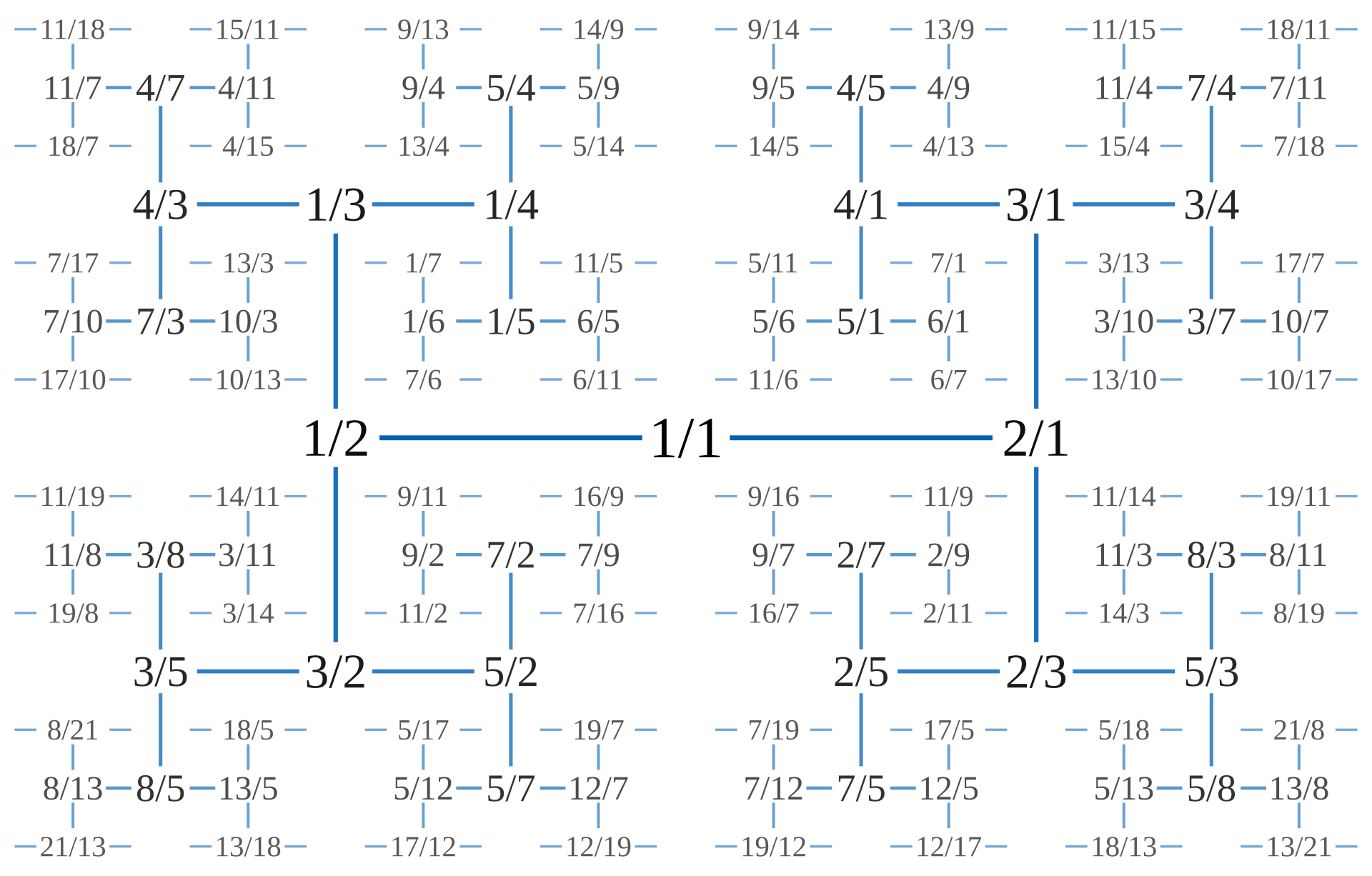
You get the rational fractions ordered by denominator in their simplest form: 1/2, 1/3, 2/3, 1/4, 3/4, 1/5, 2/5, 3/5… There are no pairs like 2/4 and 5/35, because those can be simplified: 2/4 → 1/2; 15/35 → 3/7. You can get the same set of rational fractions by listing every successive pair in this sequence, the Stern-Brocot sequence:

1, 2, 1, 3, 2, 3, 1, 4, 3, 5, 2, 5, 3, 4, 1, 5, 4, 7, 3, 8, 5, 7, 2, 7, 5, 8, 3, 7, 4, 5, 1, 6, 5, 9, 4, 11, 7, 10, 3, 11, 8, 13, 5, 12, 7, 9, 2, 9, 7, 12, 5, 13, 8, 11, 3, 10, 7, 11, 4, 9, 5, 6, 1, 7, 6, 11, 5, 14, 9, 13, 4, 15, 11, 18, 7, 17, 10, 13, 3, 14, 11, 19, 8, 21, 13, 18, 5, 17, 12, 19, … — A002487 at the OEIS

But the fractions don’t come ordered by denominator this time. In fact, they seem to come at random: 1/2, 1/3, 2/3, 1/4, 3/5, 2/5, 3/4, 1/5, 4/7, 3/8, 5/7, 2/7, 5/8… But they’re not random at all. There’s a complicated way of generating them and a simple way. An amazingly simple way, I think:

Moshe Newman proved that the fraction a(n+1)/a(n+2) can be generated from the previous fraction a(n)/a(n+1) = x by 1/(2*floor(x) + 1 – x). The successor function f(x) = 1/(floor(x) + 1 – frac(x)) can also be used. — A002487, “Stern-Brocot Sequence”, at the OEIS

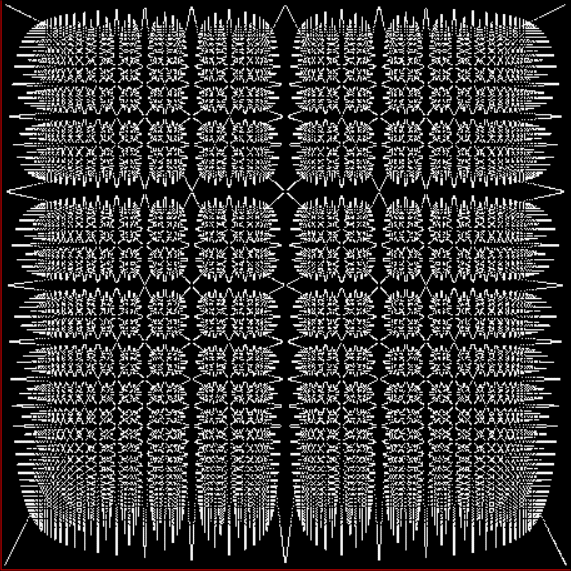
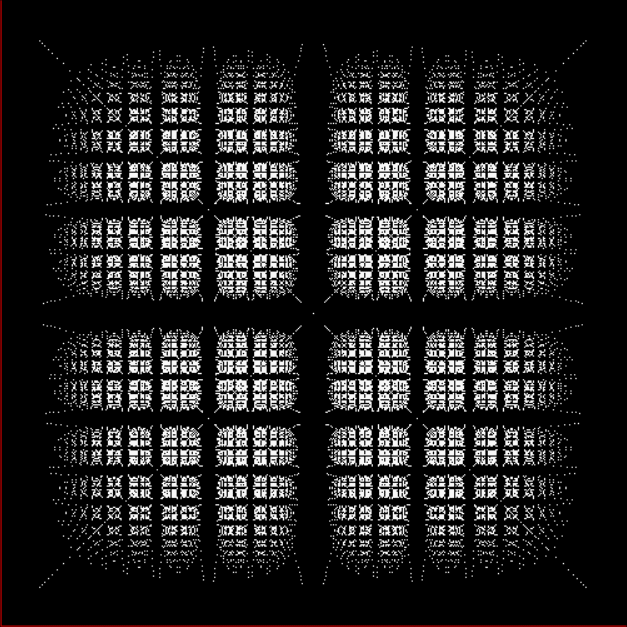
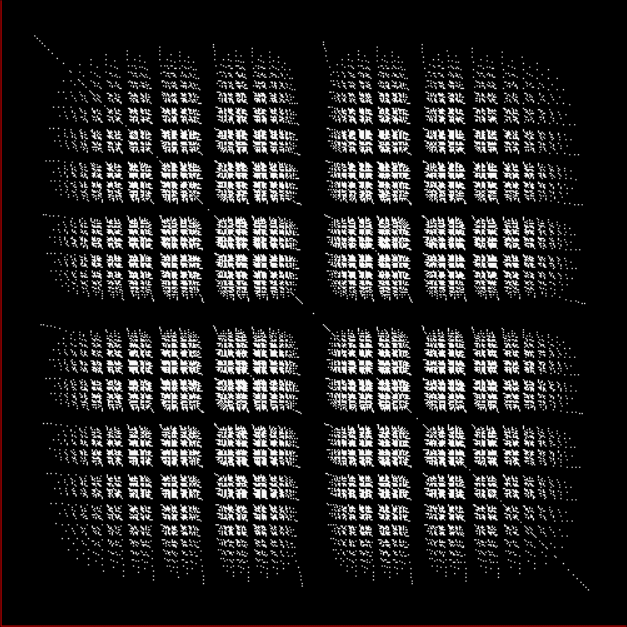
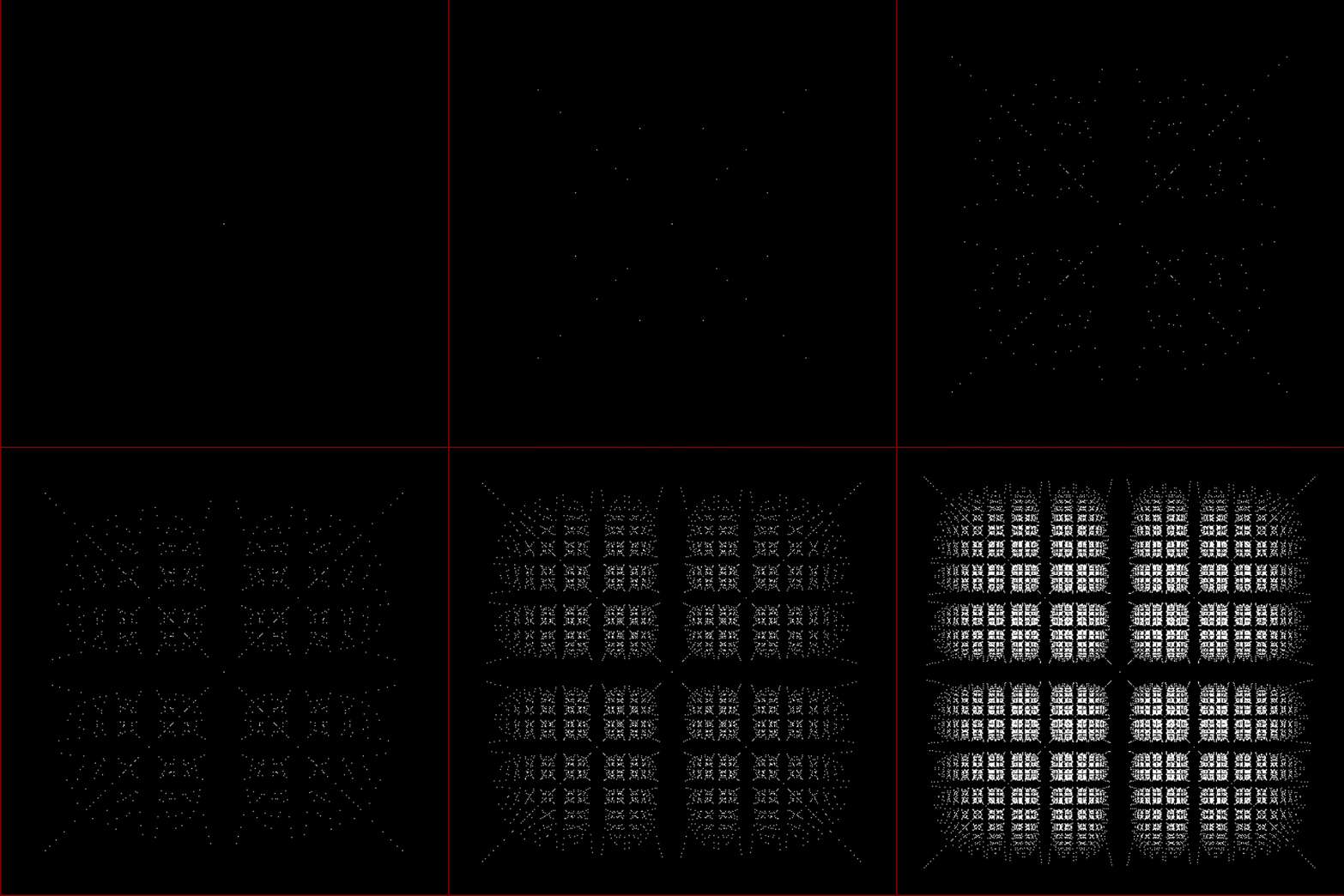
In another form, the Stern-Brocot sequence is generated by what’s called the Calkin-Wilf Tree. Now suppose you use the Stern-Brocot sequence to supply the x co-ordinate of an L-graph whose arms run from 0 to 1. And you use the Calkin-Wilf Tree to supply the y co-ordinate of the L-tree. What do you get? As I described in “I Like Gryke”, you get this fractal:

Limestone fractal


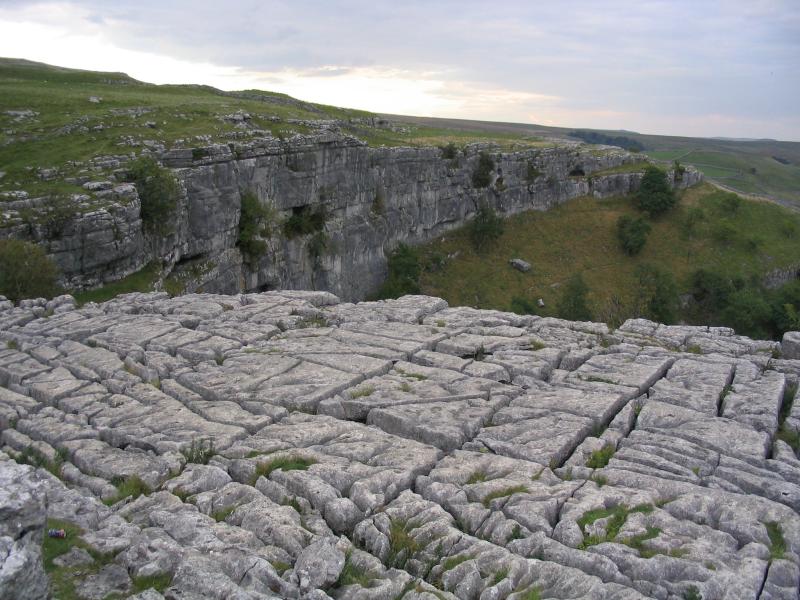
I call it a limestone fractal or pavement fractal or gryke fractal, because it reminds me of the fissured patterns you see in the limestone pavements of the Yorkshire Dales:

Fissured limestone pavement, Yorkshire Dales (Wikipedia)


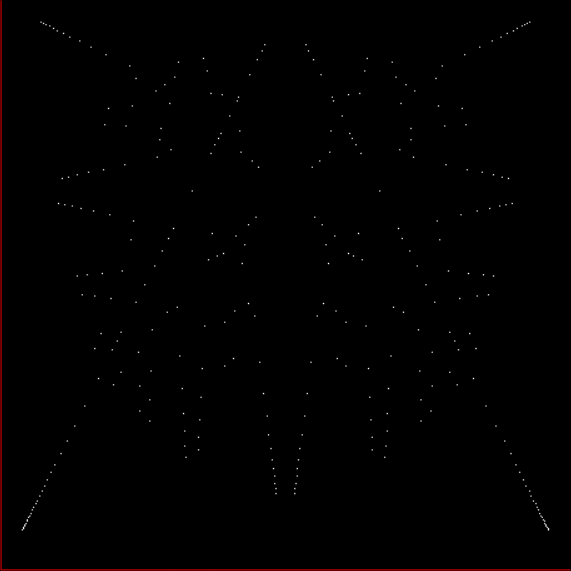
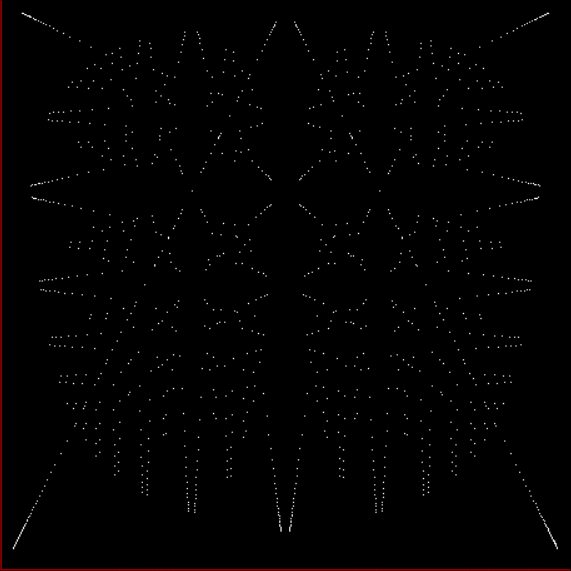
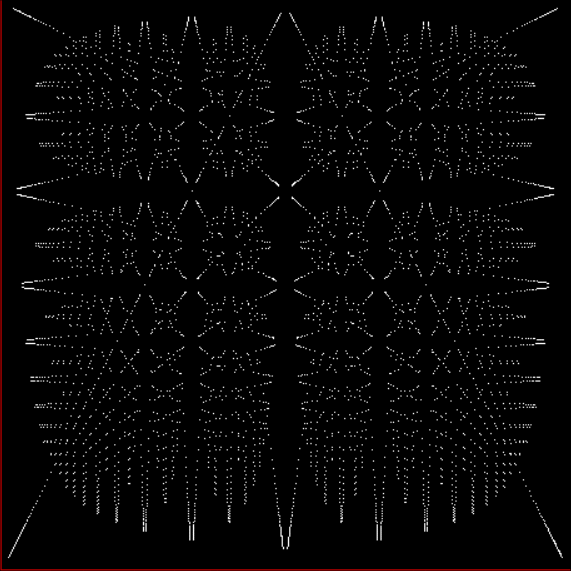
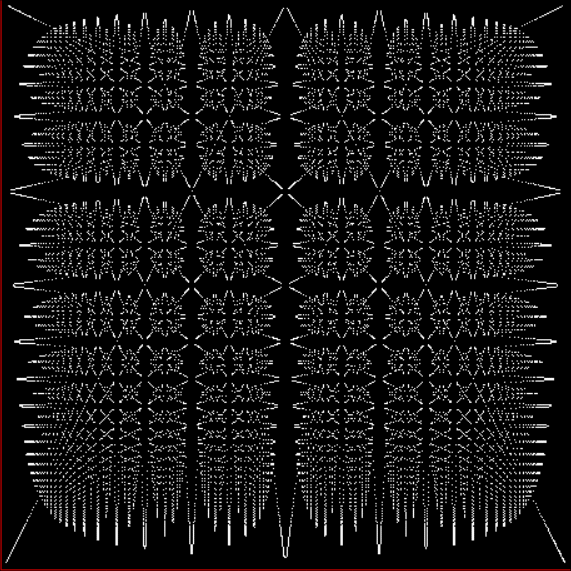
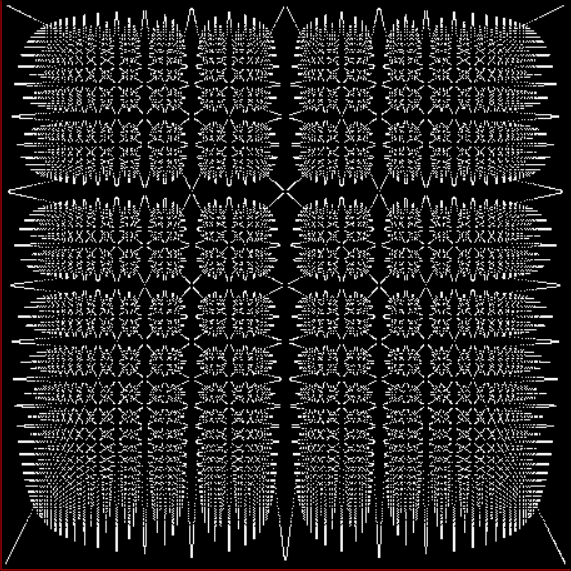
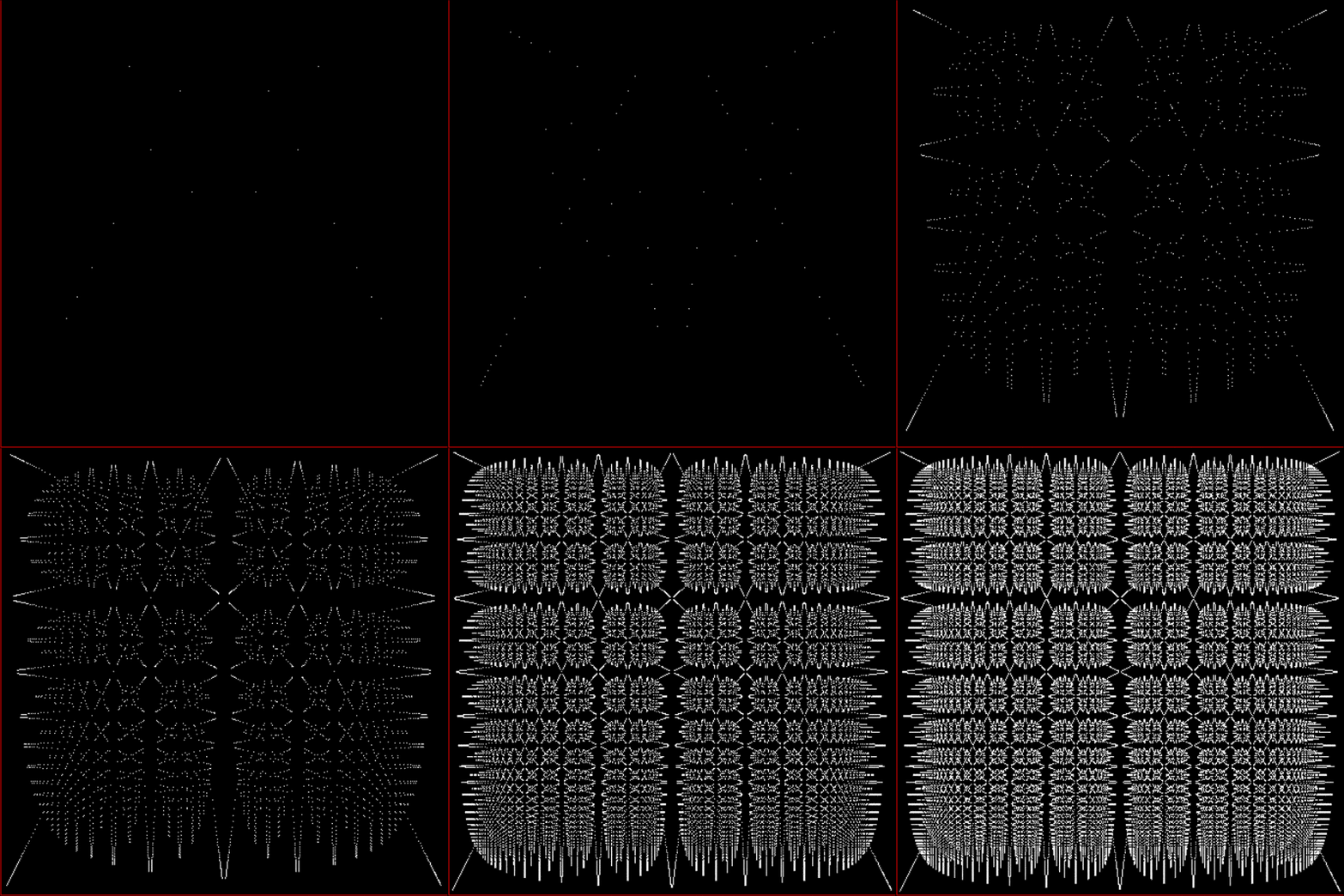
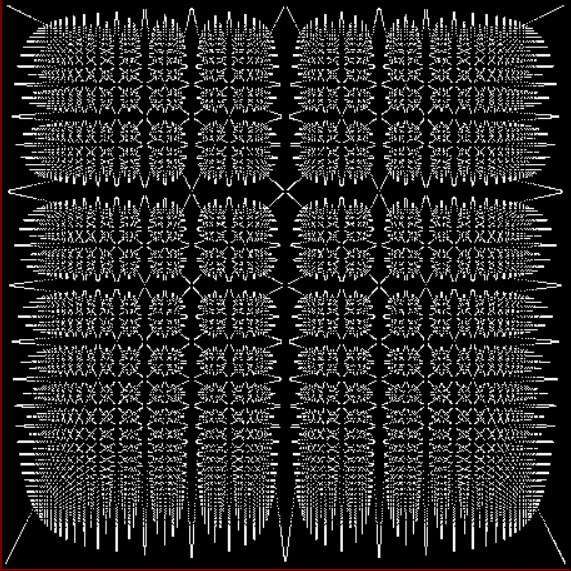
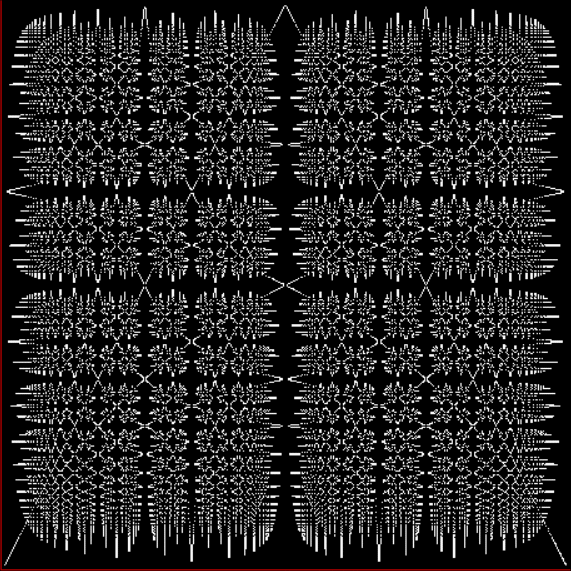
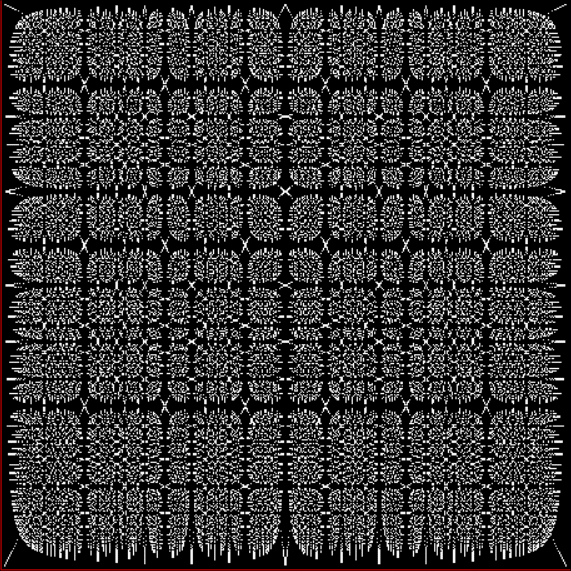
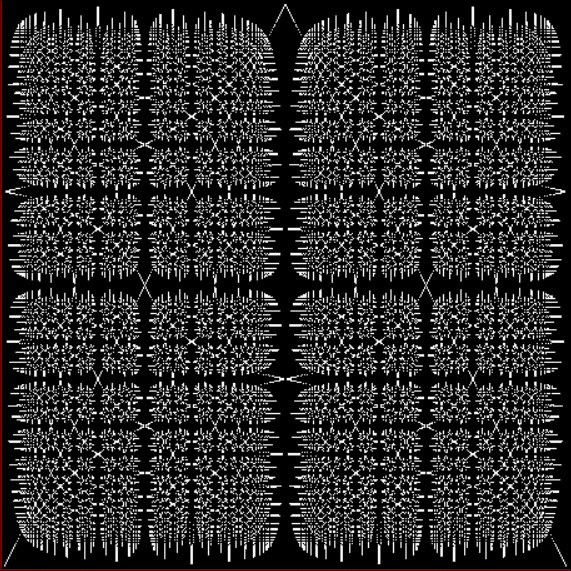
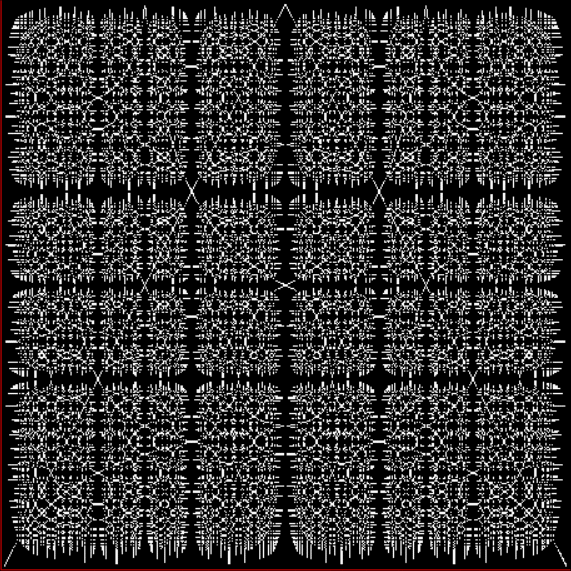
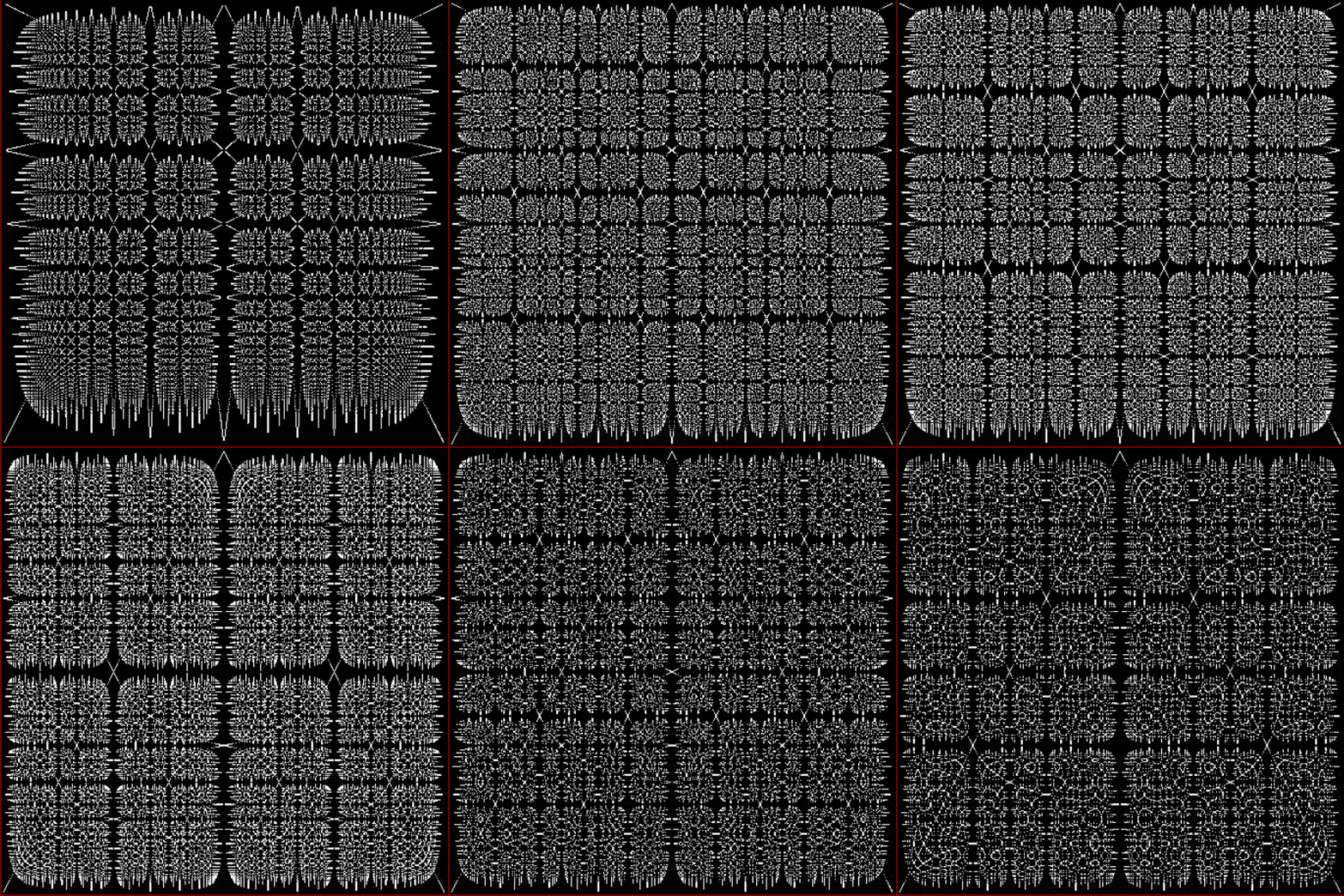
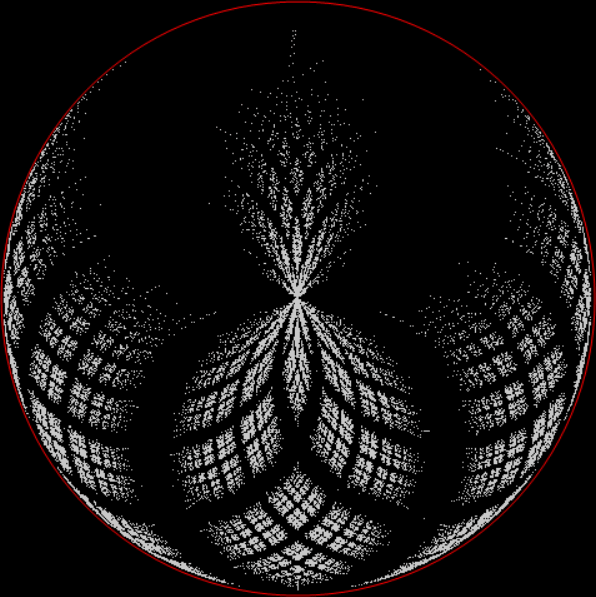
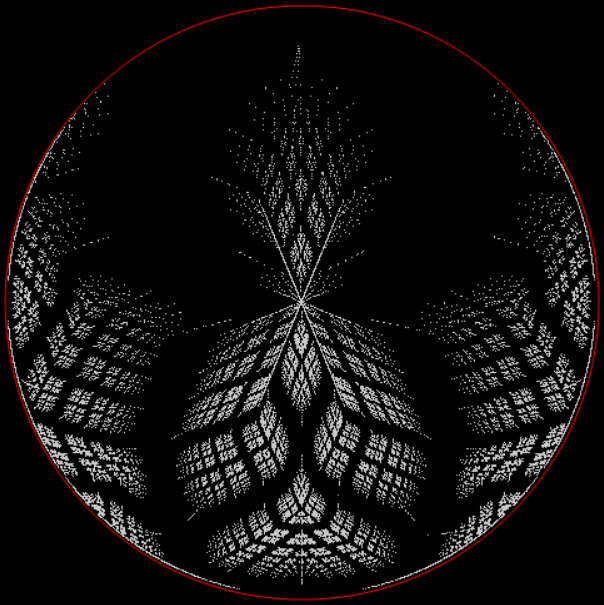
But what happens when you plot the (x,y) of the Stern-Brocot sequence and the Calkin-Wilf Tree on a circle instead? You get an interestingly distorted limestone fractal:

Limestone fractal on circle


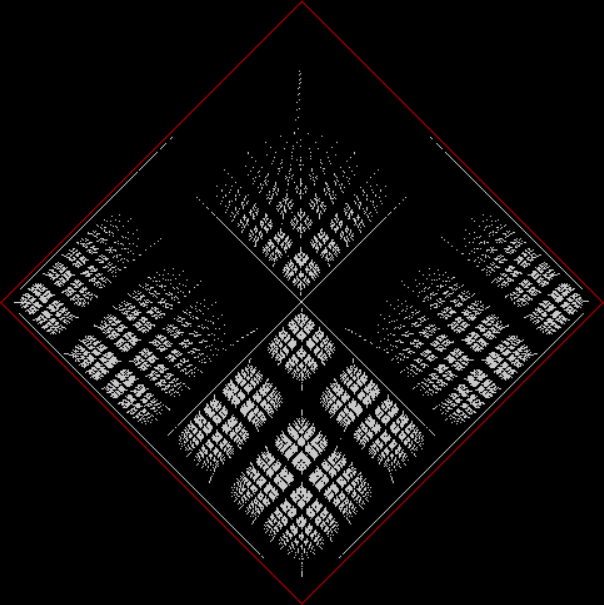
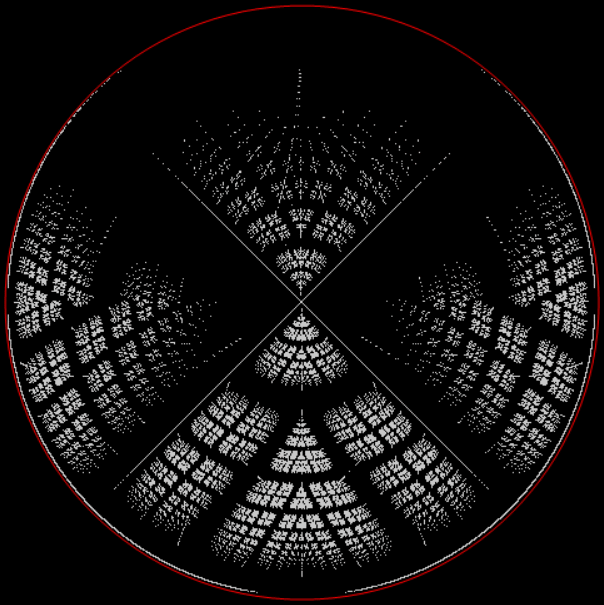
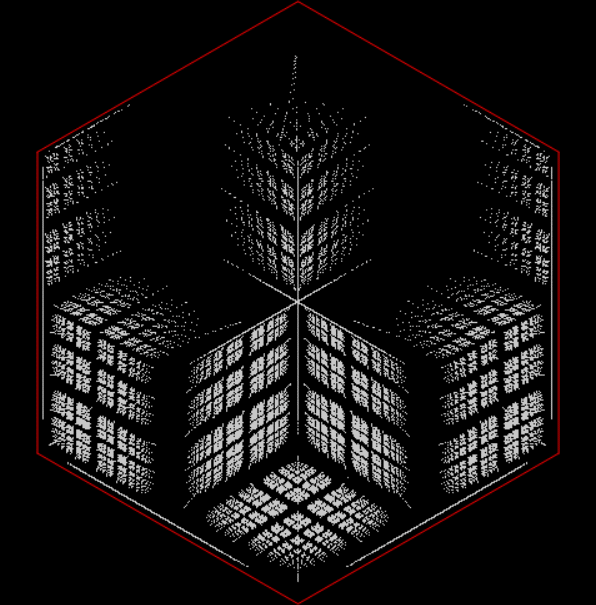
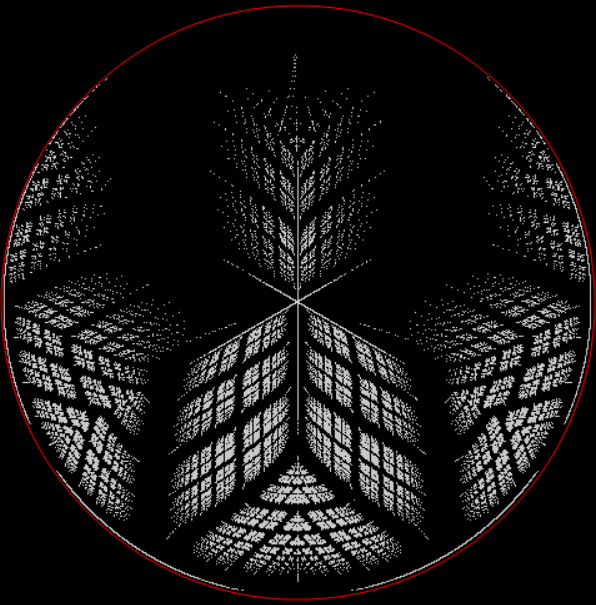
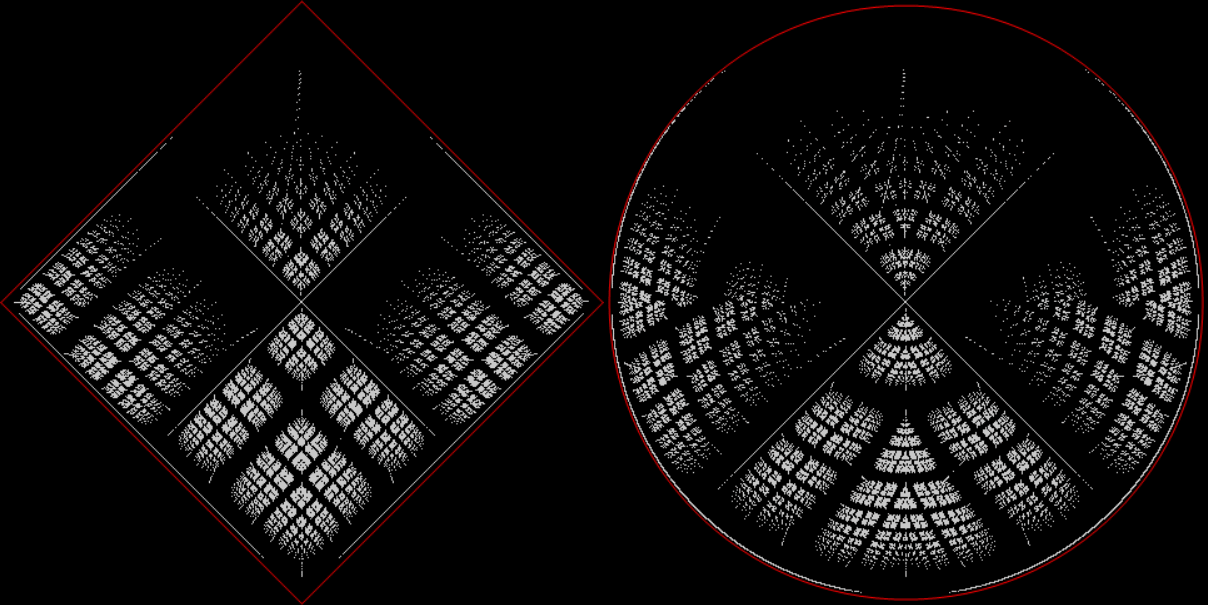
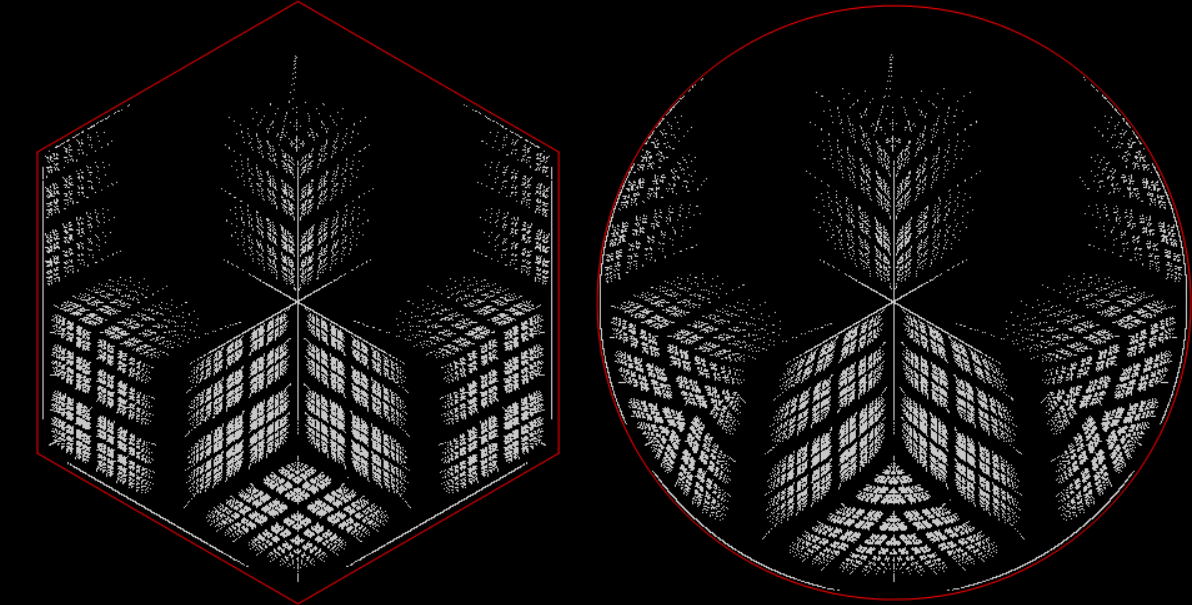
You can also plot the (x,y) around the perimeter of a polygon, then stretch the polygon into a circle. Here’s a square:

Limestone fractal on square

Limestone square stretched to circle


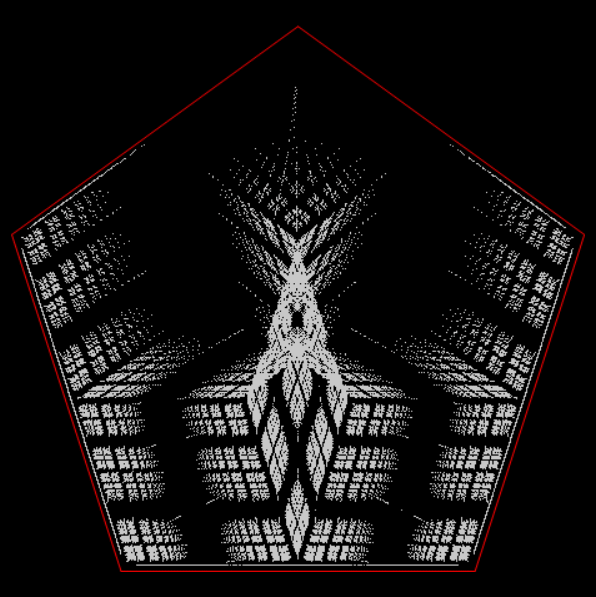
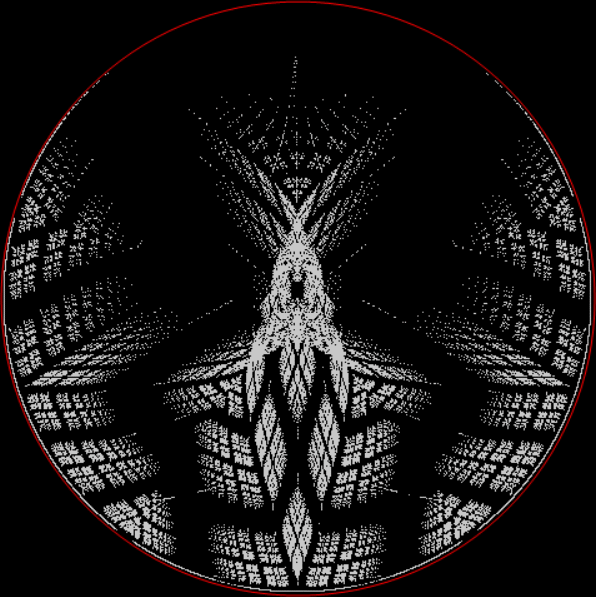
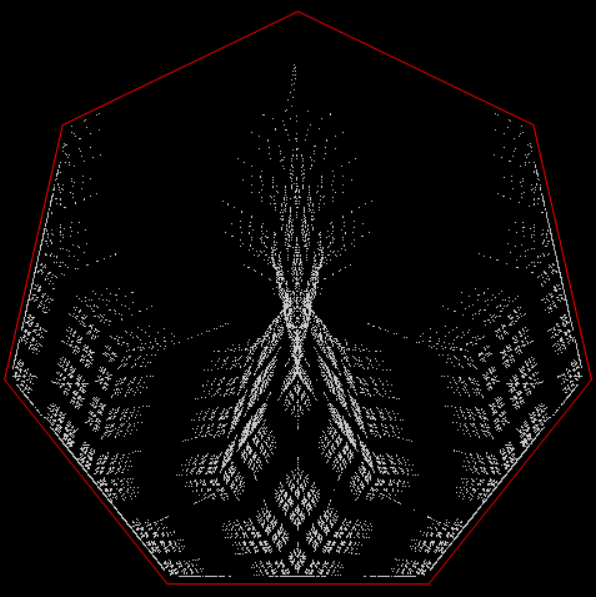
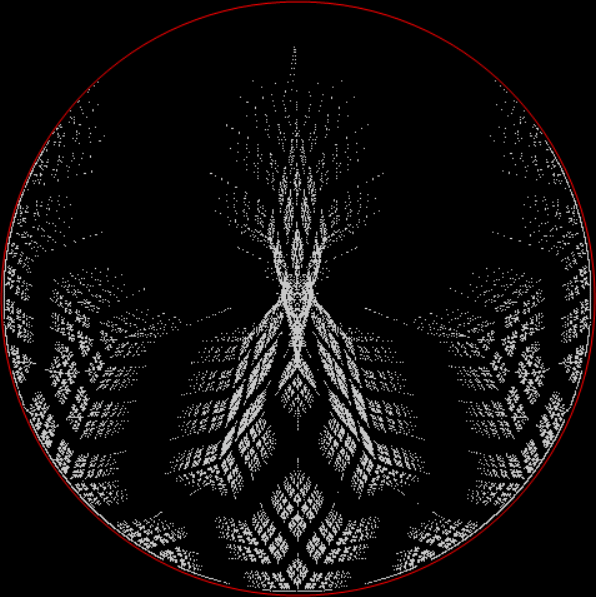
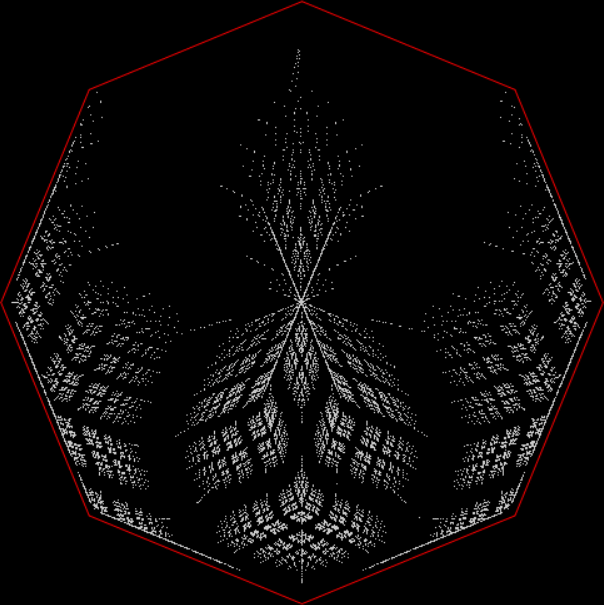
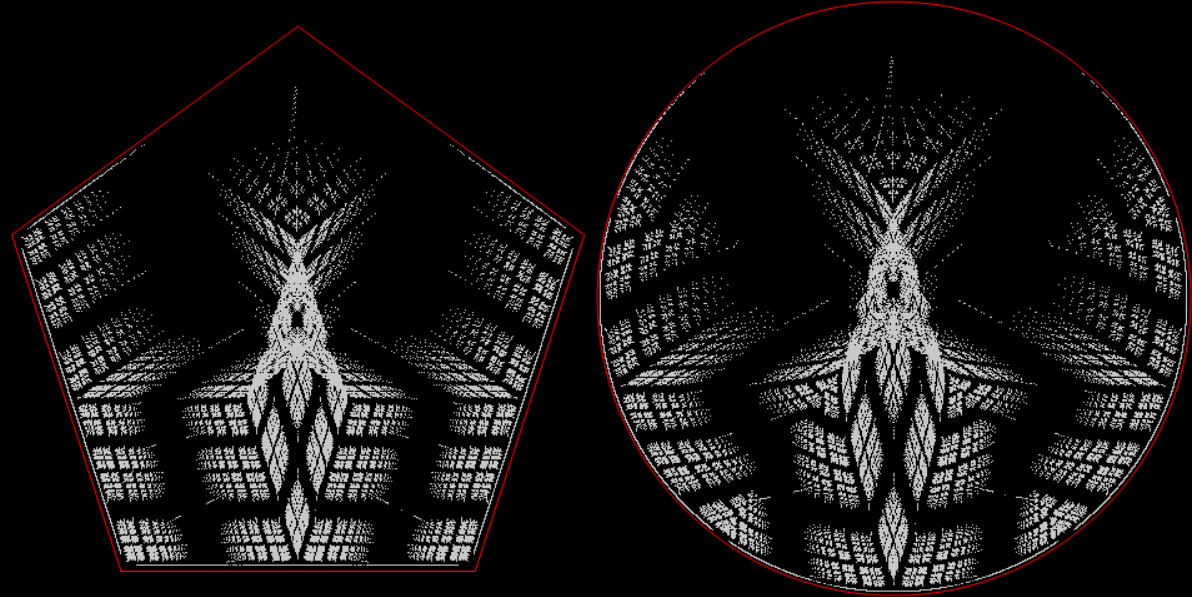
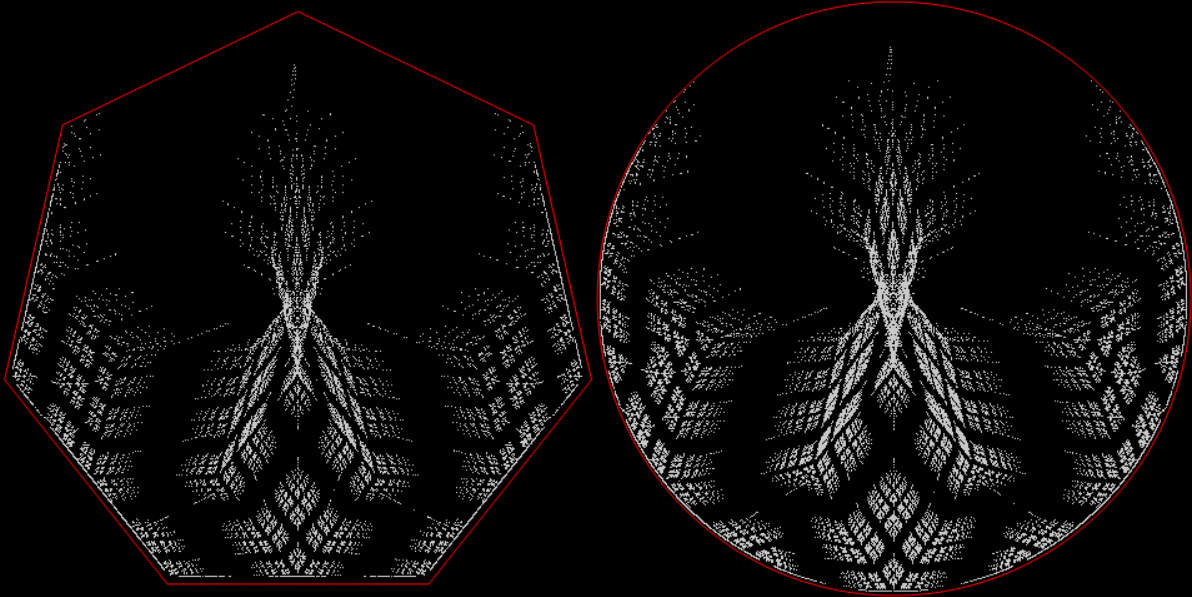
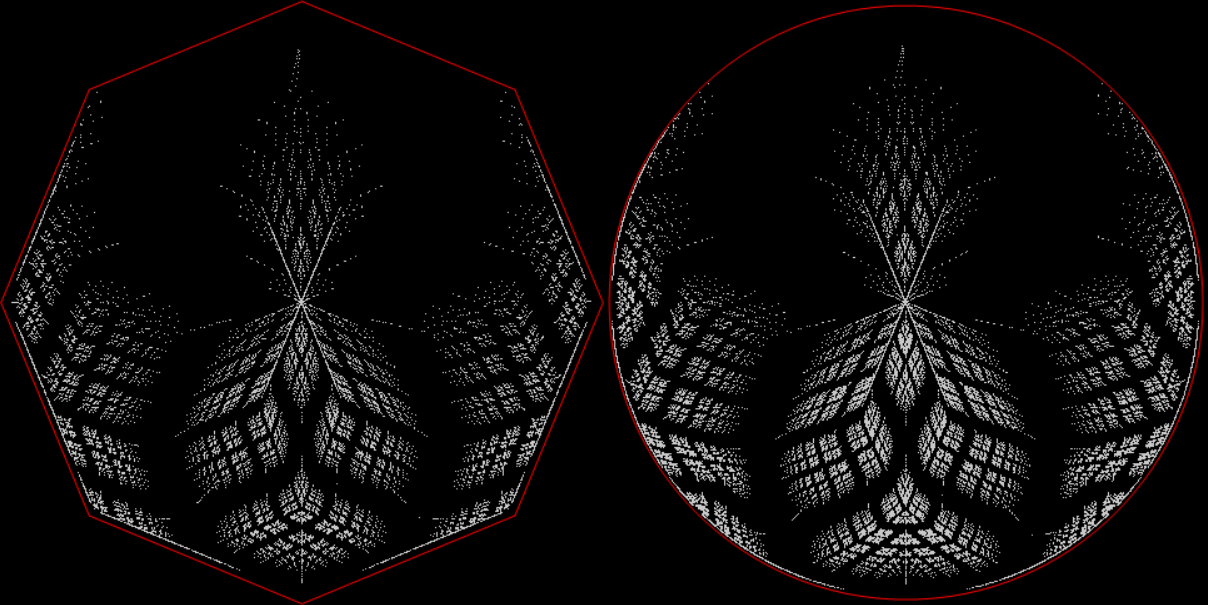
And here are a pentagon, hexagon, heptagon and octagon — note the interesting perspective effects:

Limestone fractal on pentagon

Limestone pentagon stretched to circle


Limestone fractal on hexagon

Limestone hexagon stretched to circle


Limestone fractal on heptagon

Limestone heptagon stretched to circle


Limestone fractal on octagon

Limestone octagon stretched to circle


And finally, here are animations of limestone polygons stretching to circles:

Limestone square stretched to circle (animated at EZgif)


Limestone pentagon to circle (animated)


Limestone hexagon to circle (animated)


Limestone heptagon to circle (animated)


Limestone octagon to circle (animated)


Previously Pre-Posted (Please Peruse)

I Like Gryke — a first look at the limestone fractal
I Like Gryke

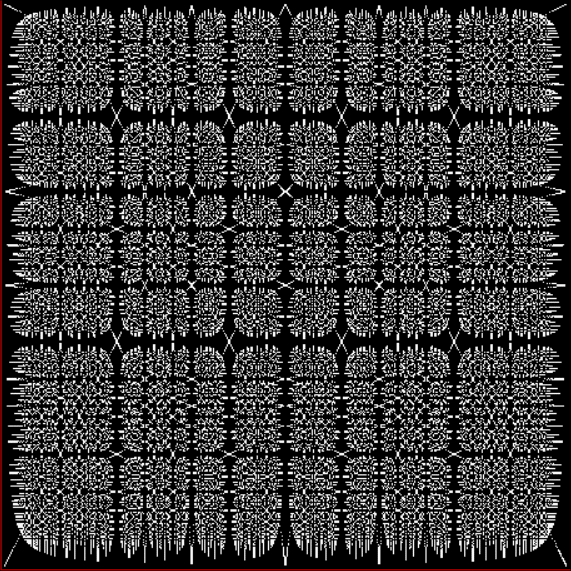
Sometimes I find fractals. And sometimes fractals find me. Here’s a fractal that found me:

Limestone fractal #1


I call it a limestone fractal or pavement fractal or gryke fractal, because it reminds me of the fissured patterns you see in the limestone pavements of the Yorkshire Dales:
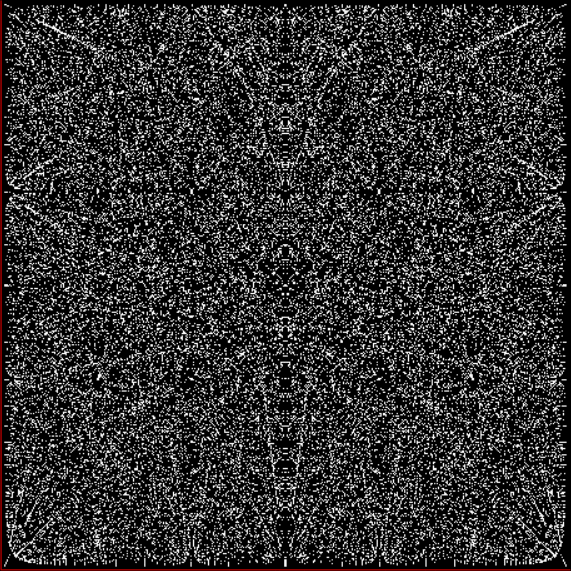
Fissured limestone pavement, Yorkshire Dales (Wikipedia)


The limestone blocks are called clints and the larger fissures between them are called grykes, with kamenitza and karren (from Slavic and German, respectively) for smaller pits and grooves:

Limestone linguistics (Dales Rocks)


Here’s the me-finding fractal again, in a slightly different version:

Limestone fractal #2


How did it find me? Well, I wasn’t looking for fractals, but looking at fractions. Farey fractions and Calkin-Wilf fractions, to be precise. They can both be represented as bifurcating trees, like this:

Calkin-Wilf tree (Wikipedia)


Both trees produce all the irreducible rational fractions — but in a different order. That’s why they create a fractal (rather than a 45° line). By following the same path in both bifurcating trees, I generated parallel sequences of Farey and Calkin-Wilf fractions, then used the Farey fractions to represent x in a 1×1 square and the Calkin-Wilf fractions to represent y (where the Calkin-Wilfs, a/b, were greater than 1, I simply a/b → b/a). When you do that (or use Stern-Brocot fractions instead of the Farey fractions), you get the limestone fractal.

I think it looks better in the second version (which is the one that found me, in fact). For LF #2, I was using standard binary numbers to generate the parallel sequences, so the leftmost digit was always 1 and final step of the tree-search was always in the same direction. Here’s LF #2 as black-on-white rather than white-on-black:

Limestone fractal #2 (black-on-white)


And here is the formation of LF #1 as an animated gif:

Growth of limestone fractal (animated at ezGIF)
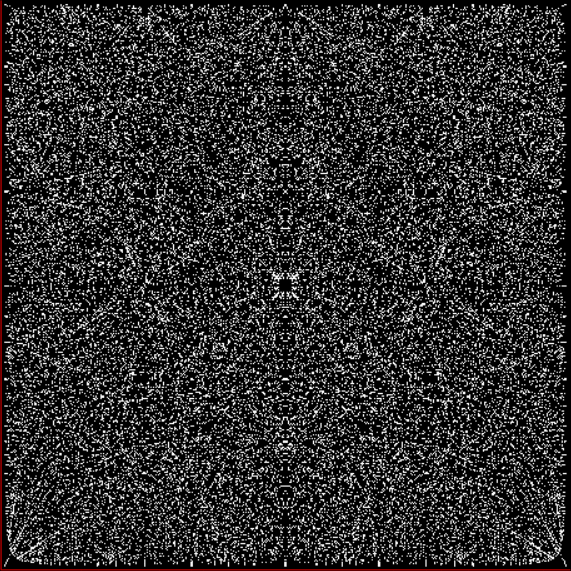

And if that’s a me-finding fractal, what about me-found fractals? Here’s one:

The Hourglass Fractal (animated gif optimized at ezGIF)

Hourglass fractal


I can say “I found that fractal” because I was looking for fractals when it appeared on the screen. And re-appeared (and re-re-appeared), because I’ve found it using different methods.


Elsewhere Other-Accessible

Hour Power — more on the hourglass fractal

Trigging Triangles

A fractal is a shape in which a part looks like the whole. Trees are fractals. And lungs. And clouds. But there are man-made fractals too and probably the most famous of them all is the Sierpiński triangle, invented by the Polish mathematician Wacław Sierpiński (1882-1969):

Sierpiński triangle


There are many ways to create a Sierpiński triangle, but one of the simplest is to trace all possible routes followed by a point jumping halfway towards the vertices of an equilateral triangle. If you mark the endpoint of the jumps, the Sierpiński triangle appears as the routes get longer and longer, like this:

Point jumping 1/2 way towards vertices of an equilateral triangle (animated)


Once you’ve created a Sierpiński triangle like that, you can play with it. For example, you can use simple trigonometry to stretch the triangle into a circle:

Sierpiński triangle to circle stage #1


Sierpiński triangle to circle #2


Sierpiński triangle to circle #3


Sierpiński triangle to circle #4


Sierpiński triangle to circle #5


Sierpiński triangle to circle #6


Sierpiński triangle to circle #7


Sierpiński triangle to circle #8


Sierpiński triangle to circle #9


Sierpiński triangle to circle #10


Sierpiński triangle to Sierpiński circle (animated)


But the trigging of the triangle can go further. You can expand the Sierpiński circle further, like this:

Sierpiński circle expanded


Or shrink the Sierpiński triangle like this:

Shrinking Sierpiński triangle stage #1


Shrinking Sierpiński triangle #2


Shrinking Sierpiński triangle #3


Shrinking Sierpiński triangle #4


Shrinking Sierpiński triangle #5


Shrinking Sierpiński triangle #6


Shrinking Sierpiński triangle (animated)


You can also create new shapes using the jumping-point technique. Suppose that, as the point is jumping, you adjust its position outwards into the circumscribed circle whenever it lands within the boundaries of the governing triangle. But if the point lands outside those boundaries, you leave it alone. Using this adapted technique, you get a shape like this:

Adjusted Sierpiński circle


And if the point is swung by 60° after it’s adjusted into the circle, you get a shape like this:

Adjusted Sierpiński circle (60° swing)


Here are some animated gifs showing these shapes rotating in a full circle at various speeds:

Adjusted Sierpiński circle (swinging animation) (fast)


Adjusted Sierpiński circle (swinging animation) (medium)


Adjusted Sierpiński circle (swinging animation) (slow)


Arty Fish Haul

When is a fish a reptile? When it looks like this:

Fish from four isosceles right triangles


The fish-shape can be divided into eight identical sub-copies of itself. That is, it can be repeatedly tiled with copies of itself, so it’s an example of what geometry calls a rep-tile:

Fish divided into eight identical sub-copies


Fish divided again


Fish divided #4


Fish divided #5


Fish divided #6


Fish (animated rep-tiling)


Now suppose you divide the fish, then discard one of the sub-copies. And carry on dividing-and-discarding like that:

Fish discarding sub-copy 7 (#1)


Fish discarding sub-copy 7 (#2)


Fish discarding sub-copy 7 (#3)


Fish discarding sub-copy 7 (#4)


Fish discarding sub-copy 7 (#5)


Fish discarding sub-copy 7 (#6)


Fish discarding sub-copy 7 (#7)


Fish discarding sub-copy 7 (animated)


Here are more examples of the fish sub-dividing, then discarding sub-copies:

Fish discarding sub-copy #1


Fish discarding sub-copy #2


Fish discarding sub-copy #3


Fish discarding sub-copy #4


Fish discarding sub-copy #5


Fish discarding sub-copy #6


Fish discarding sub-copy #7


Fish discarding sub-copy #8


Fish discarding sub-copies (animated)


Now try a square divided into four copies of the fish, then sub-divided again and again:

Fish-square #1


Fish-square #2


Fish-square #3


Fish-square #4


Fish-square #5


Fish-square #6


Fish-square (animated)


The fish-square can be used to create more symmetrical patterns when the divide-and-discard rule is applied. Here’s the pattern created by dividing-and-discarded two of the sub-copies:

Fish-square divide-and-discard #1


Fish-square divide-and-discard #2


Fish-square divide-and-discard #3


Fish-square divide-and-discard #4


Fish-square divide-and-discard #5


Fish-square divide-and-discard #6


Fish-square divide-and-discard #7


Fish-square divide-and-discard #8 (delayed discard)


Fish-square divide-and-discard (animated)


Using simple trigonometry, you can convert the square pattern into a circular pattern:

Circular version


Square to circle (animated)


Here are more examples of divide-and-discard fish-squares:

Fish-square divide-and-discard #1


Fish-square divide-and-discard #2


Fish-square divide-and-discard #3


Fish-square divide-and-discard #4


Fish-square divide-and-discard #5


Fish-square divide-and-discard #6


And more examples of fish-squares being converted into circles:

Fish-square to circle #1 (animated)


Fish-square to circle #2


Fish-square to circle #3


Fish-square to circle #4


Fish-square to circle #5


Fish-square to circle #6


Square Routes Re-Re-Re-Re-Re-Re-Revisited

Suppose you trace all possible routes followed by a point inside a triangle jumping halfway towards one or another of the three vertices of the triangle. If you mark each jump, you get a famous geometrical shape called the Sierpiński triangle (or Sierpiński sieve).

Sierpiński triangle found by tracing all possible routes for a point jumping halfway towards the vertices of a triangle


The Sierpiński triangle is a fractal, because it contains copies of itself at smaller and smaller scales. Now try the same thing with a square. If you trace all possible routes followed by a point inside a square jumping halfway towards one or another of the four vertices of the square, you don’t get an obvious fractal. Instead, the interior of the square fills steadily (and will eventually be completely solid):

Routes of a point jumping halfway towards vertices of a square


Try a variant. If the point is banned from jumping towards the same vertex twice or more in a row, the routes trace out a fractal that looks like this:

Ban on choosing same vertex twice or more in a row


If the point is banned from jumping towards the vertex one place anti-clockwise of the vertex it’s just jumped towards, you get a fractal like this:

Ban on jumping towards vertex one place anti-clockwise of previously chosen vertex


And if the point can’t jump towards two places clockwise or anti-clockwise of the currently chosen vertex, this fractal appears (called a T-square fractal):

Ban on jumping towards the vertex diagonally opposite of the previously chosen vertex


That ban is equivalent to banning the point from jumping from the vertex diagonally opposite to the vertex it’s just jumped towards. Finally, here’s the fractal created when you ban the point from jumping towards the vertex one place clockwise of the vertex it’s just jumped towards:
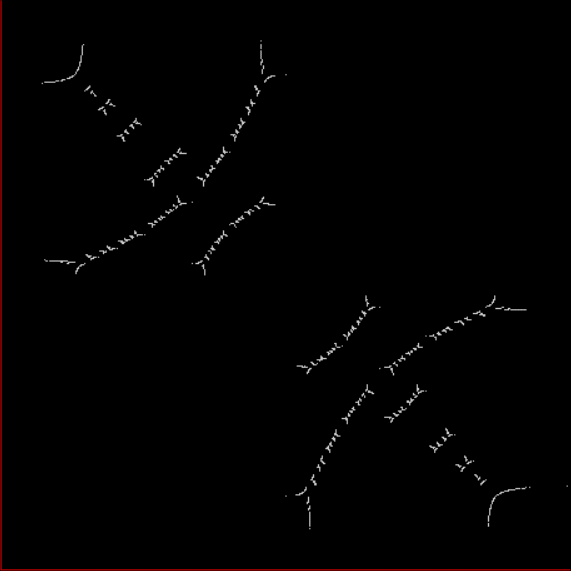
Ban on jumping towards vertex one place clockwise of previously chosen vertex


As you can see, the fractal is a mirror-image of the one-place-anti-clockwise-ban fractal.
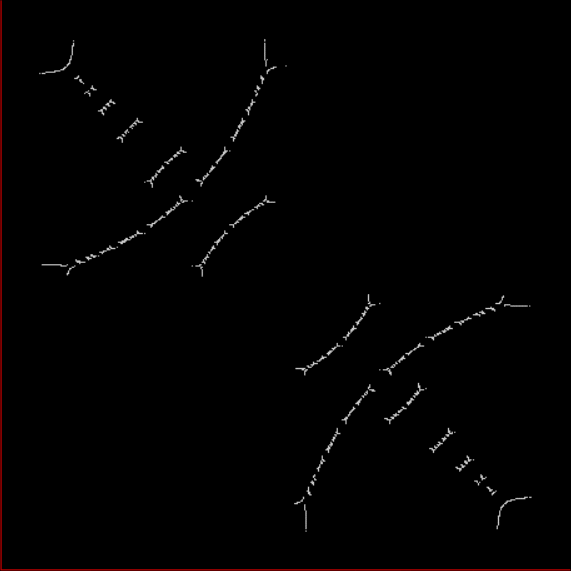
I discovered the ban-construction of those fractals more than twenty years ago. Then I found that I was re-discovering the same fractals when I looked at what first seemed like completely different ways of constructing fractals. There are lots of different routes to the same result. I’ve recently discovered yet another route. Let’s try what seems like an entirely different way of constructing fractals. Take a square and erect four new half-sized squares, sq1, sq2, sq3, sq4, on each corner. Then erect three more quarter-sized squares on the outward facing corners of sq1, sq2, sq3 and sq4. Carry on doing that and see what happens at the end when you remove all the previous stages of construction:


Animation of the new construction


Animation in black-and-white


It’s the T-square fractal again. Now try rotating the squares you add at stage 3 and see what happens (the rotation means that two new squares are added on adjacent outward-facing corners and one new square on the inward-facing corner):
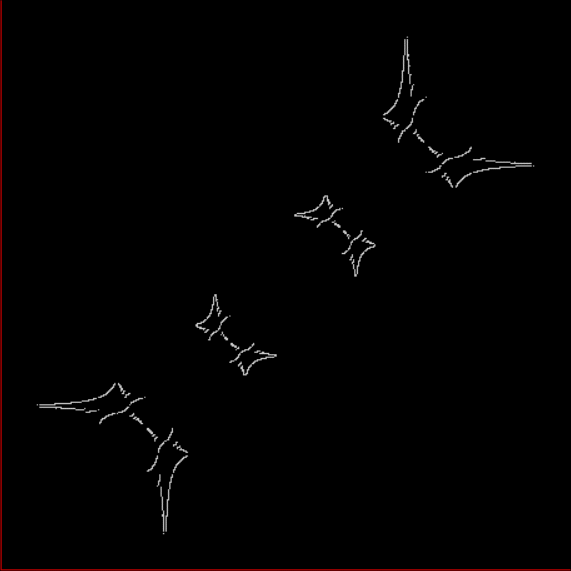


Animation of the construction


It’s the one-place-clockwise-ban fractal again. Now try rotating the squares two places, so that two new squares are added on diagonally opposite outward-facing corners and one new square on the inward-facing corner:
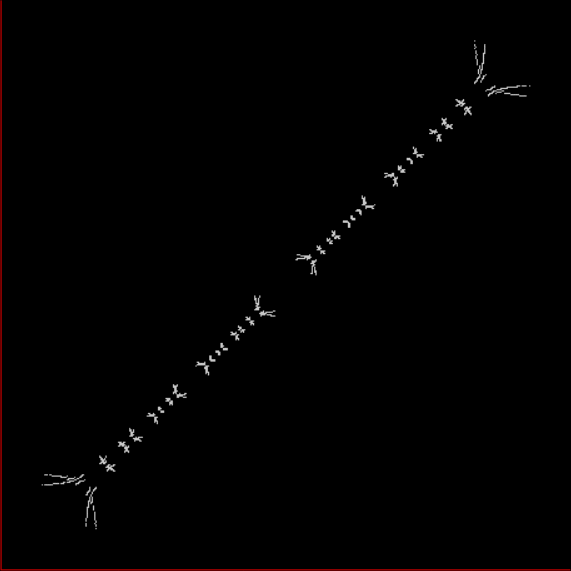


Animation of the construction


It’s the same-vertex-ban fractal again. Finally, rotate squares one place more:
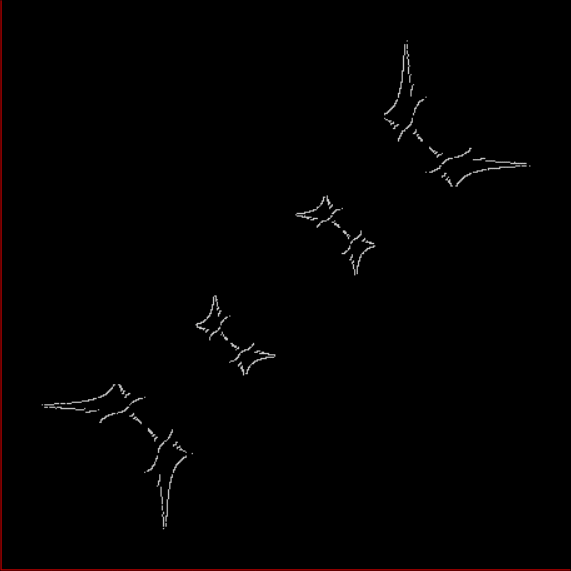
Animation of the construction


It’s the one-place-clockwise-ban fractal again. And this method isn’t confined to squares. Here’s what happens when you add 5/8th-sized triangles to the corners of triangles:
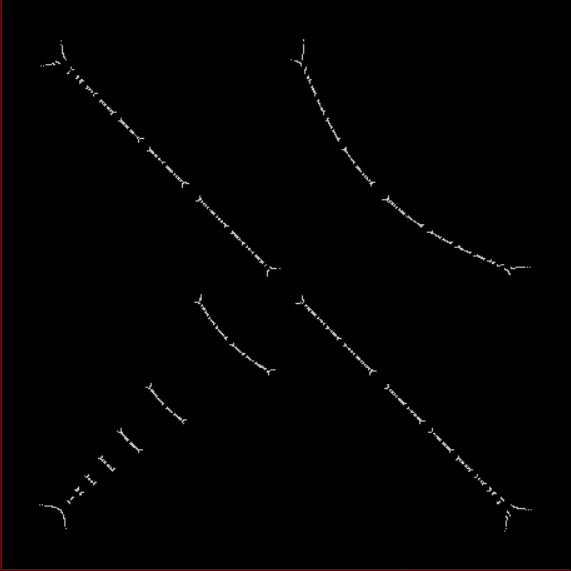


Animation of the construction


And here’s what happens when you add 5/13th-sized pentagons to the corners of pentagons:


Animation of the construction


Finally, here’s a variant on that pentagonal fractal (adding two rather than four pentagons at stage 3 and higher):
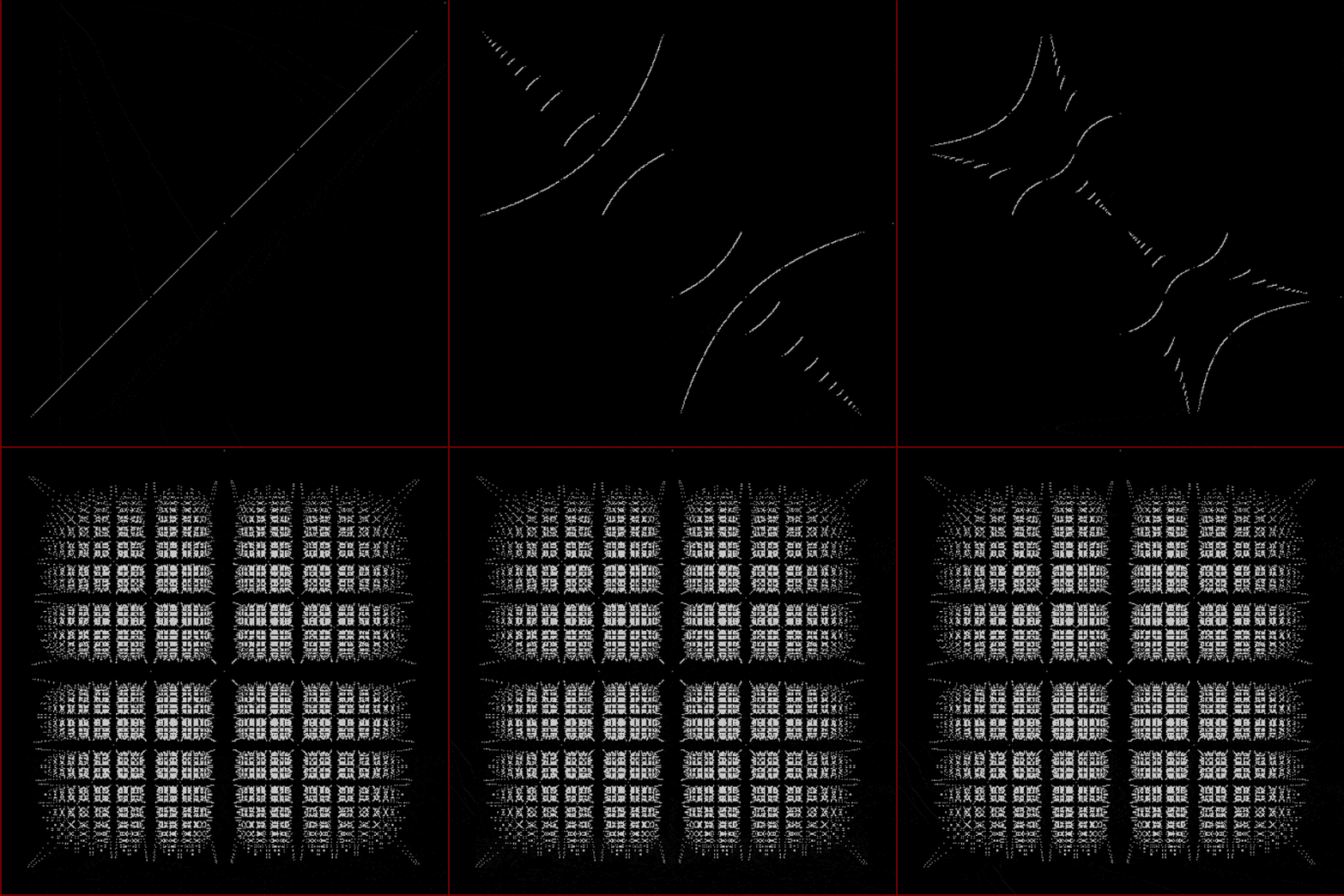


Animation of the construction


Previously pre-posted (please peruse):

Square Routes
Square Routes Revisited
Square Routes Re-Revisited
Square Routes Re-Re-Revisited
Square Routes Re-Re-Re-Revisited
Square Routes Re-Re-Re-Re-Revisited
Square Routes Re-Re-Re-Re-Re-Revisited