Horn Again

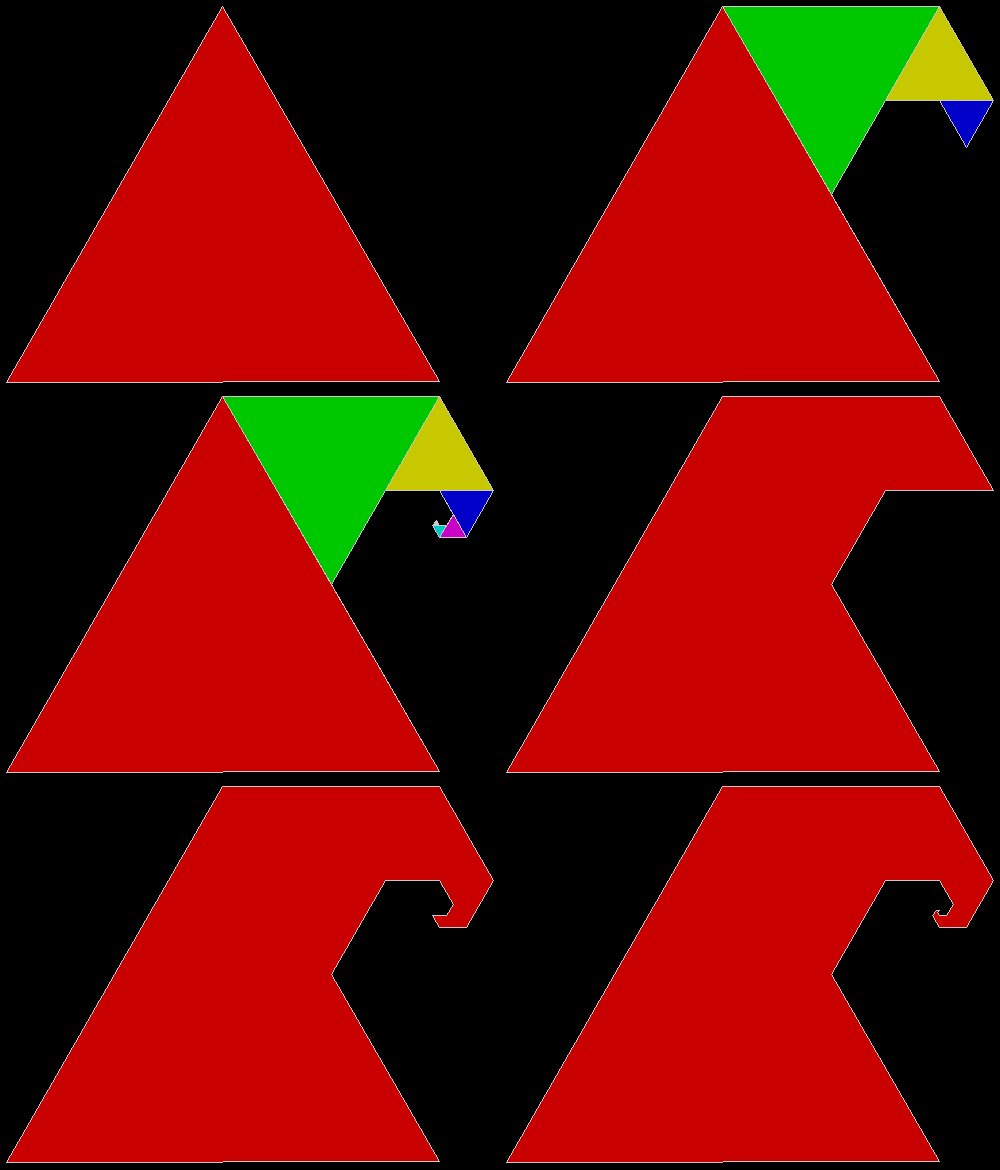
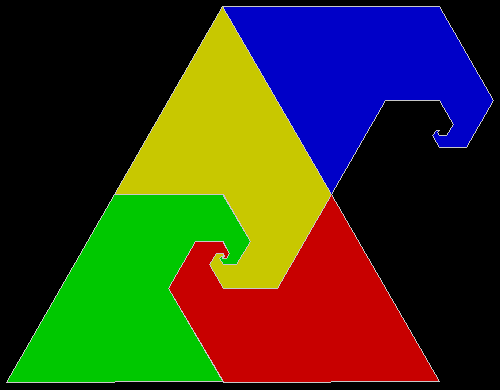
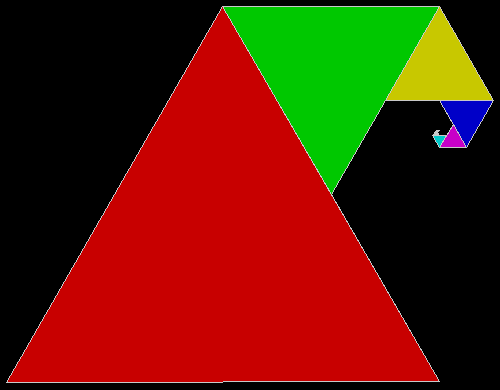
Pre-previously on Overlord-in-terms-of-Core-Issues-around-Maximal-Engagement-with-Key-Notions-of-the-Über-Feral, I interrogated issues around this shape, the horned triangle:
unicorn_reptile_static

Horned Triangle (more details)


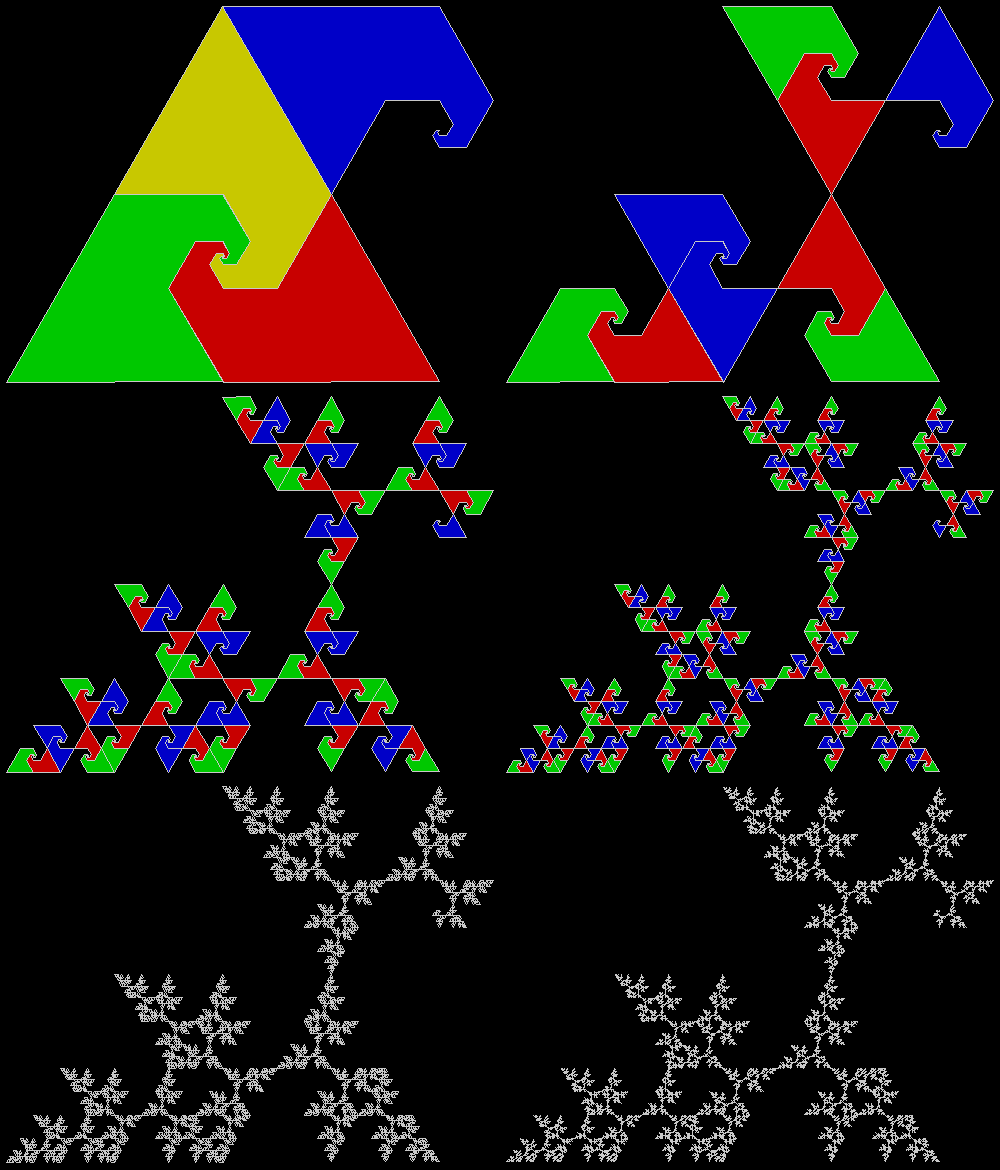
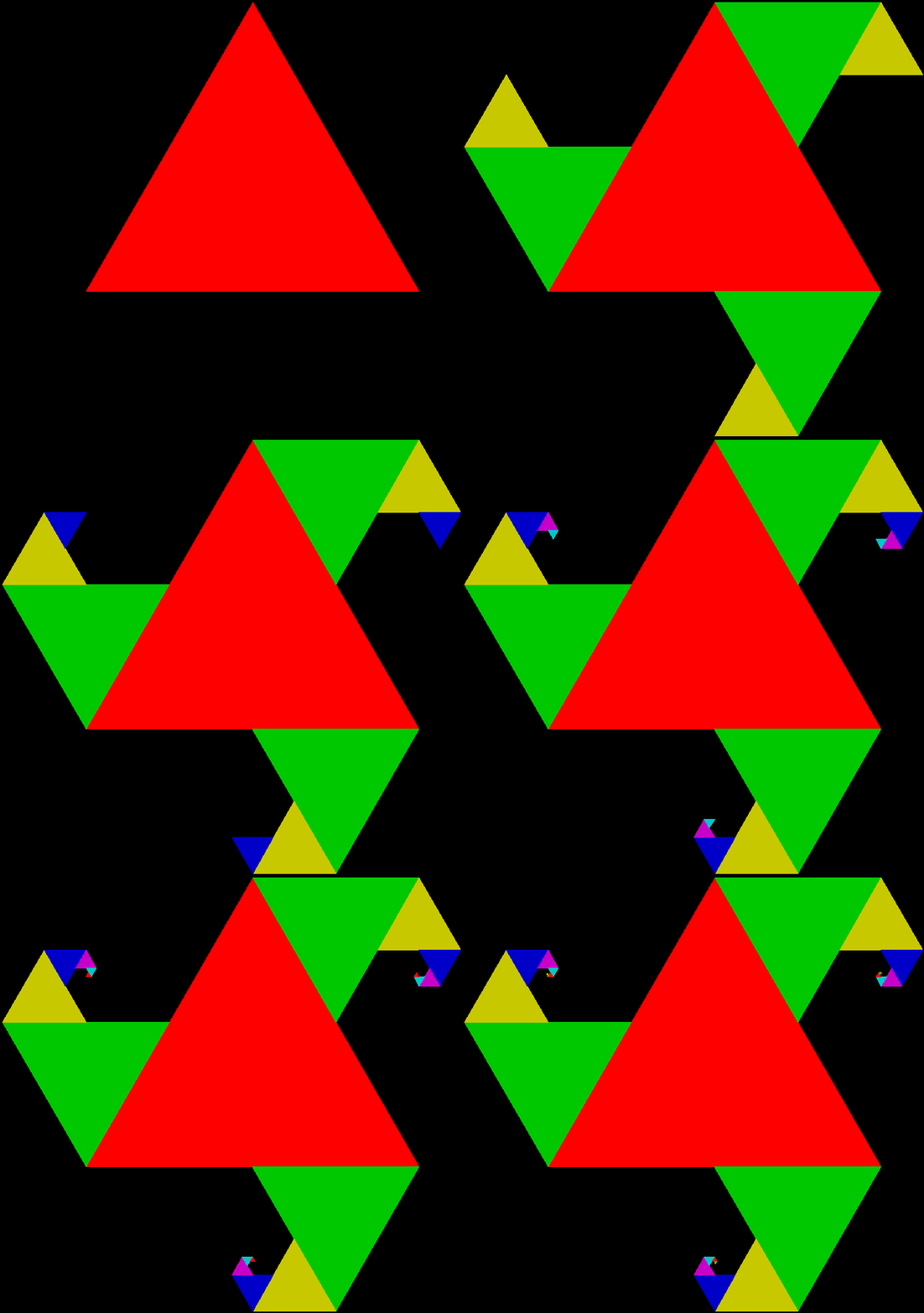
Now I want to look at the tricorn (from Latin tri-, “three”, + -corn, “horn”). It’s like a horned triangle, but has three horns instead of one:

Tricorn, or three-horned triangle


These are the stages that make up the tricorn:
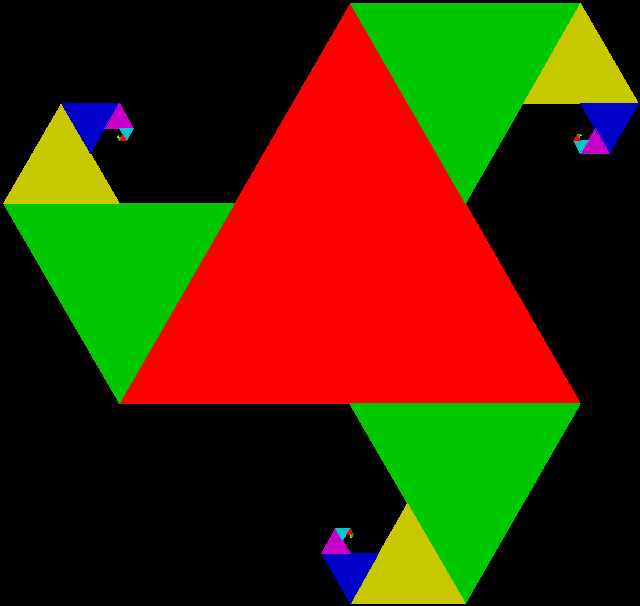
Tricorn (stages)

Tricorn (animated)


And there’s no need to stop at triangles. Here is a four-horned square, or quadricorn:

Quadricorn
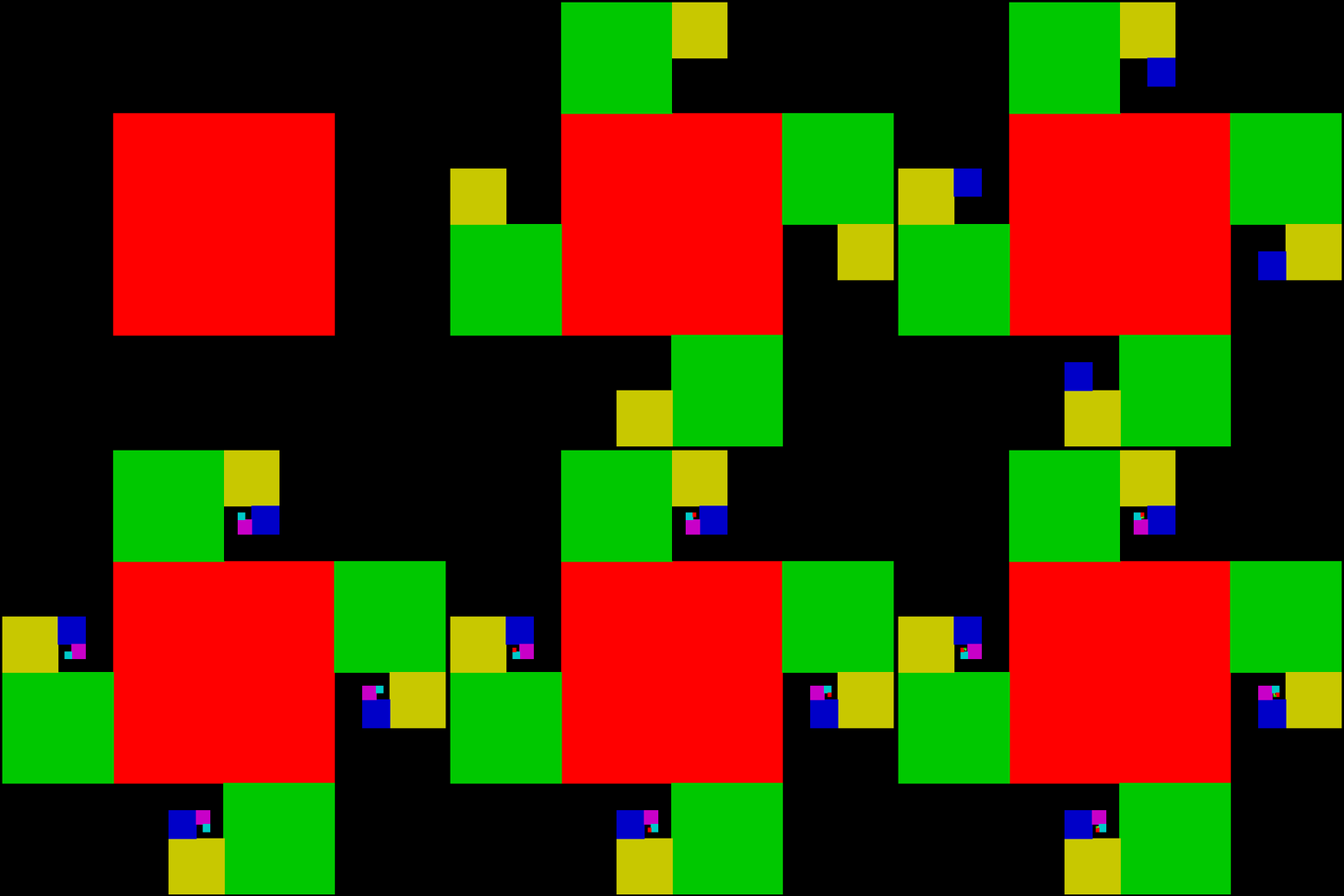

Quadricorn (animated)


Quadricorn (coloured)


And a five-horned pentagon, or quinticorn:
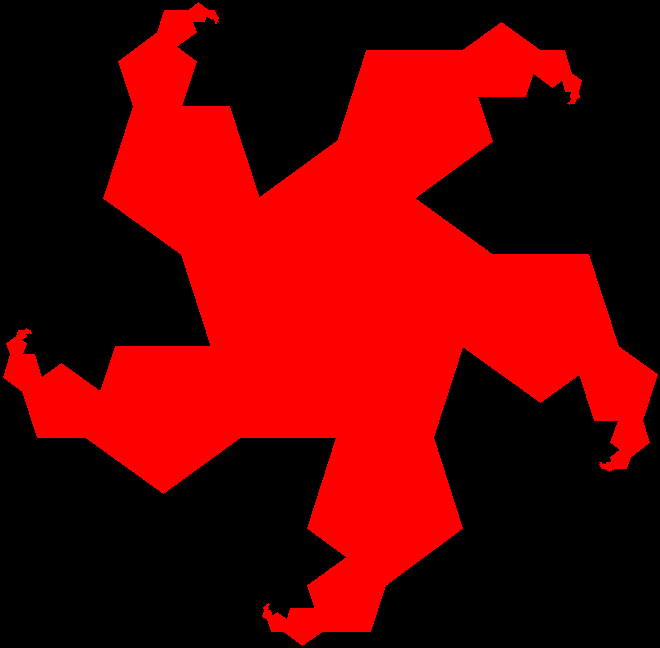
Quinticorn, or five-horned pentagon


Quinticorn (anim)
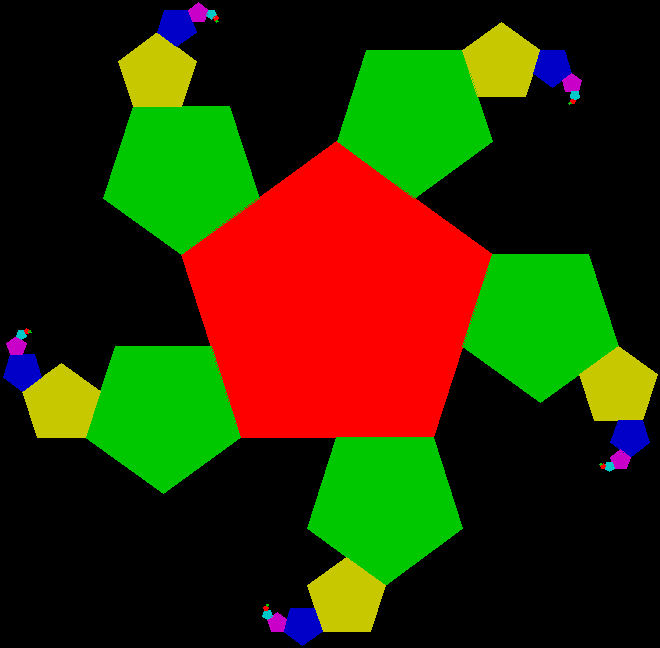

Quinticorn (col)


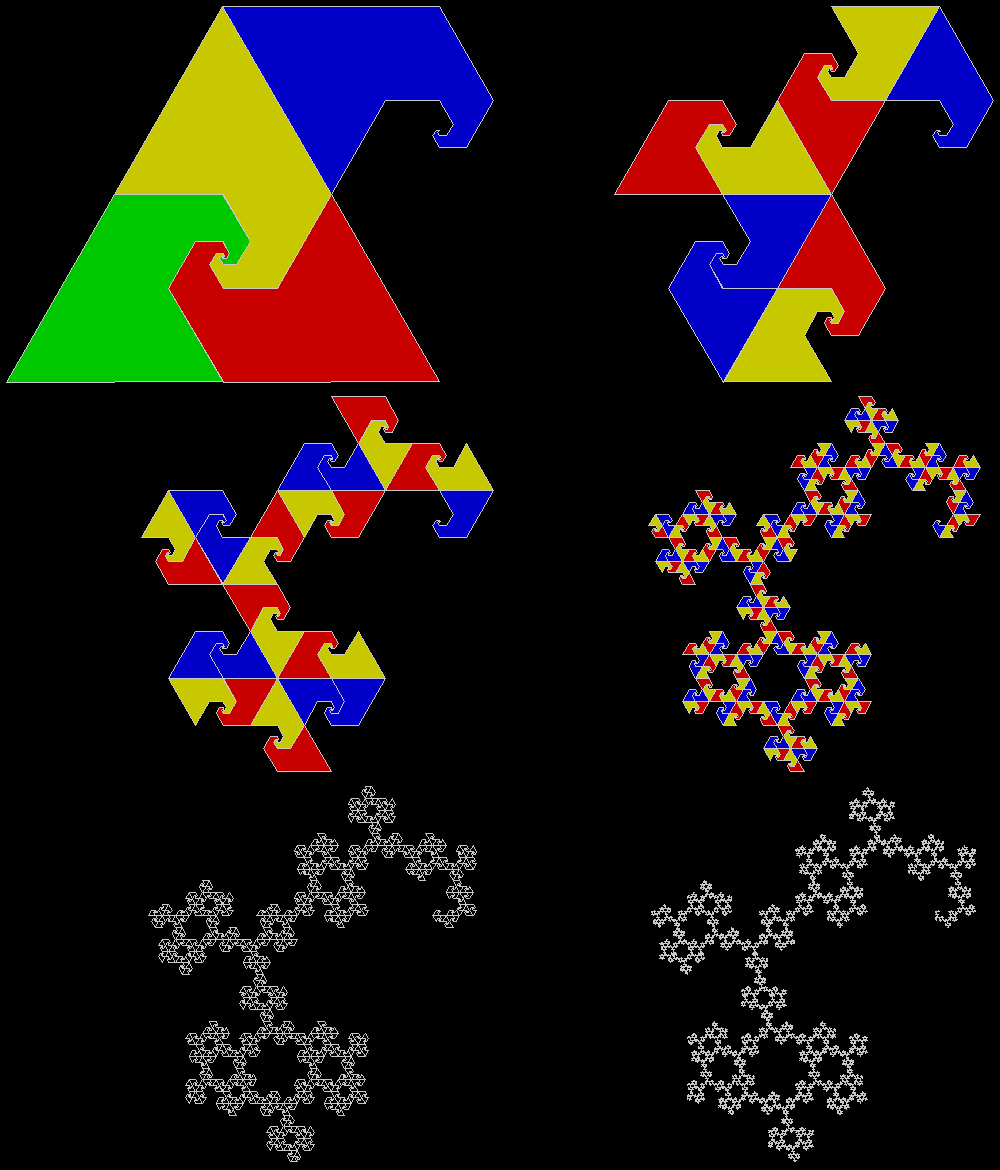
And below are some variants on the shapes above. First, the reversed tricorn:
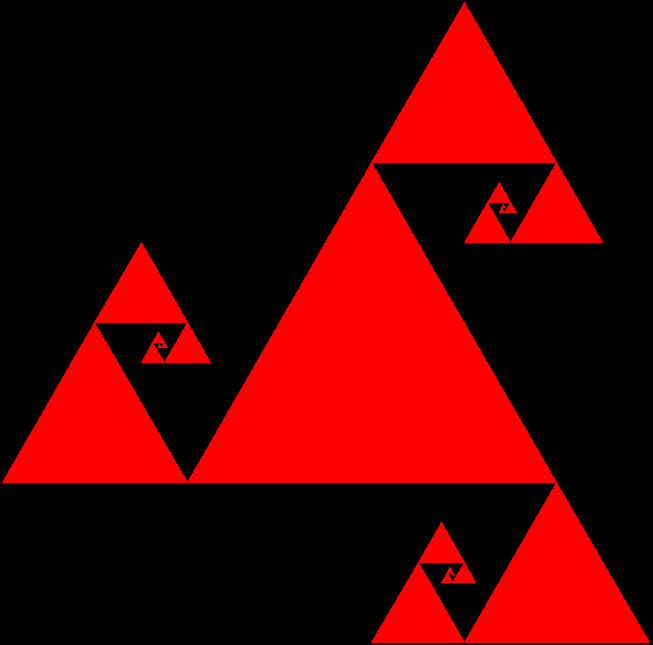
Reversed Tricorn
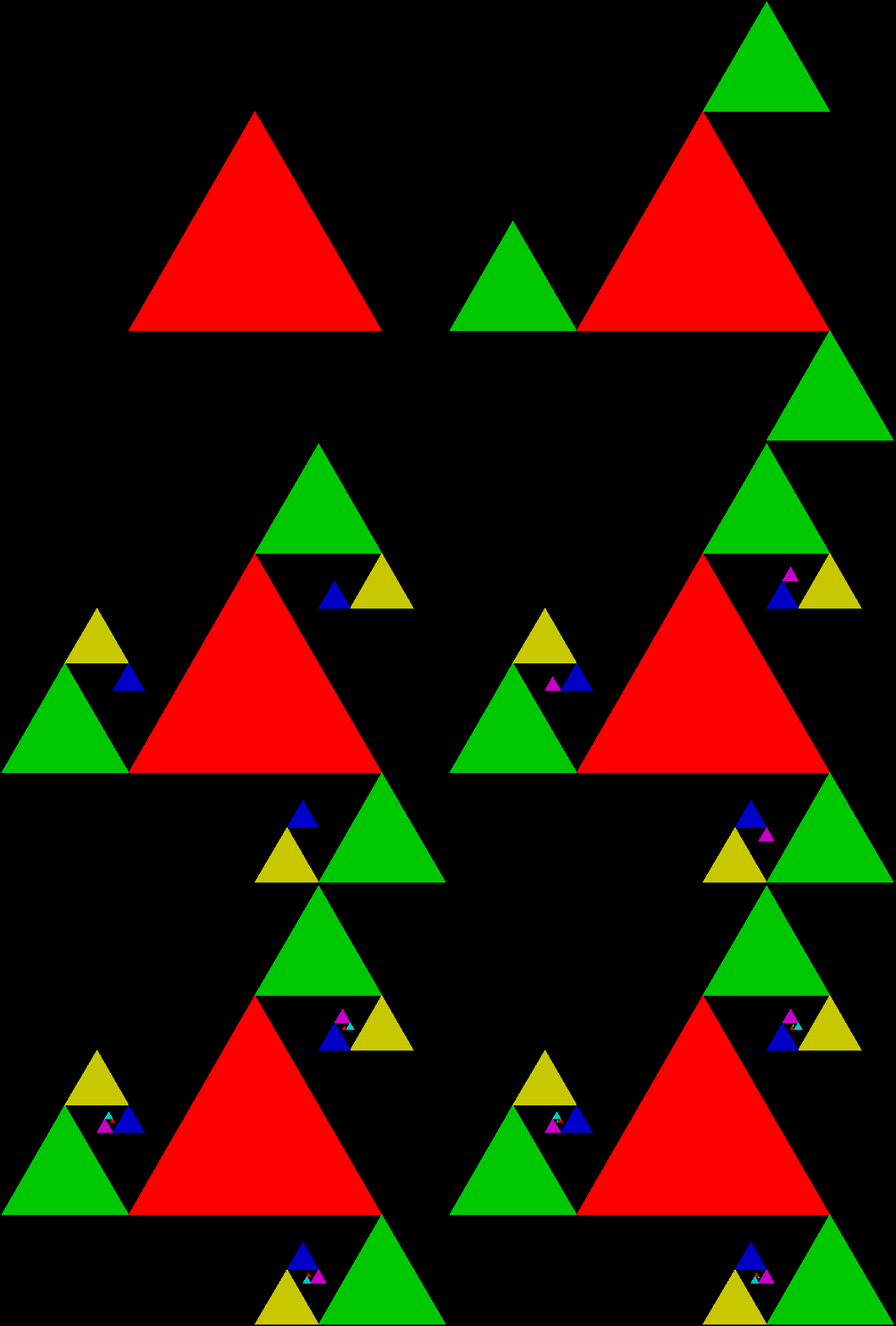

Reversed Tricorn (anim)


Reversed Tricorn (col)


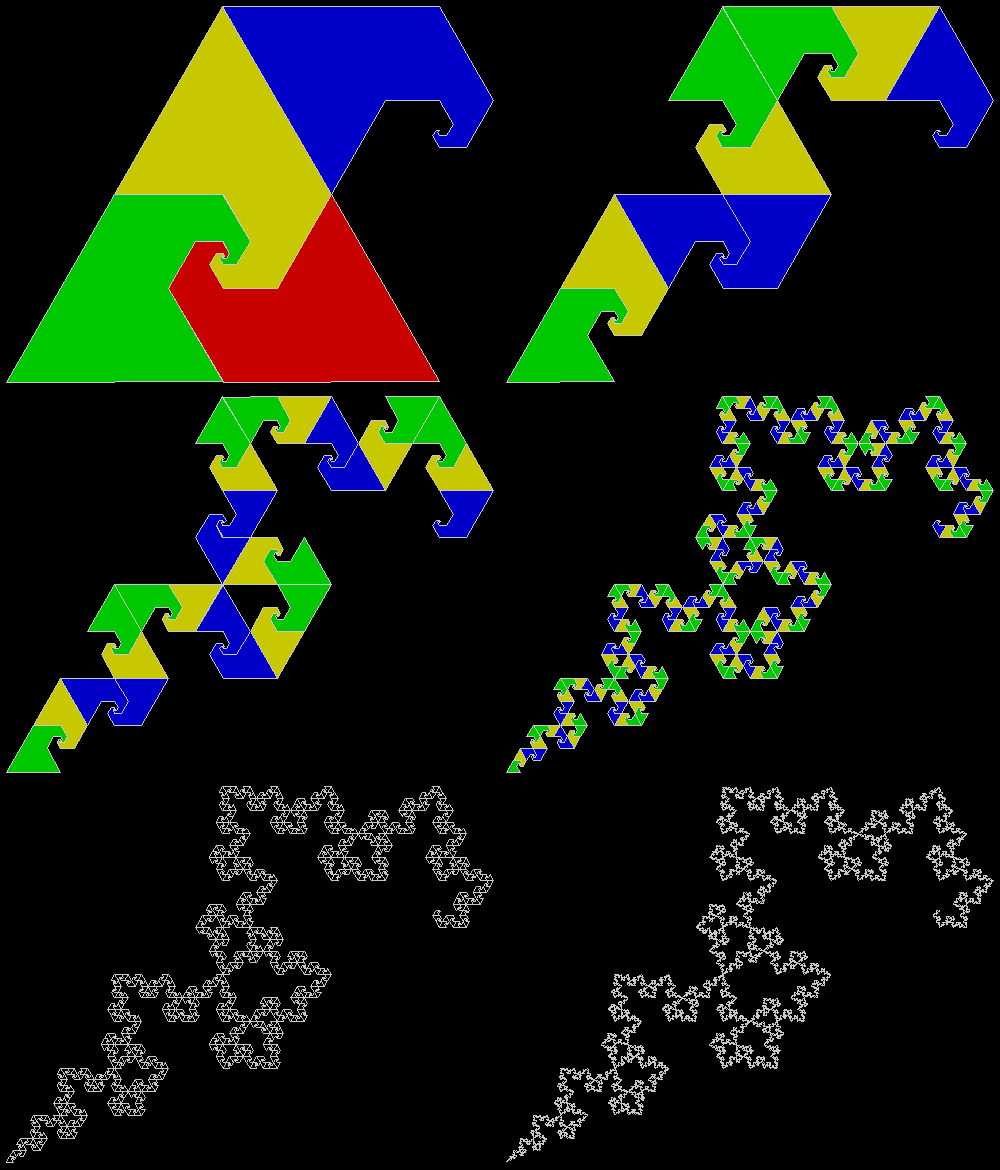
The nested tricorn:
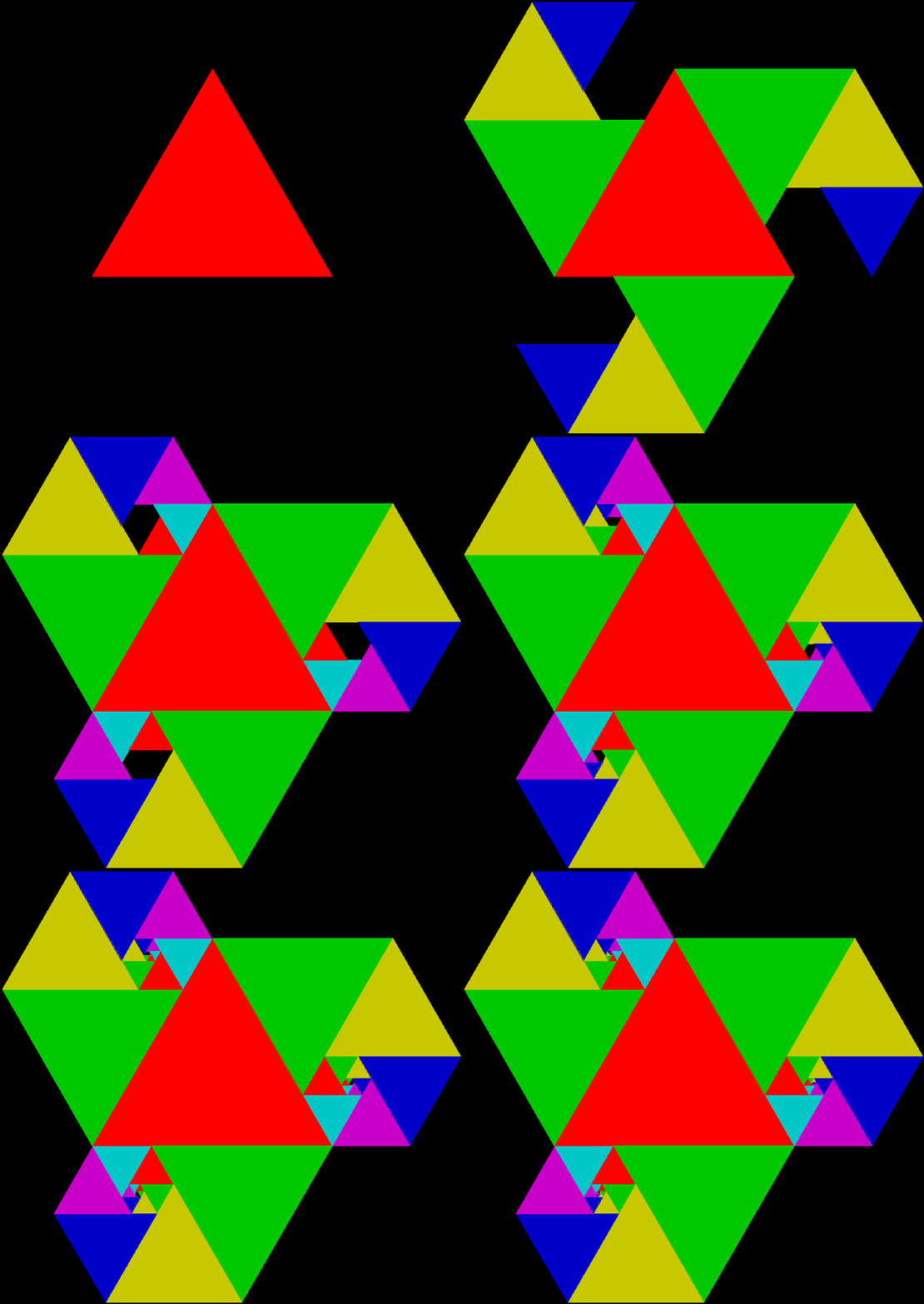
Nested Tricorn (anim)
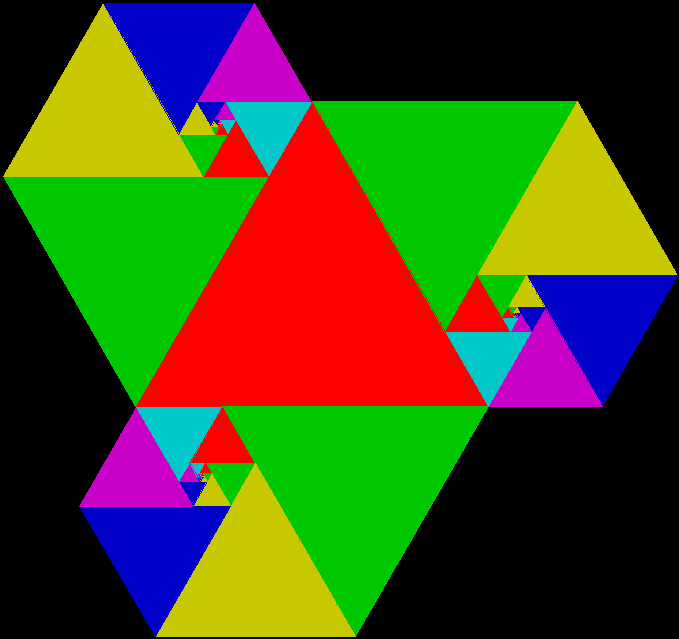

Nested Tricorn (col)
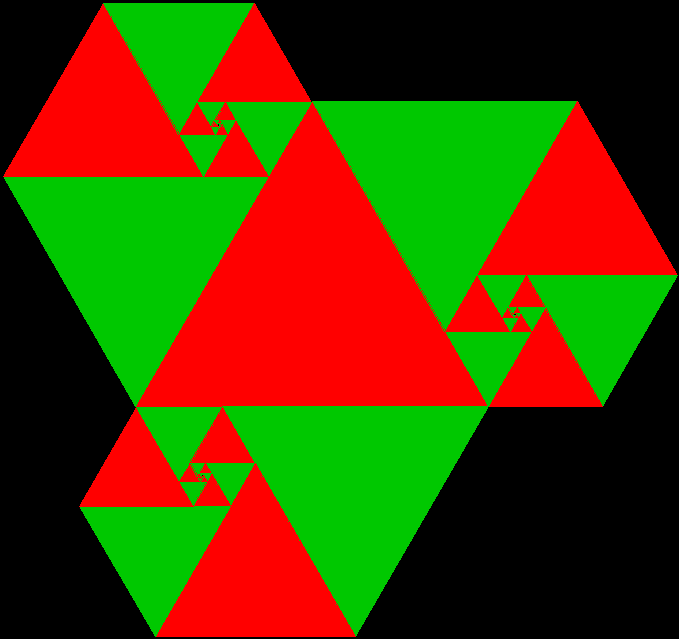

Nested Tricorn (red-green)
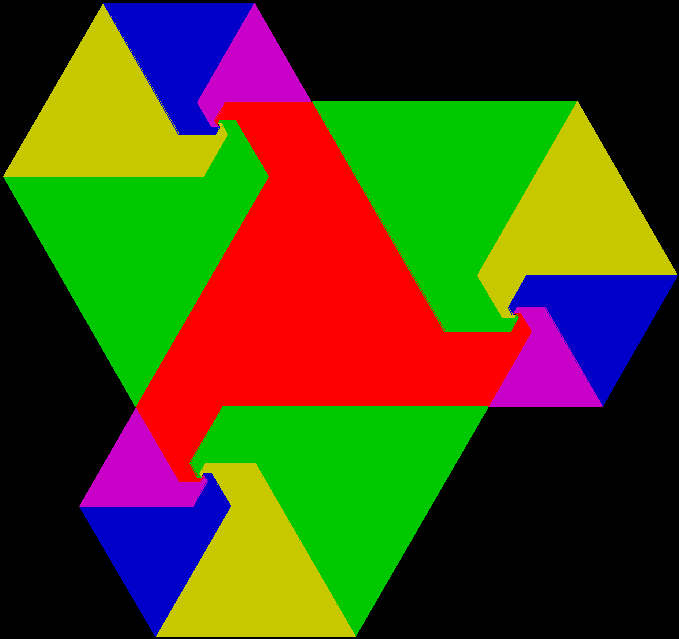

Nested Tricorn (variant col)


The nested quadricorn:
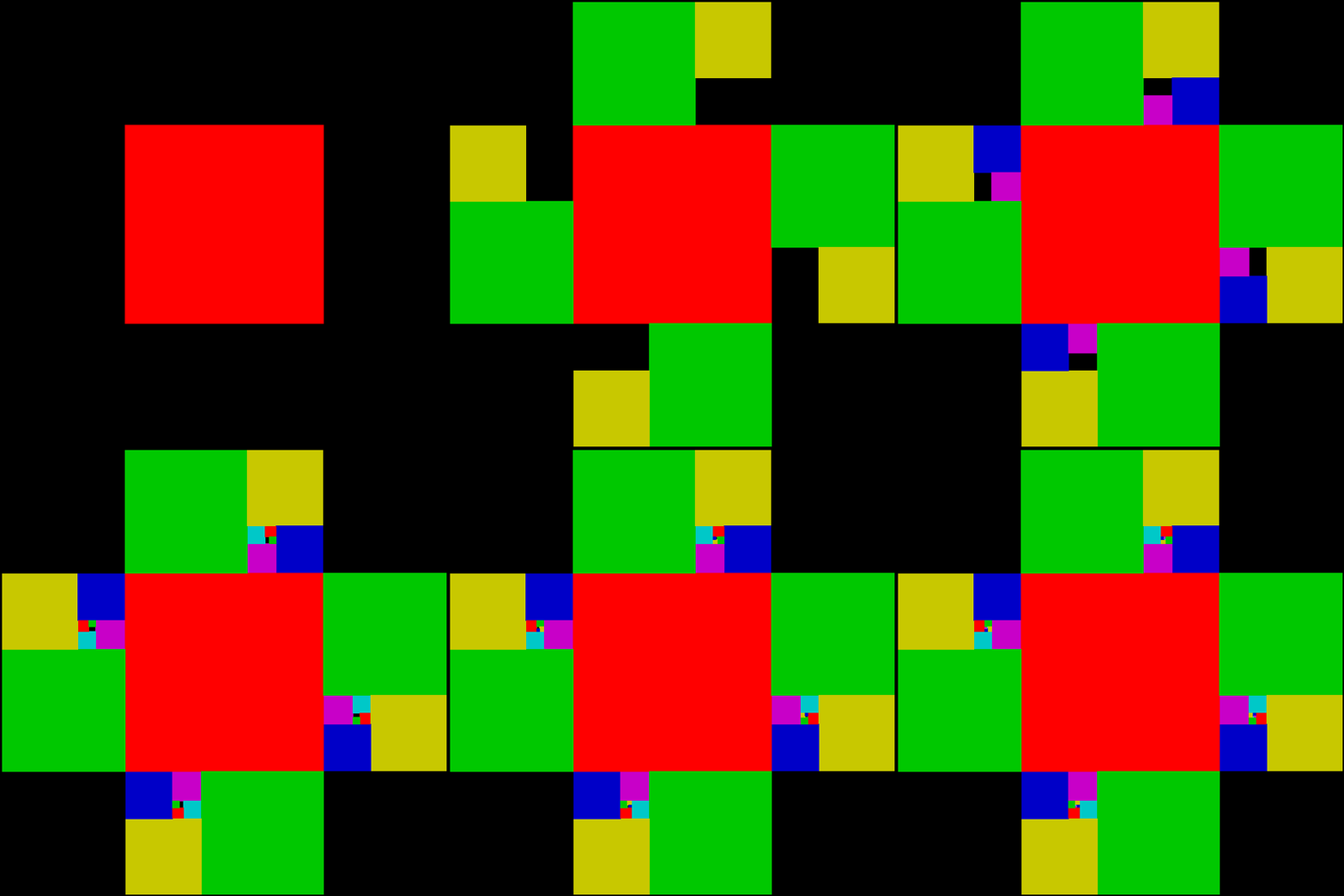
Nested Quadricorn (anim)
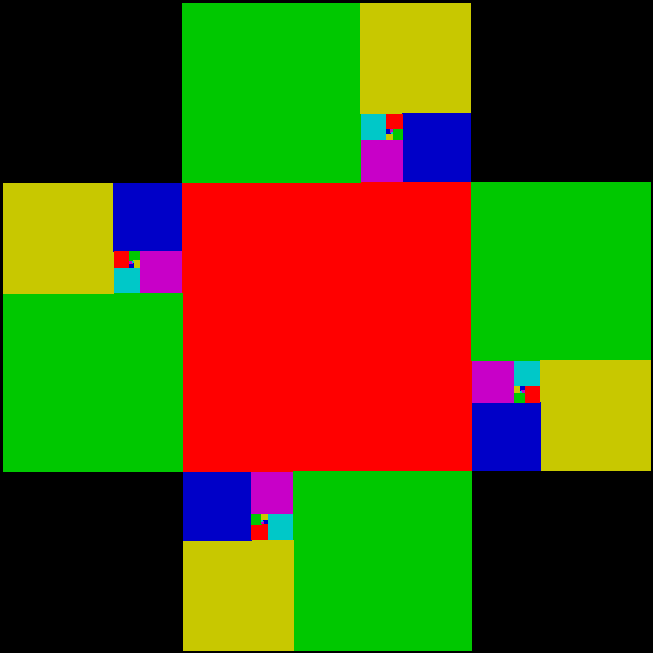

Nested Quadricorn


Nested Quadricorn (col #1)
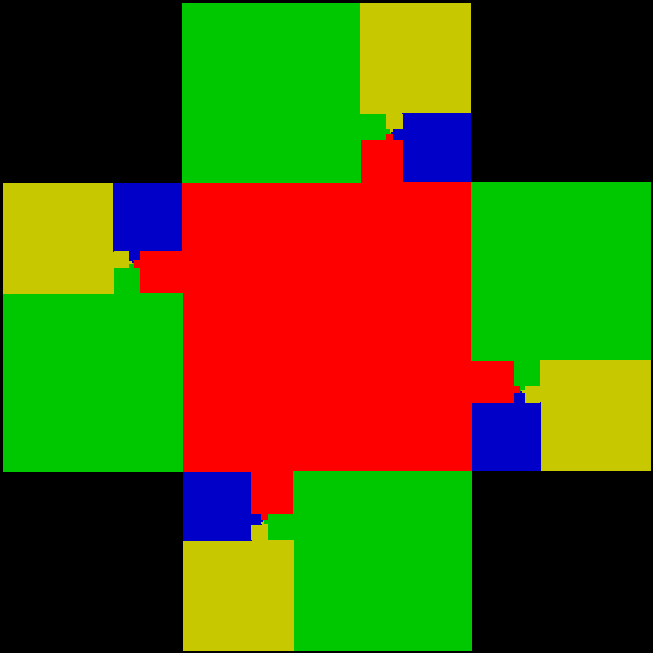

Nested Quadricorn (col #2)


Finally (and ferally), the pentagonal octopus or pentapus:

Pentapus (anim)
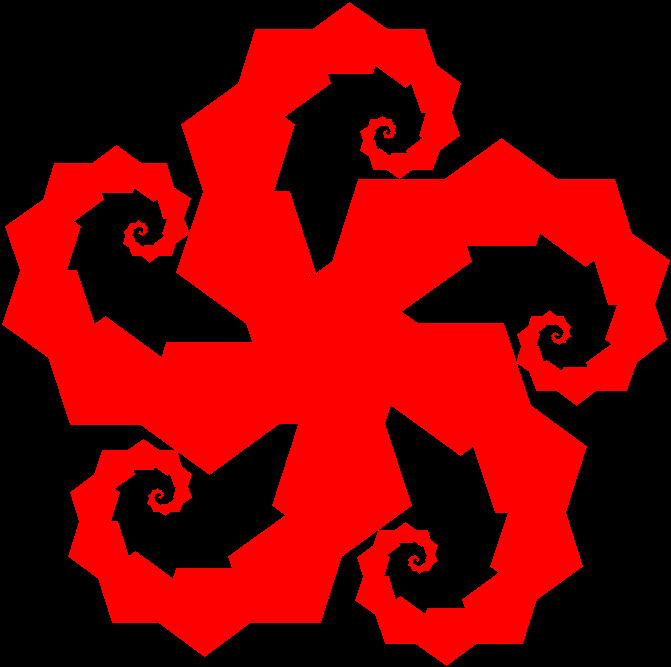

Pentapus


Pentapus #2


Pentapus #3


Pentapus #4


Pentapus #5


Pentapus #6


Pentapus (col anim)


Elsewhere other-engageable:

The Art Grows Onda — the horned triangle and Katsushika Hokusai’s painting The Great Wave off Kanagawa (c. 1830)


The Art Grows Onda

Anyone interested in recreational mathematics should seek out three compendiums by Ian Stewart: Professor Stewart’s Cabinet of Mathematical Curiosities (2008), Professor Stewart’s Hoard of Mathematical Treasures (2009) and Professor Stewart’s Casebook of Mathematical Mysteries (2014). They’re full of ideas and puzzles and are excellent introductions to the scope and subtlety of maths. I first came across Alexander’s Horned Sphere in one of them. I also came across this simpler shape that packs infinity into a finite area:

unicorn_triangle

I call it a horned triangle or unicorn triangle and it reminds me of a wave curling over, like Katsushika Hokusai’s The Great Wave off Kanagawa (c. 1830) (“wave” is unda in Latin and onda in Spanish).
The Great Wave off Kanagawa by Katsushika Hokusai (1760–1849)

The Great Wave off Kanagawa by Katsushika Hokusai (1760–1849)

To construct the unicorn triangle, you take an equilateral triangle with sides of length 1 and erect a triangle with sides of length 0.5 on one of its corners. Then on the corresponding corner of the new triangle you erect a triangle with sides of length 0.25. And so on, for ever.

unicorn_multicolor

unicorn_animated

When you double the sides of a polygon, you quadruple the area: a 1×1 square has an area of 1, a 2×2 square has an area of 4. Accordingly, when you halve the sides of a polygon, you quarter the area: a 1×1 square has an area of 1, a 0.5 x 0.5 square has an area of 0.25 or 1/4. So if the original triangle of the unicorn triangle above has an area of 1 rather than sides of 1, the first triangle added has an area of 0.25 = 1/4, the next an area of 0.0625 = 1/16, and so on. The infinite sum is this:

1/4 + 1/16 + 1/256 + 1/1024 + 1/4096 + 1/16384…

Which equals 1/3. This becomes important when you see the use made of the shape in Stewart’s book. The unicorn triangle is a rep-tile, or a shape that can be divided into smaller copies of the same shape:

unicorn_reptile_static

unicorn_reptile

An equilateral triangle can be divided into four copies of itself, each 1/4 of the original area. If an equilateral triangle with an area of 4 is divided into three unicorn triangles, each unicorn has an area of 1 + 1/3 and 3 * (1 + 1/3) = 4.

Because it’s a rep-tile, a unicorn triangle is also a fractal, a shape that is self-similar at smaller and smaller scales. When one of the sub-unicorns is dropped, the fractals become more obvious:

unicorn_fractal1


unicorn_fractal2


unicorn_fractal3


Elsewhere other-posted:

Rep-Tiles Revisited