Light at Night

The Sky at Night: Answers to Questions from Across the Universe, Patrick Moore and Chris North (BBC Books, 2012)

Astronomy, one of the most successful and far-reaching of all sciences, has been largely based on almost nothing. Human beings have pushed their knowledge of the physical universe out over huge stretches of space and time without using anything physical, in the everyday sense of the word. This is because astronomy is largely based on the collection and analysis of tiny, weightless particles known as photons, which can’t be touched, tasted, smelt, or heard, only seen. And sometimes not seen either: visible light is only a small part of the electro-magnetic spectrum occupied by photons at different wavelengths and energies. Move a little in one direction and you meet invisible ultra-violet; move a little in the other direction and you meet invisible infra-red. Move further and you’ll meet radio-waves and gamma-rays. To make all those visible, we need technology, but we also need technology to collect the visible light of dim or distant celestial objects.

That technology is called the telescope and without it modern astronomy wouldn’t exist. The telescope opened a door in the attic of the universe just as the microscope opened a door in the cellar. But astronomy was an advanced subject well before the telescope was invented, in part because it is an essentially simple subject. Unlike human beings and animals, planets and stars behave in relatively stereotyped, predictable ways. That’s why their behaviour is so easily expressed and analysed using mathematics. Thousands of years ago, men could create mathematical models of the universe and accurately predict celestial behaviour in detail. But they couldn’t create mathematical models of animal or human behaviour and make accurate predictions. We still can’t do that, but we’ve getting better and better at applying mathematics to the photons we collect from the sky. Patrick Moore (1923-2012) was the eccentric BBC presenter of a series called The Sky at Night and devoted his life to those photons, particularly the ones that bounced off the surface of the moon. He wasn’t a professional astronomer or an advanced mathematician, but he could recognize the importance of mathematics and the devices that run on it:

What single technological advance over the past 53 years has facilitated the greatest increase in our knowledge and understanding of the cosmos?

Tony Davies (Shoreham-by-Sea, West Sussex)

I think we’ve got to say here the development of electronics in astronomy. Old-fashioned photography has gone out, and electronic devices have taken over. They have led to amazing advances, in all branches of science, not just astronomy. Coupled with the advances in electronic computing, they have allowed discoveries astronomers could only dream of even as recently as a decade ago. So I must say the advent of the Electronic Age. (“Patrick Moore and the Sky at Night”, pg. 424)

I can almost hear Patrick Moore’s slightly clipped, almost stuttering tones as I read that answer. He was an odd character, but I think he led a worthwhile life and odd characters are attracted to subjects like astronomy. It’s on the philatelic side of science and this description by George Orwell of his job in a bookshop might also apply to astronomy:

Like most second-hand bookshops we had various sidelines. We sold second-hand typewriters, for instance, and also stamps — used stamps, I mean. Stamp-collectors are a strange, silent, fish-like breed, of all ages, but only of the male sex; women, apparently, fail to see the peculiar charm of gumming bits of coloured paper into albums. (“Bookshop Memories”, 1936)

Women also mostly fail to see the peculiar charm of astronomy. One of the reasons I like it is that it contains a lot of big ideas and tantalizing possibilities, from the lingering birth-bawl in the Cosmic Microwave Background to the prospect of life beneath the ice-cap of Jupiter’s moon Europa, by way of T.L.P., or Transient Lunar Phenomena, the mysterious fleeting changes that occasionally occur on the moon. This book covers all of those and much more. Another reason I like astronomy is that, so far, it hasn’t often involved killing things and cutting them up. Or worse, not killing them and still cutting them up. H.G. Wells couldn’t have written The Island of Dr Moreau (1896) about an astronomer and part of H.P. Lovecraft’s genius was to combine the grandeurs and glories of astronomy with the intimacy and viscerality of biology. Lovecraft would certainly have liked this book. This sounds like a giant cosmic conspiracy right out of a story like “Dreams in the Witch House” (1932):

…our Galaxy is moving relative… to the Universe… at a speed of around 600 km/s… The cause of the motion, enigmatically known as the “Great Attractor”, was a mystery for several decades, partly because whatever is causing it is hidden behind the material in the disc of our Galaxy. The source of the motion is now thought to be a massive cluster of galaxies in the constellation of Norma, which is attracting not just our Galaxy and its immediate neighbours, but also the much larger Virgo cluster. (“Cosmology: The Expansion of the Universe”, pg. 208)

It’s a large and complicated universe out there and it’s amazing that we’ve managed to learn so much about it from our own tiny corner, using mostly nothing but light and working mostly nowhere but the earth itself. But that is the power of mathematics: Archimedes said of levers that, given a place to stand, he could move the world. Using the lever of mathematics, men can move the universe standing only in their own heads. The co-author of this book, Dr Chris North of the School of Physics and Astronomy at Cardiff University, is one of those men. He does the heavy intellectual lifting here, answering the most advanced questions, but I’m sure that he would acknowledge that Patrick Moore was one of the world’s greatest popularizers of astronomy. The questions themselves range from the naïve to the nuanced, the elementary to the exoplanetary. But I was surprised, given that this is a book issued by the Bolshevik Broadcasting Corporation, that almost all of them seemed to be asked by white males, sometimes from hideously unvibrant parts of Britain like County Durham. Was there no edict to invent some astrophile Ayeshas and Iqbals from Bradford and some budding Afro-physicists from Brixton?

Perhaps there was, but Moore ignored it. He was an old-fashioned character with old-fashioned views, after all, and he says here that he was introduced to astronomy by a book, G.F. Chambers’ The Story of the Solar System, that was published in 1898 (pg. 409). So his astronomy touched three centuries. He also met three very important men: Orville Wright, the first man to fly properly; Yuri Gagarin, the first man into space; and Neil Armstrong, the first man on the moon. Those were three steps towards our permanent occupation of space. To understand what attracts men there and the questions they hope to answer, this book is a good place to start.
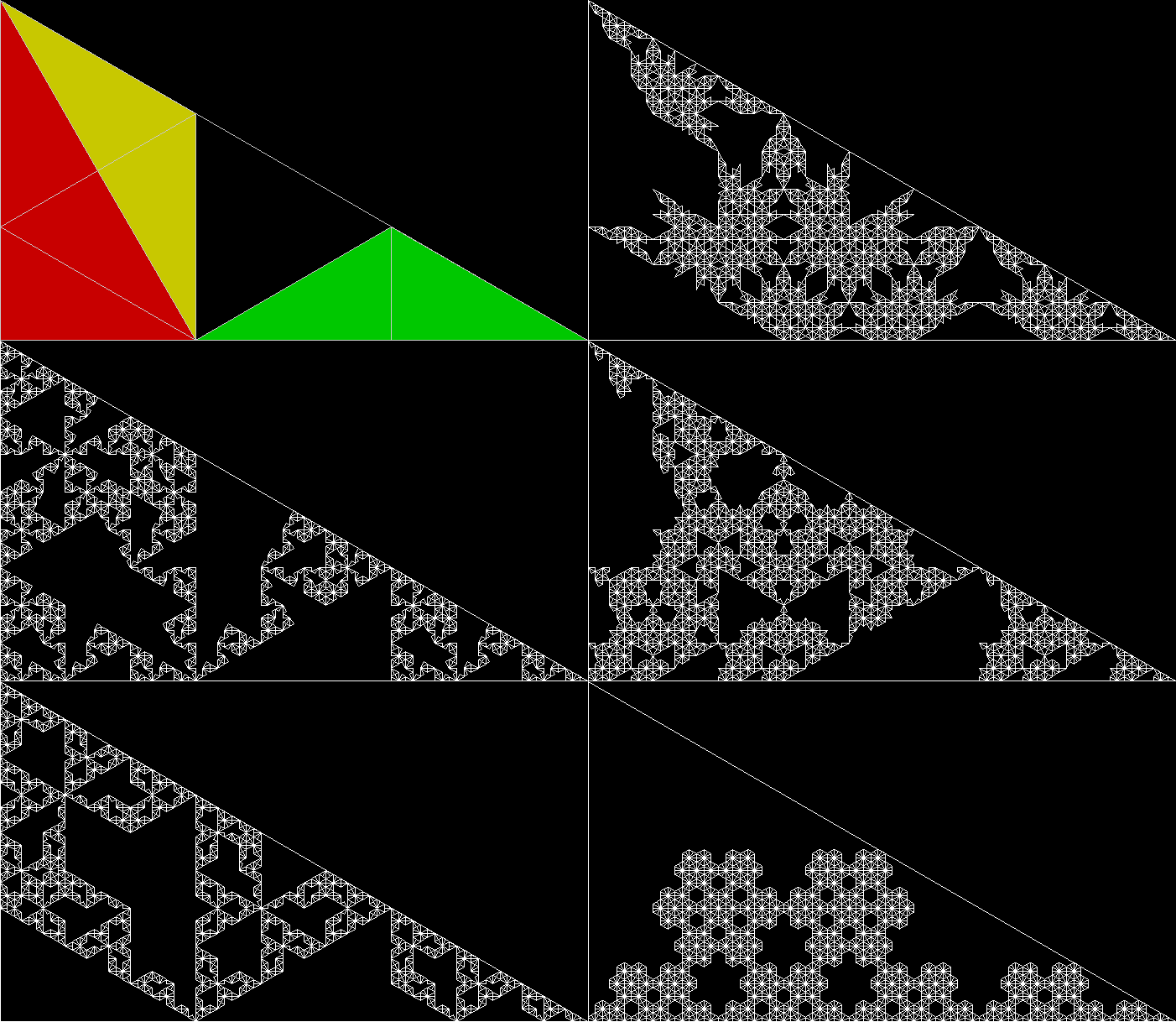
Watch this Sbase

In standard notation, there are two ways to represent 2: 10, in base 2, and 2 in every other base. Accordingly, there are three ways to represent 3: 11 in base 2, 10 in base 3, and 3 in every other base. There are four ways to represent 4, five ways to represent 5, and so on. Now, suppose you sum all the digits of all the representations of n in the bases 2 to n, like this:

Σ(2) = 1+02 = 1
Σ(3) = 1+12 + 1+03 = 3 (+2)
Σ(4) = 1+0+02 + 1+13 + 1+04 = 4 (+1)
Σ(5) = 1+0+12 + 1+23 + 1+14 + 1+05 = 8 (+4)
Σ(6) = 1+1+02 + 2+03 + 1+24 + 1+15 + 1+06 = 10 (+2)
Σ(7) = 1+1+12 + 2+13 + 1+34 + 1+25 + 1+16 + 1+07 = 16 (+6)
Σ(8) = 1+0+0+02 + 2+23 + 2+04 + 1+35 + 1+26 + 1+17 + 1+08 = 17 (+1)
Σ(9) = 1+0+0+12 + 1+0+03 + 2+14 + 1+45 + 1+36 + 1+27 + 1+18 + 1+09 = 21 (+4)
Σ(10) = 1+0+1+02 + 1+0+13 + 2+24 + 2+05 + 1+46 + 1+37 + 1+28 + 1+19 + 1+010 = 25 (+4)

It seems reasonable to suppose that as n increases, so the all-digit-sum of n increases. But that isn’t always the case: occasionally it decreases. Here are the sums for n=11..100 (with prime factors when the sum is composite):

Σ(11) = 35 = 5·7 (+10)
Σ(12) = 34 = 2·17 (-1)
Σ(13) = 46 = 2·23 (+12)
Σ(14) = 52 = 22·13 (+6)
Σ(15) = 60 = 22·3·5 (+8)
Σ(16) = 58 = 2·29 (-2)
Σ(17) = 74 = 2·37 (+16)
Σ(18) = 73 (-1)
Σ(19) = 91 = 7·13 (+18)
Σ(20) = 92 = 22·23 (+1)
Σ(21) = 104 = 23·13 (+12)
Σ(22) = 114 = 2·3·19 (+10)
Σ(23) = 136 = 23·17 (+22)
Σ(24) = 128 = 27 (-8)
Σ(25) = 144 = 24·32 (+16)
Σ(26) = 156 = 22·3·13 (+12)
Σ(27) = 168 = 23·3·7 (+12)
Σ(28) = 171 = 32·19 (+3)
Σ(29) = 199 (+28)
Σ(30) = 193 (-6)
Σ(31) = 223 (+30)
Σ(32) = 221 = 13·17 (-2)
Σ(33) = 241 (+20)
Σ(34) = 257 (+16)
Σ(35) = 281 (+24)
Σ(36) = 261 = 32·29 (-20)
Σ(37) = 297 = 33·11 (+36)
Σ(38) = 315 = 32·5·7 (+18)
Σ(39) = 339 = 3·113 (+24)
Σ(40) = 333 = 32·37 (-6)
Σ(41) = 373 (+40)
Σ(42) = 367 (-6)
Σ(43) = 409 (+42)
Σ(44) = 416 = 25·13 (+7)
Σ(45) = 430 = 2·5·43 (+14)
Σ(46) = 452 = 22·113 (+22)
Σ(47) = 498 = 2·3·83 (+46)
Σ(48) = 472 = 23·59 (-26)
Σ(49) = 508 = 22·127 (+36)
Σ(50) = 515 = 5·103 (+7)
Σ(51) = 547 (+32)
Σ(52) = 556 = 22·139 (+9)
Σ(53) = 608 = 25·19 (+52)
Σ(54) = 598 = 2·13·23 (-10)
Σ(55) = 638 = 2·11·29 (+40)
Σ(56) = 634 = 2·317 (-4)
Σ(57) = 670 = 2·5·67 (+36)
Σ(58) = 698 = 2·349 (+28)
Σ(59) = 756 = 22·33·7 (+58)
Σ(60) = 717 = 3·239 (-39)
Σ(61) = 777 = 3·7·37 (+60)
Σ(62) = 807 = 3·269 (+30)
Σ(63) = 831 = 3·277 (+24)
Σ(64) = 819 = 32·7·13 (-12)
Σ(65) = 867 = 3·172 (+48)
Σ(66) = 861 = 3·7·41 (-6)
Σ(67) = 927 = 32·103 (+66)
Σ(68) = 940 = 22·5·47 (+13)
Σ(69) = 984 = 23·3·41 (+44)
Σ(70) = 986 = 2·17·29 (+2)
Σ(71) = 1056 = 25·3·11 (+70)
Σ(72) = 1006 = 2·503 (-50)
Σ(73) = 1078 = 2·72·11 (+72)
Σ(74) = 1114 = 2·557 (+36)
Σ(75) = 1140 = 22·3·5·19 (+26)
Σ(76) = 1155 = 3·5·7·11 (+15)
Σ(77) = 1215 = 35·5 (+60)
Σ(78) = 1209 = 3·13·31 (-6)
Σ(79) = 1287 = 32·11·13 (+78)
Σ(80) = 1263 = 3·421 (-24)
Σ(81) = 1293 = 3·431 (+30)
Σ(82) = 1333 = 31·43 (+40)
Σ(83) = 1415 = 5·283 (+82)
Σ(84) = 1368 = 23·32·19 (-47)
Σ(85) = 1432 = 23·179 (+64)
Σ(86) = 1474 = 2·11·67 (+42)
Σ(87) = 1530 = 2·32·5·17 (+56)
Σ(88) = 1530 = 2·32·5·17 (=)
Σ(89) = 1618 = 2·809 (+88)
Σ(90) = 1572 = 22·3·131 (-46)
Σ(91) = 1644 = 22·3·137 (+72)
Σ(92) = 1663 (+19)
Σ(93) = 1723 (+60)
Σ(94) = 1769 = 29·61 (+46)
Σ(95) = 1841 = 7·263 (+72)
Σ(96) = 1784 = 23·223 (-57)
Σ(97) = 1880 = 23·5·47 (+96)
Σ(98) = 1903 = 11·173 (+23)
Σ(99) = 1947 = 3·11·59 (+44)
Σ(100) = 1923 = 3·641 (-24)

The sum usually increases, occasionally decreases. In one case, when 87 = n = 88, it stays the same. This also happens when 463 = n = 464, where Σ(463) = Σ(464) = 39,375. Does it happen again? I don’t know. The ratio of sum-ups to sum-downs seems to tend towards 3:1. Is that the exact ratio at infinity? I don’t know. Watch this sbase.

The Call of Cthuneus

Cuneiform, adj. and n. Having the form of a wedge, wedge-shaped. (← Latin cuneus wedge + -form) (Oxford English Dictionary)

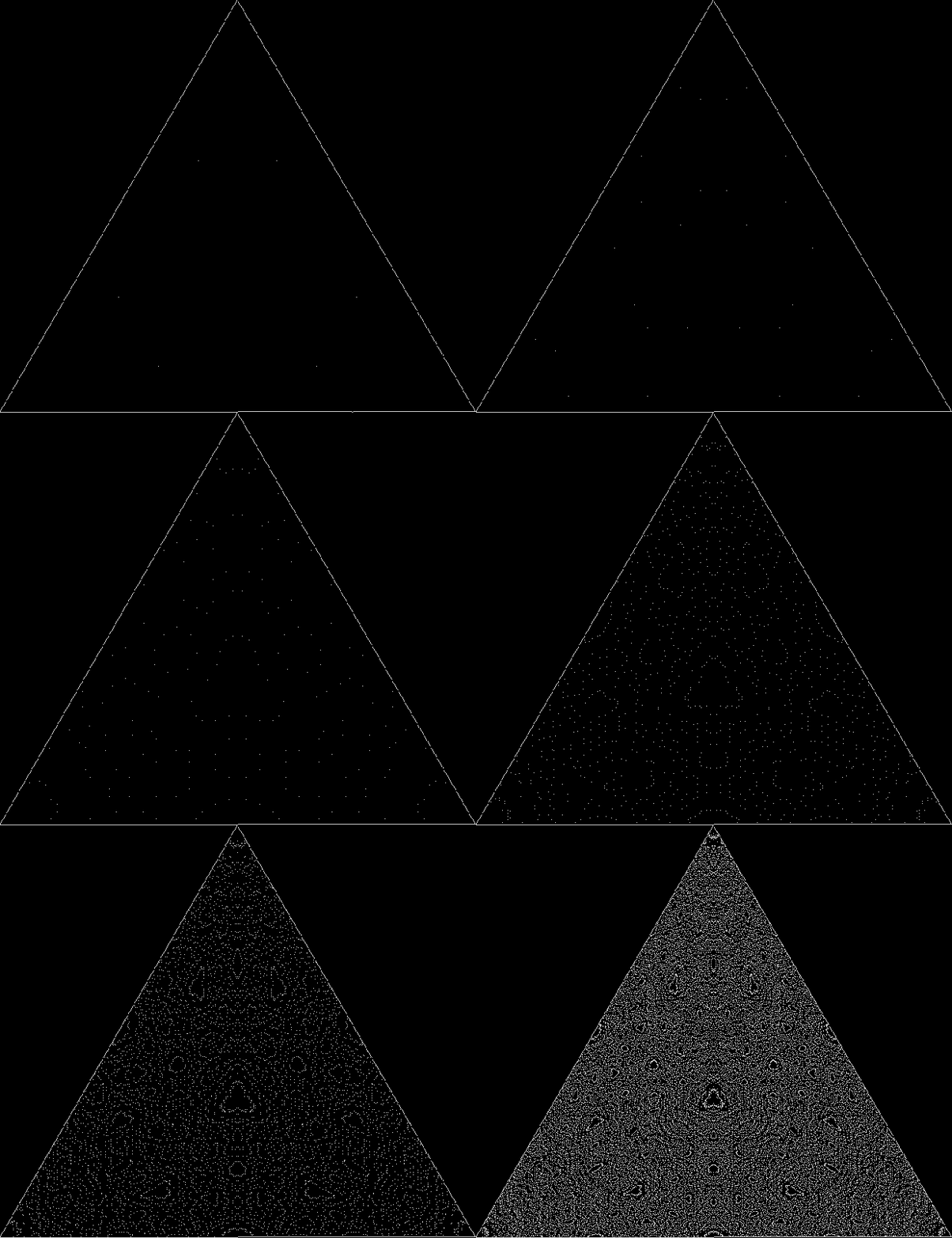
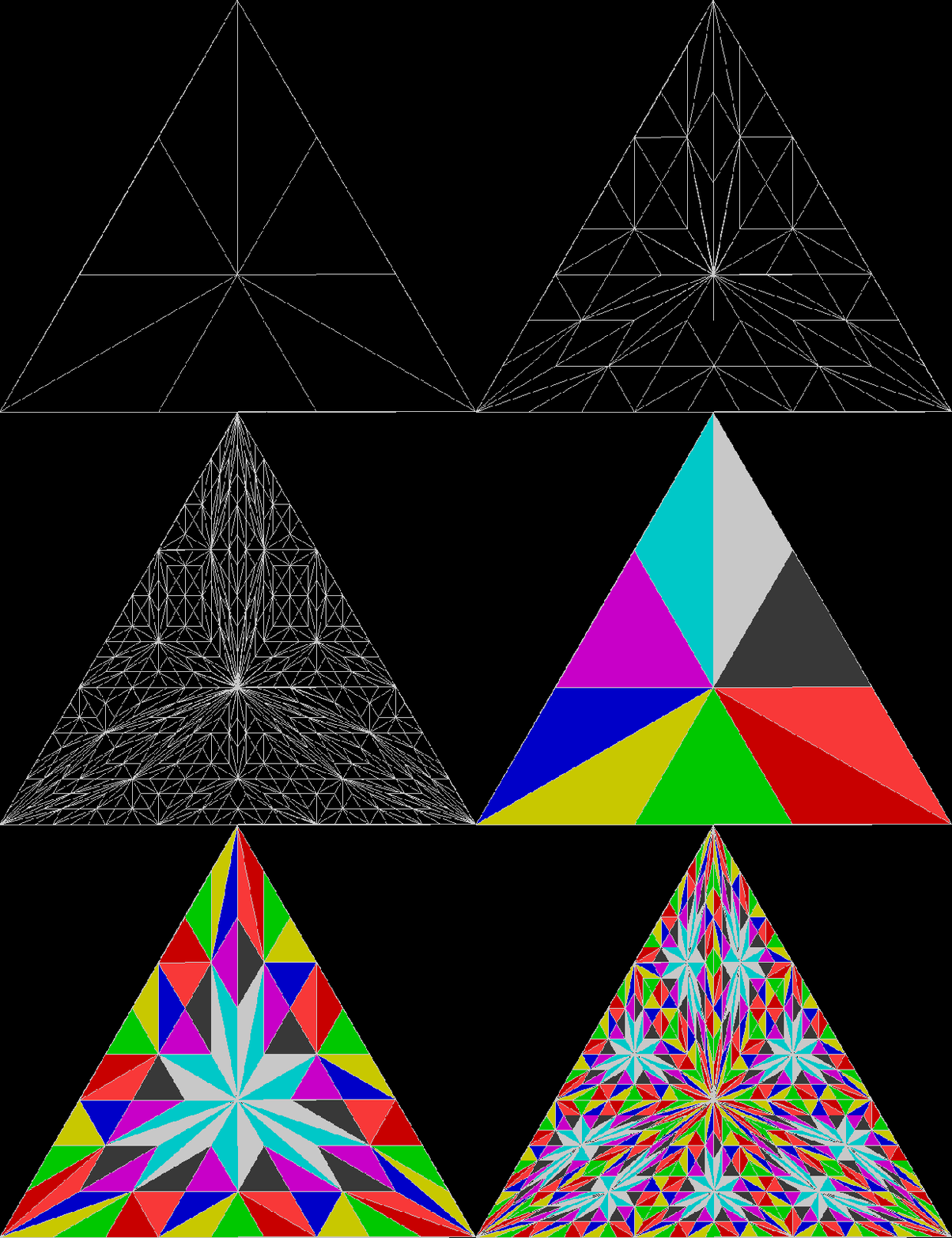
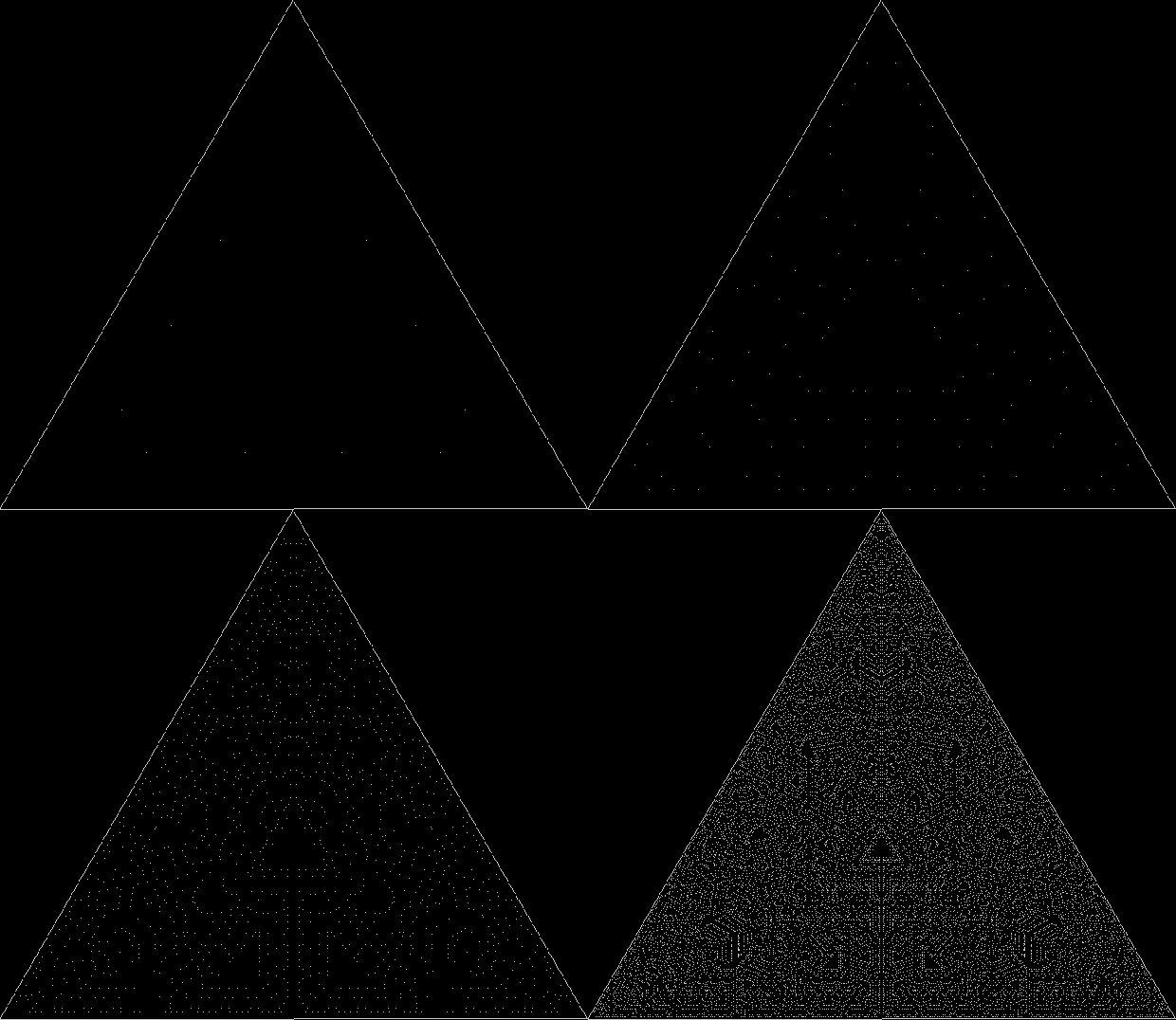
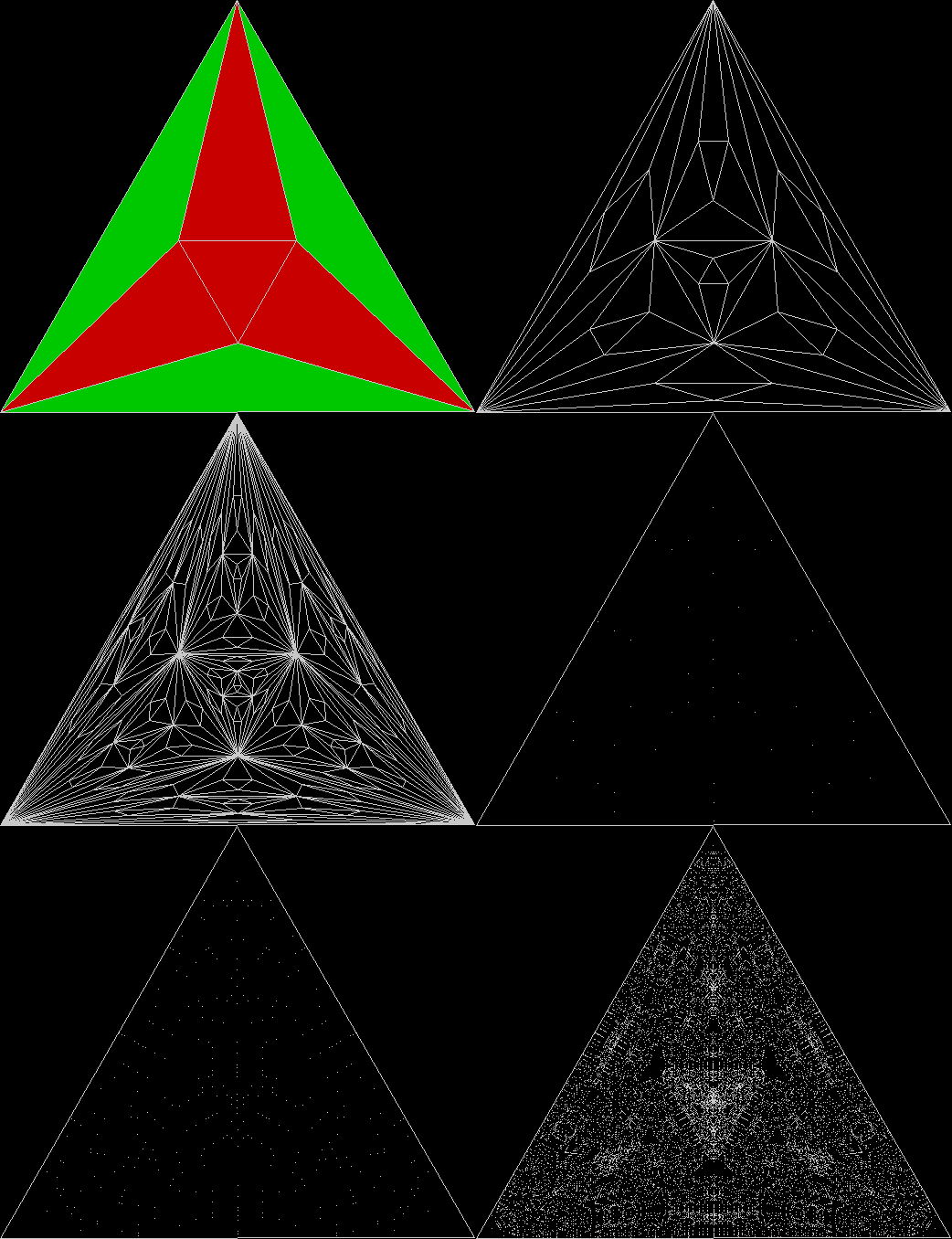
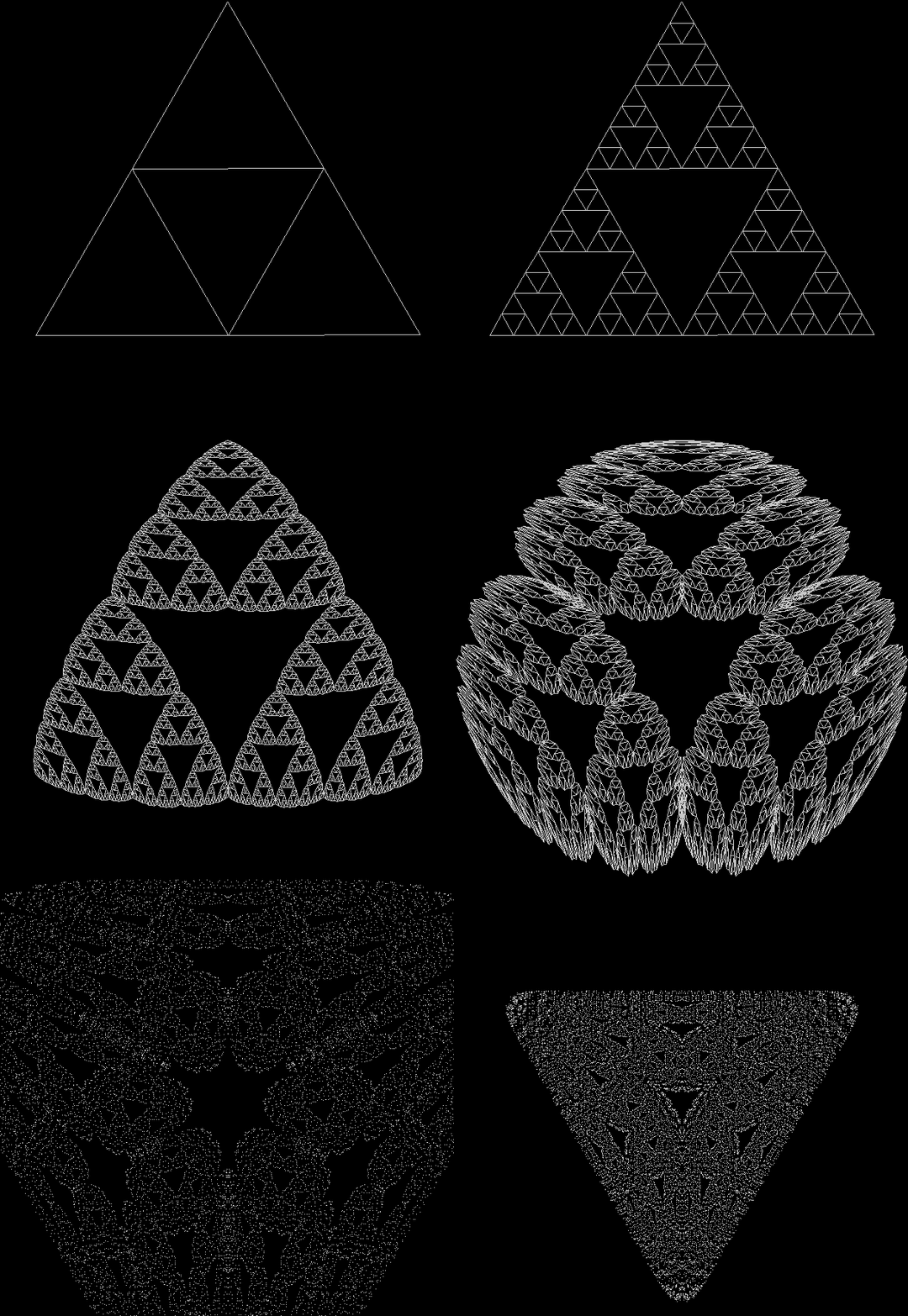
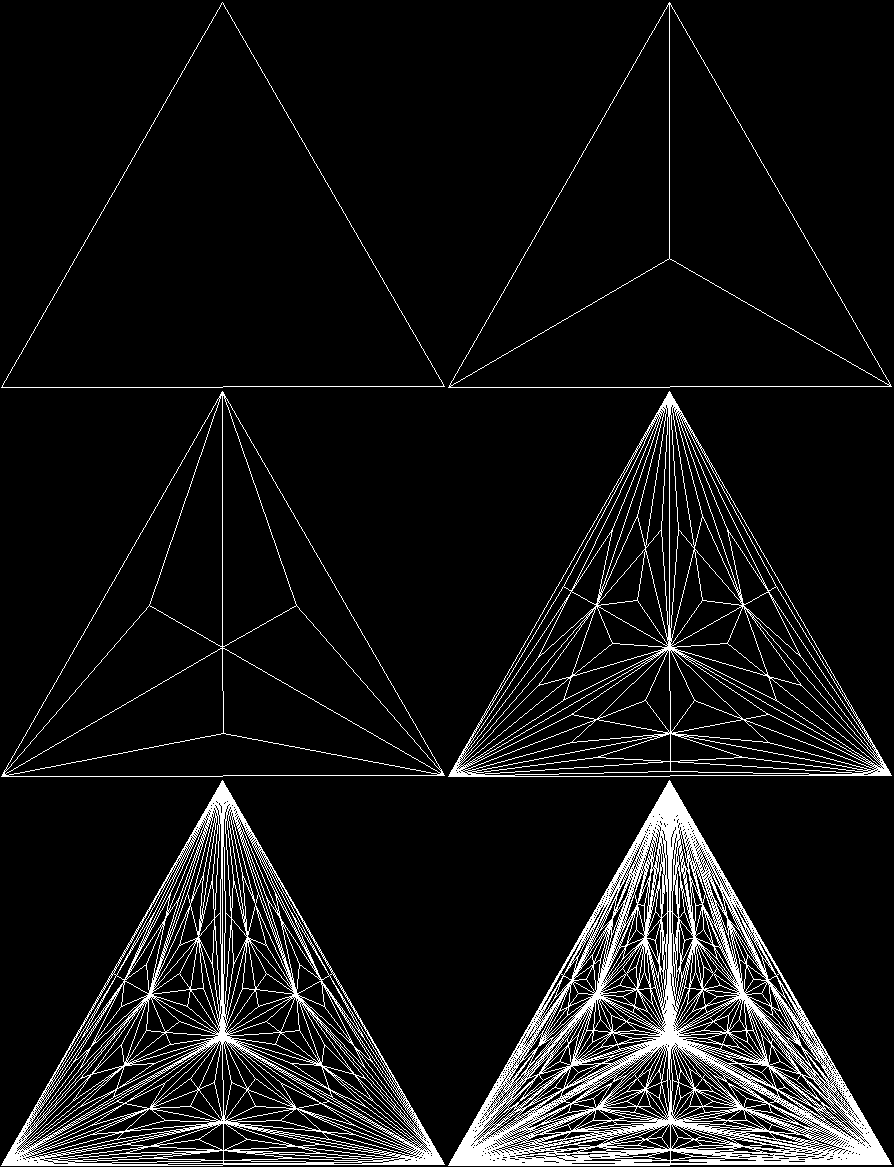
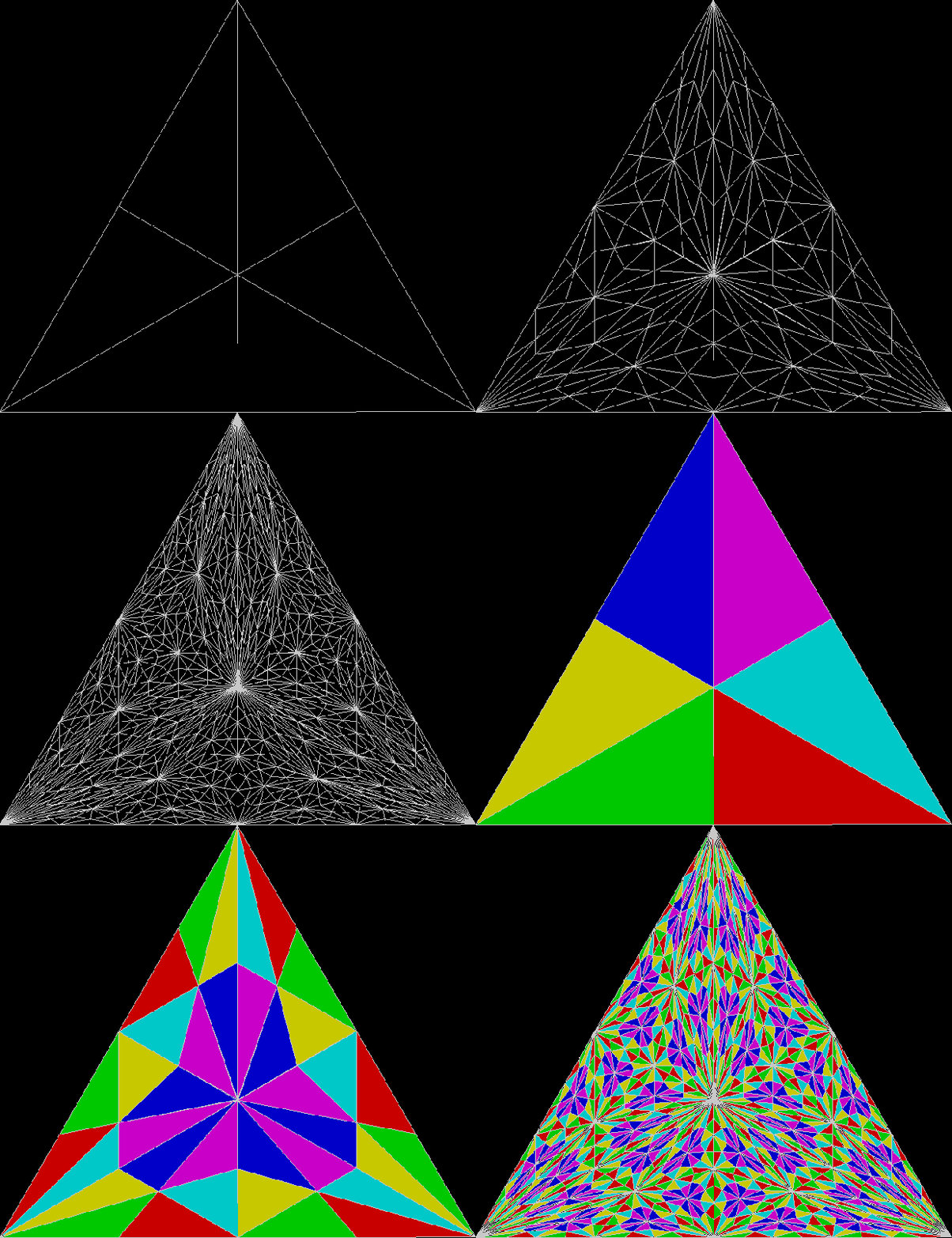
This fractal is created by taking an equilateral triangle and finding the centre and the midpoint of each side. Using all these points, plus the three vertices, six new triangles can be created from the original. The process is then repeated with each new triangle (if the images don’t animate, please try opening them in a new window):

triangle_div2

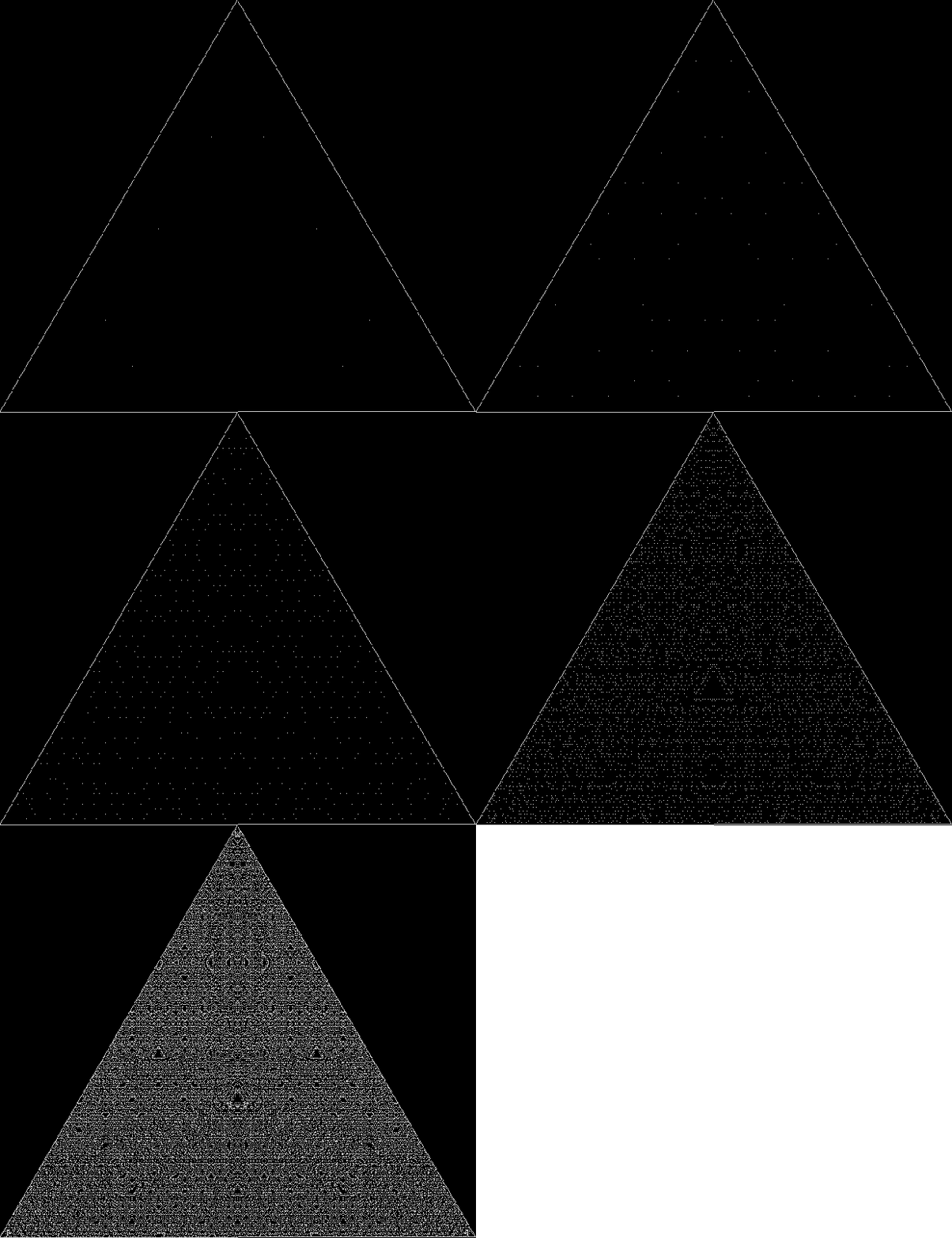
If the centre-point of each triangle is shown, rather than the sides, this is the pattern created:

triangle_div2_dots

Triangles in which the sides are divided into thirds and quarters look like this:

triangle_div3

triangle_div3_dots

triangle_div4

triangle_div4_dots

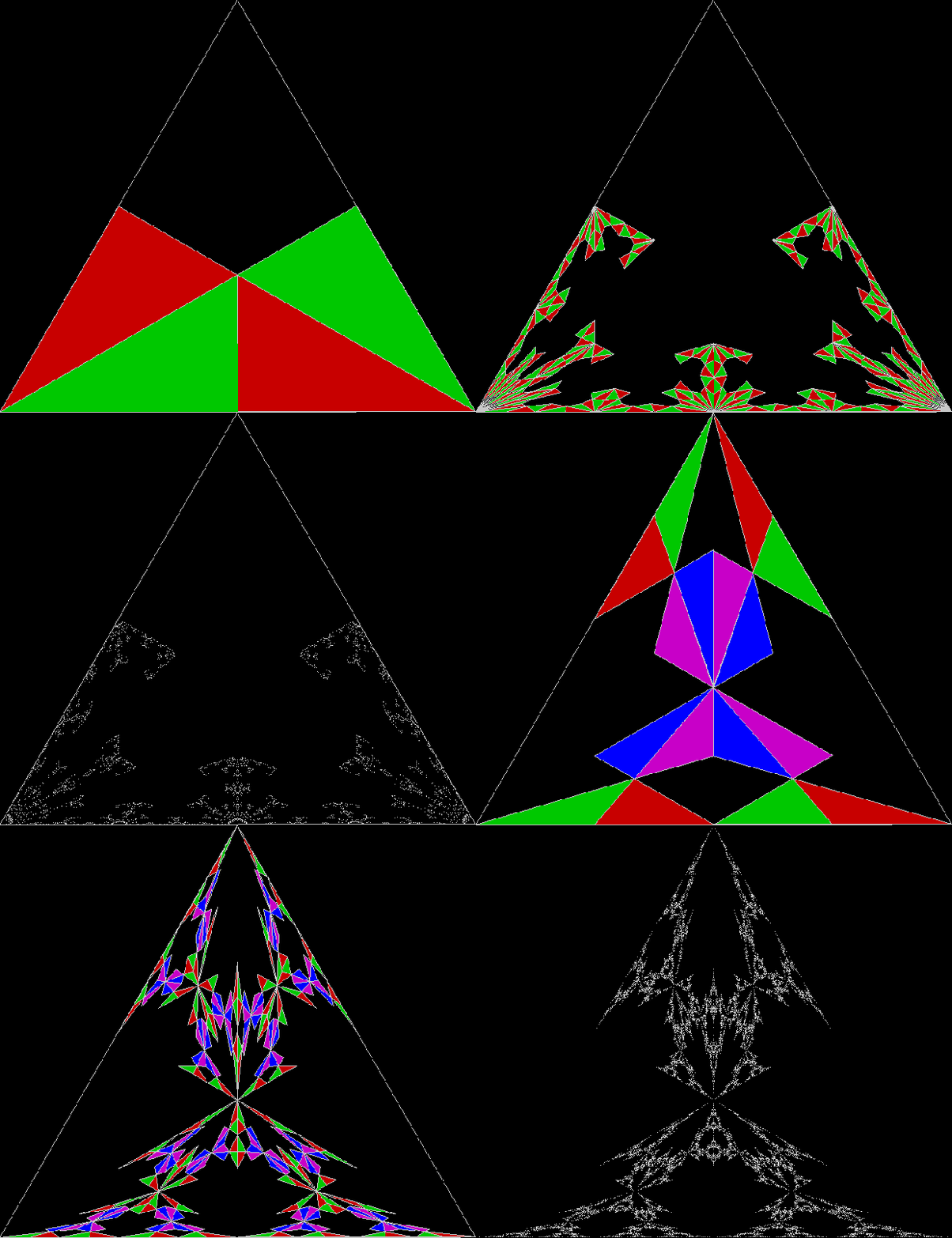
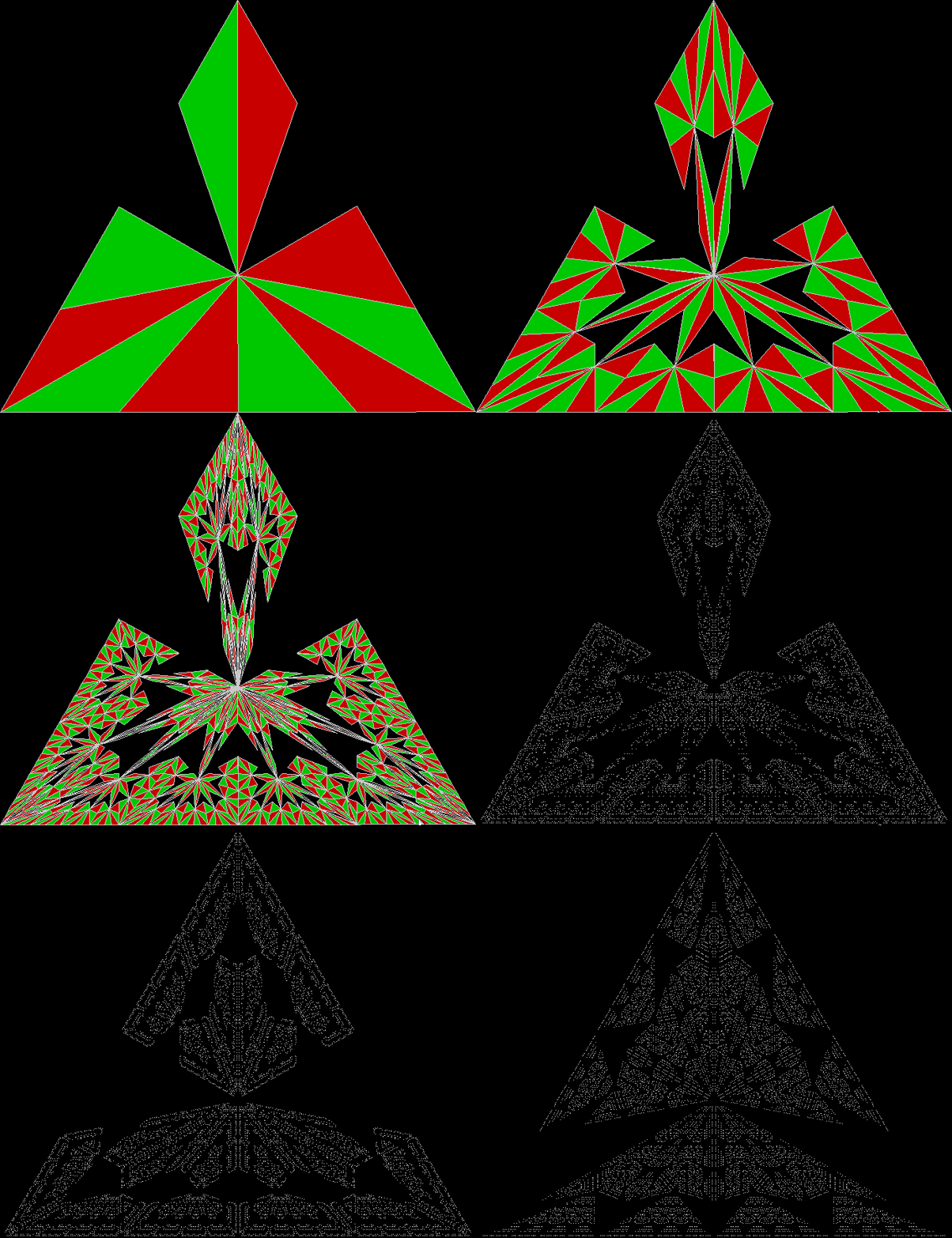
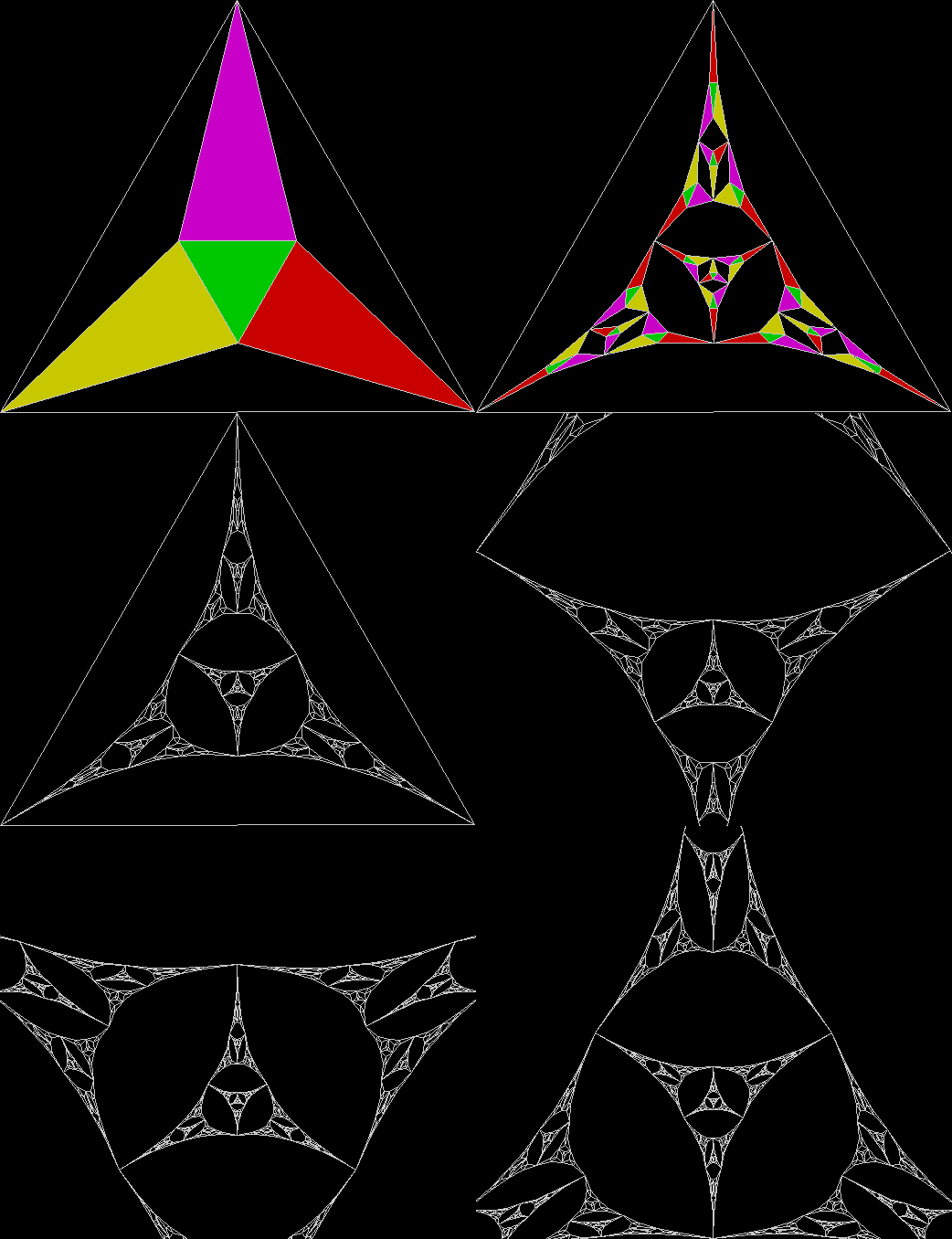
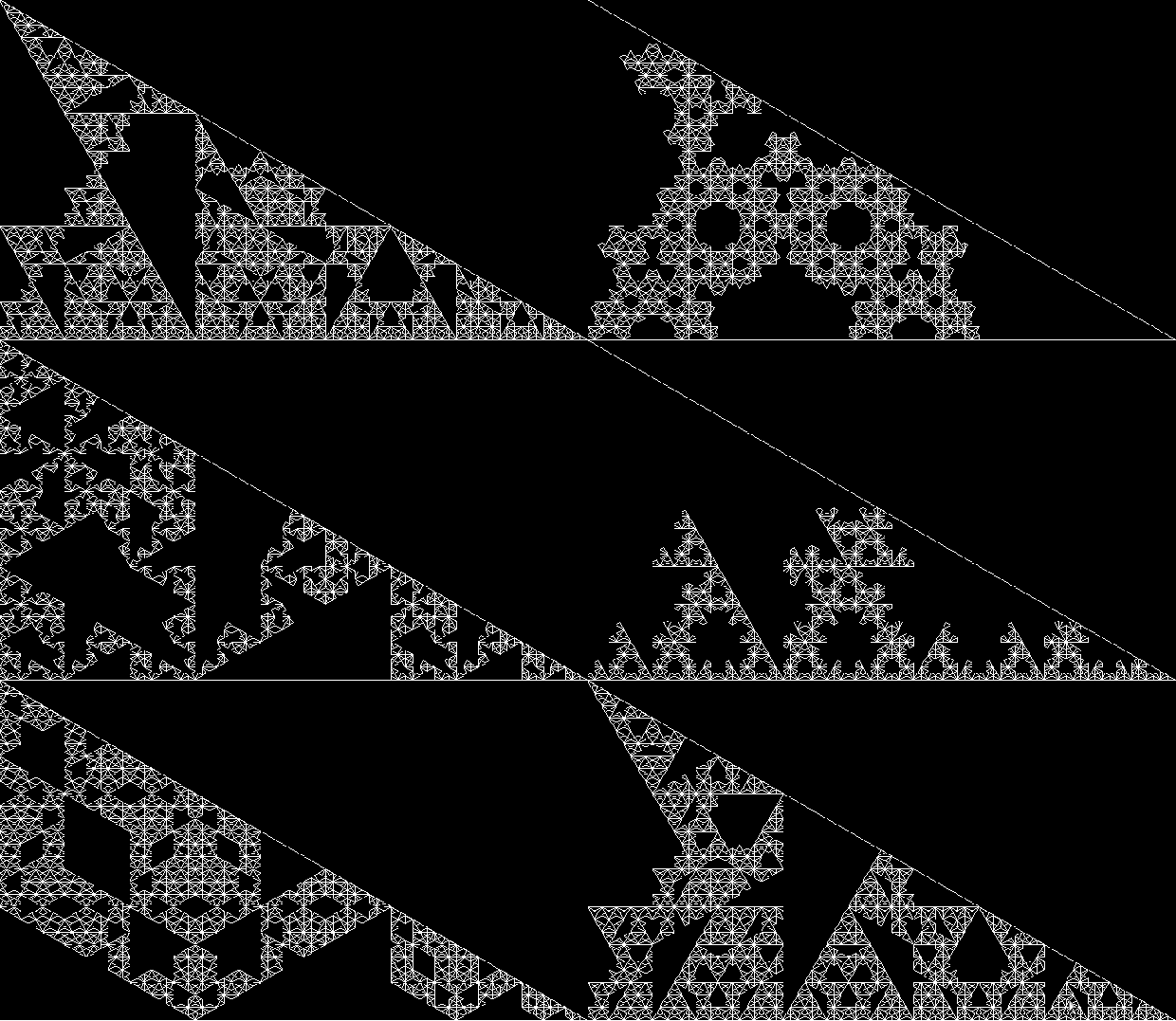
And if sub-triangles are discarded, more obvious fractals appear, some of which look like Lovecraftian deities and owl- or hawk-gods:


cthuneus1

cthuneus2

cthuneus3


Elsewhere Other-Accessible

Circus Trix — a later and better-illustrated look at these fractals

Curiouser and Cuneuser

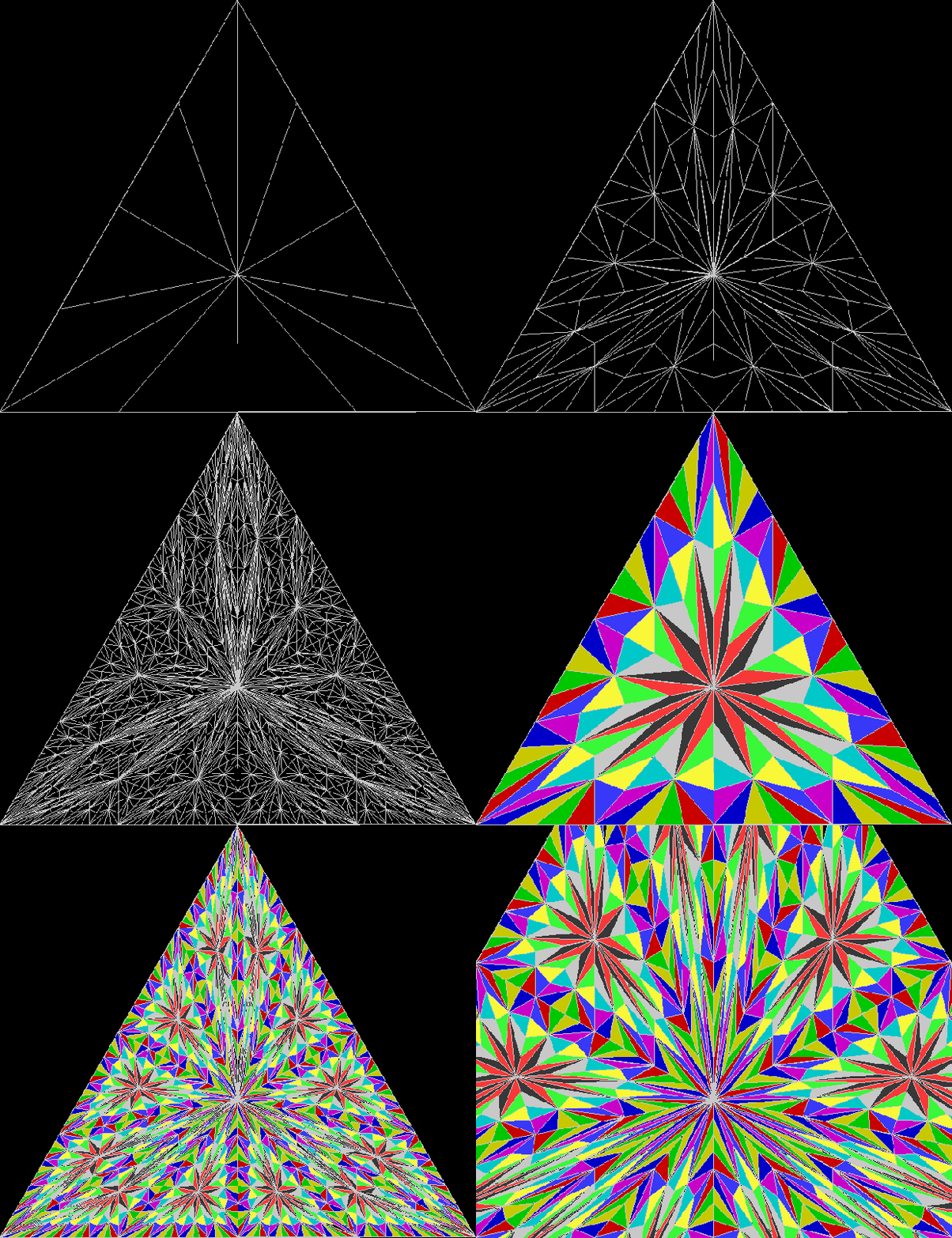
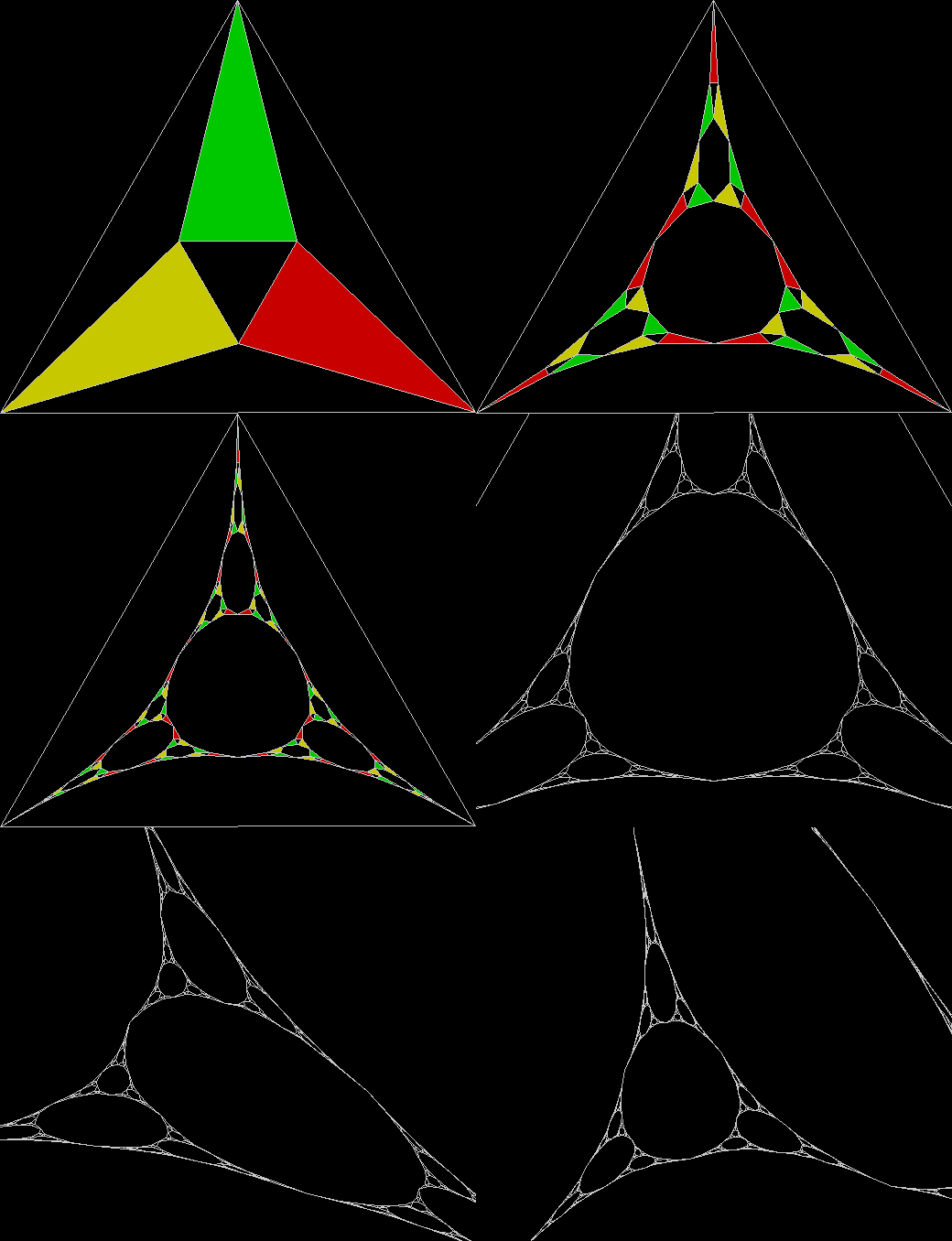
This fractal is created by taking an equilateral triangle, then finding the three points halfway, i.e. d = 0.5, between the centre of the triangle and the midpoint of each side. Using all these points, plus the three vertices, seven new triangles can be created from the original. The process is then repeated with each new triangle:

7triangle

When sub-triangles are discarded, more obvious fractals appear, including this tristar, again using d = 0.5:

tristar

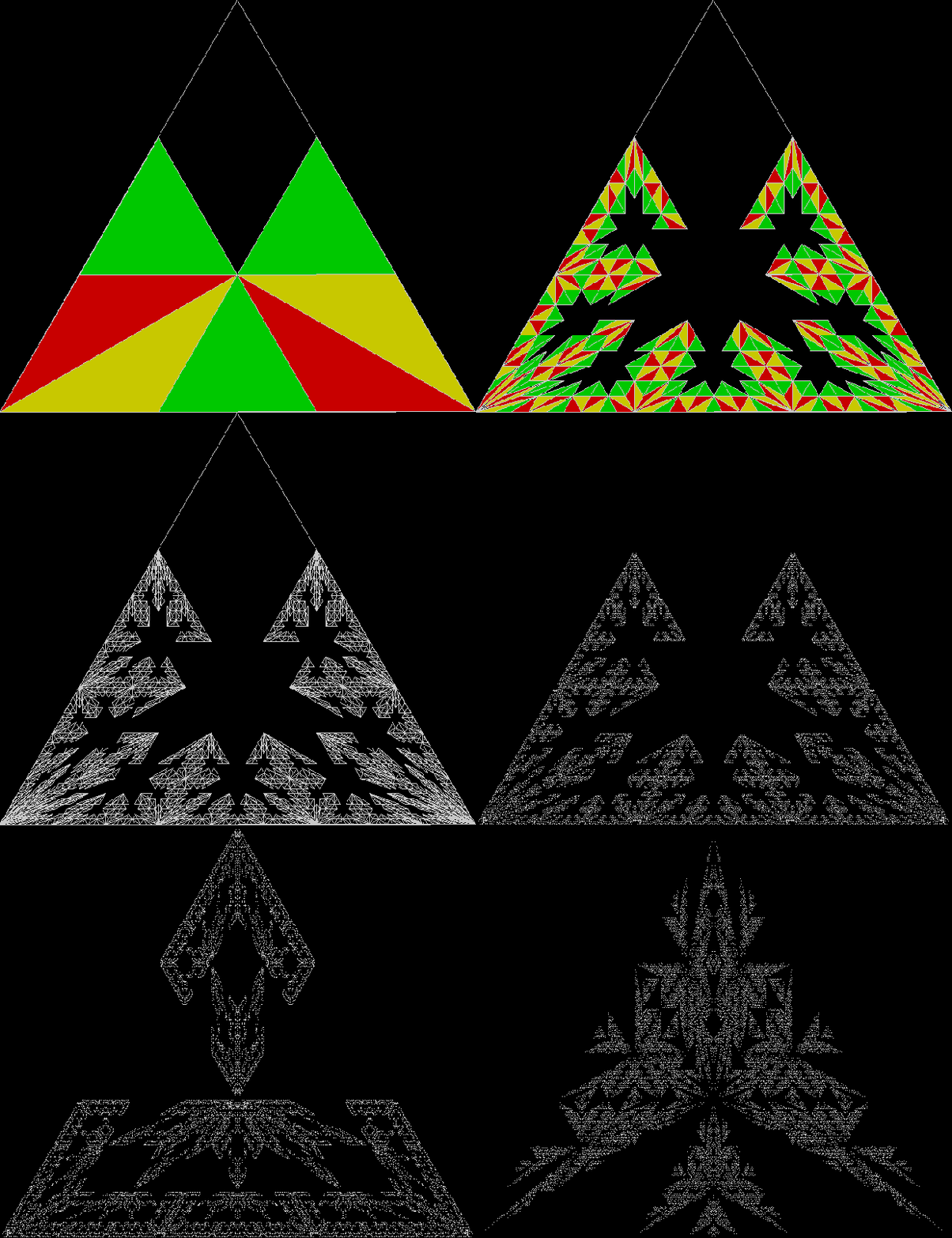
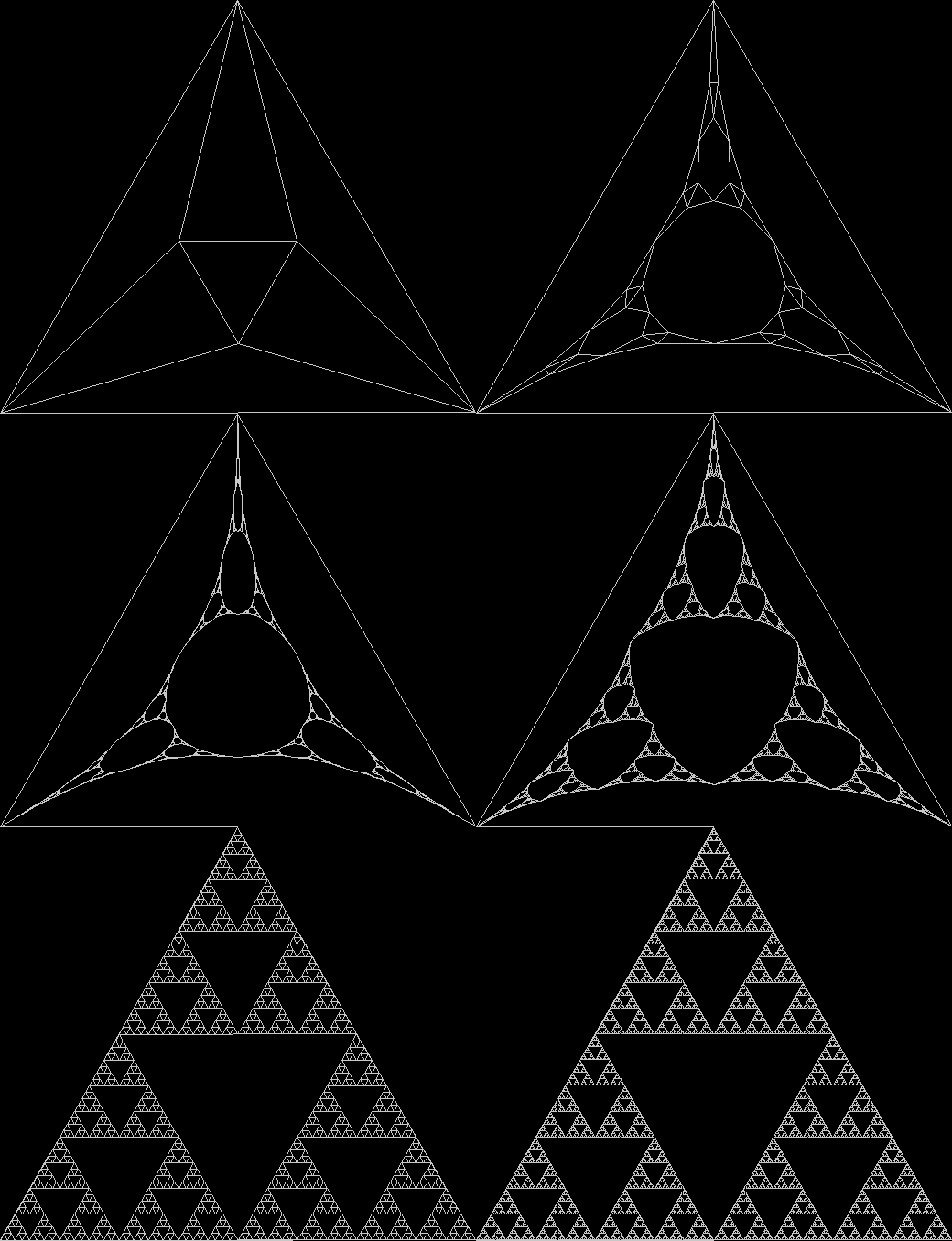
However, a simpler fractal is actually more fertile. This cat’s-cradle is created when d = 0.5:

catscradle

But as d takes values from 0.5 to 0, a very familiar fractal begins to appear: the Sierpiński triangle:

catscradle_expanding

When the values of d become negative, from -0.1 to -1, this is what happens:

catscradle_expanding_to_cuneus

Pre-previously posted (please peruse):

Curious Cuneus

Beyond Gold: A Weevil

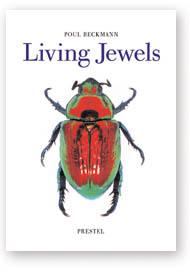
Cover of Living Jewels by Poul Beckmann

Living Jewels: The Natural Design of Beetles, Poul Beckmann (2001)

Richard Dawkins wrote about the Blind Watchmaker, but the Blind Watchmaker often works in collaboration. This book is about his brother, the Blind Jeweller, who creates the cases for the watchwork of beetles. Sometimes those cases are gorgeous, sometimes they’re grotesque, and sometimes they’re both at once. Beetle #77 in this survey, Phanaeus igneus floridanus, is a squat giant with a huge curving horn on its head, but its thorax and abdomen shimmer with metallic purple, green, red, and gold. If that beetle’s a glam-rock sumo-wrestler, then beetle #49, Julodis hiritiventris sanguinipilig (sic – should be hirtiventris sanguinipilis), is pure punk: green legs and a long dark-blue body scattered with tufts of yellow-orange bristles. Elsewhere you’ve got New Romantics with elaborately patterned bodies and sweeping, dandyish antennae (Rosenbergia straussi and Batus barbicornis), death-metal-heads with gleaming black bodies and fearsome-looking but completely harmless horns (Xylotrupes gideon and Allomyr(r?)hina dichotomus taiwana), and even Status-Quo-ites wearing what looks like worn, work-stained denim (various Eupholus species).

It’s entertaining to look through this book and imagine whose backing band or album cover a particular beetle should play in or sit on, but sometimes you won’t be able to match a beetle to a band, because there are more kinds of beetle than musical genres. Beetles, or rather evolution, has invented more than human beings have, but the same forces have been at work. Topologically speaking, a doughnut is identical to a tea-cup, because one is a distorted variant of the other. Similarly, all the beetles in this book are distorted topological variants of each other: like genres of popular music, they’re variants on a theme. Evolution hasn’t altered the ingredients of beetles, just the quantities used to cook each species: changing the width and shape of the thorax, the length and design of the antennae and legs, and so on. But topology isn’t psychology, and just as glam-rock sounds quite different to punk, though the common ancestor is clearly there if you listen, so a doughnut looks quite different to a teacup and Phanaeus igneus floridanus looks quite different to Julodis hirtiventris sanguipilis.

There’s much more to beetles than their appearance, of course, but one of this book’s shortcomings, because it’s a coffee-table conversation-piece rather than a scientific survey, is that it tells you almost nothing about the ecology and behaviour behind the photographs. And the book’s title is misleading, in fact, because the jewels aren’t living: all the photos are of dead beetles on white backgrounds. The book also tells you very little about the meaning and history of the (sometimes misspelt) scientific names, even though these are fascinating, beautiful, and grotesque in their own right. Instead, there’s a brief but interesting – and occasionally wrong: Chrysophora isn’t Latin – introduction, then page after page of the gorgeous and grotesque photographs people will be buying this book for. Finally, there are some brief “Beetle Profiles”, describing where individual species were caught and how their family lives and feeds. I would have liked to know much more, though the beetles’ beauty is in some ways increased by its mystery and by what might be called the futility of its appearance. Countless millions of these beetles have lived and died without any human brain ever appreciating their beauty and strangeness, and if human beings disappeared from the planet they would continue to live and die unappreciated. They’re not here for us, but without us they could never be recognized as the living jewels they are. Some might draw metaphysical conclusions from that and conclude that they are here for us after all, but I draw a mathematical conclusion: mathematics governs the evolution of both beetles and brains, which is why beetles can appeal to us so strongly.

Living Jewels – Website accompanying the book and its sequel.

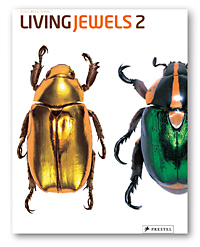
Cover of Living Jewels 2 by Poul Beckmann

He Say, He Sigh, He Sow #2

Musica est exercitium arithmeticae occultum nescientis se numerare animi. — Leibniz.

Musik ist die versteckte arithmetische Tätigkeit der Seele, die sich nicht dessen bewußt ist, daß sie rechnet.

Music is a hidden arithmetic of the soul, which knows not that it calculates.

Back to Bases

(N.B. I am not a mathematician and often make stupid mistakes in my recreational maths. Caveat lector.)

101 isn’t a number, it’s a label for a number. In fact, it’s a label for infinitely many numbers. In base 2, 1012 = 5; in base 3, 1013 = 10; 1014 = 17; 1015 = 26; and so on, for ever. In some bases, like 2 and 4, the number labelled 101 is prime. In other bases, it isn’t. But it is always a palindrome: that is, it’s the same read forward and back. But 101, the number itself, is a palindrome in only two bases: base 10 and base 100.1 Note that 100 = 101-1: with the exception of 2, all integers, or whole numbers, are palindromic in at least one base, the base that is one less than the integer itself. So 3 = 112; 4 = 113; 5 = 114; 101 = 11100; and so on.

Less trivial is the question of which integers set progressive records for palindromicity, or for the number of palindromes they create in bases less than the integers themselves. You might guess that the bigger the integer, the more palindromes it will create, but it isn’t as simple as that. Here is 10 represented in bases 2 through 9:

10102 | 1013* | 224* | 205 | 146 | 137 | 128 | 119*

10 is a palindrome in bases 3, 4, and 9. Now here is 30 represented in bases 2 through 29 (note that a number between square brackets represents a single digit in that base):2

111102 | 10103 | 1324 | 1105 | 506 | 427 | 368 | 339* | 30 | 2811 | 2612 | 2413 | 2214* | 2015 | 1[14]16 | 1[13]17 | 1[12]18 | 1[11]19 | 1[10]20 | 1921 | 1822 | 1723 | 1624 | 1525 | 1426 | 1327 | 1228
| 1129*

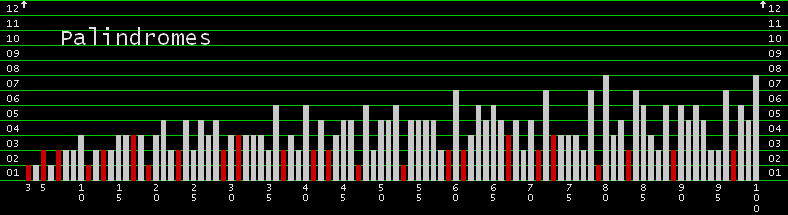
30, despite being three times bigger than 10, creates only three palindromes too: in bases 9, 14, and 29. Here is a graph showing the number of palindromes for each number from 3 to 100 (prime numbers are in red):

Graph of palindromes in various bases for n=3 to 100

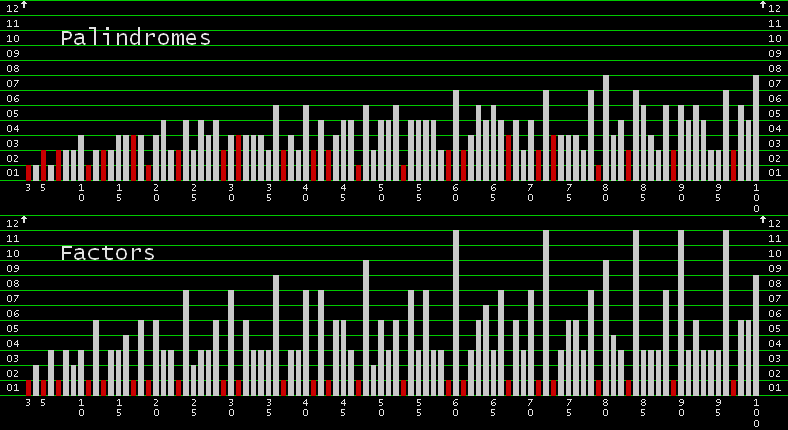
The number of palindromes a number has is related to the number of factors, or divisors, it has. A prime number has only one factor,  itself (and 1), so primes tend to be less palindromic than composite numbers. Even large primes can have only one palindrome, in the base b=n-1 (55,440 has 119 factors and 61 palindromes; 65,381 has one factor and one palindrome, 1165380). Here is a graph showing the number of factors for each number from 3 to 100:

Graph of number of factors for n = 3 to 100

And here is an animated gif combining the two previous images:

Animated gif of number of palindromes and factors, n=3 to 100

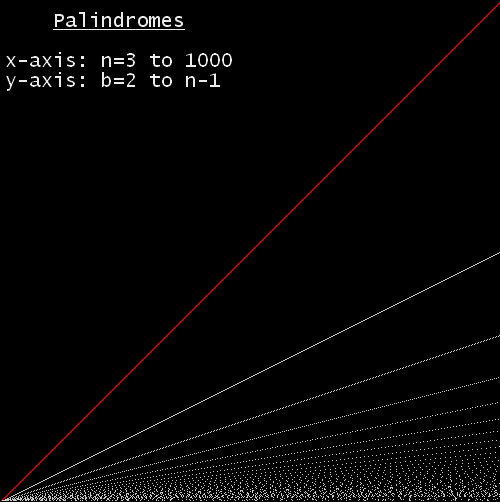
Here is a graph indicating where palindromes appear when n, along the x-axis, is represented in the bases b=2 to n-1, along the y-axis:

Graph showing where palindromes occur in various bases for n = 3 to 1000

The red line are the palindromes in base b=n-1, which is “11” for every n>2. The lines below it arise because every sufficiently large n with divisor d can be represented in the form d·n1 + d. For example, 8 = 2·3 + 2, so 8 in base 3 = 223; 18 = 3·5 + 3, so 18 = 335; 32 = 4.7 + 4, so 32 = 447; 391 = 17·22 + 17, so 391 = [17][17]22.

And here, finally, is a table showing integers that set progressive records for palindromicity (p = number of palindromes, f = total number of factors, prime and non-prime):

n Prime Factors p f    n Prime Factors p f
3 3 1 1    2,520 23·32·5·7 25 47
5 5 2 1    3,600 24·32·52 26 44
10 2·5 3 3    5,040 24·32·5·7 30 59
21 3·7 4 3    7,560 23·33·5·7 32 63
36 22·32 5 8    9,240 23·3·5·7·11 35 63
60 22·3·5 6 11    10,080 25·32·5·7 36 71
80 24·5 7 9    12,600 23·32·52·7 38 71
120 23·3·5 8 15    15,120 24·33·5·7 40 79
180 22·32·5 9 17    18,480 24·3·5·7·11 43 79
252 22·32·7 11 17    25,200 24·32·52·7 47 89
300 22·3·52 13 17    27,720 23·32·5·7·11 49 95
720 24·32·5 16 29    36,960 25·3·5·7·11 50 95
1,080 23·33·5 17 31    41,580 22·33·5·7·11 51 95
1,440 25·32·5 18 35    45,360 24·34·5·7 52 99
1,680 24·3·5·7 20 39    50,400 25·32·52·7 54 107
2,160 24·33·5 21 39    55,440 24·32·5·7·11 61 119

Notes

1. That is, it’s only a palindrome in two bases less than 101. In higher bases, “101” is a single digit, so is trivially a palindrome (as the numbers 1 through 9 are in base 10).

2. In base b, there are b digits, including 0. So base 2 has two digits, 0 and 1; base 10 has ten digits, 0-9; base 16 has sixteen digits: 0, 1, 2, 3, 4, 5, 6, 7, 8, 9, A, B, C, D, E, F.