Domination. Exclusion. Inequality.

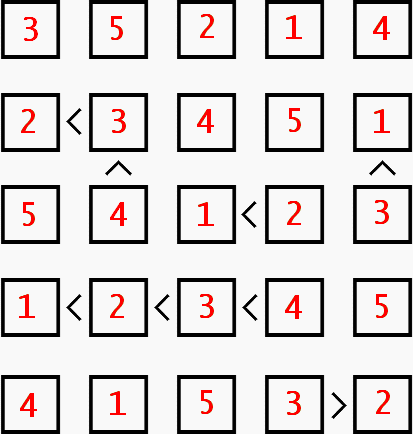
Sudoku has conquered the world, but I think futoshiki is more fun — more concentrated, more compact and quicker. When complete, a 5×5 futoshiki will be a Roman square in which every row and column contains the numbers 1 to 5, but no number is repeated in any row or column. You have to work out the missing numbers using logic and the “inequality” signs that show whether one square contains a number more than or less than a number in a neighboring square — futōshiki, 不等式, means “inequality” in Japanese (fu- is the negative prefix). Here’s an example of a futoshiki puzzle:
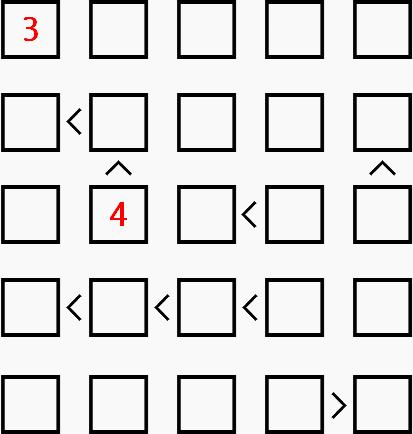
Futoshiki puzzle, with 4 in square (3,2) and 3 in square (1,1)


If you identify the squares by row and column, 4 is in (3,2) and 3 is in (1,1). And you can say, for example, that the empty square (3,4) dominates the empty square (3,3) or that (3,3) is dominated by (3,4). I’ll describe one route (not the best or most efficient) to completing the puzzle. Let’s start by considering the general rules that 1 cannot appear in any square that dominates another square and that 5 cannot appear in any square dominated by another square.

If you extend that logic, you’ll see that 4 cannot appear in any square that is at the end of what you might call a chain of dominations, where one square dominates a second square that in turn dominates a third square. Therefore, in the puzzle above, 4 cannot appear in squares (2,1) and (4,1) of column 1. And it can’t appear in square (3,1), because that would mean two 4s in the same row. This leaves one place for 4 to appear: square (5,1). And if 4 is there, 5 has to be in square (3,1):
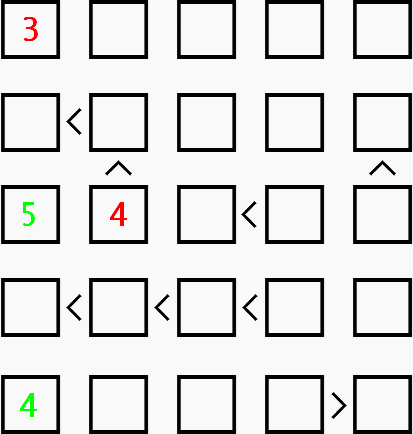

Now look at row 3. Two of the remaining three empty squares are dominators: (3,4) dominates (3,2) and (3,5) dominates (2,5). 1 cannot appear in a dominating square, so 1 has to be in the dominated square (3,3):
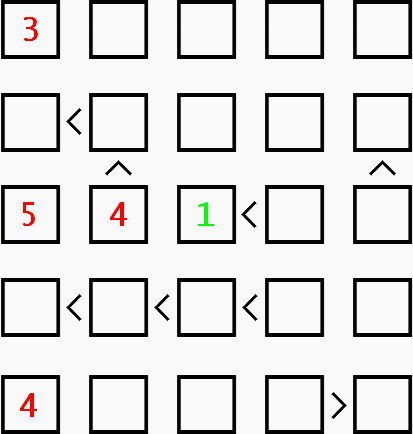

The next step I’ll take is a bit more complicated. In row 2, the number 4 cannot be in (2,1) and (2,4). It can’t be in (2,1) because that would mean 4 was greater than itself. And it can’t be in (2,4), because (2,4) is dominated by (3,4) and (3,4) can’t contain 5, the only number that dominates 4. Therefore 4 must be in either (2,3) or (2,4). But so must 5. Therefore (2,3) contains either 4 or 5 and (2,4) contains either 4 or 5. That means that the numbers [1,2,3] must be in the other three squares of row 2. Now, 3 can’t be in square (2,1), because the chain of dominations is too long. And 3 can’t be in (2,5), because (2,5) is dominated by (3,5), which contains either 2 or 3. Therefore 3 must be in (2,2):


Now consider column 2. Square (4,2) cannot contain 1 or 5, because it’s both dominated and dominating. And if it can’t contain 1 or 5, there’s only one number it can contain: 2. And it immediately follows that (4,1) must contain 1, the only number less than 2. And if four squares of column 1 now contain the numbers [1,3,4,5], the remaining empty square (2,1) must contain 2:


Now consider row 2. Squares (2,3) and (2,4) contain either 4 or 5, therefore (2,5) must contain 1:
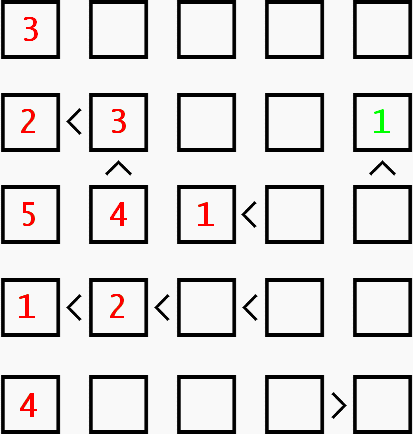

Now consider row 5. The number 1 is logically excluded from three squares: from (5,3), because there’s a 1 in (3,3); from (5,4), because (5,4) dominates (5,5); and from (5,5), because there’s a 1 in (2,5). Therefore 1 must be in (5,2). And if 1 is in (5,2), the number 5 must be in (1,2):
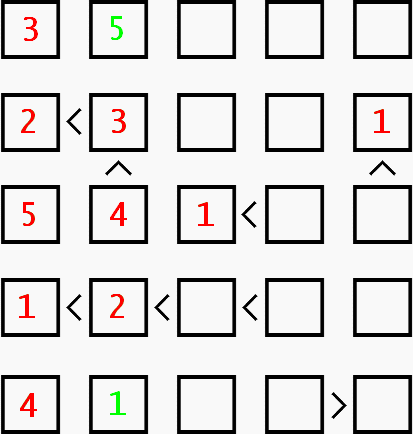

Now 1 pops up in row 1 because it can only be in (1,4):
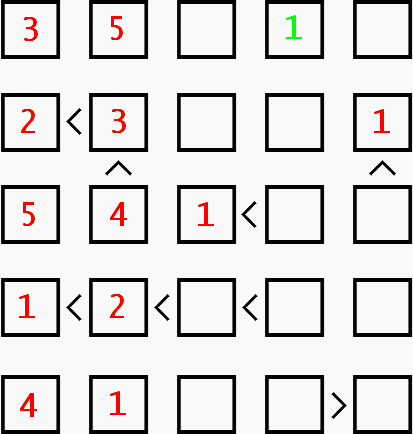

And 5 pops up in row 4 because it can only be in (4,5):


Once 5 is in (4,5), the number 4 must be in (4,4) and the number 3 in (4,3):
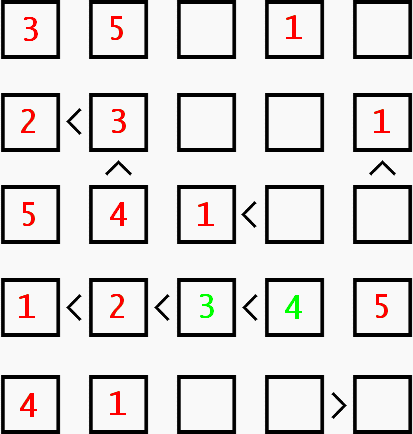

The 4 of (4,4) immediately collapses the ambiguity of (2,4), which must contain 5. Therefore (2,3) contains 4:
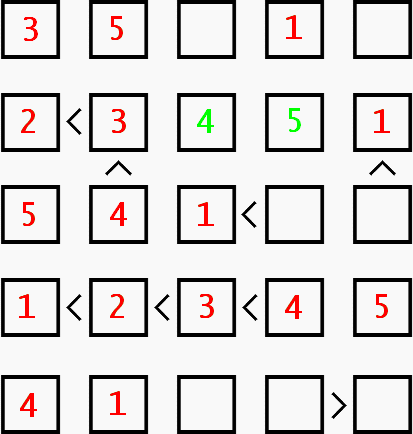

Next, 5 pops up in (5,3):


And 3 must be in (5,4), dominating 2 in (5,5):
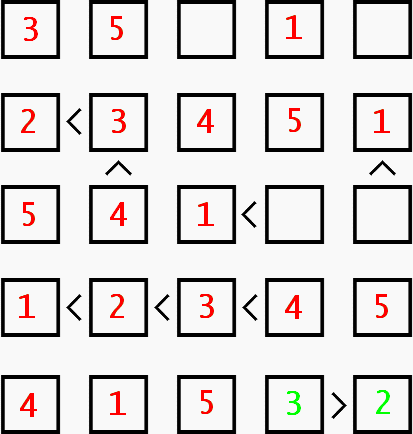

With 3 in (5,4) and 2 in (5,5), the ambiguity of (3,4) and (3,5) collapses:
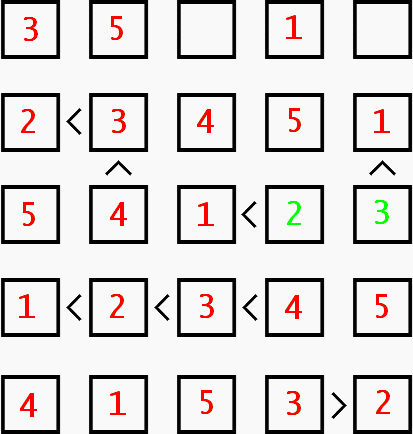

And the square is completed like this:


Here’s an animated version of the steps to completion:

Futoshiki puzzle animated

To Wit: 2/2

Today is 2/2/22, so here’s a little problem about palindromes. For each set of integers <= 1[0…]1 in base 10, find the cumulative count of palindromes exactly divisible by 1, 2, 3, 4, 5, 6, 7, 8 and 9. For example, 2, 4, 6 and 8 are the 4 palindromes exactly divisible by 2 that are less than 11, so countdiv(2) = 4 for pal <= 11; 3, 6 and 9 are the 3 palindromes exactly divisible by 3, so countdiv(3) = 3; and so on:

count for palindromes <= 11 (prime)

countdiv(1) = 10
countdiv(2) = 4
countdiv(3) = 3
countdiv(4) = 2
countdiv(5) = 1
countdiv(6) = 1
countdiv(7) = 1
countdiv(8) = 1
countdiv(9) = 1


count for palindromes <= 101 (prime)

countdiv(1) = 19
countdiv(2) = 8
countdiv(3) = 6
countdiv(4) = 4
countdiv(5) = 2
countdiv(6) = 2
countdiv(7) = 2
countdiv(8) = 2
countdiv(9) = 2


count for palindromes <= 1001 = 7 * 11 * 13

countdiv(1) = 109
countdiv(2) = 48
countdiv(3) = 36
countdiv(4) = 24
countdiv(5) = 12
countdiv(6) = 15
countdiv(7) = 15
countdiv(8) = 12
countdiv(9) = 12


Some interesting patterns appear as the ceiling-palindromes reach 10001, 100001, 1000001… And one particular pattern doesn’t always disappear when you try the same problem in other bases. I hope to say more on 22/2/22.

La Formule de François

Here is a beautiful and astonishingly simple formula for π created by the French mathematician François Viète (1540-1603):

• 2 / π = √2/2 * √(2 + √2)/2 * √(2 + √(2 + √2))/2…

I can remember testing the formula on a scientific calculator that allowed simple programming. As I pressed the = key and the results began to home in on π, I felt as though I was watching a tall and elegant temple emerge through swirling mist.

Mötley Vüe

Here’s the Fibonacci sequence, where each term (after the first two) is created by adding the two previous numbers:


1, 1, 2, 3, 5, 8, 13, 21, 34, 55, 89, 144, 233, 377, 610, 987, 1597, 2584, 4181, 6765...

In “Fib and Let Tri”, I described how my eye was caught by 55, which is a palindrome, reading the same backwards and forwards. “Were there any other Fibonacci palindromes?” I wondered. So I looked to see. Now my eye has been caught by 55 again, but for another reason. It should be easy to spot another interesting aspect to 55 when the Fibonacci numbers are set out like this:


fib(1) = 1
fib(2) = 1
fib(3) = 2
fib(4) = 3
fib(5) = 5
fib(6) = 8
fib(7) = 13
fib(8) = 21
fib(9) = 34
fib(10) = 55
fib(11) = 89
fib(12) = 144
fib(13) = 233
fib(14) = 377
fib(15) = 610
fib(16) = 987
fib(17) = 1597
fib(18) = 2584
fib(19) = 4181
fib(20) = 6765
[...]

55 is fib(10), the 10th Fibonacci number, and 5+5 = 10. That is, digsum(fib(10)) = 10. What other Fibonacci numbers work like that? I soon found some and confirmed my answer at the Online Encyclopedia of Integer Sequences:


1, 5, 10, 31, 35, 62, 72, 175, 180, 216, 251, 252, 360, 494, 504, 540, 946, 1188, 2222 — A020995 at OEIS

And that seems to be the lot, according to the OEIS. In base 10, at least, but why stop at base 10? When I looked at base 11, the numbers of digsum(fib(k)) = k didn’t stop coming, because I couldn’t take the Fibonacci numbers very high on my computer. But the OEIS gives a much longer list, starting like this:


1, 5, 13, 41, 53, 55, 60, 61, 90, 97, 169, 185, 193, 215, 265, 269, 353, 355, 385, 397, 437, 481, 493, 617, 629, 630, 653, 713, 750, 769, 780, 889, 905, 960, 1013, 1025, 1045, 1205, 1320, 1405, 1435, 1501, 1620, 1650, 1657, 1705, 1735, 1769, 1793, 1913, 1981, 2125, 2153, 2280, 2297, 2389, 2413, 2460, 2465, 2509, 2533, 2549, 2609, 2610, 2633, 2730, 2749, 2845, 2893, 2915, 3041, 3055, 3155, 3209, 3360, 3475, 3485, 3521, 3641, 3721, 3749, 3757, 3761, 3840, 3865, 3929, 3941, 4075, 4273, 4301, 4650, 4937, 5195, 5209, 5435, 5489, 5490, 5700, 5917, 6169, 6253, 6335, 6361, 6373, 6401, 6581, 6593, 6701, 6750, 6941, 7021, 7349, 7577, 7595, 7693, 7740, 7805, 7873, 8009, 8017, 8215, 8341, 8495, 8737, 8861, 8970, 8995, 9120, 9133, 9181, 9269, 9277, 9535, 9541, 9737, 9935, 9953, 10297, 10609, 10789, 10855, 11317, 11809, 12029, 12175... — A025490 at OEIS

The list ends with 1636597 = A18666[b11] and the OEIS says that 1636597 almost certainly completes the list. According to David C. Terr’s paper “On the Sums of Fibonacci Numbers” (pdf), published in the Fibonacci Quarterly in 1996, the estimated digit-sum for the k-th Fibonacci number in base b is given by the formula (b-1)/2 * k * log(b,φ), where log(b,φ) is the logarithm in base b of the golden ratio, 1·61803398874… Terr then notes that the simplified formula (b-1)/2 * log(b,φ) gives the estimated average ratio digsum(fib(k)) / k in base b. Here are the estimates for bases 2 to 20:


b02 = 0.3471209568153086...
b03 = 0.4380178794859424...
b04 = 0.5206814352229629...
b05 = 0.5979874356654401...
b06 = 0.6714235829697111...
b07 = 0.7418818776805580...
b08 = 0.8099488992357201...
b09 = 0.8760357589718848...
b10 = 0.9404443811249043...
b11 = 1.0034045909311624...
b12 = 1.0650963641043091...
b13 = 1.1256639207937723...
b14 = 1.1852250528196852...
b15 = 1.2438775226715552...
b16 = 1.3017035880574074...
b17 = 1.3587732842474014...
b18 = 1.4151468584732730...
b19 = 1.4708766105122322...
b20 = 1.5260083080264088...

In base 2, you can expect digsum(fib(k)) to be much smaller than k; in base 20, you can expect digsum(fib(k)) to be much larger. But as you can see, the estimate for base 11, 1.0034045909311624…, is very nearly 1. That’s why base 11 produces so many results for digsum(fib(k)) = k, because only a slight deviation from the estimate might create a perfect ratio of 1 for digsum(fib(k)) / k, i.e. digsum(fib(k)) = k. But in the end the results run out in base 11 too, because as k gets higher and fib(k) gets bigger, the estimate becomes more and more accurate and digsum(fib(k)) > k. With lower k, digsum(fib(k)) can easily fall below k or match k. That happens in other bases, but because their estimates are further from 1, results for digsum(fib(k)) = k run out much more quickly.

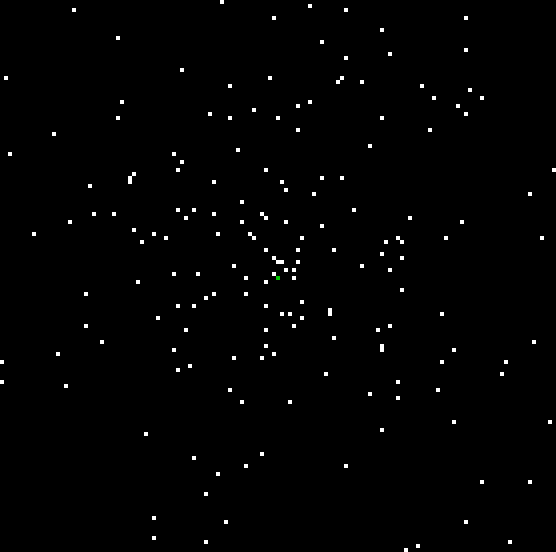
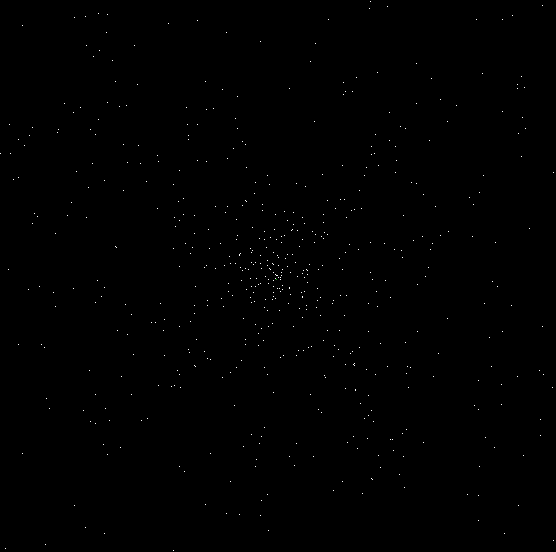
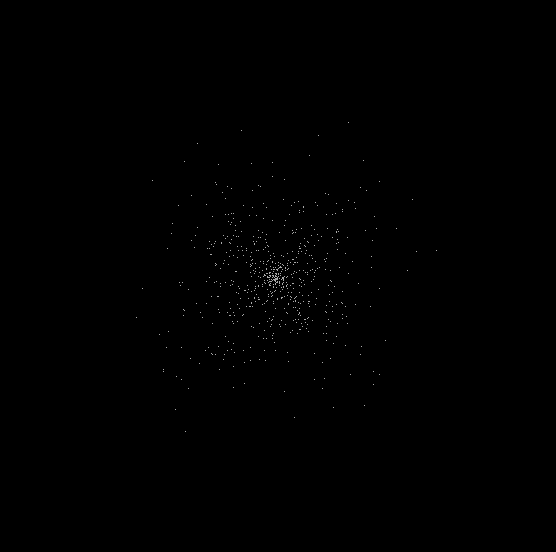
To see this base behavior represented visually, I’ve created Ulam-like spirals for k using three colors: blue for digsum(fib(k)) < k, yellow for digsum(fib(k)) > k, and red for digsum(fib(k)) = k (with the green square at the center representing fib(1) = 1). As you can see below, the spiral for base 11 immediately stands out. It’s motley, not dominated by blue or yellow like the other spirals:

Spiral for digsum(fib(k)) in base 9
(blue for digsum(fib(k)) < k, yellow for digsum(fib(k)) > k, red for digsum(fib(k)) = k, green for fib(1))


Spiral for digsum(fib(k)) in base 10


Spiral for digsum(fib(k)) in base 11 — a motley view of blue, yellow and red


Spiral for digsum(fib(k)) in base 12


Spiral for digsum(fib(k)) in base 13


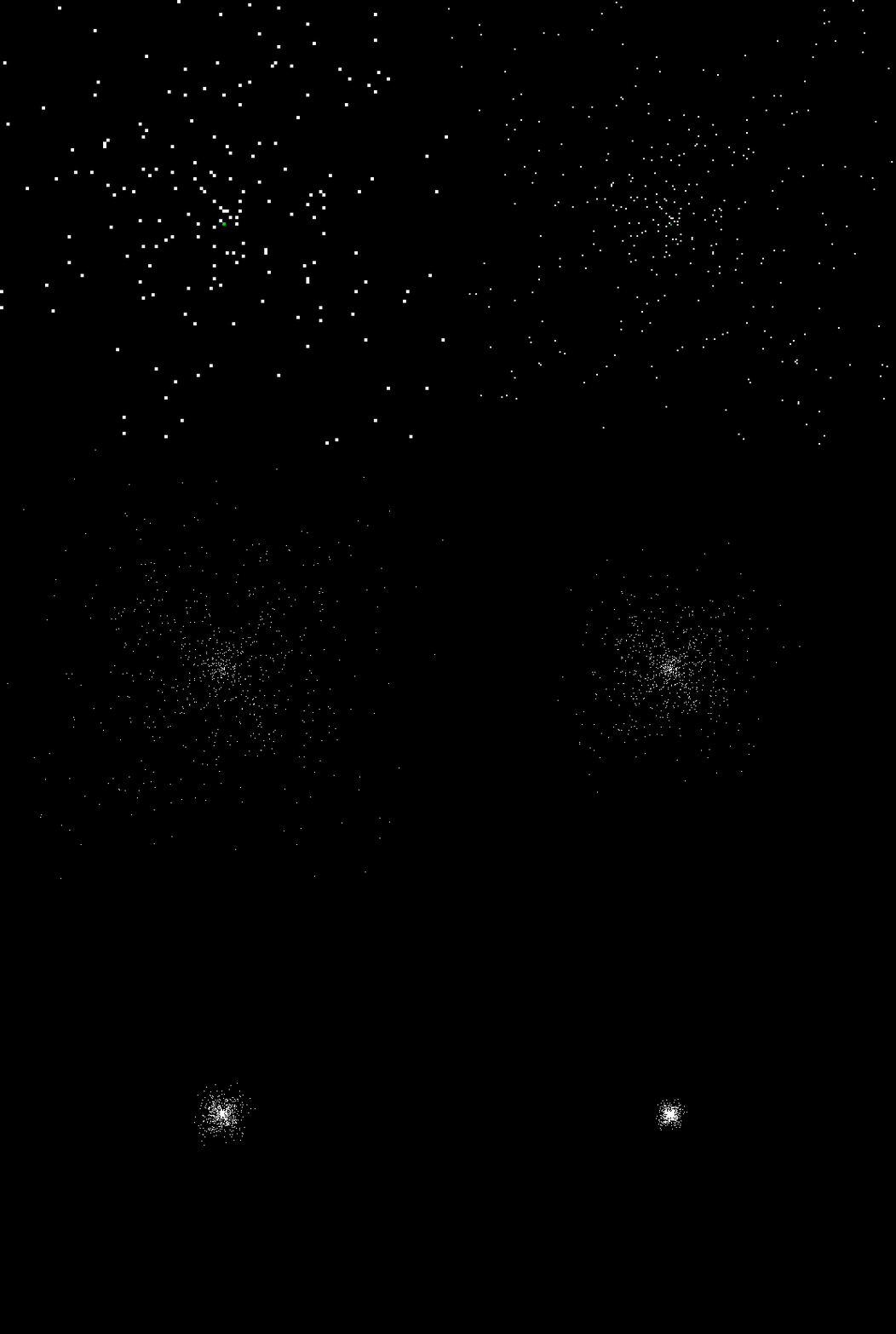
Finally, here are spirals at higher and higher resolution for digsum(fib(k)) = k in base 11:

digsum(fib(k)) = k in base 11 (low resolution)
(green square is fib(1))


digsum(fib(k)) = k in base 11 (x2 resolution)


digsum(fib(k)) = k in base 11 (x4)


digsum(fib(k)) = k in base 11 (x8)


digsum(fib(k)) = k in base 11 (x16)


digsum(fib(k)) = k in base 11 (x32)


digsum(fib(k)) = k in base 11 (x64)


digsum(fib(k)) = k in base 11 (x128)


digsum(fib(k)) = k in base 11 (animated)

Triangular Squares

The numbers that are both square and triangular are beautifully related to the best approximations to √2:

Number

Square Root

Factors of root

1 1 1
36 6 2 * 3
1225 35 5 * 7
41616 204 12 * 17

and so on.

In each case the factors of the root are the numerator and denominator of the next approximation to √2. — David Wells, The Penguin Dictionary of Curious and Interesting Mathematics (1986), entry for “36”.


Elsewhere other-accessible

A001110 — Square triangular numbers: numbers that are both triangular and square

Prime Times

The factorial of an integer is equal to that that integer multiplied by all the integers smaller than it. For example, this is factorial(7) or 7!:

7! = 7 * 6 * 5 * 4 * 3 * 2 * 1 = 5040

The primorial of a prime is equal to that that prime multiplied by all the primes smaller than it. For example, this is primorial(7):

primorial(7) = 7 * 5 * 3 * 2 = 210 = 4# (the product of the first four primes)

Here’s an interesting set of primorials incremented-by-one:

primorial(2) + 1 = 2 + 1 = 3 (prime)
primorial(3) + 1 = 2*3 + 1 = 7 (prime)
primorial(5) + 1 = 2*3*5 + 1 = 31 (prime)
primorial(7) + 1 = 2*3*5*7 + 1 = 211 (prime)
primorial(11) + 1 = 2*3*5*7*11 + 1 = 2311 (prime)
primorial(31) + 1 = 2*3*5*7*11*13*17*19*23*29*31 + 1 = 200560490131 (prime)
primorial(379) + 1 = 1,719,620,105,458,406,433,483,340,568,317,543,019,584,575,635,895,742,560,438,771,105,058,321,655,238,562,613,083,979,651,479,555,788,009,994,557,822,024,565,226,932,906,295,208,262,756,822,275,663,694,111 (prime)
primorial(1019) + 1 = 20,404,068,993,016,374,194,542,464,172,774,607,695,659,797,117,423,121,913,227,131,032,339,026,169,175,929,902,244,453,757,410,468,728,842,929,862,271,605,567,818,821,685,490,676,661,985,389,839,958,622,802,465,986,881,376,139,404,138,376,153,096,103,140,834,665,563,646,740,160,279,755,212,317,501,356,863,003,638,612,390,661,668,406,235,422,311,783,742,390,510,526,587,257,026,500,302,696,834,793,248,526,734,305,801,634,165,948,702,506,367,176,701,233,298,064,616,663,553,716,975,429,048,751,575,597,150,417,381,063,934,255,689,124,486,029,492,908,966,644,747,931 (prime)
primorial(1021) + 1 = 20,832,554,441,869,718,052,627,855,920,402,874,457,268,652,856,889,007,473,404,900,784,018,145,718,728,624,430,191,587,286,316,088,572,148,631,389,379,309,284,743,016,940,885,980,871,887,083,026,597,753,881,317,772,605,885,038,331,625,282,052,311,121,306,792,193,540,483,321,703,645,630,071,776,168,885,357,126,715,023,250,865,563,442,766,366,180,331,200,980,711,247,645,589,424,056,809,053,468,323,906,745,795,726,223,468,483,433,625,259,000,887,411,959,197,323,973,613,488,345,031,913,058,775,358,684,690,576,146,066,276,875,058,596,100,236,112,260,054,944,287,636,531 (prime)
primorial(2657) + 1 = 78,244,737,296,323,701,708,091,142,569,062,680,832,012,147,734,404,650,078,590,391,114,054,859,290,061,421,837,516,998,655,549,776,972,299,461,276,876,623,748,922,539,131,984,799,803,433,363,562,299,977,701,808,549,255,204,262,920,151,723,624,296,938,777,341,738,751,806,450,993,015,446,712,522,509,989,316,673,420,506,749,359,414,629,957,842,716,112,900,306,643,009,542,215,969,000,431,330,219,583,111,410,996,807,066,475,261,560,303,182,609,636,056,108,367,412,324,508,444,341,178,028,289,201,803,518,093,842,982,877,662,621,552,756,279,669,241,303,362,152,895,160,479,720,040,128,335,518,247,125,849,521,099,841,272,983,588,935,580,888,630,036,283,712,163,901,558,436,498,481,482,160,712,530,124,868,714,141,094,634,892,999,056,865,426,200,254,647,241,979,548,935,087,621,308,526,547,138,125,987,102,062,688,568,486,250,939,447,065,798,353,626,745,169,380,579,442,233,006,898
,444,700,264,240,321,482,823,859,842,044,524,114,576,784,795,294,818,755,525,169,192,652,108,755,230,262,128,210,258,672,754,900,845,837,728,345,782,457,465,793,874,408,469,588,052,577,208,643,754,019,053,756,394,151,041,512,099,598,925,557,724,343,099,264,685,155,934,891,439,161,866,250,113,047,185,553,511,797,406,764,115,907,248,713,405,817,594,729,550,600,082,808,324,331,387,143,679,800,355,356,811,873,430,669,962,333,651,282,822,030,473,702,042,073,141,618,450,021,084,993,659,382,646,598,194,115,178,864,433,545,186,250,667,775,794,249,961,932,761,063,071,117,967,553,887,984,011,652,643,245,393,971 (prime)
primorial(3229) + 1 = 689,481,240,122,180,255,681,227,812,346,871,771,457,221,628,238,467,511,261,402,638,443,056,696,165,896,544,725,098,860,107,293,247,422,610,010,824,870,599,655,026,129,367,004,672,337,297,193,288,816,463,520,704,235,722,580,204,218,943,598,425,089,855,869,341,564,771,022,924,163,236,141,415,235,947,085,902,422,536,824,665,765,244,189,167,643,048,218,572,769,125,400,511,177,245,717,452,516,267,205,786,258,497,574,258,715,214,994,129,786,103,824,740,384,634,788,909,041,221,747,073,062,941,769,355,745,272,170,421,584,636,198,911,899,164,272,930,590,704,655,882,680,817,754,473,306,122,122,423,384,160,639,995,940,152,584,830,810,911,265,680,382,263,051,658,031,509,463,010,733,595,465,426,943,956,643,445,876,702,680,730,987,739,513,538,299,069,540,636,616,098,525,527,546,435,002,783,615,353,417,794,625,251,129,892,373,849,727,119,530,335,366,131,575,986,221,685,088,118,143,088,371,896,087,248,659,669,154,564,925,048,225,211,644,681,303,874,490,648,860,319,990,785,185,350,796,853,298,548,942,407,689,617,641,587,755,314,125,485,345,107,782,298,938,892,240,282,038,605,672,241,010,302,874,153,509,795,545,077,305,234,459,038,983,235,361,138,814,897,166,376,363,090,128,647,084,552,385,969,054,439,430,382,421,762,883,708,894,899,853,286,109,068,224,980,793,075,241,538,872,287,253,835,877,394,821,667,363,465,425,187,353,453,157,415,169,810,167,271,517,665,273,484,442,461,468,031,313,956,356,871,467,191,959,110,440,864,194,544,244,079,053,955,897,287,010,339,385,419,923,838,571,256,564,818,350,769,518,898,003,780,557,167,344,272,499,224,580,817,920,441,512,610,104,625,622,872,289,967,615,843,092,782,763,554,732,404,239,287,463,466,833,602,966,629,613,502,579,134,371,295,289,680,374,088,987,611,189,907,873,072,122,808,833,765,972,650,050,982,877,578,244,899,073,193,043,546,490,795,625,023,568,563,926,988,371 (prime)


Elsewhere Other-Accessible

A005234 at the Online Encylopedia of Integer Sequences — “Primorial plus 1 primes: primes p such that 1 + product of primes up to p is prime”.

Fib and Let Tri

It’s a simple sequence with hidden depths:

1, 1, 2, 3, 5, 8, 13, 21, 34, 55, 89, 144, 233, 377, 610, 987, 1597, 2584, 4181, 6765, 10946, 17711, 28657, 46368, 75025, 121393, 196418, 317811, 514229, 832040, 1346269, 2178309, 3524578, 5702887, 9227465, 14930352, 24157817, 39088169, 63245986, 102334155... — A000045 at OEIS

That’s the Fibonacci sequence, probably the most famous of all integer sequences after the integers themselves (1, 2, 3, 4, 5…) and the primes (2, 3, 5, 7, 11…). It has a very simple definition: if fib(fi) is the fi-th number in the Fibonacci sequence, then fib(fi) = fib(fi-1) + fib(fi-2). By definition, fib(1) = fib(2) = 1. After that, it’s easy to generate new numbers:

2 = fib(3) = fib(1) + fib(2) = 1 + 1
3 = fib(4) = fib(2) + fib(3) = 1 + 2
5 = fib(5) = fib(3) + fib(4) = 2 + 3
8 = fib(6) = fib(4) + fib(5) = 3 + 5
13 = fib(7) = fib(5) + fib(6) = 5 + 8
21 = fib(8) = fib(6) + fib(7) = 8 + 13
34 = fib(9) = fib(7) + fib(8) = 13 + 21
55 = fib(10) = fib(8) + fib(9) = 21 + 34
89 = fib(11) = fib(9) + fib(10) = 34 + 55
144 = fib(12) = fib(10) + fib(11) = 55 + 89
233 = fib(13) = fib(11) + fib(12) = 89 + 144
377 = fib(14) = fib(12) + fib(13) = 144 + 233
610 = fib(15) = fib(13) + fib(14) = 233 + 377
987 = fib(16) = fib(14) + fib(15) = 377 + 610
[...]

How to create the Fibonacci sequence is obvious. But it’s not obvious that fib(fi) / fib(fi-1) gives you ever-better approximations to a fascinating constant called φ, the golden ratio, which is 1.618033988749894…:

1/1 = 1
2/1 = 2
3/2 = 1.5
5/3 = 1.66666...
8/5 = 1.6
13/8 = 1.625
21/13 = 1.615384...
34/21 = 1.619047...
55/34 = 1.6176470588235294117647058823...
89/55 = 1.618181818...
144/89 = 1.617977528089887640...
233/144 = 1.6180555555...
377/233 = 1.618025751072961...
610/377 = 1.618037135278514...
987/610 = 1.618032786885245...
[...]

And that’s just the start of the hidden depths in the Fibonacci sequence. I stumbled across another interesting pattern for myself a few days ago. I was looking at the sequence and one of the numbers caught my eye:

1, 1, 2, 3, 5, 8, 13, 21, 34, 55, 89, 144, 233, 377, 610, 987, 1597...

55 is a palindrome, reading the same forward and backwards. I wondered whether there were any other palindromes in the sequence (apart from the trivial single-digit palindromes 1, 1, 2, 3…). I couldn’t find any more. Nor can anyone else, apparently. But that’s in base 10. Other bases are more productive. For example, in bases 2, 3 and 4, you get this:

11 in b2 = 3
101 in b2 = 5
10101 in b2 = 21


22 in b3 = 8
111 in b3 = 13
22122 in b3 = 233


11 in b4 = 5
111 in b4 = 21
202 in b4 = 34
313 in b4 = 55


I decided to concentrate on tripals, or palindromes with three digits. I started looking at bases that set records for the greatest number of tripals. And there are some interesting patterns in the digits of the tripals in these bases (when a digit > 9, the digit is represented inside square brackets — see base-29 and higher). See how quickly you can spot the patterns:

Palindromic Fibonacci numbers in base-4

111 in b4 (fib=21, fi=8)
202 in b4 (fib=34, fi=9)
313 in b4 (fib=55, fi=10)

4 = 2^2 (pal=3)


Palindromic Fibonacci numbers in base-11

121 in b11 (fib=144, fi=12)
313 in b11 (fib=377, fi=14)
505 in b11 (fib=610, fi=15)
818 in b11 (fib=987, fi=16)

11 is prime (pal=4)


Palindromic Fibonacci numbers in base-29

151 in b29 (fib=987, fi=16)
323 in b29 (fib=2584, fi=18)
818 in b29 (fib=6765, fi=20)
[13]0[13] in b29 (fib=10946, fi=21)
[21]1[21] in b29 (fib=17711, fi=22)

29 is prime (pal=5)


Palindromic Fibonacci numbers in base-76

1[13]1 in b76 (fib=6765, fi=20)
353 in b76 (fib=17711, fi=22)
828 in b76 (fib=46368, fi=24)
[21]1[21] in b76 (fib=121393, fi=26)
[34]0[34] in b76 (fib=196418, fi=27)
[55]1[55] in b76 (fib=317811, fi=28)

76 = 2^2 * 19 (pal=6)


Palindromic Fibonacci numbers in base-199

1[34]1 in b199 (fib=46368, fi=24)
3[13]3 in b199 (fib=121393, fi=26)
858 in b199 (fib=317811, fi=28)
[21]2[21] in b199 (fib=832040, fi=30)
[55]1[55] in b199 (fib=2178309, fi=32)
[89]0[89] in b199 (fib=3524578, fi=33)
[144]1[144] in b199 (fib=5702887, fi=34)

199 is prime (pal=7)


Palindromic Fibonacci numbers in base-521

1[89]1 in b521 (fib=317811, fi=28)
3[34]3 in b521 (fib=832040, fi=30)
8[13]8 in b521 (fib=2178309, fi=32)
[21]5[21] in b521 (fib=5702887, fi=34)
[55]2[55] in b521 (fib=14930352, fi=36)
[144]1[144] in b521 (fib=39088169, fi=38)
[233]0[233] in b521 (fib=63245986, fi=39)
[377]1[377] in b521 (fib=102334155, fi=40)

521 is prime (pal=8)


Palindromic Fibonacci numbers in base-1364

1[233]1 in b1364 (fib=2178309, fi=32)
3[89]3 in b1364 (fib=5702887, fi=34)
8[34]8 in b1364 (fib=14930352, fi=36)
[21][13][21] in b1364 (fib=39088169, fi=38)
[55]5[55] in b1364 (fib=102334155, fi=40)
[144]2[144] in b1364 (fib=267914296, fi=42)
[377]1[377] in b1364 (fib=701408733, fi=44)
[610]0[610] in b1364 (fib=1134903170, fi=45)
[987]1[987] in b1364 (fib=1836311903, fi=46)

1364 = 2^2 * 11 * 31 (pal=9)


Two patterns are quickly obvious. Every digit in the tripals is a Fibonacci number. And the middle digit of one Fibonacci tripal, fib(fi), becomes fib(fi-2) in the next tripal, while fib(fi), the first and last digits (which are identical), becomes fib(fi+2) in the next tripal.

But what about the bases? If you’re an expert in the Fibonacci sequence, you’ll spot the pattern at work straight away. I’m not an expert, but I spotted it in the end. Here are the first few bases setting records for the numbers of Fibonacci tripals:

4, 11, 29, 76, 199, 521, 1364, 3571, 9349, 24476, 64079, 167761, 439204, 1149851, 3010349, 7881196...

These numbers come from the Lucas sequence, which is closely related to the Fibonacci sequence. But where fib(1) = fib(2) = 1, luc(1) = 1 and luc(2) = 3. After that, luc(li) = luc(li-2) + luc(li-1):

1, 3, 4, 7, 11, 18, 29, 47, 76, 123, 199, 322, 521, 843, 1364, 2207, 3571, 5778, 9349, 15127, 24476, 39603, 64079, 103682, 167761, 271443, 439204, 710647, 1149851, 1860498, 3010349, 4870847, 7881196... — A000204 at OEIS

It seems that every second number from 4 in the Lucas sequence supplies a base in which 1) the number of Fibonacci tripals sets a new record; 2) every digit of the Fibonacci tripals is itself a Fibonacci number.

But can I prove that this is always true? No. And do I understand why these patterns exist? No. My simple search for palindromes in the Fibonacci sequence soon took me far out of my mathematical depth. But it’s been fun to find huge bases like this in which every digit of every Fibonacci tripal is itself a Fibonacci number:

Palindromic Fibonacci numbers in base-817138163596

1[139583862445]1 in b817138163596 (fib=781774079430987230203437, fi=116)
3[53316291173]3 in b817138163596 (fib=2046711111473984623691759, fi=118)
8[20365011074]8 in b817138163596 (fib=5358359254990966640871840, fi=120)
[21][7778742049][21] in b817138163596 (fib=14028366653498915298923761, fi=122)
[55][2971215073][55] in b817138163596 (fib=36726740705505779255899443, fi=124)
[144][1134903170][144] in b817138163596 (fib=96151855463018422468774568, fi=126)
[377][433494437][377] in b817138163596 (fib=251728825683549488150424261, fi=128)
[987][165580141][987] in b817138163596 (fib=659034621587630041982498215, fi=130)
[2584][63245986][2584] in b817138163596 (fib=1725375039079340637797070384, fi=132)
[6765][24157817][6765] in b817138163596 (fib=4517090495650391871408712937, fi=134)
[17711][9227465][17711] in b817138163596 (fib=11825896447871834976429068427, fi=136)
[46368][3524578][46368] in b817138163596 (fib=30960598847965113057878492344, fi=138)
[121393][1346269][121393] in b817138163596 (fib=81055900096023504197206408605, fi=140)
[317811][514229][317811] in b817138163596 (fib=212207101440105399533740733471, fi=142)
[832040][196418][832040] in b817138163596 (fib=555565404224292694404015791808, fi=144)
[2178309][75025][2178309] in b817138163596 (fib=1454489111232772683678306641953, fi=146)
[5702887][28657][5702887] in b817138163596 (fib=3807901929474025356630904134051, fi=148)
[14930352][10946][14930352] in b817138163596 (fib=9969216677189303386214405760200, fi=150)
[39088169][4181][39088169] in b817138163596 (fib=26099748102093884802012313146549, fi=152)
[102334155][1597][102334155] in b817138163596 (fib=68330027629092351019822533679447, fi=154)
[267914296][610][267914296] in b817138163596 (fib=178890334785183168257455287891792, fi=156)
[701408733][233][701408733] in b817138163596 (fib=468340976726457153752543329995929, fi=158)
[1836311903][89][1836311903] in b817138163596 (fib=1226132595394188293000174702095995, fi=160)
[4807526976][34][4807526976] in b817138163596 (fib=3210056809456107725247980776292056, fi=162)
[12586269025][13][12586269025] in b817138163596 (fib=8404037832974134882743767626780173, fi=164)
[32951280099]5[32951280099] in b817138163596 (fib=22002056689466296922983322104048463, fi=166)
[86267571272]2[86267571272] in b817138163596 (fib=57602132235424755886206198685365216, fi=168)
[225851433717]1[225851433717] in b817138163596 (fib=150804340016807970735635273952047185, fi=170)
[365435296162]0[365435296162] in b817138163596 (fib=244006547798191185585064349218729154, fi=171)
[591286729879]1[591286729879] in b817138163596 (fib=394810887814999156320699623170776339, fi=172)

817138163596 = 2^2 * 229 * 9349 * 95419 (pal=30)

Six Mix Trix

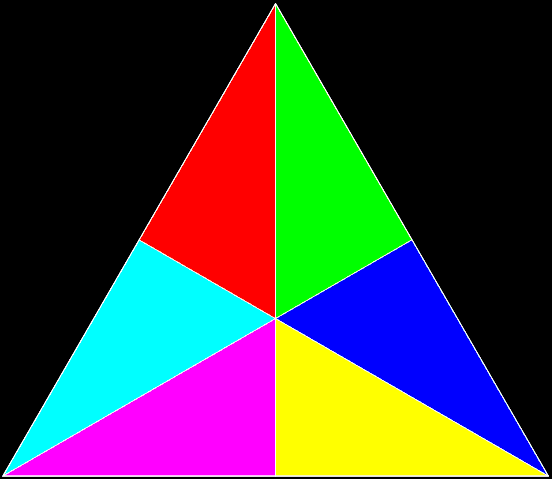
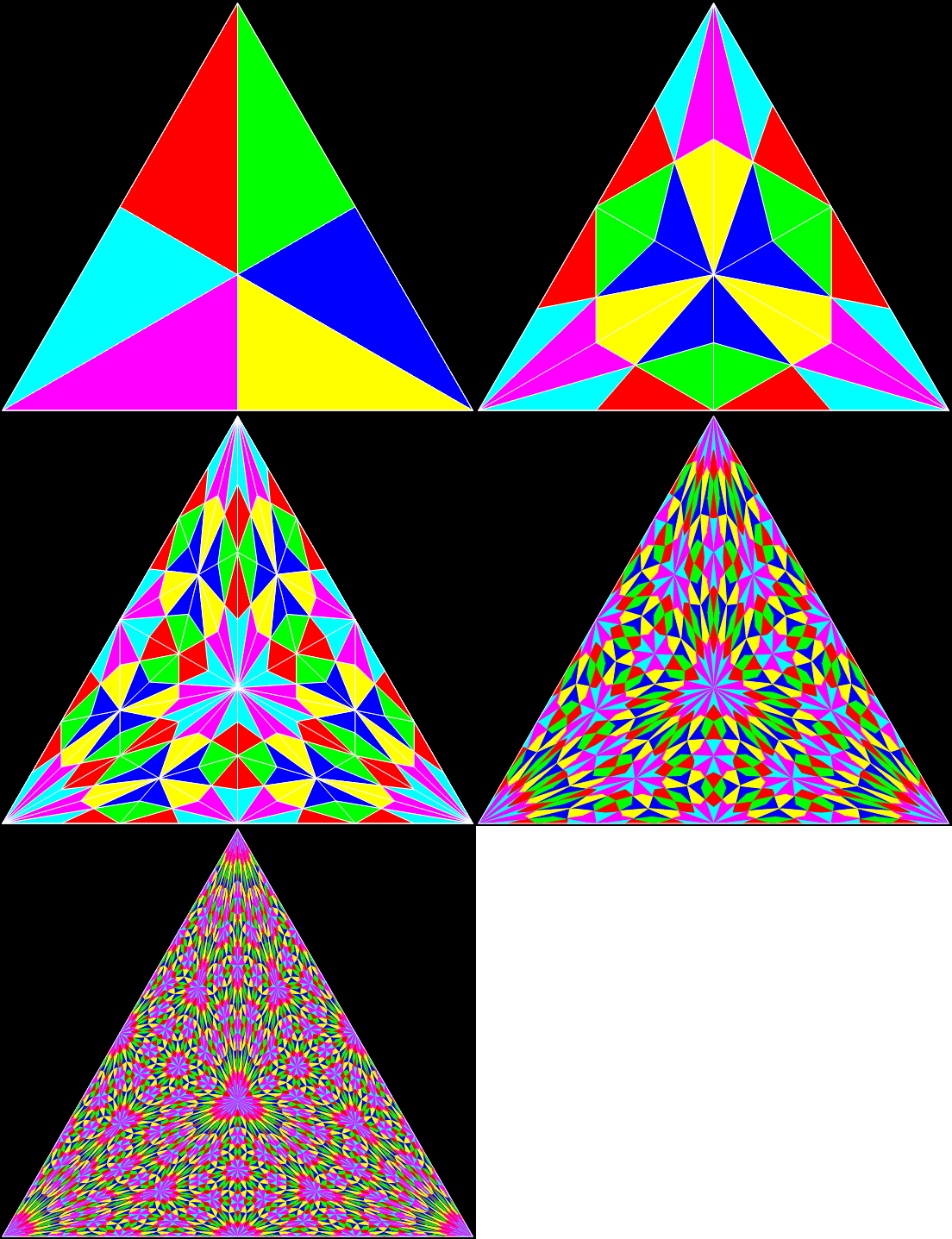
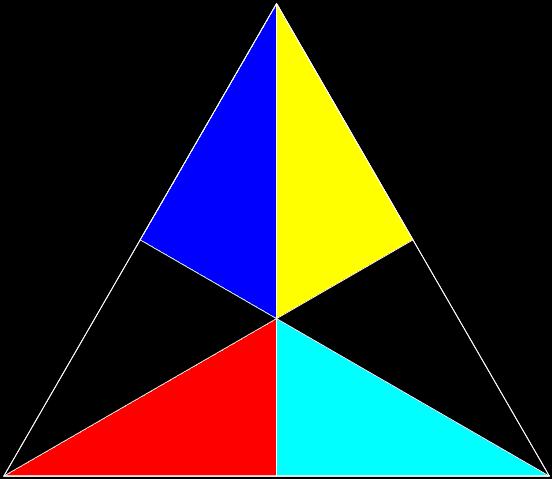
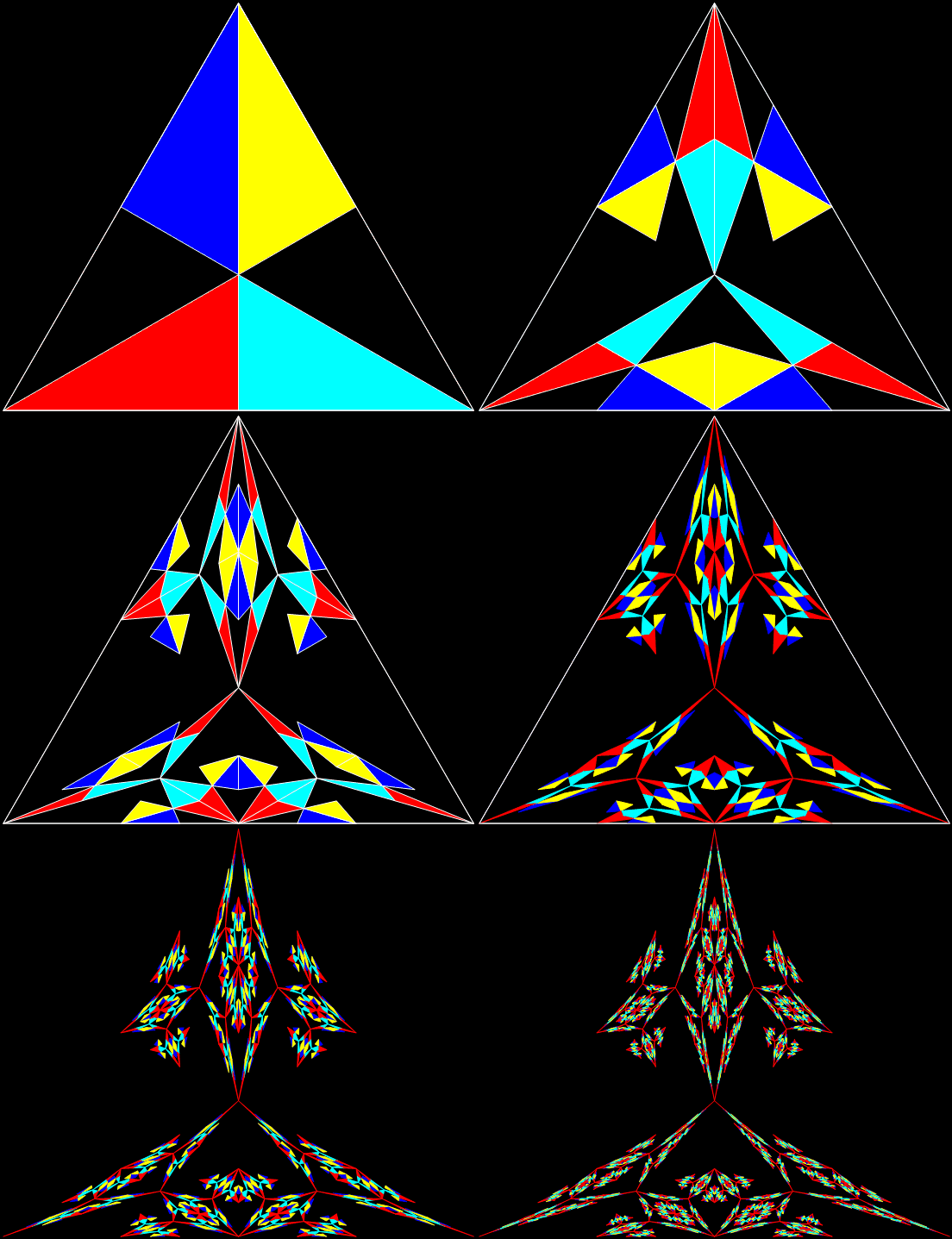
Here’s an equilateral triangle divided into six smaller triangles:

Equilateral triangle divided into six irregular triangles (Stage #1)


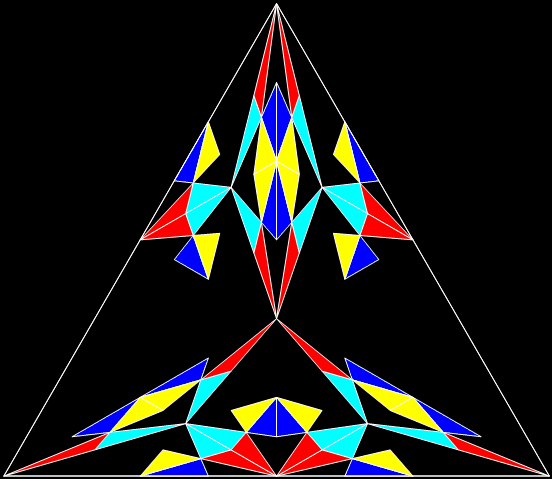
Now keep on dividing:

Stage #2


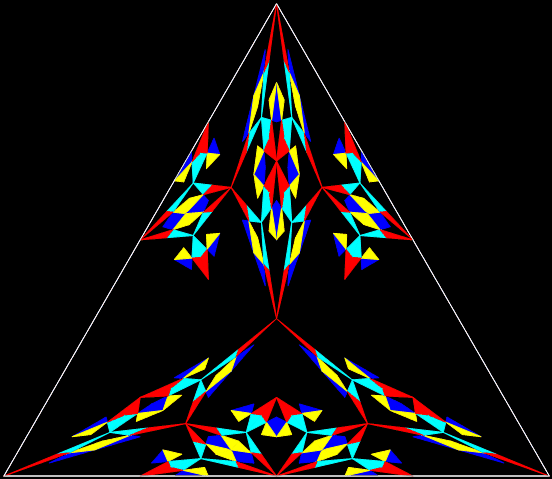
Stage #3


Stage #4


Stage #5


Equilateral triangle dividing into six irregular triangles (animated)


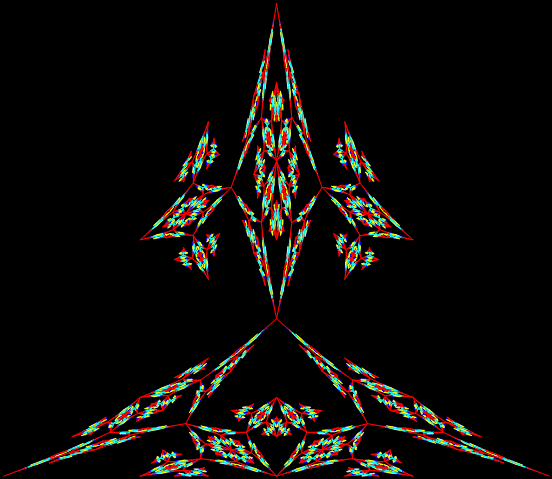
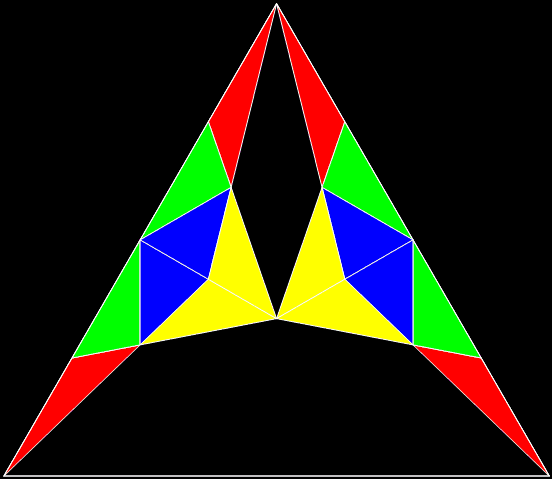
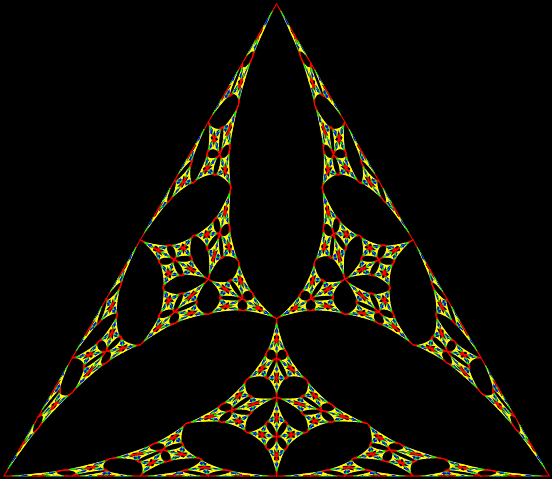
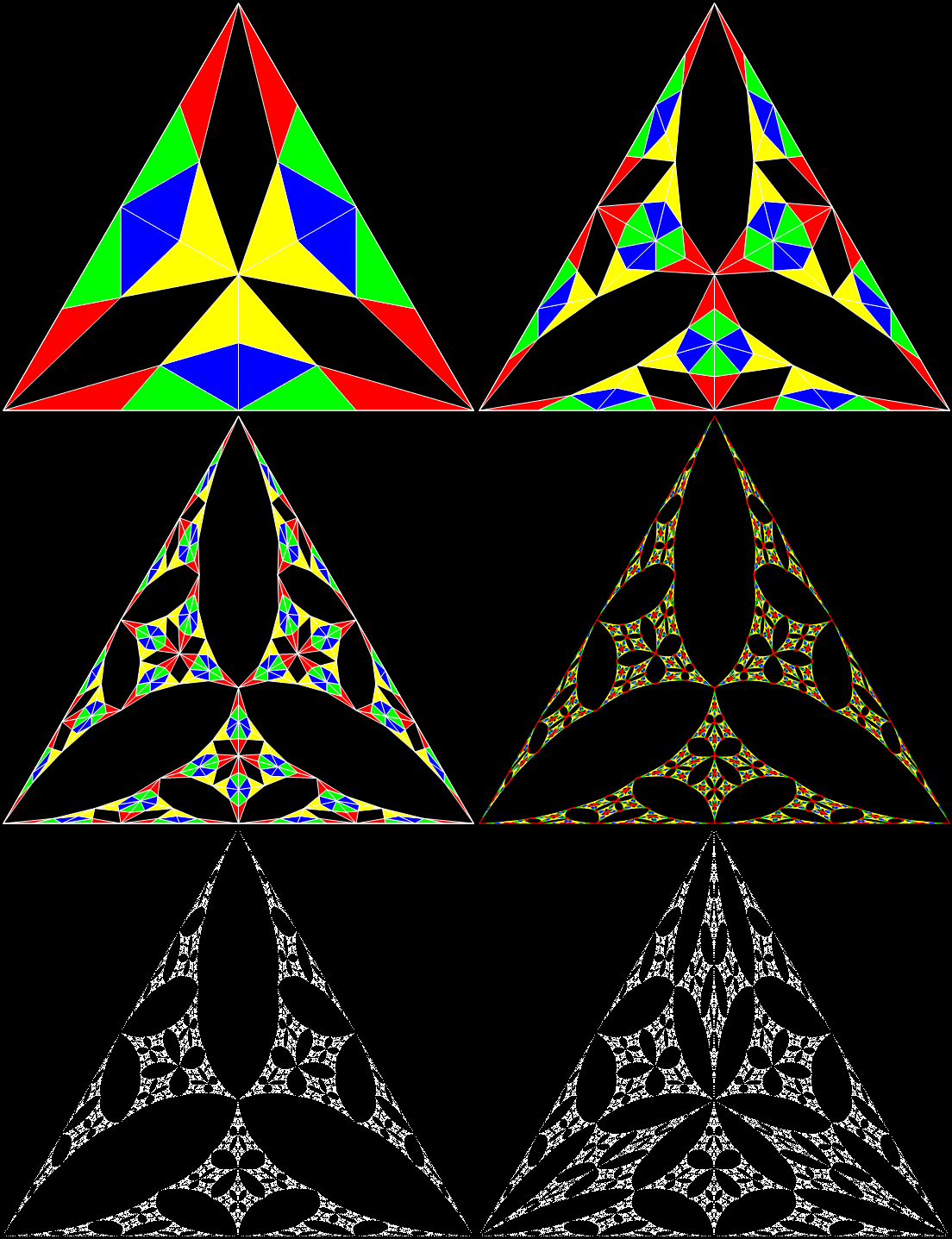
But what happens if you divide the triangle, then discard some of the sub-triangles, then repeat? You get a self-similar shape called a fractal:

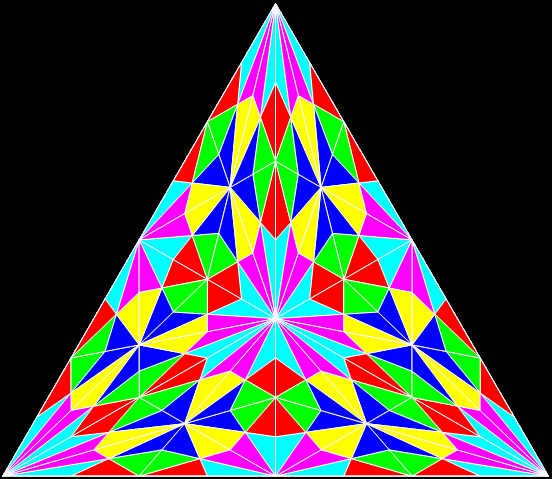
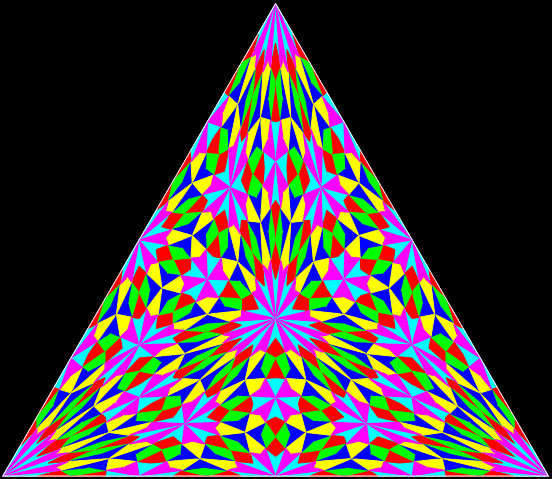
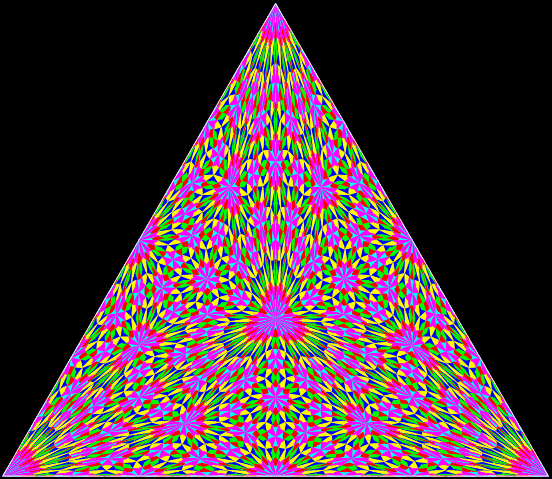
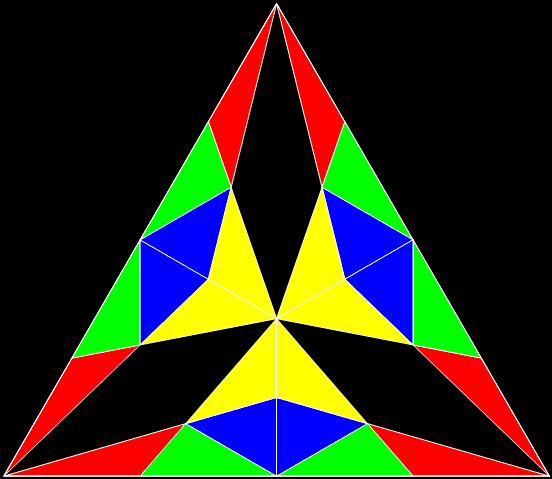
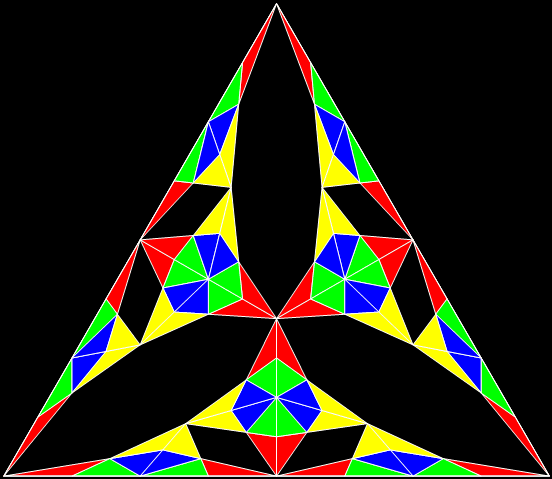
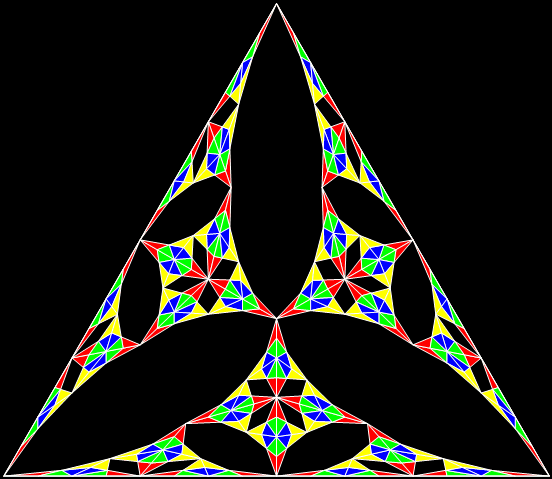
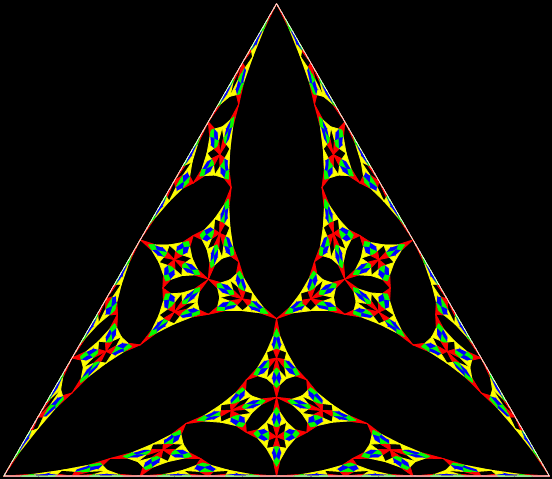
Divide-and-discard stage #1


Stage #2


Stage #3


Stage #4


Stage #5


Stage #6


Triangle fractal (animated)


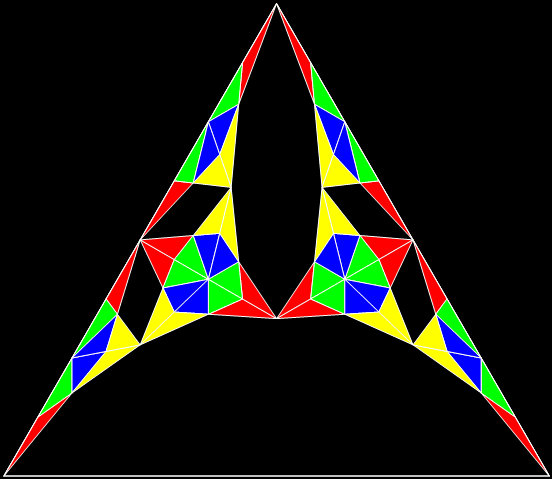
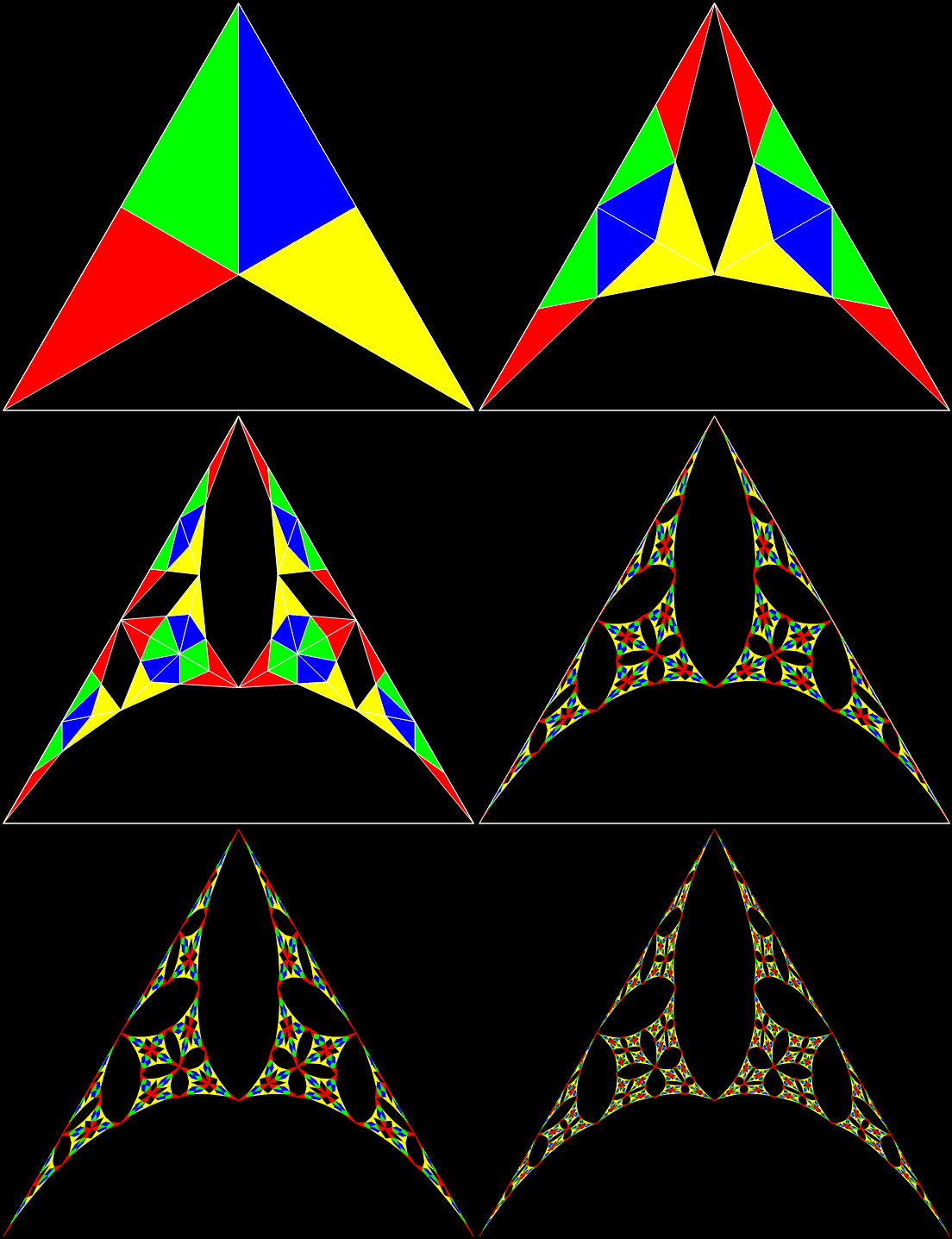
Here’s another example:

Divide-and-discard stage #1


Stage #2


Stage #3


Stage #4


Stage #5


Stage #6


Stage #7


Triangle fractal (animated)


You can also delay the divide-and-discard to create a more symmetrical fractal, like this:

Delayed divide-and-discard stage #1


Stage #2


Stage #3


Stage #4


Stage #5


Stage #6


Stage #7


Triangle fractal (animated)


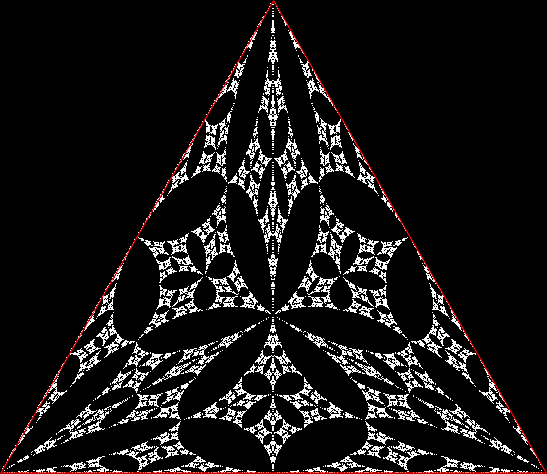
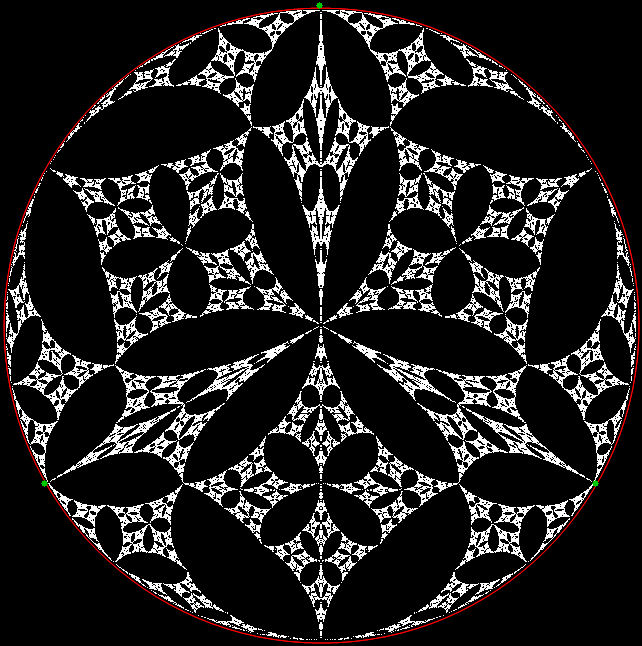
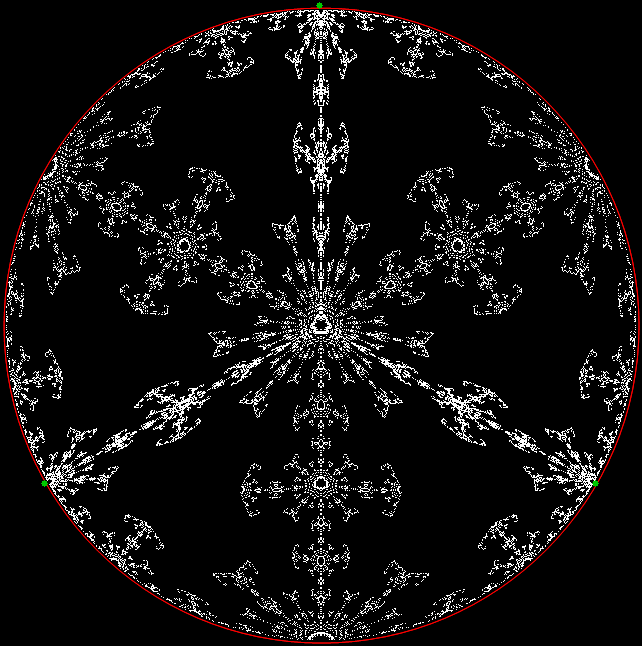
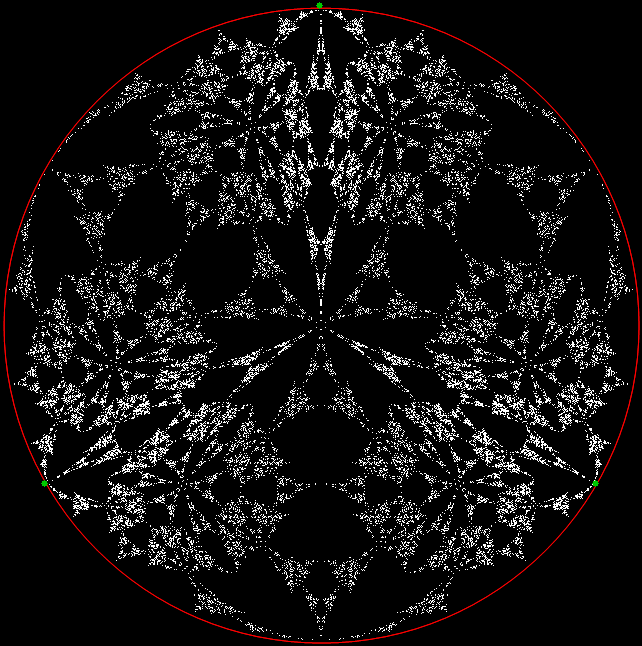
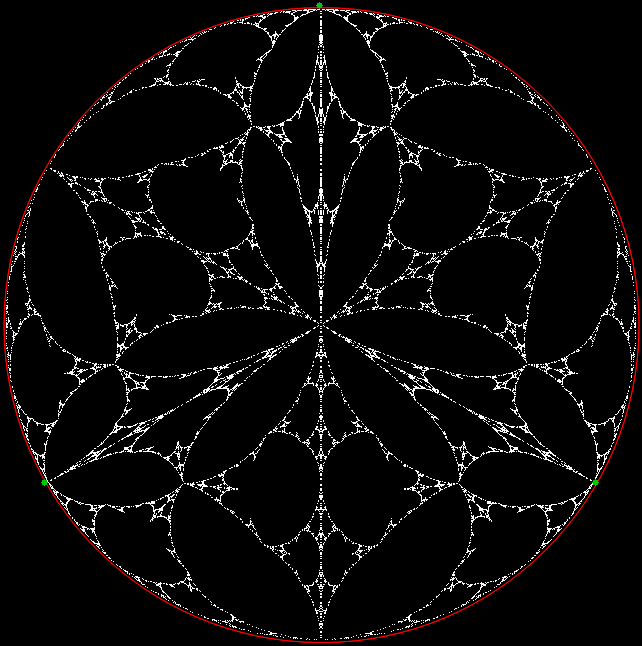
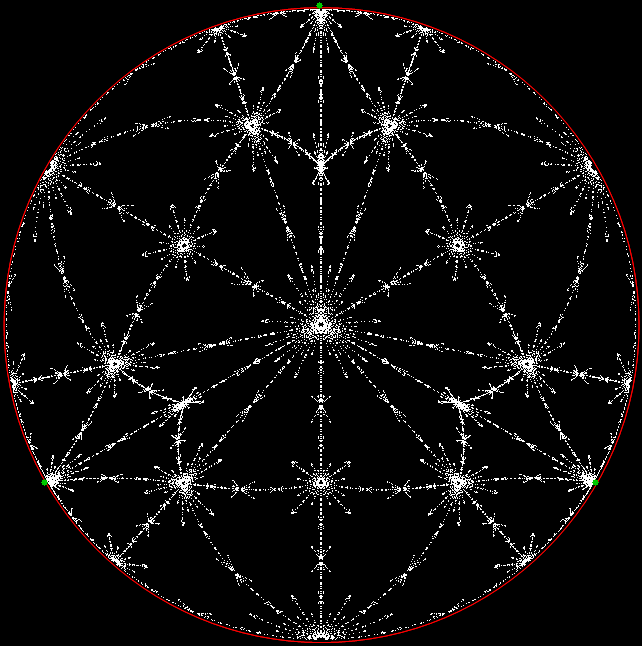
What next? You can use trigonometry to turn the cramped triangle into a circle:

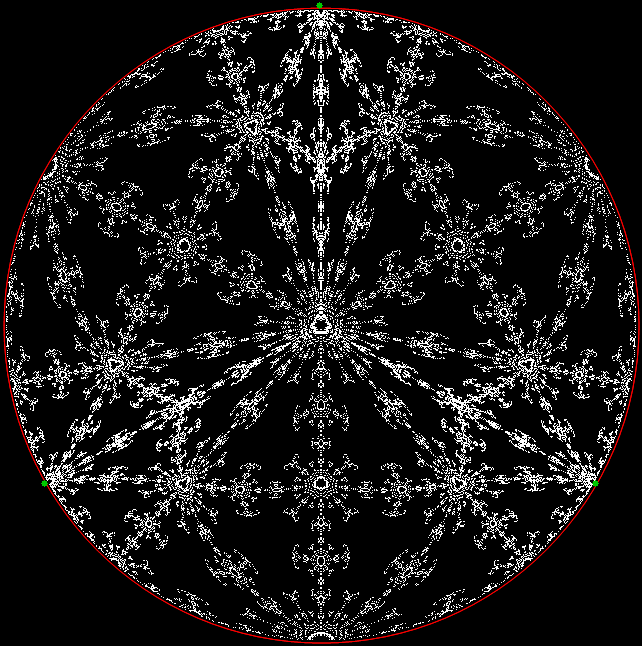
Triangular fractal

Circular fractal
(Open in new window for full image)


Triangle-to-circle (animated)


Here’s another example:

Triangular fractal

Circular fractal


Triangle-to-circle (animated)


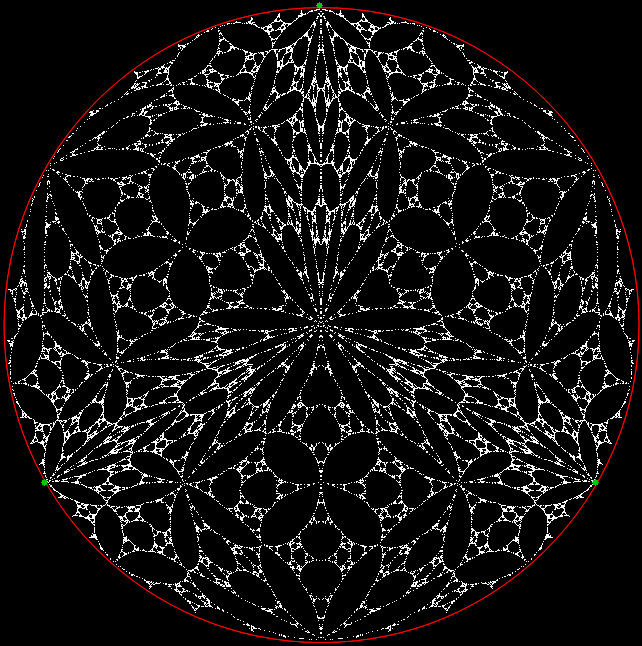
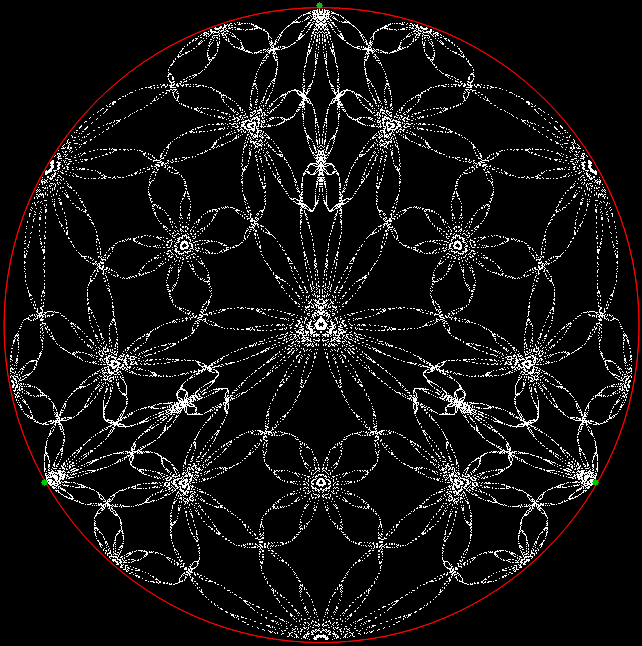
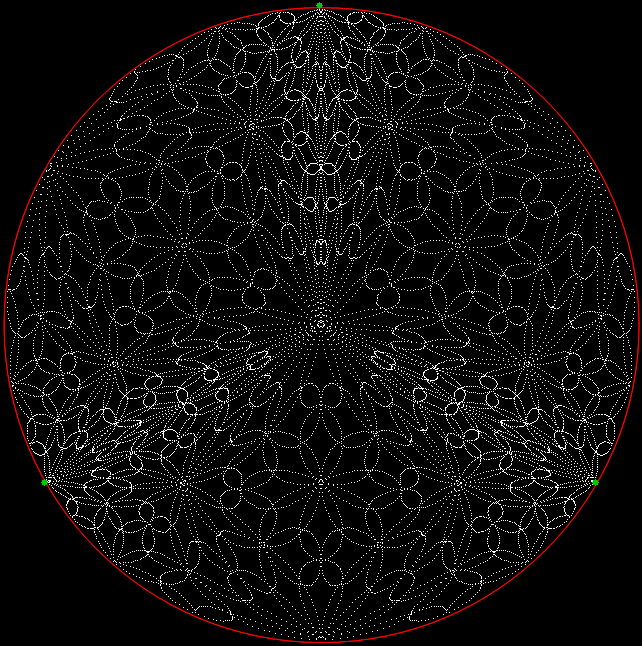
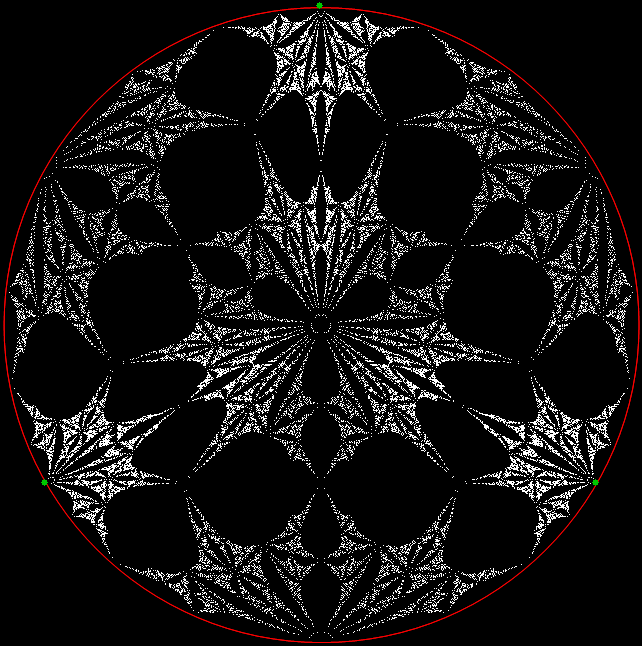
And below are some more circular fractals converted from triangular fractals. Some of them look like distorted skulls or transdimensional Lovecraftian monsters:

(Open in new window for full image)


Previous Pre-Posted

Circus Trix — an earlier look at sextally-divided-equilateral-triangle fractals

Square’s Flair

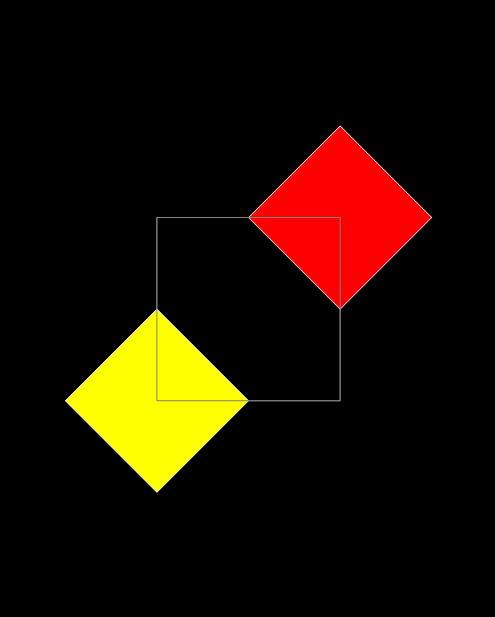
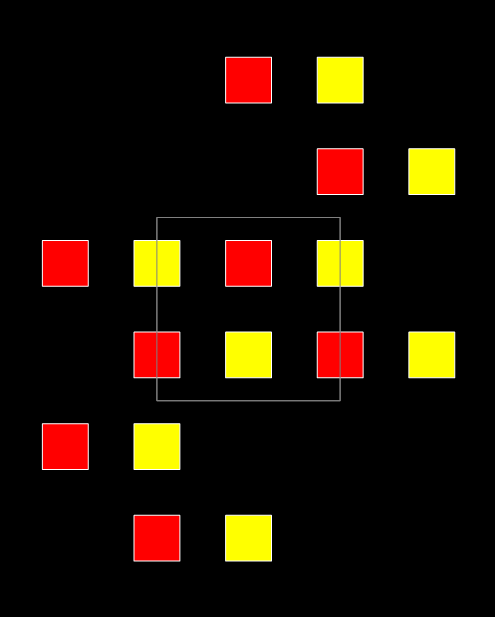
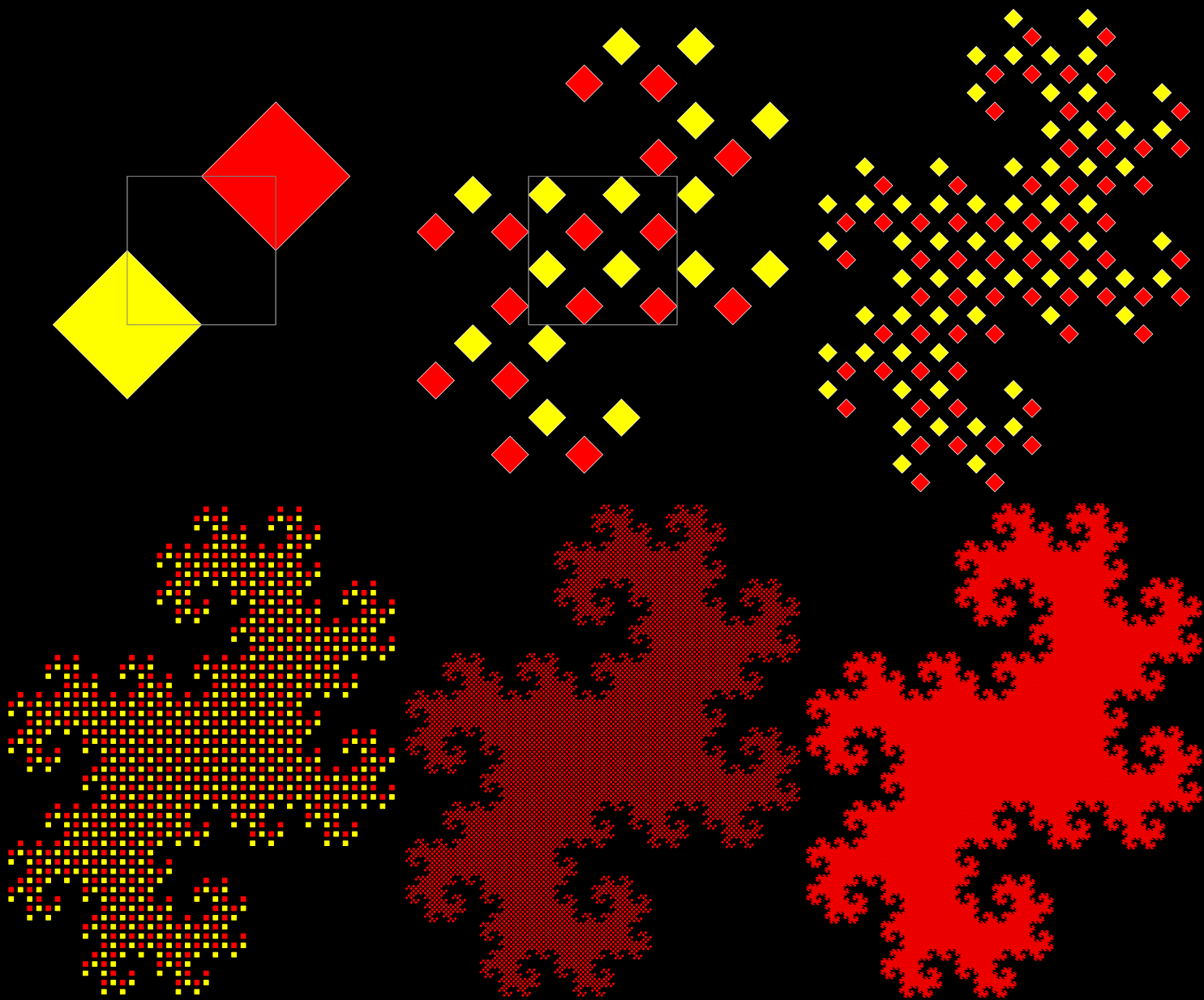
If you want to turn banality into beauty, start here with three staid and static squares:

Stage #1


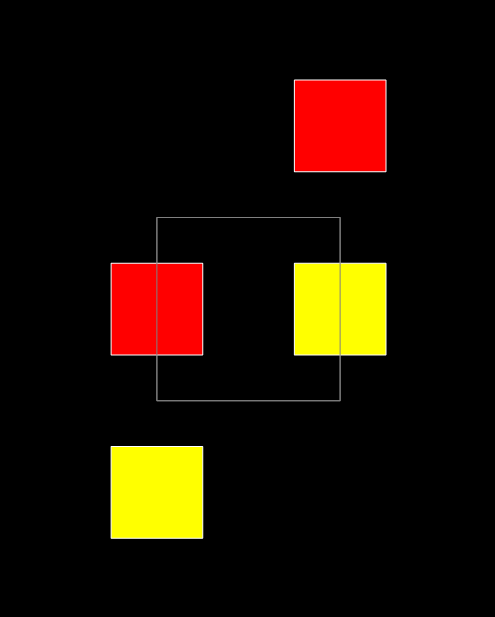
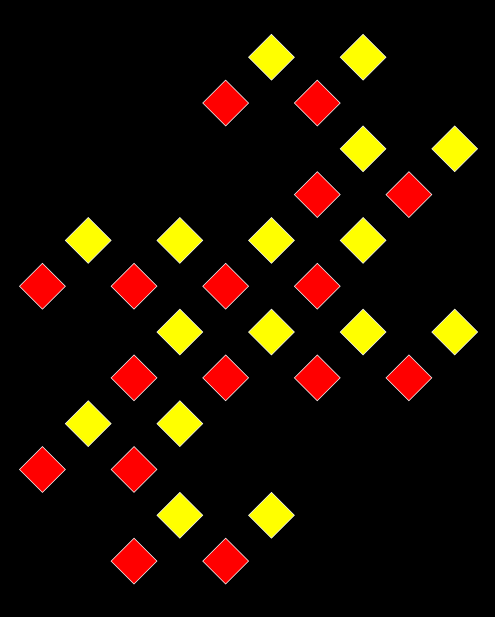
Now replace each red and yellow square with two new red and yellow squares orientated in the same way to the original square:

Stage #2


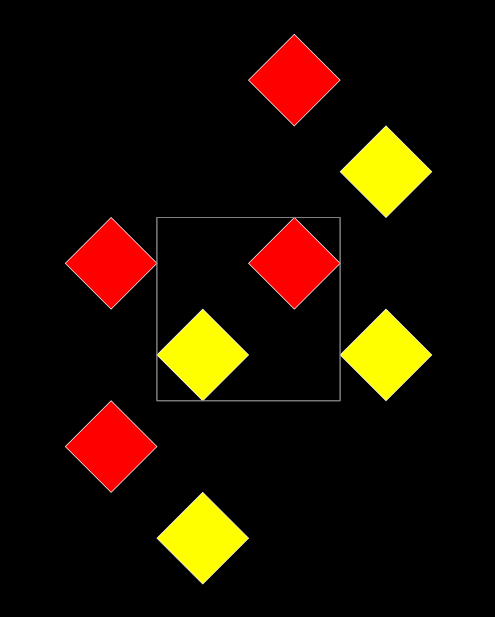
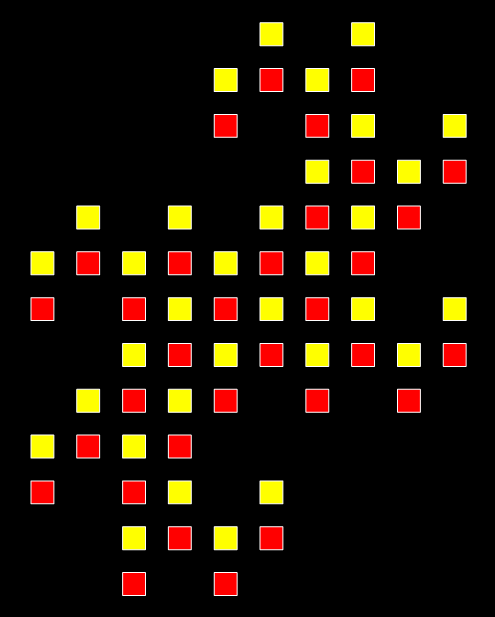
And repeat:

Stage #3


Stage #4


Stage #5


Stage #6


Stage #7


Stage #8


Stage #9


Stage #10


Stage #11


Stage #12


Stage #13


Stage #14


Stage #15


Stage #16


Stage #17


Stage #18


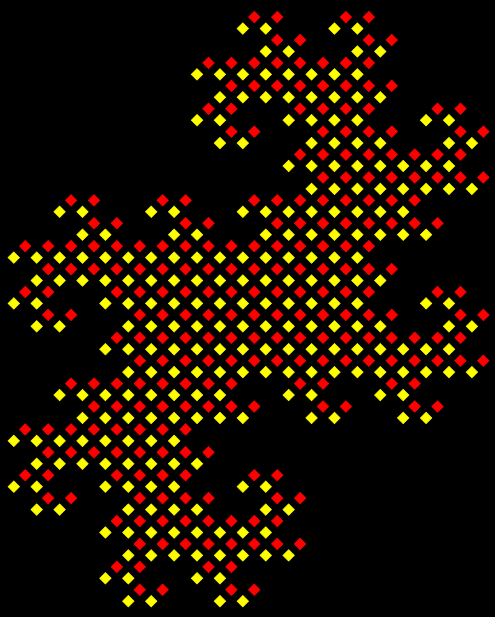
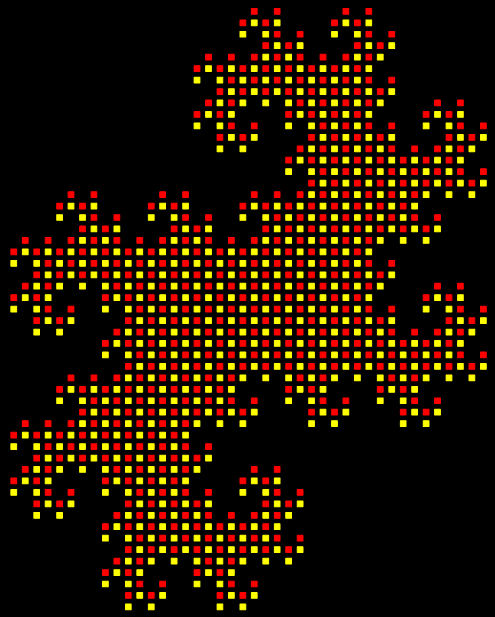
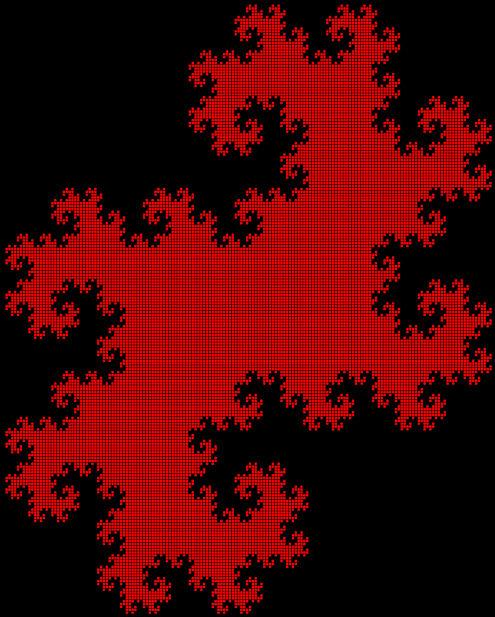
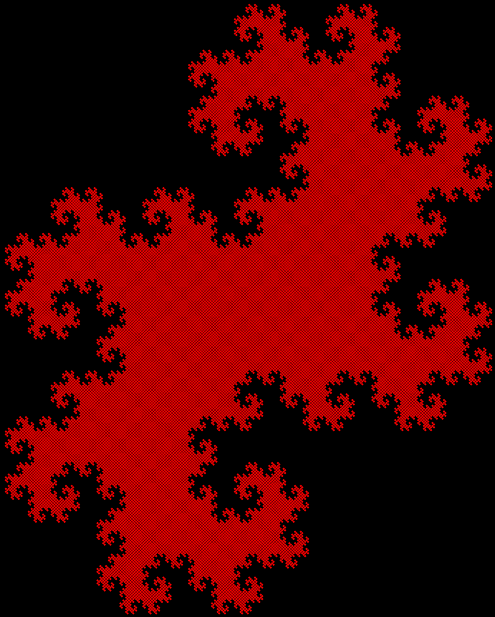
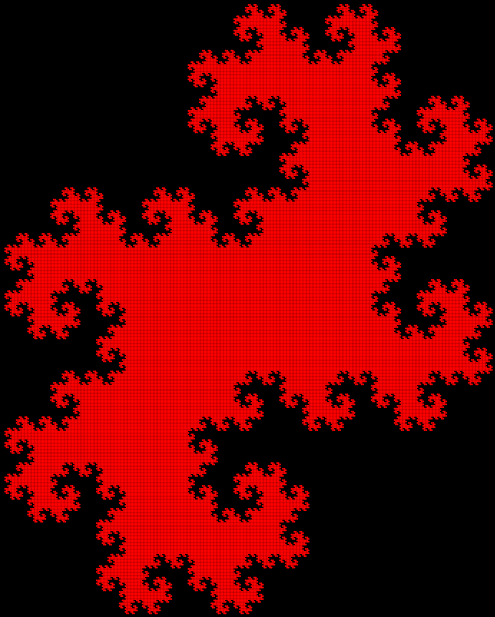
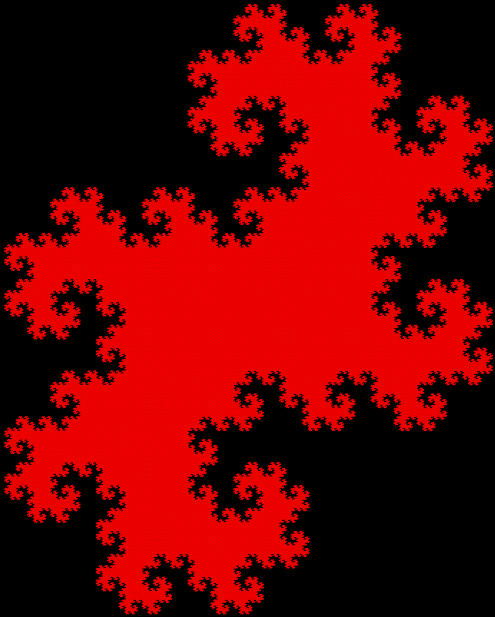
And you arrive in the end at a fractal called a dragon curve:

Dragon curve


Dragon curve (animated)


Elsewhere other-engageable

Curvous Energy — an introduction to dragon curves
All Posts — about dragon curves

Spiral Artefact

What’s the next number in this sequence of integers?


5, 14, 19, 23, 28, 32, 37, 41, 46, 50, 55... (A227793 at the OEIS)

It shouldn’t be hard to work out that it’s 64 — the sum-of-digits of n is divisible by 5, i.e., digsum(n) mod 5 = 0. Now try summing the numbers in that sequence:


5 + 14 = 19
19 + 19 = 38
38 + 23 = 61
61 + 28 = 89
89 + 32 = 121
121 + 37 = 158
158 + 41 = 199
199 + 46 = 245
[...]

Here are the cumulative sums as another sequence:


5, 19, 38, 61, 89, 121, 158, 199, 245, 295, 350, 414, 483, 556, 634, 716, 803, 894, 990, 1094, 1203, 1316, 1434, 1556, 1683, 1814, 1950, 2090, 2235, 2389, 2548, 2711, 2879, 3051, 3228, 3409, 3595, 3785, 3980, 4183, 4391, 4603, 4820, 5041, 5267, 5497, 5732, 5976, 6225...

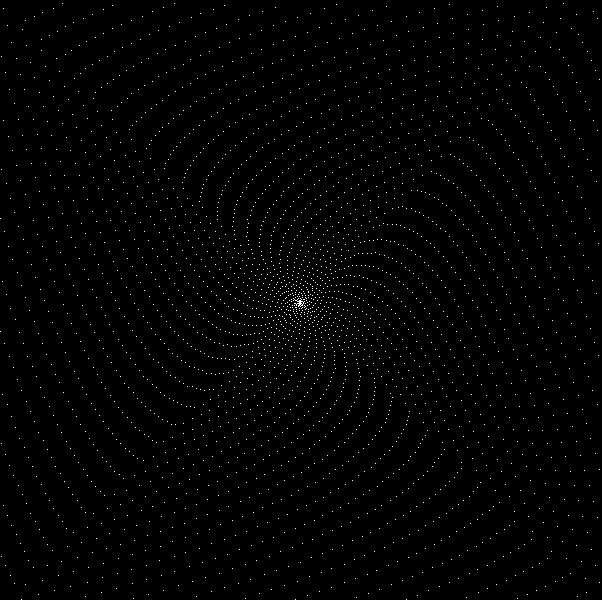
And there’s that cumulative-sum sequence represented as a spiral:

Spiral for cumulative sum of n where digsum(n) mod 5 = 0


You can see how the spiral is created by following 0,1,2,3,4,5,6,7,8,9,A,B,C,D,E… from the center:


ZYXWVU
GFEDCT
H432BS
I501AR
J6789Q
KLMNOP

What about other values for the cumulative sums of digsum(n) mod m = 0? Here’s m = 2,3,4,5,6,7:

Spiral for cumulative sum of n where digsum(n) mod 2 = 0
s1 = 2, 4, 6, 8, 11, 13, 15, 17, 19, 20, 22…
s2 = 2, 6, 12, 20, 31, 44, 59, 76, 95, 115… (cumulative sum of s1)


sum of digsum(n) mod 3 = 0
s1 = 3, 6, 9, 12, 15, 18, 21, 24, 27, 30, 33…
s2 = 3, 9, 18, 30, 45, 63, 84, 108, 135, 165…


sum of digsum(n) mod 4 = 0
s1 = 4, 8, 13, 17, 22, 26, 31, 35, 39, 40, 44…
s2 = 4, 12, 25, 42, 64, 90, 121, 156, 195, 235…


sum of digsum(n) mod 5 = 0
s1 = 5, 14, 19, 23, 28, 32, 37, 41, 46, 50, 55…
s2 = 5, 19, 38, 61, 89, 121, 158, 199, 245, 295…


sum of digsum(n) mod 6 = 0
s1 = 6, 15, 24, 33, 39, 42, 48, 51, 57, 60, 66…
s2 = 6, 21, 45, 78, 117, 159, 207, 258, 315, 375…


sum of digsum(n) mod 7 = 0
s1 = 7, 16, 25, 34, 43, 52, 59, 61, 68, 70, 77…
s2 = 7, 23, 48, 82, 125, 177, 236, 297, 365, 435…


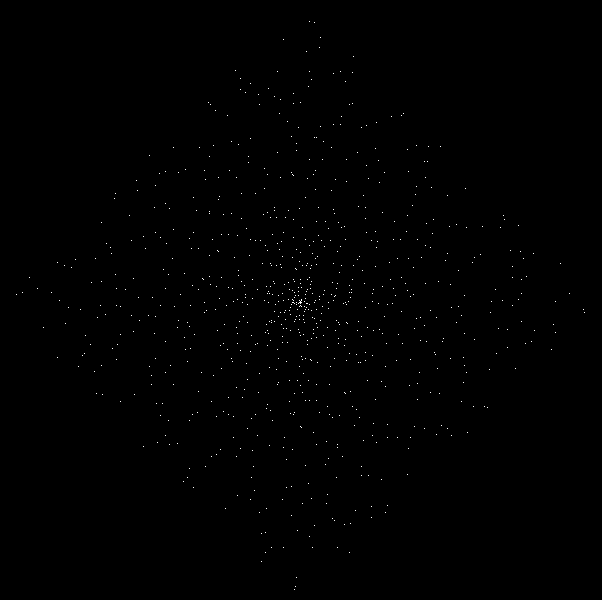
The spiral for m = 2 is strange, but the spirals are similar after that. Until m = 8, when something strange happens again:

sum of digsum(n) mod 8 = 0
s1 = 8, 17, 26, 35, 44, 53, 62, 71, 79, 80, 88…
s2 = 8, 25, 51, 86, 130, 183, 245, 316, 395, 475…


Then the spirals return to normal for m = 9, 10:

sum of digsum(n) mod 9 = 0
s1 = 9, 18, 27, 36, 45, 54, 63, 72, 81, 90, 99…
s2 = 9, 27, 54, 90, 135, 189, 252, 324, 405, 495…


sum of digsum(n) mod 10 = 0
s1 = 19, 28, 37, 46, 55, 64, 73, 82, 91, 109, 118…
s2 = 19, 47, 84, 130, 185, 249, 322, 404, 495, 604…


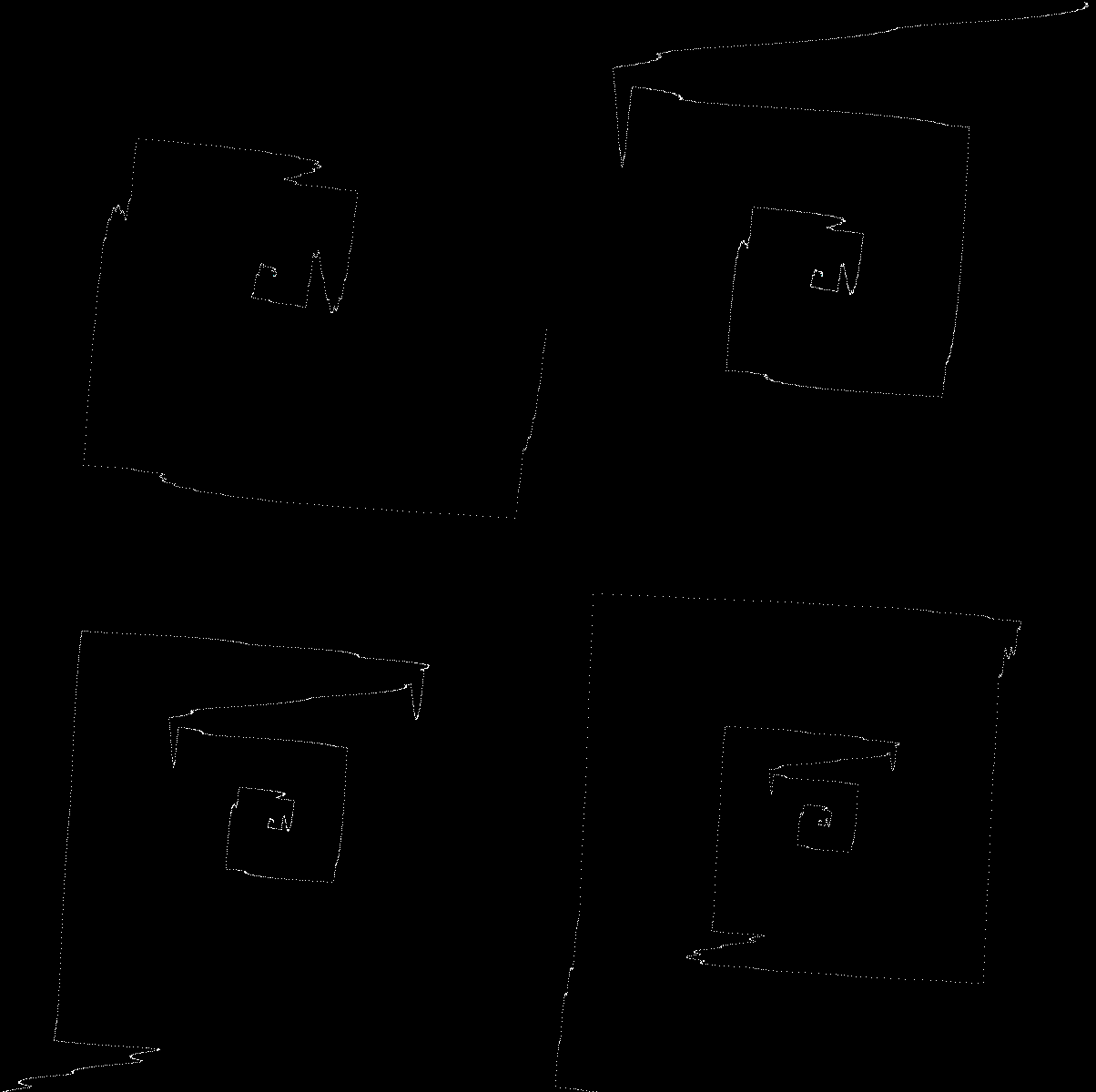
Here’s an animated gif of m = 8 at higher and higher resolution:

sum of digsum(n) mod 8 = 0 (animated gif)
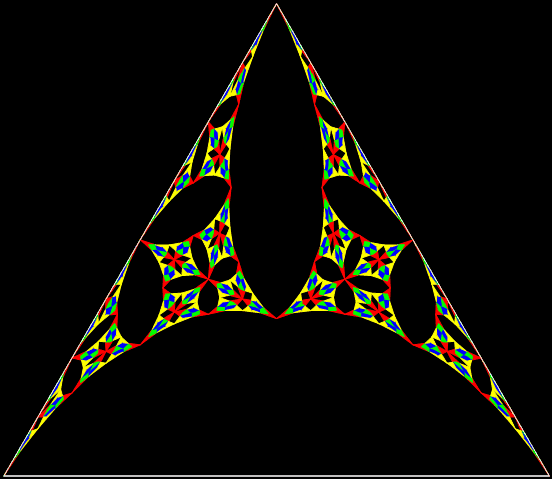

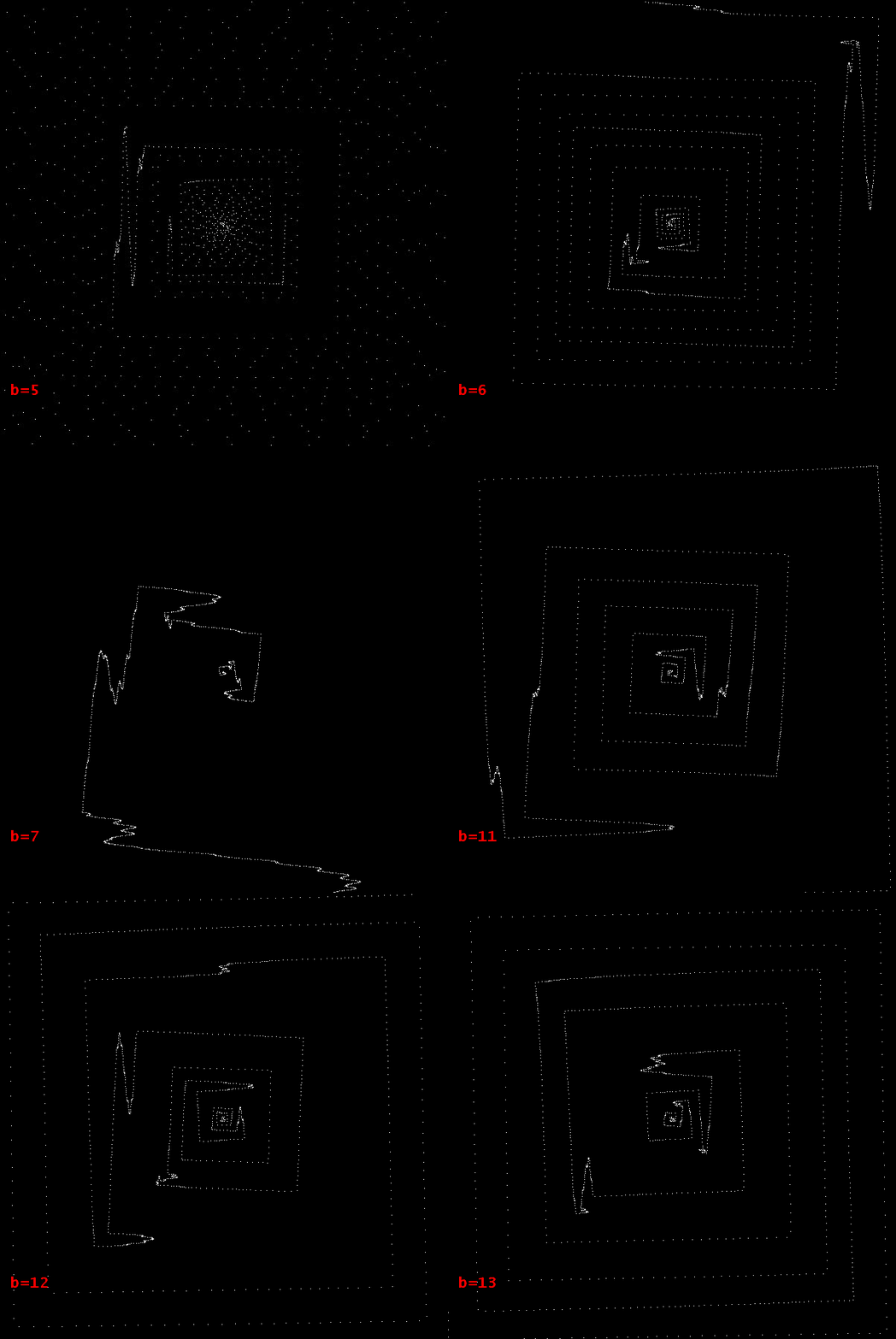
You might think this strange behavior is dependant on the base in which the dig-sum is calculated. It isn’t. Here’s an animated gif for other bases in which the mod-8 spiral behaves strangely:
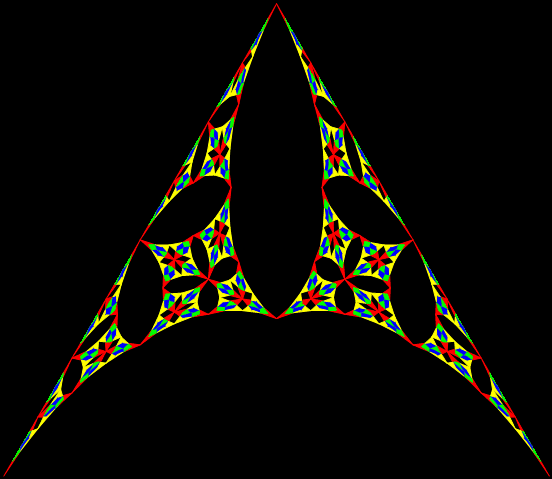
sum of digsum(n) mod 8 = 0 in base b = 5, 6, 7, 9, 11, 12, 13 (animated gif)
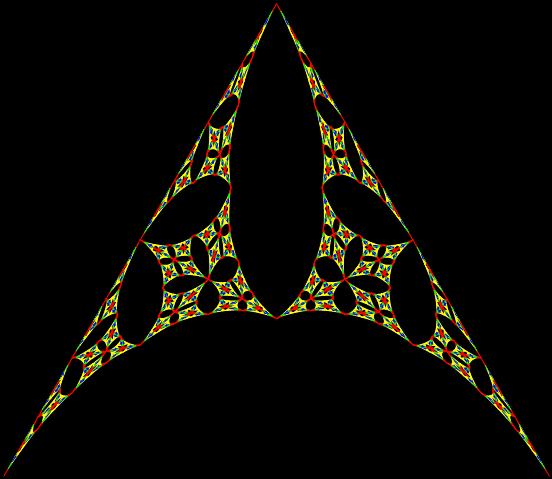

But the mod-8 spiral stops behaving strangely when the spiral is like this, as a diamond:


   W
  XIV
 YJ8HU
ZK927GT
LA3016FS
 MB45ER
  NCDQ
   OP

Now the mod-8 spiral looks like this:

sum of digsum(n) mod 8 = 0 (diamond spiral)


But the mod-4 and mod-9 spirals look like this:

sum of digsum(n) mod 4 = 0 (diamond spiral)


sum of digsum(n) mod 9 = 0 (diamond spiral)


You can also construct the spirals as a triangle, like this:


     U
    VCT
   WD2CS
  XE301AR
 YF456789Q
ZGHIJKLMNOP

Here’s the beginning of the mod-5 triangular spiral:

sum of digsum(n) mod 5 = 0 (triangular spiral) (open in new window for full size)


And the beginning of the mod-8 triangular spiral:

sum of digsum(n) mod 8 = 0 (triangular spiral) (open in new window for full size)


The mod-8 spiral is behaving strangely again. So the strangeness is partly an artefact of the way the spirals are constructed.


Post-Performative Post-Scriptum

“Spiral Artefact”, the title of this incendiary intervention, is of course a tip-of-the-hat to core Black-Sabbath track “Spiral Architect”, off core Black-Sabbath album Sabbath Bloody Sabbath, issued in core Black-Sabbath success-period of 1973.